
Crack and Crevice Treatment: Targeted Pest Control
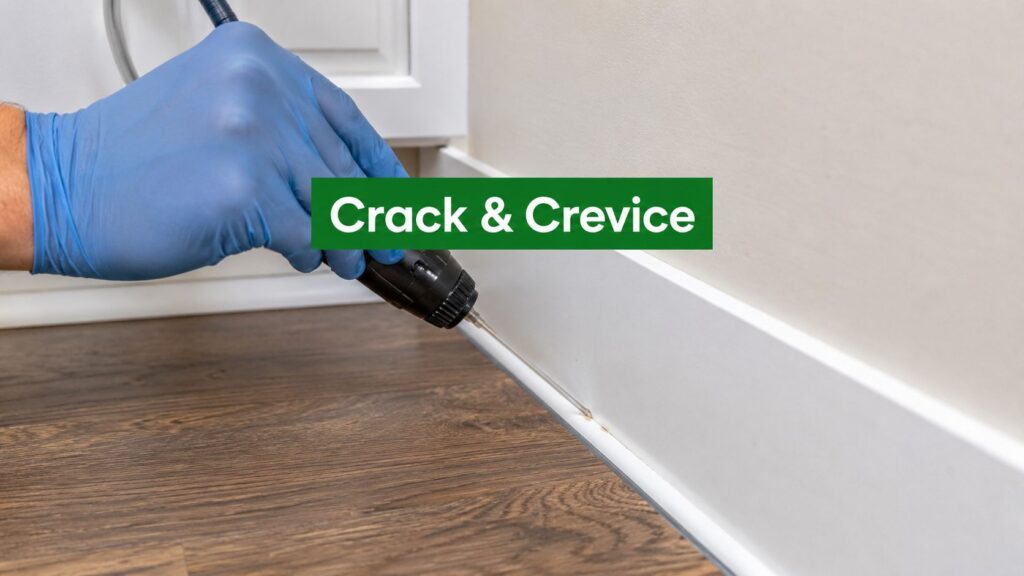
You're probably seeing the same thing many Crown Point homeowners see first, a few pests that seem to vanish the moment the lights come on, then show up again behind a cabinet, under a sink, or along a baseboard. That's usually the sign of hidden harborage, not a random one-off problem. Crack and crevice treatment is built for that exact situation, because it targets the narrow spaces pests use instead of flooding open surfaces.
For homeowners looking for pest control in Crown Point, IN or an exterminator near me, this method often makes more sense than broad spraying. The Green Advantage works with that idea in mind, focusing on precise application, sensible follow-up, and sealing practices that help keep pests from walking right back in. If you've been comparing residential pest control options, or you need commercial pest control for a kitchen, office, or storage area, understanding how this method works can make the whole process feel a lot less confusing.
Introduction to Crack and Crevice Treatment
A lot of pest problems in Crown Point start in often-overlooked places. Behind the refrigerator, under the stove, around plumbing penetrations, and in the slim gap where a baseboard meets the wall, pests can stay hidden during the day and move out at night. That's why people searching for pest control near me often end up needing more than a perimeter spray.
Why hidden gaps matter
Cracks and crevices are more than small openings. They're protected pathways, resting spots, and nesting edges for insects that avoid open space. Roaches, ants, spiders, and similar pests can stay tucked into those zones where food crumbs, moisture, and warmth are close by.
Practical rule: if a pest can stay sheltered and still reach food or water, it'll use that gap again.
That's where a local expert matters. The Green Advantage serves Crown Point and surrounding Northwest Indiana homes with treatment plans that focus on where pests are living, not just where they're occasionally seen. For a homeowner, that means the work is designed around the layout of the house, the moisture problem, and the likely entry points.
If you're dealing with a kitchen issue, a bathroom issue, or repeated sightings in finished living areas, the point isn't to spray more. The point is to treat the right spaces, then reduce the chance of reinfestation. That combination is what makes crack and crevice work useful in homes that need careful, targeted service rather than heavy-handed application.
Understanding Crack and Crevice Treatment
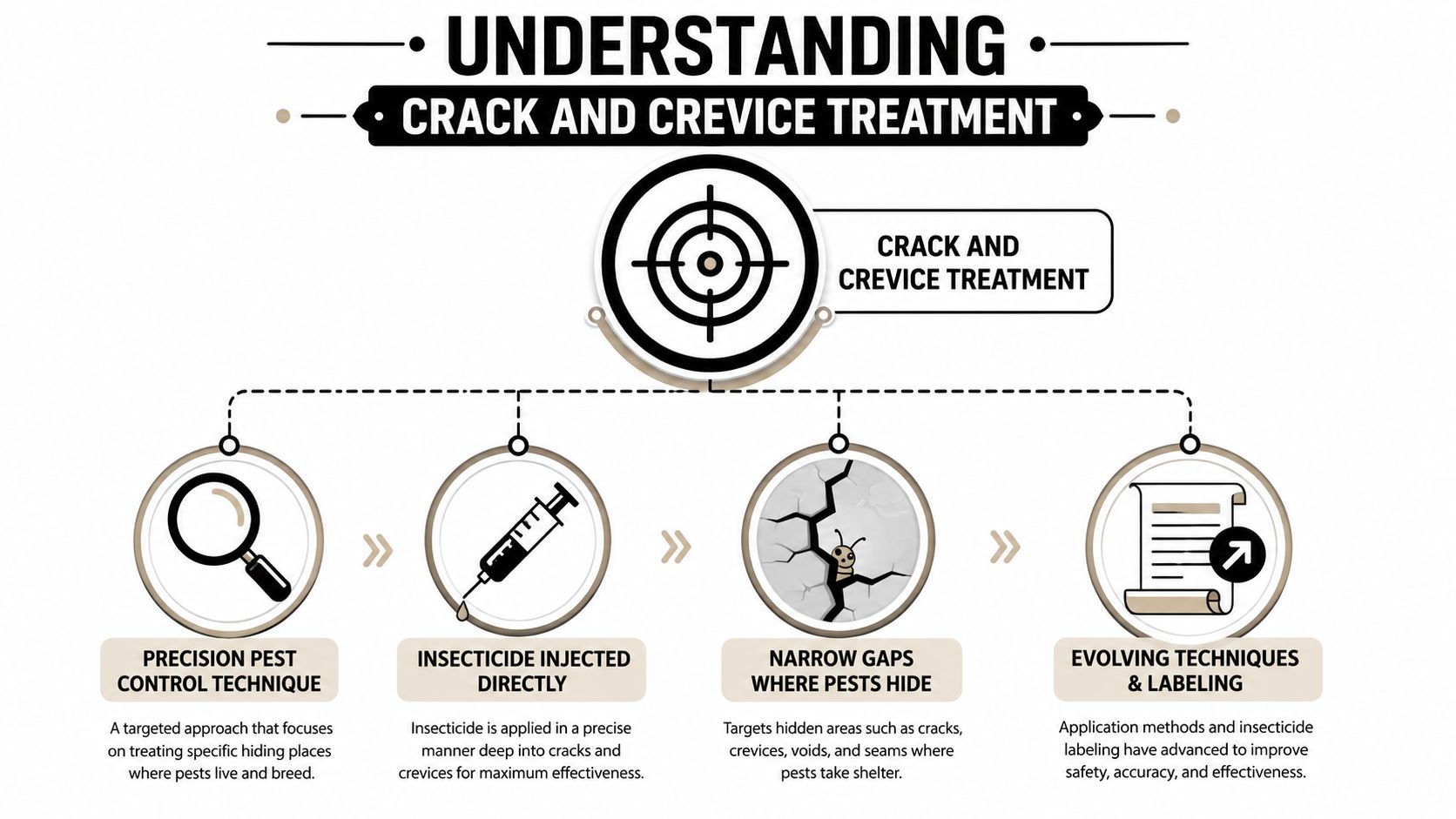
Crack and crevice treatment is a precision pest-control method. It applies insecticide directly into tight harborage points, such as gaps between cabinets and walls, behind baseboards, under appliances, around plumbing openings, and inside hollow structural voids. In other words, it's made for the places pests use as shelter, not for coating every visible inch of a room. The Journal of Economic Entomology evaluation of German cockroach control showed why that precision matters, because mortality depended heavily on technique.
Precision beats broad coverage
That study found the highest mortality when the crack-and-crevice nozzle was inserted 4 mm inside the crack, and mortality dropped as nozzle height increased. A fan nozzle performed worst. That's a good reminder for homeowners in Crown Point, the tool matters, but so does the angle, depth, and placement of the application.
The reason this method became so important in integrated pest management is simple. Many pests don't spend their time on open surfaces where a broad spray would hit them directly. They live in protected spaces, so targeted treatment makes more sense than soaking the whole room. It also fits better in sensitive interiors like homes, food-handling areas, and utility spaces where you want control without unnecessary residue.
A second layer of research helped shape that approach. Exposure and residue work on crack and crevice treatment showed that residue can be measured after application, with dislodgeable residue after 8 days reported at 1.5 ± 1.1 µg/kg for children and 0.55 ± 0.21 µg/kg for teens/adults in one pyrethroid residue study. That residue research matters because it supports the move toward localized, lower-volume treatment methods that can be monitored rather than guessed at.
What it really means for a homeowner
For a homeowner, the takeaway is straightforward. Crack and crevice treatment is about placing the product exactly where pests hide, then leaving the rest of the home less exposed. That's a very different philosophy from broad spraying, and it's one reason the method is so useful in modern pest control.
Targeted Pests and Use Cases in Northwest Indiana
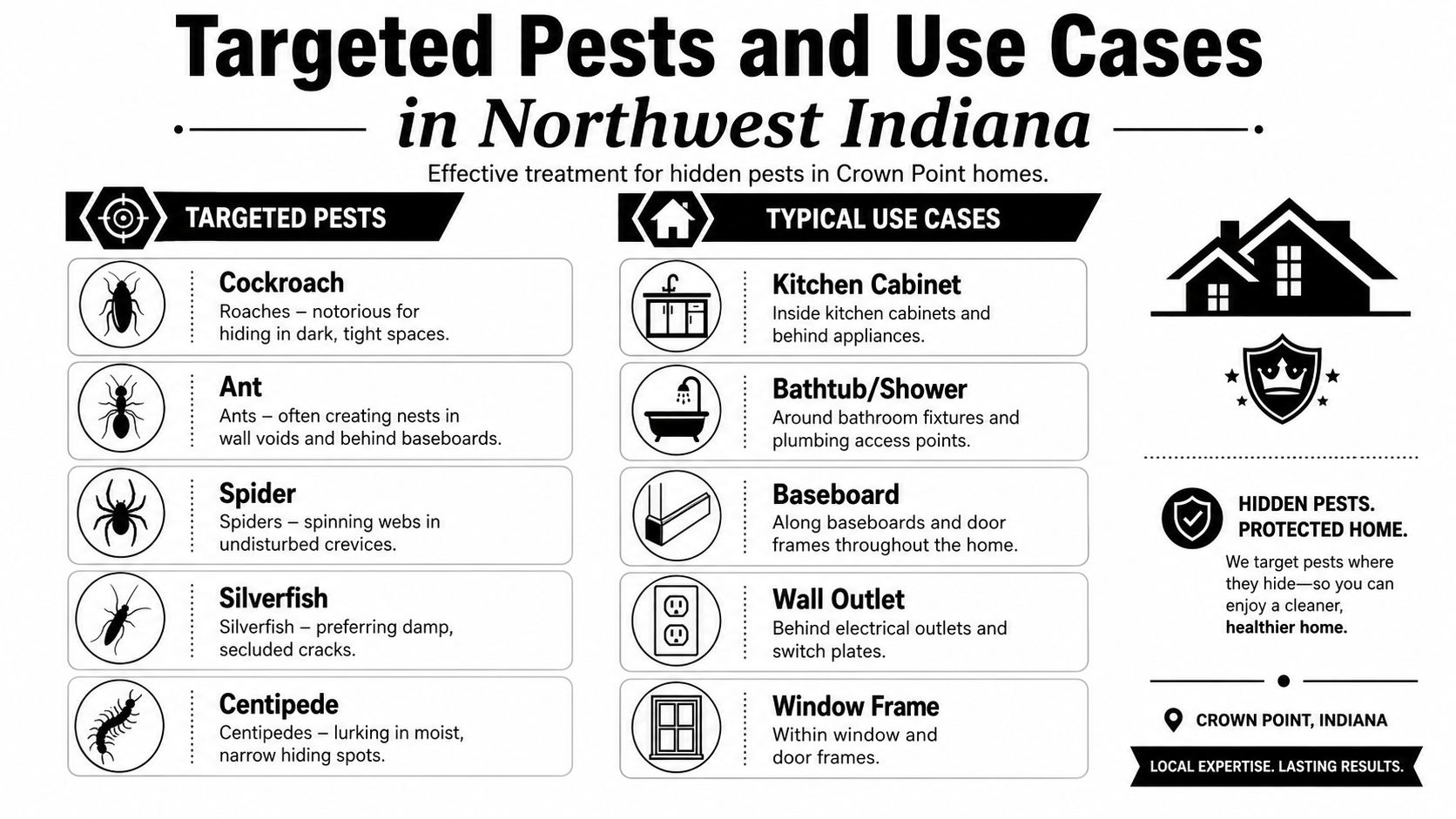
Hidden gaps in Crown Point homes tend to attract the same kinds of pests over and over. Roaches use dark seams and utility chases. Ants work their way into wall voids and trim gaps. Spiders, silverfish, and centipedes also settle into undisturbed spaces where they won't be disturbed by day-to-day activity.
Where pests hide inside the home
A local pest control plan usually starts with the zones homeowners overlook most:
- Kitchen cabinets and appliance gaps where crumbs, grease, and warmth meet.
- Bathroom fixtures and plumbing access points where moisture stays available.
- Baseboards and door frames that form narrow travel lanes through the house.
- Electrical outlets and switch plates where voids create hidden shelter.
- Window and door frames that can open the door to recurring entry activity.
These are the kinds of spaces where targeted application makes the most sense. A cabinet gap doesn't need a room-wide spray, it needs treatment in the opening where pests are moving through. The same goes for a utility chase or a wall penetration around pipes.
Why timing matters in Crown Point
Seasonal pest pressure in Northwest Indiana makes precision even more useful. Spring often brings more ant pressure as outdoor colonies become active, while cooler fall weather can push insects to scout for indoor shelter. When that happens, cracks, seams, and voids become the easiest routes inside.
For homeowners comparing exterminator in Crown Point, IN options, the biggest difference is whether the service addresses the hiding place or just the symptom. A targeted plan can help reduce activity in the spots pests use most often, and it can be repeated only when needed. The EPA product label for crack-and-crevice use says repeat treatment should be done only when pests are seen and not more often than every 6 to 8 weeks for roaches, spiders, crickets, silverfish, firebrats, centipedes, millipedes, pill bugs, and sowbugs.
For readers who want a broader background on pest patterns in urban settings, a useful outside resource is the comprehensive guide on Toronto pests. The climate and geography are different, but the habit of pests using hidden entry points is the same.
Professional Treatment Process with The Green Advantage
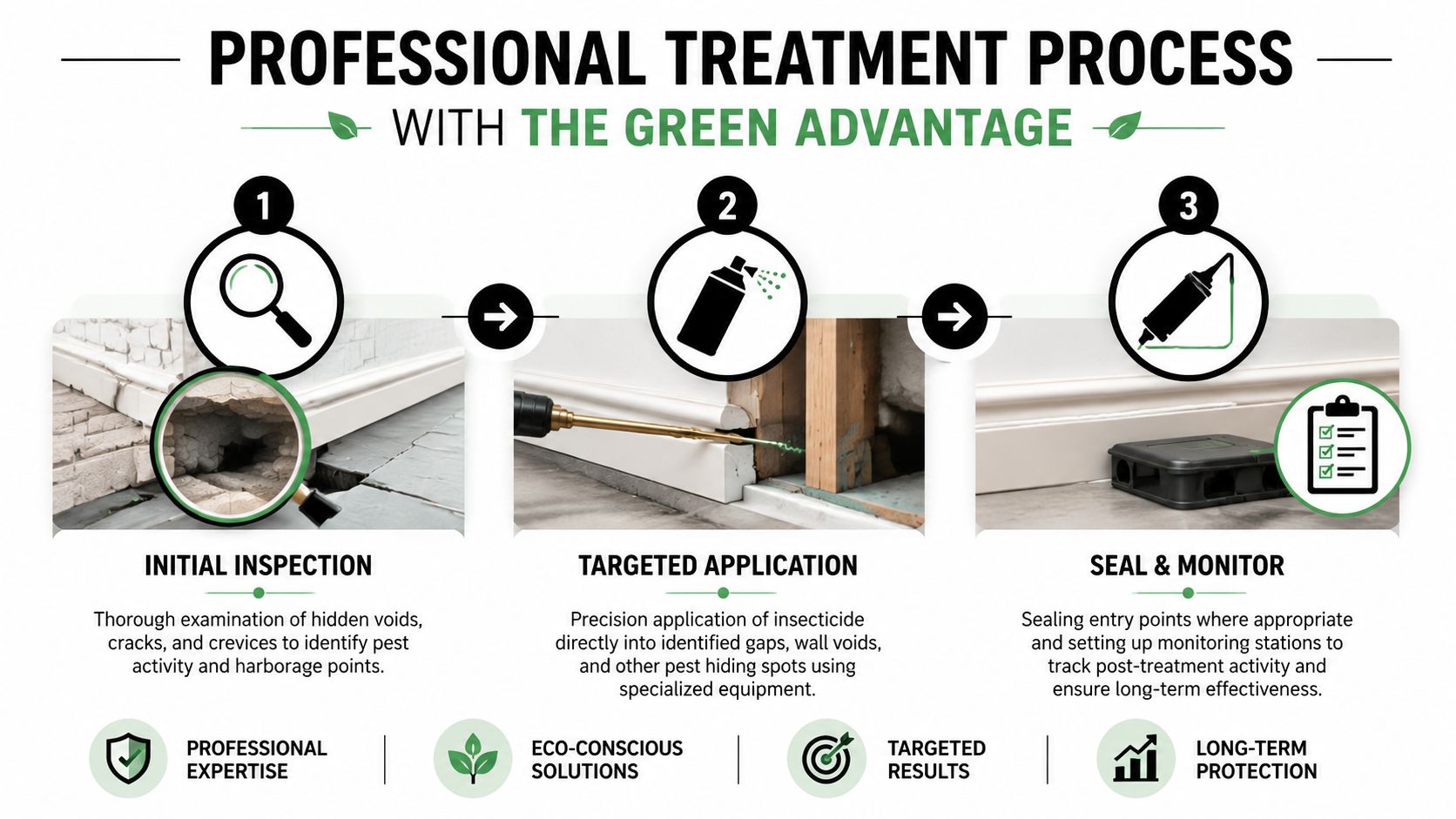
A proper service call starts with inspection, not spraying. Technicians look for gaps around baseboards, plumbing, cabinets, appliance voids, and other protected areas where pests can live out of sight. Once the harborages are identified, the treatment is placed where it can reach the pest, not just the surface around it.
What the application looks like
Industry guidance for aerosol crack and crevice work recommends short 1 to 2 second bursts with a thin injector tube into hidden voids such as electrical outlets, baseboards, appliance motors, and plumbing penetrations, then ventilating the area and sealing openings afterward to reduce reinfestation pressure. That guidance from PCT Online lines up with the way careful technicians work in real homes. The point is to kill pests already occupying those spaces and make the openings less useful afterward.
The Green Advantage's approach in Crown Point follows that logic. The service is designed for the layout of the home, the type of pest activity, and the places where sealing can reduce future movement. In practical terms, that means treating first, then closing off the pathway when it's appropriate to do so.
For homeowners who want to see how the company frames service choices, the why should you choose The Green Advantage for your pest control needs page is a useful read. It gives context for how the team thinks about inspection, treatment, and follow-through.
The best crack and crevice work doesn't end with product application. It ends with fewer open routes for pests to use again.
How to prepare your home
A few simple steps make service smoother:
- Clear under sinks so plumbing voids and cabinet seams are reachable.
- Move small appliances away from walls if you can do it safely.
- Keep pets secured during the visit and until the area is ready for reentry.
- Leave access open to problem rooms, utility spaces, and basement edges.
That preparation helps technicians work faster and more precisely, especially in homes where pests are moving through multiple small gaps.
Safety and Environmental Considerations
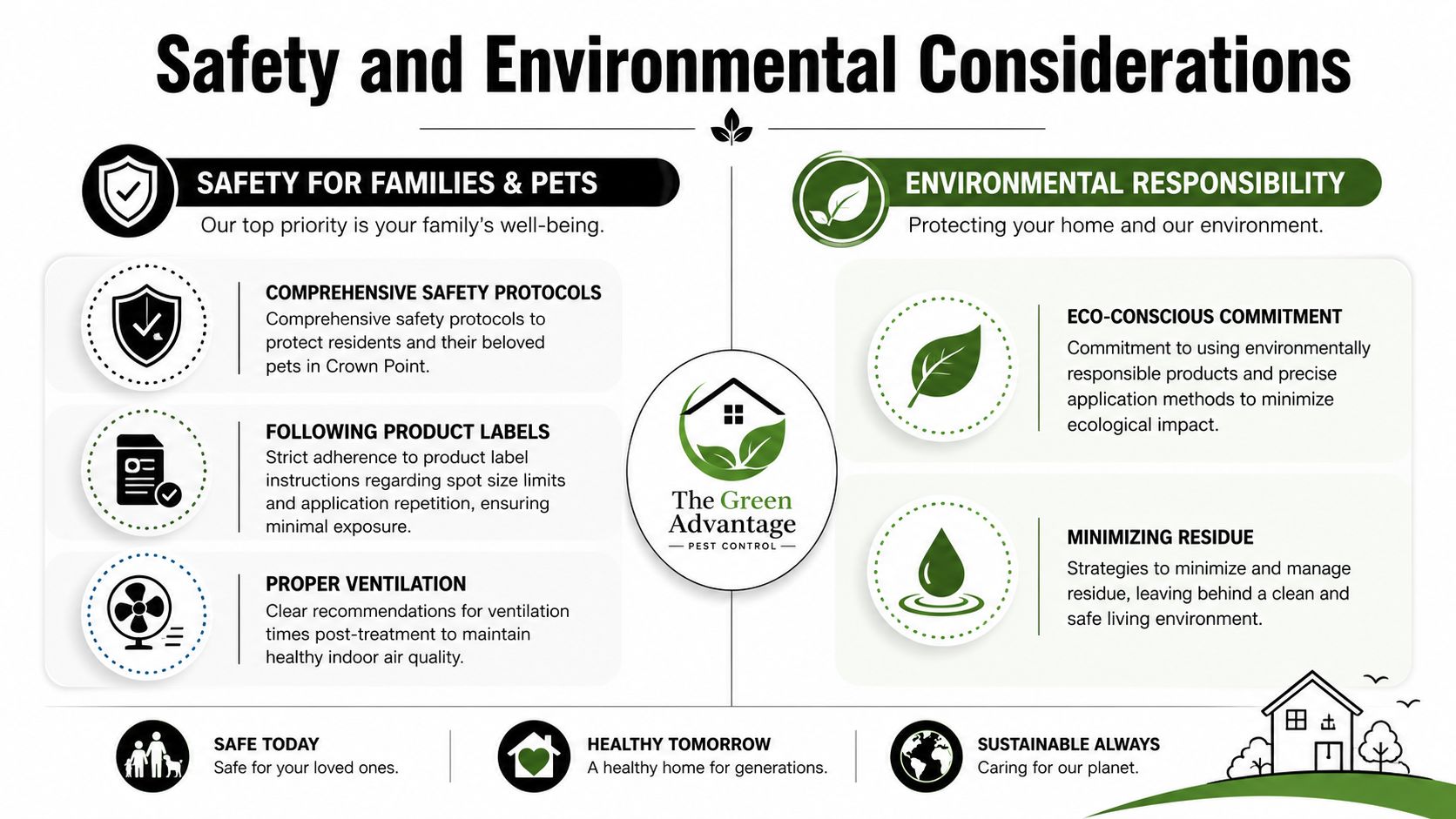
Targeted treatment is often easier on the home because it puts product where it's needed instead of everywhere else. That doesn't replace label compliance, though. It makes label compliance more important, since the application has to stay within the defined limits.
What product labels require
One crack-and-crevice label says to apply at 20 seconds per 1,000 ft³ for a general volumetric treatment, then keep the area closed for 15 minutes and ventilate thoroughly before reoccupying. For spot treatment, individual spots should not exceed 2 square feet and should cover no more than 20% of the treated surface. That label language shows how tightly this method is defined.
Those limits matter for families and pets in Crown Point. A precise treatment reduces the amount of product used, limits off-target exposure, and keeps the process focused on hidden voids instead of open living space. It also supports better residue management in sensitive areas like kitchens, bathrooms, and mechanical rooms.
Safer use comes from restraint
Simple rule: less area treated, more control over where the product goes.
That's why a careful technician pays attention to nozzle placement, spot size, and reentry timing. The goal isn't to fill the room. The goal is to reach the pest while keeping the rest of the environment as undisturbed as possible.
For homeowners worried about indoor air quality, temporary closure and ventilation are part of the process, not an afterthought. The same is true for children and pets, who should stay out of the treated area until it's ready for normal use. Empty container handling should follow local disposal rules and product label directions, since cleanup is part of responsible service.
This is also where eco-friendly pest control really means something practical. Precision treatment uses less product than broad spraying and gives technicians a better chance to limit unnecessary exposure. In homes where sensitivity matters, that can make the difference between a service that feels disruptive and one that feels controlled.
Comparing DIY and Professional Services
Homeowners can buy aerosol products and try to handle crack and crevice work themselves, but that often leads to the same mistakes. The nozzle gets aimed at open trim instead of the void itself. Product goes onto visible surfaces instead of into the seam. Hidden entry points get missed entirely.
Where DIY usually falls short
DIY treatment often fails in three predictable ways:
- It misses pest harborage. The pest is in the void, not on the surface.
- It overapplies in the wrong place. More product on a countertop or baseboard doesn't equal better control.
- It skips sealing. If the opening stays open, pests can use it again.
The exterminator near me search usually starts because the problem keeps coming back. That's the clue that simple spot spraying isn't enough. If you want a broader decision framework, the DIY or hire a pro what's right for you page helps homeowners compare risk, effort, and results.
What professional service adds
Professional service brings better nozzle control, cleaner placement, and a plan for follow-up. It also means the technician knows when to treat lightly, when to treat only visible activity, and when to recommend exclusion work instead of relying on chemistry alone. For homes and businesses that need residential pest control or commercial pest control, that follow-through matters.
The difference is simple. DIY work tends to stop at the spray. Professional work keeps going into inspection, targeted application, and sealing where appropriate. That's why the method is so effective for people who want less chemical exposure without giving up control.
If pests are showing up in your Crown Point home, don't guess at the source. Schedule an inspection, ask where the entry points are, and get a treatment plan built around the places pests hide.
A CTA for The Green Advantage.
What Attracts Mosquitoes to Your Yard: Stop Them in 2026

A warm Crown Point evening can go from perfect to miserable fast. The kids are in the yard, the grill is going, and then the mosquitoes show up around the patio lights, the shrubs, and every place someone stops moving for a second. If that sounds familiar, you're not dealing with bad luck, you're dealing with a yard that's giving mosquitoes the conditions they want.
For homeowners in Crown Point, IN and nearby Northwest Indiana neighborhoods, the fix usually starts with understanding what attracts mosquitoes to your yard in the first place. The Green Advantage works with that reality every day, helping families and businesses reduce mosquito pressure with practical pest control that focuses on breeding sites, resting sites, and the small, easily overlooked details. The goal isn't just fewer bites for one night. It's a yard that feels usable again.
Reclaim Your Crown Point Yard from Mosquitoes
A lot of mosquito calls start the same way. A family finally gets a chance to eat outside, a dog wanders onto the lawn, and within minutes everyone is swatting and heading back inside. In Crown Point, that frustration usually comes from a yard that looks fine at a glance, but still gives mosquitoes water, shade, and shelter.
Why the problem feels bigger than it looks
Mosquitoes don't need a swamp to turn a property into a problem. They're drawn to the exact mix of moisture, still air, and hiding spots that show up in ordinary suburban yards, especially after rain and during warm stretches. That's why a property can look tidy and still feel overrun by biting insects.
The Green Advantage takes a local, homeowner-focused approach to mosquito control in Crown Point, IN. That means looking at the whole yard, not just the obvious puddles. It also means understanding how Northwest Indiana lawns, shrubs, downspouts, and shaded corners can create the kind of environment mosquitoes use all season long.
Practical rule: if a yard gives mosquitoes a place to breed, a place to rest, and a person to feed on, the problem keeps coming back.
Families usually want the same thing, a yard that's safe for kids, pets, cookouts, and evening time outside. That takes more than a quick spray. It takes a plan that addresses the habitat, the weather patterns, and the parts of the property that keep resetting the cycle.
The Number One Mosquito Magnet Standing Water
Standing water is the place to start because it's where the next generation begins. Mosquitoes don't need a pond to breed, they need still water that sits long enough for eggs and immature stages to develop. In many common container-breeding mosquitoes, that can happen in as little as 7 to 10 days antipesto.com, which is why a bucket, birdbath, clogged gutter, or saucer can become a fresh source of mosquitoes in about a week if nobody empties it.
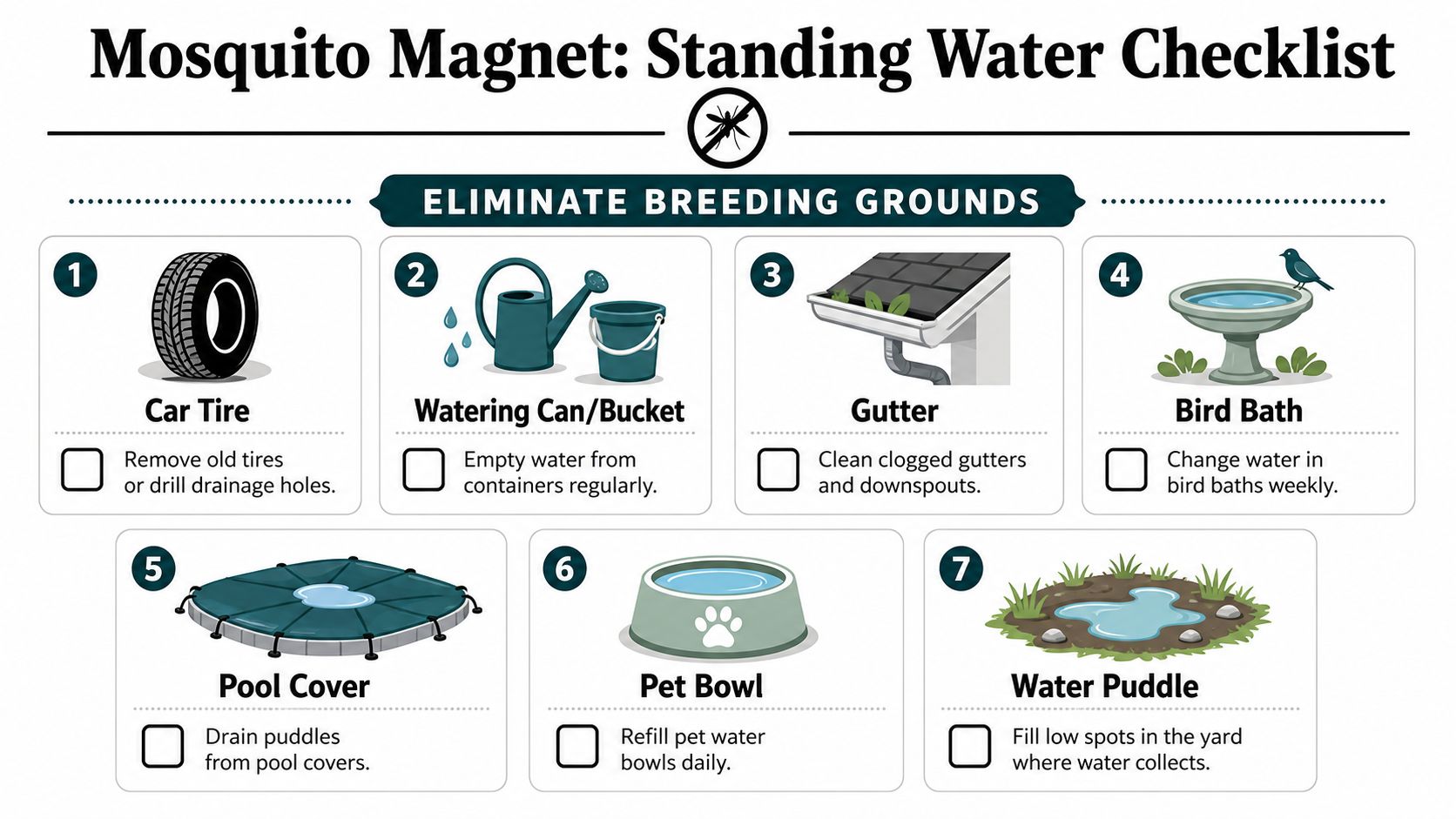
What to check first
The obvious places matter, birdbaths, splashy low spots, old tires, and any decorative water feature that isn't moving. But the hidden ones are usually the primary problem. The Ohio State University Extension notes that mosquito control works best when you eliminate breeding water instead of chasing adults after they emerge Ohio State University Extension.
A good weekly habit is simple:
- Dump containers after rain. Buckets, toys, planters, and anything else that catches water need a close look.
- Clean gutters and downspouts. Debris traps water and gives mosquitoes a place to develop.
- Empty saucers and tarps. Flowerpot saucers, pool covers, and folded materials can hold enough moisture to matter.
- Check drainage blind spots. Low spots in the lawn and tucked-away depressions can stay wet longer than you think.
The reason this matters in Crown Point is that rain doesn't just wet the yard, it resets it. If you want a plain-language explanation of how rain affects mosquito populations, that resource walks through why populations often surge after wet weather.
For a deeper local breakdown of the breeding cycle, see the Green Advantage guide on mosquito breeding and mosquito control. Once water is removed, mosquito pressure drops, but only if the source stays gone long enough to break the cycle.
Why Mosquitoes Still Find You in a Dry Yard
A yard can look dry and still draw mosquitoes. Homeowners usually focus on water first, but mosquitoes also follow carbon dioxide, body heat, skin odors, shade, and still air to find people and resting spots Call Wayne's. That means a yard can be free of standing water and still give mosquitoes the right conditions to linger near your patio, deck, or seating area.
The cues mosquitoes follow
Human scent is part of the problem. Mosquitoes respond to cues tied to sweat and skin chemistry, and research notes that factors like genetics and pregnancy can affect how noticeable a person is to them PMC. Two people standing next to each other can get very different attention from biting mosquitoes.
Color matters too. Cleveland Clinic notes attraction to red, orange, black, and cyan, while lighter colors such as white, green, and blue may be less attractive. That is useful for evening wear and for planning what people wear at backyard gatherings.
Dense vegetation also helps mosquitoes. Tall grass, thick shrubs, and shaded corners create protected places where they can rest during the day and move in when people step outside. In Crown Point yards, mowing, trimming, and opening up airflow can matter almost as much as removing water.
The practical takeaway is straightforward. A yard becomes more mosquito-friendly when host signals, cover, and humid shelter overlap. Patio fans, less clutter around seating areas, and regular trimming can make outdoor space noticeably less inviting to biting insects.
Mosquito control gets harder when the yard becomes a resting zone, not just a breeding zone.
For homeowners who want a look at the hiding places adults use, the Green Advantage has a helpful resource on where mosquitoes hide. That is the part many DIY checklists miss.
A Homeowner's Guide to Finding Mosquito Hotspots
Start with the spots that look harmless. While the patio is often checked, the gutters, the toys near the fence, or the tarp folded behind the shed are easily forgotten. That's where mosquito issues keep going.

Walk the yard like a mosquito would use it
Look for anywhere water can sit without being disturbed. Independent homeowner guidance repeatedly points to clogged gutters, flower-pot saucers, bird baths, toys, tarps, buckets, and even tree hollows as overlooked breeding sites Tom's Guide. That's the part most routine yard checks miss.
A practical walkthrough helps:
- Start at the roofline. Check gutters, downspouts, and any extender that isn't draining cleanly.
- Move to containers. Pots, buckets, toys, and folded covers trap water after rain.
- Inspect shaded edges. Beds under shrubs, the north side of the house, and the fence line often stay damp longer.
- Look low. Bare soil dips, compacted lawn areas, and spots near patios can hold water after a storm.
After you've done the water check, turn to shelter. Dense plantings, piles of yard debris, and clutter around decks all give adult mosquitoes a place to rest. That matters because a yard can be dry and still produce bites if adults are already living in the cover.
A quick video can help you compare what you're seeing in your own yard with the kinds of hotspots technicians check during service.
If you're comparing your own property to a more detailed visual of mosquito hiding behavior, the Green Advantage page on where mosquitoes hide is a useful companion. It's especially helpful when the yard looks clean but bites keep happening.
When to Call for Professional Mosquito Control
DIY cleanup goes a long way, but it doesn't solve everything. If you've dumped water, cleaned the gutters, trimmed the overgrowth, and mosquitoes are still active, the problem may be coming from adults already resting on the property or moving in from nearby yards. That's a common reason homeowners keep fighting bites even after the obvious sources are gone.
What professional service adds
Professional mosquito control targets more than one stage of the problem. It looks at the shaded resting areas, the dense vegetation, and the places adults use during the day, not just the puddles people can see. That broader view matches how mosquitoes behave in a maintained yard, which is why a property can feel “done” from the homeowner's perspective and still support active mosquitoes Moshield.
If you're comparing service styles, Professional mosquito treatments in Miami gives a useful example of how residential mosquito work can be structured around recurring pressure, rather than one-time reaction.
Here's the trade-off. Store-bought repellents and one-off sprays can reduce bites for a while, but they don't keep pressure down around the whole yard. Professional service is more useful when:
- Bites keep coming back after rain.
- Shrubs, decks, and shade stay heavy with activity.
- You want a yard you can use without constant repellent.
- The property needs a broader habitat correction, not just a surface treatment.
That's where trained mosquito reduction makes sense for residential pest control and, on larger properties, commercial pest control too. It's a better fit when the issue is persistent instead of occasional.
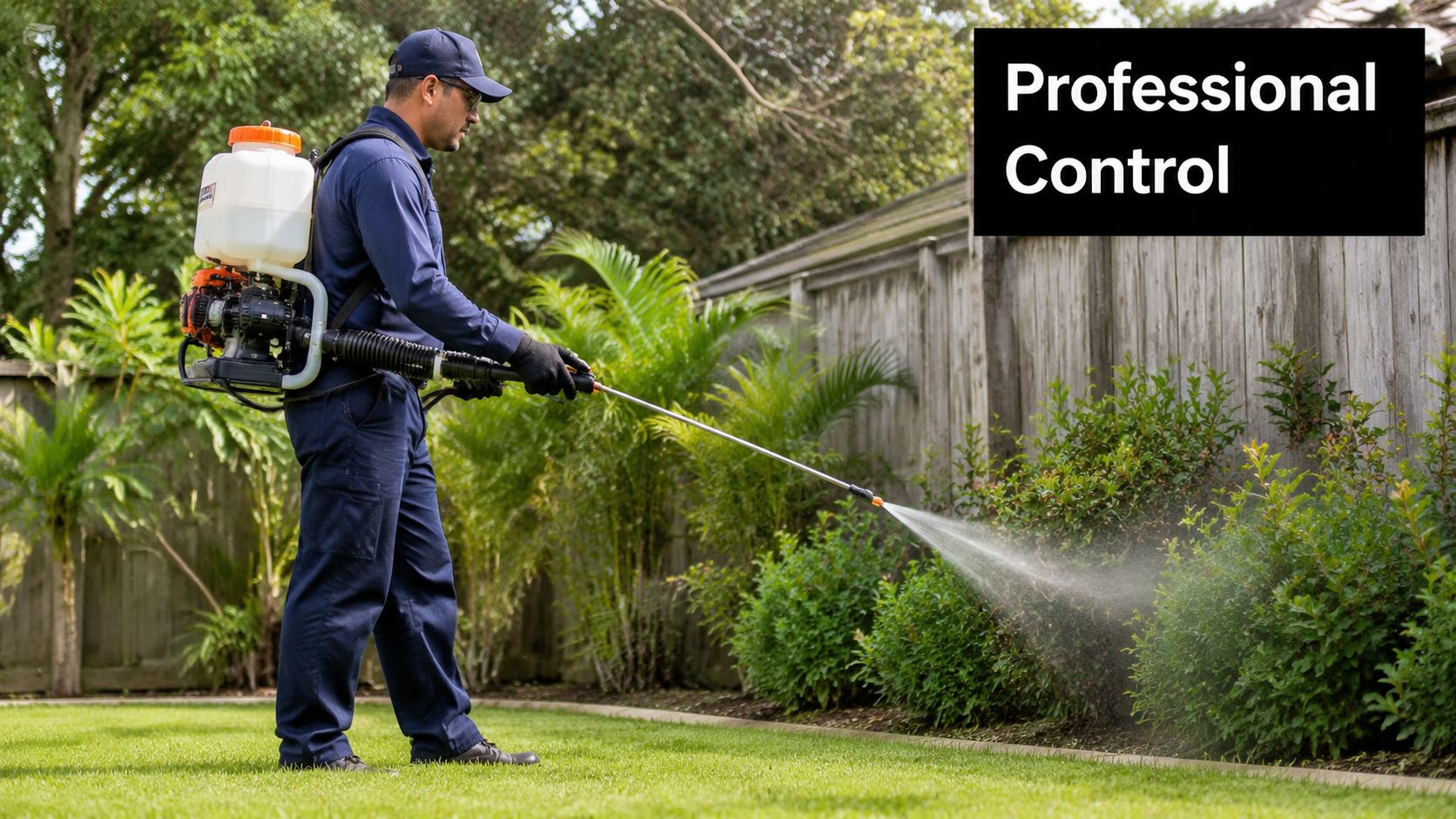
The Green Advantage Solution in Crown Point IN
The Green Advantage approaches mosquito reduction like a property problem, not a guess. For Crown Point, IN homeowners, that usually starts with a consultation and a careful inspection of the yard, the shade line, the drainage, and the spots where mosquitoes rest during the day. From there, the treatment plan can be matched to the property's layout, the season, and the level of pressure on site.
What matters most is that the process is practical. A local company that works in Northwest Indiana understands how weather swings, landscaping, and neighborhood drainage affect mosquito activity. That matters for families who want pest control near me, an exterminator near me, or reliable pest control in Crown Point, IN without a lot of back-and-forth.
The Green Advantage also brings a broader pest management mindset. Mosquito reduction fits alongside other service needs like ant control, termite control, rodent control, spider control, wasp removal, and preventative pest treatments for homes and businesses. If you need commercial pest control or ongoing residential pest control, the same local knowledge helps keep the plan realistic and easy to maintain.
A good mosquito service should leave you with two things. First, a clearer picture of what's attracting pests on the property. Second, a path forward that protects the yard without making it a science project for the homeowner.
If your evenings in Crown Point keep getting cut short, contact The Green Advantage for a property review and a service quote. The right inspection can turn a mosquito problem into a manageable one, and the sooner it's handled, the sooner you get your yard back.
A CTA for The Green Advantage.
How to Prevent Bed Bugs Naturally: Expert Tips 2026

You get home from a weekend trip, set the suitcase on the bedroom floor, and suddenly remember the hotel chair you used for your clothes. Or you find a used nightstand that looks perfect for the guest room and wonder what might be hiding in the joints and drawer tracks. That's how bed bug problems often start in Crown Point and across Northwest Indiana. Not with a dramatic infestation, but with one small lapse in routine.
Homeowners searching for pest control near me, pest control in Crown Point, IN, or an exterminator near me usually want two things at once. They want practical steps they can take today, and they want honest guidance about when those steps stop being enough. That's the right mindset. Prevention works best when it's consistent, simple, and built into how you travel, clean, and bring items into the home.
Natural prevention is possible, but it has to be based on methods that change the environment bed bugs rely on. Good inspection habits, less clutter, smart laundry routines, and physical barriers all matter. So does understanding the local reality in Northwest Indiana, where weather can limit some DIY heat methods that sound good online but don't hold up well in real homes.
A Proactive Approach to Bed Bug Prevention in Crown Point
Bed bugs don't care whether a home is clean, newly remodeled, or carefully maintained. They care about access. They hitchhike on luggage, clothing, upholstered furniture, and anything with seams or narrow hiding spots. In Crown Point, that means the usual risk points are family travel, college move-ins, overnight guests, and secondhand finds brought home without inspection.
The most effective natural approach is prevention before exposure turns into an indoor problem. Once bed bugs establish themselves around sleeping areas, DIY gets harder fast. That's why I tell homeowners to think about bed bug prevention the same way they think about locking doors or checking smoke alarms. A small habit done regularly beats a large cleanup later.
Where prevention starts
Start with the places and moments that create the highest risk:
- After travel: Keep luggage off beds, inspect it before unpacking, and deal with clothing right away.
- Before used items enter the house: Check seams, joints, screw holes, drawer corners, and fabric folds.
- Around sleeping areas: Bed bugs prefer tight, protected spaces close to where people rest.
- In multi-unit or shared-wall settings: Small cracks and gaps give pests routes to move.
That's one reason homeowners looking for residential pest control in Northwest Indiana often benefit from a broader prevention mindset. The same habits that reduce bed bug hiding spots also support cleaner pest management overall, whether the concern is spiders, rodents, ants, or seasonal invaders.
Practical rule: Don't wait for bites to start your prevention routine. By the time people notice repeated signs, bed bugs usually have had time to spread beyond one obvious spot.
What natural prevention can and can't do
Natural prevention works well when your goal is to stop hitchhikers from settling in. It's less reliable when bed bugs are already established inside walls, furniture, and multiple rooms. That distinction matters.
Homeowners in Northwest Indiana often read about every remedy online at once, from sprays to homemade treatments to outdoor heat tricks. Some of those ideas have value. Some waste time. The strongest natural strategy is built around inspection, heat, laundering, and reducing places where bugs can hide. Everything else should be judged against that standard.
Your Proactive Bed Bug Inspection Checklist
A good inspection doesn't need to take over your weekend. It needs to be deliberate. The goal is to check the narrow, protected areas bed bugs prefer before a minor introduction turns into a broader problem.
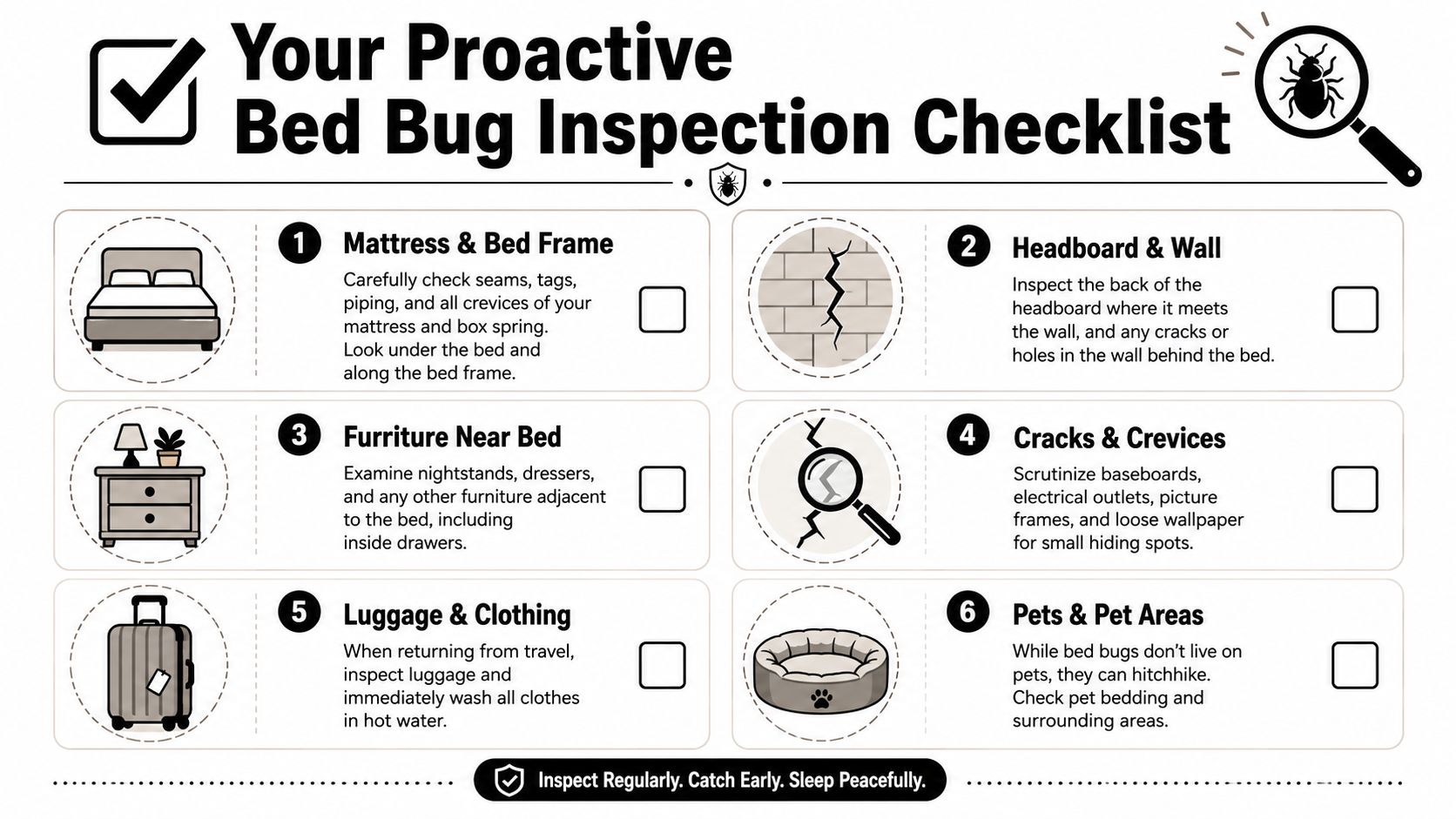
What to inspect routinely
Use this as a repeatable home routine, especially after travel or before moving used furniture indoors:
- Mattress seams and tags: Check piping, stitched edges, and labels where fabric folds create cover.
- Box spring and bed frame: Look underneath, inside corners, and around hardware.
- Headboard area: Pull attention to the back side and where it meets the wall.
- Nightstands and nearby furniture: Inspect drawer joints, undersides, and any cracks near the bed.
- Baseboards and wall openings: Pay attention to small gaps, outlet covers, picture frames, and loose wallpaper.
- Luggage and laundry areas: Examine suitcases before they're stored and keep travel clothing separate until cleaned.
- Pet bedding nearby: Bed bugs don't live on pets, but they can hide around pet beds and soft items on the floor.
For homeowners who want a broader home routine, this pest control inspection checklist is useful for staying organized room by room.
What you're actually looking for
People often expect to find obvious insects crawling in the open. That's not how early bed bug problems usually present. More often, you're looking for subtle signs in sheltered areas, such as small reddish-brown spotting, shed skins, or the bugs themselves tucked into narrow seams and cracks.
A flashlight helps. So does slowing down. Quick glances miss the exact areas where bed bugs like to stay compressed and hidden during the day.
Check the bed as a system, not just the mattress. Mattress seams, the frame, the headboard, and the furniture within arm's reach all deserve the same attention.
Best times to inspect
Timing matters more than people realize. Inspections are most useful when they're tied to real exposure events.
| Situation | What to do |
|---|---|
| After a trip | Inspect luggage before it goes into bedrooms, then handle clothing immediately |
| Before bringing in used furniture | Check joints, drawer tracks, fabric seams, and underside panels outdoors or in a garage |
| Guest room turnover | Inspect bedding, frame, and nearby furniture before resetting the room |
| Seasonal deep cleaning | Use that cleanup time to check edges, cracks, and under-bed storage |
This is the simplest answer to how to prevent bed bugs naturally. Make inspections a habit before bed bugs get comfortable.
Creating an Inhospitable Environment for Pests
Inspection tells you whether there's a problem. Prevention changes the home so bed bugs have fewer places to settle. That starts with clutter control and basic exclusion work.
Why clutter changes the odds
Bed bugs do best in tight, undisturbed spaces near where people sleep. Piles of clothing, overfilled under-bed storage, stacks of linens, and crowded nightstands all give them more places to hide and more surfaces to move through unnoticed.
Decluttering doesn't kill bed bugs by itself. What it does is remove cover. It shortens inspection time, makes cleaning more effective, and helps you catch a problem earlier. In pest work, fewer hiding spots almost always means faster answers.
- Keep floor contact limited: Clothing, blankets, and bags touching the floor create easy transfer points.
- Use sealed storage thoughtfully: Loose cardboard and open bins create more shelter than protection.
- Simplify the bedroom perimeter: The less packed the area around the bed, the easier it is to inspect and clean.
For homeowners also thinking about bedding setup, understanding mattress protection options can help you choose layers that are easier to remove, inspect, and maintain.
Seal the routes pests use
In apartments, duplexes, and homes with shared wall voids or utility penetrations, bed bugs can use gaps as movement routes. In single-family homes, cracks still matter because they provide protected harborages near sleeping areas.
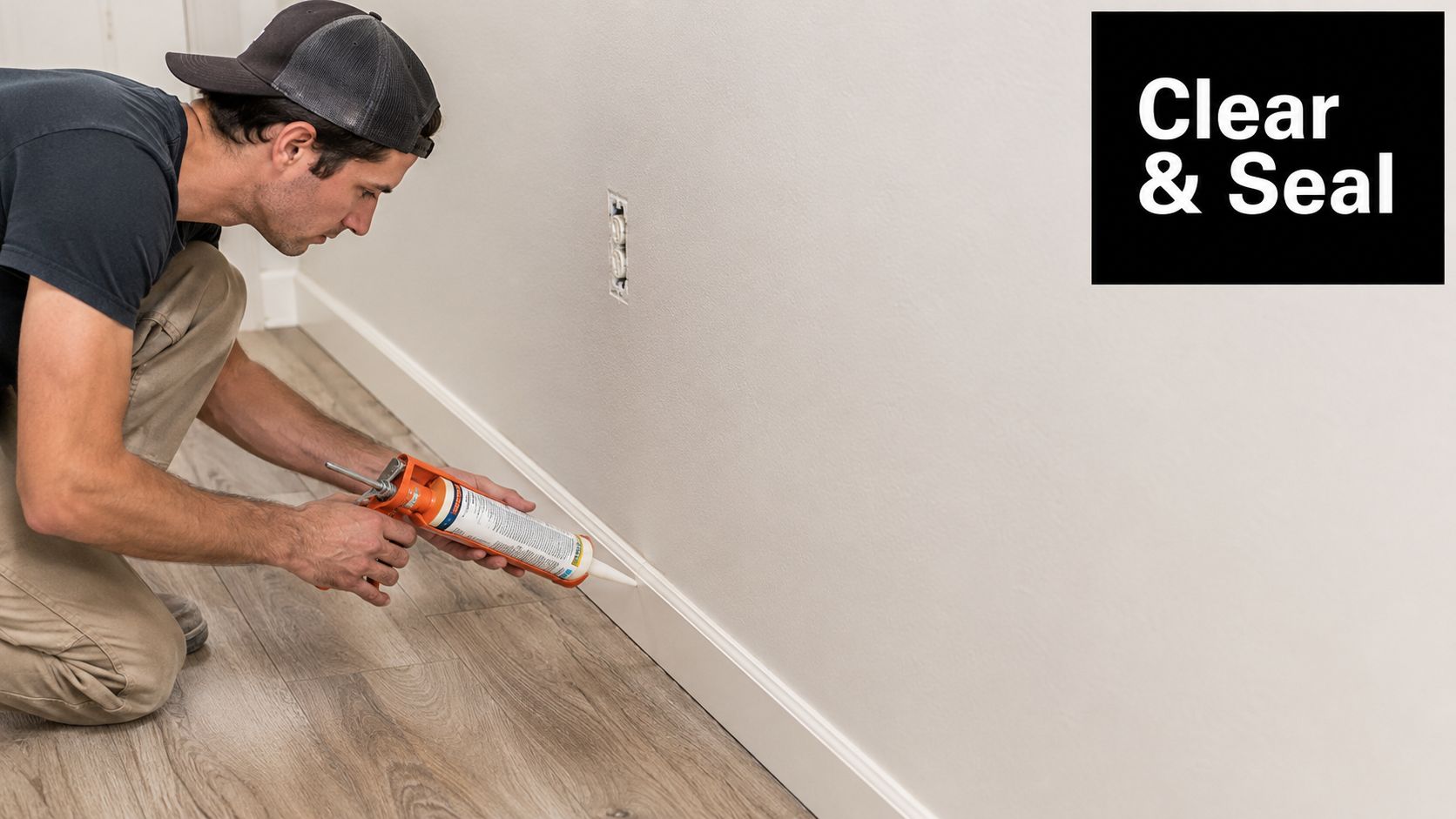
Use caulk or appropriate sealant on visible gaps at baseboards, trim, wall joints, and utility openings. Tighten loose outlet plates. Repair peeling wallpaper. Secure torn dust covers on box springs or furniture undersides.
A sealed crack doesn't just block movement. It also removes one more place where bed bugs can stay hidden during an inspection.
This kind of maintenance supports more than bed bug prevention. It also fits a stronger residential pest control approach overall, especially in Northwest Indiana homes dealing with ants, spiders, and occasional rodent entry around changing seasons.
Using Heat and Laundry as Your Best Defense
If you want one natural method with the strongest support behind it, use heat. Bed bugs are vulnerable to sustained high temperatures, and that makes laundering, drying, and steam work the backbone of non-chemical prevention.
The laundry routine that actually matters
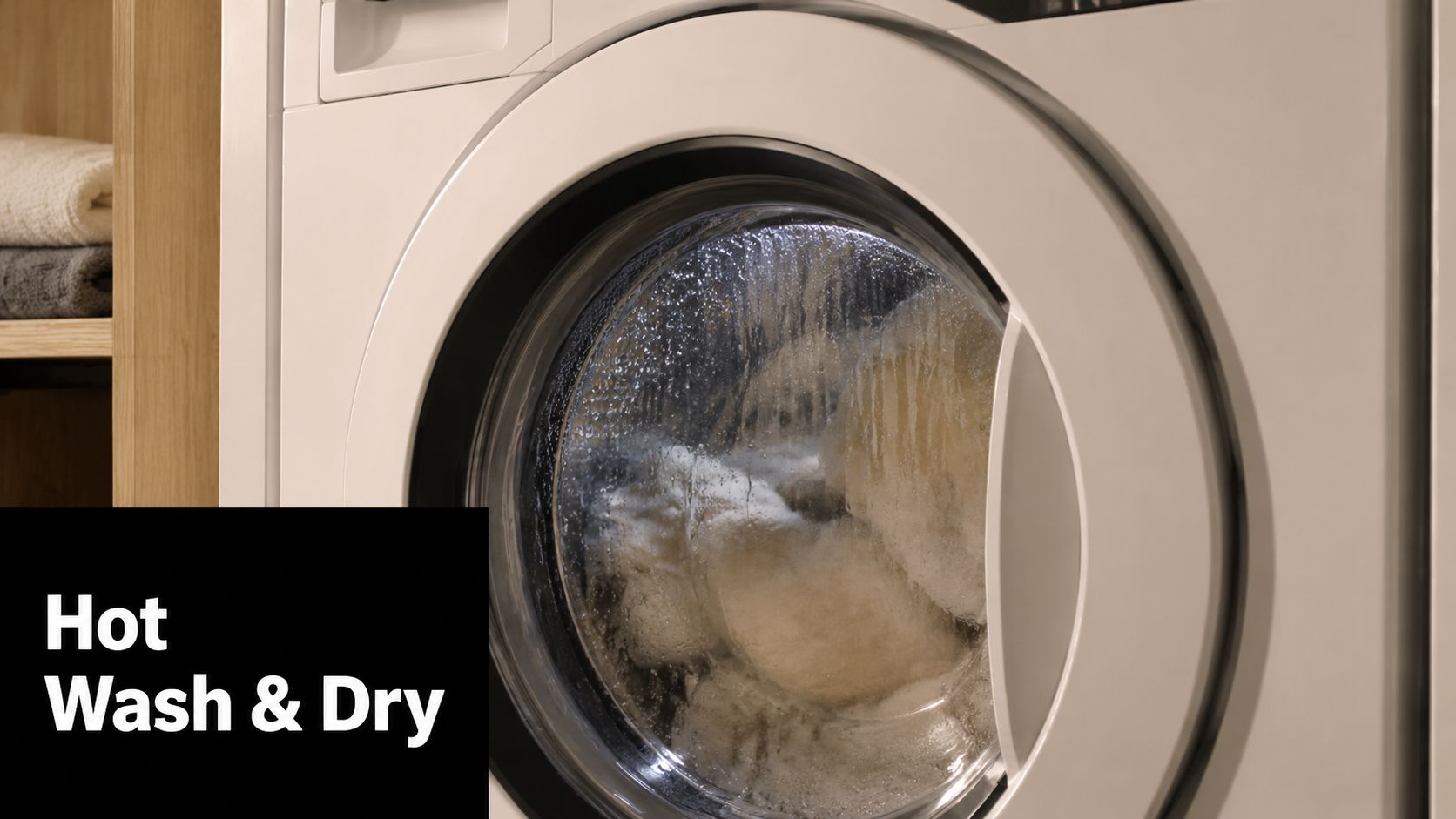
For washable items, heat isn't a vague suggestion. It's the point. Washing infested linen in hot water at 130°F (54°C) achieves 100% efficacy in killing all bed bug life stages. For items that can't be washed, placing them in a dryer on the highest heat setting for at least 90 minutes is a proven method to eliminate both bugs and their resilient eggs according to WorldMetrics bed bug statistics.
That means post-travel laundry should be handled with urgency, not convenience. Don't leave travel clothes in a hamper for later. Don't set a suitcase on the bed while you sort. Move washable contents directly into the wash or dryer workflow.
The David Suzuki Foundation also notes in its non-toxic bed bug control guidance that items treated in a dryer should be set to the highest heat level for at least 90 minutes when using heat alone.
Where steam fits
Steam is useful for items that can't go through the laundry cycle, especially upholstered furniture, mattress surfaces, fabric-covered bed frames, and carpet edges. The key is temperature. Steam cleaning at 212°F (100°C) delivers 99% effectiveness on contact with bed bugs and eggs, as summarized in the earlier heat data.
Use steam carefully. Move slowly enough to let heat reach the surface, and avoid blasting moisture into materials that can be damaged or hold water. Steam is a precision tool, not a shortcut.
Here's a visual walkthrough of bed bug treatment concepts and where heat-based methods fit in the bigger picture.
Smart prevention after travel or guests
A simple heat routine catches many problems before they spread:
- Isolate luggage first: Keep bags off beds and upholstered seating.
- Unload directly to treatment: Wash what can be washed. Dry what can't.
- Inspect the suitcase shell and seams: Pay attention to handles, zipper folds, and pockets.
- Clean soft surfaces nearby: If a bag sat on carpet or upholstery, inspect and vacuum that area.
If you're trying to make furniture easier to maintain after travel season or overnight guests, protect your furniture with washable covers so removable layers can be cleaned quickly instead of leaving all the risk on the upholstery itself.
Safe and Effective Natural Barriers and Repellents
Not every “natural” product deserves equal trust. Some methods create a real physical barrier. Others sound appealing but don't give homeowners a dependable result.
What works better than sprays
Mattress and box spring encasements are one of the most practical preventive tools available. A quality encasement limits access to the most important harborage area in the room and makes future inspections much easier because there are fewer folds, tears, and hidden seams to check.
Encasements aren't a substitute for inspection or heat, but they do change the battlefield. They reduce hiding options around sleeping areas and help homeowners notice problems sooner.
A broader guide to natural bed bug elimination can be helpful if you want to compare barriers, cleanup habits, and non-chemical tactics side by side.
Where diatomaceous earth fits
Desiccant dusts such as diatomaceous earth have a role, but it's a narrow one. They're most useful in cracks, crevices, voids, and out-of-the-way areas where bed bugs may travel or hide. Think behind outlet covers, along certain structural gaps, or in limited treatment points that stay dry and undisturbed.
This isn't a product to scatter heavily across mattresses, living areas, or broad floor surfaces. Overapplication creates mess, reduces practicality, and often gives homeowners a false sense of control while actual hiding sites remain untouched.
| Method | Best use | Limitation |
|---|---|---|
| Mattress encasement | Protects key sleeping surfaces and simplifies inspection | Doesn't address bugs elsewhere in the room |
| Diatomaceous earth | Targeted use in cracks and crevices | Works poorly when used as a blanket treatment |
| Essential oil sprays | Supplemental scent-based approach at most | Not a proven barrier for dependable prevention |
The essential oil question
Many homeowners ask about lavender, tea tree, eucalyptus, and similar sprays. The problem is reliability. There is no credible data on the repellency duration or concentration needed for them to act as a true preventive barrier, while desiccant dusts like diatomaceous earth are recommended for cracks and crevices where bugs may hide, as discussed in this bed bug prevention video reference.
That doesn't mean every spray is useless. It means you shouldn't trust essential oils as your primary line of defense. If you want a natural plan that holds up, use physical barriers and heat first, then treat sprays as optional support rather than protection you can count on.
Don't confuse “natural smell” with “reliable barrier.” Bed bugs don't care whether a product sounds gentle. They care whether it stops them.
When to Call a Professional Exterminator in Northwest Indiana
There's a clear line between prevention and active infestation. If you're finding repeated signs in more than one room, seeing bugs beyond the bed itself, or noticing the problem return after careful laundering and cleanup, it's time to stop experimenting and get professional help.
That's especially true in Northwest Indiana, where climate complicates some DIY advice people find online. Natural methods like solar heat treatment depend heavily on consistent warm weather, which is unreliable in cooler, humid regions like Northwest Indiana. This climate-specific challenge often makes professional heat treatments the only guaranteed solution for eliminating an infestation, as noted by Eartheasy's natural bed bug control guidance.
Signs the problem is past DIY prevention
- You're finding signs repeatedly: Not a one-time travel scare, but ongoing evidence.
- Bugs appear away from the original area: That suggests spread, not just a contained introduction.
- Used furniture has already been inside for a while: Hidden harborages may be deeper than surface cleaning can reach.
- You've relied on sprays but skipped a full inspection and heat response: That often delays control.
- The property has shared walls or multiple sleeping areas: Bed bugs can move and multiply beyond one room.

Homeowners and property managers searching for an exterminator in Crown Point, IN, pest control in Crown Point, IN, or commercial pest control usually need clarity more than anything else. A proper inspection tells you whether you're dealing with a limited exposure issue or a true infestation that requires a treatment plan. If you need direct service information, review these bed bug pest control services.
Bed bugs also rarely exist in isolation from broader property concerns. The same homes and facilities dealing with bed bug pressure may also need support with rodent control, spider control, ant control, termite control, mosquito control, wasp removal, and ongoing preventative pest treatments designed for Northwest Indiana conditions.
If you're in Crown Point or a nearby Northwest Indiana community and you want clear answers about bed bugs, contact The Green Advantage. Whether you need an inspection, a quote, or a practical plan for residential pest control or commercial pest control, their team can help you identify the problem, explain your options, and protect your property with an eco-friendly, professional approach.
Where Do Mosquitoes Hide
A lot of Crown Point evenings go sideways the same way. The patio is set, the kids head out after dinner, and a few minutes later everyone is slapping at ankles by the deck steps and along the fence. On properties across Northwest Indiana, that usually means mosquitoes are already settled into the yard's hidden shelter zones.
A key question is where they spend the rest of the day.
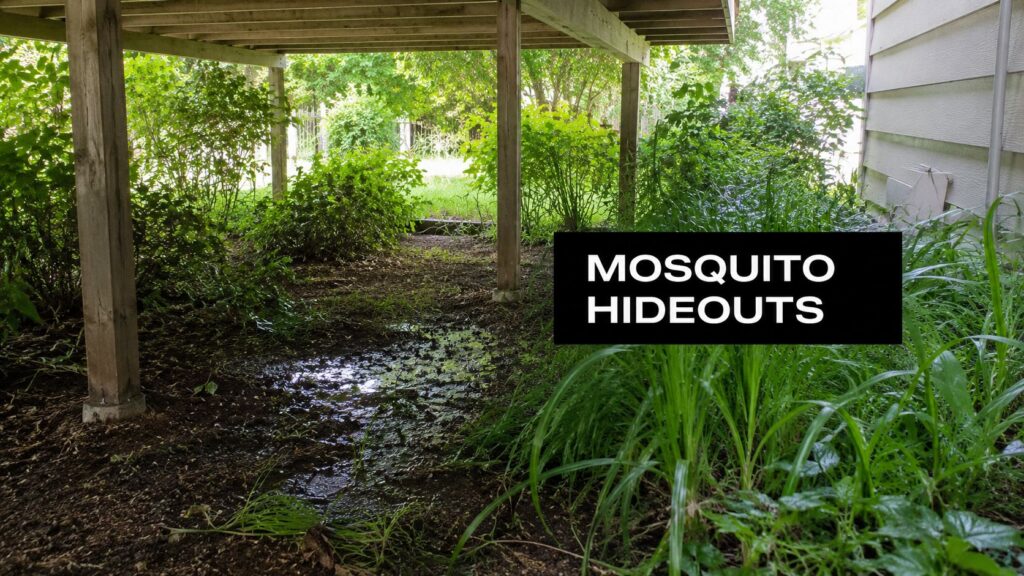
Around here, mosquitoes rarely hang out in the open lawn. They hold in the damp, protected pockets that many homeowners overlook, under decks where air stays still, inside clogged gutters after a summer storm, behind dense arborvitae, near low spots that stay wet, and around shaded foundations where moisture lingers. In Crown Point yards, those micro-habitats matter more than the obvious parts of the property.
That is why off-the-shelf sprays and backyard gadgets often disappoint. They may knock down a few active mosquitoes, but they usually miss the places where mosquitoes rest and where new activity starts. The Green Advantage approaches mosquito reduction by targeting those specific hiding and breeding areas common in Northwest Indiana, instead of relying on generic advice and hoping the problem fades.
Homeowners usually get better results with a local pest control partner who knows how our yards hold moisture, how our foliage creates resting cover, and how to treat the trouble spots without wasting product on areas that are not driving the problem. That same practical approach carries over to broader residential and commercial pest control work, whether the issue is mosquitoes, ants, spiders, rodents, termites, or wasps.
Reclaim Your Summer from Mosquitoes in Crown Point IN
A lot of Crown Point homeowners tell me the same thing. Dinner is almost ready, the kids want to stay outside, and then the mosquitoes start working the patio, deck steps, and side yard hard enough to end the evening early.
That usually points to a yard with several small hiding and breeding pockets, not one big obvious problem. In Northwest Indiana, I see the same trouble spots over and over: damp shade under decks, clogged gutters after a storm, thick arborvitae and shrubs that hold humidity, low areas along fence lines, and mulch beds near the foundation that stay moist longer than they look.
A clean yard can still support mosquito activity. Neat landscaping, patio furniture, stacked firewood, and decorative beds often create the kind of cover mosquitoes use through the day, then they drift out at dusk once the heat drops.
What homeowners usually notice first
Most calls start with a pattern, not a swarm. Bites happen near the grill, by the garage service door, around the dog run, or along the path to the trash cans. On commercial properties, complaints usually build around entrances, break areas, fence lines, and dumpster pads where shade and moisture hang around.
Here is the practical rule I use on inspections.
Practical rule: If mosquitoes are active at dusk, they already have daytime shelter on the property.
That is why mosquito reduction starts with a close inspection of the places people do not spend much time looking at. A technician checks where air stays still, where leaves and debris hold water, and where foliage creates a cool resting zone. Gutter buildup is a common factor, and routine upkeep like the steps outlined in this guide to Long Island home protection helps explain why.
Why local pest control matters
Crown Point yards are full of mosquito-friendly micro-habitats. The challenge is not just standing water in the obvious sense. It is the water trapped in a sagging gutter run, the damp soil under a shaded deck, the overgrown edge behind a shed, and the dense plantings that hold moisture after evening watering.
The Green Advantage treats those specific areas with a targeted approach instead of spraying the whole property and hoping for the best. That matters here, because the spots driving mosquito pressure in Northwest Indiana are usually tucked into the structure and landscaping of the yard itself.
Homeowners want to use their yard again. The way to get there is to identify the exact places mosquitoes are resting and reproducing, then treat those zones directly.
The Hidden World of Mosquito Hideouts in Your Yard
Mosquitoes hide because daytime conditions work against them. Heat dries them out, sun stresses them, and wind pushes them around. During daylight hours, they look for surfaces and spaces that stay darker, cooler, and more humid than the open lawn.
Where to look first in a Crown Point yard
Start with the spots commonly walked past every day.
- Under decks and porches. Mosquitoes use the underside of decks, porches, and fence lines because those areas stay cooler than the open yard and hold shade longer. Those structural edges can become reliable daytime resting zones, especially where vines or vegetation add humidity, as noted in this overview of unexpected mosquito hiding places.
- Dense shrubs and ornamental plantings. The outer edge may look harmless, but the interior often stays damp and sheltered.
- Tall grass near fences or sheds. If grass and weeds stay thick, mosquitoes can rest there through the hottest part of the day.
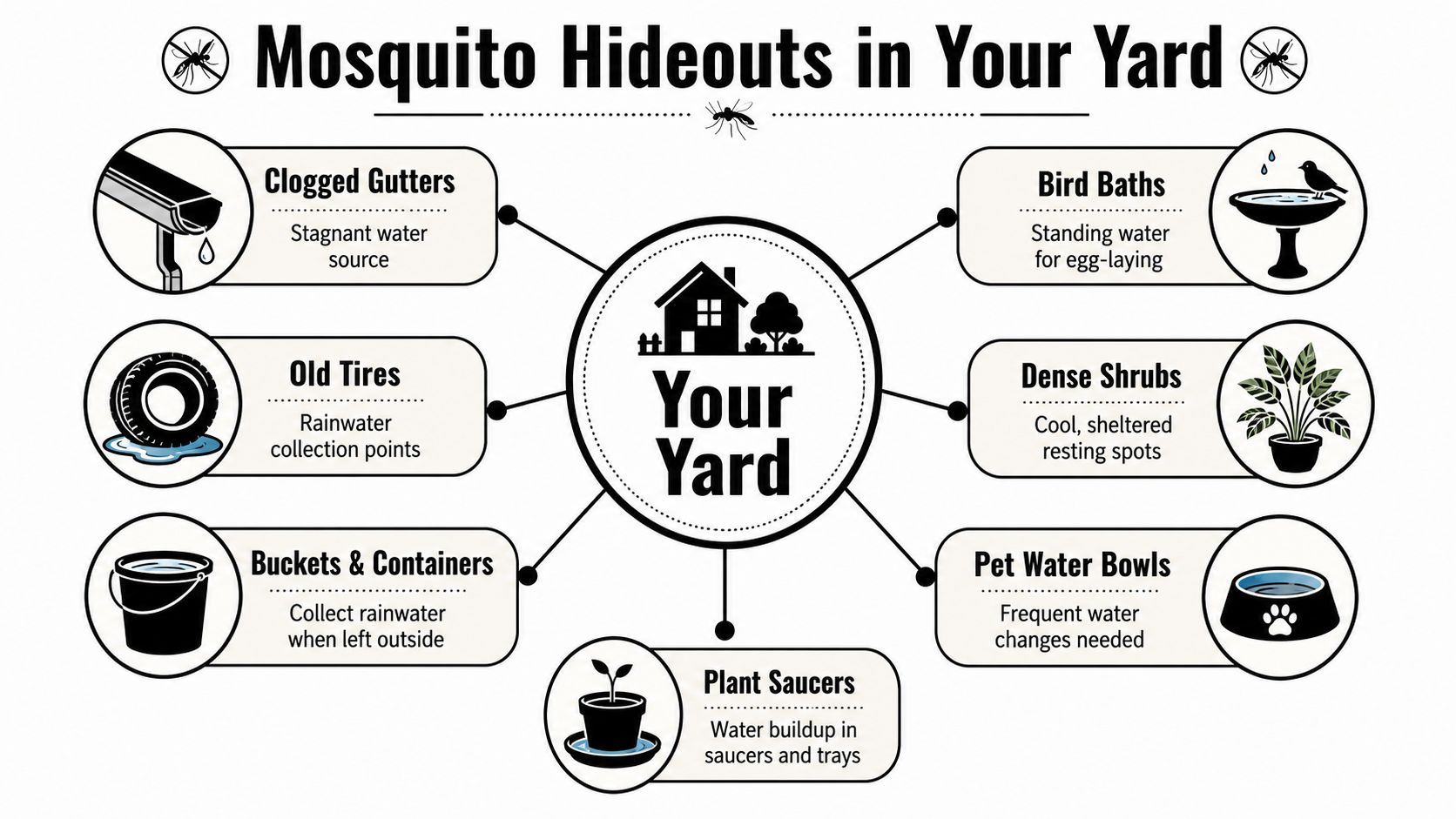
- Clogged gutters and plant saucers. These are two of the most common problem areas because they can support both resting adults and developing larvae.
- Low, shaded spots near the foundation. Moisture collects there, and mosquitoes follow that moisture.
The spots DIY treatments often miss
Mosquitoes don't just land on whatever's easy to spray from the sidewalk. They settle in protected pockets.
Adult mosquitoes predominantly hide on the undersides of large shrub leaves, especially where dense canopy cover reduces wind and holds humidity. They're weak fliers, so they favor sheltered zones over breezy open turf. In practical terms, that means the center of a shrub often matters more than the outer foliage.
A yard can look open from the patio and still hold mosquito harborage deep inside shrubs, behind furniture, and along shaded fence lines.
Inside the home, some species may also seek dark surfaces with low airflow. That's one reason a few mosquitoes can seem to appear indoors even when the main pressure is outside.
A better way to inspect your yard
Walk the property in late morning or early afternoon and look for these conditions instead of looking for swarms:
| Yard feature | Why mosquitoes like it |
|---|---|
| Deck undersides | Cool shade and protection from wind |
| Thick shrubs | Dark leaf cover and higher humidity |
| Fence lines with vines | Structure plus plant moisture |
| Gutters | Moist overhangs and trapped water |
| Plant saucers | Small water source close to shelter |
For homeowners who are already working on exterior maintenance, this guide to Long Island home protection is a useful reminder that gutter care affects more than drainage. In mosquito work, clogged gutters are one of those small property issues that can create a much bigger nuisance.
How a Teaspoon of Water Becomes a Mosquito Factory
In Crown Point, mosquito breeding usually starts in the places homeowners walk past every day. A saucer under a planter. A low spot in a tarp behind the shed. Water sitting in a clogged gutter over the back patio. It does not take much.
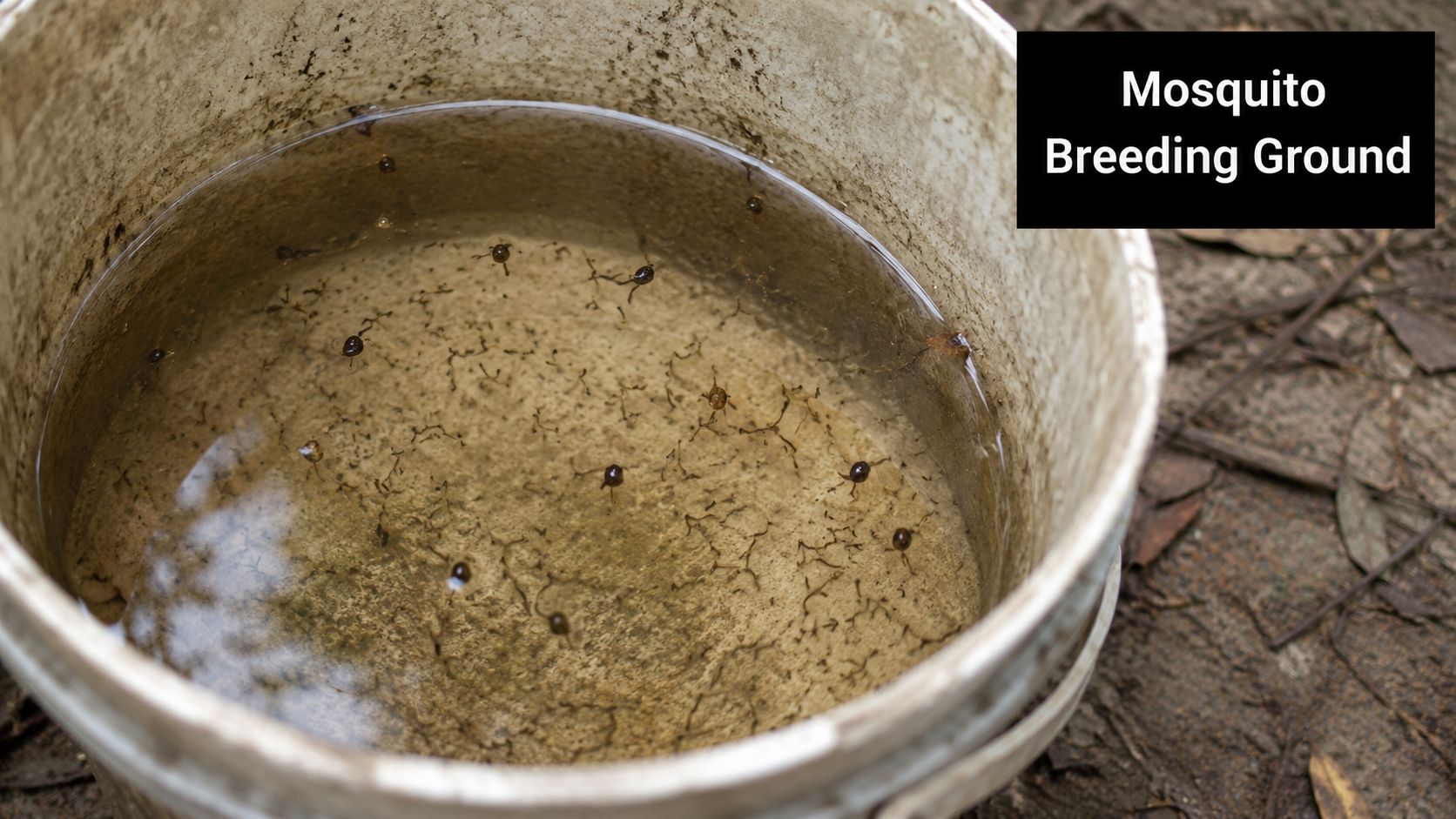
Mosquitoes can lay eggs in very small amounts of still water, which is why a yard can have steady mosquito pressure without any pond, ditch, or marsh in sight. In practice, the trouble spots around Northwest Indiana homes are usually close to the same sheltered areas where adults rest during the day. That tight setup lets the cycle keep repeating in a small space.
The small water sources that cause big problems
Around Crown Point homes, the water sources that produce mosquitoes are often hidden by the way the property is built or laid out:
- Plant saucers tucked under porch pots and hanging baskets
- Clogged gutters holding water above shaded foundation beds
- Tarp folds on firewood stacks, grills, and stored equipment
- Kids' toys, wheelbarrows, and buckets left along the fence line
- Bird baths and pet bowls sitting in shade and changed too rarely
- Tree holes and hollow stumps that keep water after a summer storm
- Low spots under decks or at downspout discharge points where water lingers longer than expected
I see this a lot in yards with dense shrubs, mature maples, and limited afternoon sun. The homeowner clears the obvious bucket, but the actual production site is a gutter run packed with debris or a sagging tarp behind the garage.
A recent example of that hidden-water problem appears in Lawn & Leaf Solutions' drainage guide, which is useful for homeowners trying to identify why damp trouble spots keep returning after rain. Good drainage work does not replace mosquito service, but it does cut down the wet pockets that help populations rebound.
Why one cleanup rarely solves it
Mosquito pressure drops fastest when breeding sources are found in clusters, not one at a time. Emptying one container helps. Missing three others near the deck, the side yard gate, and the gutter line keeps the cycle going.
That is why mosquito jobs in Northwest Indiana often come down to inspection detail. The question is not whether there is standing water somewhere on the property. The question is where small amounts of water keep collecting near shade, leaf cover, and low airflow.
For a closer look at how breeding sites and treatment planning fit together, The Green Advantage provides mosquito breeding and mosquito control information that helps homeowners connect what they're seeing outside with what a technician looks for during service.
A short visual can make that cycle easier to spot in real life:
What works and what usually falls short
Dumping visible water is a good start. Keeping gutters clear, correcting drainage near the foundation, and checking the underside of decks and stored items after rain usually makes a bigger difference than homeowners expect.
What falls short is treating mosquito prevention like a one-time cleanup. In Crown Point yards, the repeat offenders are usually the overlooked micro-habitats. Wet gutter debris, shaded containers, and protected pockets under structures. If those spots keep refilling, mosquitoes keep coming back.
The Green Advantage Solution for Mosquito Reduction
A lot of mosquito treatments fail because they focus on the air instead of the resting sites. Foggers may give a brief knockdown. Zappers may kill random flying insects. Neither approach fixes the core issue if mosquitoes are spending the day deep in leaf cover, under structures, and along sheltered edges.
Target the harborage, not just the symptom
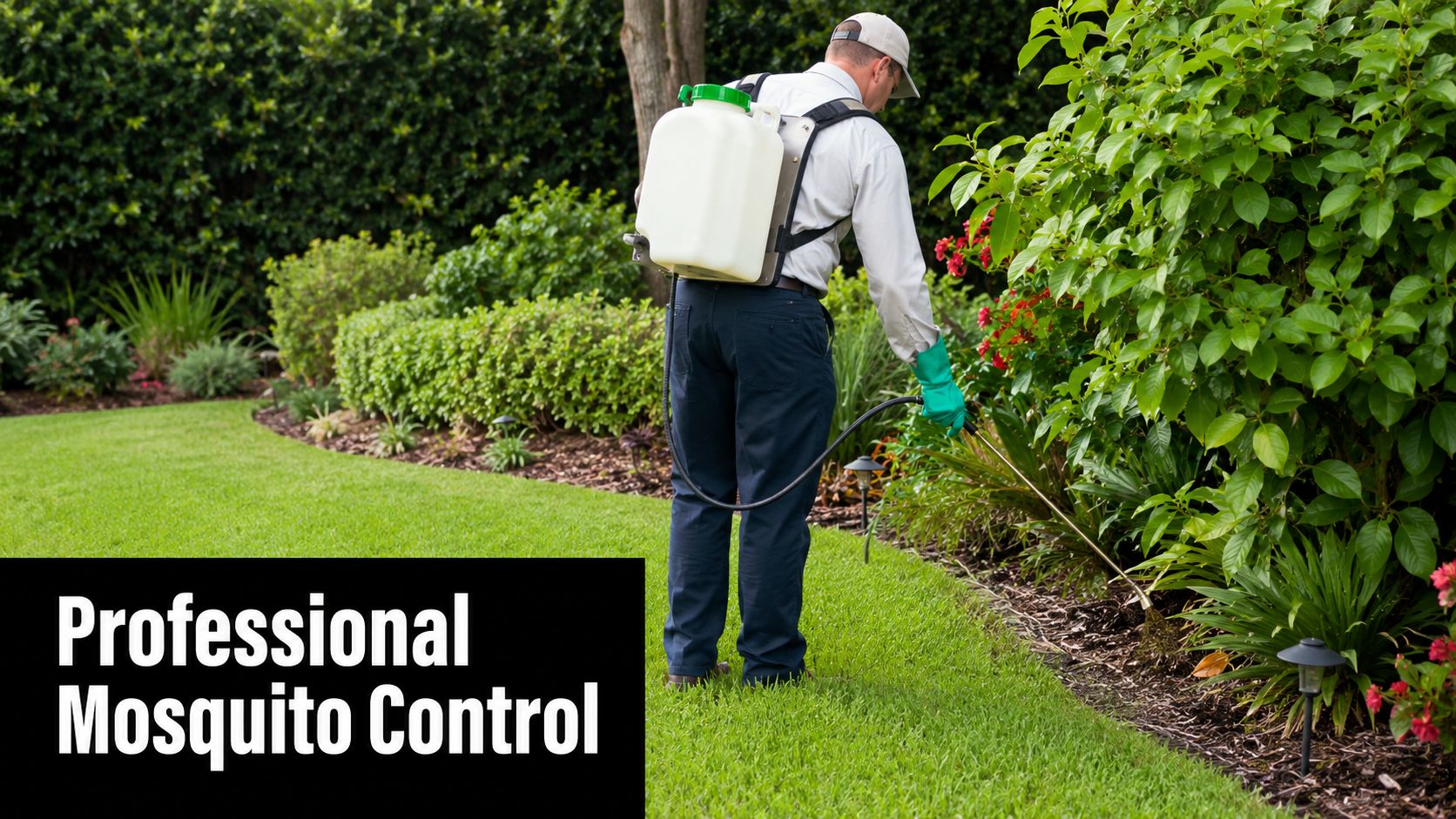
Adult mosquitoes predominantly hide on the undersides of large shrub leaves during daylight, and a single large shrub can harbor hundreds of resting mosquitoes, according to this technician-focused mosquito harborage breakdown. That matters because it changes how a treatment should be applied.
A technician looking for lasting mosquito reduction doesn't just treat the outside edge of vegetation. The effective target is deeper inside the plant, especially the interior branches and the undersides of leaves where mosquitoes rest.
Field insight: If a treatment only touches the outer shell of dense shrubs, it often misses the part of the plant mosquitoes are using most.
Why professional application outperforms random spraying
The difference is precision.
A professional mosquito program looks at how the yard functions as a system. The shaded side of the garage, the underside of the deck, the shrub line near the fence, and the damp pocket behind the shed all get evaluated differently. Treatment is directed to likely harborages instead of being spread evenly over every visible surface.
That's the practical value of a service such as professional mosquito pest control. It's built around locating active resting areas and applying targeted reduction methods where mosquitoes spend their time, not where homeowners notice them later.
What works better than DIY tools
Store-bought options often fall into three categories. Quick fogging, light-based traps, and broad lawn sprays. Each can seem appealing because it feels immediate.
In practice, homeowners usually get better results from a plan that combines:
- Harborage treatment aimed at dense vegetation, leaf undersides, and shaded structural areas
- Breeding site correction so fresh mosquitoes aren't constantly replacing the ones you reduce
- Yard-specific adjustments such as trimming heavy growth and improving sanitation around moisture-holding items
That same targeted mindset carries over into broader residential pest control and commercial pest control. Properties rarely have one isolated issue. The same inspection that identifies mosquito pressure often helps uncover conditions contributing to ants, spiders, wasps, or rodent activity as well.
Protecting Your Family and Property in Northwest Indiana
Mosquito control isn't only about comfort, though comfort matters. It's also about whether your family can use the yard without thinking twice about every bite, every cookout, or every evening spent outside.
In Northwest Indiana, homeowners often focus on patios, decks, and play areas first because those are the spaces that lose value when mosquito pressure gets high. A backyard can be clean, well-maintained, and attractive, yet still feel off-limits once biting starts.
The part many guides leave out
Most mosquito advice stays outdoors. That misses a real concern for some homes.
Most guides list generic spots but fail to address the indoor micro-habitat specificity of species like the Asian Tiger Mosquito, which may hide in dark corners behind furniture and on dark indoor surfaces, as discussed in this mosquito behavior thread summarizing biologist observations. For homeowners, that means “check the yard” isn't always enough when aggressive daytime biters are making their way inside through screens or vents.
If mosquitoes are showing up in bedrooms, behind curtains, or in darker corners, the solution may require both outdoor reduction and indoor exclusion steps.
Peace of mind has practical value
Professional mosquito reduction supports more than one goal at once:
- Family use of the yard for meals, play, and evenings outside
- Less indoor frustration when mosquitoes slip past weak screening or open doors
- Better overall property comfort for guests, tenants, and employees
- A more complete pest strategy that fits with ant control, spider control, termite control, wasp removal, and other seasonal pest issues
That's why many people who start by searching pest control near me are really looking for reliability. They want someone who understands how pests behave on a real property, not just a company that applies a generic treatment and moves on.
What to Expect with Your Crown Point Pest Control Partner
When homeowners contact a local exterminator in Crown Point, IN, they usually want a straightforward answer. What's attracting the mosquitoes, what can be corrected, and what should happen next?
A good service process should feel simple from the start.
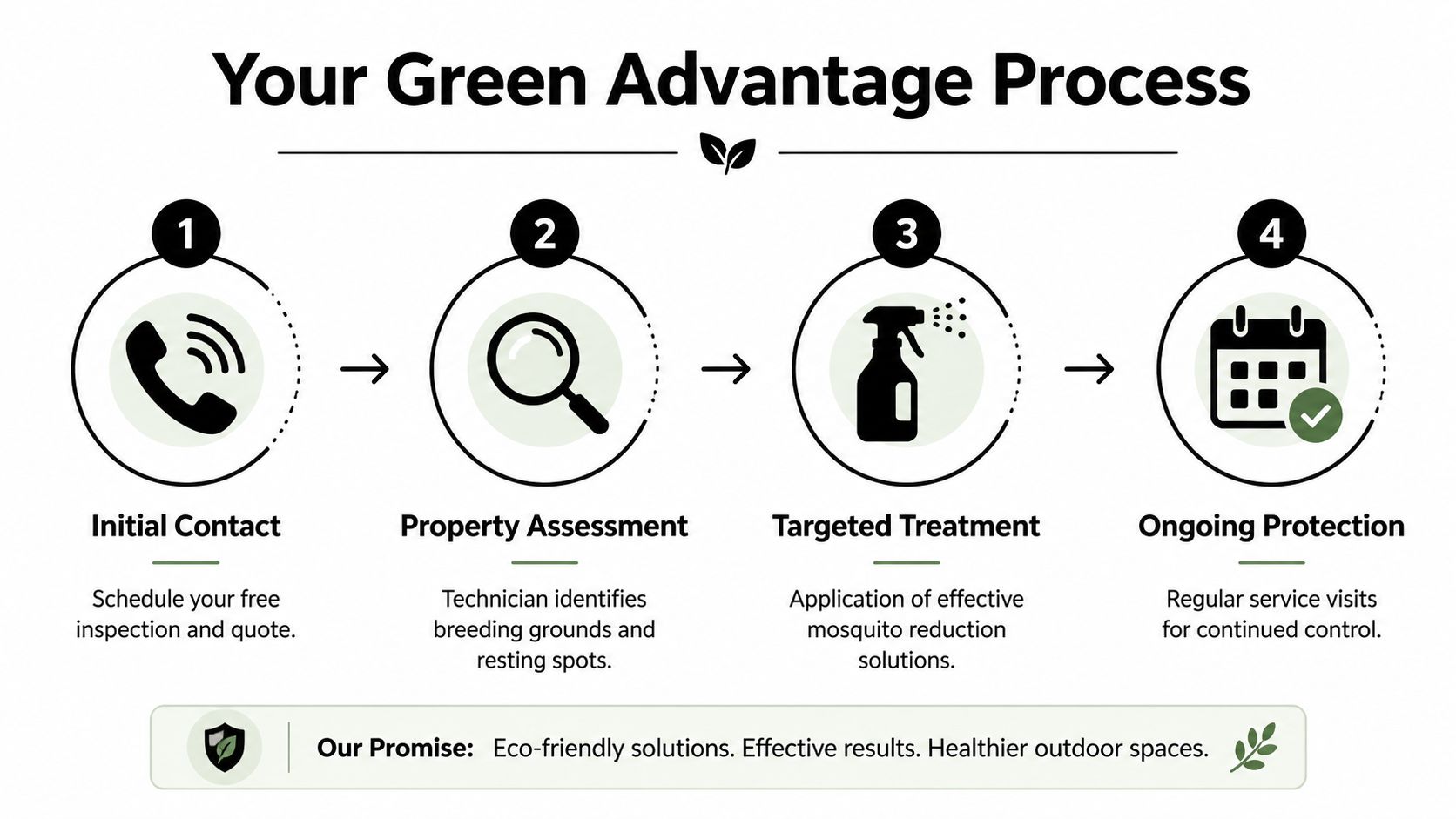
What the service process looks like
Initial contact
You call, describe what you're seeing, and get help scheduling service. Clear communication matters because timing, yard layout, and recent weather can all affect what the technician needs to inspect.Property assessment
The technician checks likely resting and breeding areas, not just the places where bites happen. That includes vegetation, structural shade, damp pockets, containers, and other mosquito-friendly zones.Clear treatment plan
You should know what's being targeted and why. The goal isn't to overwhelm you with jargon. It's to show you which parts of the property are contributing most to the problem.Follow-through and prevention advice
Homeowners also need practical upkeep steps. Experts recommend keeping grass under 2 inches and trimming overgrown shrubs and vegetation because these create the shaded daytime resting spots mosquitoes need, according to the Marin residents guide for mosquito harborage reduction.
What a useful consultation should include
A solid mosquito visit should leave you with actions you can take, such as:
- Trim dense growth around decks, fences, and sheds
- Watch hidden water in saucers, tarps, and containers after rainfall
- Improve yard airflow where plantings have become too thick
- Check screening and entry points if mosquitoes are making it indoors
That kind of guidance is part of working with a pest control partner instead of chasing one-off fixes. It's the same practical mindset that helps homeowners and businesses in Northwest Indiana with commercial pest control, rodent control, spider control, preventative pest treatments, and other recurring pest issues.
If mosquitoes are taking over your yard in Crown Point, IN, it's time to stop guessing and start with a property-specific plan. Contact The Green Advantage to schedule a pest inspection, request a quote, and get clear answers about the hidden mosquito resting and breeding spots around your home or business.
Mosquito Dunks Lowes: Mosquito Dunks Lowe’s
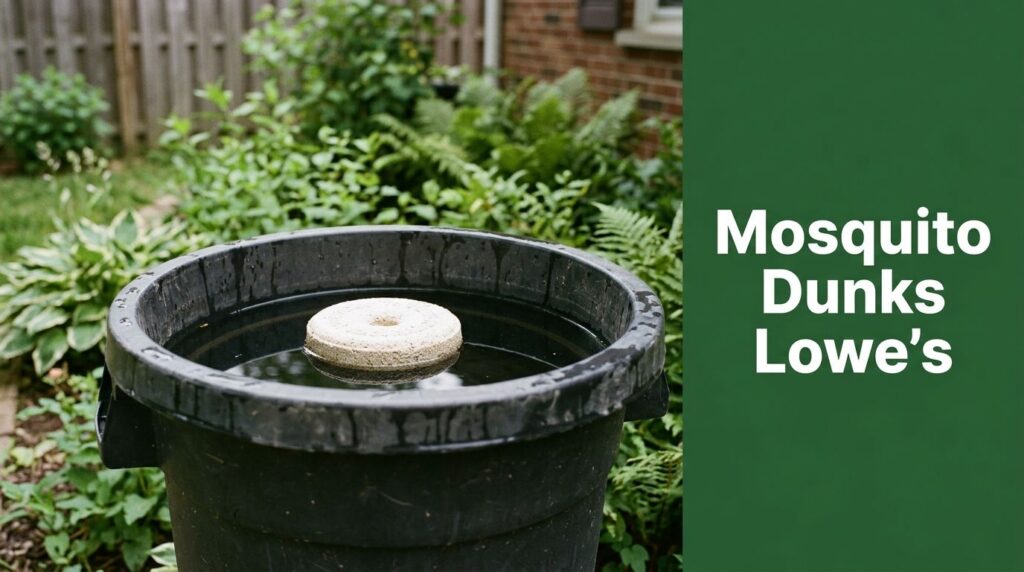
Mosquito Dunks are usually available at Lowe's, including stores serving Crown Point, and one dunk treats up to 100 square feet of surface water and stays effective for about 30 days. If you're checking local stock, use Lowe's website or app for the store nearest you, because availability can change fast during mosquito season.
If you're reading this, there's a good chance you're standing in your kitchen after getting chased off the patio, typing “Mosquito Dunks Lowes” because you want something that works without turning your yard into a chemistry project. That's a smart place to start. Dunks are useful. They're just not the whole answer for a Northwest Indiana yard.
Your Guide to Mosquito Control in Crown Point IN
A Crown Point family grills burgers, sets out drinks, and gets the backyard ready for a quiet summer evening. Then the mosquitoes show up. Kids start swatting. Somebody runs back inside for spray. Ten minutes later, the patio is empty.
That's the exact moment many homeowners start looking for mosquito control, whether that means a DIY product from a hardware store or searching for pest control near me, exterminator near me, or pest control in Crown Point, IN. The problem isn't that homeowners are lazy. It's the opposite. Homeowners are trying to do the right thing. They empty buckets, dump toys, clean up debris, and look for products that feel safer around family spaces.
Why mosquitoes are so frustrating in Northwest Indiana
Crown Point and nearby Northwest Indiana neighborhoods give mosquitoes plenty to work with. We get warm weather, rain, shaded landscaping, low spots in yards, and common backyard water sources like:
- Rain barrels and decorative features that hold water longer than people realize
- Clogged gutters and downspouts that collect enough standing water for breeding
- Containers around the yard like flower pots, wheelbarrows, toys, and covers
That's why DIY products can seem confusing. A product may work exactly as designed and still leave you getting bitten at dusk.
Local reality: If mosquitoes are breeding in one spot and resting in another, you can treat part of the problem and still feel like nothing changed.
When a search for Mosquito Dunks turns into a bigger pest question
Homeowners looking up Mosquito Dunks at Lowe's are often dealing with more than one issue. The same yard that holds water can also draw other pests and seasonal headaches. That's why people searching residential pest control, commercial pest control, or exterminator in Crown Point, IN often end up needing a broader plan that also considers ant control, spider control, wasp removal, and other seasonal pest issues common in Northwest Indiana.
Mosquitoes are the pest you notice first. They aren't always the only pest creating trouble.
What Are Mosquito Dunks and Do They Work
Yes, they work, when you use them for what they're built to do. Mosquito Dunks are larvicides, which means they target mosquito larvae in standing water before those larvae turn into biting adults.
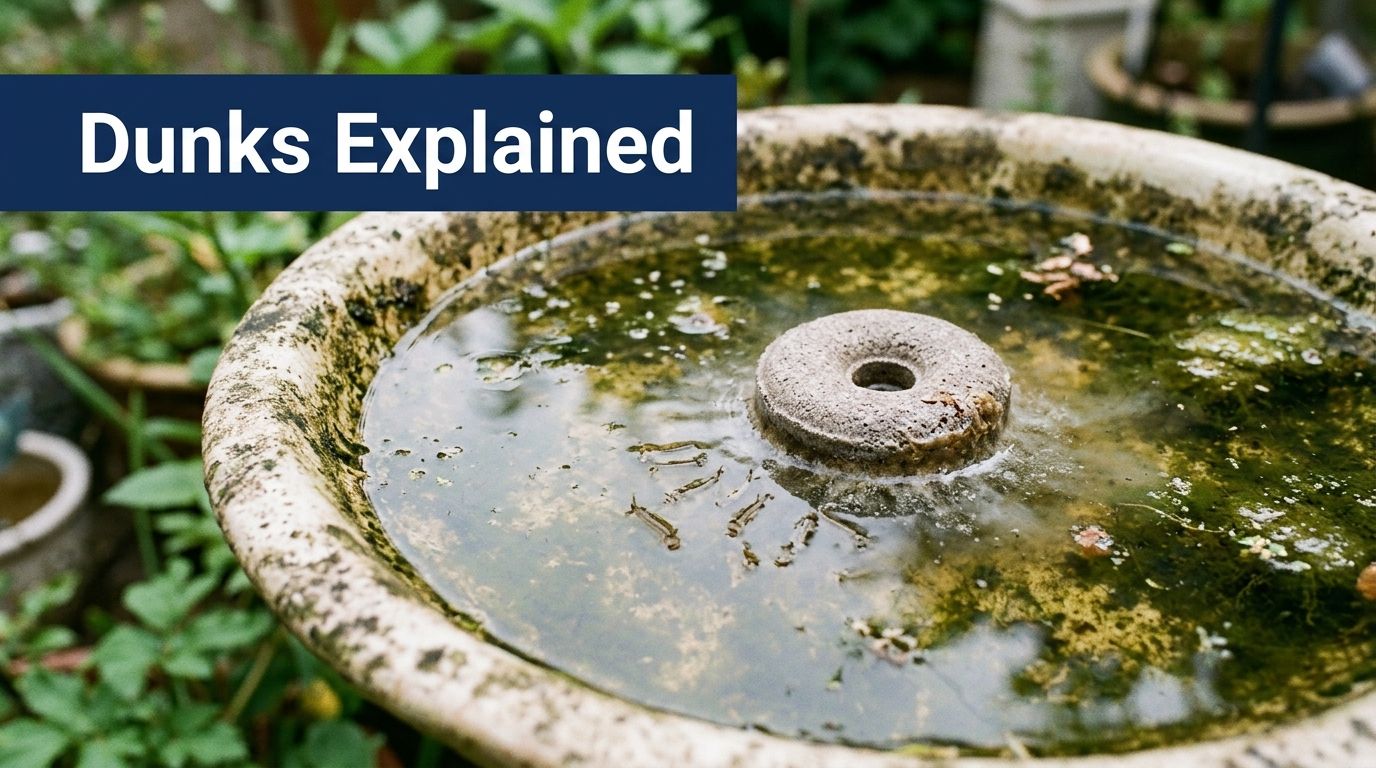
What a Mosquito Dunk actually does
Each Mosquito Dunk treats up to 100 square feet of surface water, regardless of depth, and remains effective for approximately 30 days. The active ingredient, Bacillus thuringiensis israelensis (BTI), is a natural bacterium that specifically targets mosquito larvae without harming fish, birds, or pets, according to the New York State mosquito dunk guidance.
Think of that 100 square feet like a 10 foot by 10 foot parking space. If your standing water area is smaller, you can break the dunk into smaller pieces. That makes them practical for birdbaths, rain barrels, ornamental ponds, and similar water-holding spots.
How to check Lowe's stock near Crown Point
If you want Mosquito Dunks from Lowe's, don't guess. Check local inventory before you drive over.
- Search the product by name on Lowe's website or app.
- Set your preferred store serving the Crown Point area.
- Look for pickup or in-stock status before heading out.
- Buy enough for the season, because a dunk lasts about a month, not all summer.
If you have a pond or decorative water feature, this guide on how to control mosquitoes in ponds is worth reading before you toss anything in.
A short visual helps if you've never used them before.
Why many homeowners like them
Mosquito Dunks appeal to homeowners because they're targeted. They go after larvae in water instead of spraying your whole yard. That matters if you want a more eco-friendly pest control approach and you're dealing with obvious breeding spots you can reach.
If you have standing water you can identify and manage, Dunks are one of the better DIY tools for that narrow job.
That said, narrow job is the key phrase.
The Limits of DIY Mosquito Control with Dunks
A common point of frustration arises. People use Mosquito Dunks correctly, then walk outside and still get eaten alive.
The biggest misunderstanding
A widespread misconception is that Mosquito Dunks eliminate adult mosquitoes. However, they are strictly larvicides effective only in standing water and require ingestion by larvae. Data from lawn-care forums shows 68% of users mistakenly expect immediate adult reduction, a result the product is not designed to deliver, as explained in this review of how Mosquito Dunks work.
That means if adult mosquitoes are already hiding in shrubs, under decks, along fence lines, or in damp shade around your yard, a dunk won't touch them.
Why homeowners in Crown Point feel disappointed
Northwest Indiana yards often have a mix of mosquito conditions at the same time. You may have:
- Visible breeding water in a birdbath or rain barrel
- Hidden water in gutters, toys, tarps, and drainage dips
- Adult resting zones in dense bushes, tall grass edges, and shaded corners
Treating one birdbath can help. It won't clear out adults resting behind the hostas next to your patio.
A dunk can stop the next wave from developing in treated water. It won't remove the mosquitoes already flying around your yard tonight.
DIY works best when the problem is small
If your mosquito issue is limited to a few containers you can manage, DIY may be enough. That's especially true if you're consistent about dumping standing water, cleaning gutters, and replacing dunks on schedule.
But if you've already done that and the problem keeps coming back, it's time to be honest. The product didn't fail. The strategy was incomplete.
For homeowners weighing that decision, this article on DIY or hiring a pest control pro gives a practical way to think about where retail products help and where they stop helping.
Mosquito Dunks vs Professional Mosquito Treatment
Mosquito Dunks have a place. They're just not a full-yard mosquito program.
Side by side comparison
| Feature | DIY Mosquito Dunks | Professional Mosquito Treatment |
|---|---|---|
| Main target | Larvae in standing water | Broader yard conditions, including adult activity and breeding areas |
| Best use | Small water sources you can find and access | Yards with recurring mosquito pressure |
| Coverage style | Spot treatment | Property-wide treatment approach |
| Homeowner effort | Ongoing checking, replacing, and monitoring | Scheduled service with less hands-on work for you |
| Result | Helpful reduction in treated water sources | More complete outdoor comfort strategy |
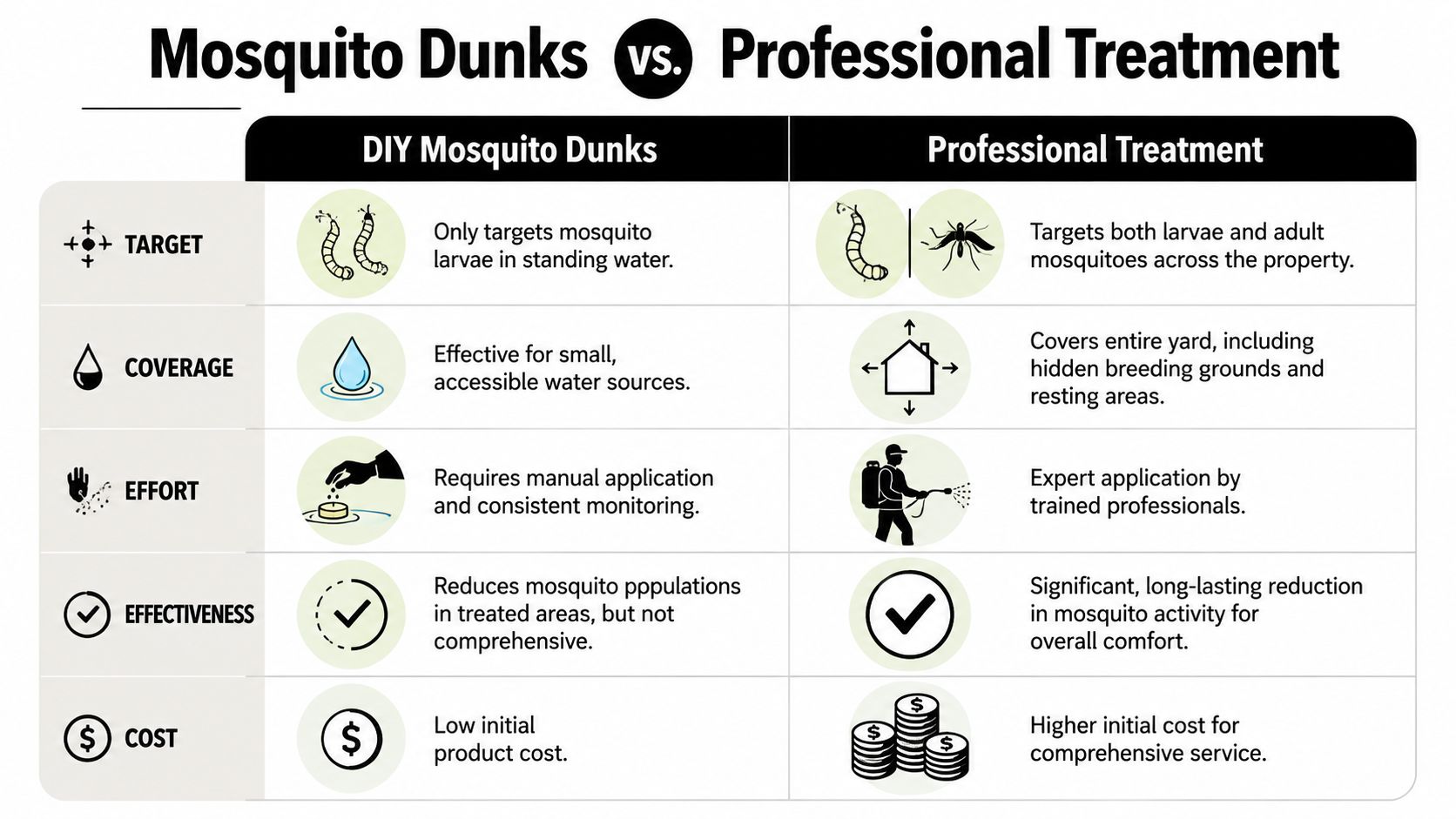
Where Dunks make sense
Mosquito Dunks are approved for use in organic production and provide a non-chemical larvicide option for specific containers like rain barrels and ornamental ponds. However, their effectiveness is limited to the user's own property and requires monthly reapplication throughout the season, according to Wellington mosquito dunk guidance.
That makes them a solid tool for homeowners who know exactly where water is collecting and want to stay on top of those spots.
Where professional treatment pulls ahead
Professional mosquito service becomes the better choice when mosquitoes are affecting how you use your property. If you can't sit on the patio, kids can't play in the yard, or tenants and customers are complaining, retail products usually stop feeling convenient.
Some homeowners also want a lighter-touch personal option to pair with yard management. In that case, Essential oil mosquito defense can be a reasonable supplemental resource for individual use, but it still doesn't replace treating the actual mosquito conditions around a property.
The Green Advantage Solution for Northwest Indiana Homes
A real mosquito plan has to match how mosquitoes behave in a real yard. That means looking beyond the obvious water source and dealing with the places mosquitoes breed, hide, and linger.

What a complete yard strategy includes
A stronger mosquito program usually looks at the whole property, not just one container. In Crown Point and nearby Northwest Indiana service areas, that often means checking:
- Standing water sources around gutters, covers, pots, drains, and ornamental features
- Shaded resting areas under decks, in garden beds, and along shrub lines
- Property conditions that keep moisture and mosquito activity hanging around longer
This is also where broader residential pest control matters. The same property review that helps reduce mosquito pressure can also reveal conditions feeding ant problems, spider activity, wasp nesting, or rodent movement around the structure.
Why targeted treatment matters
The Bti bacterium in professional-grade and DIY products like Dunks is globally effective against all 2,500 mosquito species. It works by releasing toxins in the larval gut, causing feeding to stop and death within 48 hours, while being harmless to beneficial insects, pets, and wildlife due to their lack of specific gut receptors, according to the Mosquito Dunks label information.
That larval control is useful, but a professional program doesn't stop there. It also addresses where adult mosquitoes are active around the home. That's the part DIY shoppers often miss when they search for Mosquito Dunks Lowes and assume one product should solve the whole mosquito problem.
Good mosquito control isn't just about what's in the water. It's about what's living around the yard.
Why this matters for homeowners and businesses
If you're searching pest control near me, exterminator near me, or commercial pest control in Crown Point, you're probably not looking for a science lesson. You want your outdoor areas usable again.
That applies to homes, rental properties, and commercial spaces alike. Mosquito pressure affects comfort, outdoor use, and day-to-day quality of life. A broader pest plan also helps protect your property from overlapping seasonal issues common in Northwest Indiana.
Take Back Your Yard with The Green Advantage
If you want the honest answer, here it is. Mosquito Dunks are worth buying if you have standing water you can identify and manage. They're a smart DIY tool for a specific job.
They are not a complete mosquito control plan for most Crown Point yards.
What to do next
If you're dealing with a light issue, start with the basics:
- Dump and drain what you can around the yard.
- Use Dunks where water has to stay such as rain barrels or ornamental features.
- Watch what happens at dusk around shrubs, decks, and fence lines.
If mosquitoes are still running your yard after that, stop wasting weekends guessing.
What working with a local pest expert should feel like
You should expect a straightforward conversation, a clear look at your property conditions, and practical recommendations that fit your home or business. No vague promises. No pressure. Just a realistic path to better mosquito control and, when needed, help with related issues like spider control, wasp removal, ant control, rodent control, and other preventative pest treatments for Northwest Indiana properties.
The goal isn't to sell you one more product. The goal is to make your outdoor space usable again.
When your family can't enjoy the patio, the right move is the one that solves the whole problem.
If you're ready for dependable The Green Advantage approach to mosquito control, pest inspections, and ongoing pest management in Crown Point, IN and nearby Northwest Indiana communities, contact the team to request a quote and schedule service. If you've been searching for pest control in Crown Point, IN, exterminator in Crown Point, IN, or residential pest control that fits local conditions, this is the next step.
How Long Does Pest Control Take? Get Estimates
A standard pest control visit in Crown Point typically takes 45 to 60 minutes, but complete results can take longer depending on the pest and how established the problem is. If you're worried about how much of your day this will take, and whether you'll still see bugs afterward, the timeline usually makes a lot more sense once you separate the visit itself from the full treatment process.
If you're reading this after spotting ants in the kitchen, hearing scratching in a wall, or finding wasps around the eaves, you're probably asking the same practical question every homeowner asks first: how long does pest control take? That concern is reasonable. You want the issue handled quickly, but you also want to know what to expect inside your home, around your family, and across the next few days or weeks.
In Crown Point, IN and nearby Northwest Indiana communities, pest issues don't all follow the same clock. A straightforward residential pest control visit may be brief and efficient. A more involved rodent control, termite control, or mosquito control job can take much longer, and the visible result may not match the time spent on site.
The biggest misunderstanding comes from assuming a short appointment should mean instant elimination. That's not how many treatments work. A technician may only need about an hour in the home, but the product, bait, or exclusion strategy may keep working well after the truck pulls away. That's why a good exterminator near me should explain both timelines clearly: service time and result time.
Your Guide to Pest Control Timelines in Crown Point IN
Homeowners in Crown Point usually aren't looking for abstract advice when pests show up. They want to know whether they'll need to clear the whole morning, whether the kids or pets need to stay out of treated areas, and whether the bugs should be gone by tomorrow.
Those are the right questions.
Two timelines matter
The first is how long the appointment takes. The second is how long the pest problem takes to resolve. Those aren't the same thing, and mixing them together is where frustration starts. A visit can be short, while the biological process of eliminating a colony, interrupting breeding, or forcing pests out of hiding takes longer.
For homeowners searching for pest control in Crown Point, IN, that distinction matters because it helps you judge results fairly. If you're dealing with ant control, spider control, wasp removal, mosquito control, or rodent control, the treatment plan has to match the pest. Fast isn't always thorough, and thorough isn't always disruptive.
Practical rule: Judge a pest service by whether the treatment matches the problem, not just by how quickly the technician leaves the driveway.
Why timing varies from house to house
Two homes on the same street can have very different timelines. One may need a quick preventative pest treatment around the exterior. The other may need interior work, inspection of hidden entry points, follow-up service, and more detailed recommendations.
Common factors include:
- Pest type: Ant control and mosquito control follow different treatment patterns than termite control or bed bug work.
- Severity: A few occasional invaders are simpler than an established infestation.
- Access: Cluttered basements, packed garages, dense landscaping, and difficult crawlspaces slow things down.
- Goal: Residential pest control for prevention is different from active extermination.
For commercial pest control, timing can become even more site-specific because kitchens, warehouses, offices, and tenant properties all have different access and sanitation conditions.
What homeowners should expect
A reliable local provider should explain the visit in plain language, tell you what happens first, and prepare you for what happens after. That means no vague promises and no pretending every treatment works instantly.
In Northwest Indiana, seasonal pest pressure changes throughout the year, so timelines do too. Spring ants, summer mosquitoes, fall rodents, and winter overwintering pests all create different service patterns. Clear expectations are part of the job.
On-Site Treatment Times What to Expect During Our Visit
You book a visit because you want to know one thing fast. How long will someone be at the house, and what will they do while they are there?
For most homes in Crown Point, the on-site part is usually finished in about an hour. Smaller homes on a routine preventative plan can be closer to 30 minutes. A first visit or a mosquito treatment can take longer because the work includes inspection, treatment decisions, and coverage of more outdoor areas, as noted in this residential treatment timing overview.
What changes the visit length
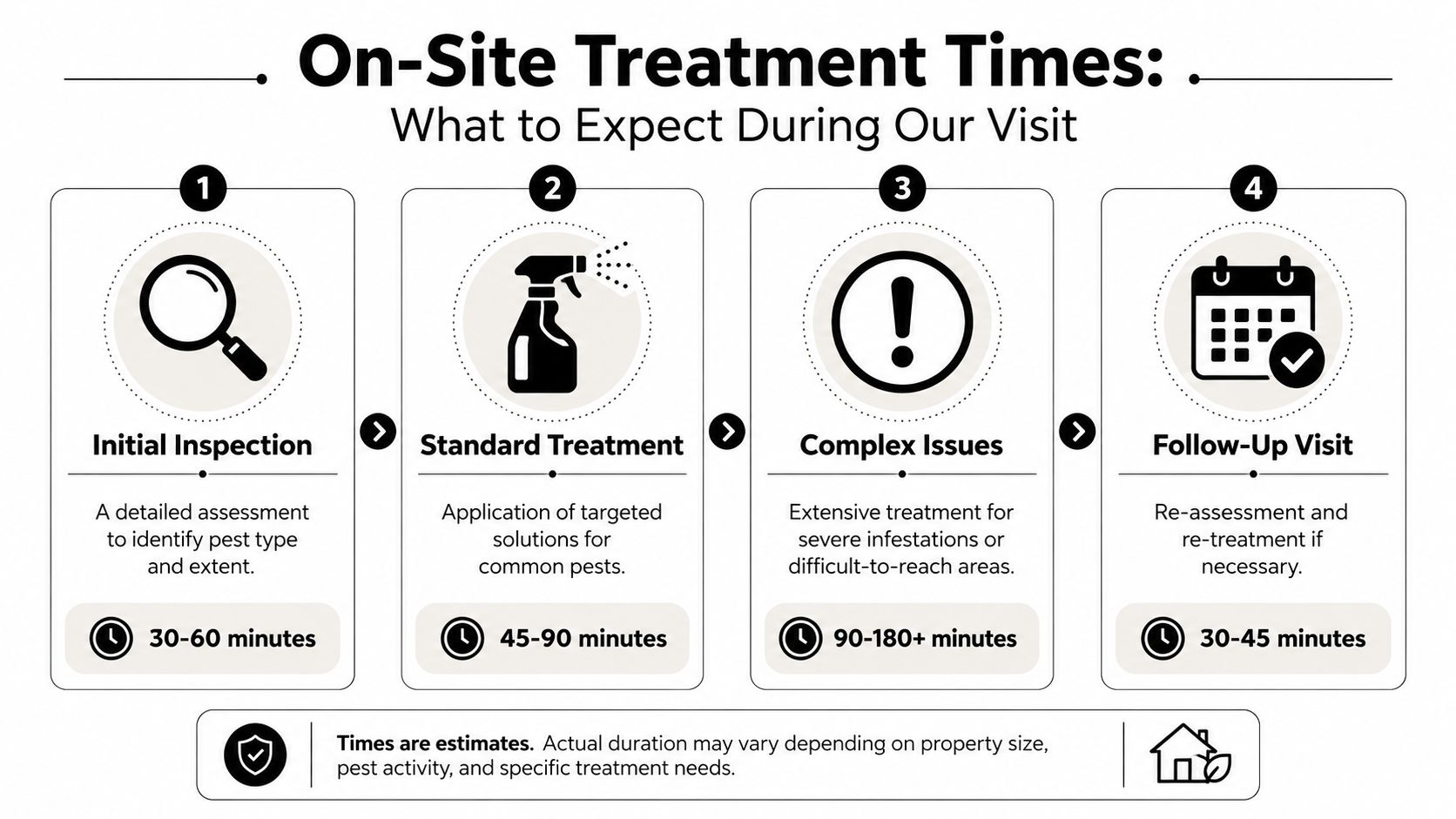
A proper visit includes inspection, not just product application. I look for active areas, likely entry points, moisture issues, and the spots where treatment will hold up best.
Here is the usual pattern:
| Visit type | What usually happens | Typical time |
|---|---|---|
| Routine preventative service | Exterior treatment, targeted interior service if needed, quick review of current activity | About 30 to 60 minutes |
| First visit | Inspection, problem history, treatment planning, and application | Often longer than a maintenance visit |
| Active infestation service | Focused work in problem zones, added product placement, and more detailed instructions | Often longer than standard service |
| Yard-focused mosquito control | Treatment of breeding and resting areas outdoors | About 30 minutes to 2 hours |
The biggest difference between a quick stop and a longer appointment is usually access and detail. If the garage is packed wall to wall, the crawlspace is tight, or the problem is centered around kitchen voids, utility lines, or exterior gaps, the visit slows down for a good reason. Rushing through those areas saves minutes and costs results.
First visits vs recurring service
First appointments take longer because the plan is being built in real time. We need to confirm what pest is present, where activity is strongest, and whether the issue is isolated or spread through several areas.
Recurring service is more efficient. The property history is already there, pressure points are known, and the visit is focused on maintaining control instead of starting from zero. If you want to help the appointment go smoothly, this guide on how to prepare for pest control covers the simple prep steps that save time and help treatment reach the right areas.
A shorter visit does not mean less care. In many homes, it means the technician knows exactly where to inspect and what to treat.
For homeowners looking for residential pest control, that is the normal rhythm. Commercial service follows the same basic process, but timing depends more on facility layout, restricted-access areas, and whether service has to work around business hours.
The Timeline to Results When Will You See Fewer Pests
You come home after service, check the kitchen that night, and spot a few ants again. Or you see a roach where you had not seen one in days. That usually feels like bad news. In many cases, it is a normal part of the timeline.
The visit itself may take about an hour. The results usually do not. For many common household pests, control takes shape over several weeks because baits, residual products, and follow-up adjustments need time to affect the full population. As explained in this breakdown of pest control result timelines, it is common for full results to take 4 to 6 weeks, and activity can even increase during the first couple of weeks after treatment.
Why you may see more pests first
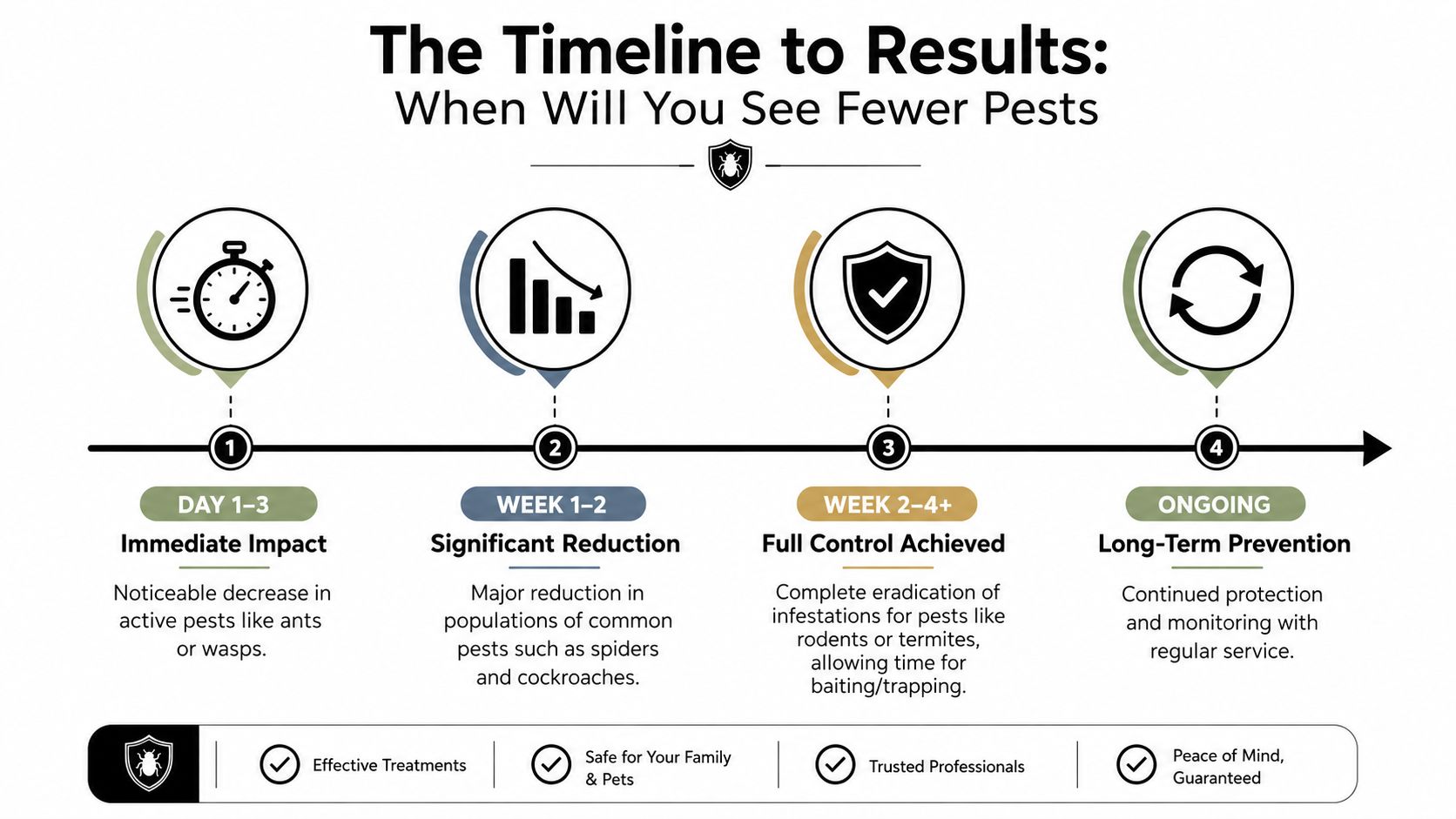
Pests do not all die in place the minute a treatment goes down.
A lot of the work happens after they cross a treated area or pick up bait and carry it back to where the colony is nesting. That is why a homeowner may notice more visible movement at first. The product is affecting behavior, flushing pests out of wall voids, under appliances, around pipe gaps, and along baseboards where they were hiding before.
This is one of the biggest expectation gaps in pest control. Homeowners often judge the service by what they see in the first few days. The better measure is whether activity starts changing over the next few weeks.
What the first weeks usually look like
In a typical home, the pattern goes something like this:
- First few days: You may notice pests out in the open more often.
- First 1 to 2 weeks: Activity can look inconsistent. One room improves, another still has movement.
- Weeks 3 to 6: Numbers usually drop more steadily as the treatment reaches more of the active population and nesting pressure starts to break.
That timeline is especially common with ants, roaches, and other pests where transfer or baiting is part of the strategy. Fast knockdown sounds good, but it is not always the best approach if the goal is getting control at the source instead of just killing the few pests you happen to see.
A short visual can help clarify what homeowners often experience over time.
Results depend on the pest
Mosquitoes, stinging insects, ants, roaches, rodents, and termites all behave differently, so the timeline is never exactly the same from one job to the next. Some pests respond quickly to direct treatment. Others take longer because the treatment is targeting nesting sites, hidden travel routes, or a larger population you may never see.
That is why I always tell homeowners to ask one simple question after the first service. Are we still in the expected process, or are we seeing signs that this needs an adjustment? That conversation matters more than counting every bug you see in the first week.
If you want a clearer picture of what ongoing protection looks like after the initial treatment, this guide on how often pest control should be done helps explain the service rhythm that keeps pest pressure from building back up.
Pest Control Schedules for Northwest Indiana Homes
A lot of Crown Point homeowners call after a one-time treatment and ask the same fair question. If the visit only took about an hour, why are we talking about service over several months?
Because the visit is only part of the timeline. The schedule is what keeps new pest pressure from rebuilding after the first round starts working.
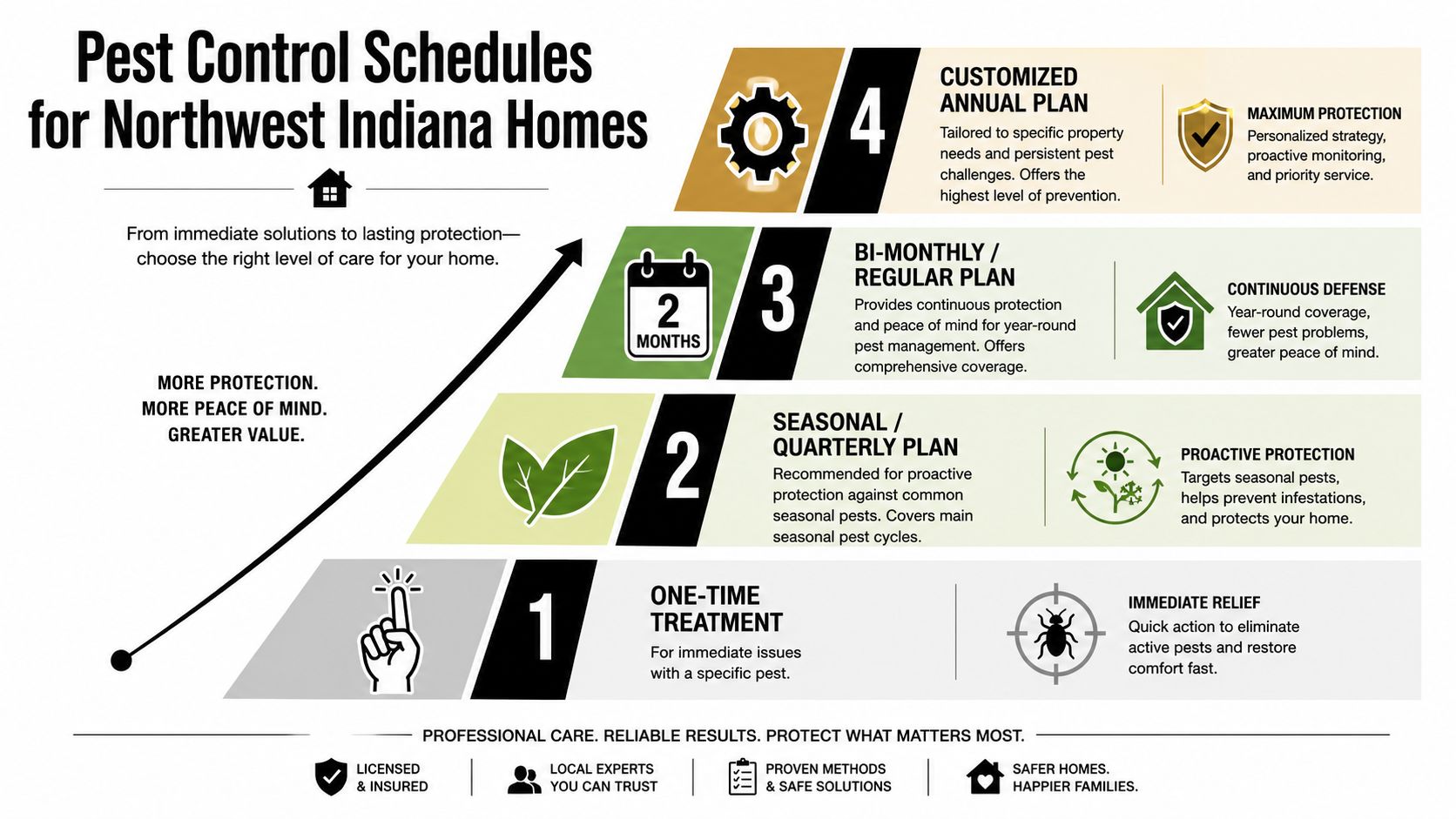
Why quarterly service makes sense here
Northwest Indiana homes deal with shifting pest activity through every season. A recurring schedule lines treatment up with those patterns instead of waiting until insects or rodents are already established.
Typical seasonal pressure looks like this:
- Spring: Ants start foraging, and early perimeter activity shows up around foundations, door thresholds, and mulch beds.
- Summer: Mosquitoes, wasps, and general outdoor insect pressure pick up.
- Fall: Rodents, spiders, and other occasional invaders start pushing indoors for shelter.
- Winter: Pest problems get quieter, but they do not disappear. Mice, roaches, and hidden activity can keep going inside wall voids, crawlspaces, and utility areas.
For many homes, that is why quarterly service is the standard recommendation. CBS News' summary of common pest control scheduling guidance notes that many services recommend quarterly visits, and it also points out that some pests still need time after treatment, with ants often taking about seven to ten days and fleas about two weeks.
Why the schedule matters after the first treatment
That timing matters more than people expect.
If ants are still active a few days after service, or flea activity feels uneven at first, that does not automatically mean the treatment failed. In many cases, the material is doing exactly what it is supposed to do. Pests are contacting treated areas, bait is being shared, and hidden populations are still cycling through before numbers drop.
That is also why a recurring plan works better than a one-and-done approach for many properties. The first service reduces the active problem. Follow-up service keeps outside pressure, seasonal reinfestation, and leftover hotspots from turning into the same callback a month or two later.
Homeowners comparing one-time service with prevention can get a clearer picture from this guide on how often pest control should be done for ongoing home protection.
One-time vs recurring protection
A one-time service can be the right call when the issue is isolated, access is good, and the conditions that caused it are easy to correct.
A recurring plan usually makes more sense when:
- The same pests come back every season: Ants in spring, wasps in summer, mice in fall.
- The property keeps attracting activity: Moisture, thick landscaping, nearby woods, or easy entry points raise pressure.
- You want fewer surprises: Preventative service is usually easier, cheaper, and less disruptive than chasing a larger infestation later.
For Northwest Indiana homes, the schedule is part of the treatment. It gives the initial visit time to work, then keeps pressure down before the next seasonal wave starts.
Factors That Influence Pest Control Duration
The reason two pest control jobs can look similar from the street but take very different amounts of time comes down to diagnosis. Pest control isn't just application. It's inspection, access, strategy, and correction.
Preventative treatments for common pests may take 15 to 30 minutes per technician, while active extermination can extend to 90 to 120 minutes or longer. Severe rodent removal can reach 15 hours of labor across multiple days because trapping, exclusion, and sanitation add complexity, according to this service duration comparison for preventative and active infestations.
Pest type changes everything
A light spider treatment and a rodent job aren't remotely the same workload.
Rodent control often includes inspection of droppings, travel routes, entry gaps, trap placement, exclusion recommendations, and sometimes cleanup planning. Termite control and bed bug work also sit in a completely different category from standard residential pest control because they require broader coverage and tighter process control.
Property conditions matter
The condition of the property can speed a job up or slow it down.
A technician can move efficiently when access is clear and the problem is visible. Service gets more involved when there are packed storage areas, dense vegetation against the home, heavy yard clutter, or sanitation issues feeding the infestation. Those conditions don't make treatment impossible, but they can add time and may also affect how fast results appear.
The best treatment plan doesn't start with the product. It starts with what the property is allowing pests to do.
Severity and scope are different issues
Severity is about how established the pest problem is. Scope is about how much of the property is involved. A mild issue in one area may be easier than a moderate issue spread across a basement, garage, exterior perimeter, and yard.
Consider the difference:
| Factor | Simpler job | More involved job |
|---|---|---|
| Infestation level | Early activity | Established infestation |
| Treatment area | One or two zones | Multiple interior and exterior zones |
| Access | Clear and open | Cluttered or obstructed |
| Method | Direct treatment | Traps, baiting, exclusion, sanitation steps |
That's why a trustworthy exterminator near me won't promise one fixed timeline before seeing the site. Good pest control in Crown Point, IN should be specific, but it should also be honest about variables.
What doesn't work
Homeowners often lose time when they wait too long, treat the wrong pest, or rely only on store-bought sprays for a problem requiring exclusion or bait transfer. Quick contact kills can make an area look better for a moment while leaving the source untouched.
What works better is matching the method to the actual issue. Sometimes that's a short preventative service. Sometimes it's a multi-visit process. The timeline should come from the pest and the conditions, not from guesswork.
Your Local Solution The Green Advantage Process
Good pest control should feel organized from the first phone call. You shouldn't have to chase answers, wonder when someone is arriving, or guess what happens after the service.
With a local Crown Point company, the process usually starts with a conversation about what you're seeing, where you're seeing it, and how urgent the issue feels. That early detail matters. Ants in one bathroom call for a different response than rodent sounds in an attic or a larger commercial pest control concern in a facility with multiple access points.
What working with a local team should feel like

A strong service experience usually follows a practical sequence:
- You describe the problem. The office gathers enough detail to schedule appropriately.
- The technician inspects before acting. That keeps the treatment tied to the actual issue, not assumptions.
- You get clear expectations. That includes how long the visit may take, what preparation is helpful, and when to expect improvement.
- Follow-up happens when needed. Especially for persistent or high-risk pests.
That clarity matters even more for complicated jobs. For termite work, extensive barrier treatments can require a full day's work for two technicians to create a complete and unbroken chemical barrier, according to this explanation of labor requirements for complex termite treatments. That's a good example of why the right pest control company won't treat every service call like a quick spray appointment.
Why local knowledge helps
Northwest Indiana properties come with their own patterns. Moisture conditions, seasonal swings, older construction details, wooded edges, and neighborhood pest pressure all affect what technicians find and how they plan service.
For homeowners and businesses searching pest control near me, exterminator near me, or eco-friendly pest control in Crown Point, the advantage is simple. You want someone who can tell the difference between a short visit, a longer treatment, and a problem that needs an ongoing prevention plan.
Clear communication is part of the treatment. People handle pest problems better when they know what “normal” looks like after service.
If you need answers about pest control in Crown Point, IN, want help with residential pest control or commercial pest control, or you're ready to schedule an inspection, contact The Green Advantage. Their team serves Crown Point and nearby Northwest Indiana communities with practical pest solutions, straightforward guidance, and treatment plans built around the actual timeline of the job.
What Kills Ticks in the Yard: Crown Point Solutions
A lot of Crown Point homeowners hit the same point every year. The weather turns nice, the kids want to play outside, the dog heads straight for the back fence, and suddenly nobody feels relaxed in the yard anymore because ticks are on your mind.
That concern is reasonable. Ticks change how people use their property. Instead of enjoying the patio or letting pets roam, you start checking pant legs, watching the edges of the lawn, and wondering whether the shady spot behind the shed has turned into a problem area. In Northwest Indiana, that worry usually starts in the places that look harmless. Leaf litter along the fence, brush near the tree line, taller grass behind a playset, or a damp border where wildlife passes through.
If you've been searching for pest control near me, exterminator near me, or pest control in Crown Point, IN, you're probably not looking for theory. You want to know what kills ticks in the yard, what works, and how to make the space usable again without creating a new safety concern for your family or pets.
Reclaim Your Yard from Ticks in Crown Point IN
One of the most common situations around Crown Point goes like this. A family spends time cleaning up the yard in spring, gets the grill ready, freshens up the landscaping, and expects to be outside more. Then a pet comes in with a tick, or someone finds one after mowing near the back edge of the lot. The whole yard starts to feel different after that.
Parents get cautious fast, and for good reason. Pet owners do too. Once ticks show up, people stop trusting the spaces where they used to relax. The yard may still look clean, but it doesn't feel comfortable. This is the main problem with ticks. They don't just create a pest issue. They take away normal outdoor living.
Why tick problems feel worse in Northwest Indiana
In Crown Point and nearby Northwest Indiana communities, many properties have exactly the mix ticks like best. There's lawn, but there's also shade. There are maintained areas, but also borders with weeds, mulch beds, ornamental grasses, brushy corners, and neighboring lots that may not be kept the same way.
That means a yard can seem tidy and still support tick activity.
Practical rule: If your yard has cool, protected edges where wildlife or pets move through, ticks can hold there even when the center lawn looks fine.
What helps most is taking a realistic view. Ticks usually aren't solved by one quick trick, one household spray, or one Saturday cleanup. The yards that stay more usable usually have two things working together:
- Targeted treatment that knocks down active tick pressure where ticks hide
- Ongoing yard adjustments that make the property less inviting over time
That's why residential pest control makes such a difference for tick issues. A trained technician doesn't just treat open grass and leave. Critical work happens in transition zones, perimeter edges, low vegetation, leaf buildup, fence lines, and shaded harborage points that generic advice often skips.
For homeowners looking for exterminator in Crown Point, IN or pest control in Crown Point, IN, the goal isn't just killing a few visible ticks. It's getting back to a yard you can use again with more confidence.
Understanding the Tick Threat in Northwest Indiana
Ticks in Northwest Indiana aren't random. They show up where moisture, cover, and host activity come together. That's why some yards in Crown Point seem to have recurring problems while others on the same street have much lighter pressure.
The species many homeowners hear about most is the blacklegged tick, often called the deer tick. This is one reason ticks get serious attention in the Midwest. They're not just annoying pests like a few mosquitoes around dusk. They're tied to health concerns, including Lyme disease, which is one reason homeowners want faster action once ticks are found on pets, people, or around common use areas.
Where ticks hide on local properties
Ticks don't spend most of their time out in the bright middle of a dry lawn. They hold in protected areas where they can avoid heat and wait for a host to pass by.
Common trouble spots in Crown Point yards include:
- Leaf litter under trees where moisture stays longer
- Tall grass along fences and behind sheds
- Wooded edges where yards meet brush or tree cover
- Groundcover and dense ornamentals that stay cool underneath
- Pet paths and wildlife routes along lot lines and rear property edges
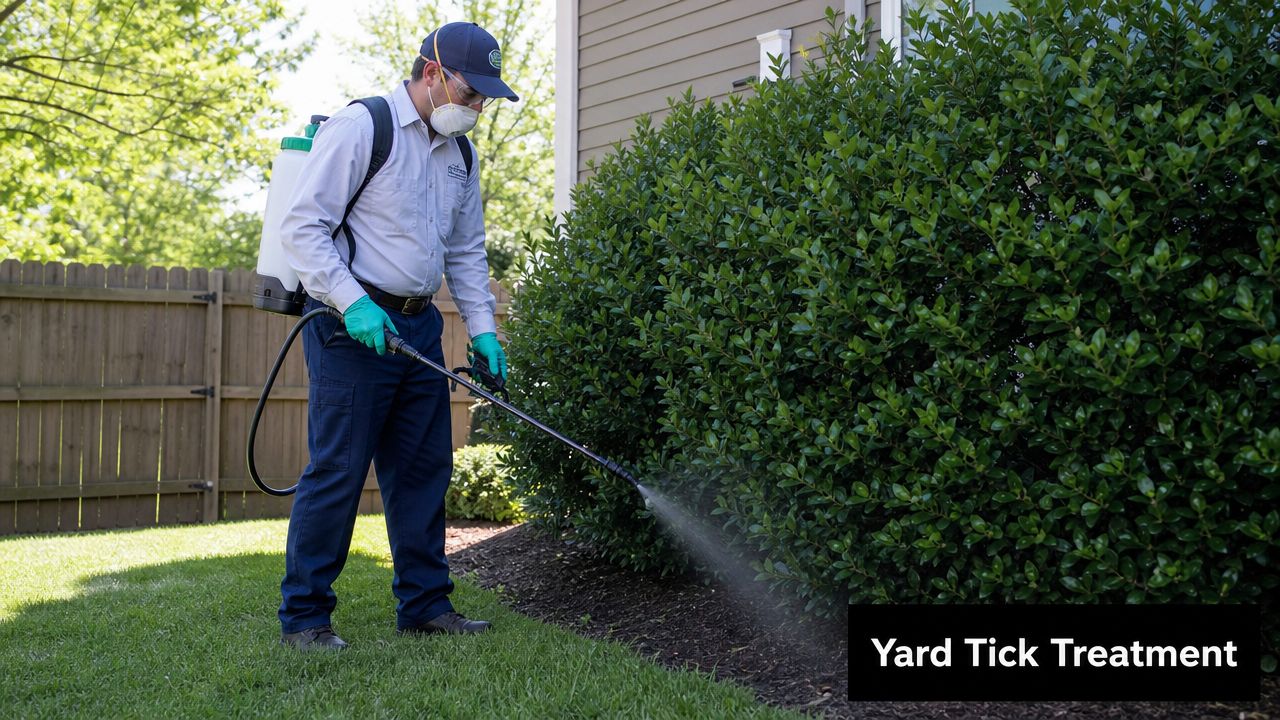
A yard doesn't need to back up to deep woods to have a tick issue. A few connected conditions are enough. Rabbits move through. Deer pass at night. Rodents stay under brush piles or around neglected edges. Pets investigate those areas, then bring the problem back toward the house.
Why Northwest Indiana yards create repeat pressure
The challenge in this part of Indiana is that many properties combine suburban living with nearby natural cover. That mix is beautiful, but it also creates steady tick habitat. Moisture hangs on longer in shaded pockets, especially where airflow is limited and debris collects.
Ticks rarely start in the middle of how you use the yard. They build in the margins, then spread into the places your family and pets actually touch.
That's why homeowners looking for pest control near me often need more than a broad lawn treatment. Tick work has to match the layout of the property. A technician who understands local yards will pay close attention to wooded transitions, mulch lines, fence rows, and the areas where pets cut through every day.
For property managers and business owners, the same logic applies. Commercial pest control for ticks matters anywhere people use outdoor common areas, cultivated borders, or shaded walkways. A nice-looking exterior doesn't always mean a low-risk exterior.
Effective Professional Tick Treatments for Your Yard
When homeowners ask what kills ticks in the yard, the most reliable answer is targeted professional acaricide treatment, combined with smart application in the spots ticks frequent. “Acaricide” is a product designed to control ticks and related pests. In practice, the success of the treatment comes down to where it's applied, how thoroughly it's applied, and whether the technician understands tick behavior on your type of property.

A professional yard treatment is not the same as spraying the whole lawn evenly and hoping for the best. That's one of the biggest misunderstandings homeowners have after trying store-bought products. Ticks aren't spread uniformly across the property, so the treatment shouldn't be either.
What professionals target first
A trained technician usually starts with the harborage zones. These are the cool, protected areas where ticks rest and wait for people, pets, or wildlife to brush by.
The highest-value treatment zones often include:
- Fence lines and property borders
- Wooded perimeters and brush edges
- Leaf buildup under shrubs and trees
- Dense plantings near patios, play areas, and dog runs
- Transitions from lawn to mulch, bed lines, or natural cover
That approach is often called a barrier treatment. It creates a treated zone where ticks are most likely to survive and move, instead of wasting effort on low-risk turf.
Why professional products perform better
Homeowners can buy concentrates, hose-end sprayers, granules, and ready-to-use products, but they usually run into the same problems. Coverage is uneven. Key hiding spots get missed. Product choice doesn't fit the yard conditions. Timing is off. Or the application is too light because the person spraying is trying not to overdo it.
Licensed pest control technicians work with products and equipment designed for controlled application. Just as important, they know when a surface should be treated and when it shouldn't. That matters for effectiveness, but it also matters for safety around families, pets, and routine yard use.
Field note: The best tick treatment plans are precise, not heavy-handed. More product doesn't automatically mean better control.
Some homeowners also want eco-friendly pest control options. That's a reasonable question, especially when children and pets use the yard often. In real-world service, environmentally mindful tick control usually means choosing products and application methods carefully, targeting only the areas that need treatment, and avoiding blanket over-application.
Here's a quick visual look at what professional outdoor treatment work can involve:
Timing matters as much as the product
Tick control works better when treatment lines up with local conditions and active periods. In Northwest Indiana, the wrong timing can leave a yard looking treated but still producing tick encounters because the treatment missed the moments when activity and exposure were highest.
That's another place professional service stands apart. A good technician doesn't just ask, “Do you want a spray?” They ask where ticks were found, where the dog runs, whether the rear lot line stays damp, whether deer cross the back edge, and whether there's brush or ornamental cover that needs attention.
This kind of targeted approach also fits well with related services. Homeowners who need mosquito control, rodent control, or preventative pest treatments often discover the same property conditions are contributing to multiple issues at once. Outdoor pest management works best when the whole site is evaluated, not just one symptom.
Comparing DIY Methods with Professional Tick Control
DIY tick prevention has a place. It just has limits. Homeowners in Crown Point can absolutely make their yard less attractive to ticks, and some of those steps are worth doing whether you hire a professional or not.
Where DIY usually falls short is active control. Once ticks are established in the right protected areas, simple cleanup or a consumer spray often reduces visibility without solving the underlying pressure. That's why so many people think they “treated for ticks” and still find them along the same edges a short time later.
What DIY can help with
The most useful homeowner actions are the basics that reduce tick habitat:
- Mow consistently: Shorter grass allows more sun and airflow.
- Remove leaf litter: Debris under shrubs and trees holds moisture.
- Trim back overgrowth: Dense edging and brush create protected movement lanes.
- Limit wildlife shelter: Brush piles and neglected corners support host activity.
- Check pets often: Early discovery can reveal where the yard pressure is coming from.
Some people also try cedar products, yard-safe botanical sprays, tick tubes, or certain plantings. Those options can be part of a broader prevention plan, but they usually don't provide the same dependable knockdown as a professional treatment targeted to active harborage zones.
For homeowners weighing options, this guide on best flea and tick control for yard is worth reading because it helps sort out what's useful, what's overhyped, and what belongs in a support role rather than the main solution.
DIY vs Professional Tick Control in Crown Point
| Factor | DIY / Natural Methods | Professional Service (The Green Advantage) |
|---|---|---|
| Effectiveness | Best for reducing habitat and supporting prevention. Often inconsistent once ticks are active in multiple hiding areas. | Designed to directly target active tick zones and reduce pressure where ticks live and travel. |
| Cost | Lower upfront purchase cost, but repeat trial-and-error can add up in products and time. | Higher service cost than a single DIY purchase, but more efficient when you want a clear treatment plan and less guesswork. |
| Safety Risks | Risk comes from misreading labels, poor mixing, overapplication, or treating the wrong surfaces. | Licensed application helps reduce misuse and keeps treatment focused on the appropriate areas. |
| Time Commitment | Requires mowing, cleanup, product selection, setup, application, and follow-up monitoring. | Saves homeowner time because inspection, treatment strategy, and application are handled for you. |
| Guarantee | Usually none beyond the product packaging. Results depend on homeowner technique and coverage. | Service expectations are clearer, and homeowners get professional guidance on follow-up and prevention. |
The honest trade-off
DIY works best for homeowners who are disciplined about maintenance and are dealing with light pressure. It's much less dependable when the property backs up to brush, has heavy shade, supports wildlife traffic, or has repeated tick encounters in the same areas.
If you've already cleaned up the yard and you're still finding ticks, the issue usually isn't effort. It's that the remaining problem is in the exact places DIY treatment tends to miss.
That's where residential pest control becomes the practical next step, not because every yard needs a major intervention, but because some yards need precise treatment more than they need more homeowner labor.
The Benefits of a Professional Exterminator for Ticks
The biggest benefit of hiring a professional exterminator for ticks isn't just that the yard gets treated. It's that the problem gets handled with a plan. That matters when children are playing outside, pets are using the yard every day, or you're tired of second-guessing every shaded corner near the house.
A good tick service protects more than turf and landscaping. It protects how the property feels. Homeowners want to walk to the garden, let the dog out, or sit by the patio without that low-grade worry in the back of their mind.
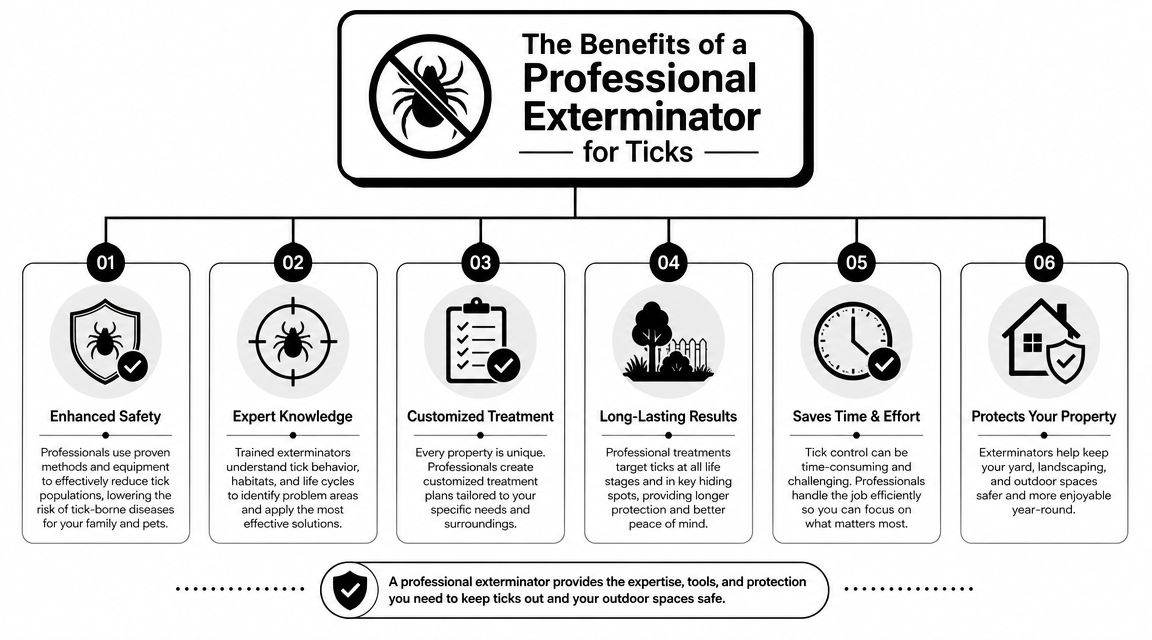
Why expert service pays off
Professional tick control gives you advantages that are hard to recreate with off-the-shelf products.
- Better diagnosis: Technicians identify the sections of the property driving the issue, not just the places where you happened to spot a tick.
- Safer application choices: Treatment is matched to the site instead of applied broadly without a plan.
- Less wasted effort: You don't spend weekends trying one product after another.
- Stronger prevention: You get guidance on what to cut back, clean up, or monitor between visits.
- More peace of mind: The yard feels usable again because someone experienced has addressed the key pressure points.
This kind of value shows up in other outdoor services too. Anyone comparing proposals for cleanup, mowing, or yard work can learn a lot from how to bid landscaping jobs effectively, because it explains why scope, property conditions, and labor details matter more than a quick surface price. Tick control is similar. The quality of the plan matters.
Health, comfort, and long-term property use
Homeowners often start with one concern, usually finding a tick on a pet or near a child's play area. What they really want back is normal outdoor life. They want to use the yard without turning every outing into an inspection routine.
That's why many people who search exterminator near me or exterminator in Crown Point, IN aren't looking for the cheapest spray. They're looking for confidence that the work was done correctly.
For businesses and shared properties, the same principle applies. Commercial pest control for ticks helps protect staff, tenants, visitors, and the reputation of the property itself. Exterior areas should feel maintained and safe, not uncertain.
Your Tick-Free Yard Plan with The Green Advantage
Hiring a pest professional shouldn't feel complicated. Homeowners in Crown Point usually want a straightforward answer to a few practical questions. What happens first, how is the yard evaluated, what gets treated, and what should the family expect afterward?
The process works best when it's simple and transparent.
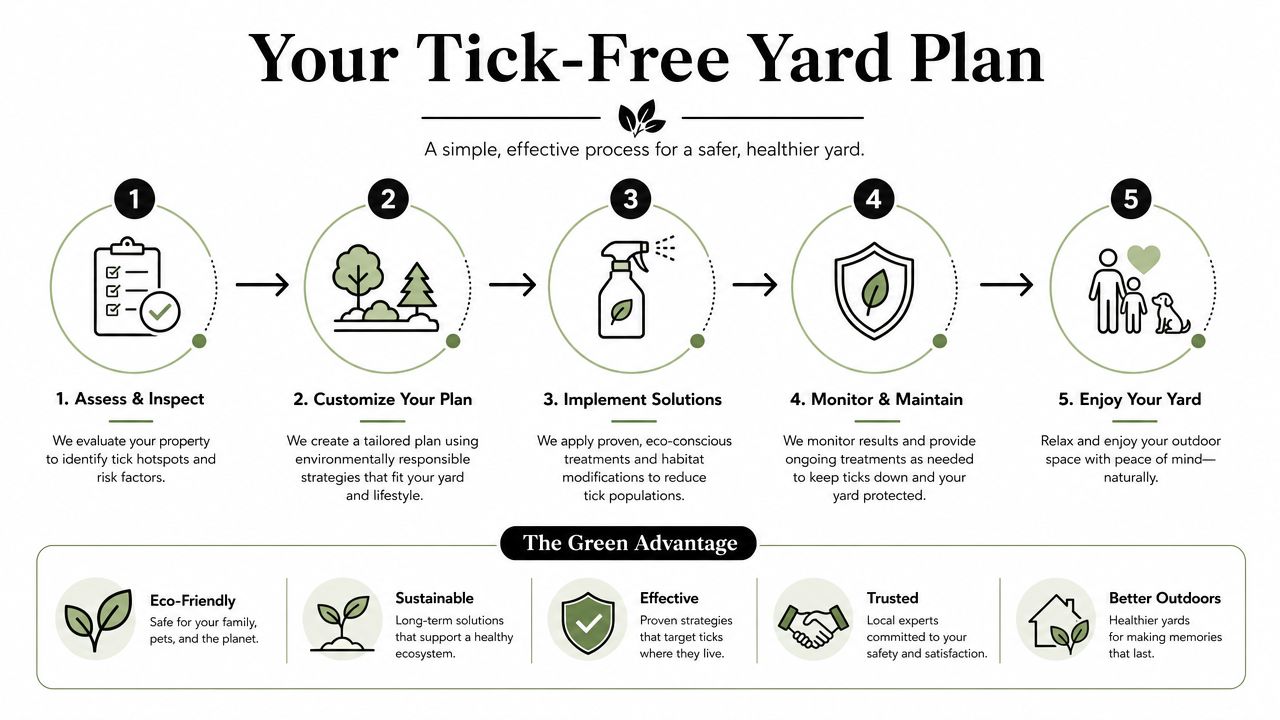
What the service process looks like
Initial contact
You explain what's happening. Maybe ticks are showing up on pets, maybe someone found them along the back fence, or maybe you've got a wooded edge that's making you uneasy. Clear communication at the start helps narrow down the likely pressure zones.On-site inspection
The property is evaluated with tick behavior in mind. That includes shaded borders, vegetation density, leaf buildup, fence lines, pet traffic routes, and transition areas between maintained lawn and natural cover.Treatment recommendation
You get a clear explanation of what needs attention and why. Good recommendations don't sound vague. They connect the layout of your yard to the treatment approach.Professional application
Service focuses on the highest-value treatment areas rather than wasting material on low-risk open turf. The result is a more efficient and more thoughtful approach to what kills ticks in the yard.Follow-up guidance
You'll know what to do next, whether that means trimming back a planting, clearing debris, monitoring pet routes, or considering related seasonal pest issues such as mosquito control, spider control, wasp removal, or rodent control around the same exterior zones.
What homeowners appreciate most
Homeowners don't want a complicated lecture. They want honest answers, courteous service, and a clear path back to a usable yard.
Local advice: The best service calls leave homeowners feeling informed, not pressured. You should understand what was treated, why it mattered, and what simple yard changes will help hold the line.
That's especially important in Northwest Indiana, where one property may need only light perimeter attention and the next may need a more deliberate plan because of woods, drainage, pet activity, or neighboring overgrowth.
Local Tick Control Questions Answered
Are tick treatments safe for children and pets
That's usually the first question, and it should be. Safe service starts with correct product selection, proper application, and clear instructions about when treated areas are ready for normal use again. Professional treatment is much safer than casual overapplication with consumer products because the technician applies material where it belongs and avoids unnecessary coverage.
How often do I need tick control in the Crown Point area
It depends on your property conditions. A more open, sunny yard with minimal brush may need much less attention than a shaded lot with leaf litter, wildlife traffic, and wooded edges. The right schedule comes from inspection, not guesswork. If your yard has repeat tick activity, a one-time spray usually isn't the whole answer.
Does mosquito control also kill ticks
Sometimes there's overlap in exterior pest management, but mosquito service and tick service are not identical. Mosquitoes rest and move differently than ticks do, so treatment strategy matters. If ticks are the concern, ask for a plan that directly addresses tick harborage instead of assuming general outdoor spraying will handle both.
Should I try bleach or household chemicals on ticks outside
No. Household chemicals aren't a good yard treatment plan and can create unnecessary risks for people, pets, and landscaping. If you've seen advice online about improvised tick remedies, it's smarter to sort myth from reality first. This article on whether bleach will kill ticks helps explain why improvised approaches aren't the answer for outdoor control.
If you're in Crown Point or a nearby Northwest Indiana community and you're still wondering whether your yard needs treatment, that's usually a sign it's time for a professional inspection. A quick conversation can tell you a lot.
If you're ready for a safer, more usable yard, contact The Green Advantage to schedule a pest inspection or request a quote. If you've been searching for pest control near me, pest control in Crown Point, IN, exterminator near me, or exterminator in Crown Point, IN, their local team can help you identify the problem, recommend the right treatment, and put together a practical plan for your home or property in Northwest Indiana.
Protect Your Home: Quarterly Pest Control Service
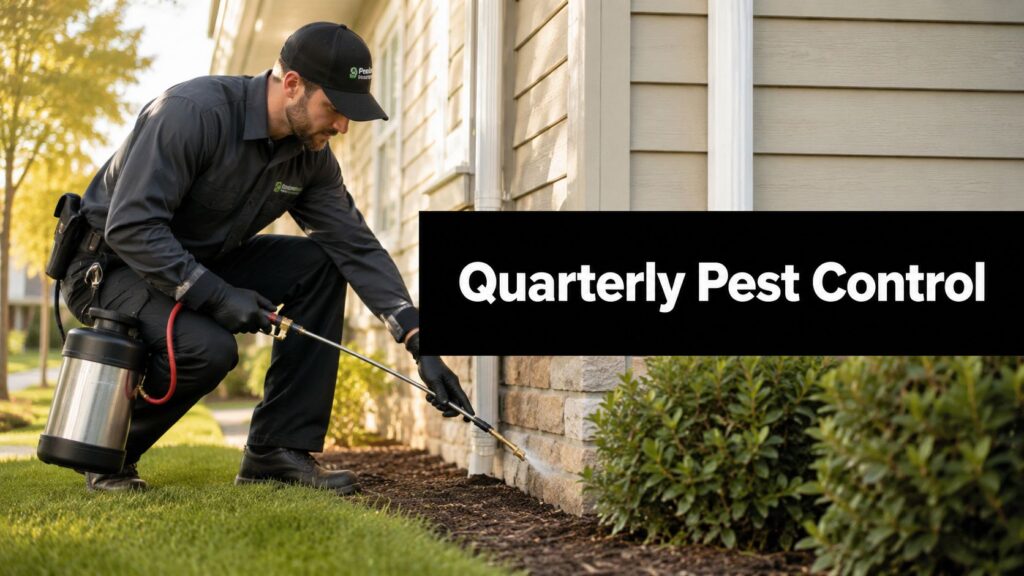
If you're in Crown Point and it feels like the pest problems never really end, you're not imagining it. Spring brings ants across the kitchen counter. Summer means mosquitoes in the yard and wasps near the eaves. Then fall shows up and suddenly spiders turn up in corners and rodents start testing entry points around the garage, basement, and utility lines.
That cycle is exactly why so many homeowners start by searching for pest control near me or exterminator near me, then realize a one-time treatment only solves today's problem. What most properties need in Northwest Indiana is a plan that stays ahead of the next season instead of waiting for it.
Protecting Your Crown Point Home from Unwanted Guests
A lot of homes in Crown Point follow the same pattern. Ants show up when the weather breaks. Mosquitoes take over the backyard once summer settles in. By the time cooler air arrives, spiders and other indoor pests start appearing where nobody wants them, especially basements, mudrooms, and storage areas.
That kind of stop-and-start approach wears people down. You treat one issue, get a little relief, and then another pest pops up a few months later. For homeowners who want a clean, comfortable house, reactive service usually turns into repeated aggravation.

Why this matters in Indiana
The need for professional pest management isn't small or isolated. Indiana's pest control industry includes 597 businesses as of 2026, with the market growing at an average annual rate of 6.0% from 2021 to 2026, and the industry's total market size reaching $417.1 million in 2026, according to IBISWorld's Indiana pest control industry overview. That tells you something simple. Pest issues are common enough across the state that more homeowners and businesses are looking for structured, ongoing help.
In Crown Point, the smarter move is usually prevention. A quarterly plan doesn't wait for ants to become a trail, for spiders to multiply in quiet areas, or for rodents to settle into wall voids. It addresses the conditions that invite pests in the first place.
Local rule of thumb: If you're treating the same kind of pest more than once a year, the problem usually isn't bad luck. It's that the property needs consistent prevention.
That shift matters whether you're looking for pest control in Crown Point, IN, residential pest control, or support for a rental property or commercial building. Instead of firefighting each new pest issue, you build a year-round barrier and keep pressure low before small activity turns into an infestation.
What Is a Quarterly Pest Control Service
A quarterly pest control service is a year-round prevention program with four scheduled visits spread across the year. In Crown Point, that schedule gives a home regular attention before pest activity has time to build. Instead of calling only after ants show up in the kitchen or spiders start collecting in the corners of the garage, the property is checked and treated on a routine cycle.
That difference matters.
A one-time treatment handles the problem you can already see. A quarterly plan is built to reduce the next one.
What a typical visit includes
As outlined in this breakdown of pest control plans, quarterly service commonly includes four visits per year, perimeter treatment, targeted interior service, inspection work, and return visits between appointments if covered pests come back.
On a well-run route, the visit usually focuses on the areas where problems start and where they tend to repeat:
- Exterior perimeter treatment around the foundation and entry points to cut down pest movement into the home
- Targeted interior treatment in places with current activity or higher risk
- Spider web and wasp nest removal around soffits, garages, doors, and window frames as needed
- Inspection for conducive conditions such as moisture, gaps, cluttered harborage, or signs of rodent entry
That is the part many homeowners miss. Good quarterly service is not just an application. It is repeat inspection, correction, and follow-up.
Why this schedule fits so many Crown Point homes
In Northwest Indiana, pest pressure rarely stays solved for long with a single visit. Weather shifts, moisture changes, and normal seasonal movement keep creating openings around the structure. Quarterly service gives those pressure points regular attention without putting the homeowner on a monthly schedule they may not need.
For homes with general crawling insect pressure, occasional spider issues, or recurring exterior activity, four visits a year is often the practical middle ground. It is frequent enough to stay ahead of common problems, but spaced out enough to keep service manageable.
The biggest benefit is consistency. Small issues get addressed while they are still small.
The trade-offs to understand before you sign up
Quarterly service is a strong fit for prevention. It is not always the right stand-alone answer for every situation. A home with an active rodent problem, a heavy German roach infestation, or a termite issue may need an initial corrective plan before regular quarterly maintenance makes sense.
Cost structure matters too. Some companies bill quarterly. Others charge an initial fee and then monthly payments. Ask what the full annual cost is, what pests are covered, whether interior service is included every visit or only on request, and what happens if activity returns between appointments.
For homeowners comparing exterminator options in Crown Point, IN, that clarity is just as important as the treatment itself. A good quarterly plan should explain exactly what is being prevented, how service is delivered, and where the limits are.
Tailoring Treatments to Northwest Indiana's Seasons
The reason quarterly service makes sense in Crown Point is simple. Pest pressure changes with the calendar. What works in early spring isn't the same thing you need in late summer or during the first cold stretch of fall.
A one-off treatment reacts to what's happening now. A seasonal plan prepares for what's about to happen next.

Spring pressure starts outside
Once temperatures begin to rise, overwintering pests become active again. This is when many homeowners first notice ants, occasional invaders, and spider activity around foundations, windows, and garages. Spring is also the time to inspect conditions that can invite bigger problems later, such as gaps at entry points, moisture around the structure, and untreated harborage near mulch lines and landscaping.
A spring visit is often the most important appointment of the year because it sets the perimeter before insect activity ramps up.
Summer tests the exterior
Summer in Northwest Indiana brings the outdoor pressure commonly noticed first. Mosquito activity around shaded yards, wasps near rooflines and outdoor living spaces, and general crawling insect pressure all become more active. If a home already has weak spots around doors, utility penetrations, or foundation transitions, summer pests exploit them.
For properties that also need mosquito control, wasp removal, or close attention to outdoor living areas, the plan becomes more customized. The treatment focus isn't identical on every property because not every yard, drainage pattern, or structure creates the same level of pressure.
Fall is when pests try to move in
Fall is the season many homeowners underestimate. As nights cool down, pests that were content outside start looking for warmth and shelter. That's when spiders become more noticeable indoors and rodents begin probing for entry points around garages, siding gaps, vents, and utility lines.
This is also the time for prevention work that protects the coming winter. If openings and attractants aren't addressed in fall, winter service becomes more reactive than it should be.
Homes don't get pest pressure in neat categories. Seasonal changes push different pests toward the same shelter, and that shelter is often your house.
Winter is about indoor stability
Winter service in Crown Point tends to focus less on heavy exterior activity and more on monitoring and prevention inside the building envelope. Indoor pest issues don't disappear just because it's cold. In fact, once pests find warmth, food, or moisture indoors, they can stay active where homeowners don't see them right away.
That makes the winter visit valuable for inspections, targeted indoor treatment when needed, and checking the areas where low-level activity often lingers.
Northwest Indiana seasonal pest calendar
| Season | Common Pests | Quarterly Treatment Focus |
|---|---|---|
| Spring | Ants, spiders, emerging insect activity | Exterior barrier, inspection, early-season prevention |
| Summer | Mosquitoes, wasps, ants, general outdoor pests | Active perimeter defense, yard-focused treatment, entry point review |
| Fall | Spiders, rodents, overwintering pests | Exclusion-minded inspection, prevention at doors, garage, foundation, utility lines |
| Winter | Lingering indoor pests, occasional invaders | Interior monitoring, targeted spot treatment, prevention-focused follow-up |
For homeowners searching pest control in Crown Point, IN, this is why quarterly scheduling fits the region so well. Each visit has a different job. The point isn't to repeat the exact same treatment every few months. It's to match the service to what Northwest Indiana properties face throughout the year.
Who Benefits from Proactive Pest Management
Quarterly prevention isn't only for people dealing with a serious infestation. In many cases, it's more useful for the people who want to avoid getting to that point at all.
Homeowners who care about property condition, families who want fewer surprises indoors, and managers responsible for shared buildings all benefit from consistent service. The common thread is predictability. Regular inspections and targeted treatments reduce the chance that pests build up unnoticed.

Homeowners who want fewer disruptions
For a typical single-family home, quarterly service makes life easier. You don't have to wait until ants are in the pantry or spiders are showing up in multiple rooms before making a call. The property stays on a regular inspection and treatment cycle, which helps protect comfort and cuts down on repeat surprises.
This is especially useful for households also thinking about related needs such as ant control, spider control, rodent control, or preventive attention around garages, basements, and crawlspaces.
Families who prefer targeted treatment
Many people worry that routine pest service means constant blanket application. Modern prevention should be more thoughtful than that. When a property is monitored properly, treatments can stay targeted and responsive to actual conditions instead of relying on unnecessary broad interior applications.
That's one reason eco-minded households often prefer an inspection-first approach. It supports long-term control while keeping the service focused on what's needed.
Property managers and commercial clients
For shared housing and commercial sites, quarterly service becomes even more important because pest activity affects multiple people at once. In these settings, the cost of waiting is often measured in complaints, tenant frustration, operational interruptions, and reputation risk.
According to a pest control specification for multi-unit housing, quarterly pest control is often mandated as a preventive measure in commercial and multi-unit contexts, and documented evidence shows these interventions reduce pest-related service complaints by 30–40% compared to reactive-only models.
That matters in Northwest Indiana properties such as:
- Apartment and multi-unit buildings where one untreated issue can spread
- Office and commercial spaces that need a clean, professional environment
- Facilities with shared refuse or utility areas that attract recurring pest pressure
- Managed properties where documentation and consistent follow-through matter
Clean buildings don't stay that way by accident. Someone has to inspect, document, and correct small pest issues before occupants start noticing them.
For both residential pest control and commercial pest control, proactive service isn't about overreacting. It's about keeping routine pest pressure from becoming a bigger operational problem.
Quarterly Plans vs Other Pest Control Frequencies
The right service frequency depends on the property, the pest history, and how much pressure the structure gets from surrounding conditions. For most homes in Crown Point, the practical choice comes down to three options. One-time service, quarterly service, or monthly service.
Each has a place. They just don't solve the same problem.
One-time service
A one-time treatment is usually the right fit for a narrow issue. A wasp nest on the porch. A sudden spike in ants after weather changes. A pest concern tied to a specific event, move, or sale. The advantage is obvious. You handle the immediate issue and move on.
The downside is that one-time service is reactive by design. It doesn't create much continuity, and it usually doesn't address what will happen when the next seasonal shift brings a different pest to the same property.
Quarterly service
Quarterly service works well when pest pressure is recurring but not severe enough to justify monthly visits. It gives the property scheduled attention through the year, which fits the normal rhythm of seasonal pest activity in Northwest Indiana.
Indiana residential pest control also follows a structured four-stage process of inspection, identification, treatment selection, and follow-up verification, with follow-up visits typically scheduled 14 to 30 days after the initial application depending on the situation, according to Indiana residential pest control guidance. That framework supports a preventive quarterly model because it leaves room for both routine seasonal care and short-term follow-up when a specific issue needs closer monitoring.
If you're weighing timing and service intervals, this guide on how often pest control should be done gives a useful way to think through the options.
Monthly service
Monthly service has a real role, but usually for higher-pressure situations. Properties with persistent activity, commercial demands, or ongoing sanitation and access challenges may need that level of frequency. For the average home without a severe infestation, monthly service can be more than necessary.
A simple way to compare the options:
- Choose one-time service when the problem is isolated and unlikely to repeat soon.
- Choose quarterly service when you want year-round prevention without over-servicing the home.
- Choose monthly service when pest pressure is persistent, complex, or operationally sensitive.
For many Crown Point homes, quarterly is the sweet spot. It avoids the stress of waiting until something goes wrong, but it doesn't assume every property needs constant visits.
Your Service Visit What to Expect with The Green Advantage
People are often more comfortable with pest service once they know what happens during a visit. Good service shouldn't feel mysterious. It should feel organized, clear, and specific to the property.
For a quarterly plan, the visit is usually part inspection, part prevention, and part problem-solving. If there has been recent activity, the technician looks for evidence, confirms what pest is involved, and applies treatment where it makes sense. If there hasn't been activity, the focus stays on keeping it that way.

The visit usually starts with inspection
The technician checks the areas where pest activity commonly starts or enters. That often includes the foundation, entry points, window and door transitions, garage edges, utility penetrations, and visible exterior harborage. Indoors, service may focus on baseboards, utility areas, kitchens, basements, or other locations tied to current activity.
Modern guidance matters here. Current pest management guidance states that periodic service should focus on inspection and spot treatment rather than routine application once infestations are eliminated, and that a pest professional should show evidence of a live pest before any reactive treatment. That's a core part of Integrated Pest Management, or IPM.
That means the right quarterly service isn't just routine spraying. It's inspection-led work.
What treatment looks like in practice
Treatment depends on the findings. Some visits are mostly exterior prevention. Others involve targeted indoor attention because ants, spiders, or occasional invaders have started to show up in a specific area. If rodent pressure is part of the concern, the service may also include recommendations on exclusion and sanitation, not just product application.
The Green Advantage offers a Quarterly General Pest program that pairs an initial visit with recurring scheduled service for year-round prevention. For homeowners and businesses in Crown Point, that kind of program works best when the treatment is adjusted to site conditions rather than repeated mechanically.
What good service looks like: The technician explains what was found, where pressure is coming from, what was treated, and what the property owner should watch for before the next visit.
How to prepare before service
You usually don't need to do a full-home reset. A few simple steps help the visit go smoothly:
- Clear access where possible around baseboards, sinks, utility areas, and garage walls
- Report recent activity so the technician knows where you've seen ants, spiders, rodents, or stinging insects
- Secure pets as needed during treatment and while instructions are reviewed
- Remove clutter outdoors near the foundation if heavy storage or debris blocks inspection
For a more detailed checklist, this pest control preparation guide is a helpful reference.
After the technician leaves
You should know what was done, what to expect next, and whether any follow-up is recommended. Some pest issues settle quickly. Others need observation, sanitation changes, or a return visit if activity continues.
The best quarterly service doesn't ask homeowners to guess. It gives them a plan and keeps prevention moving forward.
Choosing the Right Pest Control Partner in Crown Point
If you're hiring a provider for pest control in Crown Point, IN or nearby Northwest Indiana service areas, ask direct questions. A reliable company should be comfortable answering them without vague promises or pressure.
Questions worth asking
- Are you licensed and insured? You want a company that treats pest control as a professional trade, not casual side work.
- Do you know local pest patterns? Crown Point homes don't deal with the same timing and pressure as every other market.
- How do you handle quarterly service? Ask whether visits are inspection-led and whether interior treatment is targeted when appropriate.
- What happens if pests return between visits? A clear answer matters more than a low starting price.
- Do you explain what you found and what you treated? Good communication is part of good pest control.
- Can you support more than general pests? Many properties eventually need help with termite control, mosquito control, rodent exclusion, or wasp removal as separate services.
A dependable partner should make the process easier, not harder. That means clear scheduling, honest recommendations, and service that fits the property instead of forcing every customer into the same script.
For homeowners, landlords, and businesses in Crown Point, the right quarterly plan offers more than convenience. It protects the structure, reduces disruption, and gives you a predictable way to stay ahead of Northwest Indiana's seasonal pest pressure.
If you're ready to stop chasing one pest problem after another, contact The Green Advantage to schedule a pest inspection or request a quote for your Crown Point property. Whether you need residential pest control, commercial pest control, mosquito reduction, rodent control, or a practical quarterly prevention plan, you'll get clear answers and a service approach built for Northwest Indiana.
How Long Do Mosquitoes Live Without Food?
Most mosquitoes die within 2 to 4 days if they have no food at all, meaning no sugar and no blood. That sounds simple, but it's misleading for homeowners because mosquitoes almost always find a sugar source outdoors, and female mosquitoes can still survive up to 14 days without feeding when conditions are favorable.
If you're in Crown Point, IN, you've probably dealt with this firsthand. You step outside on a warm evening to sit on the patio, let the kids play, or grill dinner, and within minutes everyone's swatting, itching, and heading back inside. A lot of people then ask the same practical question: if mosquitoes can't live long without food, can you just wait them out or remove what attracts them?
That usually doesn't work in a real Northwest Indiana yard. Mosquitoes don't need much to keep going, and backyards give them plenty of places to rest, hide, breed, and refuel. That's why homeowners searching for pest control near me, exterminator near me, or pest control in Crown Point, IN are often looking for more than a quick spray. They want a solution that effectively holds up.
Your Trusted Local Exterminator in Crown Point IN
In Crown Point, mosquito problems rarely feel small. One family can do the right things, dump standing water, trim back growth, and still get driven indoors because the pressure isn't coming from just one flower pot or one puddle. It's coming from the whole environment around the property.
That's the reality across Northwest Indiana. Summer moisture, shaded landscaping, backyard features, and neighboring conditions all give mosquitoes enough support to hang around longer than most homeowners expect. By the time homeowners search for exterminator in Crown Point, IN or residential pest control, they're usually already tired of trying piecemeal fixes.
Local reality: A mosquito problem in your yard usually isn't one isolated source. It's a combination of resting areas, moisture, nearby breeding spots, and steady access to plant sugars.
The biggest misunderstanding is thinking mosquitoes only depend on blood. They don't. Blood matters for egg production, but sugar keeps them going day to day. That means removing a few attractive plants or assuming they'll disappear if no one is outside for a while won't solve the issue.
What homeowners are really up against
A backyard mosquito issue often builds from several conditions working together:
- Shaded harborage: Dense shrubs, low branches, and overgrown edges give mosquitoes cool places to rest during the day.
- Moisture pockets: Gutters, toys, planters, tarps, and low spots hold water longer than people realize.
- Easy sugar access: Nectar, fruit residue, and natural plant juices are enough to keep mosquitoes alive.
- Constant reinfestation: Even if you reduce activity in one area, mosquitoes can move in from nearby properties.
That's why mosquito work belongs in the same conversation as preventative pest treatments, spider control, rodent control, and other exterior pest management. A home's outdoor environment affects what ends up around doors, patios, garages, and entry points.
How Long Mosquitoes Actually Live Without Food
You walk out to the patio after two quiet days and expect the mosquitoes to be gone. Then the first one lands on your arm before the grill is even hot. That happens because mosquitoes do not need much to stay alive, and in a Crown Point yard, they usually find it.
The short answer to how long do mosquitoes live without food depends on what kind of food is missing. Sugar is their day-to-day fuel. Male mosquitoes live on plant sugars. Female mosquitoes use sugar too, and blood helps them produce eggs.
According to Oh Deer's mosquito lifespan reference, mosquitoes that are completely cut off from food survive only a few days. Female mosquitoes can last longer when they still have access to sugar, even without a blood meal. For a homeowner, that is the part that matters. A mosquito does not need to feed on people every day to remain a problem in the yard.
Sugar keeps the problem going
In real backyards, total starvation almost never happens. Mosquitoes can use nectar, plant fluids, and other natural sugars from landscaping around your home or a neighboring property. Even a clean yard can still support adult mosquitoes long enough for them to rest, bite, and keep the cycle going.
That is why DIY logic often breaks down. People assume less standing water or fewer evenings outside will make the problem fade on its own. What happens is adult mosquitoes keep finding enough sugar to survive while new mosquitoes continue developing in overlooked water sources.
What “without food” means in practice
| Condition | What it means for survival | What it means for your yard |
|---|---|---|
| No food at all | Survival is brief, only a few days, based on the source above | This is rare outdoors |
| Sugar available, no blood meal yet | Females can stay alive and keep searching for a host | Biting pressure can continue even if people are not outside much |
| Favorable shelter and moisture | Adults last longer and remain active around resting areas | Shrubs, low branches, and shaded corners stay productive for mosquitoes |
The trade-off is simple. You can spend time trying to remove every possible sugar source, every damp hiding place, and every breeding pocket, or you can treat the property in a way that reduces adult activity and interrupts the life cycle. In the field, I can tell you the first option is not realistic for most homeowners.
This also explains why mosquito pressure can continue late into the season. If you want the local timing behind that, our guide on when mosquito season ends in Northwest Indiana breaks down what changes and what does not.
A mosquito problem does not disappear just because food seems limited. In Northwest Indiana, the practical answer is that mosquitoes usually survive long enough to keep biting unless the property is treated correctly.
Local Factors in Northwest Indiana That Help Mosquitoes Survive
Northwest Indiana gives mosquitoes more help than most homeowners realize. In Crown Point, warm weather, humidity, environmental shade, and regular access to water all support mosquito activity. Even a well-kept property can stay attractive if there are damp resting zones and nearby breeding pockets.

Why our local environment matters
Mosquitoes don't need a swamp to become a problem. They use low spots in lawns, clogged gutters, birdbaths, patio containers, and drainage trouble around homes and commercial properties. In neighborhoods across Crown Point and nearby Northwest Indiana communities, that adds up fast.
A few local pressure points show up again and again:
- Backyard water sources: Decorative features, pet dishes, planters, and rain collection points can support mosquito development.
- Dense vegetation: Foundation plantings, fence lines, and shaded corners create daytime shelter.
- Regional moisture: Seasonal rain and humid stretches make it harder for breeding areas to dry out quickly.
Overwintering changes the picture
Some mosquito problems don't reset as neatly as people think when summer ends. According to this entomology discussion on overwintering mosquitoes, standard mosquitoes may survive 2 to 4 days without food, but overwintering adult females such as some Culex can survive up to 100 days in a hibernation state without feeding if they remain in cool, leaf-littered environments that limit dehydration.
That matters in Northwest Indiana because it shows why seasonal assumptions can lead homeowners astray. Fall doesn't always mean the issue is finished. Some mosquito populations persist through protected conditions and come back into play later.
For a closer look at seasonal timing in our area, see when mosquito season ends in Northwest Indiana.
A yard can look quiet and still support the next wave of mosquito activity if cool hiding spots and moisture stay in place.
Why Professional Mosquito Control Is Your Best Defense
You step outside after dinner in Crown Point, the yard looks dry, and within five minutes everyone is swatting. That usually means the mosquitoes are not coming from one obvious puddle or one corner of the property. They are cycling through shaded resting spots, small hidden water sources, and neighboring conditions that retail products rarely touch.

Homeowners do help their own situation when they dump water, clean gutters, and cut back heavy growth. I recommend that. The trade-off is that cleanup alone takes time, has to be repeated, and still misses the mosquito life stages you do not see. A bug zapper kills random flying insects. Citronella gives limited, short-range relief. Store-bought sprays may knock down some adults for a day or two, but they do not give consistent control across the whole yard.
Professional mosquito service works better because it is built around how mosquitoes use a property in real life:
- Breeding areas: containers, low spots, drainage edges, and other places that hold enough moisture for development
- Resting sites: shrubs, fence lines, under decks, and shaded foliage where adults wait out the heat
- Travel and bite zones: patios, play areas, entry points, and the humid edges where people notice pressure
As noted earlier, mosquitoes can survive longer than many homeowners assume when temperature, shade, and moisture line up. That is why waiting for them to die off on their own usually fails. In Northwest Indiana, one wet stretch or one overlooked harborage area can keep the cycle going.
A good local program is not just a spray visit. It is inspection, targeted application, timing, and follow-up based on how Crown Point properties hold water, shade, and humidity through the season. That local piece matters. A wide-open lot behaves differently than a fenced yard with dense landscaping and a low, damp rear property line.
Health is part of the decision too. Homeowners who want a clearer picture of that side of the problem should read our guide on mosquito-borne risks and how mosquito control services mitigate them.
Professional mosquito control reduces the source of the problem and the places mosquitoes hide between bites.
That same planned approach is why homeowners comparing commercial pest control, eco-friendly pest control, or residential pest control usually get better results from scheduled service than from shelf products used one weekend at a time.
Protect Your Health and Reclaim Your Crown Point Yard
The goal of mosquito control isn't just fewer bites. It's getting your yard back so your family can use it.

A treated property feels different in everyday life. You can sit on the patio longer, let the kids play outside without constant swatting, and enjoy evenings that don't end the second mosquitoes show up. For many homeowners in Crown Point, that quality-of-life change is what makes mosquito service worth it.
More than comfort
Mosquito reduction also supports a healthier outdoor environment around the home. Less mosquito pressure means fewer bites, less irritation, and less stress about what's hovering around family gathering spaces, play areas, and entry doors.
That peace of mind usually connects with other pest concerns, too. Homeowners who need mosquito control often also need help with ant control, wasp removal, spider control, or broader preventative pest treatments that keep seasonal pest issues from stacking up around the house.
Good pest control protects how you live in your home, not just the structure itself.
This short video gives a useful visual look at the kind of outdoor mosquito challenge many homeowners are dealing with:
For homeowners in Northwest Indiana, that broader protection matters. Mosquitoes may be the reason you start looking for pest control near me, but the right provider should also help you stay ahead of the other pests that show up with the seasons.
Our Pest Control Process for Your Home or Business
When homeowners or property managers call for help, they want to know what happens next. A clear process matters because good pest control isn't guesswork. It's inspection, targeting, treatment, and follow-through.

What to expect
Initial contact
You explain what you're seeing, where activity is worst, and whether the problem affects a home, rental, office, or outdoor common area.On-site evaluation
A technician checks the property for breeding conditions, resting areas, moisture issues, and the parts of the yard or building perimeter where mosquito pressure is strongest.Treatment plan built for the property
No two properties in Crown Point are identical. Shade, drainage, vegetation, use patterns, and nearby conditions all change the approach.
Why the process matters
A professional plan should do more than react to today's swarm. It should improve control over time by addressing the reasons mosquitoes keep returning.
That often includes:
- Targeted applications: Focused treatment in the zones where mosquitoes rest and reproduce
- Site recommendations: Practical guidance on standing water, trimming, storage, and yard conditions
- Ongoing support: Follow-up service when the property needs continued reduction and seasonal protection
For homeowners and businesses alike, that structure creates consistency. It also helps when mosquito control is part of a larger service need that may include termite control, rodent control, or routine exterior pest management.
The best service call is the one where you understand what was found, what was treated, and what you can do between visits to keep pressure down.
If mosquitoes are taking over your yard or outdoor business space, The Green Advantage can help with practical, locally informed pest control in Crown Point, IN and nearby Northwest Indiana communities. Reach out to schedule a pest inspection, request a quote, or talk through a mosquito control plan that fits your property.
Eco Friendly Pest Control Products: The Green Advantage
You walk into the kitchen in Crown Point, flip on the light, and spot a trail of ants moving along the counter. Or you head into the basement and notice a few spiders tucked into the corners near the laundry area. Most homeowners don't just think about the bugs. They think about their kids, their pets, the air inside the house, and whether fixing one problem will create another.
That's why eco friendly pest control products matter so much right now. People looking for pest control near me or an exterminator near me usually want the same thing. They want the pests gone, but they don't want harsh, careless treatment around the places where their family lives every day.
In Crown Point, IN, that concern is especially understandable. Northwest Indiana homes deal with a mix of seasonal pressure, moisture, changing temperatures, and pest activity that shifts from yard to foundation to interior living spaces. Good pest control has to work with those local conditions, not against them.
Protecting Your Crown Point Home and Family from Pests
A common pattern in Crown Point homes starts small. A few ants near the sink. A spider in the basement. Mosquitoes getting worse around the yard after warm, wet weather. Then the concern grows quickly because nobody wants to guess about what's safe to spray around a child's play area, a dog bed, or a kitchen pantry.
That's where homeowners often get stuck. They don't want to ignore the issue, but they also don't want to overreact with broad, heavy treatment that doesn't fit the problem. The right answer usually isn't “spray more.” It's to treat smarter.
What homeowners are really asking
Most calls for pest control in Crown Point, IN come down to a few practical concerns:
- Family safety: People want to know what can be used around children, pets, and food-preparation areas.
- Real effectiveness: A pleasant-smelling product isn't useful if ants keep returning next week.
- Long-term relief: Homeowners don't want a quick knockdown followed by the same infestation all over again.
- Clear guidance: They want someone to explain what's happening and what to do next in plain language.
In Northwest Indiana, those concerns are valid because pest issues often come from very specific conditions. Damp mulch near the foundation, gaps around utility lines, cluttered storage areas, standing water in the yard, or food sources that seem minor to a homeowner can all drive repeat activity.
Practical rule: If a product only treats the bugs you can see, but not the reason they're there, the problem usually comes back.
Why eco-conscious service makes sense locally
Modern residential pest control doesn't have to force a choice between effectiveness and care. The better approach is targeted, site-specific, and built around how pests behave in Crown Point homes and businesses.
That's why homeowners across Northwest Indiana keep moving toward eco-conscious methods. They want precise treatments, careful placement, exclusion work, and prevention strategies that protect both the property and the people in it. For ants, spiders, mosquitoes, and other common local pests, that approach often produces cleaner and more durable results than old-fashioned blanket spraying.
What Eco-Friendly Pest Control Really Means
A lot of people hear “eco-friendly” and assume it means weak products or a simple homemade spray. That's not what professional eco-conscious pest control looks like. In practice, it means using Integrated Pest Management, often called IPM, to solve the root problem with the least disruptive method that will be effective.
Consider a good doctor. A good doctor doesn't hand every patient the same medicine before asking questions. They identify the problem, look at the cause, and choose the treatment that fits. Pest control works the same way.

The core of IPM
IPM starts with observation, not assumptions. A technician looks at what pest is present, where it's active, what's attracting it, and how it's getting in. That sounds simple, but it's the difference between chasing symptoms and fixing the issue.
The main parts usually include:
- Inspection: Finding nesting areas, moisture issues, food sources, harborage, and entry points.
- Identification: Confirming whether you're dealing with ants, spiders, wasps, mosquitoes, rodents, or another pest entirely.
- Monitoring: Watching where activity increases, where it drops, and whether conditions on the property are changing.
- Least-invasive control first: Using exclusion, sanitation, habitat adjustment, traps, and targeted applications before escalating.
For homeowners who like learning about ingredient-based repellents, a piece on a lemongrass and castor oil pest solution can be a helpful example of how plant-derived approaches fit into a broader prevention mindset. The key is understanding where a product belongs and where it doesn't.
What eco-friendly does not mean
It doesn't mean every pest problem can be solved with essential oils. It also doesn't mean every “natural” product is automatically safer or more effective just because it comes from a plant. Some botanical products work well in the right setting. Some don't last long enough outdoors. Some repel but don't eliminate the source.
That's why eco-conscious pest control has to be strategic.
Eco-friendly pest control works best when the treatment matches the pest, the season, and the structure.
Homeowners in Crown Point who want a deeper look at this philosophy can review these environmentally friendly pest control methods to see how lower-impact solutions fit into professional service. The takeaway is simple. Good pest control isn't about using more product. It's about using the right method, in the right place, for the right reason.
Your Guide to Modern Pest Control Products
The phrase eco friendly pest control products covers several very different tools. Some repel. Some interrupt breeding. Some attract pests into a bait or trap. Some create a physical barrier so pests can't enter in the first place. If you lump them all together, it gets confusing fast.
The easiest way to understand modern products is to look at what each category is designed to do.

Biological controls
These products use living organisms or naturally derived agents to target certain pests. In garden settings, that can mean microbial products aimed at specific insects or beneficial organisms that disrupt pest pressure without broad exposure across the whole property.
For a homeowner, the main benefit is precision. Biological controls are often useful when the goal is to reduce a target pest while limiting impact on the surrounding environment.
A good starting point for understanding this category is what biological pest control is. It helps clarify why these solutions are part of professional planning, especially when treating outdoor pest pressure in a more measured way.
Botanical and mineral-based products
This is often the first category that comes to mind. It includes plant-derived oils and mineral-based materials used to repel, deter, or affect insects in a targeted area. You'll often see ingredients associated with herbs, plant extracts, or dust-based products used in cracks, voids, and dry protected spaces.
These can work well when used correctly. They're especially useful for creating treated zones around likely activity points. But they aren't magic. Rain, sunlight, airflow, and surface type can all shorten how long a product remains effective outdoors.
Field note: A product that performs well on a label can still fail on a property if it's applied in the wrong location or expected to do a job it wasn't built for.
Baits and traps
Smart control proves particularly valuable for many indoor pests. Ants, some crawling insects, and rodents often respond better to a targeted baiting or trapping approach than to broad surface sprays. A bait lets the pest interact with a control point naturally. It doesn't rely on a homeowner chasing every visible insect around the room.
That's one reason modern residential pest control and commercial pest control plans often favor placement over saturation. Less product, used with more accuracy, usually makes more sense.
Exclusion materials and physical barriers
Some of the best pest control products aren't sprays at all. Door sweeps, mesh, sealants, screens, and entry-point repairs stop pests before they become an indoor problem. This matters a lot for spiders and rodents in Northwest Indiana, where small structural gaps often turn into repeat service calls.
If you're trying to understand how sealing fits into rodent prevention, Airtight Spray Foam Insulation's sealant guide offers useful context on where homeowners often focus and where a more careful approach is needed.
Here's a simple breakdown:
| Product type | Best use | Where it often falls short |
|---|---|---|
| Biological controls | Targeted outdoor pest management | Not a universal fix for every indoor infestation |
| Botanical repellents | Short-range deterrence and barrier work | Limited staying power in harsh outdoor conditions |
| Baits and traps | Colony reduction and focused control | Poor results if the pest is misidentified |
| Exclusion materials | Long-term prevention | Requires careful inspection to find all entry points |
This short video gives a helpful visual overview of how lower-impact pest management tools are used in practice.
One local option in this category is The Green Advantage, which uses environmentally mindful methods that can include plant-derived materials, targeted baits, exclusion thinking, and low-impact treatment planning for homes and businesses in Northwest Indiana. The point isn't that one product does everything. The point is that a strong plan combines the right tools for the pest in front of you.
Targeting Common Pests in Northwest Indiana
What works for ants often won't work for spiders. What helps with mosquitoes won't solve a wasp issue under the eaves. In Crown Point and nearby Northwest Indiana communities, effective pest control starts with matching the method to the pest and the conditions around the property.
Ants and why surface spraying often disappoints
Ants are one of the most common reasons people search for exterminator in Crown Point, IN. The mistake many homeowners make is spraying the visible trail and expecting the colony problem to end there. That usually only removes the workers you can see.
For many ant issues, targeted baiting tends to make more sense than broad repellent treatment because it addresses the movement pattern of the colony. The exact choice depends on where the ants are feeding, whether they're trailing indoors or nesting near the foundation, and what conditions are keeping them active.
Spiders, wasps, and structural pressure
Spiders usually tell you something about the environment. They're often following prey insects, using quiet corners, or taking advantage of entry gaps around doors, foundations, and utility penetrations. That's why spider control often improves when exclusion and insect reduction happen together.
Wasps are different. Nest location, traffic pattern, and human activity all matter. A nest near a doorway or outdoor gathering area calls for a careful, direct approach. A random repellent spray around the siding won't reliably solve that kind of issue.
Useful local strategies often include:
- Foundation crack sealing: Helps reduce interior access for spiders and crawling insects.
- Targeted nest treatment: Needed for active wasp harborage in high-contact areas.
- Lighting and insect management: Reducing prey insects can also reduce spider activity.
Mosquitoes and rodents around Northwest Indiana properties
Mosquito control is all about habitat. If standing water, heavy shade, dense foliage, or damp yard conditions remain in place, relief won't last long. Yard treatments can help, but they work best when paired with property-level reduction of breeding and resting areas.
Rodents bring a different challenge because they use warmth, shelter, and food access with remarkable consistency. A trap-only plan may catch activity, but exclusion and sanitation usually determine whether the issue keeps cycling back.
In Northwest Indiana, the most effective eco-conscious pest control usually combines targeted treatment with property corrections. Products matter, but conditions matter more.
One related issue homeowners sometimes overlook is nesting activity around roofs, vents, and exterior structures. While bird problems fall outside standard insect treatment, the discussion in this guide on handling bird nests in Upstate SC is a useful reminder that wildlife-related situations often require a separate, careful response rather than improvised removal.
DIY Dangers vs Professional Pest Control Service
DIY pest control isn't always wrong. For a very minor issue, a homeowner may be able to improve conditions by cleaning up food sources, trimming vegetation away from the house, or sealing a small gap. The problem starts when DIY is expected to function like a full strategy.
Store-bought products often look simple because the label makes the problem sound simple. Real infestations usually aren't. The challenge is less about effort and more about limits. A homeowner might use the wrong product, apply it in the wrong place, or target the wrong pest entirely.

Where DIY eco-friendly treatments go off track
A common example is ant control. People see ants on the counter, spray the counter, and feel like they've done something productive. But if the colony remains active in the wall, under the slab, or along the exterior edge, they've only interrupted the visible symptom.
Another problem is misidentification. Small ants, occasional invader beetles, and moisture-related pests can look similar to a homeowner. If the pest is misidentified, even a good product can produce poor results.
DIY limitations usually fall into a few categories:
- Wrong diagnosis: The visible pest may not be the main source of the problem.
- Wrong placement: Repellents, baits, and dusts all depend on proper location.
- Incomplete coverage: One entry point gets sealed while several others remain open.
- Safety mistakes: Overapplication around kitchens, pet areas, or sleeping spaces creates unnecessary risk.
What professional service changes
Professional pest control near me searches often come from homeowners who are tired of repeating the same weekend treatment with no lasting improvement. That makes sense. A technician isn't just bringing product. They're bringing pattern recognition.
They know how pest pressure changes with the season in Crown Point, how moisture affects activity, how rodents move along edges, where spiders hide, and when mosquito reduction needs yard-focused planning instead of random fogging.
Key distinction: DIY usually reacts to what's visible. Professional service looks for what's causing the visibility.
For both residential pest control and commercial pest control, that difference matters because the right result is not just fewer sightings today. It's a property that is less attractive and less accessible to pests going forward. That requires inspection, selection, placement, and follow-up, all working together.
What to Expect from The Green Advantage in Crown Point
It is common to feel more at ease knowing what the service process entails. Pest problems are stressful enough. You shouldn't have to wonder what happens after you call.
In Crown Point, the experience starts with a real conversation. You describe what you've seen, where it's happening, and how long it's been going on. That first contact matters because details that seem minor to a homeowner often help shape the inspection.

The visit to your property
When the technician arrives, the focus isn't only on the pests you noticed first. The inspection also looks at access points, moisture patterns, likely nesting or harborage areas, and conditions that may be supporting the infestation. That's especially important in Northwest Indiana homes where garages, crawl spaces, basements, mulched beds, and exterior transitions all play a role.
A proper inspection often includes:
- Interior review: Kitchens, bathrooms, utility spaces, basements, and known activity areas.
- Exterior review: Foundation lines, doors, windows, eaves, vegetation contact, and standing water concerns.
- Condition assessment: Food access, clutter, structural gaps, and pest-friendly moisture.
The treatment plan and follow-up
After the inspection, the technician explains what was found and recommends a plan that fits the site. If exclusion matters, that gets discussed. If targeted baiting makes more sense than broad treatment, that gets explained. If mosquito pressure is being driven by yard conditions, you'll hear that directly.
That transparency is a big part of a good service call. Homeowners want to know what's being used, why it's being used, and what results to expect.
A reliable pest control visit should leave you more informed than when it started.
Follow-up matters too. Some pest issues need monitoring, especially when activity changes with weather, nesting cycles, or structural conditions. That's why ongoing support can be just as valuable as the first treatment, whether you're dealing with recurring ants, spider pressure, rodent concerns, or seasonal mosquito activity around the yard.
For homeowners searching for pest control in Crown Point, IN or an exterminator near me, the process should feel clear, calm, and practical from start to finish.
Schedule Your Pest Inspection Today
If pests are showing up in your kitchen, basement, garage, or yard, it's worth addressing the problem before it spreads or becomes harder to control. In Crown Point and across Northwest Indiana, the best outcomes usually come from a plan that's targeted, thoughtful, and built around the actual conditions on your property.
Eco-conscious pest control doesn't mean settling for less. It means using methods that fit the pest, the home, and the people living in it. For ants, spiders, mosquitoes, rodents, and other common local issues, that often delivers a better balance of safety, precision, and long-term prevention than broad DIY treatment.
If you've been searching for pest control near me, exterminator in Crown Point, IN, or dependable residential pest control and commercial pest control, now is a good time to get clear answers. A professional inspection can identify what's attracting the pests, how they're getting in, and which eco friendly pest control products or techniques make sense for your situation.
You don't have to guess your way through labels, internet advice, or repeat infestations. Get a real inspection, a clear explanation, and a practical path forward.
If you're ready to protect your home or business, contact The Green Advantage to schedule a pest inspection, request a quote, and get environmentally mindful pest control in Crown Point, IN and nearby Northwest Indiana communities.