
You're probably seeing the same thing many Crown Point homeowners see first, a few pests that seem to vanish the moment the lights come on, then show up again behind a cabinet, under a sink, or along a baseboard. That's usually the sign of hidden harborage, not a random one-off problem. Crack and crevice treatment is built for that exact situation, because it targets the narrow spaces pests use instead of flooding open surfaces.
For homeowners looking for pest control in Crown Point, IN or an exterminator near me, this method often makes more sense than broad spraying. The Green Advantage works with that idea in mind, focusing on precise application, sensible follow-up, and sealing practices that help keep pests from walking right back in. If you've been comparing residential pest control options, or you need commercial pest control for a kitchen, office, or storage area, understanding how this method works can make the whole process feel a lot less confusing.
Introduction to Crack and Crevice Treatment
A lot of pest problems in Crown Point start in often-overlooked places. Behind the refrigerator, under the stove, around plumbing penetrations, and in the slim gap where a baseboard meets the wall, pests can stay hidden during the day and move out at night. That's why people searching for pest control near me often end up needing more than a perimeter spray.
Why hidden gaps matter
Cracks and crevices are more than small openings. They're protected pathways, resting spots, and nesting edges for insects that avoid open space. Roaches, ants, spiders, and similar pests can stay tucked into those zones where food crumbs, moisture, and warmth are close by.
Practical rule: if a pest can stay sheltered and still reach food or water, it'll use that gap again.
That's where a local expert matters. The Green Advantage serves Crown Point and surrounding Northwest Indiana homes with treatment plans that focus on where pests are living, not just where they're occasionally seen. For a homeowner, that means the work is designed around the layout of the house, the moisture problem, and the likely entry points.
If you're dealing with a kitchen issue, a bathroom issue, or repeated sightings in finished living areas, the point isn't to spray more. The point is to treat the right spaces, then reduce the chance of reinfestation. That combination is what makes crack and crevice work useful in homes that need careful, targeted service rather than heavy-handed application.
Understanding Crack and Crevice Treatment
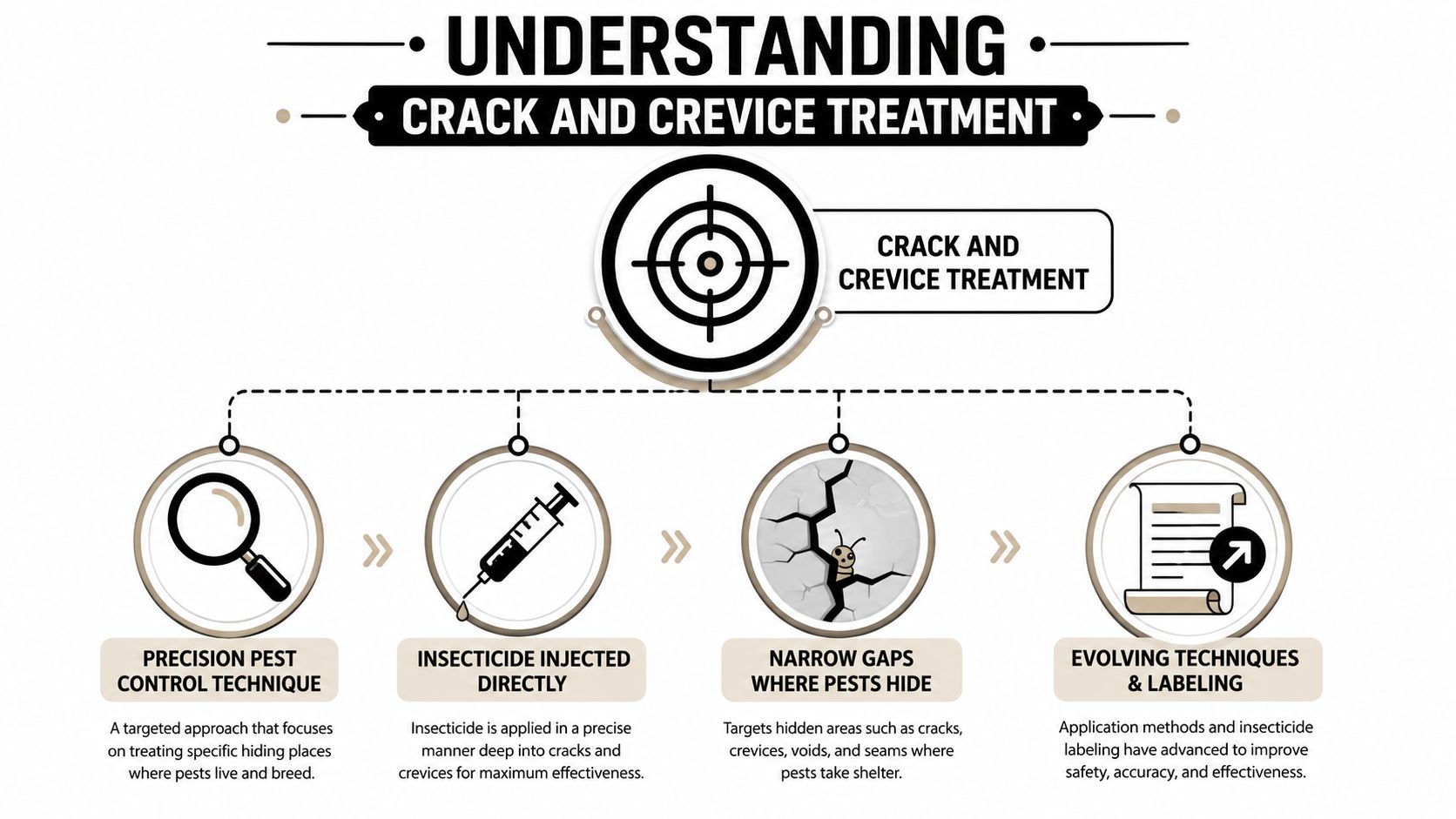
Crack and crevice treatment is a precision pest-control method. It applies insecticide directly into tight harborage points, such as gaps between cabinets and walls, behind baseboards, under appliances, around plumbing openings, and inside hollow structural voids. In other words, it's made for the places pests use as shelter, not for coating every visible inch of a room. The Journal of Economic Entomology evaluation of German cockroach control showed why that precision matters, because mortality depended heavily on technique.
Precision beats broad coverage
That study found the highest mortality when the crack-and-crevice nozzle was inserted 4 mm inside the crack, and mortality dropped as nozzle height increased. A fan nozzle performed worst. That's a good reminder for homeowners in Crown Point, the tool matters, but so does the angle, depth, and placement of the application.
The reason this method became so important in integrated pest management is simple. Many pests don't spend their time on open surfaces where a broad spray would hit them directly. They live in protected spaces, so targeted treatment makes more sense than soaking the whole room. It also fits better in sensitive interiors like homes, food-handling areas, and utility spaces where you want control without unnecessary residue.
A second layer of research helped shape that approach. Exposure and residue work on crack and crevice treatment showed that residue can be measured after application, with dislodgeable residue after 8 days reported at 1.5 ± 1.1 µg/kg for children and 0.55 ± 0.21 µg/kg for teens/adults in one pyrethroid residue study. That residue research matters because it supports the move toward localized, lower-volume treatment methods that can be monitored rather than guessed at.
What it really means for a homeowner
For a homeowner, the takeaway is straightforward. Crack and crevice treatment is about placing the product exactly where pests hide, then leaving the rest of the home less exposed. That's a very different philosophy from broad spraying, and it's one reason the method is so useful in modern pest control.
Targeted Pests and Use Cases in Northwest Indiana
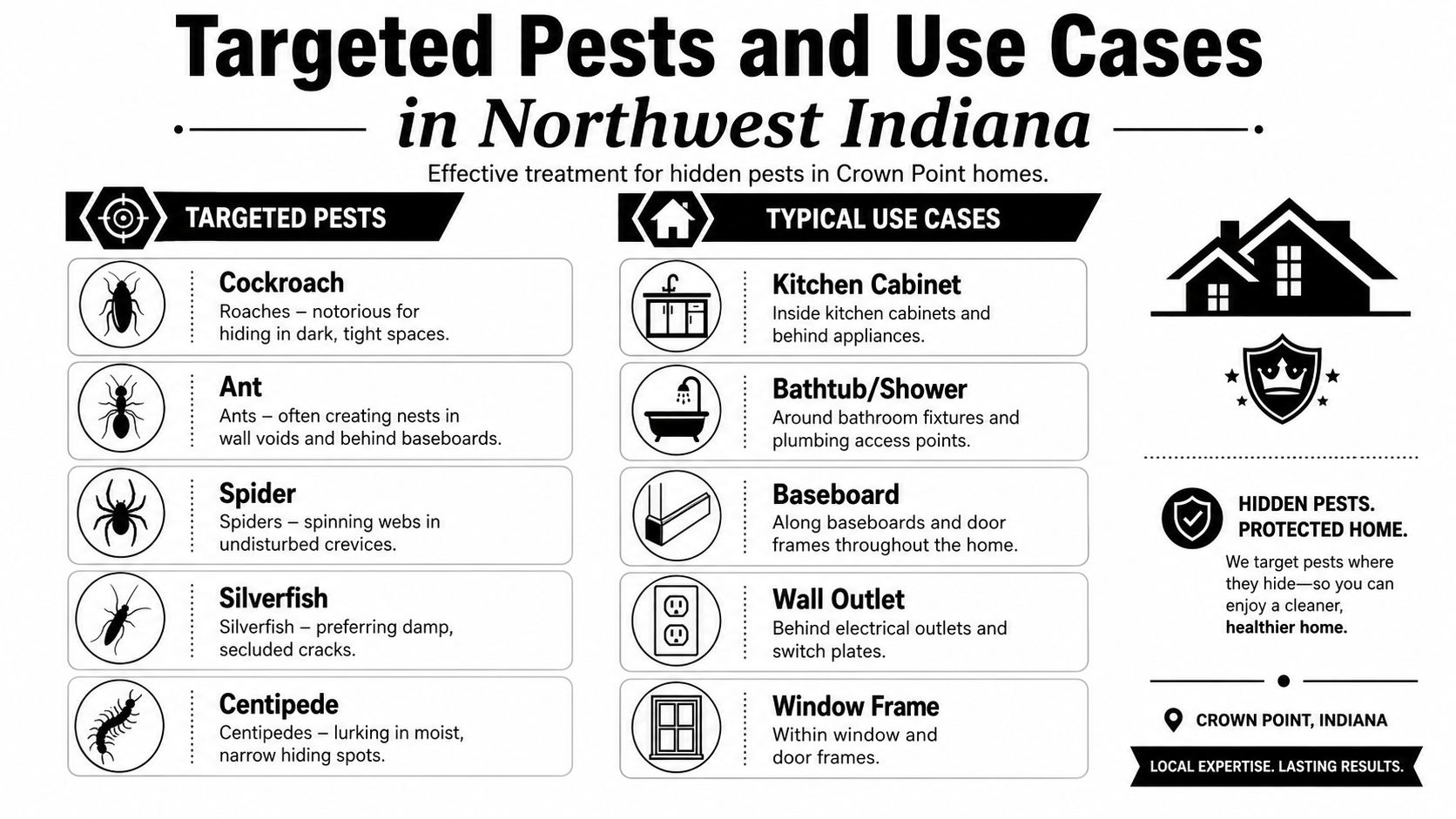
Hidden gaps in Crown Point homes tend to attract the same kinds of pests over and over. Roaches use dark seams and utility chases. Ants work their way into wall voids and trim gaps. Spiders, silverfish, and centipedes also settle into undisturbed spaces where they won't be disturbed by day-to-day activity.
Where pests hide inside the home
A local pest control plan usually starts with the zones homeowners overlook most:
- Kitchen cabinets and appliance gaps where crumbs, grease, and warmth meet.
- Bathroom fixtures and plumbing access points where moisture stays available.
- Baseboards and door frames that form narrow travel lanes through the house.
- Electrical outlets and switch plates where voids create hidden shelter.
- Window and door frames that can open the door to recurring entry activity.
These are the kinds of spaces where targeted application makes the most sense. A cabinet gap doesn't need a room-wide spray, it needs treatment in the opening where pests are moving through. The same goes for a utility chase or a wall penetration around pipes.
Why timing matters in Crown Point
Seasonal pest pressure in Northwest Indiana makes precision even more useful. Spring often brings more ant pressure as outdoor colonies become active, while cooler fall weather can push insects to scout for indoor shelter. When that happens, cracks, seams, and voids become the easiest routes inside.
For homeowners comparing exterminator in Crown Point, IN options, the biggest difference is whether the service addresses the hiding place or just the symptom. A targeted plan can help reduce activity in the spots pests use most often, and it can be repeated only when needed. The EPA product label for crack-and-crevice use says repeat treatment should be done only when pests are seen and not more often than every 6 to 8 weeks for roaches, spiders, crickets, silverfish, firebrats, centipedes, millipedes, pill bugs, and sowbugs.
For readers who want a broader background on pest patterns in urban settings, a useful outside resource is the comprehensive guide on Toronto pests. The climate and geography are different, but the habit of pests using hidden entry points is the same.
Professional Treatment Process with The Green Advantage
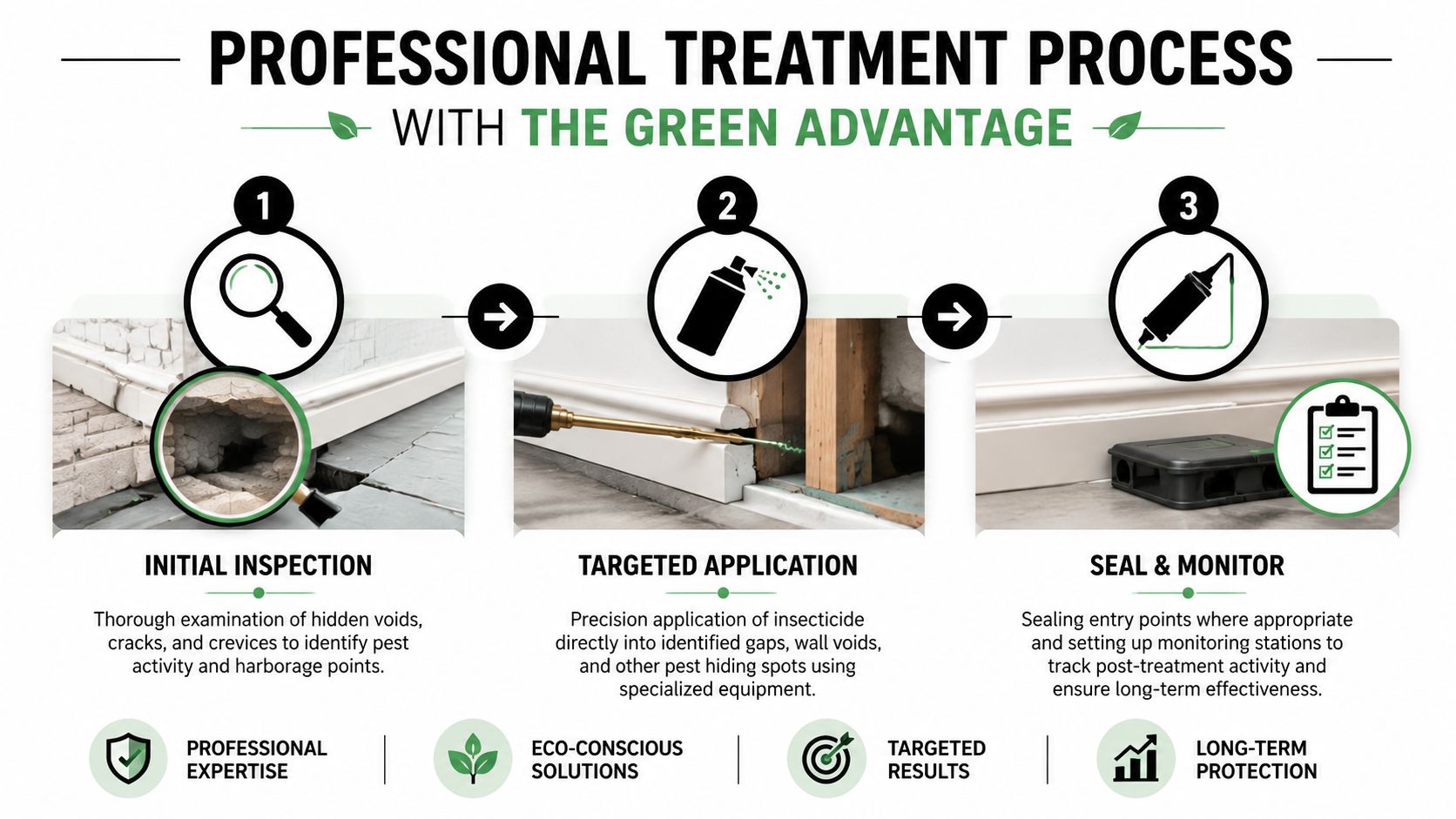
A proper service call starts with inspection, not spraying. Technicians look for gaps around baseboards, plumbing, cabinets, appliance voids, and other protected areas where pests can live out of sight. Once the harborages are identified, the treatment is placed where it can reach the pest, not just the surface around it.
What the application looks like
Industry guidance for aerosol crack and crevice work recommends short 1 to 2 second bursts with a thin injector tube into hidden voids such as electrical outlets, baseboards, appliance motors, and plumbing penetrations, then ventilating the area and sealing openings afterward to reduce reinfestation pressure. That guidance from PCT Online lines up with the way careful technicians work in real homes. The point is to kill pests already occupying those spaces and make the openings less useful afterward.
The Green Advantage's approach in Crown Point follows that logic. The service is designed for the layout of the home, the type of pest activity, and the places where sealing can reduce future movement. In practical terms, that means treating first, then closing off the pathway when it's appropriate to do so.
For homeowners who want to see how the company frames service choices, the why should you choose The Green Advantage for your pest control needs page is a useful read. It gives context for how the team thinks about inspection, treatment, and follow-through.
The best crack and crevice work doesn't end with product application. It ends with fewer open routes for pests to use again.
How to prepare your home
A few simple steps make service smoother:
- Clear under sinks so plumbing voids and cabinet seams are reachable.
- Move small appliances away from walls if you can do it safely.
- Keep pets secured during the visit and until the area is ready for reentry.
- Leave access open to problem rooms, utility spaces, and basement edges.
That preparation helps technicians work faster and more precisely, especially in homes where pests are moving through multiple small gaps.
Safety and Environmental Considerations
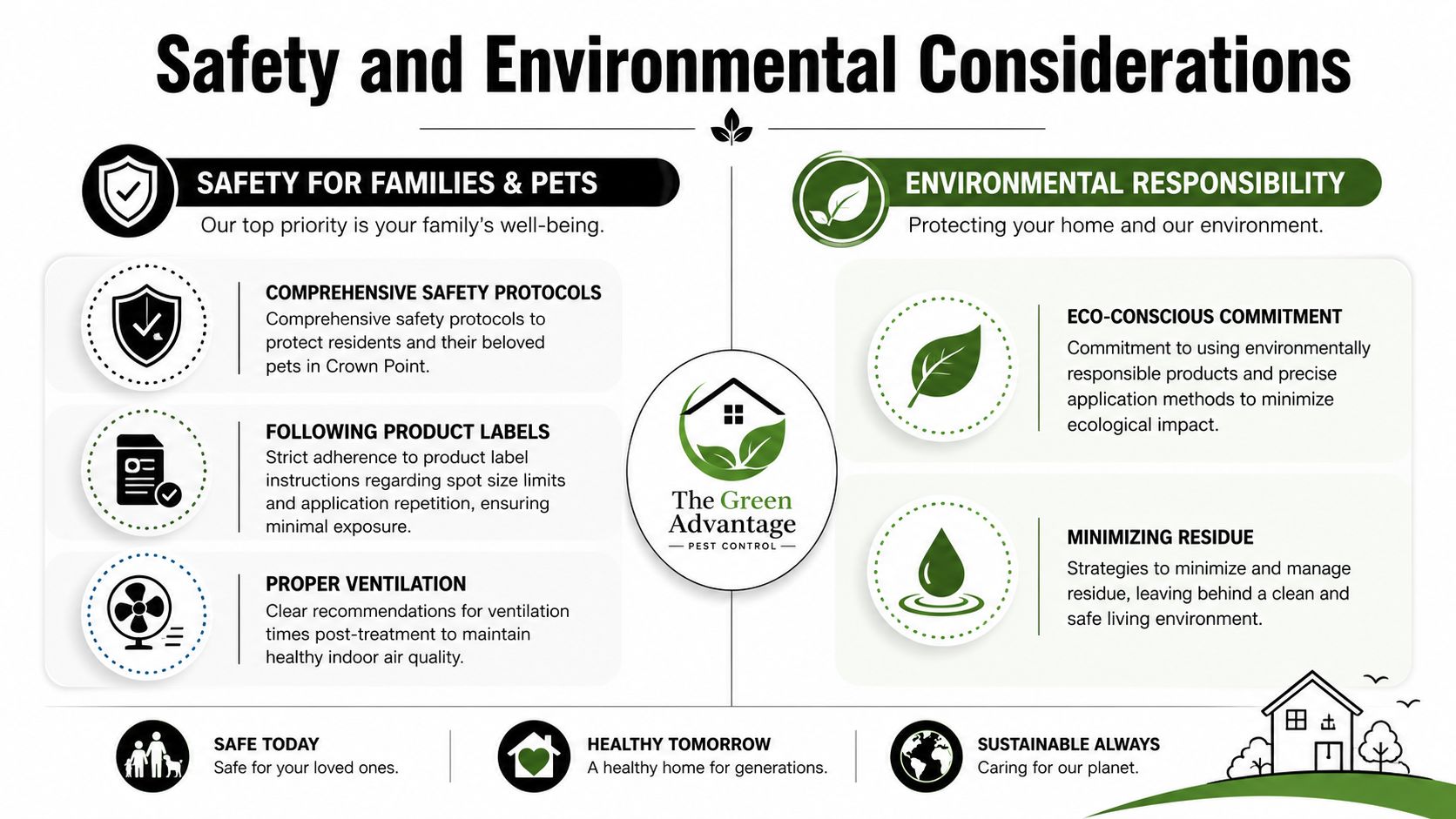
Targeted treatment is often easier on the home because it puts product where it's needed instead of everywhere else. That doesn't replace label compliance, though. It makes label compliance more important, since the application has to stay within the defined limits.
What product labels require
One crack-and-crevice label says to apply at 20 seconds per 1,000 ft³ for a general volumetric treatment, then keep the area closed for 15 minutes and ventilate thoroughly before reoccupying. For spot treatment, individual spots should not exceed 2 square feet and should cover no more than 20% of the treated surface. That label language shows how tightly this method is defined.
Those limits matter for families and pets in Crown Point. A precise treatment reduces the amount of product used, limits off-target exposure, and keeps the process focused on hidden voids instead of open living space. It also supports better residue management in sensitive areas like kitchens, bathrooms, and mechanical rooms.
Safer use comes from restraint
Simple rule: less area treated, more control over where the product goes.
That's why a careful technician pays attention to nozzle placement, spot size, and reentry timing. The goal isn't to fill the room. The goal is to reach the pest while keeping the rest of the environment as undisturbed as possible.
For homeowners worried about indoor air quality, temporary closure and ventilation are part of the process, not an afterthought. The same is true for children and pets, who should stay out of the treated area until it's ready for normal use. Empty container handling should follow local disposal rules and product label directions, since cleanup is part of responsible service.
This is also where eco-friendly pest control really means something practical. Precision treatment uses less product than broad spraying and gives technicians a better chance to limit unnecessary exposure. In homes where sensitivity matters, that can make the difference between a service that feels disruptive and one that feels controlled.
Comparing DIY and Professional Services
Homeowners can buy aerosol products and try to handle crack and crevice work themselves, but that often leads to the same mistakes. The nozzle gets aimed at open trim instead of the void itself. Product goes onto visible surfaces instead of into the seam. Hidden entry points get missed entirely.
Where DIY usually falls short
DIY treatment often fails in three predictable ways:
- It misses pest harborage. The pest is in the void, not on the surface.
- It overapplies in the wrong place. More product on a countertop or baseboard doesn't equal better control.
- It skips sealing. If the opening stays open, pests can use it again.
The exterminator near me search usually starts because the problem keeps coming back. That's the clue that simple spot spraying isn't enough. If you want a broader decision framework, the DIY or hire a pro what's right for you page helps homeowners compare risk, effort, and results.
What professional service adds
Professional service brings better nozzle control, cleaner placement, and a plan for follow-up. It also means the technician knows when to treat lightly, when to treat only visible activity, and when to recommend exclusion work instead of relying on chemistry alone. For homes and businesses that need residential pest control or commercial pest control, that follow-through matters.
The difference is simple. DIY work tends to stop at the spray. Professional work keeps going into inspection, targeted application, and sealing where appropriate. That's why the method is so effective for people who want less chemical exposure without giving up control.
If pests are showing up in your Crown Point home, don't guess at the source. Schedule an inspection, ask where the entry points are, and get a treatment plan built around the places pests hide.
A CTA for The Green Advantage.