
A lot of Crown Point homeowners hit the same point every year. The weather turns nice, the kids want to play outside, the dog heads straight for the back fence, and suddenly nobody feels relaxed in the yard anymore because ticks are on your mind.
That concern is reasonable. Ticks change how people use their property. Instead of enjoying the patio or letting pets roam, you start checking pant legs, watching the edges of the lawn, and wondering whether the shady spot behind the shed has turned into a problem area. In Northwest Indiana, that worry usually starts in the places that look harmless. Leaf litter along the fence, brush near the tree line, taller grass behind a playset, or a damp border where wildlife passes through.
If you've been searching for pest control near me, exterminator near me, or pest control in Crown Point, IN, you're probably not looking for theory. You want to know what kills ticks in the yard, what works, and how to make the space usable again without creating a new safety concern for your family or pets.
Reclaim Your Yard from Ticks in Crown Point IN
One of the most common situations around Crown Point goes like this. A family spends time cleaning up the yard in spring, gets the grill ready, freshens up the landscaping, and expects to be outside more. Then a pet comes in with a tick, or someone finds one after mowing near the back edge of the lot. The whole yard starts to feel different after that.
Parents get cautious fast, and for good reason. Pet owners do too. Once ticks show up, people stop trusting the spaces where they used to relax. The yard may still look clean, but it doesn't feel comfortable. This is the main problem with ticks. They don't just create a pest issue. They take away normal outdoor living.
Why tick problems feel worse in Northwest Indiana
In Crown Point and nearby Northwest Indiana communities, many properties have exactly the mix ticks like best. There's lawn, but there's also shade. There are maintained areas, but also borders with weeds, mulch beds, ornamental grasses, brushy corners, and neighboring lots that may not be kept the same way.
That means a yard can seem tidy and still support tick activity.
Practical rule: If your yard has cool, protected edges where wildlife or pets move through, ticks can hold there even when the center lawn looks fine.
What helps most is taking a realistic view. Ticks usually aren't solved by one quick trick, one household spray, or one Saturday cleanup. The yards that stay more usable usually have two things working together:
- Targeted treatment that knocks down active tick pressure where ticks hide
- Ongoing yard adjustments that make the property less inviting over time
That's why residential pest control makes such a difference for tick issues. A trained technician doesn't just treat open grass and leave. Critical work happens in transition zones, perimeter edges, low vegetation, leaf buildup, fence lines, and shaded harborage points that generic advice often skips.
For homeowners looking for exterminator in Crown Point, IN or pest control in Crown Point, IN, the goal isn't just killing a few visible ticks. It's getting back to a yard you can use again with more confidence.
Understanding the Tick Threat in Northwest Indiana
Ticks in Northwest Indiana aren't random. They show up where moisture, cover, and host activity come together. That's why some yards in Crown Point seem to have recurring problems while others on the same street have much lighter pressure.
The species many homeowners hear about most is the blacklegged tick, often called the deer tick. This is one reason ticks get serious attention in the Midwest. They're not just annoying pests like a few mosquitoes around dusk. They're tied to health concerns, including Lyme disease, which is one reason homeowners want faster action once ticks are found on pets, people, or around common use areas.
Where ticks hide on local properties
Ticks don't spend most of their time out in the bright middle of a dry lawn. They hold in protected areas where they can avoid heat and wait for a host to pass by.
Common trouble spots in Crown Point yards include:
- Leaf litter under trees where moisture stays longer
- Tall grass along fences and behind sheds
- Wooded edges where yards meet brush or tree cover
- Groundcover and dense ornamentals that stay cool underneath
- Pet paths and wildlife routes along lot lines and rear property edges
A yard doesn't need to back up to deep woods to have a tick issue. A few connected conditions are enough. Rabbits move through. Deer pass at night. Rodents stay under brush piles or around neglected edges. Pets investigate those areas, then bring the problem back toward the house.
Why Northwest Indiana yards create repeat pressure
The challenge in this part of Indiana is that many properties combine suburban living with nearby natural cover. That mix is beautiful, but it also creates steady tick habitat. Moisture hangs on longer in shaded pockets, especially where airflow is limited and debris collects.
Ticks rarely start in the middle of how you use the yard. They build in the margins, then spread into the places your family and pets actually touch.
That's why homeowners looking for pest control near me often need more than a broad lawn treatment. Tick work has to match the layout of the property. A technician who understands local yards will pay close attention to wooded transitions, mulch lines, fence rows, and the areas where pets cut through every day.
For property managers and business owners, the same logic applies. Commercial pest control for ticks matters anywhere people use outdoor common areas, cultivated borders, or shaded walkways. A nice-looking exterior doesn't always mean a low-risk exterior.
Effective Professional Tick Treatments for Your Yard
When homeowners ask what kills ticks in the yard, the most reliable answer is targeted professional acaricide treatment, combined with smart application in the spots ticks frequent. “Acaricide” is a product designed to control ticks and related pests. In practice, the success of the treatment comes down to where it's applied, how thoroughly it's applied, and whether the technician understands tick behavior on your type of property.

A professional yard treatment is not the same as spraying the whole lawn evenly and hoping for the best. That's one of the biggest misunderstandings homeowners have after trying store-bought products. Ticks aren't spread uniformly across the property, so the treatment shouldn't be either.
What professionals target first
A trained technician usually starts with the harborage zones. These are the cool, protected areas where ticks rest and wait for people, pets, or wildlife to brush by.
The highest-value treatment zones often include:
- Fence lines and property borders
- Wooded perimeters and brush edges
- Leaf buildup under shrubs and trees
- Dense plantings near patios, play areas, and dog runs
- Transitions from lawn to mulch, bed lines, or natural cover
That approach is often called a barrier treatment. It creates a treated zone where ticks are most likely to survive and move, instead of wasting effort on low-risk turf.
Why professional products perform better
Homeowners can buy concentrates, hose-end sprayers, granules, and ready-to-use products, but they usually run into the same problems. Coverage is uneven. Key hiding spots get missed. Product choice doesn't fit the yard conditions. Timing is off. Or the application is too light because the person spraying is trying not to overdo it.
Licensed pest control technicians work with products and equipment designed for controlled application. Just as important, they know when a surface should be treated and when it shouldn't. That matters for effectiveness, but it also matters for safety around families, pets, and routine yard use.
Field note: The best tick treatment plans are precise, not heavy-handed. More product doesn't automatically mean better control.
Some homeowners also want eco-friendly pest control options. That's a reasonable question, especially when children and pets use the yard often. In real-world service, environmentally mindful tick control usually means choosing products and application methods carefully, targeting only the areas that need treatment, and avoiding blanket over-application.
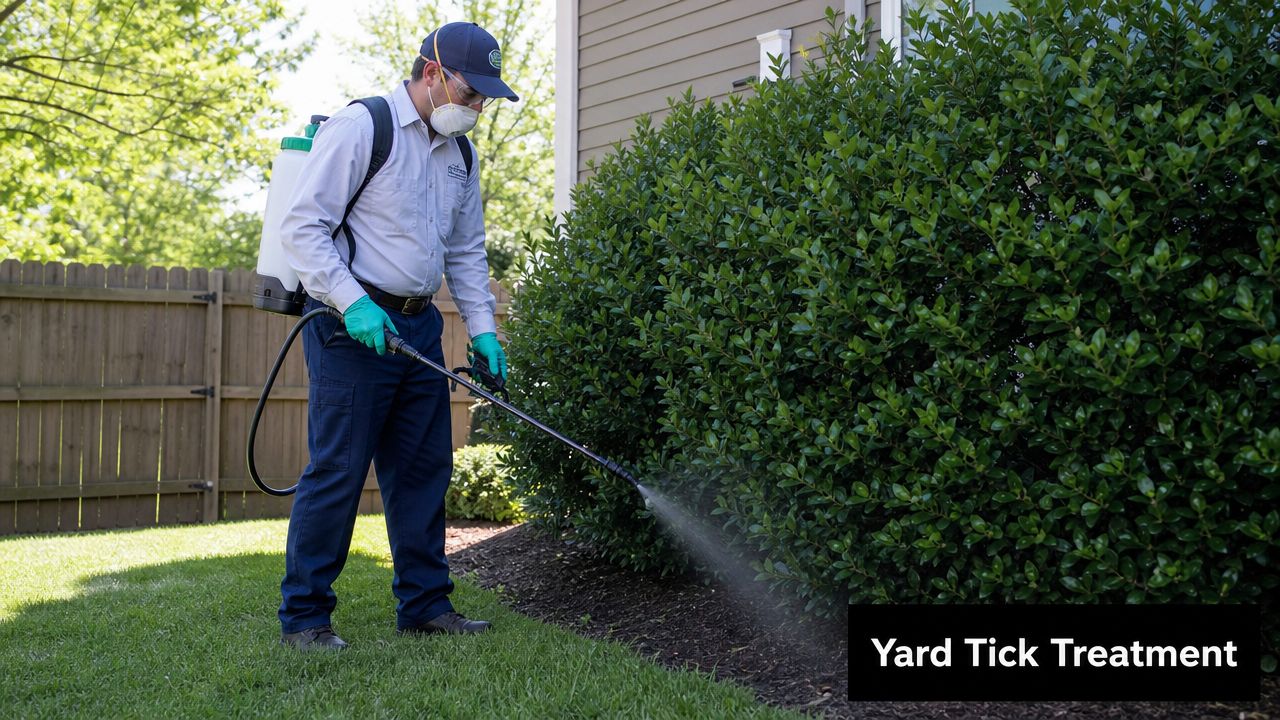
Here's a quick visual look at what professional outdoor treatment work can involve:
Timing matters as much as the product
Tick control works better when treatment lines up with local conditions and active periods. In Northwest Indiana, the wrong timing can leave a yard looking treated but still producing tick encounters because the treatment missed the moments when activity and exposure were highest.
That's another place professional service stands apart. A good technician doesn't just ask, “Do you want a spray?” They ask where ticks were found, where the dog runs, whether the rear lot line stays damp, whether deer cross the back edge, and whether there's brush or ornamental cover that needs attention.
This kind of targeted approach also fits well with related services. Homeowners who need mosquito control, rodent control, or preventative pest treatments often discover the same property conditions are contributing to multiple issues at once. Outdoor pest management works best when the whole site is evaluated, not just one symptom.
Comparing DIY Methods with Professional Tick Control
DIY tick prevention has a place. It just has limits. Homeowners in Crown Point can absolutely make their yard less attractive to ticks, and some of those steps are worth doing whether you hire a professional or not.
Where DIY usually falls short is active control. Once ticks are established in the right protected areas, simple cleanup or a consumer spray often reduces visibility without solving the underlying pressure. That's why so many people think they “treated for ticks” and still find them along the same edges a short time later.
What DIY can help with
The most useful homeowner actions are the basics that reduce tick habitat:
- Mow consistently: Shorter grass allows more sun and airflow.
- Remove leaf litter: Debris under shrubs and trees holds moisture.
- Trim back overgrowth: Dense edging and brush create protected movement lanes.
- Limit wildlife shelter: Brush piles and neglected corners support host activity.
- Check pets often: Early discovery can reveal where the yard pressure is coming from.
Some people also try cedar products, yard-safe botanical sprays, tick tubes, or certain plantings. Those options can be part of a broader prevention plan, but they usually don't provide the same dependable knockdown as a professional treatment targeted to active harborage zones.
For homeowners weighing options, this guide on best flea and tick control for yard is worth reading because it helps sort out what's useful, what's overhyped, and what belongs in a support role rather than the main solution.
DIY vs Professional Tick Control in Crown Point
| Factor | DIY / Natural Methods | Professional Service (The Green Advantage) |
|---|---|---|
| Effectiveness | Best for reducing habitat and supporting prevention. Often inconsistent once ticks are active in multiple hiding areas. | Designed to directly target active tick zones and reduce pressure where ticks live and travel. |
| Cost | Lower upfront purchase cost, but repeat trial-and-error can add up in products and time. | Higher service cost than a single DIY purchase, but more efficient when you want a clear treatment plan and less guesswork. |
| Safety Risks | Risk comes from misreading labels, poor mixing, overapplication, or treating the wrong surfaces. | Licensed application helps reduce misuse and keeps treatment focused on the appropriate areas. |
| Time Commitment | Requires mowing, cleanup, product selection, setup, application, and follow-up monitoring. | Saves homeowner time because inspection, treatment strategy, and application are handled for you. |
| Guarantee | Usually none beyond the product packaging. Results depend on homeowner technique and coverage. | Service expectations are clearer, and homeowners get professional guidance on follow-up and prevention. |
The honest trade-off
DIY works best for homeowners who are disciplined about maintenance and are dealing with light pressure. It's much less dependable when the property backs up to brush, has heavy shade, supports wildlife traffic, or has repeated tick encounters in the same areas.
If you've already cleaned up the yard and you're still finding ticks, the issue usually isn't effort. It's that the remaining problem is in the exact places DIY treatment tends to miss.
That's where residential pest control becomes the practical next step, not because every yard needs a major intervention, but because some yards need precise treatment more than they need more homeowner labor.
The Benefits of a Professional Exterminator for Ticks
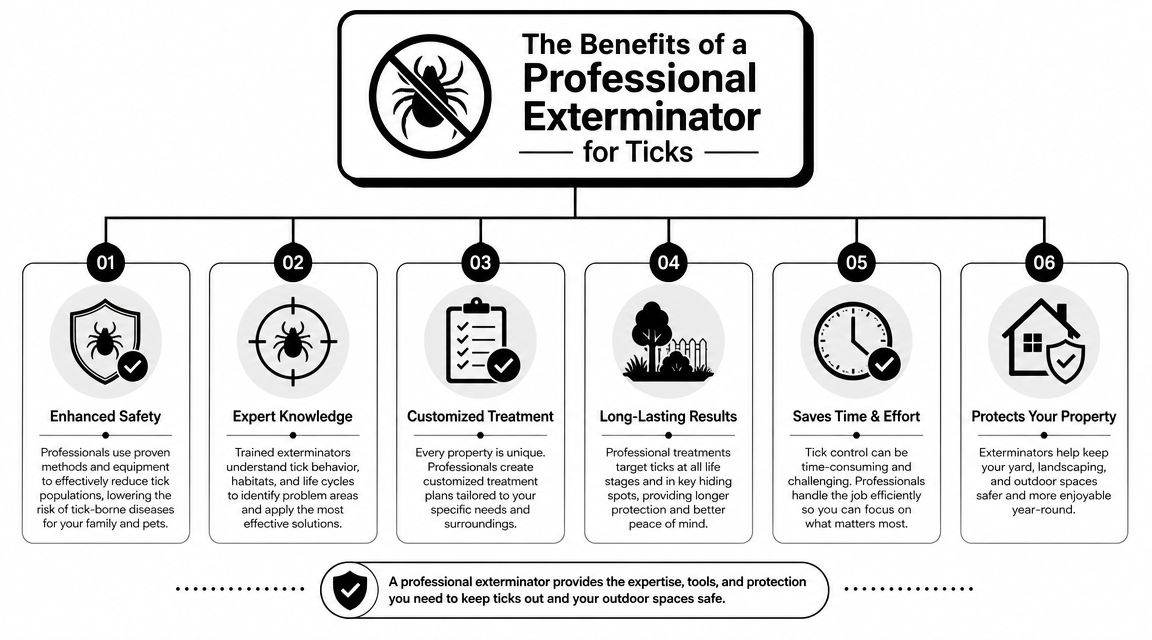
The biggest benefit of hiring a professional exterminator for ticks isn't just that the yard gets treated. It's that the problem gets handled with a plan. That matters when children are playing outside, pets are using the yard every day, or you're tired of second-guessing every shaded corner near the house.
A good tick service protects more than turf and landscaping. It protects how the property feels. Homeowners want to walk to the garden, let the dog out, or sit by the patio without that low-grade worry in the back of their mind.
Why expert service pays off
Professional tick control gives you advantages that are hard to recreate with off-the-shelf products.
- Better diagnosis: Technicians identify the sections of the property driving the issue, not just the places where you happened to spot a tick.
- Safer application choices: Treatment is matched to the site instead of applied broadly without a plan.
- Less wasted effort: You don't spend weekends trying one product after another.
- Stronger prevention: You get guidance on what to cut back, clean up, or monitor between visits.
- More peace of mind: The yard feels usable again because someone experienced has addressed the key pressure points.
This kind of value shows up in other outdoor services too. Anyone comparing proposals for cleanup, mowing, or yard work can learn a lot from how to bid landscaping jobs effectively, because it explains why scope, property conditions, and labor details matter more than a quick surface price. Tick control is similar. The quality of the plan matters.
Health, comfort, and long-term property use
Homeowners often start with one concern, usually finding a tick on a pet or near a child's play area. What they really want back is normal outdoor life. They want to use the yard without turning every outing into an inspection routine.
That's why many people who search exterminator near me or exterminator in Crown Point, IN aren't looking for the cheapest spray. They're looking for confidence that the work was done correctly.
For businesses and shared properties, the same principle applies. Commercial pest control for ticks helps protect staff, tenants, visitors, and the reputation of the property itself. Exterior areas should feel maintained and safe, not uncertain.
Your Tick-Free Yard Plan with The Green Advantage
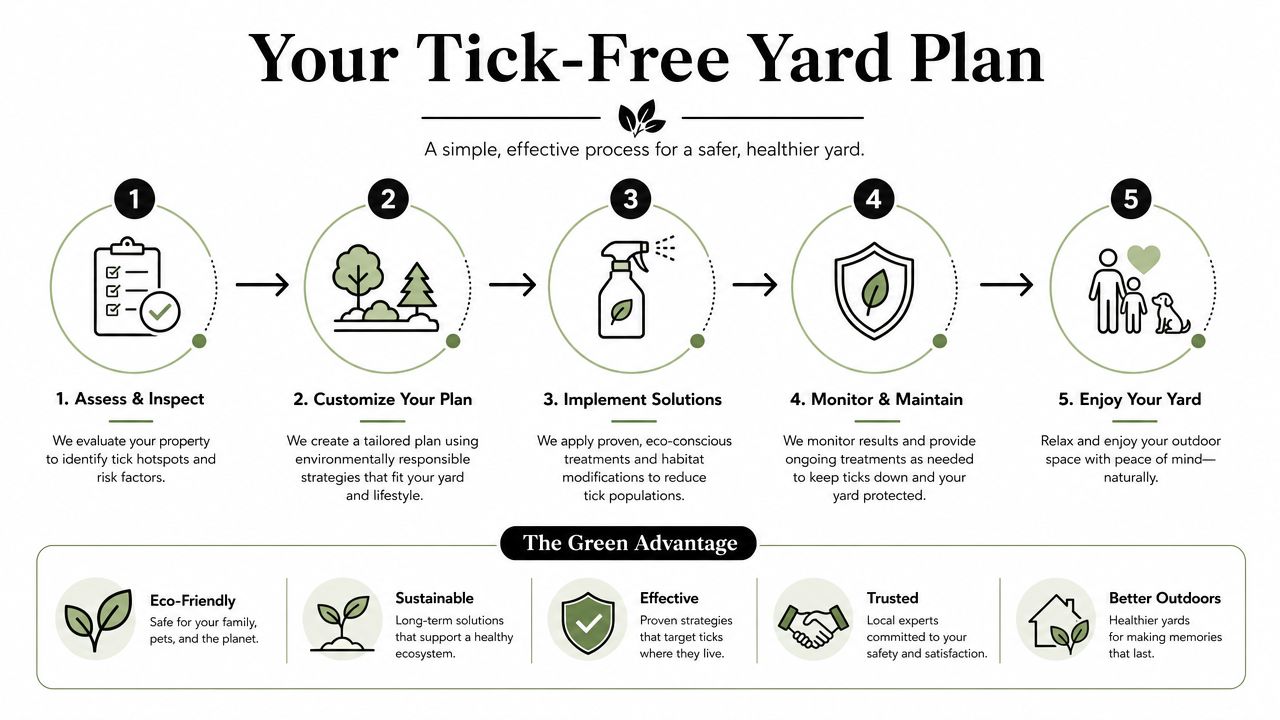
Hiring a pest professional shouldn't feel complicated. Homeowners in Crown Point usually want a straightforward answer to a few practical questions. What happens first, how is the yard evaluated, what gets treated, and what should the family expect afterward?
The process works best when it's simple and transparent.
What the service process looks like
Initial contact
You explain what's happening. Maybe ticks are showing up on pets, maybe someone found them along the back fence, or maybe you've got a wooded edge that's making you uneasy. Clear communication at the start helps narrow down the likely pressure zones.On-site inspection
The property is evaluated with tick behavior in mind. That includes shaded borders, vegetation density, leaf buildup, fence lines, pet traffic routes, and transition areas between maintained lawn and natural cover.Treatment recommendation
You get a clear explanation of what needs attention and why. Good recommendations don't sound vague. They connect the layout of your yard to the treatment approach.Professional application
Service focuses on the highest-value treatment areas rather than wasting material on low-risk open turf. The result is a more efficient and more thoughtful approach to what kills ticks in the yard.Follow-up guidance
You'll know what to do next, whether that means trimming back a planting, clearing debris, monitoring pet routes, or considering related seasonal pest issues such as mosquito control, spider control, wasp removal, or rodent control around the same exterior zones.
What homeowners appreciate most
Homeowners don't want a complicated lecture. They want honest answers, courteous service, and a clear path back to a usable yard.
Local advice: The best service calls leave homeowners feeling informed, not pressured. You should understand what was treated, why it mattered, and what simple yard changes will help hold the line.
That's especially important in Northwest Indiana, where one property may need only light perimeter attention and the next may need a more deliberate plan because of woods, drainage, pet activity, or neighboring overgrowth.
Local Tick Control Questions Answered
Are tick treatments safe for children and pets
That's usually the first question, and it should be. Safe service starts with correct product selection, proper application, and clear instructions about when treated areas are ready for normal use again. Professional treatment is much safer than casual overapplication with consumer products because the technician applies material where it belongs and avoids unnecessary coverage.
How often do I need tick control in the Crown Point area
It depends on your property conditions. A more open, sunny yard with minimal brush may need much less attention than a shaded lot with leaf litter, wildlife traffic, and wooded edges. The right schedule comes from inspection, not guesswork. If your yard has repeat tick activity, a one-time spray usually isn't the whole answer.
Does mosquito control also kill ticks
Sometimes there's overlap in exterior pest management, but mosquito service and tick service are not identical. Mosquitoes rest and move differently than ticks do, so treatment strategy matters. If ticks are the concern, ask for a plan that directly addresses tick harborage instead of assuming general outdoor spraying will handle both.
Should I try bleach or household chemicals on ticks outside
No. Household chemicals aren't a good yard treatment plan and can create unnecessary risks for people, pets, and landscaping. If you've seen advice online about improvised tick remedies, it's smarter to sort myth from reality first. This article on whether bleach will kill ticks helps explain why improvised approaches aren't the answer for outdoor control.
If you're in Crown Point or a nearby Northwest Indiana community and you're still wondering whether your yard needs treatment, that's usually a sign it's time for a professional inspection. A quick conversation can tell you a lot.
If you're ready for a safer, more usable yard, contact The Green Advantage to schedule a pest inspection or request a quote. If you've been searching for pest control near me, pest control in Crown Point, IN, exterminator near me, or exterminator in Crown Point, IN, their local team can help you identify the problem, recommend the right treatment, and put together a practical plan for your home or property in Northwest Indiana.