
You get home from a weekend trip, set the suitcase on the bedroom floor, and suddenly remember the hotel chair you used for your clothes. Or you find a used nightstand that looks perfect for the guest room and wonder what might be hiding in the joints and drawer tracks. That's how bed bug problems often start in Crown Point and across Northwest Indiana. Not with a dramatic infestation, but with one small lapse in routine.
Homeowners searching for pest control near me, pest control in Crown Point, IN, or an exterminator near me usually want two things at once. They want practical steps they can take today, and they want honest guidance about when those steps stop being enough. That's the right mindset. Prevention works best when it's consistent, simple, and built into how you travel, clean, and bring items into the home.
Natural prevention is possible, but it has to be based on methods that change the environment bed bugs rely on. Good inspection habits, less clutter, smart laundry routines, and physical barriers all matter. So does understanding the local reality in Northwest Indiana, where weather can limit some DIY heat methods that sound good online but don't hold up well in real homes.
A Proactive Approach to Bed Bug Prevention in Crown Point
Bed bugs don't care whether a home is clean, newly remodeled, or carefully maintained. They care about access. They hitchhike on luggage, clothing, upholstered furniture, and anything with seams or narrow hiding spots. In Crown Point, that means the usual risk points are family travel, college move-ins, overnight guests, and secondhand finds brought home without inspection.
The most effective natural approach is prevention before exposure turns into an indoor problem. Once bed bugs establish themselves around sleeping areas, DIY gets harder fast. That's why I tell homeowners to think about bed bug prevention the same way they think about locking doors or checking smoke alarms. A small habit done regularly beats a large cleanup later.
Where prevention starts
Start with the places and moments that create the highest risk:
- After travel: Keep luggage off beds, inspect it before unpacking, and deal with clothing right away.
- Before used items enter the house: Check seams, joints, screw holes, drawer corners, and fabric folds.
- Around sleeping areas: Bed bugs prefer tight, protected spaces close to where people rest.
- In multi-unit or shared-wall settings: Small cracks and gaps give pests routes to move.
That's one reason homeowners looking for residential pest control in Northwest Indiana often benefit from a broader prevention mindset. The same habits that reduce bed bug hiding spots also support cleaner pest management overall, whether the concern is spiders, rodents, ants, or seasonal invaders.
Practical rule: Don't wait for bites to start your prevention routine. By the time people notice repeated signs, bed bugs usually have had time to spread beyond one obvious spot.
What natural prevention can and can't do
Natural prevention works well when your goal is to stop hitchhikers from settling in. It's less reliable when bed bugs are already established inside walls, furniture, and multiple rooms. That distinction matters.
Homeowners in Northwest Indiana often read about every remedy online at once, from sprays to homemade treatments to outdoor heat tricks. Some of those ideas have value. Some waste time. The strongest natural strategy is built around inspection, heat, laundering, and reducing places where bugs can hide. Everything else should be judged against that standard.
Your Proactive Bed Bug Inspection Checklist
A good inspection doesn't need to take over your weekend. It needs to be deliberate. The goal is to check the narrow, protected areas bed bugs prefer before a minor introduction turns into a broader problem.
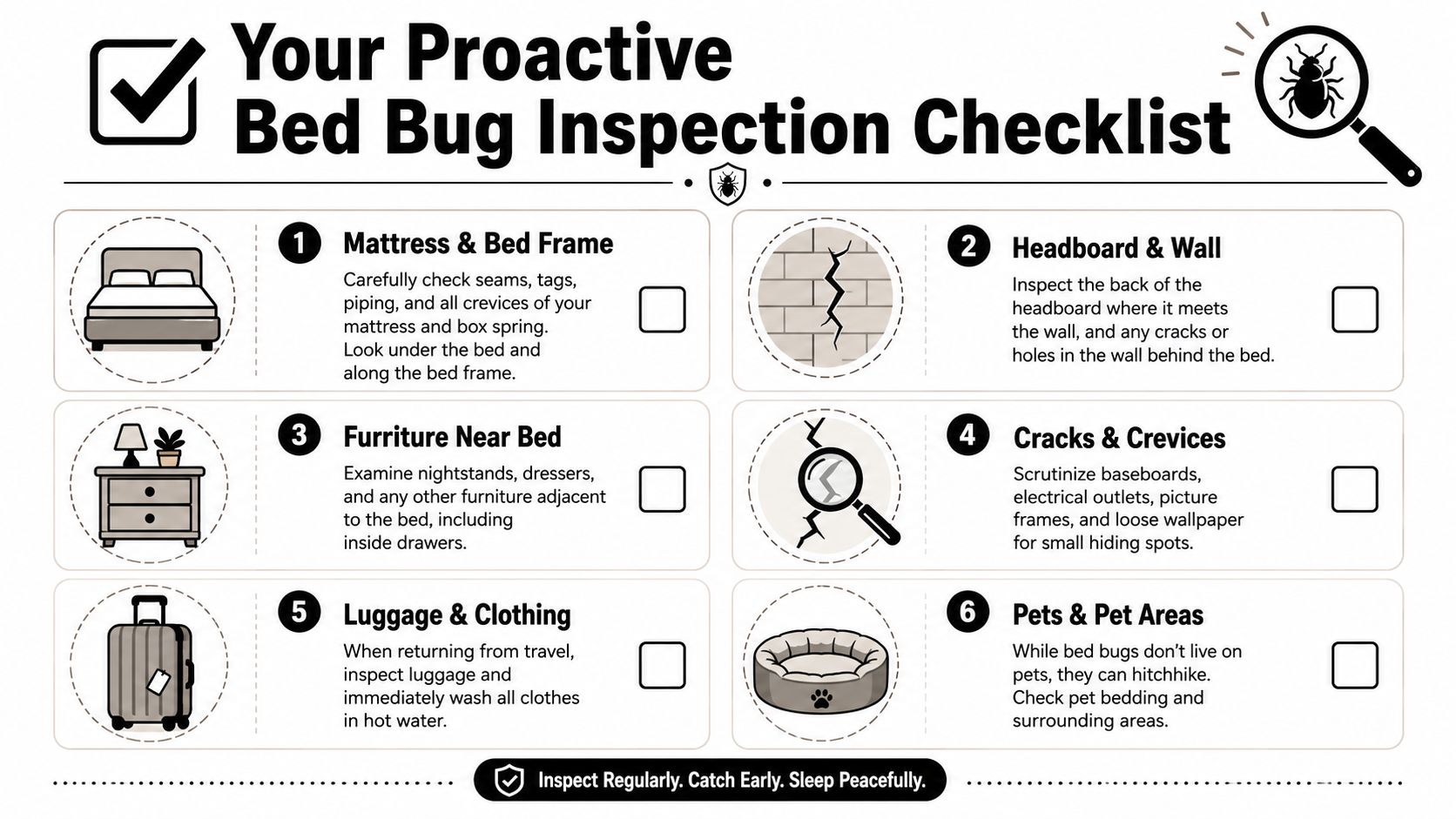
What to inspect routinely
Use this as a repeatable home routine, especially after travel or before moving used furniture indoors:
- Mattress seams and tags: Check piping, stitched edges, and labels where fabric folds create cover.
- Box spring and bed frame: Look underneath, inside corners, and around hardware.
- Headboard area: Pull attention to the back side and where it meets the wall.
- Nightstands and nearby furniture: Inspect drawer joints, undersides, and any cracks near the bed.
- Baseboards and wall openings: Pay attention to small gaps, outlet covers, picture frames, and loose wallpaper.
- Luggage and laundry areas: Examine suitcases before they're stored and keep travel clothing separate until cleaned.
- Pet bedding nearby: Bed bugs don't live on pets, but they can hide around pet beds and soft items on the floor.
For homeowners who want a broader home routine, this pest control inspection checklist is useful for staying organized room by room.
What you're actually looking for
People often expect to find obvious insects crawling in the open. That's not how early bed bug problems usually present. More often, you're looking for subtle signs in sheltered areas, such as small reddish-brown spotting, shed skins, or the bugs themselves tucked into narrow seams and cracks.
A flashlight helps. So does slowing down. Quick glances miss the exact areas where bed bugs like to stay compressed and hidden during the day.
Check the bed as a system, not just the mattress. Mattress seams, the frame, the headboard, and the furniture within arm's reach all deserve the same attention.
Best times to inspect
Timing matters more than people realize. Inspections are most useful when they're tied to real exposure events.
| Situation | What to do |
|---|---|
| After a trip | Inspect luggage before it goes into bedrooms, then handle clothing immediately |
| Before bringing in used furniture | Check joints, drawer tracks, fabric seams, and underside panels outdoors or in a garage |
| Guest room turnover | Inspect bedding, frame, and nearby furniture before resetting the room |
| Seasonal deep cleaning | Use that cleanup time to check edges, cracks, and under-bed storage |
This is the simplest answer to how to prevent bed bugs naturally. Make inspections a habit before bed bugs get comfortable.
Creating an Inhospitable Environment for Pests
Inspection tells you whether there's a problem. Prevention changes the home so bed bugs have fewer places to settle. That starts with clutter control and basic exclusion work.
Why clutter changes the odds
Bed bugs do best in tight, undisturbed spaces near where people sleep. Piles of clothing, overfilled under-bed storage, stacks of linens, and crowded nightstands all give them more places to hide and more surfaces to move through unnoticed.
Decluttering doesn't kill bed bugs by itself. What it does is remove cover. It shortens inspection time, makes cleaning more effective, and helps you catch a problem earlier. In pest work, fewer hiding spots almost always means faster answers.
- Keep floor contact limited: Clothing, blankets, and bags touching the floor create easy transfer points.
- Use sealed storage thoughtfully: Loose cardboard and open bins create more shelter than protection.
- Simplify the bedroom perimeter: The less packed the area around the bed, the easier it is to inspect and clean.
For homeowners also thinking about bedding setup, understanding mattress protection options can help you choose layers that are easier to remove, inspect, and maintain.
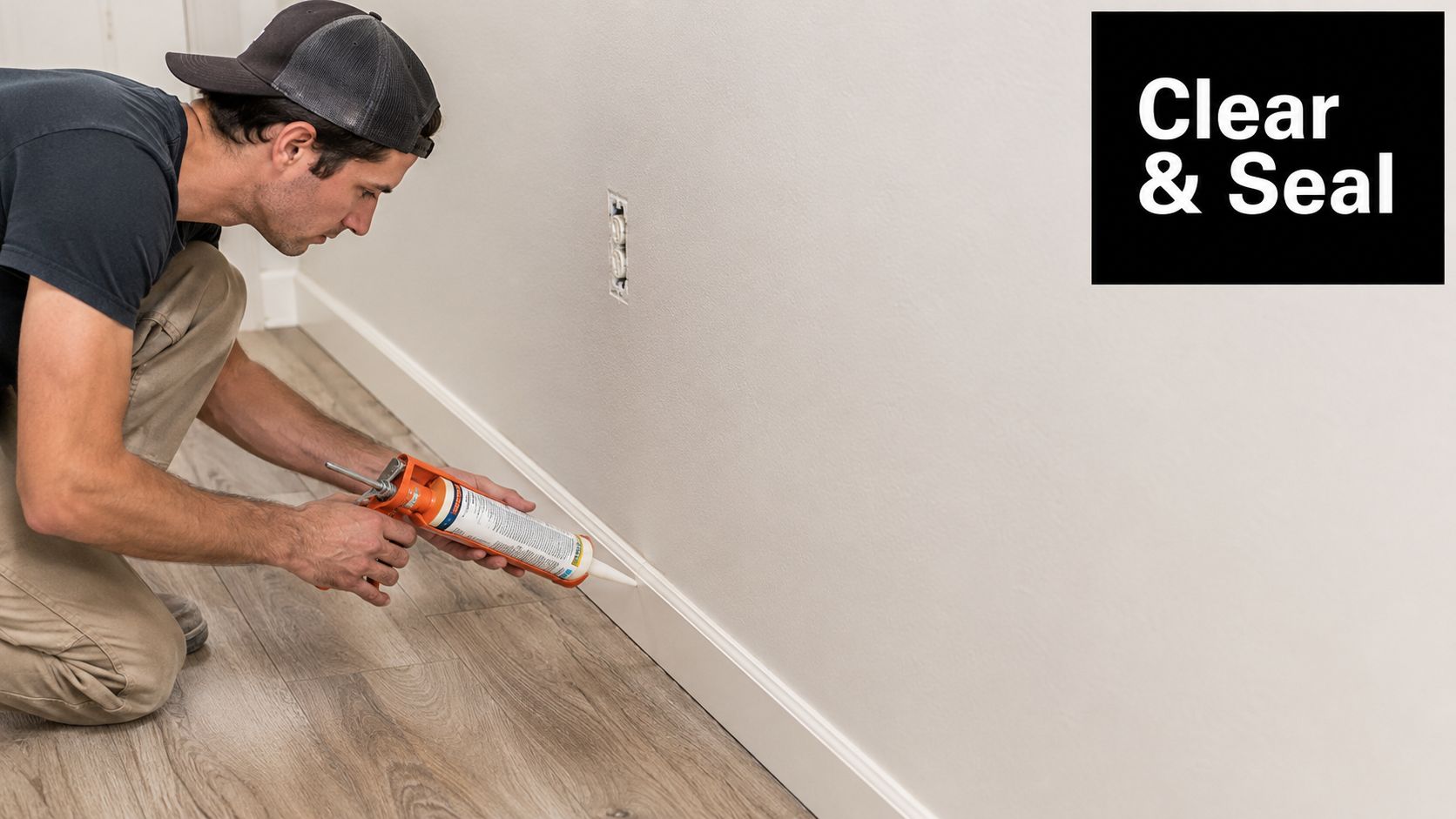
Seal the routes pests use
In apartments, duplexes, and homes with shared wall voids or utility penetrations, bed bugs can use gaps as movement routes. In single-family homes, cracks still matter because they provide protected harborages near sleeping areas.
Use caulk or appropriate sealant on visible gaps at baseboards, trim, wall joints, and utility openings. Tighten loose outlet plates. Repair peeling wallpaper. Secure torn dust covers on box springs or furniture undersides.
A sealed crack doesn't just block movement. It also removes one more place where bed bugs can stay hidden during an inspection.
This kind of maintenance supports more than bed bug prevention. It also fits a stronger residential pest control approach overall, especially in Northwest Indiana homes dealing with ants, spiders, and occasional rodent entry around changing seasons.
Using Heat and Laundry as Your Best Defense
If you want one natural method with the strongest support behind it, use heat. Bed bugs are vulnerable to sustained high temperatures, and that makes laundering, drying, and steam work the backbone of non-chemical prevention.

The laundry routine that actually matters
For washable items, heat isn't a vague suggestion. It's the point. Washing infested linen in hot water at 130°F (54°C) achieves 100% efficacy in killing all bed bug life stages. For items that can't be washed, placing them in a dryer on the highest heat setting for at least 90 minutes is a proven method to eliminate both bugs and their resilient eggs according to WorldMetrics bed bug statistics.
That means post-travel laundry should be handled with urgency, not convenience. Don't leave travel clothes in a hamper for later. Don't set a suitcase on the bed while you sort. Move washable contents directly into the wash or dryer workflow.
The David Suzuki Foundation also notes in its non-toxic bed bug control guidance that items treated in a dryer should be set to the highest heat level for at least 90 minutes when using heat alone.
Where steam fits
Steam is useful for items that can't go through the laundry cycle, especially upholstered furniture, mattress surfaces, fabric-covered bed frames, and carpet edges. The key is temperature. Steam cleaning at 212°F (100°C) delivers 99% effectiveness on contact with bed bugs and eggs, as summarized in the earlier heat data.
Use steam carefully. Move slowly enough to let heat reach the surface, and avoid blasting moisture into materials that can be damaged or hold water. Steam is a precision tool, not a shortcut.
Here's a visual walkthrough of bed bug treatment concepts and where heat-based methods fit in the bigger picture.
Smart prevention after travel or guests
A simple heat routine catches many problems before they spread:
- Isolate luggage first: Keep bags off beds and upholstered seating.
- Unload directly to treatment: Wash what can be washed. Dry what can't.
- Inspect the suitcase shell and seams: Pay attention to handles, zipper folds, and pockets.
- Clean soft surfaces nearby: If a bag sat on carpet or upholstery, inspect and vacuum that area.
If you're trying to make furniture easier to maintain after travel season or overnight guests, protect your furniture with washable covers so removable layers can be cleaned quickly instead of leaving all the risk on the upholstery itself.
Safe and Effective Natural Barriers and Repellents
Not every “natural” product deserves equal trust. Some methods create a real physical barrier. Others sound appealing but don't give homeowners a dependable result.
What works better than sprays
Mattress and box spring encasements are one of the most practical preventive tools available. A quality encasement limits access to the most important harborage area in the room and makes future inspections much easier because there are fewer folds, tears, and hidden seams to check.
Encasements aren't a substitute for inspection or heat, but they do change the battlefield. They reduce hiding options around sleeping areas and help homeowners notice problems sooner.
A broader guide to natural bed bug elimination can be helpful if you want to compare barriers, cleanup habits, and non-chemical tactics side by side.
Where diatomaceous earth fits
Desiccant dusts such as diatomaceous earth have a role, but it's a narrow one. They're most useful in cracks, crevices, voids, and out-of-the-way areas where bed bugs may travel or hide. Think behind outlet covers, along certain structural gaps, or in limited treatment points that stay dry and undisturbed.
This isn't a product to scatter heavily across mattresses, living areas, or broad floor surfaces. Overapplication creates mess, reduces practicality, and often gives homeowners a false sense of control while actual hiding sites remain untouched.
| Method | Best use | Limitation |
|---|---|---|
| Mattress encasement | Protects key sleeping surfaces and simplifies inspection | Doesn't address bugs elsewhere in the room |
| Diatomaceous earth | Targeted use in cracks and crevices | Works poorly when used as a blanket treatment |
| Essential oil sprays | Supplemental scent-based approach at most | Not a proven barrier for dependable prevention |
The essential oil question
Many homeowners ask about lavender, tea tree, eucalyptus, and similar sprays. The problem is reliability. There is no credible data on the repellency duration or concentration needed for them to act as a true preventive barrier, while desiccant dusts like diatomaceous earth are recommended for cracks and crevices where bugs may hide, as discussed in this bed bug prevention video reference.
That doesn't mean every spray is useless. It means you shouldn't trust essential oils as your primary line of defense. If you want a natural plan that holds up, use physical barriers and heat first, then treat sprays as optional support rather than protection you can count on.
Don't confuse “natural smell” with “reliable barrier.” Bed bugs don't care whether a product sounds gentle. They care whether it stops them.
When to Call a Professional Exterminator in Northwest Indiana
There's a clear line between prevention and active infestation. If you're finding repeated signs in more than one room, seeing bugs beyond the bed itself, or noticing the problem return after careful laundering and cleanup, it's time to stop experimenting and get professional help.
That's especially true in Northwest Indiana, where climate complicates some DIY advice people find online. Natural methods like solar heat treatment depend heavily on consistent warm weather, which is unreliable in cooler, humid regions like Northwest Indiana. This climate-specific challenge often makes professional heat treatments the only guaranteed solution for eliminating an infestation, as noted by Eartheasy's natural bed bug control guidance.
Signs the problem is past DIY prevention
- You're finding signs repeatedly: Not a one-time travel scare, but ongoing evidence.
- Bugs appear away from the original area: That suggests spread, not just a contained introduction.
- Used furniture has already been inside for a while: Hidden harborages may be deeper than surface cleaning can reach.
- You've relied on sprays but skipped a full inspection and heat response: That often delays control.
- The property has shared walls or multiple sleeping areas: Bed bugs can move and multiply beyond one room.

Homeowners and property managers searching for an exterminator in Crown Point, IN, pest control in Crown Point, IN, or commercial pest control usually need clarity more than anything else. A proper inspection tells you whether you're dealing with a limited exposure issue or a true infestation that requires a treatment plan. If you need direct service information, review these bed bug pest control services.
Bed bugs also rarely exist in isolation from broader property concerns. The same homes and facilities dealing with bed bug pressure may also need support with rodent control, spider control, ant control, termite control, mosquito control, wasp removal, and ongoing preventative pest treatments designed for Northwest Indiana conditions.
If you're in Crown Point or a nearby Northwest Indiana community and you want clear answers about bed bugs, contact The Green Advantage. Whether you need an inspection, a quote, or a practical plan for residential pest control or commercial pest control, their team can help you identify the problem, explain your options, and protect your property with an eco-friendly, professional approach.