
You pull back the sheet late at night, spot a tiny bug near the mattress seam, and suddenly the whole room feels different. Many residents in Crown Point don't panic because of the bug itself. They panic because they don't know if they're looking at one stray insect or the start of a bed bug problem that will spread into bedrooms, couches, luggage, and the rest of the house.
That reaction is normal. Bed bugs make people feel unsettled fast, even in clean, well-kept homes.
In Northwest Indiana, bed bug calls come from single-family houses, apartments, rental units, and commercial properties. They don't show up because a home is dirty. They show up because they travel well, hide well, and stay out of sight until activity becomes hard to ignore. If you've been searching for pest control near me, exterminator near me, or pest control in Crown Point, IN, you're probably looking for clear answers more than anything else.
A steady process is essential. Bed bug work isn't about one spray and a quick goodbye. It takes inspection, the right treatment method for the structure, safe application, and follow-up. For homeowners, landlords, and property managers in Crown Point and nearby Northwest Indiana communities, the smartest move is to match the treatment plan to the building and the level of activity.
Finding Bed Bugs A Homeowners Guide for Crown Point
A lot of bed bug stories start the same way. Someone wakes up with bites, changes the sheets, and hopes it was nothing. A few nights later they notice dark marks on the bedding, or a bug tucked along the piping of the mattress. At that point, worry usually turns into questions. Are they in one room or several? Did they come home in luggage? Are they in the couch too?
The first thing to know is simple. A bed bug problem is not a sign of poor housekeeping. Bed bugs are hitchhikers. They move through travel, used furniture, shared walls, frequent guest turnover, and day-to-day human movement. That's one reason these calls are so common now. Industry surveys summarized by national pest-control organizations show that roughly 99% of U.S. pest control firms treated for bed bugs by 2015, up from about 25% in 2000, which shows how bed bug work became a core service across the industry (bed bug industry trend data from PestWorld).
That matters for Crown Point homeowners because it means bed bugs aren't rare anymore. They're a standard pest problem that requires a professional plan.
What Crown Point residents usually need first
You don't need a lecture on insect biology. You need to know three things:
- Is it really bed bugs
- How far has it spread
- What treatment fits this property
A single-family home near schools, shopping, or commuter routes has a different risk pattern than a rental with frequent move-ins and move-outs. An older apartment building has different treatment needs than a newer condo with limited clutter and fewer adjoining units. Local conditions matter.
Practical rule: If you've found signs in one sleeping area, assume nearby furniture and adjoining spaces also need inspection.
For worried homeowners, the best next step is not random store-bought sprays. It's a calm, methodical inspection and a treatment decision based on the structure itself. That same practical thinking applies whether you're looking for residential pest control, commercial pest control, or a local exterminator in Crown Point, IN who can handle bed bugs without turning the process into guesswork.
Signs of a Bed Bug Infestation and Where to Look
Before anyone treats bed bugs correctly, they have to confirm where the activity is. Start with the places where people rest for long periods. Bed bugs want to stay close to a host, and they hide in narrow, protected spaces.
A quick visual guide can help you check the obvious signs first.
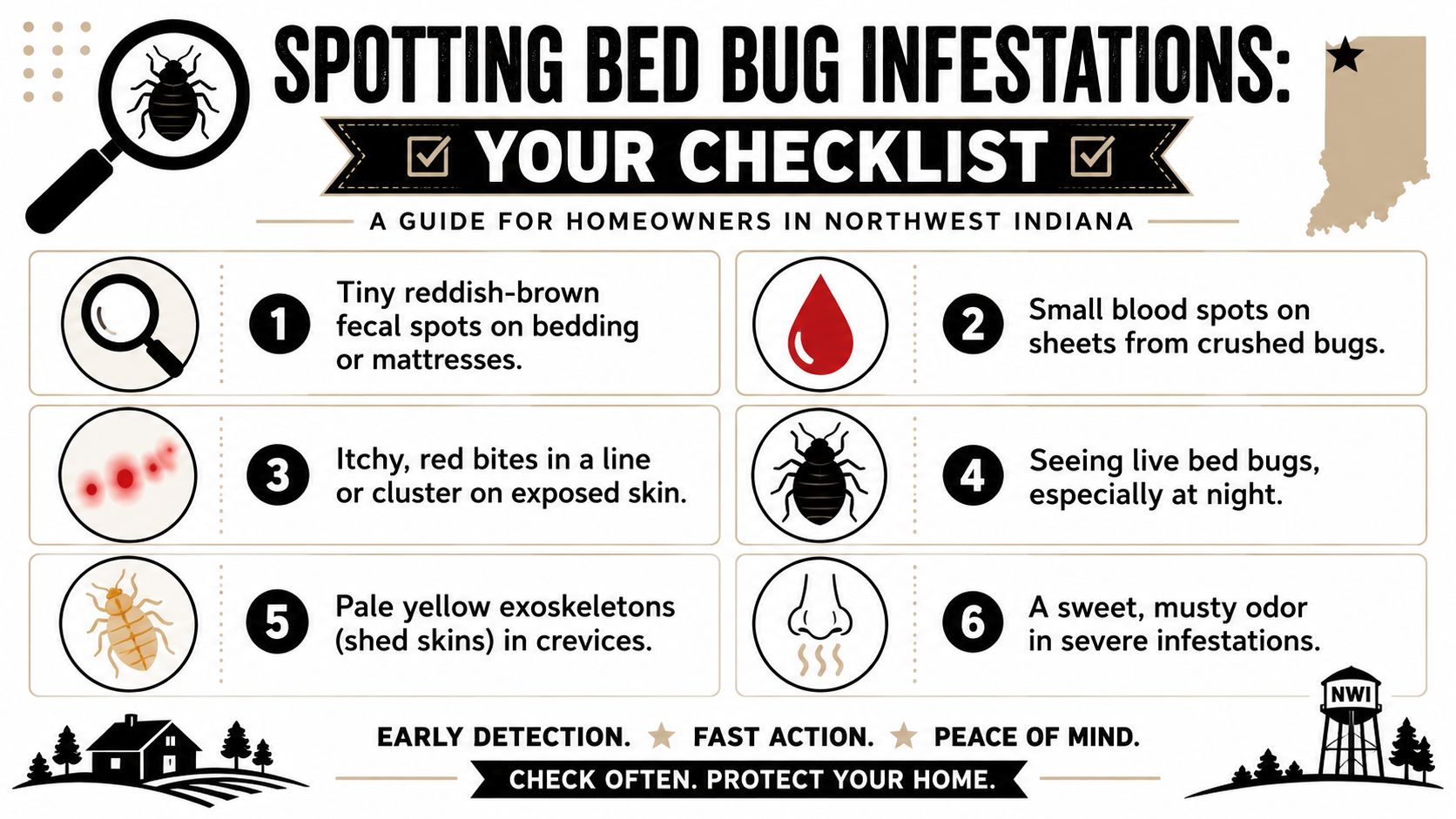
What to look for on beds and bedding
Check the bed before you check the whole room. Strip the sheets and inspect with a flashlight.
- Reddish-brown spotting: Small marks on sheets or near mattress seams can be an early sign.
- Dark specks: Bed bug waste often shows up as tiny dark dots on mattresses, box springs, or bed frames.
- Shed skins: Bed bugs molt as they grow. Those pale cast skins often collect in hidden edges and seams.
- Live insects: Adults and younger bed bugs hide during the day, especially in tight cracks.
- Blood marks: Small smears on sheets can happen when a bug is crushed after feeding.
If you want a second reference point while checking your room, this guide on how to tell if you have bed bugs gives homeowners another practical way to compare what they're seeing.
Where bed bugs hide beyond the mattress
Once activity starts, bed bugs often spread beyond the bed itself. Inspect carefully around:
- Box springs and bed frames: Look under corner guards, wood joints, and stapled fabric areas.
- Headboards: Especially where the headboard meets the wall or has recessed hardware.
- Nightstands and dressers: Check drawer joints, undersides, and back panels.
- Baseboards: Bed bugs use edges and cracks as travel routes.
- Upholstered furniture: Seams, dust covers, tufts, and cushion zippers are common hiding spots.
- Electrical outlets and wall void edges: These areas can become harborages in established infestations.
This short video can help you visualize the inspection mindset before you start moving things around.
Bed bugs don't need a wide-open space. They need a crack, a seam, or a protected edge close to where people sleep.
What not to assume
Not every bite means bed bugs, and not every bug near a bed is a bed bug. That's why homeowners should avoid guessing based on one clue alone. You're looking for a pattern of signs, not one isolated piece of evidence.
If you see signs in a child's room, guest room, or on a couch, don't start carrying items from room to room. That's one of the easiest ways to spread activity through the house before treatment starts.
Comparing Professional Bed Bug Treatment Methods
Bed bug treatment works best when the method fits the building. In Crown Point and across Northwest Indiana, the main decision usually comes down to whole-room heat treatment or an integrated treatment plan that combines targeted products with non-chemical steps such as vacuuming, encasements, steam, and monitoring.
Both can work. Neither is automatic.
Heat treatment and when it makes sense
Heat treatment aims to raise the treated space to lethal temperatures throughout the room, not just near the heaters. For whole-room heat jobs, the EPA states that temperatures must reach at least 120°F for about 90 minutes to kill all life stages, including eggs (EPA bed bug heat treatment guidance).
That's why professional heat service is more than “making the room hot.” Technicians have to manage air flow, watch for cold spots, move items as needed, and make sure heat reaches the places bed bugs use.
Heat is often a strong fit when:
- the infestation is concentrated in a limited area
- the resident wants a low-residue approach
- fast knockdown is a priority
- the unit can be prepared properly before treatment
Heat can be less reliable in some multi-unit settings if adjoining spaces still have active bed bugs and the structure allows movement between units.
Integrated treatment and when it makes sense
Integrated treatment is usually the better fit when the property has several risk factors at once. That may include adjoining units, cluttered rooms, sensitive furnishings, repeat introductions, or a need for ongoing monitoring after the initial service.
This approach may include:
- careful inspection and mapping of activity
- vacuuming and physical removal where practical
- steam in targeted areas
- mattress and box spring encasements
- interceptors or monitoring devices
- targeted product application in cracks, crevices, and travel routes
- follow-up visits to catch newly hatched bugs
Some local providers also offer biologically based or lower-impact options within that framework. For example, The Green Advantage offers bed bug treatments for affected areas and a prevention plan that includes non-toxic products and follow-up support.
Bed Bug Treatment Comparison Heat vs Integrated Methods
| Feature | Heat Treatment | Integrated (Eco-Mindful/Chemical) Treatment |
|---|---|---|
| Primary method | Raises room contents to lethal temperatures | Combines targeted applications with physical methods and monitoring |
| Speed | Often used for rapid knockdown in a treated space | Usually unfolds over multiple steps and follow-up visits |
| Residue | Leaves no chemical residue from the heat itself | May include residual materials depending on the plan |
| Best fit | Limited-area infestations, quick turnaround needs, well-prepared rooms | Multi-unit buildings, recurring introductions, complex layouts, long-term management |
| Main challenge | Cold spots, poor prep, and untreated adjacent spaces can reduce success | Requires resident cooperation and patience through the full process |
| Post-treatment need | Monitoring remains important because heat has no ongoing residual effect | Monitoring is built into the process |
| Furniture impact | Some heat-sensitive items must be removed or protected | Usually more flexible with heat-sensitive belongings |
| Decision point | Strong option when the treated area can be sealed and managed correctly | Strong option when the goal is control plus prevention over time |
Decision point: In apartments and attached housing, the best treatment on paper can still fail if the neighboring unit stays active.
For people searching pest control services for bed bugs in Crown Point, that's a key takeaway. The right method depends on the layout, the spread, the amount of preparation possible, and whether the problem is isolated or moving through a building.
Why Professional Pest Control Is Essential for Bed Bugs
Bed bugs are one of the clearest examples of why DIY pest control often falls short. Homeowners usually buy a spray, treat the mattress surface, and feel better for a few days. Then the bugs come back because their true hiding spots were in seams, furniture joints, behind the headboard, under trim, or in nearby rooms.
Part of the problem is detection. Field studies found that visual inspections alone detect bed bug infestations about 72% of the time, while visual checks combined with mechanical monitors can raise detection rates to approximately 99% (multi-tool detection findings in PMC review). That gap explains a lot. If the inspection misses activity, the treatment misses it too.
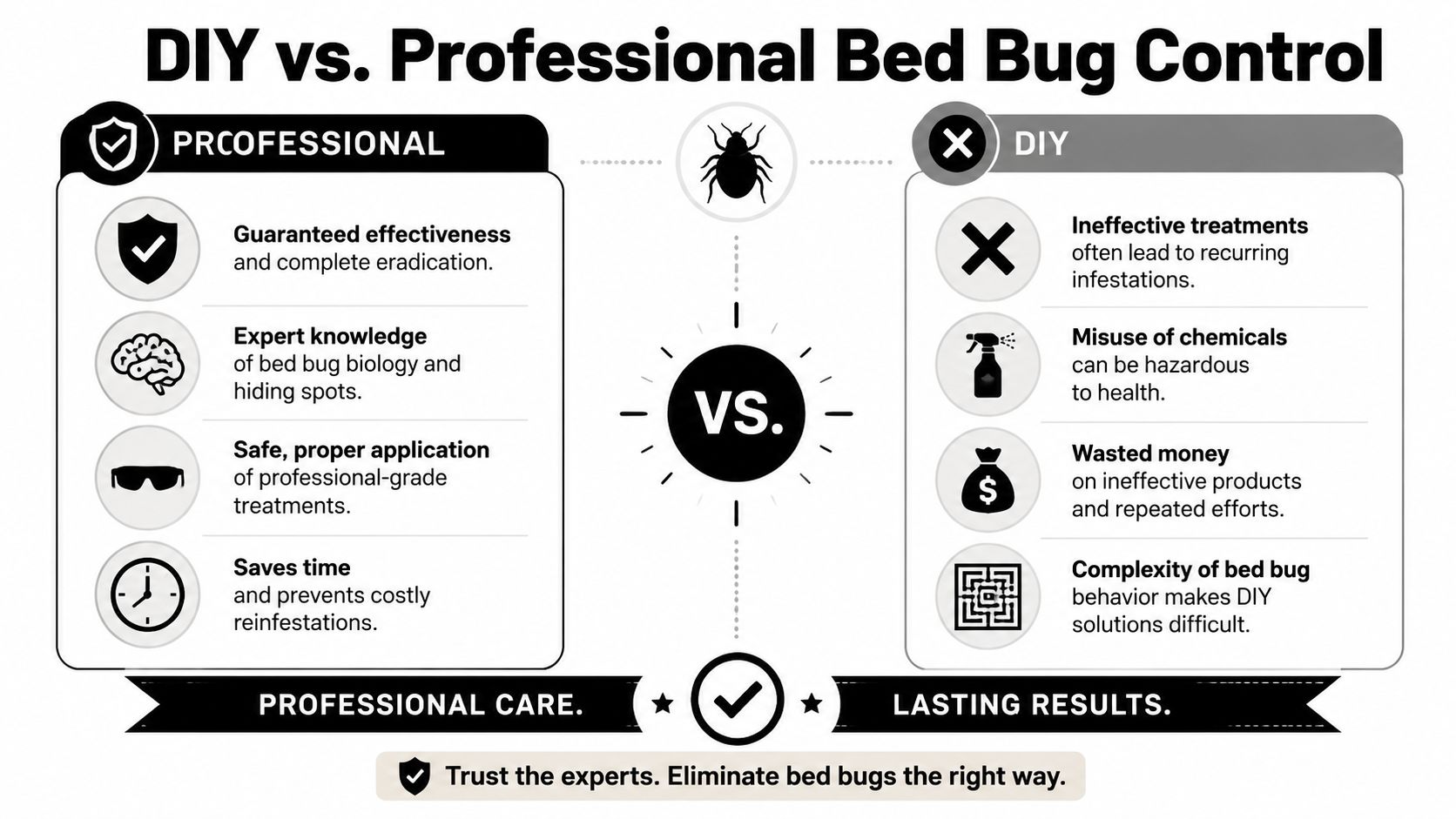
Why store-bought treatments often disappoint
The label may say bed bugs, but the product still has to reach the insect in the place it's hiding. That's hard enough. Resistance makes it harder. Bed bug populations have developed resistance to several commonly used insecticide groups, which is one reason professionals rely on broader treatment plans that include steam, heat, monitoring, and careful product selection instead of a spray-only approach.
DIY work also creates practical problems:
- Overapplication: People treat too much surface area and too many belongings.
- Missed harborages: Bugs survive in untouched cracks and protected joints.
- Spread during cleanup: Moving infested items improperly can push activity into other rooms.
- False confidence: Short-term reduction looks like success until eggs hatch and activity restarts.
What professionals do differently
A professional bed bug plan isn't just stronger chemistry. It's a structured process.
- Inspection with tools: Beds, furniture, edges, and likely travel routes get checked systematically.
- Method selection: The treatment matches the home, apartment, rental turnover pattern, and level of spread.
- Physical control: Vacuuming, steam, encasements, and clutter reduction help remove hiding opportunities.
- Monitoring: Interceptors and follow-up inspections confirm whether activity remains.
You can't solve a hidden pest with a surface-only response.
That same problem-solving approach matters across other services too. Homeowners who call for residential pest control often ask about ant control, rodent control, spider control, wasp removal, termite control, and mosquito control in the same conversation. Bed bugs are the pest where inspection quality and follow-up matter the most.
How to Prepare Your Home for Bed Bug Treatment
Preparation has a direct effect on the outcome. When the room is accessible and belongings are handled correctly, treatment reaches more hiding spots and follow-up is easier to evaluate. When preparation is rushed, bed bugs keep their shelter.
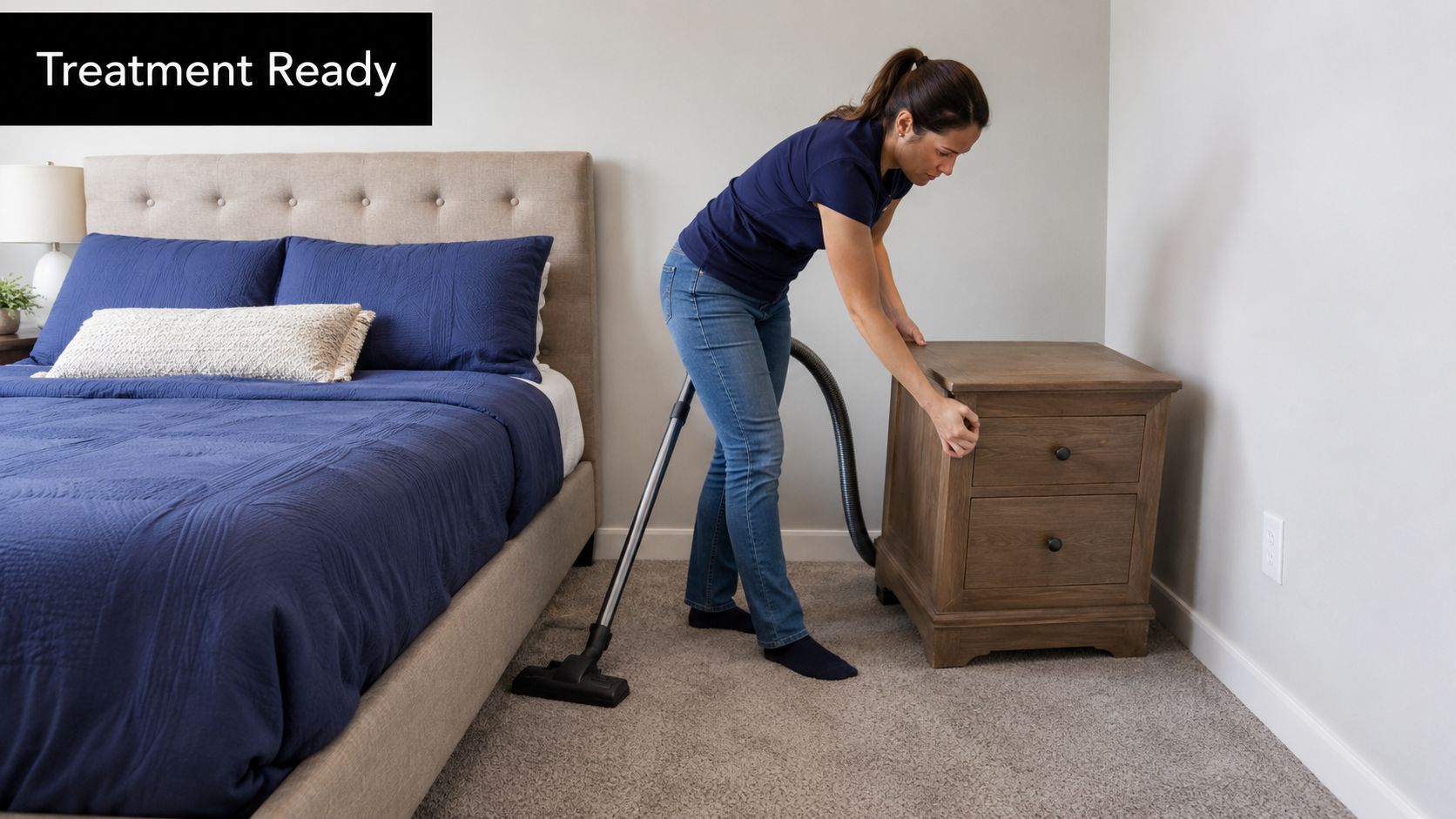
Before treatment day
Use a simple checklist and follow the technician's instructions closely. If you want a broader prep guide, this local resource on how to prepare for pest control is a useful starting point.
- Launder fabrics on high heat: Wash and dry bedding, clothing, and washable fabrics from affected rooms as directed.
- Bag items correctly: Keep cleaned items sealed until the technician tells you they can be returned.
- Reduce clutter: Floors, closets, and under-bed storage often create protected hiding areas.
- Pull furniture slightly from walls: This helps access baseboards, bed frames, and rear edges.
- Vacuum carefully: Focus on seams, bed frames, and floor edges, then dispose of vacuum contents as directed.
For mattresses and box springs that need to stay protected after service, quality mattress removal covers can help contain items during handling and reduce unnecessary contact while rooms are being prepared.
After treatment and during follow-up
Post-treatment discipline matters just as much as prep. Don't start moving items back too early or replace the monitoring plan with guesswork.
A strong follow-up routine usually includes:
- Using encasements where advised
- Leaving monitors in place
- Avoiding untreated secondhand furniture
- Reporting any new signs quickly
- Keeping sleeping areas stable so monitoring stays meaningful
For apartments and other shared-wall properties, treatment choices also need to account for what's happening nearby. In multi-unit buildings, one key decision is whether heat is suitable or whether an IPM-style program is better. Heat can fail if adjacent units are infested, while IPM programs in Midwest housing studies have reduced re-infestations by up to 60% over 12 months (multi-unit bed bug treatment comparison).
That's why property managers in Crown Point shouldn't think about one room in isolation. They need a building-aware plan.
What to Expect with The Green Advantage in Crown Point
When homeowners call about bed bugs, they usually want a straight answer on what happens next. They don't want vague promises. They want to know who shows up, what gets inspected, how the treatment works, and whether someone is coming back if eggs hatch later.
That's the right way to think about bed bug service.
The service process from first call to follow-up
The process starts with a conversation about what you've seen, where you've seen it, and what type of property is involved. A single-family home in Crown Point, a rental unit with frequent turnover, and a commercial lodging or office setting all need different treatment planning. Clear communication on the front end saves time later.
The next step is the field inspection and treatment recommendation. Professional bed bug control plans typically involve at least two to three service visits because retreatment is often needed to catch eggs that hatch after the initial work (professional bed bug service timeline).
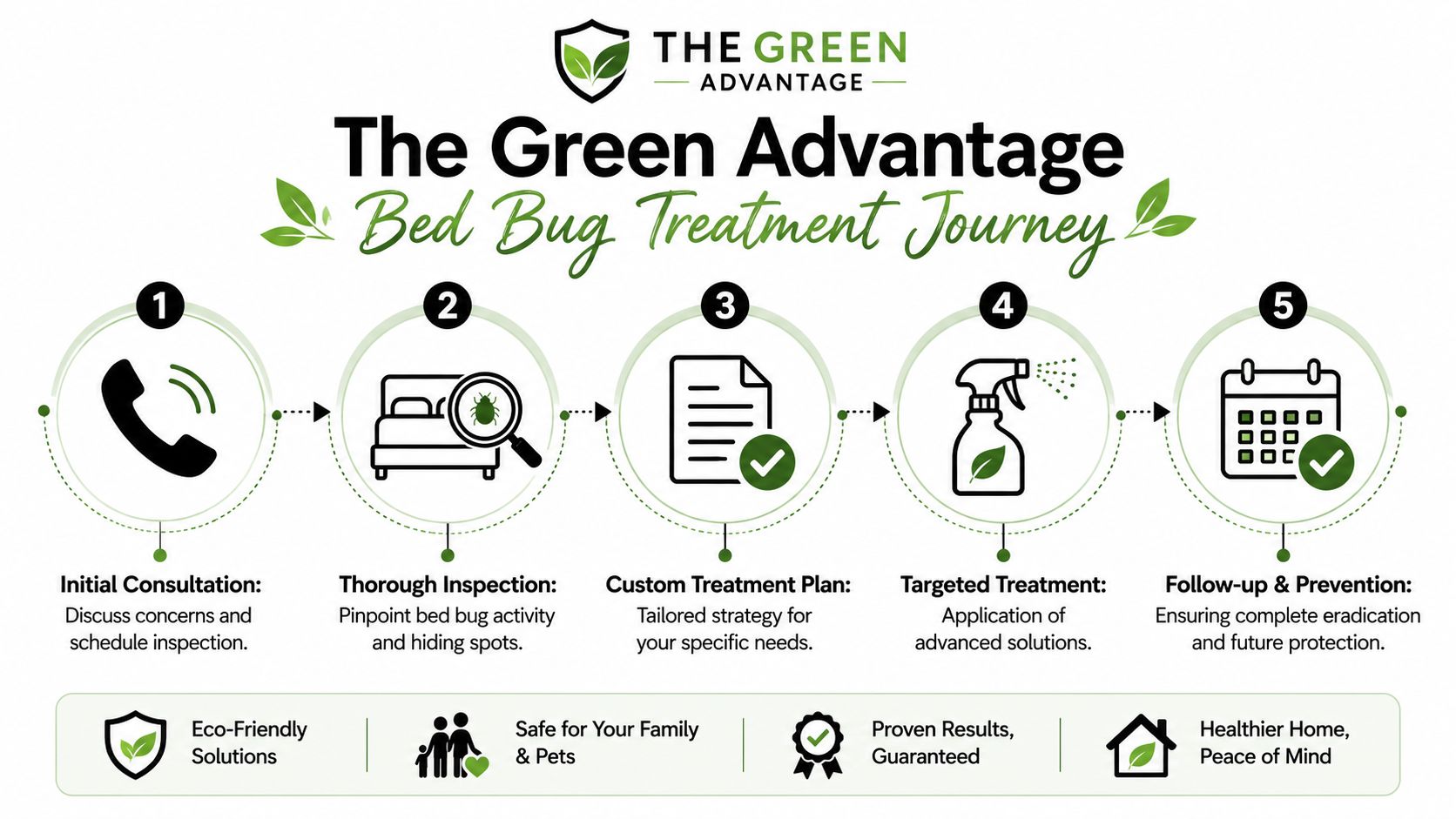
What homeowners in Crown Point should expect
Expect direct instructions. Expect practical prep guidance. Expect a treatment plan based on where activity is found, not a one-size-fits-all script.
That means the visit may involve:
- Room-by-room review: Sleeping areas, upholstered furniture, and nearby harborages are checked.
- Property-specific treatment choice: Heat, integrated treatment, or a combination depends on the property.
- Safety guidance: Residents get clear direction about access, item handling, and re-entry timing.
- Scheduled follow-up: The job isn't judged complete just because the first visit is over.
Bed bug control works best when the resident and technician follow the same plan from start to finish.
For comfort and sanitation after treatment, many families also want to reset their routine around bedding care. This guide on how to maintain fresh bedding for comfort is helpful for building good post-treatment habits without overcomplicating the process.
If you've been searching for exterminator in Crown Point, IN, pest control near me, or commercial pest control for a rental or managed property, the biggest thing to look for is consistency. Bed bug jobs succeed when communication stays clear and the follow-up happens.
Common Questions About Bed Bug Services
How is the cost of bed bug treatment determined
Cost depends on the size of the affected area, how widely the bed bugs have spread, the type of structure, the amount of preparation needed, and whether the plan calls for heat, integrated treatment, or both. A single bedroom is different from a whole-house issue, and a detached home is different from a multi-unit property with shared walls.
Are bed bug treatments safe for kids and pets
Professional treatment plans are designed around safe use practices, label directions, and the conditions inside the home. The important part is following all instructions on preparation, temporary room access, laundering, and re-entry. If there are pets, children, or sensitive health concerns in the home, mention that during scheduling so the treatment plan can reflect it.
Can I get rid of bed bugs on my own
Small signs can tempt people to try a do-it-yourself approach first, but bed bugs are hard to eliminate without a full inspection, careful product selection, and monitoring. Surface sprays usually miss hidden activity. In many cases, DIY efforts delay proper treatment and give bed bugs more time to spread.
How do I help prevent bed bugs from coming back
Keep luggage and used furniture under control, inspect sleeping areas when travel or tenant turnover is involved, use encasements where recommended, and respond quickly if you see new signs. In apartments, rentals, and short-turnover housing, prevention works best when inspections happen routinely between occupants.
If you need pest control services for bed bugs in Crown Point, IN or nearby Northwest Indiana communities, the simplest next step is a professional inspection and a treatment plan matched to your property. Contact The Green Advantage to request a quote, schedule an inspection, and get clear guidance on the safest and most effective path forward.