
Home Pest Control Do It Yourself: 2026 Guide
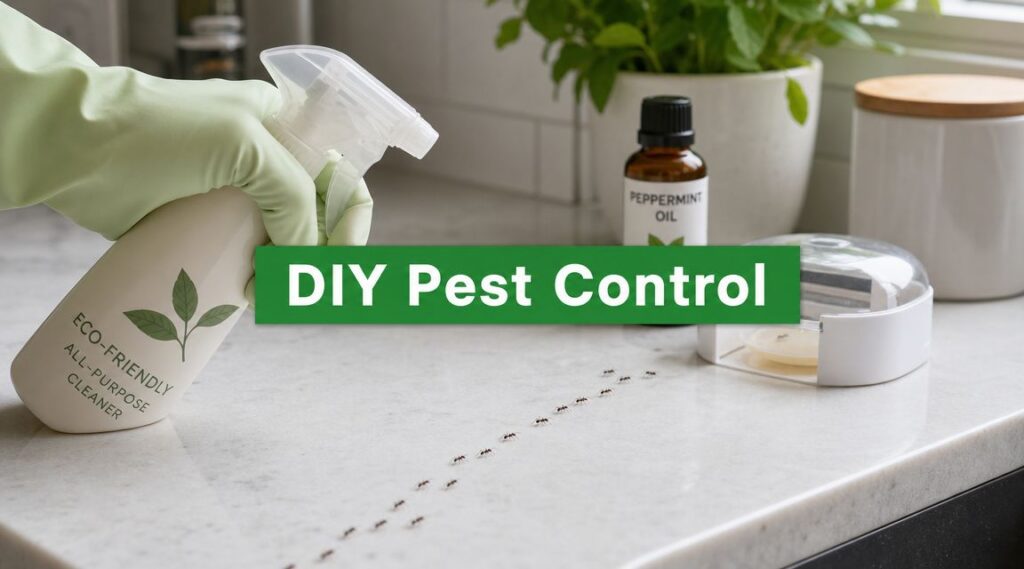
You wipe down the kitchen, turn off the lights, and come back an hour later to find ants crossing the counter again. Or you head into the basement in Crown Point and notice more spider activity than usual along the walls and joists. Most homeowners' first instinct is reasonable: grab a spray, set a few traps, and try to get ahead of it.
Sometimes that works. Sometimes it only pushes the problem around for a week.
That gap is what trips people up with home pest control do it yourself. The store shelf makes everything look simple, but real pest control depends on knowing what you're treating, where it's coming from, and whether the tool in your hand is built for that job. In Northwest Indiana, where seasonal shifts push pests indoors and moisture issues often feed repeat activity, guessing usually costs more time than it saves.
Homeowners in Crown Point don't need scare tactics. They need a practical way to decide what they can handle on their own and what deserves a professional inspection. A good starting point is a simple pest control inspection checklist for homeowners, especially before you spray anything or start moving furniture around.
A Homeowner's First Step in Pest Management
A common pattern looks like this. A homeowner sees a few ants near the sink, buys a fast-kill aerosol, and the visible trail disappears. Then the ants show up by the dishwasher. A few days later they're back near the pantry.
That doesn't mean the homeowner did something wrong. It usually means the treatment addressed the insects that were out in the open, but not the conditions supporting them.
Start with the problem you can see
Most indoor pest issues begin with one of a few triggers:
- Food access: Crumbs under appliances, pet food left out, grease buildup, or unsealed pantry goods.
- Water sources: Leaky supply lines, damp basements, condensation, or wet crawl spaces.
- Shelter and entry: Gaps at doors, utility penetrations, foundation cracks, attic openings, or worn weatherstripping.
Pests don't need much. If they can get in and find moisture, they'll keep testing the same areas.
Practical rule: If you haven't identified the attractant, you probably haven't fixed the infestation.
Think prevention before product
Professional pest control starts with prevention because that's what makes treatment last. In a house, that usually means cleaning up the attractant, drying out the area, and limiting access before you ever reach for a spray bottle.
In Crown Point and nearby Northwest Indiana communities, that often means paying close attention to sump areas, basement corners, garage thresholds, window frames, and exterior utility lines. Those are the places where low-level activity becomes a repeating problem.
A smart first step is simple. Confirm where the pests are active, look for what they're using, and avoid broad applications until you know what you're dealing with. That approach saves effort and reduces unnecessary exposure inside the home.
Identifying Common Pests in Your Northwest Indiana Home
Correct identification matters more than most DIY guides admit. Integrated pest management, or IPM, became the foundation for modern DIY home pest control because it starts with identifying the pest before treatment. The National Pesticide Information Center says DIY work is most effective when it is specific to the particular pest, and it recommends professional help when identification is difficult, special equipment is needed, or a restricted-use pesticide is involved. Only licensed applicators can buy or use those products, according to the National Pesticide Information Center's DIY pest control guidance.
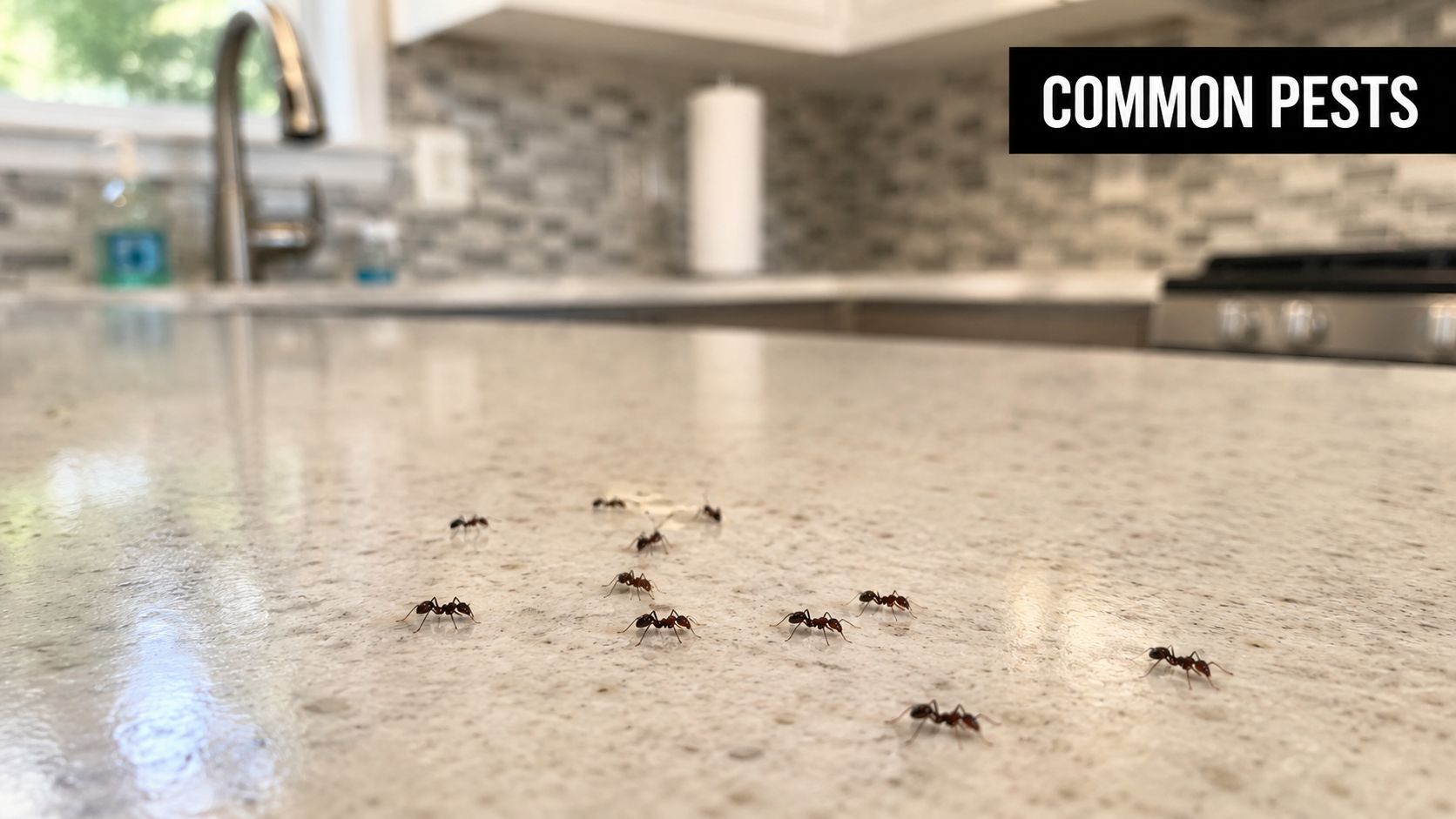
Ants, spiders, and wasps don't respond the same way
Homeowners often lump pests together. That's where treatment goes sideways.
Ants usually leave patterns you can follow. Kitchen trails often point to food or moisture. Pavement and outdoor ant activity may start along foundations, sidewalks, or expansion joints, then move indoors.
Spiders are different. A few spiders in a basement don't always mean an infestation centered on spiders. In many homes, they're there because other insects are there. If you only knock down webs without reducing prey and entry points, the activity tends to return.
Wasps create a separate risk because location matters as much as species. A small nest in an isolated area may be manageable at the right time and with the right safety steps. A nest near a doorway, play area, or roofline calls for more caution.
What to check before you treat
Use a short inspection routine before buying products:
- Look at where the pest is active. Countertop, sill plate, basement wall, eave, attic hatch, or bathroom vanity all suggest different causes.
- Check the time of day. Some pests appear mostly at night. Others become obvious during heat or rain changes.
- Notice the pattern. One isolated sighting isn't the same as repeat sightings in the same route or room.
- Inspect nearby conditions. Leaks, food debris, clutter, cardboard storage, and exterior cracks matter more than many homeowners expect.
If you can't confidently name the pest, don't move straight to treatment. Misidentification is one of the main reasons DIY work fails.
Local clues matter in Northwest Indiana
Homes in Crown Point and the surrounding area deal with changing moisture levels, seasonal transitions, and a mix of finished and unfinished spaces. Basements, garages, and exterior perimeters deserve extra attention because they're common staging points before pests spread deeper into the home.
Accurate ID doesn't need to be fancy. It just needs to be honest. If you know what it is, you can choose the right response. If you don't, a quick inspection beats repeated trial and error.
Evaluating DIY Treatments and Eco-Friendly Options
A homeowner in Crown Point might see a trail of ants in the kitchen, grab a spray from the garage, and get fast relief for a day or two. Then the ants show up again along the same edge. That is the part DIY work often misses. The visible insects are only part of the problem, and the right product still fails if it is used in the wrong place or for the wrong pest.
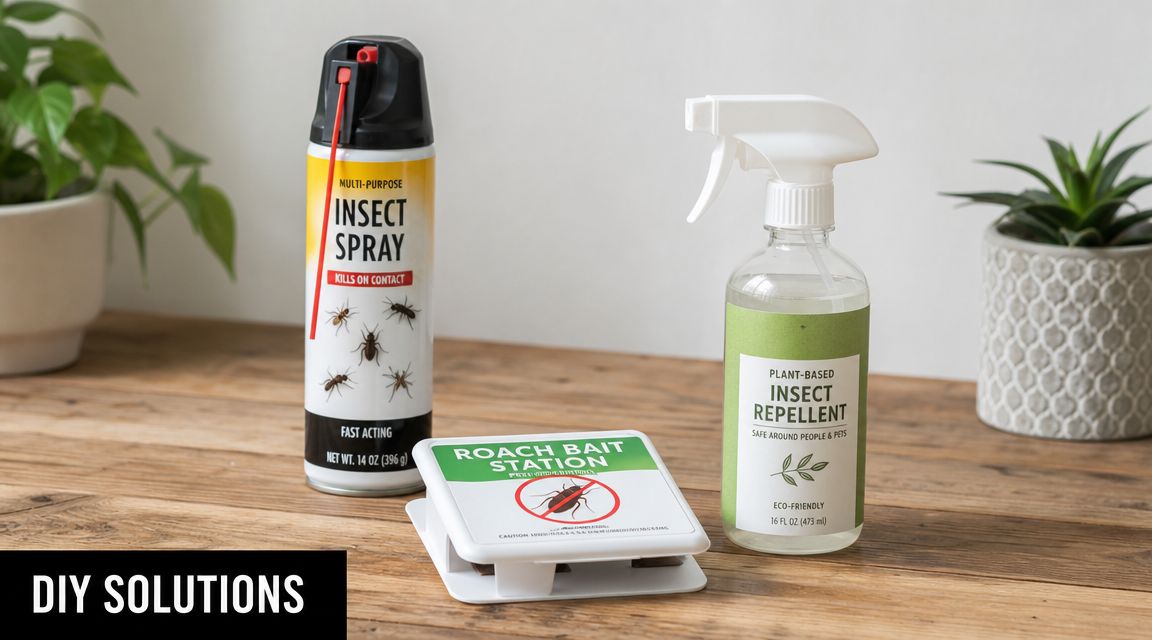
What common DIY products do well, and where they fall short
Aerosol sprays are for quick knockdown. They can help with the insects you can see on contact, but they usually do very little for pests tucked into wall voids, under insulation, behind cabinets, or down in a nesting site.
Baits are often a better choice for ants, some roaches, and other foraging pests. Placement matters. So does patience. If bait is set where pests are not feeding, or if a repellent spray is applied over the same area, the result is usually weaker control and a longer problem.
Glue boards and snap traps are useful diagnostic tools. I use them to confirm travel routes and pressure levels because they show whether activity is random or repeating. What they do not do is solve the reason pests are there in the first place.
Outdoor treatments can help reduce entry pressure around the foundation, doors, utility penetrations, and lower siding. They also break down faster outside than many homeowners expect because sun, rain, and irrigation wear residues down. That is one reason random spot treatment around the yard rarely gives steady results.
A visual example helps show how that perimeter mindset is supposed to work:
Natural repellents have a place, but the job has to fit the product
Lower-toxicity options make sense in many homes, especially with small children, pets, or sensitive treatment areas. The trade-off is usually shorter residual life and a narrower range of results.
The University of Florida explains that some essential oils may repel pests such as ants or spiders for a limited time, but they do not replace removal of food sources, moisture, or entry points. That is the practical limit many homeowners run into with natural pest repellents and their limits. Repellency is not the same thing as control.
That same approach applies outside the house. Reducing pest pressure often starts with cleaner edges, less cover, and fewer damp hiding spots. Yard maintenance choices matter, and eco-friendly weed control methods can support that goal without adding unnecessary chemical use around the property.
Safety has to come before convenience
Homeowners get into trouble when they treat too broadly, mix products, or apply more than the label allows. Food-contact areas, pet zones, and low baseboard lines need extra caution because that is where exposure happens.
A few rules hold up in almost every house:
- Treat only the areas listed on the label. Indoor crack-and-crevice treatment is different from broad surface spraying.
- Keep products away from dishes, prep areas, and pet items unless the label specifically allows that use.
- Do not combine products just to get faster results. More chemistry can create more risk without improving control.
- Reapply by label direction, not by frustration.
If you are weighing store products against a safer home plan, home pest control chemicals and safety basics lays out what usually belongs in a careful DIY approach and what should stay in professional hands.
When DIY Pest Control Is Not Enough
Some pest situations stop being a homeowner project the moment they appear. That's usually because the risk is higher, the source is hidden, or the treatment demands more precision than over-the-counter tools can deliver.
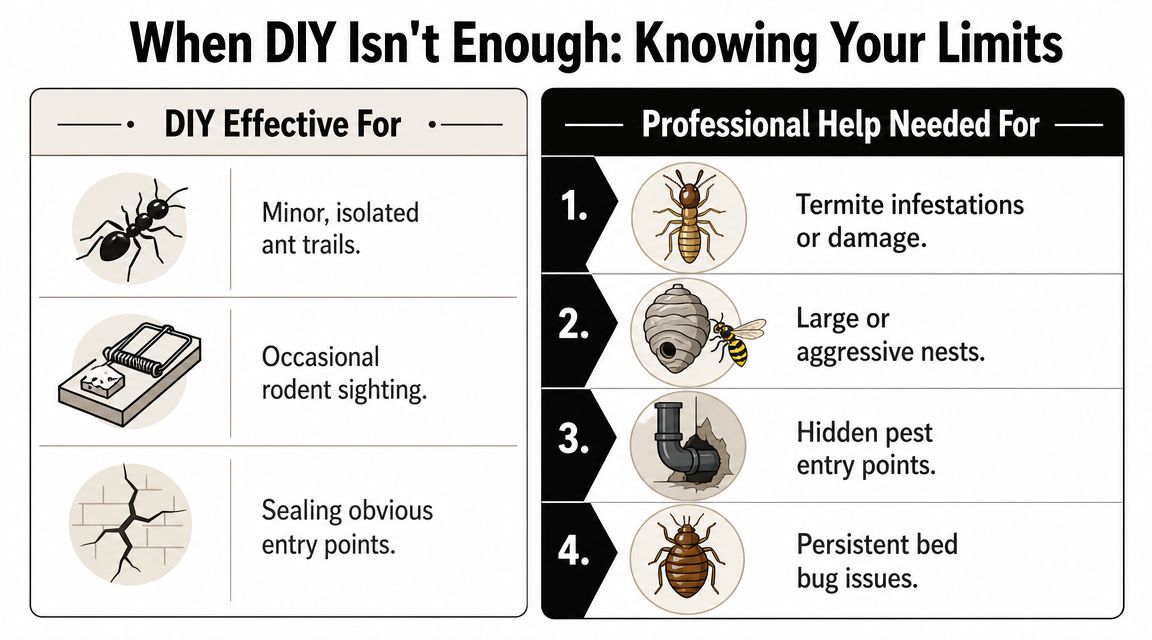
Red flags that should change your plan
A few examples come up all the time in Northwest Indiana homes.
Termite signs deserve immediate attention because the problem is often hidden inside wood or behind finished surfaces. By the time a homeowner sees evidence, the colony may be well established.
Large wasp nests near doors, decks, soffits, or play areas create a direct safety issue. DIY treatment becomes much riskier when nest size, height, or insect aggression increases.
Rodent activity in walls or attics usually means the visible problem is smaller than the actual one. If you hear movement, find droppings repeatedly, or keep catching one rodent at a time without the problem ending, exclusion and deeper inspection matter more than trap count.
Persistent bed bug activity is one of the clearest examples of DIY limits. The EPA's do-it-yourself process involves a six-step workflow: identify the problem, develop a plan, keep the infestation from expanding, prepare for treatment, kill the bed bugs, then evaluate and prevent re-infestation. Its interceptor setup uses two nested plastic containers with talcum powder, furniture moved a few inches from walls, and linens kept off the floor. The EPA also advises checking and cleaning interceptors every week and reapplying talcum powder. If bugs are still seen later, the EPA notes that eggs may have hatched or bugs were missed during the first pass, which is why bed bug control often exceeds what most homeowners can manage consistently through the EPA's DIY bed bug control process.
A problem becomes professional-grade when success depends on hidden access points, repeated follow-up, or treatment in places the homeowner can't safely or effectively reach.
DIY vs. Professional Pest Control for Common NWI Issues
| Pest Issue | DIY Approach & Typical Outcome | Professional Approach & Outcome |
|---|---|---|
| Minor ant trail in one area | Cleaning, bait placement, and monitoring may stop isolated activity if the attractant is removed | Inspection confirms source, species pattern, and whether exterior treatment or exclusion is needed |
| Recurring ants in multiple rooms | Surface sprays may kill visible ants but often don't resolve the route or nesting pressure | Targeted treatment and inspection focus on where ants are entering and why they keep returning |
| Large wasp nest near entry | High sting risk, difficult access, and incomplete knockdown are common problems | Safer removal strategy with proper equipment and site-specific treatment |
| Rodents in walls | Traps may catch individual rodents while entry points stay open | Exclusion, monitoring, and targeted removal address the route and the activity together |
| Suspected termites | Store products rarely match the scope of hidden structural infestations | Inspection determines evidence, extent, and the right corrective plan |
| Bed bugs | Detailed prep and follow-up are difficult to maintain, and missed eggs restart the cycle | Thorough inspection, structured treatment, and repeat evaluation improve control |
The decision line is simple
DIY makes sense when the problem is small, visible, and easy to monitor. It stops making sense when the pest can damage the structure, threaten safety, or hide in places that don't forgive mistakes.
That isn't a sales line. It's the practical line.
The Green Advantage Process for a Pest-Free Home
You treat the kitchen ants on Saturday, wipe everything down, and feel like you got ahead of it. By Tuesday, they're back at the sink and now showing up near the pantry too. That's usually the point where trial and error starts costing more time than the pest problem should.
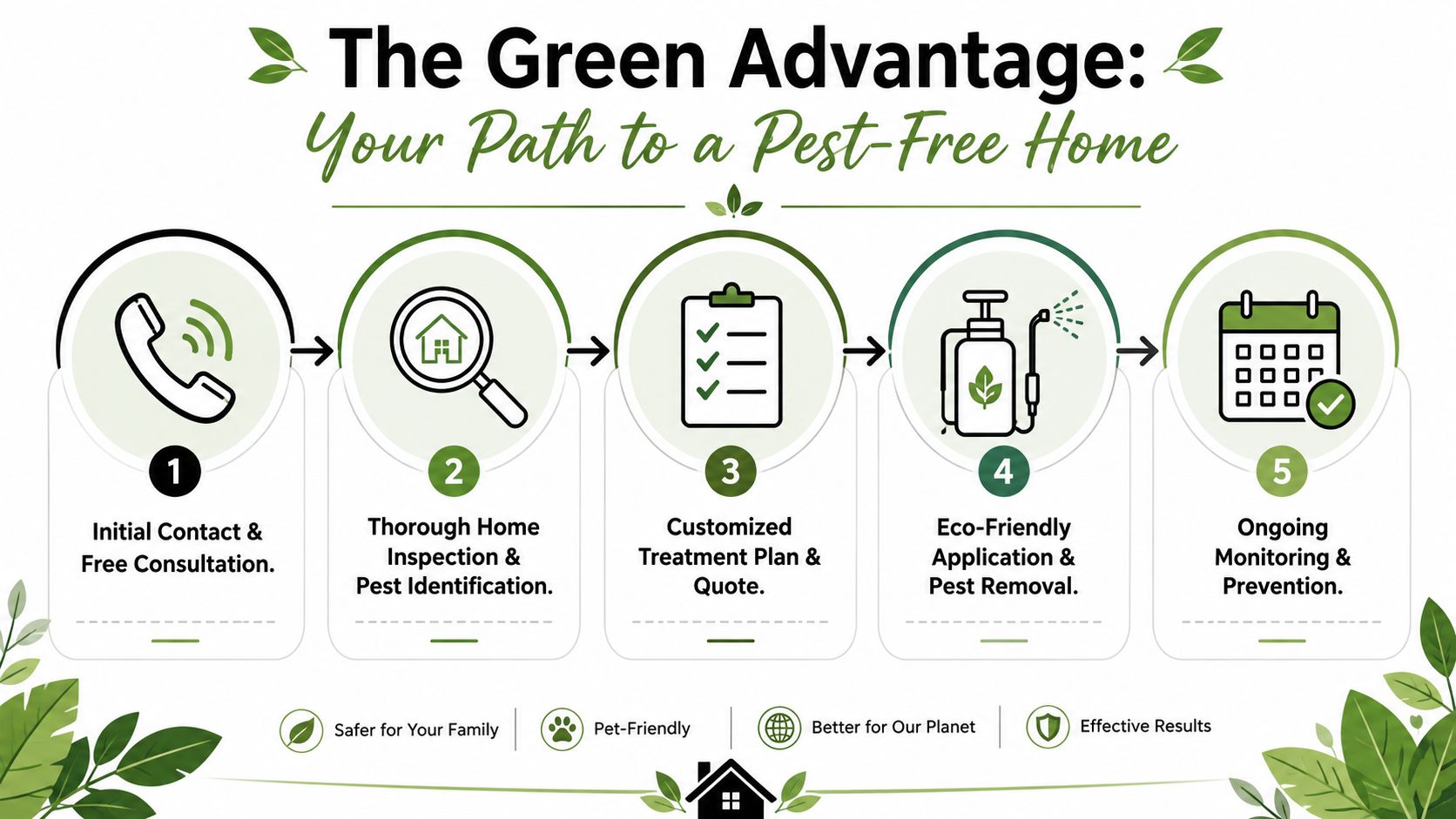
What the service path looks like
A good service process starts with pattern recognition. Where are the pests showing up, when did it start, and what changed around the home? In Crown Point, I look for the usual local triggers first. Mulch holding moisture near the foundation, gaps at garage doors, cluttered basement storage, pet food left accessible, and exterior lights that pull insects close to entry points.
Then comes the inspection. The point is to find the pressure behind the sightings, not just confirm that bugs exist. That means checking likely entry areas, conditions that support activity, and the outside edges of the property where many infestations begin.
Treatment only makes sense after that.
For one home, the right answer may be a light, targeted interior application with sanitation corrections. For another, it may be exterior treatment, sealing entry points, and a follow-up visit because the pest's life cycle or hiding behavior makes one visit unrealistic. Eco-conscious service fits into that same process. Use the least material needed, place it where it works, and avoid broad applications that add exposure without solving the cause.
Why routine service works better than reactive spraying
Reactive spraying usually follows a sighting. A maintenance program follows pest pressure.
That difference matters in real homes. Rain, sunlight, mowing, irrigation, and seasonal insect movement all affect how long a treatment holds up outside. A homeowner may apply a store product once, get a short drop in activity, and assume the issue is solved. Then the barrier breaks down, the entry point stays open, and the calls start over inside.
Routine service gives the property repeated attention. It catches changes in pressure, adjusts treatment to the season, and gives someone a chance to spot the conditions that keep feeding the problem. That's hard to duplicate with occasional DIY applications, especially if the pest activity shifts from one side of the house to another.
The strongest pest program reduces access, shelter, moisture, and food sources, then backs that up with targeted treatment.
One useful local option for identification and next steps
For homeowners who are still trying to decide whether the problem is manageable or headed in the wrong direction, The Green Advantage provides pest inspections and identification support in Crown Point and nearby Northwest Indiana communities. That kind of visit should answer a few practical questions clearly. What pest are you dealing with? How active is it? Can DIY still work here, or has the problem moved past that point?
A useful service call should leave you with a plan, not a guess.
Schedule Your Pest Inspection in Crown Point Today
Recurring pest problems often lead to searches for pest control near me, exterminator near me, or pest control in Crown Point, IN. At this point, homeowners typically understand that the full cost of DIY isn't just product. It's time, uncertainty, and the frustration of treating the same issue more than once.
Professional residential pest control protects more than comfort. It helps protect food storage areas, wall voids, insulation, trim, entry points, and the general condition of the home. For some properties, the need goes beyond insects and includes rodent control, wasp removal, mosquito control, or a broader preventative pest treatment plan.
For landlords, property managers, and business owners in Northwest Indiana, the same principle applies. Delayed action tends to make pest issues harder to contain, harder to explain to occupants, and harder to resolve cleanly.
If you're in Crown Point, IN or a nearby Northwest Indiana community and want a clear answer on what you're dealing with, schedule an inspection before spending more money on trial-and-error products. A focused inspection can tell you whether your issue is a manageable nuisance, a hidden access problem, or something that needs a more complete treatment plan.
The right next step is simple. Stop guessing. Get the pest identified, get the conditions assessed, and get a plan that fits your home.
If you're ready to move beyond repeated DIY attempts, contact The Green Advantage to schedule a pest inspection or request a quote for your Crown Point home or Northwest Indiana property.
How to Spray Pest Control in Home Safely & Effectively
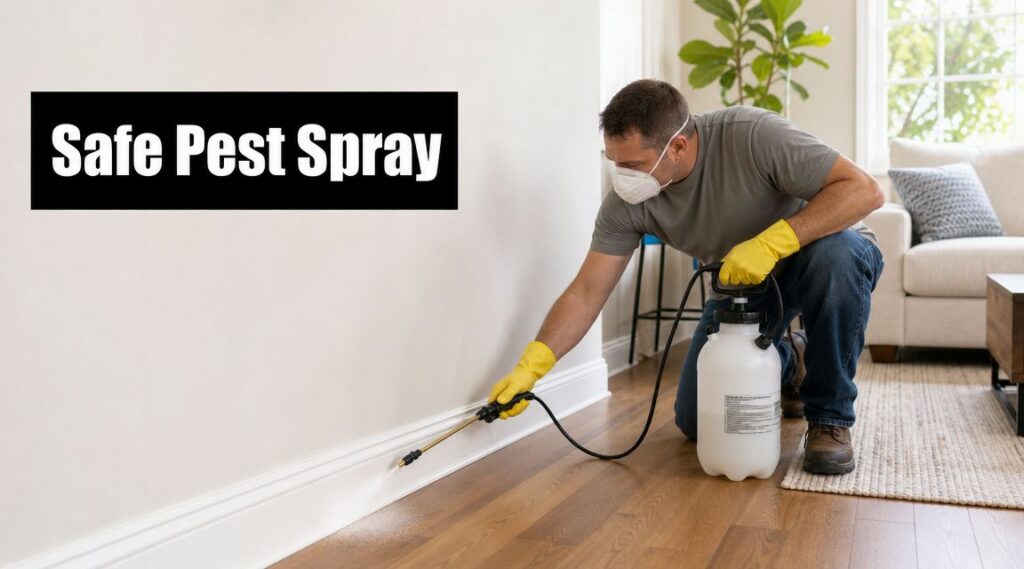
You notice a spider in the basement corner, or a trail of ants moving across the kitchen counter, and the first instinct is simple. Grab a can, spray the area, and hope the problem ends before dinner.
That reaction is normal. It's also where a lot of homeowners in Crown Point get into trouble. Spraying pest control in a home isn't just about killing the bug you can see. It's about choosing the right place, the right amount, the right timing, and the right safety steps so you don't turn a pest problem into an exposure problem.
A lot of online advice makes DIY spraying look easy. In real homes across Northwest Indiana, it rarely is. Basements stay damp. Garages collect clutter. Utility lines leave tiny entry gaps. Kids, pets, food prep areas, and finished living spaces all change how a treatment should be handled. If you're searching for how to spray pest control in home settings safely, you need more than a quick perimeter tip from a short video.
Your First Line of Defense Against Pests in Crown Point
A Crown Point homeowner sprays along the back door after seeing a few ants. For a day or two, the traffic slows down. Then the ants show up by the dishwasher, and a few spiders turn up in the basement a week later. I see that pattern all the time.
The problem usually is not the spot that got sprayed. It is the gap under the door sweep, the moisture around a sump area, the pipe opening under the sink, or the insect activity already established in a wall void or crawlspace edge. In Northwest Indiana homes, those trouble points often show up around basement windows, sill plates, attached garages, and attic access areas.
If you have also heard scratching overhead or found droppings near storage, it helps to identify and exclude attic invaders before assuming every pest issue should be handled with spray alone. Rodents, insects, and moisture issues often stack on top of each other.
Why the quick spray response is so common
Store-bought sprays give fast visible results. That is why homeowners reach for them first. The trouble is that a quick knockdown can hide the underlying source long enough for the infestation to spread to another part of the house.
I tell neighbors to slow down and inspect before they spray. Look for where pests are entering, what is feeding them, and whether the issue is even a spray issue to begin with. Ants trailing to a grease spot need a different response than spiders living off insect activity in a damp basement. Occasional beetles near a garage door call for a different plan than roaches around plumbing lines.
Practical rule: If the plan is to spray an entire room, stop and reassess. Broad indoor spraying often misses the hiding place and increases the chance of putting product on the wrong surfaces.
What actually helps first
Start with the pattern, not the product.
- Kitchen pests usually track back to crumbs, grease, plumbing moisture, or small entry gaps near utility lines.
- Basement spiders often mean there is already insect pressure in that space.
- Garage pests build around weatherstripping gaps, slab cracks, and cardboard storage.
- Activity on upper floors can point to attic access, wall voids, or roofline entry.
- Recurring sightings in one room often mean the nest or harborage is nearby, not necessarily where you first saw the insect.
Local experience matters in these situations. Homes in Crown Point deal with freeze-thaw cracks, damp basements, and seasonal pest pressure that online DIY videos rarely account for. Before any treatment starts, it helps to review a solid home prep checklist for pest control service so you do not create a safety problem while trying to solve a pest problem.
Preparing Your Home for Pest Treatment
Preparation does more for safety and results than is often assumed. A rushed spray job over clutter, pet bowls, and exposed food usually misses the pest and contaminates the wrong surfaces.

The U.S. EPA advises homeowners to try pest prevention first, remove food, water, shelter, and entry points, and use baits as a first line of chemical defense after preventive steps are taken. It also warns that pesticides not contained in baits or traps should generally only be applied to targeted locations, not sprayed over the whole room (EPA pest control guidance).
Clear what blocks the treatment
Move items away from baseboards, under sinks, and around utility penetrations. Pests use those tight, undisturbed areas. If boxes, laundry, storage bins, or pet beds stay packed against the wall, you can't treat the places where insects travel.
A few practical prep points matter a lot:
- Put away food and dishes. Don't leave fruit, bread, pet treats, or open pantry items exposed.
- Remove pet bowls and water dishes. Those areas should stay free of spray.
- Pick up toys and floor items. Kids' toys, chew toys, and anything handled often should be removed before treatment.
- Reduce clutter. Cardboard, stacked paper, and overfilled storage areas give pests hiding spots.
Clean first, not after
Spraying over grease, crumbs, and dust doesn't solve the source. Wipe counters, vacuum edges, and deal with standing water before treatment. If ants are being drawn by a sticky spot behind a toaster or roaches are using moisture under a sink, the chemical alone won't carry the job.
If you want a room-by-room checklist before service or DIY treatment, The Green Advantage has a practical guide on how to prepare for pest control.
A quick visual walkthrough can help if you're deciding what to move and what to protect:
Think like a pest before you spray
Preparation isn't just housekeeping. It's diagnosis.
If insects are living behind clutter, feeding from spills, or entering through gaps around pipes and doors, a spray without prep is mostly a surface-level fix.
For residential pest control in Crown Point, IN, the homes that respond best to treatment are usually the ones where the prep work removed the pest's food, moisture, and shelter first.
Core Techniques for Applying Pest Control Spray
A Crown Point homeowner usually reaches for a can or pump sprayer after seeing bugs in the open. The better results usually come from treating the places insects use. In practice, that means tight placement in cracks, seams, and entry gaps, not a general coating across the room.
Earlier in the article, I noted that spray products are common in homes and often misused. I see the same pattern on service calls across Northwest Indiana. The issue usually is not effort. It is placement, product choice, and using too much material in the wrong spots.
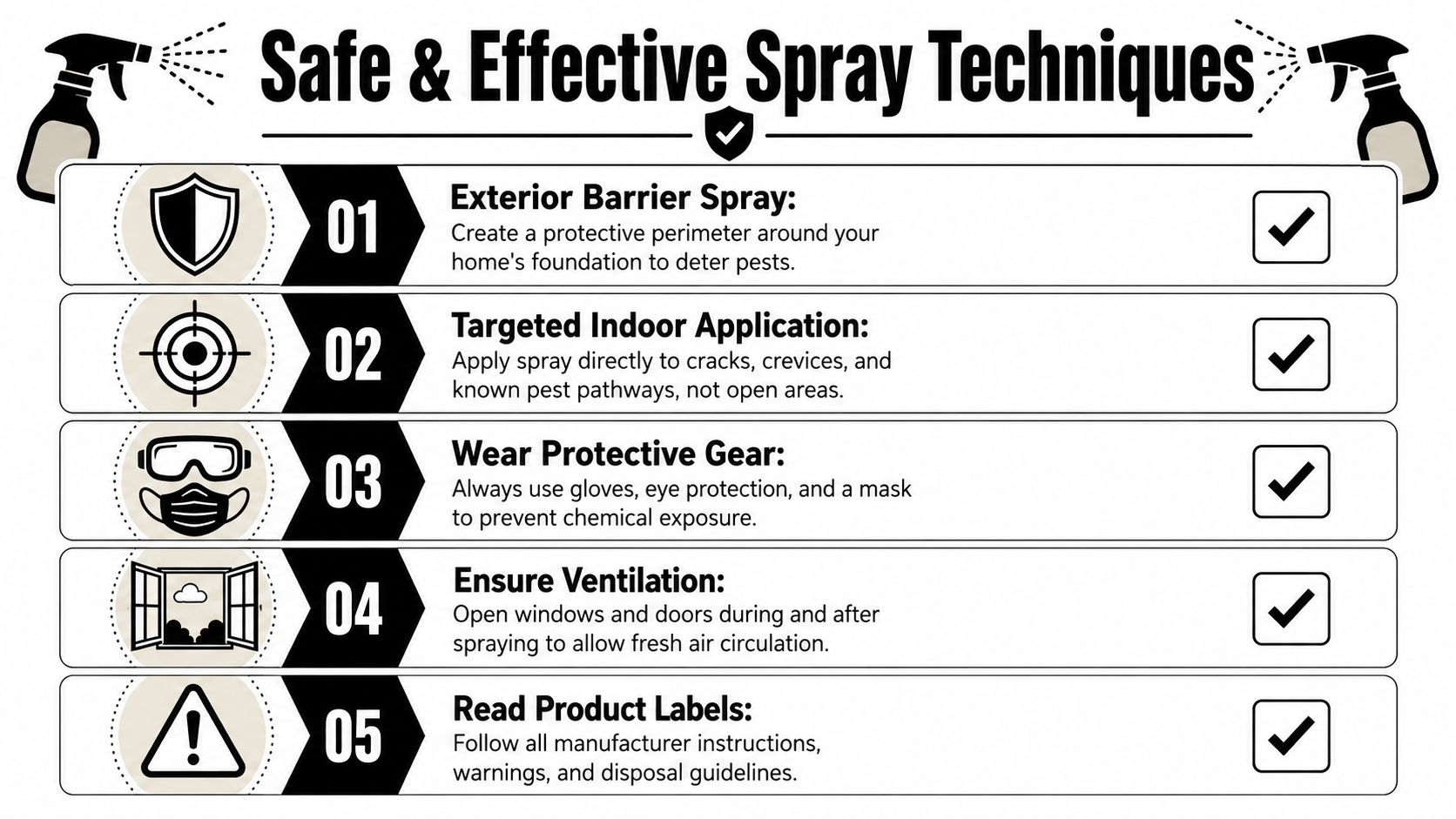
Interior work should be precise
Indoor spraying should stay focused on pest traffic and harborage. Good target areas often include baseboard gaps, pipe penetrations under sinks, the void around door trim, window edges with visible activity, and labeled crack-and-crevice areas behind appliances.
Avoid broad surface spraying indoors. Open floors, counters, food-prep areas, furniture, bedding, and children's play spaces should not be treated unless the label specifically allows it. Spraying a wall because you saw one ant or spider on it usually wastes product and increases contact risk without fixing the reason the pest showed up there.
That trade-off matters in real homes. A light, controlled treatment in the right gap can help. A heavier treatment on the wrong surface leaves residue where people and pets live.
Exterior barriers work differently
Outside, the goal is interception. A perimeter treatment is usually applied in a narrow band around the foundation and at likely entry points such as door thresholds, garage edges, utility penetrations, and lower window areas if the label allows it.
Consistency matters more than coverage for its own sake. If the band is broken, washed out, or blown off target by wind, pests route around it. In Crown Point, I also tell homeowners to pay attention to mulch, downspouts, and siding lines near shaded foundation walls, because those conditions often hold moisture and insect activity longer than people expect.
If you're using a hand sprayer and want better control than a sputtering trigger bottle, some homeowners prefer an effective spray bottle for sensitive homes because a steadier mist can help reduce puddling and overspray. The container doesn't replace label instructions, but the right tool can make careful placement easier.
Technique matters more than people think
A careful application follows a few rules:
- Use the label as the job plan. It tells you where the product can go, how much to apply, and what surfaces to avoid.
- Keep each pass short and controlled. Wide sweeping motions create drift and uneven coverage.
- Watch how the surface reacts. Concrete, unfinished wood, vinyl, and fabric absorb or hold product differently.
- Treat routes and hiding spots. Focus on where pests enter, travel, and settle.
- Stop if the pest is not identified. Ants, spiders, roaches, stinging insects, and rodents do not respond to the same treatment approach.
This is the part short videos usually skip. They show the spray. They do not show the call a week later when the ants are still active because the colony was under the slab, or when a bathroom was overtreated and now the homeowner is worried about what the kids touched. A customized treatment plan costs more upfront, but it usually reduces repeat spraying, lowers exposure concerns, and fixes the problem closer to the source.
Post-Spray Safety and Essential Cleanup
The spray isn't the end of the job. The safety steps afterward are just as important.
A solid benchmark is to treat the area as off-limits until the product is fully dry and the space is ventilated. For exterior perimeter treatments, guidance recommends spraying one foot up the wall and one foot out, then waiting roughly 30 to 60 minutes for drying before allowing children and pets back into the treated area (application and drying guidance).
Ventilation comes first
Open windows and doors if the label allows it. Use fans to move fresh air through the treated area. If you sprayed inside a bathroom, laundry room, mudroom, or basement corner, don't close the door and hope for the best.
Wet product presents the greatest immediate concern. Until treated surfaces are dry, keep children and pets out. That includes cats that walk baseboards, dogs that nose corners, and toddlers who touch low surfaces without warning.
Don't judge re-entry by smell. Judge it by dryness, ventilation, and label instructions.
Clean the right things
If there's a spill or visible misapplication, clean it as directed on the label. For small accidental drips on non-target surfaces, warm soapy water is commonly recommended in consumer guidance. Empty containers also need proper disposal according to the product label and local rules.
Use common sense on contact items:
- Wash exposed dishes or utensils if spray drift reached them.
- Wipe food-prep surfaces before using them again.
- Launder washable items if they were accidentally contaminated.
- Replace pet bowls and toys only after the area is dry and clean.
Watch what happens next
After a proper treatment, you may still see some pest activity for a short period. That doesn't automatically mean the product failed. It may mean hidden pests are moving through treated areas.
What matters is the pattern. If activity keeps restarting in the same room, or spreads to multiple areas, the issue usually needs a closer inspection instead of another round of broad spraying.
Why DIY Spraying Fails and When to Call a Pro
Most DIY spraying fails for one simple reason. Homeowners treat the symptom they can see, not the condition causing it.
If bugs are entering because of moisture, clutter, or structural gaps, the spray becomes a repeating chore instead of a lasting fix. Independent guidance on perimeter treatment and prevention stresses that long-term control depends on removing attraction and access points, not just applying chemical barriers. If the issue stems from moisture, clutter, or structural entry points, spraying alone is often the wrong answer and won't provide a lasting solution (independent pest prevention guidance).
The common failure points
A recurring ant, spider, or occasional invader problem usually breaks down in one of these areas:
Wrong pest ID
Spraying for “bugs” isn't a strategy. Ant control differs from spider control. Mosquito control, rodent control, and termite control are completely different jobs.Wrong location
Homeowners often spray exposed flooring or open rooms instead of entry seams, voids, and exterior access points.Root cause stays active
Leaks under sinks, overgrown foundation lines, open utility gaps, attic access issues, and garage door gaps keep feeding the infestation.Too much product
Overspraying creates residue and risk without fixing the route pests are using.
DIY pest spray vs professional treatment
| Factor | DIY Approach | The Green Advantage Professional Service |
|---|---|---|
| Pest identification | Often based on a quick visual guess | Inspection-based identification tied to pest behavior and site conditions |
| Treatment placement | Commonly broad or inconsistent | Targeted application around entry points, harborage areas, and risk zones |
| Safety planning | Frequently limited to “spray and leave” | Includes treatment decisions around pets, children, food areas, and occupied spaces |
| Root-cause correction | Often skipped | Looks at moisture, clutter, exclusion, sanitation, and structural access |
| Long-term control | Usually reactive | Built around prevention and follow-up when needed |
When spraying is the wrong answer
If pests keep coming back after you spray, that's a sign to stop repeating the same method. Spray is also a poor choice when the problem involves:
- Persistent moisture
- Wall void or attic activity
- Rodents
- Sensitive homes with pets or small children
- Large or hard-to-reach infestations
- Commercial pest control needs where documentation and consistency matter
For homeowners comparing options, a general Guide on pest control costs for homeowners can help frame the decision between repeated store-bought attempts and a service visit. If you're weighing the trade-offs locally, this article on DIY or hire a pro for pest control gives a practical breakdown of when each path makes sense.
The Green Advantage Promise for Crown Point Homes
In Crown Point, a pest problem rarely starts and ends with the spot where you see the bug. Ants may be trailing from a wall void. Spiders often show up because another insect population is already established. Mice in an attached garage can turn into activity in the basement once temperatures shift.
That's why the first question at a service visit is about the conditions in the home, not just where to spray. A good treatment plan is built around how the pest is living on that property, what's allowing it in, and how to correct the problem with the least disruption to the people and pets who live there.

What homeowners should expect
A sound service process is usually simple to understand, even when the pest issue is not.
A real inspection
The technician checks current activity, likely entry points, moisture issues, harborage areas, and the rooms or exterior zones that matter.A clear explanation
Homeowners should hear what pest is present, why it is there, and whether spray is the right tool or only one part of the fix.A treatment plan tied to the property
One home may need a limited crack-and-crevice application. Another may need exterior perimeter work, exclusion repairs, rodent control, mosquito service, or follow-up for recurring seasonal pests.Straight safety instructions
You should know where treatment was applied, how long treated areas need to dry, and what precautions apply for children, pets, food areas, and stored items.
Why a careful approach matters in occupied homes
Occupied homes need restraint. Broad indoor spraying can create unnecessary exposure without solving the source of the problem.
The ASPCA advises keeping pets out of treated areas until products are dry and avoiding applications near food or water bowls, which supports a more targeted approach in homes with animals and children (ASPCA insecticide safety guidance).
That matters in Northwest Indiana homes with finished basements, mudrooms, crawl-adjacent utility areas, and attached garages where people and pets move close to baseboards, thresholds, and storage edges every day.
A practical local option
For homeowners looking for pest control in Crown Point, IN, The Green Advantage provides residential and commercial pest control, inspections, mosquito services, and site-specific treatment plans based on the conditions at the property.
Store products can kill what they hit. A professional inspection answers a different question. Why are the pests there in the first place?
Pest Control Crown Point IN: A Homeowner’s Guide

A quiet house in Crown Point can change fast. One night it is scratching in the wall. The next morning it is ants crossing the kitchen counter, wasps starting a nest under the eaves, or mosquitoes pushing everyone off the patio before sunset.
In Northwest Indiana, those problems usually start for a reason. Rain drives pests toward dry shelter. Temperature swings push insects and rodents indoors. Damp crawlspaces, mulch beds, clogged gutters, and small gaps around siding or utility lines give them exactly what they need to settle in and keep coming back.
That is why recurring pest issues here rarely improve with a one-time treatment alone. A spray may knock activity down for now, but the lasting solution is finding what is attracting pests, where they are getting in, and how seasonal conditions around the property keep the cycle going.
Homeowners in Crown Point usually want clear answers, steady protection, and fewer surprises. A locally tuned pest control plan does more than respond to an active problem. It helps prevent the next one, which is often the difference between another service call in a few weeks and real peace of mind. For homeowners comparing outside advice, even topics like spotting rodent problems in Miami can show how early warning signs develop before an infestation becomes obvious.
Your Trusted Local Exterminator in Crown Point IN
A Crown Point homeowner usually doesn't call at the first single ant or one spider in the basement; they call when the pattern changes. The ants keep returning after store-bought bait. The garage starts smelling musty and something is moving near the insulation. The patio that should be relaxing turns into a mosquito zone by evening.
That stress is real because pests don't just feel unpleasant. They change how you use your home. People start avoiding parts of the house, worrying about damage, or wondering whether the problem is bigger than what they can see.
In Northwest Indiana, the hardest part for homeowners is that recurring pest problems often look small at first. A few clues can hide a larger issue behind walls, under concrete, around a crawlspace, or along the roofline. That's why a calm, methodical approach matters more than panic buying another can from the hardware store.
What local homeowners usually need most
Most calls come down to a few practical concerns:
- Clear identification: You need to know whether you're dealing with ants, rodents, wasps, spiders, or a wood-damaging pest before any treatment makes sense.
- A reason pests are returning: Good service should explain the cause, not just apply product and leave.
- A plan that fits the property: Families with pets, older homes, detached garages, and wooded lots all create different pest pressures.
- Straight communication: Homeowners want to know what was found, what was treated, and what needs to happen next.
The most effective exterminator in Crown Point, IN isn't the one who sprays the fastest. It's the one who finds where the pressure is starting.
That's the local difference. In a place like Crown Point, homes deal with spring moisture, summer insect activity, fall rodent movement, and winter sheltering behavior. The right service approach protects the house as a system, not just the one room where the pest happened to show up.
Identifying Common Pests in Northwest Indiana by Season
Seasonality matters because pests don't behave the same way in April that they do in October. If you know what tends to show up and why, you can catch activity earlier and make better decisions about residential pest control.
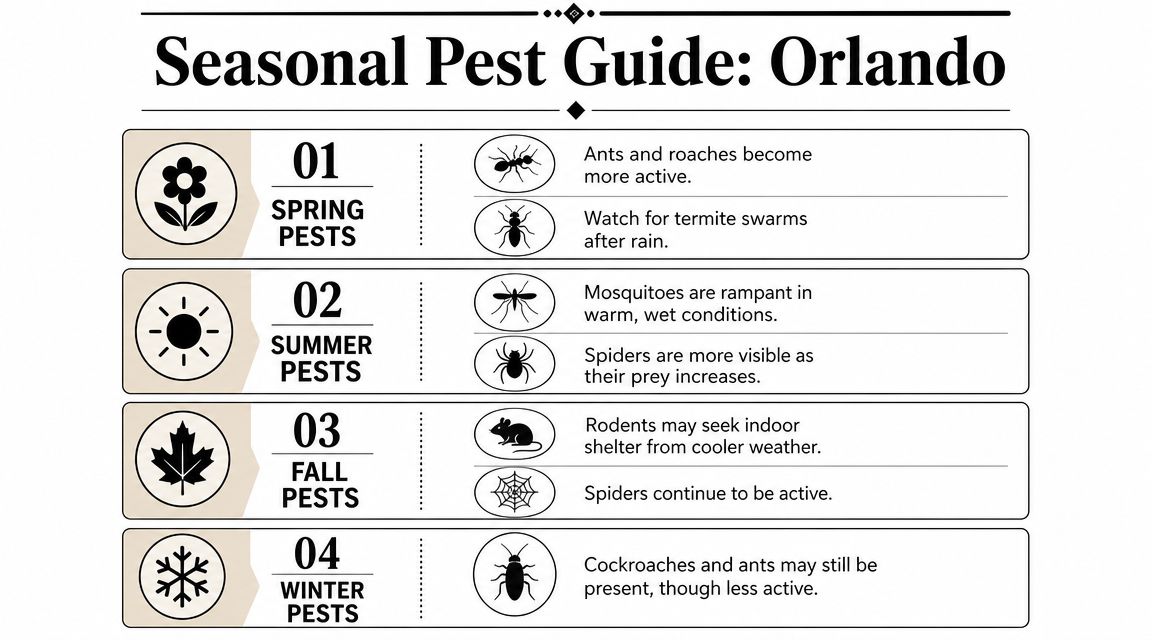
Spring and early summer activity
As temperatures rise, insects become more active. Ants start foraging more aggressively, especially around kitchens, bathrooms, and foundation lines where moisture and food are easy to find. You may also see increased wasp activity around soffits, porch roofs, sheds, and fence lines as nesting begins.
Spiders often become more visible too, but usually that's a sign of another issue. Where spiders are building webs successfully, they're finding insect prey. If webs keep appearing around window frames, basements, garages, or exterior lights, there's usually an underlying insect population feeding that activity.
Termite concerns also enter the conversation in warmer conditions. One of the biggest mistakes homeowners make is waiting until they see obvious wood damage. In practice, signs like mud tubes, soft wood, or unusual swarm activity deserve a closer look before damage spreads.
High summer pressure around the yard and exterior
Summer tends to push mosquito complaints to the top of the list. Standing water, shaded landscaping, clogged gutters, and dense vegetation all help mosquitoes stay active around the property. This is also when one-off treatments often disappoint homeowners, because reducing adult mosquitoes without addressing resting and breeding areas rarely brings lasting relief.
Wasps become more noticeable in summer because nests are larger and easier to spot. Homeowners often try to handle nests themselves, especially around entry doors or roof edges, but that can go wrong quickly if the nest is active and the access point is awkward.
Practical rule: If you're seeing pests outdoors in the same places over and over, the condition attracting them is usually still in place.
Fall and winter indoor movement
When outdoor conditions get cooler, rodents start looking for shelter, warmth, and dependable food sources. In Crown Point, that often means garages, crawlspaces, attics, utility penetrations, and lower-level storage areas. Homeowners usually notice droppings, gnawing, scratching sounds, or disturbed insulation before they ever see the animal itself.
If you want a simple reference on early warning signs, this guide on spotting rodent problems in Miami is useful because the signs themselves are universal even though the climate is different. The lesson is the same. Rodent problems are usually discovered through evidence, not direct sightings.
Cockroaches and occasional invaders can also remain active indoors when a structure offers warmth, moisture, and hiding areas. Spiders continue to show up through fall because they follow prey, and many homeowners mistake winter sightings as a sudden infestation when the house has really been supporting pest activity for months.
Seasonal patterns at a glance
| Season | Common pressure | What homeowners often notice |
|---|---|---|
| Spring | Ants, termites, wasps | Trails, swarms, early nest building |
| Summer | Mosquitoes, wasps, spiders | Bites, nest growth, more webbing |
| Fall | Rodents, spiders | Scratching, droppings, indoor sightings |
| Winter | Rodents, roaches, ants indoors | Activity near warmth, kitchens, storage |
Residential and Commercial Pest Control Solutions
A family home and a local business can both have pest problems, but they don't need the same service plan. The goal is the same. Stop the pest activity and keep it from returning. The method has to fit how the property is used.
What homes need from residential pest control
In a residence, the focus is personal. Parents want to protect children, pets, food storage areas, and the rooms people use every day. Homeowners also want service that respects how they live. That means paying attention to where pests are active, where they're entering, and how to reduce pressure without treating the whole property the same way.
For homes in Crown Point, good residential pest control usually includes a mix of inspection, targeted application, exclusion recommendations, and follow-up based on the pest involved. Ant control, rodent control, wasp removal, spider reduction, and seasonal perimeter treatments all work better when the technician understands which part of the structure is allowing the problem to continue.
What businesses need from commercial pest control
Commercial properties have a different kind of risk. A pest issue can affect inventory, employee comfort, customer trust, and sanitation expectations. A restaurant, office, warehouse, retail storefront, and multi-unit property all have different pressure points, traffic patterns, and reporting needs.
That's where documentation and routine monitoring become more important. Business owners usually need consistent service windows, clear findings, and preventive work around doors, delivery areas, break rooms, drains, dumpsters, and storage zones. For businesses comparing service options, commercial pest control services should be built around the property's actual use, not a one-size-fits-all spray schedule.
Why IPM works better than routine blanket spraying
The strongest professional approach for both homes and businesses is Integrated Pest Management, often called IPM. That means the technician doesn't just ask, “What can I spray?” They ask, “What's allowing this pest to survive here?”
An IPM approach typically looks at:
- Entry points: Gaps under doors, pipe penetrations, damaged screens, and foundation cracks
- Food sources: Pantry spills, grease residue, trash handling, pet food, and storage habits
- Moisture: Leaks, condensation, poor drainage, damp crawlspaces, and clogged gutters
- Harborage: Cardboard, clutter, mulch buildup, dense shrubs, and undisturbed voids
A useful pest-control principle comes from commercial guidance on entry points. Common pest access areas include windows and doors, roofs, floor drains, ventilation intakes, and incoming shipments, and the bigger lesson is that exclusion plus sanitation often works better than treatment alone in preventing reinfestation in active structures (commercial guidance on pest entry points).
Good pest control solves the reason the pest can stay, not just the reason it showed up.
That difference is what separates a temporary response from lasting control.
Protect Your Property with Termite and Mosquito Programs
You walk out to the patio on a July evening in Crown Point and the mosquitoes find you before you can sit down. A few months later, you notice soft trim near the garage or a mud tube along the foundation. Different pests, same lesson. Waiting until the problem is obvious usually costs more money, more time, and more frustration.

Why termite protection can't wait for visible damage
In Northwest Indiana, termite issues usually build subtly. Subterranean termites stay connected to the soil, which means homes with wood contact near grade, moisture around the foundation, or older construction details face more risk than owners realize. By the time damage is visible, the colony has often been active for a while.
The National Pest Management Association notes that termites cause billions in property damage across the U.S. each year, and insurance policies typically do not cover that damage (NPMA termite information). That is the real trade-off for homeowners. Pay for monitoring and protection on purpose, or pay later for repairs after hidden feeding has spread.
I tell Crown Point homeowners the same thing. Termite work is not about fear. It is about catching conditions early, before a structural issue turns into a carpentry bill.
Why mosquito reduction works better as a program
Mosquito pressure in our area follows weather patterns. Warm weeks, summer rain, shaded yards, clogged gutters, low spots that hold water, and thick landscaping all give mosquitoes a place to breed and rest. A one-time spray can knock numbers down for a short period, but it does not change the pattern that keeps bringing them back.
That is why seasonal mosquito control usually makes more sense than calling only when the backyard becomes unusable. Properties near ponds, drainage areas, tree lines, or dense shrub beds often need repeated service during active months because new mosquito activity keeps developing after rain and heat cycles.
Here's a quick visual on why preventive treatments matter over time.
Reactive calls versus preventive programs
Emergency service still has a place. If you have guests coming this weekend and mosquitoes are out of control, or you found suspicious termite evidence and need an inspection fast, a targeted visit is appropriate. But for pests tied to soil, moisture, and seasonal breeding, prevention usually gives the better result.
- Reactive service: Useful for a sudden flare-up or a specific concern that needs quick attention
- Preventive program: Better for termites and mosquitoes because pressure returns with weather, moisture, and property conditions
- Property protection focus: Helps protect outdoor living time, reduces surprise costs, and lowers the odds of a bigger problem developing out of sight
The goal is not endless treatment. The goal is fewer surprises. Homeowners appreciate that same kind of consistency in service businesses generally, which is part of why this practical playbook for local businesses lines up with what works in pest control too. Clear communication, predictable follow-through, and solving the root problem are what give people peace of mind.
What to Expect During Your Service with The Green Advantage
You spot ants along the kitchen counter before work, then notice them again the next morning in the same place. A few days later, you find more activity near the garage door. That pattern matters. In Crown Point, recurring pest problems usually come from conditions around the home, not just the insects you happen to see that day.
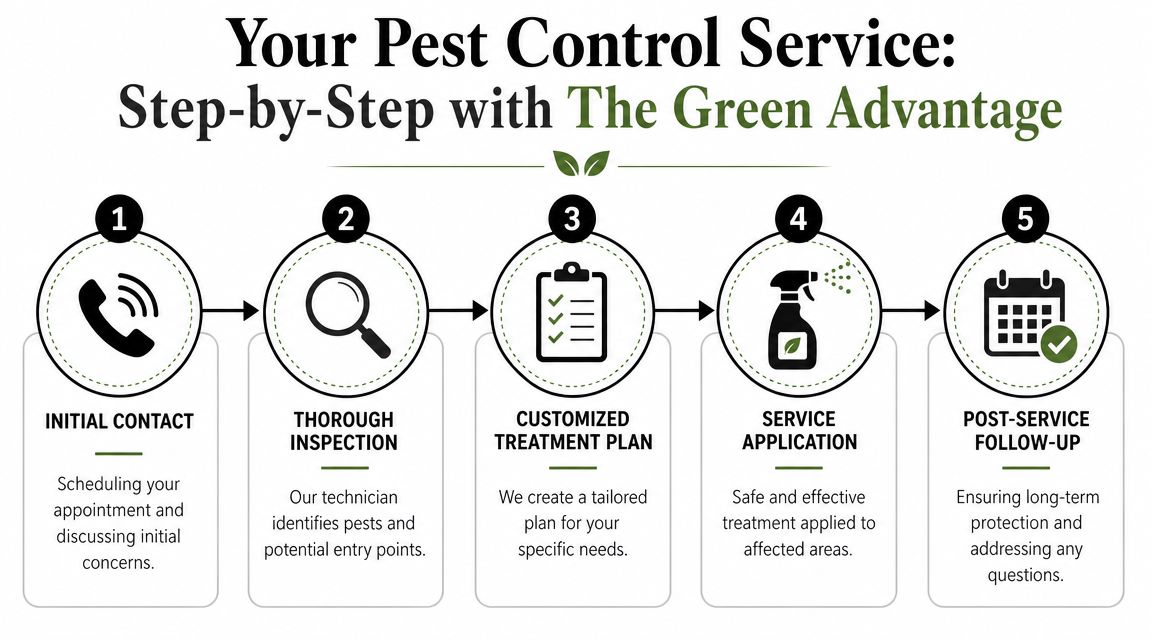
Step one starts with the problem you noticed
The first call usually starts with symptoms, not a firm ID. You may have seen ants in the kitchen every morning, heard scratching near the attic, or noticed mosquitoes building up near the back fence. That is enough to get the process started.
Details help us narrow things down faster. When did it start? Is the activity indoors, outdoors, or both? Does it get worse after rain, at night, or around pet food and trash areas? Good intake questions save time on site and help the technician know where to begin looking.
Inspection comes before treatment
A solid pest service starts with inspection. Spraying first and asking questions later usually misses the reason the problem keeps returning.
The Green Advantage follows the same basic approach experienced pest professionals use everywhere. First confirm what pest is active. Then look for the source, access points, moisture issues, nesting areas, and other conditions that support it. Once those pieces are clear, treatment can be focused where it will do the most good.
That matters in Northwest Indiana because our weather keeps changing the pressure on a property. Rain pushes some pests inward. Dry spells send them looking for water. Warm stretches can speed activity up, then colder snaps change where they hide. If a technician finds gaps at door sweeps, damp mulch against the foundation, droppings in a utility area, or frass near damaged wood, the plan becomes more accurate and usually more effective than a generic spray around the house.
What happens on site
Once the inspection is done, service should follow a clear sequence:
Confirm the active pest
The technician identifies what is present and explains the evidence behind that call.Show the contributing conditions
You should hear why the pests are there, where they are getting in, and what is helping them stay.Treat the right areas
Product is applied to the problem zones and likely travel paths, based on the inspection findings.Recommend practical corrections
That may include sealing gaps, reducing standing water, trimming vegetation, adjusting storage, or fixing moisture issues.Set realistic follow-up expectations
Some problems improve quickly. Others need monitoring, a second visit, or seasonal service because the conditions that drive them do not disappear overnight.
Ask what the technician found and why the treatment was chosen. Clear answers are a good sign you are getting real pest management, not guesswork.
Safety and communication matter
You should know what was applied, where it was applied, and whether any reentry or prep instructions matter for children and pets. Good service is clear, specific, and easy to follow.
The Green Advantage provides pest inspections and customized residential and commercial service. That means the visit should leave you with more than a treatment receipt. You should come away understanding what caused the issue, what was done to address it, and what steps will help keep it from returning.
A Homeowner's Checklist for Choosing a Pest Control Provider
Choosing a pest company gets easier when you stop looking for slogans and start looking for signals of competence. The right provider should help you feel informed, not pressured.
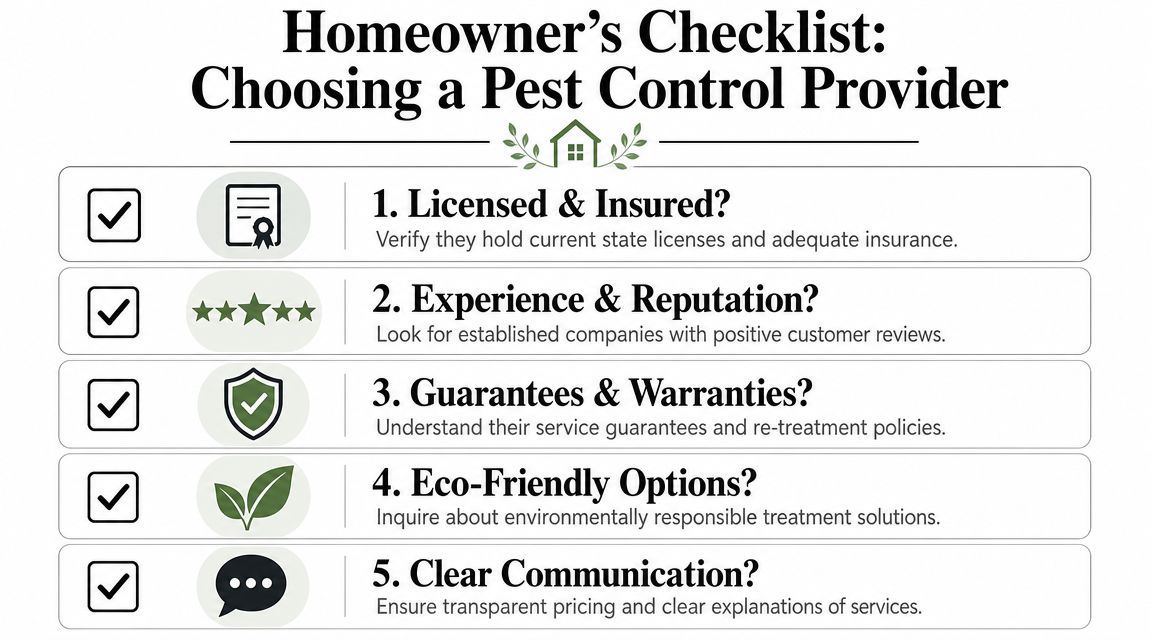
Start with the basics that protect you
A reliable company should be properly licensed and insured for the work it performs in Indiana. That isn't just paperwork. It tells you the company is operating as a legitimate service provider and can stand behind its work professionally.
You should also look for local experience. A company that understands Crown Point and nearby Northwest Indiana communities will usually diagnose seasonal patterns, construction styles, and property-specific risks more accurately than a generic call-center operation.
Use this checklist before you book
- Licensing and insurance: Ask directly whether the company is licensed for pest-control work in Indiana and carries appropriate insurance.
- Inspection quality: Find out whether they inspect before recommending treatment, or if they jump straight to a generic program.
- Communication style: Notice whether they explain findings in plain language or hide behind vague promises.
- Service scope: Ask what is included, what is excluded, and what follow-up looks like if the first visit doesn't fully resolve the issue.
- Local reputation: Read reviews with attention to detail. Look for comments about responsiveness, professionalism, and whether the explanation made sense.
- Environmental fit: If you want eco-friendly pest control or lower-impact options, ask how they balance targeted treatment with exclusion, habitat reduction, and prevention.
What separates a useful estimate from a weak one
A weak estimate sounds simple but tells you very little. It might promise general spraying without discussing the pest, the source, the access points, or the conditions that are supporting activity.
A strong estimate usually includes:
| What to look for | Why it matters |
|---|---|
| Specific pest findings | Treatment only works well when the pest is correctly identified |
| Notes about entry points or conditions | Prevention depends on fixing what allowed the problem |
| Clear follow-up expectations | Some infestations need monitoring, not just one visit |
| Straight answers on pricing | Ambiguity often leads to frustration later |
The best question a homeowner can ask is, "Why is this happening on my property?" The answer tells you whether the company is thinking like an exterminator or just a salesperson.
If you manage a business property, customer experience and communication standards matter there too. This practical playbook for local businesses is useful because it reinforces a broader truth that applies to pest service as well. Clear communication, responsiveness, and consistent follow-through shape trust before and after the work is done.
Your Questions Answered About Pest Control in Crown Point
How much does pest control in Crown Point, IN usually cost
Pricing depends on the pest involved, the size and condition of the property, how severe the activity is, and whether you need one-time service or an ongoing preventive plan. A wasp nest removal, a recurring ant issue, and a rodent exclusion problem won't be priced the same because they don't require the same labor, materials, or follow-up.
For homeowners searching exterminator near me or pest control near me, the better question is often what the service includes. Inspection quality, targeted treatment, and follow-up support matter more than getting the lowest number first.
How often should a home get pest control service
That depends on the pest pressure around the property and your goals. Some homes only need treatment when a specific issue appears. Others benefit from preventive service because the lot, moisture conditions, nearby woods, detached structures, or past history make recurring problems more likely.
If pests keep returning season after season, routine prevention usually makes more sense than repeated emergency calls.
Are eco-friendly pest control options available
Yes, but it's important to understand what that usually means in practice. Responsible pest control often combines lower-impact treatment choices with non-chemical methods such as exclusion, sanitation improvement, habitat reduction, and moisture control. That approach tends to be more effective than relying on product alone.
If eco-friendly service matters to you, ask how the company decides where to treat, what alternatives they use, and what changes you can make around the property to support long-term control.
What should I do before the technician arrives
Start by writing down what you've seen and where. Note whether activity happens at certain times of day, after rain, near food, or in a particular room. Clear access to sinks, baseboards, utility areas, attic hatches, garage corners, and crawlspace entries if possible.
You don't need to know exactly what pest you have before calling. You just need to describe the signs clearly so the inspection starts in the right place.
If you're dealing with recurring pest activity in Crown Point or nearby Northwest Indiana communities, The Green Advantage can help you move from guesswork to a practical plan. Whether you need an inspection, a quote, or ongoing protection for your home or business, the next step is simple. Reach out, describe what you're seeing, and get clear guidance on what's causing the problem and how to address it.
Home Pest Control DIY: Crown Point Expert Guide

You hear scratching in the wall after dark. The next morning, there's a line of ants moving across the kitchen counter. Later that week, you spot a spider in the basement and start wondering whether you've got one pest problem or three. That's usually when homeowners in Crown Point start looking for home pest control diy advice and hoping a quick trip to the store will solve it.
That instinct makes sense. A 2026 ConsumerAffairs survey on pest control found that 74% of homeowners perform some type of DIY pest control. A lot of people try sprays, traps, or bait first for common pests. The problem is that the visible pest is often only part of the issue, and the actual source may be hidden behind walls, under insulation, around damp crawlspaces, or outside near the foundation.
In Northwest Indiana, our seasons make this more complicated. Moist spring weather, warm summers, and cold fall transitions all push different pests indoors at different times. Some DIY steps absolutely help. Some are a waste of money. A few can even make the problem harder to solve later.
Your Guide to Pest Control in Crown Point Indiana
A Crown Point homeowner calls after seeing ants around the sink. They've already wiped down the counters, sprayed the trail, and put out bait from a big box store. For a day or two, it looks better. Then the ants come back through a different spot, usually near a window frame, dishwasher line, or foundation seam.
That pattern is common. The first response is usually fast action, not diagnosis. It is understandable to want relief immediately when pests are in the kitchen, basement, or bedrooms.
Local reality: In Crown Point, the fix often depends less on the product and more on where the pest is getting in, what's attracting it, and whether moisture is helping it survive.
Homeowners here deal with a mix of nuisance pests and higher-risk infestations. Ants may be following moisture and food residue. Spiders may be showing up because other insects are already present. Mice often move in as outdoor temperatures shift. Wasps don't need much space to start building near soffits, decks, or entryways.
Why DIY feels like the right first move
DIY can work as a starting point when the issue is small, visible, and easy to identify. A few ants on one counter. A couple of spiders in a garage. One wasp nest you noticed early. For problems like that, basic cleanup, exclusion, and targeted products may reduce activity.
But homeowners usually run into trouble when they treat symptoms instead of the source. Spraying visible insects without fixing gaps, leaks, clutter, or outdoor conditions rarely holds up for long.
Why local experience matters
In Crown Point and nearby Northwest Indiana communities, effective pest control has to account for local building styles, basements, crawlspaces, attached garages, wooded lots, and seasonal pressure. That's why good guidance needs to be honest. Start with sensible DIY prevention. Then know when it's time to stop experimenting and bring in a pro before the issue spreads.
Identifying Common Pests in Northwest Indiana Homes
Before you buy anything, identify what you're seeing. Wrong identification leads to wrong treatment, and wrong treatment is where most DIY frustration starts.

Ants, spiders, wasps, and mice
Here are four of the most common pests homeowners in Northwest Indiana ask about.
Ants: If you see a steady trail along countertops, window trim, or baseboards, don't assume the nest is inside the room where you found them. Ant activity often starts outdoors and moves in through tiny openings. In kitchens and bathrooms, moisture and food residue are common drivers.
Spiders: Most homeowners notice them in basements, corners, garages, and around ceiling lines. One spider doesn't always mean an infestation, but repeated webbing often means other insects are available as food. If you're unsure whether you're looking at old dust-catching webbing or active spider activity, this South Mountain Window Cleaning spider web guide gives a simple visual distinction that's useful.
Wasps: Paper wasps and similar stinging insects often start in protected exterior areas. Check porch ceilings, eaves, railings, shutters, and play structures. Small early nests are easier to address than established ones, especially near doors where family members pass daily.
Mice: Droppings, gnawing, scratching at night, and disturbed pantry items are classic warning signs. If you hear movement in walls or ceilings, you're usually beyond the stage where a couple of traps in the kitchen will solve it.
What the signs are telling you
A pest sighting is only one clue. Also look for patterns.
| Pest sign | What it often means |
|---|---|
| Trail to water source | Moisture or food access is supporting activity |
| Webs in multiple corners | Insects are present and feeding spiders |
| Nest near entry door | Risk of stings and recurring rebuilding |
| Nocturnal scratching | Hidden rodent travel path or nesting area |
Seeing pests in more than one room usually means the problem is bigger than the room where you noticed it.
If you misread the signs, you can waste time on the wrong product and give the infestation more time to spread.
Effective DIY Pest Prevention You Can Start Today
Most successful home pest control diy starts before any spray comes out. This Old House's pest control guidance lays out the most reliable sequence clearly: inspect, identify, remove food, water, and shelter, then seal entry points before applying chemicals. It also notes that broad, untargeted spraying is one of the least effective DIY strategies.
That matches what works in real homes around Crown Point. If you skip the house conditions and go straight to spraying, pests usually come back.

Start with inspection and exclusion
Walk the outside of your house slowly. Then repeat the process inside.
- Check foundation gaps: Look around utility penetrations, siding transitions, hose bibs, and where cables enter the home.
- Inspect door sweeps: Daylight under an exterior door is an open invitation for insects and mice.
- Repair screens: Window screens, soffit vents, and attic vents matter more than most homeowners think.
- Seal narrow cracks: Use the right material for the surface. Caulk works for many trim and siding gaps. Expanding foam has limited use and shouldn't be the default for every opening.
For businesses or homeowners trying to understand screening materials better, especially around food prep areas or utility spaces, this mesh roll guide for commercial kitchens is helpful because it explains screening options in a practical way.
Cut off food and water
Pests don't stay where they can't eat or drink.
A few habits make a big difference:
- Wipe crumbs nightly: Pay attention to under-toaster debris, pet feeding areas, and behind small appliances.
- Store dry goods tightly: Flour, cereal, snacks, and pet food should be sealed, not clipped half-shut.
- Fix leaks quickly: Dripping under a sink or a sweating basement line can support recurring pest activity.
- Reduce standing water: Trays, utility rooms, and damp corners often matter more than the obvious areas.
Quick rule: If you keep seeing pests in a bathroom, laundry area, basement, or under a sink, think moisture before chemicals.
Don't ignore the basement and garage
In Northwest Indiana, damp lower levels create long-term pressure. Basements, crawlspaces, and attached garages often become staging areas for spiders, centipedes, ants, and rodents because they offer shelter and fewer disturbances.
Use a flashlight and check cardboard storage, floor edges, sump areas, and wall penetrations. If you want a room-by-room way to do that, this pest control inspection checklist is a practical place to start.
This short video also gives homeowners a useful visual overview of prevention habits worth keeping up with:
The Limits of DIY and When to Call an Exterminator
DIY has a narrow success window. Industry data summarized here estimates the success rate for DIY pest control is under 20%, and over 90% of customers who attempt it ultimately seek professional help after failed treatments worsen the problem.
That doesn't mean every DIY attempt is foolish. It means most store-bought efforts only work when the pest is easy to identify, the infestation is minor, and the source is obvious.

What goes wrong with store-bought treatments
The biggest DIY mistake is treating what you can see and missing what you can't.
Sprays may kill exposed insects, but they often don't reach nests, wall voids, hidden entry points, or moisture conditions that let pests keep thriving. Foggers are another common problem. They feel aggressive, but they usually don't solve hidden infestations and can create unnecessary exposure inside the home.
Repeated, poorly targeted treatment can also make control harder. Some pests adapt around weak or inconsistent applications, and homeowners end up spending more while getting worse results.
Pests that should be escalated fast
Some problems aren't good DIY candidates.
- Termites: Damage can continue while the colony stays out of sight.
- Bed bugs: Missing even part of the infestation can keep the cycle going.
- German cockroaches: They spread fast and hide in difficult, high-risk areas.
- Carpenter ants: Surface activity may hide a larger structural issue.
- Rodents in walls or attics: Traps alone often won't solve access and nesting.
If you've tried more than one product, treated more than once, and the activity is still there, stop buying more chemicals and get the structure inspected.
For homeowners weighing the tipping point, this DIY or hire a pro guide is useful because it frames the decision around pest type, severity, and risk to the home.
The real trade-off
DIY feels cheaper at the start. It can become expensive when the wrong product delays the right solution. That's especially true with termites, recurring ant problems, hidden rodent entry, and stinging insect nests near family activity.
If the infestation is spreading, recurring, hidden, or tied to possible structural damage, professional treatment isn't a luxury. It's the safer path.
What to Expect from The Green Advantage in Crown Point
Most homeowners want the process to be simple. They want someone to answer the phone, listen to what's happening, and tell them plainly whether the problem sounds urgent. That's how this should work.
A typical service experience starts with a conversation about what you're seeing, where you're seeing it, and how long it's been going on. If ants are only in one bathroom, that matters. If mice are active in the kitchen and garage, that matters too. The details help shape the inspection.

A service visit should feel specific
A good technician doesn't just walk in and spray baseboards. They inspect where pests are active, where they're likely entering, and what conditions are helping them stay.
That can include:
- Exterior review: Foundation gaps, door sweeps, siding transitions, wasp-prone areas, and harborage near the structure.
- Interior inspection: Kitchens, bathrooms, basements, utility areas, attic access points, and signs of hidden movement.
- Targeted treatment plan: Baits, exclusion recommendations, removal of conducive conditions, and treatment where it matters most.
The Green Advantage provides residential pest control, commercial pest control, inspections, mosquito reduction, and support for pest issues common in Crown Point, IN and nearby Northwest Indiana communities. The important part isn't the service list. It's whether the plan matches the property and the pest.
Clear communication matters
Homeowners shouldn't be left guessing what was found or what happens next.
You should know what the technician saw, what was treated, what you need to fix, and what signs to watch for after the visit.
That kind of transparency is what turns a stressful infestation into a manageable process.
Year-Round Protection for Your Northwest Indiana Home
Pest pressure in Northwest Indiana changes with the calendar. Spring often brings ant activity and more visible crawling insects. Summer raises the odds of wasps, mosquitoes, and outdoor pest pressure around decks and yards. Fall is when rodents start testing homes for warmth and shelter. Winter doesn't end pest issues. It just pushes more of them into hidden spaces.
That's why prevention works better than reaction. A one-time response can handle a specific issue, but year-round service helps catch the conditions that invite repeat infestations. Entry points get noticed sooner. Moisture problems get flagged earlier. Seasonal activity gets addressed before it turns into a bigger interior problem.
Why ongoing protection makes sense
Professional prevention protects more than comfort.
- Your property: Early detection matters with pests that chew, nest, or damage structural materials.
- Your routine: Fewer surprise problems means less disruption for your family.
- Your peace of mind: You don't have to guess whether that sound in the wall or trail by the sink is the start of something bigger.
For homeowners searching for pest control near me, exterminator near me, or pest control in Crown Point, IN, the smartest choice is usually the one that keeps the issue from returning in the first place.
Frequently Asked Questions About Pest Control
Which pests are realistic DIY wins
Minor ant activity, a small number of spiders, and some early exterior wasp issues can sometimes be managed with cleanup, sealing, and carefully targeted products. DIY works best when the pest is easy to identify and the source is obvious.
If you're guessing at the pest or treating the same area over and over, the problem has probably moved beyond basic DIY.
Which pests should get immediate professional attention
Green Pest Management's DIY pest guidance notes that termites, bed bugs, German cockroaches, and carpenter ants are rarely, if ever, suitable for DIY treatment, and that delays can lead to significant property damage or widespread infestation. Those are the pests to escalate quickly.
Rodents also deserve fast attention when you hear them in walls, see repeated droppings, or notice gnawing.
Are eco-friendly treatments effective
They can be, when they're part of a full plan. Lower-impact pest control still depends on inspection, exclusion, moisture correction, sanitation, and targeted application. No “green” product can overcome a house with easy entry points, food access, and damp hiding areas.
That's the part many DIY guides skip. Product choice matters, but conditions matter first.
If you're dealing with ants, spiders, wasps, rodents, termites, or recurring pest activity, The Green Advantage can help you sort out what's manageable on your own and what needs professional treatment. For homeowners and businesses in Crown Point, IN and nearby Northwest Indiana communities, the next step is simple: schedule an inspection, request a quote, and get a clear plan to protect your home, family, and property.
Pest Control Companies Near Me: Crown Point, IN Guide
You hear scratching above the ceiling at night. In the morning, there's a trail of ants moving across the counter, and by the weekend, you notice wasps working under the eaves near the back door. That's usually when people search for pest control companies near me and want a real answer fast.
In Crown Point and across Northwest Indiana, pest problems rarely stay small for long. Moisture, changing seasons, nearby water, older homes, and regular travel in and out of the region all create conditions that help pests settle in. The U.S. pest control industry now includes over 33,000 businesses, which says two things at once. Help is available, and choosing the right provider matters if you want your home, family, and property protected by a licensed professional who knows what they're doing, according to Statista's U.S. pest control industry overview.
Recognizing Common Pest Issues in Northwest Indiana
A line of ants at the sink, scratching in the attic after dark, or wasps building near the back door usually points to a bigger condition around the home, not a one-time sighting. In Crown Point and the rest of Northwest Indiana, I see the same pattern over and over. Our wet springs, humid summers, leaf-heavy falls, and cold winters give different pests the opening they need at different times of year.
Summer often brings mosquitoes, ants, and stinging insects around patios, mulch beds, and entry points. Once temperatures drop, mice and other rodents start looking for heat, food, and quiet nesting areas. Homes with crawl spaces, older siding lines, heavy landscaping, or drainage issues tend to see more repeat activity because pests already have cover and moisture close to the structure.

What the first signs usually mean
Early pest activity usually traces back to a small number of conditions that keep showing up on Northwest Indiana properties:
- Food access: Crumbs, open pantry goods, pet food, garbage lids that do not seal well, and grease buildup attract ants, cockroaches, and rodents.
- Water and humidity: Wet basement corners, clogged gutters, poor grading, leaking spigots, and damp crawl spaces support insect activity and make homes more appealing to rodents too.
- Entry gaps: Utility penetrations, garage door edges, foundation cracks, attic vents, and worn door sweeps give pests easy access.
- Shelter close to the house: Firewood stacks, thick mulch, overgrown shrubs, sheds, and cluttered storage areas create protected harborage.
If you are seeing pests out in the open during the day, there is a good chance the main activity is tucked behind walls, under insulation, or along the exterior foundation.
That is one reason store-bought treatments disappoint so many homeowners. Sprays may reduce what is visible for a few days, but they rarely fix the moisture problem, the nesting site, or the opening pests are using to get inside. The trade-off is simple. DIY can help with a very minor issue, but repeated sightings usually mean the job has moved past surface treatment.
A careful inspection matters more here than it might in areas with fewer seasonal swings. In Northwest Indiana, the same property can deal with ants in spring, mosquitoes in summer, yellowjackets in late summer, and rodents once cold weather sets in. A local provider should know how those pressures change around Crown Point neighborhoods, wooded lots, and homes near water or open fields. Homeowners comparing options can review local pest control in Northwest Indiana services to see who works in these conditions year-round.
If you want a general directory to find licensed exterminators near me, use it as a starting point, then look closely at inspection depth, treatment approach, and local experience.
Why diagnosis matters more than guessing
Termites, carpenter ants, pavement ants, mice, spiders, mosquitoes, and wasps do not call for the same treatment plan. Misidentifying the pest wastes time and often makes the problem harder to contain. I have seen rodent activity mistaken for insect noise in attic spaces, and carpenter ants treated like ordinary kitchen ants while moisture-damaged wood kept the colony active.
Good pest control starts with identifying the pest, the pressure level, and the reason it is on the property in the first place. For homeowners in Crown Point, that usually means looking beyond the bug you can see and checking the conditions that brought it there. That local, house-by-house approach is a big reason community-based companies such as The Green Advantage tend to outperform generic national chains in this part of Indiana.
How to Choose a Licensed and Insured Pest Professional
A search for exterminator near me can pull up a long list in minutes. The harder part is figuring out who will inspect carefully, explain the work clearly, and treat your home with the same caution they would use in their own. In Crown Point and the rest of Northwest Indiana, that matters because pest pressure changes by season, lot type, and even drainage around the house. A company that works here every week will usually spot risks a call-center-driven national chain misses.
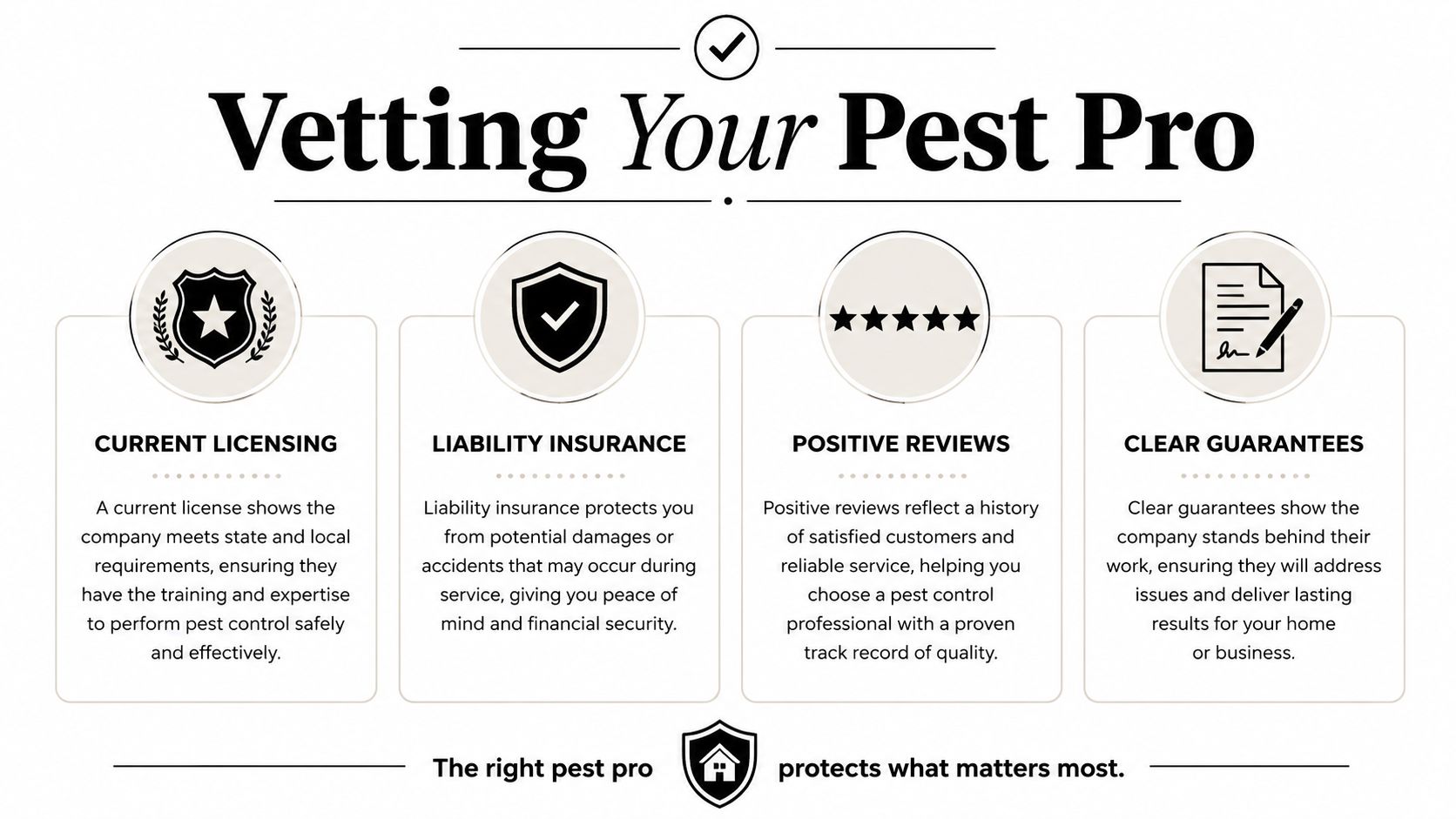
Your Vetting Checklist
Before you hire any residential pest control or commercial pest control service in Crown Point, verify the basics and listen to how the company talks about them.
| What to verify | Why it matters |
|---|---|
| Current licensing | Licensing shows the company is authorized to perform pest control work under state requirements. |
| Liability insurance | Insurance protects you if property damage or an on-site accident happens during service. |
| Local experience | Northwest Indiana pest patterns differ from other parts of the country. Local field experience usually leads to a sharper inspection. |
| Clear service explanation | You should hear what was found, where activity is showing up, and what treatment makes sense for that specific problem. |
| Follow-up plan | Many pest issues need monitoring, exclusion work, or a return visit. One treatment is not always the whole job. |
A company's online presence can help you screen options, but it should support a thorough evaluation, not replace it. Look for clear service descriptions, realistic explanations, and an easy way to reach a real person. Some businesses use tools such as local seo software to show up better in nearby searches, which is fine. Search visibility does not prove field skill, licensing, or how carefully a technician will work inside your home.
What licensed and insured should look like in practice
A qualified pest professional should be comfortable showing proof of license and insurance if you ask. They should also be able to explain how they inspect, where they may place products, what prep is needed from you, and whether the goal is immediate knockdown, prevention, or both.
That conversation matters.
In older Crown Point homes, I would expect a thoughtful provider to pay attention to basement corners, sump areas, garage thresholds, attic penetrations, utility entries, and mulch-heavy foundation lines. In newer subdivisions, the focus may shift toward grading issues, exterior gaps, and seasonal rodent entry points. Those details are easy to miss if a company follows the same script in every market.
A local, eco-minded company like The Green Advantage should still meet the same standards as anyone else. License, insurance, clear communication, and a treatment plan that fits the property. The difference is that a community-based provider often has stronger familiarity with the pest patterns that show up around Northwest Indiana homes, from wet spring insect pressure to fall mouse movement.
The right company lowers two risks at once. The pest problem itself, and your risk as the homeowner.
Red flags worth noticing
Some warning signs show up before the first treatment:
- Vague answers: If the company cannot explain its process in plain language, service questions usually get harder after you sign up.
- Confident diagnosis without inspection: Some pests can look similar at first. Good companies leave room for inspection before promising a fix.
- Pressure to buy the biggest package right away: The service should match the pest issue and the property conditions.
- No clear answer on license or insurance: That is a serious concern.
- One-size-fits-all treatment language: Homes in Northwest Indiana vary too much for every situation to be handled the same way.
Crucial Questions to Ask Before Hiring an Exterminator
A common first question is: How much does it cost? That's fair, but it shouldn't be the only question. A better phone call helps you learn whether you're speaking with a true pest professional or someone reading from a script.
Ask about the treatment itself
Start with the practical concerns that affect your home day to day.
What pest do you think I'm dealing with based on the signs I'm seeing?
A good answer should include possibilities, not blind certainty, until an inspection happens.Where will you inspect first?
Listen for specific areas like foundation lines, attic access, crawl spaces, entry points, moisture zones, and harborage areas.What products or methods do you typically use for this kind of problem?
You want a clear explanation, not a canned “we spray everything” response.How do you handle homes with children, pets, or sensitive areas?
Serious companies should address placement, precautions, and site-specific adjustments.
Ask about the service experience
The second group of questions tells you how the company works after the truck leaves.
Homeowner check: If a company can't explain what happens after the first visit, you may be paying for a treatment without a plan.
Ask:
- Do you offer a guarantee, and what does it cover?
- Will I get a written summary of what was found and what was treated?
- Who do I call if I still see activity after service?
- Are your technicians licensed or certified, and are they trained to identify the specific pests common in this area?
Ask about expectations, not just promises
Weak providers often stumble. They promise fast results without explaining the process.
Use questions like these:
- What should I expect in the first few days after treatment?
- What signs would tell us the plan is working?
- What can I do around the home to support the treatment?
- Do you recommend exclusion, sanitation changes, or moisture correction along with treatment?
That last question matters because pest control isn't only about killing pests. It's also about making the property less inviting.
For business owners and even homeowners comparing company communication, it can be useful to see how pest companies present themselves online. Resources covering pest control digital marketing strategies can give you a sense of how service businesses frame guarantees, inspections, and customer education. The useful takeaway isn't the marketing angle. It's learning how to spot whether a company is answering real customer concerns or just filling space with sales language.
Understanding Pest Control Plans and Pricing
Pest control pricing feels confusing when companies skip the reasoning behind it. The primary difference usually comes down to scope. Are you paying for a one-time response to an active issue, or are you paying for a plan designed to prevent the next one?

One-time service versus ongoing protection
A one-time service fits certain situations well. Wasp removal, a sudden ant outbreak, or a new rodent problem may justify an immediate targeted visit. That kind of work focuses on current activity and immediate relief.
An ongoing plan is different. It's built around inspection, monitoring, seasonal pressure, and prevention. If your home deals with recurring ant activity, exterior spider buildup, mosquito pressure in summer, or fall rodent intrusion, a maintenance plan often makes more sense than repeating emergency calls.
Here's the simplest comparison:
| Service type | Usually best for | What to expect |
|---|---|---|
| One-time treatment | Isolated or urgent pest issues | Immediate response focused on the active problem |
| Recurring service plan | Seasonal pests, repeat infestations, prevention | Scheduled inspections, preventive treatment, and follow-up |
Why IPM changes the value discussion
Integrated Pest Management, or IPM, is the approach many homeowners say they want once they understand it. Instead of relying on broad, routine chemical applications everywhere, IPM starts with inspection, pest identification, treatment selection, and follow-up based on the site and the pest.
According to Angi's pest control overview, professional IPM can achieve 85-95% pest elimination rates while reducing chemical use by up to 70%, and proactive maintenance programs can reduce recurring infestations by up to 80% compared with reactive-only service. In plain terms, that means smarter targeting, less guesswork, and better odds of keeping the problem from bouncing back.
That's why environmentally mindful service sometimes costs differently than a basic spray visit. You're paying for inspection quality, identification, placement strategy, and monitoring, not just product.
For homeowners comparing service structures, a page explaining monthly pest control cost considerations can help frame what you're buying and why one quote may differ from another.
A quick overview can help if you want to see the general service logic in action:
Services that often matter in Northwest Indiana
Homes and businesses in Crown Point don't all need the same plan. Common needs include:
- Termite control: Especially important where wood contact, moisture, or older structures increase risk.
- Mosquito reduction: Useful for yards, patios, and outdoor living areas during warm months.
- Rodent control and exclusion: Not just trapping, but sealing likely entry points.
- Real estate pest inspections: Important before a purchase, especially when the property has age, moisture concerns, or signs of prior activity.
One area many local companies don't explain well is the property transaction aspect. Pre-purchase inspections can prevent ugly surprises after closing, especially in homes where hidden damage or active conditions may not be obvious during a regular walkthrough.
The Green Advantage Your Local Crown Point Partner
By the time a homeowner narrows down their options, the decision usually comes down to trust. Do you want a generic service experience, or do you want a company that understands how homes and businesses in this area deal with pests?

What local service should feel like
A good local provider should make the process less stressful, not more confusing. That means clear communication from the office, realistic expectations from the field, and treatment recommendations that fit the property instead of following a one-size-fits-all script.
The Green Advantage is a family-owned pest control company serving Crown Point and the wider Northwest Indiana area with licensed, certified residential and commercial service, pest inspections, mosquito reduction, and site-specific treatment plans informed by local conditions. That matters when you're dealing with issues that depend on moisture, seasonality, foundation conditions, yard layout, and entry points that aren't obvious from a quick glance.
Why eco-minded homeowners ask harder questions
Many homeowners want effective pest control, but they also care about unnecessary exposure. That's a reasonable concern, especially in family homes, around pets, and near outdoor spaces where people spend time.
Research referenced by Clark's pest content notes that 72% of homeowners are willing to pay more for environmentally responsible pest control, while few companies clearly explain the cost and long-term value trade-offs of IPM. That gap matters in Northwest Indiana, where homeowners often care about groundwater, yard use, and practical prevention, not just fast knockdown.
The strongest pest control programs don't ask you to choose between effectiveness and thoughtful treatment. They build the plan around both.
What separates a community-focused provider
National scale can create name recognition, but neighborhood service wins on details. A local team is more likely to understand which conditions around Crown Point homes tend to attract ants, why rodents choose certain entry routes in fall, and how outdoor treatments should align with seasonal pressure.
A community-focused company should also be willing to educate, not just apply product. You should leave the interaction knowing what was found, what was done, and what changes around the property will help keep pests outside.
Schedule Your Pest Inspection in Crown Point Today
If you're searching for pest control in Crown Point, IN or an exterminator in Crown Point, IN, you probably want two things right now. Relief from the problem you're seeing and confidence that it won't keep coming back.
The right next step is a professional inspection. That gives you a clear diagnosis, a practical treatment recommendation, and a chance to address the conditions that allowed pests to settle in. Whether you're dealing with ants in the kitchen, rodents in the attic, mosquitoes in the yard, spiders around the exterior, or concerns about termites, it's easier to solve the issue when the response is specific to the property.
Homeowners, landlords, and business owners across Northwest Indiana don't need more guesswork. They need a licensed pest professional who can inspect carefully, explain the options in plain language, and recommend a plan that fits the actual risk.
If you've been putting off the call, this is the right time to make it. Small problems can stay manageable when they're addressed early. Waiting usually gives pests more time to spread, nest, or cause damage.
If you're ready to stop worrying about what's crawling, scratching, or nesting around your property, contact The Green Advantage to request a quote or schedule a pest inspection in Crown Point and nearby Northwest Indiana communities.
Best Mosquito Control Company in Crown Point, IN
A lot of Crown Point homeowners reach the same point every summer. You clean the patio, fire up the grill, set drinks out for friends, and within minutes everyone is swatting, itching, and heading back inside. Mosquitoes don’t just ruin the evening. They make your own yard feel off-limits.
That frustration is why more people now look for a real mosquito control company instead of cycling through candles, foggers, and hardware store sprays that only seem to help for a short window. If you're searching for pest control near me, exterminator near me, or dependable pest control in Crown Point, IN, mosquito service is often the issue that pushes people to finally call a professional.
Reclaim Your Summer Evenings in Crown Point
In Northwest Indiana, mosquito problems rarely feel minor. A yard can look perfectly maintained and still be uncomfortable by dusk. That’s especially true in neighborhoods with tree lines, low spots that hold water, ornamental landscaping, or nearby ponds and drainage areas.

Many homeowners start with the same plan. They put out citronella products, spray around the deck, and hope for the best before a cookout or family get-together. Sometimes that knocks activity down briefly. Often it doesn’t. The bigger issue is that adult mosquitoes are only the visible part of the problem. If breeding sites stay active, the pressure returns fast.
That’s one reason professional service has become a bigger priority for homeowners. The global mosquito control market is projected to reach USD 7.24 billion in 2026, and residential applications are projected to account for 43.7% of that market, reflecting how strongly homeowners value yard and family protection, according to mosquito control market projections from Coherent Market Insights.
Why outdoor living matters here
In Crown Point, summer isn’t just a season. It’s porch time, patio dinners, graduation parties, and weekends spent outside as long as the weather allows. Homeowners invest in landscaping, seating areas, pergolas, and screened spaces because they want to use them.
If you're thinking about improving comfort beyond pest service alone, some homeowners also explore Lafayette enclosed deck options to make outdoor spaces more usable during bug season and changing weather.
Practical rule: If mosquitoes are driving you indoors at the same time every evening, that usually points to an active property-wide pattern, not a one-spot nuisance.
A local, family-owned provider in Crown Point should understand that difference. Good mosquito control isn't just about spraying shrubs. It’s about reading the yard, knowing how our local conditions affect breeding, and choosing treatment methods that match how mosquitoes behave on your property.
Understanding Northwest Indiana’s Unique Mosquito Problem
Mosquitoes thrive where moisture, shade, and still air overlap. Northwest Indiana gives them plenty of those opportunities. Crown Point and nearby communities deal with humid summer conditions, wooded edges, drainage areas, retention ponds, bird baths, clogged gutters, outdoor containers, and low ground that holds water after rain.

A yard doesn’t need a marsh to produce mosquitoes. A forgotten bucket, a saucer under a planter, pooled water on a tarp, or a neglected corrugated drain can be enough. On larger properties, pressure often builds around fence lines, heavy foundation plantings, shaded back corners, and areas near neighboring standing water.
Why the lifecycle matters
A mosquito problem starts long before you notice adults flying around your patio. Eggs, larvae, pupae, then adults. If treatment only goes after the mosquitoes already biting, you’re treating the symptom and leaving the source behind.
That’s where many homeowners get frustrated. Most mosquito control services focus on reactive barrier sprays, but the more effective strategy targets mosquitoes throughout their lifecycle. Homeowners often aren’t told that breeding site work and larval-stage treatment are what help prevent the next wave, a gap highlighted in this discussion of lifecycle-based mosquito control.
For a closer look at common problem spots around homes, The Green Advantage has a useful page on mosquito breeding and mosquito control.
What Crown Point properties often have in common
Some properties get heavier activity because the environment keeps supporting reinfestation. Common local contributors include:
- Retention features: Newer developments often include water-management areas that can increase mosquito pressure nearby.
- Dense landscaping: Thick shrubs and shaded ornamentals give adults cool resting areas during the day.
- Backyard moisture pockets: Downspout discharge areas, poor drainage, and low ground create repeated breeding conditions.
- Neighboring influences: Mosquitoes don’t respect property lines. One neglected area nearby can keep your yard active.
When a homeowner says, "We sprayed and they came right back," the missing piece is usually habitat, not effort.
Nuisance bites versus bigger concerns
Most homeowners call because they’re tired of bites. That alone is reason enough. But mosquitoes also matter from a public health standpoint, which is part of why professional control keeps growing as a service category.
In practical terms, that means a mosquito control company should treat your yard as an ecosystem problem. The right service doesn’t just ask where you got bitten. It asks where mosquitoes are resting, where they’re breeding, how water moves across the property, and why the problem keeps repeating.
Comparing Professional Mosquito Control Methods
A Crown Point yard can look fine at a glance and still produce miserable evenings. The part homeowners do not always see is that different mosquito services solve different parts of the problem. Barrier spray, larvicide, fogging, and Integrated Pest Management all have a place, but they are not interchangeable.
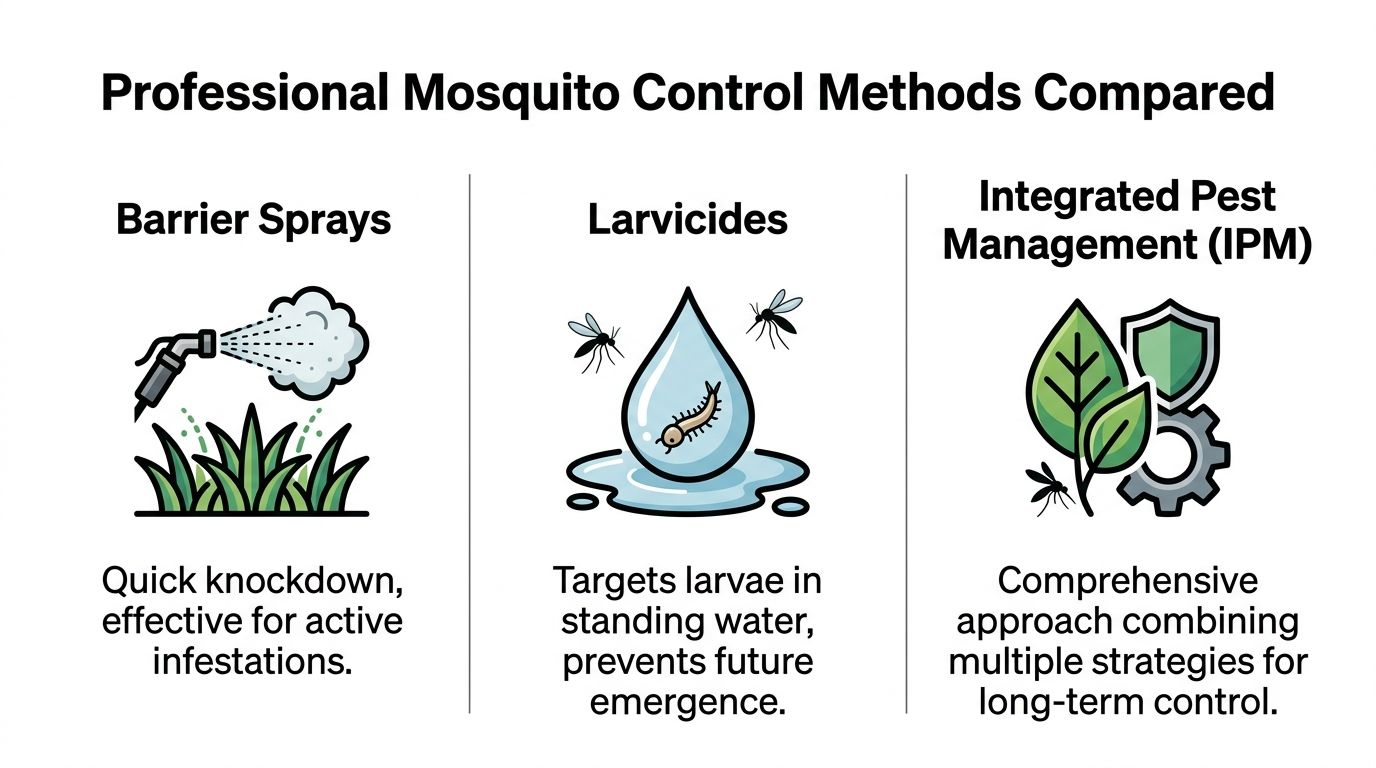
Barrier sprays
Barrier treatments are usually the first service people ask about, and for good reason. Applied to shaded foliage, fence lines, lower tree canopy, and other resting sites, they reduce the adult mosquitoes already using your yard. Homeowners often notice relief quickly, especially around patios, play areas, and dog runs.
The limitation is straightforward. A barrier spray works on the mosquitoes that land in treated areas. It does not correct the catch basin holding water behind the fence, the low spot staying wet after every storm, or the container nobody noticed near the shed.
In Northwest Indiana, that trade-off matters. Warm, wet stretches can keep new adults emerging even after a good spray, so the treatment needs to be tied to what is happening on the property.
Larvicides
Larvicides target mosquitoes in the water before they turn into biting adults. On many properties, this is the quiet part of the job that makes the biggest difference over time.
A technician may use larvicides in places that cannot be dumped or drained right away, such as drainage structures, ornamental features, or recurring water collection points. Good use of larvicides takes judgment. Not every wet area needs treatment, and not every water source is practical or legal to treat the same way.
That is one reason a local company tends to outperform a one-size-fits-all program. The crew has to know where Northwest Indiana properties usually hold water and which sites keep producing after rain.
Adulticiding and targeted knockdown
Sometimes homeowners need fast relief. A graduation party is coming up. Kids want to use the yard. Mosquito pressure is already high. In those cases, targeted adult control can knock numbers down quickly.
Used well, it is helpful. Used by itself, it often turns into a loop of repeated treatments with the same underlying problem still in place.
A short visual overview helps make those differences easier to see.
Why IPM usually works better
Integrated Pest Management combines inspection, source reduction, larval control, and adult treatments based on what the yard requires. IPM is more than a buzzword. It is the field process experienced technicians use when they want results to last longer than a few evenings.
According to this breakdown of mosquito IPM methods and effectiveness, professional IPM can achieve a 70% to 90% reduction in mosquitoes per treatment, and focusing on eggs and larvae can reduce populations by up to 90% before they become biting adults. That same source explains why larval control is often the most cost-effective part of the program.
Here is how the methods compare in practical terms:
| Method | What it does well | Where it falls short |
|---|---|---|
| Barrier spray | Reduces active adult mosquitoes in treated resting areas | Doesn’t fix breeding sites by itself |
| Larvicide | Interrupts future emergence in standing water | Requires careful identification of water sources |
| Event-style knockdown | Helpful before parties or short-term outdoor use | Usually not enough for season-long management |
| IPM | Combines correction, prevention, and targeted treatment | Takes more skill, inspection, and follow-through |
What works and what usually disappoints
Store-bought sprays, candles, and traps can help in a small area for a short period. They usually fall short when a yard has several shaded resting sites, multiple moisture pockets, or pressure coming from nearby properties. Professional mosquito management works outdoors by stacking methods, matching them to the site, and adjusting as conditions change.
That is why a seasonal program usually performs better than a spray-only approach. A company may combine recurring adult control with larval work, inspection findings, and recommendations for trimming, drainage, or container cleanup. The Green Advantage mosquito control service offers both seasonal and one-time treatments in Northwest Indiana, which makes sense for homeowners who either want steady backyard use or need relief before a single event.
Field insight: Fast relief matters, but long-term control usually comes from the less visible work. Drainage corrections, habitat reduction, and larval control are what keep a property from slipping back.
A better question than “Do you spray?” is “How do you decide which method fits my yard?” That answer tells you a lot about the company standing in front of you.
Your Checklist for Hiring a Company in Northwest Indiana
Mosquito control is now a standard offering, which means homeowners have more choices and more reason to ask sharper questions. In 2023, 86% of U.S. pest control company locations offered mosquito control services, up from 74% the previous year, according to the 2024 PCT State of the Mosquito Control Market survey PDF. More options can be helpful, but it also means not every provider brings the same depth, training, or process.
Ask how they inspect, not just how they spray
A reliable mosquito control company should describe how they assess the property before treatment. That includes resting areas, standing water, drainage problems, shaded zones, and features that support recurring activity.
If the answer sounds like “we spray the yard every few weeks,” keep asking questions. That may be part of the service, but it shouldn’t be the whole plan.
Confirm licensing and insurance
This should be a straightforward question. A company working on your property should be properly licensed and insured for pest control work in Indiana.
You don’t need a sales pitch here. You need a clear answer. If a provider gets vague or defensive, move on.
Ask what products are used and where
Homeowners should know:
- Treatment areas: Which parts of the yard get treated, and which areas are intentionally avoided.
- Product purpose: Whether the service addresses adult mosquitoes, larvae, or both.
- Use guidance: What the technician wants you to do before and after treatment.
- Sensitive areas: How they handle gardens, play spaces, pollinator activity, pet areas, and water features.
A good provider won’t dodge these questions. They’ll explain the plan in plain English.
A trustworthy answer usually sounds calm and specific. It doesn’t sound rushed, vague, or overly absolute.
Get clear on scheduling
Mosquitoes aren’t a one-and-done pest. Re-treatment is often part of the program because weather, neighboring conditions, and ongoing breeding pressure all affect results.
Ask these questions before you sign up:
- How often do you typically return during mosquito season?
- Do you offer one-time service for events as well as ongoing seasonal plans?
- What happens if pressure stays high between visits?
- Will you recommend property changes that improve results between treatments?
If a company promises complete elimination, be careful. That’s not how real mosquito management works outdoors.
Read local reviews with the right filter
Don’t just count stars. Read for specifics. Look for comments that mention communication, punctuality, technician professionalism, clarity about the plan, and whether the company explained what the homeowner could do to help.
For residential pest control, those details matter because service quality isn’t only about the treatment itself. It’s also about whether the company helps you understand the problem. The same applies for commercial pest control if you manage apartments, hospitality properties, outdoor dining areas, or event spaces around Crown Point.
Compare the proposal, not just the price
A lower quote may cover less than you think. Compare what’s included.
| What to compare | Why it matters |
|---|---|
| Inspection detail | Shows whether the company is solving a property issue or selling a generic route stop |
| Treatment scope | Reveals if they address adults only or include larval prevention |
| Follow-up plan | Tells you what happens when weather or reinfestation changes conditions |
| Communication | Helps you know what to expect before, during, and after service |
If you're also evaluating broader pest control in Crown Point, IN, this same checklist applies to ant control, rodent control, wasp removal, spider control, and preventative exterior service. The company’s process usually tells you more than the ad does.
The Green Advantage Process What to Expect
The first thing most homeowners want is a simple answer to a simple question. “What happens if I call?” That’s fair. Pest control should feel organized, not confusing.
The first conversation
When you reach out, the goal is to understand what you’re seeing. Some callers describe constant evening bites around the patio. Others mention mosquitoes around a playset, a pond edge, or a dog run. Commercial clients may be dealing with complaints around outdoor seating, entry areas, or event spaces.
That early conversation matters because not every mosquito problem looks the same on site.
The inspection and yard read
Once a technician visits the property, the work becomes more specific. They look for likely resting zones, moisture patterns, standing water, and property features that support ongoing mosquito pressure. They also look for things the homeowner may not notice, such as clogged drainage paths, hidden containers, heavy shaded foliage, or water-holding structures around the property.
Some businesses in Northwest Indiana need this same level of site analysis. That matters because there’s still a lack of practical information for commercial mosquito service, even though restaurants, event venues, and golf-related properties can see a direct effect on customer experience and revenue, as noted in this discussion of mosquito control for businesses.
The treatment plan
A solid plan should match the site. One property may need regular seasonal attention because of neighboring water and dense landscaping. Another may be a better fit for one-time event treatment plus habitat corrections. The point is to avoid treating every yard like it has the same mosquito pattern.
For homeowners who want a broader look at company standards and service philosophy, The Green Advantage shares more about that on why homeowners choose The Green Advantage for pest control.
Good mosquito service should leave you knowing what was found, what was treated, and what changes on the property will help the most between visits.
During and after service
A professional visit should feel careful and predictable. You should know when the technician is coming, what areas are being treated, and whether there are any simple prep or post-treatment instructions.
Follow-up also matters. Homeowners often have questions after the first visit, especially if they’re comparing the result to past DIY attempts. A dependable company explains what improvement to watch for, why some mosquito activity may still appear, and what conditions can affect how long relief lasts.
That same communication is useful if you're hiring for commercial pest control or even looking for an exterminator in Crown Point, IN for a wider pest issue. The best providers don’t just treat. They diagnose, document, and communicate.
Common Questions About Mosquito Control Services
Is professional mosquito control safe for children and pets
That depends on the provider’s process, products, and application practices. A responsible company should explain where treatment is applied, what precautions matter, and any reentry guidance you should follow. If you don’t get a clear answer, keep asking.
How long do treatments last
That varies with weather, vegetation, standing water, and overall mosquito pressure. Heavy rain, nearby breeding sources, and dense shade can all affect how a yard performs between visits. That’s why recurring seasonal service often works better than a one-time reactive approach for ongoing outdoor use.
Will I still see some mosquitoes
It is likely so. Outdoor mosquito control focuses on reduction rather than perfection. The practical goal is to make your yard significantly more comfortable and usable, rather than pretending nature stops at the property line.
Why is professional service better than DIY
Because professionals look beyond the obvious. They inspect breeding conditions, identify resting areas, choose the right method for the site, and adjust the program when the yard or season changes. DIY products usually focus on what you can see right now. A trained mosquito control company looks at what’s about to hatch next.
Can a mosquito company help businesses too
Yes. Outdoor dining, event areas, common spaces, entrances, and property grounds can all benefit from site-specific mosquito service. If you manage property in Northwest Indiana, mosquito pressure can affect both tenant comfort and guest experience.
If mosquitoes are keeping you from using your yard or outdoor business space in Crown Point, it’s time to get a clear plan. The Green Advantage helps homeowners and businesses across Northwest Indiana identify breeding conditions, reduce biting pressure, and make outdoor areas more usable again. Reach out to request a quote, schedule an inspection, or talk through the mosquito issues you’re seeing on your property.
Expert Mosquito Control for Yard in Crown Point
You step outside on a warm Crown Point evening, ready to enjoy the patio, and within minutes the swatting starts. The kids want to play in the yard. The dog keeps pacing by the back door. You’ve emptied a few flowerpot trays, burned a candle, maybe even bought a bug zapper, and the mosquitoes still seem to own the place.
That’s a familiar pattern in Northwest Indiana. Our yards deal with humidity, shaded fence lines, clogged gutters, low spots that hold water after rain, and nearby drainage areas that keep mosquito pressure high through the season. Good mosquito control for yard spaces isn’t about one product or one spray. It’s about understanding where mosquitoes breed, where they rest, and when simple prevention stops being enough.
Homeowners looking for pest control near me, exterminator near me, or mosquito control in Crown Point, IN usually want the same thing. They want to reclaim their yard without guessing. They want practical answers, honest trade-offs, and a plan that works for real Northwest Indiana conditions. That’s what this guide is built to provide.
Understanding the Mosquito Problem in Northwest Indiana
Mosquito pressure in Northwest Indiana builds fast because our weather keeps giving them what they need. Warm evenings, regular summer rain, shaded fence lines, drainage swales, and damp pockets around the yard create steady breeding and resting areas from late spring into early fall. A property does not need a pond or woods behind it to have a serious mosquito problem. Small water sources around the home are often enough.

Why Crown Point yards stay active
In Crown Point and nearby communities, mosquito activity often stays high because rain keeps resetting the problem. Gutters clog. Low spots stay wet. Downspout extensions hold water. Kids' toys, tarps, and plant saucers collect enough moisture to support larvae. I see this on tidy properties all the time, including neatly trimmed yards where the issue is hidden behind a shed or along a damp side yard.
Shade matters too. Adult mosquitoes avoid bright, exposed areas during much of the day and settle into cooler protected spots. Dense shrubs, overgrown edges, and thick groundcover give them a place to rest until people come outside in the evening.
If your yard stays damp after rain, fixing drainage usually cuts pressure more than another store-bought spray. These practical drainage tips for lawns line up with the same problem areas we check during mosquito inspections.
The species homeowners notice most
Northwest Indiana yards usually deal with two mosquito groups that behave differently enough to matter. You do not need to identify them on sight, but you should know why one yard can have several mosquito patterns at once.
- Aedes mosquitoes: These often breed in small containers and scattered water sources close to the house. They are common around patios, toys, buckets, and clogged items that hold rainwater.
- Culex mosquitoes: These are more closely tied to stagnant water in catch basins, ditches, neglected drains, and similar sites nearby.
- Both groups: They use shaded plantings, damp corners, and protected areas around the property as daytime resting sites.
That is why open lawn treatment by itself rarely gives lasting relief. Most activity is usually happening in the shaded margins and hidden water sources.
Why the problem can feel bigger than your yard
Many homeowners get frustrated because they empty containers and still get swarmed. In Northwest Indiana, that frustration is justified. Mosquitoes move in from nearby pressure points, including roadside ditches, drainage areas, unmanaged neighboring containers, and low ground beyond the fence line. You can do a lot on your own property and still feel the impact of what is happening around it.
That does not mean DIY work is pointless. It means expectations need to match the situation. Good prevention lowers breeding on your property. Professional treatment becomes more useful when outside pressure stays high, when the yard has heavy shade and moisture, or when disease concerns add urgency. If you want to understand that risk better, review mosquito-borne illnesses in Indiana and why steady control matters for more than comfort.
Your Seasonal Action Plan for At-Home Prevention
In Northwest Indiana, mosquito season usually starts frustrating homeowners before summer cookouts even begin. A warm stretch in spring, steady rain, and shaded corners around the yard can give local mosquito populations a fast start. A good at-home plan cuts down pressure on your property, but it works only when it follows the season and gets repeated often.
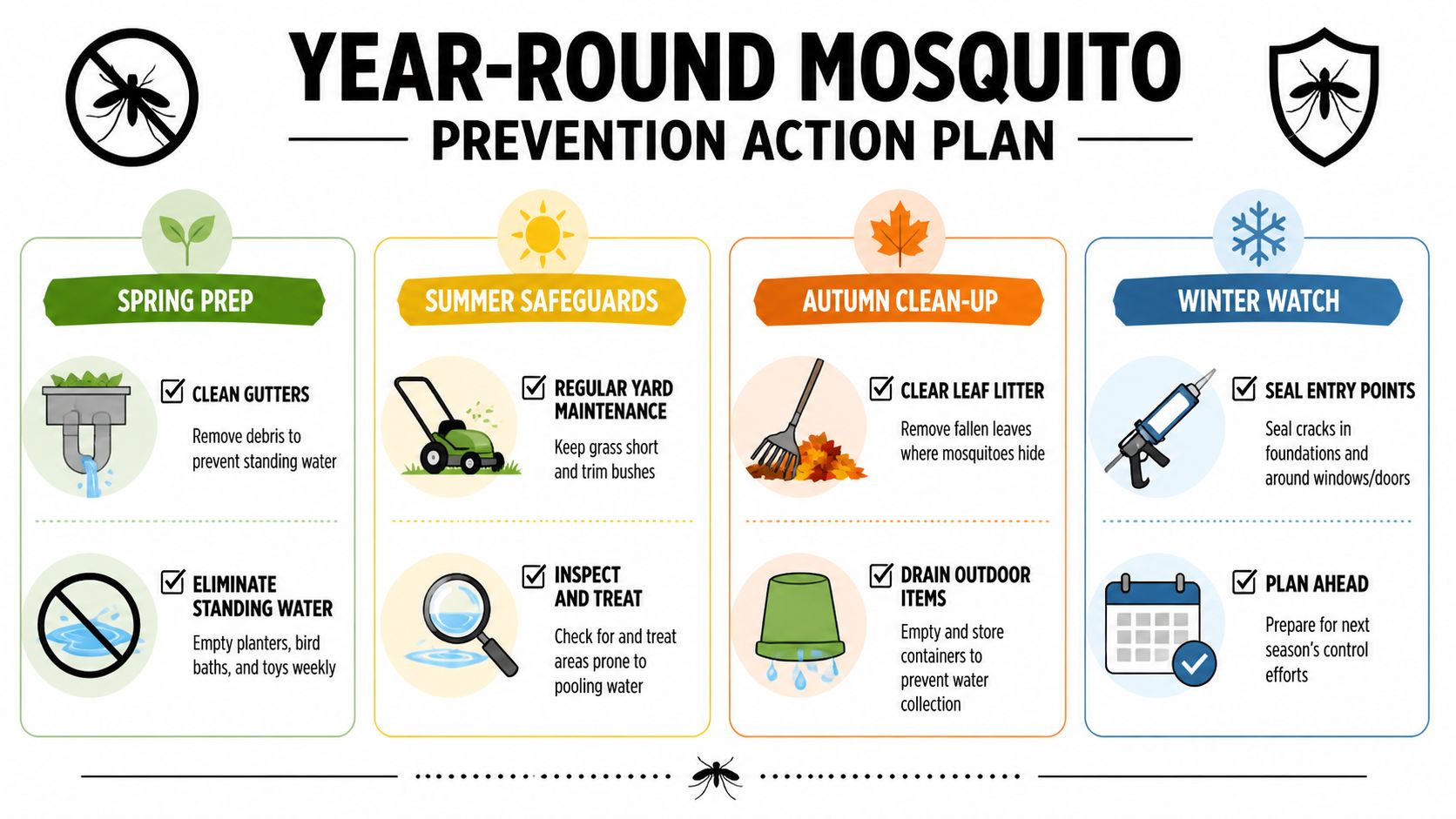
The first priority is simple. Remove places where water sits long enough for mosquitoes to develop. The second is reducing cool, protected hiding spots near the areas where your family spends time. Broad spraying without fixing those two issues usually leads to the same complaint I hear all the time in Crown Point and nearby towns. "We treated, but they came right back."
Spring prep
Spring is when yards either get ahead of mosquitoes or spend the rest of the season catching up. Once the thaw passes and rains settle in, walk the property slowly and check the overlooked items, not just the obvious ones. I tell homeowners to look at the yard the way a technician would. Follow water, shade, and clutter.
Check flowerpots and birdbaths, of course. Then keep going. Look at wheelbarrows, grill covers, kids' toys, piles of edging material, clogged gutters, corrugated window wells, and the low area near the air conditioner discharge.
A useful spring checklist includes:
- Clean gutters: Debris blocks flow and leaves small pockets of standing water.
- Flip or store containers: Buckets, lids, planters, and toys should not hold rainwater.
- Refresh birdbaths and pet bowls often: Clean water is less likely to become a breeding site.
- Correct drainage problems: Water that settles near patios, fence lines, or downspouts needs attention.
- Inspect ponds and rain barrels: These need active management all season, not occasional checks.
If your yard stays soggy after storms, review practical drainage tips for lawns and fix the water issue itself. That pays off longer than chasing mosquitoes week after week.
Summer maintenance
Summer is where prevention either holds or slips. Rainfall, irrigation, humidity, and backyard activity create new water sources fast, especially in Northwest Indiana neighborhoods with shade, fencing, and heavier vegetation around decks and property lines.
Do a quick inspection every week. After a storm, do another one.
Focus on these summer habits:
- Keep grass cut and vegetation thinned around use areas: Mosquitoes rest in cool, damp cover near foundations, fences, shrubs, and under decks.
- Dump standing water weekly: Check saucers, tarps, tire swings, kiddie pools, toys, and anything else that catches runoff.
- Manage water that cannot be drained: Ponds, rain barrels, and other permanent water sources need proper larval control products used according to the label.
- Watch irrigation closely: Overwatering creates muddy or damp spots that stay attractive longer than homeowners expect.
- Inspect shaded pockets: Behind sheds, under stairs, around timbers, and along the back side of dense shrubs are common resting sites.
There is a real trade-off with DIY treatment here. Larval control can be useful when you have water that must remain in place. Adult mosquito sprays can also help for a short period. But if the timing is off, rain interrupts the treatment, or nearby pressure is high, results drop fast. Homeowners who want better timing guidance should read about the best time to spray mosquitoes before treating on their own.
If you cannot drain a water source, you have to manage it consistently. Otherwise it becomes the spot that keeps repopulating the yard.
Fall wind-down
Mosquito pressure often lingers deeper into fall than homeowners expect, especially after a mild September or wet stretch. Cooler evenings do not mean the yard is clear.
Fall work is mostly cleanup and moisture control:
- Remove leaf buildup from gutters, beds, window wells, and low corners.
- Drain and store unused outdoor items before they collect repeated fall rains.
- Cut back overgrown vegetation near patios, fences, and the house.
- Keep checking after rain until cold weather is consistently established.
This step matters in wooded or shaded Northwest Indiana lots where damp cover hangs on well into autumn.
Winter watch
Winter is the right time to fix the conditions that made summer miserable. Regrade the low spot by the downspout. Repair gutters that overflow. Replace torn screens. Clear out the side yard where containers and debris collected all year.
That off-season work makes spring prevention easier. It also helps you figure out where DIY care is enough and where recurring mosquito pressure calls for professional treatment, especially on properties with heavy shade, drainage issues, or pressure coming in from beyond the fence line.
Common DIY Mosquito Control Mistakes Homeowners Make
Most DIY mosquito products aren’t failing because homeowners are careless. They’re failing because they don’t match how mosquitoes behave in a Northwest Indiana yard.
Mistaking insect activity for mosquito control
A lot of products create the impression that they’re working because they kill some flying insects. That’s not the same as reducing the biting pressure around your patio or back door.
The clearest example is the bug zapper. It’s popular, it’s visible, and it gives homeowners instant feedback. But the actual target is biting mosquitoes, especially females. A study highlighted by Vector Disease Control International found that bug zappers captured only 6.4% mosquitoes in their insect catch, and only half of those were the biting females, according to VDCI’s review of mosquito control myths.
That’s why many homeowners hear the zap all evening and still get bitten the same night.
Treating the air instead of the habitat
Another common mistake is focusing only on what’s flying around at dusk. Mosquitoes spend a lot of time hiding in cool, shaded vegetation and breeding in water sources that aren’t obvious from the patio. Spraying open air with a hand can or fogger often gives a short burst of satisfaction without touching the places that keep the population going.
What usually gets missed?
- Hidden water: Corrugated drain pipes, folds in tarps, clogged gutters, and objects stored against the fence.
- Resting sites: Lower branches, dense shrubs, tall weeds, and shaded corners that stay humid.
- Neighbor influence: A tidy yard can still get pressure from nearby breeding and resting areas.
Expecting one retail product to solve a layered problem
Citronella candles, occasional yard sprays, and one-time treatment of visible puddles can all play a small role. They just don’t replace an integrated plan. In practice, homeowners run into trouble when they rely on a single product while leaving the structural causes in place.
The biggest DIY mistake isn’t trying. It’s using a comfort product as if it were a control program.
If you’ve already trimmed the yard, dumped the containers, and stayed on top of the basics but still can’t use your outdoor space comfortably, that’s usually the point where a professional approach starts making sense.
How Professional Mosquito Services Provide Lasting Relief
Professional mosquito control for yard spaces works because it targets the full pattern of mosquito activity, not just the insects you happen to see at one moment. A technician does more than spray a lawn. The technician is reading the property, identifying where mosquitoes breed, where they rest, and how local weather changes the treatment window.

What professionals target that homeowners often miss
Most mosquito pressure in a residential yard comes from a combination of breeding sites and protected resting areas. Professional service addresses both.
Barrier treatments focus on vegetation and other surfaces where adult mosquitoes shelter during the day. That includes shaded shrubs, lower tree limbs, perimeter plantings, damp fence lines, and other cool protected zones near activity areas. In larger or more complex sites, technicians may also use application methods designed to distribute very fine droplets effectively where adult mosquitoes are active.
The process is far more deliberate than “spray everything.” Good service starts with site inspection and selective treatment.
Why timing matters so much
Mosquito control isn’t something you should put on a rigid every-month calendar and forget. Professional barrier applications are adjusted every 10 to 17 days based on rainfall, moisture, and temperature, and those conditions can compress the treatment window, according to Clarke’s guidance on mosquito spray application methods.
That matters a lot in Crown Point. A stretch of wet, humid weather can change mosquito pressure quickly. If the treatment schedule doesn’t adapt, the yard can slip backward even when a homeowner thinks they’re “on plan.”
Field note: The weather doesn’t care what date is on the service reminder. Rainfall and humidity change mosquito activity, so treatment timing has to respond to conditions on the ground.
Professional application timing also takes mosquito behavior into account. Adult mosquitoes are often most active at dawn and dusk, while daytime work can focus on resting vegetation where they shelter between blood meals.
Here’s a short look at the difference:
| Approach | Typical limitation | Professional adjustment |
|---|---|---|
| Calendar-based DIY spraying | Misses changes caused by rain and humidity | Schedule shifts with weather and site moisture |
| Open-yard spraying | Little impact on hidden resting zones | Targets shaded vegetation and harborage areas |
| Single-method treatment | Leaves breeding sources active | Combines habitat review, larval attention, and adult control |
A visual overview helps show how proper application is handled in the field:
What a reliable service plan includes
A professional yard treatment plan usually includes several pieces working together:
- Property inspection: Looking at drainage patterns, standing water risks, vegetation density, and mosquito pressure points.
- Targeted barrier treatment: Applying product where adult mosquitoes rest.
- Larval site attention: Identifying water features or recurring wet areas that need management.
- Adaptive scheduling: Returning based on weather, mosquito pressure, and property conditions instead of generic timing.
- Communication with the homeowner: Explaining what was treated, what still needs cleanup, and what to watch between visits.
One available option for local homeowners is The Green Advantage’s mosquito program, which treats both adult activity areas and larval concerns in serviced yards and can be set up as seasonal service or as a one-time yard treatment for an outdoor event.
That’s also where professional mosquito service connects with broader residential pest control. Homeowners searching for pest control in Crown Point, IN or an exterminator in Crown Point, IN are often dealing with more than one outdoor issue at once. Dense vegetation, moisture, and clutter can also support spiders, stinging insects, and other nuisance pests around the home’s exterior.
The Green Advantage Process for Crown Point Families
Homeowners rarely call for mosquito service because they want to learn the pest control industry. They call because they want to use their yard again. The process should feel straightforward, not confusing.
It usually starts with a conversation about what’s happening on the property. Some homeowners say the bites are worst near the deck. Others notice the side yard is miserable after rain. Some are planning a graduation party, cookout, or weekend gathering and need relief in a short window. Those details matter because mosquito pressure isn’t the same across every property in Crown Point.
What happens first
The first step is getting a clear picture of the problem. A knowledgeable office team can help narrow down the type of service needed, whether that’s recurring seasonal treatment or a one-time application for a special event. From there, the property gets evaluated with attention to the areas that often drive mosquito pressure in Northwest Indiana: shaded vegetation, drainage trouble spots, standing water risks, and activity zones like patios, play areas, and pool surrounds.
A proper inspection also helps separate mosquito issues from other outdoor pest problems. Homeowners searching for residential pest control sometimes discover they also need help with wasp activity under eaves, spiders around entry points, or general perimeter pest pressure around the structure.
How the treatment plan is explained
Good service should be clear about what’s being done and why. Homeowners need to know where treatment will be focused, what preparation helps the result, and what limitations still exist if neighboring conditions continue to produce mosquitoes.
That discussion should also cover practical safety steps. Families commonly ask about pets, kids, and yard use after treatment. Clear directions matter because confidence comes from knowing what to expect, not from vague reassurance.
A trustworthy technician doesn’t just apply a product and leave. The technician explains the conditions that are helping mosquitoes, what the treatment is targeting, and what the homeowner can do between visits.
What follow-up should feel like
A dependable mosquito service doesn’t end when the application is finished. Weather changes, new standing water forms, and vegetation grows back. Homeowners should know what signs to watch for and when to call with concerns.
In real service work, follow-up often includes:
- Reviewing treated zones: So the homeowner understands where mosquito pressure was highest.
- Pointing out correction items: Such as clogged gutters, water-holding containers, or overgrown edges.
- Adjusting future timing: Based on rainfall, moisture, and how the yard is responding.
- Coordinating with other pest needs: If the property would benefit from broader exterior pest service.
That local familiarity matters. Crown Point yards vary a lot. Newer subdivisions, older neighborhoods with mature landscaping, and properties near open drainage or wooded edges all create different mosquito patterns. A technician who works in Northwest Indiana regularly can recognize those differences quickly.
Why the experience matters as much as the treatment
Homeowners usually aren’t just buying an application. They’re buying relief from frustration. They want to stop guessing which product to try next. They want direct answers, scheduling that makes sense, and service that respects their home.
That’s true whether the property owner is dealing with a family backyard, a rental property, or a commercial site that needs outdoor comfort for tenants, staff, or customers. The same principles apply: inspect carefully, treat the right places, communicate clearly, and adapt to changing conditions.
Why Expert Mosquito Control Is a Smart Investment
By mid-July, a lot of Northwest Indiana homeowners have already spent money on yard spray, citronella products, mosquito dunks, and one more gadget that promised better evenings outside. Then the mosquitoes come out after a warm rain, and the backyard still feels off-limits.
That is usually the point where cost needs to be judged by results, not by the price tag on one bottle.
Professional mosquito service often makes better financial sense because it reduces wasted trial and error. Homeowners who handle the problem on their own tend to buy in pieces across the season. A hose-end spray one week, dunks for standing water the next, then patio repellents for a cookout. Those purchases add up, and they still may not address where mosquitoes in Crown Point and the rest of Northwest Indiana rest and rebuild, especially in shaded foliage, damp edges, and properties near drainage areas or wooded borders.
There is also the time factor. Consistent mosquito reduction takes inspection, timing, and repeat applications based on weather and pressure. Missing a treatment window during a wet stretch can leave homeowners chasing the problem for weeks.
What the investment really buys
A professional program buys more than fewer bites.
- More usable evenings outside: Patios, playsets, and backyards stay practical during peak mosquito months.
- Less product guesswork: Homeowners stop rotating through retail options that may not fit the property or the level of pressure.
- A safer treatment plan: Sensitive areas like pet spaces, pollinator plantings, and vegetable gardens can be accounted for before service starts.
- Season-long consistency: Service is scheduled around mosquito activity and local conditions, not just around when someone has free time on a Saturday.
In my experience, that last point matters most. Mosquito control in Northwest Indiana is rarely a one-and-done job. Spring moisture, summer storms, heavy shade, and neighborhood drainage patterns can keep pressure high even when a homeowner is doing several things right.
Why professional help becomes the practical choice
DIY prevention still has value. Dumping standing water, cleaning gutters, thinning overgrown edges, and treating obvious breeding spots can lower pressure. But once a yard has repeated evening activity, bites around shaded seating areas, or mosquitoes pushing in from nearby harborage, the job usually needs a broader plan.
That is where professional service earns its keep. A technician can treat the places homeowners often miss, adjust the schedule after weather changes, and choose materials and application methods that fit the property. At The Green Advantage, that means looking at the whole yard as it behaves through the season, not just spraying the obvious spots and hoping for the best.
For many families in Crown Point, mosquito service becomes a practical property expense for the same reason they call for termite control, rodent control, or wasp removal. The problem has reached a point where steady, informed service is more reliable than another round of trial and error.
Frequently Asked Questions About Yard Treatments
A few questions come up on almost every mosquito call. Most are really about safety, expectations, and timing. Those are fair questions, and homeowners should get clear answers before any service is scheduled.
Common Questions About Our Mosquito Services
| Question | The Green Advantage Answer |
|---|---|
| Are yard mosquito treatments safe around pets and children? | Treatments should always be applied according to label directions, with clear instructions about when the yard can be used again. Homeowners should follow the technician’s post-treatment guidance closely, especially for pets and children who spend a lot of time on turf and patios. |
| Can you treat a yard that has a vegetable garden or pollinator plants? | Yes, but those areas need to be identified during the inspection so treatment can be planned carefully. Mosquito work should be targeted to resting areas and problem zones, not applied carelessly across the whole landscape. |
| What if it rains after service? | Rain timing matters. Light conditions after the application has had time to settle may not affect results the same way heavy rainfall would. If weather becomes a concern, the property should be evaluated based on treatment timing, yard conditions, and mosquito activity afterward. |
| How long should I wait before using the yard again? | The exact wait time depends on the product used and the application instructions. Your technician should give direct, property-specific guidance after service so you know when normal yard use can resume. |
A few practical points homeowners appreciate
If you’re preparing for service, it helps to mow if needed, reduce obvious standing water, and ensure gates are accessible so the technician can access the full treatment area. If you have specific concern zones, point them out. The worst mosquito pressure usually isn’t random.
It’s also worth mentioning if you’re dealing with other exterior pest issues. Homeowners looking for commercial pest control or home perimeter service often want one provider to evaluate the full outdoor pest picture, especially around entry points, foundation plantings, trash areas, and outdoor seating spaces.
Ask direct questions before service day. A good answer should be clear, specific, and easy to follow.
If your yard in Crown Point or nearby Northwest Indiana has reached the point where DIY steps aren’t enough, contact The Green Advantage to schedule an inspection or request a quote. A clear mosquito control plan can help you reclaim your outdoor space, reduce frustration, and make the yard usable again for your family, guests, or tenants.
Protect Your Family with Tick Control Services

A lot of Crown Point homeowners reach the same point every year. The weather turns nice, the grill comes out, the kids want to run through the yard, and someone says the sentence nobody wants to hear: “Check for ticks when you come inside.”
That worry isn’t overblown. In Northwest Indiana, ticks aren’t just a deep-woods problem. They show up along fence lines, near wood piles, around ornamental beds, beside retaining walls, and in the transition areas where lawn meets shade. A yard can look clean and still support tick activity if it gives them moisture, cover, and access to animal hosts.
People searching for pest control in Crown Point, IN, residential pest control, or even an exterminator near me usually want a simple answer. Can this problem be handled safely, and can they trust the result? Yes, but only if the treatment plan matches how ticks live on the property. A generic spray-and-go visit usually misses the bigger issue.
Your Guide to Tick Control in Crown Point Indiana
A backyard in Crown Point doesn’t have to be overgrown to feel risky. Many of the properties that create concern are well maintained. The grass is cut. The landscaping is tidy. The problem sits in the margins. Dense edges, damp shade, leaf litter behind shrubs, and wildlife traffic through the lot.
That’s one reason tick control services have become far more common. The market has grown enough that 83% of pest control company locations offer tick control services as of 2025, according to the 2025 State of the Tick Control Market. That kind of adoption tells you something practical. Pest professionals are seeing enough pressure, and enough demand, that tick work is now a mainstream part of modern pest management.
Why local yards create local risk
Crown Point and nearby Northwest Indiana neighborhoods give ticks what they need. They don’t need a huge forest. They need hiding places, humidity, and hosts that move through the property. Mice, chipmunks, deer, dogs, and people all play a role in how ticks spread across a yard.
Homeowners often notice the problem in ordinary moments:
- After mowing near a fence line when ticks seem to show up on socks or pant legs
- After pets come in from the yard and need to be checked more closely
- After working in garden beds where shade and mulch hold moisture
- After hosting outside when guests start asking whether the yard has been treated
Local reality: Tick problems often begin where maintained lawn meets protected cover. That edge matters more than most homeowners realize.
Anyone looking for pest control near me or commercial pest control for a property with outdoor foot traffic should treat ticks as a legitimate health concern, not just an annoyance. Good service starts with understanding where the pressure is coming from and how to reduce it without overapplying product where it isn’t needed.
Understanding the Tick Threat in Northwest Indiana
Ticks are part of the pest picture in Northwest Indiana because the local environment gives them cover, moisture, and steady access to hosts. Crown Point properties with mixed sun and shade, wooded borders, brushy edges, or active wildlife traffic tend to face the most pressure, but even open suburban lots can support ticks if the conditions stay favorable.
The ticks homeowners worry about most
In this region, homeowners usually hear about blacklegged ticks and American dog ticks. They matter for different reasons, but the practical takeaway is the same. A person doesn’t need to walk deep into the woods to encounter them. Ticks wait in low vegetation, along trail edges, around brushy transitions, and in places where animals travel.
The blacklegged tick gets much of the attention because of its connection to Lyme disease. The American dog tick is also a concern around homes, yards, and outdoor recreation areas. What matters on the ground is not memorizing every species detail. It’s recognizing that different ticks can use the same property in different ways, which is why inspection and timing matter.
Why the nymph stage causes so much trouble
Ticks don’t stay in one simple stage. They move through a life cycle, and that affects treatment strategy. Homeowners often focus on larger, visible ticks, but the smaller stages can create more risk because they’re easier to miss.
Nymphs are a major concern because they can be hard to spot on skin, pets, and clothing. That makes early detection harder and increases the chance that a tick stays attached longer than anyone realizes.
For a deeper look at survival and behavior, this guide on how long ticks can live helps explain why a one-time casual response usually isn’t enough.
Why this matters in the Upper Midwest
This isn’t just a general national issue. It’s a regional one. Tick-borne diseases are a major public health issue in the Upper Midwest, and neighboring states like Wisconsin and Minnesota report tens of thousands of cases annually, as outlined in this tick-borne disease summary from ConsumerAffairs.
That matters to Indiana homeowners because ticks don’t respect state lines. The same broad regional patterns that affect the Upper Midwest affect outdoor living in Crown Point and the surrounding area.
| Property feature | Why ticks like it |
|---|---|
| Shady bed edges | They stay cooler and hold moisture |
| Leaf litter | It gives ticks protection and helps them avoid drying out |
| Tall grass near fences | It creates a waiting zone for host contact |
| Wooded borders | Wildlife moves through these areas regularly |
| Stone walls and landscape transitions | Small animals travel and shelter there |
Ticks thrive in the parts of a yard people don’t think about until someone gets bitten.
That’s why effective control starts with the whole property, not just a quick pass over the lawn.
The Green Advantage Integrated Tick Management System
Most failed tick treatments have the same weakness. They assume the answer is “spray more.” That sounds decisive, but it isn’t very precise. Good tick control services rely on Integrated Tick Management, or ITM, because ticks live in patterns. They don’t spread evenly across the property.
A proper ITM program is surveillance-driven and combines multiple tools. Research on professional tick management describes an approach that uses host-targeted devices like permethrin-treated tick tubes, habitat modification, and targeted residual applications, with tick tubes remaining effective for 75 to 90 days as part of a broader strategy, as explained by Vector Disease Control International.
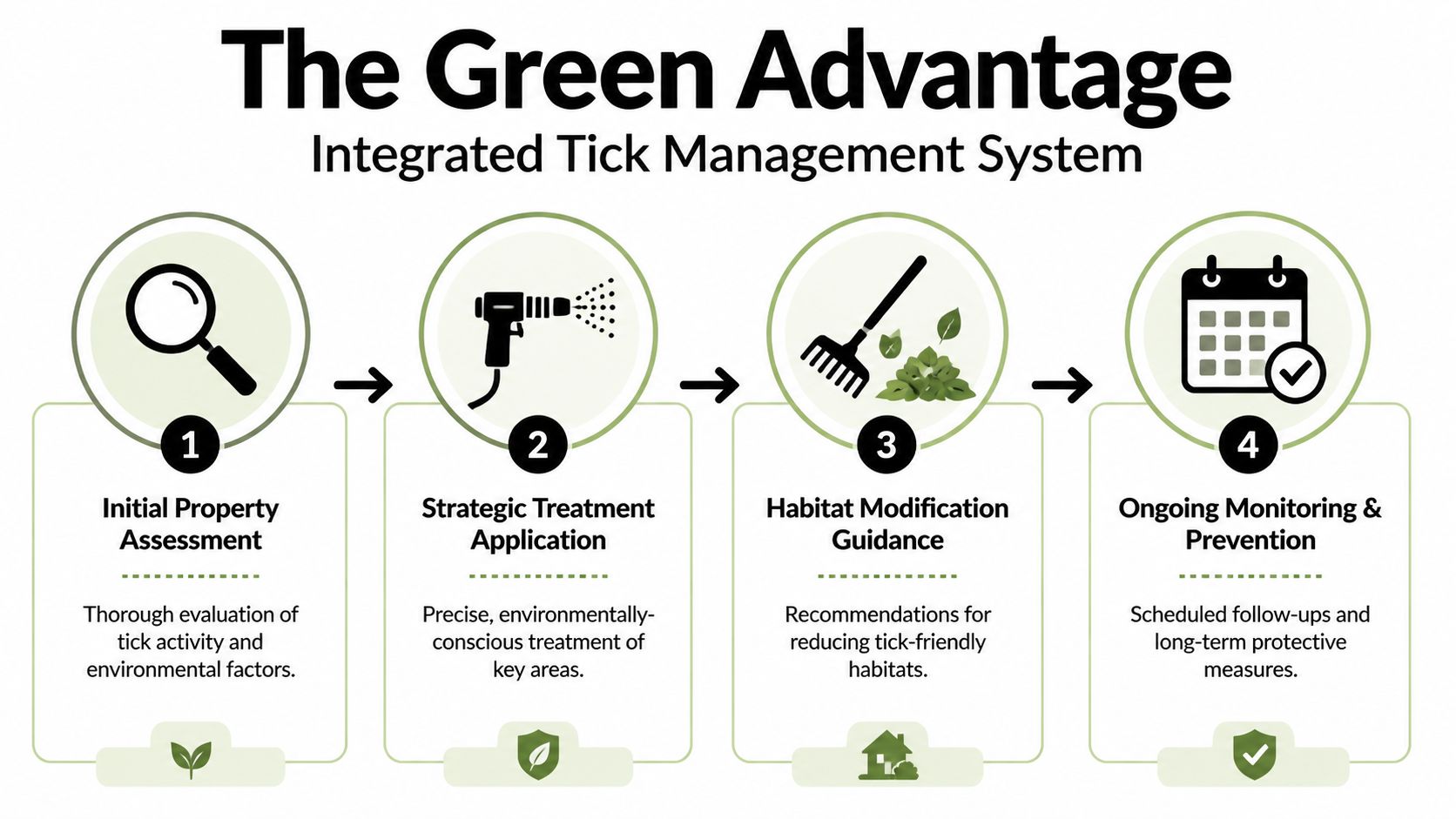
It starts with surveillance, not guesswork
Before treatment, the property needs to be read correctly. That means identifying where ticks are likely to harbor, where animal movement is concentrated, and where human exposure is most likely. The shaded back corner may matter more than the whole front lawn. The mulch edge behind the playset may matter more than the center turf.
That’s the biggest difference between a thoughtful plan and a generic yard spray. One looks at pressure points. The other treats the entire property as if every square foot carries the same risk.
The barrier treatment has a job, and limits
Targeted residual applications are important, especially around transition zones. These are the places where people and pets are most likely to pick up ticks. Think lawn-to-woods edges, perimeter vegetation, shaded pathways, dog runs, and the outer margins of ornamental beds.
Barrier treatments work best when they’re applied to the places ticks use. They work less well when homeowners expect them to instantly sterilize an entire outdoor space with no support from habitat reduction.
Practical rule: If a yard keeps its moisture, shade, and host traffic, treatment has to work harder. The landscape either supports the service or fights it.
Tick tubes solve a different part of the problem
Tick tubes are one of the most misunderstood tools in professional tick control. They aren’t a substitute for inspection or perimeter treatment. They address a separate route of tick development by targeting rodent activity.
These devices use permethrin-treated cotton that mice carry back to nesting areas. When ticks feed on those rodents, the treatment helps reduce them at a point many homeowners never see. This matters because a lot of tick pressure begins long before a tick reaches a person, a pet, or a patio edge.
This is also where tick control overlaps with broader rodent control thinking. If a property supports heavy mouse activity around sheds, wood stacks, brush piles, or neglected corners, it creates conditions that can feed the tick problem too.
Vegetation management is where local knowledge matters
A company with real outdoor care experience has an advantage. Tick work isn’t just about product choice. It’s about understanding what the outdoor environment is doing. Grass height, leaf accumulation, dense groundcover, neglected border growth, and moisture-retaining areas all affect the outcome.
In Crown Point and nearby Northwest Indiana communities, practical vegetation adjustments often include:
- Reducing leaf litter in shaded borders and behind dense shrubs
- Trimming grass and edge growth near fence lines and property margins
- Opening airflow around heavily planted zones that stay damp
- Keeping trails and walk paths defined so people avoid brushing against tick habitat
- Managing clutter near outbuildings where mice and chipmunks may shelter
That’s why the best programs also complement other outdoor services. Tick reduction can support a broader property plan that includes mosquito control, habitat correction, and exclusion steps that make the whole site less inviting to pests.
What doesn’t work well
Homeowners often ask whether store-bought sprays are enough. They can have a place for very limited, short-term spot response, but they usually fall short for recurring pressure.
The common problems are predictable:
- Coverage is inconsistent. Key harborage areas are frequently missed.
- Timing is poor. Applications happen after a problem is obvious, not when intervention is most useful.
- The habitat remains unaltered. Ticks return to the same favorable zones.
- The treatment isn’t tied to host activity. Wildlife and rodents keep moving ticks back in.
An ITM system works because it attacks the problem from more than one direction. It doesn’t treat ticks as random. It treats them as a property-level pest with identifiable sources and repeatable patterns.
Benefits of Professional Tick Services for Your Property
The immediate benefit of tick control services is obvious. You want fewer ticks where your family, pets, guests, or customers spend time outdoors. But that’s only part of the value. The larger benefit is getting your property back without the constant mental checklist of socks, pant legs, pet fur, and bite anxiety.

Better use of the yard
Most homeowners don’t invest in outdoor spaces so they can avoid them. Patios, fire pits, swing sets, gardens, and walking paths should feel usable. Professional treatment helps reduce hesitation around those daily routines.
That matters for homes, rental properties, and businesses alike. If people are constantly watching for ticks, the property stops functioning the way it should.
Protection goes beyond comfort
Comfort matters, but health concerns are what push many people to act. Preventative service makes financial sense too. As noted by Waltham’s discussion of tick prevention value, the true value of prevention isn’t just immediate comfort. It’s that the annual cost is a fraction of the potential medical bills, lost productivity, and long-term health complications associated with a single case of Lyme disease.
That’s a useful way to think about the decision. Tick control isn’t just a convenience purchase. It’s part of risk management for the property and the people using it.
- Family protection: Children play low to the ground, move in and out of edges, and don’t always notice exposure quickly.
- Pet safety: Dogs often brush through the exact areas ticks prefer.
- Property confidence: Outdoor gatherings feel different when hosts aren’t worried about what guests may bring home.
- Longer-term suppression: Repeated, thoughtful treatment works toward interrupting the life cycle rather than just reacting to the latest sighting.
Habitat changes multiply the results
Professional service gets stronger when it’s paired with cleanup and host reduction. That doesn’t mean a homeowner has to redesign their entire outdoor area. It means removing the features that subtly support the problem.
One useful example is rodent harborage near sheds and storage areas. Since mice can play a role in tick activity, practical exclusion around outbuildings supports the larger control effort. Van Dyke Outdoors' mice prevention guide offers a solid checklist for reducing the kind of shelter that can help pests persist around a property.
For homeowners comparing options, this guide to the best flea and tick control for yard is also helpful for understanding why broad consumer products and professional site-specific plans produce very different results.
A quick visual explanation can help show why prevention pays off over time.
Professional tick service is worth the cost when it changes behavior on the property. People stop avoiding the yard and start using it again.
What to Expect with Our Crown Point Tick Control Service
Homeowners are more comfortable with pest control when they know exactly what will happen. Tick service should feel clear from the first call through the follow-up period. That includes preparation, treatment, and realistic expectations after the work is done.

The first conversation should be local and useful
A good service process starts with key questions. What kind of property is it? Where have ticks been found? Are pets bringing them inside? Is the lot wooded, open, or mixed? Are there sheds, retaining walls, fence lines, play areas, or brushy edges?
Those details shape the visit. Tick pressure on a compact subdivision lot doesn’t look exactly like tick pressure on a larger edge property in Northwest Indiana.
Inspection comes before recommendation
The on-site visit should identify likely harborage zones and exposure areas. That usually includes the perimeter, ornamental beds, shaded transitions, high-moisture sections, outbuildings, and any routes where wildlife tends to move.
A proper inspection also looks at what’s feeding the issue. Examples include:
- Leaf buildup behind shrubs or along back lot lines
- Tall or dense border growth where people rarely walk but ticks thrive
- Rodent-friendly clutter near sheds, wood piles, and storage areas
- Pet routes and play zones where contact risk is higher
- Neighboring habitat pressure that may keep introducing ticks
The treatment plan should match the property
Not every yard needs the same mix of tactics. Some need strong perimeter and vegetation-edge treatment. Others benefit from adding host-targeted devices and more detailed habitat correction. A straightforward property may need simple seasonal service. A more complex site with shade, wildlife movement, and recurring exposure may need a more layered plan.
That customization is the difference between service that looks active and service that solves something.
A homeowner may also get preparation guidance before treatment, such as bringing in toys, limiting unnecessary yard traffic during service, and making sure technicians can access key treatment zones. Clear communication here matters because it reduces surprises and helps the treatment go where it needs to go.
After treatment, results follow the tick life cycle
Expectations need to be realistic. It’s normal to see some ticks for two to three weeks after the initial service due to their life cycle, and professional residual products are designed for proven 90-day outdoor control when used appropriately, as discussed in Syngenta’s guidance on residual tick protocols.
That doesn’t mean the service failed. It means the treatment is working through a real biological process rather than creating instant, total disappearance overnight.
| Stage of service | What the homeowner should expect |
|---|---|
| Initial contact | Questions about the property, tick sightings, and use patterns |
| Inspection | Review of habitat, shade, edges, host traffic, and risk zones |
| Treatment | Targeted application based on pressure points, not random blanket coverage |
| Short-term follow-up | Some tick activity may still appear for a limited period |
| Ongoing prevention | Monitoring, repeat service if needed, and habitat adjustments |
The best tick program is the one that explains what success looks like before the technician ever starts.
Safety and communication matter
For families with children and pets, confidence comes from knowing what was treated, why it was treated, and when normal yard use can resume. A professional should explain reentry guidance clearly and answer site-specific questions without rushing through them.
That same transparency matters for commercial pest control accounts, landlords, and property managers. Outdoor common areas, entry corridors, and employee break spaces all require predictable service and clear documentation. Tick control works best when nobody has to guess what was done or what happens next.
Frequently Asked Questions About Tick Treatments
Are professional tick treatments safe for kids and pets
Safety starts with product selection, proper application, and clear instructions after service. The most important point is that treatment should be targeted and deliberate, not overapplied. Professional technicians focus on the places ticks harbor and travel, which helps reduce unnecessary exposure across the rest of the property.
Homeowners should always follow the post-treatment guidance they’re given. If something about the yard is unusual, such as a dog run, a play area, or a heavily used garden path, that should be discussed before service so the plan reflects how the space is used.
How often do most properties need tick control services
That depends on pressure, habitat, and how the property is used. Some lots have light seasonal pressure and need a simpler prevention approach. Others have recurring tick activity because of shade, wildlife traffic, rodent harborage, or neighboring habitat.
A one-time response can help in some situations, but repeated exposure usually calls for a seasonal plan. Tick control works best when timing is tied to actual property conditions, not just a homeowner’s last-minute concern after a bite or a sighting.
Can I get ticks even if my yard isn’t wooded
Yes. This surprises a lot of people. Ticks don’t need a forest to show up. They need protected zones and a host pathway. A clean-looking suburban lot can still support them if there’s a fence line with tall growth, a moist mulch bed, heavy shrub cover, a nearby drainage area, or animal traffic moving through.
That’s why homeowners who search for an exterminator in Crown Point, IN after finding ticks in a tidy lawn aren’t overreacting. The property may look low-risk from the driveway and still have several active edge habitats.
What can I do between treatments to help
The biggest help is habitat reduction. Keep vegetation from becoming a protected corridor. Reduce leaf buildup. Clean up clutter near the perimeter. Watch for small animal activity around sheds, wood piles, and dense landscaping.
A few practical habits make a real difference:
- Trim the margins: Keep fence lines and border growth from turning into cool, protected zones.
- Clear leaf litter: Don’t let shaded beds stay packed with organic debris.
- Manage storage areas: Sheds and stacked materials can support rodent activity.
- Check pets routinely: Dogs often reveal where the property pressure is highest.
- Keep paths defined: The less brushing against edge growth, the lower the exposure risk.
Do tick services work better with other pest control programs
Often, yes. Tick problems don’t exist in isolation. A property that supports ticks may also support mosquitoes, rodents, or other outdoor pests. Combining services can produce a more coherent prevention plan because the technician sees the whole site, not just one symptom.
For example, if a yard has damp shade and dense edge vegetation, those same features may matter for mosquito control. If there’s heavy mouse activity around a shed or wood stack, that can affect the broader pest picture too. Integrated service doesn’t mean every property needs every treatment. It means the recommendations should fit the ecology of the site.
Is DIY tick control enough
Usually not when the problem is recurring. DIY products tend to underperform for one of three reasons. The wrong places get treated, the timing is off, or the habitat stays exactly the same. Homeowners can help a lot with maintenance, but recurring tick activity usually needs professional inspection and a plan built around how ticks are using the property.
What about businesses and managed properties
Tick control matters anywhere people spend time outdoors. Apartment communities, office campuses, daycare grounds, pet-friendly facilities, and hospitality properties all face the same basic issue. If people or animals move through outdoor edges, the property has exposure potential.
For managed properties, the standard is higher. The service needs to be reliable, documented, and easy to coordinate. That’s especially true when tenants, employees, or visitors may be using the grounds daily.
A good answer to a tick problem isn’t “spray everything.” It’s “treat the right places, fix the habitat, and set honest expectations.”
Take Back Your Yard Contact The Green Advantage Today
Ticks change how people use their property. They make families hesitate before letting kids play outside. They make pet owners second-guess the yard. They make outdoor spaces feel smaller than they are.
That problem is manageable with the right plan. Professional tick control services work best when they combine inspection, targeted treatment, habitat correction, and clear communication about what to expect. That kind of approach is especially important in Crown Point and nearby Northwest Indiana communities, where shade, wildlife movement, and suburban landscaping often create ideal tick conditions.
If you’ve been searching for pest control near me, pest control in Crown Point, IN, or an exterminator near me because ticks are showing up around your home or business, now is the right time to act. The sooner the property is evaluated, the sooner the pressure points can be identified and treated properly.
Protect your yard before another weekend gets planned around tick checks instead of enjoying the space.
If you're ready for a property-specific plan, contact The Green Advantage to schedule an inspection or request a quote for tick control services in Crown Point and Northwest Indiana.
Best Pest Control for Home in Crown Point, IN

You hear it at night first. A faint scratching in the wall. Then a line of ants shows up by the sink. A few days later, you're swatting mosquitoes in your own backyard and wondering whether you need a spray from the hardware store or a real exterminator near you.
That moment is stressful because most homeowners don't know if they have a small nuisance or the start of a bigger problem. In Crown Point, IN, that uncertainty gets worse because our pest pressure isn't generic. Moisture, changing seasons, dense vegetation, and the way many homes sit against mulch beds, leaf litter, and damp soil all affect what shows up and how fast it spreads.
Good pest control starts with calm, local judgment. You need to know what pest you're dealing with, why it's there, and what will hold up in a Northwest Indiana home after the first treatment wears off.
That same thinking applies to the house itself. Small gaps that let outside air leak in can also give pests a route indoors, which is why practical home-shell fixes matter. If you want a solid homeowner overview of that side of the problem, this guide on air sealing for Tucson homeowners is useful because the core principle is the same. Tighten the home, reduce access, and make the structure less inviting.
Your Guide to a Pest-Free Home in Northwest Indiana
In Crown Point and nearby Northwest Indiana communities, the best pest control for home isn't just about killing what you see. It's about fixing the conditions that brought pests in to begin with.
A lot of people assume pest issues mean a house is dirty. Usually, that's not the full story. I've seen clean, well-kept homes deal with ants because mulch stayed too wet against the foundation, spiders because insects were gathering around entry lights, and rodents because one small utility gap stayed open all winter.
Practical rule: If pests keep coming back after store-bought products, the problem usually isn't the product alone. It's the combination of entry points, moisture, shelter, and missed nesting areas.
The right residential pest control plan should answer four questions:
- What pest is active: Ants, spiders, wasps, rodents, mosquitoes, termites, and bed bugs all behave differently.
- Where it's coming from: Foundation gaps, attic vents, crawl spaces, landscaping, standing water, or wall voids.
- What conditions support it: Excess moisture, clutter, food sources, overgrown plants, or untreated exterior zones.
- What treatment fits the risk: Light prevention, targeted baiting, exclusion work, mosquito reduction, or more intensive treatment.
That matters whether you're searching for pest control near me, pest control in Crown Point, IN, or a local exterminator near me because the quality gap between providers often comes down to diagnosis. A generic spray can make activity look better for a short time. A smarter plan keeps the problem from rebuilding.
Identifying Common Pests in Crown Point and Beyond
Northwest Indiana has its own pest patterns. Lake-effect humidity, wet periods, shaded lots, and soil that holds moisture can all push insects and rodents toward the structure.
Ants, spiders, and crawling pests around the foundation
Ants often show up first in kitchens, around windows, or where plumbing lines enter. If you see a steady trail rather than a random few scouts, they're usually tracking between a food source and a nesting area. Spiders are different. They follow insect activity, so webs in corners, basements, garages, and around exterior lights usually mean the home is feeding their food supply.
Millipedes and similar moisture-loving pests are also common around damp foundations. They don't usually signal structural damage, but they do signal a perimeter condition that needs correction.
In Indiana, 65% of homeowner complaints involve perimeter breaches due to poor drainage and leaf litter buildup, according to regional pest vector reporting tied to Purdue Extension findings. That's why a good exterminator in Crown Point, IN won't stop at the bug itself. They'll look at grading, gutter discharge, mulch depth, damp corners, and the vegetation touching the house.
Mosquitoes, wasps, and stinging pests in the yard
Mosquito pressure rises fast when water sits in gutters, planters, toys, low spots, or dense shaded landscaping. If your family gets bitten in the same areas of the yard every evening, that's usually a pattern, not bad luck.
Wasps and hornets tend to build where they get shelter and low disturbance. Watch eaves, soffits, playsets, deck framing, sheds, and fence lines. Early nests are easier to address than mature ones.
Look for these signs:
- Mosquito activity at dusk: Bites cluster around ankles, legs, and shaded seating areas.
- Wasp traffic in one direction: Repeated flight to the same roofline, post, or overhang often points to a nest site.
- Spider web buildup outdoors: Heavy webbing around lights and entryways means prey insects are gathering there first.
Rodents, termites, and hidden interior pests
Rodents leave clues before you see them. Listen for scratching, look for droppings, and check for gnawing around stored food, garage corners, utility penetrations, and attic access points. They don't need a large opening.
Termites and bed bugs are harder because both stay hidden early. Soft wood, damaged trim, or unexplained insect wings around windows deserve attention. Bed bug activity often starts with bite concerns, mattress seam spotting, or bugs hiding near sleeping areas and upholstered furniture.
If you notice pests in more than one room, or both inside and outside, it's usually no longer just a spot-treatment issue.
Assessing the Severity of Your Pest Infestation
Not every pest sighting means you need a full treatment plan. But some signs tell you right away that the problem has moved past DIY.
When it's a nuisance and when it's an infestation
A few ants near a door on a rainy day may only mean temporary activity. One spider in the basement isn't unusual. A single wasp near the deck doesn't mean a nest is established.
The situation changes when patterns repeat. Daily ant trails, fresh droppings, multiple rooms with activity, new bites overnight, damaged wood, or recurring insects after repeated sprays all point to an established source.
Use this quick self-check:
- Minor issue: Isolated sightings, no repeated trail, no visible nesting, no signs in multiple rooms.
- Moderate issue: Repeat sightings in the same area, visible exterior activity, attractants present, DIY gives only short relief.
- Serious issue: Rodent evidence, stinging insect nesting near living areas, suspected termites, bed bugs, or pests spreading through the house.
Why DIY often stalls out
DIY products can knock down visible pests. They often don't reach the nest, void, harboring area, or colony core. That's the main reason homeowners feel like they're treating the same problem over and over.
One-time professional treatments average $300-$550, while annual plans range $660-$1,220, and professionals can eliminate entire colonies in 24-48 hours in situations where DIY sprays with a 20-foot limit fall short, according to This Old House's pest control cost and treatment review. A key trade-off isn't just upfront price. It's whether the treatment reaches the source.
Short-term relief can be expensive if you keep buying products that never touch the nesting zone.
Signs you should call for residential pest control now
Some situations shouldn't wait.
- Rodent evidence indoors: Droppings, gnaw marks, or scratching in walls usually mean hidden activity.
- Stinging insects near doors or play areas: Nesting close to family traffic raises the risk quickly.
- Possible termite damage: Soft or hollow-sounding wood needs inspection, not guesswork.
- Bed bug indicators: Repeated overnight bites or spotting near beds should be handled with a defined treatment plan.
- Recurring perimeter invasions: If pests return after each weather change, the exterior conditions need a broader fix.
If you're searching pest control near me because the problem keeps returning, that's usually your answer already. You don't need more spray. You need a better diagnosis.
Comparing Pest Control Treatments Nature-Based vs Chemical
Most homeowners in Crown Point aren't asking whether pest control should work. They're asking how to make it work without creating a new safety concern for kids, pets, pollinators, or the yard.
A March 2026 survey of 991 homeowners found that 81% prefer eco-friendly pest control methods, reflecting a clear move toward sustainable solutions and supporting Integrated Pest Management (IPM), which blends prevention, non-chemical controls, and targeted treatment for longer-term results, as summarized by Modern Pest's homeowner statistics review.
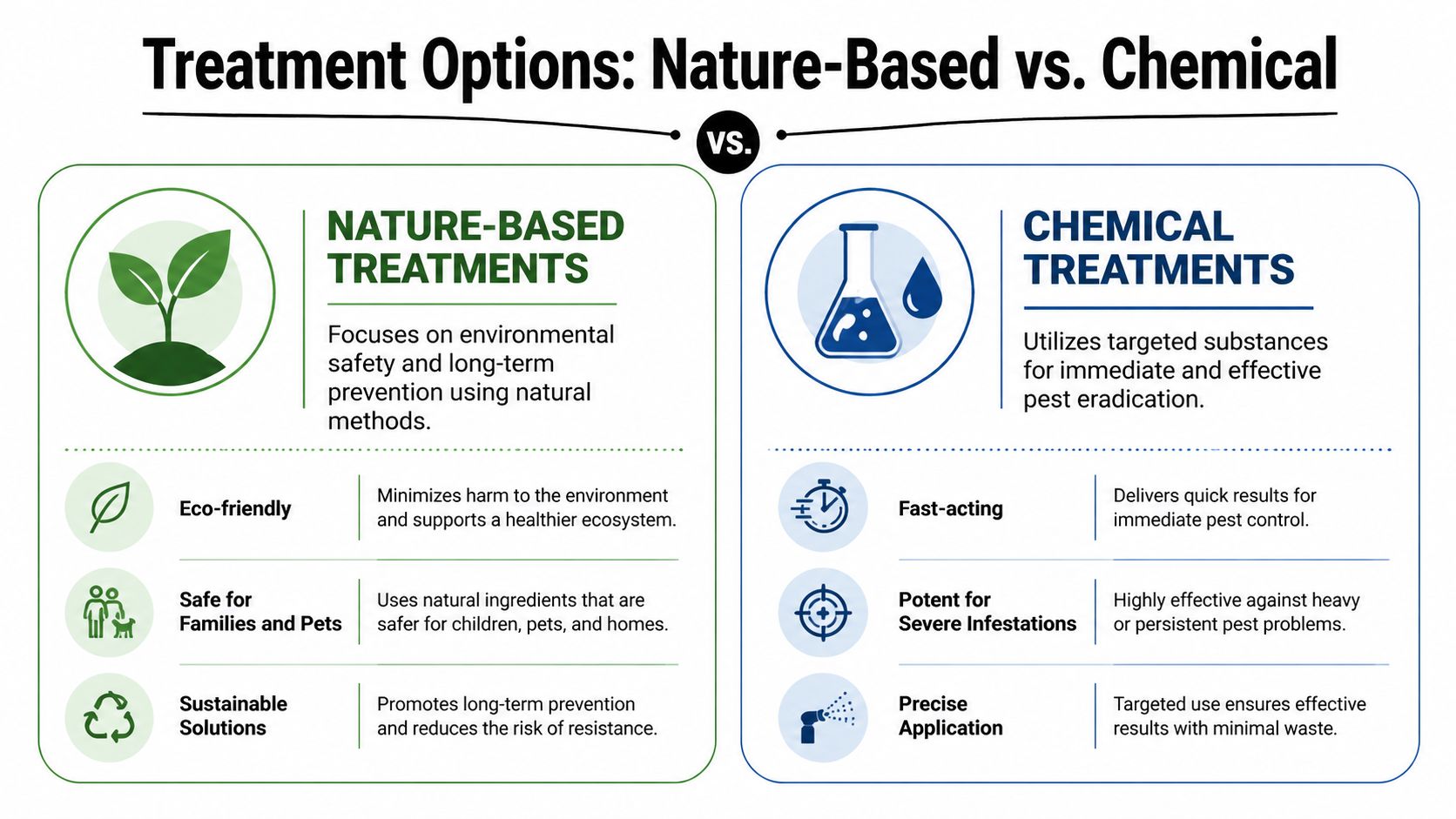
What conventional chemical control does well
Chemical treatments have a place. For severe or fast-moving infestations, a targeted product can reduce active pressure quickly. That's useful when stinging insects are nesting close to a doorway, when roaches are established, or when a colony has to be hit in a specific area.
The downside is that chemical-only service often treats the symptom better than the cause. If moisture, access points, clutter, or harborage stay the same, the pests can cycle back.
Why nature-based IPM holds up better over time
IPM starts with inspection and monitoring. Then it moves into sanitation, sealing, habitat correction, trapping, baiting, and carefully limited product use only where needed. That approach makes sense in Northwest Indiana because so many pest issues start at the edge of the property. Wet mulch, leaf litter, clogged gutters, low spots, and dense plantings all contribute.
If you want a closer look at that style of service, this page on environmentally friendly pest control methods outlines how lower-impact strategies fit into practical home protection.
One local option homeowners use for this kind of work is The Green Advantage, which provides residential pest control, inspections, mosquito reduction programs, and treatments built around nature-based practices in Crown Point and nearby Northwest Indiana communities.
Pest Control Method Comparison
| Feature | Conventional Chemical Control | Nature-Based IPM (The Green Advantage Approach) |
|---|---|---|
| Primary goal | Fast knockdown of active pests | Long-term control through prevention and targeted action |
| First step | Apply product to affected areas | Inspect, identify, monitor, then treat |
| Chemical use | More central to the service | Minimized and used only when needed |
| Best fit | Acute infestations and immediate pressure | Ongoing residential pest control and prevention |
| Risk of rebound | Higher if conditions stay the same | Lower when moisture, access, and harborage are corrected |
| Homeowner role | Usually limited after treatment | Important for sanitation, drainage, and exclusion follow-through |
The smartest home pest control plan usually isn't all-natural or all-chemical. It's selective, measured, and built around the pest's behavior.
How to Choose the Best Pest Control Company Near You
If you're comparing pest control in Crown Point, IN, the easiest mistake is picking the company that promises the fastest spray and the lowest first visit. That's not how you judge long-term value.

Look for a real process, not a generic promise
A quality provider uses IPM, and that matters because it can reduce pesticide use by 50-75% while producing lower pest counts at 3 and 6 months, with 89% of residents in one cited study shifting to lower-toxicity products, according to FieldRoutes' summary of IPM methods and outcomes.
That should shape what you ask during your estimate or inspection call.
Here are the right questions:
- How do you identify the source: If the answer is just "we spray the baseboards," keep looking.
- What does your inspection include: You want interior, exterior, entry points, moisture zones, and nesting conditions.
- How do you handle prevention: Good service includes exclusion, sanitation advice, and monitoring.
- What happens if activity returns: Clear follow-up policies matter.
- Do you tailor treatment by pest type: Ant control, mosquito control, rodent control, wasp removal, and termite concerns shouldn't all get the same plan.
Favor local knowledge over broad scripts
A provider serving Northwest Indiana should understand how our seasonal swings affect ant movement, spider pressure, mosquito breeding, and rodent entry. Local experience shows up in the details. They notice the wet back corner by the downspout, the flower bed piled too high against the siding, and the garage sweep that doesn't seal anymore.
That kind of judgment is hard to fake. It's one reason many homeowners read through a company's values and service approach before booking. If you want to see what that looks like in practice, review why homeowners choose The Green Advantage for pest control needs.
Use this short checklist before you hire
A reliable exterminator near me search should end with a few hard filters, not guesswork.
- Licensed and insured: Basic, but absolutely essential.
- Clear communication: You should know what they're treating and why.
- Local service area focus: Crown Point and nearby Northwest Indiana homes have different patterns than generic national scripts assume.
- Written scope of service: You need to know if the plan covers one-time work, recurring prevention, or both.
- Practical prevention advice: The company should help you reduce future activity, not just sell the visit.
A pest control company earns trust by explaining why a treatment fits your home, not by pushing the largest package first.
What to Expect When You Work With The Green Advantage
A good service visit should feel organized from the first phone call. You shouldn't be left guessing what the technician will do, whether you need to move furniture, or how long results will take.

Before the visit
Be ready to describe what you've seen, where you saw it, and when activity is worst. That helps narrow down the likely pest and the likely entry or nesting zone.
It also helps to do a few simple prep steps:
- Clear access to problem areas: Under sinks, along baseboards, utility rooms, garage edges, and attic access if relevant.
- Reduce clutter where pests hide: Especially in storage rooms, basements, and closets.
- Note moisture issues: Leaks, damp spots, gutter overflow areas, and condensation matter.
- Keep pets and kids away from active work areas: Your technician can give specific guidance for the service being performed.
During and after treatment
Expect a full inspection first, not just immediate spraying. The most useful visits involve identifying the pest, locating likely access points, checking the perimeter, and matching treatment to the actual problem. That may include baiting, dusting, liquid treatment, exclusion recommendations, mosquito reduction steps, or follow-up monitoring.
After service, you should know what was found, what was treated, and what changes at home will help the result last. In practical terms, that often means adjusting drainage, trimming back vegetation, cleaning up leaf litter, repairing screens, sealing gaps, and changing how food or pet items are stored.
The goal is simple. Make the house less available to pests next week, not just less active today.
Frequently Asked Questions About Home Pest Control
Are eco-friendly treatments always safer?
Not automatically. Some homeowners assume "natural" means harmless, but that's too simple. According to University of Florida IFAS guidance on natural pest control options, some essential oils can be toxic to pets, while professional-grade biological controls can be effective and safe when used properly. That's one reason a professional evaluation matters.
Is natural pest control strong enough for a real infestation?
Sometimes yes, sometimes no by itself. For light or moderate pest pressure, prevention, trapping, habitat correction, exclusion, and lower-impact materials can do a lot. For heavier infestations, targeted chemical use may still be the right tool inside a broader IPM plan.
How do I know if I need one-time or ongoing service?
If the issue was isolated and tied to a single event, a one-time service may be enough. If your home has recurring ant activity, seasonal spiders, mosquito pressure, rodent risk, or repeated perimeter issues, ongoing residential pest control usually makes more sense because it keeps the exterior conditions from rebuilding pest pressure.
What pests should Crown Point homeowners take most seriously?
Any pest can become disruptive if ignored, but hidden pests deserve the quickest response. Rodents, termites, bed bugs, and stinging insects near entry areas move into the urgent category faster than an occasional spider or a few stray ants.
What's the best first step if I'm unsure?
Start with an inspection. That's the fastest way to separate a nuisance from a structural or recurring problem. It also keeps you from spending money on products that don't match the pest.
If you're looking for practical, local help with pest control in Crown Point, IN, the next step is simple. Contact The Green Advantage to schedule a pest inspection, request a quote, and get a treatment plan built for your home, your family, and the conditions that drive pest problems in Northwest Indiana.
Tick and Mosquito Control for Crown Point, IN Homes

A lot of Crown Point homeowners reach the same point every summer. The patio is clean, the grill is ready, the kids want to stay outside longer, and then the mosquitoes show up. If you back up to the edge of the lawn, brush past tall grass, or let the dog run near the tree line, ticks become part of the worry too.
That frustration is real in Northwest Indiana. These pests don't just interrupt a nice evening. They change how people use their own property.
At The Green Advantage, tick and mosquito control starts with that simple goal. Help you enjoy your yard again without second-guessing every bite, every patch of brush, or every damp corner near the house.
Enjoy Your Crown Point Yard Without Worry
A Crown Point backyard should feel like an extension of the home. It should be where family dinners run late, where dogs sprawl near the patio, and where guests don't spend the whole evening swatting at their legs and ankles.
Many homeowners start with the same idea. They'll add better seating, improve the lighting, maybe even create the ultimate backyard sanctuary with an outdoor kitchen or gathering area. Then reality hits. If mosquitoes are breeding around the property or ticks are waiting in shaded edges and leaf litter, that outdoor space doesn't get used the way it should.
This isn't a small issue. Vector-borne diseases transmitted by mosquitoes and ticks account for more than 17% of all infectious diseases and cause over 700,000 deaths annually, according to the World Health Organization fact sheet on vector-borne diseases.
What local homeowners usually notice first
In Crown Point and nearby Northwest Indiana neighborhoods, the first signs are often easy to dismiss:
- Evening bites near patios: Mosquito activity spikes when people are finally trying to relax outside.
- Pets bringing the problem closer: Dogs move through grass, mulch beds, and fence lines that people don't think of as risk areas.
- A yard that feels off-limits: Families start cutting outdoor time short, especially in late spring, summer, and early fall.
Practical rule: If your family changes its routine to avoid parts of the yard, the pest issue is already affecting quality of life.
The local part matters. Yards in this area often combine open lawn with wooded edges, ornamental plantings, low drainage spots, and shaded mulch beds. That's exactly the kind of mix that can support both mosquito breeding and tick activity.
Peace of mind comes from a plan
Homeowners don't need more generic internet advice. They need practical guidance that fits Northwest Indiana conditions. That's where a local approach helps. The right tick and mosquito control plan doesn't start with overapplying product. It starts with identifying what on the property is supporting the pests.
Some homes need aggressive standing-water reduction. Some need habitat correction along the back fence. Some need a treatment plan built around family use, pets, and regular outdoor traffic.
The good news is that these problems are manageable. With the right mix of prevention, targeted treatment, and follow-up, a yard can become usable again.
Northwest Indiana's Unwanted Summer Guests
Ticks and mosquitoes don't show up by accident. In Crown Point and surrounding Northwest Indiana communities, they follow the same patterns again and again. If you understand where they live and what allows them to build up on a property, the problem gets much easier to solve.
Where mosquitoes gain ground
Mosquitoes need water. Not a pond-sized amount. Just enough standing water to stay in place long enough for breeding.
In Northwest Indiana yards, the usual trouble spots include clogged gutters, low spots that hold rainwater, kiddie toys, buckets, plant saucers, corrugated drain extensions, and neglected edges near sheds or fences. One wet week can change a quiet yard into a mosquito-producing property.
Shaded resting areas matter too. Even when mosquitoes breed elsewhere, they often settle into cool, protected zones during the day. Dense shrubs, overgrown foundation plantings, under-deck spaces, and damp corners around the home give them shelter until people come outside.
Where ticks wait
Ticks operate differently. They don't breed in standing water, and they don't fly in from nowhere. They build pressure where habitat supports them and where animal hosts move through consistently.
In this region, the most common risk areas are:
- Wooded borders: Especially where lawn meets brush
- Leaf litter: A major shelter zone for immature ticks
- Tall grass and unmanaged edges: Places where ticks can wait for passing hosts
- Pet routes and wildlife paths: Repeated travel corridors matter
- Mulch beds with heavy shade: These often stay cooler and moister than open lawn
The challenge for homeowners is that a property can look neat from the patio and still have serious activity at the perimeter.
Ticks don't need your whole yard. They only need enough protected habitat near the spaces your family and pets use.
Why this has become harder to ignore
This is not just a nuisance trend. In the United States, there were an estimated 640,000 cases of diseases in humans transmitted by mosquito, tick, and flea bites from 2004 to 2016, and that marked a 3-fold increase over prior periods. Ticks account for about 90% of those bite-related diseases according to the CDC publication on vector-borne disease trends.
That aligns with what property owners feel on the ground. Tick concerns have become part of everyday yard planning, especially for homes with dogs, children, wooded lots, or neighboring undeveloped areas.
The seasonal pattern in Crown Point
Most homeowners notice mosquitoes first because they're obvious. You hear them, feel them, and react immediately. Tick pressure is quieter. It often becomes clear after someone finds one on clothing, on a pet, or attached after time near the edge of the lawn.
A typical Crown Point property sees risk build when these conditions line up:
- Spring growth starts fast and yard edges thicken.
- Rain leaves water behind in containers and low spots.
- Summer shade deepens under shrubs and decks.
- Outdoor activity increases right when pests are most active.
Why one-size-fits-all advice falls short
National articles tend to say the same things. Dump water. Mow grass. Use repellent. That's not wrong, but it doesn't diagnose the actual source of activity on a specific property.
A Northwest Indiana yard may have drainage issues on one side, deer traffic in the rear easement, and thick shade by the patio. Another may have almost no tick habitat but major mosquito pressure from hidden water collection. Those are different problems. They require different control decisions.
That's why effective tick and mosquito control begins with understanding the environment correctly, not just reacting to bites.
Your First Line of Defense Integrated Pest Prevention
Most yards improve when homeowners handle the basics well. Prevention won't replace a full treatment plan when pressure is already high, but it does remove the conditions that let ticks and mosquitoes keep coming back.
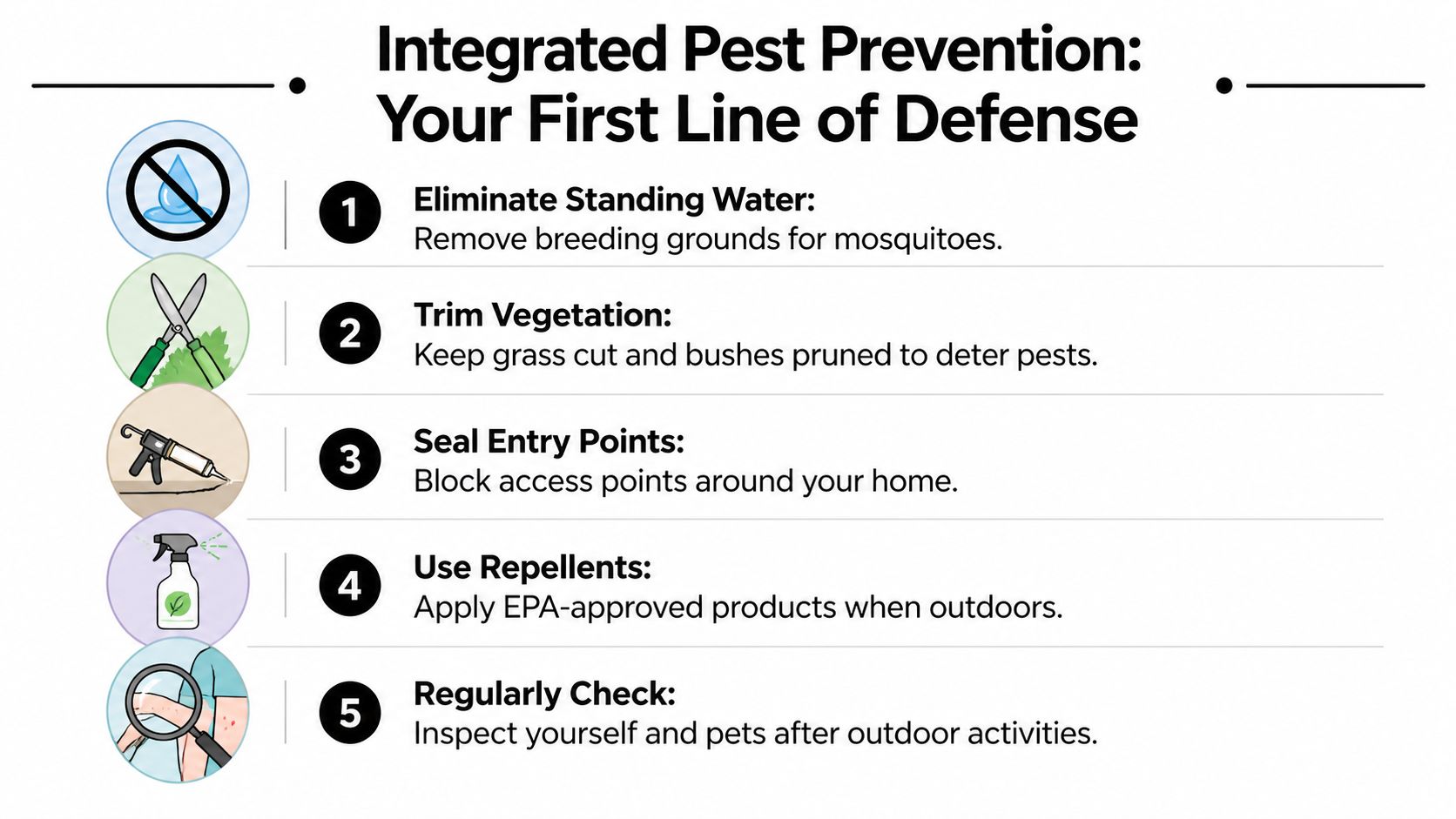
Start with the landscape
The fastest way to make a yard less welcoming is to reduce shelter. That means mowing consistently, trimming back overgrown edges, and opening up areas that stay damp and shaded for too long.
Leaf litter deserves special attention. Homeowners often focus on the lawn and ignore the back edge, fence line, and wooded transition zones. That's where ticks hold.
A cleaner edge changes how the whole property functions. It reduces hiding places, interrupts animal movement, and makes inspections easier.
Remove mosquito breeding sites
If you're serious about mosquito reduction, walk the property after rain. Not during a dry week. After rain.
Look for anything that catches and keeps water:
- Containers and toys: Flip them over or store them inside.
- Gutters and downspouts: Keep them flowing so water doesn't pool.
- Low spots in the yard: Fill or correct them when possible.
- Tarps and covers: Tighten them so they don't sag and collect water.
- Decorative items: Check planters, birdbaths, and outdoor storage areas.
For homeowners who want a more complete, structured approach, this is the same logic used in integrated pest management. The goal is to reduce pest pressure before treatment is even applied.
A yard with untreated breeding sites will keep recreating the problem, even if you spray it.
Protect people and pets during daily use
Personal protection still matters, especially in yards with wooded edges or heavy summer mosquito activity. EPA-registered repellents can reduce bite risk. Verified guidance includes repellents with 20% to 50% DEET and permethrin applied to clothing, as noted in the earlier CDC-backed guidance.
That doesn't mean homeowners need to live in protective gear. It means using common sense during high-risk times, especially around dusk, after mowing near brushy zones, or after kids and pets spend time near the perimeter.
A few habits help right away:
- Check after outdoor time: Inspect ankles, socks, waistbands, and pets.
- Stay alert near transitions: Lawn-to-woods edges are where many tick encounters begin.
- Keep play areas visible: Open, dry spaces are easier to monitor and maintain.
Prevention works best when it's specific
Some DIY prevention steps are worth doing every season. Others only matter if your property has a certain risk profile. A home with thick ornamental shrubs by the patio may need pruning more than drainage work. A home with rear tree cover may need leaf litter and wildlife-path attention more than anything else.
Homeowners often get better results when they stop thinking in terms of one big pest problem and start thinking in terms of micro-areas on the property. Back gate. Under deck. AC pad. Fence line. Drainage swale. Dog run.
Those are the places where prevention either works or fails.
DIY Treatments vs Professional Services
DIY products are appealing for one reason. They're easy to buy. You can walk into a store, grab a fogger, hose-end spray, or yard granule, and feel like you're taking action the same day.
Sometimes that helps temporarily. Often it doesn't solve much.
Where DIY usually falls short
The biggest problem with store-bought tick and mosquito control is coverage. Homeowners tend to treat visible areas and miss the places that matter most. Mosquitoes breed in hidden water. Ticks hold in leaf litter, brush edges, rodent harborages, and shaded transition zones that aren't obvious unless you know what to look for.
Another issue is timing. A product may be applied after mosquito numbers are already high or after tick activity has already moved deeper into the property. By then, homeowners are reacting instead of controlling the source.
There is also a planning gap that many families don't realize exists. Mosquito control is often supported by publicly funded community programs, but tick control largely falls to private efforts with minimal public infrastructure support, according to the research on mosquito and tick abatement program differences. In practical terms, that means homeowners often need to address tick pressure on their own property in a much more deliberate way.
The decision becomes clearer when you compare them side by side
| Factor | DIY Store-Bought Products | The Green Advantage Professional Service |
|---|---|---|
| Property assessment | Usually based on guesswork and label instructions | Starts with site-specific inspection of habitat, moisture, shade, edges, and activity zones |
| Treatment targeting | Often broad and inconsistent | Applied to the areas that are actually sustaining the pests |
| Root-cause control | May knock down visible activity without fixing breeding or harborage issues | Built around source reduction, habitat pressure, and treatment timing |
| Safety management | Homeowner is responsible for reading, mixing, storing, and applying correctly | Licensed technicians handle selection and application according to label and site conditions |
| Tick strategy | Often limited to general yard spraying | Can incorporate more focused yard-level approaches, including guidance like yard flea and tick control options where site conditions call for it |
| Follow-up | Usually starts over from scratch if the first attempt underperforms | Adjustments can be made based on the property's response and seasonal conditions |
What works and what doesn't
DIY can make sense for very low-pressure properties or for minor short-term relief before an outdoor event. It can also support a larger plan when the homeowner is disciplined about cleanup, drainage, and vegetation management.
What usually doesn't work is relying on one retail product to solve a mixed tick and mosquito problem across an entire yard. That's especially true in Crown Point properties with wooded edges, pets, or recurring water issues.
If the problem returns right after a treatment window, the product probably didn't fail by itself. The property conditions were still feeding the infestation.
Why professional service is different
A professional approach isn't just stronger product. It's better diagnosis, better placement, and better sequencing.
That matters because tick and mosquito control isn't one problem. It's several smaller problems happening at once. Adults may be active near the patio while mosquito breeding continues behind the shed. Tick pressure may be concentrated along a back fence while the front lawn has almost none.
Professional service is built to separate those zones and respond accordingly. That's what homeowners are really paying for. Not just application, but judgment.
How Professional Treatments Create a Safer Outdoor Space
Professional tick and mosquito control works best when it matches the biology of the pests instead of just chasing visible activity. That means stopping mosquitoes where they develop, reducing adult pressure where people spend time, and treating tick habitat where contact is most likely.

Mosquito control starts before they fly
One of the most important trade-offs in mosquito work is this. Adult mosquito spraying may give quick relief, but source control is what changes the population on the property.
Verified guidance shows that effective mosquito integrated pest management prioritizes larviciding over adulticiding, using products such as Bacillus thuringiensis israelensis (Bti) to target aquatic immature mosquitoes. This approach can achieve 95% to 100% larval mortality in breeding sites and is considered safe for pollinators, according to the Pollinator Partnership guidance on mosquito control.
That matters in real yards. If a property keeps holding water in overlooked spots, adult mosquito pressure will keep rebuilding. Larvicide-focused work interrupts the cycle earlier.
Tick control requires placement, not just product
Tick treatments fail when they're applied like a lawn cosmetic service. Ticks don't use the property evenly. They cluster where moisture, shade, cover, and host movement overlap.
A technician who understands environmental structure will pay attention to:
- Perimeter transitions: Where turf meets brush or woods
- Leaf litter bands: Often ignored, often critical
- Under-deck and fence-line zones: Protected, shaded, and undisturbed
- Pet travel corridors: Repeated exposure areas
- Wildlife access points: Places where deer and smaller hosts move through
For some properties, a seasonal service plan makes sense. For others, a one-time event treatment is enough to lower immediate mosquito pressure before guests arrive. The Green Advantage offers both mosquito reduction options as part of its service mix for Northwest Indiana properties.
Good treatment plans respect trade-offs
Not every homeowner wants the same thing. Some want the strongest possible knockdown. Others care about minimizing impact on beneficial insects and avoiding unnecessary broad treatment. A good plan should account for that.
That doesn't mean choosing between "natural" and "effective" as if those are the only options. It means combining habitat correction, targeted product selection, and careful placement so that each part of the plan has a purpose.
Here's a helpful look at the kind of yard conditions that often drive treatment decisions:
Why lawn and landscape knowledge matters
A company with outdoor-care roots reads a property differently. Drainage patterns, turf density, shade retention, ornamental overgrowth, and seasonal growth habits all influence where mosquitoes and ticks gain an advantage.
That's especially useful in Crown Point and nearby Northwest Indiana neighborhoods where one side of a yard may dry out quickly while the other side stays shaded and damp. Generic treatment doesn't account for that. Site-aware treatment does.
The safest effective application is usually the one that goes only where it's needed, at the time it's needed, for the reason it's needed.
When a treatment plan is built that way, homeowners usually notice two things. The yard becomes more comfortable to use, and the pest pressure feels less unpredictable.
Your Partnership with The Green Advantage in Crown Point
Hiring pest control shouldn't feel confusing or opaque. Homeowners usually want the same basic things. Clear answers, a practical plan, and confidence that someone understands the property they're treating.
That customer experience matters more now because conditions are shifting. Recent 2025 data indicates a 25% increase in tick encounters in Indiana due to warmer springs, increasing the need for adaptive control strategies that combine natural and synthetic protocols to reach over 90% efficacy, based on the 2025 extension guidance on tick and mosquito habitats. Since that source is future-dated, it's best understood as a recent reported trend cited in that guidance.
What the process feels like
The first step is usually a conversation, not a sales pitch. A homeowner calls with a concern that sounds familiar. Mosquitoes around the patio. Ticks on the dog. A yard that looks fine from the house but doesn't feel comfortable to use.
From there, the focus should be on specifics. Where do you spend time outside? Is the lot open or wooded? Are there drainage issues after rain? Do pets run a fence line or cut through a back corner repeatedly?
Those details shape the plan.

What good communication looks like
A local service relationship works better when the customer knows what is being treated and why. That means plain language, realistic expectations, and clear scheduling.
Homeowners should expect guidance on things like:
- Activity zones: Which parts of the yard are driving the issue
- Preparation steps: Whether anything needs to be moved, cleared, or avoided temporarily
- Seasonal expectations: Why some periods require more attention than others
- Follow-through: What to watch for after service and when to check back in
Why local knowledge changes the outcome
Crown Point and nearby Northwest Indiana properties aren't all the same, but they do share common patterns. Wet stretches, tree lines, suburban wildlife movement, and mixed-use yards all affect pest pressure.
A local provider sees those patterns repeatedly. That means less time guessing and more time reading the property correctly from the start.
Homeowners don't need a canned program. They need someone who can look at one backyard in Crown Point and understand why the rear edge behaves differently from the side yard.
That kind of partnership is what removes uncertainty. You know who you're talking to, you know what the plan is, and you know the recommendations fit the property rather than a script.
Take Back Your Yard Today
Ticks and mosquitoes change how people live at home. They push families indoors, make pets more vulnerable, and turn a comfortable yard into a place people avoid. In Crown Point and across Northwest Indiana, that problem is common, but it isn't something you have to accept.
The right tick and mosquito control plan is practical. It starts with habitat reduction, addresses key pressure points on the property, and uses treatment methods that fit how the yard is used. That's how outdoor spaces become usable again.
If you've tried DIY sprays, cleanup efforts, or one-off fixes and the pests keep returning, the issue usually isn't effort. It's that the source of activity hasn't been fully identified or treated in the right way.
For homeowners looking for pest control near me, pest control in Crown Point, IN, or an exterminator near me who understands local yard conditions, this is the moment to act before the next stretch of warm weather brings the problem right back.
A safer, more comfortable yard is possible. It just takes a plan that fits Northwest Indiana conditions and follows through.
If you're dealing with mosquitoes around the patio, tick pressure near wooded edges, or seasonal pest problems that keep interrupting life outside, contact The Green Advantage to request a quote and schedule an inspection for your Crown Point property.