
You wipe down the kitchen, turn off the lights, and come back an hour later to find ants crossing the counter again. Or you head into the basement in Crown Point and notice more spider activity than usual along the walls and joists. Most homeowners' first instinct is reasonable: grab a spray, set a few traps, and try to get ahead of it.
Sometimes that works. Sometimes it only pushes the problem around for a week.
That gap is what trips people up with home pest control do it yourself. The store shelf makes everything look simple, but real pest control depends on knowing what you're treating, where it's coming from, and whether the tool in your hand is built for that job. In Northwest Indiana, where seasonal shifts push pests indoors and moisture issues often feed repeat activity, guessing usually costs more time than it saves.
Homeowners in Crown Point don't need scare tactics. They need a practical way to decide what they can handle on their own and what deserves a professional inspection. A good starting point is a simple pest control inspection checklist for homeowners, especially before you spray anything or start moving furniture around.
A Homeowner's First Step in Pest Management
A common pattern looks like this. A homeowner sees a few ants near the sink, buys a fast-kill aerosol, and the visible trail disappears. Then the ants show up by the dishwasher. A few days later they're back near the pantry.
That doesn't mean the homeowner did something wrong. It usually means the treatment addressed the insects that were out in the open, but not the conditions supporting them.
Start with the problem you can see
Most indoor pest issues begin with one of a few triggers:
- Food access: Crumbs under appliances, pet food left out, grease buildup, or unsealed pantry goods.
- Water sources: Leaky supply lines, damp basements, condensation, or wet crawl spaces.
- Shelter and entry: Gaps at doors, utility penetrations, foundation cracks, attic openings, or worn weatherstripping.
Pests don't need much. If they can get in and find moisture, they'll keep testing the same areas.
Practical rule: If you haven't identified the attractant, you probably haven't fixed the infestation.
Think prevention before product
Professional pest control starts with prevention because that's what makes treatment last. In a house, that usually means cleaning up the attractant, drying out the area, and limiting access before you ever reach for a spray bottle.
In Crown Point and nearby Northwest Indiana communities, that often means paying close attention to sump areas, basement corners, garage thresholds, window frames, and exterior utility lines. Those are the places where low-level activity becomes a repeating problem.
A smart first step is simple. Confirm where the pests are active, look for what they're using, and avoid broad applications until you know what you're dealing with. That approach saves effort and reduces unnecessary exposure inside the home.
Identifying Common Pests in Your Northwest Indiana Home
Correct identification matters more than most DIY guides admit. Integrated pest management, or IPM, became the foundation for modern DIY home pest control because it starts with identifying the pest before treatment. The National Pesticide Information Center says DIY work is most effective when it is specific to the particular pest, and it recommends professional help when identification is difficult, special equipment is needed, or a restricted-use pesticide is involved. Only licensed applicators can buy or use those products, according to the National Pesticide Information Center's DIY pest control guidance.
Ants, spiders, and wasps don't respond the same way
Homeowners often lump pests together. That's where treatment goes sideways.
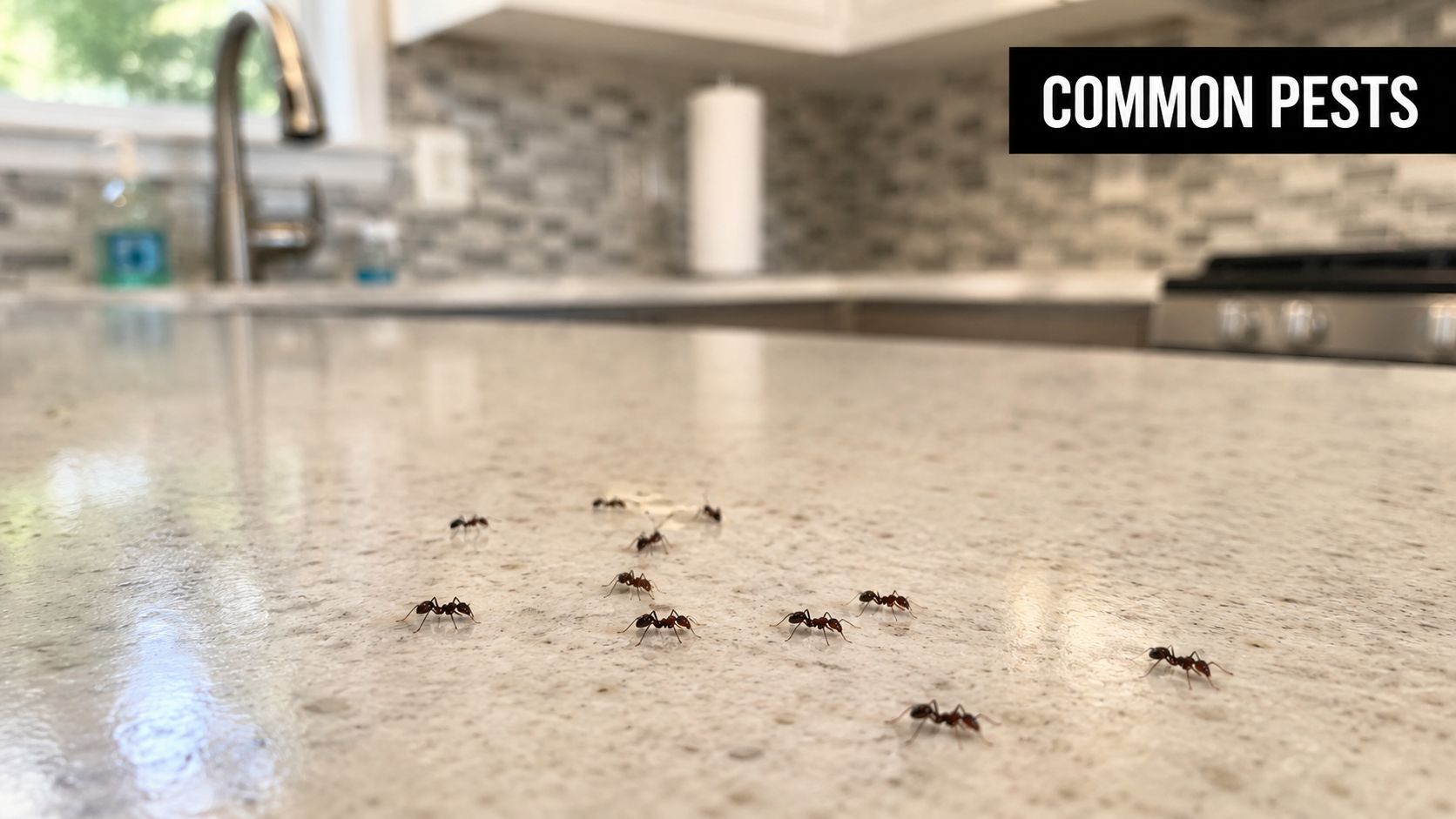
Ants usually leave patterns you can follow. Kitchen trails often point to food or moisture. Pavement and outdoor ant activity may start along foundations, sidewalks, or expansion joints, then move indoors.
Spiders are different. A few spiders in a basement don't always mean an infestation centered on spiders. In many homes, they're there because other insects are there. If you only knock down webs without reducing prey and entry points, the activity tends to return.
Wasps create a separate risk because location matters as much as species. A small nest in an isolated area may be manageable at the right time and with the right safety steps. A nest near a doorway, play area, or roofline calls for more caution.
What to check before you treat
Use a short inspection routine before buying products:
- Look at where the pest is active. Countertop, sill plate, basement wall, eave, attic hatch, or bathroom vanity all suggest different causes.
- Check the time of day. Some pests appear mostly at night. Others become obvious during heat or rain changes.
- Notice the pattern. One isolated sighting isn't the same as repeat sightings in the same route or room.
- Inspect nearby conditions. Leaks, food debris, clutter, cardboard storage, and exterior cracks matter more than many homeowners expect.
If you can't confidently name the pest, don't move straight to treatment. Misidentification is one of the main reasons DIY work fails.
Local clues matter in Northwest Indiana
Homes in Crown Point and the surrounding area deal with changing moisture levels, seasonal transitions, and a mix of finished and unfinished spaces. Basements, garages, and exterior perimeters deserve extra attention because they're common staging points before pests spread deeper into the home.
Accurate ID doesn't need to be fancy. It just needs to be honest. If you know what it is, you can choose the right response. If you don't, a quick inspection beats repeated trial and error.
Evaluating DIY Treatments and Eco-Friendly Options
A homeowner in Crown Point might see a trail of ants in the kitchen, grab a spray from the garage, and get fast relief for a day or two. Then the ants show up again along the same edge. That is the part DIY work often misses. The visible insects are only part of the problem, and the right product still fails if it is used in the wrong place or for the wrong pest.
What common DIY products do well, and where they fall short
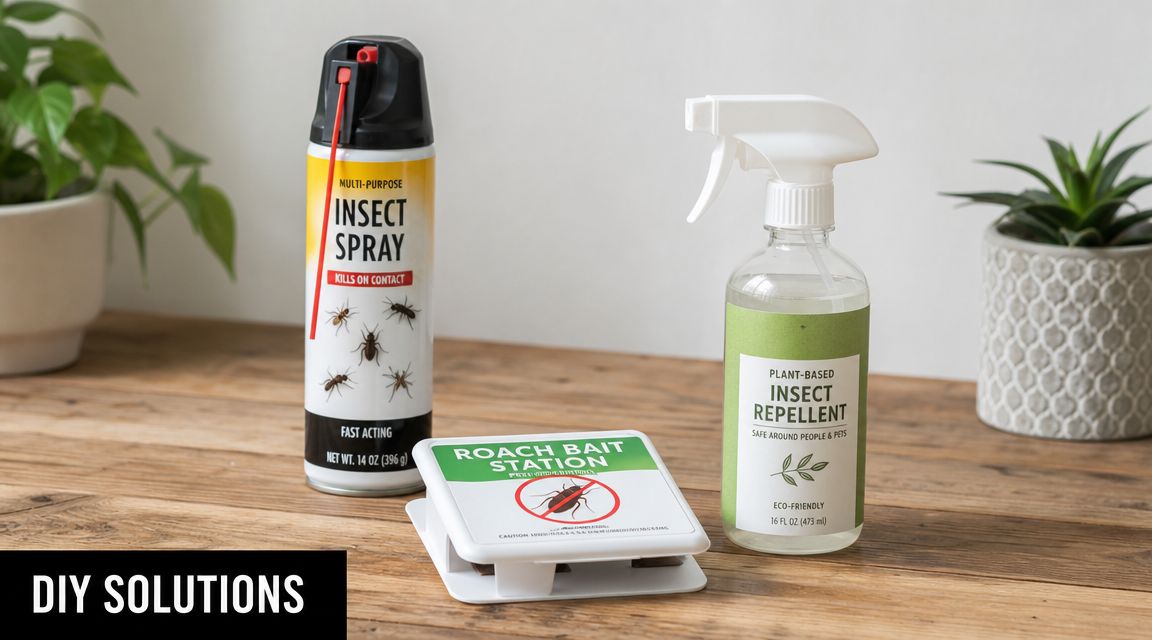
Aerosol sprays are for quick knockdown. They can help with the insects you can see on contact, but they usually do very little for pests tucked into wall voids, under insulation, behind cabinets, or down in a nesting site.
Baits are often a better choice for ants, some roaches, and other foraging pests. Placement matters. So does patience. If bait is set where pests are not feeding, or if a repellent spray is applied over the same area, the result is usually weaker control and a longer problem.
Glue boards and snap traps are useful diagnostic tools. I use them to confirm travel routes and pressure levels because they show whether activity is random or repeating. What they do not do is solve the reason pests are there in the first place.
Outdoor treatments can help reduce entry pressure around the foundation, doors, utility penetrations, and lower siding. They also break down faster outside than many homeowners expect because sun, rain, and irrigation wear residues down. That is one reason random spot treatment around the yard rarely gives steady results.
A visual example helps show how that perimeter mindset is supposed to work:
Natural repellents have a place, but the job has to fit the product
Lower-toxicity options make sense in many homes, especially with small children, pets, or sensitive treatment areas. The trade-off is usually shorter residual life and a narrower range of results.
The University of Florida explains that some essential oils may repel pests such as ants or spiders for a limited time, but they do not replace removal of food sources, moisture, or entry points. That is the practical limit many homeowners run into with natural pest repellents and their limits. Repellency is not the same thing as control.
That same approach applies outside the house. Reducing pest pressure often starts with cleaner edges, less cover, and fewer damp hiding spots. Yard maintenance choices matter, and eco-friendly weed control methods can support that goal without adding unnecessary chemical use around the property.
Safety has to come before convenience
Homeowners get into trouble when they treat too broadly, mix products, or apply more than the label allows. Food-contact areas, pet zones, and low baseboard lines need extra caution because that is where exposure happens.
A few rules hold up in almost every house:
- Treat only the areas listed on the label. Indoor crack-and-crevice treatment is different from broad surface spraying.
- Keep products away from dishes, prep areas, and pet items unless the label specifically allows that use.
- Do not combine products just to get faster results. More chemistry can create more risk without improving control.
- Reapply by label direction, not by frustration.
If you are weighing store products against a safer home plan, home pest control chemicals and safety basics lays out what usually belongs in a careful DIY approach and what should stay in professional hands.
When DIY Pest Control Is Not Enough
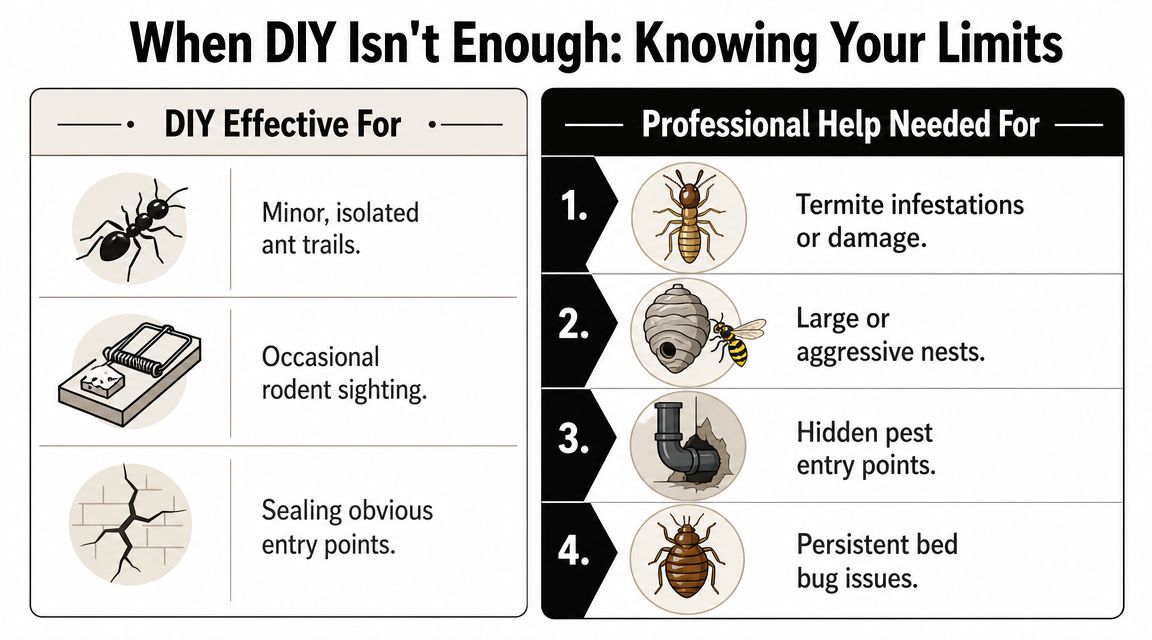
Some pest situations stop being a homeowner project the moment they appear. That's usually because the risk is higher, the source is hidden, or the treatment demands more precision than over-the-counter tools can deliver.
Red flags that should change your plan
A few examples come up all the time in Northwest Indiana homes.
Termite signs deserve immediate attention because the problem is often hidden inside wood or behind finished surfaces. By the time a homeowner sees evidence, the colony may be well established.
Large wasp nests near doors, decks, soffits, or play areas create a direct safety issue. DIY treatment becomes much riskier when nest size, height, or insect aggression increases.
Rodent activity in walls or attics usually means the visible problem is smaller than the actual one. If you hear movement, find droppings repeatedly, or keep catching one rodent at a time without the problem ending, exclusion and deeper inspection matter more than trap count.
Persistent bed bug activity is one of the clearest examples of DIY limits. The EPA's do-it-yourself process involves a six-step workflow: identify the problem, develop a plan, keep the infestation from expanding, prepare for treatment, kill the bed bugs, then evaluate and prevent re-infestation. Its interceptor setup uses two nested plastic containers with talcum powder, furniture moved a few inches from walls, and linens kept off the floor. The EPA also advises checking and cleaning interceptors every week and reapplying talcum powder. If bugs are still seen later, the EPA notes that eggs may have hatched or bugs were missed during the first pass, which is why bed bug control often exceeds what most homeowners can manage consistently through the EPA's DIY bed bug control process.
A problem becomes professional-grade when success depends on hidden access points, repeated follow-up, or treatment in places the homeowner can't safely or effectively reach.
DIY vs. Professional Pest Control for Common NWI Issues
| Pest Issue | DIY Approach & Typical Outcome | Professional Approach & Outcome |
|---|---|---|
| Minor ant trail in one area | Cleaning, bait placement, and monitoring may stop isolated activity if the attractant is removed | Inspection confirms source, species pattern, and whether exterior treatment or exclusion is needed |
| Recurring ants in multiple rooms | Surface sprays may kill visible ants but often don't resolve the route or nesting pressure | Targeted treatment and inspection focus on where ants are entering and why they keep returning |
| Large wasp nest near entry | High sting risk, difficult access, and incomplete knockdown are common problems | Safer removal strategy with proper equipment and site-specific treatment |
| Rodents in walls | Traps may catch individual rodents while entry points stay open | Exclusion, monitoring, and targeted removal address the route and the activity together |
| Suspected termites | Store products rarely match the scope of hidden structural infestations | Inspection determines evidence, extent, and the right corrective plan |
| Bed bugs | Detailed prep and follow-up are difficult to maintain, and missed eggs restart the cycle | Thorough inspection, structured treatment, and repeat evaluation improve control |
The decision line is simple
DIY makes sense when the problem is small, visible, and easy to monitor. It stops making sense when the pest can damage the structure, threaten safety, or hide in places that don't forgive mistakes.
That isn't a sales line. It's the practical line.
The Green Advantage Process for a Pest-Free Home
You treat the kitchen ants on Saturday, wipe everything down, and feel like you got ahead of it. By Tuesday, they're back at the sink and now showing up near the pantry too. That's usually the point where trial and error starts costing more time than the pest problem should.
What the service path looks like
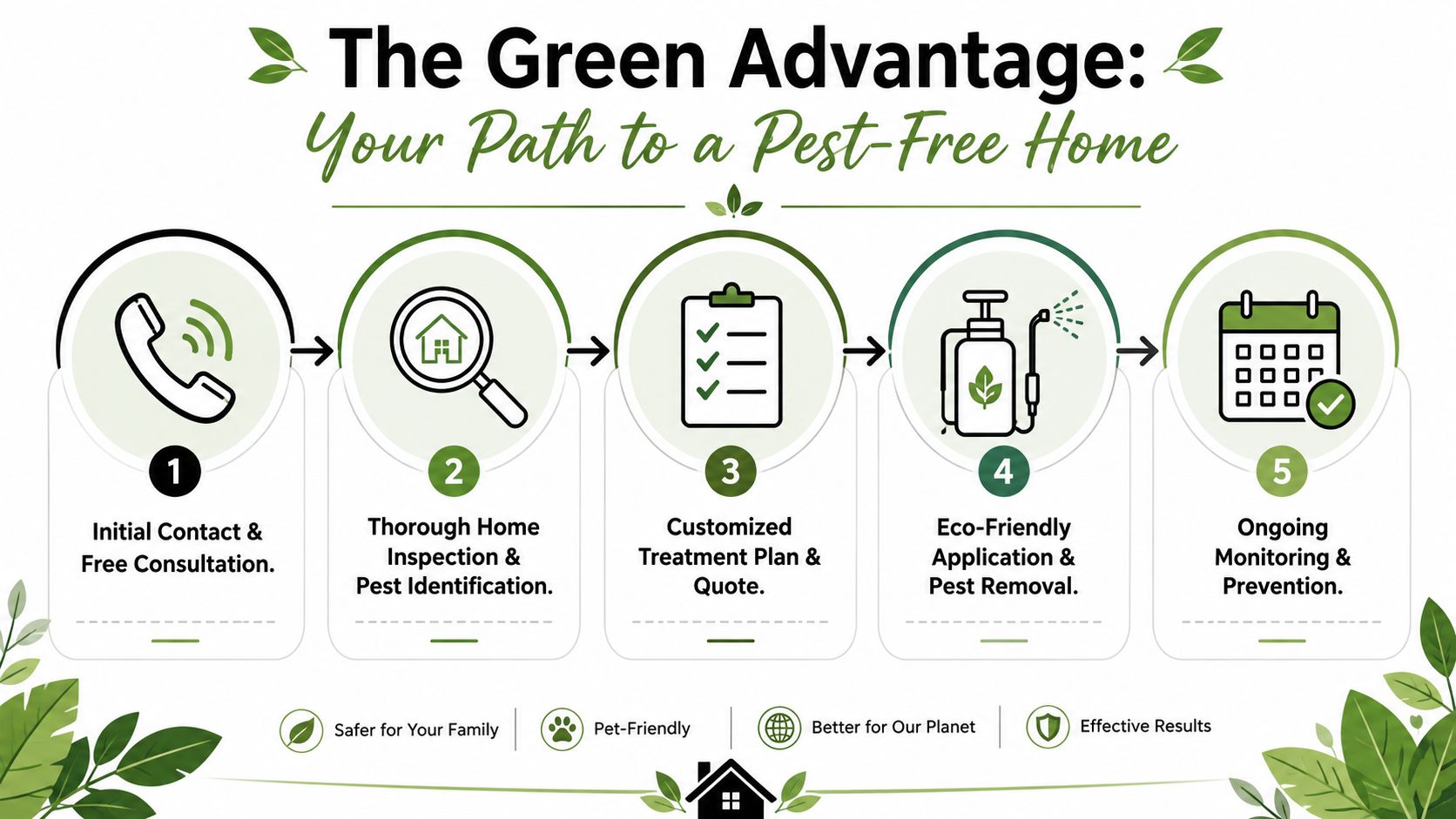
A good service process starts with pattern recognition. Where are the pests showing up, when did it start, and what changed around the home? In Crown Point, I look for the usual local triggers first. Mulch holding moisture near the foundation, gaps at garage doors, cluttered basement storage, pet food left accessible, and exterior lights that pull insects close to entry points.
Then comes the inspection. The point is to find the pressure behind the sightings, not just confirm that bugs exist. That means checking likely entry areas, conditions that support activity, and the outside edges of the property where many infestations begin.
Treatment only makes sense after that.
For one home, the right answer may be a light, targeted interior application with sanitation corrections. For another, it may be exterior treatment, sealing entry points, and a follow-up visit because the pest's life cycle or hiding behavior makes one visit unrealistic. Eco-conscious service fits into that same process. Use the least material needed, place it where it works, and avoid broad applications that add exposure without solving the cause.
Why routine service works better than reactive spraying
Reactive spraying usually follows a sighting. A maintenance program follows pest pressure.
That difference matters in real homes. Rain, sunlight, mowing, irrigation, and seasonal insect movement all affect how long a treatment holds up outside. A homeowner may apply a store product once, get a short drop in activity, and assume the issue is solved. Then the barrier breaks down, the entry point stays open, and the calls start over inside.
Routine service gives the property repeated attention. It catches changes in pressure, adjusts treatment to the season, and gives someone a chance to spot the conditions that keep feeding the problem. That's hard to duplicate with occasional DIY applications, especially if the pest activity shifts from one side of the house to another.
The strongest pest program reduces access, shelter, moisture, and food sources, then backs that up with targeted treatment.
One useful local option for identification and next steps
For homeowners who are still trying to decide whether the problem is manageable or headed in the wrong direction, The Green Advantage provides pest inspections and identification support in Crown Point and nearby Northwest Indiana communities. That kind of visit should answer a few practical questions clearly. What pest are you dealing with? How active is it? Can DIY still work here, or has the problem moved past that point?
A useful service call should leave you with a plan, not a guess.
Schedule Your Pest Inspection in Crown Point Today
Recurring pest problems often lead to searches for pest control near me, exterminator near me, or pest control in Crown Point, IN. At this point, homeowners typically understand that the full cost of DIY isn't just product. It's time, uncertainty, and the frustration of treating the same issue more than once.
Professional residential pest control protects more than comfort. It helps protect food storage areas, wall voids, insulation, trim, entry points, and the general condition of the home. For some properties, the need goes beyond insects and includes rodent control, wasp removal, mosquito control, or a broader preventative pest treatment plan.
For landlords, property managers, and business owners in Northwest Indiana, the same principle applies. Delayed action tends to make pest issues harder to contain, harder to explain to occupants, and harder to resolve cleanly.
If you're in Crown Point, IN or a nearby Northwest Indiana community and want a clear answer on what you're dealing with, schedule an inspection before spending more money on trial-and-error products. A focused inspection can tell you whether your issue is a manageable nuisance, a hidden access problem, or something that needs a more complete treatment plan.
The right next step is simple. Stop guessing. Get the pest identified, get the conditions assessed, and get a plan that fits your home.
If you're ready to move beyond repeated DIY attempts, contact The Green Advantage to schedule a pest inspection or request a quote for your Crown Point home or Northwest Indiana property.