
Rodent Control Prices in Crown Point What to Expect
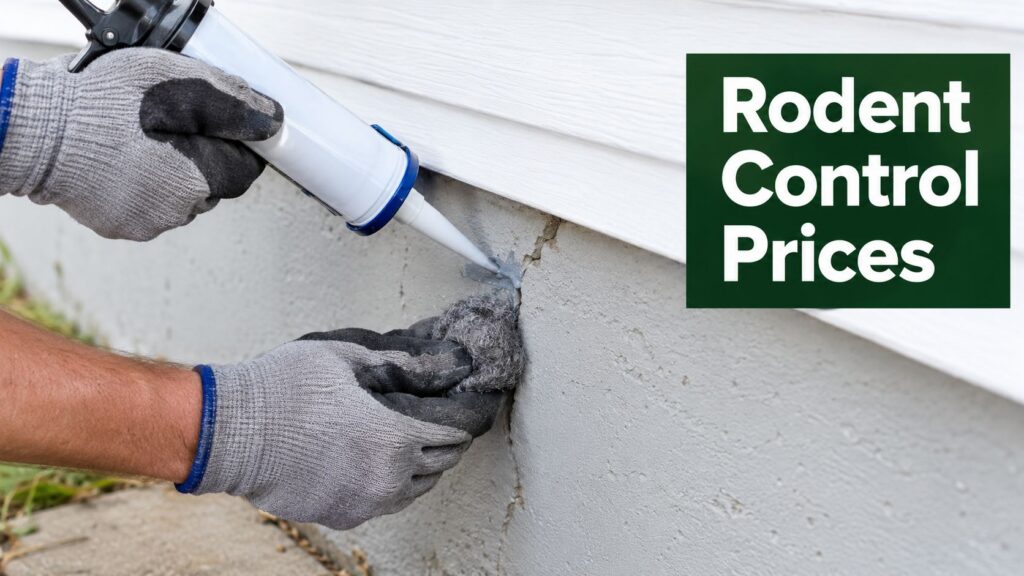
In Crown Point, residential rodent control commonly costs about $150 to $600 per service, while heavier jobs involving exclusion, attic sanitation, or repeated visits can reach $1,000 or more. Commercial rodent control often falls between $500 and $3,000 or more, depending on the facility and monitoring needs.
You may be hearing scratching above the ceiling, finding droppings near the garage, or noticing gnaw marks around stored items. In a Crown Point home, those signs can turn a quiet evening into an urgent search for an exterminator near me. The first quote you receive may cover only trapping or baiting, not the sealing and cleanup needed to keep rodents from returning.
That distinction explains why rodent control prices vary so widely. The Green Advantage serves Crown Point, Indiana, and surrounding Northwest Indiana communities with residential and commercial pest services designed around the actual property, pest, and entry conditions. A clear plan should show what the first visit includes, what may cost extra, and whether follow-up protection is appropriate.
Introduction to Rodent Control Prices in Crown Point IN
Crown Point homeowners may first hear movement above the ceiling after sunset, then find droppings in the garage, shredded insulation, or a gap beside a utility line. Those signs do not determine the final price. They show that removing the rodents may be only the first layer of the job.
Rodent control pricing works like a tiered system. The lowest tier may address visible activity through trapping or baiting. A higher tier adds exclusion, which closes the openings mice or rats use to enter. Full protection can also involve sanitation, minor repairs, and follow-up monitoring. The first quote is therefore a starting point, not always the total cost of solving the problem.
Published 2026 U.S. pricing guides place ordinary residential service in a broad range of $150 to $600 per visit, while more involved work can reach $1,000 or more when technicians must seal several entry points, sanitize an attic, or return for additional service (2026 rodent control pricing guide). Those figures are useful for orientation, but they do not replace an evaluation of the home.
The price tiers homeowners usually encounter
Most jobs fit along this progression:
- Assessment and basic treatment: The technician identifies activity and begins trapping or baiting.
- Removal with exclusion: The service also seals gaps that allow mice or rats to enter.
- Remediation and prevention: Cleanup, repairs, and follow-up monitoring address conditions that could support a return.
- Commercial protection: Larger buildings may need scheduled inspections and documented service.
The appropriate tier depends on the property and the findings. One accessible opening with limited mouse activity is a different job from an older home with several penetrations, difficult attic access, or established rat activity. Rats often require more careful removal and repair planning because their size and strength can affect entry points and damage.
Why local context matters
Crown Point homes may include attached garages, crawlspaces, older construction, and outdoor areas that give rodents several routes toward shelter. Businesses have different cost drivers, such as receiving doors, kitchens, storage areas, and waste zones.
Whether you are comparing rodent control prices, pest control in Crown Point, IN, residential pest control, or commercial pest control, request a written scope of work. It should identify what the first visit covers, which repairs or cleanup are separate, and whether follow-up protection is recommended. Comparing those details gives a clearer answer than choosing the smallest first dollar amount.
Understanding What Rodent Control Services Include
Professional rodent control is easier to understand when you treat the home like a system with a leak. First, someone has to find where water is getting in. Next, the immediate flow must stop. Then the opening needs to be repaired, and the area should be checked afterward to confirm the fix worked.
Rodent service follows the same logic. Inspection locates activity, droppings, nesting signs, and possible entry points. Trapping and removal address the rodents already inside. Exclusion sealing closes vulnerabilities around foundations, vents, doors, pipes, and roofline features. Follow-up monitoring and cleanup help confirm that the solution lasts and that contaminated areas receive appropriate attention.
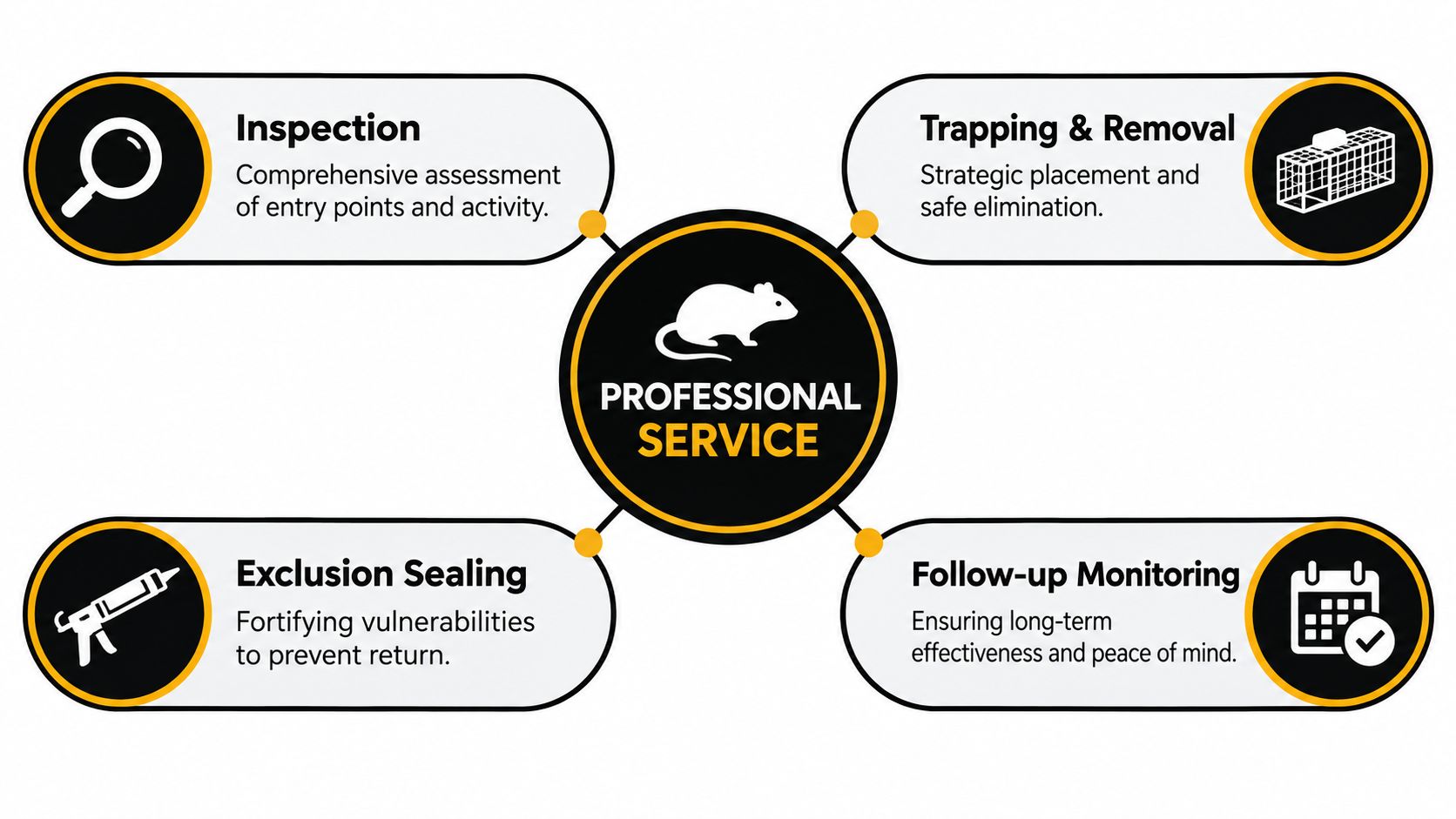
Step one is finding the source
An inspection isn't just a quick look at the room where you saw a mouse. A technician may evaluate the attic, crawlspace, garage, exterior foundation, roofline, vents, and utility penetrations. Inspection charges are sometimes separate from treatment. One 2026 pricing guide lists standard pest inspections at $75 to $200, WDI reports at $75 to $150, and detailed inspections with thermal imaging at $200 to $400 (inspection pricing guide).
Removal and sealing solve different problems
Traps and bait can reduce current activity, but they don't repair the building. Exclusion uses materials and labor to close openings, which is why it often becomes the largest cost milestone. Homeowners considering a complete solution can review rodent exclusion services to understand how sealing fits into the broader treatment plan.
Follow-up turns a visit into a plan
Rodent control has increasingly shifted from one-time baiting toward prevention and maintenance. Published market guidance lists ongoing monitoring at about $50 to $120 per month for residential customers and $100 to $200 per month for commercial accounts (recurring rodent service pricing). A follow-up visit can identify new activity, check repaired areas, and determine whether conditions around the property are attracting rodents.
Cleanup matters, too. Droppings and nesting material may be present in insulation, attic spaces, or crawlspaces. A complete quote should explain whether sanitation is included, recommended, or handled as a separate remediation service.
Breaking Down Typical Rodent Control Prices by Service
A Crown Point homeowner may receive one price for trapping, then a larger recommendation after the technician checks the attic, crawlspace, roofline, and foundation. Rodent control works in tiers. Trapping reduces active animals, exclusion closes the routes they use, and cleanup addresses contamination left behind. The first quote is therefore not always the cost of completing the job.
The table uses published U.S. market ranges for planning, not guaranteed Crown Point prices. Local conditions, access, and the condition of the home determine the final scope.
| Service Component | Typical Price Range | What It Covers |
|---|---|---|
| Inspection | $75 to $200 | Standard assessment of activity and possible entry points |
| Inspection with thermal imaging | $200 to $400 | Detailed inspection methods and reporting |
| Basic trapping and baiting | About $150 to $350 | Initial control for active rodent signs |
| Typical residential rodent service | About $150 to $600 | Common treatment work, depending on scope |
| Exclusion work | About $200 to $1,000 or more | Sealing openings with labor, materials, and access requirements |
| Exclusion by linear foot | About $2 to $8 per foot, with an average near $4 per foot | Mesh and sealing work priced by the amount of vulnerable area |
| Attic or crawlspace cleanup | About $1,000 to $2,500 or more | Sanitation and related remediation for heavily affected spaces |
| Residential monitoring | About $40 to $120 per month | Recurring checks and prevention support |
| Commercial rodent control | About $500 to $3,000 or more | Larger facilities, labor, documentation, and ongoing monitoring |
Older Northwest Indiana homes can shift the price from removal toward exclusion and cleanup. Tight attic openings, low crawlspaces, layered additions, aging vents, and difficult roofline access increase labor. A technician may need more time to locate entry points, install mesh or sealant, and reach insulation or nesting material safely.
The inspection explains what was found. Trapping and baiting address current activity. Exclusion repairs the structure, so it should be evaluated separately from removal. Published guidance describes exclusion by linear foot, with material and sealing costs changing according to the opening's size and type (rodent exclusion cost per linear foot).
Why the first visit isn't always the full job
A basic visit can fit limited activity with accessible entry points. It may exclude insulation removal, contaminated-area cleanup, structural repairs, extensive exterior sealing, or later verification. Published cost guidance separates trapping, exclusion, and attic or crawlspace cleanup into different service components, rather than treating them as one flat charge (rodent control cost components).
That distinction helps explain why the cheapest first quote may not equal the total job cost. A trapping quote is reasonable when it clearly covers trapping only. It becomes confusing when a homeowner assumes it also includes permanent sealing and sanitation.
Practical rule: Compare written scopes of work, not just first-visit totals. Ask whether sealing, cleanup, follow-up visits, and warranty terms are included.
Commercial properties follow a separate pricing model. Warehouses, restaurants, offices, and multi-unit buildings usually have more service areas, storage zones, access points, documentation, and monitoring requirements than a single-family home.
Key Factors That Affect Your Rodent Control Cost
A Crown Point rodent quote increases when the technician must spend more time locating activity, reaching restricted areas, installing exclusion materials, or checking whether the work succeeded. The animal matters, but the home often determines how much labor the solution requires.
Infestation severity and rodent type
A few mouse signs in an accessible area may require less work than activity spread through an attic and wall voids. Published 2026 guidance places initial mouse jobs around $200 to $500 and rat jobs around $300 to $800 or higher (mouse and rat control cost comparison). The key pricing question is whether the visit handles visible activity only or also addresses the conditions allowing it to continue.
Location matters as much as the number of signs. A garage with an obvious access point may be easier to inspect than an attic reached through a tight opening. Insulation, nesting material, and droppings can move the recommendation from removal into cleanup or repair.
Home size, age, and construction
Larger homes may have more roofline transitions, vents, additions, garages, and utility penetrations. Older Crown Point homes can also have worn screens, gaps around pipes, deteriorated mortar, or later modifications that create several routes indoors. Each opening adds inspection time and may call for a different repair material.
A narrow gap might need one sealing material. A larger opening may require mesh, hardware cloth, or structural repair. Exclusion pricing therefore does not rise in a perfectly straight line with square footage. The shape, number, and condition of entry points matter more than size alone.
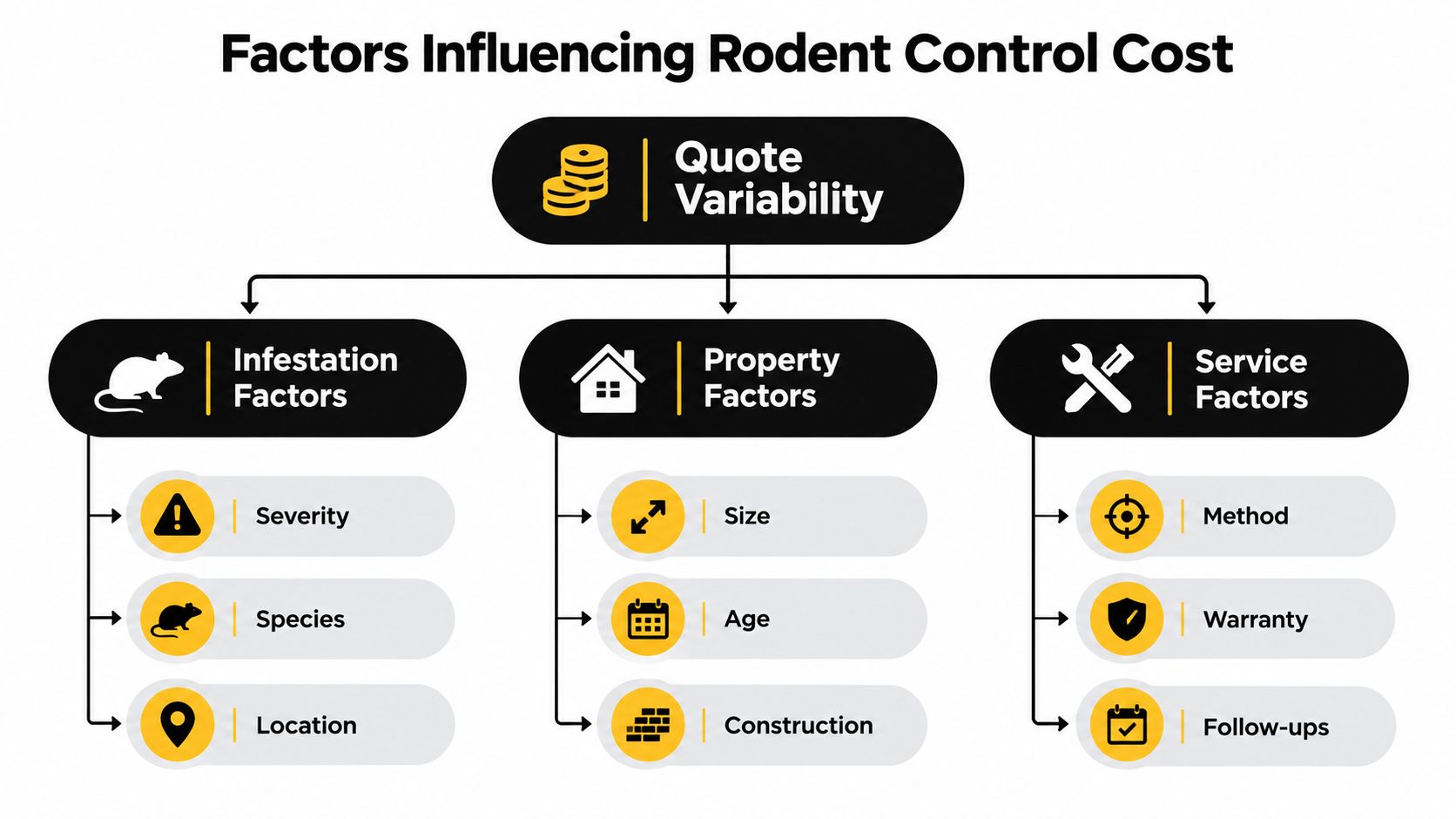
Access, entry points, and repairs
Technicians may need ladders, attic or crawlspace access, and additional exterior inspection time. Restricted access increases labor because the work takes longer and may require added safety precautions. Multiple openings around roof vents, foundation penetrations, doors, and attached structures also increase material and installation time.
Cleanup can place a project in a higher service tier. Rat activity may involve contaminated-area cleanup, insulation replacement, or repairs beyond initial control work. Published guidance describes these costs as separate factors in rodent projects (rat control cost factors).
Before the inspection, list every sign you have noticed, including sounds, odors, droppings, and locations. That information helps The Green Advantage distinguish a narrow treatment from a property-wide exclusion plan, so you can review each recommended line item and its purpose.
Comparing DIY vs Professional and Mice vs Rats Costs
A homeowner may begin with a trap from a hardware store after hearing movement in the attic. That purchase addresses one visible part of the problem. It does not identify every entry point, confirm whether the activity is from mice or rats, monitor results, or repair openings that allow rodents back inside.
Professional service treats the work as a tiered plan. Inspection comes first, followed by trapping or other control, exclusion, and cleanup when conditions require it. This approach costs more at the beginning because labor, materials, documentation, and follow-up are included. DIY can fit a small, clearly limited issue with a safe, accessible entry point, but repeated trap purchases and incomplete sealing can make the lower first cost misleading.
A practical comparison
| Decision | Potential advantage | Common limitation |
|---|---|---|
| DIY traps and sealing | Lower immediate out-of-pocket commitment | Requires time, observation, safe handling, and accurate source identification |
| Professional treatment | One coordinated inspection and treatment plan | Higher initial price because labor, materials, and follow-up are included |
| Mouse-focused service | Often a narrower starting scope | May fail to solve the problem if exclusion is skipped |
| Rat-focused service | Addresses a more demanding pest problem | More likely to require substantial sealing, cleanup, and repairs |
Mice and rats should not share one generic budget category. As noted earlier, rat work commonly starts higher than mouse work because rats can require stronger exclusion, more difficult access, and additional cleanup or repairs. The first trapping quote is only one tier of the total project. A full exclusion plan can cost more, yet it may prevent the repeated service calls that follow when openings remain.
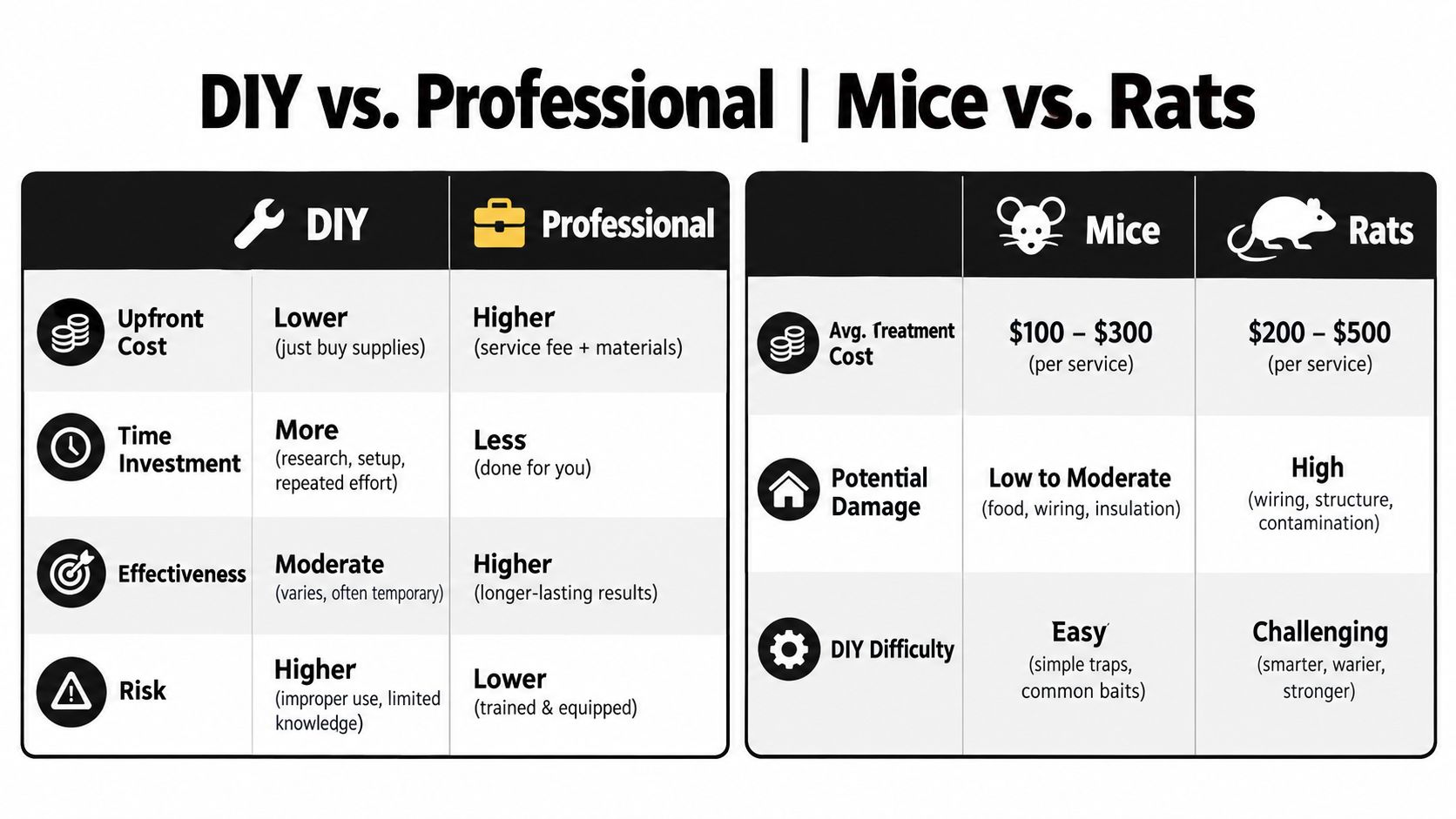
A recurring monitoring plan may suit a Crown Point property with repeated activity or several vulnerabilities. Published residential estimates place monitoring in a monthly service range, with the exact amount depending on visit frequency, property conditions, and what the plan includes (residential monitoring estimates). Its value comes from finding renewed activity early, before a small repair becomes a larger exclusion or cleanup project.
The choice is easier when each quote separates trapping, sealing, cleanup, repairs, and follow-up. Ask The Green Advantage which tier the recommendation covers and what would trigger additional work. This video offers a visual overview of the differences homeowners often weigh when considering rodent treatment options:
Why Professional Rodent Control Protects Your Home and Budget
The cheapest service is the one that solves the actual cause without leaving you to repeat the same purchase and repair cycle. Professional rodent control can protect wiring, insulation, stored belongings, and finished areas by addressing activity before damage spreads. It also gives homeowners a safer process for dealing with droppings and nesting material.
A complete plan supports more than comfort. Rodents can affect indoor hygiene, create odors, damage building materials, and make an attic or crawlspace unpleasant to use. Exclusion also improves the home's defenses against future entry, especially when technicians identify several small vulnerabilities rather than focusing only on the room where signs appeared.
Prevention supports broader property care
The same inspection mindset can reveal conditions connected to other pest concerns. The Green Advantage provides residential pest control, commercial pest control, pest inspections, mosquito reduction, and related services for properties in Crown Point and Northwest Indiana. Homeowners may also need ant control, termite control, spider control, wasp removal, or preventative pest treatments as seasonal conditions change.
Environmentally mindful methods should be adapted to the property and the surrounding local ecosystem. That means using the appropriate control approach, limiting unnecessary treatment, and explaining what residents should do before and after service. For readers comparing pest-management standards more broadly, this guide to trusted UK pest control companies 2026 provides additional context on evaluating providers and service quality.
Professional work also gives you a clearer record of what was inspected, what was sealed, and what still needs attention. That documentation can matter for homeowners preparing to sell, property managers coordinating maintenance, and businesses responsible for keeping their facilities in dependable condition.
What to Expect From The Green Advantage in Crown Point IN
The process should begin with a conversation, not a guess. When you contact The Green Advantage, knowledgeable office staff can gather details about the sounds, droppings, odors, locations, and timing you've observed. Sharing whether the activity is in an attic, garage, crawlspace, kitchen, or commercial area helps the team prepare for the inspection.
A technician then evaluates the property and looks for evidence of current activity and likely entry routes. The recommendation should connect those findings to a practical scope, whether that means trapping, exclusion, sanitation, monitoring, or a combination of services. You should receive a clear explanation of what the quote includes and which conditions could change the final cost.
A straightforward service experience
Expect the visit to follow a sequence like this:
- Listen and document: The team records your concerns and identifies priority areas.
- Inspect the property: The technician checks interior and exterior conditions, including accessible attic, crawlspace, garage, and foundation areas.
- Recommend the treatment: The plan may address active rodents, entry points, cleanup needs, and future monitoring.
- Explain the quote: You can ask which work is included now, what is optional, and what follow-up involves.
- Review results: Follow-up service checks activity and helps confirm that exclusion measures are working.
For homeowners who prefer environmentally mindful options, The Green Advantage also provides eco-friendly rodent control as part of its approach to property-specific pest management. The aim is to restore comfort while keeping you informed throughout the service.
If you're searching for pest control near me, an exterminator in Crown Point, IN, or help with a commercial facility, schedule an inspection before choosing a treatment based only on a low starting quote.
The Green Advantage can inspect your Crown Point home or Northwest Indiana business, explain the rodent control options, and provide a quote based on the actual property and pest activity. Visit The Green Advantage to request an inspection, ask about exclusion and follow-up service, or contact the team today.
Rodent Exclusion Services in Crown Point, IN
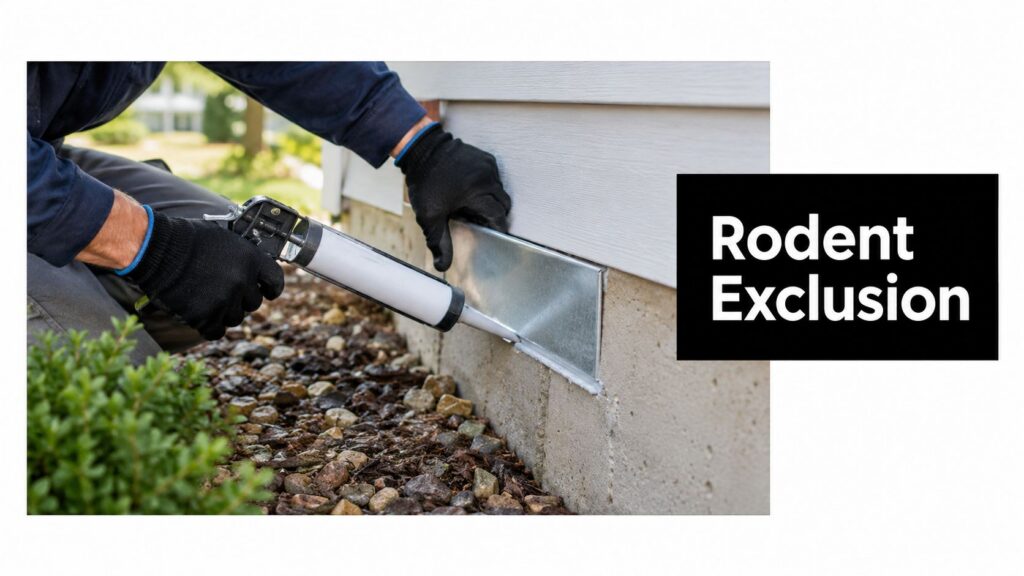
At 2 a.m., a faint scratching sound behind the bedroom wall can make every homeowner in Crown Point sit up and listen. The usual search leads to a small opening behind the dryer vent, a loose section where vinyl siding meets the foundation, or a gap around a utility line. The kitchen crumbs may attract a mouse, but the building envelope is what lets it inside.
That distinction matters. Rodent problems in Northwest Indiana homes often continue because someone places traps without finding the route rodents use to enter. Rodent exclusion services address the structure, the active infestation, and the workmanship needed to keep the problem from returning. The Green Advantage serves Crown Point, IN and surrounding Northwest Indiana communities with residential pest control, commercial pest control, inspections, and rodent control solutions built around that practical approach.
The Quiet Knock in the Wall at Night
A homeowner may first notice the sound near a bedroom, laundry room, or kitchen wall. The noise comes and goes, usually when the house is quiet. Then a flashlight inspection reveals the likely route: a gap behind the dryer vent where the siding meets the foundation.
That opening may look unimportant, but mice don't need much room. The CDC describes a mouse entry hole as about the width of a pencil, approximately 1/4 inch, or 6 millimeters, as summarized in this rodent prevention guidance. A larger gap near a vent can function like an open door.
The problem isn't housekeeping
Rodents can take advantage of food, clutter, warmth, and shelter, but a clean kitchen won't correct a structural opening. Blaming crumbs alone can send a homeowner toward repeated cleaning and bait stations while the same entry route remains open.
A seasoned technician reads the scratching, droppings, gnaw marks, and exterior gap as connected clues. The sound identifies possible activity. The gap identifies a vulnerability. The inspection then looks for the second, third, and less obvious openings that often sit around foundations, vents, garages, roof transitions, and utility penetrations.
Practical rule: Traps address rodents already inside. Exclusion addresses how new rodents get inside.
That doesn't mean trapping has no place. Interior trapping can help clear existing activity, while repairs prevent replacement rodents from following the same route. Objective is to stop treating the symptom as though it were the source.
For Crown Point homeowners, this building-focused view is especially useful across older ranch homes, newer construction, attached garages, basements, and properties with aging masonry. The question isn't, “Where should I put a trap?” It's, “What part of this structure is allowing access, and has anyone verified that the opening is closed?”
What Rodent Exclusion Services Actually Are
Rodent exclusion is a structured inspection and repair service. A technician examines the structure, maps exterior and interior vulnerabilities, seals openings with rodent-resistant materials, addresses conditions that support activity, and checks whether the repair is working.
It isn't a spray treatment, a handful of snap traps in the garage, or a bead of caulk over the first suspicious crack. Those actions may have a limited role, but they don't replace a complete inspection.
The core service sequence
A proper visit usually starts with the perimeter. The technician examines the foundation, siding transitions, doors, vents, roofline, garage, and utility penetrations. Interior areas such as the basement, attic, crawlspace, utility room, and wall-adjacent zones are then checked for signs that help connect an opening to active use.
The repair plan should match the defect. Metal flashing can protect vulnerable edges. Hardware cloth can screen vents and larger openings. Concrete or mortar can restore masonry. Exterior sealant can finish irregular joints when it has a suitable backing and is applied to a stable surface.
Structural IPM guidance recommends sealing exterior openings around 1/4 inch or larger and using 1/4-inch hardware cloth, sheet metal, mortar, or similar rodent-resistant materials for larger openings. The National Park Service rodent exclusion manual also discusses backer rods and exterior sealant for irregular gaps.
Existing rodents still need attention. Depending on the findings, technicians may use interior and exterior traps, monitor activity zones, and remove or clean affected materials when appropriate. Sealing a structure without considering animals already inside can leave scratching, odor, and damage unresolved.
For a broader look at how exclusion work can intersect with building repairs, this resource on pest exclusion for hunting cabins is useful because it treats pest access as part of the structure rather than an isolated pest event.
Why local construction changes the inspection
Crown Point properties don't all fail in the same places. An older home may have deteriorated mortar or a worn sill area. New construction may have openings around recent utility work, vents, siding, or garage details. A generic treatment plan can miss those differences.
The technician's job is therefore diagnostic. The sealant tube is only one tool. The quality of the result depends on finding the defect, choosing a material rodents can't defeat, installing it cleanly, and verifying the work afterward.
How a Crown Point Inspection and Sealing Visit Works
A good exclusion appointment should feel organized before anyone begins making repairs. The technician needs a clear history of what you've heard, where you've found droppings, whether activity changes with weather, and which areas are accessible.
Stage one, intake and perimeter review
During the initial conversation, note the room where activity is strongest, the time of day sounds occur, visible damage, and any previous rodent control. On site, the technician walks the full exterior rather than going straight to the most obvious hole.
The perimeter review should include:
- Foundation openings and cracks, including gaps large enough to permit access.
- Utility penetrations for cables, plumbing, gas, and HVAC lines.
- Dryer and bath vents, including missing or damaged screening.
- Garage door weather seals and corners where the slab meets the wall.
- Transitions between siding, masonry, foundation walls, soffits, and fascia.
- Roof-to-fascia areas where construction materials meet.
A dime-sized opening can be relevant, but the inspection shouldn't rely on a single visual threshold. Rodent signs, sheltered locations, gnawing, and access to warm interior spaces help determine which defects deserve priority.
Stage two, interior inspection
Inside the home, droppings patterns can show travel routes. Grease or run marks may appear along sill plates and wall edges. Gnaw marks on wiring deserve prompt attention because they can indicate both activity and a property hazard.
Basements receive special attention around the ceiling where HVAC lines and other utilities pass through. Attics need review around roof penetrations, vents, insulation edges, and framing transitions. A technician may also compare interior signs with exterior openings to determine whether the suspected route is active.
Stage three, proofing and documentation
The repair day should prioritize openings that connect directly to active areas or expose the home to repeated entry. Expanding foam alone is usually a temporary fix because rodents can chew through it. Foam may serve as a backing or part of a properly finished repair, but it shouldn't be treated as the primary gnaw barrier.
Metal mesh, hardware cloth, flashing, mortar, and concrete repairs are selected according to the opening and substrate. The technician should photograph or record completed work, identify any inaccessible defects, and explain what remains open and why.
The rodent exclusion service offered by The Green Advantage provides a useful reference point for homeowners comparing inspection and proofing options. Follow-up verification matters because a building can look sealed while hidden or missed defects remain. The 2026 New Jersey field study found that 46% to 92% of selected apartments still showed incomplete exclusion after contracted work, demonstrating why diagnosis, workmanship, and verification belong in the same service plan (study details).
Professional Proofing Versus DIY Seal-Up
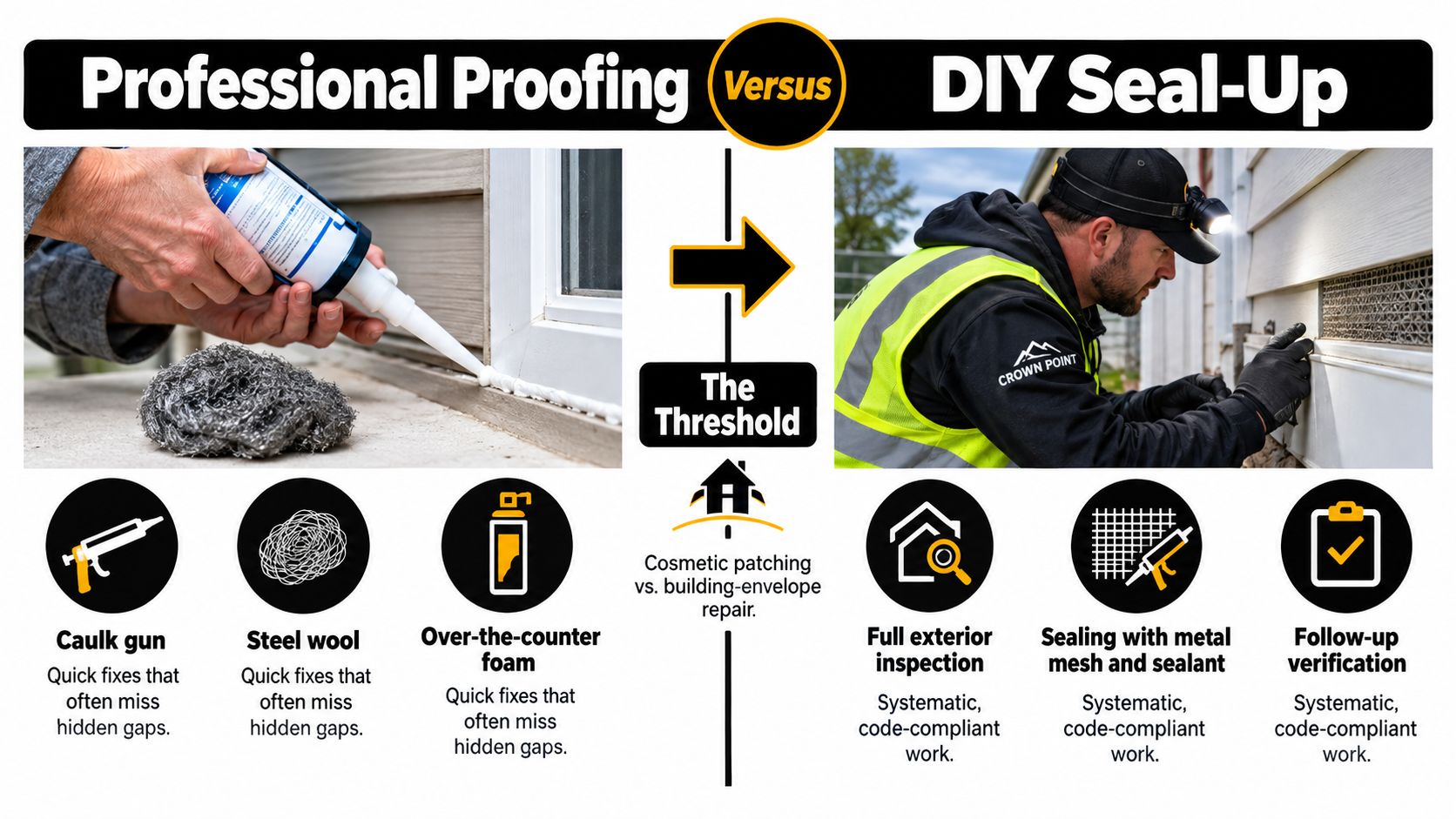
A tube of caulk and a wad of steel wool can be reasonable for a small, clearly understood gap. They become a weak strategy when the homeowner hasn't inspected the entire structure or when the material sits where rodents can pull, chew, or dislodge it.
The dividing line is not effort. Many homeowners work carefully. The dividing line is whether the repair closes the full route with materials and workmanship suited to the building.
Where DIY work commonly falls short
Steel wool can fill an opening, but it may corrode, loosen, or leave edges that don't integrate with the surrounding surface. Over-the-counter foam expands into visible voids, yet foam by itself isn't a dependable gnaw-resistant barrier. Caulk can close a joint temporarily when the surface is clean and stable, but it won't correct deteriorated mortar, a failed vent screen, or a missing section of flashing.
Professional proofing looks beyond the first gap. It checks sill plates along the foundation, mortar joints in brick, soffit and vent connections, garage seals, and utility penetrations. The technician also considers whether the repair will move, shed water, or withstand seasonal temperature changes.
A practical comparison
| DIY seal-up | Professional exclusion |
|---|---|
| Usually starts with a visible gap | Starts with a whole-structure inspection |
| May rely on caulk, steel wool, or foam | Matches metal, mesh, mortar, concrete, and sealant to the defect |
| Often treats the easiest opening first | Maps primary and secondary entry routes |
| May not include activity monitoring | Can combine proofing with trapping and follow-up verification |
| Appearance and speed can drive the repair | Durability, drainage, and building integration guide the work |
Homeowners researching the condition of a property may also benefit from this buyer's home inspection guide, particularly when rodent access appears connected to broader maintenance concerns.
For residents seeking lower-chemical methods, eco-friendly rodent control can be part of a prevention conversation. The key is still physical integrity. A green label doesn't compensate for a missed opening or a weak repair.
What the Service Timeline Looks Like for Homeowners
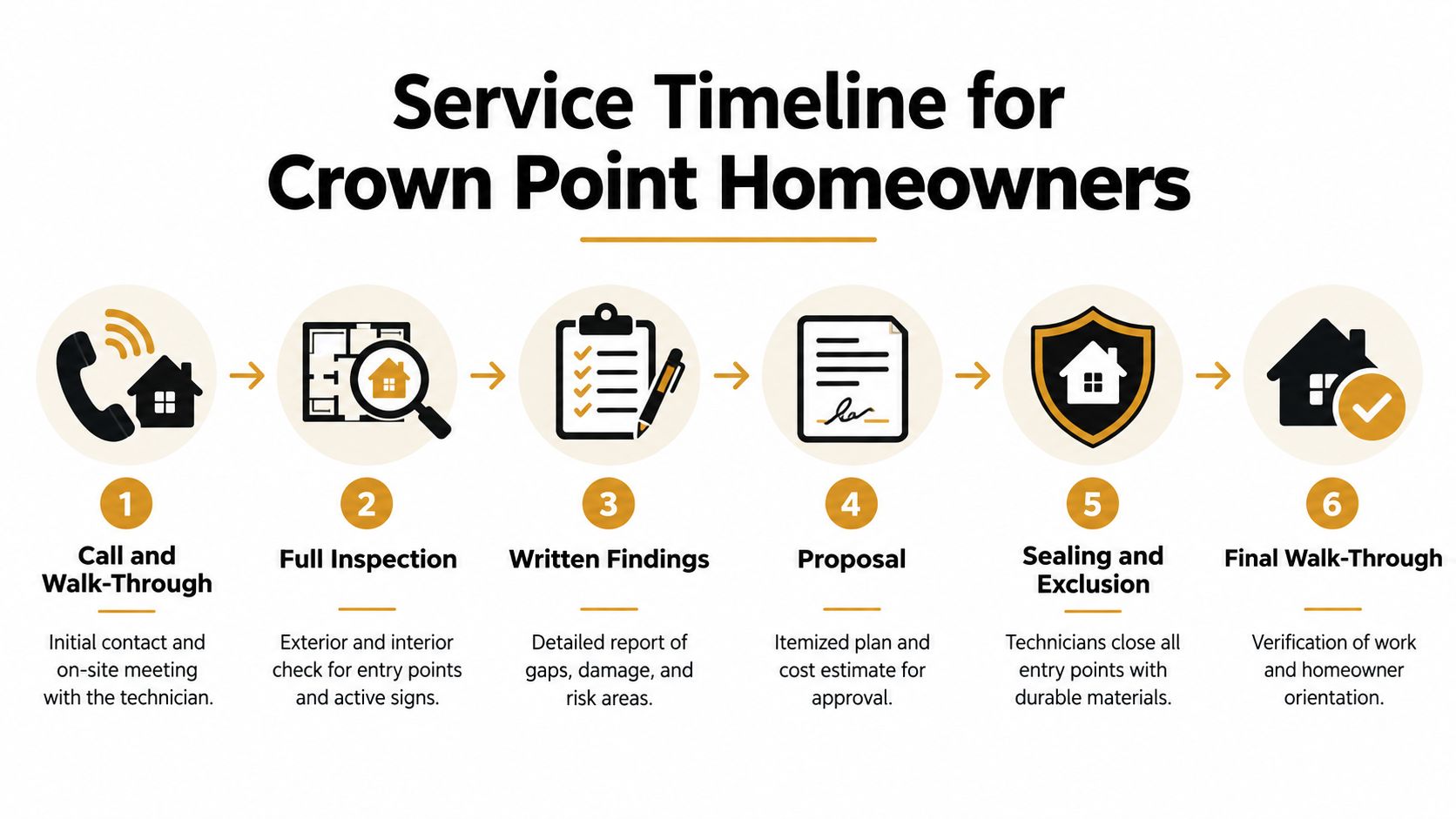
A Crown Point exclusion project normally begins with a phone call or online request, followed by an on-site walk-through. Share the address, approximate age of the home, location of sounds or droppings, and any prior pest history so the technician can plan the inspection properly.
The inspection produces findings rather than a guess. The technician reviews exterior and interior access points, active signs, repair conditions, and areas that need more access. Written findings should separate recommended sealing from optional monitoring or related cleanup.
Preparing for the repair visit
Before the technician arrives, clear storage along basement walls, garage corners, and the utility room. Make attic, crawlspace, and mechanical areas accessible when those zones are part of the inspection. Secure pets and move fragile items away from work areas.
For an average single-family home, the repair portion may take two to four hours, depending on access and the number of defects. Larger homes, detached outbuildings, multi-unit buildings, and light commercial properties require a customized schedule. A written proposal should explain whether work is planned for one visit or several.
A follow-up check is commonly scheduled two to four weeks after repairs. That visit gives the technician an opportunity to review trap results, inspect repaired areas, and determine whether signs of activity have stopped. The exact schedule should reflect the property and the findings, not an automatic promise.
Costs and Estimates for Northwest Indiana Properties
Rodent exclusion pricing in Crown Point and nearby Northwest Indiana communities depends more on the building and the repair list than on the label “mouse service.” A small, accessible home with a limited number of defects is a different project from a multi-unit building with deteriorated masonry, attic contamination, or difficult crawlspace access.
The main cost factors include:
- Property size: Larger footprints create more perimeter, roofline, and utility transitions to inspect.
- Entry-point count: Multiple openings require more materials, labor, and documentation.
- Foundation type: Brick, block, poured concrete, crawlspace foundations, and mixed materials need different repair methods.
- Access and remediation: Attic, crawlspace, insulation, nesting, and sanitation work can add labor beyond exterior sealing.
- Property use: Commercial sites and multi-unit buildings may need coordinated access, unit-by-unit inspection, and monitoring.
The 2026 New Jersey field study offers useful labor context, though it isn't a Crown Point price sheet. It recorded labor-specific exclusion costs of US$117 to US$139 per hour and average materials costs of US$36 per apartment (field study information). Local estimates still need to account for travel, access, building condition, scope, and the work required at each property.
Typical Rodent Exclusion Cost Ranges in Northwest Indiana
| Property Type | Typical Cost Range | What Is Included |
|---|---|---|
| Standard Crown Point single-family home | Custom estimate after inspection | Perimeter inspection, identified sealing repairs, and recommended follow-up |
| Larger home or property with outbuildings | Custom estimate based on access and defects | Expanded inspection, exterior proofing, and possible interior monitoring |
| Multi-unit property | Custom estimate by building and unit scope | Unit or building inspection, prioritized repairs, and coordinated verification |
| Light commercial site | Custom estimate based on operations and access | Commercial inspection, exclusion repairs, and optional monitoring plan |
A one-time exclusion project and an ongoing monitoring plan serve different purposes. The first focuses on correcting identified vulnerabilities. The second may make sense where buildings have frequent deliveries, shared walls, food handling, complicated utility routes, or recurring exterior exposure.
A low quote can reflect a narrow inspection rather than better value. Ask whether the proposal includes the perimeter, attic or basement zones, material specifications, photographs, follow-up, and clear exclusions. Skilled diagnosis costs more than a quick patch, but incomplete repairs can create another service cycle.
Why Exclusion Protects More Than the Building
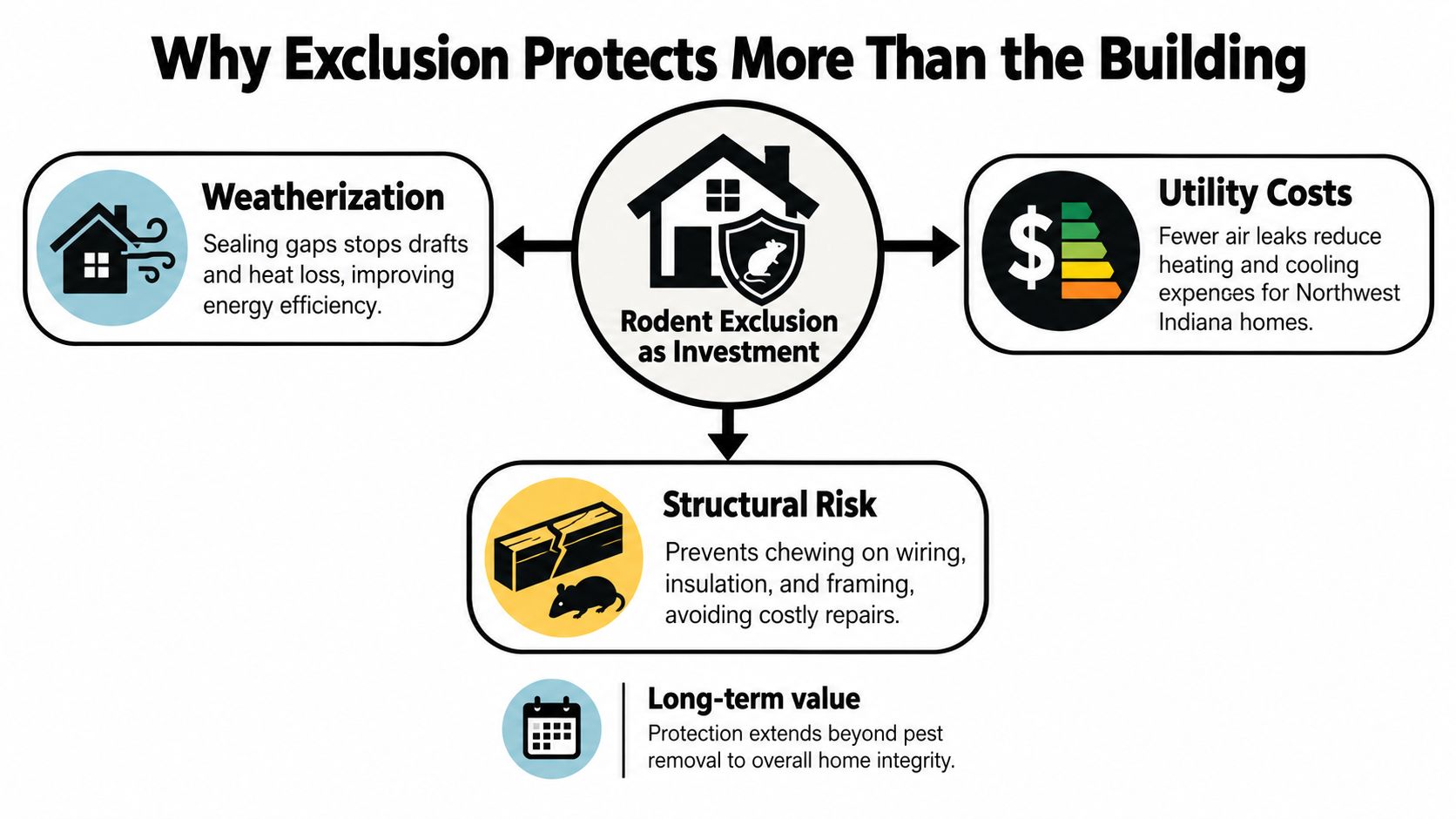
Rodent exclusion belongs in the same conversation as weatherization and preventative maintenance. An unsealed gap can admit pests, cold air, and moisture at the same time. In Northwest Indiana, that matters during cold, windy weather when air leakage places extra demands on the home's heating system.
The building-performance connection is supported by research summarized in a housing study that found housing condition, retrofitting, and retrofit duration significantly reduced final rodent populations. Another 2024 apartment mouse-management study found that combining traps with exterior and interior mouse-proofing reduced infestation rates to 2% at 12 months, compared with 44% in the control group (research summary and study).
The risks behind the noise
Rodents can chew wiring, disturb insulation, and use plumbing or HVAC penetrations as travel routes. Droppings, urine trails, and nesting material can spread contamination through attics, basements, wall voids, and duct-adjacent spaces. The appropriate response depends on the location and extent of the evidence, but ignoring it allows the problem to remain inside the structure.
Sealing also helps keep moisture and drafts from entering wall and foundation areas. Durable repairs can support a drier, tighter home, although homeowners should still address drainage, ventilation, roof leaks, and other moisture sources separately.
The return on exclusion isn't limited to one season. It can mean fewer late-night sounds, fewer bait-station rotations, fewer repeat service calls, and less chance that a small exterior defect becomes a larger repair issue. The strongest result comes from treating pest control as part of overall property care.
Experimental evidence supports that approach. In rural southwestern U.S. homes, rodent-proofing resulted in infestation at 3 of 28 treatment houses versus 13 of 36 control houses, while the National Park Service manual reports that repairing access points reduced overall rodent infestations by more than 90% compared with similar unrepaired structures (experimental study).
Scheduling Your Rodent Exclusion Visit in Crown Point
Booking an inspection is straightforward when you have a few details ready. Provide the property address, approximate age of the home, rooms where you hear activity, visible droppings or damage, and any previous mouse or rat treatments. Photos of exterior gaps can help the office understand the concern, but they shouldn't replace an on-site inspection.
Demand often rises in fall and late winter as rodents seek protected indoor spaces or homeowners prepare for weatherization work. Spring can also fill quickly as property owners combine pest prevention with exterior maintenance. Scheduling early gives the technician more flexibility, especially for larger homes, rentals, and commercial facilities.
Preparing the property
Clear access to the attic, basement, garage, crawlspace, and utility room. Pull stored items a few feet away from exterior walls where possible, and secure pets before the technician arrives. These simple steps let the inspection focus on the structure rather than moving obstacles.
During the visit, expect a perimeter walk, interior review, discussion of findings, and a written estimate that separates required sealing from optional monitoring. The technician should explain which openings are being repaired, which materials are planned, and whether any areas couldn't be inspected safely or completely.
The Green Advantage provides rodent control and exclusion for homeowners and businesses in Crown Point, IN and surrounding Northwest Indiana service areas. The process can also connect with broader residential pest control or commercial pest control needs, including ant control, termite control, mosquito control, spider control, wasp removal, and seasonal pest prevention when those concerns appear during the inspection.
Before you book: Ask for the inspection scope, repair materials, follow-up plan, and any work that isn't included in the estimate.
A local provider should communicate clearly from the first call through the final walk-through. You shouldn't have to guess whether the technician checked the roofline, the foundation, the garage, or the utility penetrations.
If scratching, droppings, or a gap near the foundation has you searching for an exterminator near me or pest control in Crown Point, IN, schedule a rodent inspection with The Green Advantage. Their team can assess entry points, recommend durable exclusion repairs, and build a practical plan for your Crown Point home or Northwest Indiana business.
Monthly Pest Control Service in Crown Point, IN
You notice ants moving along the kitchen counter, spiders gathering in the basement, or mice leaving signs near the garage, and the question comes quickly: Do you really need monthly pest control service in Crown Point, IN? Usually, no. Monthly visits can be the right tool for active infestations and high-pressure properties, but they're overkill for many well-maintained homes.
The Green Advantage serves Crown Point and nearby Northwest Indiana communities with residential pest control, commercial pest control, pest inspections, mosquito reduction, and prevention-focused service. The right plan should match what's happening on your property, not lock you into the most frequent schedule.
What Monthly Pest Control Service Really Means for Crown Point Homeowners
A Crown Point homeowner might see the first warning signs in spring. Ants form a trail toward the pantry. Spiders appear in the basement corners. A mouse leaves droppings near stored boxes in the garage. At that point, a salesperson may present monthly service as the obvious answer, but frequency alone doesn't solve every pest problem.
Monthly pest control service means a licensed technician returns on a recurring schedule, generally every four weeks, to inspect, monitor, and treat the property. It isn't the same as a one-time spray. A proper visit looks at current activity, likely entry points, exterior conditions, and changes since the last appointment.
Northwest Indiana homes can face sustained pressure from ants, spiders, mosquitoes, rodents, wasps, and other seasonal pests. Older housing, wooded lots, dense vegetation, moisture, and nearby natural areas can give pests more routes into basements, garages, kitchens, and wall voids. That doesn't mean every Crown Point property needs a technician every month, but it explains why monthly service exists as a legitimate category.
Local rule: Choose monthly visits because your property produces recurring pest problems, not because a frequent schedule sounds more protective.
A monthly plan can provide regular perimeter maintenance, monitoring, and a faster opportunity to respond when activity returns between longer service intervals. That matters for homes with repeated sightings, rental properties where tenants need quick attention, and businesses that can't tolerate visible insects or rodent evidence.
The same principle applies to online visibility. Businesses that depend on local searches often need a consistent process for getting calls from Google Maps, just as a property with recurring pest pressure needs consistent monitoring. In both cases, regular attention works best when it responds to real conditions.
For most homeowners, the decision should begin with three questions:
- What pest is appearing? Ants, mice, mosquitoes, termites, and bed bugs require different strategies.
- Where is activity occurring? A basement, kitchen, crawl space, attic, and yard each point to different risks.
- How quickly does the problem return? Recurring sightings justify more frequent service than an isolated seasonal nuisance.
What a Monthly Pest Control Visit Typically Includes
A worthwhile monthly visit should feel like an inspection and maintenance appointment, not a quick pass around the house with a spray wand. The technician should look for why pests are present and document what needs attention.
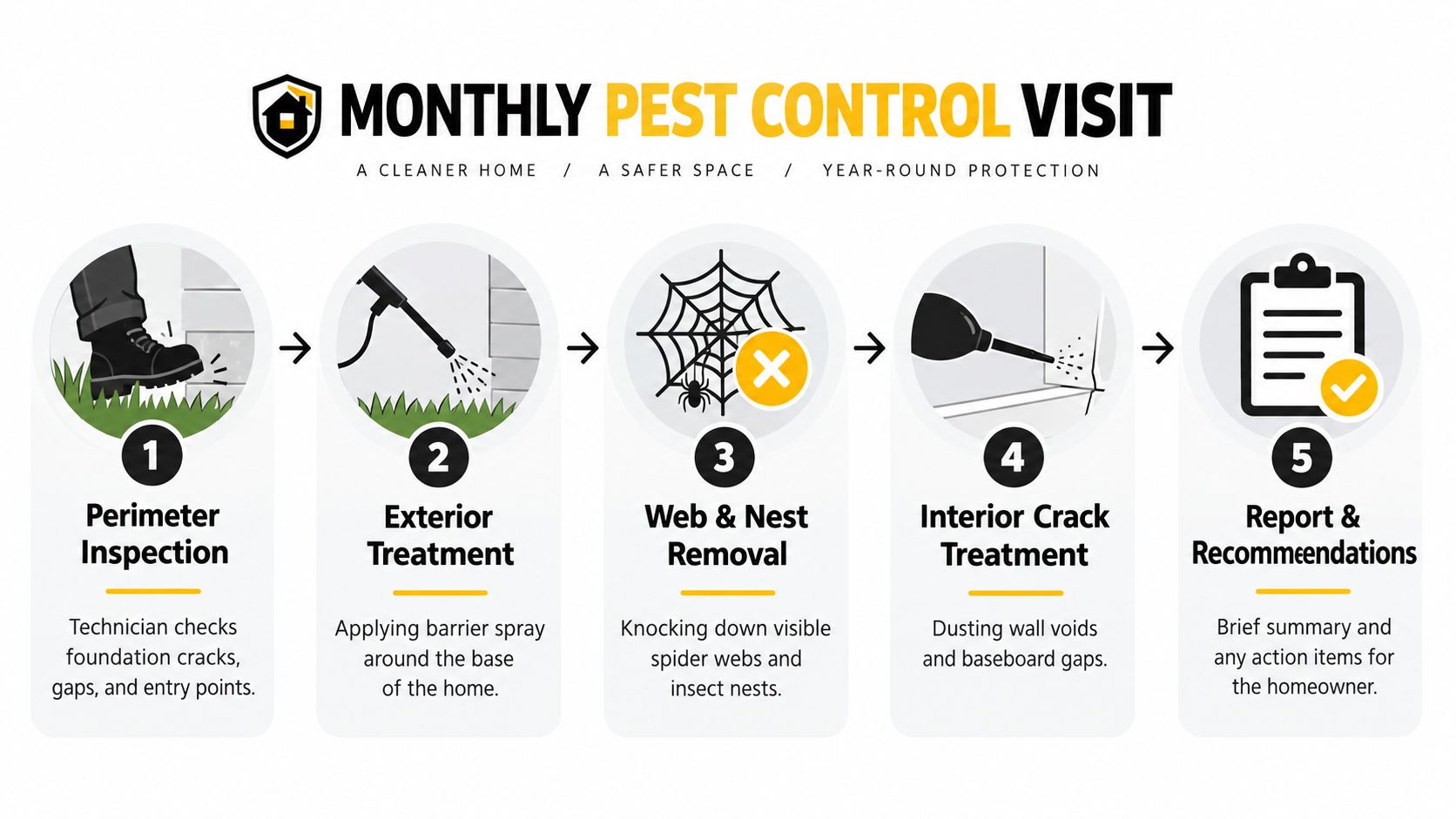
The exterior inspection comes first
The technician typically walks the foundation, garage perimeter, door thresholds, utility penetrations, window wells, and other potential entry points. Foundation cracks, gaps around pipes, damaged weather stripping, and clutter against exterior walls can help insects and rodents reach the house.
The technician may also check conditions that support pest activity, including standing moisture, dense vegetation touching the structure, firewood placement, and openings beneath siding or trim. These observations matter because treatment works better when the property owner corrects the conditions attracting pests.
Treatment stays targeted
Exterior work may include a carefully applied barrier treatment around the foundation, removal of visible spider webs, and inspection of wasp nests or other insect activity. Bait stations may be checked where rodent monitoring is part of the service plan.
Inside, a professional should inspect kitchens, bathrooms, basements, utility areas, and garages. German cockroaches and mice often reveal themselves through droppings, odors, feeding damage, grease marks, or activity around food and water sources. Interior crack-and-crevice treatment should be used where activity is confirmed, not sprayed indiscriminately across living areas.
The visit ends with documentation
A good service includes written notes describing pest findings, treatments performed, and practical corrections such as sealing gaps, reducing moisture, or storing food securely. Ask whether the plan includes follow-up communication, callbacks, and identification of new pest activity.
Monthly general pest service usually doesn't include every pest category. Termite control, wildlife removal, and bed bug treatment often require separate inspection and treatment programs because those pests behave differently and demand specialized methods.
Monthly vs Bi-Monthly vs Quarterly Service
Most Crown Point homes don't need monthly service throughout the year. The better choice depends on pest pressure, property design, surrounding habitat, and how quickly activity returns after treatment.
| Cadence | Best Fit | Typical Annual Cost | Pest Pressure Level |
|---|---|---|---|
| Monthly | Active infestations, recurring rodents, heavy wooded exposure, commercial properties, or persistent year-round activity | About $660 annually when based on a $55 monthly plan, Greenhow pricing data | High or persistent |
| Bi-monthly | Suburban homes with moderate activity or seasonal concerns | About $408 annually based on the same pricing guide | Moderate |
| Quarterly | Most single-family homes needing general prevention | About $525 annually, with the plan averaged to $44 per month | Low to moderate |
The cost figures are benchmarks, not promises for a Crown Point property. A local quote can change with home size, pest type, access, treatment requirements, and whether specialized services are included.
When monthly service makes sense
Monthly visits are justified when pests keep returning before the next scheduled appointment. A home with an active cockroach problem, repeated mouse evidence, persistent ants, or heavy spider activity may need closer monitoring while the technician interrupts the problem.
Monthly service can also fit properties surrounded by woods, dense vegetation, or wet areas where insects and rodents have more habitat. Commercial kitchens, apartment buildings, offices, and facilities with frequent foot traffic often need a tighter schedule because activity can affect customers, employees, inspections, and operations.
When less frequent service works better
Bi-monthly service is often the sensible middle ground for a suburban home with occasional activity. It provides more oversight than quarterly visits without paying for a monthly appointment when the property doesn't need one.
Quarterly service commonly fits newer construction, tightly sealed homes, and properties with little pest history. Seasonal ramp-ups can also make sense. A homeowner might use a lower-frequency general plan and add focused mosquito control, wasp removal, or rodent work when conditions call for it.
My recommendation: Start with the least frequent schedule that controls the problem, then increase visits only when inspection findings and repeat activity support it.
Monthly Pest Control Service Cost in Crown Point
Monthly service pricing gives Crown Point homeowners a useful starting point, but the property determines the quote. General plans commonly run $40 to $75 per visit, and the HomeGuide pest control pricing guide places the average general plan at about $51 per month. Initial inspections or first treatments often add $150 to $300.
Greenhow's pest control cost report lists a national monthly range of $44 to $70 and notes that some higher-cost regions run 15% to 25% above the national average. Use those figures to screen quotes, not to predict the price of service at your Crown Point home.
| Service Type | Price Range per Visit | Typical Add-On Cost |
|---|---|---|
| General monthly pest plan | $40 to $75 | Initial fees may apply |
| General plan benchmark | About $51 per month | Depends on coverage |
| Mosquito or tick service | $88 to $150 per month during active seasons | Often seasonal and separate |
| Rodent monitoring | Qualitative range varies by property and activity | Bait station setup, refills, or exclusion may be separate |
| Termite service | Requires a separate inspection and program | Treatment and monitoring are not standard general pest visits |
The $88 to $150 seasonal range applies to mosquito and tick programs. A general pest package does not automatically include yard mosquito reduction or tick management. Those services cover different areas and often use separate schedules.
Crown Point properties near wooded lots, retention ponds, or dense landscaping can need more outdoor work than a basic foundation treatment. Older homes with crawl spaces, unfinished basements, utility openings, or persistent moisture may also require preparation or repairs before treatment can hold.
Before accepting a recurring quote, ask whether it covers:
- Initial inspection and first treatment
- Exterior barrier applications
- Interior crack-and-crevice work
- Web removal and wasp nest treatment
- Bait station checks and refills
- Flea or rodent follow-up
- Callbacks between scheduled visits
- Termite, mosquito, and tick coverage
Recurring household services should be compared by scope, not by the advertised monthly fee. The average pool service bill 2026 shows why recurring-service comparisons need the same approach. Check what labor, follow-up, and add-ons are included before judging the price.
For local pricing details, review monthly pest control cost information from The Green Advantage, then request a written quote based on your home, pest pressure, access, and service limits.
Benefits and Trade-Offs of Monthly Service
Monthly service earns its price when it solves a recurring problem. It can shorten the time between a new sighting and a professional response, keep exterior pressure under observation, and reduce the chance that a small issue grows unnoticed.
Crown Point homes with older construction, heavy tree cover, damp areas, or a history of ants, spiders, or mice may benefit from that regular attention. A technician can track patterns instead of treating every visit as a fresh mystery. That record helps reveal whether activity is declining, shifting to another area, or returning because an entry point remains open.
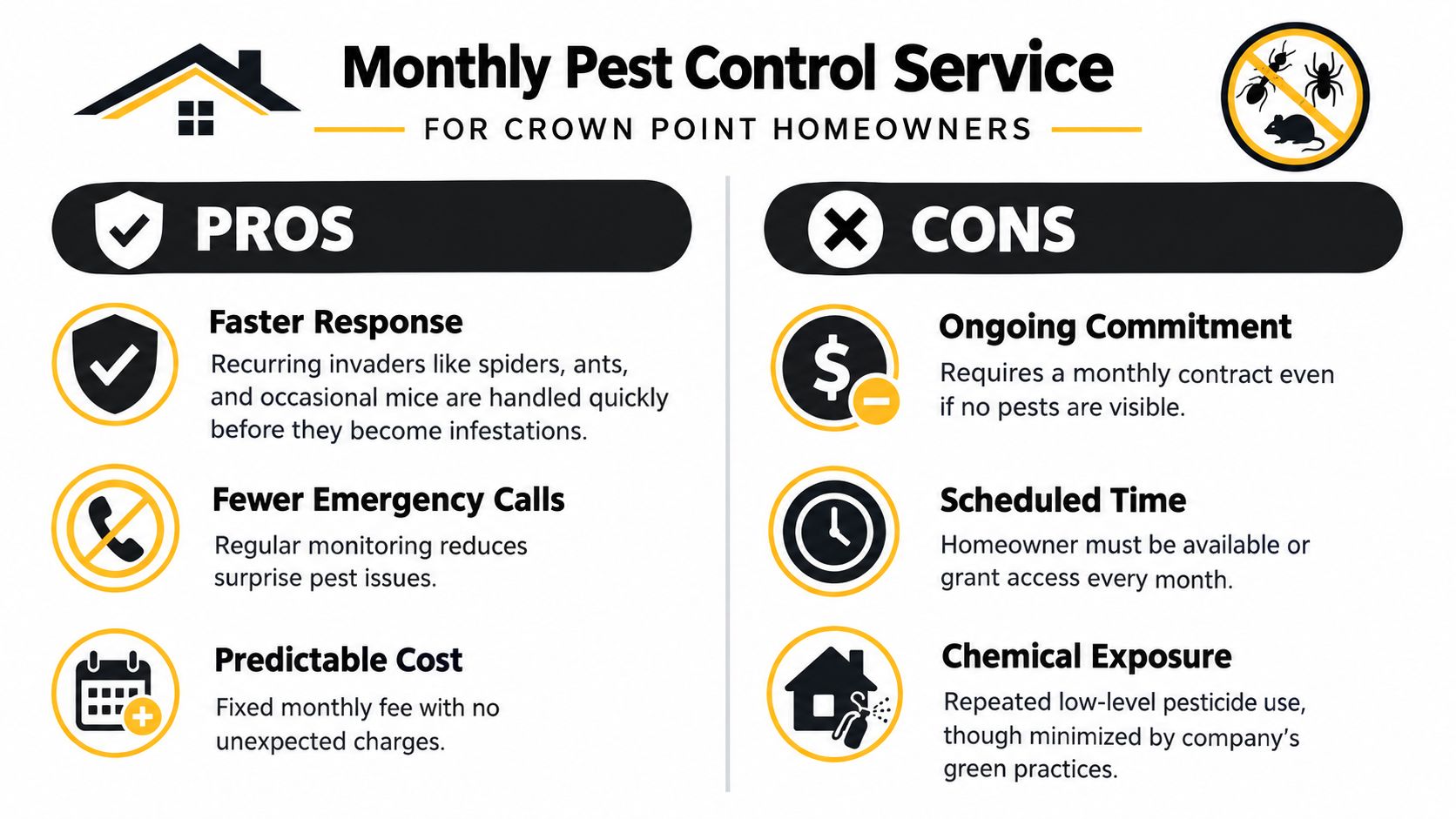
The practical advantages
- Faster response: Recurring invaders such as ants, spiders, and occasional mice receive attention before sightings become harder to manage.
- Fewer emergency calls: Routine monitoring can identify changes before the homeowner faces a sudden infestation.
- Predictable budgeting: A recurring fee can make pest management easier to plan than sporadic emergency visits.
- Better documentation: Written service notes help homeowners, landlords, and property managers track conditions and recommended repairs.
- More consistent prevention: Regular exterior work can support a broader integrated pest management approach.
Monthly service also has real drawbacks. You're paying for ongoing visits even when no pest is visible, and someone must provide access or coordinate scheduling. Repeated pesticide applications may concern families with children, pets, gardens, or environmental priorities, which is why targeted treatment and low-toxicity product selection matter.
Where monthly service is probably wasteful
A newer home on a clean, open lot with no infestation history may not need monthly visits. The same applies to a well-sealed property where minor seasonal activity is manageable between quarterly appointments.
Monthly service is also a poor fit if the provider can't explain what each visit includes. If the technician performs the same unexplained spray every month without checking entry points, moisture, sanitation, or pest evidence, the schedule is doing more work for the contract than for the homeowner.
Ask for a plan that can step down when conditions improve. A good pest program should respond to the property, not make the homeowner defend a decision to cancel unnecessary frequency.
Choosing and Preparing for Service in Crown Point
Choosing an exterminator near me should involve more than checking the first map result. A provider working in Crown Point should understand local homes, seasonal pest issues, basements, garages, wooded lots, moisture conditions, and the needs of nearby Northwest Indiana properties.
Questions to ask before signing
- Is the company licensed and registered with the Indiana Department of Agriculture? Ask for a clear answer before treatment begins.
- Does the plan use integrated pest management? Look for prevention, monitoring, exclusion recommendations, and targeted applications instead of blanket spraying.
- What happens during the initial inspection? A technician should examine the structure before recommending a recurring cadence.
- Which pests are included? Confirm whether ants, spiders, mice, wasps, mosquitoes, ticks, termites, fleas, and bed bugs fall under the quoted plan or require separate service.
- What does the price cover? Ask about callbacks, bait refills, interior treatments, cancellation terms, and seasonal changes.
- Does the company actively serve Crown Point? Local availability affects response time and familiarity with neighborhood housing conditions.
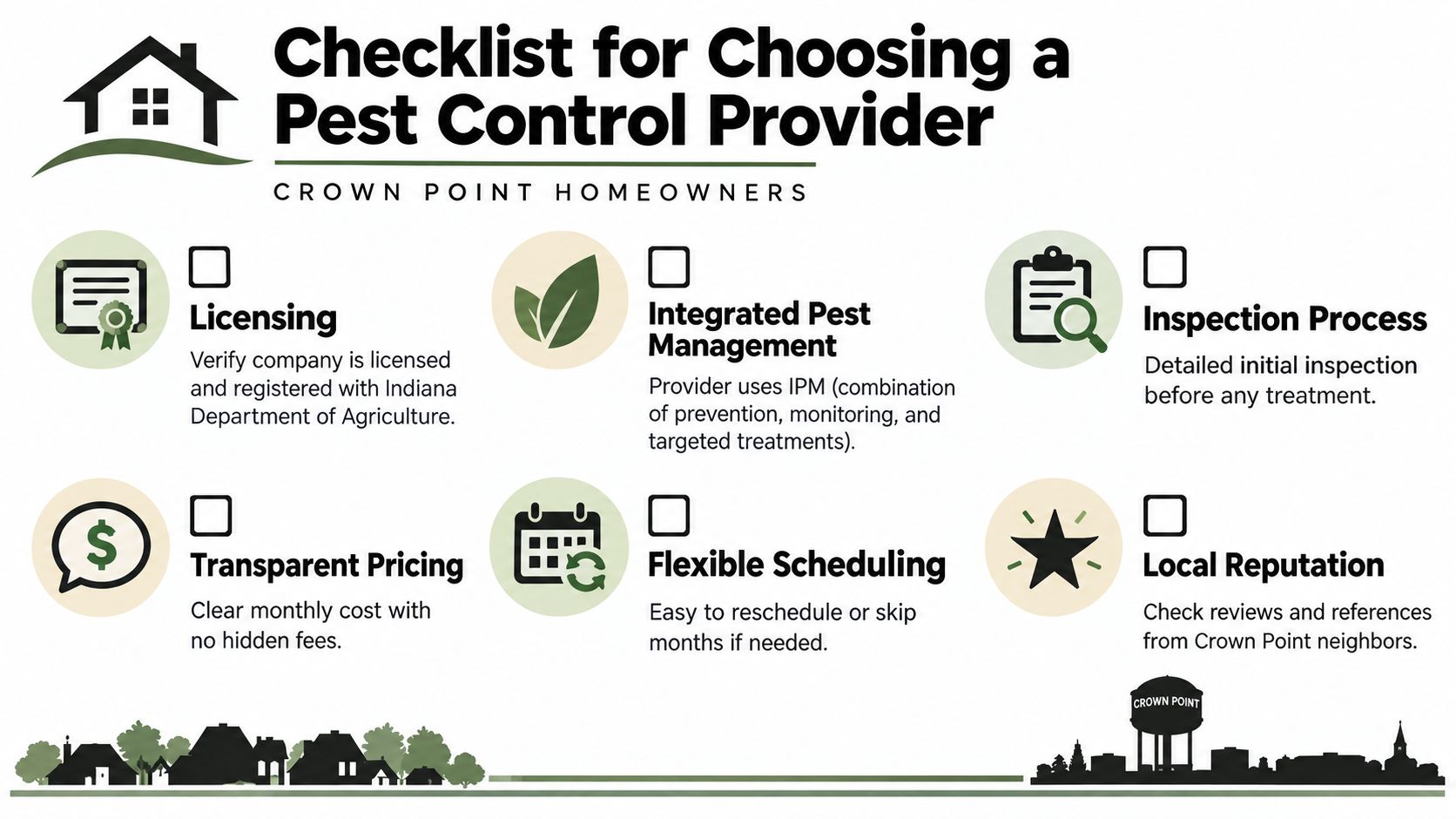
Read reviews for details about communication, technician arrival, treatment explanations, and follow-up. Then request the service plan in writing. A low quote can become expensive if every interior treatment, rodent visit, or wasp nest carries a separate charge.
Prepare the property properly
Before the first appointment, clear garage corners and move stored items away from foundation walls. Secure pet food, clean food spills, address dripping fixtures, and tell the technician about moisture, leaks, or recent sightings.
Don't apply household insecticide immediately before the visit. It can disturb pest activity and make it harder to identify where insects are entering. Instead, take photos, save details about where you saw activity, and point out the exact rooms or exterior areas involved.
The Green Advantage provides preparation guidance so Crown Point customers know what to move, what to leave accessible, and what information will help the technician diagnose the issue. That preparation makes the first inspection more useful and keeps later visits focused.
What to Expect Working With The Green Advantage
The customer journey should feel straightforward. A Crown Point homeowner starts with a phone call or online inquiry, explains the pest concern, and receives scheduling information before a technician visits the property.
At the first appointment, the technician arrives in a marked vehicle and begins with an exterior walk-around. The inspection focuses on pest evidence, entry points, moisture, landscaping, garages, foundations, and other conditions that can influence treatment. Findings are documented in writing so the homeowner understands what the technician saw and what actions may help.
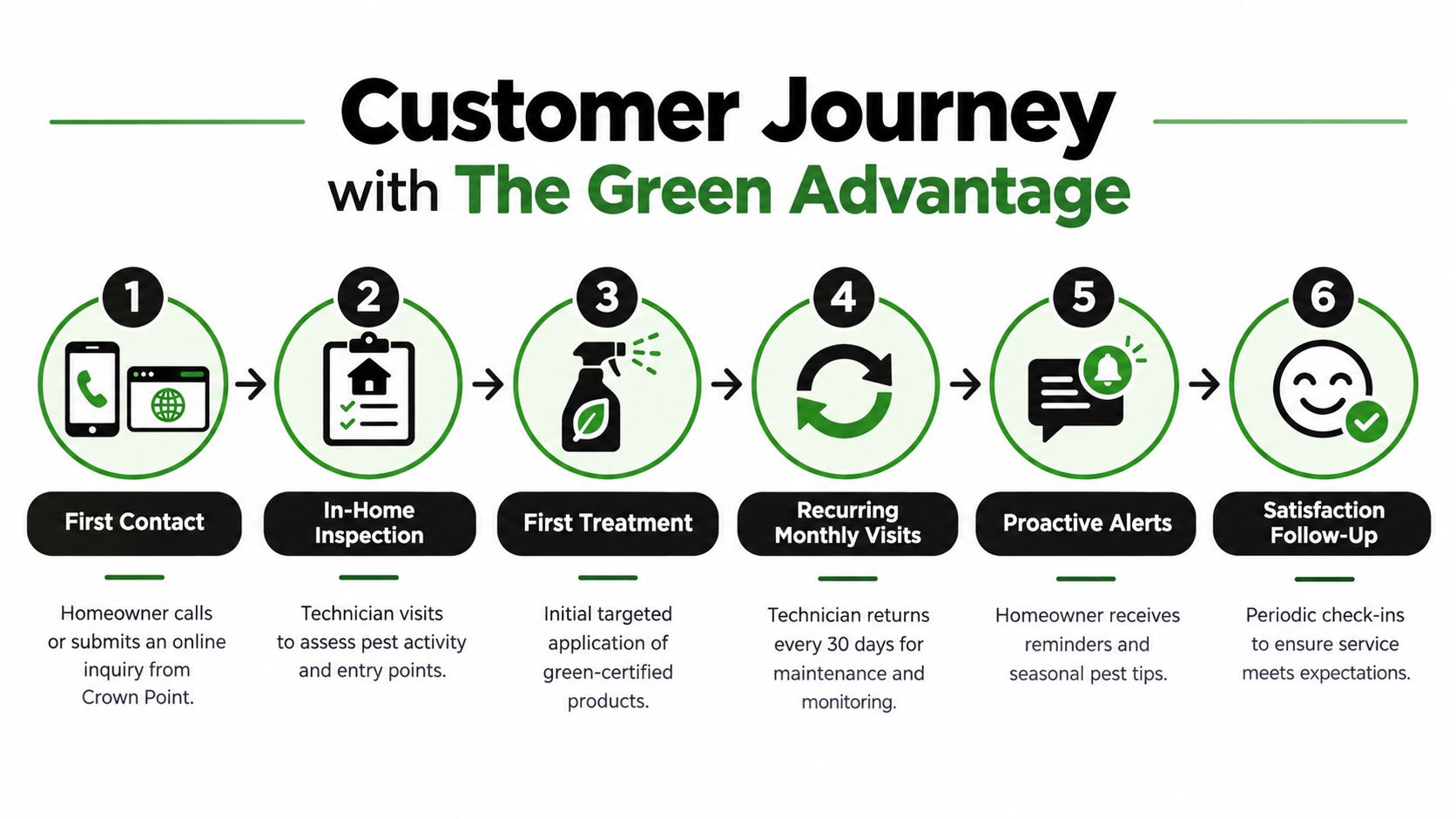
The first treatment uses targeted applications rather than automatically blanketing the property. Depending on findings, the work may include exterior perimeter treatment, web removal, crack-and-crevice treatment, monitoring, or recommendations for sealing and moisture reduction.
Customers receive text or email reminders before scheduled visits, and bilingual communication options are available. After the first 30 days, a follow-up call checks whether activity has changed and whether the homeowner has noticed new evidence.
Recurring visits continue according to the agreed plan. The technician reviews previous notes, checks for new activity, maintains relevant monitoring equipment, and adjusts treatment when conditions change. That process is more useful than repeating an identical application regardless of what the property shows.
The company uses low-toxicity product selections and family- and pet-conscious application protocols where appropriate. Its satisfaction guarantee provides a free interior callback if pests reappear between scheduled visits, subject to the service terms.
For more detail about the company's approach, visit why choose The Green Advantage for pest control. The important question isn't whether monthly service sounds impressive. It's whether the inspection, treatment, communication, and follow-up match the pest pressure in your Crown Point home or business.
The Green Advantage provides residential pest control, commercial pest control, inspections, mosquito reduction, and recurring prevention plans for Crown Point and surrounding Northwest Indiana properties. Visit The Green Advantage to request a pest inspection or quote, and ask for a service cadence based on what's active at your property.
Organic Pest Control Solutions for Crown Point Homes

You're hearing scratching behind the wall, finding ants along the kitchen counter, or watching mosquitoes take over the yard at dusk. In Crown Point, IN, those problems often start with ordinary conditions, such as moisture, food residue, foundation gaps, or standing water. Organic pest control solutions can reduce that pressure, but serious infestations rarely respond to a single spray or a product chosen without identifying the pest first.
The Green Advantage serves Crown Point and nearby Northwest Indiana communities with environmentally mindful residential pest control, commercial pest control, inspections, and prevention programs. The practical question isn't whether an organic label sounds appealing. It's whether the method matches the pest, the property, and the severity of the problem.
Why Homeowners in Crown Point Choose Organic Pest Control
A Crown Point family may notice a few ants near the sink after rain, mosquitoes gathering around a birdbath, or a spider population increasing in the basement. Their first concern is usually safety. They want to protect children, pets, indoor air, landscaping, and the structure without making a small issue harder to manage.
That concern is reasonable, but organic doesn't mean automatic, harmless, or universally effective. It describes a category of materials and methods, while actual performance depends on identification, placement, timing, weather, and follow-up. A botanical treatment aimed at exposed insects won't solve a hidden nest, and a mosquito larvicide won't address adult mosquitoes resting in shaded vegetation.

What organic means in practical pest management
The most useful framework is Integrated Pest Management, or IPM. The U.S. Environmental Protection Agency's IPM principles define IPM as an effective, environmentally sensitive approach that uses information about pest life cycles and environmental interactions to manage damage economically, with the least possible hazard to people, property, and the environment. EPA also notes that growers using IPM don't have a national certification equivalent to the certification associated with organic foods.
That distinction matters. A responsible program starts with inspection and monitoring, then uses exclusion, sanitation, moisture correction, physical controls, and targeted products when needed. Homeowners looking for additional context can review environmentally friendly pest control methods that place treatment inside a broader prevention plan.
Federal policy has supported this prevention-first direction for decades. In 1972, President Nixon directed federal agencies to advance IPM across agriculture, forestry, and related sectors. By 1993, USDA, EPA, and FDA had set a goal of implementing IPM practices on 75% of U.S. crop acres, and a USDA history reports approximately $180 million per year in federal investment in IPM-related research and education since the early 1970s. Those figures come from the USDA history of federal IPM.
Practical rule: Choose the least hazardous effective method, but don't confuse “natural” with “one-size-fits-all.”
For a Crown Point homeowner, that may mean sealing an entry point before treating ants, correcting a damp crawl space before addressing spiders, or removing mosquito breeding water before scheduling yard service. The goal is a comfortable home with fewer pest opportunities, not merely a stronger product.
Identifying Common Pests and Why They Invade Northwest Indiana
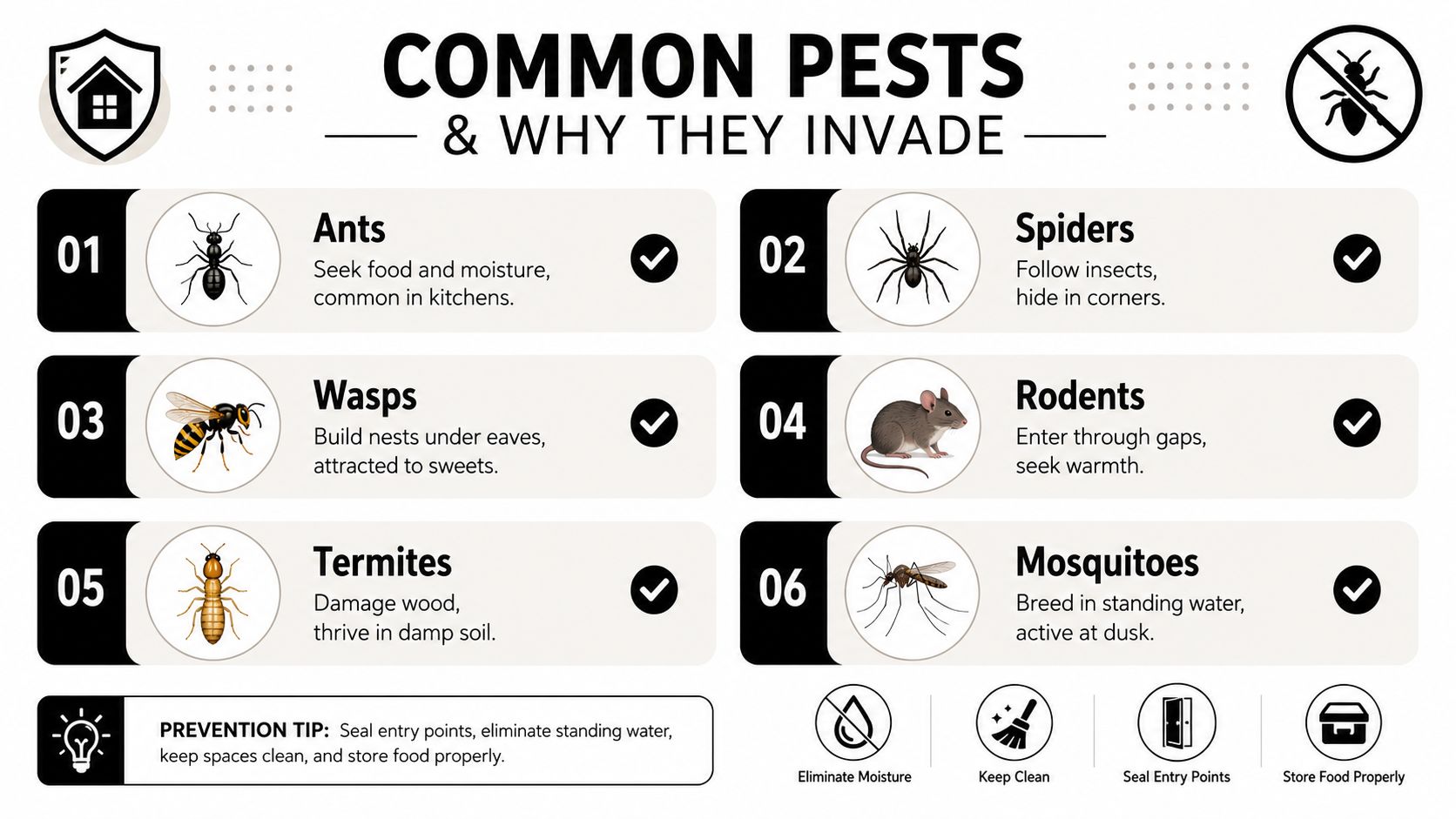
Correct identification changes the treatment decision. Ants, termites, rodents, wasps, spiders, and mosquitoes can all appear around a Crown Point property, but they don't share the same entry routes or control requirements.
Start with visible signs
- Ants: Trails near sinks, pet bowls, windows, or foundation edges usually point to food, moisture, or an opening that gives workers access. Repeated trails after cleaning suggest the colony remains nearby.
- Spiders: Webs in corners, garages, eaves, and basement areas often indicate that other insects are available as prey. A sudden increase can follow outdoor lighting, vegetation growth, or an open entry point.
- Wasps: Nests beneath eaves, decks, soffits, or porch roofs require caution. Activity around sweet drinks, trash containers, or flowering plants can increase encounters.
- Rodents: Droppings, gnaw marks, scratching, nesting material, and a musky odor indicate more than a stray outdoor sighting. Mice and other rodents seek warmth and shelter through gaps around doors, foundations, utility penetrations, and garages.
- Termites: Mud tubes, damaged wood, discarded wings, or wood-to-soil contact deserve a professional inspection. Moist soil and concealed structural areas can make termite activity difficult to judge from a quick glance.
- Mosquitoes: Standing water in containers, clogged drainage areas, tires, gutters, and low spots can support larvae. Adults commonly rest in shaded vegetation and become noticeable around outdoor living areas, particularly at dusk.
Check the property in a logical order
Walk the exterior first. Look at foundation cracks, door sweeps, window screens, utility openings, dense mulch, firewood, leaking spigots, clogged gutters, and containers that hold rainwater. Indoors, inspect under sinks, around pipes, behind appliances, in basements, near stored food, and along garage walls.
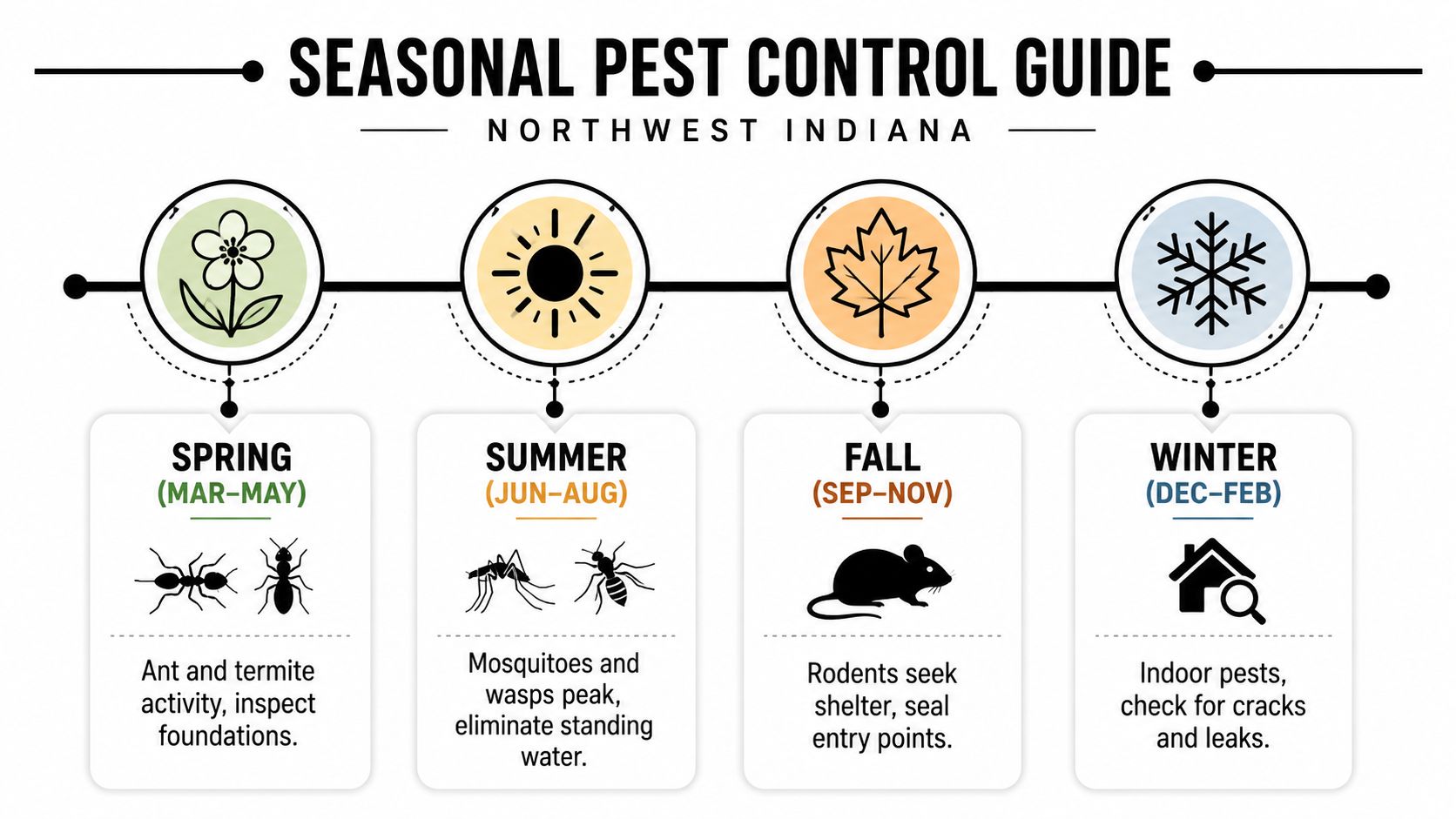
Seasonal shifts also change the pattern. Spring can bring visible ant activity and termite concerns, summer increases mosquito and wasp pressure, and cooler fall conditions push rodents toward sheltered spaces. Infestations often return when a homeowner treats the visible insects but leaves the food, water, harborage, or entry condition unchanged.
Independent organic IPM guidance recommends prevention, monitoring, and targeted intervention rather than relying on one application. It includes sanitation, resistant plant varieties where relevant, physical barriers, trap crops, row covers, planting adjustments, and mechanical removal before biopesticides are considered. The organic IPM guidance explains why cultural, biological, and physical controls are especially important when synthetic chemistry is restricted.
Prevention and Monitoring That Make Organic Treatments Work
Organic treatments perform better when pests have fewer reasons and fewer ways to reach the property. Prevention isn't a substitute for treatment during a serious infestation, but it makes targeted treatment more durable and reduces repeated exposure to the same problem.
Build a Crown Point prevention routine
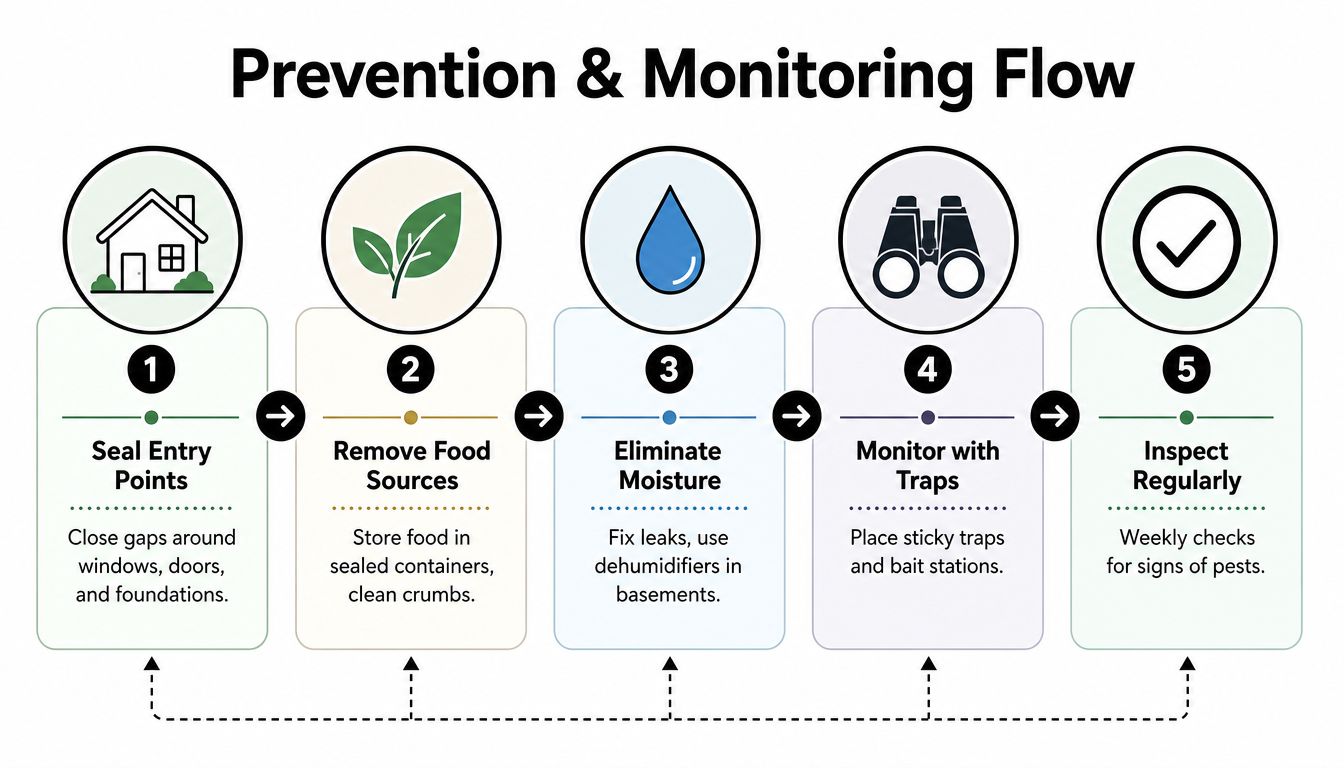
Begin with the building envelope. Seal gaps around windows, doors, foundation penetrations, vents, and utility lines. Replace damaged screens and worn door sweeps. Keep firewood and stored materials away from exterior walls, and trim vegetation so branches don't create a sheltered bridge to the structure.
Inside, focus on conditions pests can use:
- Food control: Store pantry goods in sealed containers, clean crumbs promptly, and manage pet food rather than leaving it exposed.
- Moisture control: Repair leaks, improve drainage, empty containers, and use a dehumidifier where basement or crawl-space dampness supports pest activity.
- Sanitation: Clean grease, crumbs, spills, and recycling residue. Commercial kitchens and multifamily properties need documented routines because small omissions can support recurring activity.
- Harborage reduction: Remove clutter from garages, basements, utility rooms, and storage areas so inspections remain possible and pests have fewer hiding places.
Monitoring tells you whether those changes are working. Sticky traps can reveal indoor movement, while exterior inspections can document trails, droppings, nests, damaged wood, or fresh webbing. Place monitoring tools where people and pets won't disturb them, and record the location and condition during regular checks.
Use 30, 60, and 90 days as decision points
A useful schedule looks for direction rather than instant perfection.
- At 30 days: Confirm that entry points, moisture sources, food storage, and outdoor breeding areas have been addressed. Note whether sightings are declining, unchanged, or spreading.
- At 60 days: Review trap observations, new damage, nest activity, and seasonal pressure. Persistent evidence usually means the pest was misidentified, the source remains active, or the treatment needs adjustment.
- At 90 days: Decide whether the property needs continuing maintenance, seasonal service, exclusion work, or a more thorough inspection.
Reapplication may be necessary after rain, irrigation, or other moisture events, depending on the product label and target pest. Timing often matters more than applying a greater quantity. Never use a product outside its label directions, and don't assume a food-grade or garden product is appropriate for structural pest control.
Biological control also requires realistic expectations. A meta-analysis found that about 33% of introduced exotic agents established successfully, while only about 10% achieved satisfactory control of target insect pests, according to the USDA Agricultural Research Service review. The lesson for homeowners is straightforward. Releasing or applying a biological tool without matching it to the pest, climate, life stage, and follow-up plan may produce little improvement.
Applying Safe Organic Treatments at Home and With Professional Support
DIY organic pest control can make sense for a small, clearly identified problem with a manageable source. Professional service becomes more valuable when pests are hidden, structural, medically concerning, persistent, or spread across a large residential or commercial property.
Match the material to the pest
For mosquitoes, Bacillus thuringiensis israelensis, or Bti, targets larvae rather than adult mosquitoes. EPA describes Bti as a naturally occurring soil bacterium whose toxins specifically target mosquito, blackfly, and fungus gnat larvae. EPA also lists 48 pesticide products containing five registered Bti strains approved for residential, commercial, and agricultural use, as explained in its Bti mosquito control guidance.
One EPA label gives a concrete direction for a Bti product used in containerized standing water, one teaspoon per 25 square feet or one tablespoon per 75 square feet, with the label stating that it can provide a quick kill within 24 hours. Always follow the exact label for the product you own, because formulations and approved uses differ. Bti won't eliminate adult mosquitoes resting in shrubs, and it won't solve a property-wide problem if breeding sites remain.
Diatomaceous earth also requires care. The National Pesticide Information Center's diatomaceous earth guidance warns that not every product is suitable for pest control. Food-grade and unlabeled products may not have undergone pest-control risk checks, even though the guidance notes that diatomaceous earth added to food at up to 2% is generally recognized as safe by the U.S. Food and Drug Administration. Use only a properly labeled pest-control product for the intended site, and avoid creating airborne dust.
Neem and spinosad illustrate why “organic” doesn't guarantee identical results. In replicated trials summarized in organic IPM technical guidance, spinosad-based Entrust reduced infestations by 73.9% overall, while azadirachtin or neem-based products ranged from 61.7% to 46.1%, depending on formulation and target pest. Those results show that active ingredient, pest biology, and life stage matter more than the label alone.
Choose the level of help that fits the risk
For general garden education, Little Green Leaf's organic pest guide offers examples of physical barriers and garden-focused methods. Structural infestations need a different evaluation, especially when rodents, termites, wasps, or recurring ants are involved.
| Pest Scenario | Best Organic Tactic | DIY or Professional | What Success Looks Like |
|---|---|---|---|
| A few ants near a clean, accessible food source | Remove the source, clean trails, seal the opening, and use a labeled bait or treatment suited to the species | DIY can be reasonable when activity is limited | Trails stop returning and no new interior activity appears |
| Mosquito larvae in removable standing water | Empty, cover, or manage the water, then use a labeled Bti product when appropriate | DIY for small containers, professional help for broad yard pressure | Fewer breeding sites and less activity around living areas |
| Spiders appearing with abundant outdoor insects | Reduce prey and harborage, then inspect exterior entry points | DIY maintenance or professional inspection | Web and sighting frequency declines as insect pressure falls |
| Wasp nest near a doorway, play area, or business entrance | Avoid disturbing the nest and arrange targeted removal | Professional service is the safer choice | The nest is removed and activity is monitored before normal use resumes |
| Rodent signs inside walls, attics, or kitchens | Locate entry points, remove access, and use a coordinated exclusion and monitoring plan | Professional service is usually appropriate | Fresh droppings and noises stop, with no new entry evidence |
| Termite evidence or suspected structural damage | Obtain a detailed inspection before choosing treatment | Professional inspection required | The source, extent, and follow-up plan are documented |
For homeowners who want a deeper explanation of microbial and living control tools, what biological pest control means provides useful background. The Green Advantage can combine inspection, exclusion, monitoring, and appropriately selected environmentally mindful treatments for residential pest control, commercial pest control, mosquito reduction, and related service needs in Crown Point.
Seasonal Tips for Lasting Results in Crown Point and Northwest Indiana
Northwest Indiana properties change with the calendar, so prevention should change with them. A treatment that works well as a spring barrier may not address a summer mosquito source or a fall rodent entry route.
Spring from March through May
Ants become easier to spot as activity increases around foundations and kitchens. Inspect foundation joints, window frames, plumbing penetrations, and damp areas before trails become established. Termite concerns also deserve attention where wood contacts soil or drainage keeps the foundation area wet.
Summer from June through August
Mosquitoes and wasps create the greatest nuisance around patios, playgrounds, decks, and commercial outdoor areas. Empty containers, correct drainage, maintain gutters, and inspect shaded vegetation. Recheck areas after rain or irrigation because new water can create new breeding opportunities.
Fall from September through November
Rodents look for protected spaces as outdoor conditions change. Seal garage doors, foundation gaps, attic openings, and utility penetrations before activity moves indoors. Store feed and food securely, reduce clutter, and inspect insulation, crawl spaces, and wall voids for signs.
Winter from December through February
Indoor pest evidence becomes more important. Check cracks, leaks, stored goods, basement corners, and areas around heating equipment. Winter monitoring can identify an entry or moisture issue before spring activity expands.
Biological products also serve different roles by category and setting. Recent market reporting says biofungicides held about 47.4% of the biopesticide market in 2025, while bioinsecticides are forecast to be the fastest-growing segment and seed treatments and liquid formulations are growing fastest in their categories, according to FreshFruitPortal's biopesticide market coverage. For a homeowner, that trend reinforces a practical point. A biological product must still be selected for the specific pest, location, formulation, and timing.
When to Call The Green Advantage and What to Expect Next
Call a licensed exterminator near me in Crown Point, IN when prevention hasn't stopped activity, when you can't identify the pest, or when the problem involves structural, sanitation, or health concerns. Termites, rodents inside walls, active wasp nests near entrances, and persistent mosquitoes around occupied outdoor areas shouldn't be managed by guesswork.
The same applies to businesses and property managers. Commercial pest control requires attention to kitchens, loading areas, waste storage, tenant spaces, documentation, and recurring inspection points. A product that seems suitable for a backyard may not be appropriate for a food-service area, multifamily property, office, or shared outdoor space.
What a professional visit should accomplish
A useful inspection should identify:
- Where the pest is active
- How it is entering or breeding
- What conditions support it
- Whether the issue affects structure, occupants, employees, or customers
- Which prevention, monitoring, and treatment steps fit the property
The Green Advantage is a family-owned company serving Crown Point and the broader Northwest Indiana community. Its licensed and certified technicians provide home pest control, commercial service plans, pest inspections, mosquito reduction programs, and environmentally mindful treatment options, while office staff coordinate questions and scheduling directly with customers.
Expect clear recommendations rather than a promise of a one-spray cure. Depending on the pest, the plan may include exclusion, sanitation changes, moisture correction, targeted organic products, monitoring, and follow-up. That approach gives homeowners a way to judge progress over time and gives property managers documentation they can use to keep recurring issues under control.
If you're searching for pest control near me, pest control in Crown Point, IN, or an exterminator in Crown Point, IN, start with an inspection when the cause isn't obvious. The right solution protects the building and the people using it while keeping treatment focused on the actual source.
The Green Advantage provides organic pest control solutions, residential pest control, commercial pest control, inspections, mosquito reduction, rodent exclusion, and seasonal prevention for Crown Point and nearby Northwest Indiana properties. Visit The Green Advantage to request a quote or schedule a pest inspection with a local team that can match the treatment plan to your pest, property, and comfort needs.
Pest Control for Apartment Buildings: A Practical Guide

A property manager takes one call about ants in apartment 3B, then hears about roaches in 2A and a mouse near the laundry room. By the afternoon, the issue is no longer a single service ticket. It's a building problem.
Effective pest control for apartment buildings requires more than spraying the unit where someone noticed activity. Shared walls, plumbing routes, utility spaces, common rooms, tenant habits, and maintenance conditions all influence how pests enter and move. The Green Advantage serves Crown Point, IN and nearby Northwest Indiana communities with residential and commercial pest control solutions built around inspection, targeted treatment, prevention, and follow-up.
Why Apartment Buildings Need a Different Approach
The first mistake in apartment pest control is treating the complaint location as the pest's entire territory. German cockroaches can move through utility risers, plumbing chases, electrical conduits, and wall voids. Rodents can use gaps around service doors, pipes, vents, and other building penetrations. Ants may follow moisture or food sources from one unit into a neighboring space.
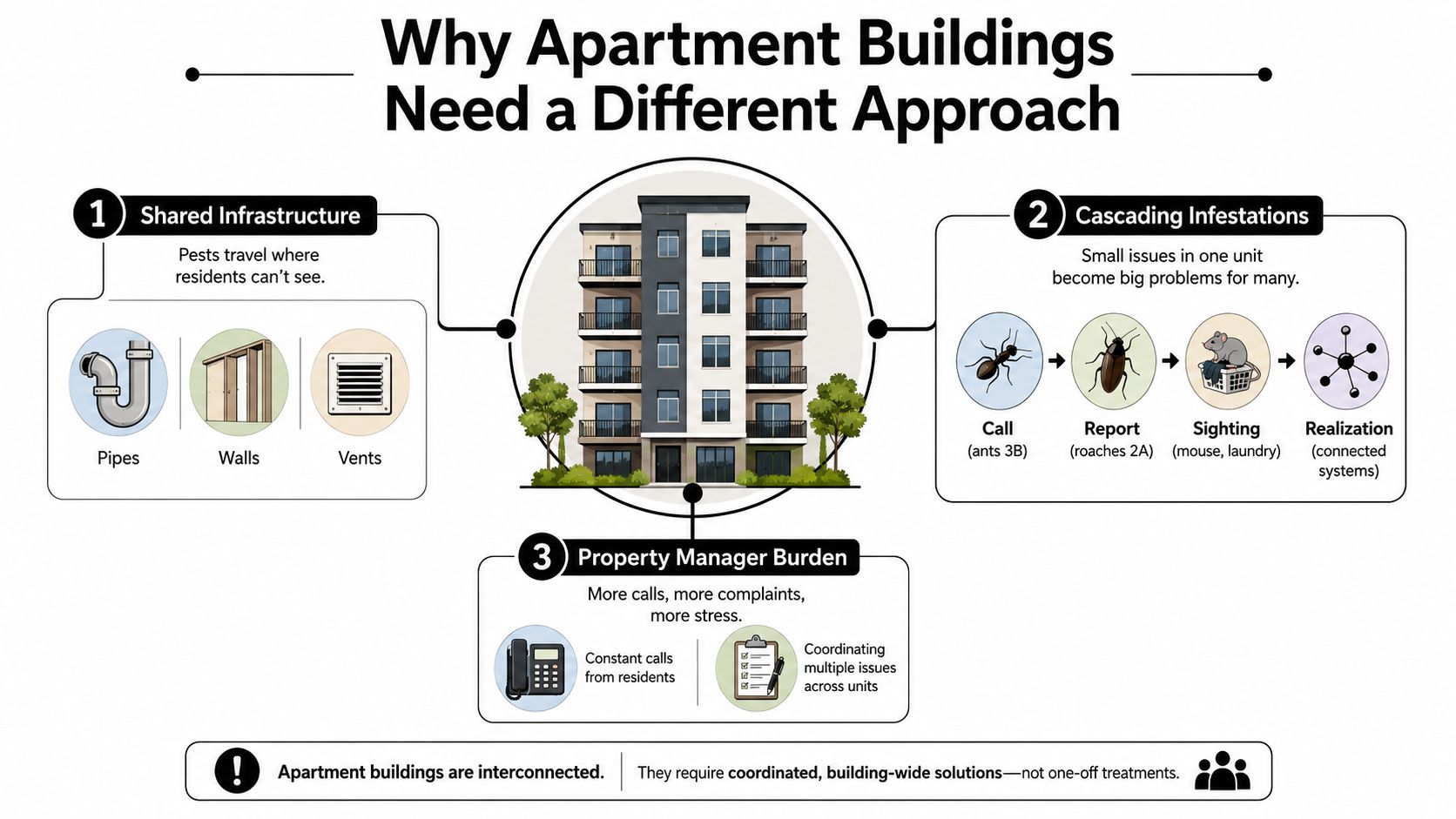
A complaint is often a signal
A single unit can be the first place where someone notices activity, not the place where the problem began. If technicians spray only that apartment, pests may remain in adjacent units or shared infrastructure and return after the product loses effectiveness. The resident then reports the same problem again, and management accumulates callbacks without learning where the pressure is coming from.
That pattern explains why isolated service tickets often feel repetitive. The provider responds to symptoms while untreated spaces continue to supply pests.
Practical rule: In connected housing, inspect the complaint unit, nearby units, common areas, and the pathways linking them.
Historical multifamily housing research found that 67% to 82% of pest-control work orders came from just 11% to 16% of apartments, according to the urban multifamily housing evidence summarized by Phys.org. That concentration makes early identification of repeat-problem units important, but it doesn't mean other apartments can be ignored. A small group may generate most calls while shared routes allow activity to spread.
A building-wide approach combines coordinated inspection, monitoring, exclusion, sanitation, targeted treatment, and resident communication. It also gives the property manager a defensible record of what was checked, what was found, who needed access, and what corrective work remains.
Inspecting the Building Before Treating Any Unit
A useful inspection starts outside, not with a spray tank. The technician checks landscaping that touches the facade, the condition of garbage enclosures, gaps around exterior utility penetrations, service doors, loading areas, and places where water collects near the foundation. These conditions can create entry points or sustain activity before pests ever reach an apartment.
Inside, mechanical rooms, utility risers, trash chutes, laundry facilities, storage areas, and shared hallways deserve focused attention. Moisture, food residue, overflowing waste, floor drains, and warm equipment areas can support pest activity even when individual apartments appear well maintained.
What gets checked inside units
A unit-by-unit inspection should be deliberate and repeatable. With a flashlight and probe, the technician examines:
- Kitchen equipment: Behind and beneath the refrigerator, around the stove gap, under the dishwasher, and near exposed plumbing.
- Cabinet interiors: Corners, hinges, shelf joints, and openings around pipes.
- Bathrooms: Sink cabinets, toilet supply lines, tub access panels, baseboards, and ventilation areas.
- Room edges: Baseboards, door thresholds, wall penetrations, and areas behind stored items.
- Activity evidence: Droppings, shed skins, nesting material, live insects, grease marks, gnawing, moisture damage, and odors.
The technician should document findings with photographs, location notes, and a condition rating for each inspected unit. Notes should separate sanitation concerns from structural openings and confirmed pest activity. A practical pest control inspection checklist helps keep the process consistent across apartments and common areas.
Inspection findings determine the scope
The inspection determines treatment boundaries, access priorities, sequencing, preparation instructions, and follow-up needs. It also identifies work that pest control alone can't solve, such as a leaking supply line, a damaged door sweep, an unsealed wall penetration, or waste-management conditions near a dumpster.
A vague ticket that says “treated” doesn't tell management whether the source was addressed. A useful report connects each location to an observation and a recommended action.
Single-Unit Treatment Versus Building-Wide IPM
A resident reports roaches, the technician treats that apartment, and the work order closes. The neighboring units, utility spaces, and shared travel routes remain unexamined. If activity persists there, pests can return through connected walls, plumbing openings, hallways, or service areas, and management pays for another isolated response.
A building-wide integrated pest management program changes the decision process. A structured integrated pest management program uses inspection and monitoring to identify where action is needed, then coordinates treatment with repairs and corrective work. Depending on findings, the scope may include every-unit inspections, adjacent-unit checks, common-area monitoring, sanitation corrections, exclusion repairs, targeted baiting, and scheduled reinspection.
The Journal of Integrated Pest Management study reported German cockroach infestation declining from 49% at baseline to 12% after 12 months in a multifamily building-wide IPM program. Bed bug infestation declined from 9% to 3% over the same period. The study also recorded overall building-wide infestation falling from 49% to 24% at six months and to 12% at 12 months.
| Metric | Single-Unit Treatment | Building-Wide IPM |
|---|---|---|
| Inspection scope | Complaint unit first | Units, common areas, exterior, and connected routes |
| Treatment decision | Often based on one report | Based on activity, monitoring, and conditions |
| Neighboring apartments | May remain untreated | Adjacent and at-risk spaces can be inspected |
| Follow-up | Frequently callback-driven | Scheduled reinspection and documented adjustments |
| Chemical use | Can encourage repeated broad applications | Supports targeted baiting and limited applications |
| Management outcome | Reactive tickets and recurring complaints | A coordinated record of progress and corrective work |
A separate community-wide IPM program in a 258-unit, 40-building housing complex reduced cockroach counts per apartment by 88% within seven weeks and eliminated 85% of infestations found in the initial survey by seven months, according to the Purdue IPM study PDF. Apartments were revisited and treated biweekly or monthly, giving managers a practical reference for scheduling follow-up rather than waiting for new complaints.
Tenant communication determines whether the system works in occupied housing. Explain why access to adjacent units may be requested, what residents must prepare, and how to report activity after treatment. For records, responsibilities, and facility controls, consult this guide to pest control compliance. Per-unit treatment can address an urgent symptom. Coordinated IPM verifies results and connects treatment with building-level corrective work.
Exclusion, Sanitation, and Monitoring as a Layered System
A tenant may report one cockroach in a kitchen, while the source sits beside a plumbing chase, trash room, or neighboring apartment. Spraying that unit alone can reduce sightings briefly, but it will not close the route, remove the food supply, or reveal whether the population is spreading. Lasting control requires several building-wide layers working together.
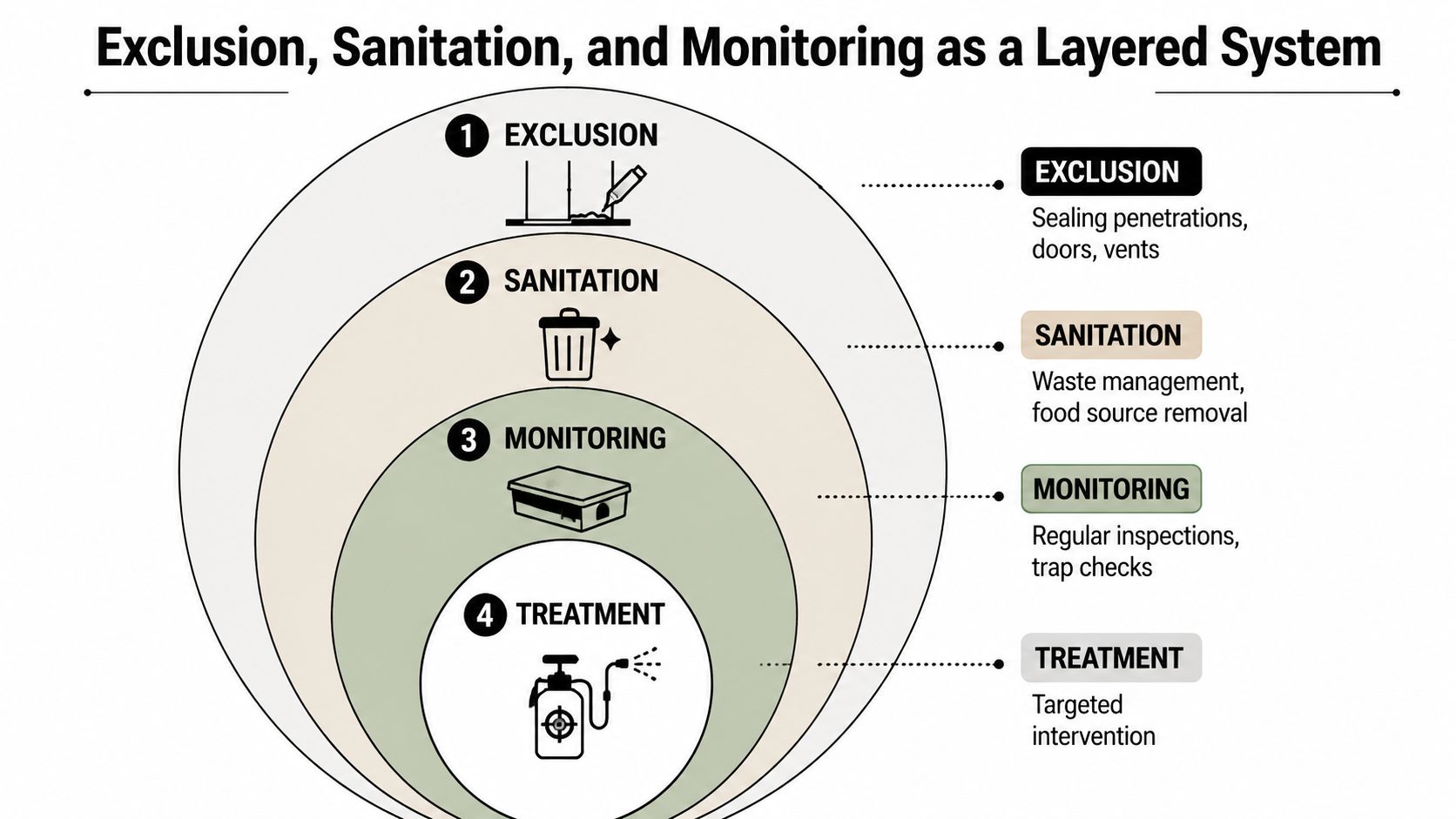
Four controls that support one another
Exclusion blocks the paths pests use to enter and move between spaces. Useful repairs include sealing utility penetrations, replacing worn door sweeps, closing wall openings, and securing rooftop vents. Stored tenant belongings can block a wall or mechanical area, so management must assign responsibility for clearing access and completing repairs. A technician can document the opening, but the property needs a process that turns that finding into corrective work.
Sanitation removes conditions that sustain activity. Dumpster placement, overflowing waste, food residue in recycling rooms, dirty floor drains, and unsealed trash can undermine treatment. Shared-space rules should be practical, posted, and enforced consistently. For recurring drain odors, moisture, or organic buildup, management may also arrange drain inspection services. Plumbing defects can maintain pest pressure after an apartment has been treated.
Monitoring supplies early warning instead of waiting for another complaint. Place sticky monitors along plumbing chases and other discreet travel routes. Bait stations may suit mechanical rooms or exterior areas when the product label permits their use and maintenance. A unit-by-unit log should record counts, dates, locations, and changes in activity, allowing staff to identify patterns across apartments and common areas.
Targeted treatment follows the evidence. Gel baits, crack-and-crevice applications, carefully placed dust, and limited perimeter work can address confirmed activity more precisely than broadcast spraying. Each record should identify the pest, location, product or method, reason for use, and required follow-up.
Where programs break down
Properties often inspect apartments while overlooking laundry rooms, trash areas, risers, storage spaces, and exterior entry points. Reliance on tenant reports alone delays detection and produces uneven information.
Residents need clear instructions on preparation, access, and early reporting. Management must coordinate access, correct building conditions, address common areas, and keep residents informed. The pest-management team must inspect, document, treat appropriately, and return to verify results.
Treatment Protocols That Hold Up Over Time
A treatment plan should function as an operating procedure, not a promise that one visit will end the problem. The first visit reduces active pressure and preserves the evidence needed to choose the next action across the property.
Start with targeted intervention
For cockroaches, a technician may place gel bait in suitable cracks, voids, and harborage areas, apply dust to appropriate wall cavities, and use limited perimeter treatment only where inspection supports it. Broad applications can create unnecessary exposure, miss hidden populations, and make later monitoring less reliable.
The service record should identify the species, exact location, observed activity, treatment method, product label information, tenant preparation notes, and access limitations. Use the same format at every visit. Management can then compare activity across apartments, common areas, and connected building spaces instead of trying to interpret unrelated service notes.
Build in reinspection
The community-wide IPM benchmark described in the Purdue study used repeated visits, with apartments revisited and treated biweekly or monthly for seven months. That schedule allows technicians to confirm bait acceptance, find newly active units, check monitors, and verify whether repairs or housekeeping changes were completed. Its study's reported cockroach and residue findings reinforce scheduled follow-up rather than dependence on a single service call.
During the first phase, inspections may occur more often. Once activity declines, management can shift to monthly or condition-based checks. Fresh captures, live sightings, new droppings, tenant reports, or signs of reinfestation should trigger another inspection, not an automatic building-wide spray.
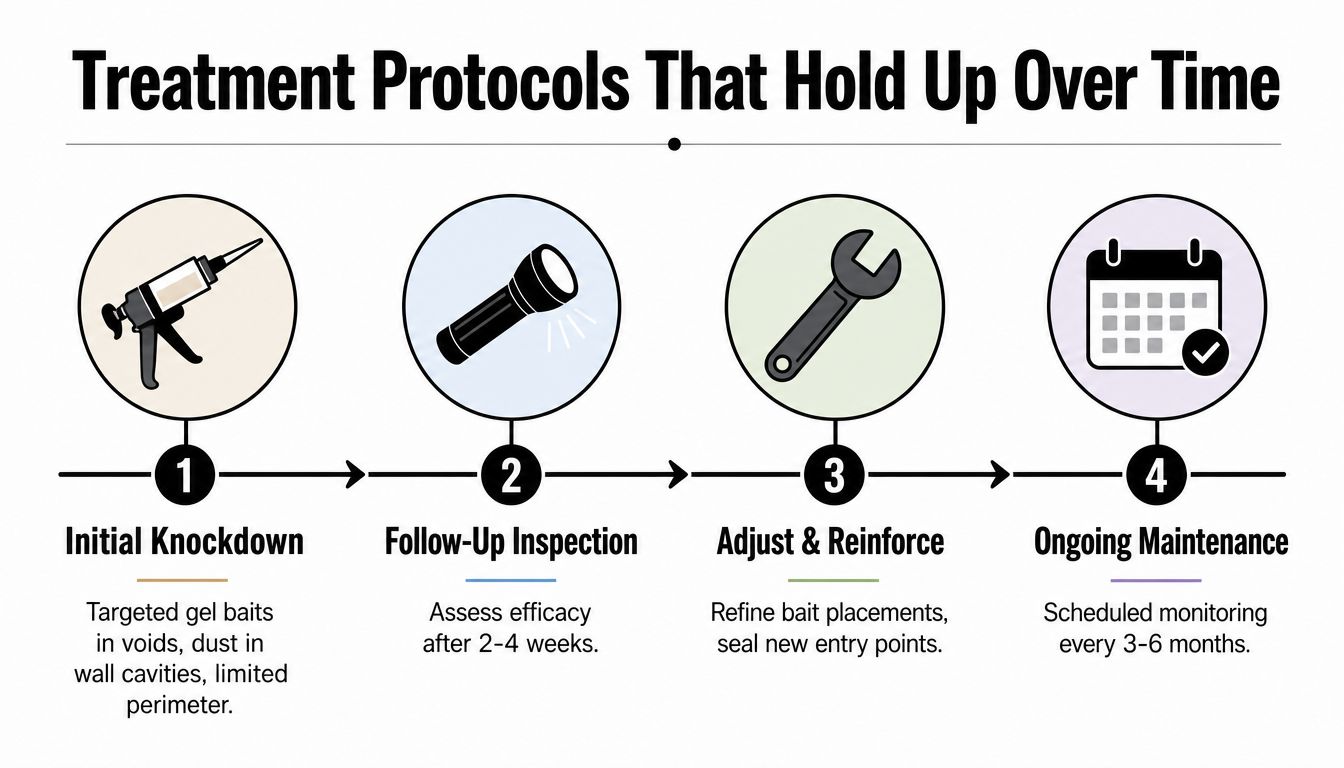
Define resolution clearly
A unit is not resolved because no pest appeared during one visit. Resolution requires monitoring to show declining or absent activity, correction of contributing conditions, reliable access, and no continuing source in neighboring or connected areas.
If activity remains, the next action may involve adjusting bait, inspecting further, repairing an entry point, correcting sanitation conditions, or checking adjacent units. The property manager should see that decision, its reason, and its follow-up date in the service record. Clear resident communication about preparation, access, and early reporting keeps the building-wide plan workable.
Eco-Friendly Pest Control Without Losing Effectiveness
Eco-friendly pest control isn't a ban on every chemical product. It's a disciplined effort to use the least disruptive effective method, in the right place, for a documented reason. Physical exclusion, sanitation, monitoring, baiting, and targeted applications can reduce dependence on broad spraying without leaving a property unprotected.
The Purdue community-wide IPM study reported that cockroach counts fell while detected pyrethroids also declined, from 6 ± 1 to 2 ± 1 in kitchens and from 5 ± 1 to 3 ± 1 in bedrooms, as documented in the research findings on targeted IPM. That result supports a practical point. Lower residue and stronger control can coexist when technicians replace routine broadcast applications with monitoring, baiting, sanitation, and targeted follow-up.
| Metric | Conventional Spray Program | Eco-Friendly IPM |
|---|---|---|
| Primary decision | Calendar or complaint driven | Inspection and monitoring driven |
| Product placement | May cover broad areas | Focused on confirmed routes and harborage |
| Prevention | Often secondary | Exclusion and sanitation are core parts |
| Follow-up | May depend on callbacks | Scheduled and evidence based |
| Chemical stewardship | Can create unnecessary applications | Uses targeted products where justified |
| Building responsibility | Frequently unclear | Assigns repairs, access, waste, and reporting duties |
Eco-friendly IPM may appear slower at the first visit because the technician spends time locating sources and correcting conditions. That work often shortens the total path to control by preventing repeated reinfestation. A quick spray can feel efficient while generating another complaint later.
Property managers should request current product labels, application records, technician licensing or certification information, monitoring documentation, and a written explanation of preparation and reentry requirements. The same attention to equipment and method that matters in professional window cleaners' tools and methods applies here as well. The visible result depends on the tools, the operator, and the process behind them.
What Working With The Green Advantage Looks Like
A serious apartment pest program starts with access and scope, not a generic appointment. The property manager should identify affected units, common areas, recent complaints, recurring work orders, photographs, leaks, renovations, and any access limitations before the technician arrives.
The Green Advantage is a family-owned pest control company serving Crown Point, IN and the broader Northwest Indiana community. Its residential and commercial pest control work includes general pest treatment, rodent control, termite services, pest inspections, mosquito reduction programs, and insect identification support.
Access and communication come first
The technician and property manager should agree on notice requirements, unit access, common-area access, privacy expectations, and the schedule for inspection or treatment. Residents need clear instructions about preparation, materials that may be used, areas that must remain accessible, and whom to contact if activity worsens or an appointment is missed.
That communication reduces confusion without blaming tenants. A resident may need to reduce clutter, clean food residue, report leaks, avoid moving infested items, or provide access. Building management remains responsible for shared spaces, waste handling, repairs, and conditions outside the resident's control.
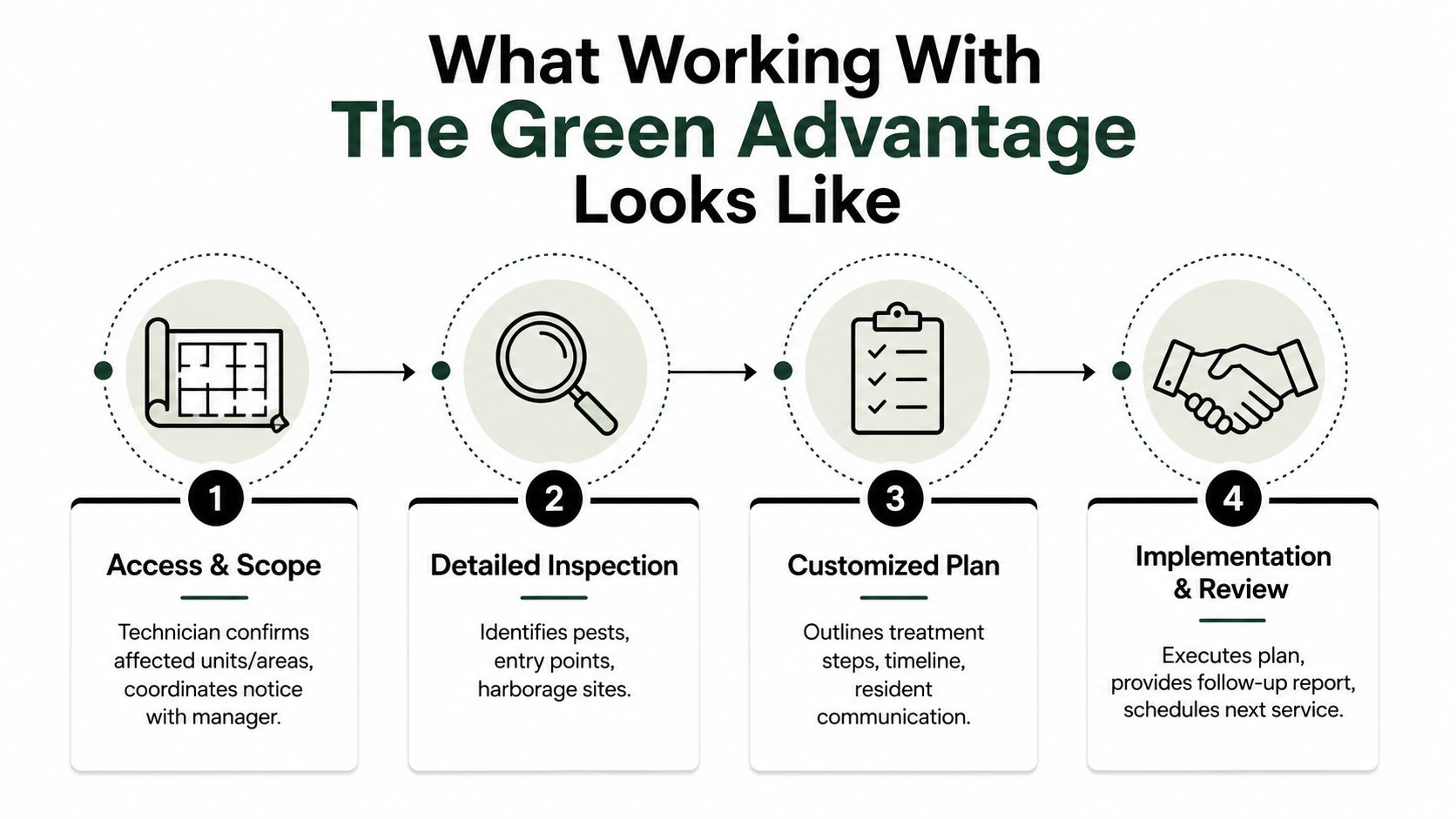
The initial visit should produce usable information
The first inspection should cover representative apartments when the property scope allows, then expand to every unit when activity, risk, or access requirements justify it. Hallways, laundry rooms, trash enclosures, mechanical rooms, storage areas, risers, and exterior entry points belong in the inspection record.
A useful report identifies:
- Pest activity: Species, signs, location, and apparent severity.
- Building pathways: Openings around pipes, conduits, vents, doors, and wall penetrations.
- Contributing conditions: Moisture, food residue, clutter, waste, leaks, and damaged surfaces.
- Treatment actions: Products or methods used, exact placement, and safety instructions.
- Outstanding work: Repairs, sanitation tasks, access needs, resident preparation, and next inspection dates.
Management should receive a written action plan covering exclusion, sanitation, monitoring, treatment, tenant notices, and reinspection. Service records, product labels, monitoring results, photographs, and corrective actions create accountability between residents, management, maintenance staff, and the pest-control provider.
Building conditions and resident duties must be separated
A tenant can keep food sealed and report activity quickly, but a tenant can't repair a shared plumbing chase or seal a gap behind a mechanical panel. Oregon rental guidance states that at the start of tenancy, housing must be safe, clean, sanitary, and free from rodents and vermin, and landlords must maintain common areas and repair conditions that could allow new infestations, as explained in the Oregon Law Help rental housing guidance. Requirements vary by location, so property managers should confirm applicable local rules.
For bed bugs, the EPA advises apartment residents to notify the landlord immediately because nearby units may need inspection and landlords may need to participate in treatment, according to the EPA guidance for residents. The EPA also says building management must participate diligently in bed bug control, and some researchers recommend treating adjacent units on both sides, above, and below, as described in the EPA guidance for landlords.
A professional program should be able to show what changed from one visit to the next, not just that someone arrived and applied a product.
One sighting doesn't always reveal the full source. Scheduling an inspection early gives the technician time to define affected areas, connected routes, contributing conditions, and sensible treatment boundaries. Acting before complaints multiply can limit disruption and keep a contained issue from becoming a building-wide burden.
The Green Advantage can help property managers, landlords, homeowners, and local businesses in Crown Point, IN and nearby Northwest Indiana service areas assess pest activity and build a practical treatment plan. Schedule an apartment-building inspection with The Green Advantage to identify affected units, shared pathways, and prevention work before a small pest complaint spreads.
Flea and Mosquito Yard Treatment in Crown Point, IN

A warm evening in Crown Point should mean dinner on the patio, kids playing in the grass, and dogs moving freely through the yard. Instead, mosquitoes rise from shaded vegetation, fleas follow pets indoors, and everyone starts swatting, scratching, and retreating inside. If you're searching for pest control near me, the answer isn't always another can of yard spray. Effective flea and mosquito yard treatment starts with finding where these pests breed, rest, and survive.
The Green Advantage serves homeowners, property managers, and businesses in Crown Point, IN, and nearby Northwest Indiana communities with inspection-based pest management. The practical approach is simple: remove breeding conditions, treat the places pests use, and schedule follow-up care when the life cycle demands it. That strategy protects comfort without turning the entire property into a chemical treatment zone.
Reclaiming Your Yard From Fleas and Mosquitoes
A family can do everything right and still lose a summer evening to biting pests. The lawn is mowed, the patio is clean, and the dog has received veterinary flea care. Yet mosquitoes gather beneath shrubs, fleas remain near the dog's favorite resting place, and the family moves indoors before dessert.
That pattern usually points to a hidden yard problem, not a lack of effort. Fleas and mosquitoes use very different spaces, so one broad application rarely addresses both. Fleas develop in protected, humid areas where pets, wildlife, or outdoor clutter create shelter. Mosquitoes need standing water for their immature stages and spend daylight hours resting in cool vegetation.
Why a quick spray disappoints
A blanket spray may knock down exposed adult insects, but it can miss flea pupae beneath organic debris, mosquito larvae in a clogged gutter, and adult mosquitoes resting under dense leaves. The product may also fail when rain, shade, property layout, or untreated neighboring breeding sites change the conditions around your home.
The U.S. Environmental Protection Agency identifies standing-water removal as the most effective mosquito-control strategy, while the CDC has stated that adulticiding is usually the least effective technique and that larval source reduction is the most effective and economical approach. EPA and CDC mosquito-control guidance supports the same conclusion homeowners reach after repeated failed spraying: source reduction must come first.
Local rule: Treat the habitat, not just the insect you happen to see.
The same principle applies to fleas. A professional inspection looks at pet resting areas, shaded edges, under-deck spaces, foundation lines, kennels, and other locations that stay cooler and damper than the open lawn. It also considers the home, because fleas can travel indoors on pets, clothing, and shoes.
A practical local solution
The Green Advantage's service model fits this type of problem because it focuses on diagnosis and targeted treatment rather than automatic whole-yard spraying. For a homeowner looking for an exterminator in Crown Point, IN, the right first step is an inspection that identifies both flea refuges and mosquito breeding sites.
You don't need to surrender the yard to pests. You need a treatment plan that matches how your property is being used.
Understanding Flea and Mosquito Life Cycles
A few biting adults can hide a much larger problem. Fleas develop through egg, larva, pupa, and adult stages. Mosquitoes follow egg, larva, pupa, and adult stages too, but their immature stages require water. That difference determines where treatment must begin.
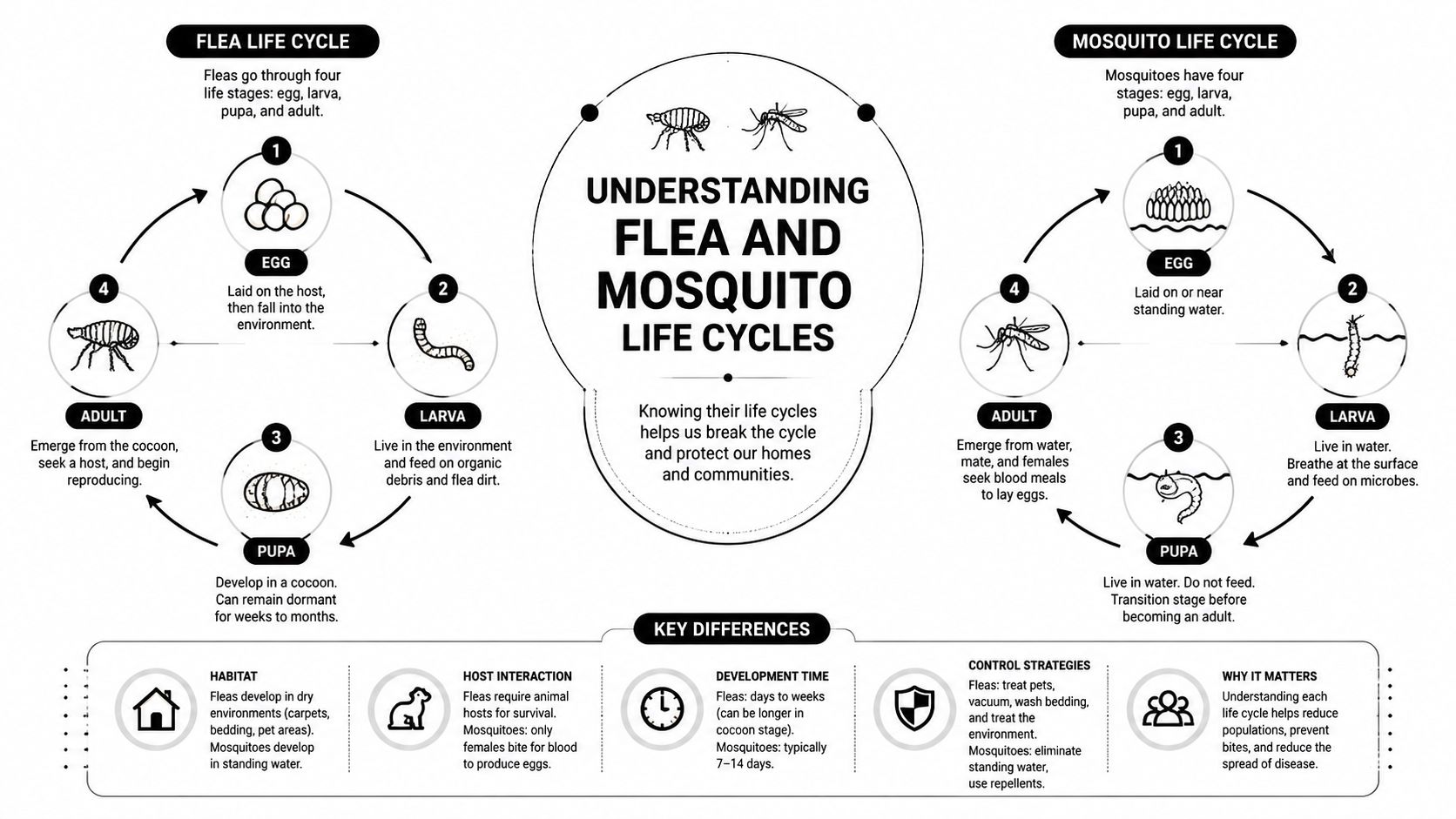
Fleas hide between the visible stages
Adult fleas feed on dogs, cats, and wildlife. Females lay eggs that drop into bedding, soil, carpet, cracks, and protected yard areas. Larvae avoid bright, dry conditions and develop within organic debris before forming protective cocoons.
Pupae explain why one application often disappoints. Insecticides have difficulty reaching fleas inside their cocoons, and adults can emerge later when warmth, vibration, or a nearby host signals favorable conditions. Texas A&M AgriLife Extension recommends a follow-up application 7 to 10 days after the first treatment. Short-residual products may require two or three follow-up sprays at 5- to 10-day intervals. Texas A&M flea-control guidance
The visible fleas are only part of the infestation. For every 6 fleas visible on a pet, about 300 may be present in the environment or on the animal, according to University of Kentucky flea guidance. Treating the pet without addressing its resting areas leaves the cycle intact. Review this flea reproduction cycle to see how quickly hidden stages can maintain activity.
Mosquitoes develop in water
Female mosquitoes lay eggs in or near water. Larvae and pupae remain there until adults emerge and begin flying and feeding. Warm conditions speed development, so a small neglected container can become a repeated source of biting adults.
Mosquitoes can use very small amounts of water and may develop from egg to biting adult in as little as 5 days, according to the cited mosquito lifecycle discussion. Inspect buckets, toys, clogged gutters, saucers, and other containers after rain.
Adult treatment reduces mosquitoes already flying, but it does not remove eggs or larvae in water. Drain or cover removable containers, and treat water that cannot be eliminated. Flea control requires follow-up because pupae can outlast the first application. Mosquito control requires repeated inspection because new adults can emerge whenever water remains available. The hidden stages, not the insects you notice, determine whether yard treatment holds.
Where Fleas and Mosquitoes Hide in Your Yard
A yard can look clean while still supporting fleas and mosquitoes. The problem is usually hidden in shaded pet areas, damp debris, and small containers that hold rainwater. Treat those microhabitats first. Blanket spraying across open lawn wastes product and misses the places that sustain the infestation.
Fleas concentrate where pets rest and travel. They prefer shade, humidity, and protection from drying conditions, while exposed lawn in full sun is less favorable for development.
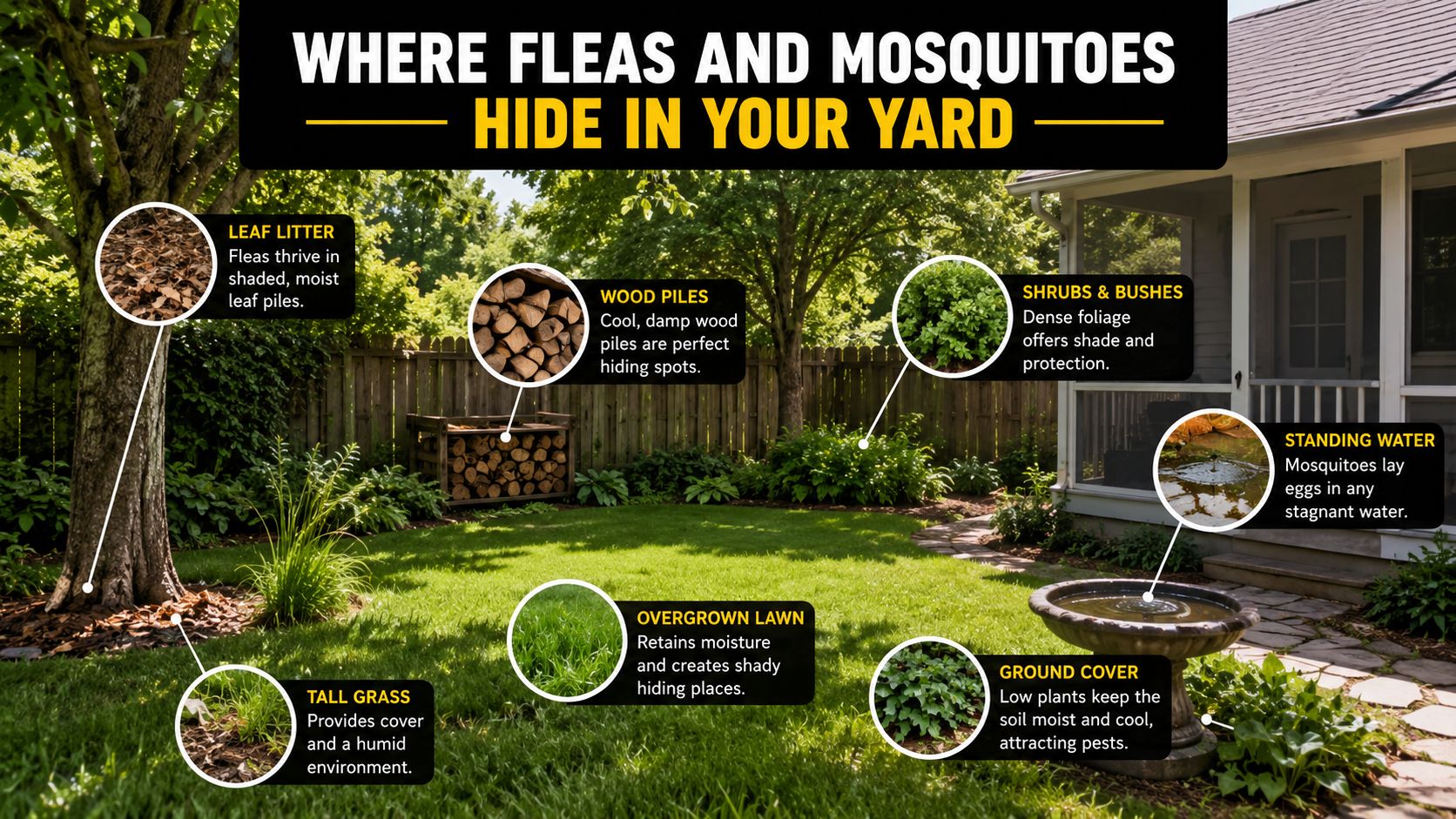
Flea hotspots deserve targeted attention
Inspect the property around your dog's or cat's routine. The places a pet naps, waits, or passes repeatedly matter more than the middle of a sunny lawn.
Focus on:
- Under decks and porches: Shade and organic debris protect flea stages from drying.
- Along foundations and fences: Leaves, hair, and moisture collect along these edges.
- Doghouses and kennels: Repeated animal use concentrates flea activity.
- Wood piles and brush: Wildlife can bring fleas into protected ground cover.
- Shaded vegetation: Dense plants keep soil and debris damp after rain.
- Pet paths and resting spots: Eggs and larvae build up where hosts spend time.
Mow grass short, trim dense vegetation, and remove leaves and debris so the ground dries faster. These steps reduce protected microhabitats, but established fleas still require treatment and follow-up.
Mosquito sources can be surprisingly small
Search for water instead of relying on what the patio looks like. Check gutters, downspouts, tarps, overturned toys, plant saucers, wheelbarrows, low spots, drainage areas, and any container that can collect rain. Even a bottle cap can hold enough water for mosquito egg laying, as described in this mosquito standing-water information.
A yard may appear dry while mosquitoes develop behind the garage or beneath a deck. Gutters are easy to miss above eye level, while folded tarps and blocked drainage pipes create sheltered pockets after rain. Remove, empty, or cover containers whenever possible. Water that cannot be eliminated may require targeted larval treatment.
Inspection priority: Find the shaded places pets use and the wet places mosquitoes need. Those zones usually matter more than the visible size of the lawn.
An effective plan treats resting vegetation and sheltered zones for adult mosquitoes, then reserves larvicides for water that cannot be drained or removed. Inspecting these sites repeatedly also addresses mosquito activity that returns after new rain. In Northwest Indiana yards, resistance and hidden breeding sites make precise, integrated treatment more dependable than repeated blanket spraying.
DIY Sprays Versus Professional Integrated Treatment
Store-bought sprays are tempting because they're easy to purchase and quick to apply. They can kill exposed insects, but they often leave the conditions that produced the infestation untouched. A homeowner may spray the patio edge while missing a clogged gutter, a shaded doghouse area, or flea pupae protected beneath debris.
Mosquito resistance adds another problem. Recent coverage reports that mosquito populations are developing resistance to common backyard sprays, which makes active-ingredient rotation, larval control, and habitat inspection more important than repeated blanket applications. WRAL's coverage of mosquito spray resistance addresses the issue directly.
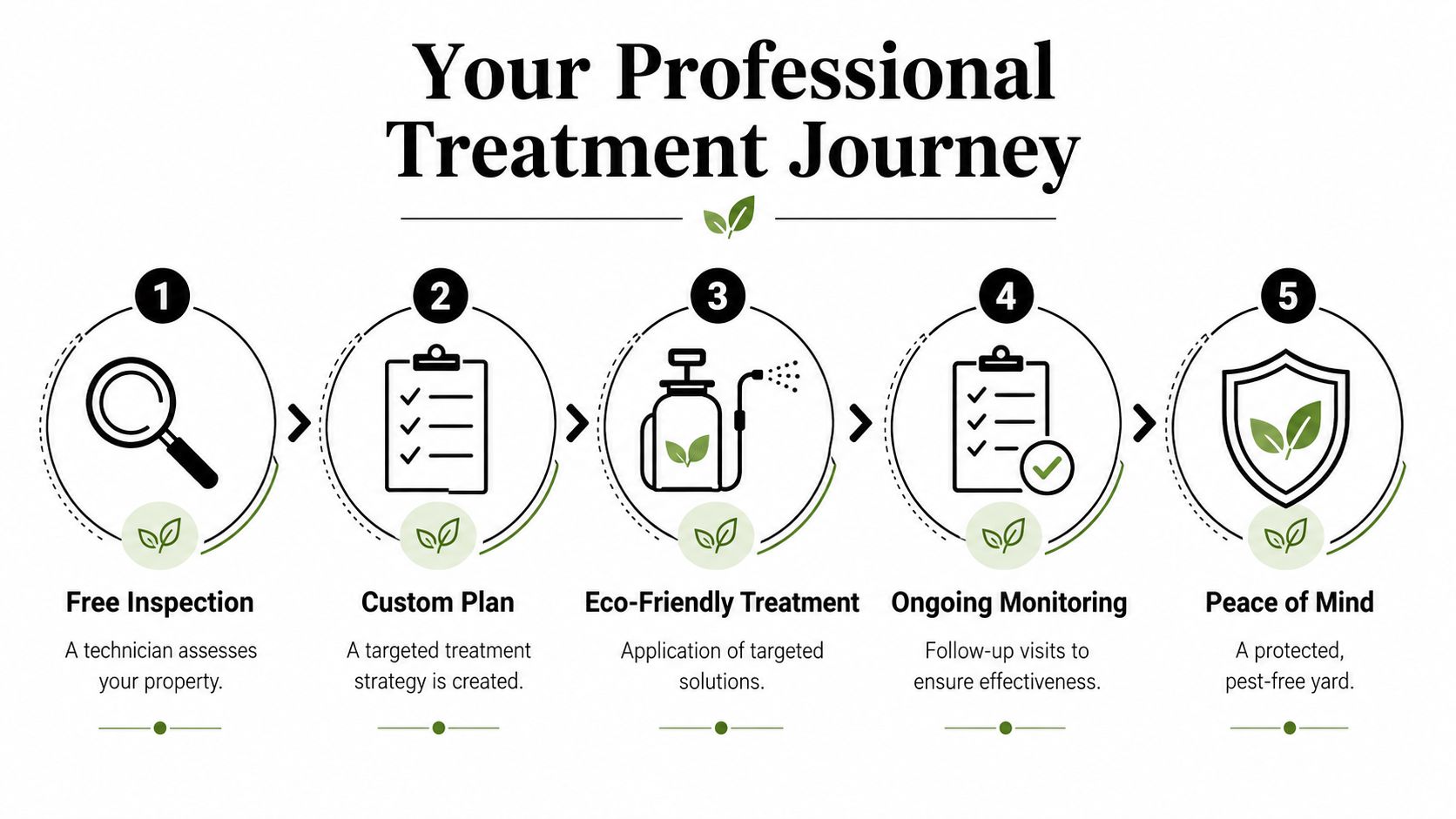
The difference is the decision process
Integrated treatment doesn't mean spraying more. It means choosing the right intervention for each location.
| Factor | DIY Store-Bought Sprays | Professional Integrated Treatment |
|---|---|---|
| Inspection | Often limited to visible insects | Maps breeding sites, resting zones, and flea microhabitats |
| Flea control | May affect exposed adults | Addresses pet areas, sheltered development sites, and follow-up needs |
| Mosquito control | Usually focused on adult insects | Combines water removal, larval control, and targeted residual treatment |
| Resistance response | Repeated use may rely on the same active ingredient | Allows informed product selection and active-ingredient rotation |
| Yard coverage | Broad application can treat unnecessary areas | Concentrates treatment where pests rest or develop |
| Follow-up | Homeowner decides when to reapply | Service timing reflects pest biology and site conditions |
For homeowners comparing service providers, the broader pest control contractor lead generation resource offers useful context on how pest companies present inspection and treatment services. The homeowner's key question should remain practical: does the provider inspect the habitat, explain the plan, and identify what must happen after application?
Why blanket spraying is the wrong default
Whole-yard spraying can waste product on areas pests rarely use while missing the locations that sustain the infestation. It can also create unnecessary concern around pollinator gardens, pets, children, and outdoor living spaces.
The Green Advantage can evaluate a Crown Point property and develop a treatment plan around its actual conditions. That may include correcting water sources, using Bti in water that can't be drained, and applying residual products only to mosquito resting vegetation or flea-prone shelter areas. This is also the right framework for commercial pest control, where outdoor spaces, employee areas, entrances, and customer-facing landscaping need coordinated attention.
What to Expect From a Professional Yard Treatment
A professional visit should answer three questions before anyone applies product: where pests are developing, where they are hiding, and what must happen after treatment. If a technician offers only to “spray the yard” without inspecting those conditions, choose a different provider.
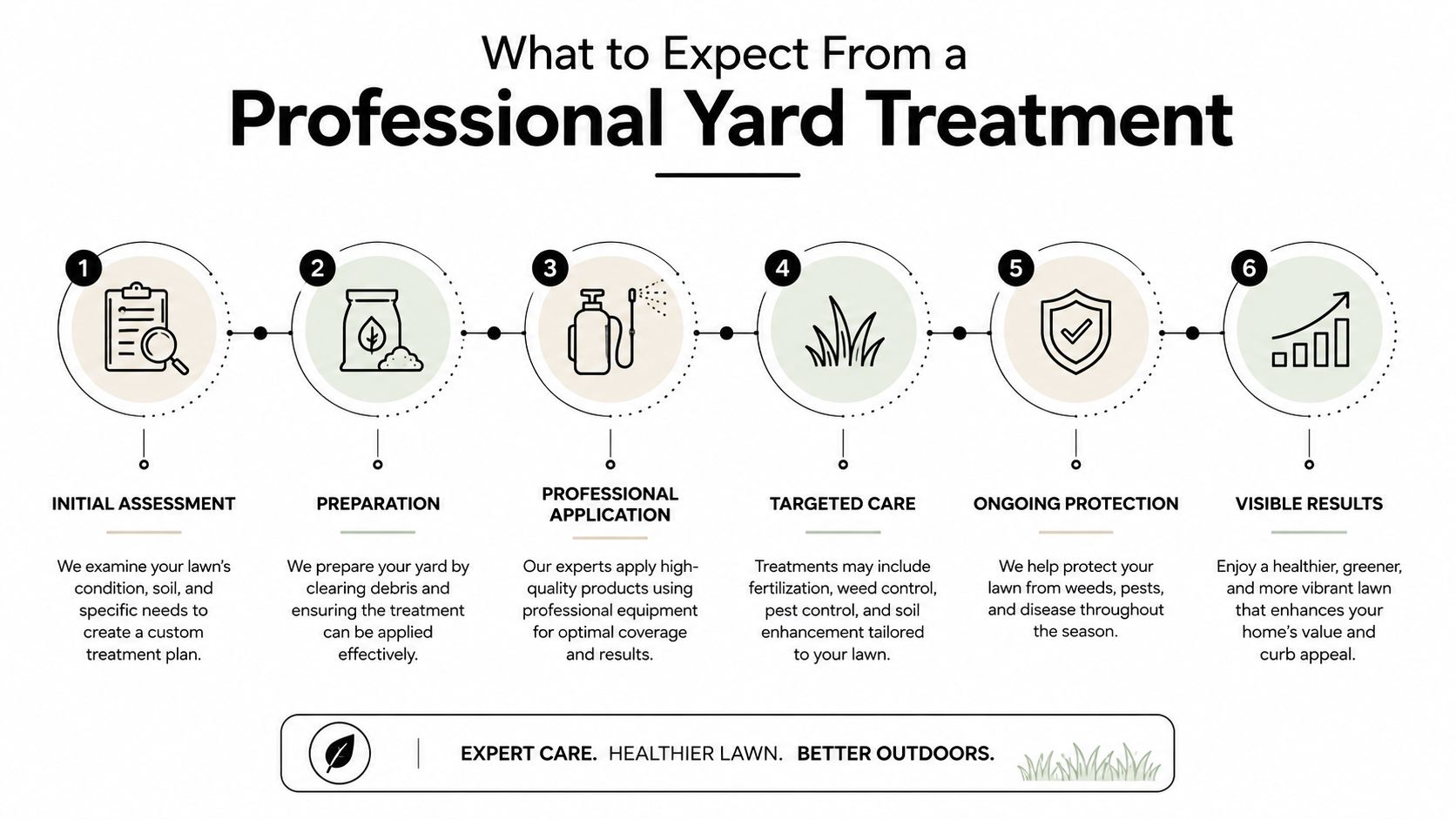
Before treatment
The technician should inspect shaded soil, dense vegetation, pet resting areas, play spaces, drainage problems, gutters, low spots, and outdoor storage. Ask how your family and pets use the yard. Bites concentrated near one area, fleas found on a pet, or mosquitoes gathering by a porch can point to a specific microhabitat instead of a whole-yard problem.
Clear toys, bowls, and movable items from the treatment zones. Keep children and pets away while the work is underway. The technician must explain reentry instructions for the product, application site, weather, and label requirements. Do not accept a guessed return time.
During treatment
Treatment should follow the inspection. Flea control typically targets shaded, humid shelter near pet activity, where immature stages can persist. Mosquito control focuses on resting vegetation, protected areas, and water that cannot be drained. This targeted approach reduces wasted product and avoids treating open lawn that does not support pests.
Bti may be used in water that remains on the property, while a residual application may address adult mosquitoes resting during the day. Ask which areas receive each treatment and why. A technician who cannot explain placement is relying on blanket coverage rather than integrated control.
After treatment
Immediate results do not tell the whole story. Flea adults can continue emerging from protected pupae, so follow-up treatment may be needed according to the product label and the infestation's development. Short-residual products may require repeated service at intervals set by the label and site conditions. As noted earlier, Texas A&M AgriLife Extension's flea-treatment guidance explains why follow-up matters.
Mosquito activity should also be monitored after service. Keep removing standing water and report continued activity in specific areas. Persistent mosquitoes may point to a missed gutter, blocked drainage pipe, under-deck shelter, or nearby source. Fleas that continue appearing may indicate untreated pet bedding, crawlspace edges, or another protected refuge. Give the provider those details so the next visit can target the source instead of adding more spray.
Safety and Environmental Benefits of Integrated Pest Control
A family using the yard, a dog resting beneath the deck, and flowers attracting pollinators can all share the property safely when treatment follows a clear plan. Product choice, application site, label directions, and technician instructions determine that outcome. Integrated pest control starts by correcting conditions that support pests, then treats only the areas that still need control.
Standing water deserves attention first. Remove containers, improve drainage, clear gutters, and cover items that collect rain. Water that cannot be removed may require Bti, a larvicide used against mosquito larvae. This source-focused work reduces reliance on broad adult-mosquito spraying. The EPA and CDC guidance on mosquito control supports removing breeding sites and addressing larvae as part of mosquito control.
Less product, better placement
Placement matters as much as product selection. Residual applications should target mosquito resting vegetation and protected flea habitat, while avoiding flowering plants and open lawn that offer no pest-management reason for treatment. Ask the technician what was treated, why each area was selected, what preparation is required, and when people and pets can return.
Follow the label every time. Keep children and pets away until the technician's instructions allow access, and protect edible gardens, ponds, and pollinator areas according to the treatment plan.
Why professional guidance helps
Repeated DIY spraying can add product without addressing the conditions that sustain fleas and mosquitoes. A trained technician can determine whether the priority is drainage, vegetation, pet resting areas, indoor flea control, or several sources working together. That assessment also helps identify resistance or poor results caused by using the same approach repeatedly.
For gardens, mixed-use yards, property managers, and businesses, written service details support consistent inspections and clear communication. Eco-friendly pest control is not avoiding every treatment. It is using the least disruptive effective approach while correcting the conditions that bring pests back.
Seasonal Timing and Local Considerations for Northwest Indiana
In Crown Point and nearby Northwest Indiana, pest pressure shifts as temperatures rise, rain collects in containers and low spots, vegetation thickens, and pets spend more time outside. Start inspecting before the yard becomes uncomfortable. Early corrections usually work better than waiting for widespread activity.
Let the property set the schedule
A shaded lot with dense shrubs, damp soil, frequent pet activity, or nearby wetlands needs a different plan from a sunny, open yard. Heavy rain can restore standing water and disturb treatment areas. Trimmed vegetation, better drainage, and dry pet resting spaces make flea habitat less favorable.
Use this maintenance rhythm through the active season:
- Early-season inspection: Check gutters, tarps, plant saucers, toys, low spots, doghouses, kennels, and shaded edges before outdoor activity increases.
- After-rain source reduction: Empty or cover containers, clear water-holding debris, and keep drainage moving.
- Vegetation management: Mow regularly, trim dense growth, and remove leaves from pet resting areas so flea habitats dry faster.
- Active-season monitoring: Record where bites occur, where pets rest, and which areas stay damp. Give those details to the technician during follow-up service.
- Home protection: If fleas enter the house, pair yard treatment with pet care and suitable indoor control. Treating the yard alone will not solve an indoor infestation.
Small breeding sites deserve attention. Mosquitoes can develop in very small amounts of standing water and may reach the biting adult stage quickly, as noted in the cited mosquito lifecycle information. Inspect containers and low spots after rain instead of relying on blanket spraying. This approach also reduces pressure on treatment products and helps reveal hidden microhabitats.
The same inspection may identify ants, spiders, wasps, rodents, or termite concerns. Homeowners seeking residential pest control, pest control in Crown Point, IN, or an exterminator near me get a more useful plan from property conditions than from a generic spray.
The Green Advantage provides habitat-focused flea and mosquito yard treatment, pest inspections, mosquito reduction programs, residential pest control, and commercial pest control in Crown Point, IN, and surrounding Northwest Indiana areas. Visit The Green Advantage to request an inspection or quote.
Spider Inspection in Crown Point, IN

A homeowner in Crown Point, IN, sweeps the basement stairwell clean on Saturday and finds fresh webs in the same corner a few days later. Another homeowner notices spiders near the garage light, while a property manager sees webs returning around several utility rooms. These findings can feel like an infestation, but one spider or one web usually isn't enough to justify treatment.
A practical spider inspection looks for the pattern behind the sighting. Where are spiders appearing? Are webs, egg sacs, and prey insects returning? Could gaps, moisture, clutter, or outdoor lighting be supporting activity? The Green Advantage serves Crown Point and surrounding Northwest Indiana communities with inspection-focused pest control for homeowners, landlords, businesses, and commercial facilities. The process is designed to identify the reason spiders are present before recommending the lightest effective next step.
What a Spider Inspection Solves
A Crown Point homeowner may sweep the basement stairs repeatedly and still find fresh webs in the same quiet corner. The cleanup removes visible evidence for a short time, but it does not explain why spiders keep using that location. A useful inspection follows the pattern across repeated checks instead of treating each sighting as a separate event.
The inspection looks beyond the spider
Spiders are predators. Their presence often reflects access to prey insects, shelter, moisture, and entry points, rather than a problem caused by spiders alone. Inspection therefore considers insects near windows or lights, clutter beneath stairs, damp areas around a sump pump, and openings along the foundation.
The process also checks whether activity is tied to a particular room, wall, window, foundation section, or exterior light. Regular observations, flashlights, sticky traps, and systematic checks around edges and corners help separate occasional outdoor movement from recurring indoor pressure. Recording the location and type of evidence gives the technician something more useful than a single spider count.
The technician is trying to answer four practical questions:
- Where is activity concentrated? A basement stairwell suggests a different pathway than a bedroom windowsill or exterior eave.
- Is the activity recurring? Reappearing webs carry more weight than one web left after a door or window was opened.
- Are spiders reproducing indoors? Egg sacs and repeated findings may indicate an ongoing indoor cycle.
- What conditions support them? Prey insects, cracks, clutter, outdoor lighting, and moisture can shape the recommendation.
A single sighting may call for observation and cleanup. Repeated signs can justify monitoring, exclusion, or targeted treatment, depending on where the evidence appears and what supports it.
The result is a property-specific diagnosis, not an automatic pesticide application. It helps distinguish harmless outdoor activity from recurring indoor activity and identifies the prey, entry points, or harborage conditions that warrant action. That distinction matters for residential pest control, commercial pest control, and homeowners seeking a lasting solution instead of repeated surface cleanup. The inspection approach is consistent with EPA school integrated pest management guidance, which emphasizes regular monitoring and documentation in preventive pest management.
How Spider Monitoring and Exclusion Work
Monitoring and exclusion address different parts of the same problem. Monitoring identifies where and when activity occurs. Exclusion closes the routes and removes the conditions that keep spiders and their prey near the structure.
Start with direct observation
Begin with evidence you can locate and compare. Check for live spiders, fresh and old webs, egg sacs, shed skins, and prey insects. Web shape and placement help show whether a corner is rarely disturbed or has become a regular hunting site.
Place glue boards in quiet areas such as garages, basements, utility rooms, corners, and along baseboards. A trap confirms movement where sightings are uncommon. Household inspection guidance recommends glue board monitors in corners and along baseboards, especially in closets, garages, basements, attics, and crawlspaces, as described in this practical home spider inspection guide.
Repeat the check and record the location
One observation may reflect a door opened that day or a web that had been left undisturbed. Repeat checks over one to two weeks show whether the same room, wall, trap, or window continues to produce evidence. Record the date, location, sign type, and nearby insects. Facilities may use numbered, dated traps and record captures after 24 to 48 hours, following a monitoring method described in EPA monitoring instructions for pest management.
For a homeowner, a phone note is enough:
- Record the room and exact location.
- Identify the sign as a web, spider, egg sac, or prey insect.
- Photograph recurring areas before cleaning.
- Compare the findings at each later check.
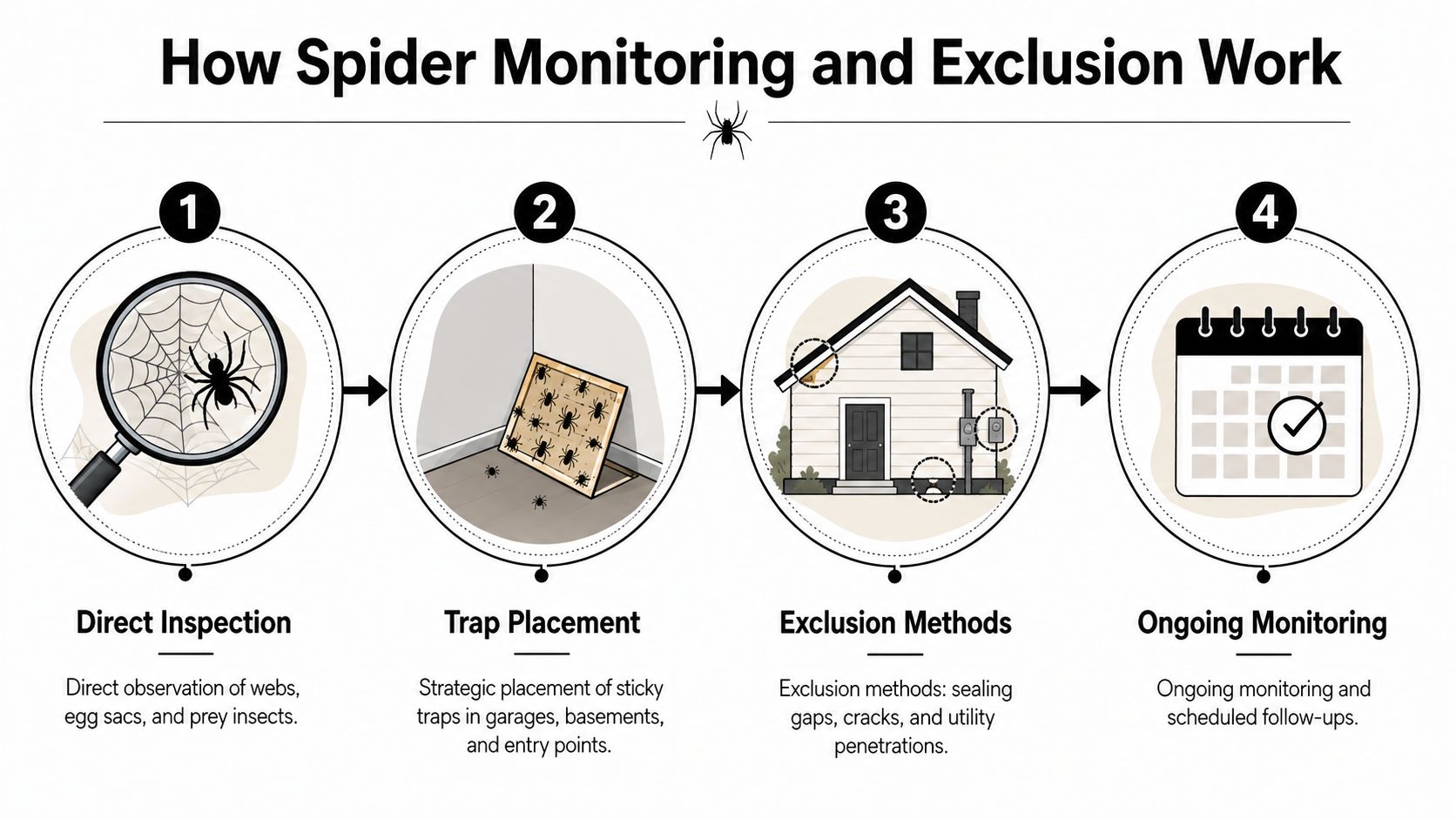
Use exclusion as the long-term layer
Seal gaps around windows, doors, screens, weather stripping, and utility penetrations. Move stored materials away from walls, manage vegetation near the foundation, and correct conditions that attract prey. Outdoor lighting also matters. Insects gather around bright fixtures, supplying spiders with food near entry points. Reduce unnecessary lighting, reposition fixtures, and keep doors closed. These changes reduce insect traffic and spider presence near entry points. Spider inspection guidance for structures recommends reviewing interior and exterior entry points, including low areas such as decking and patio furniture and high areas such as eaves and light fixtures.
After the first trap check, keep the records and mark the locations that produced repeated evidence. Clean isolated webs, correct the nearby condition, and check the same traps again. If activity continues in the same areas, show the record to a pest professional so the inspection can focus on those entry points and harborage conditions.
Interior and Exterior Inspection Walkthrough
A thorough inspection starts indoors, then follows the structure outward. That order helps connect the place where a spider was seen with the entry point or outdoor condition that may be supporting it.
Begin with quiet interior spaces
Spiders prefer areas with little disturbance, available shelter, and access to prey. In a Crown Point home, check:
- Basements and stairwells: Look along baseboards, ceiling corners, window wells, and behind stored items.
- Crawlspaces and sump pump rooms: Check moisture, foundation gaps, pipes, and areas that rarely receive foot traffic.
- Garages and utility rooms: Inspect corners, door edges, electrical boxes, shelves, and the space around equipment.
- Attics and storage areas: Examine rafters, boxes, clothing, boots, and the edges where walls meet ceilings.
- Windows and doors: Review damaged screens, worn weather stripping, and webs near exterior-facing openings.
Homeowners can safely sweep visible webs, reduce clutter, and note exactly where signs return. Those actions provide useful information, but they don't replace a closer review of crawlspace access, attic voids, or structural gaps that aren't easy to see from floor level.
Follow the exterior perimeter
Outside, walk the foundation line and inspect the places that combine shelter, web-building surfaces, and insect activity. Check under decks, patio furniture, window ledges, eaves, soffits, gutters, exterior lights, and shed perimeters. Look for shrubs touching the siding, uncut grass, mulch or leaf buildup, stacked wood, and old webs around doors and windows.
Repeated activity at an exterior light often says more about nearby insect pressure than about a spider entering directly through that fixture.
The property's water management also matters. Downspouts that discharge beside the foundation, damp mulch, and moisture near a sump pump can make surrounding areas more favorable to insects and spiders. Inspectors should document these conditions rather than assume that spraying the visible web will solve them.
Account for Northwest Indiana construction conditions
Crown Point homes experience seasonal temperature changes that can stress caulk, screens, door sweeps, and weather stripping. Freeze-thaw cycles may widen small gaps around windows, foundations, and utility lines, so a gap that looked insignificant during one inspection can become a more useful entry route later.
Exterior guidance recommends checking cracks, gaps, damaged window screens, and degraded weather stripping, along with low harborages and high attractors. A professional inspection also considers accessibility and safety, particularly around attic voids, crawlspaces, rooflines, and high eaves. A trained technician can identify relationships that a quick visual sweep may miss.
Signs That Activity Needs Attention
One spider doesn't prove an infestation. Neither does one web in a basement corner, one specimen near a window, or a brief outdoor sighting after a storm. Treating every sighting as equally urgent can waste time and obscure the condition that needs attention.
Sort evidence by signal strength
The useful threshold is repetition, location, and supporting evidence. A spider seen once may have entered through an open door. Webs that return in the same place after cleaning suggest that the location continues to offer shelter or prey.
Low-signal findings usually support observation and basic cleanup:
- An isolated web in a basement or garage corner.
- A single spider near a window or door.
- A short-lived outdoor sighting after weather changes.
Medium-signal findings deserve closer monitoring:
- Webs reappearing in the same location.
- Activity in several rooms on the same level.
- Daytime sightings in dark, undisturbed interior spaces.
- Repeated webs around a garage light, window well, or foundation section.
High-signal findings support prompt professional follow-up:
- Visible egg sacs indoors.
- Multiple spiders in a garage, basement, or utility room.
- Prey insects, including small flies or stored-product pests, in the same area.
- Shed skins or evidence of continued development.
- Recurring activity across consecutive weeks.
This pattern-based approach is especially useful in Northwest Indiana homes with finished basements, sump pump rooms, attached garages, and storage areas that may sit undisturbed for long periods.

Let the evidence guide the response
A web that appears once and stays gone after cleaning may not require a service visit. A web that returns repeatedly, especially alongside egg sacs or prey insects, tells a different story. The inspection's job is to determine whether you're seeing a snapshot or a pattern.
For a homeowner searching for pest control near me, that distinction creates a more measured decision. Monitoring may be enough for isolated outdoor activity. Exclusion and targeted spider control become more reasonable when repeated indoor evidence shows that the property is supporting ongoing activity.
Identification and Conducive Conditions
A phone photo can help start a conversation, but it rarely provides dependable species identification by itself. Lighting, distance, camera angle, molt stage, and image quality can alter the features a technician needs to examine. Color and markings alone are especially unreliable.
Compare the evidence before choosing a response
A professional identification may consider body shape, leg arrangement, web structure, web location, and time of day. Webs may appear as loose cobwebs, flat sheets, or funnel-like structures, and their placement can help explain how the spider is using the property.
Some spiders found around homes, sheds, and outdoor areas are typically low concern, including orb weavers, cellar spiders, and common house spiders. Recurring sightings of larger or more secretive spiders indoors deserve closer attention, especially when paired with egg sacs, prey insects, or repeated activity in protected spaces. Species confirmation can require magnification, from a 10× hand lens for basic morphology to a 20×–50× stereoscopic microscope for advanced identification, and sometimes a 40×–200× compound microscope for fine structures, as explained in this arachnid identification reference.
| Evidence Factor | Reliable Pattern Observation | Appearance-Only Judgment |
|---|---|---|
| Location | Repeated signs near a foundation gap, window well, or utility room | “It looks like the same spider” |
| Web structure | Cobweb, sheet, or funnel pattern connected to a specific harborage | General web shape seen briefly |
| Supporting signs | Egg sacs, shed skins, and prey insects in the same area | A single color or marking |
| Timing | Activity that returns across consecutive checks | One sighting at an unknown time |
| Property conditions | Moisture, clutter, lighting, or entry gaps nearby | No review of the surrounding structure |
Identify what keeps the area attractive
The inspection should connect identification with conducive conditions, such as exterior lights that draw insects, woodpiles or mulch against the foundation, gaps around utility lines, cluttered storage, and moisture near sump pumps or downspouts. Spider management protocols also recommend checking vegetation, debris, stacked wood, uncut grass, and old webs around doors and windows, as outlined in this spider management protocol.
Those two inputs, reliable identification and property evidence, shape the recommendation. Depending on what the inspection finds, the right next step may be cleanup and monitoring, exclusion work, prey-insect control, or targeted treatment. The spider identification guide from The Green Advantage can help homeowners organize observations before a service visit, but a technician should evaluate recurring or uncertain activity in context.
Cost and Inspection Frequency
The cost of a spider inspection depends on the work required at the property, not just on the number of spiders seen. A small home with accessible areas may require a different inspection scope than a larger property with a finished basement, attached garage, shed, crawlspace, and extensive exterior perimeter.
What shapes the service scope
Common pricing variables include:
- Property size: More rooms and more perimeter require more inspection time.
- Basement configuration: Finished areas can hide activity behind stored items, while unfinished spaces may expose foundation gaps and pipes.
- Attached garages and outbuildings: These add separate entry points, lighting, and harborage zones.
- Finding severity: Egg sacs, recurring webs, prey insects, and multiple active areas may require more detailed follow-up.
- Service format: A standalone inspection differs from an assessment bundled with broader residential or commercial pest control.
A one-time visit is often diagnostic rather than curative. It can identify active areas and conditions, but it may not show whether activity is persistent unless the property also uses monitoring and later comparison.
Match frequency to risk
Many Northwest Indiana homes benefit from an annual exterior check. Properties with prior spider activity, moisture concerns, extensive landscaping, wooded lots, or recurring prey insects may justify seasonal monitoring, particularly during periods when homeowners notice more activity in late summer and fall.
Commercial facilities and multi-unit buildings often gain more from consistent walkthroughs and dated records than from occasional reactionary service. Recent spider inspection guidance recommends glue boards in storage areas, consistent monthly walkthroughs, and logs tracking date, location, sign type, and counts so patterns can emerge after three to four months, as described in this spider inspection monitoring guide.
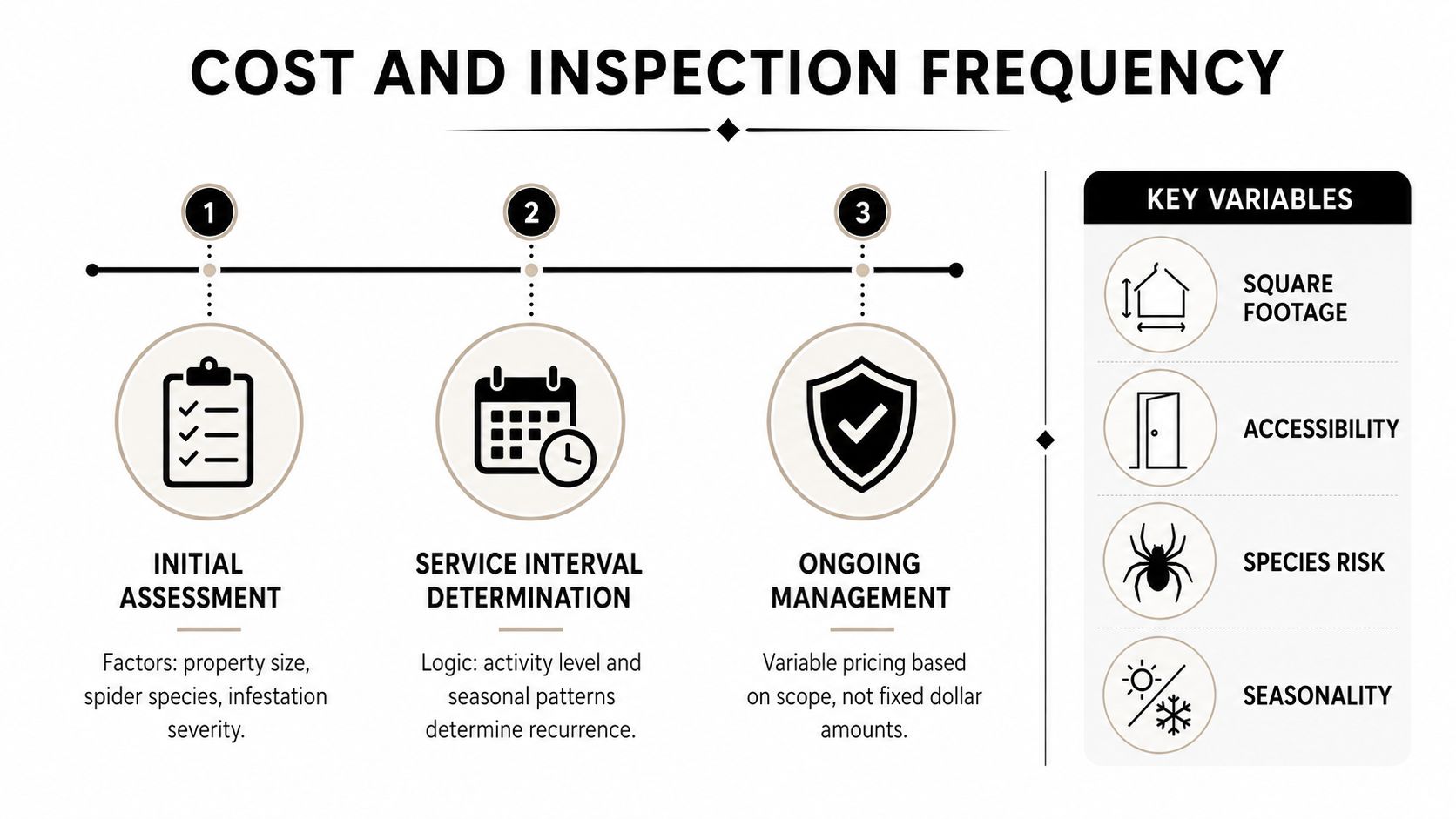
Bundling inspections into a quarterly pest program typically reduces the per-visit cost compared with standalone service, though the right model depends on the property and documented risk. The Green Advantage should explain which cadence fits the evidence and recommend the lightest effective approach rather than an unnecessarily aggressive schedule.
The Green Advantage Service Experience
A concerned homeowner usually starts with a simple description, “The webs keep coming back in the basement,” or “There are spiders around the garage every morning.” The first call should turn that concern into useful inspection information. A coordinator can gather the locations, timing, visible signs, property features, and any related pest concerns before scheduling an inspection window that suits the Crown Point resident.
The visit starts with diagnosis
On arrival, the technician explains what will be examined and walks through the property systematically. Interior areas may include basements, stairwells, utility rooms, garages, storage zones, window wells, and accessible crawlspaces. The exterior review follows foundation lines, doors, windows, eaves, lighting, sheds, landscaping contact points, and possible entry gaps.
The technician isn't looking only for live spiders. They're also checking for webs, egg sacs, prey insects, moisture, clutter, damaged screens, worn weather stripping, and other conditions that could support recurring activity. That broader assessment helps separate a harmless outdoor visitor from a property condition that needs attention.
Findings become a plain-language plan
After the walkthrough, the homeowner should receive a clear explanation of what was found and what wasn't. Recommendations may include sealing entry points, moving wood or debris away from the foundation, reducing clutter, adjusting outdoor lighting, improving moisture management, adding glue board monitoring, or scheduling a follow-up check.
Treatment options should be discussed when evidence supports them. If the inspection finds only isolated outdoor activity, monitoring and maintenance may be more appropriate than immediate indoor treatment. If it finds recurring indoor signs, egg sacs, prey insects, or multiple active areas, targeted spider control and related pest management may make sense.
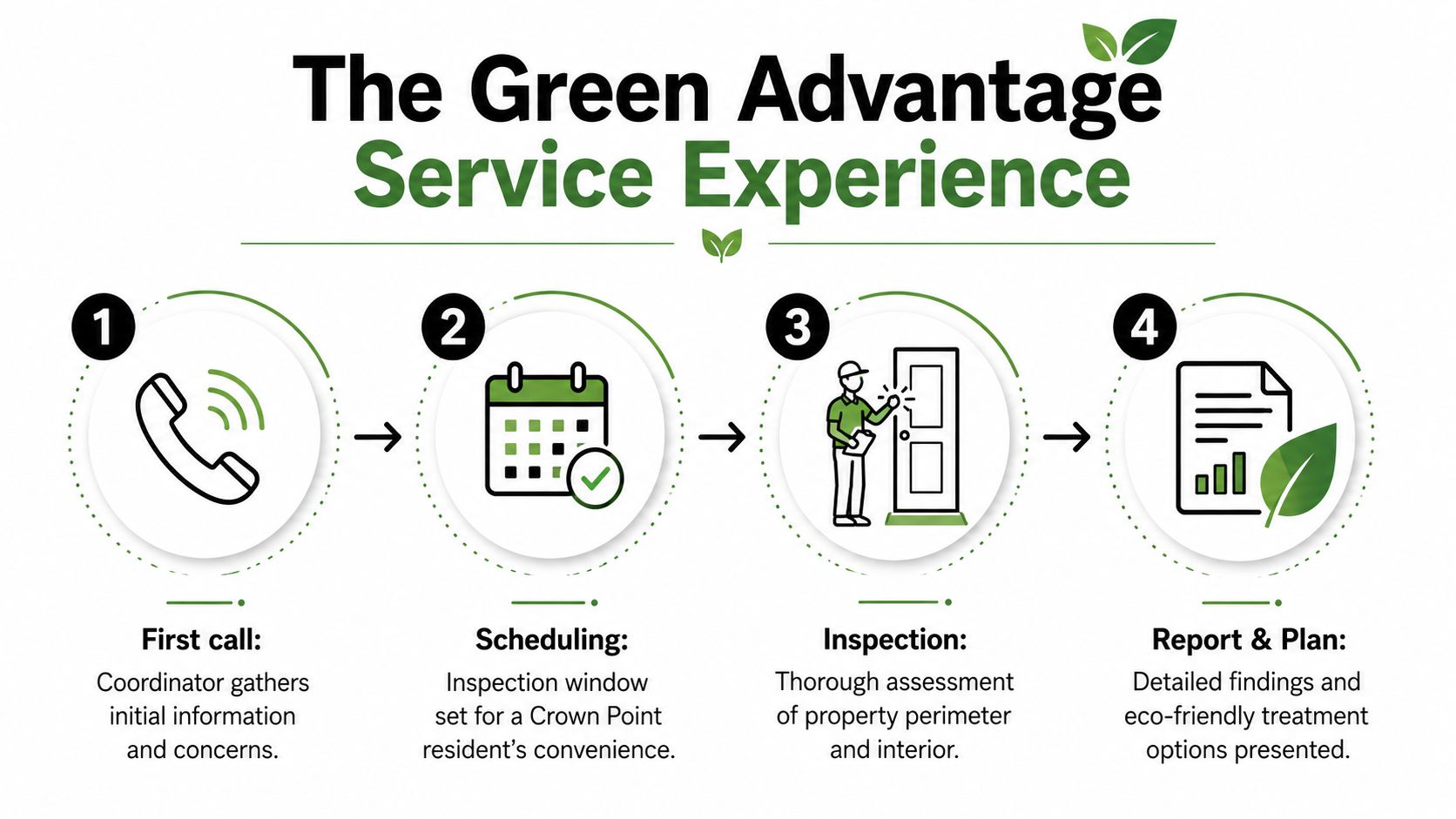
Keep the record useful after the visit
Written findings and photo records can make follow-up more consistent, especially for repeat customers, landlords, and commercial facilities. A documented location, condition, and recommendation gives the next technician a meaningful comparison instead of forcing the property owner to start from memory.
The Green Advantage provides pest inspections and spider-specific pest control for residential and commercial properties in Crown Point and nearby Northwest Indiana communities. Its service approach focuses on diagnosing the site, discussing environmentally mindful options, and keeping customers informed from scheduling through follow-up.
Prevention and Next Steps
A spider inspection becomes more valuable when homeowners use the findings to change the property. Sweeping webs can improve appearance, but it won't address a foundation gap, a damp storage area, or the insects gathering around an exterior light. Prevention works best when it reduces the shelter, access, and food conditions identified during the inspection.
Improve the exterior perimeter
Start outside, where many indoor problems begin. Keep firewood away from the foundation, trim vegetation off siding, clear leaf litter from corners and gutters, and remove debris that creates low, protected harborages. Review porch, garage, and outdoor lighting, especially fixtures that attract insects close to doors and windows.
Use the inspection record to prioritize repairs:
- Entry points: Replace damaged screens, install effective door sweeps, and caulk gaps around windows, doors, and utility lines.
- Moisture zones: Check downspout discharge, sump pump areas, crawlspaces, and damp foundation edges.
- Storage areas: Move boxes and seasonal items away from walls where practical, and avoid creating dense piles under decks or in sheds.
- Vegetation contact: Keep shrubs, grass, mulch, and branches from forming a continuous bridge against the structure.
These changes can also support broader residential pest control goals, including ant control, mosquito control, rodent exclusion, and seasonal pest prevention.
Make indoor spaces easier to monitor
Basements, garages, attics, and closets become easier to inspect when clutter is reduced. Store clothing, boots, decorations, and seasonal equipment in sealed bins instead of open piles. Manage humidity in crawlspaces and basements, and keep the areas around sump pumps and utility penetrations accessible for future checks.
A recurring web should be photographed and logged before it's removed. That small habit helps reveal whether the same location is active, whether several rooms are involved, and whether an exterior repair changed the pattern. Homeowners looking for additional property-specific ideas can review these Crown Point spider prevention techniques.
The most practical response isn't always an exterminator near me for an immediate spray. Sometimes it's observation, cleanup, and entry-point maintenance. When signs repeat across locations or consecutive checks, a professional spider inspection can identify the prey, harborage, moisture, and access conditions that DIY cleanup misses.
The Green Advantage offers spider inspections, residential pest control, commercial pest control, and environmentally mindful treatment options for properties in Crown Point, IN, and surrounding Northwest Indiana communities. Visit The Green Advantage to schedule an inspection or request a quote based on the activity pattern at your home or business.
How to Prevent Cockroaches in Crown Point, IN

You turn on the kitchen light in your Crown Point home and see a small roach disappear behind the toaster. The instinct is to grab a spray can, wipe the counter, and hope the problem is over. In practice, that sighting often means the conditions supporting cockroaches are already present somewhere nearby.
Learning how to prevent cockroaches means treating your home like a four-season maintenance project. Food, moisture, shelter, and entry routes all matter, whether you own an older ranch home, live in a newer subdivision, manage rental housing, or operate a business in Northwest Indiana. The Green Advantage helps Crown Point homeowners and local businesses pair practical prevention with targeted pest control when an infestation has moved beyond do-it-yourself measures.
Why Cockroach Prevention Matters in Northwest Indiana Homes
A late-night German cockroach sighting in a Crown Point kitchen rarely happens because the insect made a random visit. German cockroaches commonly remain indoors, where kitchens, bathrooms, appliances, and wall voids provide warmth, water, and food. Larger American and oriental cockroaches may approach from damp exterior areas, sump pump spaces, foundation gaps, or other sheltered locations during humid weather.
Cockroaches can contaminate food-contact surfaces and contribute to allergen exposure. Their droppings, shed material, and body parts may aggravate asthma symptoms, particularly when an indoor population becomes established. The broader scale of the issue is clear from U.S. Census housing data on reported roach sightings, which records that about 14 million of roughly 124 million occupied U.S. housing units reported seeing roaches during the previous 12 months, or about 11% of occupied homes.
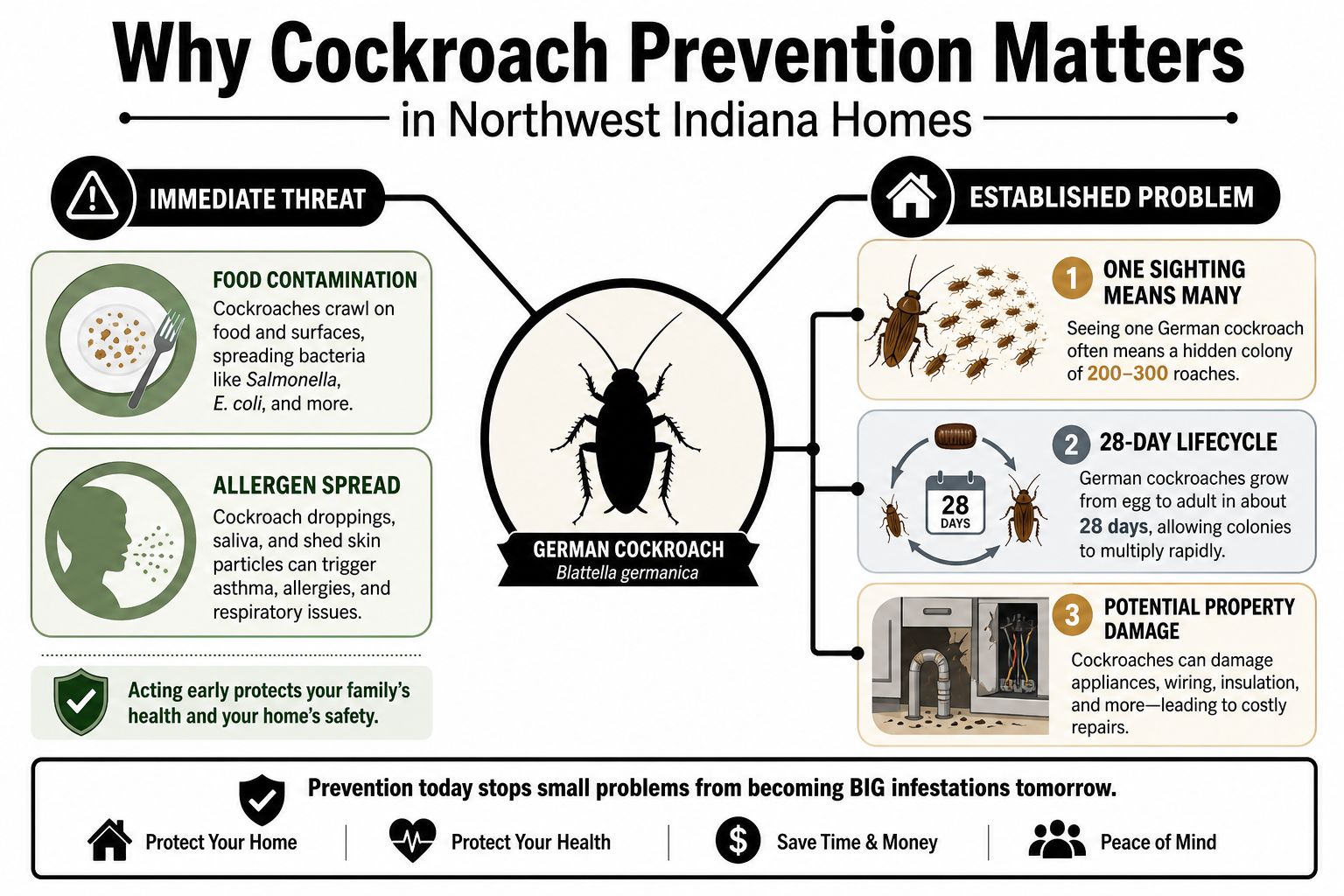
A local home can offer year-round shelter
Northwest Indiana homes face different pressure points through the seasons. Older houses may have foundation cracks, aging weatherstripping, open utility penetrations, or damp basement areas. Newer subdivisions can still have shared plumbing chases and utility openings that connect living spaces to garages, neighboring units, or mechanical areas.
Lake-effect humidity, summer storms, finished basements, sump pits, and warm interior rooms create harborage opportunities even when a home is tidy. Cleaning matters, but prevention can't stop there. The EPA's cockroach prevention guidance centers on integrated pest management, or IPM, which means identifying the pest, monitoring activity, removing resources, sealing access points, and treating only where treatment is justified.
Practical rule: One sighting deserves inspection. Repeated sightings deserve a plan that addresses the whole building, not only the place where the roach appeared.
That plan rests on four connected tasks: sanitation, exclusion, moisture control, and monitoring with targeted treatment. Spray-only control may kill an exposed insect, but it doesn't remove the food, water, hiding places, or movement routes that allow the next generation to persist.
Sanitation Habits That Starve Cockroaches Out
Sanitation isn't a judgment about housekeeping. It's a set of repeatable actions that removes the resources cockroaches use. EPA and university IPM guidance recommends cleaning spills promptly, storing food in sealed containers, managing garbage, removing cardboard, and reducing clutter. The German cockroach IPM action plan provides a useful practical model for kitchens, bathrooms, and storage areas.
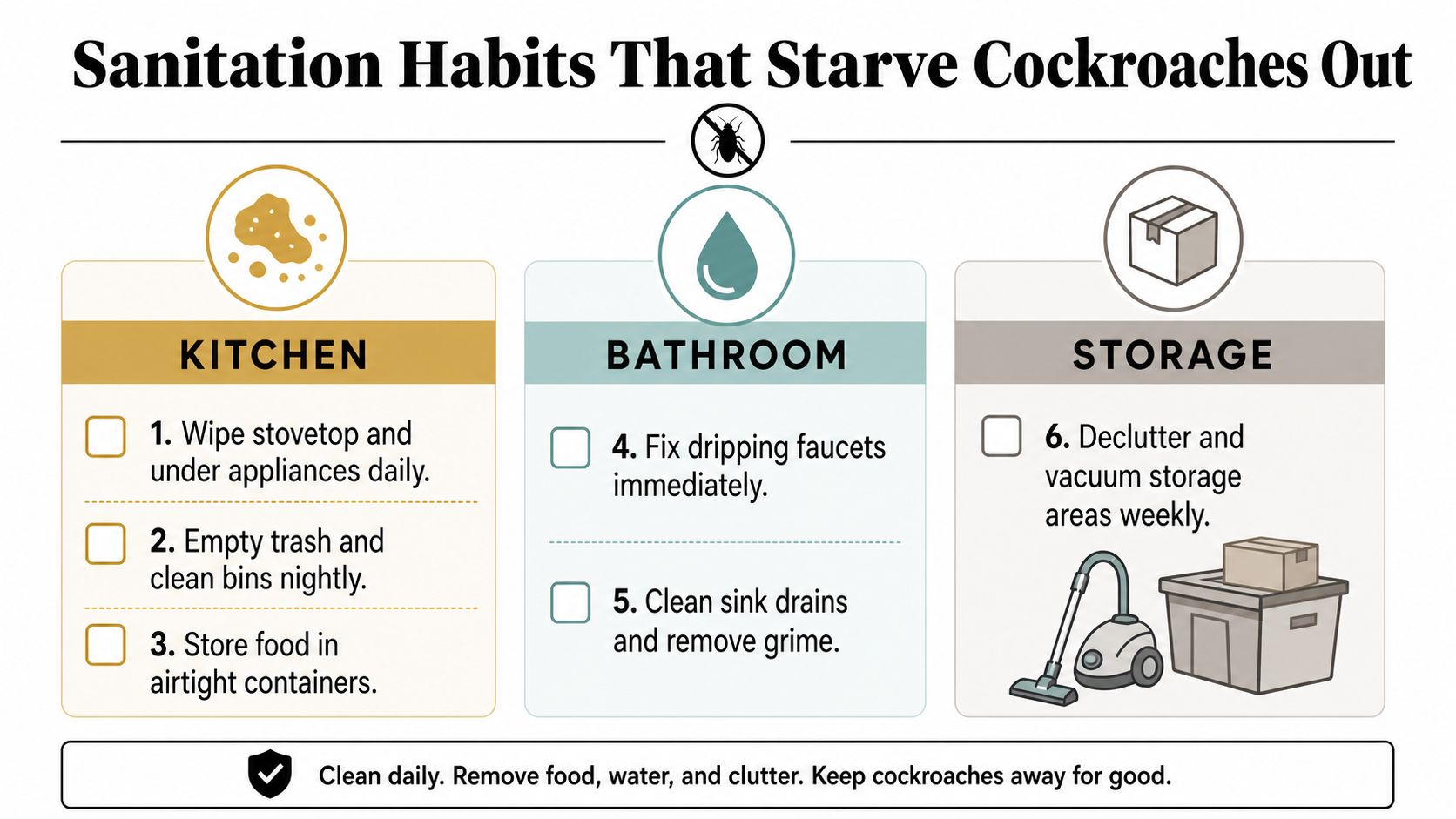
Start where crumbs and grease collect
In the kitchen, wipe the stovetop, counter edges, and the area under toaster drip trays every night. Empty lidded trash cans in the evening, especially after cooking or feeding pets. Store pet food in sealed metal bins rather than leaving it in an opened original bag.
Once a month, vacuum crumbs and debris from under and around refrigerator coils. Pull out the garage refrigerator when practical, since seldom-cleaned appliances can provide both residue and shelter. In a finished Crown Point basement, check the area around the sump pump for debris. Detached sheds and garages also need attention if they hold snack boxes, bird seed, pet food, or recyclable containers.
Keep bathrooms and storage dry and orderly
Squeegee tub walls after evening use, clean grime from sink drains, and keep toothbrushes in closed containers. Launder damp bath mats weekly, and don't leave wet towels or clothing in a heap near a utility room.
For pantries and storage rooms, transfer opened food into sealed glass or hard plastic containers. Rotate older boxes and discard damaged packaging. Paper grocery bags, corrugated cardboard, and stacked boxes can serve as both food residue sources and hiding places, so use them briefly rather than storing them under sinks or against walls.
A simple habit ladder makes the work manageable:
- Daily: Wipe cooking surfaces, clear dishes, dry sinks, and manage food waste.
- Weekly: Sweep floors, clean bathroom surfaces, inspect pet-food areas, and remove unnecessary bags or boxes.
- Monthly: Pull or shift appliances safely and vacuum concealed debris.
- Quarterly: Reset pantry storage, inspect basement and garage clutter, and review monitor activity.
These actions remove the three essentials emphasized in EPA cockroach-control materials, food, water, and shelter. For a focused explanation of household attractants, see what attracts cockroaches to your home.
Sealing Entry Points and Hiding Spots
Cockroaches don't need a large opening to move between spaces. EPA guidance explains that young roaches can squeeze through a crack as thin as a dime, which is why small gaps around plumbing and trim deserve attention. A sealant project that ignores narrow penetrations can leave an easy route into cabinets, wall voids, and mechanical rooms.
Walk the home with a bright flashlight and a screwdriver. Look for movement, droppings, shed skins, grease marks, and daylight around openings. Focus first on locations where utilities enter walls or floors.
Inspect the places technicians check first
In the kitchen, examine sink escutcheons, dishwasher hose penetrations, refrigerator water lines, and the joint where the baseboard meets the cabinet toe-kick. Under-sink cabinets deserve special attention because pipes, warmth, moisture, and clutter often meet in one confined space.
Outside and in the garage, inspect dryer vents without secure covers, gaps around gas meters, foundation cracks in poured basements, and garage-to-house doors with worn weatherstripping. Check window screens, foundation vents, utility lines, and basement penetrations before assuming the issue is limited to the kitchen.
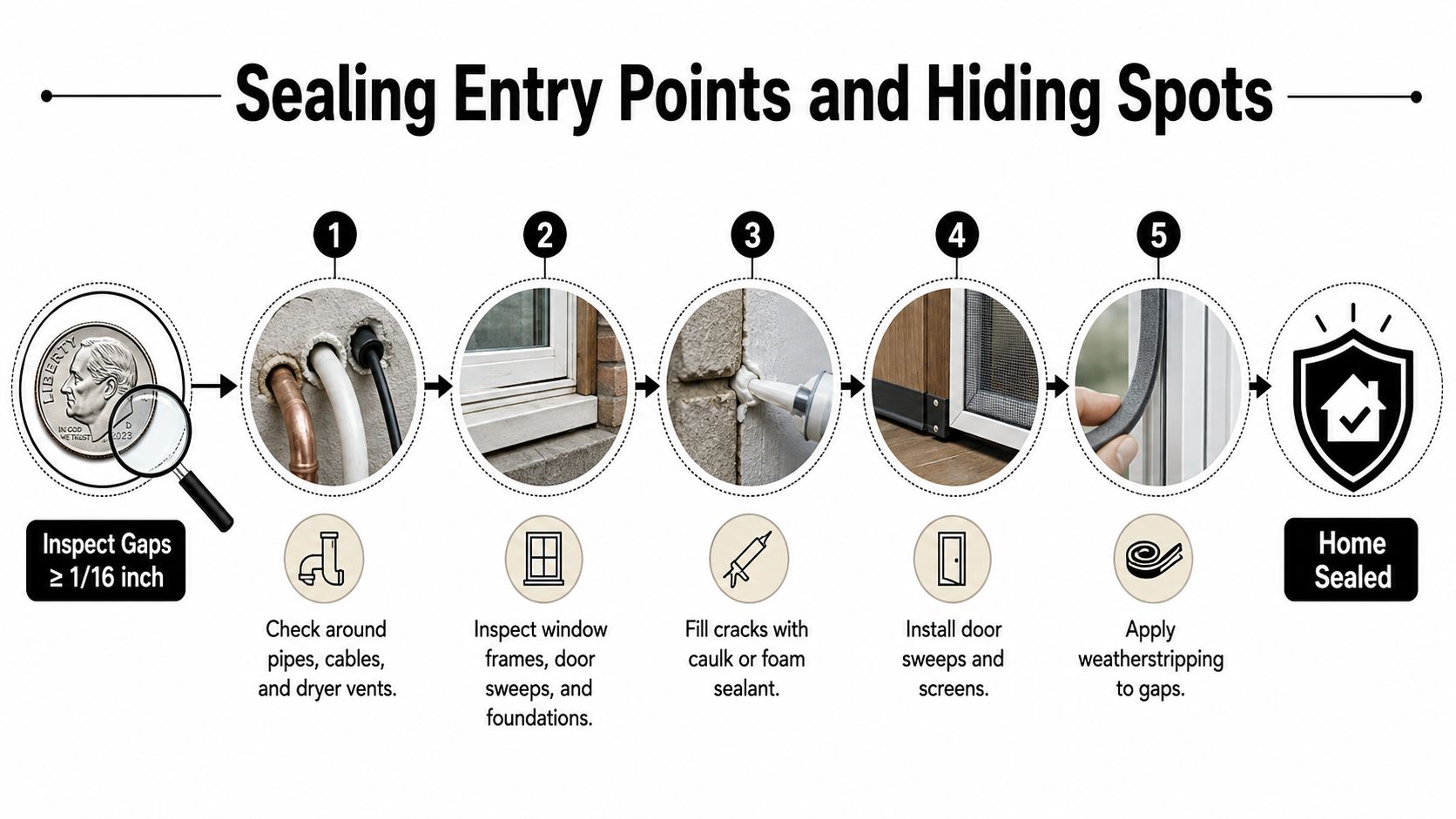
Use the right material for the opening
Use silicone caulk around interior plumbing penetrations. Install door sweeps with a brush seal where the garage or exterior door meets the threshold. For exterior gaps, pack copper mesh into the opening first and then seal over it. Fine stainless-steel mesh works well over foundation vents when airflow must remain available.
Don't overlook harborage. Stacked cardboard, paper grocery bags, and crowded under-sink cabinets create protected spaces even when no exterior entry point is obvious. Remove or reorganize those materials while sealing.
Sealing works best after sanitation has removed food and moisture. Otherwise, survivors can remain inside a food-rich home and rebuild activity behind the new barrier.
For a visual walkthrough of common sealing locations, use the following embedded guide:
Moisture Control and Fixing Leaks
Cockroaches can survive on small, overlooked water sources, so moisture control deserves the same attention as food storage. Northwest Indiana basements, sump pits, crawl spaces, older bathrooms, and laundry areas can provide damp conditions long after a visible leak seems minor. Guidance from the Armed Forces Pest Management Board moisture-control resource recommends correcting leaks and reducing damp environments as part of pest prevention.
Map every source of water
Check under-sink cabinets, around water heaters, behind toilets, near washing-machine hoses, and along basement rim joists. Tighten or replace fittings that drip, even when the amount seems insignificant. Run bathroom exhaust fans during and after showers, and use a dehumidifier in damp basements or crawl spaces.
A sump pump crock needs routine inspection too. Keep it clear, confirm the pump operates properly, and use a sealed cover where the system allows one. Open or poorly covered sump areas can attract moisture-seeking pests and provide a route into the basement.
Keep runoff away from the foundation
Clean gutters and extend downspouts at least six feet from the foundation. Grade soil away from the house so snowmelt and heavy summer rain don't pool beside the slab or basement wall. Caulk around tub spouts, escutcheons, and pipe penetrations, and consider gaskets behind outlet covers in kitchens and bathrooms where drafts or gaps connect to wall cavities.
If a suspected plumbing leak extends into the structure, repair costs can vary by location and access. A homeowner researching the issue may find this guide to San Antonio slab leak repair cost useful for understanding why early leak detection matters, even though the service area differs from Crown Point.
DIY Baits and Traps vs Professional Service
Most homeowners begin with sticky traps, grocery-store bait stations, a vacuum, or a can of spray. Those tools can help when activity is light and limited to one room, but they have different jobs. A monitor tells you where movement occurs. A vacuum removes visible insects and debris. Bait reaches foraging roaches. Exclusion blocks routes. Spray alone usually does none of those things fully.
The verified urban IPM data show why the combination matters. Individualized IPM that included cleaning food residues, removing nutrient sources, and sealing cracks reduced the proportion of infested households from 80.5% to 39.0% after six months, while the control group changed from 78.1% to 81.3%, as reported in this urban cockroach IPM study. A public-housing intervention also reduced cockroach populations from 24.7 per unit before treatment to 3.9 per unit by month four, with counts remaining below five per unit for the next eight months.
What a homeowner can reasonably handle
For limited activity, place small gel-bait placements behind the refrigerator, under the sink, and inside cabinet hinge areas where airflow is low. Follow the product label and keep bait inaccessible to children and pets. Add sticky monitors along wall edges behind the stove and near the water heater, then record what they catch instead of guessing from one sighting.
Vacuum cracks, appliance edges, and cabinet corners with a crevice tool. Avoid spraying repellent insecticide over or near bait placements, because the spray can discourage roaches from feeding on the bait. In attached housing, tell the property manager early. Shared plumbing chases and wall voids can move activity between units.
| Approach | Avg. Effectiveness | Best For |
|---|---|---|
| Gel bait and sticky monitors | Can help with light, localized activity when placement and sanitation are consistent | Early signs confined to one room |
| Vacuuming and exclusion | Removes visible activity and reduces shelter or movement routes | Maintenance and prevention after inspection |
| Bait, sanitation, vacuuming, and exclusion together | The strongest homeowner-led approach because it addresses several survival needs at once | A small population with clear harborage |
| Licensed professional IPM | Appropriate when activity is widespread, persistent, or connected to other units | Daytime sightings, multiple rooms, recurring infestations, and commercial facilities |
Know when DIY has reached its limit
Professional service becomes the sensible choice when you see roaches in daylight, find droppings in multiple rooms, locate egg cases or nymphs, or continue seeing activity after sanitation and baiting. A licensed technician can inspect wall voids, appliance cavities, plumbing chases, and other areas a flashlight may not reveal. Treatment may include targeted commercial baits, insect growth regulators, residual dusts in suitable voids, and follow-up monitoring.
In multi-unit buildings, cooperation matters. A building-wide cockroach IPM study found that education, vacuuming, sanitation, boric acid dusting, baiting, and targeted spray achieved 90% reduction by week two, 96.5% by week four, 99% by week eight, and 100% by week twelve. That kind of result comes from coordinated work, not a single aerosol application.
Read why DIY pest control can become a false economy before deciding that repeated store-bought treatments are the cheaper path.
Seasonal Cockroach Checks for Crown Point Homeowners
Crown Point homes move through sharp seasonal changes, from freezing winter conditions to humid summer storms. Cockroach prevention works better when inspections follow those changes instead of waiting for a surprise sighting.
Spring
As soon as frost leaves the ground, walk the foundation with a flashlight. Look for new cracks, displaced joints, gaps around utility lines, damaged screens, and openings near the garage. Warm rain can make damp exterior areas more attractive, so clear debris and confirm that drainage moves water away from the structure.
Summer
Check basement and crawl-space dehumidifiers, clean gutters, and inspect sump pump areas. Sweep garages, porches, sheds, and outdoor storage spaces for pet food, bird seed, recyclables, and damp cardboard. Keep doors closed and repair torn screens before humid weather increases indoor activity.
Fall
Fall deserves the closest inspection. As outdoor temperatures fall, cockroaches sheltered in drains, utility areas, and exterior harborage may move toward warm interior walls. Before sustained cold arrives, replace worn weatherstripping, install or adjust door sweeps, inspect attic and foundation vents, and check plumbing penetrations.
Winter
Focus indoor attention on the furnace room, water heater closet, basement, and plumbing chases. Warm, moist air leaking into wall cavities can support hidden activity even when outdoor conditions are harsh. Place sticky monitors in these areas and log counts monthly so you can identify a population increase before it spreads.
A seasonal log should include the date, location, monitor findings, leaks, clutter, and any repairs completed. That record helps homeowners, landlords, and commercial managers distinguish an isolated visitor from a recurring building condition.
Working With The Green Advantage for Lasting Prevention
Long-term cockroach prevention is a coordinated routine, not a single cleaning day or spray visit. Sanitation removes food and shelter. Exclusion limits movement. Moisture repairs remove dependable water sources. Monitoring shows whether those changes are working and identifies the locations that still need targeted treatment.
The Green Advantage can turn that framework into a service plan for Crown Point homes, rental properties, and commercial facilities in Northwest Indiana. A first visit should focus on diagnosis rather than a quick pass with a sprayer.
What an inspection should cover
A practical inspection includes:
- Kitchen: Appliances, cabinet hinges, sink plumbing, backsplashes, toe-kicks, food storage, and trash areas.
- Bathrooms: Drains, plumbing penetrations, tub and toilet areas, condensation, and cabinet interiors.
- Basement and garage: Sump equipment, water heaters, utility penetrations, cardboard, drains, and door seals.
- Exterior: Foundation gaps, vents, screens, thresholds, drainage, and openings around utilities.
Where appropriate, a technician may place gel bait, an insect growth regulator, or monitors in protected harborage zones. The service plan should identify conducive conditions, explain what the homeowner or staff needs to change, and outline follow-up touchpoints.
Why follow-up matters
A one-time treatment can reduce visible activity without resolving hidden egg cases, inaccessible harborages, or movement between connected units. Ongoing IPM uses monitoring and repeat visits to confirm suppression and adjust treatment locations. That matters in apartments, restaurants, schools, warehouses, and other commercial properties where one untreated area can reintroduce activity.
Building-wide work has produced strong results when residents or staff cooperate. In one apartment-building study, community-wide IPM reduced cockroach counts per apartment by 88% within seven weeks, and 85% of the original infestations were eliminated by seven months, according to this long-running housing IPM research. The same research supports sustained monitoring and follow-up because pest levels can rebound when interventions stop.
Ask about family- and pet-conscious product choices, eco-friendly pest control options, treatment documentation, and scheduling that fits your property. The right plan may also identify related needs, such as rodent exclusion, ant control, termite control, mosquito control, spider control, wasp removal, or preventative pest treatments for seasonal risks.
If you're seeing cockroaches in your Crown Point home or business, contact The Green Advantage for a focused inspection, targeted cockroach treatment, and a prevention plan built around sanitation, exclusion, moisture control, and monitoring. Visit The Green Advantage to schedule service or request a quote before a small sighting becomes an established infestation.
Integrated Pest Management Plan for Crown Point Homes

You spot ants crossing the kitchen counter in early spring, reach for a store-bought aerosol, and watch the trail disappear. Two weeks later, the ants are back, often in greater numbers, because the spray killed visible workers without correcting the nest, entry point, moisture, or food source. For Crown Point homeowners and businesses, an integrated pest management plan offers a more durable answer than repeating the same reactive treatment.
The Green Advantage serves Crown Point, IN and surrounding Northwest Indiana properties with a practical approach built around inspection, prevention, monitoring, and targeted control. That approach applies to residential pest control, commercial pest control, ant control, termite control, mosquito control, rodent control, spider control, and seasonal pest issues. The objective isn't to spray everything. It's to understand why pests are present and use the least disruptive effective solution.
Why Crown Point Properties Need an Integrated Pest Management Plan
Northwest Indiana properties face changing pest pressure throughout the year. Humid summers support ants, mosquitoes, spiders, and moisture-loving insects. Freezing winters push mice and other rodents toward warm shelter. Properties influenced by Lake Michigan weather can also experience seasonal movement from boxelder bugs, stink bugs, and other overwintering insects. Spring termite swarms and carpenter ant activity create additional concerns for older homes, commercial buildings, and properties with damp wood or landscaping close to the structure.
IPM began in agriculture, but its central idea works well for homes and businesses. Scientists introduced the concept of “integrated management” in the United States in 1959. The term “integrated pest management” was coined in 1967, formally recognized by the U.S. National Academy of Sciences in 1969, and supported through broader federal and state programming during the following years. The Food Quality Protection Act defined IPM in 1996 as a sustainable approach combining biological, cultural, physical, and chemical tools to minimize economic, health, and environmental risks. See the history and development of integrated pest management for the full progression.
Practical rule: A recurring pest problem deserves a plan, not another round of the same spray.
A structured plan starts by identifying the pest and its biology, then correcting conditions that let it survive. For example, ant control may require sealing a foundation gap, correcting a plumbing leak, changing food storage, and placing bait where workers can carry it back to the colony. Rodent control may depend more on exclusion and sanitation than on interior traps alone. Termite control requires careful attention to moisture, soil contact, wood conditions, and evidence of active colonies.
IPM also has a proven record beyond individual properties. USDA survey data found that more than half of U.S. fruit, vegetable, and major field crop acreage used IPM at some level, while a California analysis found 75% or greater use by acreage for 11 pest-management practices in vegetable production in 2022 and for seven practices in fruit-and-nut production in 2021 (USDA-related adoption data). Adoption remains uneven, which reinforces an important point for property owners: IPM works only when people consistently inspect, prevent, document, and adjust.

A useful residential or commercial plan follows an adaptive cycle. It defines objectives, aligns the people responsible for the property, studies site conditions, identifies pests, monitors activity, sets action thresholds, compares control options, applies the lowest-risk effective tactic, evaluates results, and repeats the process through education and follow-up. That 11-step workflow is described by the National Park Service IPM framework. For Crown Point properties, this means fewer blind treatments and more decisions based on what the building and pest activity show.
For a practical overview of why this approach can outperform repeated spraying, review the integrated pest management benefits.
Inspecting and Monitoring Your Property for Pest Activity
A good IPM plan begins before anyone chooses a product. Start outside and work inward, because many infestations begin at a small structural weakness that homeowners overlook.
Start with the exterior
Walk the foundation slowly and inspect cracks, gaps around utility lines, window wells, door thresholds, and areas where siding meets masonry. Mice can use surprisingly small openings, while ants often follow plumbing, wiring, vegetation, or foundation seams into the structure. Check soffit vents and roofline openings for damaged screening, especially if you hear scratching or find nesting material in an attic.
Northwest Indiana homes also need seasonal attention. In fall, boxelder bugs and stink bugs may gather on warm exterior walls before moving indoors. In spring, termite swarmers may appear near windows, doors, foundations, crawl spaces, or woodpiles. A swarm doesn't prove that structural damage exists, but it does justify prompt identification and inspection.

Check the interior evidence
Move through basements, crawl spaces, attics, garages, kitchens, utility rooms, and storage areas. Look for:
- Droppings and gnaw marks: These point toward rodent travel routes and feeding activity.
- Frass or damaged wood: Carpenter ants can leave sawdust-like material near galleries, while termites may leave other evidence that requires professional identification.
- Shed wings: Discarded wings near windows or light sources can signal termite swarm activity.
- Moisture: Damp areas near plumbing, foundation walls, or crawl spaces can support ants, spiders, and other pests.
- Nesting materials: Shredded paper, insulation, fabric, and plant matter often reveal rodent shelter sites.
Monitoring tools help turn a sighting into useful information. Place sticky traps along baseboards and behind appliances, pheromone traps in pantries when appropriate, and moisture meters in persistently damp areas. Don't scatter traps randomly. Position them near walls, corners, suspected travel routes, and areas where you found evidence.
A simple property map makes the information easier to use. Mark the kitchen, basement, attic, utility penetrations, exterior doors, traps, and sightings. Record the pest type, location, count, date, and surrounding conditions. A homeowner can use a notebook, while a property manager may prefer a spreadsheet shared with maintenance staff.
The pest control inspection checklist can help organize this process before a professional visit.
Spring inspections are especially useful for catching termite swarms and ant activity early. Fall inspections prepare the property for rodent intrusion by identifying gaps before the next cold snap. For a visual explanation of inspection practices, watch this short resource before beginning your walkthrough.
Setting Action Thresholds and Preventing Infestations
IPM doesn't treat every pest sighting as an emergency. It uses an action threshold, the point at which pest activity becomes serious enough to justify control. The EPA describes that point as the level where a pest becomes a nuisance, health hazard, or economic threat (EPA IPM principles).
That threshold depends on the pest, location, damage risk, and people using the space. A single house spider in an unfinished basement may call for monitoring. A growing trail of odorous house ants beside food storage demands faster action. A few boxelder bugs on exterior siding in autumn may be tolerable, but clusters inside bedrooms or living areas cross a practical comfort threshold.
Use prevention to stay below the threshold
Prevention combines physical changes with daily property habits. Seal foundation gaps with appropriate mesh and caulk, repair window screens, install effective door sweeps, and correct openings around pipes and wires. Trim branches away from rooflines, manage mulch so it doesn't stay piled against the foundation, and remove standing water that can support mosquitoes and attract other moisture-associated pests.
Sanitation matters just as much:
- Store pet food securely: Use sealed containers instead of leaving food exposed overnight.
- Control waste access: Keep garbage closed and maintain a consistent removal schedule.
- Reduce storage clutter: Cardboard, fabric, and unused materials give rodents and insects hiding places.
- Correct water problems: Repair leaks, improve drainage, and use dehumidification where persistent dampness supports pests.
- Manage vegetation: Keep dense plant growth from touching siding, vents, and roof edges.
A property that stays clean but has open entry points can still develop a rodent problem. A tightly sealed property with leaking plumbing can still support ants. Strong IPM plans address both the building and the habits around it.

The Virginia Cooperative Extension explanation of IPM mechanics summarizes the practical sequence as identification, prevention, monitoring, threshold setting, control, and evaluation. That sequence keeps chemical treatment in its proper place. If prevention keeps activity below the threshold, treatment may not be necessary. If activity rises, the response can be limited to the affected area instead of applied broadly across the property.
Choosing Targeted Treatments for Common Northwest Indiana Pests
Treatment selection should follow the evidence gathered during inspection and monitoring. Start with mechanical, physical, or biological controls when they can solve the problem. Traps, exclusion, sanitation, habitat correction, and beneficial nematodes for lawn grubs can reduce pest pressure without putting a broad application across the property.
Eco-friendly options can support that strategy, but homeowners must use them carefully. Diatomaceous earth can help with some crawling insects in dry, appropriately protected locations. Boric acid products may help with cockroach control when placed where children and pets can't access them. Essential oil-based repellents may provide limited support for some outdoor situations, but they shouldn't replace identification, exclusion, or professional treatment when an infestation is established.
Chemical control becomes appropriate when monitoring shows that nonchemical methods aren't enough or when the pest presents a meaningful property, health, or comfort concern. Even then, precision matters more than volume. Bait stations, crack-and-crevice applications, and spot treatments generally fit an IPM approach better than automatic broadcast spraying. Always use products according to their labels, including whether they're approved for indoor or outdoor use, and apply them with attention to the pest's life cycle.
| Pest | Least-Risk Control | Eco-Friendly Option | Targeted Chemical Treatment |
|---|---|---|---|
| Carpenter ants | Correct moisture, remove damaged wood, seal entry points | Targeted baiting and habitat correction | Limited treatment at active galleries or entry points |
| Boxelder bugs | Seal cracks, repair screens, vacuum indoor insects | Exterior exclusion and habitat management | Targeted exterior treatment when seasonal pressure is high |
| Rodents | Traps, door sweeps, sealing gaps, sanitation | Exclusion-focused service and monitored traps | Enclosed bait stations only where appropriate |
| Spiders | Remove webs, reduce indoor clutter, manage insects | Habitat correction and targeted repellents | Focused treatment in basements, crawl spaces, and entry zones |
| Lawn grubs | Improve lawn conditions and reduce favorable habitat | Beneficial nematodes where suitable | Carefully timed labeled lawn treatment when thresholds justify it |
Older Crown Point structures often need a different carpenter ant response than newer construction. A basement or crawl space with moisture may require correction before any treatment can remain effective. Fall boxelder bug activity calls for sealing and exterior management, while spider control works better when technicians address the insects that serve as their food source.
Wildlife and nesting issues also require judgment. Before disturbing a bird nest or similar structure, review this resource on DIY vs professional nest removal to understand why timing, species, and safe removal practices matter.
The strongest plan uses products that match the pest, site, season, and exposure risk. That protects families and pets while reducing the chance that repeated, poorly targeted applications will solve only the visible symptom.
Tracking Results Through Recordkeeping and Ongoing Evaluation
A treatment without records is difficult to improve. A written log shows whether pest activity is falling, staying steady, or moving to another part of the property. It also gives a professional exterminator a clearer starting point when the same issue returns.
Record the date of each inspection, the pest identified, the location, the number or level of activity observed, the weather, the treatment used, and the result. For a Crown Point property, seasonal notes can reveal useful patterns, such as rodent activity increasing during late-fall cold snaps or ant activity rising after spring rains. These observations help separate a new issue from a predictable seasonal pattern.
Use a simple property log
A notebook works. So does a spreadsheet or pest management app. Keep the format simple enough that everyone involved will use it.
| Date | Pest type | Location and count | Action taken | Outcome |
|---|---|---|---|---|
| Inspection date | Ants, rodents, or other pest | Room or exterior zone, observed activity | Exclusion, trap, bait, or treatment | Activity reduced, unchanged, or increased |
Review the log after each visit and compare results with the action threshold. A homeowner might notice that ants appear only beside one damp wall. A property manager might find that rodent signs cluster near one loading area or utility chase. Those patterns point toward specific corrections instead of repeated treatment across unaffected spaces.
Use evaluation checkpoints at 30, 60, and 90 days to decide whether the plan is working. These intervals are a practical management schedule, not a promise that every pest problem follows the same timeline. The right review point depends on pest biology, weather, property conditions, and the control method selected.

Use the review to ask direct questions:
- Is activity below the threshold: If yes, maintain prevention and monitoring.
- Is activity unchanged: Look for missed entry points, moisture, food sources, or incorrect identification.
- Is activity increasing: Escalate to a more targeted control and reassess the property conditions.
- Are pests appearing elsewhere: Expand the inspection map rather than automatically expanding the treatment area.
This recordkeeping turns pest control into a continuous improvement cycle. The Purdue University IPM overview describes IPM as a decision-making process based on inspection, monitoring, records, and evaluation. For Crown Point homeowners and businesses, evidence-based decisions mean fewer repeat treatments and more predictable long-term maintenance.
What to Expect from Professional Pest Control in Crown Point
A professional IPM visit should begin with questions, not a sales pitch or an automatic spray. The technician should inspect the building and grounds, identify the pest, document conducive conditions, explain the risk, and recommend controls that fit the property. You should also receive clear information about any products used, where they'll be applied, what precautions are necessary, and what follow-up will look like.
The Green Advantage provides pest inspections and ongoing residential and commercial pest control for Crown Point, IN and nearby Northwest Indiana service areas. Its approach can include exclusion, monitoring, sanitation and habitat correction, and targeted treatment, depending on the pest and site conditions. That framework is useful for homeowners, landlords, property managers, and businesses that need a repeatable plan rather than an isolated visit.
A service visit should answer practical questions
- What pest is present: Correct identification prevents mismatched treatments.
- How is it entering or surviving: The technician should identify cracks, moisture, food, nesting areas, or conditions.
- What should happen first: Prevention and exclusion may come before treatment.
- What happens after service: Follow-up monitoring shows whether the response worked.
- How should the property be maintained: Clear recommendations make prevention realistic.
Safety deserves a direct conversation. Ask where products will be applied, how long treated areas should remain undisturbed, and what steps protect children, pets, employees, customers, and sensitive spaces. A responsible plan won't treat safety as an afterthought.
Service frequency should also match risk. Federal building-focused guidance gives examples of inspection schedules that vary by hazard and site conditions, including annual inspections in the highest-hazard settings, biennial inspections in many moderate-to-heavy hazard regions, and triennial inspections in lower-hazard regions (federal building IPM guidance). A home, restaurant, warehouse, rental property, and historic downtown building won't require identical monitoring.
Professional service is especially valuable when pests return after DIY treatment, when activity involves termites or rodents, or when a commercial facility needs documentation and coordinated follow-up. The goal isn't to promise that pests will never appear. The goal is to detect problems earlier, correct the conditions supporting them, and respond with the narrowest effective intervention.
The Green Advantage can build an integrated pest management plan for your Crown Point home or business, including inspection, prevention, monitoring, and targeted pest control for ants, termites, rodents, mosquitoes, spiders, and seasonal invaders. Schedule a pest inspection or request a quote by visiting The Green Advantage, and take the first step toward fewer repeat treatments and better long-term protection.
What Is a Pest Inspection and Why Crown Point Homeowners
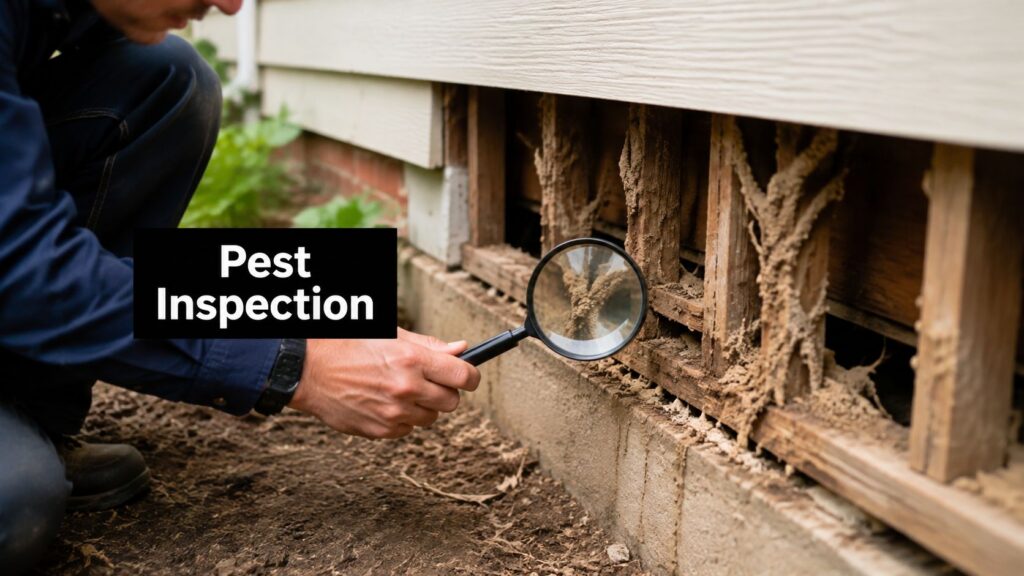
A pest inspection is a structured visual examination of a property's accessible areas that documents evidence of pests, damage, and conditions that attract infestation. It's a diagnostic assessment, not a treatment visit.
You may notice carpenter ants near your back door, droppings in the basement, or scratching above the ceiling and wonder whether the problem is small enough to handle yourself. In Crown Point, IN, that uncertainty matters. Northwest Indiana homes face changing seasonal pest pressure, moisture problems, aging wood, and entry points that can turn a few signs into a larger property issue.
The Green Advantage serves Crown Point and nearby Northwest Indiana communities with pest inspections for homeowners, buyers, landlords, and businesses. A proper inspection helps you understand what's happening, what the inspector could access, what remains outside the inspection's scope, and which follow-up action makes sense.
What a Pest Inspection Actually Covers
A Crown Point homeowner who spots carpenter ants near the back door may assume the insects are limited to that entry point. They might be, but the ants could also indicate damp framing, a roof or plumbing leak, soft window trim, or an accessible route into the structure. A professional pest inspection looks for the larger pattern instead of focusing only on the insects you happened to see.
Maryland's inspection standard describes a pest inspection as a careful visual observation and thorough examination of readily accessible areas, with special attention to places where target pests are likely to occur. The findings must be reported in writing, and the inspector's role is to identify pests or pest damage, not spray or place bait during the visit. You can review that scope in the Maryland pest inspection standard.
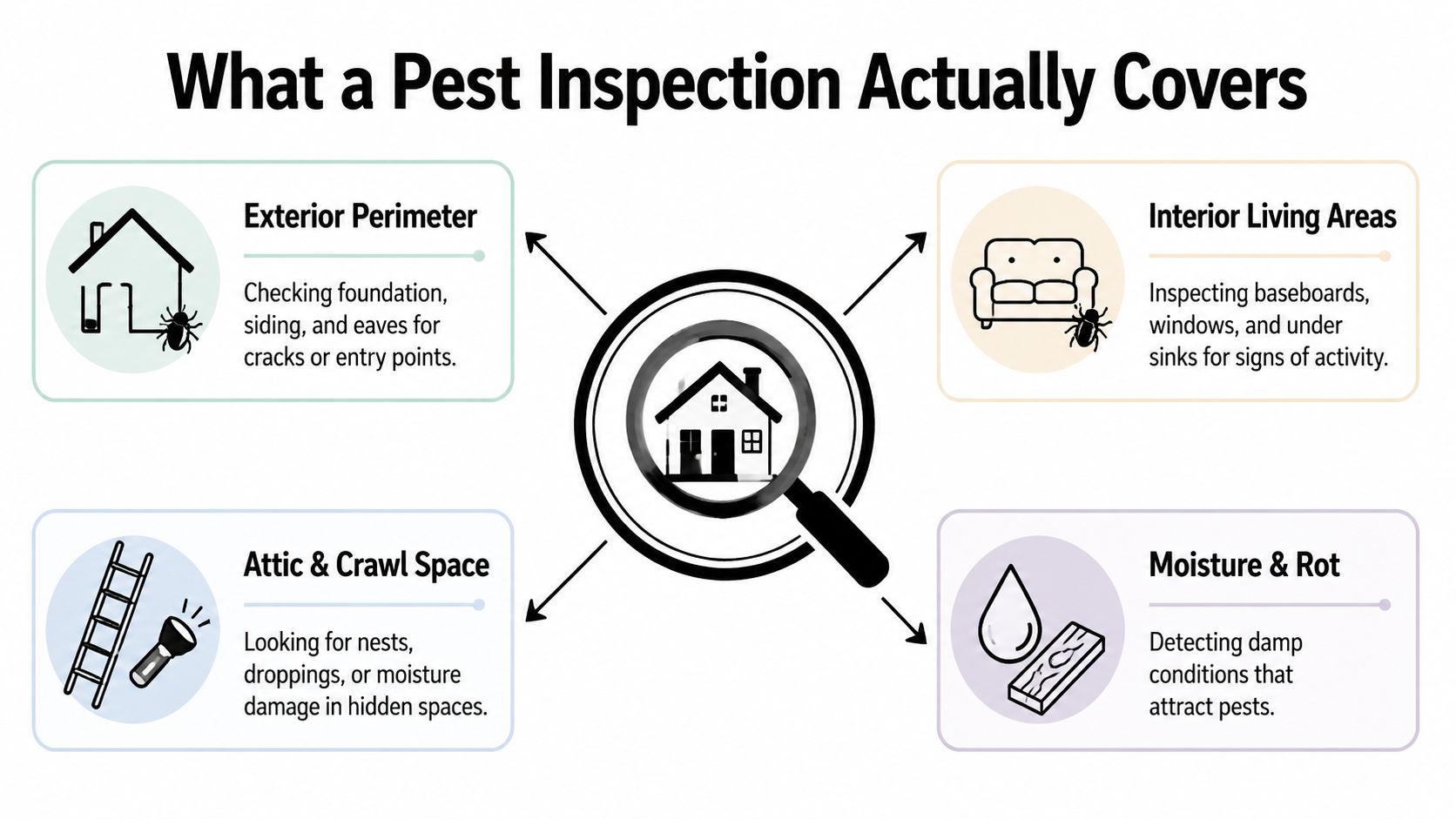
Areas an inspector examines
A typical inspection may include:
- Interior living areas: Kitchens, bathrooms, baseboards, window sills, door frames, utility penetrations, and areas beneath sinks.
- Lower-level spaces: Basements and crawl spaces, especially where moisture, wood-to-soil contact, or limited ventilation may support pest activity.
- Upper-level spaces: Attics, rafters, insulation, roofline transitions, and accessible areas where rodents or wasps may leave evidence.
- Exterior perimeter: Foundation walls, siding, eaves, grading, drainage, vegetation, cracks, gaps, and possible entry points.
- Accessible structural members: Wood framing and other exposed or reachable members may be sounded or probed when the inspection standard requires it.
Inspectors may document live insects, frass, mud tubes, exit holes, droppings, moisture damage, soft wood, and conducive conditions. Washington guidance describes examining readily accessible areas, sounding or probing accessible structural members in termite-prone locations, and documenting evidence in writing, sometimes with diagrams marking damage locations. That detail appears in the Washington structural pest inspection rule.
What the inspection doesn't cover
A pest inspection isn't destructive testing. It generally doesn't include opening finished walls, removing flooring, dismantling cabinets, or examining sealed voids. Hidden wall interiors, inaccessible crawl spaces, packed storage areas, and covered structural components can remain outside the inspection's scope.
It also isn't a general home inspection. Mold, radon, electrical faults, plumbing defects, and other non-pest concerns require the appropriate specialist. Before buying, pair the pest inspection with practical new home inspection guidance so you understand how pest findings fit into broader property due diligence.
This boundary is important in real estate. HUD's Wood Destroying Insect Inspection Report notice states that the report isn't a guarantee against hidden or future infestation or damage, and the report can become invalid for a mortgage or property-transfer settlement if it isn't used correctly. Buyers and sellers should treat it as a documented risk assessment, not a promise that pests can never appear.
Inside the Inspection Process From Start to Finish
A well-run inspection starts before the technician arrives. When you schedule service, provide the property address, the reason for the inspection, known pest history, and any areas that concern you. Mention locked gates, pets, crawl space access, vacant rooms, or recent renovations so the technician can plan for a complete visit.
At arrival, the inspector reviews the property layout and asks what you've noticed. A homeowner might report a recurring ant trail in the pantry, scratching in an attic, or a damp crawl space. Those details help the technician prioritize likely routes and compare your observations with evidence found throughout the structure.
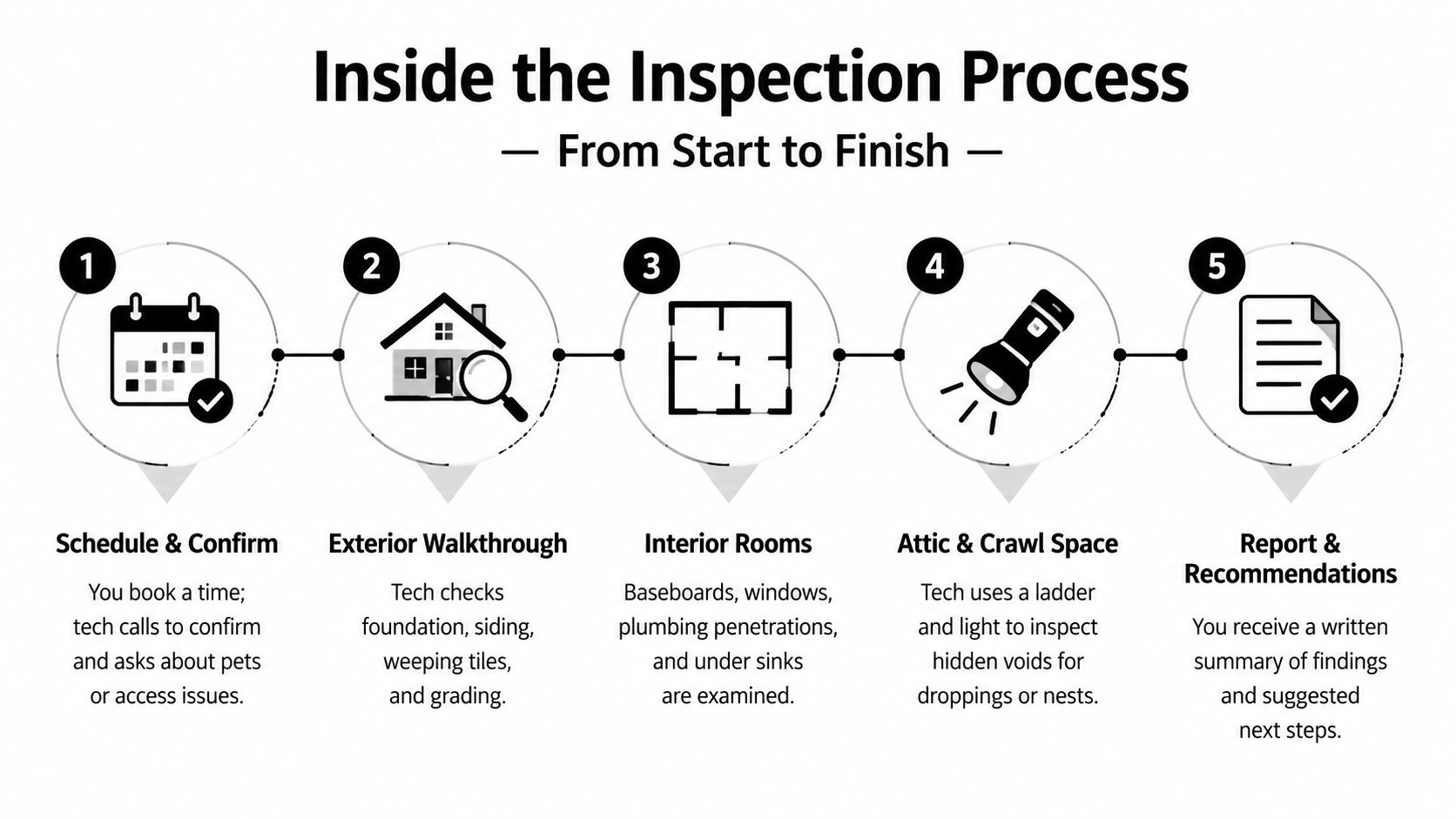
The exterior walkthrough
The technician begins outside, following the foundation and looking for cracks, gaps, mud tubes, damaged siding, and conditions that let pests reach the structure. Grading and drainage matter because water that collects near the foundation can support moisture-loving pests and weaken wood or other building materials.
The inspection may continue up to soffits, fascia, eaves, window trim, and roofline transitions. The technician looks for openings, nests, droppings, damaged wood, and signs that insects or rodents are using the exterior as a route indoors.
The interior examination
Inside, the inspector works through accessible rooms and high-risk areas. Basements and crawl spaces receive attention for moisture, wood-to-soil contact, and evidence along foundation walls. Attics may reveal rodent droppings, nesting material, or wasp activity around rafters and roof penetrations.
Kitchens and bathrooms deserve close attention because plumbing leaks and gaps around pipes can create pest-friendly conditions. Window and door frames may be gently probed where permitted to identify soft or damaged wood. The purpose isn't to tear into the house. It's to document visible evidence and accessible conditions that warrant action.
The written report
The final deliverable should be a written report that identifies findings, access limitations, photographs or diagrams when appropriate, conducive conditions, and recommended next steps. For wood-destroying organisms, North Carolina guidance calls for reporting visible evidence and conditions conducive to subterranean termites, including findings from accessible areas and sounding of accessible structural members.
The inspection visit typically takes 45 to 90 minutes, depending on property size and accessibility. That range is practical rather than universal. A cluttered basement, locked outbuilding, or inaccessible crawl space can limit the inspection and should be recorded in the report.
Practical rule: A report is only as useful as its access notes. If an area couldn't be inspected, treat that limitation as part of the decision, not as proof that the area is pest-free.
Common Findings in Northwest Indiana Homes
Crown Point properties don't all face the same pest problem. A newer home with dry drainage and sealed utility penetrations presents a different risk profile from an older property with damp framing, dense landscaping, and an exposed crawl space. Seasonal weather also changes what inspectors are most likely to find.
| Finding | Peak Season | Risk Level | Typical Location |
|---|---|---|---|
| Subterranean termite evidence | Spring and summer | High when active or associated with damage | Foundation walls, crawl spaces, slab edges |
| Carpenter ant evidence | Warmer, wetter periods | Moderate to high when wood is damp or damaged | Window frames, roof leaks, wall-adjacent wood |
| Rodent activity | Fall and winter | Moderate to high because of contamination and damage | Attics, basements, behind appliances |
| Moisture and conducive conditions | After wet weather and during damp seasons | Moderate, but can increase future pest risk | Crawl spaces, foundation perimeter, plumbing areas |
| Occasional invaders | Seasonal transitions | Usually low, but activity can be disruptive | Exterior cracks, wall voids, window areas |
Wood-destroying organisms
Subterranean termite evidence may appear as mud tubes along foundation walls or in crawl spaces. The presence of a tube or damaged wood doesn't tell you the complete extent of the problem, which is why the inspector documents location, accessibility, visible evidence, and conditions that could support continued activity.
The scale of termite risk explains why buyers and property managers use inspections as preventive risk management. Industry materials cited in the verified background estimate that roughly 600,000 U.S. homes suffer termite damage each year. That figure is available through the United Kingdom government pest control resource, which also provides general background on pest control.
Carpenter ants often point inspectors toward moisture-damaged wood rather than dry, isolated surfaces. Window frames, roof leaks, plumbing areas, and softened exterior trim deserve attention because correcting the moisture source is part of controlling the risk.
Rodents and seasonal invaders
As temperatures fall, mice and rats seek shelter, food, and protected nesting areas. Droppings in an attic, basement, cabinet void, or behind an appliance can show where activity is occurring, while gnaw marks and nesting material may identify entry routes.
Boxelder bugs and stink bugs commonly use exterior cracks and gaps during seasonal transitions. They may not present the same structural risk as wood-destroying organisms, but a recurring indoor presence still signals that sealing and exterior maintenance deserve attention.
The right response depends on the finding. Active evidence calls for prompt professional evaluation. A moisture problem or entry gap calls for correction before it supports a larger infestation.
Who Needs a Pest Inspection and When
The right inspection timing depends on who controls the property and what decision is approaching. A buyer is checking risk before closing. A landlord is protecting units between occupants. A business owner is keeping pests out of customer and work areas. A current homeowner needs answers when conditions change.
| Owner Type | Primary Motivation | Recommended Frequency | Key Stakes |
|---|---|---|---|
| Homebuyer | Identify pest evidence before purchase or closing | One-time inspection tied to the transaction | Financing, negotiation, repairs, and risk acceptance |
| Landlord or property manager | Protect units and identify problems between occupants | Recurring inspections based on property risk | Tenant comfort, maintenance planning, and property condition |
| Business owner | Reduce pest risk in customer and work areas | Ongoing schedule suited to the facility | Sanitation, operations, reputation, and compliance needs |
| Current homeowner | Investigate signs or changing conditions | When signs or risk conditions appear | Property damage, household comfort, and timely treatment |
Homebuyers need clarity before closing
Schedule an inspection early enough to review the report before deadlines for contingencies, repairs, or closing. A lender, purchase agreement, or local transaction practice may require a Wood Destroying Insect report. Buyers should read the stated scope, identify inaccessible areas, and confirm who will handle follow-up work.
As noted in the coverage scope section, the Wood Destroying Insect report documents risk rather than guaranteeing freedom from pests. Treat findings as information for a property-specific decision, not as permission to ignore moisture, entry points, or previous treatment history.
A property with a termite history may sell for 10% to 20% less than a comparable property without that history, according to the verified industry material summarized above. The figure does not replace an evaluation of the home, but it shows why documented pest history can affect negotiations, financing discussions, and buyer confidence.
For transaction-focused guidance, review this pest inspection for a home purchase before scheduling an inspection with The Green Advantage.
Landlords and businesses need repeatable oversight
Landlords should arrange inspections during turnover and after reports of scratching, droppings, ants, or other activity. Accessible areas can be checked, conditions documented, and leaks or entry points corrected before the next occupant moves in. In Northwest Indiana, seasonal temperature changes can push rodents and overwintering insects toward protected indoor spaces, so timing inspections around recurring pressure helps.
Commercial facilities need a plan suited to their use. Restaurants, healthcare settings, retail spaces, warehouses, and offices have different access points and operating concerns. An inspection should identify where pests could enter, feed, nest, or move between areas while keeping disruption to the business low.
Current homeowners should call after repeated activity, movement in walls or ceilings, moisture damage, or droppings. Do not wait for a visible swarm or extensive damage. Give The Green Advantage the specific location, timing, and changes you have noticed so the technician can determine whether the next step is monitoring, repairs, or treatment.
How to Prepare Your Property for an Inspection
Preparation helps the technician see more and helps your report say more. The goal isn't to make the home look perfect. It's to remove avoidable access barriers and point out the evidence that a quick visit might otherwise miss.
Use this preparation checklist
- Clear attic and crawl space entrances: Move boxes, stored items, and furniture away from hatches and access doors.
- Open the basement perimeter: Pull boxes and shelving away from foundation walls so the technician can look for tubes, droppings, moisture, and entry points.
- Make sinks and cabinets accessible: Remove cleaning supplies and stored items from beneath kitchen and bathroom sinks.
- Trim exterior vegetation: Cut back shrubs, vines, and dense growth touching the foundation or siding.
- Ensure exterior areas are accessible: Provide access to gates, garages, sheds, and backyard sections included in the inspection.
- Secure pets: Keep dogs, cats, and other pets in a safe room or away from the work area.
- Gather records: Have prior pest reports, treatment records, warranties, and seller disclosures available.
- Mark known concerns: Show the inspector the pantry trail, damp crawl space, attic noise, or other recurring sign.
Pet food, bird feeders, standing water, clogged gutters, and leaking plumbing can all help explain why pests are present. Don't hide those conditions. Tell the technician what changed, when you noticed it, and whether anyone has already applied a product.
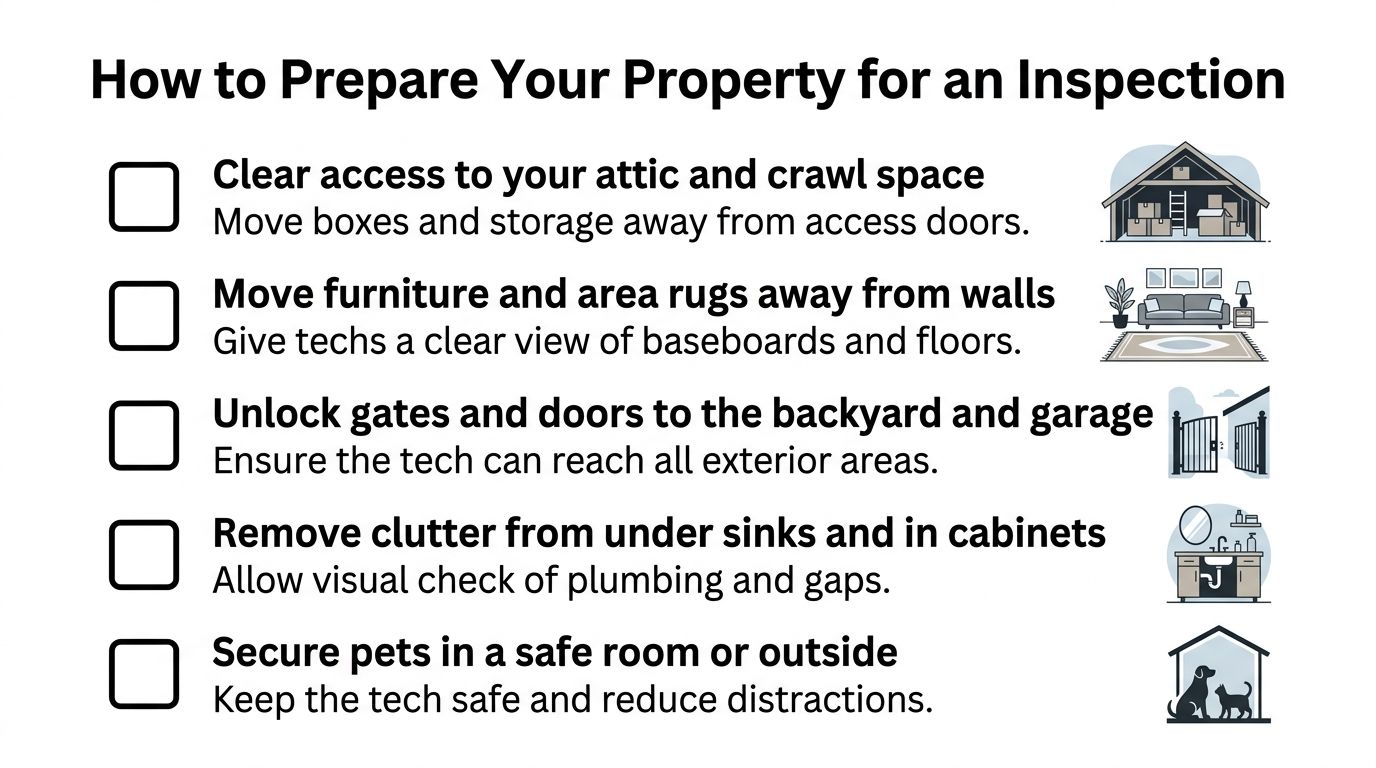
For a printable preparation reference, use this pest control inspection checklist before your appointment.
The short video below also shows the kind of access and observation that can make a property inspection more productive.
Next Steps After Your Inspection Report
A report becomes useful when you turn each finding into a decision. Sort the results into active evidence, older or historical damage, and conditions that invite future activity. This distinction matters because each category calls for a different response.
Confirmed termites, rodents, or other live pest activity should be addressed promptly. Older damage may require monitoring, repairs, or another evaluation to determine whether the pest remains active. Conditions such as poor drainage, wood-to-soil contact, plumbing leaks, or unsealed entry points need correction even if no live pests were found.
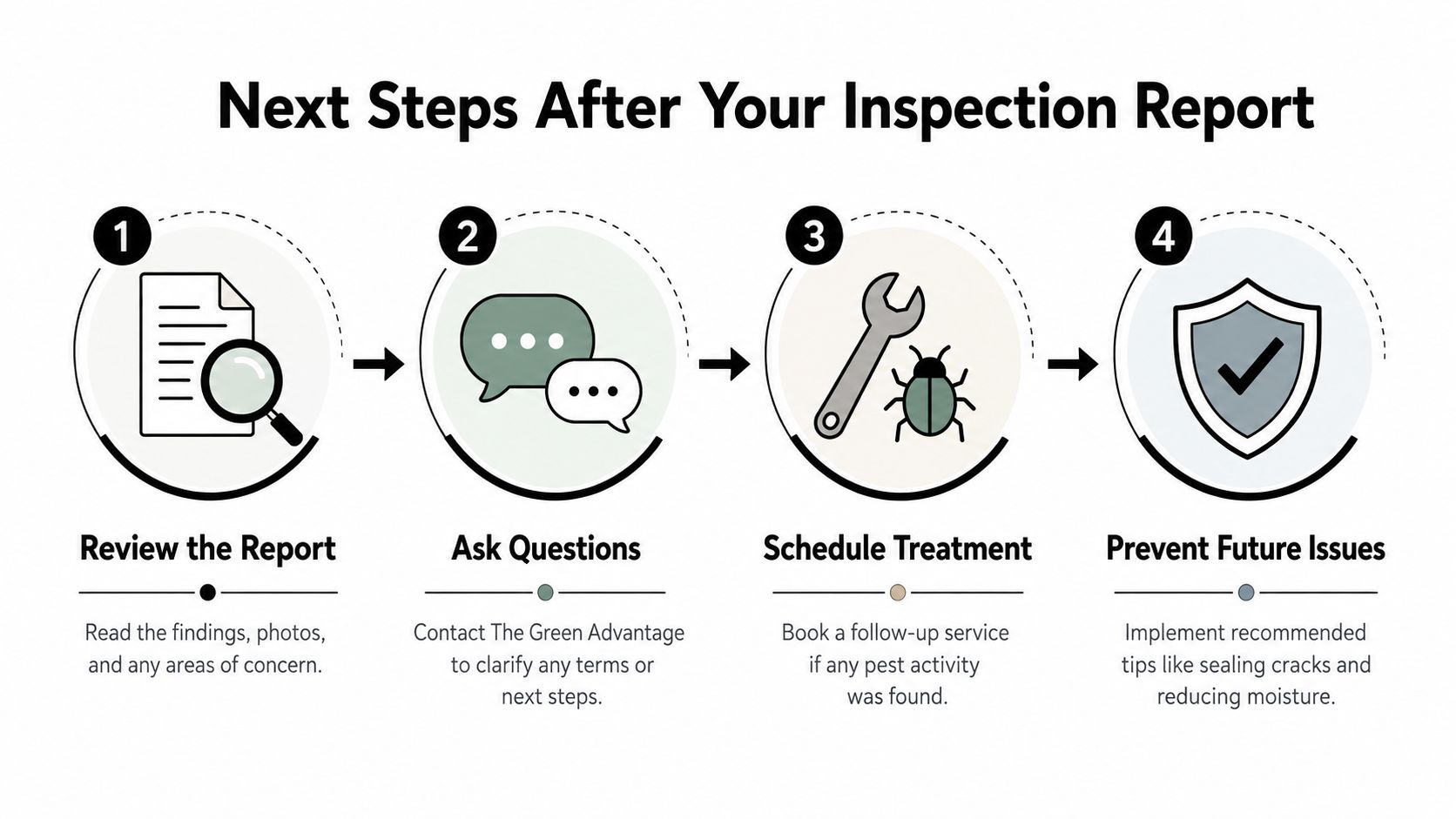
Use the report to make a decision
If you are buying a home, send the report to your real estate professional and lender when required. Ask which findings could affect closing, which repairs to request, and whether treatment or a seller credit fits the documented conditions. Base negotiations on locations, visible evidence, access limitations, and professional recommendations, not a general fear of pests.
Homeowners and landlords should assign a clear action to every recommendation:
- Treat active pests: Schedule termite control, ant control, rodent control, wasp removal, or another service suited to the identified pest.
- Correct moisture sources: Repair leaks, improve drainage, clear gutters, and address damp crawl space conditions.
- Close entry points: Seal cracks, gaps around pipes, damaged screens, and openings near doors or roofline transitions.
- Monitor unresolved areas: Recheck locations with limited access or older damage that requires observation.
- Choose prevention when appropriate: Use seasonal preventative treatments when recurring pest pressure or property conditions support ongoing service.
The Green Advantage can review the findings and provide eco-friendly treatment options, prevention plans designed for Crown Point properties, and follow-up support for homes and businesses. Services include residential and commercial pest control, termite control, mosquito control, rodent exclusion, spider control, and seasonal pest treatments. Recommendations should match the property conditions and evidence documented in the report.
Use the report promptly: treat active pests, correct the condition supporting them, and schedule follow-up when risk remains.
Visit The Green Advantage to schedule an inspection or request a quote for professional pest control near you.