
Buying a house in Crown Point is exciting right up until the moment you realize how much can stay hidden behind clean drywall, fresh paint, and a well-staged basement. Most buyers already expect a general home inspection. Fewer realize that a pest inspection home purchase plan can answer a different question entirely. Is there evidence of termites, carpenter ants, rodent activity, moisture conditions, or wood damage that a standard inspection may not fully address?
That's where a calm, local process matters. In Northwest Indiana, buyers don't need more alarm. They need a clear read on risk, realistic next steps, and a report they can use. If you're trying to protect your investment without slowing down your closing, this is how to approach it.
Your Dream Home in Crown Point and the Pests You Can't See
You found the right house. The neighborhood fits. The commute works. The yard looks good, and you can already picture where the furniture goes. Then the practical questions start. What's hiding in the crawl space? What's happening behind the sill plate? Has moisture been attracting activity for years without anyone noticing?
That concern is reasonable. A dedicated pest inspection isn't about trying to sink a deal. It's about making sure you understand the property you're about to own, especially where wood damage or hidden activity may sit outside the scope of a general inspection.

The cost question is usually easy
Most buyers hesitate for a moment because it feels like one more line item in an already expensive transaction. The math usually clears that up. One benchmark source cites a pre-purchase pest inspection at about $100, while termite repairs can average $3,000 and exceed $37,500 in severe cases, according to Mashvisor's pest inspection cost discussion.
That's why experienced buyers treat this as a screening step, not an optional extra. The inspection fee is small compared with the cost of finding structural damage after closing.
Practical rule: If the house is worth serious money to you, the pest risk deserves a serious look.
What buyers usually miss
A house can present well and still have signs of wood-destroying insects, rodent entry, or chronic moisture around accessible framing. Cosmetic updates can make a home feel newer than it is. They don't tell you whether there are mud tubes on foundation walls, soft trim in a basement corner, or old treatment evidence that raises follow-up questions.
In Crown Point and nearby Northwest Indiana communities, a focused pest inspection gives you clarity. You stop guessing. You start making decisions based on visible evidence, documented conditions, and what can be addressed before closing.
Why Pest Inspections Are Crucial in Northwest Indiana
In Crown Point, a house can look dry, clean, and well cared for at the showing, then tell a different story once someone checks the basement rim joist, crawl space supports, or the soil line along the foundation. That gap matters in Northwest Indiana, where moisture, freeze-thaw cycles, and older construction details often create good conditions for pests to stay hidden.
A general home inspection has a broad job. A pest inspection has a narrower one. It looks for insect activity, rodent entry, wood damage, moisture-related risk, and the conditions that tend to lead to those problems.
Local conditions create hidden risk
Around Crown Point and the rest of Northwest Indiana, I pay close attention to subterranean termites, carpenter ants, powderpost beetles, and rodent activity. Basements and crawl spaces are common here. So are attached garages, dense landscaping, and grading issues that keep soil damp near the house. Those details matter because pests do not need a dramatic opening or obvious damage to get started.
The first signs are often small.
Common places to check include:
- Basement perimeter walls: Mud tubes, moisture staining, and damage where framing meets masonry
- Crawl spaces: Damp soil, poor airflow, plumbing penetrations, and exposed wood with high moisture
- Window and door trim: Soft exterior wood, peeling paint, and gaps that suggest long-term moisture exposure
- Garage and utility entries: Openings around conduit lines, sill plates, and framing joints where mice and insects can get in
If you want to know what a focused inspection should cover, this home pest inspection checklist for buyers gives a practical overview of the areas and conditions worth reviewing before closing.
Why a home inspection alone may not be enough
Home inspectors do important work, but pest evidence is easy to miss if it is not the main thing being evaluated. Termite shelter tubes can blend into foundation surfaces. Old exit holes from wood-boring insects can look like minor cosmetic wear. Rodent rub marks and entry points often show up in utility areas that do not get much attention unless someone is specifically looking for them.
That difference in focus matters during a purchase. Buyers are not just trying to learn whether a house has a problem today. They also need to know whether there is old damage, incomplete treatment history, or moisture conditions that make future activity more likely.
A useful pest report should sort those findings clearly. Active evidence calls for one response. Past damage may call for repair or further evaluation. Conducive conditions often call for prevention work before they turn into a larger expense.
Buyers need a report that explains what is active, what is old, and what should be corrected before it becomes a repeat issue.
What local expertise changes
An inspector who works regularly in Crown Point, St. John, Cedar Lake, and nearby Northwest Indiana communities sees patterns that a less local company may not weigh the same way. Older basement homes, homes with crawl space additions, and properties with heavy mulch against the foundation all tend to raise specific questions. The same goes for detached structures, wood contact near grade, and drainage that pushes water back toward the house.
At The Green Advantage, that local experience changes how we inspect and how we explain the findings. The goal is not to alarm a buyer. The goal is to give a buyer clear evidence, realistic next steps, and a better sense of whether the issue is minor maintenance, active infestation, or something that should affect the deal terms.
Scheduling Your Inspection Timing Contingencies and Choosing a Pro
Good inspections don't just depend on who you hire. They depend on when you hire them. Timing affects your bargaining power, your repair options, and sometimes your financing timeline.
For most buyers, the cleanest approach is to schedule the inspection during the due-diligence period while there's still room to ask for treatment, repairs, or a credit. If you wait too long, you may still learn something useful, but your options can narrow fast.
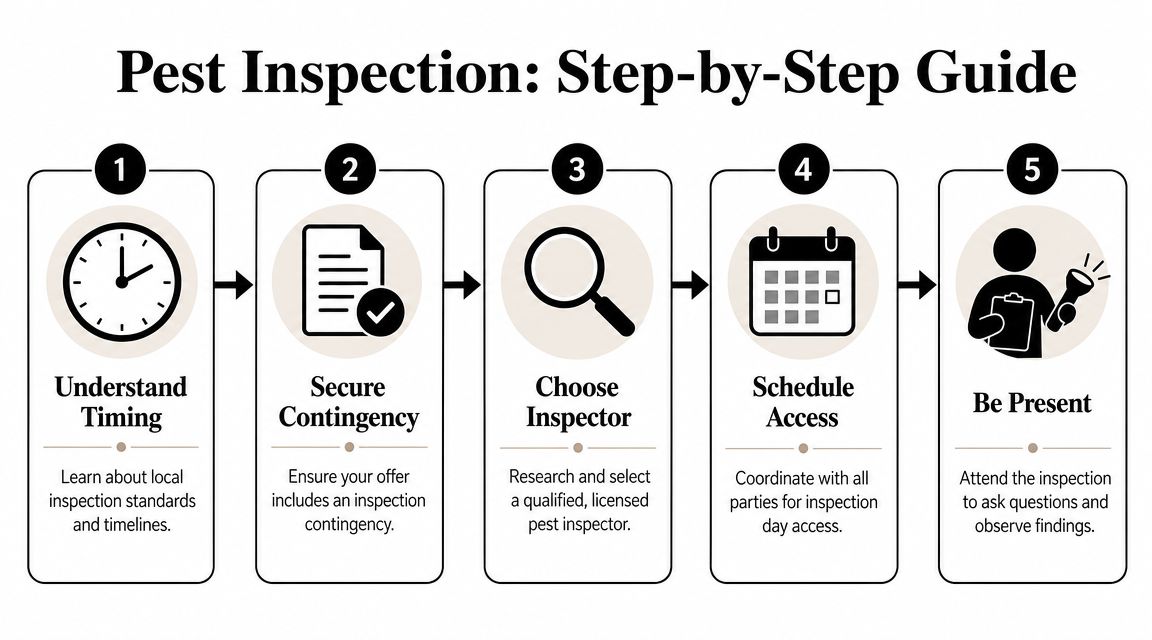
A simple order of operations
Use this sequence to keep the process manageable:
- Review your contract timing. Confirm inspection deadlines and ask your agent where a pest inspection fits within them.
- Protect your negotiating position. Make sure the contract language gives you room to respond if the report finds active issues or conditions that need further evaluation.
- Choose a qualified inspector. Look for a licensed, insured company that handles real estate inspections regularly and can produce clear documentation.
- Coordinate access early. Listing agents, sellers, inspectors, and sometimes tenants all affect scheduling.
- Attend if possible. Buyers who walk the property with the inspector usually understand the report more clearly.
A practical prep resource is this pest control inspection checklist, which helps buyers organize questions before inspection day.
What to expect for cost and timing
A pest inspection is often a low-cost risk screen. Typical 2026 consumer pricing ranges from $50 to $450, depending on inspection type, home size, and location, and a standard inspection may take only 30 minutes to 1 hour, according to Angi's pest inspection cost guide. That's a short appointment compared with the amount of uncertainty it can remove.
Here's a quick planning view:
| Item | What to expect |
|---|---|
| Inspection window | Best handled before contingencies expire |
| On-site time | Often brief for a standard visual inspection |
| Access needed | Basement, crawl space, attic, garage, exterior perimeter |
| Best buyer move | Schedule early enough to allow follow-up if needed |
Later in the process, this walkthrough can help some buyers visualize how inspection timing fits into the purchase flow.
Financing can change the schedule
Some buyers don't run into pest requirements until the loan process gets more specific. For certain transactions, that can affect timing in a big way. The same Angi guide notes that pest inspections are mandatory for VA loans in 35+ states and territories. If your financing could trigger a separate report, it's smart to ask about that early instead of assuming the general inspection covers it.
One practical option in Crown Point is The Green Advantage, which provides pest inspections for home purchase transactions and can coordinate around standard real estate scheduling. The key is not the brand name. It's choosing a provider who understands lender-driven deadlines, document requirements, and local pest pressure.
Decoding the Pest Inspection Report Common Red Flags
The inspection report is where buyers either feel informed or overwhelmed. A useful report should tell you what was seen, where it was found, whether the evidence appears active or prior, and what follow-up makes sense. It shouldn't bury the important points under vague wording.
A standard pre-purchase pest inspection follows a structured sequence. The inspector performs a non-invasive visual scan of accessible areas and checks for indicators such as mud tubes, damaged wood, wing piles, hollow-sounding material, and gnaw marks. That process is summarized in Windy City Home's home inspection statistics and inspection overview, which also cites survey data showing 86% of buyers who used a home inspector identified at least one issue, and 46% used the report to negotiate a lower price.
What happens on site
The technician usually checks accessible interior and exterior areas where pest evidence commonly shows up first. That includes foundation lines, basement framing, crawl spaces, garages, utility penetrations, exposed wood, and other visible areas. It is visual and non-invasive. If something suggests hidden activity, the report should say that follow-up may be needed rather than pretending the first visit answered everything.
If you want an example of a transaction-focused service, this termite inspection for real estate page shows the type of inspection buyers often request when wood-destroying insect documentation matters.
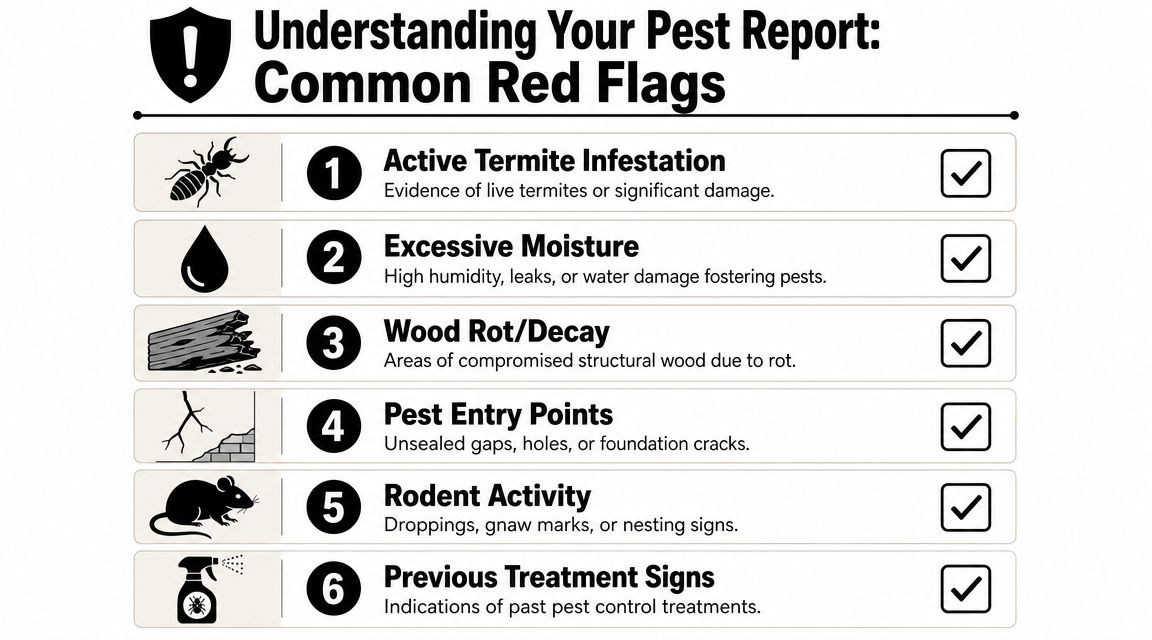
Red flags that deserve a closer look
Not every finding means “walk away.” Some findings mean “ask better questions.”
- Mud tubes: These are shelter pathways commonly associated with subterranean termite movement. Active-looking tubes deserve prompt evaluation.
- Damaged or hollow-sounding wood: This may indicate feeding, moisture deterioration, or prior infestation. Location matters.
- Frass or wood dust: Small pellets or fine debris can point toward insect activity, depending on texture and where it appears.
- Exit holes: Tiny openings in wood can suggest past or present wood-boring insect activity.
- Rodent droppings or gnaw marks: These point to entry, nesting, or active movement through accessible areas.
- Excess moisture: Leaks, dampness, and poor ventilation often show up as conditions that make pest problems more likely.
A report is most useful when it distinguishes between active evidence, prior evidence, and conducive conditions. Those are not the same thing, and buyers shouldn't treat them the same way.
How to read the report without overreacting
Use the report as a decision tool. Ask three questions. What was found? Is it active, suspected, or old evidence? What's the next reasonable step?
When the findings are clearly written, the next move usually becomes obvious. You may need treatment, repair quotes, further inspection of concealed areas, or documentation for the file. Clear reports lower stress because they replace vague worry with a sequence of actions.
Using the Report to Negotiate Repairs and Treatments
Once the report is in hand, the goal is simple. Turn the findings into clear repair or treatment terms before you are locked into the purchase.
In Crown Point and across Northwest Indiana, I tell buyers to keep the conversation tied to scope, cost, and timing. A seller does not need to agree that a pest issue feels alarming. They only need to respond to documented evidence, a reasonable treatment plan, and any repairs that protect the structure. That shift matters in a busy market, where buyers can feel pressure to accept more risk than they should.
Three outcomes usually make the most sense:
- Seller handles treatment or repairs before closing. This fits active termite work, visible damage, or conditions that need correction before a lender or buyer is comfortable.
- Seller gives a credit at closing. This is often the better option if you want to choose your own pest company, repair contractor, and schedule after possession.
- Buyer cancels the deal. That can be the right call when access was limited, damage may extend beyond visible areas, or the seller resists addressing a legitimate issue.
The right option depends on the finding.
For example, a short section of old termite evidence in a garage may call for documentation and a localized repair quote. Active termite tubes along a basement wall, high moisture, and wood damage near a sill plate are a different conversation. In that case, I would want licensed treatment, a repair plan, and a reinspection before closing, or enough credit to cover the full job after closing.
Keep the request specific
Vague complaints usually stall out. Specific requests move deals forward.
Ask for:
- licensed treatment, if active infestation is present
- a written repair scope for damaged wood
- receipts, warranties, or transferable service records when available
- reinspection after the agreed work is complete
- clarification on any inaccessible areas that could still hide damage
That last point matters more than buyers realize. If the crawl space was too tight, insulation blocked visibility, or stored items limited access, the report may only show part of the picture. In older Northwest Indiana homes, especially those with moisture history, concealed damage is one of the main reasons I advise buyers to slow down and tighten the terms.
Your agent can keep the language plain and businesslike: the inspection found documented pest activity or damage, and you are requesting treatment, repair, or a credit based on those findings. No drama is needed.
For buyers who want an outside perspective on when pest findings are serious enough to justify backing out, this guide on how to deny a home for pests is a useful reference.
A good negotiation matches the remedy to the evidence. Small, contained findings deserve a measured response. Widespread damage, moisture problems, or unanswered questions deserve stronger terms.
After Closing Protecting Your New Crown Point Home
Closing day doesn't end pest risk. It changes your role. Before closing, you're evaluating a property. After closing, you're protecting it.
That's why the smartest homebuyers treat the inspection as the start of a maintenance plan, not the finish line. If the report found active issues, you'll want treatment and follow-up handled promptly. If the report found moisture conditions, wood-to-soil contact, or easy entry points, prevention matters just as much as correction.

Protect the house you just worked hard to buy
New owners in Crown Point often benefit from a simple post-closing checklist:
- Address open findings quickly: Don't let a known issue sit while you unpack and settle in.
- Correct moisture conditions: Gutters, grading, leaks, and ventilation problems often make pest issues easier to start.
- Seal obvious access points: Utility gaps, garage edges, and foundation penetrations deserve attention.
- Set a monitoring routine: Ongoing inspection and seasonal pest control can keep small issues from becoming expensive ones.
Some buyers also get surprised by financing-related pest requirements late in the process. Rocket Mortgage's explanation of lender timing and pest reports notes that many buyers don't realize VA loans require pest inspections in 35 states, and FHA loans require them when there is evidence of infestation. That can create a last-minute inspection need after appraisal, which is why coordinating pest timing with lender milestones can prevent delays and extra cost.
From inspection to long-term protection
A primary benefit of a good pest inspection home purchase strategy is confidence. You know what was found. You know what still needs attention. You know whether the property needs treatment, repair, prevention, or just periodic monitoring.
If you're also thinking ahead about pricing, concessions, and purchase strategy, this advice on how to get the best deal on your home is a useful companion to the inspection process.
A home in Northwest Indiana doesn't have to be perfect to be a good purchase. It has to be understood, and then maintained with a plan that fits the actual conditions on the property.
If you're buying a home and want a clear, transaction-ready pest inspection in Crown Point or nearby Northwest Indiana, contact The Green Advantage. We can help you schedule the inspection, review what the findings mean, and map out the next step so you can move toward closing with confidence.