
A wet yard in Crown Point can turn into a mosquito problem fast. One storm leaves water in the low spot by the patio, the bird bath sits untouched, and the downspout keeps spilling onto clay that doesn't dry out the way you want it to. By the time you notice the bites, the breeding spot has already done its work.
That's why standing water mosquitoes aren't a random nuisance, they're usually a sign that a few small yard habits and drainage issues have lined up at the same time. For homeowners looking for pest control near me or pest control in Crown Point, IN, The Green Advantage works the way a good field technician should, by finding the overlooked water sources, fixing what can be fixed, and treating what can't. The same damp conditions that favor mosquitoes can also make ants, termites, and rodents more likely to show up around a house, especially in Northwest Indiana's wet seasons.
Why Crown Point Yards Keep Attracting Mosquitoes
A lot of Crown Point yards look fine from the driveway and still hold water where mosquitoes breed. Spring snowmelt settles into low spots, gutters load up with leaves, and a downspout keeps feeding a patch of lawn that stays soft long after the rain stops. Add a bird bath, a pet bowl, a folded tarp, or a decorative pond that is not moving enough, and the yard gives mosquitoes the quiet water they want.
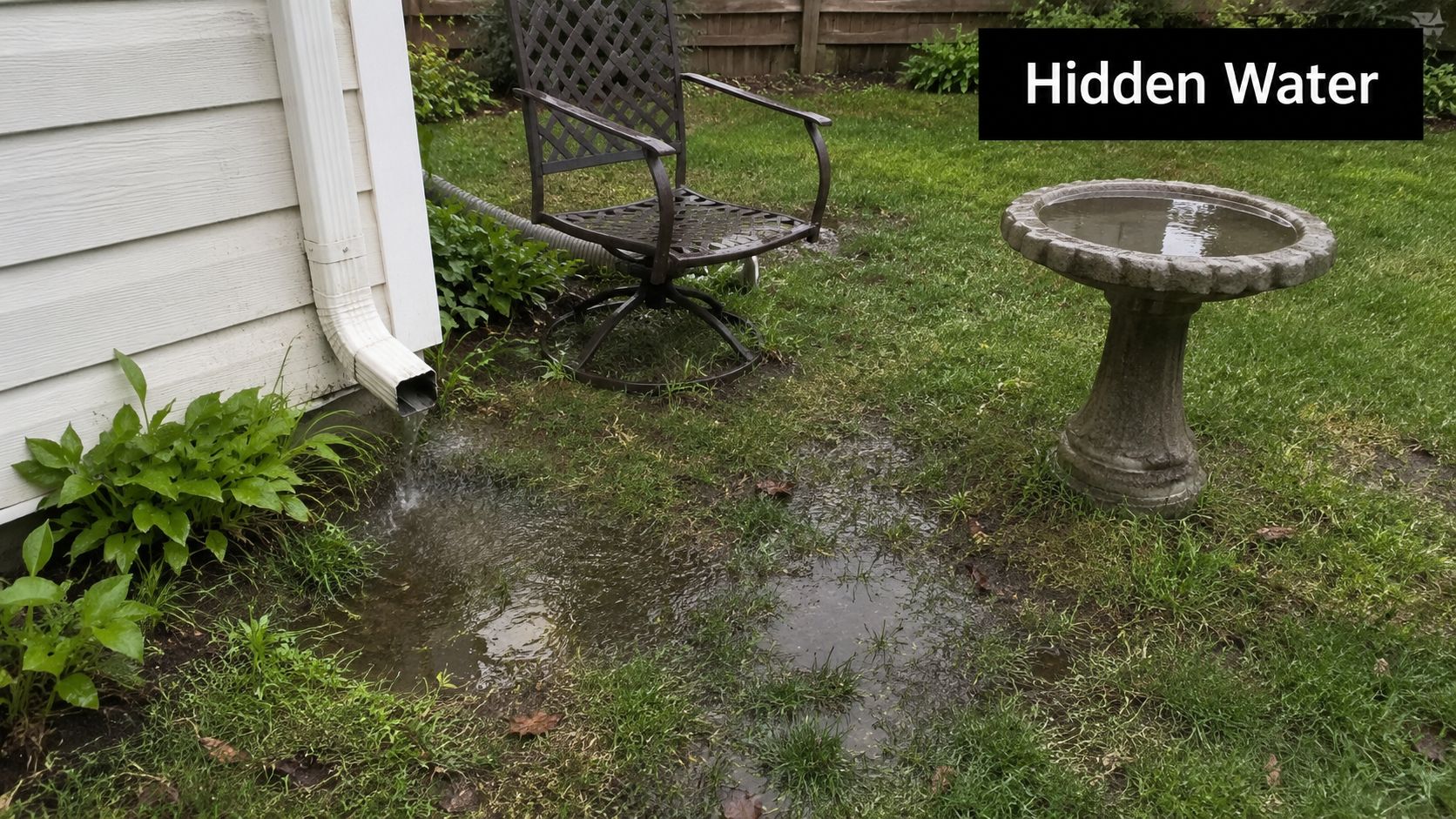
The pattern homeowners miss
Mosquitoes do not need a swamp. They use small, still water sources just as readily as a soggy corner of lawn or a clogged container by the garage. That is why a yard can look clean from the street and still turn into a mosquito problem after one wet stretch, especially when shade keeps the water from drying out.
Crown Point yards also deal with the way local ground holds water. Clay-heavy soil, snowmelt, and spring gutter overload can leave moisture sitting in the same places again and again. Once that happens, the issue is no longer just a puddle. It becomes a repeat breeding site, and the practical answer is source control, cleanup, and drainage work done on time. The Green Advantage explains that approach in its guide to mosquito breeding and control.
Practical rule: if water sits long enough for you to stop thinking about it, mosquitoes have already had time to use it.
Why this also points to bigger pest pressure
The same damp areas that support mosquito breeding also create the kind of moisture conditions that draw in other pests around a house. That is why a mosquito complaint often shows up alongside questions about residential pest control, commercial pest control, or even termite control and rodent control. A yard that drains poorly does more than feel buggy. It stays attractive to pests that like shelter, moisture, and easy access to a structure.
For homeowners who keep searching exterminator near me or exterminator in Crown Point, IN, the problem is usually repeated water management, not bad luck. A local inspection from The Green Advantage starts by tracing where the water is collecting, then deciding what needs cleanup, what needs treatment, and what needs a drainage fix so the problem does not keep coming back.
How Standing Water Mosquitoes Actually Work
A yard can look dry enough at a glance and still keep feeding mosquitoes. In Crown Point, that usually means water sitting in the places people stop checking, a bird bath that never fully empties, a gutter that holds a thin line of water, or a low spot that stays wet after snowmelt and spring rain. Mosquito control starts to make sense once you follow the water, because that is where the cycle keeps restarting.
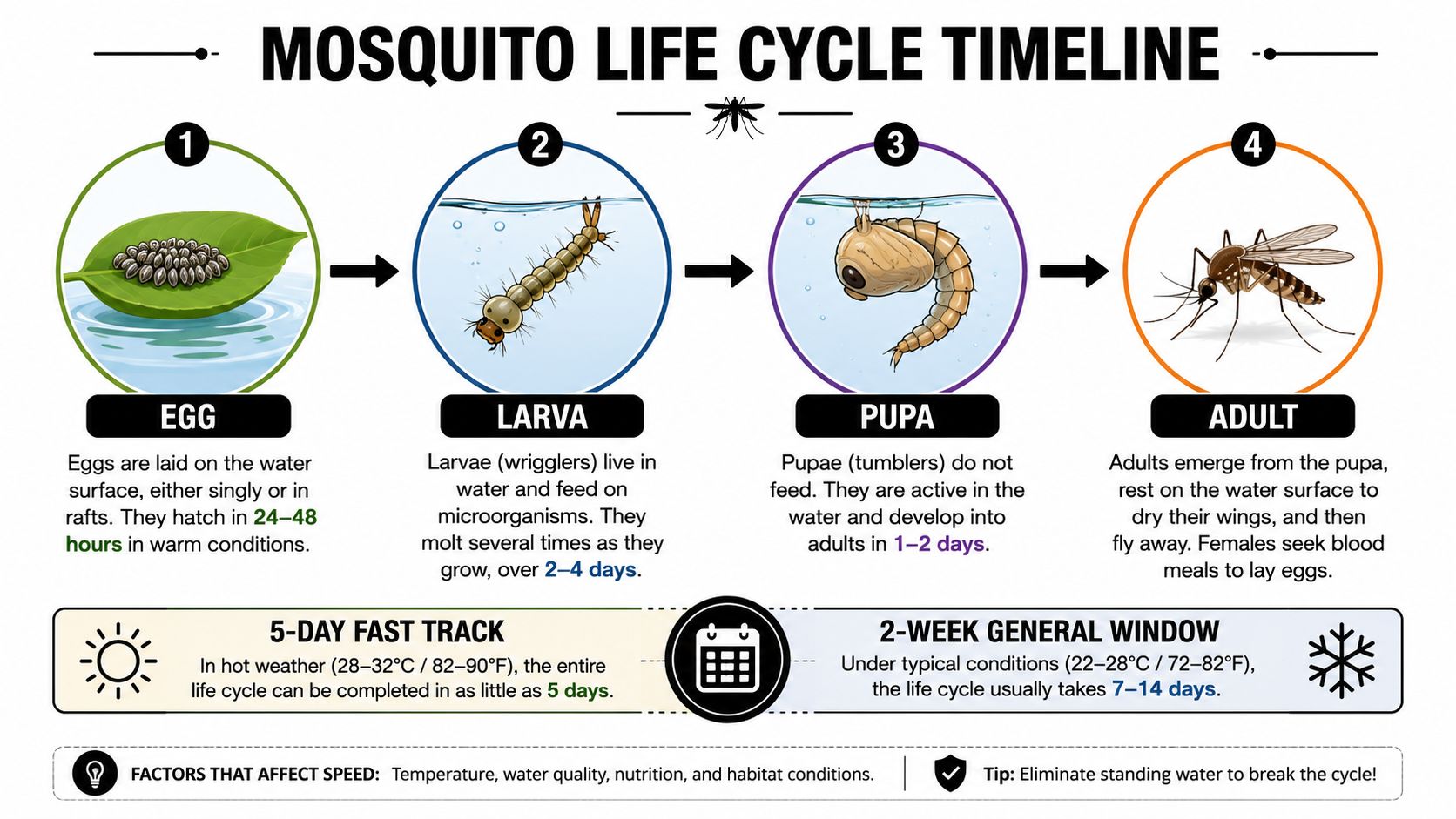
Mosquitoes use still water for two life stages before they become biting adults. Eggs hatch into larvae, larvae change into pupae, and pupae turn into adults once conditions are right. In practical terms, that means a small container of warm, stagnant water can keep the cycle going faster than many homeowners expect, especially if it sits in shade or gets ignored for a few days.
That speed is the reason source control matters so much. San Diego County says the full shift to adult can happen in as little as 5 days (San Diego County). North Carolina State Extension also warns that mosquitoes can develop in water that remains undisturbed long enough to support a life cycle, while the University of Florida IFAS Extension notes that even temporary water can become a breeding site if it is left in place instead of drained or dumped (North Carolina State Extension, University of Florida IFAS Extension).
Once that source stays in place, spraying adults only treats the visible part of the problem. The yard keeps producing more mosquitoes from the same spot. The practical fix is to break the cycle where it starts, then keep checking the places that refill after every rain or melt.
A bird bath that sits untouched through the week can turn into a nursery before the homeowner realizes the water never moved.
Why timing matters more than volume
It does not take much water for mosquitoes to get started. The Northeast IPM Center notes that they can breed in containers as small as a bottle cap (Northeast IPM Center). That is why a saucer under a planter, a toy left upside down, or the bowl of a wheelbarrow can matter just as much as a puddle in the grass.
The Green Advantage covers that same source-first approach in its mosquito breeding and mosquito control guide. For a homeowner, the takeaway is straightforward. Source reduction beats chasing adults, because it removes the water mosquitoes need to complete the cycle. That is also why the best time to check is after rain, after mowing, and after any stretch of humid weather that slows evaporation.
Your Weekly Yard Walk-Through
The best mosquito inspection is the one you repeat without skipping the easy-to-miss spots. Walk the yard the same way every week, and start where Northwest Indiana yards usually hold water, at the roofline, then the low ground, then the shaded corners that stay damp after snowmelt or a spring storm.
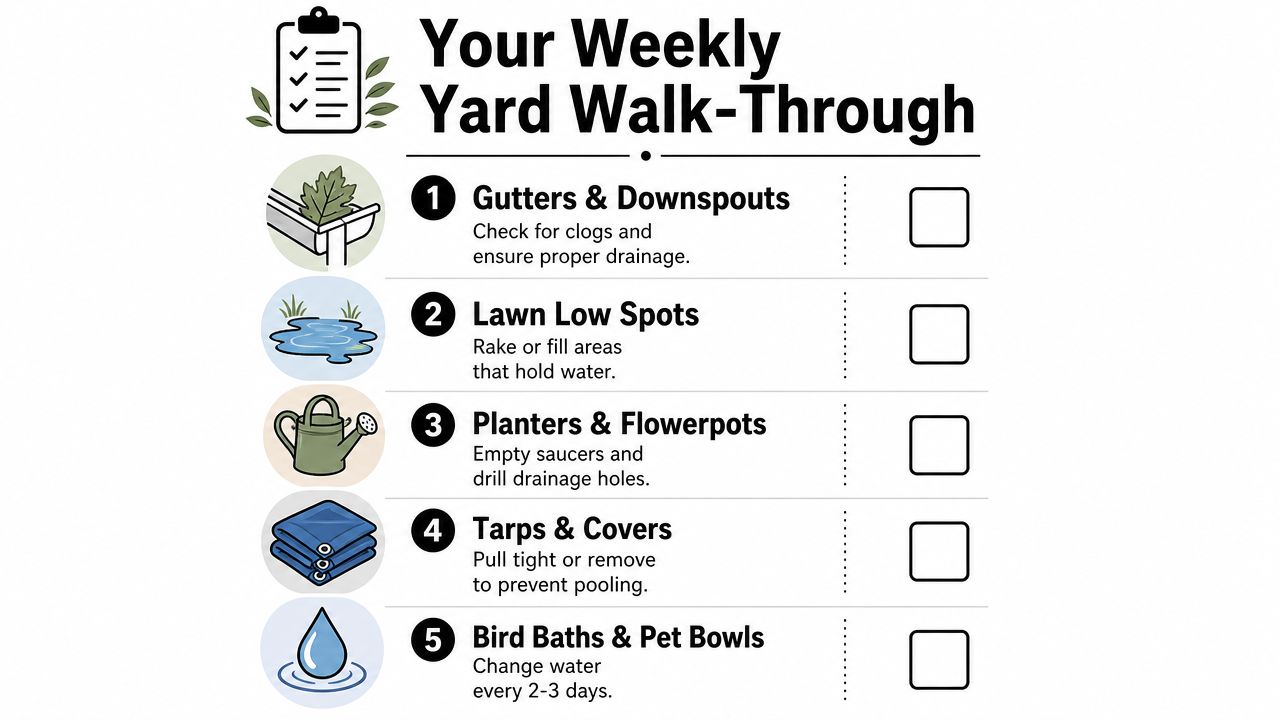
Start where water enters and exits
Check gutters first, then follow each downspout to where it drops water. Clogged gutters, roof drainage problems, tires, and other water-holding containers keep showing up as repeat breeding sites, and that includes the kinds of overflow problems homeowners usually notice only after the yard has already stayed wet for a while (Northeast IPM Center, University of Florida IFAS Extension, EPA mosquito control guidance). Sagging runs and weak drainage at the base of a downspout are the details a homeowner can miss, even when they are obvious from a technician's view.
Then work the yard edge. Toys, tarps, recycle bins, wheelbarrows, and decorative yard pieces can all trap rain in folds, corners, and low spots. Tires are a problem too, and wheelbarrows are one of the easiest items to overlook when they sit with the bowl facing up (University of Florida IFAS Extension).
Field habit that saves time: if something can collect rain, check it before you decide it is just storage.
Finish in the shade
Bird baths, fountains, pet dishes, and ornamental water features need their own look because they refill and sit undisturbed between checks. Empty and refresh those water sources every week, and make sure the container itself is not holding debris that keeps the water still (EPA mosquito control guidance). For rain barrels, use a screened setup and follow a tight maintenance routine, which is the part many homeowners miss when the barrel is tucked beside the house. See this guide on how to keep mosquitoes out of a rain barrel.
The shaded, tucked-away areas matter too. Under decks, behind AC units, and along fence lines, you will usually find small pockets that stay damp longer than the open lawn. A 15-minute weekly walk-through is enough for most homeowners if they stay consistent. The goal is not perfection, it is catching the one missed container before it sits long enough to matter.
Safe DIY Treatments for Standing Water You Cannot Remove
Some water just won't go away. Rain barrels, ornamental ponds, drainage depressions, livestock troughs, and certain low spots may refill too quickly for simple dumping to solve them. That's where treatment choices matter, because not every product fits every situation.
Compare the practical options
| Option | Best for | How it works | Watch out for |
|---|---|---|---|
| Bti dunks | Bird baths, rain barrels, tubs, small standing-water sites | Targets mosquito larvae in water | Doesn't affect adults, and it won't keep working if water gets refreshed without retreatment |
| Bti pellets or granules | Slightly larger water-holding spots or multiple small containers | Reaches larvae in shallow water | Use only where the label allows, and keep up with the weekly check |
| Mosquito bits | Small containers and nuisance water pockets | Delivers larval control in a practical homeowner format | Not a fix for clogged drainage or repeated refilling |
| Fountain or bubbler circulation | Ornamental ponds and decorative water features | Keeps water moving so mosquitoes have a harder time completing development | Pumps need maintenance, and shallow stagnant edges can still breed |
| Goldfish or native mosquito-eating fish | Larger ornamental ponds | Adds biological control in water features that support fish | Not suitable for every pond, and fish won't solve overflow or debris problems |
| Broad-spectrum insecticides in water | Poor fit for most home water features | Can kill a wide range of organisms | Risky around aquatic habitats, pets, and beneficial insects, so it's usually the wrong first choice |
The Green Advantage recommends Bti products in the form of dunks, pellets, or granules for standing water that can't be removed. That lines up with extension guidance that larviciding can reduce nearby adult mosquito pressure when source removal isn't possible (LSHTM summary of larval-source management). If you want a plain-language walkthrough for one common setup, the rain barrel mosquito guide is a good place to start.
What not to rely on
Bti only works on larvae, not pupae or adults, so it needs the right timing. Oil-based surface films can be short-lived and may interfere with fountain pumps, which makes them a poor fit for most residential water features. Broad-spectrum insecticides in water are usually too blunt for the job and can create avoidable side effects in places where kids, pets, and pollinators already spend time.
If the water is still there after every rain, the better move is often a combination of treatment and correction. That means treating the water safely, then fixing the reason it keeps coming back.
Landscaping and Drainage Fixes That Last
Mosquito pressure drops when water stops hanging around in the first place. In Northwest Indiana, that usually means dealing with downspouts, grading, compacted soil, and any feature that keeps creating a damp pocket after storms. The goal isn't a perfect yard design, it's a yard that dries fast enough to stop acting like a breeding site.
The fixes that usually pay off first
Extending downspouts away from the foundation is a practical first move, especially where splashback keeps the base of the wall wet. Regrading low spots can also make a big difference if the yard repeatedly holds water after rain. If the problem area never really improves, French drains or dry creek beds can redirect water before it settles.
Compacted clay soil is a common Northwest Indiana headache because it sheds water instead of absorbing it. Aeration helps, but in heavier problem areas, the drain path matters more than the grass. Plant choices matter too. Dense groundcover and cluttered borders can create small shaded, wet microhabitats that hold moisture longer than you'd expect.
For homeowners comparing DIY fixes with bigger drainage work, contact Modern Yard Landscapes for a drainage-focused overview of how problem areas are corrected.
If the same spot stays wet after normal weather, it's not a mosquito problem first. It's a drainage problem first.
Why this helps more than mosquitoes
Better drainage helps with more than bites. Damp foundations, overwatered borders, and sheltered wet edges also encourage ants, termite activity, and rodent movement around the home. That's why a drainage project often improves the overall pest picture, not just the mosquito count.
For Crown Point homeowners, the decision line is pretty clear. If one container or one gutter is the issue, DIY cleanup is enough. If the same low spot keeps filling, or the same corner keeps producing bites, the fix usually belongs with a professional who understands both pest pressure and the water path behind it.
Seasonal Timing for Northwest Indiana Mosquitoes
Mosquito pressure in Crown Point doesn't behave the same way all year. Early spring brings snowmelt and clogged gutters, late spring adds repeated rain into containers, summer heat speeds the breeding clock, and fall cleanup determines whether drainage problems carry into the next season. That pattern is why season-long mosquito reduction plans make sense for some properties, while a one-time treatment works better for others.
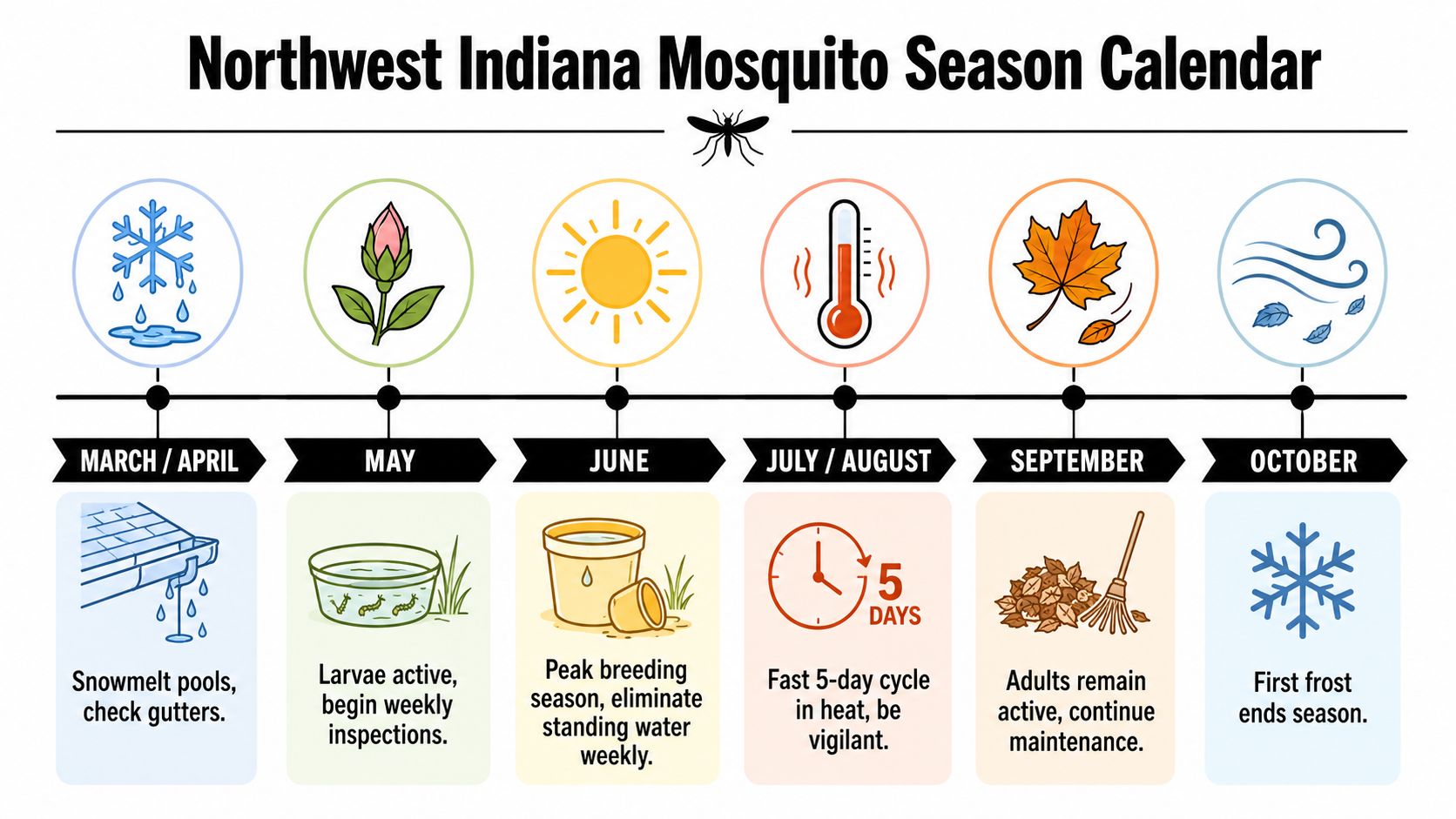
A simple local calendar
March and April usually start with meltwater that pools near downspouts, low spots, and hard edges where the sun hasn't dried things out yet. By May, the focus shifts to weekly inspection because container water starts building up after each rain. June is when standing water needs the most attention, because warm weather keeps the breeding cycle moving.
July and August are the months when homeowners feel the fast turnaround most sharply. If a container gets missed, the five-day clock becomes a real problem. September still needs maintenance because adults remain active while leaves and debris start clogging drains again. By October, the first frost ends the season, but only if the yard has been kept clean enough to drain properly.
When DIY is enough
DIY usually holds up when the property is tidy, the water source is temporary, and the bites stop after cleanup. It also works when there's one obvious container and the rest of the yard dries normally. If a shaded rest area still feels quiet and dry, you're probably on the right track.
Good threshold: if you can remove the water and the bites stop, keep doing that every week.
When mosquitoes keep coming back from the same corner, or when the property sits near retention ponds or wooded edges, the job gets bigger. That's where a seasonal service plan can help by keeping inspections, larval control, and perimeter treatment on schedule instead of waiting for the next spike.
When to Call The Green Advantage and What to Expect
If you've cleaned up the obvious water and the mosquitoes are still around, it's time to stop guessing. That's especially true when the same yard keeps producing bites after a careful inspection, when neighboring properties feed the problem across the fence line, or when drainage and water features are more than a homeowner wants to manage alone. If the mosquito issue is showing up alongside ants, rodents, or termites, the property probably needs a broader pest review too.
A good service visit should feel straightforward. You call the local office, set the appointment, and a technician comes out to walk the property with you. They look at gutters, downspouts, shaded containers, low spots, water features, and any hidden breeding sites that were easy to miss from the porch. Then they choose the right approach for the site, which may include larval treatment in breeding water and a broader mosquito reduction plan around the perimeter.
For homeowners building a practical maintenance routine, the annual home maintenance checklist is a useful companion because pest prevention works better when it's part of regular property care, not an afterthought.
The value here isn't complicated. You get a yard that's easier to use, fewer surprises after rain, and one less thing to check every time you step outside. For residential pest control or commercial pest control in Crown Point, IN and nearby Northwest Indiana communities, The Green Advantage can handle the inspection, the cleanup support, and the targeted mosquito work that helps keep your outdoor space usable.
If you're ready to stop fighting the same standing-water mosquito problem every week, contact The Green Advantage to schedule a pest inspection or request a quote for mosquito control in Crown Point, IN.