
Pest Control Monitoring in Crown Point, IN
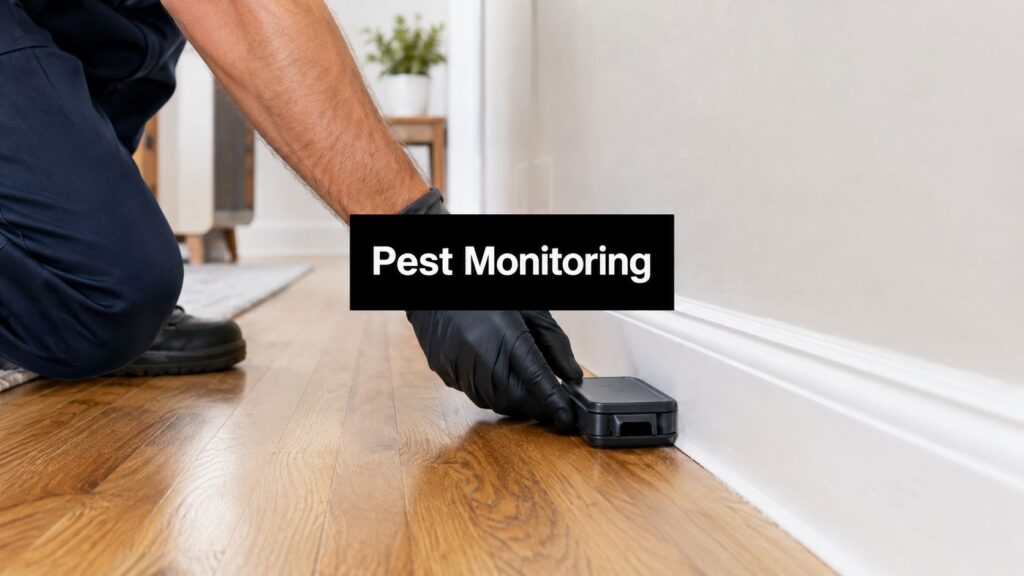
You notice a single ant near the kitchen sink, a spider in the basement, or scratching above the ceiling after sunset. The immediate question is simple: does one pest mean there are more? In Crown Point, IN, the right answer depends on the pest, the location, the season, and what a professional inspection finds.
Pest control monitoring replaces guesswork with evidence. Instead of spraying every visible insect on a calendar, a technician looks for patterns, identifies conditions that attract pests, and recommends action when activity reaches a meaningful threshold. The Green Advantage serves Crown Point and surrounding Northwest Indiana communities with residential pest control, commercial pest control, pest inspections, mosquito reduction, and environmentally mindful prevention strategies.
Why Pest Control Monitoring Matters for Northwest Indiana Properties
A homeowner spots one ant on the counter and wipes it away. The next morning, another appears near the same cabinet. That small detail deserves attention, but it doesn't automatically justify spraying the entire kitchen. The useful question is whether the ants are wandering in from outdoors, following a repeatable trail, entering through a gap, or responding to moisture and food inside the home.
Professional monitoring turns that isolated sighting into a property-specific decision. A technician checks likely entry points, activity zones, moisture conditions, food sources, and signs of nesting. The same logic applies to spiders in a basement, wasps around a roofline, mosquitoes in a yard, or rodents moving through an attic. Visible pests are clues, not the complete diagnosis.
Monitoring is different from routine spraying
Integrated pest management treats monitoring as a decision-making step, not just an observation task. Professionals track pest populations and site conditions to determine whether control is economically, practically, or medically justified, then target the response where it matters. USDA guidance on integrated pest management describes monitoring as a documented, recurring process that records locations, schedules, techniques, findings, and control effectiveness.
That distinction matters for families and businesses in Northwest Indiana. A routine application may kill exposed insects temporarily, but it won't necessarily seal an entry point, correct sanitation issues, remove standing water, or identify a developing rodent pathway. Monitoring gives the technician information needed to combine inspection, exclusion, habitat changes, traps, and targeted treatment.
Practical rule: A single pest sighting should start a question, not automatically start a broad chemical treatment.
Why local conditions change the answer
Seasonal pest issues can move indoors when temperatures shift, rainfall changes moisture conditions, or properties offer accessible food and shelter. A Crown Point home with a damp crawl space has different risks from a dry, well-sealed home. A restaurant, warehouse, rental property, and office building each has its own vulnerable areas and operating requirements.
The Green Advantage approaches these properties with long-term prevention in mind. That means monitoring for activity before damage becomes obvious, documenting findings, and adjusting the plan instead of treating every visit as an identical service. Modern IPM reflects a long evolution from basic pest suppression toward threshold-based management, with economic threshold concepts formalized in the mid-20th century and earlier biological-control practices recorded much further back in history. The principle remains practical: collect useful information, then intervene with purpose.
Types of Pest Monitoring Techniques and Tools
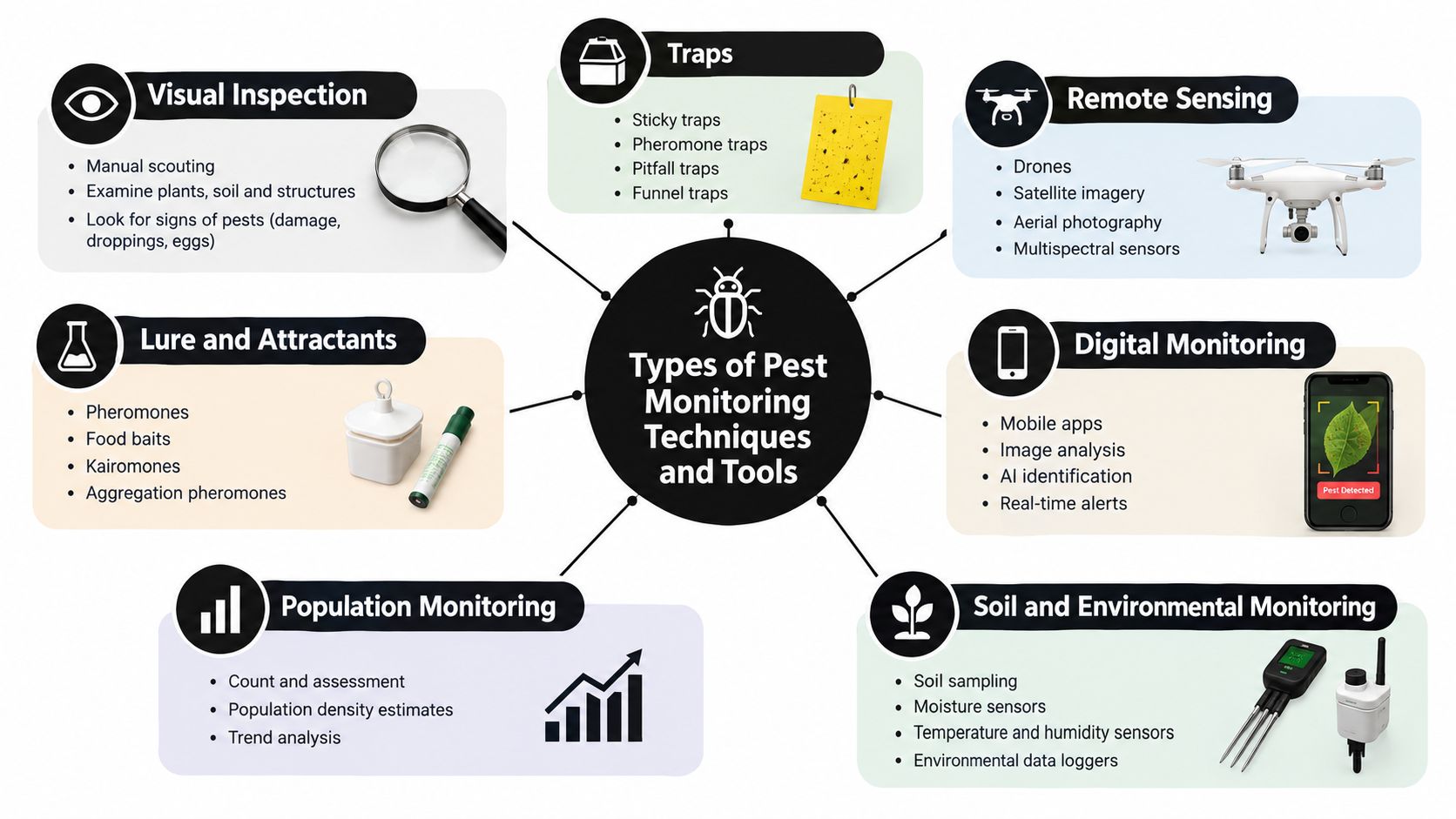
Effective pest control monitoring uses more than one tool. The right combination depends on the property, pest, access points, and consequences of missed activity. A family home may need focused inspections and physical traps, while a food facility may need documented stations, recurring checks, and trend records.
Visual inspections find conditions devices can't explain
A visual inspection is the starting point. The technician examines foundation lines, utility penetrations, door sweeps, attic insulation, crawl spaces, wall voids, roof edges, kitchens, storage areas, and exterior vegetation. Droppings, gnaw marks, shed insect skins, mud tubes, grease marks, webbing, nesting materials, and damaged screens can reveal activity even when no pest appears during the visit.
Visual work also explains the reason behind a signal. A rodent trap may show activity, but the inspection can identify the opening that allowed entry. A wasp sighting may lead to a roofline inspection. An ant trail may point toward moisture or a gap around plumbing.
Traps and bait stations act as early warning systems
Sticky monitors, snap traps, insect traps, and tamper-resistant bait stations provide physical evidence. Placement matters more than quantity. Professionals position devices along travel routes, near suspected entry points, behind equipment, in utility areas, or beside other conditions that support pest movement.
A trap catch isn't just a result. It can show where activity is concentrated, whether a control measure is working, and whether activity is recurring. In a commercial setting, stations also support consistent documentation and follow-up.
Digital sensors extend visibility
Connected sensors can detect movement or trap activity in areas that are difficult to inspect frequently, such as wall voids, crawl spaces, attics, and storage rooms. Remote alerts may help a technician respond sooner when the property justifies that level of service.
Digital monitoring isn't automatically better for every customer. It adds equipment, maintenance, data review, and service complexity. For a small home with occasional seasonal insects, a sound inspection and conventional monitoring may be enough. For a multi-site facility, a sensitive food operation, or a property with hidden rodent pathways, connected information can be more useful.
Sentinel programs create a repeatable baseline
A sentinel program uses selected monitoring points that technicians revisit on an agreed schedule. The team compares findings over time, records pest identification and activity, and watches for changes instead of relying on memory.
For homeowners researching integrated pest management services, the key question isn't which device looks most advanced. Ask whether the provider can explain what each device measures, where it will be placed, how often it will be checked, and what finding will trigger a change in the plan.
Residential vs Commercial Monitoring Needs
A Crown Point residence and a commercial facility don't need identical pest control monitoring. Treating them as if they do creates two problems. Homeowners may pay for equipment they don't need, while businesses may receive informal service that doesn't produce the documentation or response process their operation requires.
Residential pest control usually centers on comfort, health, family safety, and property protection. A technician may focus on exterior perimeter conditions, foundation cracks, garage transitions, attic access, crawl spaces, kitchens, bathrooms, and areas where children or pets spend time. Termite control, carpenter ant prevention, rodent exclusion, spider control, wasp removal, mosquito control, and preventative pest treatments may all require different inspection priorities.
Commercial pest control demands a broader operational view. Restaurants, warehouses, offices, rental properties, and other facilities have employees, customers, inventory, equipment, and business procedures that can be affected by pest activity. Monitoring records need to show locations inspected, findings, corrective actions, and follow-up. Managers should be able to see whether activity is declining, recurring in one area, or connected to a building or sanitation condition.
Why one schedule doesn't fit every property
EPA school guidance describes monitoring as regular, ongoing inspection, with frequency adjusted to the site and pest pressure. The guidance allows schedules ranging from weekly to less frequent intervals, and it describes more frequent indoor monitoring during a serious infestation followed by less frequent checks after control. EPA school IPM guidance supports the practical point that monitoring frequency should follow risk, not a generic calendar.
| Feature | Residential Properties | Commercial Facilities |
|---|---|---|
| Primary concern | Comfort, family safety, structural protection, and peace of mind | Public-facing risk, inventory, operations, documentation, and audit readiness |
| Common focus areas | Perimeter, attic, crawl space, garage, kitchen, and living areas | Kitchens, receiving areas, storage, waste zones, loading areas, production spaces, and utility rooms |
| Monitoring style | Seasonal inspections, traps, exclusion checks, and targeted follow-up | Mapped monitoring points, recurring logs, trend review, corrective actions, and documented follow-up |
| Technology decision | Use digital tools when hidden or recurring activity makes them worthwhile | Consider connected systems when response speed, multi-site visibility, or documentation justifies the complexity |
| Service goal | Prevent infestation and protect the home without unnecessary exposure | Detect activity early, protect the operation, and maintain a defensible pest management record |
For both property types, the plan should be understandable. Customers need to know what the technician found, what should change on the property, and what evidence will lead to treatment.
The Professional Monitoring Process and Action Thresholds
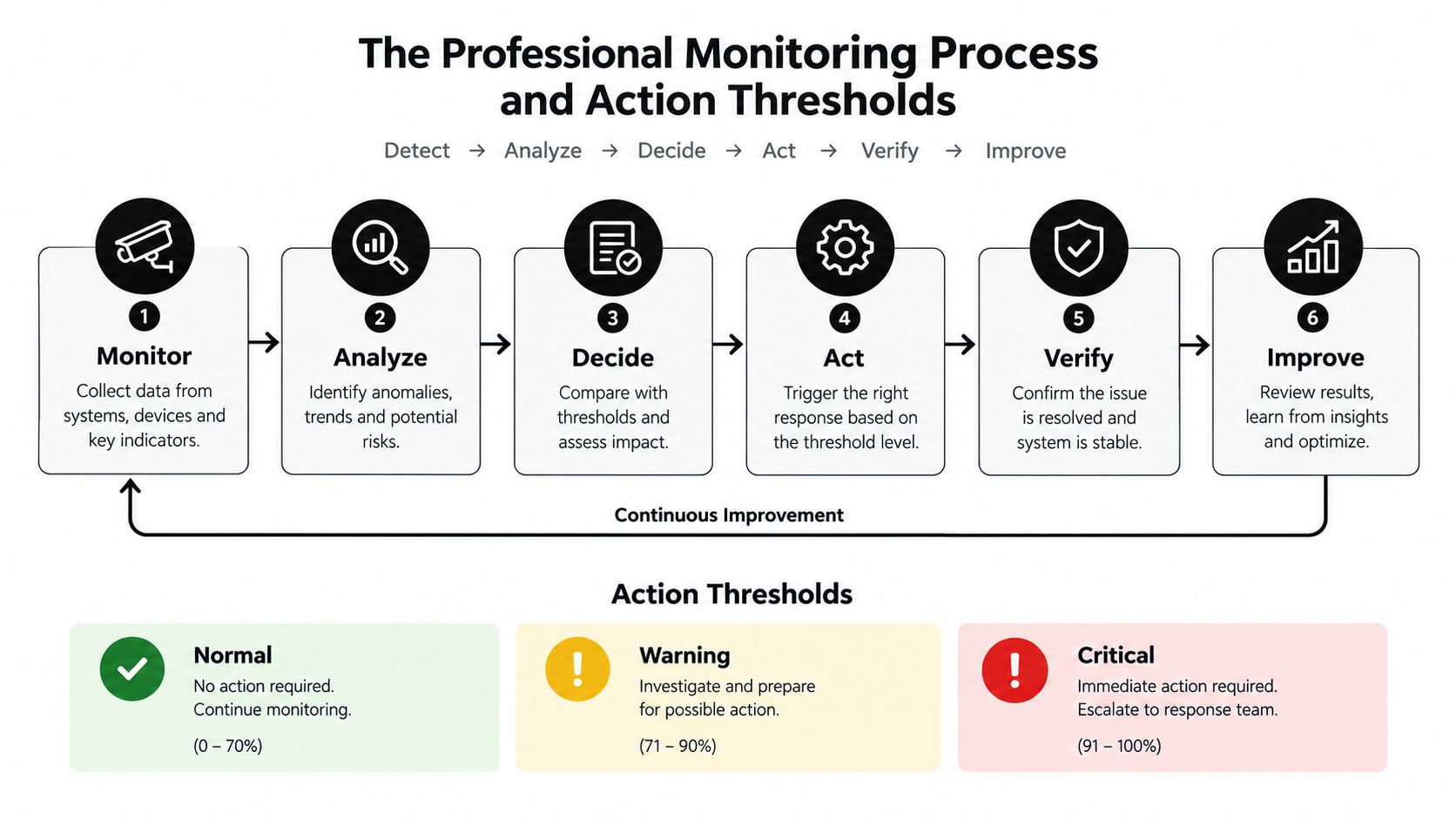
A professional program should answer four questions clearly: what pest is present, where is it active, how is activity changing, and what finding justifies treatment? Without those answers, monitoring becomes a collection of devices rather than a management system.
The workflow starts with a site assessment
The technician first reviews the property and its history. The inspection looks for pest evidence, entry points, moisture, food and waste conditions, harborage, vulnerable occupants or operations, and areas where activity could remain hidden. Monitoring points are then selected based on likely pest movement and the consequences of missed activity.
The next step is identification. Ants, termites, pantry pests, cockroaches, spiders, rodents, mosquitoes, and wasps don't respond to the same control strategy. Correct identification prevents a technician from treating the wrong pest or overlooking the condition that supports it.
Thresholds determine when observation becomes action
Integrated pest management uses an action threshold. Control should begin only when pest populations or environmental conditions reach a point where they create a nuisance, health hazard, or economic threat. EPA's IPM principles also note that seeing a single pest doesn't always mean control is needed.
A useful threshold should be measurable or at least consistently defined. University of California IPM guidance gives examples such as average pests per trap each week or the percentage of leaves or plants damaged during inspection. In school IPM examples from Texas A&M, operational thresholds include 10 ants per room in public areas, five ants per 100 square feet in storage areas across two monitoring periods, or two cockroaches observed per room. These examples aren't universal rules for every Crown Point property. They demonstrate why thresholds must match the pest, building, use, and risk.
Records reveal trends that a single visit misses
Technicians compare trap catches, inspection notes, locations, environmental conditions, and treatment results as a sequence over time. A repeated low-level signal in one area may call for exclusion or sanitation work. A rising pattern may justify targeted treatment. A declining pattern may support continued monitoring instead of escalation.
Clear routing, scheduling, and field records can also help boost field team efficiency, especially when technicians service multiple properties or return to specific monitoring points. Property owners should expect records that connect findings to decisions, not merely a note that a service occurred. A practical pest control inspection checklist can help homeowners and managers prepare questions and track corrective actions.
Benefits and ROI of Proactive Pest Monitoring
Proactive monitoring pays off by addressing small signals before they become disruptive problems. The return isn't limited to avoiding a treatment. It includes protecting building materials, reducing contamination risks, preserving business operations, and giving property owners a clearer basis for decisions.
For homeowners, early detection can expose moisture, gaps, nesting conditions, or structural vulnerabilities while repairs remain manageable. Termite control and carpenter ant monitoring can support earlier investigation of wood-related concerns. Rodent monitoring can identify activity near wiring, insulation, food storage, or HVAC spaces. Mosquito monitoring can guide outdoor service decisions instead of treating the yard without regard to actual pressure.
Property protection is easier before damage spreads
Exclusion work often has lasting value because it addresses how pests enter. Sealing gaps, improving screens, correcting door sweeps, managing standing water, reducing harborage, and changing storage practices can reduce the conditions that invite repeat activity. Preventative pest treatments work best when they support those measures, not when they substitute for them.
A reactive service call may be necessary during an active infestation, but it shouldn't be the entire strategy. Monitoring helps identify whether a treatment worked and whether pests are returning through the same route.
Long-term protection: The most valuable pest control decision often happens before anyone sees a large infestation.
Businesses measure value through continuity and accountability
For a restaurant, warehouse, office, or rental property, pest activity can affect more than the building. Managers may need to protect inventory, reassure occupants, maintain clean operating areas, and respond to inspection or audit questions. Documented monitoring gives the business a record of what was checked and what corrective action followed.
The value of commercial pest control therefore includes fewer surprises and faster decisions. If a monitoring point shows activity, the manager can direct attention to a defined location rather than searching the entire property. If records show no activity in a low-risk zone, the team can focus resources where evidence supports it.
The best program is not the one with the most equipment or the most frequent chemical application. It's the one that produces useful information, corrects property conditions, and applies treatment when the evidence supports it.
Signs You Need Professional Monitoring and What to Expect
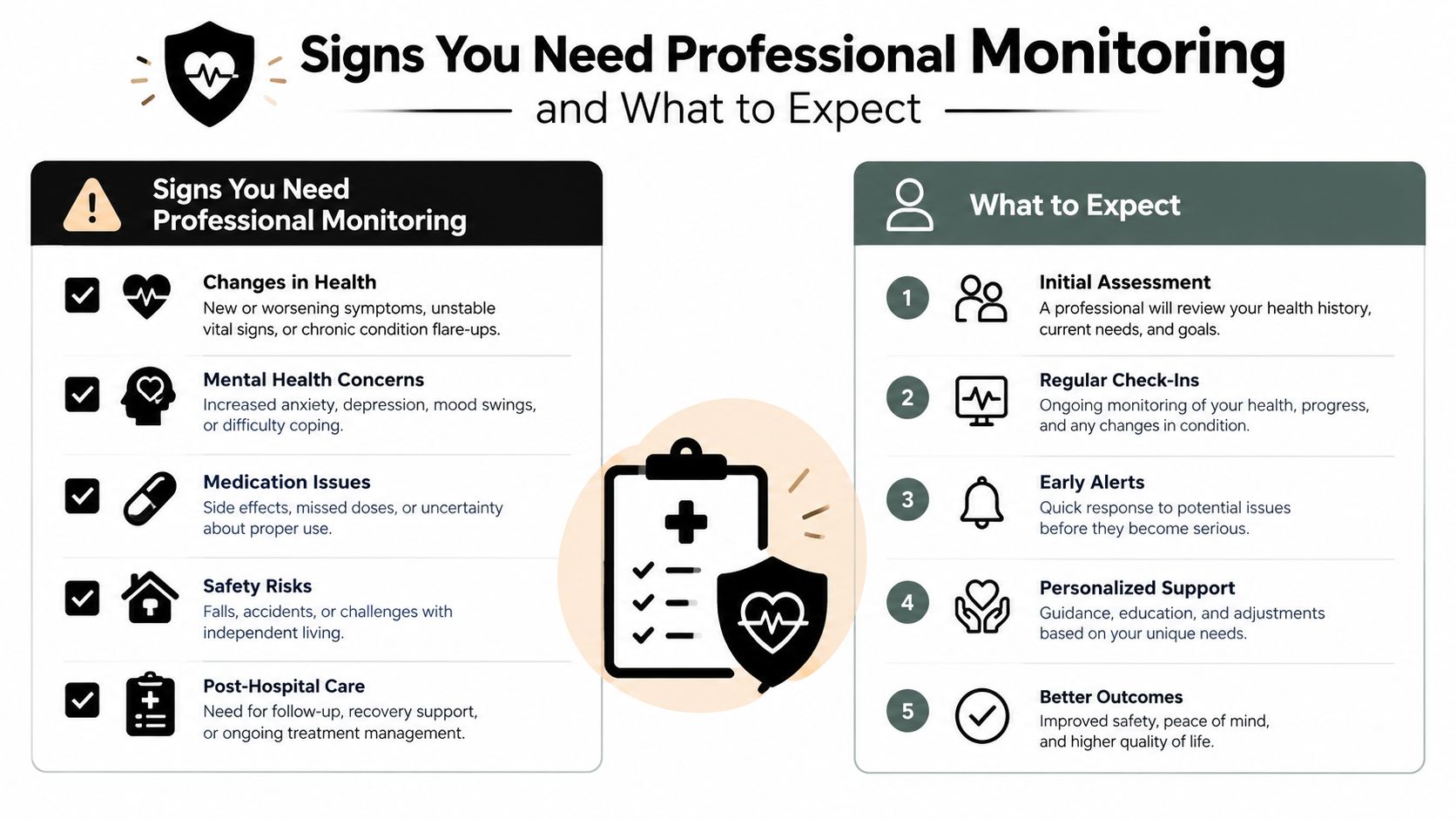
Some pest problems announce themselves. Others leave quiet evidence that homeowners and managers overlook until activity becomes harder to control. A monitoring assessment is appropriate when signs repeat, appear in protected areas, or coincide with damage and health concerns.
Watch for these indicators:
- Droppings or nesting material: Check cabinets, attic edges, utility rooms, storage areas, and concealed corners.
- Gnaw marks or damaged wiring: Rodent activity can threaten building components and should receive prompt attention.
- Repeated indoor insects: A seasonal spike in ants, spiders, cockroaches, or other insects may point to entry conditions or an indoor source.
- Mud tubes or damaged wood: These signs call for a focused termite or carpenter ant inspection.
- Wasp activity near the structure: Repeated traffic around eaves, soffits, wall openings, or play areas deserves professional evaluation.
- Mosquito pressure in outdoor areas: Persistent biting activity can justify a yard assessment and monitoring-based mosquito reduction plan.
- Unexplained odors or sounds: Scratching, rustling, or unusual smells may indicate concealed rodent activity.
What happens after you contact The Green Advantage
The first conversation should be straightforward. Knowledgeable office staff gather the property details, the pest concern, where signs appeared, and whether anyone in the home or business has specific safety needs. That information helps the field technician arrive prepared rather than treating the call as an anonymous appointment.
During the on-site visit, the technician inspects the relevant interior and exterior areas, identifies evidence, looks for entry and harborage conditions, and explains what requires attention. The service plan should distinguish immediate control from prevention, recommend monitoring points where useful, and outline follow-up clearly.
Ask for a plan that matches the property
Eco-friendly pest control isn't a promise to ignore serious activity. It means using inspection, exclusion, sanitation improvements, monitoring, and targeted products responsibly. Ask what will be applied, where it will be used, what preparation is required, and how the technician will confirm results.
The Green Advantage provides licensed and certified residential and commercial services in Crown Point, IN, with direct communication from office staff and site-specific recommendations from field technicians. That model keeps the diagnosis and follow-up connected to the property rather than forcing every customer into the same routine.
Local Pest Control FAQs and Next Steps
How much does pest monitoring cost?
There isn't one responsible price for every home or business. Cost depends on the pest, property size, activity level, access, monitoring equipment, exclusion needs, treatment scope, and follow-up schedule. Request a site-specific quote instead of choosing a plan based only on a generic service frequency.
How often should monitoring occur?
The schedule should follow pest pressure and property risk. EPA guidance allows monitoring intervals to vary by site and pest, from frequent checks during serious activity to less frequent visits after conditions are controlled. Mosquitoes, wasps, rodents, termites, and indoor insects each require different inspection priorities.
Is eco-friendly pest control safe around children and pets?
Ask the technician to explain the products, placement, preparation, ventilation, and reentry instructions for your specific property. Responsible service reduces unnecessary exposure by matching treatment to verified activity and using nonchemical measures whenever they can solve the underlying condition.
Should I choose traditional inspections or digital monitoring?
Choose traditional methods when the property is straightforward and activity is visible or seasonal. Consider digital monitoring when pests move through concealed spaces, response speed matters, or a commercial operation needs recurring data across multiple locations. A professional should explain the expected outcome, not just sell the newest device.
Clear scheduling and communication make it easier to book pest control appointments without delaying an inspection. For pest control near me, an exterminator near me, or pest control in Crown Point, IN, start with the property evidence and ask what action threshold will guide the service plan.
The Green Advantage provides residential pest control, commercial pest control, pest inspections, mosquito reduction, rodent exclusion, termite treatments, and targeted prevention for Crown Point, IN and nearby Northwest Indiana communities. Visit The Green Advantage to schedule a professional inspection or request a customized quote built around monitoring, prevention, and long-term property protection.
Safe Pest Control for Pets in Crown Point, IN

You notice ants moving along the kitchen baseboard in your Crown Point home. Before you can decide what to do, your dog is already sniffing the same spot, nose pressed close to the floor. That moment captures the concern many pet owners have: how do you control pests without exposing the animals you love to unnecessary risk?
Safe pest control for pets isn't about ignoring an infestation or choosing the strongest product available. It means identifying the pest, reducing the conditions attracting it, limiting treated areas, following the product label, and managing contact before, during, and after treatment. The Green Advantage serves Crown Point, IN and surrounding Northwest Indiana communities with residential pest control, commercial pest control, inspections, and prevention-focused service designed around the property and the people, pets, and businesses using it.
Why Pet-Safe Pest Control Matters in Northwest Indiana Homes
The safest response isn't always the fastest spray. A dog can transfer residue from a treated floor with its paws, carry it on fur, or encounter a product through a bowl, toy, bed, or litter area that wasn't moved before service. That's why a careful pest plan looks beyond the treatment window.
Effective control and pet safety can work together
The Green Advantage approaches local pest concerns with a practical sequence. A technician first needs to understand whether you're dealing with ants, rodents, spiders, wasps, mosquitoes, termites, or another pest. The right control method depends on where the pest is active, how it entered, and whether the household includes dogs, cats, other animals, or sensitive living spaces.
Northwest Indiana homes also change with the seasons. Ants may move indoors when they find food or moisture. Rodents look for sheltered entry points as weather changes. Mosquitoes gather around outdoor areas where standing water and vegetation support activity. A prevention-first plan can address those conditions before a broad application becomes necessary.
The practical goal: Control the pest while keeping your pet's everyday contact with treated surfaces as limited as possible.
A major U.S. poison-control review recorded 241,253 household exposure calls involving dogs and cats between 2005 and 2014. Pesticides, fertilizers, or plant-protection agents accounted for 15.67% of dog cases and 10.33% of cat cases, while outdoor toxins, including pesticides, were involved in 26.4% of dog exposures and 41.0% of cat exposures. The review is a useful reminder that pet safety involves routine home and yard contact, not only a dramatic accident. (Read the poison-control review)
That distinction helps worried homeowners make better decisions. You don't have to choose between a pest-free home and responsible care for your animals. You need a treatment plan that uses the least exposure necessary, clear preparation instructions, and disciplined re-entry timing.
Common Household Pests and the Risks They Pose to Pets
A dog noses beneath the porch, a cat follows an ant trail into the kitchen, or a pet investigates droppings behind the garage. In Crown Point homes, these ordinary moments show why pest risks involve more than the treatment itself. Insects and rodents enter through gaps around doors, windows, utility lines, foundations, garages, and rooflines while seeking food, water, warmth, or shelter.
Ants may track crumbs, pet food, or moisture along counters and baseboards. Spiders often remain near garages, basements, porches, and storage areas because other insects provide food. Wasps present a more immediate physical hazard when a curious dog disturbs a nest under an eave, deck, shed, or landscaping.
Mosquitoes create an outdoor nuisance around shaded yards and standing water. Rodents pose a different concern. They can contaminate spaces, damage insulation or wiring, and leave droppings where pets sniff or explore. Fleas affect animals directly, then may persist in bedding, carpets, and other household areas unless both the pet and its environment receive attention.
Termites usually are not a direct poisoning concern for pets, but their activity can threaten the structure. An inspection can locate termite activity and conditions needing correction without treating every room. The same targeted approach helps with ants, rodents, spiders, mosquitoes, and wasps, while limiting unnecessary contact with treated surfaces.

Why repeated contact deserves attention
Exposure can happen after the application window ends. Residue may transfer from floors or grass to paws, then to fur, bedding, toys, feeding areas, or a pet's mouth during grooming. Bowls and feeding spaces deserve special attention because they create a direct route of contact.
Homeowners who repeatedly apply products without finding the pest source can increase these opportunities. Ingredient selection and repeated-exposure control matter, along with following the label and keeping pets away for the stated re-entry period. Guidance from the National Pesticide Information Center reviews concerns about pesticide exposure in dogs and cats. (Review pet pesticide exposure guidance)
For flea products, pet owners can review the safest flea treatments for dogs, then confirm the choice with a veterinarian and the product label. “Natural,” gentle, or convenient marketing does not by itself establish that a product suits every animal.
An Integrated Approach to Pest Control That Protects Your Pets
A safer pest plan starts before anyone opens a pesticide container. The EPA's Integrated Pest Management sequence is straightforward: identify the pest, remove food and water, seal entry points, and use targeted controls only if needed. Each action reduces the pressure that leads to treatment.
Start with the conditions pests use
Accurate identification prevents the wrong response. Ants, termites, pantry pests, and carpenter ants don't all require the same control. Rodent activity also calls for a different inspection than a mosquito problem in the backyard.
Next, remove attractants. Store food securely, clean spills, manage pet food, correct leaks, and eliminate accessible water where practical. Then inspect and seal entry points around doors, windows, utility lines, foundations, vents, and other openings. For Crown Point properties, rodent exclusion before colder weather can prevent an indoor problem instead of relying on interior baiting after rodents settle in.
The EPA states that after preventive measures, baits can serve as a first chemical defense against insects or rodents. When placed where children and pets can't reach them, baits are often effective with low exposure risk. Secured bait stations and crack-and-crevice placements generally create less opportunity for contact than broadcast spraying across open floors or frequently used outdoor areas. (EPA safe pest control guidance)
For a deeper explanation of this prevention-first method, review integrated pest management before planning a DIY application or scheduling service.
Match the pest to the least-exposure method
| Pest | Risk to Pets | Lowest-Exposure Approach |
|---|---|---|
| Ants | Contact with baits or treated surfaces | Remove food and moisture, seal entry points, then use secured bait placements if needed |
| Rodents | Contamination, chewing damage, and contact with traps or rodenticides | Exclude entry points first, then use inaccessible traps or secured stations |
| Mosquitoes | Bites and outdoor exposure | Reduce standing water and harborage, then use a targeted yard program where appropriate |
| Wasps | Stings when pets investigate nests | Keep pets away from the nest area and use targeted nest removal |
| Spiders | Bites are uncommon but possible, and activity may signal other insects | Reduce harborage and address the insects supporting spider activity |
| Termites | Structural damage rather than direct pet contact | Inspect and use localized or perimeter-focused control methods |
This workflow also helps commercial properties. A restaurant, apartment building, veterinary office, or warehouse may need commercial pest control that separates food handling, employee areas, animal access, storage, and exterior service zones.

Preparing Your Home and Timing Treatments Around Your Pets
Preparation controls the places where accidental exposure is most likely. Before a treatment, remove pet food, water, bowls, toys, bedding, treats, and litter boxes from the area being treated. Relocate pets entirely, including animals that normally stay in crates, aquariums, carriers, or outdoor enclosures if the label or technician requires it.
Don't spray or store pesticides near pet food or water dishes. Keep bait products away from animals while they're in use, and store all products where pets and children can't reach them. The EPA says the label controls safe use, including species restrictions, storage precautions, drying requirements, and re-entry directions. (EPA label guidance for protecting pets)
Re-entry depends on the treatment
For liquid applications, pets should stay out until treated surfaces are completely dry. Ventilate indoor spaces after treatment when the label or service instructions call for it. Drying isn't a substitute for reading the label. Some products and applications require additional precautions, and the product label is the legal authority.
A practical Crown Point example is a mosquito treatment around a dog's usual backyard route. Keep the dog inside during service and out of treated areas until the directed drying and re-entry conditions are met. For flea and tick products applied directly to an animal, use only the species and size or weight category listed on the label. A dog product isn't automatically appropriate for a cat, and an incorrect dose can cause poisoning.
EPA guidance also emphasizes removing pets, food, water, dishes, and toys before flea or tick treatment, then keeping animals away until treated areas are completely dry. (EPA guidance for pets and flea control)
UC Davis notes that common flea products are often applied every 2–4 weeks, and recommends applying spot-on treatment 1–2 days after bathing. Follow the specific product label and veterinary advice rather than treating early or adding another product because fleas remain visible. (UC Davis flea guidance)
A printable preparation checklist
- Clear treatment zones: Remove bowls, food, water, toys, bedding, litter boxes, and treats.
- Relocate animals: Move pets away from the treatment and any connected area where they could contact residue.
- Protect belongings: Store pet items in an untreated room or sealed container.
- Confirm the label: Check species, weight, application site, drying time, ventilation, storage, and re-entry directions.
- Plan the schedule: Arrange flea, mosquito, ant, or rodent service around feeding, walks, outdoor play, and work hours.
- Wait for clearance: Return pets only after the required drying, ventilation, and label-directed waiting period.

The Green Advantage also provides preparation guidance for customers arranging service in Crown Point and nearby Northwest Indiana communities. Learn how to prepare for pest control and follow the site-specific instructions provided before treatment.
Recognizing Pet Poisoning Warning Signs and Emergency Steps
Most homeowners never face a serious exposure, but knowing what to do removes uncertainty during a frightening moment. A pet that has contacted a pesticide may show signs involving the skin, digestive system, nervous system, or general behavior.
Signs that require prompt attention
Watch for:
- Skin and coat changes: Irritation, redness, sensitivity, or unusual scratching after contact with a treated surface.
- Digestive signs: Drooling, vomiting, or other sudden changes after licking paws or fur.
- Nervous-system changes: Tremors, shaking, weakness, loss of coordination, or unusual agitation.
- General behavior changes: Unusual lethargy, collapse, or behavior that doesn't match your pet's normal response.
These signs don't identify the product or prove poisoning by themselves. They do mean you shouldn't wait to see whether the problem disappears, especially when symptoms begin soon after a treatment or possible contact.

What to do immediately
- Move your pet away: Take the animal to fresh air or an untreated area and prevent further licking or contact.
- Collect the product information: Bring the container, label, receipt, or a clear photograph of the label if it can be done safely.
- Call for professional help: Contact your veterinarian or a pet poison hotline immediately, and follow their directions.
- Avoid home experiments: Don't induce vomiting, give food or medication, bathe the animal, or apply another product unless a veterinarian or poison professional specifically tells you to.
- Don't re-dose: Never apply another flea or tick product to “make up” for a missed dose or combine products without professional advice.
Historical reporting on pyrethroid-based spot-on flea and tick products described more than 25,000 pet incident reports over a five-year period, including at least 1,600 pet deaths. Those products accounted for more than half of all major incidents reported in that period, and the EPA identified the skin, gastrointestinal, and nervous systems as the most commonly affected organ systems. (Historical EPA-linked reporting)
This history reinforces why label compliance matters. EPA regulates flea and tick pesticides against unreasonable adverse effects when used according to label directions, reviews companion-animal safety data before registration, and reviews active ingredients in these products at least every 15 years. (EPA regulation of flea and tick products)
For households considering household powders or ant treatments, this explanation of boric acid and dogs offers useful context, but it doesn't replace veterinary guidance or the product label.
Working With The Green Advantage in Crown Point
Choosing an exterminator near me should begin with questions, not assumptions. Ask what pest the technician has identified, where activity is occurring, what preparation is required, how pets should be protected, and when the home or yard can be used again. Clear answers help you compare a quick application with a complete pest management plan.
The Green Advantage is a family-owned pest control company serving Crown Point, IN and surrounding Northwest Indiana communities. Customers speak with knowledgeable office staff who answer questions and help expedite scheduling. Licensed technicians inspect the specific property, diagnose the issue, and tailor environmentally mindful treatments to the site rather than applying the same response everywhere.
Services for homes, properties, and businesses
A homeowner searching for pest control in Crown Point, IN may need ant control in a kitchen, rodent exclusion around a garage, termite control for a property inspection, spider control in a basement, or wasp removal near a deck. A property manager may need recurring residential pest control across multiple units, while a local facility may need commercial pest control with service areas and access rules coordinated around employees, customers, inventory, or animals.
The company also provides pest inspections and mosquito reduction programs for yards and outdoor spaces. Its nature-informed practices draw on knowledge of Northwest Indiana ecosystems, while its service communication keeps customers informed from the first call through follow-up.
What a service visit should accomplish
A useful inspection identifies the pest, the source of activity, the likely entry points, and the conditions supporting the problem. The technician should also document pet locations and explain which belongings need to be moved, how long animals must stay away, whether ventilation is needed, and what signs to monitor afterward.
That process supports more than immediate relief. It can reduce property damage, limit repeated chemical contact, protect household routines, and give pet owners a clear plan instead of guesswork. Whether you searched for pest control near me, an exterminator in Crown Point, IN, residential service, commercial protection, or a seasonal mosquito solution, the same safety principle applies: use the right control in the right place, at the right time.
The Green Advantage offers pet-conscious residential and commercial pest control, pest inspections, mosquito reduction programs, and prevention-focused solutions for Crown Point, IN and nearby Northwest Indiana communities. Visit The Green Advantage to schedule an inspection or request a quote, and get a clear treatment plan that protects your pets, family, and property.
Pest Control Treatment in Crown Point, in: A Homeowner Guide

You notice a thin line of ants along the kitchen counter, hear movement near the basement pantry, or find a wasp nest tucked beneath the eaves. The first question is usually simple: should you handle it yourself, or search for pest control near me?
For a Crown Point, IN homeowner, effective pest control treatment isn't just a product sprayed around the house. It's a decision process that starts by identifying the pest, locating its activity, and understanding why it reached the property. The Green Advantage serves Crown Point and surrounding Northwest Indiana communities with residential pest control, commercial pest control, inspections, mosquito reduction, termite services, rodent control, and other targeted solutions.
What Pest Control Treatment Really Means for Your Home
A professional visit should begin with questions, not a sprayer. A technician needs to know where you've seen pests, when activity started, whether anyone has noticed droppings or damage, and whether children, pets, or sensitive household members need special precautions.
The inspection then connects those observations to the home itself. The technician looks for active areas, entry points, moisture, clutter, gaps around the foundation, damaged screens, and other conditions that make the property easier for pests to enter or remain in. That information determines whether the right response is baiting, exclusion, trapping, a targeted interior application, exterior protection, or a combination.
A treatment plan has several parts
A well-designed pest control treatment usually includes:
- Identification: Confirming the pest instead of treating every insect or sign as the same problem.
- Inspection: Locating trails, nests, runways, harborage areas, and access points.
- Preparation: Explaining what residents should move, cover, clean, or temporarily remove.
- Targeted control: Applying the selected method only where it fits the pest and the property.
- Prevention: Addressing food, moisture, gaps, vegetation, and other conditions that support activity.
- Follow-up: Checking whether the plan worked and adjusting monitoring stations, bait, exclusion, or treatment if needed.
A visible pest is often only the part of the problem you can see. Ants may be traveling from a hidden colony, mice may be entering through a small opening, and spiders may be responding to insects around exterior lights. A single broad application might reduce activity temporarily without correcting the reason pests arrived.
Practical rule: The right treatment is the least disruptive method that addresses the confirmed pest, its access route, and the conditions supporting it.
For a household searching for an exterminator near me, the goal should be clear expectations from the first call through follow-up. You should know what the technician found, what will be treated, what preparation is required, and what happens after the service dries or the monitoring period begins.
Common Pests That Drive Treatment Decisions in Northwest Indiana
A homeowner in Crown Point may see ants marching toward a bowl of fruit when spring temperatures rise. Another may find spiders gathering in a garage corner as autumn weather changes. Those situations look different, and the treatment decision should be different too.
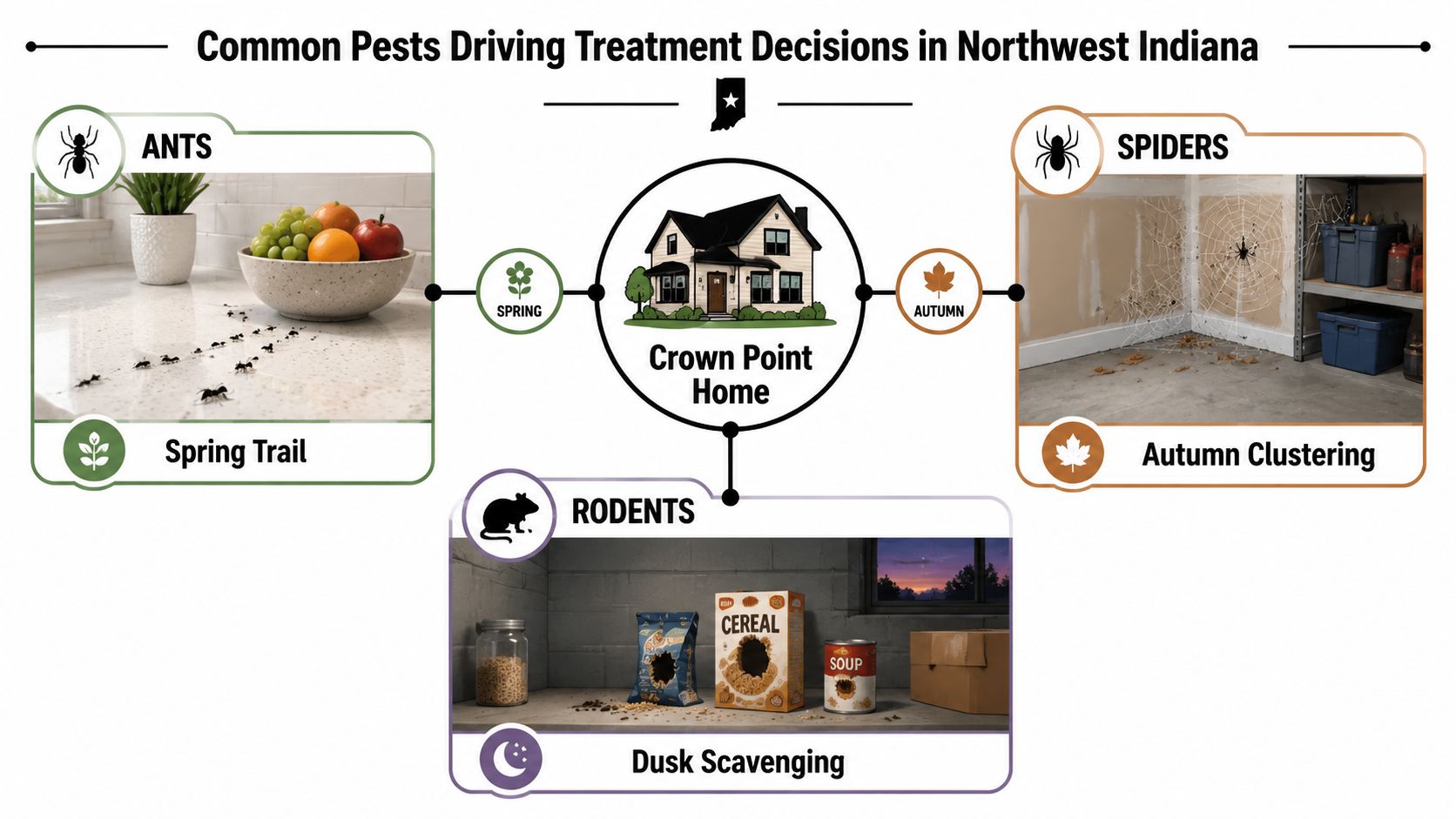
Recognizing the pattern
Ants often create a visible trail along counters, windows, or floor edges. Wiping away the workers may remove the evidence for a short time, but baiting can be more appropriate when the goal is to transfer control through the colony. The technician may also look for moisture and gaps around windows, doors, utility penetrations, or the foundation.
Spiders usually call for a different approach. Activity in a basement, garage, or porch may relate to insects collecting near lights, vegetation touching the home, or sheltered cracks. Exterior perimeter work, web removal, habitat reduction, and control of the insects spiders feed on can fit better than treating every indoor corner.
A home near downtown Crown Point or in an older neighborhood may also develop mouse activity as colder weather drives rodents toward warmth and food. Droppings, gnaw marks, scratching, or disturbed pantry items point toward a plan that combines trapping with exclusion. Without closing access points, removing trapped mice may not prevent new activity.
Seasonal invaders and stinging insects
Wasps may build nests under eaves, around porches, or near roof edges during late summer. Nest location, stinging risk, and the species involved affect whether removal and a targeted application are appropriate. Residents shouldn't disturb an active nest before receiving professional guidance.
Boxelder bugs and stink bugs can also enter during seasonal shifts. They may gather around sunny exterior walls and find their way through small gaps. Sealing access points and reducing entry opportunities can matter more than treating every insect indoors.
These examples explain why one-size-fits-all service often disappoints. Ant control, spider control, rodent control, wasp removal, termite control, and mosquito control each depend on different behavior, access routes, and timing. The first useful question isn't just which product works. It's what the pest is doing at this property and what intervention can stop the pattern.
Main Treatment Types and When Each One Fits
Homeowners often compare chemical and non-chemical methods as though one must always replace the other. In practice, a Crown Point technician may combine them because each solves a different part of the problem.
Chemical treatment can fit an active infestation that needs prompt reduction. Liquid residual applications may be used in appropriate exterior or targeted interior locations, while baits can work where pests carry material back to a colony or consume it at a controlled placement. The choice depends on the pest, label directions, treatment area, and household needs.
Non-chemical control focuses on stopping access or changing the conditions that attract pests. Examples include door sweeps, mesh covers, sealing gaps, mechanical traps, sanitation, moisture correction, and vegetation management. This approach often becomes essential for mice, recurring invaders, and households that prefer fewer product applications.
Targeted treatment concentrates on confirmed activity zones, such as an ant trail near a kitchen window, a mouse run beside basement equipment, or a wasp nest under an eave. Perimeter treatment focuses on exterior areas around the foundation, garage, doors, windows, and other likely entry routes. Exterior defense can reduce the need for broad interior work, but it won't replace exclusion when a clear opening remains.
| Treatment Type | Best Use Case | Typical Application | When It Fits |
|---|---|---|---|
| Chemical | Active pest pressure | Residual products or baits placed according to the label | When rapid reduction or colony control is needed |
| Non-chemical | Prevention and sensitive environments | Exclusion, traps, sanitation, and habitat changes | When access points or conditions are driving activity |
| Targeted | Confirmed indoor or localized activity | Crack-and-crevice work, bait placement, or nest treatment | When activity is concentrated in known zones |
| Perimeter | Exterior interception | Treatment around foundations, doors, garages, and eaves | When pests are entering from outdoors |
A useful comparison: Broad application treats space. Targeted service treats evidence.
The best plan may include interior targeted work, exterior perimeter defense, and repairs to entry points. Household composition also matters. If you're comparing indoor cooling fan options for ventilation or comfort during home maintenance, these indoor cooling fan options provide a separate resource, but they don't replace pesticide label instructions or technician guidance.
What Happens During a Professional Treatment Visit
A service visit should feel organized, not mysterious. The technician begins with a walkthrough of the Crown Point property, asking about sightings and inspecting likely activity zones. They may examine foundation gaps, garage transitions, basement walls, eaves, utility openings, moisture sources, and areas where food or clutter gives pests shelter.
Before applying anything, you should receive a verbal or written explanation of the findings and proposed treatment. That discussion gives you an opportunity to ask why a method fits, whether interior work is necessary, how long people and pets should stay away, and what follow-up will involve.
Preparing the home
Preparation varies by pest and treatment, but common steps may include:
- Clear access: Move stored items away from baseboards, utility areas, and corners that need inspection.
- Protect food and pet items: Cover or remove exposed food, pet bowls, toys, and items that could contact treated surfaces.
- Plan re-entry: Follow the technician's instructions about leaving the area and returning after the product has dried or as the label directs.
- Address moisture and clutter: Correcting conducive conditions helps the treatment work as part of a broader plan.
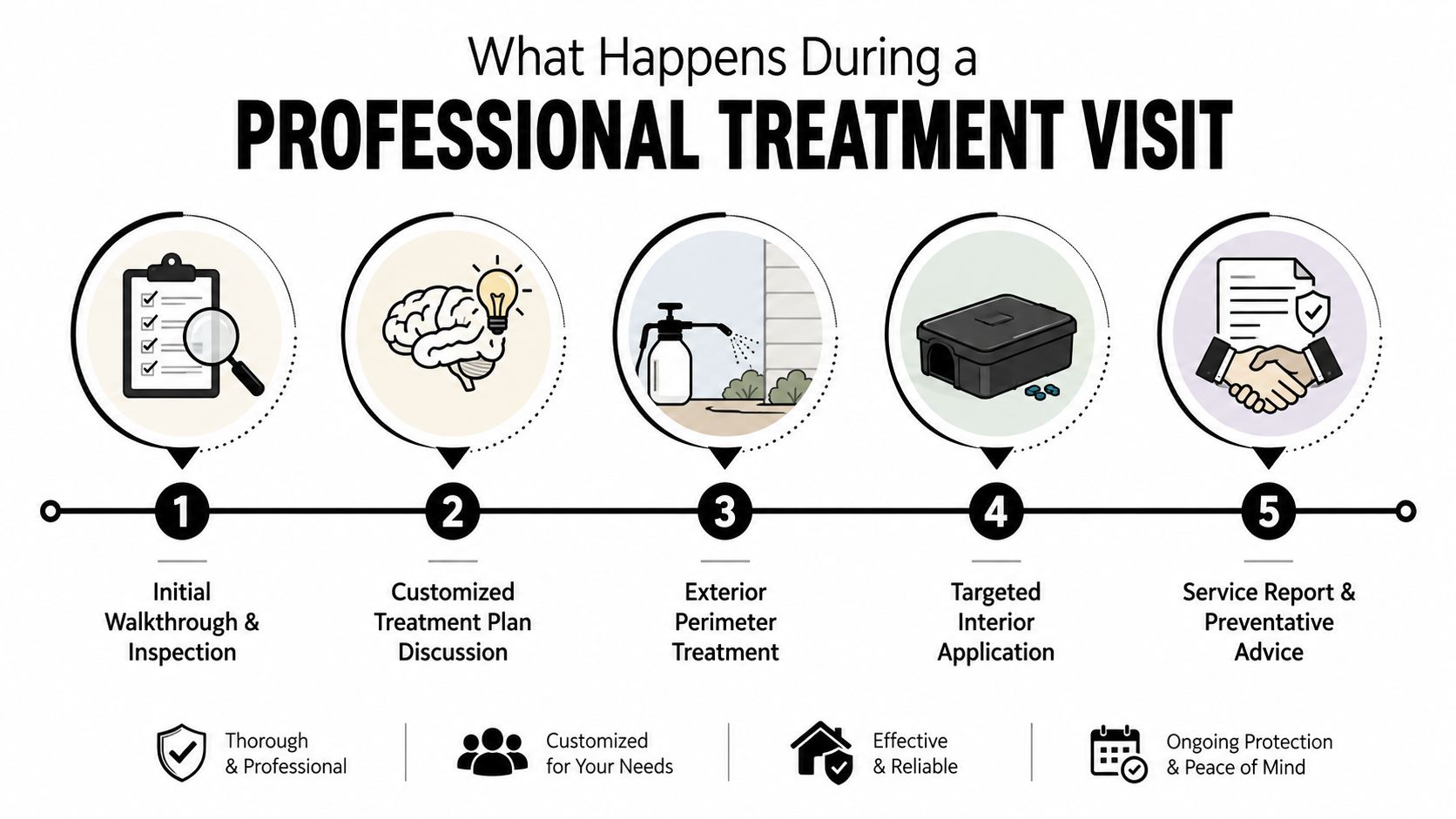
Interior service may involve crack-and-crevice treatment, bait placement, traps, or other localized work. Exterior service may focus on the foundation, entry points, garage, eaves, or perimeter. Drying time and ventilation guidance depend on the product and application, so the label and technician's directions take priority. The guide to preparing for pest control can help you organize before the appointment.
EPA guidance says users should read the label, remove children, toys, and pets before application, keep them away until the product has dried or as directed, and never use extra pesticide because more product doesn't mean better control. EPA pesticide safety guidance also explains these basic precautions.
A follow-up may include re-inspection, adjusted bait, refreshed monitoring stations, additional exclusion work, or another treatment when the plan calls for it. This short video provides a visual overview of the process:
What Drives the Cost of a Treatment Plan
A quote for pest control in Crown Point, IN reflects the work required at a particular property, not just the product used. A compact ranch home with easy exterior access may need a different service scope than a two-story home with a basement, crawl space, attached garage, and detached outbuilding.
Pest type is another major factor. A one-time ant visit may require focused inspection and baiting, while subterranean termite work can involve specialized inspection, treatment, and monitoring. Rodent control may include traps, sanitation advice, inspection of attic or basement areas, and exclusion repairs that continue beyond the first visit.
The main quote variables
| Cost Factor | Why It Matters |
|---|---|
| Property size and layout | Larger or more complex properties take more time to inspect and service |
| Pest type | Termites, rodents, bed bugs, stinging insects, and general invaders require different methods |
| Infestation severity | Widespread or established activity may require more visits and broader investigation |
| Treatment method | Targeted baiting, exclusion, perimeter work, and IPM programs have different labor and material needs |
| Service frequency | One-time, seasonal, quarterly, or annual plans create different service structures |
| Follow-up requirements | Monitoring, re-treatment, and verification add work when the issue needs continued attention |
Early action can simplify a treatment plan because technicians may find fewer affected areas and clearer entry routes. An entrenched issue can spread into wall voids, nesting spaces, or inaccessible structural areas, making diagnosis and follow-up more involved.
Ask whether the quote includes inspection, preparation guidance, treatment, exclusion, monitoring, and follow-up. A transparent provider should explain what each visit accomplishes instead of presenting a vague recurring charge. The aim isn't to choose the cheapest-looking option. It's to compare whether the proposed work matches the pest, property, and household priorities.
Eco-Minded and Family-Safe Treatment Options
Eco-friendly pest control doesn't mean pretending products are never necessary. It means using the smallest practical treatment area, selecting an appropriate product, and putting prevention ahead of unnecessary broadcast application. In a Crown Point home, that may include exclusion, sanitation, moisture correction, habitat reduction, monitoring, and carefully placed products.
A technician might use gel bait in a tamper-resistant station, an insect growth regulator where appropriate, or mechanical controls such as a door sweep and mesh over a foundation vent. These tools work in different ways. Bait targets feeding behavior, growth regulators interrupt development, and exclusion keeps pests from entering in the first place.
What family-conscious service looks like
A responsible plan considers where children and pets touch surfaces. Interior products may be placed in cracks, voids, or protected stations instead of across accessible floors and play areas. Exterior work can focus on entry zones, but residents still need to follow the label and technician instructions about drying, re-entry, food, toys, and pet access.
The U.S. EPA explains that a pesticide label tells users how to apply a product safely and effectively, how to store it, and what first-aid steps to follow. EPA label guidance also makes clear that the label is central to proper use. An EPA registration number isn't a general endorsement. It means the agency determined the product can be used with minimal or low risk only when label directions are followed, as explained in the EPA consumer safety guide.
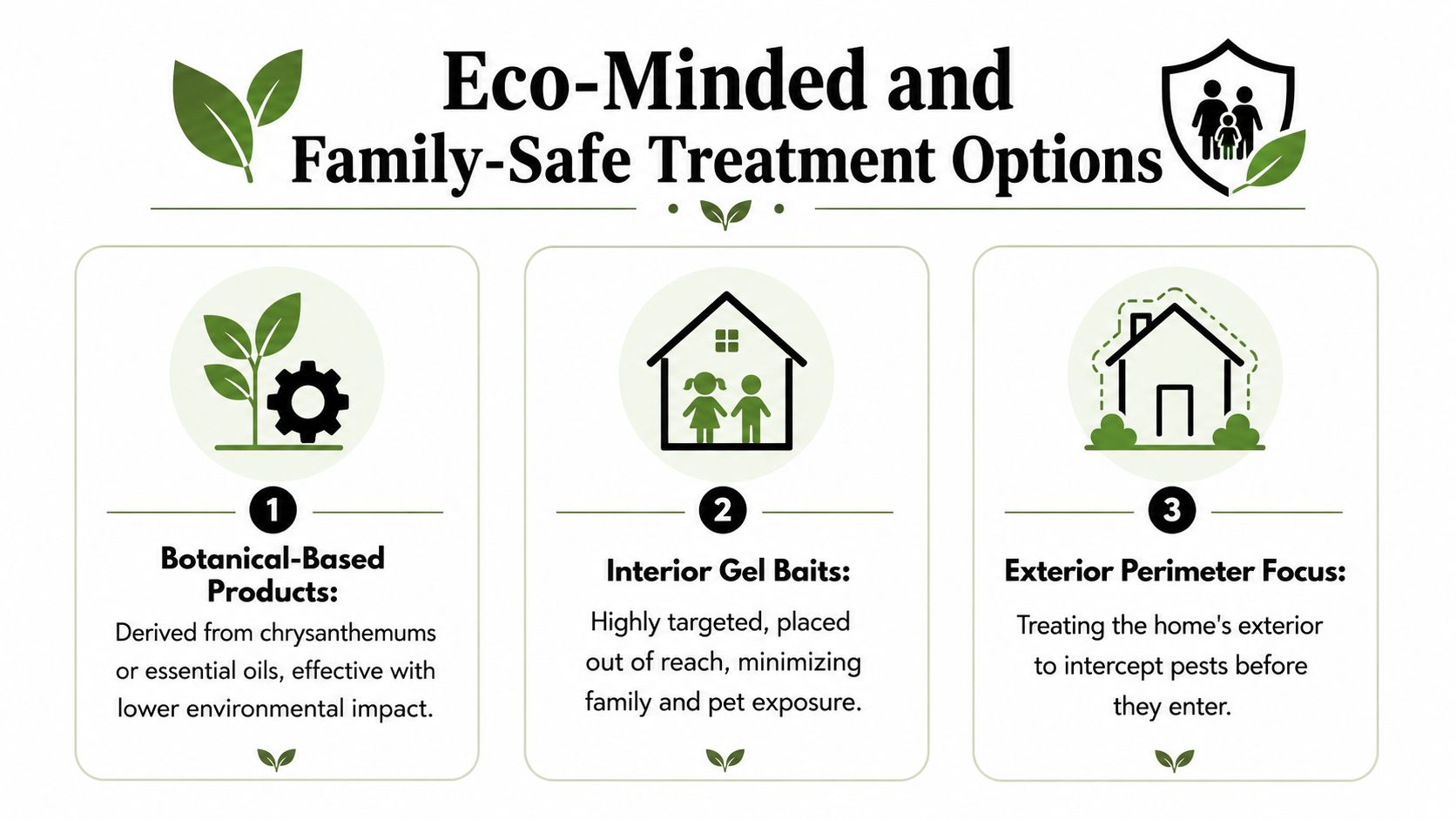
Seasonal timing can also support lower-input service. Exterior attention during spring and fall may reduce the chance that pests establish indoors later, although the right timing depends on the pest and property. For technical background, environmentally friendly pest control methods offers additional context.
Integrated pest management, or IPM, combines monitoring, treatment thresholds, and non-chemical controls to reduce selection pressure. Repeating the same mode of action can erode effectiveness, so rotating across different mode-of-action groups is a core resistance-management practice, according to Washington State University's resistance guidance. A peer-reviewed review also reports that rotating insecticides can cut resistance frequency by about 50% across generations, while building-wide IPM outperformed conventional service for cockroaches and bed bugs when paired with scouting, sanitation, and targeted applications, as described in this ACS publication.
Choosing a Trusted Local Provider in Crown Point, IN
When you search for an exterminator in Crown Point, IN, compare the process before comparing promises. A trustworthy provider should be able to explain who performs the work, what licensing or certification applies, how the inspection works, and what happens if activity continues.
Look for local knowledge that reflects Northwest Indiana conditions. A technician familiar with Crown Point, Lake County, and Porter County can better recognize seasonal patterns, older construction, basement moisture, garage access, and the property features that influence local pest activity. Ask whether the provider understands residential and commercial needs, since a family home and a retail, office, or multifamily property require different service coordination.
A practical provider checklist
- Verify credentials: Ask for current Indiana licensing and relevant certification before service begins.
- Request an inspection: A provider should identify activity and entry points before recommending treatment.
- Review the plan: Look for clear descriptions of products, targeted areas, preparation, drying, re-entry, and follow-up.
- Ask about IPM: Exclusion, sanitation, monitoring, and thresholds should be considered alongside chemical control.
- Clarify service terms: Understand whether the plan is one-time, recurring, seasonal, or tied to follow-up visits.
- Check local reputation: Read verifiable reviews and ask for neighborhood references when available.
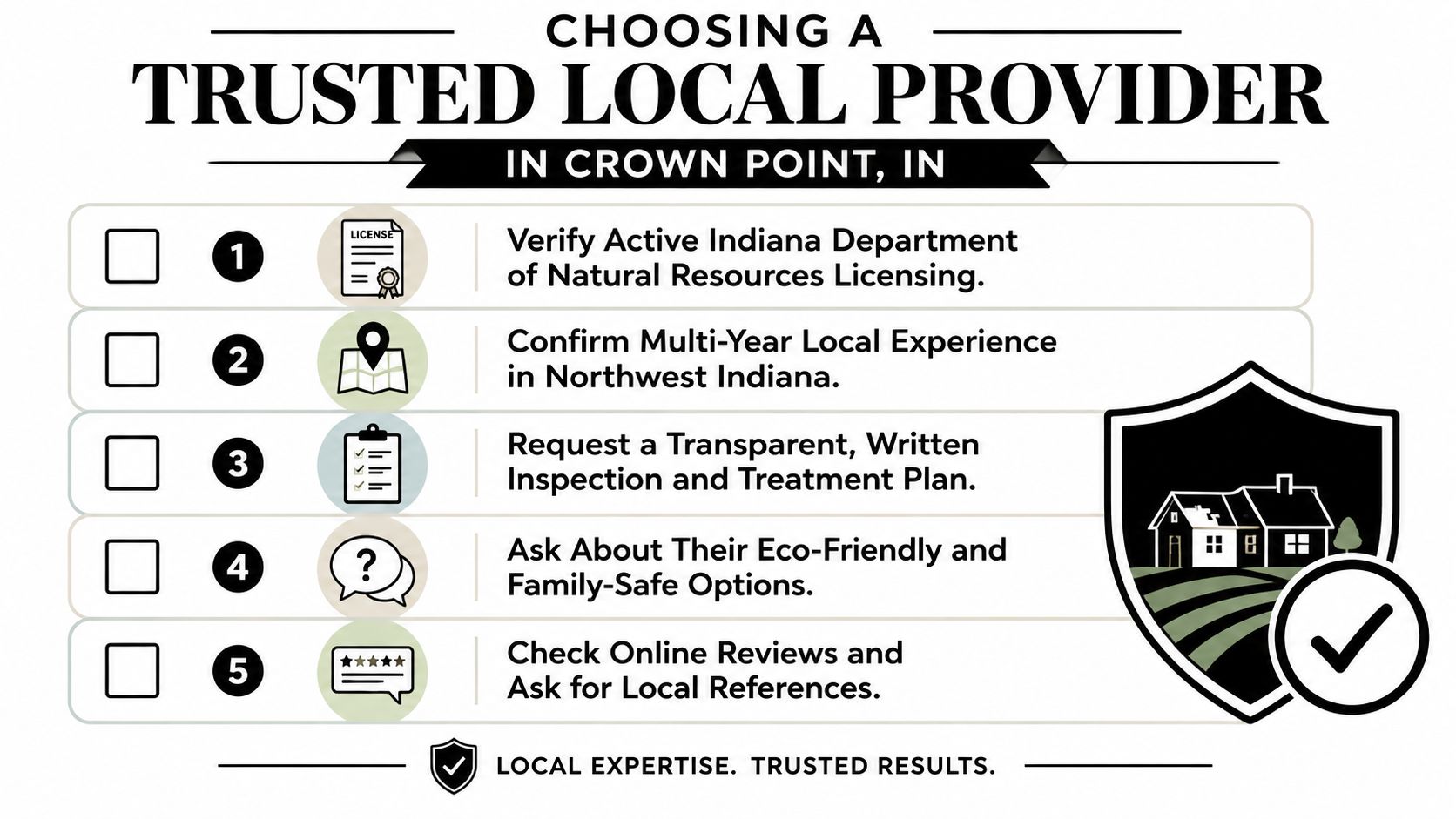
A written service plan helps prevent confusion. It should connect the observed pest to the selected method instead of listing generic applications. For commercial clients and property managers, documentation, scheduling, monitoring, and communication matter just as much as the treatment itself.
The Green Advantage is a family-owned company serving Crown Point and Northwest Indiana with licensed, certified residential and commercial pest management, inspections, mosquito reduction, and environmentally mindful treatment options. Its process emphasizes direct communication, site diagnosis, and follow-up information so customers understand what the service is designed to accomplish.
Taking the Next Step With The Green Advantage
The most useful first action isn't automatically booking a recurring plan or buying another spray. Start with an inspection that answers three questions: what pest is present, where is it active, and what is allowing it to continue?
That approach gives homeowners a clearer path whether the issue involves ant control, spider control, rodent exclusion, wasp removal, termite inspection, mosquito reduction, or a seasonal invader. It also helps property managers and local businesses choose a commercial pest control plan based on actual activity, access points, operating requirements, and follow-up needs.
A new customer should expect a property walkthrough, identification of pest activity and entry points, and an explanation of the recommended treatment type. Ask for the plan in writing, including service frequency, preparation requirements, drying and re-entry expectations, monitoring, and what follow-up looks like.
Threshold-based decision-making can reduce unnecessary applications without ignoring active problems. A 2025 peer-reviewed study assessing 466 field trials found that threshold-based management reduced insecticide use by 44%, supporting a more precise question than “How often should I spray?” The findings are reported in this Nature study. For a homeowner, the practical lesson is simple: treatment should respond to evidence, not habit.
Don't wait until a small trail becomes a recurring infestation or a few basement signs become an established rodent problem. Contacting a local pest control company in Crown Point, IN gives you a chance to address entry points, conditions, and treatment choices before the issue becomes harder to manage.
The Green Advantage provides residential and commercial pest control treatment in Crown Point, IN, including inspections, targeted service, preventative pest treatments, mosquito reduction, termite support, and rodent control. Visit The Green Advantage to request a quote or schedule a pest inspection built around your property, your pest concern, and your household's safety priorities.
Environmentally Safe Termite Control for Crown Point Homes
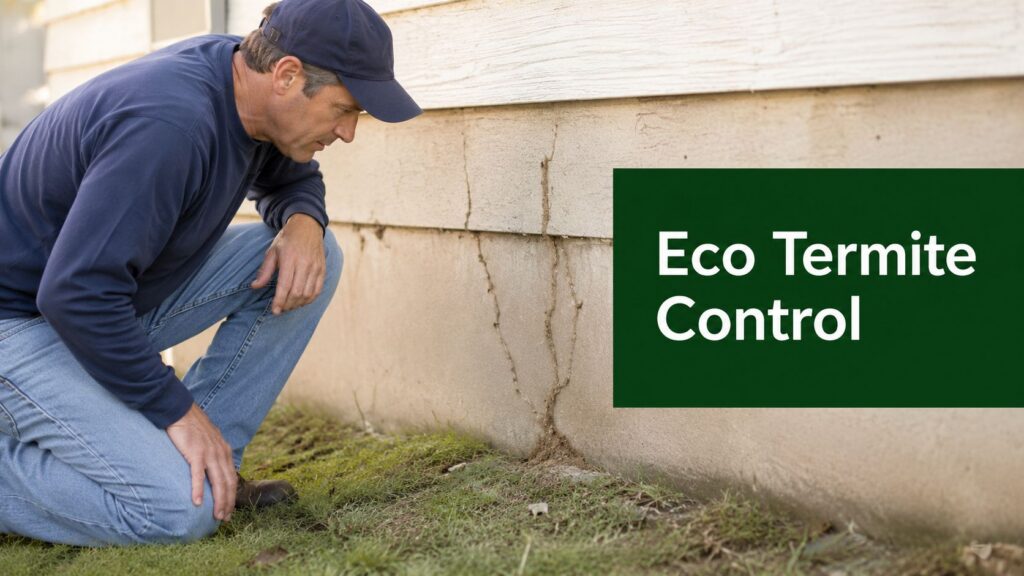
You walk a Crown Point property and find the kind of detail that makes a homeowner stop cold, a scatter of wings near a basement window, a pencil-thin mud tube on the foundation, or trim that sounds hollow when you tap it. In Northwest Indiana, those signs deserve attention, but they don't always mean the same thing, and they don't always mean panic. Environmentally safe termite control starts with knowing what you're seeing, then choosing a treatment that fits the home, the soil, and the level of activity without loading the property with more chemical than it needs.
For homeowners searching for pest control in Crown Point, IN, the challenge is sorting real termite pressure from lookalikes and old damage. Around here, crawl spaces, slab edges, basement walls, and damp sill plates are the first places I check because subterranean termites work from the ground up and use moisture as a road map. The Green Advantage serves Crown Point and nearby Northwest Indiana homes with that practical approach, the kind that starts with an inspection and ends with a plan a homeowner can understand.
What Termite Activity Looks Like in a Northwest Indiana Home
A lot of termite calls start the same way, someone notices wings on a windowsill or a soft spot in a baseboard and wonders whether they need an exterminator near me right away. In this region, the first job is to separate termite evidence from old wood damage, ant activity, or simple moisture wear. If you can tell the difference, you can make a smarter decision about timing instead of reacting to every speck of debris.
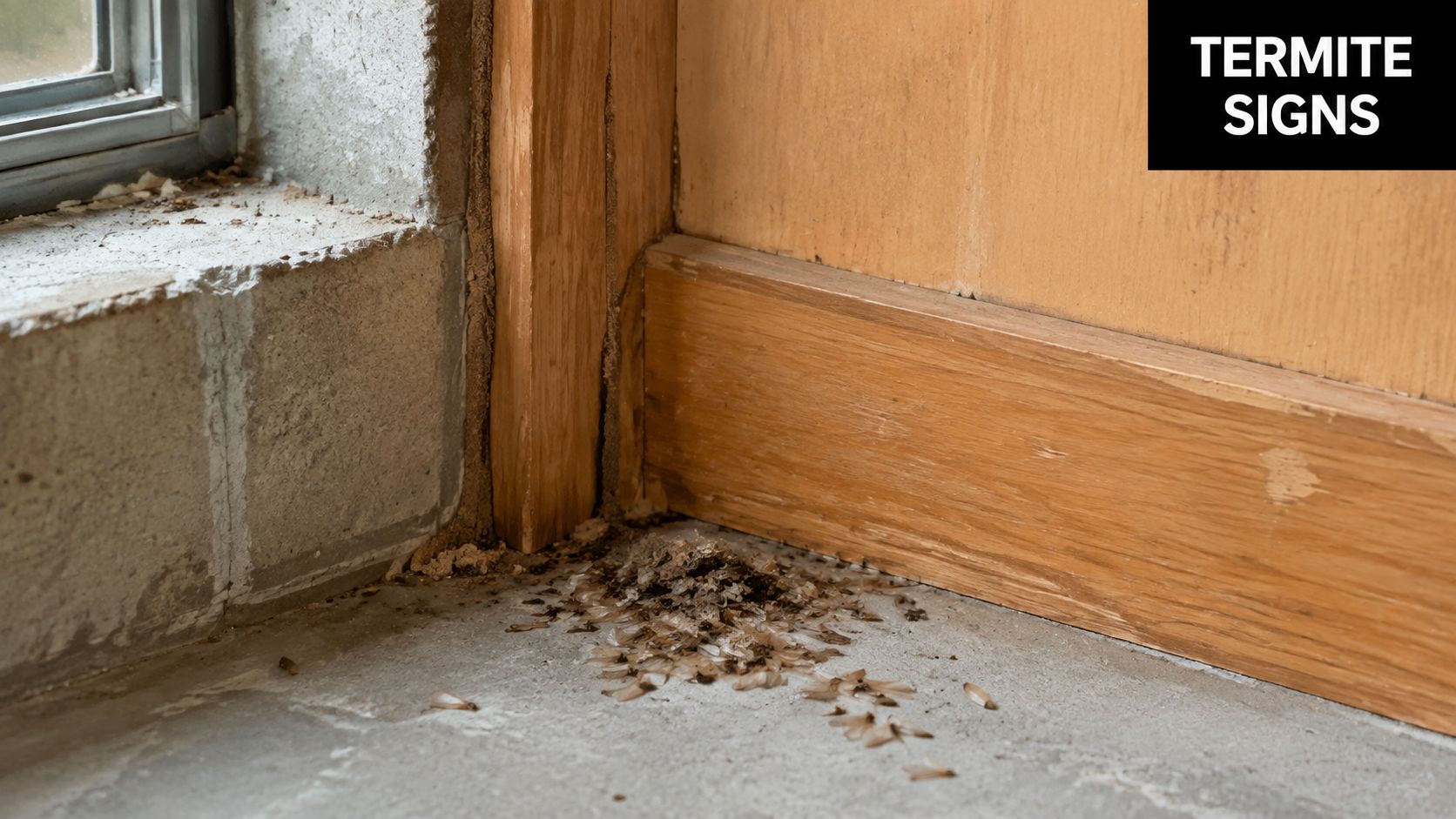
The signs that matter most
Termite swarmers leave behind wings, but wings alone don't prove an active colony in your walls. A cluster near a basement window or sliding door can mean the swarm happened nearby, or it can mean the insects found light inside. Mud tubes on concrete, block, or foundation walls tell a different story, because subterranean termites build those protected travel lines to move between soil and wood.
Practical rule: if the mud tube is fresh, intact, and connected to a moisture-prone area, treat it as active until a licensed inspection proves otherwise.
Hollow-sounding trim, blistered paint, or wood that crumbles when probed points to possible feeding. If the damage is older, you may see no fresh mud, no wings, and no visible termites at all, just weakened wood that has already been abandoned. That's why I tell homeowners not to judge by one sign alone.
Where to look first in Crown Point homes
Crawl spaces and slab edges are the first inspection points because they're the easiest travel routes for subterranean termites. Older homes, additions, porch steps that touch soil, and basement rim joists all deserve a close look. If you're seeing wings indoors, or you've found mud tubes that seem connected to the structure, schedule an inspection rather than guessing.
If you want a visual reference for the damage patterns I'm talking about, the guide on how to identify termite damage is a useful place to compare what you're seeing at home. The main thing is to stay calm and act on evidence, not fear. A small sign can be a cheap fix, but ignored activity can turn into a structural problem.
What Environmentally Safe Termite Control Actually Means
A lot of homeowners hear “green termite treatment” and assume it means one thing. It doesn't. In practice, environmentally safe termite control falls into three real categories, prevention and physical exclusion, low-toxicity targeted products, and true nonchemical methods. The EPA makes the first distinction clear, termite control should begin with moisture management, physical exclusion, and inspection, and any pesticide used must be specifically labeled for termite and structural protection, with licensed applicators following the label because the label defines use and risk according to EPA guidance on termite identification and control.
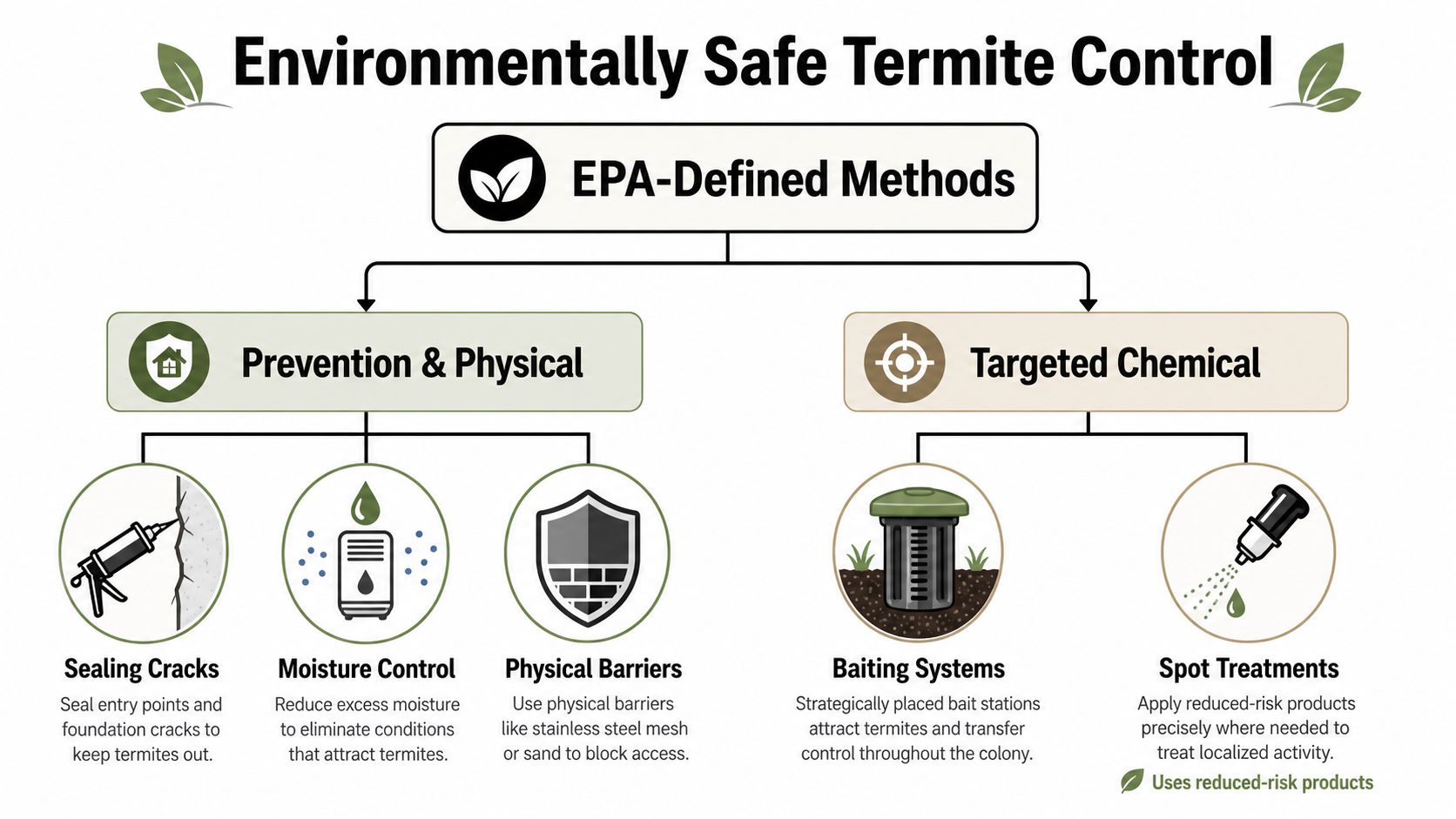
Prevention and physical exclusion
This is the foundation. Moisture control, sealing utility gaps, correcting wood-to-soil contact, and using barriers where appropriate all reduce termite pressure before a treatment ever goes in. Some nonchemical barriers, including stainless-steel mesh and polyethylene barriers, are treated as devices rather than pesticides, which matters to homeowners who want to know whether a solution is pesticide-free.
Targeted products with lower impact
The next category includes nonrepellent soil termiticides, bait matrices, and borate treatments. These tools still involve active materials, but they're used in a more targeted way than older broadcast soil approaches. A review of termite management noted a clear shift in the industry toward nonrepellent liquids and away from older repellent liquids, and that shift reflects a broader move toward selective application and lower exposure, not just a marketing label.
True nonchemical methods and biological controls
Heat treatment, physical barriers, and biological tools fit here. Entomopathogenic nematodes are described in review literature as an effective, environmentally safe, and sustainable biological control method against termites, and that matters for homeowners who want to understand the full range of options rather than just “spray or don't spray.” For exposed wood, nonchemical devices, and certain renovation phases, these methods can make sense. For an active basement infestation, they may be part of the answer, but usually not the whole answer.
If you're comparing service quotes, keep the language straight. A company can offer prevention, a reduced-risk product, or a nonchemical method, and those are not the same thing. For a plain-English overview of service categories, the page on environmentally friendly pest control methods helps frame the difference without turning everything into the same bucket.
Comparing the Main Eco-Friendly Treatment Options
Choosing the right termite strategy is less about chasing the newest product and more about matching the method to the structure. A Crown Point house with a crawl space, a finished basement, and damp grading needs a different plan than a renovated home with exposed framing or a new addition under construction. The best fit depends on whether you're stopping entry, eliminating an active colony, or protecting accessible wood.
| Environmentally Safe Termite Treatment Options at a Glance | |||
|---|---|---|---|
| Method | How It Works | Typical Best Fit | Key Trade-Off |
| Bait systems | Termites feed on a targeted bait and carry it back to the colony | Most subterranean pressure around homes | Slower than a liquid barrier, but highly targeted |
| Borate wood treatments | Borate is applied to exposed wood surfaces | Framing, repairs, unfinished wood | Only works where the wood is accessible |
| Nonrepellent soil termiticides | Termites pass through treated zones without detecting them | Active subterranean infestations | Still a pesticide, so placement and licensing matter |
| Heat treatment | Structure is brought to lethal temperature over time | Localized infestations, certain drywood scenarios | Needs careful monitoring to avoid heat sinks |
| Physical barriers | Mesh, membranes, or construction devices block entry | New construction, renovations, some crawl space upgrades | Best before or during building work, not after major damage |
| Biological controls | Living agents suppress termite populations | Emerging or specialized programs | Useful in research and niche cases, not a universal fix |
Bait stations are the workhorse option for many homes because they keep the chemical load small and focus on the colony rather than saturating soil. They do work best when termites keep feeding, which is why placement and follow-up matter so much. A California station study recorded an overall hit rate of 44% for bait stations and monitoring stations over two years, and a large baiting survey found 9% reinfestation, or 1,794 out of 19,553 sites, which is a reminder that monitoring doesn't end after the first win.
Heat treatment is different. A laboratory result cited in field work found that about 49.6°C for 2 hours was needed for 100% termite mortality under heat-sink conditions, and a condominium field study reported 0% callback after improved heat treatment versus 33.33% callback after standard heat treatment at 6 months PMC heat-treatment review. That makes heat attractive for localized jobs, but the downside is obvious, temperature has to be uniform enough to avoid survivorship pockets in walls, floors, and hidden framing.
For exposed wood, borates are a practical low-impact choice, especially after repairs or in unfinished spaces. If you're comparing wood-protection products, a helpful outside resource is non-toxic wood preservatives, because the main question is often whether you're protecting accessible lumber or trying to solve an active colony problem.
A few job types in Northwest Indiana line up naturally with certain methods:
- Bait stations: best when the home has recurring subterranean pressure and you want ongoing monitoring.
- Borate treatments: best for accessible framing, small repairs, and preventive wood protection.
- Physical barriers: best during construction, major renovation, or crawl space upgrades.
- Heat: best for localized infestations where structural monitoring can be done carefully.
- Biological controls: best viewed as a lower-impact tool in the broader termite-control toolbox, not a stand-alone answer for every house.
The Green Advantage often steers termite work toward baiting systems and low-toxicity treatments rather than older chemical-heavy barrier thinking, because that fits the property types and moisture conditions common here. The right choice isn't the loudest one, it's the one that protects the structure without over-treating it.
When DIY Makes Sense and When to Call a Pro
Some termite-related work is realistic for a homeowner. Some of it isn't. The line usually comes down to access, risk, and whether you're dealing with prevention or an active infestation. If you can see the wood, reach the gap, and confirm the problem is limited, you have a much better DIY case than a house with a finished basement, hidden crawl-space framing, or damage already spreading behind trim.
What homeowners can handle well
A careful homeowner can manage moisture reduction, keep firewood off the siding, repair obvious grading issues, and apply borate treatments to accessible wood during repairs. Placing or checking monitoring stations along a known foraging path can also make sense when the goal is early detection rather than elimination. For practical sealing and gap work, the article on DIY pest proofing tips is a useful companion, especially if you're trying to reduce entry points before scheduling service.
Where DIY usually falls short
Soil termiticide injection around a slab, full-structure heat treatment, and anything that involves active feeding damage usually belong with a licensed technician. Those jobs demand equipment, labeling, and placement that most homeowners don't have, and a mistake can leave the colony untouched while the damage keeps spreading. The same goes for homes where the signs point to hidden travel routes in crawl spaces or behind finished walls.
A cheap DIY attempt feels reasonable until the colony keeps moving and the real repair cost rises with the damage.
For Crown Point homes, the construction style matters. Crawl spaces give termites easy access to joists and rim boards, while slab houses hide activity at edges and penetrations where a homeowner can't always inspect safely. If the house is older, or if you're already seeing damage instead of just prevention issues, a professional inspection usually pays for itself in clarity alone.
The Green Advantage handles this part by separating what's feasible from what's risky. That keeps you from paying twice, once for a product that doesn't reach the problem, and again for the professional fix that should have happened first.
Preparing Your Property Before Any Treatment
A good termite treatment starts before the technician arrives. If access is blocked, moisture issues are obvious, or the perimeter is cluttered, the application gets harder and the odds of a callback go up. In Northwest Indiana, prep is especially important around crawl spaces, basements, porch steps, and garage edges because those are common termite travel zones.
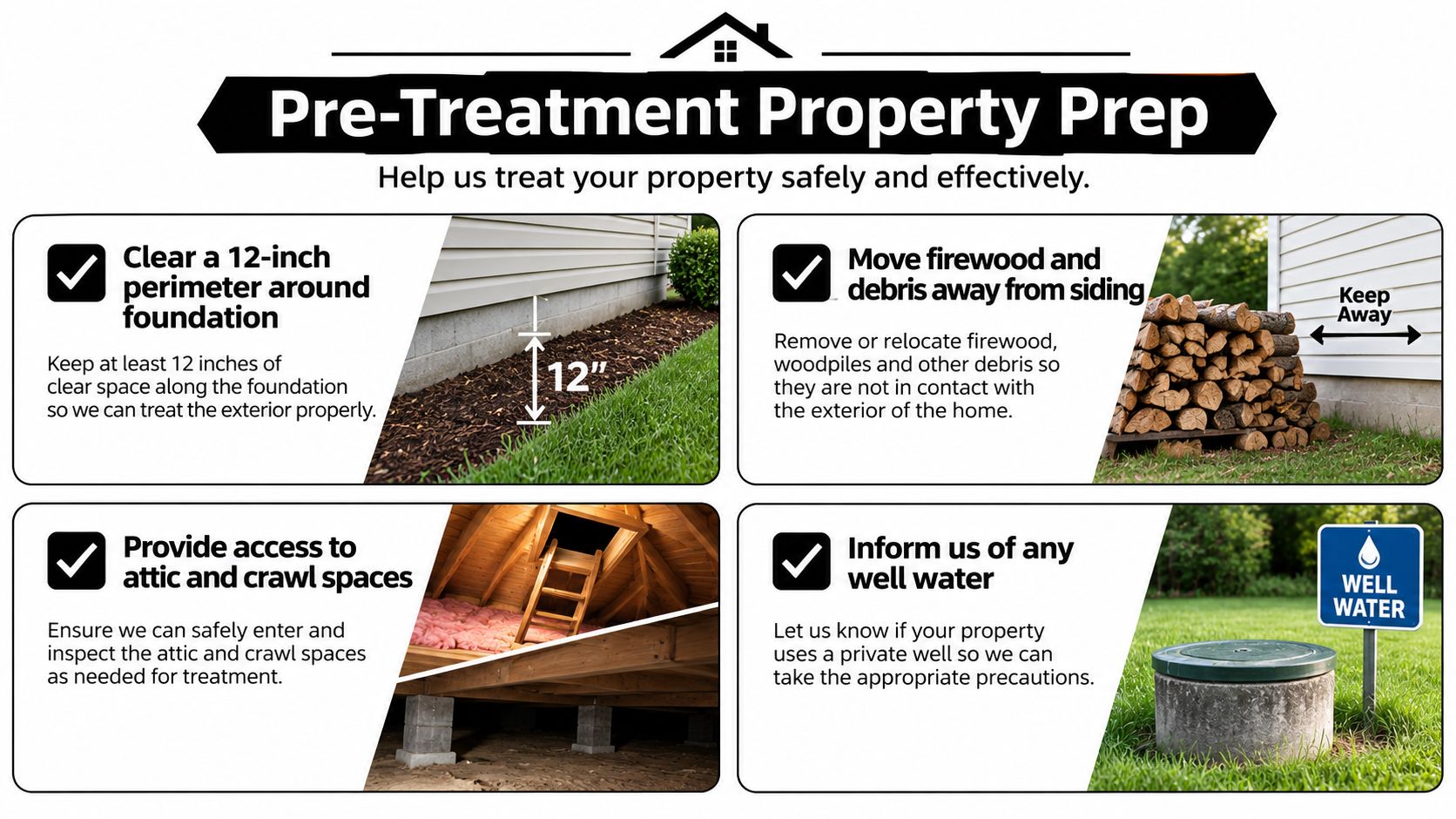
The homeowner prep checklist
- Clear a 12-inch perimeter around foundation: move mulch, stored materials, and loose debris away so the technician can inspect and treat properly.
- Move firewood and debris away from siding: wood stacked against the house creates hidden moisture and a direct bridge.
- Provide access to attic and crawl spaces: technicians need to see the problem areas, not guess at them.
- Inform us of any well water: that matters for treatment planning and safety around water sources.
What else to handle before service
Trim vegetation back so the foundation is visible. Fix known leaks if you can, or at least flag them for the technician so the treatment plan reflects the moisture source. Photograph existing damage before the visit, because a clear before-and-after record helps everyone track whether the problem is active or old.
Pets and aquariums need their own plan on service day, and sensitive household members should stay clear of treated areas until the technician gives the all-clear. If termites showed up in the basement, don't ignore the garage perimeter either, because access routes often start outside where soil, siding, and slab edges meet. A little prep keeps the service cleaner, faster, and more effective.
The right inspection habits matter too. For additional perspective on what to notice before a visit, the home check guidance from Pine Country Window Cleaning inspection tips pairs well with termite prep because it reinforces the same idea, catch access issues early and document what you see.
Year-Round Monitoring and Prevention for Northwest Indiana
Termite control in this region works best as a rhythm, not a one-time event. Spring swarm season tells you what might be happening indoors. Summer is when colonies keep foraging. Fall is the time to tighten the exterior before cold weather drives moisture problems and warm-crawl-space activity. Winter still matters because the inside of a home stays livable even when the ground outside is frozen.
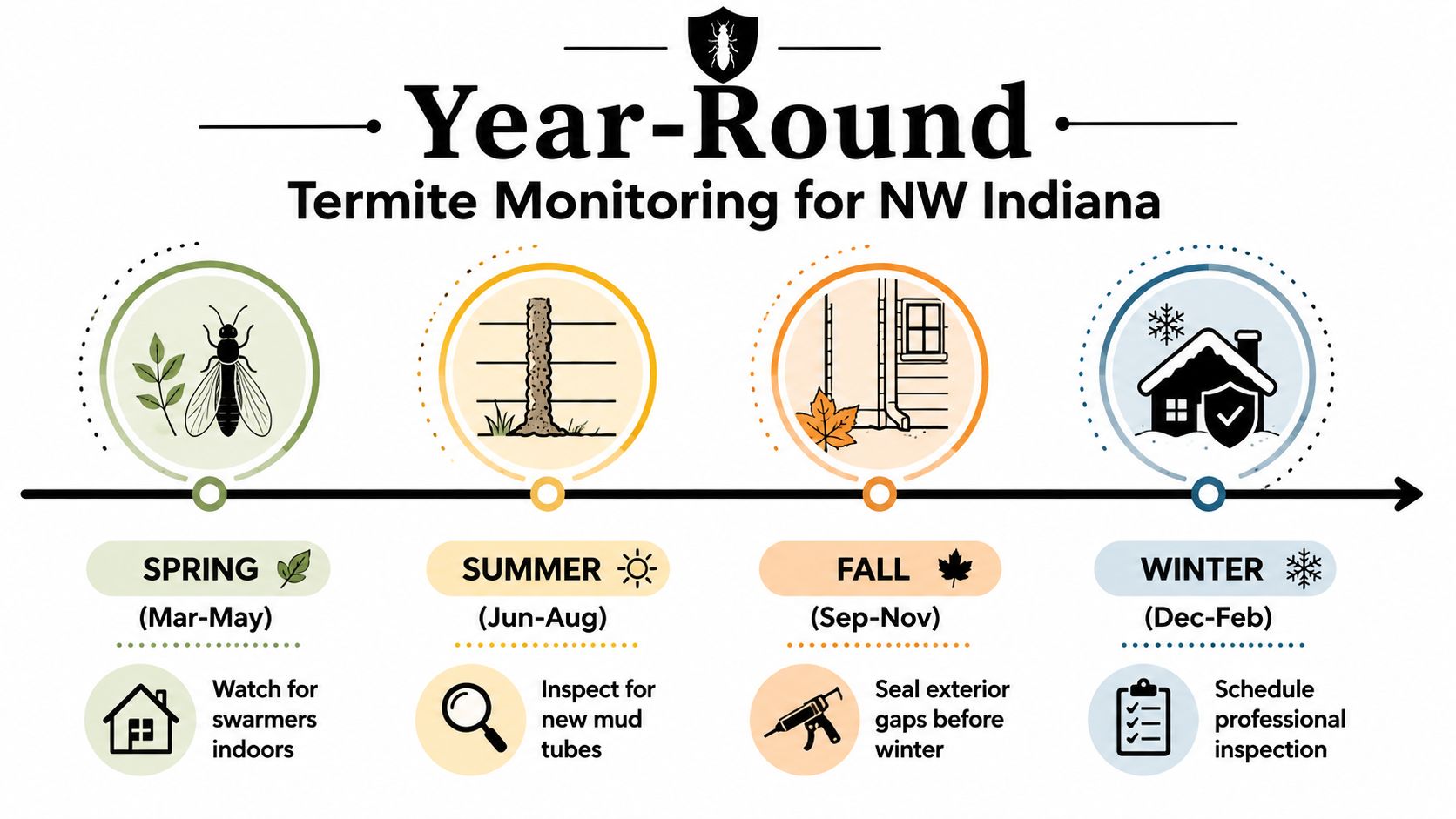
What to check each season
- Spring: watch for swarmers indoors, especially around windows and basement lights.
- Summer: inspect for new mud tubes along walls, piers, and crawl-space supports.
- Fall: seal exterior gaps before winter weather settles in.
- Winter: schedule a professional inspection if the home has had past activity or moisture concerns.
A homeowner can keep a close eye on the basics between visits. Recheck old mud tubes to see whether they're active, watch for fresh frass where wood-boring activity might show up, and use a simple moisture meter if you suspect a damp area under the house. That kind of monitoring doesn't replace a professional inspection, but it does help you catch changes early.
Good termite prevention is boring on purpose. Dry wood, clean access, and regular inspections prevent the kind of surprise that turns into major repair work.
The Green Advantage's ongoing monitoring approach in Crown Point fits that seasonal pattern. The point isn't to sell a homeowner on constant treatment, it's to keep an eye on the property so a small issue doesn't turn into a hidden one. A successful eco-friendly program is built on follow-up, not wishful thinking.
Scheduling a Termite Inspection in Crown Point
If you're seeing wings, mud tubes, or wood that doesn't sound right when you tap it, the next step is straightforward. Call The Green Advantage, speak with the office staff, and set an on-site inspection with a licensed technician. The visit covers the interior, foundation, crawl space or slab edge, and yard perimeter, then the findings are explained in plain language so you know what's active, what's old, and what needs to happen next.
A quote should reflect the property, not a one-size-fits-all package. That means the plan may lean on baiting, low-toxicity treatment, prevention work, or a mix of methods depending on the structure and the signs you're seeing. You'll know what's being treated, why it's being treated, and what follow-up looks like before anything starts.
If you want a local termite inspection in Crown Point, IN, The Green Advantage can help you sort the signs, choose the right level of treatment, and protect your home with an approach that fits the property. Visit The Green Advantage to request an inspection and get a clear plan before the damage spreads.
Pest Control for Mice in Crown Point: A Homeowner’s Guide

You notice it in the quiet parts of the day. A few droppings under the sink. A quick movement along the basement wall. Scratching after dark. For a lot of Crown Point homeowners, that is the moment concern turns into action.
A mouse problem changes how a house feels fast. Food storage no longer feels clean. Utility rooms, crawl spaces, insulation, and wall voids start to feel exposed. Mice contaminate surfaces, chew materials, and keep using the same hidden travel routes unless something physically stops them.
That last part is where many do-it-yourself fixes break down.
Traps can reduce activity. Store-bought bait can knock back a few mice. Even basic sealing helps if the material holds up. But many homeowners are told to pack gaps with steel wool or other quick patch materials, and that often fails in practice. Moisture causes steel wool to rust. Thin patch jobs loosen around utility lines and siding transitions. Mice keep testing those weak points, and once the opening is back, the problem starts again.
Effective pest control for mice has to do two jobs at once. Remove the rodents that are already inside, and seal the structure with durable materials that stay in place through weather, moisture, and normal home movement. That is the difference between a short-term catch and a long-term fix.
For homeowners searching for pest control in Crown Point, IN or an exterminator near me, the better question is not whether one trap will catch a mouse. It is whether the entry points are being closed in a way that will still hold months from now. That is the standard The Green Advantage focuses on because durable exclusion is what keeps a mouse issue from becoming a repeat call.
That Scratching in the Wall Is a Call to Action
At 10 p.m., the house is quiet, then you hear scratching behind the wall near the pantry. The next morning, there are a few droppings along the baseboard, and the first instinct is usually to set a trap and hope it was one stray mouse.
In practice, that first sound rarely means one mouse and one easy fix. It usually means mice already found a protected route into the house and feel safe enough to keep using it.
Around Crown Point and the rest of Northwest Indiana, I see the same entry patterns over and over. Gaps around utility lines, loose siding transitions, garage corners, door sweeps that no longer seal tight, and small foundation openings all give mice an opening. Hairline exterior gaps matter, too. If a crack is letting in moisture or air, it may also be part of the access problem, which is one reason homeowners often benefit from reviewing Bulls Eye Repair foundation crack advice.
Practical rule: If you hear scratching, find fresh droppings, or spot a mouse during the day, treat it as active indoor activity until an inspection proves otherwise.
That urgency is warranted because mice do not stay contained to the place where you first notice them. A sound in one wall can connect to feeding in the kitchen, nesting in insulation, and travel routes behind appliances or in the basement ceiling.
The part many homeowners are not told is why quick DIY exclusion often fails. Steel wool gets packed into a gap, then moisture hits it and it rusts. Caulk-only patches pull away around moving joints and utility penetrations. Foam can block light for a while, but it is not a lasting rodent barrier by itself. If the seal does not hold through weather, moisture, and normal home movement, the mice keep testing it until they get back in.
That is why the first sign matters so much. Catching one mouse helps. Closing the house with materials that last is what changes the outcome. The Green Advantage focuses on that second part because durable exclusion is what keeps a mouse problem from turning into a repeat problem.
What that first sign usually means
A single clue can tell you quite a bit:
- Scratching in the wall usually points to movement through protected voids, not random wandering.
- Droppings in a pantry or mudroom suggest a regular travel path near food or water.
- A mouse seen in daylight often means nesting pressure, competition, or a population that has grown comfortable inside.
- Gnawing near pet food, storage bins, or door corners often shows where access and feeding overlap.
If you want a clearer picture of what active rodent evidence looks like, these signs of rodent infestation in a home can help you compare what you are seeing.
Homeowners usually want to know whether they can solve the issue without tearing into walls or turning the whole house upside down. Often, yes. But the answer starts with a real inspection, not guesswork and not a temporary patch. The job is to identify where mice are feeding, where they are nesting, and where the structure is failing them.
Identifying a Mouse Problem in Your Indiana Home
Mice leave clues long before they become clearly visible. The key is knowing which signs matter and what they tell you about the level of activity.
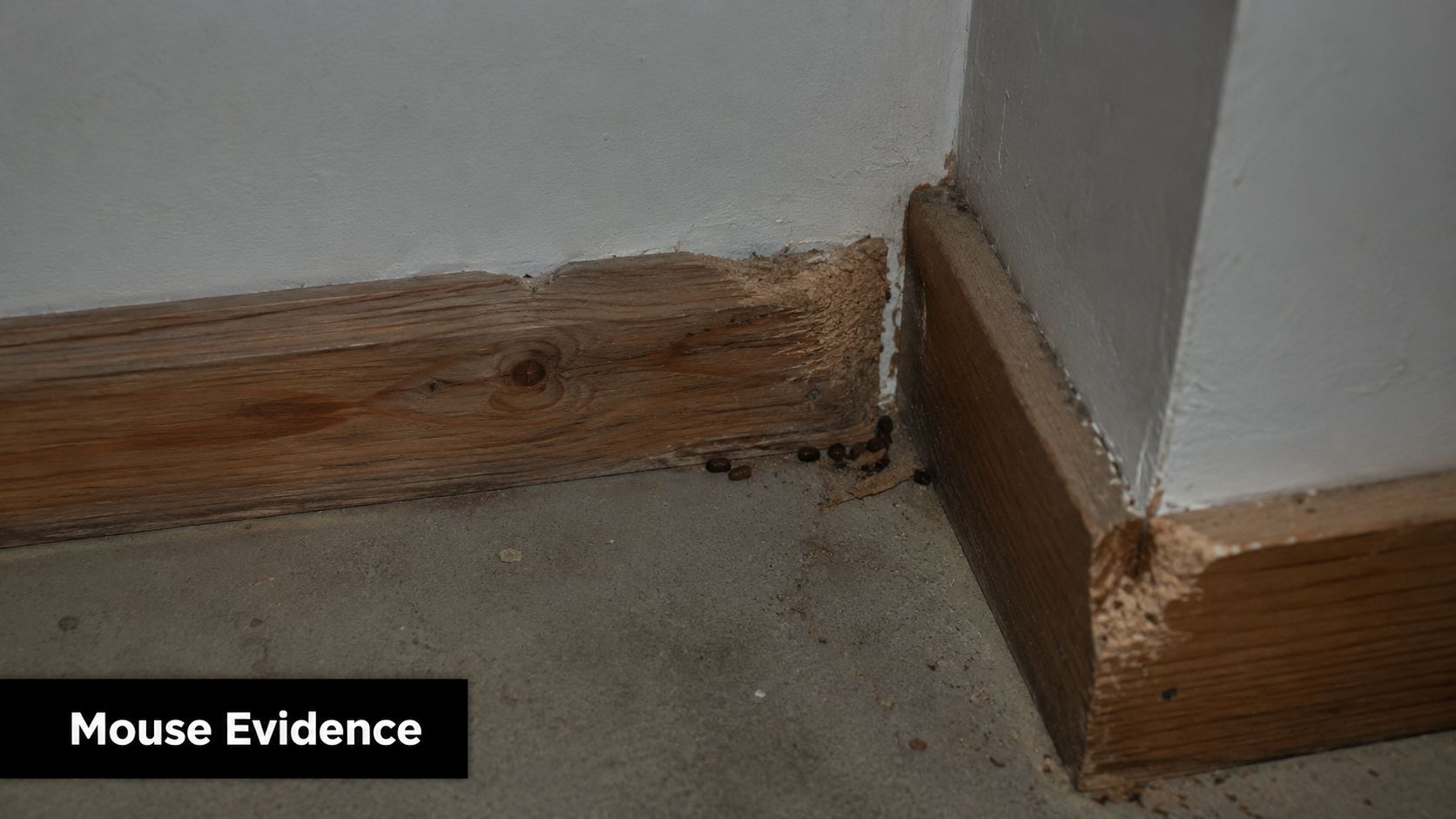
Signs that point to active mice
Look closely in lower cabinets, utility rooms, basements, garages, and behind appliances. Common evidence includes:
- Droppings near food storage, baseboards, or hidden corners
- Gnaw marks on trim, boxes, wiring paths, and stored goods
- Greasy rub marks along walls where mice repeatedly travel
- Shredded paper or insulation used as nesting material
- A stale, musky odor in enclosed areas with regular activity
Each sign tells you something different. Droppings show where mice travel or feed. Gnawing shows active wear on the structure or stored items. Nesting material points to a protected harborage area nearby, not just a passing mouse.
Why the health concern is real
This isn't only about nuisance wildlife. Rodents, including house mice, infest about 21 million U.S. homes each winter and are known to carry or transmit over 30 different diseases, according to this public health overview on mice in homes. That's one reason homeowners across age groups continue to view mice and rats as a serious health threat.
If you're trying to decide whether your signs are enough to justify action, compare what you're finding to these eight signs of rodent infestation. It helps sort out the difference between old evidence and current activity.
Small signs matter. A few droppings in more than one room usually tell us mice are traveling through the structure, not just visiting one spot.
Don't ignore the opening that made it possible
A mouse problem is often tied to a building defect. Cracks near the foundation, gaps where pipes enter, and settling around exterior seams all create easy access. If you've also noticed structural openings, this guidance on Bulls Eye Repair foundation crack advice is useful because those weak points don't just affect moisture. They can become pest entry routes too.
For homeowners in Crown Point and nearby Northwest Indiana communities, inspection is where confidence starts. Once you know what the signs mean, you can stop treating the symptom and start dealing with the source.
Smart DIY Mouse Control and Its Limitations
DIY work has a place. A homeowner can reduce pressure right away by cleaning up food sources, storing dry goods in hard containers, reducing clutter, and placing traps where activity is obvious. Those steps help. They just don't finish the job on their own.
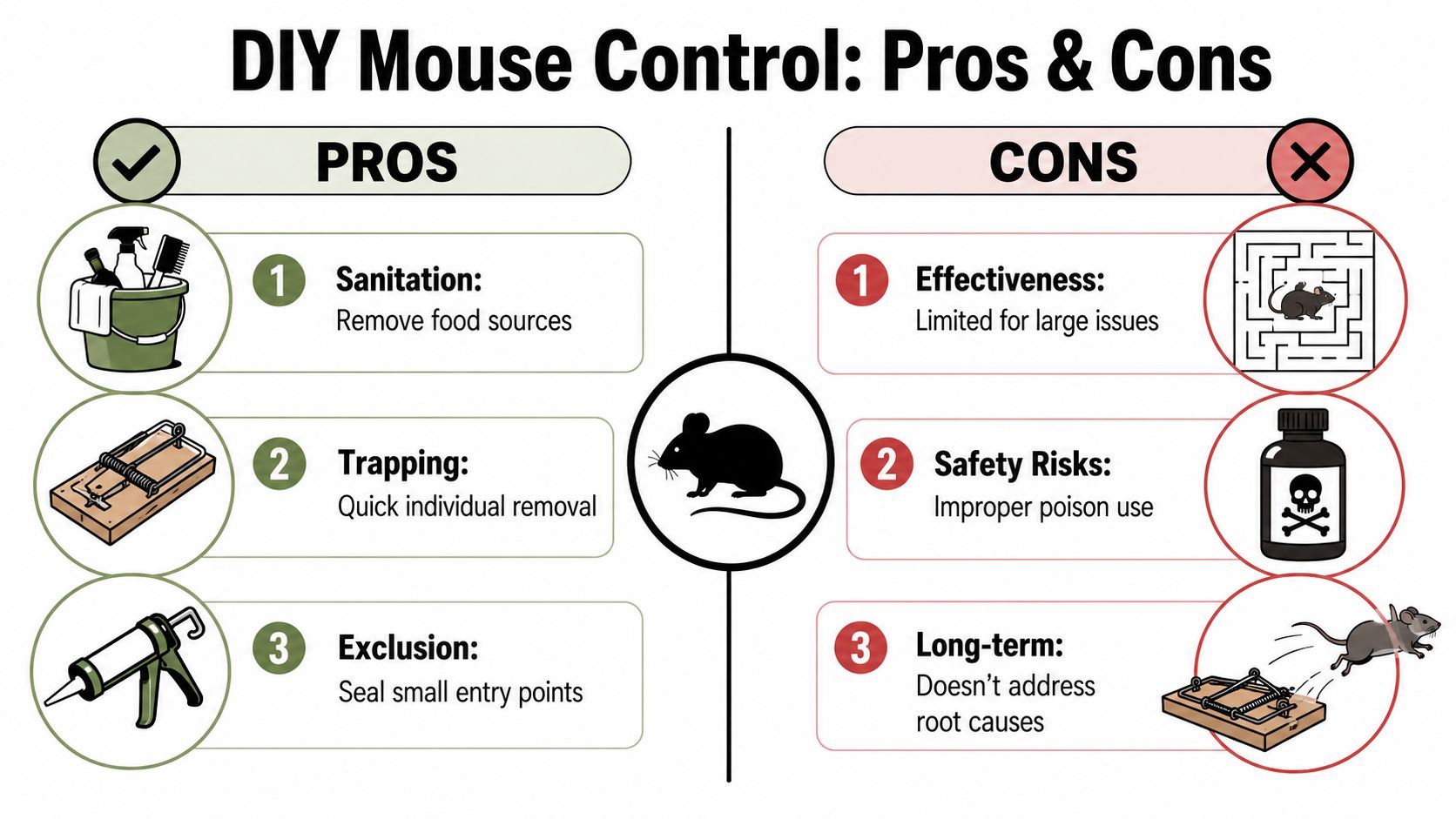
What DIY gets right
Homeowners usually make the most progress when they focus on the basics first.
- Sanitation matters because crumbs, pet food, and unsealed pantry items keep mice comfortable.
- Traps work best when they're placed along walls and near evidence, not in open floor space.
- Clutter reduction helps because stacked boxes and stored paper give mice shelter close to food and warmth.
That's all useful. It lowers activity and helps reveal where mice are moving.
Where DIY usually fails
The biggest DIY mistake isn't the trap choice. It's temporary exclusion.
Many people stuff holes with steel wool or fill gaps with standard spray foam and assume the opening is permanently closed. It usually isn't. According to the UC IPM house mouse guidance, steel wool works as a temporary plug but rusts over time, and rodents can chew through standard spray foam. Durable materials such as copper mesh paired with sealant or sheet metal provide a far better long-term barrier.
That trade-off matters because trapping without durable sealing creates a cycle. You remove the mice that are present, but new mice use the same weak points later.
A quick comparison of common choices
| Method | Helps immediately | Long-term result |
|---|---|---|
| Better food storage and cleanup | Yes | Useful support step |
| Basic snap trapping | Yes | Limited if entry points stay open |
| Steel wool stuffing | Sometimes | Temporary only |
| Standard spray foam alone | Sometimes | Often chewed through |
| Durable metal-based exclusion | Yes | Supports lasting control |
Most failed mouse jobs don't fail because nobody set a trap. They fail because the house was never sealed with materials mice can't defeat.
DIY control also has a safety side. Baits and rodenticides need careful handling, especially around children and pets. Homeowners searching for an exterminator in Crown Point, IN are often at the point where they want a safer, cleaner, and more durable answer than trial and error.
That's the right instinct. Trapping catches mice. Exclusion keeps them from replacing the ones you caught.
The Green Advantage Professional Rodent Control Method
Professional mouse control works when it's built as a system. Inspection shows where mice are traveling. Trapping reduces the active population. Exclusion closes the routes they're using. Monitoring confirms whether the structure is staying protected.
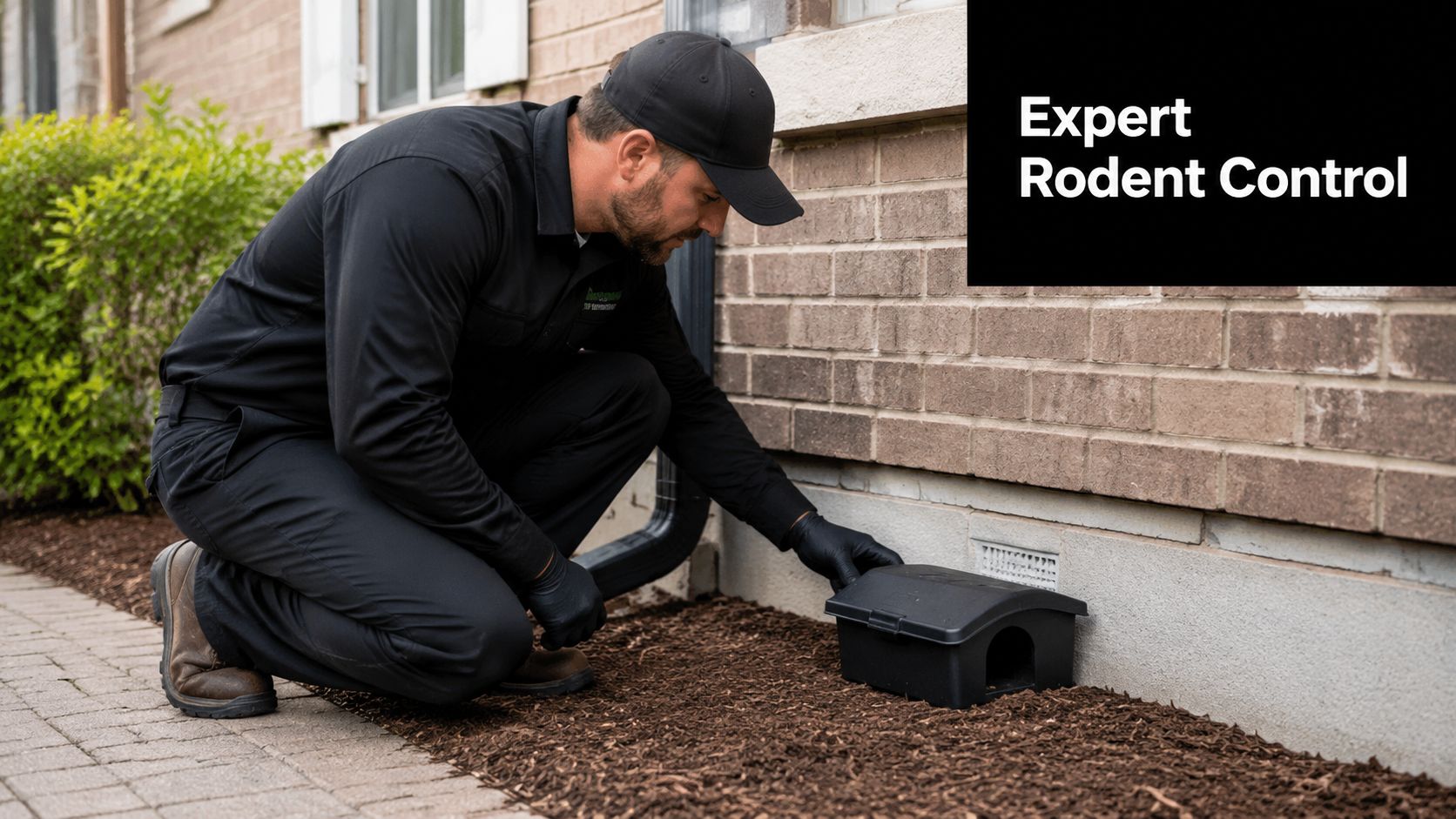
For homeowners looking for pest control in Crown Point, IN, that distinction matters. A technician isn't just setting a few traps. The work is identifying exactly why the infestation is active and correcting the conditions that allow it to continue.
Why professional trap work performs better
Placement changes results. Professional mouse control protocols show that traps placed orthogonal to walls increase capture rates by 70% because mice naturally travel along vertical surfaces, and pre-baiting for a few days can help overcome trap shyness, according to this trap placement and pre-baiting reference.
That's why professionals focus on evidence. Droppings, rub marks, gnawing, and protected travel edges tell us where devices belong. Random placement usually wastes time.
A complete service plan also pays attention to access points that affect more than rodents. The same gaps around pipe penetrations, sill plates, door thresholds, and utility lines can also let in insects. Tightening those vulnerabilities supports broader residential pest control, including seasonal pressure from ants, spiders, and wasps.
What a complete rodent service includes
A strong service visit usually includes several layers working together:
- Inspection of active zones inside and outside the structure
- Targeted population reduction with traps or other appropriate tools
- Durable sealing at identified gaps and penetrations
- Follow-up monitoring to confirm feeding and travel have stopped
- Advice on storage, sanitation, and harborage reduction
The Green Advantage provides rodent control and exclusion work in Crown Point and nearby Northwest Indiana communities using that integrated approach, which is why professional service tends to hold up better than one-off DIY fixes.
This short video gives a useful look at how structured rodent control works in practice.
Good pest control for mice isn't about putting more products in more places. It's about matching the method to the evidence and then closing the house correctly.
That same thinking applies in commercial pest control settings. Offices, restaurants, warehouses, and multi-unit properties all need targeted monitoring, clean documentation, and exclusion that won't break down after the first cold stretch.
When to Call an Exterminator in Crown Point
Some mouse problems are clearly beyond DIY. Others sit in that frustrating middle ground where homeowners aren't sure if they should keep trying or bring in help. A practical rule is simple. If the evidence keeps returning, the problem is still active.
Signs it's time to make the call
You should contact a professional if any of these are happening:
- You saw a mouse during the day, especially in a kitchen, laundry room, or living area
- Droppings are showing up in more than one room
- You've trapped mice but still hear activity
- You sealed holes once and the problem came back
- You want the entry points identified correctly before damage spreads
Those are common reasons people search for an exterminator near me or pest control near me in Crown Point. They aren't overreactions. They're signs that the infestation has moved past simple cleanup.
What the first professional visit should feel like
A useful inspection should be direct and specific. You should expect someone to identify likely runways, look for nesting conditions, inspect common entry points, and explain which findings are current versus old. You should also leave the conversation knowing whether the problem is isolated, building-wide, or tied to a structural weak point.
If you're weighing whether now is the right time, this guide on when to call pest control gives a helpful framework for making that decision before the problem grows.
What about cost
Cost hesitation is understandable, especially if you've already spent money on traps, bins, sealants, and repeated store-bought products. The average professional pest control service is around $175 per visit, with a typical range of $100 to $500 depending on infestation severity and the number of follow-up visits needed for full exclusion and monitoring, according to Angi's pest control cost overview for homeowners.
That doesn't make every job inexpensive, but it does put professional service in perspective. Repeated DIY purchases often add up quickly, especially when the main entry point was never solved. For many homeowners, paying for proper inspection and durable exclusion is the point where the process finally becomes efficient.
Protect Your Home and Health with The Green Advantage
You hear scratching for a few nights, set a few traps, stuff steel wool into a gap under the siding, and the house seems quiet again. Then winter hits, the steel wool rusts or gets pushed aside, and the noise comes back from a different wall.

That is the failure point in a lot of do-it-yourself mouse work. The first repair slows activity, but it does not hold up to moisture, temperature swings, settling, or repeated chewing. Good mouse control has to last through all of that.
At The Green Advantage, we treat mouse work as long-term home protection. The goal is not just to catch the mice you noticed this week. The goal is to close the openings they are using with materials and methods that stay in place, protect food storage and insulation, and reduce the chance of the same problem showing up again a month from now.
That matters for health as much as comfort. Mice contaminate stored food, leave droppings in hidden spaces, and move through wall voids, utility penetrations, and attic areas most homeowners never see.
Mouse activity also overlaps with other household pest problems. The same food storage habits and overlooked gaps that attract rodents can contribute to pantry activity indoors. If you have also been finding issues in cabinets or dry goods, this guide on managing common pantry pests is a useful companion read.
A lasting result usually comes down to one question. Was the home sealed with temporary filler, or was it closed up with durable exclusion work that fits the structure?
For homeowners and property managers looking for residential pest control, commercial pest control, or pest control in Crown Point, IN, the next step is straightforward. Get the structure inspected, find the true entry points, and fix them with materials that hold up.
If you're hearing scratching, seeing droppings, or tired of temporary fixes that don't hold, contact The Green Advantage to schedule a pest inspection or request a quote in Crown Point, IN and nearby Northwest Indiana service areas.
Pest Inspection Home Purchase: Your 2026 Guide
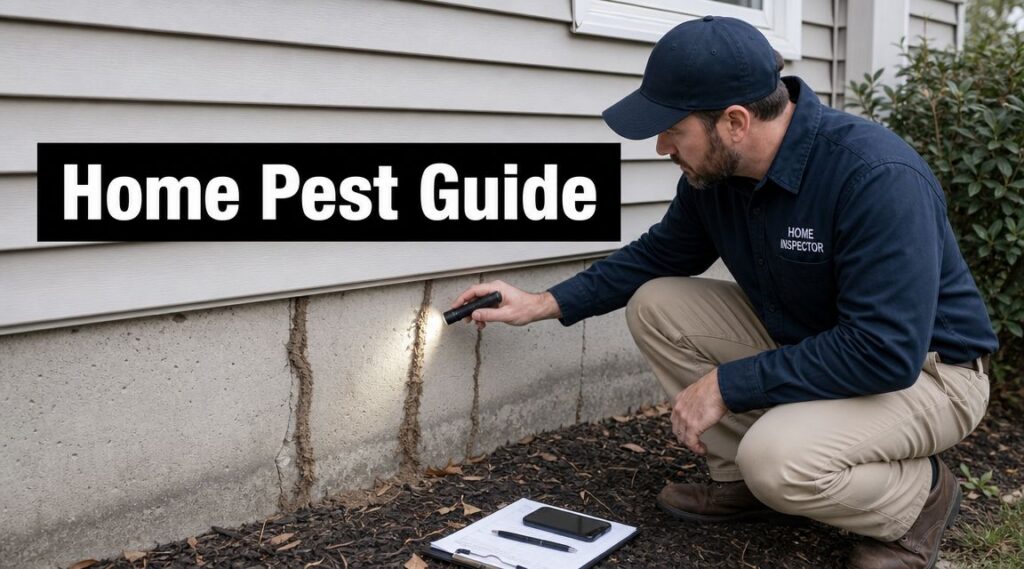
Buying a house in Crown Point is exciting right up until the moment you realize how much can stay hidden behind clean drywall, fresh paint, and a well-staged basement. Most buyers already expect a general home inspection. Fewer realize that a pest inspection home purchase plan can answer a different question entirely. Is there evidence of termites, carpenter ants, rodent activity, moisture conditions, or wood damage that a standard inspection may not fully address?
That's where a calm, local process matters. In Northwest Indiana, buyers don't need more alarm. They need a clear read on risk, realistic next steps, and a report they can use. If you're trying to protect your investment without slowing down your closing, this is how to approach it.
Your Dream Home in Crown Point and the Pests You Can't See
You found the right house. The neighborhood fits. The commute works. The yard looks good, and you can already picture where the furniture goes. Then the practical questions start. What's hiding in the crawl space? What's happening behind the sill plate? Has moisture been attracting activity for years without anyone noticing?
That concern is reasonable. A dedicated pest inspection isn't about trying to sink a deal. It's about making sure you understand the property you're about to own, especially where wood damage or hidden activity may sit outside the scope of a general inspection.

The cost question is usually easy
Most buyers hesitate for a moment because it feels like one more line item in an already expensive transaction. The math usually clears that up. One benchmark source cites a pre-purchase pest inspection at about $100, while termite repairs can average $3,000 and exceed $37,500 in severe cases, according to Mashvisor's pest inspection cost discussion.
That's why experienced buyers treat this as a screening step, not an optional extra. The inspection fee is small compared with the cost of finding structural damage after closing.
Practical rule: If the house is worth serious money to you, the pest risk deserves a serious look.
What buyers usually miss
A house can present well and still have signs of wood-destroying insects, rodent entry, or chronic moisture around accessible framing. Cosmetic updates can make a home feel newer than it is. They don't tell you whether there are mud tubes on foundation walls, soft trim in a basement corner, or old treatment evidence that raises follow-up questions.
In Crown Point and nearby Northwest Indiana communities, a focused pest inspection gives you clarity. You stop guessing. You start making decisions based on visible evidence, documented conditions, and what can be addressed before closing.
Why Pest Inspections Are Crucial in Northwest Indiana
In Crown Point, a house can look dry, clean, and well cared for at the showing, then tell a different story once someone checks the basement rim joist, crawl space supports, or the soil line along the foundation. That gap matters in Northwest Indiana, where moisture, freeze-thaw cycles, and older construction details often create good conditions for pests to stay hidden.
A general home inspection has a broad job. A pest inspection has a narrower one. It looks for insect activity, rodent entry, wood damage, moisture-related risk, and the conditions that tend to lead to those problems.
Local conditions create hidden risk
Around Crown Point and the rest of Northwest Indiana, I pay close attention to subterranean termites, carpenter ants, powderpost beetles, and rodent activity. Basements and crawl spaces are common here. So are attached garages, dense landscaping, and grading issues that keep soil damp near the house. Those details matter because pests do not need a dramatic opening or obvious damage to get started.
The first signs are often small.
Common places to check include:
- Basement perimeter walls: Mud tubes, moisture staining, and damage where framing meets masonry
- Crawl spaces: Damp soil, poor airflow, plumbing penetrations, and exposed wood with high moisture
- Window and door trim: Soft exterior wood, peeling paint, and gaps that suggest long-term moisture exposure
- Garage and utility entries: Openings around conduit lines, sill plates, and framing joints where mice and insects can get in
If you want to know what a focused inspection should cover, this home pest inspection checklist for buyers gives a practical overview of the areas and conditions worth reviewing before closing.
Why a home inspection alone may not be enough
Home inspectors do important work, but pest evidence is easy to miss if it is not the main thing being evaluated. Termite shelter tubes can blend into foundation surfaces. Old exit holes from wood-boring insects can look like minor cosmetic wear. Rodent rub marks and entry points often show up in utility areas that do not get much attention unless someone is specifically looking for them.
That difference in focus matters during a purchase. Buyers are not just trying to learn whether a house has a problem today. They also need to know whether there is old damage, incomplete treatment history, or moisture conditions that make future activity more likely.
A useful pest report should sort those findings clearly. Active evidence calls for one response. Past damage may call for repair or further evaluation. Conducive conditions often call for prevention work before they turn into a larger expense.
Buyers need a report that explains what is active, what is old, and what should be corrected before it becomes a repeat issue.
What local expertise changes
An inspector who works regularly in Crown Point, St. John, Cedar Lake, and nearby Northwest Indiana communities sees patterns that a less local company may not weigh the same way. Older basement homes, homes with crawl space additions, and properties with heavy mulch against the foundation all tend to raise specific questions. The same goes for detached structures, wood contact near grade, and drainage that pushes water back toward the house.
At The Green Advantage, that local experience changes how we inspect and how we explain the findings. The goal is not to alarm a buyer. The goal is to give a buyer clear evidence, realistic next steps, and a better sense of whether the issue is minor maintenance, active infestation, or something that should affect the deal terms.
Scheduling Your Inspection Timing Contingencies and Choosing a Pro
Good inspections don't just depend on who you hire. They depend on when you hire them. Timing affects your bargaining power, your repair options, and sometimes your financing timeline.
For most buyers, the cleanest approach is to schedule the inspection during the due-diligence period while there's still room to ask for treatment, repairs, or a credit. If you wait too long, you may still learn something useful, but your options can narrow fast.
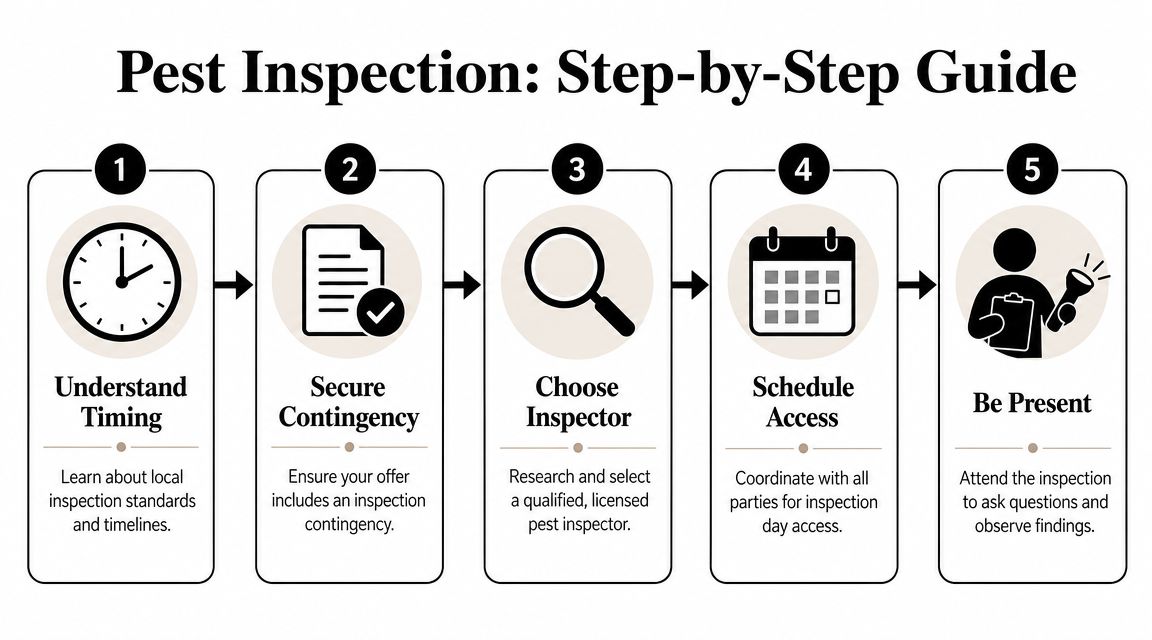
A simple order of operations
Use this sequence to keep the process manageable:
- Review your contract timing. Confirm inspection deadlines and ask your agent where a pest inspection fits within them.
- Protect your negotiating position. Make sure the contract language gives you room to respond if the report finds active issues or conditions that need further evaluation.
- Choose a qualified inspector. Look for a licensed, insured company that handles real estate inspections regularly and can produce clear documentation.
- Coordinate access early. Listing agents, sellers, inspectors, and sometimes tenants all affect scheduling.
- Attend if possible. Buyers who walk the property with the inspector usually understand the report more clearly.
A practical prep resource is this pest control inspection checklist, which helps buyers organize questions before inspection day.
What to expect for cost and timing
A pest inspection is often a low-cost risk screen. Typical 2026 consumer pricing ranges from $50 to $450, depending on inspection type, home size, and location, and a standard inspection may take only 30 minutes to 1 hour, according to Angi's pest inspection cost guide. That's a short appointment compared with the amount of uncertainty it can remove.
Here's a quick planning view:
| Item | What to expect |
|---|---|
| Inspection window | Best handled before contingencies expire |
| On-site time | Often brief for a standard visual inspection |
| Access needed | Basement, crawl space, attic, garage, exterior perimeter |
| Best buyer move | Schedule early enough to allow follow-up if needed |
Later in the process, this walkthrough can help some buyers visualize how inspection timing fits into the purchase flow.
Financing can change the schedule
Some buyers don't run into pest requirements until the loan process gets more specific. For certain transactions, that can affect timing in a big way. The same Angi guide notes that pest inspections are mandatory for VA loans in 35+ states and territories. If your financing could trigger a separate report, it's smart to ask about that early instead of assuming the general inspection covers it.
One practical option in Crown Point is The Green Advantage, which provides pest inspections for home purchase transactions and can coordinate around standard real estate scheduling. The key is not the brand name. It's choosing a provider who understands lender-driven deadlines, document requirements, and local pest pressure.
Decoding the Pest Inspection Report Common Red Flags
The inspection report is where buyers either feel informed or overwhelmed. A useful report should tell you what was seen, where it was found, whether the evidence appears active or prior, and what follow-up makes sense. It shouldn't bury the important points under vague wording.
A standard pre-purchase pest inspection follows a structured sequence. The inspector performs a non-invasive visual scan of accessible areas and checks for indicators such as mud tubes, damaged wood, wing piles, hollow-sounding material, and gnaw marks. That process is summarized in Windy City Home's home inspection statistics and inspection overview, which also cites survey data showing 86% of buyers who used a home inspector identified at least one issue, and 46% used the report to negotiate a lower price.
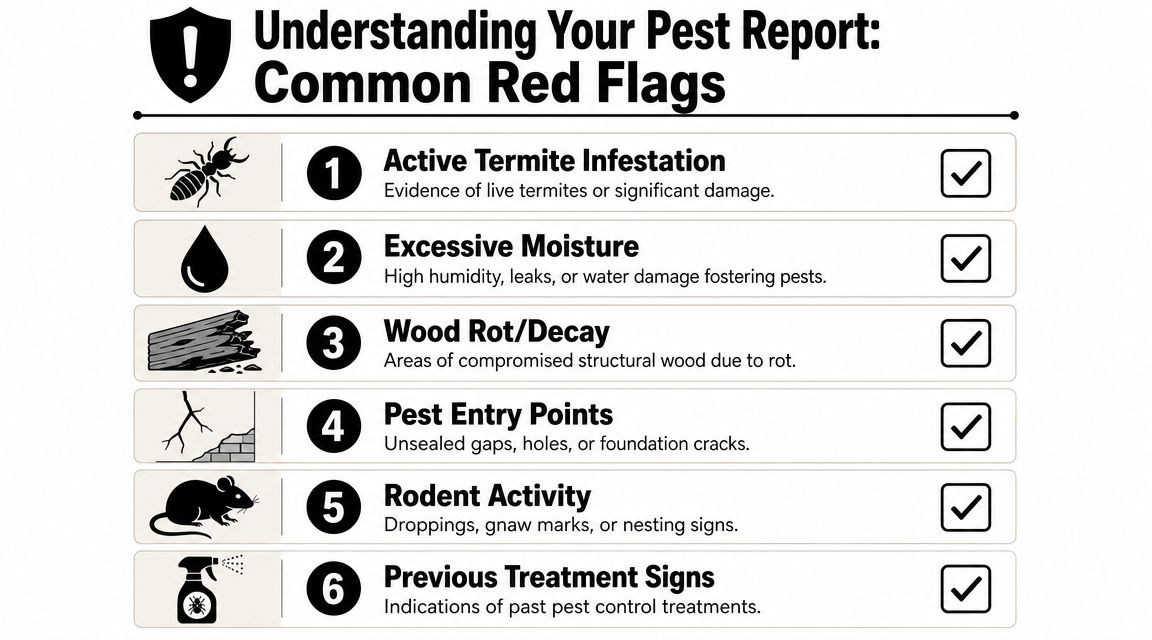
What happens on site
The technician usually checks accessible interior and exterior areas where pest evidence commonly shows up first. That includes foundation lines, basement framing, crawl spaces, garages, utility penetrations, exposed wood, and other visible areas. It is visual and non-invasive. If something suggests hidden activity, the report should say that follow-up may be needed rather than pretending the first visit answered everything.
If you want an example of a transaction-focused service, this termite inspection for real estate page shows the type of inspection buyers often request when wood-destroying insect documentation matters.
Red flags that deserve a closer look
Not every finding means “walk away.” Some findings mean “ask better questions.”
- Mud tubes: These are shelter pathways commonly associated with subterranean termite movement. Active-looking tubes deserve prompt evaluation.
- Damaged or hollow-sounding wood: This may indicate feeding, moisture deterioration, or prior infestation. Location matters.
- Frass or wood dust: Small pellets or fine debris can point toward insect activity, depending on texture and where it appears.
- Exit holes: Tiny openings in wood can suggest past or present wood-boring insect activity.
- Rodent droppings or gnaw marks: These point to entry, nesting, or active movement through accessible areas.
- Excess moisture: Leaks, dampness, and poor ventilation often show up as conditions that make pest problems more likely.
A report is most useful when it distinguishes between active evidence, prior evidence, and conducive conditions. Those are not the same thing, and buyers shouldn't treat them the same way.
How to read the report without overreacting
Use the report as a decision tool. Ask three questions. What was found? Is it active, suspected, or old evidence? What's the next reasonable step?
When the findings are clearly written, the next move usually becomes obvious. You may need treatment, repair quotes, further inspection of concealed areas, or documentation for the file. Clear reports lower stress because they replace vague worry with a sequence of actions.
Using the Report to Negotiate Repairs and Treatments
Once the report is in hand, the goal is simple. Turn the findings into clear repair or treatment terms before you are locked into the purchase.
In Crown Point and across Northwest Indiana, I tell buyers to keep the conversation tied to scope, cost, and timing. A seller does not need to agree that a pest issue feels alarming. They only need to respond to documented evidence, a reasonable treatment plan, and any repairs that protect the structure. That shift matters in a busy market, where buyers can feel pressure to accept more risk than they should.
Three outcomes usually make the most sense:
- Seller handles treatment or repairs before closing. This fits active termite work, visible damage, or conditions that need correction before a lender or buyer is comfortable.
- Seller gives a credit at closing. This is often the better option if you want to choose your own pest company, repair contractor, and schedule after possession.
- Buyer cancels the deal. That can be the right call when access was limited, damage may extend beyond visible areas, or the seller resists addressing a legitimate issue.
The right option depends on the finding.
For example, a short section of old termite evidence in a garage may call for documentation and a localized repair quote. Active termite tubes along a basement wall, high moisture, and wood damage near a sill plate are a different conversation. In that case, I would want licensed treatment, a repair plan, and a reinspection before closing, or enough credit to cover the full job after closing.
Keep the request specific
Vague complaints usually stall out. Specific requests move deals forward.
Ask for:
- licensed treatment, if active infestation is present
- a written repair scope for damaged wood
- receipts, warranties, or transferable service records when available
- reinspection after the agreed work is complete
- clarification on any inaccessible areas that could still hide damage
That last point matters more than buyers realize. If the crawl space was too tight, insulation blocked visibility, or stored items limited access, the report may only show part of the picture. In older Northwest Indiana homes, especially those with moisture history, concealed damage is one of the main reasons I advise buyers to slow down and tighten the terms.
Your agent can keep the language plain and businesslike: the inspection found documented pest activity or damage, and you are requesting treatment, repair, or a credit based on those findings. No drama is needed.
For buyers who want an outside perspective on when pest findings are serious enough to justify backing out, this guide on how to deny a home for pests is a useful reference.
A good negotiation matches the remedy to the evidence. Small, contained findings deserve a measured response. Widespread damage, moisture problems, or unanswered questions deserve stronger terms.
After Closing Protecting Your New Crown Point Home
Closing day doesn't end pest risk. It changes your role. Before closing, you're evaluating a property. After closing, you're protecting it.
That's why the smartest homebuyers treat the inspection as the start of a maintenance plan, not the finish line. If the report found active issues, you'll want treatment and follow-up handled promptly. If the report found moisture conditions, wood-to-soil contact, or easy entry points, prevention matters just as much as correction.

Protect the house you just worked hard to buy
New owners in Crown Point often benefit from a simple post-closing checklist:
- Address open findings quickly: Don't let a known issue sit while you unpack and settle in.
- Correct moisture conditions: Gutters, grading, leaks, and ventilation problems often make pest issues easier to start.
- Seal obvious access points: Utility gaps, garage edges, and foundation penetrations deserve attention.
- Set a monitoring routine: Ongoing inspection and seasonal pest control can keep small issues from becoming expensive ones.
Some buyers also get surprised by financing-related pest requirements late in the process. Rocket Mortgage's explanation of lender timing and pest reports notes that many buyers don't realize VA loans require pest inspections in 35 states, and FHA loans require them when there is evidence of infestation. That can create a last-minute inspection need after appraisal, which is why coordinating pest timing with lender milestones can prevent delays and extra cost.
From inspection to long-term protection
A primary benefit of a good pest inspection home purchase strategy is confidence. You know what was found. You know what still needs attention. You know whether the property needs treatment, repair, prevention, or just periodic monitoring.
If you're also thinking ahead about pricing, concessions, and purchase strategy, this advice on how to get the best deal on your home is a useful companion to the inspection process.
A home in Northwest Indiana doesn't have to be perfect to be a good purchase. It has to be understood, and then maintained with a plan that fits the actual conditions on the property.
If you're buying a home and want a clear, transaction-ready pest inspection in Crown Point or nearby Northwest Indiana, contact The Green Advantage. We can help you schedule the inspection, review what the findings mean, and map out the next step so you can move toward closing with confidence.
Crown Point: Pest Control for Office Buildings

A lot of office pest problems in Crown Point start the same way. Someone notices a line of ants near the coffee station. A cleaner finds droppings behind a trash can. A tenant mentions a strange odor in a storage room that nobody uses much anymore. At that point, the issue still feels small. In many buildings, that’s exactly why it gets worse.
Office buildings create steady opportunities for pests. Breakrooms provide food. Utility rooms provide warmth. Wall voids, pipe gaps, loading doors, and roof penetrations give pests a path inside. Hybrid schedules add another layer. Some areas sit quiet for stretches, trash pickup becomes inconsistent, and moisture issues can go unnoticed longer than they used to.
That shift matters. A 2025 National Pest Management Association survey found that 68% of commercial facilities reported higher rodent sightings during low-occupancy periods compared to pre-pandemic levels, tied to irregular waste removal and unchecked moisture buildup in hybrid-work buildings, as noted in this office pest prevention summary.
For property managers and business owners in Northwest Indiana, pest control for office buildings isn’t just about getting rid of what’s already visible. It’s about protecting staff, tenants, equipment, reputation, and daily operations before a small warning sign turns into a building-wide distraction.
Protecting Your Crown Point Business from Unseen Threats
A property manager in Crown Point usually doesn’t call after seeing a dramatic infestation. The call comes after a few subtle clues start stacking up. One employee mentions seeing ants near the sink. Cleaning staff report droppings in a copy room. A tenant on the first floor says they’ve started hearing scratching in the wall after hours.
Those details matter because office pests rarely stay confined to the place where they’re first noticed. Mice travel wall lines and utility pathways. Roaches settle near moisture and then spread into adjacent spaces. Ants turn a forgotten spill into a dependable food source.
Why office buildings are vulnerable
Northwest Indiana office buildings face pressure from both the structure and the season. Cold weather pushes rodents toward warmth and shelter. Wet periods can increase moisture issues around foundations, drains, and HVAC systems. Summer activity often means more open doors, more deliveries, and more opportunities for pests to slip inside unnoticed.
Hybrid work has changed the pattern too. A fully occupied office creates daily disturbance, regular cleaning, and faster reporting. A lightly occupied office can leave trash in place longer, allow leaks to linger, and give pests more quiet time to settle in.
Practical rule: If staff are seeing pests during business hours, the activity behind the walls or above the ceiling is often more established than it appears.
What smart managers do first
The right response is calm and methodical. Start by identifying where activity was seen, what time of day it happened, and what nearby conditions might be supporting it. In office settings, that usually means checking:
- Breakrooms and coffee stations: Crumbs, syrup residue, drains, and trash liners draw ants, flies, and roaches.
- Storage and supply rooms: Cardboard, clutter, and low foot traffic create hiding spots.
- Mechanical spaces: Pipe penetrations, floor drains, condensation lines, and utility chases support both insects and rodents.
- Exterior transitions: Entry doors, dock areas, and landscaping near the foundation often tell the story.
A good commercial program doesn’t just react to the sighting. It traces the reason the pest was comfortable enough to stay.
Common Pests in Northwest Indiana Office Buildings
In commercial buildings, the pest list is usually predictable. The trouble is that each pest behaves differently, enters differently, and creates a different kind of business risk. That’s why a technician shouldn’t treat every office issue like a generic infestation.
An Orkin survey found that 89% of office tenants have encountered at least one pest in their building within the past 12 months, with ants, roaches, and rodents among the most common invaders in commercial spaces, according to industry findings on office tenants.
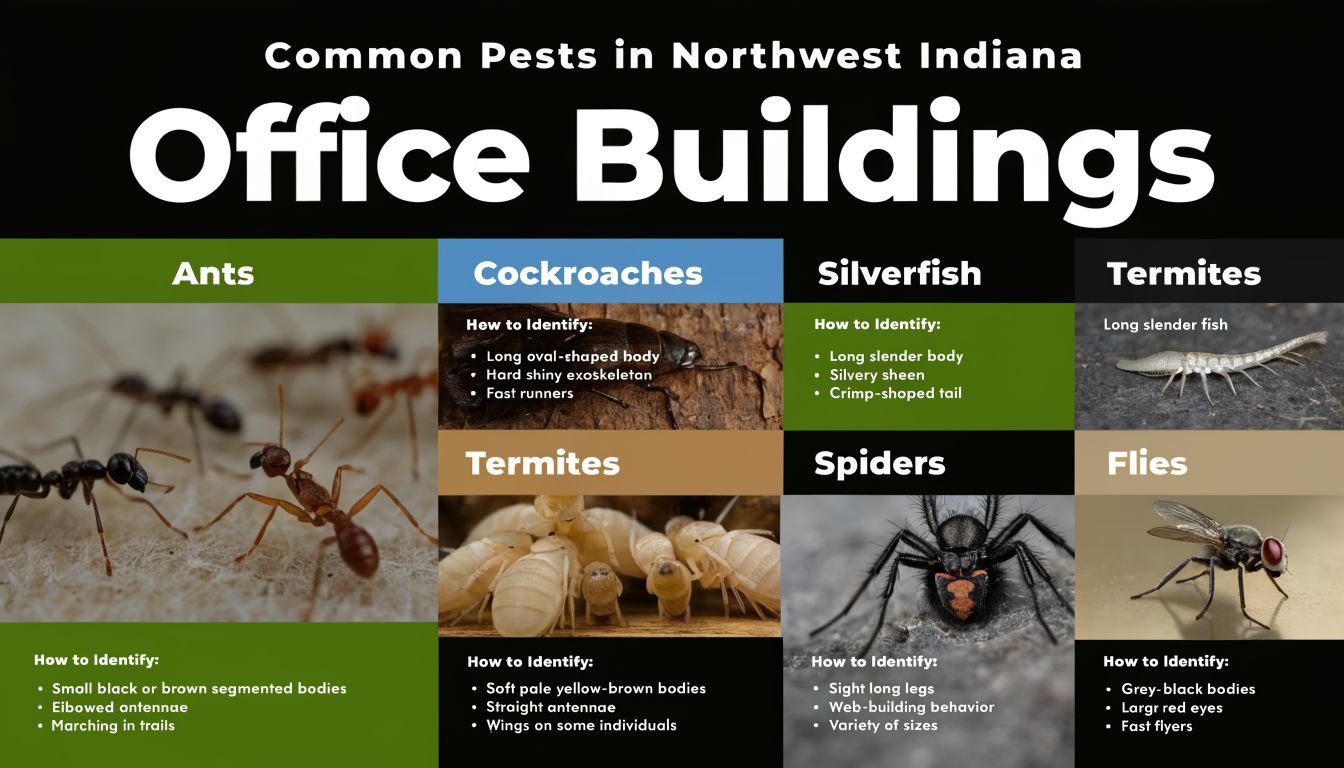
Rodents
Mice and rats are a major concern in office settings because they use the building itself like a highway. They move through wall voids, above drop ceilings, around electrical penetrations, and along loading or service areas. In winter, Crown Point buildings often see more pressure as rodents seek warmth and shelter.
Signs include droppings, gnawing, greasy rub marks, nesting material, and scratching sounds after hours. The risk goes beyond discomfort. Rodents contaminate surfaces, damage insulation, and can chew wiring or low-voltage cabling in places staff never see.
Ants and occasional invaders
Ants are common in breakrooms, reception areas with candy dishes, and anywhere sweet residue builds up around sinks or counters. Property managers often assume ants mean a housekeeping problem alone. Sometimes they do. Other times, the issue is an exterior colony finding an easy route through cracks, expansion joints, or gaps around doors.
Spiders, beetles, and similar occasional invaders also show up in offices, especially around windows, basements, and low-traffic corners. They may not be the most damaging pests, but they still shape how tenants and visitors judge a building.
Cockroaches and moisture pests
Cockroaches thrive where moisture, warmth, and food residue overlap. In offices, that often means janitor closets, kitchens, vending areas, utility spaces, and floor drains. A single sighting in daylight matters because roaches prefer to stay hidden. If they’re visible during the day, the underlying pressure may be more advanced.
Moisture-loving pests such as silverfish and small flies also deserve attention in hybrid offices. Areas that sit unused can develop drain issues, condensation, or stale air that keeps those pests comfortable longer than managers expect.
One pest sighting doesn’t always mean a major infestation. Repeated sightings in the same zone usually mean the building is supporting activity.
Termites and wood-destroying concerns
Not every office pest problem is visible in a breakroom. In some commercial properties, the biggest risk sits in structural wood, trim, or expansion joints near grade level. Termite issues typically show up more subtly through damaged wood, mud-like sheltering evidence, or swarming activity at the wrong time of year.
For office owners in Northwest Indiana, termite control belongs in the larger conversation about commercial pest control because structural pests affect long-term property value, not just daily comfort.
Our Proactive Approach Integrated Pest Management
The most effective pest control for office buildings isn’t based on routine spraying and hoping the problem stays away. That older approach misses the reason pests are there in the first place. In a commercial building, lasting control comes from identifying the pressure points, monitoring activity, and correcting the conditions that allow pests to survive.
That’s where Integrated Pest Management, or IPM, matters. According to U.S. federal benchmarks summarized by the IPM Institute program guidance, IPM prioritizes monitoring and action thresholds and can reduce the need for broad chemical applications by up to 50-70% while maintaining effective pest suppression.
A visual summary helps clarify the process.
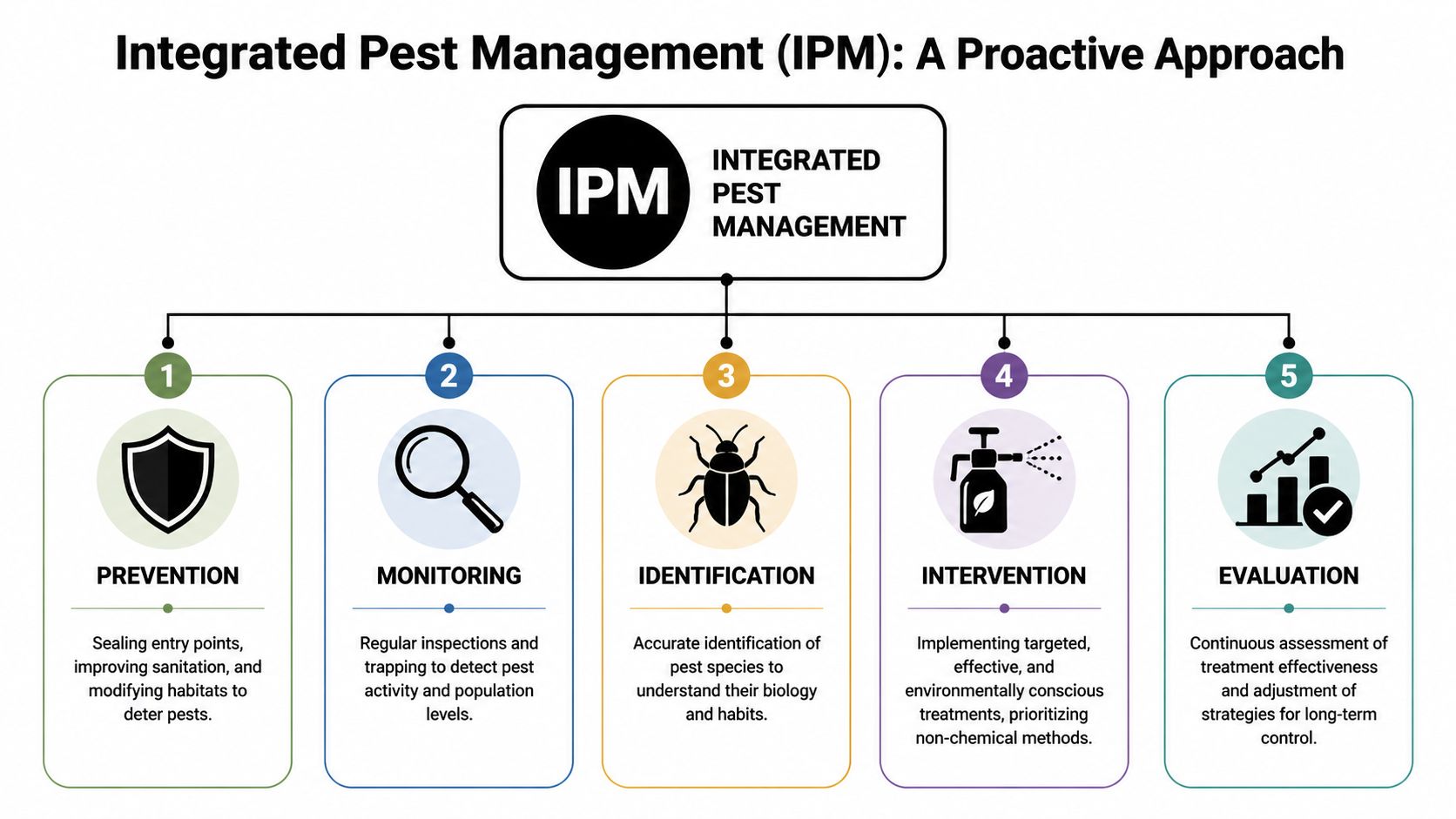
Prevention comes first
A strong IPM program starts with the building, not the product shelf. Technicians look for how pests are entering, where they’re hiding, and what’s feeding them. In an office, common corrections include sealing pipe gaps, improving door sweeps, adjusting waste handling, fixing leaks, and reducing clutter in storage areas.
That’s why a generic treatment schedule often disappoints property managers. If the breakroom drain stays wet, if the rear door doesn’t seal, or if boxes stay stacked against the wall, the building keeps inviting pests back.
Monitoring shows what is really happening
Commercial pest service should produce evidence, not guesswork. Monitoring devices, glue boards, trap placement, sanitation notes, and exterior observations show where the activity is concentrated and whether it’s increasing or declining.
That matters in larger offices because staff reports only tell part of the story. Employees usually notice the visible pest. Monitoring shows the hidden route.
A practical IPM program for an office often includes:
- Routine inspections: Focused attention on kitchens, vending areas, janitor closets, utility penetrations, and perimeter doors.
- Targeted monitoring tools: Devices placed where technicians can measure activity instead of relying on occasional sightings.
- Building corrections: Exclusion work and sanitation recommendations tied to the actual findings.
- Selective treatment: Baits, dusts, traps, or crack-and-crevice applications used only where needed.
Treatment should be targeted, not broad
When treatment is necessary, the goal is precision. A technician should choose products and placement that match the pest, the environment, and the level of activity. Offices require care because treatments happen in spaces people use every day.
For example, baiting a cockroach issue in a utility room makes more sense than broad interior application across an entire office suite. Mechanical trapping for rodents near identified travel routes is more useful than reacting only after someone sees a mouse in daylight.
This short video gives a helpful overview of how a structured pest program works in practice.
Evaluation keeps the plan honest
A commercial pest plan should never stay static if the building conditions change. Renovation work, seasonal weather, tenant turnover, and hybrid occupancy patterns all affect pest pressure. Good IPM means reviewing what worked, what didn’t, and what the next adjustment should be.
A service report should answer three questions clearly. What was found, why it was happening, and what needs to change next.
For businesses comparing vendors, this is one area where the details matter. A company like The Green Advantage can build commercial service around inspection findings, exclusion needs, and environmentally mindful treatment choices rather than a one-size-fits-all route stop.
What to Expect During Your Commercial Pest Inspection
The inspection process should feel straightforward, not mysterious. Most property managers already juggle vendor scheduling, tenant requests, maintenance issues, and after-hours access. Pest service works better when everyone knows what will happen before the technician arrives.
The first step is usually a conversation about what has been seen, where it has been seen, and whether the issue seems isolated or recurring. The office staff may ask about building age, floor plan, food service areas, trash handling, and recent maintenance concerns such as leaks or door problems. Those details shape where the technician starts and what tools to bring.
Before the technician arrives
It helps to gather a few practical details in advance. A manager doesn’t need to create a formal report, but it’s useful to note patterns. Was the rodent sighting near a rear exit? Are ants only appearing after weekend occupancy? Did cleaning staff notice activity in a vacant suite or storage room?
Many of the same observations used in broader facility maintenance inspection points overlap with pest risk. Door seals, moisture intrusion, roof drainage, clutter, and wall penetrations often explain why pests gain a foothold.
A technician may also ask for access to areas that employees rarely enter, such as:
- Breakrooms and kitchenettes: Including sinks, cabinets, appliances, and trash storage.
- Janitor and mechanical rooms: These spaces often reveal leaks, drains, and hidden harborages.
- Exterior perimeter areas: Foundations, dumpster pads, entry doors, and landscaping beds tell an important part of the story.
- Ceiling and utility access points: Pest activity often follows pipes, conduit, and HVAC pathways.
What happens on site
A good commercial inspection isn’t a quick walk-through with a flashlight. The technician is looking for signs of current activity, signs of past activity, and conditions that support future activity. That includes droppings, rub marks, shed skins, grease trails, nesting evidence, frass, moisture, harborage, and structural openings.
In office buildings, rooftop equipment and HVAC areas matter more than many people realize. Condensation, gaps around service entries, and roof-level access points can support insect and rodent movement that later shows up inside on a lower floor.
When a building has hybrid occupancy, the inspection usually pays extra attention to underused areas. Conference rooms, storage closets, low-traffic suites, and secondary restrooms can support pests because nobody is there often enough to notice the warning signs early.
What you receive afterward
The most useful inspection report doesn’t just say “treated” or “no activity found.” It should identify the problem zones, note likely causes, and recommend practical corrections. Some of those corrections fall on sanitation. Others belong to maintenance, janitorial teams, or tenant behavior.
If you want a clearer sense of how modern tools improve that process, this article on advanced equipment for pest inspection accuracy in Crown Point is worth reviewing. Better inspection methods help technicians find hidden activity sooner, especially in commercial properties with wall voids, utility chases, and large common areas.
The inspection should leave you with a plan, not just a receipt.
That plan usually includes where service should start, what should be corrected right away, how often follow-up should happen, and how communication with management or tenants will work going forward.
Upholding Compliance and Protecting Employee Health
A pest issue in an office building can start as a maintenance concern and quickly become a health, reputation, and compliance issue. That’s why experienced property managers treat prevention as part of building operations, not as an occasional emergency purchase.
Commercial tenants notice how a building is managed. If pests appear in common areas, breakrooms, restrooms, or lobbies, they don’t separate that from the overall quality of the property. They see it as a sign that something is being missed.

Health concerns are real even in office settings
People sometimes assume office pests are mostly an image problem. They’re not. Roaches can contribute allergens. Rodents contaminate surfaces and storage areas. Flies and similar pests can spread filth from drains, waste, and exterior sources into occupied spaces.
That affects how employees feel in the building. Once staff start worrying about what’s in the breakroom cabinet, under the sink, or behind the vending machines, morale drops fast. Productivity suffers when people are distracted by recurring sightings or uneasy about bringing food, bags, or personal items into shared areas.
A clean-looking office can still have a hidden pest pressure problem. Most serious issues start behind equipment, above ceilings, and around moisture.
Compliance, documentation, and vendor coordination
Many office buildings don’t face the same inspection environment as restaurants or healthcare sites, but that doesn’t reduce the need for documentation. A property manager still needs service records, inspection notes, and evidence that problems were addressed responsibly. That matters for tenant communication, internal risk management, and maintenance coordination.
Pest control also fits into a larger building health conversation. For example, when managers review projects involving air quality, demolition, or older building materials, they often have to compare priorities and costs across multiple vendors. A resource on understanding asbestos removal budgets can be useful in that broader planning context because it shows how environmental building issues require clear scopes, careful documentation, and professional handling. Pest issues deserve the same operational discipline.
Why proactive service costs less disruption
Reactive service creates scheduling pressure, tenant complaints, and rushed decision-making. Proactive service allows managers to address conditions while they’re still manageable. That usually means fewer surprises, cleaner communication, and less disruption to employees and visitors.
For Crown Point offices, the goal isn’t just eliminating pests when they show up. It’s protecting the building’s daily function and preserving confidence in the property. That makes pest control part of risk management, not a side task.
How to Choose a Commercial Pest Control Partner in Crown Point
Hiring a commercial exterminator near you shouldn’t come down to who can spray fastest. Office buildings need a provider who understands how business properties function, how pests exploit those spaces, and how to work without creating unnecessary disruption for staff or tenants.
If you’re comparing options for commercial pest control in Crown Point, IN, the right questions are practical. You want to know how the company inspects, how it communicates, how it documents findings, and whether it can adapt to your actual building instead of forcing your property into a standard route plan.
Look for local building experience
Northwest Indiana has its own pest rhythms. Seasonal rodent pressure, moisture issues, snow-season entry gaps, and summer insect activity all affect office service. A provider with local experience will understand why rear vestibules, loading areas, perimeter landscaping, and hybrid occupancy patterns matter in this region.
That local awareness also helps when service needs to coordinate with janitorial teams, maintenance staff, and tenant schedules. Office buildings don’t run like warehouses, and they don’t behave like homes either.
Ask how they handle the process
A capable provider should be able to explain the service process plainly. If the answer is vague, that’s a warning sign. You should hear specifics about inspection, monitoring, documentation, sanitation recommendations, exclusion, and targeted treatment options.
Use this checklist when evaluating a commercial pest partner:
- Licensing and insurance: Confirm the company is properly credentialed for commercial work.
- IPM commitment: Ask whether they rely on inspection and monitoring first or default to broad routine application.
- Communication standards: Find out who receives reports, how findings are documented, and how urgent issues are escalated.
- Building-specific planning: A downtown office suite, a medical office, and a multi-tenant building with a cafeteria should not receive the same service blueprint.
- Experience with related risks: Rodent exclusion, termite concerns, and seasonal exterior pressure should all be within scope.
Consider how they fit into your wider property team
The strongest pest vendor usually works well with other building specialists. If you’ve ever had to coordinate repairs after a leak, fire, or contamination issue, you already know that vendor communication matters as much as technical skill. A good example of that broader support role is what a commercial restoration company provides after major property events. Pest control isn’t the same service, but the same principle applies. You need a partner who documents clearly, responds predictably, and understands how their work affects the rest of the building.
Red flags to avoid
Some companies sound fine on the first call and disappoint once service starts. Watch for these patterns:
- No real inspection: They quote a treatment plan before seeing the property.
- Generic recommendations: Every building gets the same frequency and the same approach.
- Minimal reporting: The service note says little more than “completed.”
- Poor follow-through: Management has to chase answers after each visit.
- No exclusion mindset: They treat symptoms but never address gaps, drainage, clutter, or door seals.
The best commercial pest control near you should feel like part of your building operations team. That means fewer surprises, faster answers, and service that matches how your property is used.
Sample Service Plans and Proactive Prevention Checklists
Property managers usually ask two practical questions. How often should this building be serviced, and what can our team do between visits to lower risk? The answer depends on building use, food activity, occupancy patterns, and how many structural vulnerabilities the property has.
In general, low-risk offices can often operate on a lighter service schedule, while food-related offices may need much tighter attention. The broader commercial market data from Fortune Business Insights on pest control notes that weekly or bi-weekly service is common for food-related offices, while quarterly service may fit lower-risk sites.

Sample commercial pest control service schedules
| Risk Level / Facility Type | Recommended Frequency | Common Target Pests |
|---|---|---|
| Low-risk professional office with limited food use | Quarterly | Ants, occasional invaders, spiders, mice |
| Standard multi-suite office building with shared breakrooms | Monthly | Ants, rodents, cockroaches, flies |
| Hybrid office with recurring low-traffic zones and moisture concerns | Monthly, with added monitoring as needed | Rodents, moisture pests, flies, roaches |
| Office with heavy employee food traffic or pantry areas | Bi-weekly | Ants, cockroaches, flies, rodents |
| Office space tied to food preparation or frequent food handling | Weekly or bi-weekly | Rodents, flies, ants, cockroaches |
Prevention work that pays off
Service frequency matters, but building corrections matter more. Structural pest-proofing can block 70-90% of potential infestations by sealing gaps, installing door sweeps, and maintaining landscaping, according to the AFPMB structural pest-proofing guide. In practice, that means the biggest savings often come from fixing access points before pest pressure builds.
For managers who want more building-focused ideas, these commercial pest prevention strategies in Crown Point are a useful companion to a service plan.
Small exclusion fixes often outperform repeated treatment in the same problem area.
Fall checklist for rodent season
As temperatures drop in Northwest Indiana, rodents begin testing office buildings more aggressively. Fall is the time to close off access and reduce nesting opportunities.
- Inspect door sweeps: Replace damaged sweeps on rear doors, side entries, and service doors.
- Seal utility gaps: Check around conduit, plumbing, cable entries, and line sets.
- Clear storage clutter: Keep cardboard and paper stock off the floor and away from walls.
- Review dumpster areas: Make sure lids close properly and spills are cleaned promptly.
- Trim exterior growth: Reduce dense vegetation touching the foundation.
Spring and summer checklist for insects
Warmer months bring more crawling insects, occasional invaders, and activity around drains and exterior entry points. Prevention is simpler when managers catch the easy attractants first.
- Check for moisture issues: Repair leaks under sinks, around rooftop units, and near utility rooms.
- Deep-clean breakrooms: Focus on appliance edges, cabinet corners, and under vending equipment.
- Inspect window and door seals: Flying insects take advantage of worn screens and gaps.
- Update outdoor upkeep practices: Keep mulch, plantings, and debris from crowding the building edge.
- Monitor underused spaces: Hybrid offices need regular checks in quiet suites and conference rooms.
Everyday habits that help between visits
Even the best commercial pest program can struggle if building habits keep feeding the problem. Staff and janitorial teams don’t need pest expertise. They just need a clear reporting path and a few consistent routines.
The basics are simple. Report sightings quickly. Empty trash reliably. Store food neatly. Keep sinks and floors dry. Don’t let supply rooms become permanent clutter zones. Those habits make every professional treatment plan work better.
Secure Your Business with The Green Advantage Today
Office pest problems rarely solve themselves. They spread through wall voids, settle into underused spaces, and create bigger concerns for tenants, employees, and property managers the longer they’re ignored. In Crown Point and across Northwest Indiana, the smartest approach is early inspection, building-specific prevention, and steady follow-up.
If you’re searching for pest control near me, commercial pest control in Crown Point, IN, or an exterminator near me for an office building, focus on a partner who understands how local buildings work and how pests exploit them. The right plan protects more than the structure. It protects daily operations, employee confidence, and your reputation.
Need practical help with pest control for office buildings in Crown Point, IN or nearby Northwest Indiana communities? Contact The Green Advantage to schedule an inspection, request a quote, or talk through a commercial service plan built around your property’s actual risks.
How to Keep Spiders Out of Your Basement: A Crown Point, IN Guide

If you're a homeowner in Crown Point, IN, finding spiders in your basement can be an unsettling experience. It often feels like a sign that your home isn't clean, but the truth is, basements provide the perfect environment for these eight-legged intruders to thrive. At The Green Advantage, we want to reassure you that this is a common issue in Northwest Indiana, and more importantly, it's one you can solve. This guide will walk you through why spiders love your basement and how you can reclaim your space, from DIY tips to professional pest control in Crown Point, IN.
Why Spiders Love Your Basement and What You Can Do
Finding spiders in your Crown Point basement can be unsettling, but it's an incredibly common experience for homeowners here in Northwest Indiana. It's not a reflection of how clean your home is; it just means your basement provides the perfect conditions for these eight-legged intruders to thrive.
The real secret to getting rid of them for good is understanding why they showed up in the first place. Spiders are always on the lookout for three things:
- Shelter: Those quiet, undisturbed corners, exposed rafters, and cluttered piles of boxes are ideal spots for them to build webs, hunt, and lay eggs.
- Moisture: The cool, damp air common in basements is a huge draw for spiders and the little bugs they love to eat.
- Food: If your basement already has other pests like ants, silverfish, or centipedes, you've basically set out a buffet. Spiders will follow the food.
Identifying the Usual Suspects in Crown Point
While you might find a variety of spiders indoors, the most common culprit you'll see is the cellar spider, which many people mistakenly call a "daddy long-legs." With their long, wispy legs, these guys are perfectly adapted to the low-light, sheltered environment your basement offers.
In fact, dozens of cellar spider species across North America have figured out how to live alongside us. They're so good at it that they've spread globally, often by hitching a ride on our stuff. If you want to get to know this frequent basement guest, you can learn more from this detailed guide to cellar spiders.
Seeing cellar spiders or other common house spiders is often a sign. They're telling you that you might have an underlying moisture issue or another insect problem that needs your attention. Tackling those root causes will get you much further than just squishing every spider you find.
Think Proactively, Not Reactively
The best spider control isn’t about chasing down individual spiders after they’re already inside. It’s about methodically making your basement an unwelcoming place for them. When you focus on exclusion and changing the environment, you interrupt their life cycle and make your home a less appealing target from the start.
Quick-Start Spider Prevention Checklist
Here are the most impactful first steps you can take to immediately reduce spider activity in your basement. Tackle these over a weekend, and you'll see a real difference.
| Action Item | Why It Works | Frequency |
|---|---|---|
| Declutter and Organize | Removes spider hiding spots and makes it easier to spot new activity. Switching from cardboard to plastic bins is a game-changer. | Seasonally |
| Run a Dehumidifier | Lowers humidity to below 50%, making the air too dry for spiders and the insects they eat. | Daily during humid months |
| Seal Obvious Gaps | Use caulk to fill small cracks around pipes, windows, and where the foundation meets the house frame. This blocks their main entry points. | Annually or as needed |
| Vacuum Webs and Corners | Physically removes spiders, webs, and egg sacs all at once, which immediately cuts down on the population. | Weekly or bi-weekly |
Focusing on these four key areas directly hits the shelter, moisture, and food sources that spiders depend on, giving you the upper hand right away.
Fortifying Your Foundation to Block Spider Entry Points
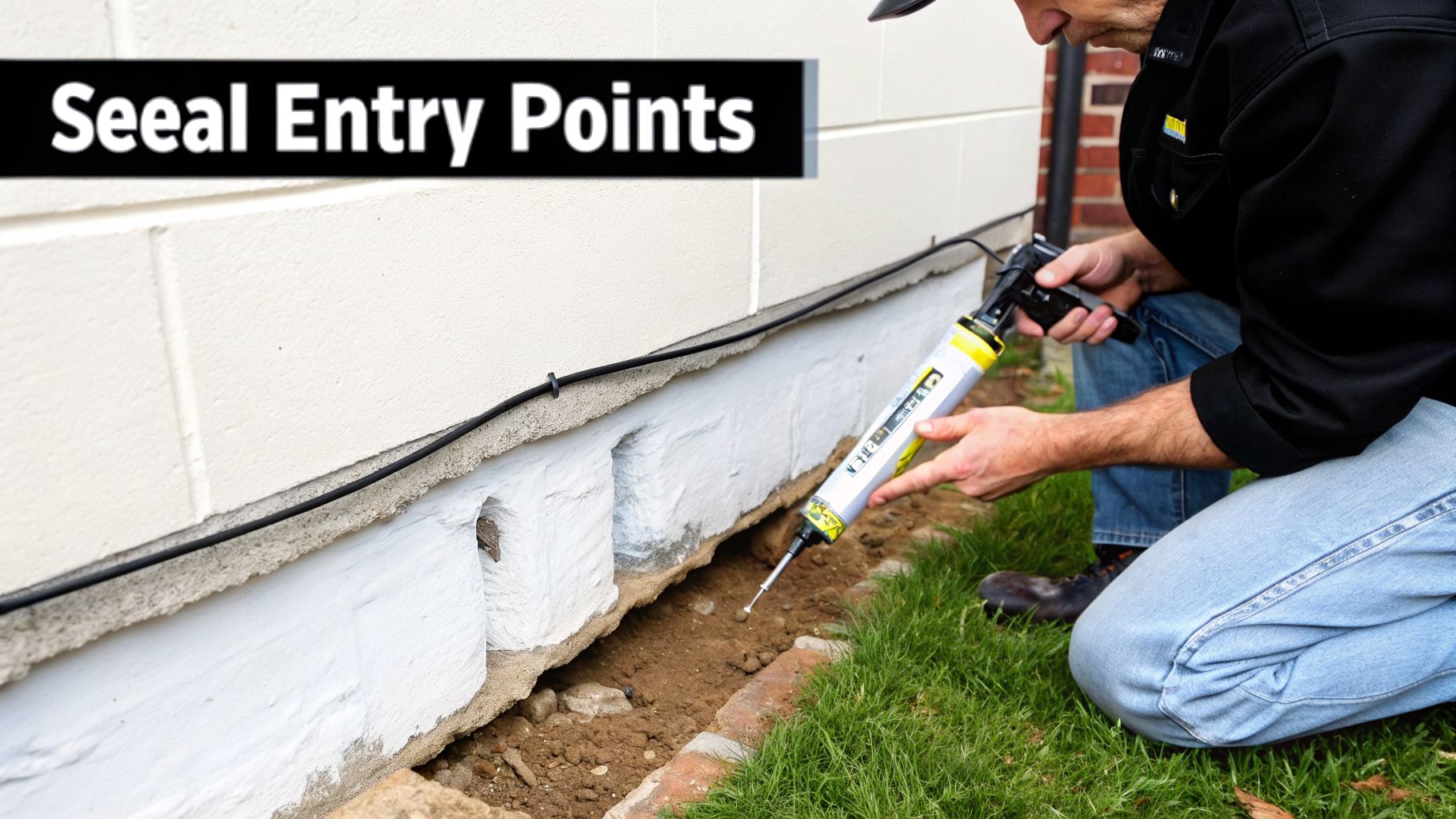
Spiders aren’t Houdinis; they don't just appear out of thin air. They're sneaky opportunists, and the most effective way to keep them out of your basement for good is to build a fortress they can't breach. This means sealing up every last crack and gap, a process we in the pest control industry call "exclusion."
Think of it this way: your foundation is the first line of defense. Here in Crown Point, IN, our freeze-thaw cycles mean houses are constantly settling and shifting. Tiny cracks are bound to appear, and to a spider, those aren't cracks—they're superhighways straight into your home.
Sealing these entry points isn't just a spider solution, either. The same gaps that let spiders in are an open invitation for ants, centipedes, and even mice. That’s why exclusion is the foundation of any solid residential pest control strategy from a trusted exterminator near me.
Pinpointing Common Spider Entry Points
So, where do you even start looking? Spiders can flatten themselves and squeeze through gaps so small you’d barely notice them. Your best bet is to grab a powerful flashlight and do a slow, methodical inspection of your basement's perimeter, both inside and out.
Here are the hot spots we at The Green Advantage always check first:
- Foundation Cracks: Scan the concrete or block walls for any hairline fractures. A crack that looks like nothing to you is a front door for a spider.
- Sill Plate Gaps: This is a big one. The sill plate is the wood plank sitting right on top of your foundation. Gaps almost always form between the wood and concrete, creating a highway for pests.
- Utility Line Openings: Look closely where pipes, wires, and vents come through the wall. The space around plumbing, electrical conduits, and dryer vents is often hastily sealed, if at all.
- Basement Windows and Doors: Check for brittle or missing weather stripping, torn screens, and gaps around window frames. These are basically wide-open doors.
A thorough inspection is half the battle. If you want to think like a pro, using a detailed pest control inspection checklist helps ensure you don't miss a single spot.
Choosing the Right Sealing Materials
Once you've mapped out all the weak points, it's time to seal them up. And trust us, using the right product for the job makes all the difference. A cheap, quick fix will likely fail, and you’ll be right back where you started.
For Small Cracks and Gaps (less than 1/4-inch):
A high-quality silicone or acrylic caulk is your best friend here. It’s flexible enough to handle slight shifting and perfect for those hairline foundation cracks, gaps around windows, and the crucial space between the sill plate and foundation. Just apply a nice, steady bead to fill the opening completely.
For Larger Voids and Openings (greater than 1/4-inch):
For bigger gaps, especially around pipes, expanding foam sealant is the way to go. It expands to create a perfectly tight, pest-proof seal. Pro tip: if you're worried about mice chewing through the foam (and they will), stuff the hole with coarse steel wool first, then seal over it with the foam.
A Note on Moisture Control
It's important to remember that many of these gaps also let in moisture, which is a magnet for spiders and the insects they hunt. A critical part of the process is learning how to waterproof basement walls. A dry basement is an unappealing basement to pests.
Finally, don't overlook the easy wins. Replace those torn window screens and install fresh weather stripping or door sweeps on any basement doors. These small details have a huge impact. By taking the time to truly seal your foundation, you're not just getting rid of spiders—you're making a lasting investment in your Crown Point home's health and integrity.
Make Your Basement a No-Go Zone for Spiders
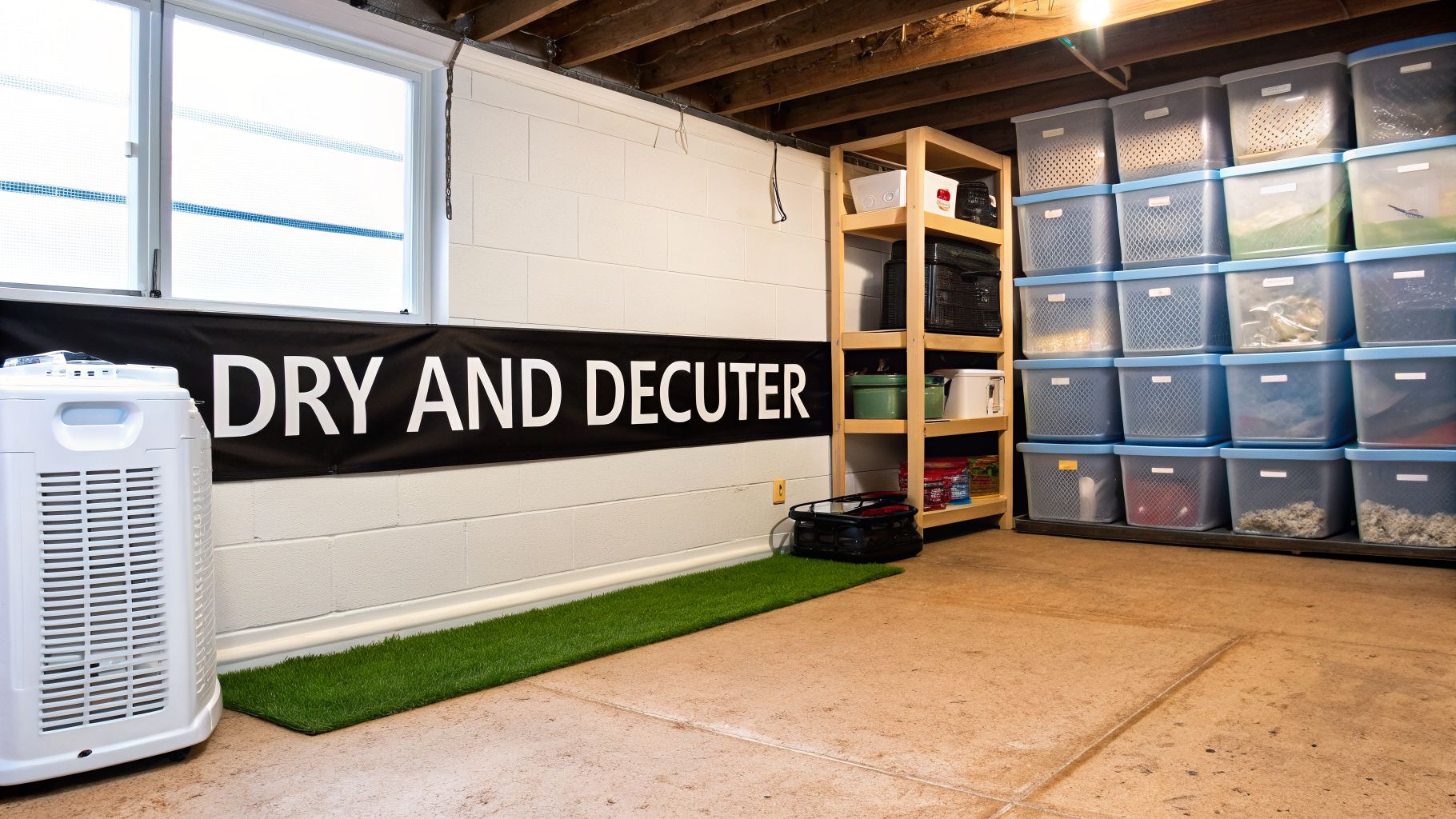
Once you've sealed up all the cracks and gaps, the real work begins. Now, we need to change the environment of your basement so spiders simply don't want to be there. Think of it from their perspective: they're looking for shelter, a bit of moisture, and—most importantly—a reliable food source. If you take away those three things, you’ll turn your basement from a five-star spider resort into a place they’d rather avoid.
We call this "habitat modification" in the pest control world. It’s a fancy term for a simple idea: change the conditions that let pests move in and get comfortable. Here in Northwest Indiana, this is especially crucial during our humid summers and damp springs, when basements naturally become prime real estate for spiders and their prey.
Get a Handle on Humidity
If you do only one thing, make it this: control the moisture in your basement. Spiders, and the little critters they love to eat like silverfish and millipedes, absolutely thrive in damp, clammy air. That musty smell you might notice downstairs? That’s basically a giant "Vacancy" sign for pests.
Your target is to keep the relative humidity below 50%. This makes the air just a little too dry for them to be comfortable. The easiest way to do this is by running a good dehumidifier, especially from late spring through early fall. As a bonus, it also helps stop mold and mildew in their tracks.
Take Away Their Hiding Spots
Spiders are naturally shy. They aren't looking for a fight; they're looking for a dark, quiet, cluttered corner to set up shop, spin a web, and be left alone. An open, organized basement is their worst nightmare.
Look around your basement right now. Are there piles of old magazines, forgotten firewood, or stacks of cardboard boxes? That's what we call a "spider condo." Cardboard is a particularly big offender because it wicks moisture right out of the concrete floor and offers endless dark crevices for spiders to hide.
Here’s how you can reclaim that space:
- Ditch the Cardboard: Make the switch to airtight plastic totes. They don't absorb moisture and seal up tight, keeping pests out for good.
- Get It Off the Ground: Use sturdy shelving—metal or plastic is best—to lift all your storage bins off the floor. This simple move eliminates countless hiding spots underneath boxes and helps with airflow.
- Leave Some Breathing Room: Don't push your shelves right up against the basement walls. Leaving a gap of a few inches lets air circulate and makes it infinitely easier for you to do a quick scan for webs or other pest activity.
A Pro's Perspective
Just getting your basement organized is a huge part of the battle. When every corner and baseboard is visible, you're not just removing spider hideouts—you're making it easy to spot a new web or the start of a problem long before it becomes an infestation.
Cut Off the Buffet
Here’s the thing: spiders rarely end up in your basement by accident. They follow the food. If you’ve got a healthy population of other household pests crawling around, you’re basically ringing the dinner bell for every spider in the neighborhood. That's why a true spider control strategy has to include managing the other insects.
This is where a comprehensive pest control plan, like what we offer at The Green Advantage, makes a real difference. We don't just treat for spiders; we figure out what's attracting them in the first place—be it ants, crickets, silverfish, or something else—and address the root cause. When you take away their food, spiders will quickly move on to better hunting grounds. Our ant control and general pest treatments are essential parts of an effective spider solution.
Think of spiders as a big, flashing sign that you have other pest issues. In fact, a 2016 study of 50 homes found cobweb spiders in 65% of all rooms surveyed. Basements are especially popular because the dark, damp environment is exactly what they seek out. If you're curious, you can read more about the study's spider findings to see just how common they are. It really drives home why tackling the entire pest ecosystem is the only way to get lasting results.
Practical DIY Methods for Managing Spider Activity
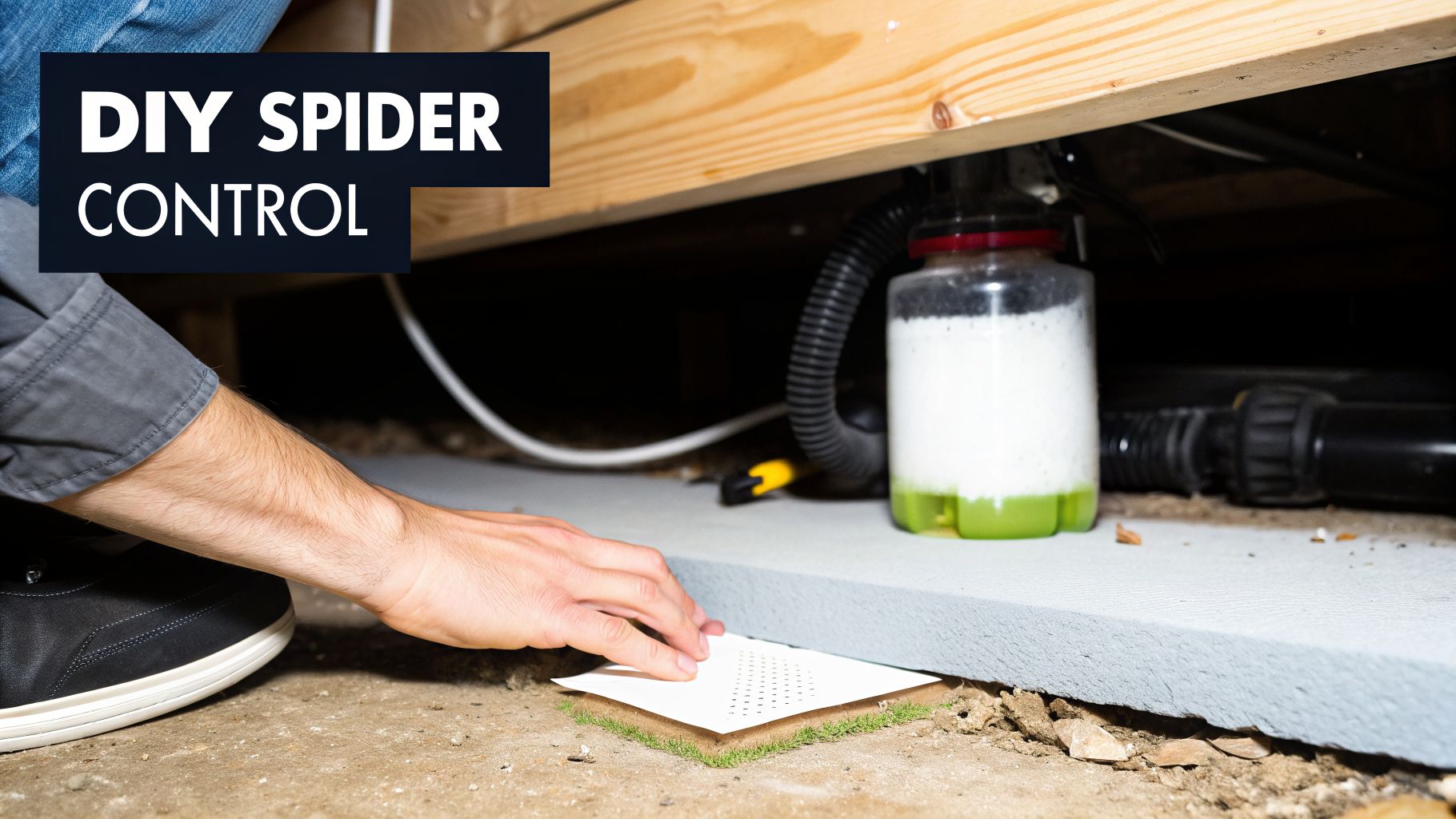
Alright, you've sealed the cracks and are working on the moisture—now for the hands-on part. For homeowners in Crown Point who want to take an active role, a few tried-and-true DIY methods can make a real difference in managing any spiders that still sneak past your defenses.
Let's skip the myths and get right to what we've seen work. These techniques are all about monitoring what's going on, directly reducing the spider population, and making your basement an unwelcome space for them. They're the perfect support system for a professional pest control plan from The Green Advantage.
Strategic Monitoring With Sticky Traps
Never underestimate the humble sticky trap. It’s one of the most effective tools in your DIY kit. They aren't a fix for a major infestation on their own, but they are incredibly valuable for monitoring and capturing wanderers.
By placing traps, you create a roadmap of spider activity. Checking them every week or so tells you exactly where the hot spots are, giving you critical clues about where they might be getting in or hiding out.
For the best data, place traps:
- Along baseboards, tucked into those dark corners where walls meet.
- Behind big furniture or boxes that you don't move often.
- Near potential entry points like basement window wells or where pipes come through the wall.
Think of them as an early-warning system. If you suddenly see more spiders in the traps, it’s a signal to re-inspect your seals or look for a new problem.
The Power of Your Vacuum Cleaner
Your vacuum cleaner is your number one weapon for immediate spider removal. With a long extension wand, it’s perfect for not just getting rid of adult spiders but, more importantly, their egg sacs.
A single egg sac can hatch hundreds of new spiders. Sucking it up prevents a population explosion right at the source. Make it a routine to vacuum the usual spider hangouts: the upper corners of the ceiling, around exposed floor joists, and in and around your shelving. A quick pass every week or two will seriously disrupt their life cycle.
Expert Tip: After you’re done vacuuming up spiders and their webs, take the vacuum outside immediately. Either throw away the bag in your outdoor bin or empty the canister into a sealed bag and then toss it. This prevents any survivors or viable eggs from making their way back into your home.
Natural Deterrents Used Correctly
Many people ask us about natural repellents. While some of the popular DIY sprays are more myth than reality, a couple of options can be helpful when used as part of a bigger strategy.
Diatomaceous Earth (DE): This is a fine, chalky powder that feels soft to us but is razor-sharp to insects. It works by scratching their exoskeleton and causing them to dehydrate. For DE to work, a spider has to crawl through it. Apply a very fine dusting of food-grade DE in dry, out-of-the-way places:
- Along the sill plate (the wood beam on top of your foundation).
- Inside wall voids around outlets (turn the power off first!).
- Deep in crawl spaces where you won't disturb it.
Peppermint Oil: Spiders seem to navigate by scent and touch, and they really don't like strong smells like peppermint. You can mix several drops of peppermint oil with water and spritz it in corners, around window frames, and in doorways. The trick is reapplication. The scent doesn't last, so you'll need to spray every few days for it to have any effect.
These methods are good backup, but nothing beats making your home a place spiders want to avoid. Even simple exterior maintenance, like knowing how to clean siding to remove webs and the insects they eat, reinforces your defenses.
Putting in this DIY effort gives you a major head start. But if you’re still seeing too many spiders after all this work, it’s usually a sign of a bigger, underlying issue. At that point, calling an exterminator in Crown Point, IN is the smartest and most effective next move.
When Professional Spider Control Is the Right Choice
So, you’ve done everything by the book. You sealed every crack you could find, decluttered the entire basement, and even have a dehumidifier humming away. But you’re still seeing spiders. Webs reappear almost as fast as you can knock them down, and you catch that familiar eight-legged scramble when you flick on the lights.
It’s a frustrating spot to be in, and a common one for homeowners here in Crown Point. While your DIY efforts are absolutely crucial for long-term control, a persistent spider problem is a tell-tale sign of a deeper issue—one that usually needs a professional eye to sort out for good. Professional services from The Green Advantage protect your property, health, and peace of mind.
Why Professional Pest Control is the Solution
Knowing when to pass the torch to a professional can save you a ton of time, frustration, and even money in the long run. If any of these sound familiar, it’s probably time to consider calling an exterminator in Crown Point, IN:
- You see spiders constantly. If you feel like you're stuck in a loop of cleaning webs and setting traps, it means the source of the infestation hasn't been touched. Spiders are either still finding easy ways in or are hatching inside faster than you can keep up.
- The problem is getting worse, not better. A sudden boom in the spider population almost always points to a thriving food source. An increase in spiders means you likely have an underlying issue with ants, silverfish, or other insects that requires a broader residential pest control strategy.
- You find potentially dangerous spiders. It’s not common, but medically significant species like black widows or brown recluses do turn up in Northwest Indiana. Correctly identifying and safely handling these spiders is a job for trained and properly equipped professionals. Full stop.
- You just want lasting peace of mind. Let's be honest, DIY pest control requires constant work. A professional service is designed to give you a solid, long-term solution that protects your home so you don't have to be the one on constant patrol.
Professional pest management isn't just about spraying for spiders; it's about diagnosing the 'why.' A trained technician from The Green Advantage looks beyond the web to identify and resolve the root causes, delivering a solution that lasts far longer than any store-bought spray.
What to Expect From The Green Advantage
When you partner with The Green Advantage, you’re not just getting a quick spray-and-pray treatment. You're getting a comprehensive strategy tailored to the specific pest pressures we see right here in Crown Point. We know how to keep spiders out of your basement because our approach goes far deeper than what a homeowner can do alone.
- A Comprehensive Inspection: It all starts with a thorough look at your property, inside and out. We don’t just head straight for the basement. We’re on the lookout for the tiny details, examining everything from the foundation and siding to the soffits and surrounding landscaping. We want to find every single potential entry point and pest-friendly condition.
- Identifying the Root Cause: Is there a hidden moisture issue in a crawl space that’s attracting silverfish (a spider delicacy)? Or maybe a line of ants marching along the foundation is providing a mobile buffet? We connect these dots to map out the entire pest ecosystem around your home. This diagnostic work is the key to truly effective spider control.
- Targeted, Eco-Friendly Treatments: Once we know what we’re dealing with, we use targeted, eco-friendly pest control methods applied where they’ll have the biggest impact—at entry points, inside wall voids, and in other key harborage areas. Our goal is to be tough on pests while being mindful of your family and pets. You can dive deeper into this topic in our detailed guide on how to get rid of spiders with professional help.
- A Proactive, Long-Term Plan: Finally, we’ll leave you with a clear, actionable plan for the future. This isn’t just our treatment schedule; it includes personalized recommendations for your specific property. When you work with The Green Advantage, you get more than just an exterminator—you get a dedicated partner committed to protecting your Crown Point home.
Working with The Green Advantage in Crown Point, IN
Choosing a pest control company in a place like Crown Point isn't just about getting rid of bugs; it’s about who you trust in your home. We get that. As a local, community-focused team, we’re your neighbors, and we’re committed to earning that trust from the first time you call.
When you reach out to our office in Crown Point, IN, you won't get a confusing phone tree or a distant call center. You'll talk to someone right here in Northwest Indiana who actually understands the specific pest challenges we face in our area. We’ll listen to what's going on, answer your questions, and make the whole process feel simple and direct.
What Our Service Looks Like in Action
We believe you should know exactly what's happening every step of the way. No surprises, no confusing jargon—just a clear, effective plan to get your home back to being yours.
Here's what you can expect when working with The Green Advantage:
- A Hands-On Property Assessment: First things first, one of our licensed technicians will come out for a thorough inspection. We don't just spot-treat for spiders. We put on our detective hats to figure out why they’re there in the first place. That means checking for tiny foundation gaps, moisture problems in the basement, and even other insects that are providing a steady food source.
- A Straightforward Breakdown: Once we have the full picture, we’ll walk you through everything we found. We’ll point out the specific entry points and problem areas, explain how they’re contributing to the spider issue, and answer any questions you have. We want you to see what we see.
- Your Custom and Eco-Friendly Plan: Based on our findings, we create a targeted treatment plan for your home. This is never a one-size-fits-all approach. We use eco-friendly pest control methods that are tough on pests but designed to be safe for your family and pets. The goal is to solve the problem at its source for lasting relief.
As a trusted company with deep roots in the Crown Point community, our reputation is everything. We build it one home at a time by delivering real, lasting results for our neighbors.
Your peace of mind is what matters most. We’ll keep you in the loop throughout the entire process and follow up to make sure the treatment worked. We'll also give you practical tips for keeping spiders out for good. It's this partnership approach that has made our residential and commercial pest control services the trusted choice here in Northwest Indiana.
Your Basement Spider Questions Answered
We get a lot of questions from homeowners in Crown Point about spiders in their basements. Here are answers to some of the most common ones we hear.
Are Spiders In My Indiana Basement Dangerous?
The good news is that most of the spiders you'll find in your Northwest Indiana basement are completely harmless. The usual suspects, like cellar spiders (daddy longlegs) and common house spiders, are just looking for a meal of other bugs and want nothing to do with you.
That said, we do have a couple of spiders in our region with medically significant bites: the black widow and the brown recluse. While finding them is uncommon, they prefer dark, quiet, and cluttered spaces—making basements a potential spot. An experienced exterminator in Crown Point, IN can tell you exactly what you're dealing with and make sure any concerning species are handled correctly.
How Often Should My Basement Be Treated For Spiders?
When it comes to keeping spiders out for good, spider control isn't a one-time fix. Pests are constantly trying to get in from the outside, so a consistent approach is key.
For most homes in the Crown Point area, we find that quarterly treatments are the sweet spot. This schedule allows us to maintain a solid protective barrier around your foundation and, just as importantly, adapt to the seasons. We can knock down the insect populations that boom in spring and summer, which removes the spiders' food source and makes your home far less inviting to them. This preventative approach is also key for our termite control and mosquito control services.
Seeing a few more spiders right after we've treated is actually a good thing! It means they're being forced out of their hiding places as the treatment works and their food supply disappears.
Why Do I Still See Spiders After A Pest Control Treatment?
It’s completely normal to spot a few spiders wandering around after a service. In fact, it's a sign that our work is disrupting their routine. As our products take effect, spiders are flushed out of the cracks and crevices where they've been hiding.
Think of it this way: our primary goal with residential pest control is to get rid of the spiders' food—all the other insects crawling around. Once the buffet is closed, the spiders will either leave or die off. If you're still seeing a lot of activity weeks after our visit, don't worry. That's what our guarantee is for. Just give The Green Advantage a call, and we'll be right back out to take another look.
Ready to stop wondering what’s sharing your basement with you? The team at The Green Advantage provides expert pest control near me for lasting peace of mind. We are the trusted choice for homeowners and businesses in Crown Point, IN, and throughout Northwest Indiana. Schedule your professional pest inspection today!
Green Pest Control in Crown Point, IN: A Safer Solution For Your Home

Searching for "green pest control near me" means you're looking for more than just an exterminator. You're looking for a partner you can trust to protect your Crown Point home both safely and effectively. At The Green Advantage, we understand the concerns of local homeowners. We provide modern, eco-friendly pest control services that give you lasting peace of mind without putting your family, pets, or property at risk.
Your Trusted Local Pest Control in Crown Point
Discovering ants in your kitchen or hearing strange noises from rodents in the walls is a genuinely unsettling experience. Your first instinct is to get them gone—fast. But then comes the second thought: what about the harsh chemicals often used by traditional exterminators? The idea of spraying those around the same floors where your kids and pets play is a major concern for most Crown Point homeowners.
This is exactly where our modern, responsible approach to pest management shines. Instead of blanketing your home with powerful chemicals, The Green Advantage acts like a pest detective. We first figure out why pests are drawn to your property and then build a smart, targeted strategy to get them out and keep them out for good.
As a family-owned company right here in Northwest Indiana, we know the specific pest challenges homeowners in Crown Point, IN face through every season, from termite swarms to mosquito invasions. That local knowledge lets us tackle the root cause of an infestation, not just the visible symptoms. That’s the real secret to effective, long-term residential and commercial pest control.
A Smarter, Safer Approach for Your Home
Our entire philosophy is built around Integrated Pest Management (IPM). Think of it as a holistic, common-sense approach that focuses on long-term prevention and uses targeted treatments as a precise tool, not a first response. We start by making your home less inviting to pests in the first place.
Here’s what that looks like in practice:
- Detailed Inspections: We don't just look for pests. We hunt for the how and the why—the tiny entry points, moisture issues, and hidden attractants that give pests a way into your Crown Point home.
- Exclusion Techniques: It’s amazing what a little sealant can do. A key part of our service is creating a physical barrier by sealing up the cracks in your foundation, gaps around pipes, and other sneaky access points that ants, rodents, and spiders love to use.
- Targeted, Low-Impact Treatments: When treatment is needed, we use eco-friendly and nature-based products applied with surgical precision. This means we target pests exactly where they live and breed, delivering maximum impact on them with minimal impact on your home's environment.
This smarter method provides powerful, lasting results without the heavy-handed approach of old-school exterminators. By considering the entire pest lifecycle and your home's unique ecosystem, we offer a solution that truly protects your property and your family’s health.
You can explore the full range of our services and locations provided by The Green Advantage to see how our pest control services are helping homeowners all across our community.
Understanding The 'Green' Approach To Pest Management
So, what does “green pest control” really mean for your home in Crown Point? It’s less about brute force and more about smart strategy. Instead of just grabbing the harshest chemical off the shelf, we dig deep to figure out why pests are showing up in the first place. This is a more sustainable way to get them out and keep them out for good.
Our entire philosophy is built around a strategy called Integrated Pest Management (IPM). Think of it as a holistic approach focused on long-term prevention. It’s all about making your property an unwelcome place for pests. We start with a thorough inspection to find the root causes—hidden food sources, moisture problems, and tiny cracks or gaps you’d never think a pest could squeeze through.
How Professional Pest Control Solves The Problem
A one-size-fits-all spray just doesn't cut it. Our process is strategic and customized. Once we understand the "why" behind your pest problem, we put a targeted plan into action. This might mean sealing a few cracks in the foundation, recommending simple landscaping tweaks to remove a pest hideout like a wasp nest, or fixing a minor drainage issue that's attracting mosquitoes. We look at the whole picture.
Only after we've tackled these prevention steps do we even consider applying a treatment. When we do, we opt for nature-based products and apply them with pinpoint accuracy, only where they’re truly needed. This low-impact method is not only safer for your family and pets but is also far more effective than just blanketing an area with chemicals.
This partnership is how we solve problems together. We work with you to identify the issue, collaborate on the right solution, and ultimately restore peace to your home.

Why Green Methods Are The Future of Pest Control
This shift toward safer, more intelligent solutions isn't just a local trend—it’s where the entire pest control industry is heading. Homeowners everywhere are demanding better options. The market for insect pest control is expected to jump from $12.77 billion to over $20.1 billion by 2034, with nature-based biological controls leading that growth because they're so much safer for the environment.
These aren't just new-age ideas; they are proven methods that work without putting people, pets, or our local ecosystem at risk. Our goal is to show you that a strategic, low-impact plan delivers better, longer-lasting results than the old-school, heavy-handed chemical approach ever could.
Want to get into the nitty-gritty? You can learn more about environmentally friendly pest control methods in our article to see exactly what we use and why it works.
The Benefits of Professional Pest Control
When you choose a green pest control service, you’re getting more than just an environmentally conscious solution. You're making a smart investment in the health of your family, the long-term integrity of your home, and your own peace of mind. When you're searching for an “exterminator near me” in Crown Point, what you really want is a solution you can trust without a second thought.
That’s exactly what our eco-friendly approach provides. We focus on low-toxicity, nature-based products that are tough on pests but gentle on your living space. This means no more worrying about what your kids or pets are exposed to after we leave.
Protecting Your Family, Property, and Peace of Mind
The most immediate and important benefit is the safety of your loved ones. Traditional pest control methods often blanket an area with broad-spectrum chemicals, which can leave behind harsh residues and create potential risks. Our targeted, thoughtful methods sidestep that problem entirely, giving you a solution that works without compromising your family's well-being.
But the benefits don't stop at health. Our green approach is also about smart, effective property protection.
- Preventing Long-Term Damage: We put a heavy emphasis on rodent and termite exclusion—finding and sealing up the cracks, gaps, and entry points pests use to get inside. This creates a permanent barrier against destructive intruders, stopping infestations before they can cause thousands in structural damage.
- Preserving Your Home's Value: It's simple: a pest-free home is a valuable home. Our proactive strategies help maintain your property’s condition and prevent the kind of deep-seated damage that can seriously hurt its worth down the line.
- Protecting the Local Ecosystem: Our methods are designed for precision. We take care to avoid harming beneficial insects like bees and ladybugs, which are absolutely vital to the health of our local Crown Point environment.
A Clear Comparison
Seeing the differences laid out side-by-side really clarifies why so many Crown Point homeowners are making the switch from older, conventional methods to modern green pest control.
| Feature | Green Pest Control (The Green Advantage) | Conventional Pest Control |
|---|---|---|
| Primary Goal | Long-term prevention and exclusion. | Immediate elimination, often with chemicals. |
| Treatment | Targeted, nature-based products applied precisely. | Broad application of synthetic pesticides. |
| Safety | Prioritizes safety for children, pets, and local wildlife. | May leave behind chemical residues of concern. |
| Effectiveness | Addresses the root cause for lasting results. | Often provides only a temporary fix for symptoms. |
Ultimately, the biggest takeaway is this: you no longer have to choose between a solution that works and one that's safe. Our modern, intelligent approach delivers both. It gives you the confidence that your pest problem is being solved the right way—for good—while creating a healthier, more secure home for you and your family here in Northwest Indiana.
How We Handle Common Pests In Northwest Indiana

Here in Crown Point, IN, the changing seasons bring a predictable parade of pests. We know them well because we live here too. From the ants that suddenly appear in your kitchen in spring to the mosquitoes that crash every summer barbecue, we have a targeted, eco-friendly solution for whatever is bugging you.
This isn't just about spraying and hoping for the best. It's about using our in-depth knowledge of local pest behavior to build a smarter defense for your home. We've learned that a generic approach just doesn't cut it in Northwest Indiana, where every season rolls out a different welcome mat for pests.
Targeted Solutions For Seasonal Pests
Our strategy isn't static; it shifts with the seasons to stay one step ahead of the pests. Whether you're dealing with ants, mosquitoes, or rodents, our residential pest control services are designed to have a big impact on pests and a minimal one on your family and pets.
Spring Ant Control: Once the ground thaws, ants start foraging, and your kitchen is often their first stop. Instead of just spraying the ones you see, we find their trail and use targeted baits. The workers carry it back to the colony, knocking out the problem at its source without spraying harsh chemicals near your food.
Summer Mosquito Control: A peaceful evening on the patio is a summer staple. Our mosquito control service starts by finding and treating breeding spots, like standing water. We then apply nature-based products to shrubs and shady areas—a treatment that's tough on mosquitoes but safe for pollinators like bees.
We're not the only ones seeing the value in this approach. The global market for organic pesticides is expected to grow by USD 5.01 billion by 2029, showing just how many homeowners are looking for safer, more sustainable options. People want solutions that are both eco-friendly and effective, which is exactly what we deliver. You can discover more about the growth of organic pest solutions and see why this is the future of pest control.
Year-Round Prevention And Exclusion
The best way to handle pests is to stop them before they ever get inside. When summer ends and the cool weather sets in, a new wave of pests starts looking for a warm place to spend the winter. Our team has been trained to think like a pest, spotting all the little vulnerabilities around your home that you might miss.
For autumn spiders and winter rodents, our go-to strategy is rodent control and exclusion. This is a hands-on process where we carefully inspect your home’s exterior, sealing up the tiny cracks and gaps pests use as a secret entrance.
By focusing on sealing entry points, we create a permanent, physical barrier. This is a far more effective long-term solution than relying on temporary traps or chemical barriers that need constant reapplication.
This preventative work is key to keeping your home pest-free all year. From dealing with wasp removal in late summer to making sure mice can't get into your attic when the snow flies, we provide complete protection. When you search for "pest control near me," you deserve a company that understands keeping pests out is just as important as getting them out. The Green Advantage offers that total peace of mind.
What To Expect When Working With The Green Advantage in Crown Point, IN
Choosing a pest control company means letting someone into your home, and we don't take that trust lightly. Here at The Green Advantage, we see it as a partnership. That means you’ll know exactly what’s happening and why, every step of the way. We’ve designed our process to be thorough and respectful of your home, your family, and your time.

From the moment you first call us to our final follow-up, our goal is to make the whole experience simple and stress-free. We know your time is valuable, which is why we run a tight ship with our scheduling to reduce no-show appointments and make sure we're there when we say we will be.
Our Proven Three-Step Service Process
We’ve built our service around a proven, three-step method that gets to the root of the problem. This isn't a "spray and pray" service. Think of it as a customized care plan developed just for your Crown Point property.
Thorough Inspection and Diagnosis: It all starts with a deep dive into your home and property. One of our certified technicians becomes a pest detective, looking for more than just the pests you see. We're hunting for hidden entry points, moisture problems, and other environmental conditions that are rolling out the welcome mat for them. Getting this diagnosis right is the foundation of an effective plan.
Customized Green Treatment Plan: With the inspection complete, we put together a specific plan for your home. We use a precise combination of green products and practical, preventative strategies—things like sealing up a crack in the foundation or advising on how to remove a food source. We'll walk you through every step, so you understand what we're doing and why it's the safest and most effective option for your family and pets.
Ongoing Monitoring and Support: Our job isn't done after the first treatment. We provide ongoing monitoring and support to make sure the pests are gone and stay gone. This follow-up is what separates a temporary fix from a true, long-term solution. It’s what gives you real peace of mind.
We don’t just treat the symptoms; we solve the underlying problem. Our goal is to create a pest-free environment that lasts, so you can stop worrying about unwanted intruders and get back to enjoying your home.
This straightforward, professional process is what sets us apart when you’re looking for effective pest control in Crown Point, IN. We're all about delivering real results that protect what matters most.
Get Your Free Pest Inspection in Crown Point Today
Making the switch to eco-friendly pest control for your Crown Point home is more than just getting rid of bugs; it’s a smart investment in your family’s health and the long-term safety of your property.
When you're searching online for an "exterminator in Crown Point, IN," you’re not just looking for a quick fix. You're looking for a lasting solution that actually works—one that aligns with your values. As a family-owned exterminator right here in Northwest Indiana, The Green Advantage is committed to being that permanent solution for you.
Take The First Step Toward A Pest-Free Home
It's not just us—homeowners everywhere are catching on. The global demand for safer, nature-based treatments is growing fast, with the biopesticide market projected to hit an incredible USD 36.43 billion by 2035.
This shift isn't just a trend; it's a movement toward the exact kind of sustainable, effective methods we've built our business on. You can read more about the rise of biopesticides to see how the entire industry is evolving away from harsh, old-school chemicals.
Don’t let pests rob you of your peace of mind. Our mission is to provide a service that's not only effective but also completely transparent and safe for what matters most to you.
Let our local team of experts put your mind at ease. We've spent years figuring out the specific pests that bother our neighbors here in the Crown Point community. It’s time to stop worrying and start living pest-free.
Contact The Green Advantage today to schedule your free, no-obligation pest inspection. Let us show you the difference our green approach can make for your home and family.
Still Have Questions? We've Got Answers.
Choosing a new approach to pest control is a big step, and it's smart to have questions. Transparency is a huge part of what we do, so here are some honest answers to the things we're asked most often by homeowners right here in Crown Point, IN.
Is Green Pest Control As Effective As Traditional Chemicals?
Yes, absolutely. In our experience, it's actually more effective for long-term relief. Think of it this way: traditional methods are often like putting a bandage on the problem by spraying the pests you happen to see that day. It’s a temporary fix that doesn't solve the underlying issue.
Our green approach is different. We focus on getting to the root cause of why pests are there in the first place. By sealing up the tiny cracks they use to get inside and fixing the conditions that make your home so inviting to them, we build a lasting defense. It’s a solution that doesn’t require endless rounds of chemical sprays.
Are Your Products Safe For My Kids And Pets?
This is our number one priority, without exception. The products we rely on are derived from nature and have very low toxicity. But more importantly, it's how we use them.
We apply these treatments with surgical precision, targeting the hidden cracks, crevices, and wall voids where pests live and travel. We keep our applications far away from the areas where your children and pets play. This strategy allows us to be tough on pests while having a minimal footprint in your actual living space, giving you total peace of mind.
Our philosophy is simple: a solution isn’t a solution if it introduces new risks to your family. We are committed to methods that are safe for your loved ones and tough on pests.
How Quickly Will I See Results?
The timeline depends on the specific pest we're dealing with and how established the infestation is. For common invaders like ants or spiders, you will see a dramatic drop in activity very quickly, often within 24-48 hours after our first visit.
For more stubborn problems or as part of a long-term prevention plan, the full effect builds over time. Our goal isn't just a quick kill; it's about disrupting the entire pest life cycle to create a protective shield around your home. We'll make sure you know what to expect every step of the way.
When you're looking for an "exterminator near me," you need a local partner who delivers real results without compromising on safety. That’s exactly what we're here to do for homeowners in Crown Point and throughout Northwest Indiana.
Ready to protect your Crown Point home the smart, safe, and effective way? The team at The Green Advantage is here to provide a permanent solution to your pest concerns. Schedule your free, no-obligation inspection today to discover the difference.