
You notice it in the quiet parts of the day. A few droppings under the sink. A quick movement along the basement wall. Scratching after dark. For a lot of Crown Point homeowners, that is the moment concern turns into action.
A mouse problem changes how a house feels fast. Food storage no longer feels clean. Utility rooms, crawl spaces, insulation, and wall voids start to feel exposed. Mice contaminate surfaces, chew materials, and keep using the same hidden travel routes unless something physically stops them.
That last part is where many do-it-yourself fixes break down.
Traps can reduce activity. Store-bought bait can knock back a few mice. Even basic sealing helps if the material holds up. But many homeowners are told to pack gaps with steel wool or other quick patch materials, and that often fails in practice. Moisture causes steel wool to rust. Thin patch jobs loosen around utility lines and siding transitions. Mice keep testing those weak points, and once the opening is back, the problem starts again.
Effective pest control for mice has to do two jobs at once. Remove the rodents that are already inside, and seal the structure with durable materials that stay in place through weather, moisture, and normal home movement. That is the difference between a short-term catch and a long-term fix.
For homeowners searching for pest control in Crown Point, IN or an exterminator near me, the better question is not whether one trap will catch a mouse. It is whether the entry points are being closed in a way that will still hold months from now. That is the standard The Green Advantage focuses on because durable exclusion is what keeps a mouse issue from becoming a repeat call.
That Scratching in the Wall Is a Call to Action
At 10 p.m., the house is quiet, then you hear scratching behind the wall near the pantry. The next morning, there are a few droppings along the baseboard, and the first instinct is usually to set a trap and hope it was one stray mouse.
In practice, that first sound rarely means one mouse and one easy fix. It usually means mice already found a protected route into the house and feel safe enough to keep using it.
Around Crown Point and the rest of Northwest Indiana, I see the same entry patterns over and over. Gaps around utility lines, loose siding transitions, garage corners, door sweeps that no longer seal tight, and small foundation openings all give mice an opening. Hairline exterior gaps matter, too. If a crack is letting in moisture or air, it may also be part of the access problem, which is one reason homeowners often benefit from reviewing Bulls Eye Repair foundation crack advice.
Practical rule: If you hear scratching, find fresh droppings, or spot a mouse during the day, treat it as active indoor activity until an inspection proves otherwise.
That urgency is warranted because mice do not stay contained to the place where you first notice them. A sound in one wall can connect to feeding in the kitchen, nesting in insulation, and travel routes behind appliances or in the basement ceiling.
The part many homeowners are not told is why quick DIY exclusion often fails. Steel wool gets packed into a gap, then moisture hits it and it rusts. Caulk-only patches pull away around moving joints and utility penetrations. Foam can block light for a while, but it is not a lasting rodent barrier by itself. If the seal does not hold through weather, moisture, and normal home movement, the mice keep testing it until they get back in.
That is why the first sign matters so much. Catching one mouse helps. Closing the house with materials that last is what changes the outcome. The Green Advantage focuses on that second part because durable exclusion is what keeps a mouse problem from turning into a repeat problem.
What that first sign usually means
A single clue can tell you quite a bit:
- Scratching in the wall usually points to movement through protected voids, not random wandering.
- Droppings in a pantry or mudroom suggest a regular travel path near food or water.
- A mouse seen in daylight often means nesting pressure, competition, or a population that has grown comfortable inside.
- Gnawing near pet food, storage bins, or door corners often shows where access and feeding overlap.
If you want a clearer picture of what active rodent evidence looks like, these signs of rodent infestation in a home can help you compare what you are seeing.
Homeowners usually want to know whether they can solve the issue without tearing into walls or turning the whole house upside down. Often, yes. But the answer starts with a real inspection, not guesswork and not a temporary patch. The job is to identify where mice are feeding, where they are nesting, and where the structure is failing them.
Identifying a Mouse Problem in Your Indiana Home
Mice leave clues long before they become clearly visible. The key is knowing which signs matter and what they tell you about the level of activity.
Signs that point to active mice
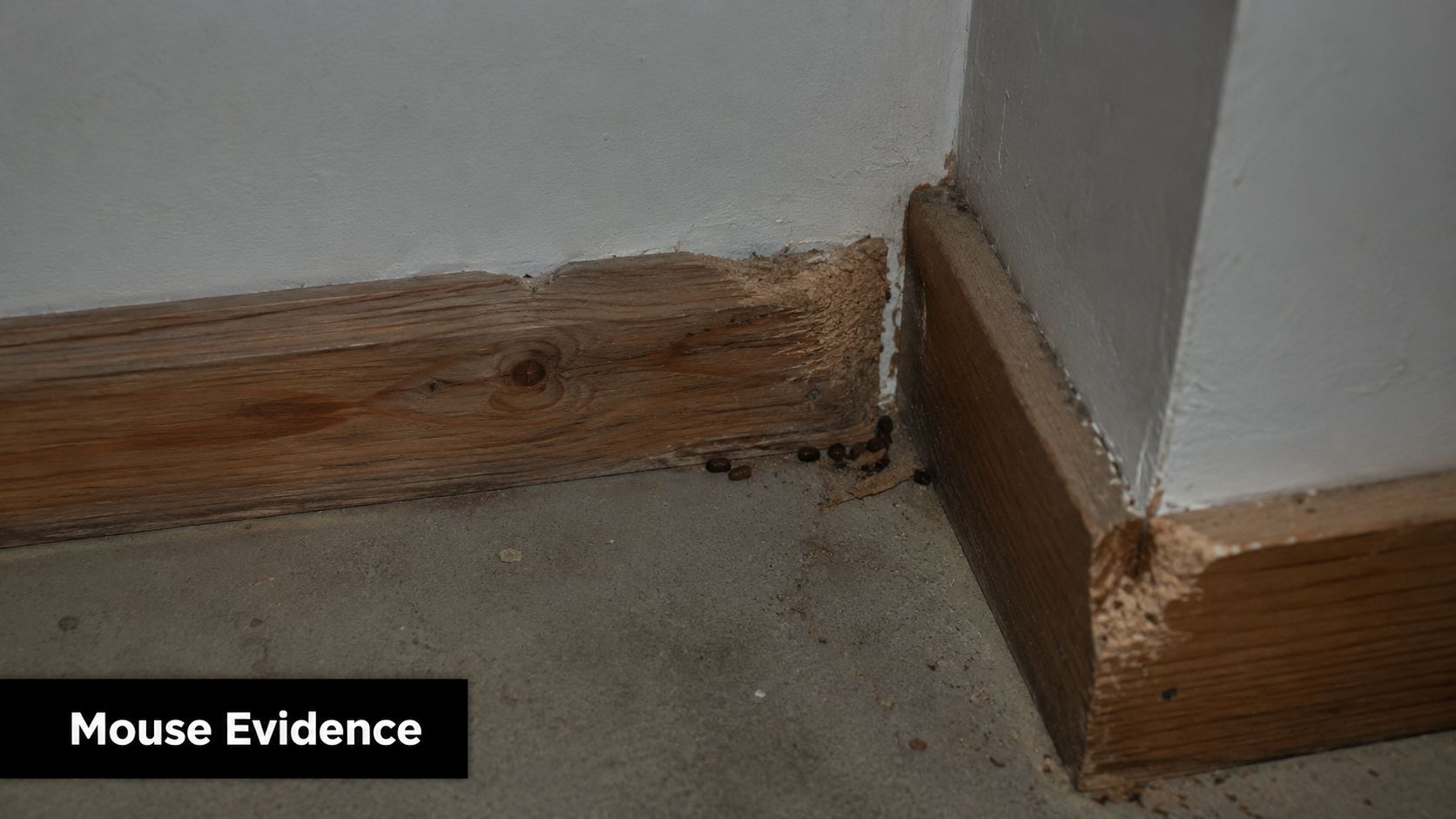
Look closely in lower cabinets, utility rooms, basements, garages, and behind appliances. Common evidence includes:
- Droppings near food storage, baseboards, or hidden corners
- Gnaw marks on trim, boxes, wiring paths, and stored goods
- Greasy rub marks along walls where mice repeatedly travel
- Shredded paper or insulation used as nesting material
- A stale, musky odor in enclosed areas with regular activity
Each sign tells you something different. Droppings show where mice travel or feed. Gnawing shows active wear on the structure or stored items. Nesting material points to a protected harborage area nearby, not just a passing mouse.
Why the health concern is real
This isn't only about nuisance wildlife. Rodents, including house mice, infest about 21 million U.S. homes each winter and are known to carry or transmit over 30 different diseases, according to this public health overview on mice in homes. That's one reason homeowners across age groups continue to view mice and rats as a serious health threat.
If you're trying to decide whether your signs are enough to justify action, compare what you're finding to these eight signs of rodent infestation. It helps sort out the difference between old evidence and current activity.
Small signs matter. A few droppings in more than one room usually tell us mice are traveling through the structure, not just visiting one spot.
Don't ignore the opening that made it possible
A mouse problem is often tied to a building defect. Cracks near the foundation, gaps where pipes enter, and settling around exterior seams all create easy access. If you've also noticed structural openings, this guidance on Bulls Eye Repair foundation crack advice is useful because those weak points don't just affect moisture. They can become pest entry routes too.
For homeowners in Crown Point and nearby Northwest Indiana communities, inspection is where confidence starts. Once you know what the signs mean, you can stop treating the symptom and start dealing with the source.
Smart DIY Mouse Control and Its Limitations
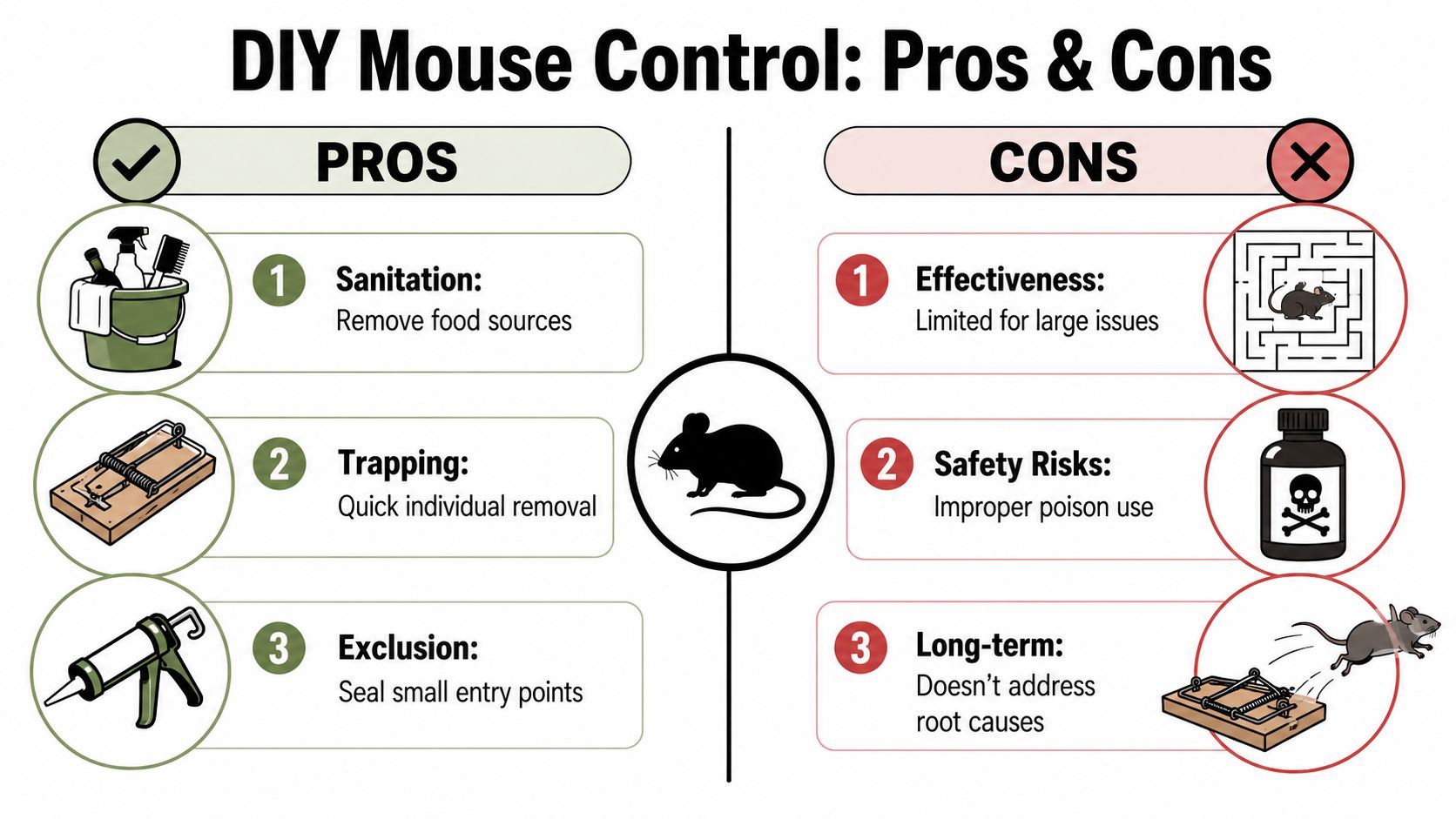
DIY work has a place. A homeowner can reduce pressure right away by cleaning up food sources, storing dry goods in hard containers, reducing clutter, and placing traps where activity is obvious. Those steps help. They just don't finish the job on their own.
What DIY gets right
Homeowners usually make the most progress when they focus on the basics first.
- Sanitation matters because crumbs, pet food, and unsealed pantry items keep mice comfortable.
- Traps work best when they're placed along walls and near evidence, not in open floor space.
- Clutter reduction helps because stacked boxes and stored paper give mice shelter close to food and warmth.
That's all useful. It lowers activity and helps reveal where mice are moving.
Where DIY usually fails
The biggest DIY mistake isn't the trap choice. It's temporary exclusion.
Many people stuff holes with steel wool or fill gaps with standard spray foam and assume the opening is permanently closed. It usually isn't. According to the UC IPM house mouse guidance, steel wool works as a temporary plug but rusts over time, and rodents can chew through standard spray foam. Durable materials such as copper mesh paired with sealant or sheet metal provide a far better long-term barrier.
That trade-off matters because trapping without durable sealing creates a cycle. You remove the mice that are present, but new mice use the same weak points later.
A quick comparison of common choices
| Method | Helps immediately | Long-term result |
|---|---|---|
| Better food storage and cleanup | Yes | Useful support step |
| Basic snap trapping | Yes | Limited if entry points stay open |
| Steel wool stuffing | Sometimes | Temporary only |
| Standard spray foam alone | Sometimes | Often chewed through |
| Durable metal-based exclusion | Yes | Supports lasting control |
Most failed mouse jobs don't fail because nobody set a trap. They fail because the house was never sealed with materials mice can't defeat.
DIY control also has a safety side. Baits and rodenticides need careful handling, especially around children and pets. Homeowners searching for an exterminator in Crown Point, IN are often at the point where they want a safer, cleaner, and more durable answer than trial and error.
That's the right instinct. Trapping catches mice. Exclusion keeps them from replacing the ones you caught.
The Green Advantage Professional Rodent Control Method
Professional mouse control works when it's built as a system. Inspection shows where mice are traveling. Trapping reduces the active population. Exclusion closes the routes they're using. Monitoring confirms whether the structure is staying protected.
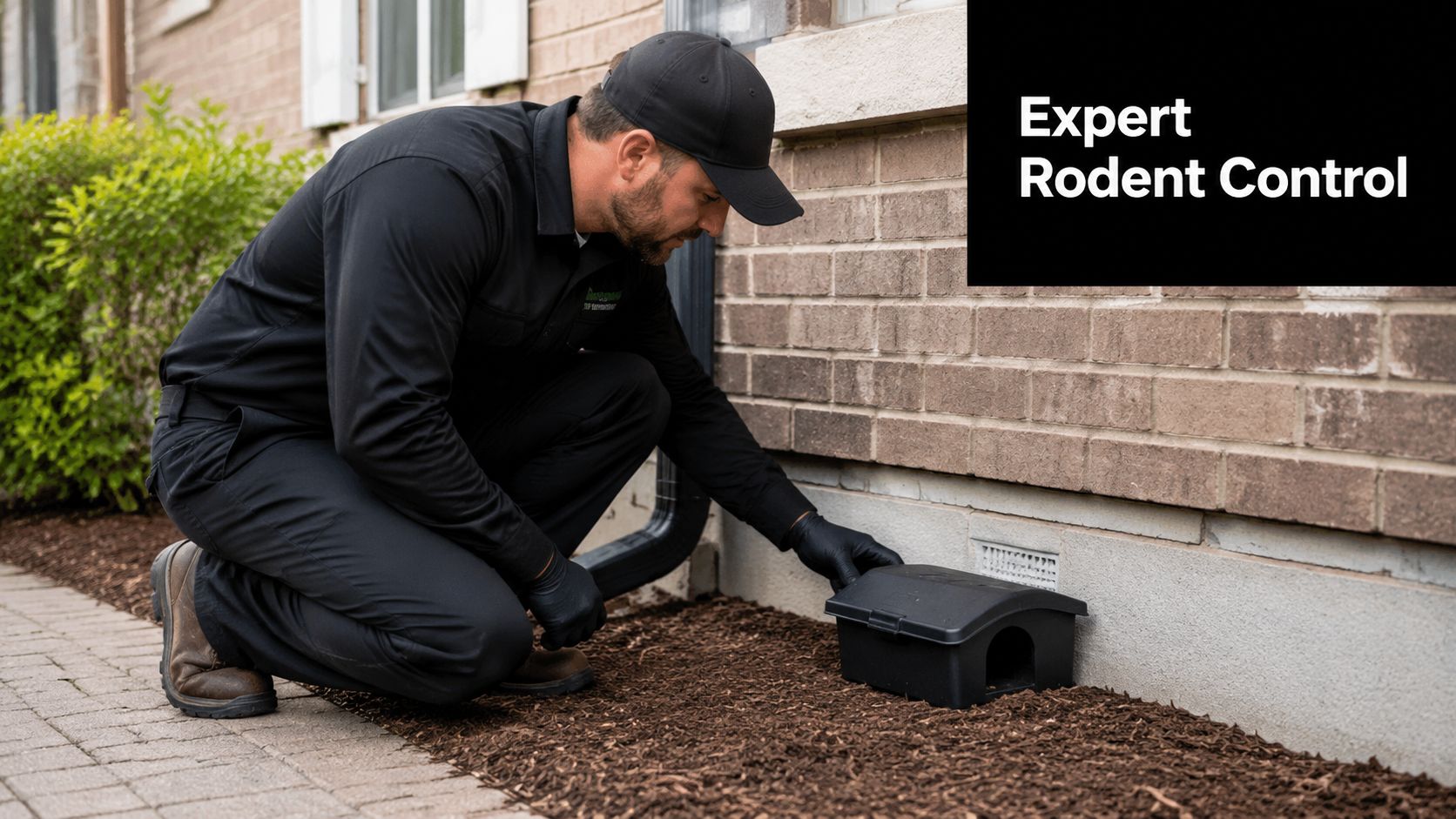
For homeowners looking for pest control in Crown Point, IN, that distinction matters. A technician isn't just setting a few traps. The work is identifying exactly why the infestation is active and correcting the conditions that allow it to continue.
Why professional trap work performs better
Placement changes results. Professional mouse control protocols show that traps placed orthogonal to walls increase capture rates by 70% because mice naturally travel along vertical surfaces, and pre-baiting for a few days can help overcome trap shyness, according to this trap placement and pre-baiting reference.
That's why professionals focus on evidence. Droppings, rub marks, gnawing, and protected travel edges tell us where devices belong. Random placement usually wastes time.
A complete service plan also pays attention to access points that affect more than rodents. The same gaps around pipe penetrations, sill plates, door thresholds, and utility lines can also let in insects. Tightening those vulnerabilities supports broader residential pest control, including seasonal pressure from ants, spiders, and wasps.
What a complete rodent service includes
A strong service visit usually includes several layers working together:
- Inspection of active zones inside and outside the structure
- Targeted population reduction with traps or other appropriate tools
- Durable sealing at identified gaps and penetrations
- Follow-up monitoring to confirm feeding and travel have stopped
- Advice on storage, sanitation, and harborage reduction
The Green Advantage provides rodent control and exclusion work in Crown Point and nearby Northwest Indiana communities using that integrated approach, which is why professional service tends to hold up better than one-off DIY fixes.
This short video gives a useful look at how structured rodent control works in practice.
Good pest control for mice isn't about putting more products in more places. It's about matching the method to the evidence and then closing the house correctly.
That same thinking applies in commercial pest control settings. Offices, restaurants, warehouses, and multi-unit properties all need targeted monitoring, clean documentation, and exclusion that won't break down after the first cold stretch.
When to Call an Exterminator in Crown Point
Some mouse problems are clearly beyond DIY. Others sit in that frustrating middle ground where homeowners aren't sure if they should keep trying or bring in help. A practical rule is simple. If the evidence keeps returning, the problem is still active.
Signs it's time to make the call
You should contact a professional if any of these are happening:
- You saw a mouse during the day, especially in a kitchen, laundry room, or living area
- Droppings are showing up in more than one room
- You've trapped mice but still hear activity
- You sealed holes once and the problem came back
- You want the entry points identified correctly before damage spreads
Those are common reasons people search for an exterminator near me or pest control near me in Crown Point. They aren't overreactions. They're signs that the infestation has moved past simple cleanup.
What the first professional visit should feel like
A useful inspection should be direct and specific. You should expect someone to identify likely runways, look for nesting conditions, inspect common entry points, and explain which findings are current versus old. You should also leave the conversation knowing whether the problem is isolated, building-wide, or tied to a structural weak point.
If you're weighing whether now is the right time, this guide on when to call pest control gives a helpful framework for making that decision before the problem grows.
What about cost
Cost hesitation is understandable, especially if you've already spent money on traps, bins, sealants, and repeated store-bought products. The average professional pest control service is around $175 per visit, with a typical range of $100 to $500 depending on infestation severity and the number of follow-up visits needed for full exclusion and monitoring, according to Angi's pest control cost overview for homeowners.
That doesn't make every job inexpensive, but it does put professional service in perspective. Repeated DIY purchases often add up quickly, especially when the main entry point was never solved. For many homeowners, paying for proper inspection and durable exclusion is the point where the process finally becomes efficient.
Protect Your Home and Health with The Green Advantage
You hear scratching for a few nights, set a few traps, stuff steel wool into a gap under the siding, and the house seems quiet again. Then winter hits, the steel wool rusts or gets pushed aside, and the noise comes back from a different wall.

That is the failure point in a lot of do-it-yourself mouse work. The first repair slows activity, but it does not hold up to moisture, temperature swings, settling, or repeated chewing. Good mouse control has to last through all of that.
At The Green Advantage, we treat mouse work as long-term home protection. The goal is not just to catch the mice you noticed this week. The goal is to close the openings they are using with materials and methods that stay in place, protect food storage and insulation, and reduce the chance of the same problem showing up again a month from now.
That matters for health as much as comfort. Mice contaminate stored food, leave droppings in hidden spaces, and move through wall voids, utility penetrations, and attic areas most homeowners never see.
Mouse activity also overlaps with other household pest problems. The same food storage habits and overlooked gaps that attract rodents can contribute to pantry activity indoors. If you have also been finding issues in cabinets or dry goods, this guide on managing common pantry pests is a useful companion read.
A lasting result usually comes down to one question. Was the home sealed with temporary filler, or was it closed up with durable exclusion work that fits the structure?
For homeowners and property managers looking for residential pest control, commercial pest control, or pest control in Crown Point, IN, the next step is straightforward. Get the structure inspected, find the true entry points, and fix them with materials that hold up.
If you're hearing scratching, seeing droppings, or tired of temporary fixes that don't hold, contact The Green Advantage to schedule a pest inspection or request a quote in Crown Point, IN and nearby Northwest Indiana service areas.