
After the first hard frost in Crown Point, a homeowner may find mouse droppings in the basement, hear scratching behind a wall, or notice rodents moving around the garage. In late spring, the warning may be an ant trail crossing the kitchen counter toward an unsealed pantry item. These problems often appear suddenly, but pests usually enter through small openings, follow moisture, or settle where food and shelter are easy to find.
That's why prevention beats reaction in Northwest Indiana. Integrated pest management starts with three practical steps, prevent pests from being attracted inside, keep them out, and use the safest effective control when necessary. CDC environmental-control guidance supports this prevention-first approach, including sealing food, removing moisture, closing entry points, and repairing screens.
The Green Advantage is a family-owned pest control company serving Crown Point, IN and surrounding Northwest Indiana communities. The team helps homeowners, landlords, and businesses build a year-round defense instead of waiting for an infestation to become disruptive. These eight pest prevention tips are ordered by practical impact, and each connects a specific homeowner action to the pest problem it helps prevent.
1. Seal Entry Points and Cracks Around Your Home's Foundation and Exterior
Pests can enter through gaps that are easy to overlook. Ants may follow a foundation crack into a kitchen, mice may squeeze around worn garage-door weatherstripping, and spiders may gather around window frames where screens or seals have failed. In older Crown Point homes, freeze-thaw movement, settling, and weather exposure can widen openings around foundations, siding, doors, and utility lines.
Walk the exterior with a flashlight and inspect the places where different materials meet. Pay close attention to foundation cracks, gaps beneath doors, torn screens, roof penetrations, vents, chimneys, HVAC lines, and openings around pipes, cables, and conduits. Recent building guidance identifies door gaps, damaged weather stripping, foundation cracks, expansion joints, torn screens, and utility penetrations as common routes for pest intrusion, especially when heavy rain pushes pests toward sheltered indoor spaces. PNNL's pest-intrusion guide explains why these locations deserve more attention than a general instruction to “keep the house clean.”
Practical rule: Seal the route, not just the pest you saw using it.
Use flexible silicone caulk where joints move or face changing Indiana weather. Acrylic caulk can crack sooner in exposed areas. Apply fresh weatherstripping to exterior doors and windows, and replace it when it no longer closes tightly. Expandable foam can help around larger utility openings, but it should be applied carefully and protected where rodents could chew it.
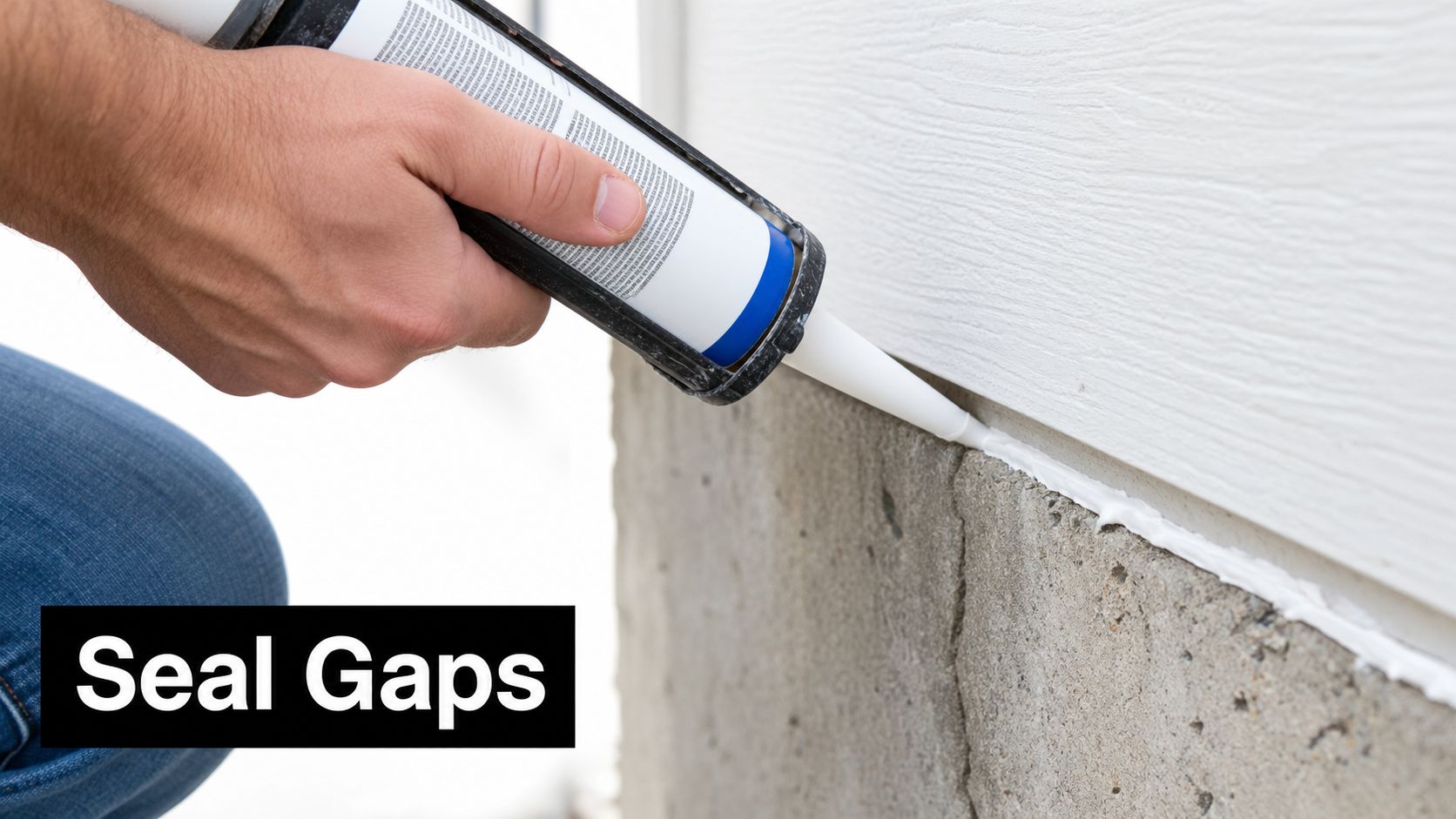
Inspect the exterior each season, particularly after winter damage or heavy rain. If you can't identify every likely entry route, professional pest exclusion service can reveal vulnerabilities that aren't obvious from inside the home.
A short demonstration can help you see how a small gap becomes a practical pest highway.
2. Maintain Proper Sanitation and Eliminate Food Sources Both Inside and Outside
In Crown Point, a warm spell after winter can bring ants indoors, while summer humidity helps flies and cockroaches persist around neglected food and waste. Sanitation removes the food trail that keeps those pests returning.
Store flour, cereal, grains, pet food, and other dry goods in airtight containers instead of folded bags. Rinse dishes after meals, wipe counters, and clean beneath and behind appliances where grease and crumbs collect. Use sealed trash cans indoors and outdoors, especially near garages, decks, and waste areas.
A practical sanitation routine includes:
- Pet feeding: Serve pets at set times and remove uneaten food rather than leaving bowls out overnight.
- Garbage control: Use tightly covered cans and move open bags away from the home promptly.
- Pantry storage: Transfer dry goods into pest-resistant containers that close fully.
- Outdoor cleanup: Remove fallen fruit, nuts, birdseed, and plant debris before rodents and insects forage near the structure.
- Compost placement: Keep compost away from the home and use a container with a secure lid.
Cleaning helps, but it cannot remove an established nest, hidden harborage, or entry route. Ant, rodent, and cockroach problems may still need inspection and targeted treatment. Food control works best alongside waste management, moisture reduction, and exclusion, because pests often benefit from several favorable conditions at once.
A useful check is to inspect the areas people skip: the bottom of the pantry, the floor beneath a pet-feeding station, and the garage wall beside the trash can. Small spills in those locations can remain unnoticed long enough to support recurring activity.
In older Crown Point homes, pantry shelving may sit against exterior walls where gaps behind baseboards give ants a direct route to stored goods. Seal those gaps, then transfer dry goods into airtight containers. This pairs food control with the exclusion work needed around aging construction.

3. Reduce Moisture and Standing Water to Eliminate Pest Breeding Grounds
A damp basement, clogged gutter, leaking faucet, or water-filled planter can support very different pest problems at the same property. Mosquitoes use standing water for breeding. Cockroaches and rodents seek damp shelter. Termites and carpenter ants become more concerning when wood and soil remain wet near the structure.
Start indoors. Fix leaking pipes, faucets, appliances, and HVAC drain lines quickly. Check basement corners, crawlspaces, utility rooms, and areas beneath sinks for condensation or recurring dampness. A dehumidifier can help in persistently damp areas, while better ventilation helps enclosed spaces dry after rain or seasonal humidity.
Outside, inspect the entire drainage path after a storm. Clean gutters and confirm that downspouts discharge away from the foundation rather than creating a wet pocket beside the wall. Empty birdbaths, plant saucers, buckets, toys, and pet bowls regularly. Cover rain barrels and other water-storage containers with tight-fitting lids.
The EPA advises homeowners to fix leaking plumbing, keep gutters clear, and avoid standing water because moisture supplies water for rats, carpenter ants, mosquitoes, and other pests. It also identifies condensation as a meaningful water source for pests in homes. EPA's pest-control guidance makes moisture control a basic prevention measure, not an optional property upgrade.
Mosquito prevention needs a repeating routine rather than a one-time cleanup. The CDC recommends emptying, scrubbing, turning over, covering, or discarding water-holding items once a week, including tires, buckets, planters, toys, pools, birdbaths, and trash containers. CDC mosquito-control guidance connects that schedule to the fact that mosquitoes lay eggs in or near water.
If mosquitoes remain active after containers are emptied, inspect gutters, drainage areas, tarps, and low spots in the yard. Reducing standing water around your property can lower breeding pressure, while professional mosquito control can address activity that continues across neighboring properties.
4. Trim Vegetation and Maintain Proper Landscaping to Eliminate Pest Harborage Areas
The landscaping closest to your house can either support prevention or give pests a protected route to the structure. Dense shrubs hide rodents. Tree branches connect roofs to the ground. Tall grass and leaf litter provide cover for insects, ticks, and other outdoor pests. Vines can create a direct path to upper-story openings.
Keep shrubs and bushes open enough to inspect the foundation. Remove dead branches, rotting wood, leaf buildup, and dense groundcover that stays damp after rain. Prune branches that touch siding or the roof, and remove climbing vines from walls and trim around windows and doors so you can see damaged screens or gaps.
A tidy yard doesn't need to be bare. The useful distinction is between planned landscaping and concealed harborage. Flower beds, shade trees, and mulch can remain part of a healthy property when they don't block drainage, touch the building, or hide foundation problems.
Look from the pest's perspective: A branch touching the roof is a bridge, and an overgrown shrub beside the foundation is cover.
Keep firewood raised off the ground and away from the structure. Inspect it before bringing pieces indoors, since stacked wood can shelter ants, spiders, rodents, and other insects. Clear vegetation around HVAC equipment, utility areas, sheds, and outdoor storage so technicians and homeowners can inspect those spaces.
Property upkeep also affects spider control and wasp removal. Outdoor insects gather where vegetation, moisture, and prey are plentiful. Reducing those conditions near doors and windows makes it less likely that flying insects will concentrate at entry points, although it won't eliminate every pest from a yard.
For landlords and commercial property managers, maintaining outdoor grounds should be part of the inspection schedule. A contractor may trim shrubs while leaving debris against a wall, or irrigation may keep a narrow strip of soil wet beside a building. A coordinated plan that combines grounds upkeep, drainage checks, exclusion, and commercial pest control catches those overlooked conditions before they become tenant complaints or service calls.
5. Install and Maintain Proper Drainage Systems to Protect Your Foundation and Crawlspace
In Crown Point, spring thaw and heavy summer storms can leave soil saturated beside a home. That moisture supports termites, carpenter ants, cockroaches, and rodents while also putting pressure on foundation walls and crawlspace materials.
Start at the roofline. Gutters should move water into clear downspouts, and downspouts should discharge away from the foundation. Check the grade as well. Soil should fall away from the building, while mulch, hardscaping, landscaping borders, and additions should not create a basin against the wall.
After a major storm, walk the perimeter and watch where water collects. A puddle beside the foundation points to a drainage problem, not just a pest problem. Repeated dampness in a crawlspace may call for a sump pump, vapor barrier, improved ventilation, or an interior or exterior perimeter drain. Each option has a different cost and maintenance burden, so the remedy should match the source and severity of the moisture.
Drainage protects the structure while removing conditions that attract pests.
A pesticide treatment can reduce visible insect activity, but it will not stop pests from returning if water continues entering the crawlspace or pooling beside the foundation. Keep gutters clear, repair leaks, and correct grading before relying on chemical control.
Homeowners dealing with persistent crawlspace dampness can compare crawl space restoration costs Phoenix before committing to a full encapsulation project. An inspection can also identify damaged wood, poor ventilation, or entry points that need repair.
Test the system again after heavy rain and seasonal thaw. Commercial owners should assess parking areas, loading zones, and planted sections as well, because those surfaces can redirect runoff toward walls. Guidance on drainage installation for retail centers offers useful planning considerations for larger properties. Address repeated moisture early, before foundation damage and pest activity become a larger service problem.
6. Use Exterior Lighting Strategically to Reduce Insect Attraction and Pest Activity
In Crown Point, a bright porch light can turn a doorway into a nighttime insect gathering point during warm, humid summer evenings. Flying insects collect around the fixture, spiders follow their food source, and activity near the entrance increases the chance that pests will find a gap, open door, or damaged screen.
You do not need to shut off every exterior light. Use yellow or amber bulbs, which generally attract fewer mosquitoes than ordinary white lighting. The EPA's mosquito-control information also identifies standing-water removal as a core mosquito-control measure, so lighting changes work best alongside drainage and water management.
Move necessary fixtures away from doors and windows where the property allows. A post light or fixture farther along a walkway can illuminate the route without concentrating insects beside the entrance. Motion-activated lighting supplies security when someone approaches and avoids constant illumination during periods when nobody is outside.
Choose downward-facing, shielded fixtures to keep light from spreading across the yard. Amber LEDs can provide useful visibility with less insect attraction than blue-white bulbs. Keep screens closed, repair tears, and shut doors promptly. Lighting reduces the pull toward an entry point, while intact screens and sealed doors stop insects from getting inside.
This approach can also reduce spider activity. Fewer flying insects near siding and eaves means less prey for web-building spiders. Existing webs and nests will remain, however. Continued spider buildup around windows, soffits, or service entrances may point to sheltered harborage, entry gaps, or a nearby food source that needs inspection.
For restaurants, offices, warehouses, and apartment properties, fixture placement must also support safety, deliveries, and customer access. Before repositioning fixtures on a commercial property, review how to vet lighting contractors so safety, delivery access, and insect attraction are addressed in the same plan. A commercial technician can then pair lighting adjustments with screens, sanitation, vegetation control, and preventive pest treatments.
7. Regularly Inspect and Treat Your Home's Exterior for Early Pest Detection
A quarterly exterior walk can catch signs that aren't obvious from the living room. Check the foundation, roofline, siding, fascia, soffits, doors, windows, garage, attic access, crawlspace, and nearby landscaping. You're looking for evidence, not just live insects.
Rodent droppings, tracks, gnaw marks, grease smears, and nesting material point to movement or shelter. Mud tubes on foundation walls or piers deserve prompt attention because they can indicate termite activity. Sawdust-like material, damaged wood, and carpenter ants around damp structural elements may signal a wood-related problem. Wasp nests in eaves and protected corners are easier and safer to address while they're small.
Use photos and notes to track changes. A single spider web may be incidental, while repeated webs at the same window, new droppings in a garage, or fresh damage near a roofline creates a pattern worth investigating. Homebuyers and property managers can use this documentation when arranging a professional pest inspection or planning maintenance before a sale or lease turnover.
Early evidence changes the response. A small entry gap is an exclusion task. Repeated droppings and nesting material may require rodent control plus exclusion and sanitation.
Knowledge affects prevention. Research published in the Journal of Integrated Pest Management found that roughly half of surveyed lawn-and-garden residents reported using positive IPM practices most of the time or always, while about one in four to five respondents reported almost no knowledge of each practice. The same study associated greater IPM knowledge with greater adoption, which supports teaching homeowners what to look for and what action should follow.
DIY inspection has limits. You may see a mud tube without locating the moisture source, or find droppings without knowing whether rodents are still active. The Green Advantage can inspect the property, identify vulnerabilities, and recommend a response based on the pest evidence rather than applying a generic treatment.
8. Implement a Year-Round Prevention Schedule Targeting Seasonal Pest Problems in Northwest Indiana
Pest pressure changes with the seasons in Crown Point. Spring thaw and rain expose drainage and foundation weaknesses, while termite swarmers and carpenter ants may become more noticeable. Summer brings mosquitoes, wasps, ants, and outdoor activity. Fall cooling can push mice and other pests toward warm buildings, and winter makes basements, attics, and crawlspaces important places to monitor.
A useful seasonal rhythm looks like this:
- Spring inspection: Check foundation cracks, winter-damaged screens, gutters, downspouts, and wood near the soil. Watch for termite swarmers, carpenter ants, and moisture-related activity.
- Summer maintenance: Remove standing water, keep screens repaired, manage outdoor lighting, trim vegetation, and monitor mosquito, wasp, ant, and spider activity.
- Fall preparation: Seal entry points, inspect garages and crawlspaces, move firewood away from the structure, clear debris, and address rodent routes before colder weather.
- Winter monitoring: Check basements, attics, utility rooms, and crawlspaces for droppings, gnaw marks, overwintering insects, moisture, and new gaps.
A seasonal schedule works because it matches the action to the likely risk. It also creates a property history. If mosquitoes appear after every rain, or rodents first show up around the same garage corner each fall, a technician can build a more targeted plan instead of starting over each year.
A 2020 survey of 1,250 Norwegian grain farmers found an overall IPM adoption index of 68 out of 100, with 75% of respondents scoring between 60 and 80. Prevention and suppression principles had the highest mean adoption rate at 83%, while non-chemical methods and reduced pesticide use lagged. The study reinforces a practical point for homes and businesses: monitoring, exclusion, prevention, and resistance management work better as a system than treatment alone.
8-Point Pest Prevention Comparison
| Prevention Measure | Implementation Complexity | Resource Requirements | Expected Outcomes | Ideal Use Cases | Key Advantages |
|---|---|---|---|---|---|
| Seal entry points and cracks around foundation and exterior | Moderate, requires thorough inspection and sealing; some gaps may need pros | Low–Moderate, caulk, foam, weatherstripping, time; occasional contractor work | Fewer new entries; reduced pest access and energy loss; does not remove existing infestations | Homes with visible gaps, older foundations, preemptive pest-proofing | Durable physical barrier, chemical-free, cost-effective long-term |
| Maintain proper sanitation and eliminate food sources | Low, habit and routine changes, consistent effort | Low, airtight containers, sealed trash cans, cleaning supplies | Reduced pest attraction and lower populations over time | Kitchens, households with pets, properties with outdoor food sources | Chemical-free, improves hygiene, very cost-effective |
| Reduce moisture and standing water | Moderate–High, plumbing, grading, and drainage work may be required | Moderate, repairs, dehumidifiers, gutter maintenance; may need professionals | Fewer mosquitoes and moisture-loving pests; less mold and structural risk | Properties with damp basements, standing water, or mosquito problems | Prevents breeding grounds and property damage; complements other controls |
| Trim vegetation and maintain landscaping | Low–Moderate, regular yard maintenance; some tree work may need pros | Low–Moderate, tools, labor, possible arborist services | Reduced harborage and pest runways; lower rodent and insect pressure | Overgrown yards, shrubs touching structure, wood piles near home | Enhances curb appeal, reduces reliance on chemicals, long-term prevention |
| Install and maintain proper drainage systems | High, may require contractors and design work | High, installation costs, periodic maintenance, possible professional oversight | Long-term moisture control, foundation protection, fewer moisture pests | Sites with poor grading, frequent pooling, high water table or crawlspace issues | Protects structure, provides continuous passive pest prevention |
| Use exterior lighting strategically | Low, change bulbs, reposition fixtures, add timers | Low, insect-friendly bulbs, timers, minor fixture adjustments | Immediate reduction in flying insects near entry points | Porches, decks, outdoor seating areas, homes wanting safer night use | Quick, low-cost, non-chemical, preserves outdoor usability |
| Regularly inspect and treat home exterior for early detection | Low–Moderate, routine inspections; professional checks recommended | Low for DIY, Moderate for professional inspections and targeted treatments | Early detection and targeted interventions; prevents costly infestations | All homeowners, especially those in high-risk or previously infested homes | Catches problems early, informs targeted treatments, peace of mind |
| Implement a year-round prevention schedule targeting seasonal pests | Moderate, requires planning and seasonal coordination | Moderate, time commitment, possible seasonal service costs | Reduced seasonal spikes and systematic year-round protection | Regions with distinct seasonal pest cycles (e.g., Northwest Indiana) | Proactive, cost-effective timing, coordinated multi-strategy defense |
Partner with The Green Advantage for Year-Round Protection
The eight steps above work best together. Sealing a foundation gap matters more when sanitation removes food nearby. Drainage improvements have greater value when landscaping no longer directs water toward the wall. Lighting changes help most when screens, doors, and windows are intact. A seasonal schedule keeps those defenses from being forgotten after the first successful cleanup.
Even a careful homeowner can miss hidden routes. A technician may notice a gap behind a utility line, damp soil below siding, rodent travel along a garage edge, or a wasp nest tucked into an eave. Professional pest control isn't a replacement for home maintenance. It adds trained inspection, pest identification, targeted treatment, and follow-up to the work you're already doing.
When you contact The Green Advantage in Crown Point, IN, the process is straightforward. You speak directly with knowledgeable office staff who can answer questions and arrange scheduling. An experienced technician examines the property, looks for current activity and conditions that could support future problems, and explains what needs attention. The resulting plan can address a specific issue, such as ant control, termite control, mosquito control, rodent exclusion, spider control, or wasp removal, or it can support a broader residential pest control program.
The same approach applies to businesses, rental properties, multifamily buildings, and commercial facilities. Commercial pest control requires attention to waste areas, deliveries, landscaping, tenant or employee activity, storage, entrances, and inspection documentation. The Green Advantage works with property owners and managers to coordinate service around the site's actual vulnerabilities rather than treating every building the same way.
The company serves Crown Point and the broader Northwest Indiana community as a family-owned provider with decades of hands-on experience. Its licensed and certified team focuses on effective, environmentally mindful pest management, including home pest control, commercial service plans, pest inspections, mosquito reduction programs, and guidance informed by nature-based practices. That local perspective matters because seasonal pest pressure, foundation conditions, drainage, landscaping, and building age all affect what prevention should look like.
You don't need to wait for a serious infestation to ask for help. Schedule an inspection when you find recurring droppings, mud tubes, unexplained insect activity, damaged screens, moisture near the foundation, or pests returning after DIY treatment. A professional plan can also be useful when you're buying a home, managing a rental, preparing a commercial property, or trying to enjoy your yard without constant mosquito and wasp activity.
For homeowners searching for pest control near me, pest control in Crown Point, IN, an exterminator near me, or an exterminator in Crown Point, IN, the next step is a conversation about the property, the pest evidence, and the prevention work already completed. Contact The Green Advantage before the next seasonal shift gives pests another opportunity to enter.
The Green Advantage provides residential pest control, commercial pest control, pest inspections, mosquito reduction programs, and targeted support for pests such as ants, termites, rodents, spiders, and wasps in Crown Point, IN and surrounding Northwest Indiana communities. Visit The Green Advantage to schedule an inspection, request a quote, and start building a practical year-round pest prevention plan.