
A warm evening in Crown Point can change quickly. You step onto the patio, start dinner on the grill, and within minutes mosquitoes gather around your ankles and arms. Store-bought sprays may provide brief relief, but they rarely address the containers, gutters, low spots, and stormwater pockets producing the next wave.
A professional mosquito control program treats the problem as a repeating cycle. For homeowners searching for pest control near me, pest control in Crown Point, IN, or an exterminator near me, The Green Advantage offers a practical, inspection-first approach that combines property assessment, habitat management, monitoring, and targeted treatment for outdoor spaces in Crown Point and nearby Northwest Indiana communities.
Why Crown Point Backyards Need a Mosquito Control Program
Mosquitoes don't appear at random. A shaded yard with dense landscaping, a birdbath, clogged gutter, children's toys, or a low area that holds rain can provide everything mosquitoes need to reproduce. Clemson guidance explains that water standing for five days or more can become a mosquito-breeding site, while mosquito larvae commonly remain in water for about 4 to 14 days, depending on temperature, according to the American Mosquito Control Association's mosquito life-cycle guidance.
That timing makes a typical Crown Point backyard easy to overlook. A container may look harmless after a light rain, yet warm weather can let larvae develop before the next weekend cleanup. Stormwater features and neighboring properties can add pressure even when your own lawn looks tidy.
Practical rule: If a container can hold water, treat it as a possible breeding site until it has been emptied, covered, modified, or professionally addressed.
A homeowner might spray the porch before a family gathering and enjoy temporary comfort, only to find mosquitoes returning soon afterward. The spray may have affected flying adults in that immediate area, but it didn't remove the water source supporting future adults. A structured program looks beyond the visible swarm and asks what is keeping mosquito activity going.
The backyard cycle
Integrated mosquito management combines surveillance, source reduction, larval control, adult control, resistance testing, public education, and evaluation, rather than treating spraying as the entire solution. CDC integrated mosquito management guidance explains why these methods work together, source reduction lowers breeding habitat, while monitoring helps determine whether additional treatment is appropriate.
For a Crown Point homeowner, that can mean checking the areas used most often, identifying water that can't be removed easily, and timing treatments around actual mosquito activity. The purpose isn't to make every part of a property sterile. It's to make patios, play areas, entrances, and other high-use spaces more comfortable while addressing the conditions that create pressure.
What a Mosquito Control Program Includes
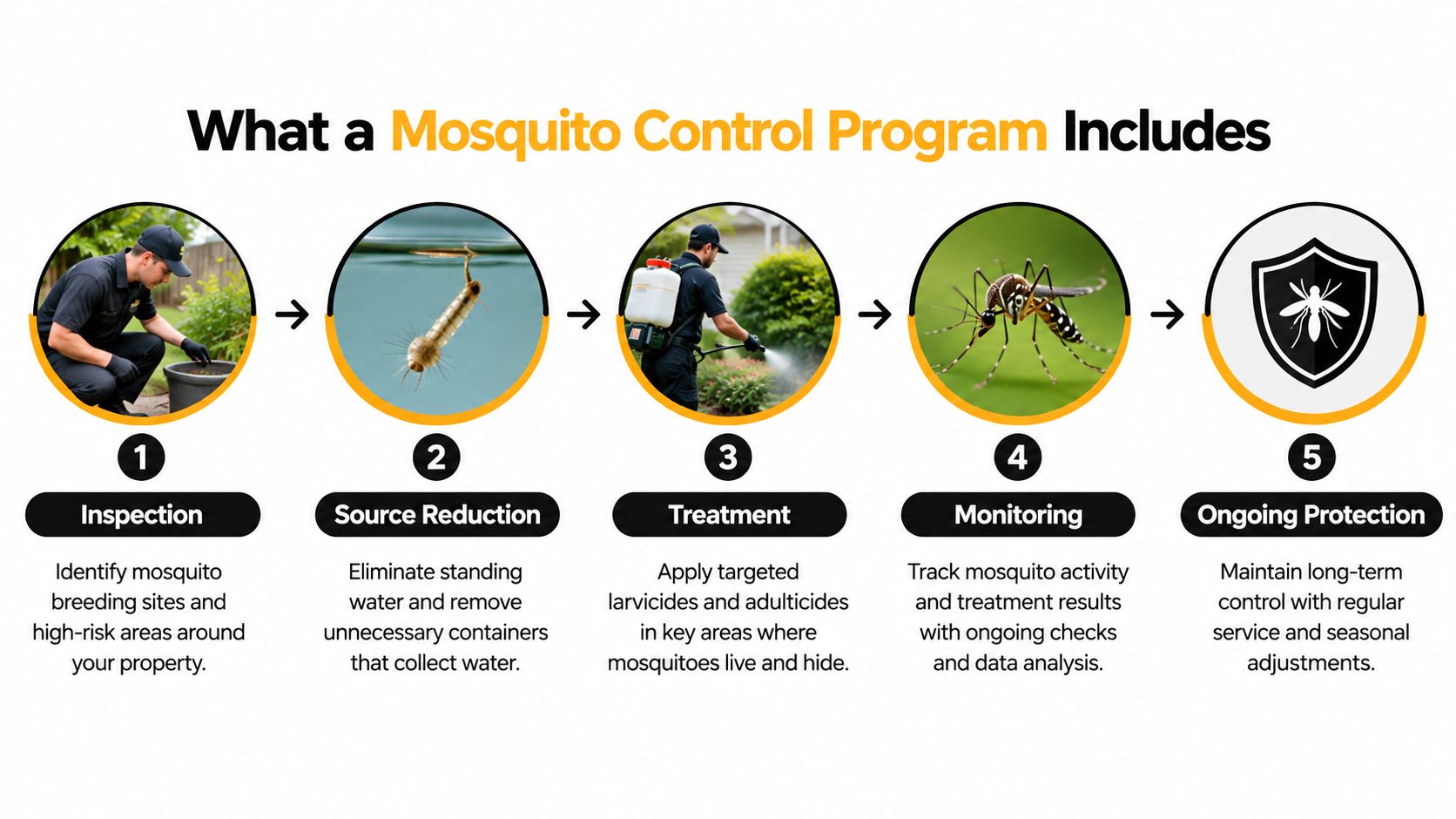
A mosquito control program is a planned service, not an occasional spray applied without an inspection. Each part has a specific job, and the parts support one another.
Start with a property inspection
The technician examines outdoor areas where mosquitoes rest, feed, and reproduce. That includes shaded foliage, ornamental plantings, gutters, drains, birdbaths, buckets, toys, low yard areas, and places where runoff collects. The inspection also considers how people use the property, because the patio, pool area, doorway, and play space may need different attention from an unused corner.
Reduce breeding habitat
The next step is to remove or change water-holding conditions. Homeowners may be able to empty containers, refresh birdbaths, turn items upside down, clear debris, or improve drainage. A technician can identify less obvious sources and explain which areas need recurring attention.
Source reduction matters because it addresses mosquitoes before they become flying adults. It can also reduce the amount of later treatment needed, although inaccessible water may still require targeted larval control.
Treat suitable larval sites
Some breeding locations can't be drained or removed easily. Drains, hard-to-reach containers, and certain water features may need a larvicide selected for that purpose. The treatment is directed at developing mosquitoes in water instead of broadly treating every outdoor surface.
Apply targeted adult control when justified
Adult treatment may be appropriate when monitoring shows meaningful mosquito activity in an area people use. The technician considers location, timing, weather, vegetation, and the treatment target. A fixed calendar alone doesn't tell the full story.
Follow up and adjust
Mosquito pressure changes as rain, temperature, landscaping, and nearby water conditions change. Follow-up visits help determine whether the plan is working and whether the service needs adjustment. A seasonal plan can maintain protection during active periods, while a one-time service may suit a specific outdoor event.
This same inspection-based thinking supports other services, including residential pest control, commercial pest control, ant control, wasp removal, rodent control, spider control, and termite control. The treatment changes, but accurate diagnosis remains the starting point.
How Inspection and Monitoring Guide Treatment Decisions
Blanket spraying seems simple, but it can miss the actual source of the problem. A technician who starts with inspection can distinguish between a property producing mosquitoes and one receiving them from surrounding habitats. That difference affects where effort should go.
A monitoring process may focus on high-use outdoor areas, shaded foliage, standing water, drains, gutters, and low sections of the yard. It also considers species and activity patterns. Daytime-biting Aedes aegypti, for example, creates different concerns from mosquitoes that are most active around dusk. Programs that identify what is present can choose a more suitable response.
Data turns treatment into a decision
Surveillance isn't paperwork added after the work. It guides the choice between removing water, treating larvae, or addressing adult mosquitoes. CDC information on mosquito control programs reports that nearly all vector-control programs rated as needing improvement lack pesticide resistance testing, and more than half also lack routine surveillance or species identification, as described in the CDC overview of mosquito control programs.
That matters because an adulticide selected without local information may miss the target population or contribute to resistance. Monitoring also helps prevent unnecessary applications when mosquito activity doesn't justify them.
For homeowners comparing an exterminator in Crown Point, IN with a do-it-yourself product, the difference is the feedback loop. The technician observes conditions, applies an appropriate response, and checks whether the response changed activity. You can learn more about this broader approach through pest control monitoring services.
Thresholds support measured action
Local programs may use action thresholds rather than treating whenever someone reports a bite. Maryland's mosquito program, for example, uses a threshold of 10 female mosquitoes per trap night for ground spraying and 100 female mosquitoes for aerial spraying, along with separate landing-rate thresholds, as detailed by the Maryland Department of Agriculture mosquito control program.
Those figures belong to Maryland's program, not a Crown Point rule. They illustrate the principle, however. Good mosquito management connects treatment decisions to observed activity, site conditions, and the people using the property.
Larval Source Reduction and Adult Treatments Explained
The two approaches solve different parts of the mosquito problem. Larval source reduction aims to prevent mosquitoes from maturing, while adult treatment addresses flying mosquitoes already present in outdoor areas.
Larval source reduction
Source reduction is often the strongest long-term option for container-breeding mosquitoes because it removes the place where larvae develop. A homeowner may empty a bucket, clear a blocked gutter, refresh a birdbath, remove discarded containers, or correct a drainage issue. The work can be repetitive, but it reduces the supply of future adults.
A review summarized in the American Mosquito Control Association guidelines describes source reduction as the most effective long-term measure for container-breeding mosquitoes. The same review notes that habitat reduction can lower larval indicators without always producing an immediate change in adult mosquito measures when untreated habitats remain nearby.
That is why programs may add larviciding. When water can't be eliminated, a targeted larvicide can address developing mosquitoes in that site and is more specific than treating broad areas for adult insects.
Adult treatments
Adult treatments can provide faster relief in the outdoor areas where people spend time. A targeted application may focus on foliage and resting locations, with timing based on mosquito activity and site conditions. It shouldn't replace habitat work, because adult control doesn't remove the water that creates the next generation.
Resistance testing also matters. CDC guidance recommends using surveillance and resistance information when selecting adulticides, since repeated treatment without local data can fail to control the intended mosquitoes or encourage resistance.
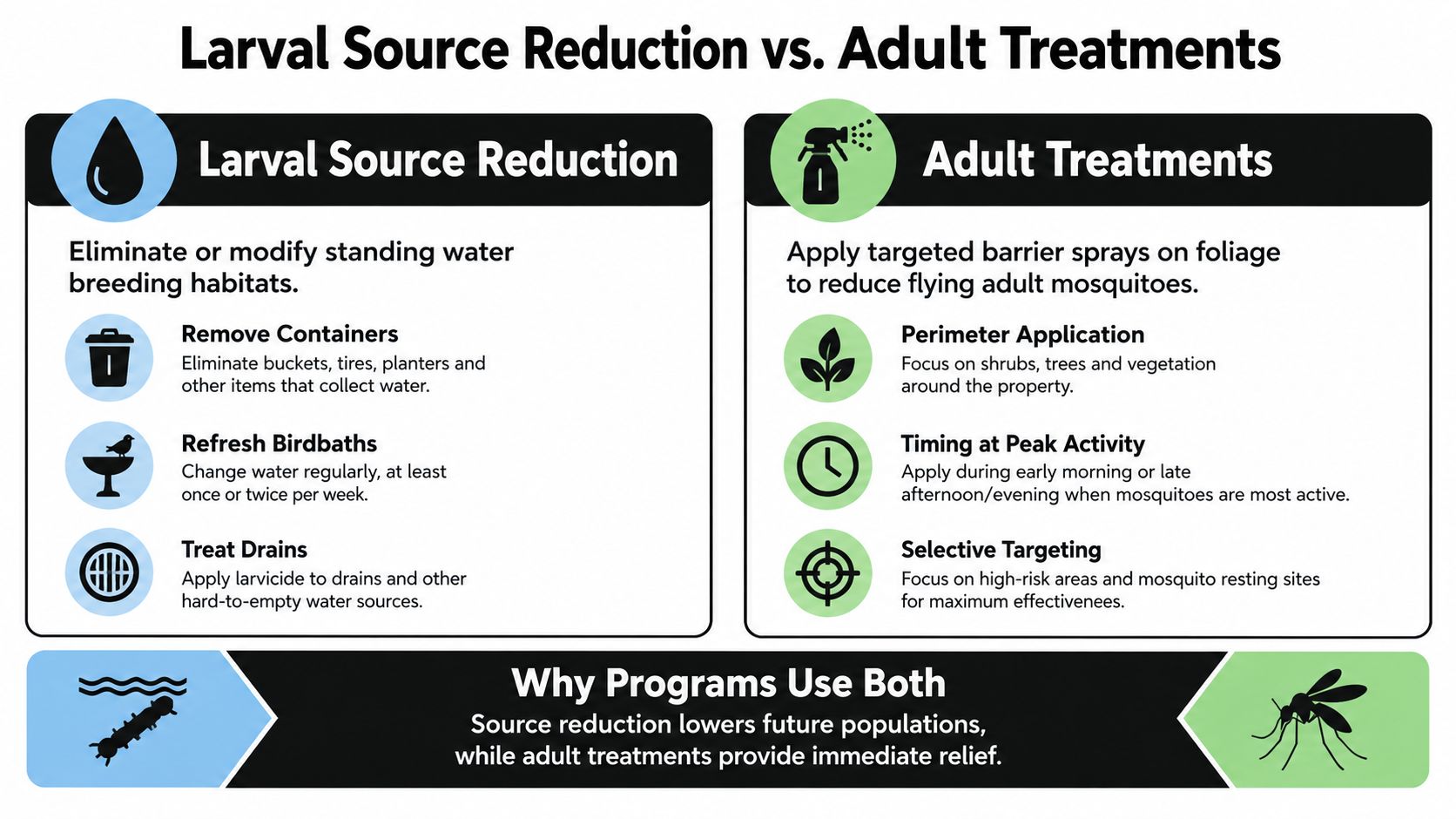
A balanced program uses each tool for the job it handles best. Source reduction lowers future pressure, larval treatment manages water that remains, and adult treatment can improve comfort when monitoring shows it is warranted. The mosquito breeding and mosquito control guide provides additional homeowner context.
Safety, Environmental Considerations, and Local Seasonality
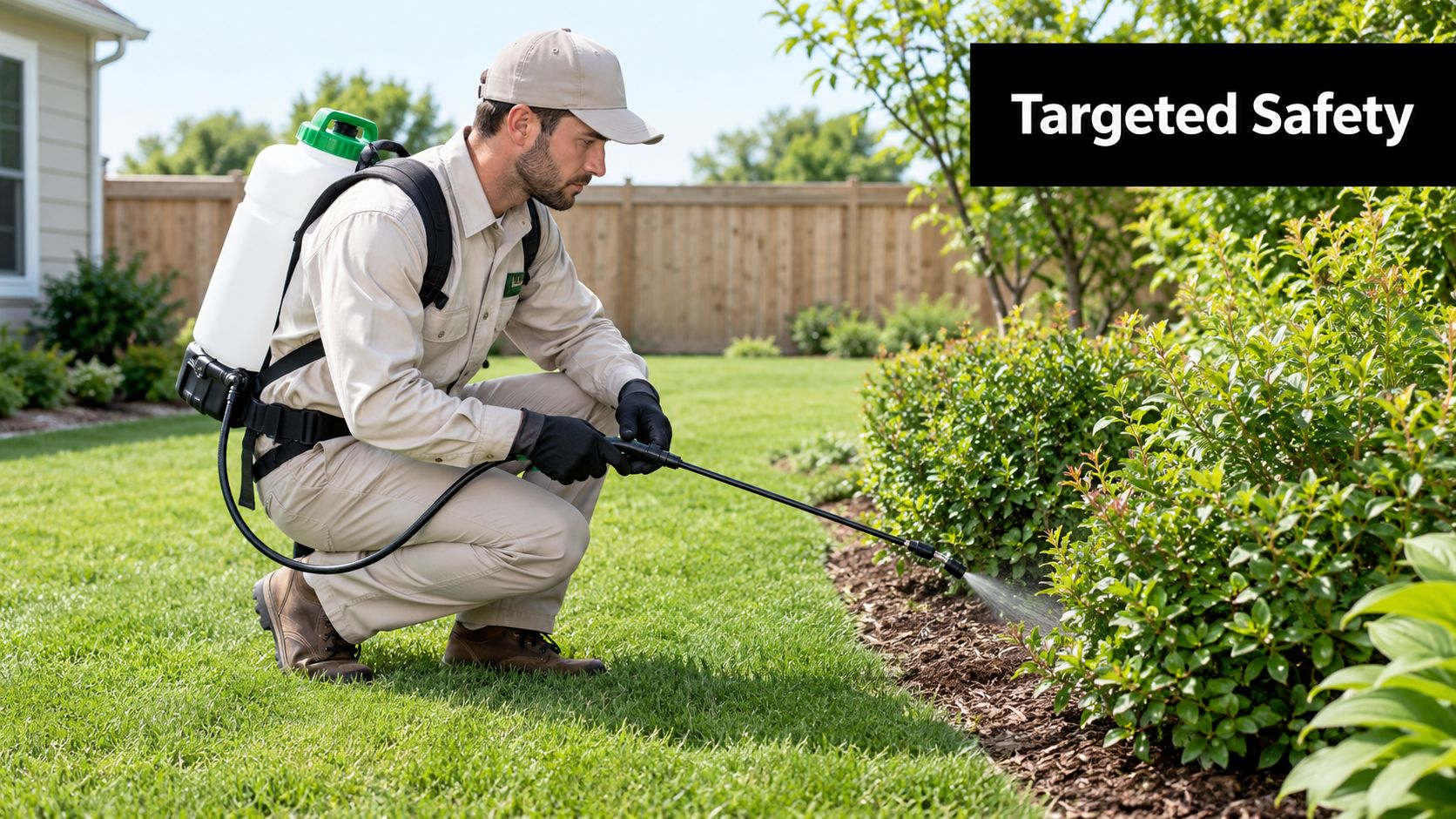
Homeowners often ask whether mosquito treatment can protect an outdoor space without creating unnecessary exposure for people, pets, plants, and beneficial insects. The answer depends on how the service is designed and performed. A responsible program uses targeted applications, follows product directions, considers weather, and limits treatment to appropriate areas.
Technicians also need to account for the property itself. Dense shrubs can provide mosquito resting sites, while open areas may have less persistent pressure. A stormwater feature, low drainage area, or shaded side yard can require a different response from a sunny lawn.
Seasonality changes the plan
Mosquito activity in Northwest Indiana shifts with temperature, rainfall, vegetation, and water conditions. Warm, wet periods can create more breeding opportunities, while changing temperatures alter how quickly larvae develop. A program that responds to these conditions is more practical than assuming every visit should look exactly the same.
That seasonal view also helps Crown Point homeowners plan service around how they use their property. A yard hosting regular outdoor meals may need attention focused on seating areas and pathways. A commercial facility may need a plan that considers employees, visitors, entrances, manicured grounds, and drainage features.
Thoughtful treatment protects more than comfort
Environmental responsibility doesn't mean ignoring mosquito pressure. It means using the least broad approach that can address the observed problem, removing habitats where possible, and avoiding treatment decisions based only on frustration. Public education is part of that process because a homeowner who empties water-holding containers helps reduce pressure beyond the treated area.
The same mindset applies to eco-friendly pest control and preventative pest treatments more broadly. Whether the concern is mosquitoes, ants, rodents, spiders, or wasps, a site-specific plan is more useful than applying products without understanding how pests are entering, feeding, or reproducing.
Expected Results and Why Professional Mosquito Control Works
A well-run mosquito control program should make treated outdoor areas more usable. Homeowners may notice fewer mosquitoes around patios, entrances, play spaces, and landscaping where people spend time. The purpose is practical relief, not a promise that every mosquito will disappear from the wider neighborhood.
Results develop through repeated attention because mosquito pressure can return from nearby properties, new rainwater, stormwater systems, and untreated habitats. A program that combines monitoring with habitat management and carefully selected treatment can respond to those changes more effectively than a single reactive application.
The larger public-health field shows how mosquito management has grown beyond spraying. Organized mosquito control in the United States dates to the early 1900s, including an early San Francisco Bay area program in 1903 and California's 1915 Mosquito Abatement Act. A 1997 national survey identified 345 mosquito control districts or programs serving more than 97 million people, at an estimated annual cost of US$231.7 million, or a little over US$2 per person per year, according to the CDC archive of the national mosquito control survey.
This history supports a straightforward conclusion for Crown Point homeowners. Mosquito control works best as an organized service with inspection, decisions based on evidence, habitat reduction, and follow-up. That same approach can support broader residential pest control, commercial pest control, termite treatments, rodent exclusion, and seasonal pest issues throughout Northwest Indiana.
The Green Advantage provides inspection-based mosquito reduction options for Crown Point homeowners and businesses, including seasonal service and one-time treatment for outdoor gatherings. If mosquitoes are limiting your yard, contact The Green Advantage to discuss your property, request a quote, and schedule a practical plan for your outdoor space.