
You spot a trail of ants along the kitchen baseboard, hear scratching behind the wall, or find a wasp nest under the eave. The first reaction is usually the same: reach for a spray and eliminate whatever you can see. That may provide quick relief, but it rarely addresses why pests entered your Crown Point home in the first place.
Integrated pest management practices offer a more reliable path. The approach combines identification, monitoring, sanitation, exclusion, habitat changes, and carefully targeted treatment. For homeowners and businesses searching for pest control near me, pest control in Crown Point, IN, or an exterminator near me, the goal shouldn't be repeated chemical applications. It should be a property that gives pests fewer reasons and fewer ways to get inside.
The Green Advantage serves Crown Point and surrounding Northwest Indiana communities with a practical, environmentally mindful approach to residential pest control and commercial pest control. Local homes face seasonal changes, moisture, foundation gaps, landscaping pressures, and aging construction details that national advice often overlooks. Long-term protection starts with understanding those conditions.
Rethinking Pest Control for Your Crown Point Home
A homeowner in Crown Point may notice one ant near the sink in spring, then another the next day. A few weeks later, ants appear around the patio door. Spraying the visible trail can kill the workers in front of you, but it doesn't seal the entry point, remove the food source, or explain whether the activity is isolated or expanding.
That distinction matters. Pest control isn't just the act of killing pests. It's the process of finding the conditions that support them and changing those conditions before a small issue becomes a recurring infestation. The U.S. Environmental Protection Agency describes IPM as a decision-based system built around thresholds, prevention, monitoring, and appropriate control methods, rather than automatic treatment alone. You can review the EPA's integrated pest management principles for the formal action-threshold framework.
A better response to the first sign
The right first question isn't, “What can I spray?” Ask, “What pest is this, where is it coming from, and what is attracting it?”
That change in thinking helps with ant control, rodent control, spider control, termite control, mosquito control, and wasp removal. Each pest has a different entry route, food source, moisture requirement, and level of risk. A carpenter ant near damp wood requires a different response from pantry ants near a food spill. A mouse in a garage calls for exclusion and sanitation, while a wasp nest near an entrance may require immediate professional removal.
Practical rule: Treat the condition that allows pests to remain, not only the pest you can see.
Long-term protection over calendar spraying
Calendar-based spraying can create the impression that a property is protected while leaving important weaknesses untouched. Routine applications may be unnecessary when monitoring shows little or no pest pressure, and broad treatment can affect organisms that aren't part of the problem.
Modern IPM uses measured observations to decide whether action is justified. The strategy emerged as a formal response to heavy postwar dependence on chemical controls, although biological, cultural, and chemical methods had been used for centuries. The Food and Agriculture Organization's IPM history describes IPM as a formal system shaped by long-term observation and ecological science.
For a Crown Point homeowner, that means keeping pests outside where they belong, protecting the structure, and using treatment only when the situation calls for it. The result is a calmer, more precise form of eco-friendly pest control that supports family safety without sacrificing effectiveness.
The Core Principles of Integrated Pest Management
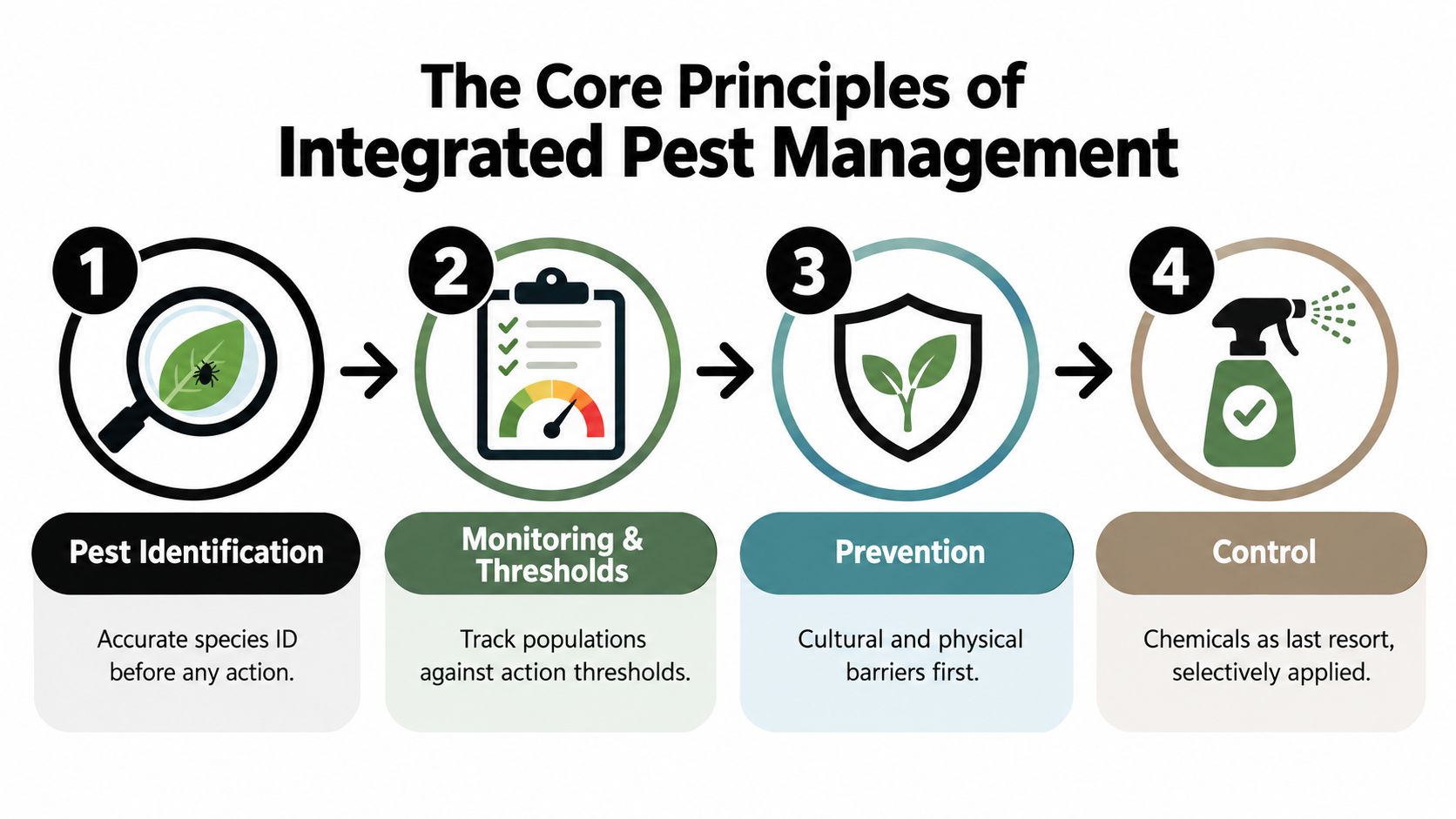
IPM works because it turns pest control into a sequence of decisions. A technician or homeowner identifies the pest, watches its activity, changes the conditions supporting it, and chooses the narrowest effective intervention.
Start with accurate identification
Different pests leave different clues. Frass near wood, grease marks along a wall, shed wings, droppings, mud tubes, webbing, and chewed packaging each point toward different problems. Misidentification often leads to the wrong product, the wrong placement, and a delay in correcting the actual cause.
Identification also determines urgency. A few occasional spiders may call for cleanup and sealing. Evidence of termites, a rodent nesting area, or stinging insects near a doorway deserves a more focused evaluation. If you're unsure what you're seeing, photograph the pest and the surrounding evidence, then arrange an inspection rather than guessing.
Monitor before deciding
Monitoring means looking for patterns, not reacting to one isolated sighting. Check window wells, utility penetrations, garage corners, crawl spaces, attic edges, plumbing areas, and foundation transitions. Indoors, note where pests appear and whether sightings follow rain, temperature changes, food preparation, or lights at night.
Keep a simple record of the date, location, pest type, and evidence. Traps, sticky monitors, visual inspections, and moisture checks can reveal whether activity is occasional or persistent. Monitoring gives a professional a clearer starting point and prevents unnecessary treatment in areas that don't need it.
Use an action threshold
An action threshold is the point at which pest activity is likely to become a nuisance, health hazard, or economic threat. EPA guidance on action thresholds says that the threshold should guide the size, scope, and intensity of the response.
For a home, the threshold might be repeated indoor activity, damage to structural wood, contamination risk, or a nest beside a frequently used entrance. The threshold isn't identical for every property. A restaurant, daycare, apartment building, warehouse, and single-family home each have different exposure concerns and operating requirements.
Prevent first, then target the cause
Prevention combines cultural and physical changes:
- Remove food: Store pantry goods in sealed containers, clean crumbs, and keep pet food from sitting out.
- Control water: Repair leaks, improve drainage, and reduce standing water around the structure.
- Block access: Seal cracks, repair screens, close gaps around pipes, and check door sweeps.
- Reduce shelter: Move clutter, trash, dense vegetation, and firewood away from the building.
- Apply targeted control: Use a treatment only where monitoring shows it's necessary.
The Green Advantage integrated pest management plan follows this inspection-led logic for homes and businesses. For related property and outdoor considerations, a resource on Prescott Valley tree protection can also help explain why plant health and pest pressure sometimes need to be considered together.
Seasonal Pest Pressures in Northwest Indiana
Northwest Indiana homes experience pest pressure that shifts with temperature, moisture, vegetation, and building use. A successful plan in Crown Point can't rely on one visit or one treatment style throughout the year. It should adjust as pests move from outdoor habitats into structures and back again.
Spring brings activity back to the surface
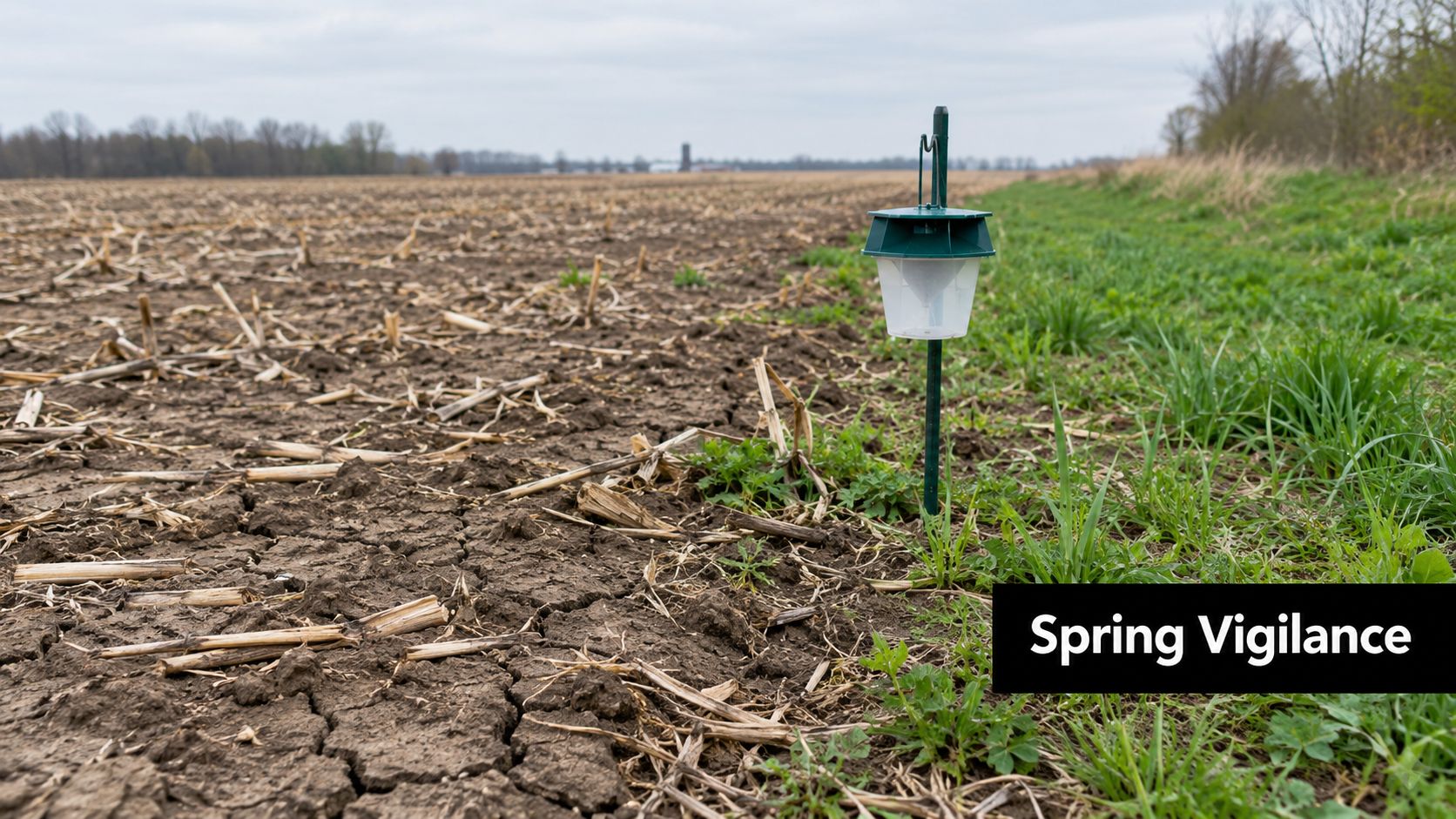
As outdoor conditions become more favorable, ants begin foraging around foundations, patios, kitchens, and utility penetrations. Damp soil, mulch, decaying wood, and small foundation gaps can all support movement toward the building. Spring is the right time to inspect siding transitions, window frames, plumbing penetrations, and areas where soil contacts the foundation.
This is also a useful season for checking moisture. A slow leak under a sink, a clogged gutter, or poor grading can create the damp conditions that attract pests. Correcting those issues early supports ant control and helps reduce the likelihood of spiders and other insects following their food supply indoors.
Summer expands the outdoor risk
Warm weather increases time spent outdoors, which makes mosquito control and wasp removal more important for families, landlords, and businesses. Mosquito habitat can develop in containers, clogged drainage areas, low spots, and other places where water remains undisturbed. Yard debris and dense vegetation can also create cover for ticks and other nuisance pests.
Use a property walkaround to find water-holding items, trim vegetation away from structures, and keep outdoor gathering areas clear. A professional assessment can distinguish a manageable backyard condition from a broader problem involving drainage, breeding sites, or repeated nesting.
EPA prevention guidance identifies exclusion, repair, and sanitation as common and effective habitat modifications. Its recommendations include sealing entry points, reducing clutter, removing trash and overgrown vegetation, and fixing leaks. You can review the EPA pest management guidance for occupied buildings for the same prevention logic used in residential and commercial settings.
Fall and winter shift pests indoors
Fall is the time to focus on rodent exclusion. Mice and other rodents may search for warmth, food, and shelter as outdoor conditions become less comfortable. Seal foundation gaps, screen vents, inspect garage doors, and keep firewood and stored materials away from exterior walls.
Winter sightings often involve pests that have already entered through small openings. Spiders may appear where insects gather around windows, lights, basements, and garages. A winter inspection can identify hidden entry routes and nesting evidence, while early spring follow-up can address the exterior conditions that restart the cycle.
DIY Prevention Versus Professional Intervention
Home maintenance is an important part of IPM, but it has limits. Cleaning, sealing, and reducing moisture can prevent many pest problems, yet those steps won't replace a professional diagnosis when activity is persistent, hazardous, or connected to hidden structural spaces.
What homeowners can handle
Start with tasks that remove food, water, and shelter. Clean spills promptly, store food securely, empty indoor trash regularly, repair plumbing leaks, and keep basements and garages organized. Outdoors, clear leaf buildup, maintain drainage, trim vegetation away from walls, and inspect screens and door sweeps.
Basic monitoring can also help. Place non-chemical monitors in likely travel areas, record sightings, and photograph damage or droppings. Don't disturb a suspected termite area or a stinging insect nest just to investigate it more closely.
Where professional service becomes necessary
Call The Green Advantage when you see recurring activity despite reasonable prevention, signs of termites, rodents inside walls or living spaces, repeated wasp nests, or pests in areas where children, pets, employees, tenants, or customers may be exposed. Professional service also makes sense when the source is inaccessible, the pest is difficult to identify, or the problem involves a large commercial facility.
Technicians can assess concealed entry points, moisture conditions, nesting areas, and treatment boundaries. They can also select and place products according to the target pest and site conditions instead of relying on a general-purpose spray.
| Pest Scenario | DIY Action | When to Call The Green Advantage |
|---|---|---|
| Ants near a kitchen or patio door | Clean food residue, inspect gaps, and track the trail | Call when activity returns, spreads, or appears in several rooms |
| Rodent signs in a garage or basement | Store food securely, reduce clutter, and inspect obvious gaps | Call when droppings, odors, scratching, or indoor sightings continue |
| Wasp activity near an entry | Keep people away and avoid disturbing the nest | Call promptly when a nest is active, elevated, or close to regular traffic |
| Suspected termites | Avoid drilling, disturbing wood, or applying random products | Call for an inspection when you find mud tubes, damaged wood, or shed wings |
| Mosquitoes in the yard | Empty containers and improve water drainage | Call when outdoor activity remains uncomfortable after source reduction |
| Recurring spiders | Vacuum webs and reduce nearby insect attraction | Call when spiders persist or indicate a larger insect issue |
Safety boundary: DIY prevention supports an IPM plan. It doesn't make a hazardous nest, hidden termite colony, or established rodent infestation safe to manage alone.
Health and Environmental Benefits of Eco-Friendly Control
A home can look clean while pests keep finding food, moisture, or shelter. In Crown Point and across Northwest Indiana, the best protection is a plan that corrects those conditions before repeated spraying becomes the routine. IPM protects people and property by keeping treatment focused on the pest, its location, and the reason it is present.
Children and pets spend time near floors, baseboards, yards, and play areas. Pollinators and other beneficial organisms share those spaces. Limiting applications to justified locations reduces unnecessary exposure and protects more of the surrounding environment.
Selective treatment protects more than the structure
IPM does not reject every pesticide. It sets a higher standard for using one. The University of Massachusetts guidance on essential IPM elements recommends selecting a product that works against the target pest while presenting the lowest practical risk to human health, the environment, and natural enemies.
That standard changes the treatment decision. A technician may choose a spot application instead of covering an entire room. Sealing an entry point can solve more than spraying it again. A monitored bait or carefully placed product may control activity without treating areas the pest never uses.
Prevention protects the budget too
Pest problems become more expensive when they continue unnoticed. Rodents can contaminate insulation and stored items. Termites can affect wood before visible damage appears. Mosquitoes and wasps can make yards, patios, entrances, and commercial outdoor areas difficult to use. Repairs, cleanup, and repeated service often cost more than correcting favorable conditions early.
IPM programs have also demonstrated significant economic value in agriculture through reduced pesticide use, improved yields, and lower environmental and health risks, as described in this USDA Forest Service review of IPM outcomes. Agricultural results do not guarantee the same outcome for an individual home. They do support a practical conclusion: decisions based on monitoring and prevention can reduce waste while protecting performance.
Sustainability must still meet performance needs
A pest plan earns its value through results. If it fails to control a termite colony, rodent infestation, or dangerous wasp nest, the customer remains exposed regardless of how environmentally responsible the label sounds.
Peer-reviewed evidence in this IPM synthesis found that multi-tactic programs can reduce pesticide dependence while maintaining or improving output across the agricultural projects reviewed. The review reported a mean pesticide-use reduction of about 30.7% and a mean yield increase of 40.9% versus baseline. Those figures apply to the reviewed agricultural projects, not automatically to residential service. For a Northwest Indiana homeowner, the lesson is straightforward: reduce attractants and entry points first, then use targeted treatment when pest pressure requires it.
Partnering with The Green Advantage for Lasting Results
A lasting pest solution starts with a clear diagnosis. Whether you're a homeowner, landlord, property manager, homebuyer, or local business owner, the first appointment should answer practical questions: What pest is present? How is it entering? What conditions are supporting it? What needs attention now, and what should be monitored?
The Green Advantage provides licensed and certified residential pest control and commercial pest control services in Crown Point and nearby Northwest Indiana communities. The company handles thorough pest inspections, home pest control, mosquito reduction programs, and service plans shaped around the property rather than a one-size-fits-all schedule.
What the service process should include
A useful IPM service process has several connected parts:
- Inspection: The technician examines visible activity, likely entry points, moisture conditions, harborage areas, and structural details.
- Identification: The team determines which pest is present and separates active infestation from occasional nuisance activity.
- Consultation: You receive a clear explanation of findings, priorities, prevention steps, and treatment options.
- Targeted service: If treatment is justified, the application focuses on the affected areas and the least disruptive effective option.
- Monitoring and follow-up: Continued observations help confirm whether pest pressure is declining and whether prevention work needs adjustment.
Customers communicate with knowledgeable office staff for questions and scheduling, while field technicians focus on diagnosis and site-specific treatment. That division keeps the process organized and helps homeowners understand what happens next.
A plan for homes and businesses
For a home, the plan may emphasize foundation exclusion, ant control, rodent prevention, seasonal mosquito reduction, or termite inspection. For a commercial facility, the priorities may include documented monitoring, sanitation coordination, entry-point management, and treatment practices that respect occupied spaces and operating requirements.
The Green Advantage grew from lawn and outdoor care roots and now focuses solely on pest management. That background supports a practical understanding of how landscaping, drainage, vegetation, and building conditions interact. Its environmentally friendly pest control services reflect the same prevention-first principles described throughout this guide.
Take the next step
You don't need to wait for a severe infestation before requesting help. Schedule an inspection when you notice repeated activity, unexplained damage, droppings, nests, moisture-related pest pressure, or seasonal problems that return despite your own prevention work.
A professional inspection gives you a documented starting point and a sensible path forward. Instead of guessing which product to use, you'll know whether the property needs exclusion, sanitation changes, monitoring, targeted treatment, or a combination of these measures.
The Green Advantage offers inspection-led residential and commercial pest control in Crown Point, IN, including targeted treatments, seasonal prevention, mosquito reduction, rodent exclusion, and termite support. Visit The Green Advantage to schedule a pest inspection or request a quote for a long-term integrated pest management plan.