
You're standing beside the grill in your Crown Point backyard, trying to enjoy dinner while mosquitoes find every uncovered inch of skin. A candle burns on the patio table, a citronella plant sits by the door, and someone keeps asking whether the bugs seem worse this year. The short answer is that a single product rarely solves an outdoor mosquito problem.
The best mosquito control for Northwest Indiana yards is seasonal and layered. Start with standing-water removal, add personal protection and airflow, then use targeted professional treatments when the property, weather, or mosquito pressure calls for more. That approach works better than spraying once and hoping the next hatch never arrives.
Why Mosquitoes Take Over Northwest Indiana Yards
Crown Point yards offer mosquitoes what they need: water, shade, humidity, and places to rest close to people. A clogged gutter, an overturned toy, a flowerpot saucer, or a low spot that stays wet after rain can become part of the problem. Properties near wooded edges, retention areas, drainage swales, and dense landscaping often face more pressure because adult mosquitoes can move in from nearby breeding areas.
Homeowners often search for what attracts mosquitoes to your yard after noticing bites around the patio, deck, or playset. The practical question isn't whether one scented product can repel them. It's whether the yard keeps producing or sheltering mosquitoes faster than a one-time treatment can manage them.
Why one spray doesn't hold
A yard spray can reduce active adults in treated areas, but it doesn't remove every breeding site. New adults can emerge from water that was missed, arrive from nearby properties, or shelter in vegetation that wasn't treated. Rain, irrigation, and plant growth can also change conditions across the property.
That's why a candle, a citronella plant, or a single fogging visit shouldn't be sold as a complete solution. These tools may offer limited relief in a specific spot, but they don't address the full cycle from egg to larva to adult.
Local rule: If your yard has standing water, dense shade, or nearby wet ground, mosquito control needs a plan for the property, not just a product for the patio.
The local solution should match how you use the space. A family that wants to spend evenings outside needs a different plan from a landlord preparing a rental property or a restaurant protecting an outdoor dining area. Residential pest control and commercial pest control both benefit from the same basic discipline: inspect first, reduce breeding conditions, and treat only where treatment makes sense.
For Crown Point and nearby Northwest Indiana communities, that means planning around local weather and outdoor routines. Control should begin before biting adults dominate the yard, continue during peak activity, and include cleanup that reduces the next generation.
How Mosquito Biology Shapes Every Control Decision
Mosquito control becomes much easier to understand once you stop thinking of the adult biter as the whole problem. Mosquitoes move through aquatic stages in standing water before they emerge as flying adults. The early stages are easier to target because they're concentrated in containers, puddles, gutters, basins, and other wet areas.
The timeline that changes your priorities
A mosquito's development follows a simple sequence:
- Eggs are deposited in or near water.
- Larvae live in the water and feed near the surface.
- Pupae remain aquatic while the adult body develops.
- Adults emerge, fly, rest, feed, and reproduce.
Mosquitoes can complete development in calm, standing water in as little as 7 days, and EPA guidance says many species require 7 to 10 days of stagnant water to reach the aquatic stages that produce biting adults. The EPA guidance on mosquito breeding water explains why a weekly inspection isn't excessive. It's timed to interrupt the development window.
That matters after a summer storm. A child's toy, a tire swing, a wheelbarrow, or a clogged downspout can collect water, sit unnoticed, and produce new adults before the next weekend cleanup. In Crown Point, irrigation and heavy rain can create the same issue even when the rest of the yard looks dry.
Where adults hide
Adult mosquitoes don't spend the entire day flying over the lawn. They often rest in cool, shaded, humid areas such as low shrubs, ornamental grasses, weeds, and vegetation along fences or foundations. Those areas protect them from drying conditions and keep them close to the people and pets they seek later.
Only female mosquitoes bite. They need a blood meal to produce eggs, while both sexes can use plant nectar and other natural sugars. That's why a yard can seem quiet in the afternoon and become uncomfortable around dusk, especially where landscaping creates still air and shade.
The biology points to a clear order of operations. Remove or manage water first, reduce resting cover where practical, protect people with repellent and clothing, then use targeted adult control when pressure remains. Stronger spraying can't compensate for a missed breeding site.
Comparing DIY Repellents, Yard Treatments, and Professional Programs
Crown Point homeowners generally choose among three approaches. Personal repellents and simple prevention are useful for occasional outdoor activity. DIY yard treatments can help when the property is manageable and the homeowner can follow the label carefully. A recurring professional program makes more sense when mosquito pressure is persistent, the yard is complex, or outdoor comfort matters throughout the season.
| Option | Effectiveness | Season Cost | Safety & Environment |
|---|---|---|---|
| Personal repellents, fans, and traps | Protects people in a defined area, but doesn't reduce the breeding population | Usually limited to the occasions when you're outdoors | Can be a lower-impact choice when used as directed, with no broad yard application |
| DIY yard sprays and larvicides | Can reduce mosquitoes in treated areas when water sources and resting sites are correctly identified | Requires repeated purchases and homeowner labor during the season | Product labels, pollinator protection, pets, children, and water restrictions must be considered |
| Recurring professional mosquito program | Combines inspection, habitat work, larval control, and targeted adult treatment | Ongoing service rather than a single purchase | A site-specific plan can limit unnecessary applications and focus treatment where mosquitoes rest or breed |
The resistance problem
Chemical choice matters because mosquito populations don't all respond the same way. A 2023 operational study of Aedes aegypti found CDC bottle-assay mortality as low as 2 to 24% for permethrin and 48 to 94% for deltamethrin, even at 10 times the diagnostic dose, as reported in the operational resistance study. That doesn't mean every Crown Point mosquito population has the same response. It does mean “more spray” isn't a sound resistance strategy.
Essential-oil products may provide a pleasant scent and short-term deterrence, but they shouldn't be treated as a complete control program. Fogging can knock down active adults, yet it won't prevent the next hatch if water remains. Traps can help in selected situations, but placement and maintenance determine whether they contribute meaningfully.
The right decision depends on the property. If you're dealing with a few bites during occasional gatherings, start with source reduction and personal protection. If your children can't use the yard, your business depends on outdoor space, or weekly inspections aren't realistic, a mosquito reduction program with site-specific treatment and resistance-aware decisions is the more practical choice.
DIY Steps That Actually Reduce Mosquito Pressure
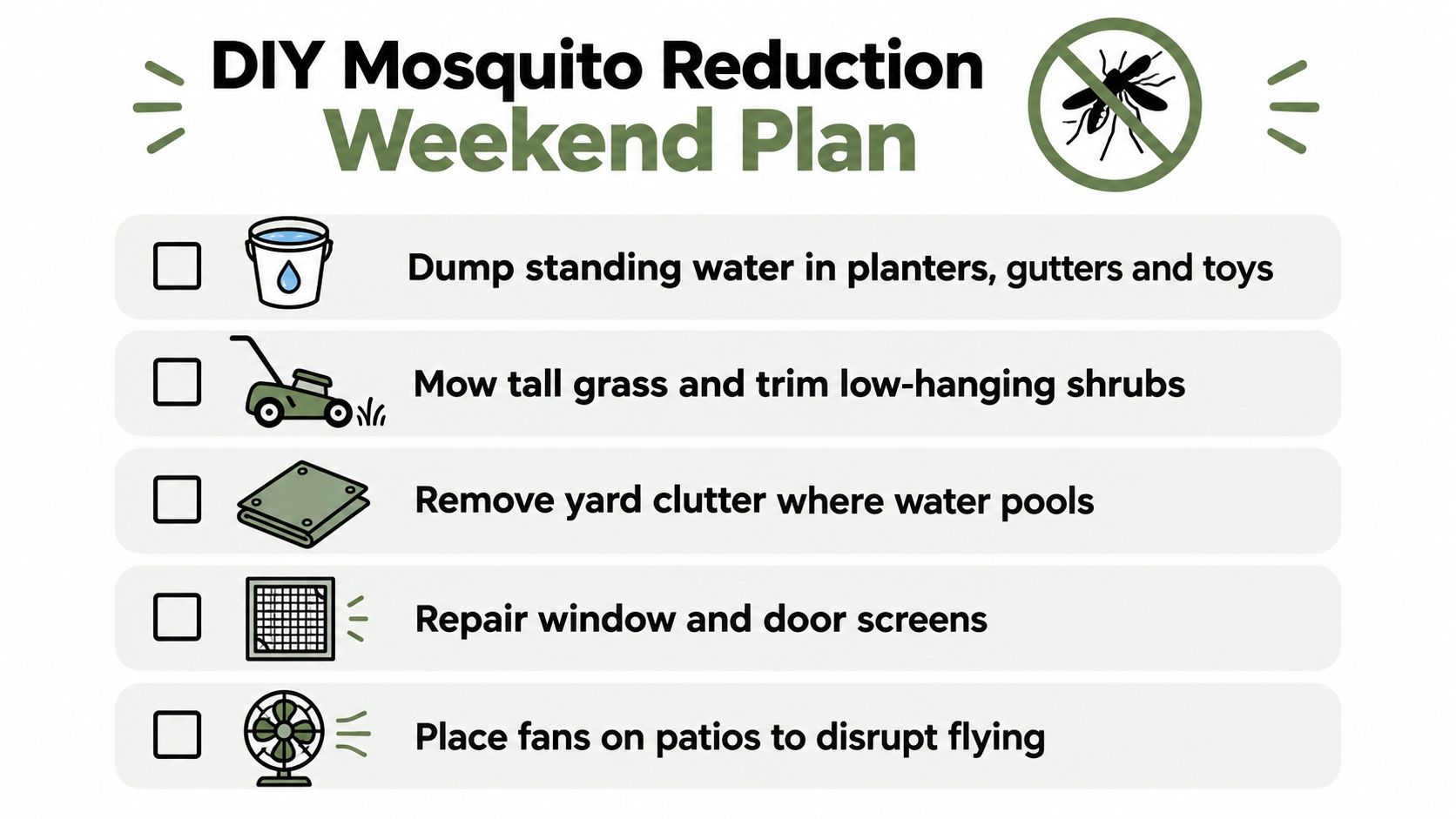
A single cleanup can change a yard quickly, but only if it becomes a routine. Start with a slow walk around the entire property, including areas away from the back door. Check gutters, shed roofs, furniture, toys, planters, tarps, and anything else that can collect rain. Look above eye level and along shaded edges where small containers are easy to miss.
Start with water
The CDC's mosquito control guidance for homes recommends removing standing water at least once a week. Empty, scrub, turn over, cover, or discard items that collect water, including tires, buckets, planters, toys, pools, birdbaths, flowerpot saucers, and trash containers.
Use this weekend routine:
- Empty and scrub: Clean birdbaths, saucers, toys, and other containers instead of just tipping them over.
- Clear drainage: Remove gutter debris and confirm that downspouts drain away from the house.
- Flip or cover: Store wheelbarrows, bins, children's toys, and unused containers where rain cannot reach them.
- Manage permanent water: Apply a properly labeled larvicide only to larger water bodies that cannot be drained or covered. Review what kills mosquito larvae before selecting a product.
- Reduce shelter: Mow tall grass and trim low vegetation beside patios, walkways, and foundations.
Small amounts of water matter. The mosquito source-reduction guidance notes that mosquitoes can use as little as a tablespoon of water. As the biology timeline above explains, water left in place long enough to support larvae is a preventable breeding opportunity. Scrubbing matters because eggs can cling to container surfaces after the water is dumped.
Protect people while they're outside
For exposed skin, EPA and public-health guidance identifies repellents containing 20 to 30% DEET as effective options that typically protect for many hours. Products above 50% DEET do not provide better or longer protection, according to the EPA-registered repellent ingredient guidance.
Fans improve comfort on patios because mosquitoes are weak fliers. Repair window and door screens, keep doors closed, and bring pet bowls inside or empty them after use. DIY control is the right starting point when the property is manageable and the household can maintain weekly checks. If the yard borders dense vegetation, keeps producing mosquitoes after cleanup, or cannot be inspected consistently, move from weekend cleanup to a professional plan rather than relying on repeated spray applications.
When Professional Mosquito Service Makes the Difference
DIY control stops being the best use of your time when the property keeps generating mosquitoes faster than you can inspect it. Call a professional if your home borders wooded land or a retention area, if children need dependable outdoor playtime, if you're preparing for an event, or if weekly source reduction keeps falling off your schedule.
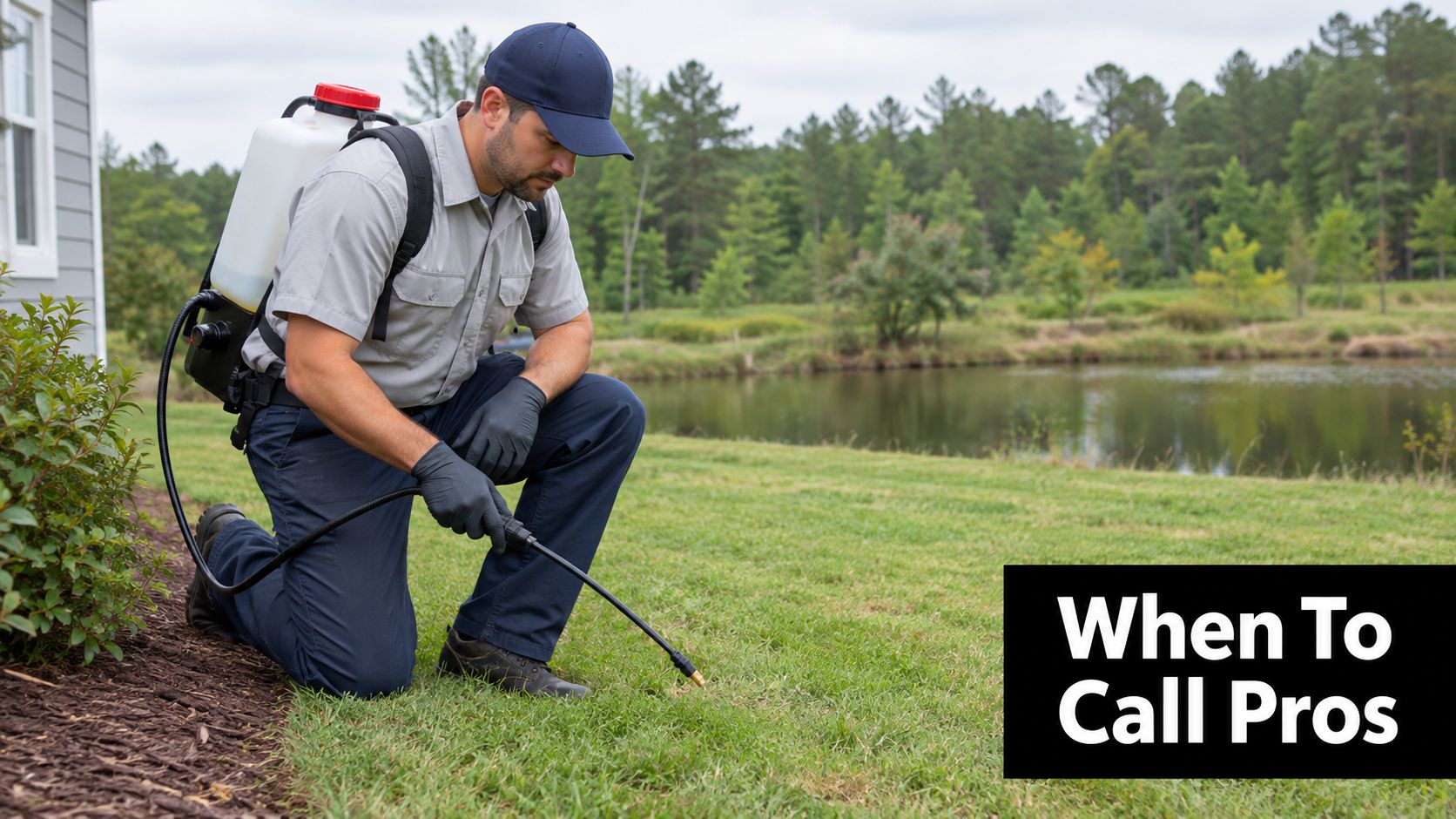
A credible service should begin with a property inspection, not an automatic spray. The technician should identify containers, drainage problems, shaded resting areas, vegetation, and conditions outside the lot that may affect pressure. That information determines whether the property needs source reduction, larvicide, targeted barrier treatment, personal-protection advice, or a combination.
What a layered program includes
The U.S. EPA states that egg-and-larva interventions are generally the most effective and least costly approach, because treating breeding habitats before emergence reduces the nearby adult mosquito population, as explained in this EPA-supported mosquito control review. Professional service should reflect that priority.
A site-specific program may include:
- Habitat mapping: Finding water-holding containers, drainage trouble, and adult resting areas.
- Larval control: Treating standing water that can't be drained, emptied, or covered.
- Targeted barrier treatment: Applying product to likely resting areas rather than indiscriminately treating every surface.
- Resistance-aware decisions: Reviewing local performance and changing tactics when a product isn't delivering adequate control.
- Follow-up timing: Returning according to mosquito pressure and the property's conditions, rather than treating one time and disappearing.
The residential mosquito reduction program available through the local team can be structured for recurring seasonal service or a single visit before an event. Technicians diagnose the site, explain what they're treating, and tailor the plan to the yard. That same approach is useful for landlords, property managers, and businesses that need commercial pest control around entrances, employee areas, or outdoor customer spaces.
For readers comparing regional approaches, this Miami mosquito treatment service provides another useful example of how professional mosquito programs can combine recurring treatment with property-focused control.
The following video offers additional visual context on mosquito management. It should supplement, not replace, an inspection of your own property.
Professional service doesn't create a mosquito-free bubble. It gives you a better system for reducing pressure, finding overlooked sources, and adjusting treatment when conditions change.
Seasonal Timing for Mosquito Control in Northwest Indiana
A wet spring followed by warm summer evenings can turn a Northwest Indiana yard into a mosquito problem before outdoor plans begin. Control should follow that pattern. Early cleanup removes breeding conditions, late-spring action limits population growth, summer service protects the areas you use, and fall work reduces problems that carry into the next season.
Early spring
Walk the property after snowmelt and spring rain. Clear leaves from gutters, check downspouts, remove discarded containers, and correct low spots that hold water. Look beneath decks, behind sheds, and around outdoor furniture, where winter debris can conceal breeding sites.
Schedule an inspection now if the yard had heavy mosquito pressure last year. Early findings give you more treatment choices than waiting until mosquitoes are biting at every gathering.
Late spring
As temperatures rise, start weekly water checks before mosquito numbers build. Review birdbaths, rain barrels, pool covers, toys, planters, and drainage areas. If water cannot be removed or covered, ask a licensed professional whether a larvicide fits that site and its conditions.
Begin professional service before outdoor activity peaks. Barrier treatments can reduce adult mosquitoes, but they work best alongside source reduction and follow-up decisions based on changing pressure.
Summer
Summer requires consistent timing, especially after storms, irrigation, or landscaping work. After late-June storms, inspect low spots and clogged gutters within 48 hours, before standing water remains unnoticed. Pay close attention to shaded areas near patios and seating, where people spend the most time.
Use repellent during active biting periods, repair damaged screens, and keep dense growth away from gathering areas. Small water sources still deserve attention, and the Crown Point seasonal mosquito prevention calendar supports checking temporary water before it becomes a recurring source.
A spray alone will not solve a yard that keeps collecting water. If pressure returns quickly after treatment, change the control plan instead of repeating the same application automatically.
Late summer and fall
Continue monitoring as weather shifts and mosquito activity changes. In early fall, empty and store containers, clean gutters again, remove yard clutter, and correct drainage before leaves hide problem areas.
Use the calendar as a guide, not a rigid schedule. A shaded lot with poor drainage may need earlier or more frequent service than an open yard with few water-holding features. Professional timing should follow the property's conditions and the areas where mosquitoes interfere with normal use.
Your Year-Round Mosquito Maintenance Checklist
Use this checklist to track pressure, locate overlooked breeding spots, and decide when DIY work has stopped paying off. Add one line for your lot, such as “check the retention-swale edge” or “walk the wooded fence line.”
Every week
- Run a five-minute route: Start at gutters, then check saucers, toys, tarps, and low spots. Scrub birdbaths instead of only tipping them out.
- Record changes: Note recent rain, irrigation, drainage problems, and the areas where bites remain common.
- Check usable space: Keep gathering areas accessible, and use labeled repellent or fans when people are outside.
Every month
- Inspect overlooked structures: Check downspout discharge, rain barrels, ornamental features, and equipment that can hold water.
- Check screens and access points: Repair tears before mosquitoes move indoors.
- Map resting habitat: Mark shaded vegetation, fence lines, and other places beside occupied areas that may need attention.
- Review treatment results: Record the date, product or service, treated zone, and remaining bite pressure. If the same approach keeps failing, ask for a different control plan rather than repeating it automatically.
At seasonal milestones
- Spring: Update the property map after winter debris and drainage changes appear.
- Summer: Compare pressure after storms, irrigation, and landscaping work. Request professional service if biting disrupts normal yard use.
- Fall: Store containers and confirm gutters and drainage before leaves conceal problem spots.
DIY fits a property you can inspect consistently with limited mosquito pressure. Choose professional help when difficult habitat borders the yard, source reduction does not hold, or dependable comfort matters for family, tenants, employees, or customers. Ask whether treatment will target the actual resting and breeding areas, include follow-up, and change when pressure persists.
Schedule a mosquito inspection and request a property-specific quote from The Green Advantage for Crown Point, IN and nearby Northwest Indiana service areas. The team can outline seasonal treatment, habitat guidance, and follow-up for your home or business.