
You find ants marching across the kitchen counter, hear scratching near the garage, or notice mosquitoes gathering around the yard after rain. Your first thought may be simple: call an exterminator near me. Your second thought is often more complicated: will treatment be safe around children, pets, gardens, employees, or customers?
For homeowners and businesses searching for pest control near me, environmentally friendly pest control services offer a practical answer. The right program doesn't try to eliminate every chemical. It identifies the pest, corrects the conditions attracting it, monitors activity, and uses targeted treatment only when necessary. In Crown Point, IN and surrounding Northwest Indiana communities, that inspection-led approach can protect property while reducing unnecessary chemical exposure.
Why Crown Point Homeowners Are Choosing Environmentally Friendly Pest Control Services
A line of ants on the counter can turn an ordinary morning into a property concern. The ants may be following a food trail, entering through a small gap near a window, or nesting where moisture has softened wood. A homeowner with children or pets doesn't want a blanket spray across the kitchen. A property manager doesn't want tenants wondering whether routine applications are being used without a clear reason.
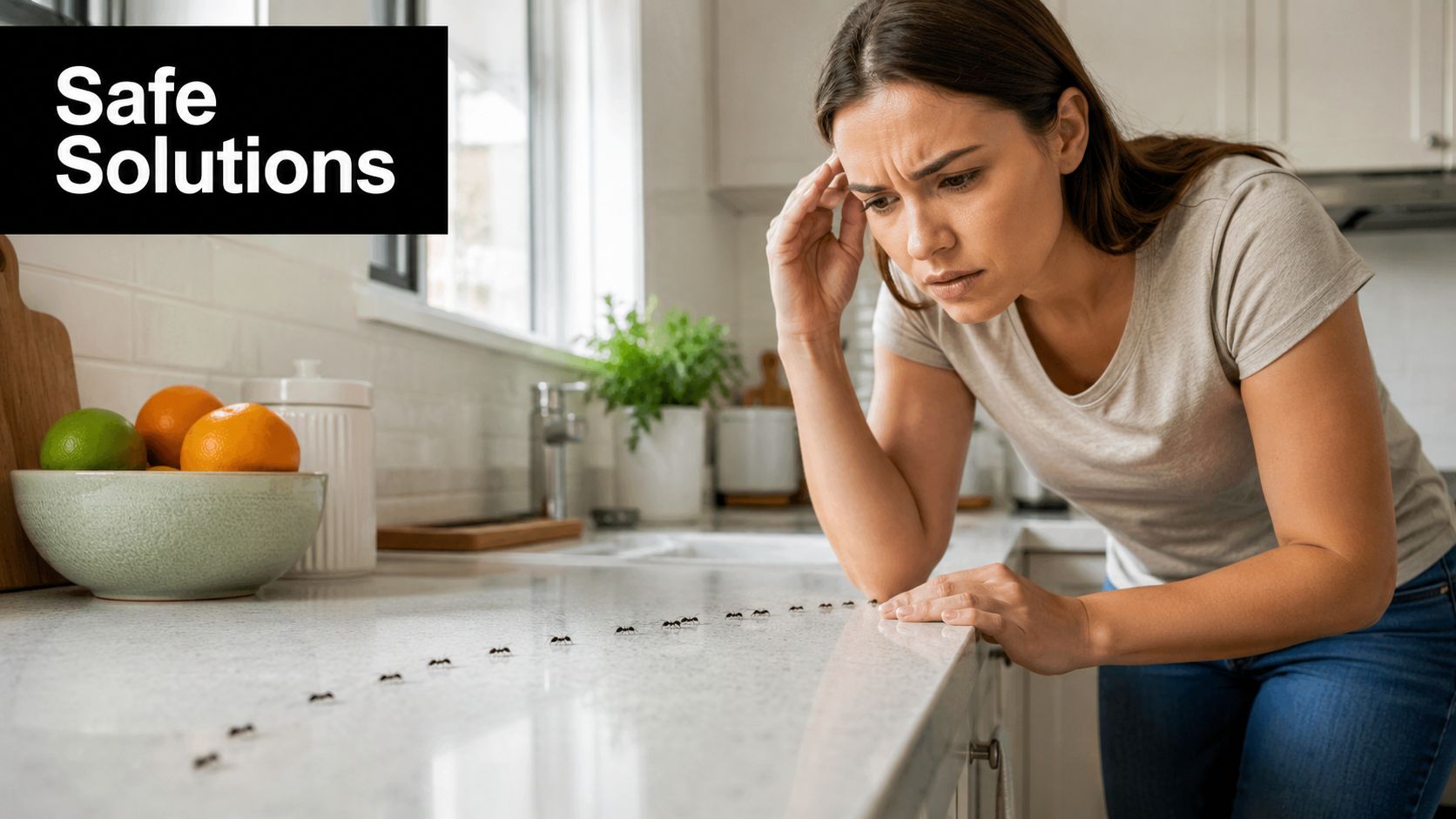
That concern is reasonable. Eco-friendly pest control isn't the absence of all treatment. It's better decision-making. A technician should determine what pest is present, where it travels, what allows it to remain, and whether prevention can solve the problem before applying a product. This matters in occupied Crown Point homes, rental properties, offices, restaurants, warehouses, and other commercial spaces.
The Green Advantage is a family-owned pest control company serving Crown Point and the broader Northwest Indiana community. Its work centers on licensed, certified service for residential and commercial properties, with attention to exclusion, prevention, pest inspections, mosquito reduction, and treatment choices customized for each site.
A safer approach doesn't mean a weaker result
Some homeowners assume that environmentally mindful service means accepting pests in exchange for fewer chemicals. That's the wrong comparison. A skilled program can address ant control, termite control, rodent control, spider control, wasp removal, and seasonal mosquito issues by combining several methods instead of forcing every problem into the same spray schedule.
A rodent problem, for example, often continues because a garage, crawlspace, or wall opening remains accessible. Treating the symptoms without closing the entry point leaves the property vulnerable. Likewise, mosquito control works better when standing water and resting areas receive attention, not just when a yard receives a surface application.
Practical rule: Ask what the technician found, what will be corrected, what will be monitored, and why each treatment is necessary.
Demand for lower-toxicity pest management has expanded beyond a small niche. One market estimate values the global organic pest control solutions market at US$3.2 billion in 2024 and projects it to reach US$6.5 billion by 2033, with an 8.5% CAGR from 2026 to 2033. Those figures are market estimates, not a guarantee for any individual property, but they show why homeowners and businesses are asking for more transparent, prevention-first service. The market estimate for organic pest control solutions connects that demand with sustainability concerns, residue reduction, and broader adoption of environmentally mindful practices.
How Integrated Pest Management Powers Eco-Friendly Exterminator Services
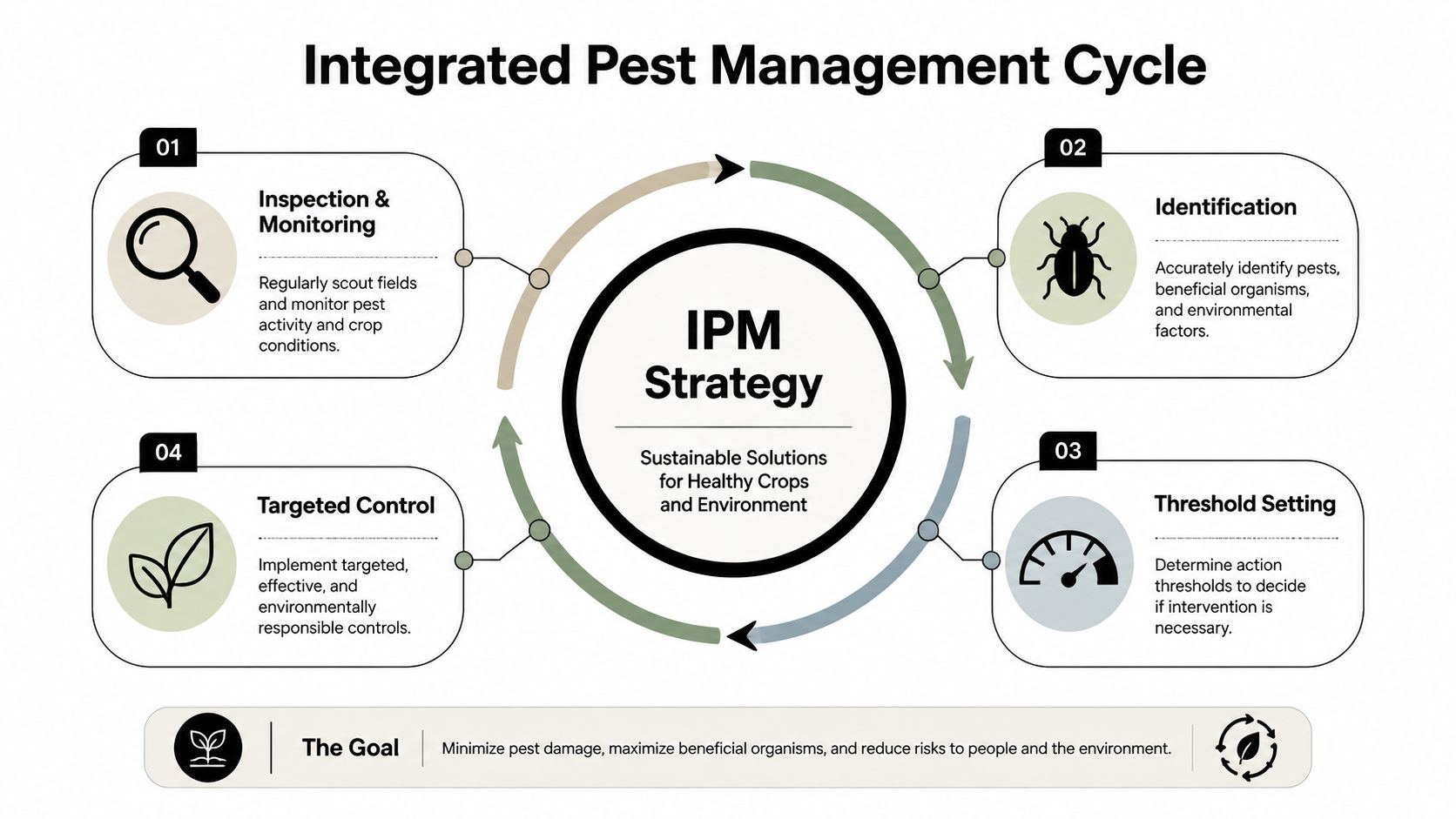
Integrated Pest Management, or IPM, is the operating system behind credible environmentally friendly pest control services. The U.S. EPA defines IPM as an effective, environmentally sensitive approach that uses information about pest life cycles and environmental interactions, then combines available control methods to manage damage with the least possible hazard to people, property, and the environment. The EPA's IPM principles make the central point clear: prevention and monitoring come before routine pesticide use.
Start with inspection and identification
A technician first looks for live pests, droppings, nests, damage, moisture, food sources, and entry points. Identification matters because ants, termites, rodents, mosquitoes, and wasps behave differently. A treatment that makes sense for a colony in a wall void may be inappropriate for a pollinating insect outdoors.
Monitoring then answers a more useful question than “how many pests did we spray?” It shows whether activity is increasing, staying stable, or declining. Threshold setting means deciding when pest activity creates enough risk or damage to justify intervention. That keeps service tied to evidence from the property rather than an automatic calendar.
Use four tool categories together
EPA materials describe four broad IPM tools:
- Biological controls use natural enemies or ecological relationships where appropriate, while protecting beneficial organisms.
- Cultural controls change conditions that support pests, such as sanitation, moisture management, waste handling, and removal of standing water.
- Physical controls block access or remove pests through exclusion, screens, sealed cracks, door maintenance, and structural repairs.
- Chemical controls remain available, but technicians use them selectively, in targeted locations, and only when monitoring shows they're needed.
Sealing a foundation crack is a physical control. Drying a damp basement and correcting a plumbing leak are cultural controls. Removing mosquito breeding water also belongs in that category. A carefully placed spot treatment may be the chemical component, but it isn't the entire program.
For Crown Point homeowners comparing an exterminator near me with a prevention-led service, this distinction matters. A one-time spray may knock down visible activity. An IPM plan asks why pests arrived and what will stop them from returning. You can review the service framework through The Green Advantage's integrated pest management information.
The EPA also emphasizes that IPM combines prevention with pesticides used only as needed, rather than following a fixed chemical schedule. Its building-focused IPM guidance supports the same inspection, sanitation, exclusion, and selective-treatment model used for occupied homes and commercial spaces.
The Evidence Behind Low-Toxicity Pest Control Effectiveness
Does environmentally friendly pest control work when the infestation is serious? Yes, when “green” means a complete IPM program rather than a simple product substitution.
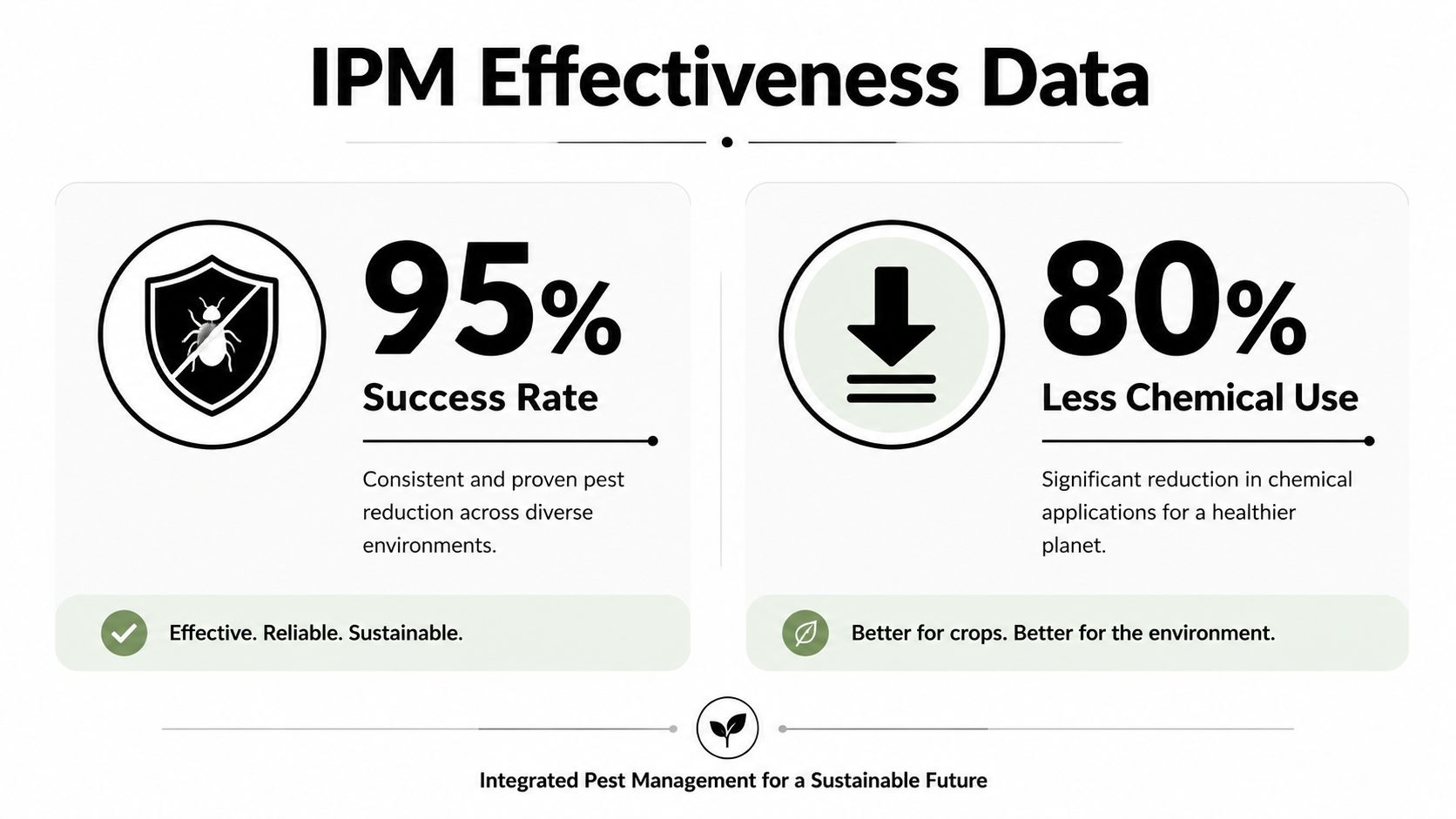
A major review of 226 IPM projects found that pesticide use fell to 30.7% of baseline levels on average, while yields increased by 40.9% across crops and projects. The review also reported external pesticide costs of US$4 to US$19 per kilogram of active ingredient, helping explain why strategies that reduce unnecessary applications can be attractive environmentally and economically. The review of IPM projects provides the benchmark. Residential and commercial properties aren't farms, so homeowners shouldn't treat those results as a promise of identical outcomes. The relevant lesson is the structure: prevention, monitoring, biological controls, habitat management, and limited chemical use can outperform routine blanket applications.
Why fewer applications can preserve control
In a multiyear field study, IPM cut insecticide applications by about 95% while maintaining or increasing yields because pests rarely reached economic thresholds under monitored, preventive management. The PNAS field study and IPM analysis supports a practical service principle: fewer treatments can reflect better control when exclusion, sanitation, monitoring, and decision thresholds prevent the infestation from gaining ground.
A systematic review covering more than 200 studies reported pesticide-use reductions of 40% to 70% across the studies. USDA's overview of integrated pest management also explains how monitoring and biology-based decision rules can reduce resistance pressure. That matters for long-term pest control in Crown Point because repeated, unnecessary exposure can make management more difficult over time.
The service standard should be measurable in practical ways:
- Fewer broad-spectrum applications
- Fewer repeat infestations after exclusion and moisture correction
- Better documentation of pest activity
- Targeted treatment in occupied areas
- Clear recommendations for the homeowner or facility manager
For readers interested in reducing chemical inputs across the property, R.E. and Sons Landscaping yard care offers a related resource on natural weed control. Yard conditions influence the insects and shelter available around a building, so grounds maintenance and pest prevention can support each other.
Biological controls are one part of the broader framework, not a universal answer. This explanation of biological pest control helps clarify how nature-based tools fit into a complete pest management plan.
Environmentally Friendly Solutions for Common Northwest Indiana Pests
Crown Point properties don't all have the same pest problem, and they shouldn't receive the same treatment. Ants may need trail tracking and exclusion. Termites require a different monitoring strategy. Rodents call for structural work, sanitation, and careful follow-up. The right residential pest control or commercial pest control plan matches the method to the pest.
| Pest Type | Conventional Approach | Environmentally Friendly Approach |
|---|---|---|
| Ants | Broad perimeter spraying that may leave hidden nest activity untreated | Identify trails, correct moisture or food sources, seal entry points, and use targeted baiting or spot treatment where appropriate |
| Termites | Routine liquid application without enough attention to conducive conditions | Inspect wood and foundation areas, correct moisture concerns, improve exclusion, and use targeted monitoring or treatment based on findings |
| Mosquitoes | Repeated yard-wide applications without correcting breeding conditions | Remove standing water, inspect resting areas, monitor activity, and use selective treatments when necessary |
| Rodents | Traps or bait without addressing how rodents entered | Seal gaps, improve sanitation and storage, inspect travel routes, and use monitoring with carefully selected control measures |
| Spiders | Repeated exterior spraying without reducing prey or harborage | Remove webs, reduce insect activity around the structure, close entry points, and treat specific areas when warranted |
| Wasps | Immediate nest spraying without checking future nesting conditions | Remove active nests safely, inspect eaves and voids, reduce attractants, and improve exclusion around the structure |
Ant control starts with the trail
Ants rarely appear at random. They follow food, moisture, and established routes. A technician should trace activity rather than spray the visible line. Baiting can allow workers to carry material back toward the colony, while caulking and other exclusion work can prevent future entry.
Termite control needs patience and inspection
Termite control is about protecting the structure, not just eliminating insects seen near a wall. A professional inspection looks for damaged wood, moisture, soil-to-structure contact, and access points. Monitoring stations or targeted treatments may fit the property, but the decision should follow the inspection.
Mosquito and rodent programs depend on property conditions
Mosquito reduction becomes more effective when residents remove containers, clogged areas, and other sources of standing water. Rodent exclusion depends on identifying gaps around doors, vents, foundations, utility penetrations, garages, and rooflines. In both cases, the environmentally friendly option is usually the one that removes the reason pests can keep returning.
A quality pest control in Crown Point, IN service should explain these differences. Blanket spraying is convenient to describe, but it doesn't account for pest biology, building design, weather, sanitation, or seasonal conditions across Northwest Indiana.
What to Expect When Hiring The Green Advantage in Crown Point
A professional service should feel organized from the first phone call. When you contact The Green Advantage, knowledgeable office staff can answer questions and move scheduling forward, while field technicians focus on diagnosing the property and selecting an appropriate response.
The service process
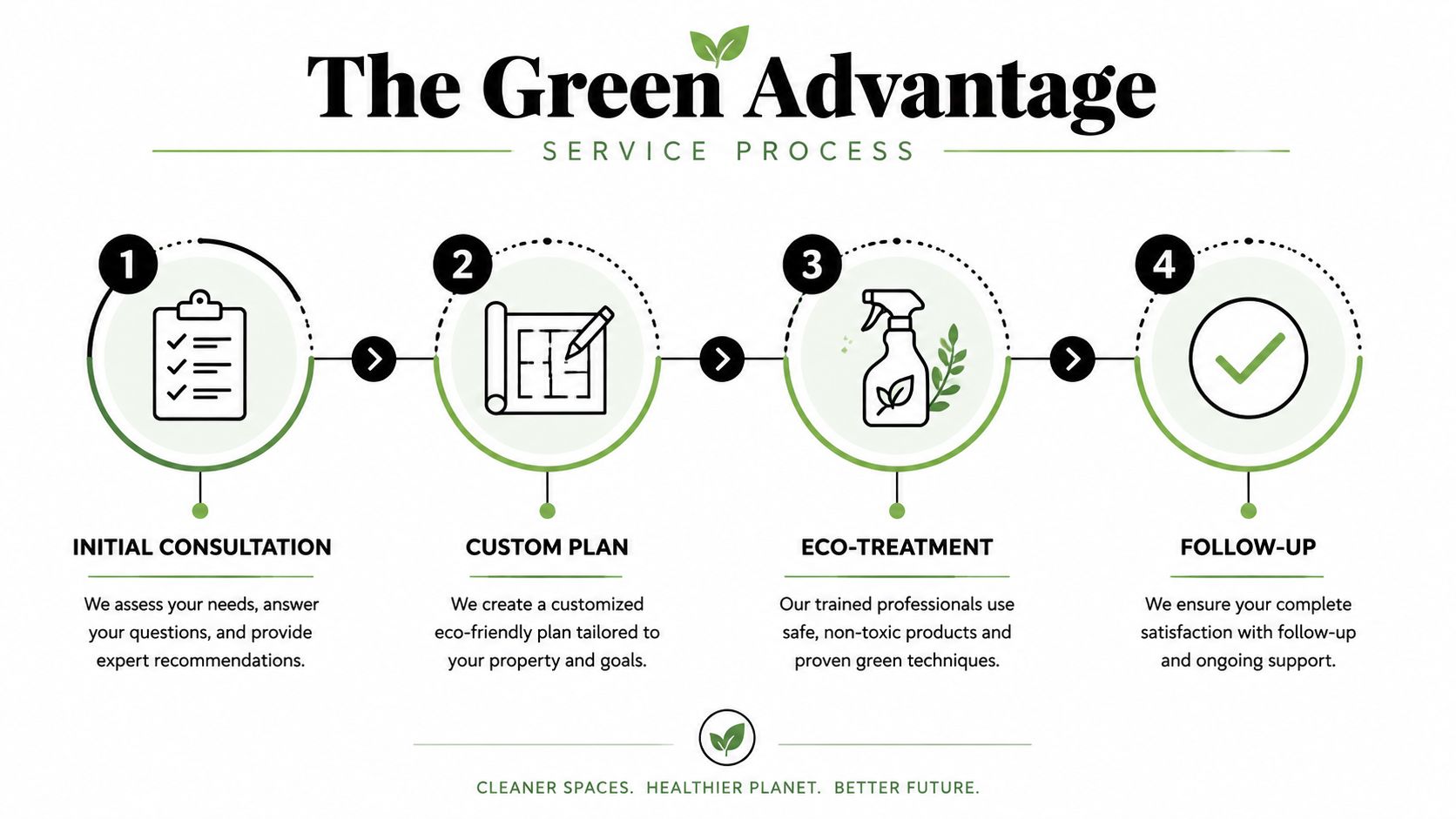
Initial conversation: Describe what you've seen, where activity occurs, and whether children, pets, tenants, employees, or customers use the area. Good intake questions help the technician arrive prepared.
On-site inspection: The technician identifies the pest, checks likely entry points, examines moisture and food conditions, and looks for evidence that may not be visible during a quick walk-through.
Custom plan: The plan should prioritize prevention, exclusion, sanitation, monitoring, and targeted treatment. If a product is necessary, the technician should explain where it will be used and why that location matters.
Service and follow-up: Ongoing monitoring and seasonal follow-up help determine whether the plan is working. Your service provider should keep you informed about findings, completed work, and changes you can make on the property.
Clear communication protects the customer
Homeowners should receive practical answers, not vague assurances. Ask what pest was identified, which conditions are supporting it, what treatment is planned, and what preparation is required. Businesses and property managers should also ask how service records, access requirements, tenant communication, and follow-up will be handled.
A thoughtful inspection turns “I need an exterminator near me” into a property-specific plan with a reason behind every action.
The Green Advantage serves residential and commercial clients in Crown Point and nearby Northwest Indiana service areas. Its approach combines pest inspections, prevention-focused recommendations, environmentally mindful treatments, and communication from the initial inquiry through follow-up. That matters whether you're scheduling home service, arranging a rental property inspection, or protecting a commercial facility from recurring pest pressure.
Protecting Your Home and Family with Proactive Pest Prevention
The most environmentally responsible pest control plan starts with making your property less inviting. EPA home guidance recommends removing food, water, and shelter, sealing cracks and crevices, using screens on windows, doors, and vents, and keeping doors closed. This Head Start guide to practical IPM prevention also identifies standing water removal as an important step because available water helps sustain pests such as rodents and cockroaches.
Use a simple weekly routine:
- Food: Clean spills promptly, store food in sealed containers, and empty indoor trash regularly.
- Water: Repair leaks, dry sinks and counters, and check basements, garages, crawlspaces, and outdoor containers.
- Entry points: Seal cracks, maintain screens, and inspect doors, vents, foundation joints, and utility openings.
- Shelter: Reduce clutter, keep firewood and stored materials away from the structure, and remove debris near foundations.
- Yards: Empty standing water and keep outdoor areas from becoming damp, overgrown harborage.
These habits won't replace a professional inspection when you already have termites, rodents, wasps, or persistent ants. They make professional treatment more durable by removing the conditions that support reinfestation.
Environmentally friendly pest control services work best as a partnership. You provide access and correct household conditions. A qualified technician identifies the pest, monitors activity, recommends exclusion, and applies targeted treatment when prevention alone won't resolve the issue.
The Green Advantage provides inspection-led residential pest control, commercial pest control, mosquito reduction, and environmentally mindful treatment plans for Crown Point, IN and nearby Northwest Indiana communities. Visit The Green Advantage to request a pest inspection or quote and take the next step toward protecting your property with a practical, lower-exposure approach.