
A warm afternoon in Crown Point can bring an unmistakable warning: loud buzzing near the deck, bees hovering around the eaves, or fresh sawdust collecting beneath a wooden rail. Then you notice a nearly perfect round hole in the fascia or porch post. If you're searching for how to prevent carpenter bee damage, the most useful answer isn't a temporary spray alone. Long-term protection comes from identifying active tunnels early, keeping exposed wood sealed, and choosing materials that are harder for bees to bore into.
The Green Advantage serves homeowners, property managers, and businesses in Crown Point, IN, and surrounding Northwest Indiana communities with pest inspections and practical prevention solutions. The same careful approach used for carpenter bees can also support broader residential pest control, commercial pest control, termite control, rodent exclusion, mosquito control, and other seasonal pest concerns.
Recognizing Carpenter Bee Activity Around Your Home
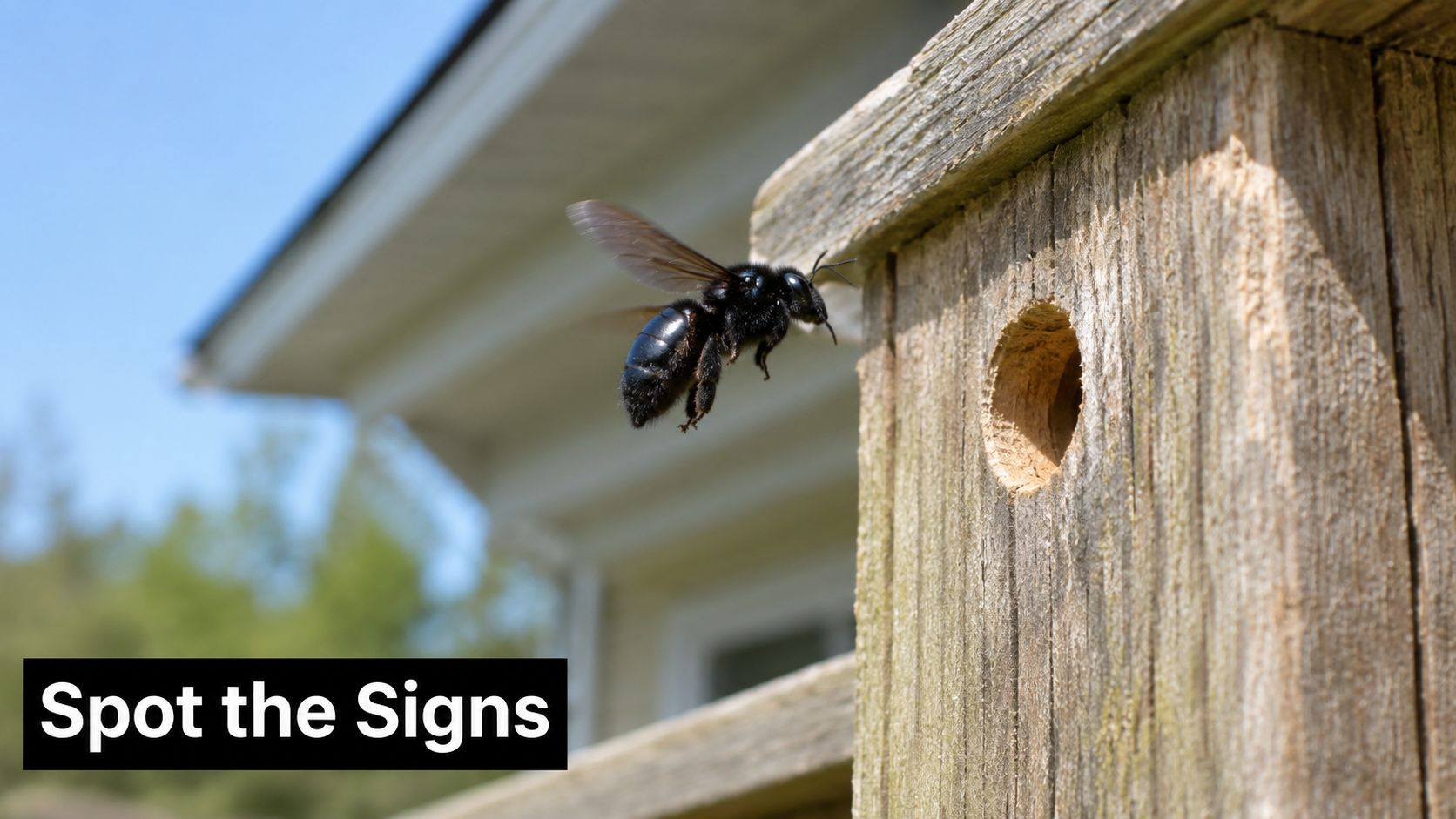
You're sitting on the deck in spring when a large black bee starts hovering near the railing. It may dart toward you, circle your head, and return to the same section of wood. A few feet below, a small pile of coarse sawdust has appeared on the deck floor.
That pattern points toward carpenter bee activity, especially when the wood has a clean, round entry hole. Carpenter bees are different from bumblebees in their nesting behavior. Females drill into wood, while males often hover and act aggressive around people but don't have stingers. Females can sting, although they generally focus on creating and provisioning their nests rather than chasing homeowners.
Signs that activity is current
Look closely at exposed trim, deck rails, porch ceilings, fascia, eaves, and untreated posts. Fresh carpenter bee damage may include:
- New sawdust: Coarse shavings beneath a hole suggest that a bee has recently excavated the wood.
- Active hovering: Repeated bee activity around one board is more meaningful than seeing a single bee passing through the yard.
- Dark staining: Fecal staining near an entry point can indicate activity inside the gallery.
- Clean, round openings: A carpenter bee commonly begins with a nearly perfect circular entrance, rather than the irregular opening left by a woodpecker.
Old holes can confuse the inspection. A weathered opening with no fresh sawdust or bee activity may be an abandoned gallery, an old carpenter bee tunnel, or damage caused by another pest. Woodpecker holes are often rougher and less uniform, while carpenter bee entrances usually look deliberately drilled.
Practical rule: Don't judge the size of the problem by the visible hole alone. A small entrance can lead to hidden tunneling inside the wood.
Homeowners in Crown Point and Northwest Indiana should inspect vulnerable wood as soon as they notice buzzing or fresh shavings. Early identification gives you more options, including surface protection and careful tunnel treatment, before the bees establish additional galleries.
Understanding How Carpenter Bees Damage Wood Structures
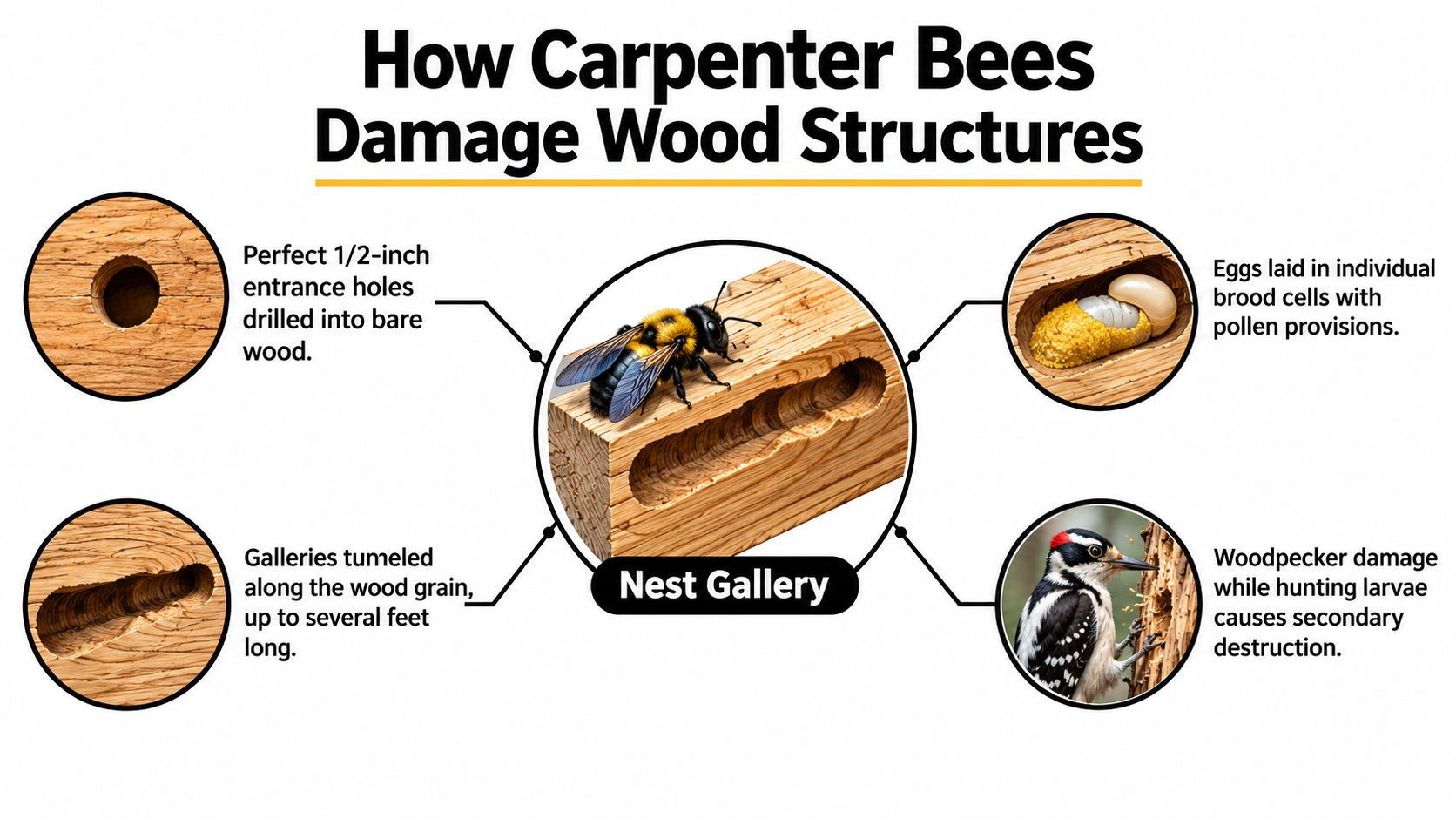
Carpenter bees don't eat wood. They excavate it to create nesting galleries, and that distinction matters when you decide how to repair the damage. A typical entrance is about 1/2 inch in diameter, according to Purdue Extension's carpenter bee guidance.
The tunnel usually travels straight into the wood for about 1 to 2 inches, then turns and follows the grain for roughly 4 to 8 inches, as described by Purdue Extension in the same guidance. That hidden path explains why plugging the visible entrance without addressing the gallery often fails. The outside may look repaired while the interior remains available for returning bees.
Why the entrance is only part of the problem
A carpenter bee uses the tunnel to create nesting areas along the wood grain. Open galleries can also attract later activity when bees find an existing cavity that requires less excavation than starting from bare wood.
The result is a structural problem that can grow without notice. Exterior trim may tolerate limited damage, but repeated tunneling in a deck rail, beam, eave, or other important component deserves closer attention. Open galleries can also allow moisture into the wood, while animals that search for larvae may enlarge the openings.
Spraying only the face of the board can miss the protected interior. Plugging an active hole immediately can create another problem by trapping bees inside, which is why treatment and sealing must happen in the correct order. The goal is to address current activity, close the gallery when appropriate, and finish the surface so the wood is less attractive in the future.
This is also why a home inspection should include more than a quick look at the entrance. Check the surrounding wood for softness, cracks, weathering, staining, and additional holes. If a load-bearing component appears compromised, have a qualified professional assess whether repair is suitable or replacement is needed.
Proven Prevention Strategies for Exposed Wood Surfaces
The most dependable way to prevent carpenter bee damage is to make exposed wood difficult and unattractive to enter. Carpenter bees favor unprotected, softened, rough, or weathered wood. Paint, varnish, pressure treatment, and appropriate material selection all reduce that vulnerability.
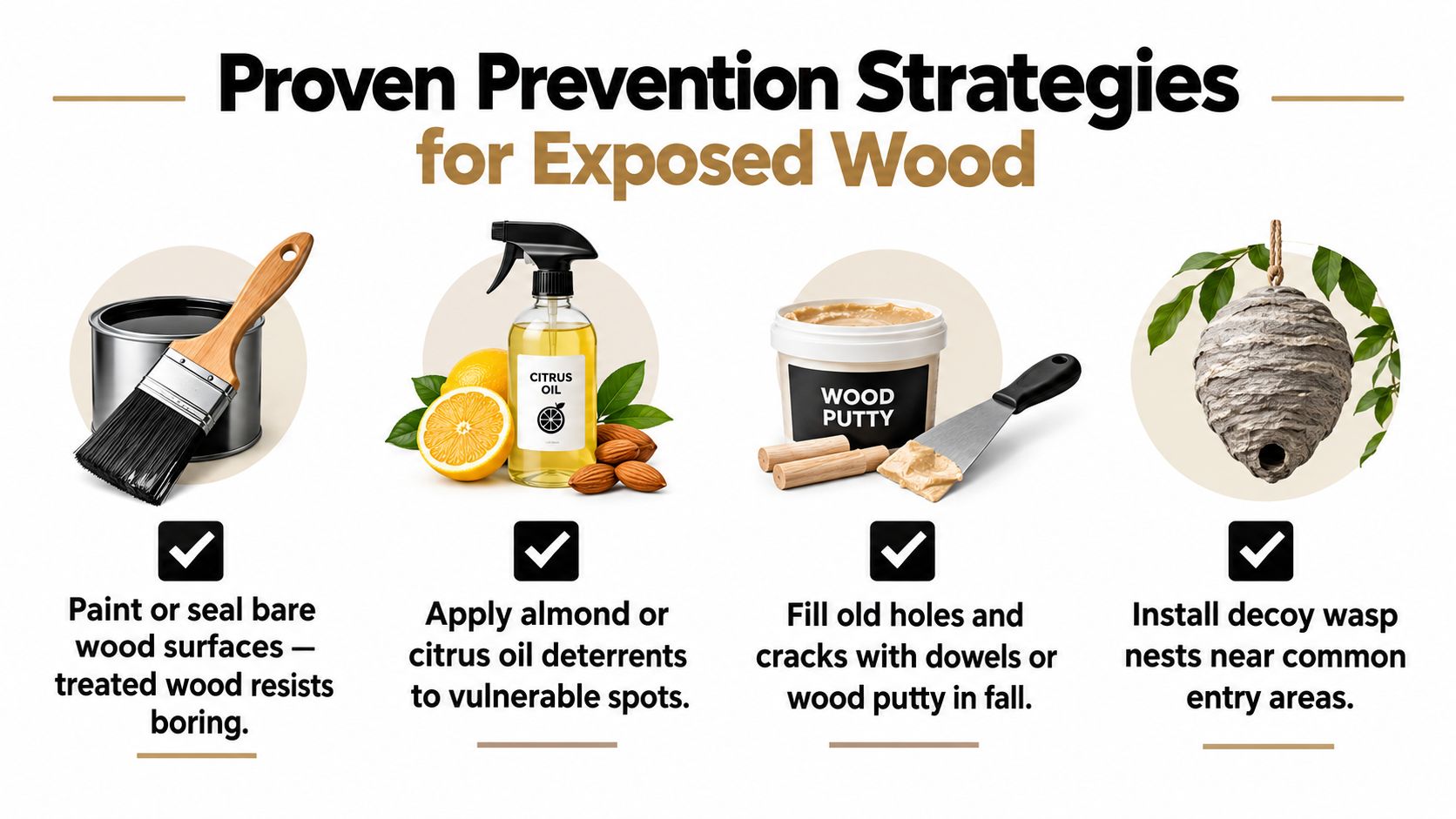
Start with the surface, not the spray. University of Maryland Extension recommends painting surfaces, filling nail holes and cracks with caulk or putty before painting, and keeping the finish intact. Purdue Extension's prevention recommendations likewise identify hardwoods and protected finishes as important tools for discouraging tunneling.
Build a durable surface barrier
Before applying paint or varnish, repair the small defects that give bees a protected starting point.
- Inspect the entire exposed surface. Pay attention to the underside and ends of deck boards, fascia, trim, porch ceilings, and railings. These areas are easy to overlook and can weather faster than the broad, visible faces.
- Fill cracks and nail holes. Use exterior caulk or suitable wood putty so the finish doesn't leave easy entry points.
- Apply a complete coating. An exterior paint, oil-based painted finish, or polyurethane varnish creates a more resistant surface than bare wood. Clemson Extension identifies painted oil-based or polyurethane surfaces as highly effective deterrents in its carpenter bee prevention guidance.
- Maintain the finish. A coating only works while it remains sound. Peeling, worn, or weathered areas need attention before bees begin drilling.
For homeowners who want a more detailed maintenance checklist, these expert advice on wood maintenance recommendations from I PAINT STUFF offer useful context on protecting outdoor wood surfaces.
Choose less vulnerable repair materials
When replacing damaged trim or building a new deck feature, material choice can prevent recurring trouble. Purdue Extension and Missouri Extension recommend hardwoods such as oak, walnut, or maple because they're less attractive than softer woods. Pressure-treated lumber, varnished wood, painted wood, and composite materials can also reduce the chance of boring.
North Carolina State guidance highlights very hard woods such as black locust or ipe and composite products for vulnerable exterior elements. UC IPM also recommends hardwood for susceptible parts and suggests protecting rough areas with screening or metal flashing. These choices can cost more or change the appearance of a project, but they may reduce repeated repairs on fascia, rails, eaves, and trim.
The trade-off is practical. A clear finish preserves the look of wood but may require more careful upkeep than an opaque exterior paint. Composite materials can reduce painting work, but they may not suit every design or repair. Choose based on exposure, accessibility, appearance, and the importance of the component.
A short video can help visualize how carpenter bees use exposed wood and why surface protection matters:
Safe Exclusion Techniques and Repairing Existing Tunnels
Finding a hole doesn't mean you should seal it immediately. If bees are still using the gallery, plugging the entrance can trap them inside and reduce the effectiveness of your treatment. University of Georgia guidance on carpenter bees emphasizes that returning bees should be allowed to exit for several days before the hole is closed.
The safest sequence is straightforward, but timing matters.
Treat first, seal second
First, identify whether the tunnel is active. Look for hovering bees, fresh sawdust, staining, or recent damage. If you can't safely reach the area or the activity is near a doorway, play area, or high-traffic walkway, don't use a ladder or handle the nest without professional guidance.
Next, use an appropriate product according to its label. A properly selected insecticidal dust or spray may be applied into the entry point to reach bees using the gallery. The product, application method, and protective equipment must match the label and the site. Surface-only application may not address activity deeper inside the tunnel.
Leave the treated opening open for several days. Returning bees need an opportunity to contact the treatment as they enter or leave. Sealing too soon can trap bees, leave surviving activity inside the wood, and make the repair less effective.
Close the gallery after activity ends
Once the appropriate waiting period has passed and activity has stopped, seal the opening with a suitable repair material. Depending on the size and condition of the hole, options can include:
- Wood putty or exterior caulk for small openings and surface defects.
- Steel wool combined with a durable exterior sealant where a deeper cavity needs additional resistance.
- A wooden dowel fitted into a larger entrance, followed by trimming, filling, and finishing.
- A replacement section of wood when the surrounding material is soft, split, or structurally weakened.
After sealing, repaint or varnish the repaired area. A patch that remains bare recreates the attractive surface that encouraged the bee to bore in the first place.
For broader protection around the home, The Green Advantage's pest control exclusion service can help address entry points and related pest risks. Exclusion is especially useful when carpenter bee damage appears alongside gaps, deteriorated trim, or other openings that may invite rodents, wasps, or insects.
When to Call Professional Pest Control in Crown Point
DIY maintenance can work for a single accessible hole in sound wood. It becomes a poor choice when the activity is widespread, difficult to reach, or connected to a component that protects people and property.
Call a licensed pest professional when you see:
- Repeated yearly activity: Bees return to the same eaves, deck, or trim despite painting and repairs.
- Multiple areas of damage: Several holes across a deck, porch, fascia, or outbuilding may indicate a broader maintenance problem.
- High or hazardous locations: Eaves, rooflines, upper trim, and tall posts create fall and stinging risks.
- Possible structural weakening: Soft wood, splitting, sagging, or damage near important beams and rails requires more than surface plugging.
- Uncertain pest identification: Carpenter bees, bumblebees, wasps, and wood-boring insects require different responses.
A professional inspection helps separate active carpenter bee galleries from old holes and unrelated damage. It also creates a safer plan for treatment, sealing, repainting, and material replacement. The technician can consider how the structure is built, whether bees can still access nearby bare wood, and whether other pest issues are contributing to deterioration.
For homeowners looking for an exterminator near me or pest control in Crown Point, IN, The Green Advantage provides licensed, certified services for residential and commercial properties in Crown Point and the surrounding Northwest Indiana area. Its work includes pest inspections, wood-destroying insect concerns, bee and wasp removal support, and environmentally mindful treatment planning.
Professional prevention is valuable when the problem involves height, hidden galleries, recurring activity, or structural wood. The right solution should reduce current risk and make the site less attractive afterward.
Businesses and property managers face additional concerns. A damaged exterior rail, eave, or entry feature can affect visitors, tenants, employees, and maintenance budgets. A commercial pest control inspection can identify vulnerable surfaces and organize repairs around the property's operating needs. Homebuyers and real estate professionals may also benefit from a focused pest inspection when wood damage appears during a sale.
For more context on recognizing when bee activity needs professional attention, review this guide to the lifecycle of a bee infestation and when to call a bee exterminator.
Seasonal Maintenance and Long-Term Property Protection
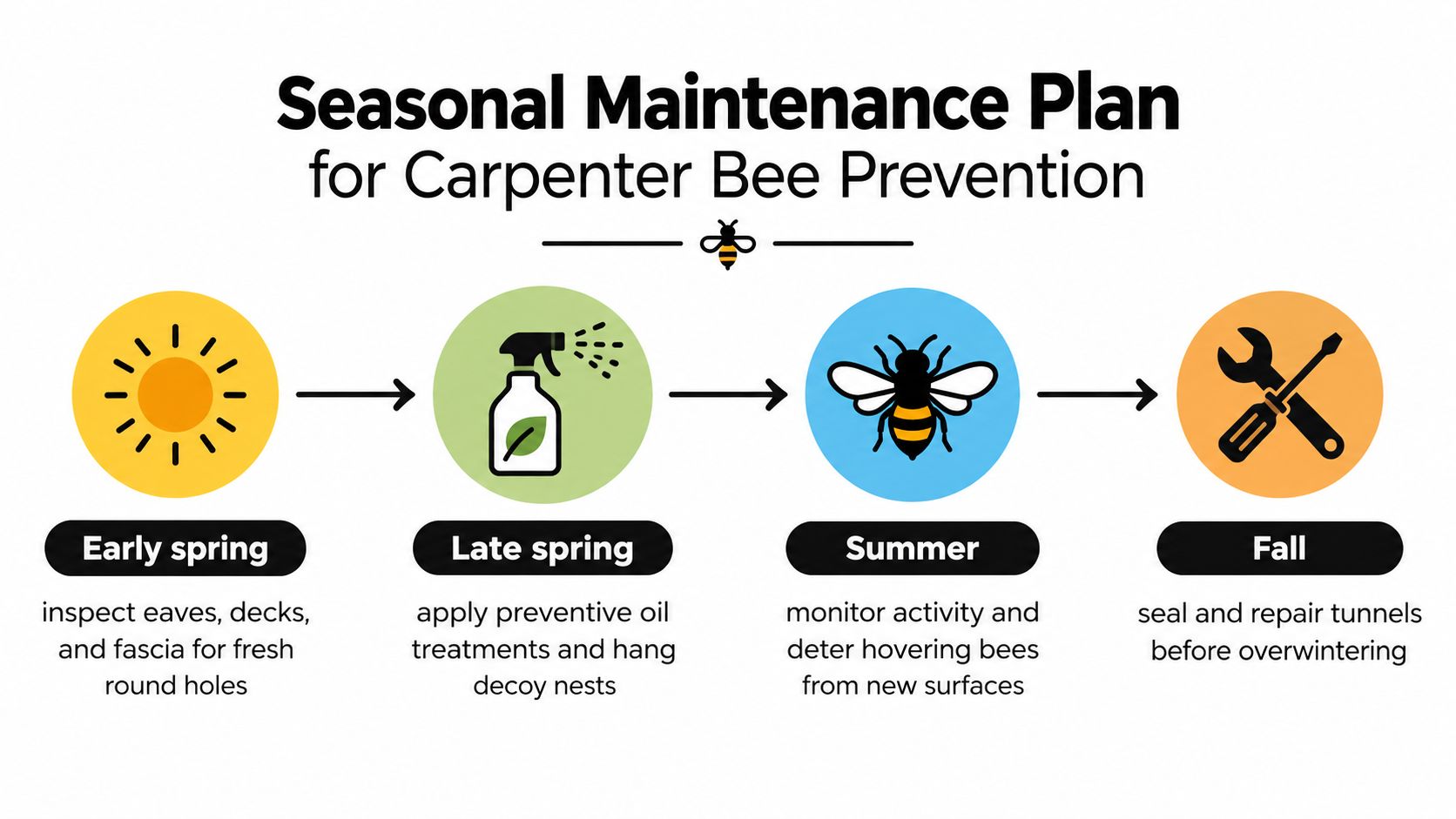
Carpenter bee prevention works best as a maintenance cycle, not a one-time treatment. The pattern is simple: inspect vulnerable wood, repair defects, apply a durable finish, and check the surface again after seasonal wear.
In early spring, walk the property before nesting activity becomes established. Check deck rails, fascia, eaves, trim, porch ceilings, and exposed posts for fresh round holes, sawdust, and hovering bees.
During dry weather, complete caulking, wood repairs, painting, or varnishing. Make sure the coating reaches overlooked areas, including board ends and undersides. If you've found active tunnels, follow the treatment and waiting sequence before sealing them.
In fall, review the finish after the property has experienced summer weather. Seal unoccupied holes, repair cracks, and replace wood that has become soft or badly deteriorated. Cornell-style extension recommendations and Ohio State guidance reinforce the value of keeping exposed wood painted, inspecting it periodically, and maintaining the surface as weathering develops.
This routine also fits naturally into broader preventative pest treatments. While checking wood, look for conditions that support ant control, termite control, rodent control, spider control, mosquito control, or wasp removal needs. A consistent inspection habit gives homeowners and property managers in Northwest Indiana a clearer view of seasonal pest issues before they become urgent.
Schedule a carpenter bee inspection with The Green Advantage if you're seeing fresh holes, sawdust, or recurring activity around your Crown Point property. The team can assess active wood damage, recommend treatment and exclusion options, and help you establish a practical maintenance plan for lasting structural protection.