
The best pest control for spiders isn't one spray. It's an integrated program that combines exclusion with targeted treatments, because one identified female can establish a new infestation and egg sacs can contain hundreds of young spiders. For severe or persistent infestations in Crown Point, professional pest control delivers safer, longer-lasting results than repeated whole-room spraying.
Finding a spider in the basement, garage, or a quiet corner can make your home feel uncomfortable fast. The right response isn't to coat every baseboard with insecticide. The best pest control for spiders in Crown Point, IN, starts by blocking entry points, reducing the insects spiders feed on, and treating hidden harborages precisely.
That approach fits homeowners, landlords, and businesses searching for pest control near me, an exterminator near me, or reliable residential pest control in Northwest Indiana. The Green Advantage serves Crown Point and nearby Northwest Indiana communities with inspection, prevention, and treatment options for spider problems and other seasonal pest issues.
| Approach | Best use | Main strength | Main limitation |
|---|---|---|---|
| DIY cleaning and exclusion | Occasional spiders or a small number of webs | Immediate, low-risk prevention | Requires consistent follow-through |
| Over-the-counter products | Spot treatment when the hiding place is known | Convenient and accessible | Broad spraying and fogging often miss the source |
| Professional spider control | Persistent activity, egg sacs, recurring entry, or commercial needs | Diagnosis, targeted treatment, and prevention planning | Requires scheduling an inspection and service |
Why Spraying Spiders Often Fails at Home
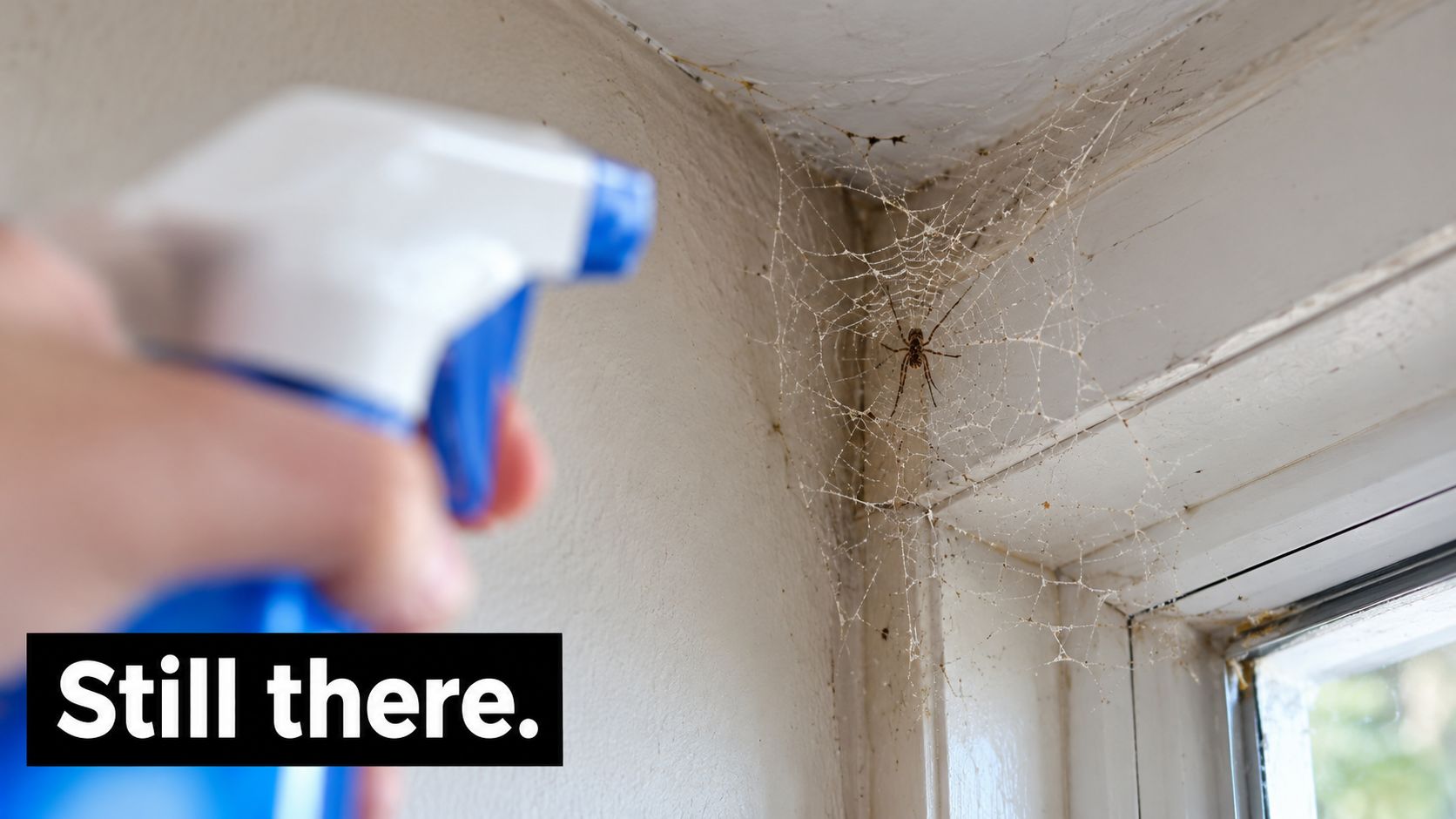
A Crown Point homeowner sees a spider drop from a ceiling corner, grabs a spray bottle, and treats the baseboard. The spider disappears, but new webs show up near the window, another spider appears in the basement, and the same cycle starts again. The problem isn't that the homeowner failed to spray enough. The problem is that the spray addressed the sighting instead of the conditions creating repeated activity.
Spiders can enter through small openings, hide in undisturbed areas, and follow a supply of insects into a home. A surface application may kill a spider if the product contacts it, but it won't necessarily seal the gap, remove an egg sac, or reduce the insects attracting more spiders. Fogging an entire room creates the appearance of action without placing treatment where spiders actually rest.
The entry point matters more than the web
University and extension guidance recommends sealing cracks and gaps around windows, doors, sill plates, vents, and utility penetrations, while also removing clutter, webbing, and egg sacs through regular vacuuming or sweeping. Those recommendations treat the cause, not just the visible spider. Chemical products remain secondary because spider pressure often comes from entry and food supply, not from spiders appearing without a reason. See the Texas A&M spider IPM guidance for the underlying prevention framework.
Practical rule: If spiders keep returning to the same room, inspect the room's edges and nearby prey insects before buying another spray.
The Green Advantage approaches spider concerns as a property problem rather than a single-insect problem. That can include checking foundations, doors, crawl-space access, basements, and other entry zones, then matching treatment to the location and severity. Homeowners looking for a broader pest control spray service should still expect the work to include more than spraying. A useful service identifies where spiders enter and why they're finding enough shelter or food to remain active.
Common Spiders in Crown Point Homes and What Severity Looks Like
Most indoor spider complaints fall into three practical groups. Web-building spiders stay near corners, ceilings, windows, garages, and other areas where a web can remain undisturbed. Wandering hunters move across floors, walls, basements, and storage areas instead of relying on a large visible web. A third group consists of seasonal or foundation-area visitors that enter around doors, screens, cracks, and utility openings.
You don't need to identify every spider perfectly before taking sensible action, but identification can prevent the wrong response. A single visitor after a door opens is different from recurring activity in a basement with webs, egg sacs, and insects. A clear photo, the location where the spider was found, and the pattern of sightings can help a professional narrow the treatment path. The spider identification guide can also help you organize what you're seeing before contacting an exterminator in Crown Point, IN.
Use the pattern to judge severity
Mild activity usually means an occasional spider, an isolated web, or activity limited to an entry area. Start with vacuuming, inspect screens and door sweeps, and look for visible gaps. Sticky traps placed along baseboards or in low-traffic areas can help show whether movement is isolated or ongoing.
Moderate activity looks different. You may find recurring webs in quiet corners, several spiders in the same basement or garage, or insects gathering near windows and exterior lights. This pattern suggests that the property offers both access and food. Cleaning alone may reduce what you see, but exclusion and prey reduction need attention.
Severe activity includes repeated sightings throughout the property, multiple egg sacs, activity in wall or ceiling voids, or spiders entering through the same structural areas despite basic sealing. Large or concerning spiders, commercial facilities, and homes with children, pets, or sensitive occupants also deserve a professional assessment.
The wrong severity assessment creates two problems. Some homeowners overapply products to a mild issue, while others ignore a persistent pattern until webs and hidden harborages spread through storage areas. Treat the pattern, not the most alarming single sighting.
DIY, Over-the-Counter, and Professional Spider Control Compared
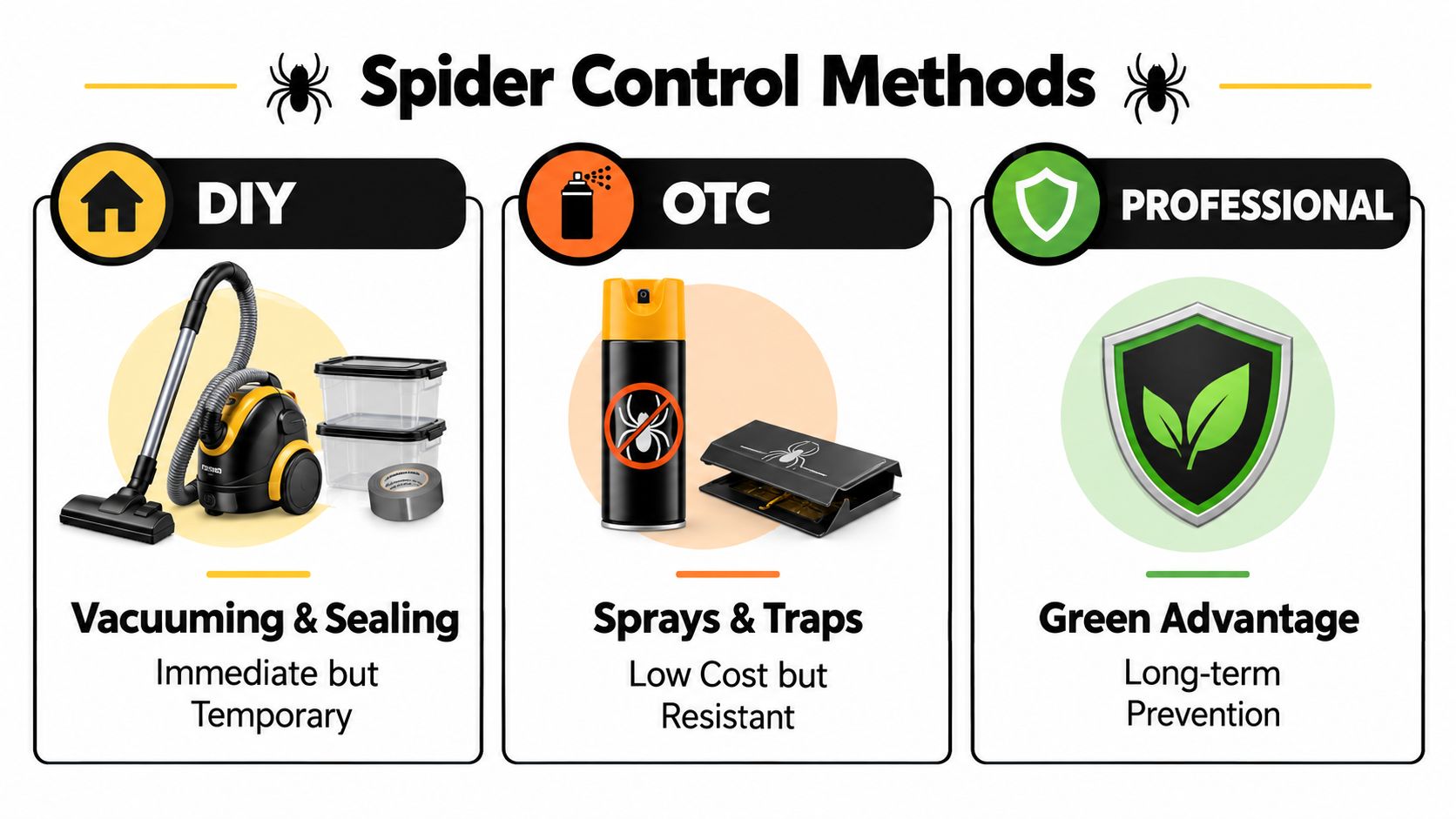
DIY measures make sense when activity is limited and the source is visible. Vacuuming webs and spiders, sweeping quiet corners, placing sticky traps, and sealing obvious gaps can make a noticeable difference. These tasks remove what's present and help reveal where movement continues, but they won't solve concealed entry points or widespread activity on their own.
Over-the-counter products offer convenience, but convenience isn't the same as control. Aerosols can work when they directly contact a spider. Dusts and residual products may help in cracks, voids, and other hidden areas when the label allows that use. Broad interior applications and foggers are poor choices for spider management because they don't reliably reach the places spiders rest. University of Minnesota Extension guidance emphasizes targeted placement over broadcast spraying.
Choose based on the problem you can actually control
| Option | Speed | Safety considerations | Durability | Best fit |
|---|---|---|---|---|
| DIY cleaning and sealing | Immediate visible improvement | Low product exposure | Depends on maintenance | Small, isolated activity |
| OTC spot treatment | Can act quickly at direct contact | Requires strict label compliance | Limited if entry remains open | Known cracks or hidden harborages |
| Professional service | Begins with diagnosis | Precise, labeled applications | Stronger when paired with exclusion | Persistent or difficult activity |
A homeowner who can safely reach a web, remove it, and seal the nearby opening may not need a service call. That's especially true when traps show little continuing activity. The trade-off is time. DIY prevention works only when someone keeps checking quiet areas, repairs screens, manages storage, and watches for recurring prey insects.
OTC treatment becomes riskier when people use more product than the label permits, apply it near food or children's areas, or spray repeatedly without knowing where spiders are hiding. More product doesn't compensate for poor placement. If the treatment can't reach a crack, void, crawl-space edge, or foundation opening, it may do little beyond treating the visible surface.
Professional service is the better choice when the cause is concealed or the activity returns after cleaning and sealing. A technician can inspect likely harborage areas, distinguish spider activity from an underlying insect issue, and apply labeled dusts or residuals only where appropriate. For homeowners weighing those trade-offs across home services, Groen's Fine Furniture comparison of DIY and professional work offers a useful general perspective on convenience, expertise, and long-term value.
Spider Prevention Strategies That Actually Reduce Returns
Durable spider control begins outside the spray bottle. Walk the property's edges and look for the small transitions spiders use to enter: foundation cracks, gaps around windows and doors, vent openings, utility penetrations, damaged screens, and spaces beneath doors. Seal suitable gaps with durable caulk or expandable foam, install weather-stripping and door sweeps, and repair screened openings.
The goal isn't to make a home airtight. The goal is to remove the easy routes that let spiders and their prey insects move inside.
Work from the foundation outward
Exterior conditions influence what happens indoors. Vegetation touching the structure, piles of debris, and firewood stored against the foundation create shelter and can support insect activity near walls. Move those materials away from the home, trim growth back from doors and windows, and keep foundation areas accessible for inspection.
Cornell's spider prevention guidance recommends exclusion measures such as caulk, expandable foam, weather-stripping, door sweeps, and repaired screens. Those repairs are more durable than repeatedly treating the same threshold after spiders have already entered.
Inside, vacuum around windows, corners, closets, basements, garages, and other quiet areas. Remove webs and egg sacs as soon as you find them, and reduce clutter that gives spiders protected places to stay. Store seasonal items in sealed containers instead of leaving loose cardboard and fabric in dark storage areas.
Exterior lighting also deserves attention. Lights near doors and windows can draw insects, and those insects provide a reason for spiders to remain nearby. Use only the outdoor lighting you need, keep fixtures clean, and ask a professional to investigate if insect activity stays heavy around an entry.
A lasting fix is usually layered: close the route in, remove shelter, reduce prey, then consider a targeted treatment where activity persists.
Treat prevention as a routine rather than a one-time project. Recheck screens, sweeps, vegetation, storage, and foundation edges as seasonal conditions change in Crown Point and surrounding Northwest Indiana. If the same location produces webs again, the property needs a closer inspection instead of another quick spray.
Safety, Pets, Family Considerations, and Seasonal Cost Expectations
Families often continue using an ineffective product because they've already paid for it, or they stop using a useful product because they're unsure how to apply it safely. Both reactions are understandable. The safer decision comes from matching the product and placement to the label, keeping children and pets away from treated areas as directed, and avoiding applications that reach food surfaces, bedding, toys, or accessible floors.
Repeated indoor spraying can increase product use without improving control. Independent expert guidance notes that residual insecticides have limited direct impact on spiders compared with insects, and that egg sacs are relatively resistant to pesticides. Success should be judged by fewer sightings, less entry pressure, and reduced supporting insect activity, not by an unrealistic promise that every spider or egg sac will disappear immediately. The independent discussion of spider control evidence explains why chemical control alone has limits.
Think about value, not just the checkout price
DIY appears inexpensive when the problem is small. The hidden cost rises when a homeowner buys multiple sprays, traps, dusts, and replacement tools while leaving the entry point open. A professional inspection can bring more predictable value when activity is persistent because the service focuses on diagnosis, placement, and prevention rather than repeated guesses.
Seasonal activity can also change what makes financial sense. Spiders may become more noticeable around foundations, garages, basements, and entry zones as outdoor conditions shift and insects move toward shelter. Preventive exclusion and monitoring generally offer better long-term value than waiting for heavy activity and then treating every visible surface.
For homes with pets, young children, allergy concerns, or occupants who are especially uncomfortable around spiders, targeted work also reduces unnecessary exposure. The right treatment is not the strongest-looking treatment. It's the narrowest effective approach combined with repairs and sanitation that keep the problem from returning.
When to Hire The Green Advantage for Spider Control
DIY has a clear place, but persistent activity is where professional pest control earns its value. Contact The Green Advantage when spiders return after cleaning and visible sealing, when you find egg sacs in hidden areas, when activity appears throughout a basement or crawl space, or when a commercial property needs a documented pest management approach. A professional inspection is also sensible when you can't safely reach the treatment area or you're uncertain what species you're seeing.
The Green Advantage serves residential and commercial properties in Crown Point and nearby Northwest Indiana communities. Customers communicate directly with knowledgeable office staff for questions and scheduling, while field technicians focus on diagnosing the site and creating a treatment plan suited to the property. That can include inspection of entry zones, basements, crawl spaces, foundation edges, and areas where spiders or their prey insects are active.
Professional service should address more than spiders
A recurring spider problem can point to a broader pest issue. A customized plan may connect spider control with ant control, rodent exclusion, termite inspections, mosquito reduction, or other seasonal pest services when the property calls for it. Commercial facilities may need ongoing commercial pest control, while homeowners may prefer a broader residential pest control plan that covers several recurring concerns.
Because spiders are natural pest controllers, removing them without addressing the insects supporting them can leave the underlying pressure unchanged. Guidance from the Burke Museum on spider infestations supports focusing on sealed gaps, reduced prey insects, sticky traps, and targeted residuals at likely harborages instead of routine blanket spraying.
A technician should explain what was found, where treatment is appropriate, what you need to do before or after service, and how follow-up will work. That transparency matters whether you're protecting a family home, preparing a property for sale, or managing a business where pests can disrupt employees and customers.
The following video offers additional context on how inspection and targeted pest management fit together:
Next Steps for Spider Control in Crown Point
You don't need to choose between ignoring spiders and spraying every room. Use a practical sequence that addresses the property in the right order.
Schedule an inspection or request a quote. Ask for an assessment of recurring webs, egg sacs, foundation edges, basements, crawl spaces, screens, doors, and nearby insect activity. This gives you a treatment plan based on the site rather than a generic product recommendation.
Complete a quick self-check while you wait. Inspect baseboards, window frames, door sweeps, vents, utility openings, and foundation cracks. Vacuum webs and egg sacs around windows, corners, closets, garages, and other quiet areas. The University of Kentucky's cleaning guidance identifies thorough vacuuming or sweeping as a primary spider-control measure because it removes spiders, webs, and egg sacs.
Record what keeps returning. Note the room, time, location, web pattern, and whether insects are present. Photos can help a technician understand the pattern before arriving, especially when spiders hide during the inspection.
The best pest control for spiders combines prevention, targeted treatment, and professional oversight when the problem persists. Clear communication and a property-specific plan are more useful than repeated applications that never address the entry route.
If you're searching for an exterminator near me, pest control in Crown Point, IN, or dependable service for a home, rental, or business, contact The Green Advantage for a spider inspection and practical next steps.
The Green Advantage offers spider inspections, targeted pest treatments, residential pest control, commercial service plans, and prevention support for properties in Crown Point and surrounding Northwest Indiana communities. Visit The Green Advantage to request a quote or schedule service instead of continuing an ineffective spraying cycle.