
You hear scratching behind the pantry wall after dark. The next morning, you find droppings near the cereal, a chewed food package, or a faint odor in the basement. For many homeowners searching for pest control near me or an exterminator near me, the immediate concern is getting rid of the rodent. The lasting solution starts earlier, by finding and closing the route the animal used to enter.
For homeowners in Crown Point, IN, rodent proofing is a practical part of residential pest control. A thorough inspection looks beyond obvious foundation cracks and checks the small transitions around pipes, vents, doors, rooflines, and utility equipment. Local technicians can then combine exclusion, sanitation, and targeted control to protect the home without relying on a temporary fix.
Why Rodent Proofing Is Essential for Crown Point Homes
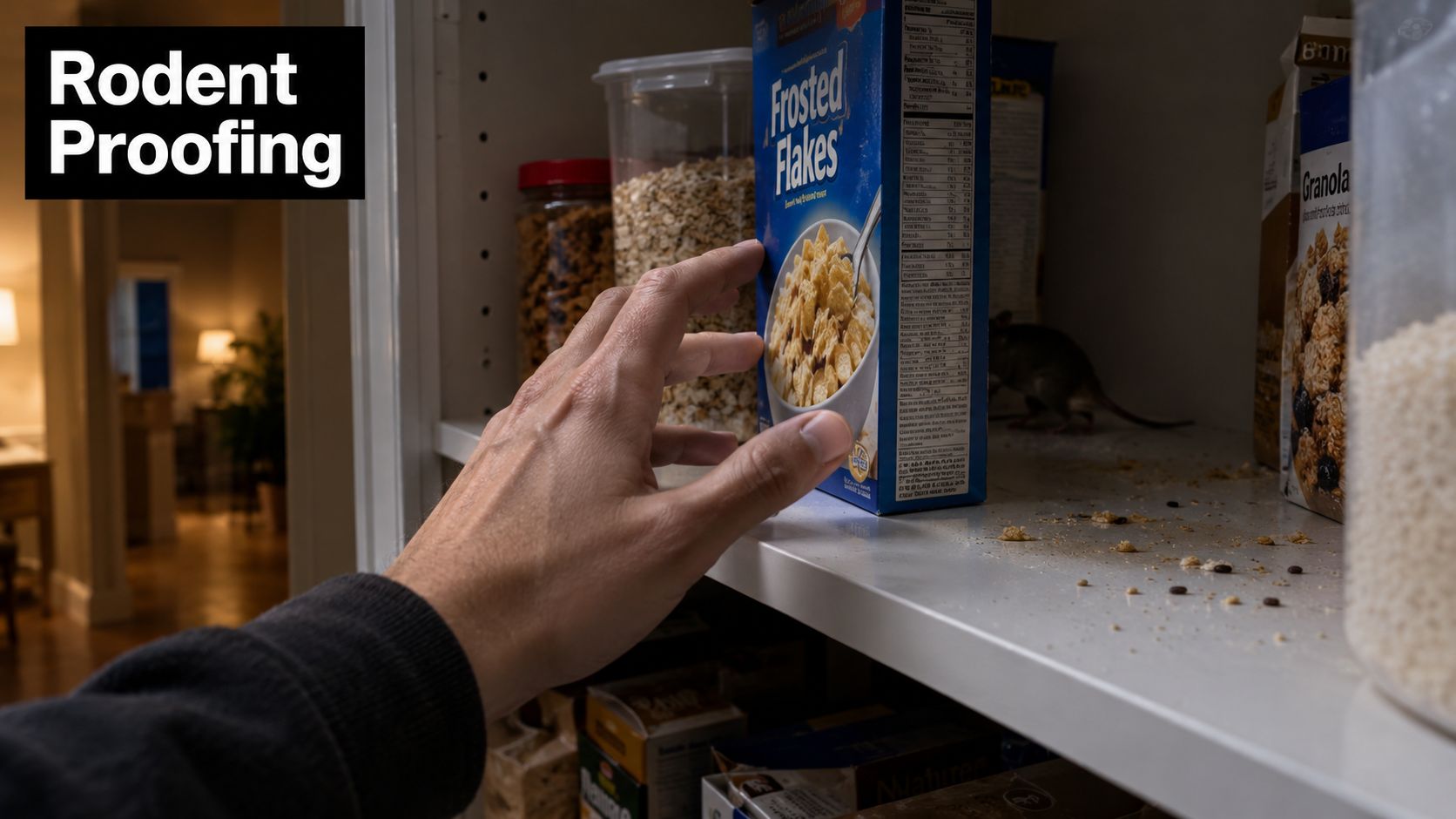
A Crown Point homeowner may first notice a problem in one of three ways: scratching in a wall, droppings in a cabinet, or signs that stored food has been disturbed. None of these signs tells you exactly where the rodent entered. The animal may have used a gap behind an appliance, an opening around a pipe, a damaged vent screen, or a worn seal under an exterior door.
Northwest Indiana homes include a wide range of construction styles, from older properties with settling foundations to newer homes with attached garages, crawl spaces, mixed siding, and multiple utility penetrations. Each transition between materials creates a possible weakness. Seasonal changes can also expose deteriorated caulk, loose weather stripping, damaged screens, and gaps around the foundation.
The practical priority: trapping may remove an animal that's already inside, but exclusion addresses the access point that allows the problem to continue.
Rodents seek shelter, food, and protection from outdoor conditions. A warm wall void, unfinished garage, attic corner, or cluttered basement can provide all three. Once inside, they may damage insulation, stored materials, food packaging, and wiring. Droppings and urine can also create sanitation concerns, particularly in pantries, kitchens, laundry areas, and places where children or pets spend time.
The response doesn't need to be alarmist. Early action usually gives homeowners more options and makes the source easier to identify. A local exterminator in Crown Point, IN can assess activity, inspect the exterior and interior, and separate an active entry problem from old signs that no longer represent current activity.
The same principle applies to businesses and rental properties. A restaurant, warehouse, office, or apartment building can't depend on traps alone if a damaged door seal or utility opening remains exposed. Commercial pest control and residential service both work better when the building itself becomes part of the control plan.
Inspecting Your Home for Hidden Entry Points
A reliable inspection moves around the structure in a consistent direction. Randomly patching the first hole you see often leaves the actual access route untouched. Start outdoors, work from the roofline down, then repeat the process indoors where pipes, wires, ducts, and appliances meet walls or floors.
Start at the roofline and move downward
Look at soffits, fascia, eaves, attic vents, gable areas, and places where roof materials meet siding. Search for damaged screens, loose panels, chew marks, nesting material, and daylight visible through a seam. Roofline gaps matter because rodents can travel through attic spaces and enter wall cavities without leaving obvious signs in the living area.
Next, inspect exterior vents. Dryer vents should have intact flaps and a secure connection to the wall. Check bathroom and kitchen exhaust outlets, crawl-space vents, and other screened openings for breaks or missing covers. Don't assume a vent is too high or too small to matter. A damaged screen can turn a designed opening into an unprotected route.
Pay close attention to utility transitions
Walk the foundation perimeter and examine where the foundation meets soil, paving, siding, porches, and attached structures. Then check around gas lines, plumbing, electrical conduits, cable entries, hose bibs, air-conditioning lines, and other penetrations. The important question isn't only whether you see a crack. Ask whether the material around the penetration forms a continuous seal.
Inside, inspect under sinks, behind appliances, inside cabinets, around water heaters, near furnaces, and in basements or crawl spaces. A gap may be hidden from the exterior but visible where a pipe or wire passes through an interior wall. Garages and outbuildings deserve the same attention as the main house, especially around doors, corners, stored materials, and utility lines.
For a broader understanding of how building components are evaluated, this home inspection guide for buyers offers useful context. A pest inspection isn't a substitute for a general home inspection, but both benefit from careful attention to building transitions.
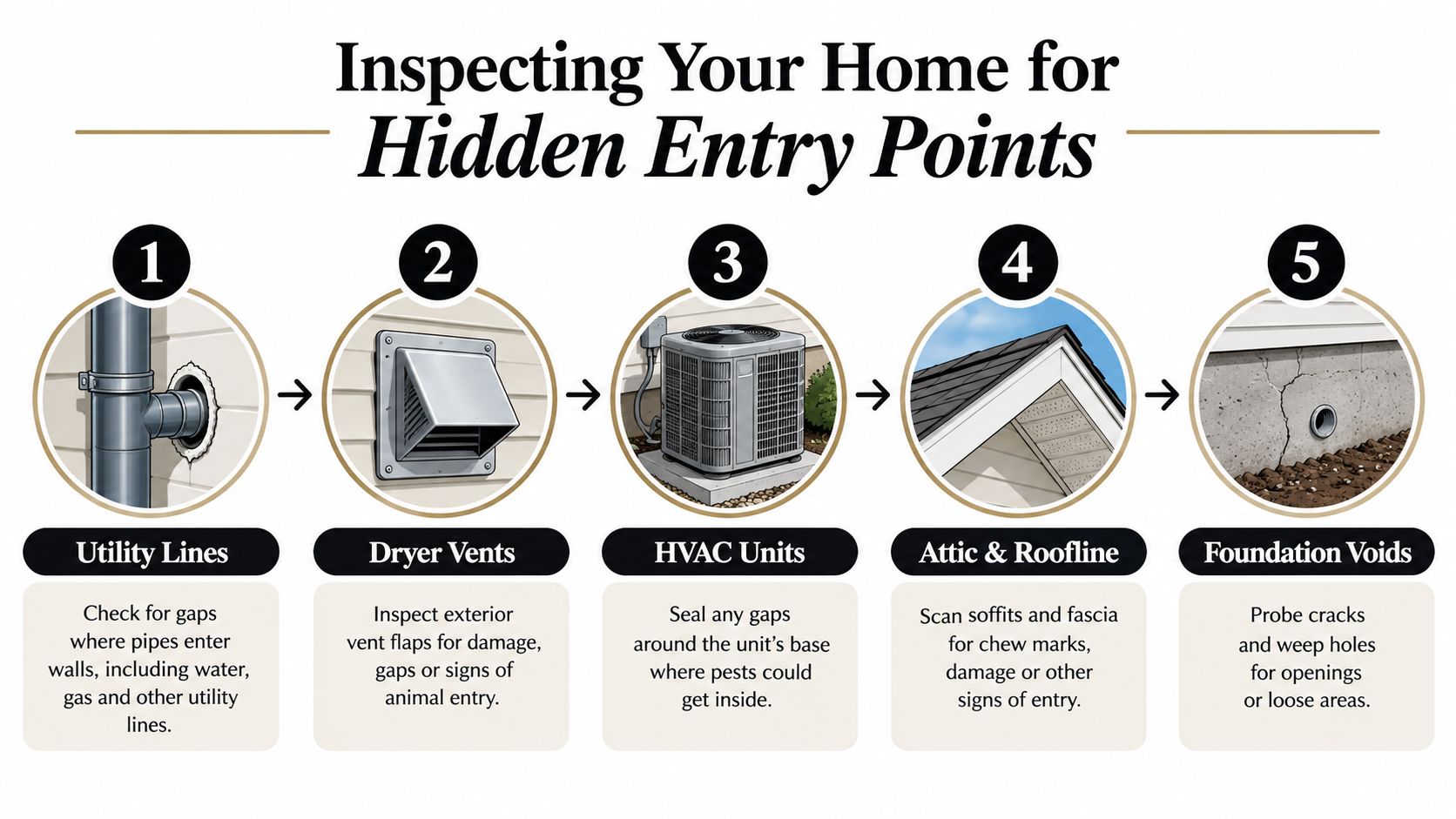
The inspection should finish in the basement, crawl space, and garage. Look for droppings, rub marks, nesting material, disturbed insulation, gnawing, and air movement around penetrations. Record each opening before repairing it. That record helps you confirm that the repair is complete and prevents a surface-level patch from being mistaken for whole-house protection.
Sealing and Exclusion Techniques That Work
The most important measurement in rodent exclusion is the quarter-inch threshold. Mice can enter openings as small as 1/4 inch, or about 6 mm, while rats can enter openings as small as 1/2 inch, according to CDC rodent exclusion guidance. If a pencil can fit through a gap, treat it as a potential mouse route rather than dismissing it as too small.
A successful repair uses a material the animal can't easily pull apart or chew through. Foam and caulk can help hold a repair in place, but they aren't dependable as the only barrier. For larger gaps, public guidance recommends materials such as metal sheeting, lath screen, flashing, and hardware cloth. Historic rodent-control guidance also identifies galvanized sheet metal and cement-based repairs as durable choices, as described by the University of Nebraska Extension rodent-proofing guide.
Match the material to the opening
For a small penetration around a pipe or wire, pack the void with steel wool, then secure it with caulk or an appropriate sealant. The steel wool provides the difficult-to-chew core, while the sealant helps keep the material in place and closes the edge.
For a larger opening, attach metal mesh or sheet metal so it overlaps the surrounding surface. The University of Nebraska identifies 1/4-by-1/4-inch, 24-gauge mesh for mice and 1/2-by-1/2-inch, 19-gauge hardware cloth for rats in its exclusion recommendations. Cut the material tightly, fasten it securely, and seal the perimeter so the rodent can't work behind it.
Avoid the foam-only repair. Expanding foam may fill a visible void, but it doesn't create a reliable chew-resistant barrier by itself.
Doors need mechanical attention. Examine the bottom edge, threshold, corners, and side seals for daylight, warping, or worn weather stripping. Exterior doors should have a tight-fitting sweep or metal threshold with no more than 1/4 inch of clearance, consistent with the National Park Service rodent exclusion manual. Garage doors require the same scrutiny along the bottom and side edges.
For practical guidance on reducing gaps around an overhead garage door, Danny's Garage Door Repair provides this garage door sealing guide. The repair should still be evaluated as part of the whole building, because closing a garage threshold won't solve an unsealed utility penetration or damaged crawl-space screen elsewhere.
Homeowners who need a structured inspection and repair plan can review rodent exclusion services for examples of how professionals approach entry points, repairs, and follow-up. The objective is a continuous exterior shell, not a collection of isolated patches.
Trapping, Sanitation, and Professional Pest Control
Traps have a legitimate role, but they solve only part of the problem. A snap trap may remove a rodent that is already traveling along a wall, while exclusion prevents another animal from using the same route. If you place traps without correcting access, you may continue finding evidence because the building remains available.
Sanitation supports the repair. Store dry goods in durable containers, clean food residue from shelves and counters, secure waste, and avoid leaving pet food out overnight. Reduce cardboard, fabric piles, and other nesting material in garages, basements, storage rooms, and utility areas. These changes don't replace sealing, but they make the property less attractive and make fresh signs easier to identify.
Where DIY efforts often stop short
DIY work can be appropriate when the opening is visible, accessible, and easy to repair safely. A homeowner may replace damaged weather stripping, screen a small vent, or pack a minor pipe gap with steel wool and sealant. The difficulty comes when access is restricted or the visible opening isn't the full route.
Common problems include:
- Surface patching: A homeowner seals one foundation crack but misses a utility line entering a nearby wall.
- Soft materials: Foam, plastic screen, or unreinforced rubber closes the gap briefly but doesn't withstand chewing.
- Incomplete follow-up: The repair looks finished, yet activity continues in the attic, garage, or crawl space.
- Unsafe access: Rooflines, electrical penetrations, and confined spaces can create risks that aren't suitable for casual inspection.
Professional technicians bring inspection experience, repair materials, and a method for distinguishing active signs from old evidence. They can also identify conditions that support activity, such as accessible waste, cluttered storage, damaged screens, or gaps between connected structures.
Trapping is a response to presence. Exclusion is a response to access.
A local service can also coordinate rodent work with other needs. Ant control, termite control, mosquito control, spider control, wasp removal, and preventative pest treatments each address different pest pressures, so the inspection should identify the actual problem instead of applying the same treatment everywhere. Environmentally mindful service means using the least disruptive effective approach while protecting people, pets, and the structure.
Exterior maintenance matters, too. Blocked gutters can contribute to moisture around a building and make other defects harder to spot. Homeowners looking for a separate explanation of drainage upkeep can review this resource on gutter cleaning for Flagstaff homes, while keeping the rodent inspection focused on Crown Point property conditions.
Long-Term Maintenance Checklist for Prevention
Rodent proofing your home isn't a one-time event. Wind, settling, remodeling, weather exposure, landscaping, and routine wear can create new openings after an otherwise careful repair. A short, repeatable inspection is more useful than waiting until scratching or droppings appear again.
Keep the exterior visible
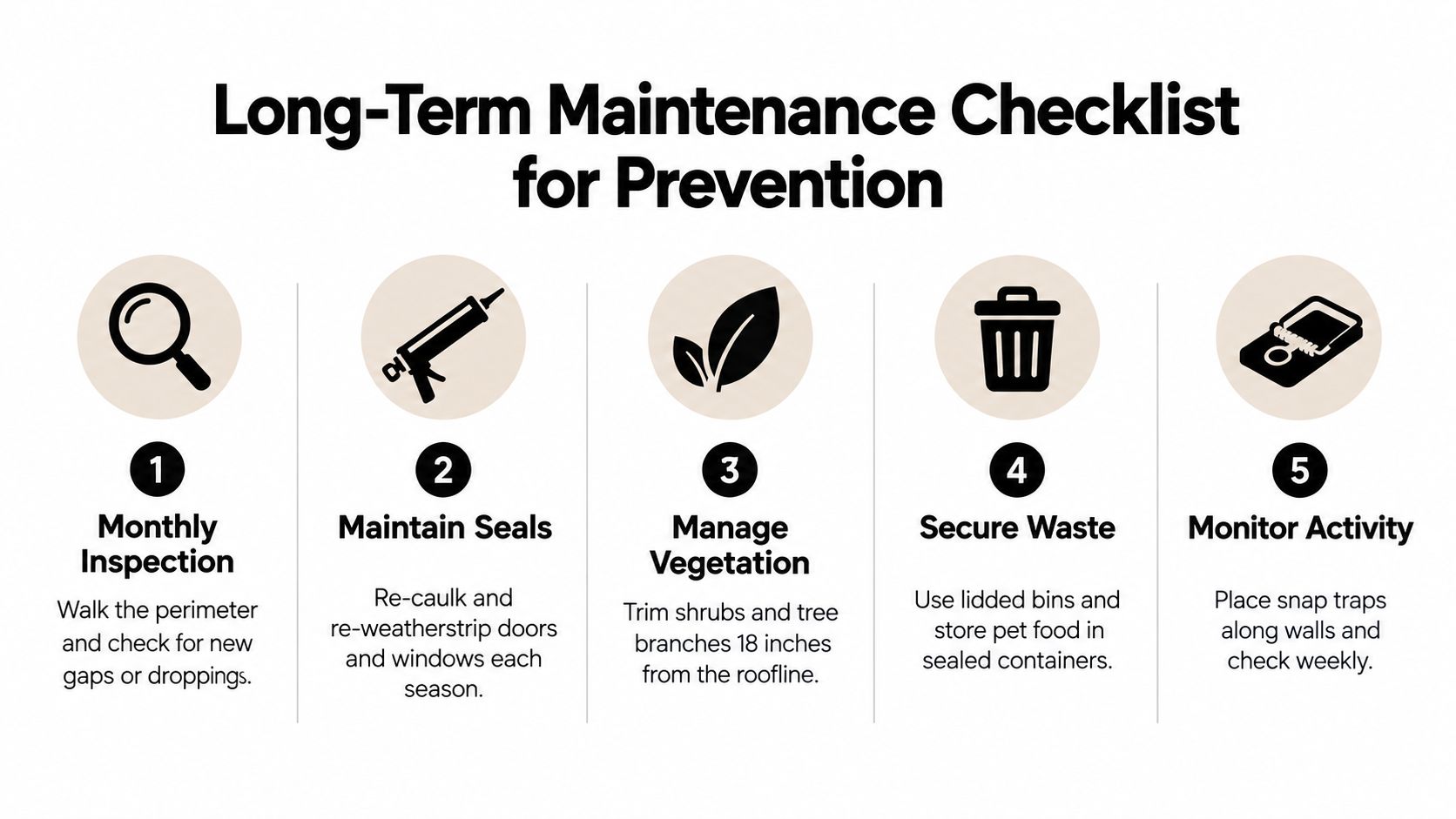
Walk the perimeter and look at doors, vents, foundation edges, utility penetrations, garage seals, and outbuildings. Trim vegetation so branches and dense growth don't hide the roofline or touch vulnerable areas. Keep stored materials off the ground and organized where possible, especially in garages and sheds.
Maintain the barrier
Recheck caulk, weather stripping, vent screens, metal patches, and door sweeps as part of seasonal home maintenance. If a seal has separated or a screen has bent, repair it before the opening becomes an active route. Don't cover a damaged area with another soft layer. Replace or reinforce the underlying barrier.
Control attractants and monitor signs
Use lidded waste containers and sealed food storage. Clean spills quickly, manage pet food, and remove nesting material from storage spaces. Check along walls, behind appliances, in cabinets, and near utility areas for new droppings, gnawing, odors, or disturbed insulation.
A maintenance plan works best when every household member knows what to report. A tenant, property manager, or employee may notice a damaged door seal or unexplained noise before the person responsible for repairs sees it. Prompt reporting helps a local exterminator near me investigate while evidence remains fresh and before a small defect becomes a larger repair.
Schedule Your Rodent Inspection Today
Rodent signs shouldn't be treated as a reason to panic, but they shouldn't be ignored either. The right response combines a careful inspection, durable exclusion, sanitation, and control suited to the building. That approach protects the structure while giving homeowners a clearer explanation of what caused the problem.
For Crown Point homeowners, landlords, property managers, and local businesses, a professional inspection can identify hidden entry points that are easy to miss during a quick walkaround. The family-owned local team serving Northwest Indiana brings decades of hands-on experience, licensed and certified service, transparent communication, and options for both residential pest control and commercial pest control.
Schedule a pest inspection when you notice scratching, droppings, damaged food packaging, nesting material, or repeated activity after a DIY repair. You can also request a quote for preventative service before signs appear, particularly if your property includes a garage, crawl space, attic, outbuilding, or older foundation.
For rodent proofing your home, The Green Advantage provides inspection-focused rodent control, exclusion support, and preventative pest treatments for Crown Point properties. Visit The Green Advantage to schedule an inspection, request a quote, or discuss residential and commercial pest control options.