
You've just come inside from pulling weeds along your Crown Point fence line, and something dark is moving across your sock. Or your child keeps scratching behind an ear after playing outside. Finding a tick is unsettling, but a careful check and prompt removal give you a practical place to start.
The most common places for ticks on humans include exposed lower legs and concealed spots such as the scalp, armpits, groin, and waistband. Ticks can move after reaching clothing or skin, so the place you find one isn't necessarily where it first made contact. Don't assume a tick on the head came from overhead.
For families looking for pest control in Crown Point, IN, The Green Advantage is a family-owned local company serving the broader Northwest Indiana community. Personal tick checks remain important whether you're gardening in Lake County, walking a Porter County trail, or managing a property beside brush.
Think of exposure from the ground up: shoes and socks, legs, clothing edges, then sheltered skin and hair. The following body areas all deserve attention, but they aren't a ranking that applies equally to everyone. Children need especially careful head checks, while adults shouldn't overlook their legs.
1. Scalp and Hairline
Hair can hide a tick that would be obvious on bare skin. The back of the head is also difficult to inspect without help. Don't rely on whether your scalp itches or feels irritated before checking.
Use bright light and expose the skin beneath the hair.
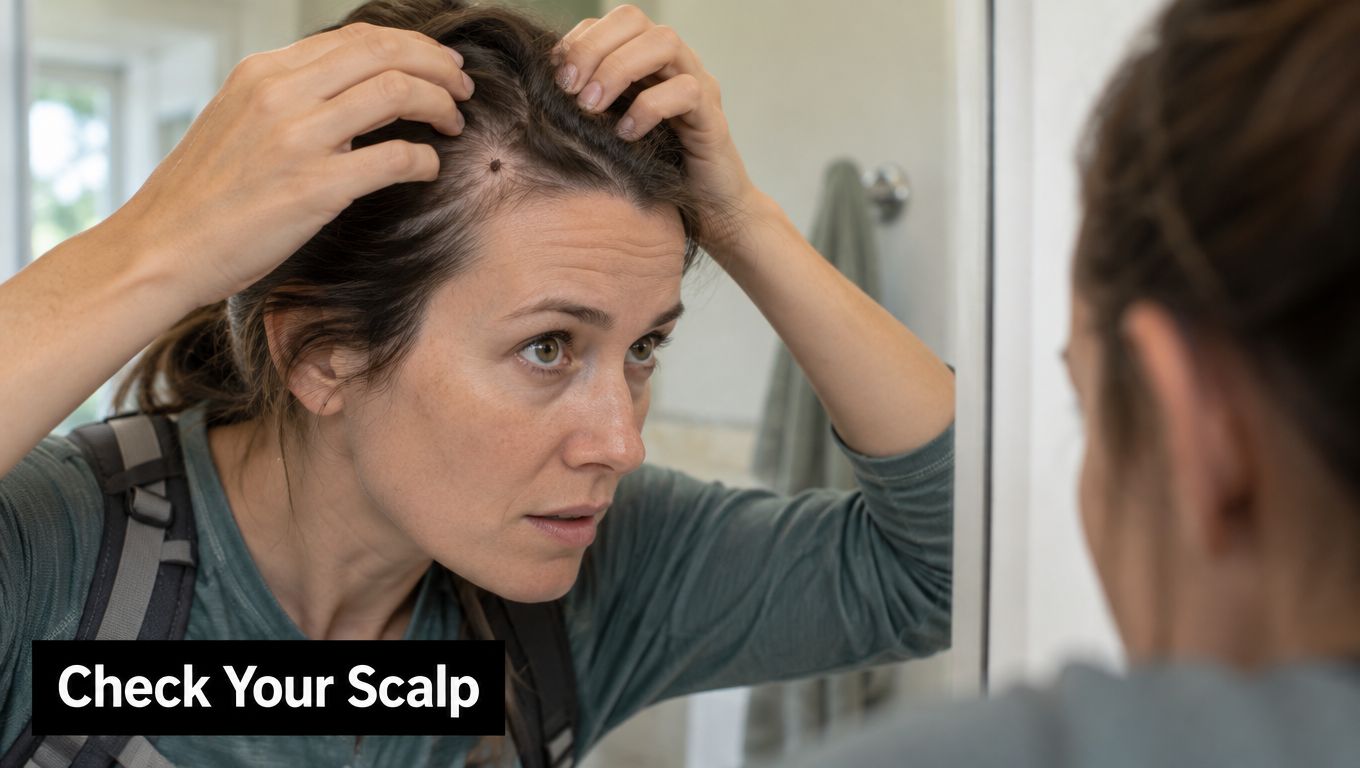
The FDA's tick prevention guidance identifies the scalp and other hidden, hairy areas as places to inspect. A glance at the top of someone's hair won't expose the skin where a tick may be attached.
Check the Skin, Not Just the Hair
Part hair into narrow sections with your fingers or a comb. Work across the crown, along the hairline, and down toward the base of the skull. Ask another adult to examine the back rather than trying to judge everything through a bathroom mirror.
Say you return from a wooded Northwest Indiana trail and feel a small bump near your hairline. Stop and separate the hair before scratching or pulling at it. If it's an attached tick, use fine-tipped tweezers rather than trying to comb it out.
This demonstration can help you prepare for a more deliberate check.
Shampooing can make inspection easier, but it doesn't prove the scalp is clear. Look at the skin after washing, especially around thick hair and places you can't see without assistance.
2. Behind the Ears and Neck
A parent checking a child after backyard play in Lake County might spot a tick tucked into the crease behind an ear. That narrow fold can escape a quick face-and-hands wash. The back of the neck can be equally easy to miss beneath collars and longer hair.
Children deserve particular attention here. The UK Health Security Agency's anatomical-location surveillance study recorded 43% of reported bites among children on the head or neck. That finding supports checking these areas carefully, not assuming the same percentage applies to Crown Point families.
Practical rule: Move hair, collars, and ear folds out of the way. A hidden patch of skin hasn't been checked until you can see it.
Make Ear Checks Comfortable
Have your child sit somewhere well lit rather than trying to inspect a moving head at the doorway. Gently move the outer ear forward to view the skin behind it. Follow the crease downward, then examine the neck and hairline.
- Use a mirror: A hand mirror helps adults inspect behind their own ears.
- Lift the collar: Check underneath shirt collars, hood edges, and necklace contact areas.
- Tie hair back: Keep the neck visible during outdoor clothing checks.
If something looks like a scab, inspect it closely instead of picking at it. Good lighting and a helper are more useful than hurriedly rubbing the area with a towel.
For Crown Point households, this is an easy habit to attach to an existing routine. Check children while they change out of outdoor clothes, before they settle onto furniture or go to bed.
3. Armpits
Raise your arm fully when checking your underarm. Looking down with your elbow held against your side leaves folds concealed. Examine both the hollow of the armpit and the nearby chest and upper arm.
The California Department of Public Health's tick prevention guidance includes underarms among the areas where ticks can hide. Clothing coverage doesn't eliminate the need to inspect skin underneath.
A mirror makes this check much easier.

Consider a worker finishing brush-clearing work in Porter County. Checking exposed hands and forearms is sensible, but stopping there leaves the skin beneath sleeves unexamined. Remove the shirt and inspect the underarms before changing into clean clothing.
Don't Judge Attachment Time by Location
A tick tucked into an armpit may be hard to notice, but its location doesn't tell you how long it has been attached. Don't assume a hidden tick has been feeding all day, or that a visible tick arrived recently.
Use your fingertips to notice an unfamiliar bump, then confirm what it is visually. If thick hair blocks the view, separate it gently. Avoid scraping at the skin or squeezing a suspected tick between your fingers.
Light-colored work clothes can make crawling ticks easier to notice before they disappear beneath fabric. They don't replace an underarm check once the clothes come off.
Around the yard, pay attention to where the work happened. A shaded fence line with accumulated leaves deserves a closer look than blaming the entire lawn. Record the location if repeated encounters suggest a particular work area needs inspection.
4. Groin and Inner Thighs
The groin deserves a deliberate check, even though it's an uncomfortable subject. Privacy shouldn't become a reason to skip hidden skin. Examine the inner thighs, the creases where the legs meet the torso, and skin beneath underwear edges.
Say a Crown Point homeowner spends an afternoon gardening beside a wooded property boundary. A tick noticed later near the groin may have moved beneath clothing before attaching. Finding nothing on the exposed ankles doesn't clear the rest of the body.
Use Shower Time Well
The CDC's vector-borne disease prevention guidance recommends showering within two hours of coming indoors, which can help wash off unattached ticks and provides an opportunity for inspection. An attached tick still needs removal, so don't treat running water as a substitute for looking.
- Remove outdoor clothing: Inspect the skin beneath cuffs, underwear edges, and other close-fitting fabric.
- Use clear lighting: A mirror helps with awkward viewing angles.
- Check without rushing: Look along creases rather than only across the front of the thighs.
A shower can remove a crawling tick. It doesn't reliably remove a tick that has already attached.
Long trousers tucked into socks can make the route to bare skin less direct during brush work. The trade-off is that clothing still needs inspection, and ticks may remain on the outside until you undress.
For children or anyone who needs help, keep the check calm, age-appropriate, and respectful. Explain what you're checking and why. If an attached tick is in a location you can't safely reach or clearly see, seek assistance rather than attempting removal blindly.
5. Waistband and Belt Line
Before dropping your gardening trousers into the laundry basket, inspect the waistband. Check the skin beneath it, the belt line, and the inside fabric folds. A tick on a clothing seam is not the same as a tick attached to your body.
Clothing can change where ticks are found without eliminating exposure. A controlled clothing study published in the Journal of Medical Entomology found different attachment distributions between treated and untreated outfits. That's a reason to inspect the whole body rather than trusting a single protected area.
Separate Clothing Checks From Skin Checks
A family returning from camping near wooded Northwest Indiana trails might find a crawling tick along a waistband while unpacking. Remove it, then inspect the skin underneath and continue the body check. Don't assume finding the first tick finishes the job.
- Open fabric folds: Examine belt loops, tucked shirt tails, pocket edges, and waistband seams.
- Handle outdoor clothes deliberately: Keep them off beds and upholstered furniture until inspected.
- Use fabric treatments correctly: Permethrin products intended for clothing belong on approved clothing or gear, not directly on skin.
If you're worried about ticks brought home with clothing, our explanation of whether ticks can live indoors helps distinguish a hitchhiker from a broader concern.
Wash outdoor clothing in hot water when the fabric permits, and use a high-heat dryer setting when appropriate. Follow garment care directions rather than damaging protective clothing.
A clear changing area near the laundry room makes this routine easier. Keep bright lighting and fine-tipped tweezers accessible so you don't have to search for supplies after finding something.
6. Behind the Knees
The front of your knees is easy to see. The backs aren't. That simple difference makes a mirror valuable after walking through tall grass, gardening, or retrieving a golf ball from rough vegetation.
The CDC's tick prevention guidance specifically includes behind the knees in a full-body inspection. Bend and straighten each leg so you can view the crease rather than inspecting only the surrounding calf.
Check the fold itself under good light.
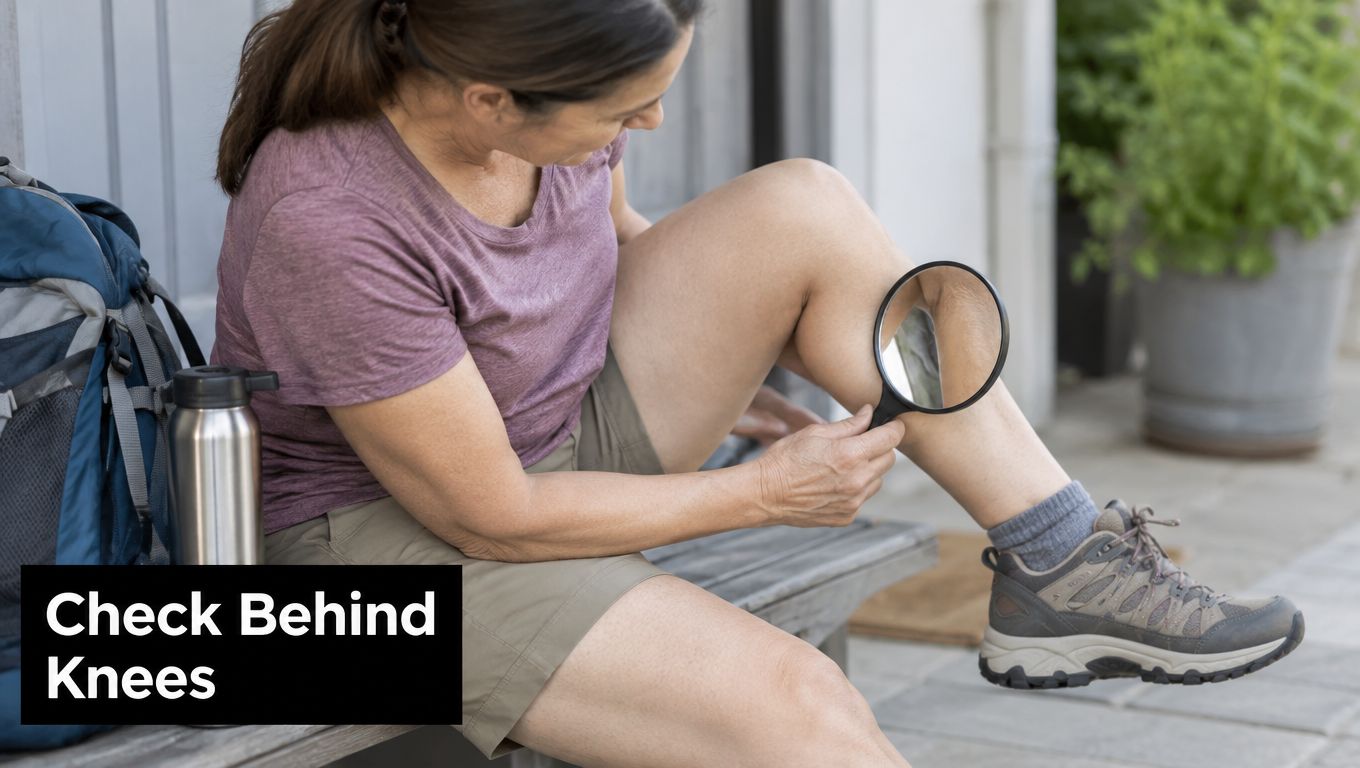
A Lake County golfer who steps into rough grass should include the backs of the knees in the post-outing check, even if the rest of the round stayed on maintained turf. The useful question is where your clothing or skin contacted vegetation.
Make Hard-to-See Skin Visible
Sit on a stable chair and use a hand mirror, or ask someone to help. Don't balance awkwardly in a wet shower while trying to inspect the back of your leg.
Look for an unfamiliar dark speck or raised bump. If you find one, inspect closely before deciding it's dirt, a scab, or a tick. Avoid scratching it away without seeing what you're doing.
Long pants and socks reduce exposed skin, but the fabric and skin beneath still need checking. Staying near the center of established trails also limits unnecessary contact with bordering plants.
For yard work, move play equipment and frequently used seating away from overgrown edges where practical. Keeping those access routes clear makes everyday outdoor use easier and reduces the need to push through vegetation.
7. Lower Legs, Ankles, and Feet
Start your check where contact often starts: shoes, socks, ankles, and lower legs. A crawling tick found on a sock can be removed before it reaches skin or moves farther beneath clothing.
An anatomical attachment study published in PLOS ONE found 51% of ticks on men and 49% on women attached to the legs among its participants. For your own inspection, the practical point is straightforward: don't overlook the lower body while concentrating on hidden folds.
A sock check is a useful first step before entering the house.
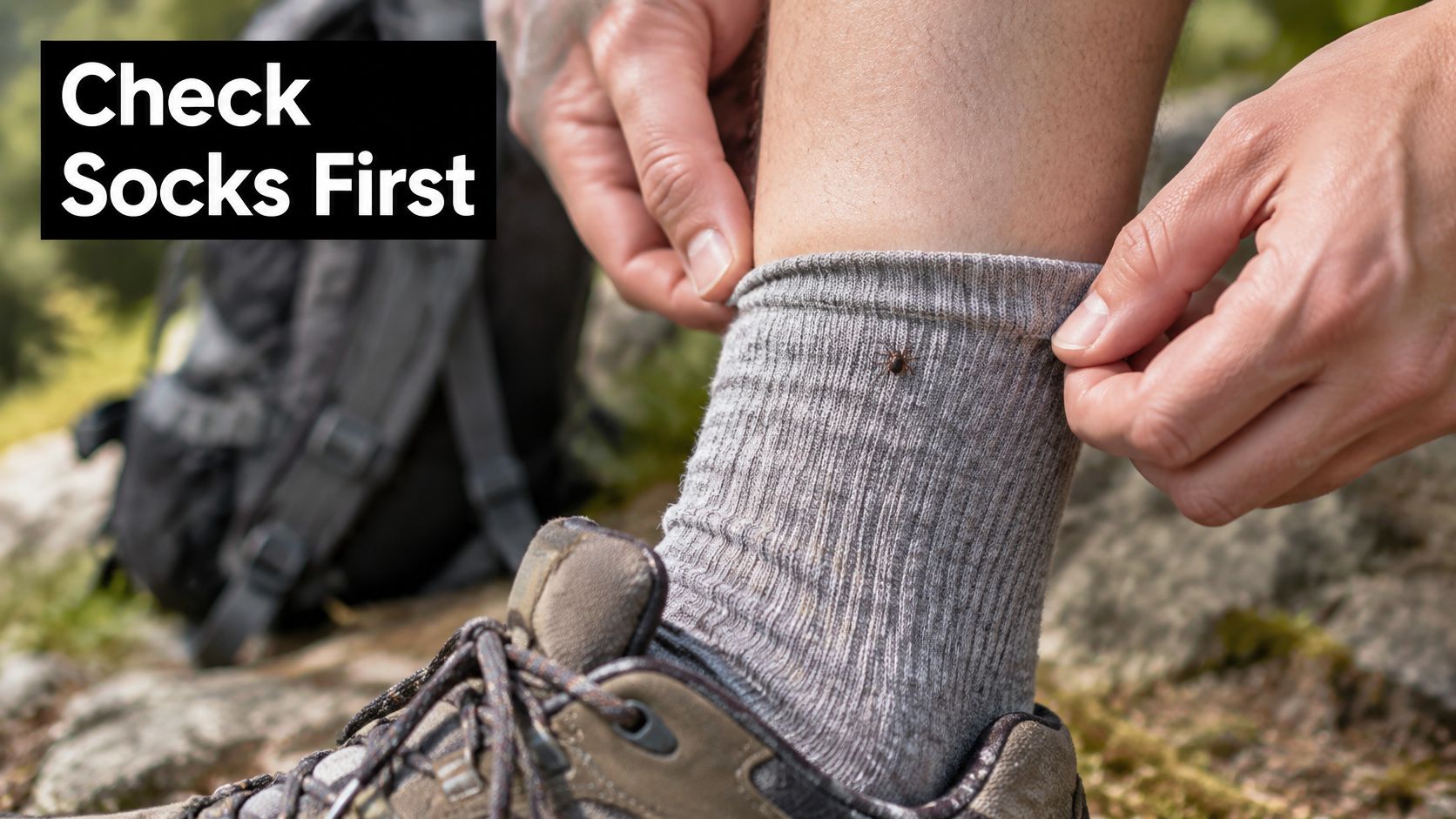
Work Upward From Your Shoes
A Porter County gardener might notice a tick crawling across a light-colored sock while putting tools away. Remove it, then inspect the other sock, shoe openings, pant cuffs, and exposed ankles. Continue the full-body check indoors.
- Inspect footwear: Look around tongues, laces, and the edges where trousers meet shoes.
- Remove socks: Check beneath the elastic and around the ankles.
- Examine the feet: Look over the tops, soles, and spaces between toes.
Closed-toe shoes are a sensible choice for brush and leaf-litter work. They aren't a seal against ticks, so don't leave footwear out of your inspection.
At home, keep grass maintained and clear accumulated leaves from frequently used yard edges. A defined separation between maintained lawn and brush can also make those boundaries easier to manage.
Our overview of tick control methods explains how personal precautions and property management fit together. Neither should be treated as permission to skip the other.
8. Abdomen and Navel
The stomach can look clear at a glance while the navel remains unchecked. Look inside the visible folds of the belly button, around the lower abdomen, and along the sides of the torso. Use a mirror if your viewing angle is limited.
Consider a child who has been playing in leaf litter at a Northwest Indiana nature preserve. When the child changes clothes, inspect the stomach as carefully as the legs. Finding a tick there doesn't tell you which infection, if any, it could transmit.
Check places that are easy to see as well as places that are easy to miss. A body-location list should never become permission to ignore everything else.
Remove an Attached Tick Promptly
The CDC's Lyme disease prevention guidance advises grasping an attached tick close to the skin with fine-tipped tweezers and pulling upward with steady, even pressure. Clean the bite area and your hands afterward.
Position yourself so the tweezers reach the skin without squeezing the tick's body. Don't twist or jerk. If the navel's shape prevents a clear view, get help rather than probing into it with tools.
Finish inspecting the rest of the abdomen, sides, and back after removal. A discovered tick deserves prompt attention, but it shouldn't interrupt the rest of the check permanently.
Showering and changing clothes are useful supporting habits. High-heat drying can address ticks remaining on suitable clothing, but neither laundry nor bathing confirms that every attached tick has been found.
For Crown Point families, the most dependable routine is one everyone can repeat calmly. Good lighting, clean tweezers, and help with hard-to-see skin matter more than an elaborate collection of tick-check gadgets.
How each body area attracts ticks and how easy it is to check
| Body Area | Why Ticks Settle Here | Easy to Miss? | Key Check Tip |
|---|---|---|---|
| Scalp and Hairline | Hair conceals ticks; they may move upward to the sheltered hairline. | Yes, especially tiny nymphs. | Comb through hair under bright light and ask someone to check the back of your head. |
| Behind the Ears and Neck | Warm, shaded skin is reached by ticks crawling up from grass or pets. | Yes, often hard to see without a mirror. | Use a hand mirror or ask someone to inspect the area. |
| Armpits | Warm, moist skin is often covered by clothing. | Yes, ticks may stay attached unnoticed. | Check armpits when changing clothes after outdoor activities. |
| Groin and Inner Thighs | Warm, protected skin attracts ticks crawling up from the legs. | Yes, often missed in quick checks. | Check thoroughly after time in tall grass, woods, or leaf litter. |
| Waistband and Belt Line | Tight clothing, folds, and seams provide hiding places for ticks moving up from the lower body. | Yes, especially beneath tight waistbands. | Inspect the waistband and belt area before changing clothes. |
| Behind the Knees | Warm, shaded skin is reached by ticks in grass and brush. | Yes, hard to see without help. | Use a mirror or ask someone to check behind your knees. |
| Lower Legs, Ankles, and Feet | Ticks often begin climbing after contact with grass, leaf litter, or low shrubs. | Less so; this area is easier to spot early. | Check shoes and socks before going indoors. |
| Abdomen and Navel | Ticks may move beneath clothing to the warm, sheltered navel area. | Yes, especially during a quick check. | Include your stomach and navel in every full-body check. |
Protecting Your Family from Ticks: Your Next Steps
Make a full-body tick check part of every outdoor day, including time spent in your own yard. Start with shoes and socks, continue over the legs and torso, and finish with concealed folds, ears, neck, and scalp. Give children extra help with their head and hair.
Shower soon after coming inside, change out of outdoor clothing, and wash suitable garments in hot water. Use high-heat drying where the care label permits. These habits support inspection, but they don't replace removing an attached tick.
Know When to Seek Medical Help
Don't wait for a pest inspection or tick identification appointment before removing an accessible attached tick. The CDC tick removal fact sheet advises against heat, petroleum jelly, and nail polish; if mouthparts remain and can't be easily removed, leave them alone rather than repeatedly digging into the skin.
Contact a clinician if you develop a rash, fever, or other concerning symptoms after a bite. Record when you found the tick and where you may have encountered it. Attachment location alone doesn't diagnose Lyme disease or another tick-related condition.
Questions about possible food reactions belong with a healthcare professional, not a pest technician. You can find meat allergy test details to discuss with your clinician rather than ordering testing solely because you found a tick.
Address Repeated Yard Encounters
If ticks keep appearing, note the locations: a brushy fence, shaded leaf piles, a wooded boundary, or a frequently used pet route. Professional pest control should begin with inspection, not an assumption that every part of the property needs the same response.
The Green Advantage can inspect your Crown Point property and recommend a customized outdoor treatment plan. Our local team works with residential and commercial properties across Northwest Indiana, with office staff handling questions and scheduling while technicians concentrate on diagnosing site conditions.
For homeowners searching for pest control near me or an exterminator in Crown Point, IN, the benefit is a clearer plan for the places people use. Property managers can apply the same approach around shared outdoor spaces and walkways. The goal is reduced exposure and greater peace of mind, not a promise that anyone can stop checking for ticks.
The Green Advantage offers property inspections and custom pest management to help Crown Point and Northwest Indiana residents address tick concerns around their yards. Visit The Green Advantage to schedule an inspection or request a quote, and tell our team where you've been finding ticks so we can focus on the areas that matter most.