
If the same itchy spot turns red again, does that mean a bug has bitten you again, or that your skin hasn't finished reacting? Before searching for pest control near me, it helps to separate those possibilities. Spraying without evidence can leave the actual problem unresolved, whether that's an infestation or a skin condition.
For homeowners seeking pest control in Crown Point, IN, The Green Advantage provides a local starting point for identifying pest activity. Our family-owned team serves Crown Point and surrounding Northwest Indiana communities. The practical approach is straightforward: document the marks, look for environmental evidence, and choose treatment only when there's a reason for it.
Likely Causes of Bites in One Spot
Repeated marks in one area commonly fall into six possible categories: bed bugs, fleas, flying insects, irritation of an old bite, scabies, or a contact reaction. Start with timing, then consider body location and whether anyone else at home has symptoms. These clues can narrow your next step, but they can't identify the cause by themselves.
Common causes of repeated bites in one spot
| Likely cause | When marks appear | Typical pattern | Strongest confirmation |
|---|---|---|---|
| Bed bugs | Often days after feeding; longer in people with no earlier exposure | Clustered or linear marks on exposed skin, mostly after night feeding | An identified live bug or shed skin near the sleeping area |
| Fleas | Within hours to a day | Small red bites in groups, often on ankles and lower legs | Identified fleas or flea dirt on pets, bedding, or carpet edges |
| Mosquitoes or other flying insects | Within minutes to hours | Raised, itchy welts on uncovered skin, usually scattered | Seeing the insect bite; outdoor timing is supporting evidence, not proof |
| Scratching or irritation of an old bite | Flares after scratching, friction, or heat | Same spot, often inflamed, crusted, or thickened | A documented flare after irritation, with clinical assessment if it persists |
| Scabies | Itch builds over weeks | Finger webs, wrists, waist, and skin folds; others at home may itch too | A clinician confirms the diagnosis |
| Allergic or contact reaction | Hours to days after new product or plant contact | Patchy redness where a product, fabric, or plant touched | Exposure history and a clinician's assessment |
Use timing as a clue, not a verdict
Say you notice an itchy wrist after sleeping. That doesn't establish that something bit you overnight. Alternatively, if irritation follows a new wristband and stays beneath it, that exposure deserves attention before a bedroom treatment.
The CDC's bed bug guidance emphasizes that skin reactions aren't enough to identify bed bugs and can resemble reactions to other insects. Contact dermatitis, folliculitis, and other skin conditions also belong in the discussion when marks persist.
Practical rule: Match the symptom to an exposure history, then look for independent evidence before choosing a treatment.
For another common comparison, our guide to a mosquito or spider bite can help you organize what to observe. Don't treat an absent indoor insect as proof of an outdoor bite, or assume every unexplained welt came from a spider.
Why Old Bites Look Like New Ones
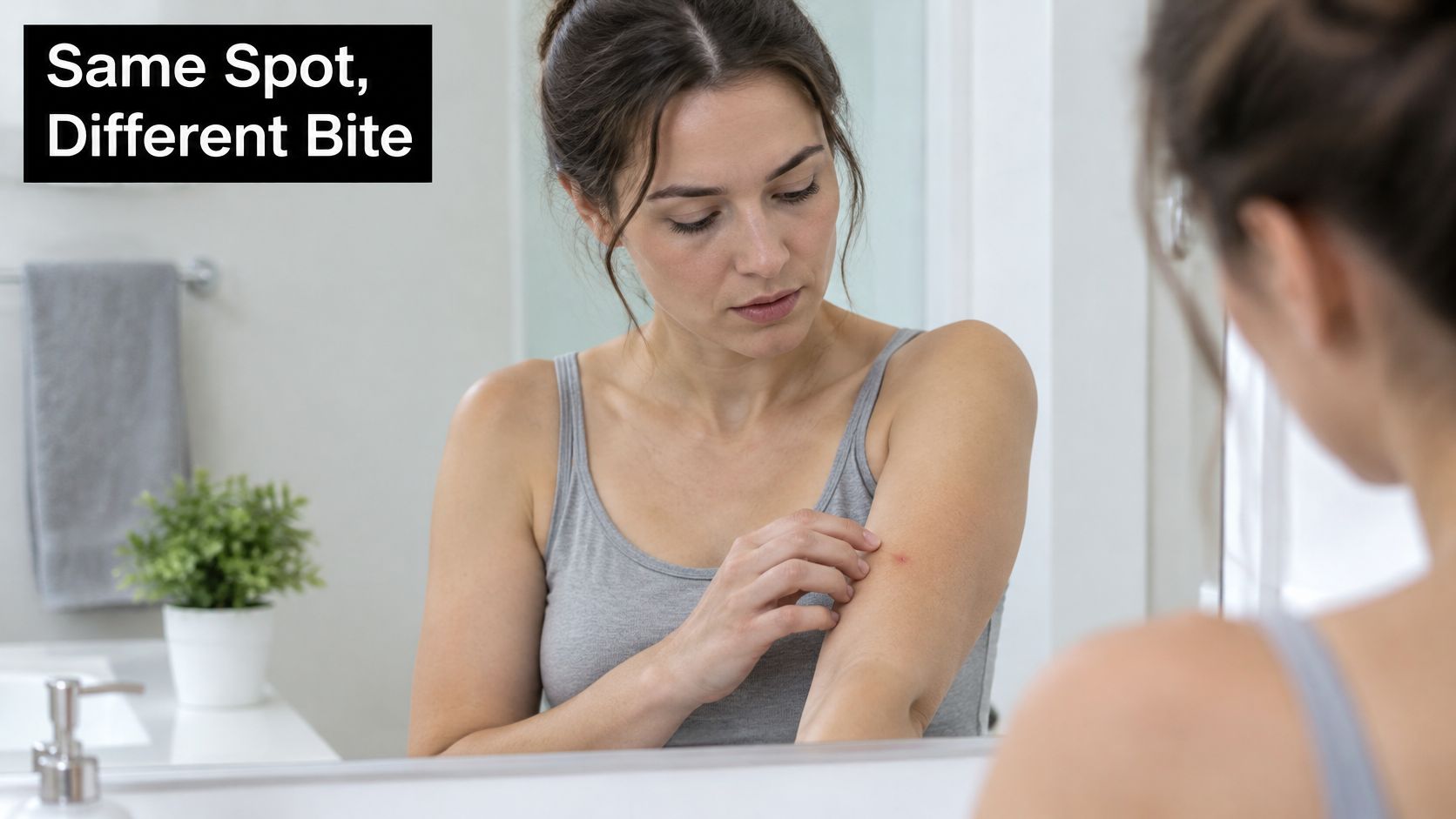
A recurring mark doesn't prove a recurring bite. An insect doesn't have to return to the exact spot for that area to become itchy or swollen again. Your skin can continue reacting after the original exposure.
Checking a mark is useful, but its appearance alone can't settle the cause.
Your immune response has its own schedule
Saliva introduced during feeding can trigger local inflammation and itching. Think of a bruise that still aches after the original bump: the injury and your body's response don't end at the same moment. Likewise, a bite reaction may become noticeable after the insect has left.
The clinical review in the National Library of Medicine describes approximately 8–10 days of delay after initial feeding in previously unexposed people, with repeated exposure potentially shortening reactions to seconds to minutes; it also reports that approximately 20%–30% of exposed people may show no visible reaction and that a classic bite pattern appears in fewer than 50% of reported patients.
That means two people sharing a room may have very different skin responses. One person's clear skin doesn't establish that the room is pest-free, and another person's row of welts doesn't establish which pest is present.
Separate exposure from irritation
Scratching can keep an existing lesion inflamed and create additional damage. Clothing rubbing the same area can also make it harder to tell whether the spot is healing or becoming newly irritated.
A visual explanation can complement your observations, but it shouldn't replace identification or medical advice.
When you're investigating recurring bug bites in the same spot, distinguish between a separate new mark, delayed inflammation, and renewed irritation of an existing mark. A dated photograph is more useful than trying to remember whether yesterday's bump looked smaller.
How to Log New Marks Over Two Weeks
Use a two-week observation log to organize what you're seeing, not as a diagnostic test or a reason to postpone care. Start an inspection sooner if you find insects, and seek medical help promptly for concerning symptoms.
The CDC's bed bug identification guidance explains that inflammatory reactions aren't diagnostic. Recording skin changes alongside environmental observations gives a clinician or technician something more useful than a description of itchy spots.
Record the same details consistently
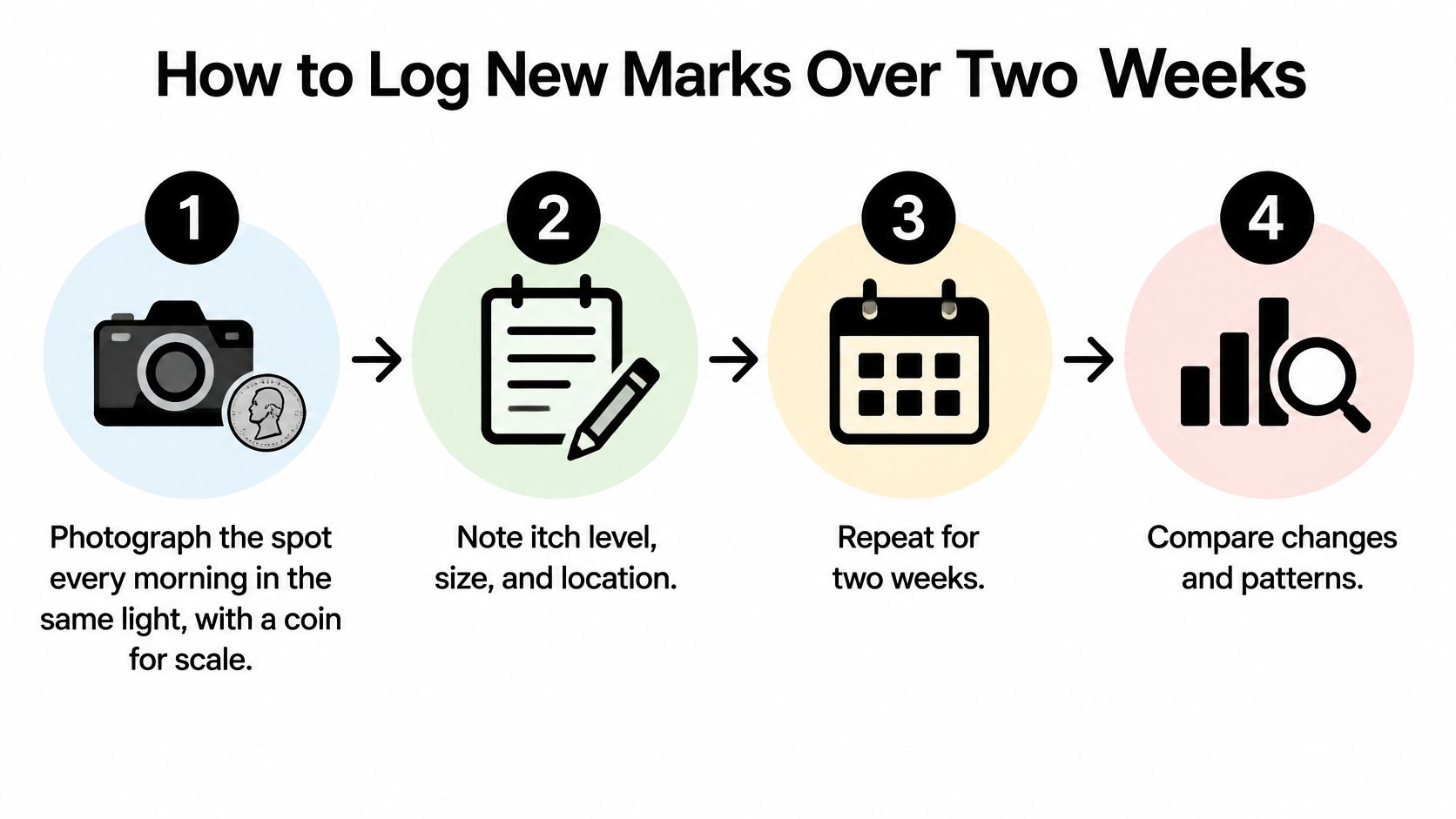
- Photograph the spot each morning. Use the same lighting and place a coin beside, not against, the mark for scale. Consistent images make changes easier to compare.
- Measure its width in millimeters and note whether it's flat, raised, crusted, or blistered. Keep existing marks separate from newly appearing ones in your notes.
- Record the first appearance. Write down the date and time you noticed each mark, rather than assuming that's when exposure happened.
- Note when itching begins or intensifies, such as after a shower, overnight, or while sitting on a couch. That helps distinguish appearance from symptom timing.
- List recent locations and activities. Include where you slept, sat, traveled, or spent time outdoors, and add older exposures when you remember them.
- Record household symptoms and pet scratching separately. Similar experiences can justify a broader investigation, but they don't establish a shared diagnosis.
- List changes at home. New detergent, bedding, lotions, clothing, or furniture can help a clinician evaluate contact-related irritation.
Use this visual checklist to keep your record manageable.
A sample entry
For example, a hypothetical entry might read: “Tuesday morning: 5 mm raised welt on left forearm, itchy overnight after a sofa nap. Existing wrist mark looks flatter. New laundry detergent used; no insect found; pet scratching noted.”
That entry preserves observations without declaring what caused them. Avoid writing “new bed bug bite” unless the insect has been identified.
A useful log records what happened, not what you suspect happened.
If new marks continue through your observation period without an identified skin explanation, arrange an environmental inspection. Household symptoms also warrant investigation, and you don't need to finish the log before contacting a clinician or technician.
Physical Signs to Check in the Bedroom
Physical evidence carries more weight than a rash pattern. Gather a flashlight, a thin plastic card, a sealable bag, and your phone. Work methodically rather than pulling the entire room apart.
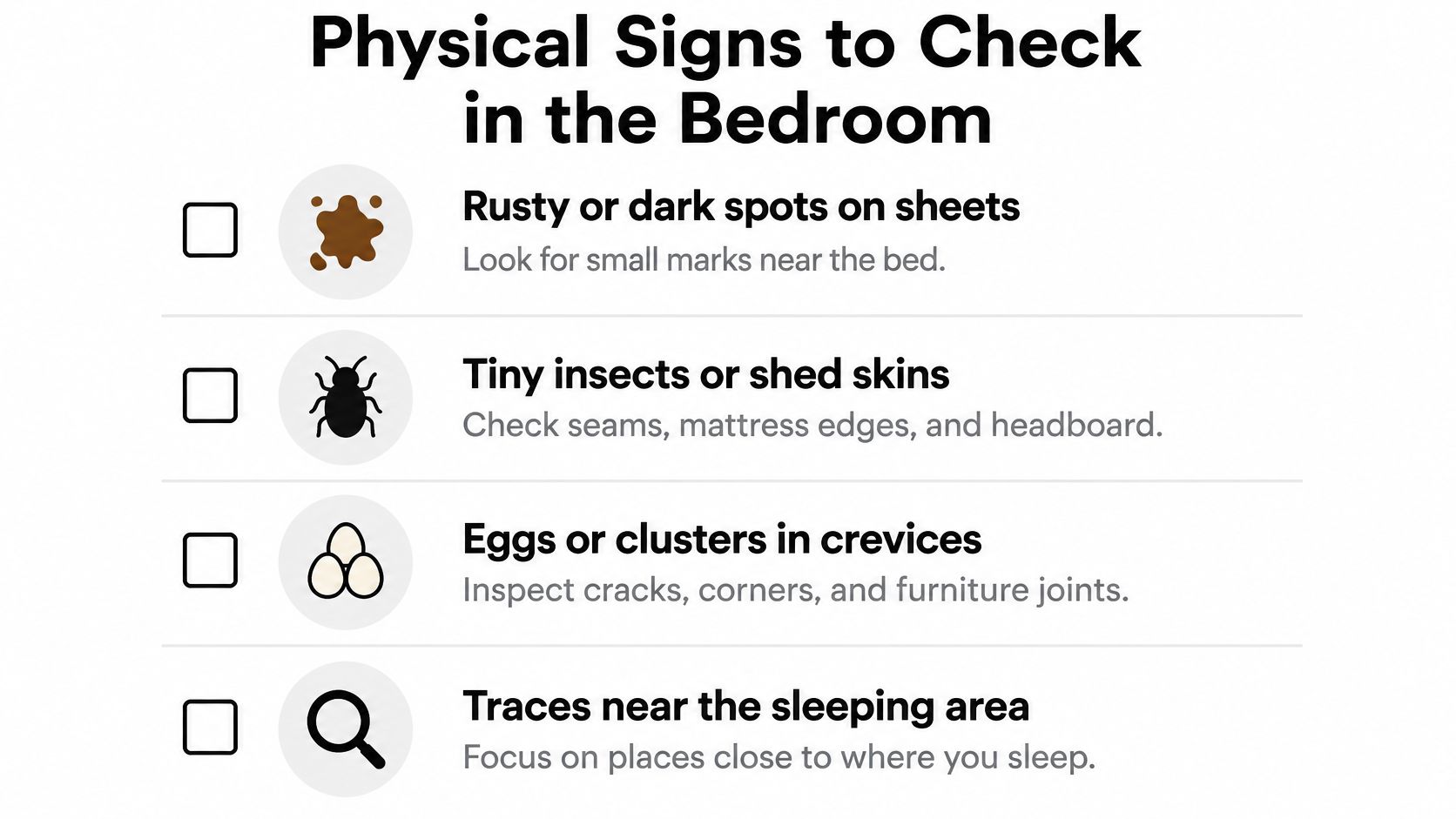
The Environmental Protection Agency's bed bug inspection guide lists rusty or reddish stains, dark fecal spots, shed skins, live insects, and pale eggs or eggshells approximately 1 millimeter in size as signs to investigate. A stain alone isn't identification, so photograph where you find it and preserve any specimen.
Follow a bed-first search order
- Mattress and box spring: Lift bedding and inspect piping, seams, tags, and accessible underside edges. Gently draw the card along a seam without tearing the fabric.
- Bed frame and headboard: Shine the flashlight into joints, screw recesses, cracks, and places where materials meet.
- Nearby upholstered furniture: Check cushion seams, folds, and accessible frame joints, especially where someone regularly rests.
- Adjacent crevices: Look along accessible wall cracks and baseboard edges. Don't insert tools into electrical outlets or dismantle electrical fittings.
For a supplementary walkthrough, Protect-A-Bed explains how to check your mattress for bed bugs. Keep the search focused on accessible surfaces rather than damaging furniture to reach concealed areas.
This checklist highlights the evidence worth documenting.
Interpret what you find carefully
An identified live bed bug supports current activity. Several consistent signs justify professional assessment, but old shed material or an isolated stain may not establish whether an infestation remains active.
If you have pets, include pet bedding, carpet edges, baseboards, and beneath furniture cushions in your search for fleas or their traces. Save suspected insects in a sealed bag and label where they were found.
Finding nothing doesn't prove the room is pest-free, and it doesn't diagnose a skin condition either. Continue documenting symptoms without repeatedly disturbing the room. Our guide to how to tell if you have bed bugs can help you prepare observations for an inspection.
Home Care and When Skin Symptoms Need a Doctor
Most mild bites need symptom relief while you investigate the source. Wash affected skin gently with soap and water, avoid picking, and keep nails short to reduce damage from scratching. Wrap ice rather than placing it directly on your skin.
Mayo Clinic's insect-bite first-aid guidance recommends a cold, damp cloth or ice for 10 to 20 minutes and notes that typical itching, swelling, or stinging often improves within a day or two. Worsening symptoms deserve attention instead of another round of household pesticide.
Choose care that fits the reaction
The CDC's clinical care guidance states that most bed bug bites require minimal symptomatic treatment, while more extensive reactions may need topical steroids or antihistamines. Scratching and poor wound hygiene can contribute to secondary infection.
Home care by situation and when to get help
| Situation | Home care | When to act |
|---|---|---|
| Mild itch or small welt | Wash gently, then apply a wrapped cold compress | Monitor for improvement rather than increasing irritation |
| Itch that disrupts sleep | Keep nails short, protect the area from scratching, and use an appropriate antihistamine or topical steroid as directed | Ask a pharmacist if relief remains weak after a few days |
| Scratched, open, or crusting skin | Clean gently, cover loosely, and avoid picking | See a clinician if redness spreads or pus forms |
| Large, spreading swelling or hives | Use a cool compress while arranging care | Seek medical care promptly |
| Trouble breathing, throat tightness, or facial swelling | Don't wait at home | Call 911 immediately |
Ask a pharmacist before choosing medicine for a child, during pregnancy, or when you take other medications. Don't put topical steroids on open or apparently infected skin without clinical advice. More products aren't necessarily better, especially if a lotion or treatment seems to worsen irritation.
Recognize infection and household conditions
Seek prompt clinical assessment for increasing pain, warmth, spreading redness, pus, red streaks, or worsening swelling. Fever, severe headache, body aches, or feeling unwell also require medical attention. A large mosquito-related reaction may be skeeter syndrome, an allergic response to saliva, rather than a bacterial infection, so don't try to distinguish them solely by size or redness.
Scabies requires medical treatment, not an ordinary room-spraying approach. Tell the clinician about nighttime itching, symptoms in finger webs, wrists, waist, or skin folds, and itching among close contacts.
The World Health Organization's scabies guidance explains that scabies spreads primarily through prolonged close skin contact, recommends treating household members simultaneously, and notes that treatment is commonly repeated after 7–14 days because some medicines don't kill mite eggs. Follow the clinician's specific treatment and household instructions rather than treating only the person with the most visible symptoms.
Bring your photographs, measurements, product list, and symptom history to the appointment. Trouble breathing, throat tightness, or facial swelling is an emergency. Call 911 rather than waiting at home.
Prevent Repeat Bites Around Your Home
Prevention works best when you address likely exposure routes instead of coating every surface with pesticide. For Crown Point households, that means maintaining an inspectable bedroom, caring for pets appropriately, and reducing outdoor mosquito exposure during warm-weather activity.
Start with ordinary housekeeping that makes evidence easier to find. Wash bedding and pillow covers regularly using the hottest settings the fabric-care labels allow. Laundering is helpful housekeeping, but don't assume it resolves a confirmed infestation by itself.
Keep resting areas easy to inspect
- Reduce bedside clutter: Leave access to bed legs, frame joints, and baseboards so you can examine them without moving piles of belongings.
- Inspect incoming items: Examine secondhand furniture, used mattresses, and luggage before bringing them into sleeping areas. Unpack travel bags on a hard, easy-to-inspect surface.
- Maintain pet protection: Keep veterinarian-recommended flea prevention current and vacuum carpet edges, pet resting areas, and beneath cushions.
- Close entry gaps: Repair damaged screens and seal appropriate gaps around window frames, baseboards, and pipe penetrations.
Empty standing water from movable containers, maintain vegetation around patios and play areas, and use intact screens. Long sleeves can reduce exposed skin when you're outside at dusk. Review these habits before spring and summer outdoor routines become busy in Northwest Indiana.
Choose targeted prevention over repeated spraying
Don't apply household pesticides to your skin or use outdoor products indoors. Avoid spraying a mattress, pet bedding, or furniture unless the product specifically permits that use. When there's a confirmed pest, treatment needs to match its hiding places, life cycle, and the occupied space.
Before treatment: Know which pest you're targeting, where the evidence was found, and what precautions apply.
Professional assessment helps protect comfort and health while avoiding unnecessary applications or discarded belongings. The Green Advantage's outdoor mosquito control targets pests at all stages of life, from eggs to flying adults. That's a separate decision from investigating unexplained indoor marks, not a substitute for identifying their source.
Book a Pest Inspection in Crown Point, IN
Book an inspection when you find suspected pest evidence, unexplained new marks continue, or household and pet symptoms suggest a shared exposure. Don't wait for a perfect photograph of an insect if you're finding consistent environmental signs. Conversely, signs of infection, allergy, or scabies need healthcare, because a pest visit can't treat skin disease.
If you're searching for an exterminator near me, choose the next step based on what needs answering. A technician investigates the building and pest activity. A clinician investigates your skin, and sometimes both evaluations are appropriate.
What to expect from our team
When you contact The Green Advantage, explain where the marks occur, what you found during your room check, and whether symptoms affect other occupants. Our office staff can help with questions and scheduling for Crown Point and nearby Northwest Indiana communities.
Our technicians are licensed for structural pest control by the Department of Public Health. Each technician holds licenses in certain subcategories, and some specialize in rodent control, food service, or termite control. That matters when an inspection reveals a different problem from the one you initially suspected.
Bring these materials to the conversation:
- Your observation log: Include photographs, measurements, dates, and relevant room or outdoor exposure.
- Collected evidence: Keep suspected insects or shed skins sealed and label their original location.
- Property details: Identify affected rooms, pet resting areas, recent furniture arrivals, and any products already applied.
Technicians note customer prevention steps on the inspection report. If you prefer environmentally mindful methods, discuss that preference along with children, pets, and how each affected space is used.
A clear answer before a treatment decision
For residential pest control, the immediate benefit is a more informed decision about whether treatment is warranted and what area needs attention. For landlords and commercial pest control customers, room-specific records also help communicate concerns without treating every reported rash as proof of an infestation.
Our licensed technicians can assess a Crown Point or Northwest Indiana home and create a customized rodent control plan when rodent evidence is the actual finding. An inspection should follow evidence, not lock you into your first guess.
You don't need to diagnose the problem before calling an exterminator in Crown Point, IN. A complete log and preserved specimens make the conversation more focused and help separate pest concerns from questions that belong with a clinician.
The Green Advantage offers pest inspections and customized pest control for homes and businesses in Crown Point and surrounding Northwest Indiana communities. If recurring marks or physical signs have you concerned, visit The Green Advantage to request an inspection or quote, and have your photo log and collected evidence ready.