
If you're searching for pest control near me after finding ants on the counter, hearing scratching in a wall, or spotting a wasp near the porch, you're probably asking a simpler question first. What is pest control at home, really?
For homeowners in Crown Point, IN and nearby Northwest Indiana communities, it isn't just “spraying for bugs.” Good home pest control means finding out why pests are there, how they're getting in, what conditions are helping them stay, and what treatment fits that specific problem. That matters in this part of Indiana, where seasonal changes, damp areas, attached housing, garages, crawl spaces, and older homes can all affect pest pressure.
A lot of people wait because they hope it's a one-time sighting. Sometimes it is. Sometimes it's the early sign of a larger issue. Knowing the difference is what protects your home, your routine, and your peace of mind.
Finding Pests in Your Home? You Are Not Alone
You wipe down the kitchen before bed, and the next morning there's a line of ants near the sink. Or you step into the basement and notice movement along the wall. For a lot of homeowners, that moment comes with the same reaction. Concern first, then questions about safety, damage, and how fast the problem could grow.
In Crown Point and across Northwest Indiana, these calls are common because pest problems are common. Home pest control remains a large, recurring household service category in the United States, with about $6.5 billion in annual spending in 2024, and market estimates rising from $14.3 billion in 2012 to over $24 billion in 2023 and about $29.2 billion in 2025 as a projection according to household pest industry estimates. Homeowners keep dealing with ants, termites, bed bugs, mosquitoes, and rodents because these are persistent household pests, not unusual events.
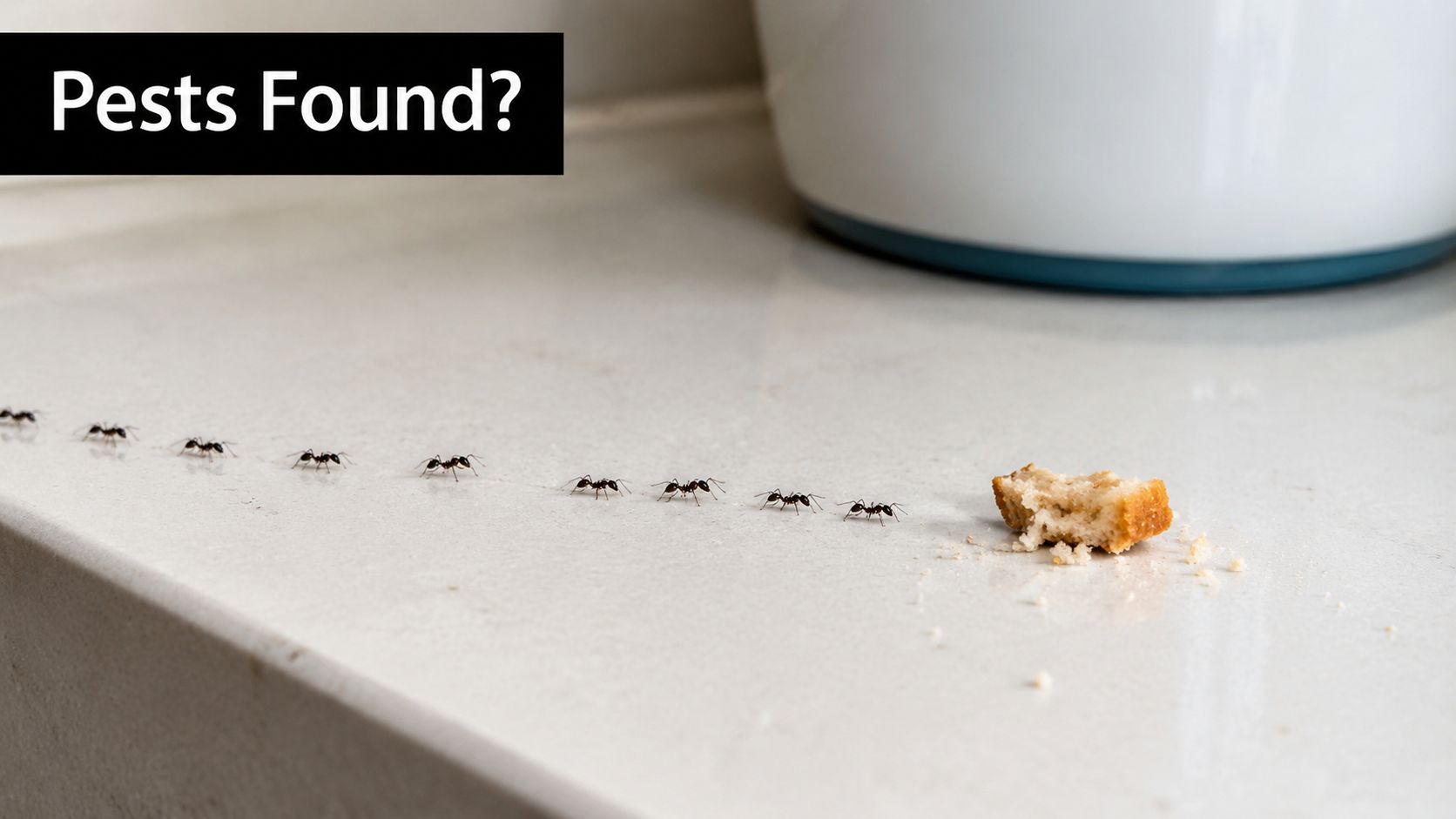
What homeowners usually notice first
The first sign usually isn't dramatic. It's something small that repeats.
- Kitchen activity like ants near crumbs, pet food, or the dishwasher
- Garage or basement sightings such as spiders, centipedes, or mice
- Outdoor-to-indoor movement from wasps, boxelder bugs, or stink bugs near doors and windows
- Noise or odor that suggests hidden activity behind walls or in attic spaces
That's one reason pest issues feel stressful. The pest you see may not be the whole problem.
Most infestations don't begin with a flood of pests. They begin with access, moisture, shelter, and time.
Why local conditions matter
Northwest Indiana homes deal with shifting seasons, humidity, storms, freeze-thaw cycles, and periods when pests move indoors looking for stable shelter. A dry summer can push pests toward water sources inside. A cold stretch can send rodents and overwintering insects into wall voids, garages, and attics.
That's why homeowners looking for residential pest control in Crown Point, IN usually need more than a quick product off the shelf. They need a clear answer, a calm plan, and a service approach that solves the source of the issue instead of chasing each new sighting.
What Modern Home Pest Control Actually Means
Modern pest control starts with one idea. Identify before you treat. If a doctor prescribed medicine before asking symptoms, you'd question it. Pest control works the same way.
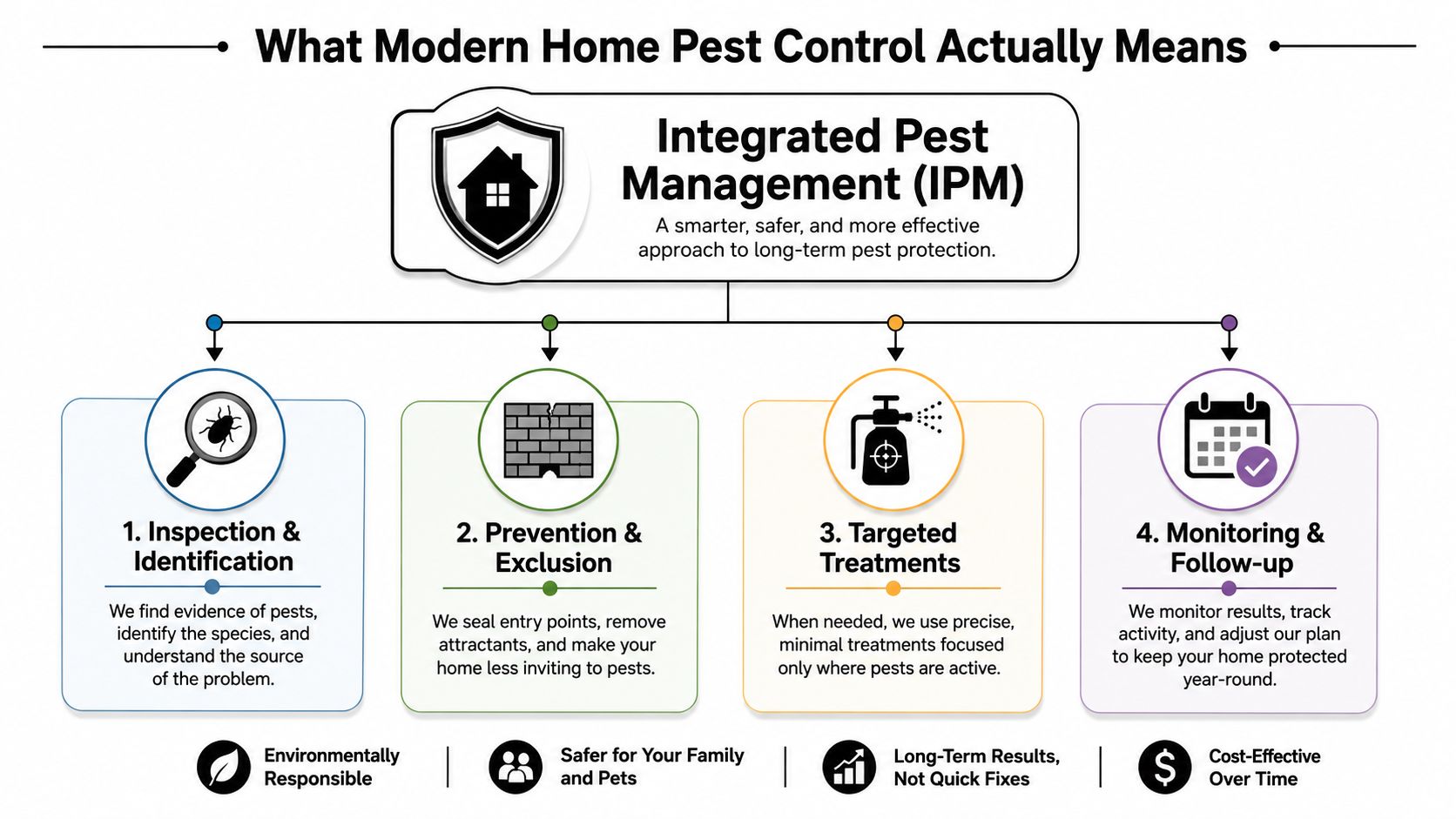
When people ask what pest control at home means today, the best answer is Integrated Pest Management, often shortened to IPM. The University of Tennessee recommends regular inspections and IPM-based control methods instead of routine calendar spraying. That approach uses monitoring, pest identification, sanitation, exclusion, traps, and vacuuming to reduce the conditions pests need to survive.
The four parts that matter most
IPM is practical. It usually looks like this in a home:
Inspection and identification
A technician checks where pests are active, how they're entering, and what species is involved. Ant control, rodent control, and wasp removal all require different strategies.Prevention and exclusion
This is the work that makes treatments hold. Sealing gaps, correcting moisture issues, reducing food access, and improving sanitation can lower pest pressure before products are even considered.Targeted treatment
Treatment still matters. It just needs to match the problem. Baits, traps, limited applications, dusts in voids, or nest treatment may make sense depending on the pest and the location.Monitoring and follow-up
Good service doesn't stop at the first visit. Pest patterns change, especially with seasonal pest issues in Northwest Indiana.
A closer look at the process helps. This short video gives useful context on how home pest management fits into a broader prevention-first model.
Why old “spray everything” thinking falls short
Blanket treatment sounds simple. In practice, it often misses the root cause. If moisture under a sink is attracting ants, or a foundation gap is allowing mice inside, broad spraying won't fix the reason the pests showed up.
For homeowners, that means the smarter question isn't “What can I spray?” It's “What's feeding this activity?”
That same mindset also matters in commercial settings. Facility teams focused on achieving pest-free operations use the same logic. Inspection, exclusion, sanitation, and targeted response beat guesswork. If you want a local explanation of that approach in a residential setting, The Green Advantage outlines it clearly in its guide to integrated pest management.
Good pest control removes the invitation, not just the insect.
Common Pests Threatening Homes in Northwest Indiana
Northwest Indiana doesn't have one “pest season.” It has rotating pressure. Different pests become active as temperature, moisture, and shelter conditions change, and homes in Crown Point often give them exactly what they need.
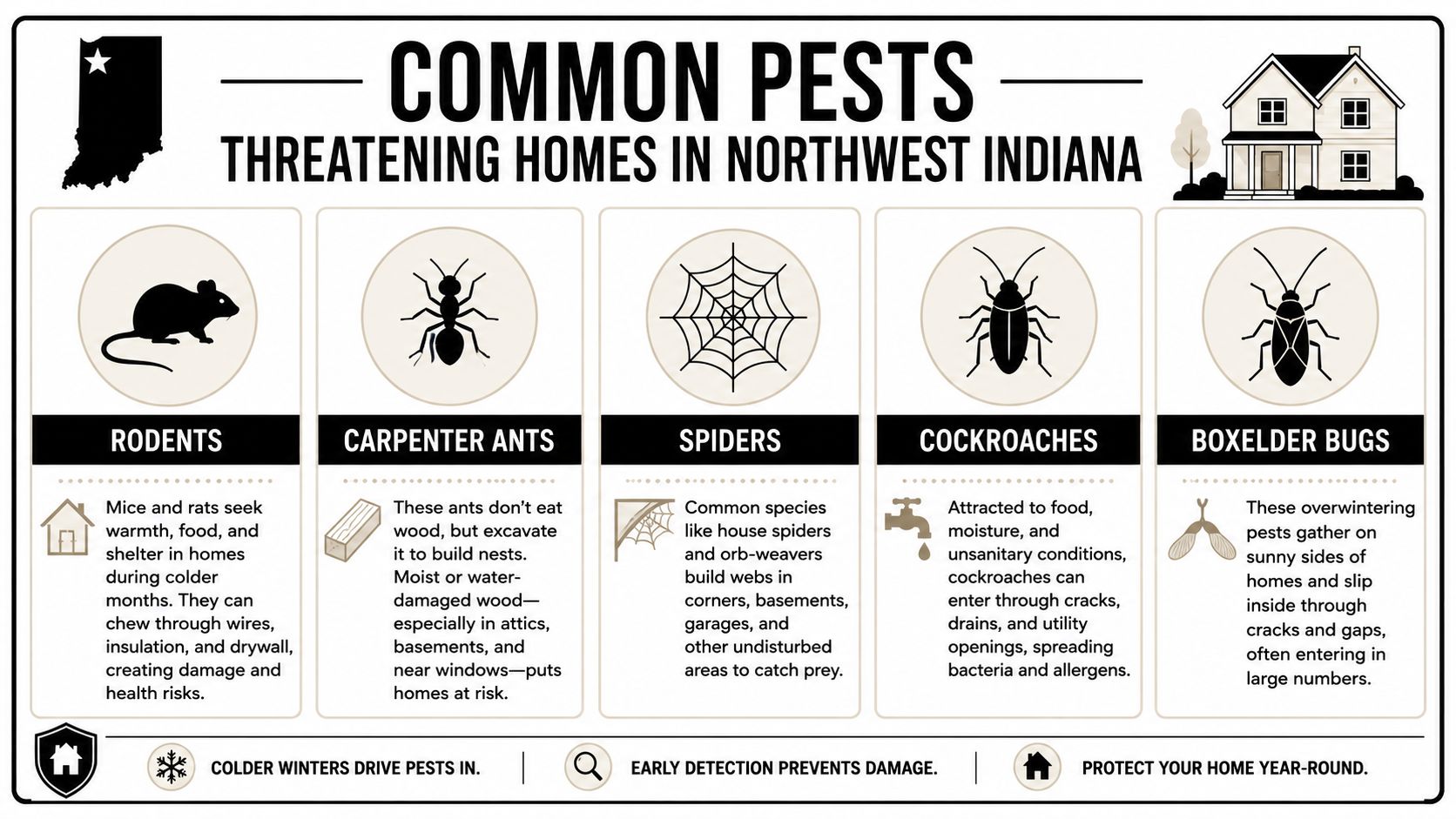
What shows up and why
| Pest | Why it enters homes | Why it matters |
|---|---|---|
| Ants | Food, moisture, and easy entry around windows, doors, and utility lines | Small trails can turn into recurring indoor activity |
| Rodents | Warmth, nesting cover, and access to food or pet feed | They contaminate areas and can damage materials inside the home |
| Spiders | They follow other insects and settle in quiet corners | Webs are a nuisance, and sightings usually mean prey is available |
| Wasps | Protected overhangs, soffits, decks, and rooflines offer nesting spots | Stings are a serious concern for families, guests, and pets |
| Cockroaches | Moisture, clutter, drains, and hidden entry points support survival | They're hard to eliminate once established in concealed spaces |
| Boxelder bugs and similar overwintering pests | Wall voids and sunny exterior walls help them gather before colder weather | They often become a seasonal indoor nuisance in large numbers |
The local conditions behind the problem
Crown Point homes see pest movement shaped by rain, humidity, cold snaps, and the kind of seasonal transitions that push insects and rodents to seek stable shelter. Homes with crawl spaces, attached garages, dense landscaping, or aging seals around doors and windows tend to give pests more opportunities.
Moisture is one of the biggest drivers. Damp basements, condensation near plumbing, clogged gutters, and poor ventilation all create the kind of environment that helps pests stay active longer.
A few pests deserve faster attention
Some pests are mostly a nuisance. Others should move you toward fast action.
- Termites and carpenter ants can threaten wood over time, especially where moisture is present.
- Rodents often indicate an access issue that won't solve itself.
- Wasps and hornets become a safety issue around entryways, patios, and play areas.
- Mosquitoes build pressure outdoors where standing water and shaded resting areas exist.
If you're seeing pest activity in more than one part of the house, it usually points to a condition problem, not a single stray pest.
That's where local knowledge matters. A treatment plan for a dry, sealed home isn't the same as one for a house with a damp crawl space, older trim gaps, and heavy vegetation near the foundation.
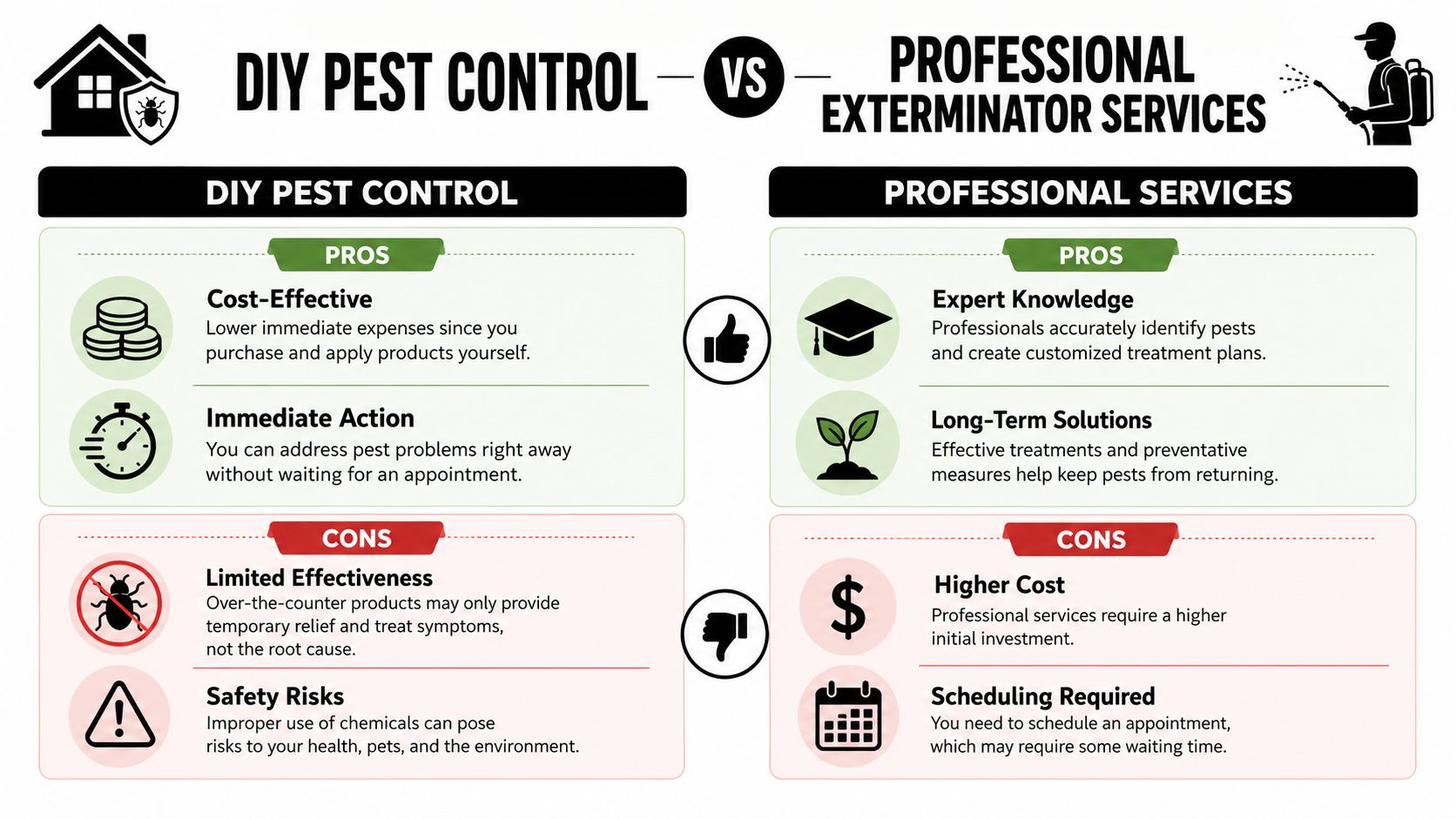
DIY Pest Control vs Professional Exterminator Services
DIY pest control has a place. If you clean up a spill, store pantry goods properly, seal a visible gap under a door, or use a trap in the right spot, you may stop a minor issue early. That's worth doing.
The problem starts when homeowners assume visible pests are the whole story.
Where DIY helps
DIY prevention is often useful for low-level pressure or follow-through between service visits.
- Sanitation work helps reduce food access in kitchens, pantries, and pet areas
- Simple exclusion like replacing worn weatherstripping or sealing an obvious gap can cut down entry
- Moisture control from fixing a leak or using ventilation in damp spaces can make a big difference
- Basic traps can help confirm where activity is happening
For general cleaning support, some homeowners also prefer lower-toxicity household products. A practical example is this tea tree cleaner guide, which fits well for routine surface cleaning. Just keep the role of cleaners in perspective. Cleaning helps remove attractants. It doesn't replace pest diagnosis, exclusion, or infestation treatment.
Where DIY usually breaks down
A major gap in mainstream advice is the decision point. Homeowners often get generic prevention tips, but not a clear rule for when the problem has moved beyond DIY. EPA guidance highlights an important version of that problem in its home pest control dos and don'ts. Repeated sightings in multiple rooms, ongoing moisture sources, nesting evidence, or pest-specific behavior that suggests hidden breeding sites are all signs that the issue may be recurring rather than isolated.
A simple comparison helps.
| Situation | DIY may be enough | Call an exterminator |
|---|---|---|
| One or two ants after a spill | Yes | Not usually |
| Ants returning every few days | Maybe briefly | Yes |
| Single spider in a garage | Often | Not always |
| Mouse droppings, scratching, or repeat sightings | No | Yes |
| Wasp nest near an entry door | No | Yes |
| Ongoing activity in kitchen and basement at the same time | Unlikely | Yes |
The real trade-off
DIY looks cheaper at first because it's immediate. Professional service usually costs more up front, but it can save time, repeated product purchases, and the risk of treating the wrong pest in the wrong way.
If you're deciding between store-bought options and a service call, this local guide on DIY or hire a pro is a useful next read.
The True Benefits of Professional Pest Control
Professional pest control protects more than comfort. It protects how your home functions day to day.
The biggest benefit is accuracy. A trained technician doesn't just react to the pest you noticed. They look for entry points, moisture patterns, harborage zones, and signs of hidden activity. That's how ant control, termite control, rodent control, mosquito reduction, and spider control become part of one plan instead of separate emergency fixes.
Why precision matters
EPA guidance makes an important point for household treatment. The benchmark is precision application, not whole-room coverage. In the EPA's citizen guide to pest control and pesticide safety, most surface sprays are limited to cracks and crevices, and exclusion work such as sealing openings with caulk, weatherstripping, and screens helps reduce both pest entry and the amount of pesticide needed later.
That's a major difference between professional work and the common homeowner instinct to “treat everywhere.”
- Targeted work lowers unnecessary exposure because treatment stays where pest activity exists
- Exclusion supports long-term control so the home becomes harder for pests to re-enter
- Correct product choice matters because baits, traps, and limited applications perform differently depending on the pest and the site
- Reentry guidance is clearer when treatment follows label directions and site-specific planning
Broad coverage feels thorough. Precision is what usually solves the problem with less disruption.
Why it pays off in everyday life
Professional service also gives homeowners something they often don't have when pests appear. A decision-maker who can tell the difference between a one-off issue and a recurring infestation.
That matters when you're seeing rodents near the pantry, wasps around the eaves, or signs of wood-damaging pests near damp areas. It matters for families with pets and children. It matters for landlords, homebuyers, and anyone trying to protect the condition and value of a property in Crown Point, IN.
Your Local Pest Control Plan with The Green Advantage
A good pest control process should feel straightforward from the first call. You explain what you're seeing, where you're seeing it, and how long it's been happening. Then the inspection focuses on the details that change the plan. Entry points, moisture, nesting conditions, and the type of pest all matter.
That's especially important for homes in Crown Point and nearby Northwest Indiana communities, where seasonal change can shift pest activity fast. A spring ant problem, a summer mosquito complaint, and a winter rodent issue may all come from different conditions around the same house.
What a service plan should include
An eco-conscious service plan doesn't rely on “natural” claims alone. Authoritative consumer guidance on home pest control priorities points to a more reliable hierarchy. Exclusion, moisture control, sanitation, and traps come first, with low-toxicity, targeted products used when needed. That's the practical version of greener pest control. It's measured, not performative.
A homeowner should expect:
- A clear inspection that identifies the pest and likely contributing conditions
- Plain-language recommendations about what to fix, clean, seal, or monitor
- Targeted treatment when needed instead of automatic blanket application
- Follow-up guidance so you know what to watch for next
The Green Advantage provides pest management for homeowners and businesses in Crown Point and surrounding Northwest Indiana areas, including common household pests, mosquito reduction, inspections, and service plans built around site conditions rather than one standard formula.
If you're searching for an exterminator in Crown Point, IN, the safest next step is usually an inspection before the problem spreads or turns into repeated DIY trial and error.
If pests keep showing up in your kitchen, basement, attic, yard, or around entry points, you don't have to guess what's causing it. Contact The Green Advantage to schedule a pest inspection, request a quote, and get a clear plan for protecting your home in Crown Point, IN and nearby Northwest Indiana communities.