
You flip on the kitchen light and find ants tracking along the counter. Later that night, you hear scratching near the basement ceiling. That is usually the point where Crown Point homeowners head to the hardware store and try to solve it themselves first.
That instinct makes sense. Many pest issues start as manageable DIY jobs, especially when the problem is limited, the pest is clearly identified, and the entry point or food source can be corrected. The trouble is that local pest pressure is not the same in every season. In Northwest Indiana, damp spring weather, summer mosquito breeding, fall mouse movement, and winter indoor sheltering all change what works and how long it works.
The most reliable DIY approach starts with prevention, inspection, and targeted treatment. The National Pesticide Information Center explains that a prevention-first method includes cutting off food and water, reducing access, and using pesticides carefully only when needed. Their guidance also makes an important distinction. Some pests, such as occasional ants or spiders, are often reasonable for homeowners to handle, while bed bugs, termites, and established rodent problems usually call for more than store-bought products can offer. You can review that framework in the National Pesticide Information Center's DIY pest control guidance.
This guide is built to help Crown Point homeowners make that call with less guesswork. It focuses on which DIY methods fit common local pests, where those methods tend to fall short, and how to spot the point where repeated treatments are wasting time. If you want a clearer way to weigh your options, this DIY or hire a pro guide for homeowners lays out the decision clearly.
Some fixes also pull double duty. Sealing gaps and improving insulation can help block pests and lower energy costs at home.
Use this article as a practical filter. Start with the method that matches the pest, the location, and the size of the problem. If activity keeps spreading, damage shows up, or you cannot identify the source, that is usually the point where calling The Green Advantage is the safer and more cost-effective move.
1. Sealing, Caulking, and Insulation Upgrades for Pest-Proof Barriers
If I had to pick one method that helps the widest range of homes, it would be exclusion. Pests get inside because the structure gives them a path. In Northwest Indiana, that often means foundation cracks, utility penetrations, garage door edges, attic vents, rim joists, and worn weatherstripping around side doors.
Start small and stay methodical. Use silicone or acrylic caulk on narrow cracks, expanding foam on larger voids where it makes sense, and hardware cloth where chewing pests could reopen the gap. Pay close attention to band boards, basement transitions, crawlspace entries, and the spots where siding meets foundation lines.
Where Crown Point Homes Usually Need Attention
A lot of older and mid-age homes in Crown Point have vulnerable points that don't look serious until cold weather or heavy rain pushes pests indoors. Mice, ants, and spiders all benefit from the same overlooked gaps.
- Check door bottoms first: If you can see daylight under a door, pests can use it.
- Inspect rim joists and sill plates: Basements often hide entry points behind storage.
- Seal around pipes and cable lines: Utility entries are common weak spots.
- Replace torn screens: Window and vent screens fail unnoticed.
Practical rule: Seal first, then treat. If the opening stays open, the pest pressure usually comes back.
If you're weighing whether this is still a DIY job or it's becoming a bigger repair issue, The Green Advantage has a useful breakdown on DIY or hire a pro? What's right for you.
This work can also overlap with comfort and efficiency upgrades. Homeowners who improve weather barriers often also look for ways to lower energy costs at home, which makes sealing projects easier to justify over time.
A quick visual helps if you're planning your own sealing work:
2. Natural Diatomaceous Earth (Food-Grade)
Food-grade diatomaceous earth can be useful, but it's often misused. Homeowners tend to dump down thick piles, and that usually works worse than a light, targeted dusting. Insects avoid heavy deposits, and the material loses value when it gets damp.
Used correctly, food-grade DE fits best in dry indoor areas where crawling insects travel. Think along baseboards, behind appliances, near pet bedding, and in dry basement corners. It's a mechanical treatment, not a quick knockdown product, so patience matters.
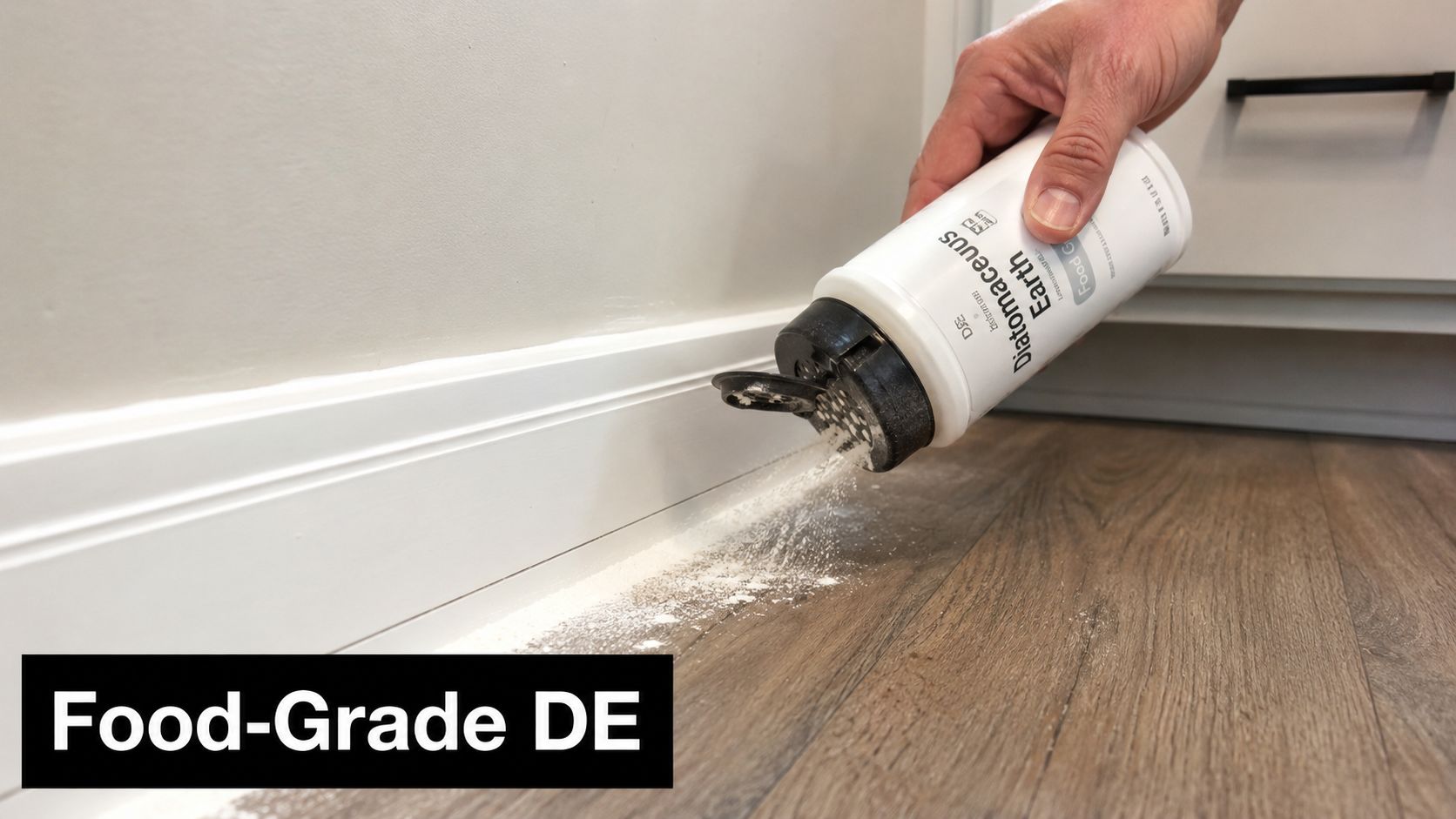
How to Use It Without Creating a Mess
Wear a dust mask when you apply it, especially indoors. Even products people view as “natural” still need careful handling around indoor air and family spaces.
The bigger point is safety and selectivity. Many DIY articles blur the line between repellents, contact killers, and dusts, but that distinction matters around kids, pets, and food areas. As noted in this overview of DIY pest control safety and integrated pest management, label directions are legal instructions and thoughtful product selection matters more than blanket spraying or random home remedies.
A realistic Crown Point use case is a dry basement where occasional ants or flea activity shows up near storage areas. A light DE application can help there, but it won't replace sanitation, vacuuming, exclusion, and moisture control. If the problem is spreading room to room, DE alone usually isn't enough.
3. Sticky Traps and Monitoring Stations
Sticky traps are underrated because they don't feel dramatic. They don't smell like spray, and they don't give instant satisfaction. What they do give you is information, and that's often what separates smart DIY pest control from wasted effort.
Place them where pests travel, not where people notice them. Along walls, under sinks, behind toilets, beside appliances, in utility rooms, and near basement perimeter walls are all better choices than open floor space. Pests tend to follow edges.
Use Traps to Read the House
One trap in one room won't tell you much. A small grid tells you where activity is concentrated, whether it's getting better, and whether you're dealing with occasional invaders or a bigger pattern.
- Track location: Write the room and date on each trap.
- Check weekly: Don't wait until the adhesive is full of dust.
- Replace routinely: Old glue boards lose stickiness even when they look fine.
- Match the pest to the response: Ants, roaches, spiders, and occasional invaders all call for different next steps.
A property manager might place traps under sinks and behind shared-appliance areas before complaints build. A homeowner in Crown Point might use them in spring to learn whether insects are entering from the garage side, the basement, or a plumbing wall. That's useful because your treatment only works if you know where activity starts.
The trap doesn't solve the whole problem. It tells you where to solve it.
For homeowners trying to avoid guesswork, this is one of the best home pest control DIY tools because it prevents random product use. If the traps keep filling up after sealing and sanitation, that's often the point where residential pest control makes more sense than another retail purchase.
4. Essential Oil and Natural Spray Solutions
Essential oil sprays have a place, but they need realistic expectations. They work better as repellents and short-term deterrents than as complete control plans. If you use them like a perimeter reminder around likely entry spots, they can help. If you use them as a stand-alone answer to a hidden infestation, they usually disappoint.
Peppermint is the one most homeowners reach for first. It's commonly used around baseboards, garage entries, mudrooms, and utility spaces where ants, spiders, or occasional rodent movement is suspected. Eucalyptus, clove, and cinnamon are also popular in homemade mixes.
Where Natural Sprays Help Most
Use them where you want a lower-residue option and where staining risk is manageable. Always test first on hidden surfaces. Oils can mark painted trim, wood finishes, fabrics, and some stone.
A simple spray routine usually works better than overapplying once. Shake the bottle each time, apply in the evening when pest movement often increases, and reapply consistently around the same trouble spots. That's especially true in garages, entryways, and patio-adjacent rooms in Northwest Indiana homes.
If mosquitoes are part of your outdoor frustration, The Green Advantage also has a helpful article on natural mosquito repellent essential oils.
Natural sprays are best viewed as support tools. Pair them with sealing, habitat cleanup, and monitoring. If ants are trailing through the kitchen or roaches are active around appliances, repellent-only strategies can scatter pests into new hiding spots instead of ending the issue.
5. Proper Waste Management and Sanitation Practices
Sanitation isn't the glamorous answer, but it's often the answer that changes the whole pressure level in a house. The EPA's integrated pest management approach emphasizes sanitation, exclusion, and careful product selection rather than routine blanket spraying. That prevention-first guidance is reflected in the EPA's overview of integrated pest management principles.
For Crown Point homeowners, the practical version is simple. Crumbs under the stove, grease beside the range, unsealed cereal boxes, pet food left out overnight, and moisture under the sink all create repeat invitations. If food, water, and shelter remain easy to access, even a good treatment often underperforms.
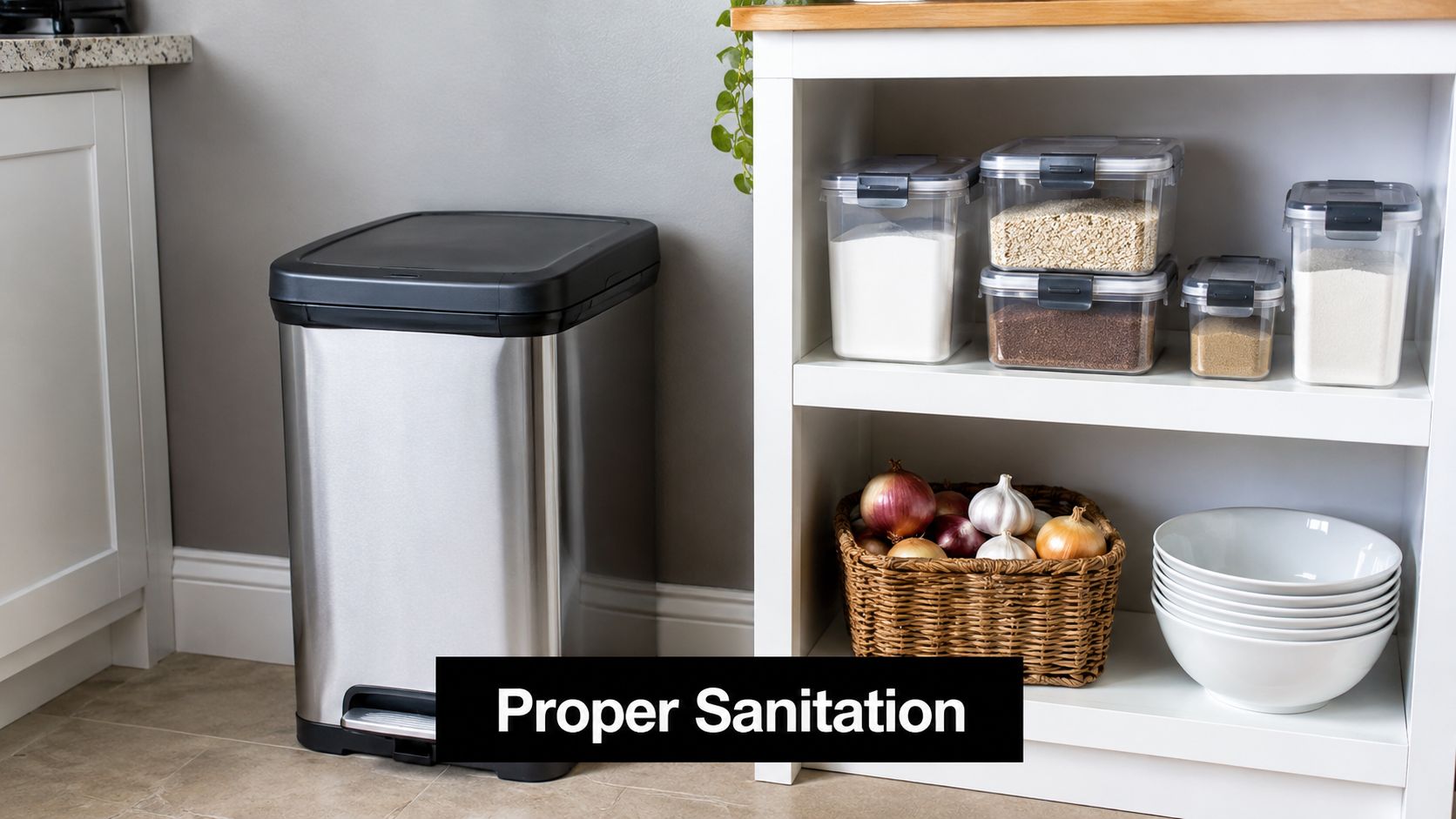
Small Cleaning Habits That Matter
Most homes don't need perfection. They need consistency.
- Seal pantry goods: Move flour, cereal, rice, and snacks into airtight containers.
- Empty trash regularly: Use tight-fitting lids, especially in kitchens and garages.
- Clean hidden zones: Pull out the toaster, fridge, and pet bowls, not just countertops.
- Fix moisture fast: Leaks and standing water keep pest pressure alive.
This matters outside, too. Overflowing bins, greasy grill areas, and old organic debris near the house can attract activity that later moves indoors. If you're already cleaning up exterior problem spots, broader yard maintenance jobs like this guide to tree stump removal can also reduce hiding areas around the property.
In apartments and multi-unit settings, sanitation works best when the whole building follows it. One clean unit helps, but shared walls and common trash areas can keep pests circulating if management isn't addressing the full picture.
6. Nematodes for Grub and Larvae Control
Beneficial nematodes are one of the more targeted DIY options for outdoor pest pressure. They're used in soil, not on shelves or countertops, and they make the most sense when the actual pest problem starts underground. That can include flea larvae in pet-use areas or lawn pests that develop below the surface.
This is a better fit for homeowners who want to manage the source rather than just the adult pest they notice later. In a Crown Point yard, that might mean addressing flea pressure before it follows pets inside or dealing with lawn-damaging grubs before stressed turf creates a larger maintenance problem.
What Makes This Method Worth Trying
Nematodes aren't a general cure-all. They need the right conditions. Moist soil, proper timing, and fresh product matter a lot more here than they do with shelf-stable sprays and traps.
Apply in the cooler part of the day, water before and after, and avoid dry, high-heat conditions. If the soil dries out immediately, the treatment loses value. That's why this tends to work best for homeowners who are willing to follow through with watering and timing instead of treating it like a one-step shortcut.
A practical example is a yard with recurring flea issues around shaded runs, fence lines, or areas where pets spend time. Nematodes can be part of that plan, but indoor vacuuming, pet-care coordination, and entry-point control still matter. Outdoor treatments help most when they're tied to a clear source area.
7. Boric Acid Baits for Cockroaches and Ants
For ants and cockroaches, baiting often works better than chasing visible insects with contact spray. That's because you need the pest to carry the toxicant back into the places you can't reach. Spraying the insects you see may kill a few, but it can leave the larger population untouched.
Boric acid baits can be effective when used carefully and placed where pests travel. The key word is carefully. This isn't something to scatter loosely around kitchen edges, especially in homes with children or pets. Use contained placements or tamper-resistant bait stations whenever possible.
The Main Mistake Homeowners Make
They bait and spray the same spot. That usually backfires.
- Keep bait dry: Moisture reduces performance.
- Place it along travel routes: Under appliances, near wall voids, and beside plumbing lines are common examples.
- Don't contaminate bait placements: Strong cleaners and spray residues can reduce bait acceptance.
- Label and secure stations: Safety comes first in kitchens, baths, and utility rooms.
A realistic Northwest Indiana scenario is ant activity near a sink or a basement half-bath where moisture stays high. Another is roach movement around warm appliance zones. Baits can help in those settings. But if you're seeing daytime roach activity, repeated sightings across multiple rooms, or pests returning no matter how often you rebait, the problem may be bigger than a DIY colony reduction effort.
8. Physical Exclusion for Rodents, Door Sweeps and Hardware
Rodent prevention often fails at the door line. Homeowners will seal foundation cracks, set traps, and clean the garage, then leave a gap under the service door wide enough for a mouse to use every night. Door sweeps, threshold seals, hardware cloth, and proper fastening hardware fix a lot of that.
This is especially important in Crown Point garages, side entries, utility rooms, and basement exterior doors. Seasonal shifts in Northwest Indiana push rodents to look for warmth, shelter, and food. A worn sweep or loose corner seal can undo a lot of other prevention work.
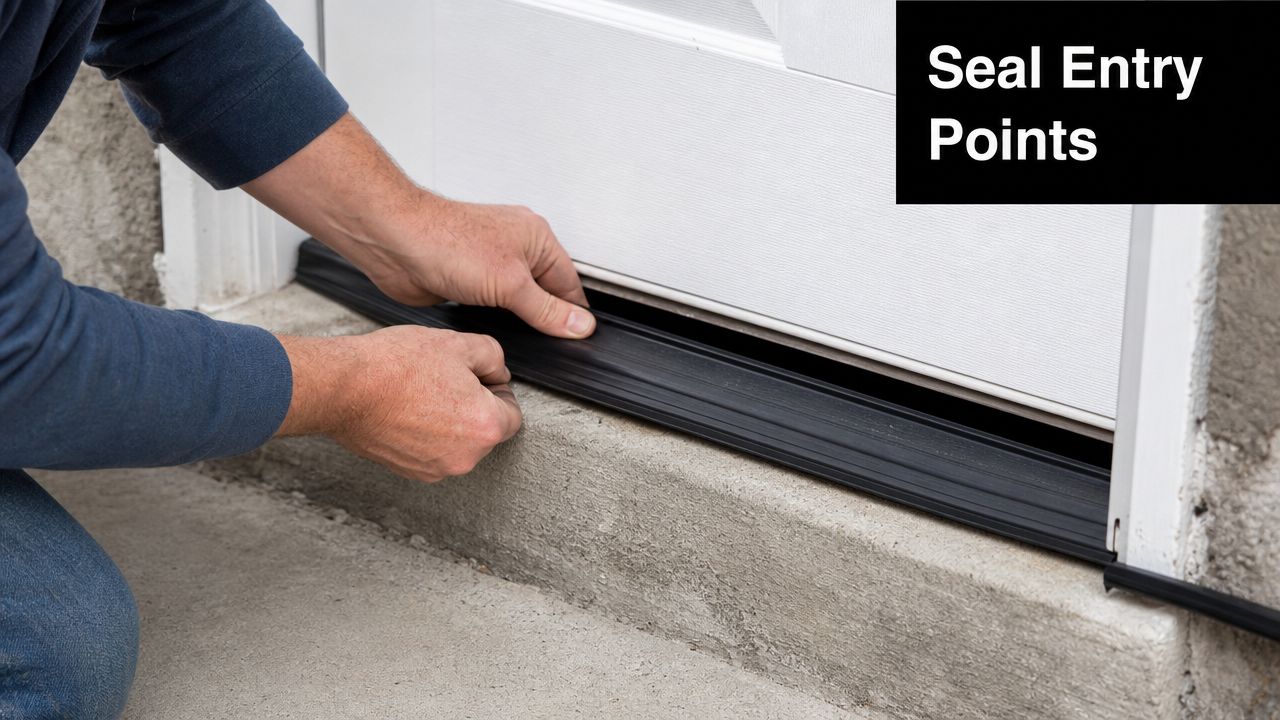
What to Install and What to Check
Choose durable materials. Thin rubber pieces wear out quickly, especially on doors with rough concrete contact. Brush or vinyl styles often hold up better in daily-use entries.
If light shows under the closed door, treat it like an open invitation.
Use hardware cloth at vulnerable vents, gaps near garages, and other openings where rodents could chew or squeeze through. Fasten it securely with screws or nails rather than relying on weak attachment points. Then inspect monthly. Exclusion hardware isn't a set-it-and-forget-it fix if the door is used hard all year.
This is one of the clearest examples of the best home pest control DIY strategy in practice. Don't start with poison if the building shell is still open.
9. Mosquito Habitat Elimination in Yards
Mosquito control starts long before a spray treatment. If the yard keeps producing breeding sites, the pressure keeps rebuilding. In Crown Point, that often means clogged gutters, low spots that hold water, neglected containers, birdbaths, kids' toys, wheelbarrows, and dense shrub lines where adults rest during the day.
Yard correction is often more effective than homeowners expect. You don't have to eliminate every damp area. You do need to identify the spots that repeatedly hold water and the shady areas that give adult mosquitoes a place to wait out the day.
A Better Outdoor Routine
Walk the property after rain. That's when the problem spots reveal themselves.
- Dump and refresh containers: Birdbaths, pet bowls, buckets, and planters matter.
- Clean drainage paths: Gutters and downspout exits shouldn't hold water.
- Trim dense vegetation: Mosquitoes rest in cool, shaded cover.
- Store items upside down: Toys, pots, and tarps collect more water than people realize.
If your yard still feels mosquito-heavy after habitat cleanup, the issue may involve neighboring conditions or a larger pressure pattern around the property. That's when local mosquito control becomes more practical than repeated retail foggers. The Green Advantage can help homeowners in Crown Point, IN evaluate whether outdoor conditions are driving the problem and whether a broader treatment plan makes sense.
10. Pantry Pest Prevention Through Storage Management
Pantry pests frustrate homeowners because they often arrive with the food itself. You can keep a clean kitchen and still end up with moths, beetles, or weevils if an infested package comes home from the store. Once they get established, they spread unnoticed through dry goods.
The fix is less about spraying and more about inspection, disposal, and storage discipline. Check flour, cereal, rice, nuts, dried fruit, and pet food. If you see webbing, damaged packaging, or insect activity, bag it and remove it from the house right away.
A Pantry Reset That Actually Works
Often, only the obviously affected item is inspected. This overlooks nearby products that are already compromised.
- Transfer dry goods immediately: Glass or sturdy food-grade plastic containers work best.
- Label and rotate items: Older products should get used first.
- Vacuum shelves and corners: Crumbs and spilled grains support repeat activity.
- Don't save questionable packages: One “maybe it's fine” item can restart the problem.
This matters even more for households that buy in bulk. Large bags of grain products and pet food sit longer, which gives hidden pantry pests more time to develop. For property managers and landlords, pantry pests also create repeat complaints in multi-unit housing unless residents understand that storage changes, not room spray, solve the root problem.
10-Method DIY Home Pest Control Comparison
| Item | Implementation complexity | Resource requirements | Expected outcomes | Ideal use cases | Key advantages |
|---|---|---|---|---|---|
| Sealing, Caulking, and Insulation Upgrades for Pest-Proof Barriers | Moderate–High: requires thorough inspection and precise installation | Specialty sealants, foam board/batt insulation, tools or contractor; $200–$800+ | Long-term prevention of entry routes; durable 10+ years; secondary energy savings | Whole-home prevention, attics, rim joists, renovation projects | Permanent, non-toxic barrier; reduces energy loss; complements other measures |
| Natural Diatomaceous Earth (Food-Grade) | Low: simple dusting application by homeowner | Food-grade DE, applicator, dust mask; $20–$40 per application | Mechanical control of crawling insects; effective until wet; slower (3–7 days) | Dry basements, crawlspaces, around pet bedding, organic-focused homes | Organic, no resistance, long shelf life, low environmental impact |
| Sticky Traps and Monitoring Stations | Low: place and check regularly | Adhesive traps, optional pheromone lures; $1–$3 per trap | Immediate detection and localized capture; useful for trend data but not full elimination | Diagnostics, monitoring in kitchens, basements, commercial areas | Very inexpensive, chemical-free, helps target treatments |
| Essential Oil and Natural Spray Solutions | Low: DIY mixing and spot application | Essential oils, spray bottles, carrier (water/soap); $5–$15 per batch | Short-term repellent/mild contact effect; frequent reapplication needed | Light infestations, preventive use, homeowners preferring natural scents | Pleasant aroma, low toxicity when used correctly, versatile |
| Proper Waste Management and Sanitation Practices | Low–Moderate: habit and routine changes | Airtight containers, tight-lid bins, cleaning supplies; minimal cost | Foundational long-term reduction in pest attraction; visible improvement in 2–4 weeks | All homes and food-handling facilities; multi-unit living with coordination | Zero-cost habits, immediate hygiene benefits, reduces chemical reliance |
| Nematodes for Grub and Larvae Control | Moderate: timed application with moisture requirements | Live nematodes (species-specific), sprayer, refrigeration until use; $30–$60 per yard | Targeted underground control; results in 2–4 weeks; may persist multiple seasons | Lawns/gardens with grubs, mosquito pupae control, organic landscapes | OMRI-certified, safe for non-targets, can establish beneficial populations |
| Boric Acid Baits for Cockroaches and Ants | Low–Moderate: careful placement and safety measures | Boric acid formulations, tamper-resistant bait stations; $10–$25 | Slow-acting colony control; results in 1–2 weeks for moderate infestations | Ant and roach infestations where children/pets are not at risk of ingestion | Highly effective, low-cost, long shelf life when stored dry |
| Physical Exclusion for Rodents, Door Sweeps and Hardware | Low–Moderate: measurement and installation accuracy required | Door sweeps, threshold seals, hardware cloth, fasteners; $50–$150 typical | Continuous physical exclusion when installed correctly; minimal upkeep | Basements, exterior doors, vents, garages, sites of rodent entry | Permanent, non-toxic, reduces drafts and energy loss |
| Mosquito Habitat Elimination in Yards | Low–Moderate: ongoing weekly maintenance | Time and basic yard tools; minimal material cost | Preventive reduction (≈50–70%) over 2–3 weeks; durable if maintained | Outdoor living areas, pre-season mosquito control, community efforts | Free, safe for people/pets, improves yard health and usability |
| Pantry Pest Prevention Through Storage Management | Low–Moderate: organization and consistent habits | Airtight containers, labels, storage solutions; $30–$80 upfront | Prevents infestation of stored foods; protects quality and reduces waste | Pantries, bulk buyers, households storing dried goods | Food-safe, cost-effective, long-term prevention with minimal maintenance |
Know When to Call Your Crown Point Pest Control Pro
You treat the ants in the kitchen, wipe down the counters, and the trail is back three days later. A week later, you hear scratching in the wall near the garage. That is usually the point where a Crown Point homeowner stops asking, "What product should I buy?" and starts asking, "What am I missing?"
DIY pest control still has a real place in home maintenance. For light, isolated problems, store products and basic prevention steps can work well enough. I tell homeowners to start there when the issue is small and clearly identified. But repeated activity usually means the visible pest is only part of the problem. The source may be inside a wall void, under insulation, around a foundation gap, near a crawlspace moisture issue, or tied to a recurring exterior entry point that is easy to miss in older Northwest Indiana homes.
Some pests cross that line faster than others. Bed bugs, termites, German cockroaches, and rodents rarely stay simple for long. Public-facing guidance also points out that once an infestation involves hidden harborage, repeated reproduction, or building access points, the answer is usually a mix of inspection, monitoring, exclusion, moisture correction, and targeted treatment, not another round of general spray. A helpful overview appears in this article on when DIY stops being cost-effective or effective at all.
Product buying habits explain part of the confusion. Analysts at Grand View Research found that sprays and aerosols made up the largest product segment in the U.S. pest control products market in 2024, within a market valued at https://www.grandviewresearch.com/industry-analysis/us-pest-control-products-market-report. Homeowners buy what is easy to find and easy to use. That makes sense. The trade-off is that fast knockdown products often solve the symptom you can see, not the nesting site, access route, or breeding source that keeps the problem active.
In Crown Point and nearby Northwest Indiana, that decision point often shows up in a few predictable ways. Mice activity tends to pick up as temperatures drop. Ant problems often return in spring and early summer, especially after wet periods. Mosquito complaints can usually be reduced with yard maintenance, but heavy pressure near standing water, drainage issues, or shaded harborage may need a broader treatment plan than a homeowner wants to manage alone.
Call for an inspection when you see one or more of these signs:
- You have treated more than once and pest activity keeps returning.
- Droppings, gnawing, damaged food packaging, or wood damage are showing up.
- Pests are appearing in multiple rooms, not just one isolated spot.
- You suspect termites, bed bugs, or German cockroaches.
- The problem involves rental units, food areas, pets, children, or anyone with health sensitivities.
- You cannot identify the pest with confidence, which makes product choice guesswork.
The Green Advantage works with Crown Point homeowners and nearby Northwest Indiana properties on residential pest control, commercial pest control, inspections, mosquito reduction, and targeted treatment plans based on the pest and the structure involved. If your DIY efforts are no longer working and you need professional help in Crown Point, a thorough inspection is the next logical step.
If pests keep returning despite your best efforts, contact The Green Advantage to schedule an inspection or request a quote. For homeowners and property managers in Crown Point, IN and nearby Northwest Indiana service areas, it is a practical way to move from repeated DIY treatments to a clearer plan for ant control, rodent control, spider control, termite concerns, mosquito issues, and year-round residential pest control.