
A dock door stays open during a busy receiving shift, pallets move inside, and nobody notices the small signs until a worker finds droppings near stored goods. In a Crown Point, IN warehouse, that discovery raises immediate questions about inventory, sanitation, compliance, and whether rodents have already moved beyond the loading area.
Effective warehouse rodent control starts before a trap is set. The practical approach is an exterior-to-interior system that combines inspection, exclusion, sanitation, storage discipline, targeted monitoring, and clear records. The Green Advantage serves Crown Point and surrounding Northwest Indiana communities with commercial pest control focused on protecting facilities, employees, products, and peace of mind.
Why Warehouse Rodents Threaten Crown Point Businesses
A warehouse can look clean and orderly while still offering rodents several ways inside. Dock traffic creates repeated opportunities at doors and seals, while pallets, packaging, stored materials, waste areas, and utility penetrations provide cover once an animal crosses the threshold. Exterior pressure matters because the first rodent problem may begin outside the building, not in the storage aisle.
A 2023 warehouse and food-facility survey cited by Quality Assurance Magazine's rodent-control market report found that 67% of surveyed professionals had seen a rodent inside or outside their facility. The same report identified outside areas as the most common location, with 75% of sightings, followed by warehouse or storage areas, including 40% for mice and 36% for rats, and dock areas. Those findings support what commercial technicians see in the field. Warehouse rodent control must address the route from the property perimeter to the product zone.
The operational cost of a hidden problem
Rodents threaten more than the comfort of the people working in a facility. They can contaminate packaging, damage stored materials, gnaw through wiring or insulation, and create questions during customer, regulatory, or third-party audits. Even when no product is visibly damaged, droppings, nesting material, or evidence of gnawing can force managers to isolate affected stock and investigate how the animal entered.
The historical food-loss record explains why storage facilities have treated rodent prevention as a serious business responsibility for decades. The Food and Agriculture Organization's warehouse rodent report notes that an average-sized Norway rat eats about 259 grams of food per day, roughly 9 kilograms per year. It also documents trials in which small colonies of 10 to 26 rats with access to sack wheat for 12 to 18 weeks contaminated 70% of the grain, reduced weight by 4.4%, and produced total losses equal to 18.2% of the wheat and sacks' value.
Practical rule: Treat a rodent sighting near a dock as a building-protection issue, not only as an indoor extermination call.
A local prevention partner
Warehouse managers searching for pest control near me, commercial pest control, or an exterminator near me often need more than a one-time bait placement. They need someone to identify access points, explain operational changes, document findings, and coordinate follow-up without disrupting daily work.
The Green Advantage is a family-owned pest control company serving Crown Point, IN and nearby Northwest Indiana communities. Its commercial approach fits warehouses that need practical diagnosis, prevention-minded treatment, and direct communication with knowledgeable office staff.
How to Inspect Your Warehouse and Assess Rodent Risk
Start outside and work inward. A useful inspection follows the path a rodent would take, from the property edge to the building shell, through dock areas, and finally into storage and operational spaces. Beginning inside can cause teams to focus on symptoms while missing the access point that keeps activity returning.
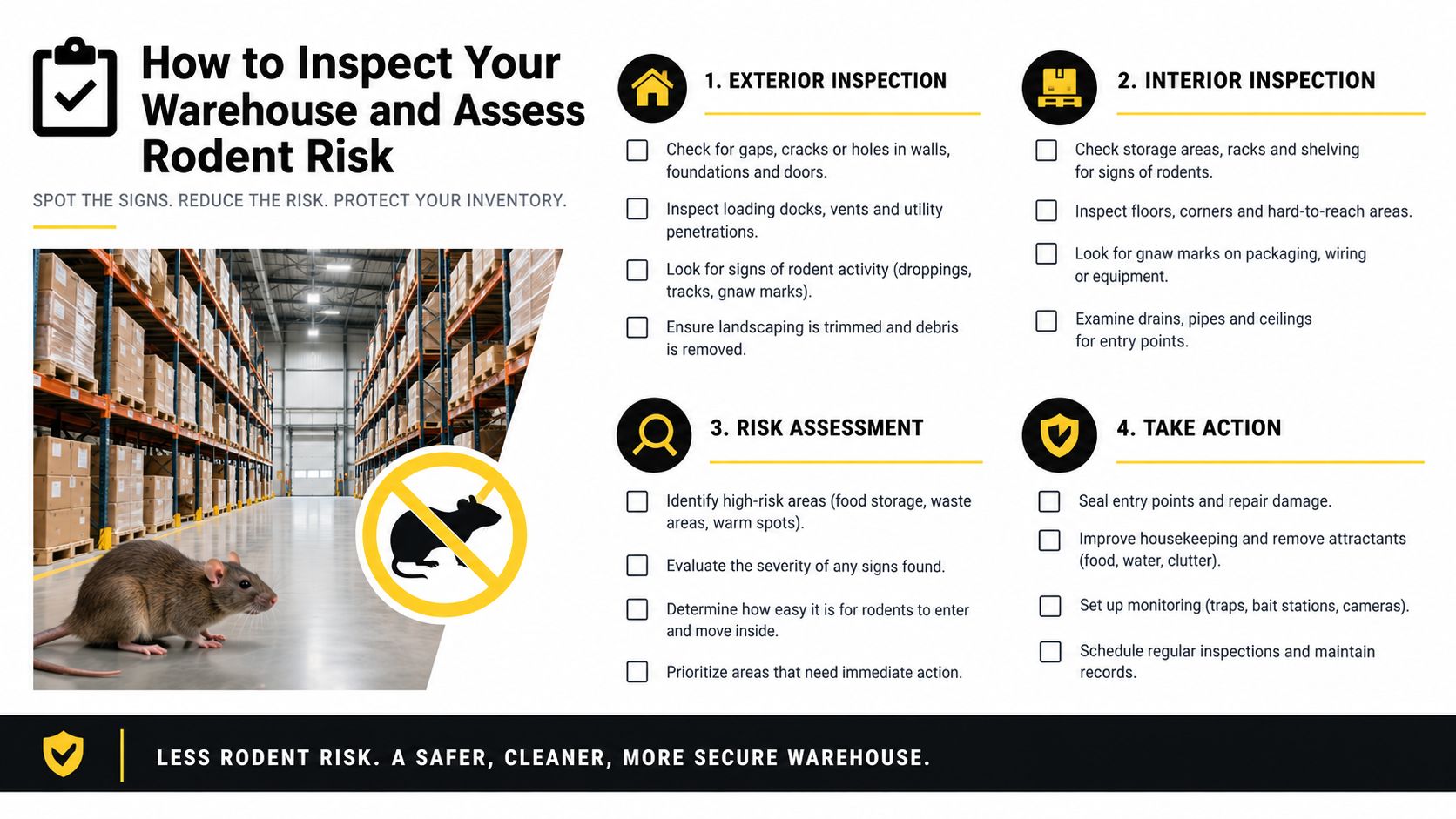
1. Walk the exterior perimeter
Look for burrows, runways, droppings, gnaw marks, spilled product, standing water, dense vegetation, discarded materials, and gaps along the foundation. Check where pavement meets the building, where exterior walls meet dock structures, and where utility lines enter the facility.
Pay particular attention to doors and penetrations. Rats can enter openings about 1/2 inch wide, while mice can fit through openings as small as 1/4 inch in diameter, according to this warehouse rodent entry-point guide. A gap that looks insignificant to a person may be a usable route for a mouse.
2. Examine docks and traffic points
Inspect dock plates, bumpers, seals, door sweeps, hinges, corners, and the floor immediately inside each opening. Ask staff which doors stay open longest, which doors receive damaged pallets, and where inbound materials wait before inspection. These details reveal operational risk that a visual walk alone may miss.
Record each finding with the location, condition, photo reference, and recommended action. If the facility has complex ventilation or rooftop equipment, a related resource on designing warehouse air systems can help managers think through how building infrastructure affects inspection access and maintenance planning.
3. Inspect storage and support areas
Move through lower rack levels, pallet staging areas, corners, wall lines, breakrooms, waste locations, and equipment rooms. Search for droppings, shredded packaging, rub marks, gnawing, unusual odors, and damaged product. Rodents usually prefer protected travel routes rather than exposed floor space, so cluttered edges deserve more attention than the middle of a clear aisle.
Use a simple risk classification:
- High priority: Active signs, accessible food or water, open penetrations, damaged dock seals, or repeated findings.
- Medium priority: Harborage, clutter, poor visibility, or conditions that could support activity even without fresh evidence.
- Lower priority: Clean, accessible areas with intact barriers and no signs, provided staff continue scheduled checks.
Inspection quality depends on consistency. Use the same route, document changes, and assign responsibility for reviewing findings. A manager should be able to see where activity occurred, what corrective action was assigned, whether the repair was completed, and what follow-up confirmed the result.
Sealing Entry Points and Strengthening Sanitation and Storage
Traps can't compensate for an open door gap, leaking pipe, or persistent food debris. Physical prevention works best when the building blocks access and daily operations remove the resources that make rodents stay.
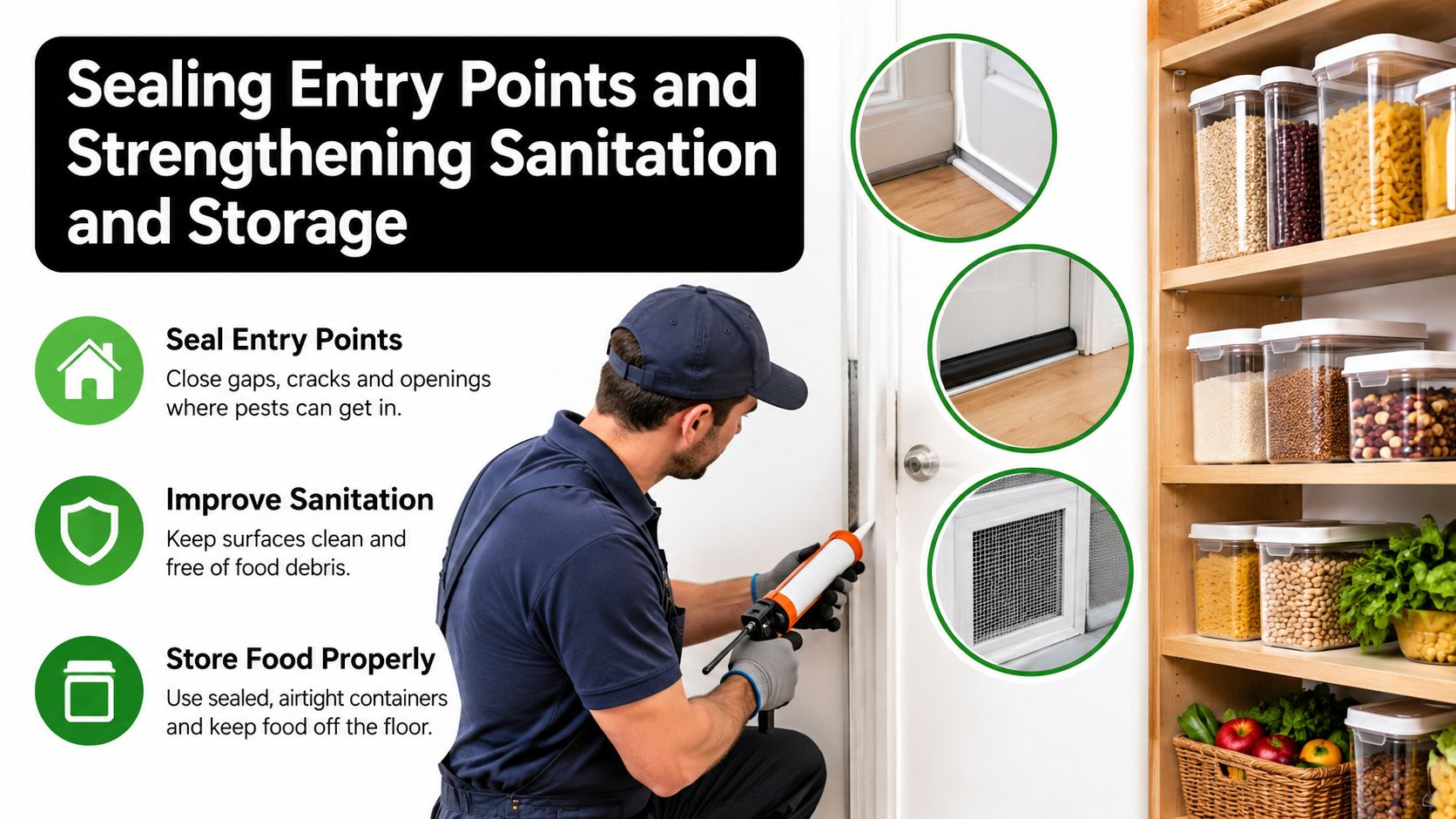
Make the building harder to enter
Repair worn door sweeps and dock seals rather than treating them as minor maintenance items. Seal cracks, wall openings, utility penetrations, and enclosed voids with materials suited to the location. Soft fillers alone may fail where rodents can gnaw or where forklifts, moisture, and repeated door movement damage the repair.
Inspect roof edges, drains, flashing, wall joints, and penetrations as part of the building envelope. Water intrusion can create damp harborage and damage materials that leave new access routes, so managers should also review this warehouse roof problems guide when structural maintenance is part of the corrective plan.
The CDC warehouse guidance recommends practical storage clearances that make inspection and cleaning possible. Keep goods on pallets 6 to 8 inches off the floor and maintain at least 2 feet of clearance from ceilings and walls for access and inspection, as outlined in the government warehouse pest-control guidance. These clearances also reduce hidden travel lanes and make evidence easier to spot.
Remove food, water, and hiding places
Sanitation must be assigned to people and shifts, not left as a general expectation. Clean spills and organic debris immediately, and report and repair leaks right away, as recommended by this logistics and warehousing rodent checklist.
A practical warehouse standard includes:
- Spill response: Clean product residue as soon as employees find it, then record recurring spill locations for process review.
- Leak control: Report plumbing, roof, condensation, and equipment leaks before they create dependable water sources.
- Waste management: Keep waste contained, remove it on schedule, and clean the surrounding floor and wall edges.
- Storage discipline: Keep cartons and pallets accessible for inspection instead of pushing them tightly against walls.
- Material control: Remove unused cardboard, broken pallets, and loose packaging that can provide nesting material.
The trade-off is operational effort. Moving pallets, repairing doors, and enforcing cleanup takes coordination, but those steps reduce the conditions that allow rodents to establish themselves. Baiting alone may remove individual animals while leaving the same access and attraction factors in place.
A strong exclusion plan also protects related building services. Rodent-proofing can support broader commercial pest control, while separate needs such as termite control, ant control, spider control, mosquito control, or wasp removal may require their own inspection and treatment decisions.
The video provides a visual reminder that sealing work should be deliberate. Before closing an opening, confirm that no animal remains inside a wall, void, or enclosed space. Otherwise, a repair can trap the problem rather than solve it.
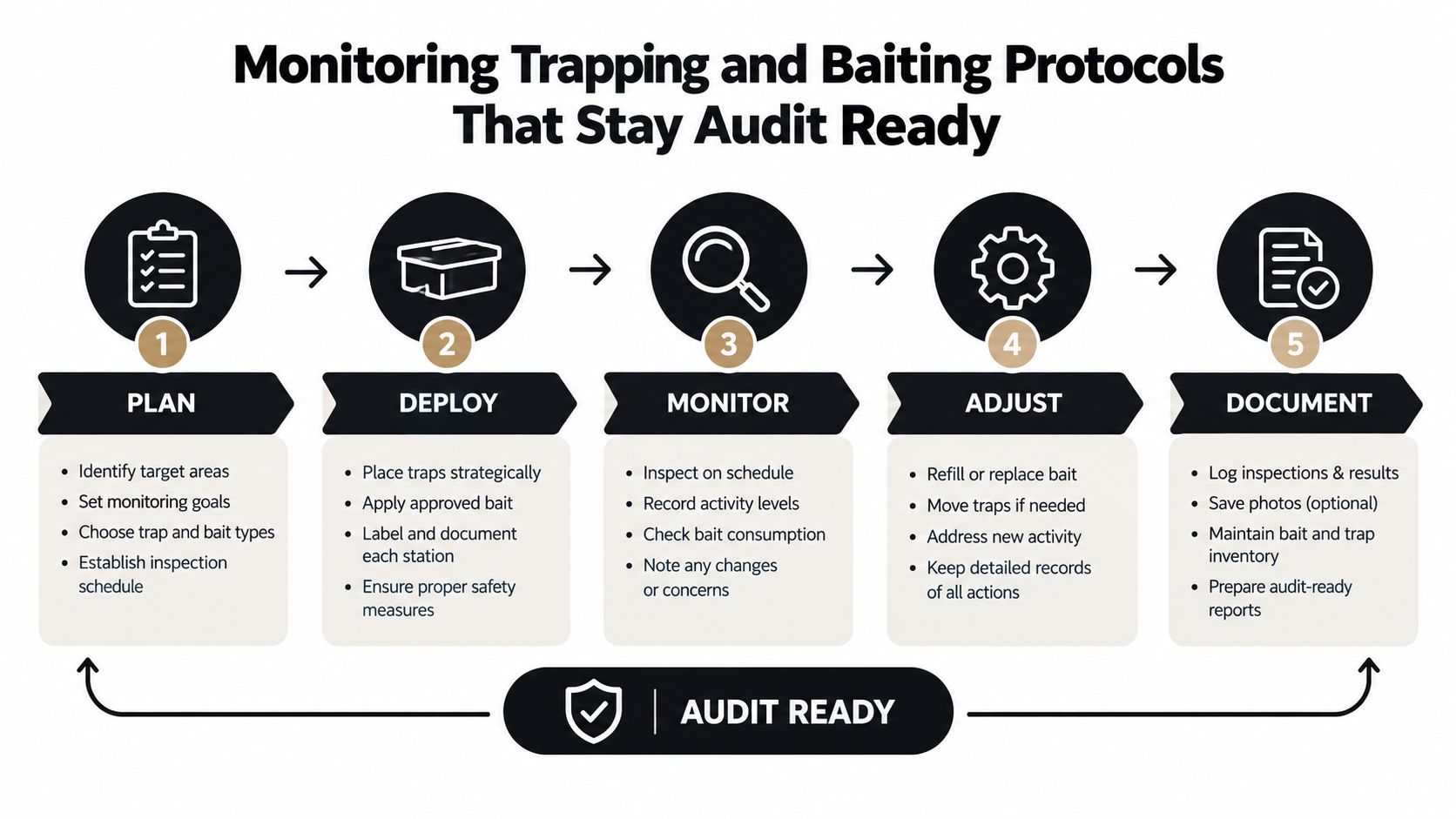
Monitoring Trapping and Baiting Protocols That Stay Audit Ready
Active control has a place in warehouse rodent control, but placement and servicing determine whether it produces useful evidence. Monitoring devices should sit where rodents travel, not where they are easiest for a technician to install.
Build the map around travel routes
Start with the exterior perimeter, fence line, dock approaches, building corners, doorways, and interior walls. Place tamper-resistant bait stations and glue board monitors along the interior perimeter, at entry points, and in areas with previous activity, consistent with this warehouse audit-ready checklist.
Spacing should follow the facility's activity level and the applicable service plan. Illinois public-health guidance describes commonly used spacing of 75 feet along fence lines, 50 feet on the building exterior, and 25 feet indoors along exterior walls when rodent activity is significant in its municipal rodent-management guidance. Those figures are planning benchmarks, not a substitute for a site-specific assessment.
Use mechanical traps or other targeted tools where indoor bait creates product, odor, carcass, or audit concerns. A trap placed inside a protected station can provide a clear result and allow the technician to remove the animal promptly. Bait may still be appropriate in selected exterior or secured locations, but it shouldn't become the entire program.
Service on a strict schedule
Every station and monitor should have an identifiable location, condition record, activity result, corrective action, and service date. A missed inspection creates uncertainty. An untouched device doesn't automatically prove the warehouse is rodent-free, especially if entry points, sanitation, or storage conditions changed.
The market data in a 2024 rodent-control program survey found that 98% of respondents said their protocols work, while warehouse and storage areas remained the most common sighting location at 25%. The practical lesson is that treatment choice alone isn't the deciding factor. Dock access, storage layout, documentation, and surveillance discipline can still create failure points.
A useful service visit answers four questions:
- What changed? New doors, construction, product flow, waste practices, or landscaping can alter risk.
- Where was activity detected? Map the result instead of recording only “no activity.”
- What action followed? Repairs, cleaning, trapping, bait adjustment, or intensified inspection should be traceable.
- What will be checked next? Assign a follow-up task and responsible person.
This evidence helps managers demonstrate control without overrelying on rodenticides. It also gives technicians a defensible basis for adjusting the program when activity shifts.
Recordkeeping Compliance Staff Training and Eco Minded Options
A warehouse program becomes dependable when employees know what to report and managers can prove how the facility responded. Records should connect observations to actions, not sit as isolated service sheets in a folder.
Keep a site map showing stations, monitors, docks, storage zones, and sensitive areas. Maintain service records, inspection notes, corrective-action assignments, repair completion, sanitation observations, and follow-up results. Stock rotation and rejected-inbound inspection also matter because older inventory, damaged packaging, or contaminated deliveries can introduce risk even when the building itself is well maintained.
Turn staff into early-warning support
Warehouse employees don't need to diagnose rodents. They do need a simple reporting path for droppings, gnaw marks, spills, leaks, damaged packaging, open doors, and nesting material. Training should explain what to photograph, whom to notify, how to protect affected product, and how to prevent a cleanup from erasing useful evidence before inspection.
Staff-training standard: Report the condition, location, time, and immediate action. Don't rely on a verbal warning that disappears at shift change.
Eco-minded control doesn't mean ignoring activity. It means using the least disruptive effective method, beginning with exclusion, sanitation, storage correction, and targeted trapping, then using rodenticides only where the risk assessment supports them. Digital verification tools can help managers review trends, confirm service completion, and show that corrective actions were addressed.
For facilities interested in a prevention-led approach, eco-friendly rodent control from The Green Advantage explains how exclusion, monitoring, and targeted treatment can work together. The right choice depends on the building, stored materials, operating conditions, and audit requirements.
Warehouse Rodent Control Program Maturity Check
| Program Area | Basic Practice | Audit Ready Practice |
|---|---|---|
| Inspection | Staff report visible signs when they notice them. | Assigned routes, documented findings, mapped risk areas, and scheduled review. |
| Entry control | Repairs happen after a rodent is seen. | Door gaps, dock seals, cracks, and utility penetrations receive planned inspection and closure. |
| Sanitation | Employees clean when time allows. | Spill, debris, waste, and leak response has ownership and completion records. |
| Monitoring | Devices are placed broadly around the facility. | Stations and traps are mapped to travel routes, checked on schedule, and tied to corrective action. |
| Training | Workers receive informal reminders. | Each shift knows what to report, how to protect product, and how to document conditions. |
| Treatment choices | Bait is the default response. | Exclusion and sanitation lead, with targeted trapping and carefully selected rodenticide use. |
When to Call The Green Advantage in Crown Point IN
Professional help makes sense when you find fresh droppings, gnawed packaging, repeated activity near docks, unexplained odors, damaged door seals, or signs that continue after cleanup. A licensed inspection can distinguish an isolated entry from a recurring building vulnerability and can prioritize repairs without guessing.
DIY cleanup may remove visible evidence, but it won't reliably determine whether rodents are traveling through wall voids, entering through utility penetrations, or using an overlooked dock gap. A commercial technician also brings a service process that connects inspection, exclusion, monitoring, documentation, and follow-up. That matters when your warehouse must protect inventory and demonstrate an active pest-management program.
The Green Advantage serves Crown Point, IN and nearby Northwest Indiana areas with commercial pest control, rodent exclusion, inspections, monitoring, and preventative pest treatments. Its warehouse pest control service is suited to facilities that need a customized plan rather than a generic placement of traps or bait.
The first conversation should be straightforward. Share the facility type, recent signs, affected areas, dock activity, stored goods, and any audit or customer requirements. The office team can coordinate scheduling, while field technicians evaluate the site and explain recommended actions in plain language.
Professional service can also fit alongside residential pest control for nearby homes, apartment properties, or facility housing, as well as separate needs such as mosquito control, termite control, ant control, spider control, and wasp removal. The service should match the property and the pest, with no unnecessary treatment.
The Green Advantage provides Crown Point and Northwest Indiana warehouses with practical rodent inspections, exclusion, monitoring, and commercial pest control plans designed around daily operations. Visit The Green Advantage to schedule a warehouse pest inspection or request a quote for a prevention-focused program.