
A warehouse manager in Crown Point usually doesn't get a dramatic warning that pests have moved in. It starts small. A few rodent droppings near a dock door. A torn bag in a storage area. An employee mentions seeing a beetle by a break room sink. On their own, those signs may seem minor. In a warehouse, they rarely stay minor.
Pests exploit routine. They come in with inbound freight, slip through worn door sweeps, hide under pallets, feed on residue around trash compactors, and settle into quiet corners behind racking. If your operation handles food products, packaging, pharmaceuticals, or sensitive components, the risk climbs fast. Even a low level of activity can trigger inventory holds, customer complaints, sanitation disruptions, and hard questions during an audit.
That’s why pest control for warehouses has to be built like an operations program, not treated like a spray visit. In Crown Point and across Northwest Indiana, warehouse facilities sit at the crossroads of agriculture, trucking, rail movement, and industrial traffic. That mix creates constant pressure from rodents, flies, stored product pests, and occasional invaders that use loading zones and exterior harborage as staging areas.
Your Warehouse's Silent Threat Protecting Your Business in Crown Point
A common scenario goes like this. A supervisor notices droppings behind a row of pallets near receiving. Maintenance checks the area and finds a gap at the dock plate. Then quality assurance starts asking whether anything nearby needs to be isolated. Suddenly one small sign has turned into a site-wide question about contamination, documentation, and customer risk.

That escalation is why warehouse managers can't afford to wait for a visible infestation. By the time pests are obvious in a large facility, they've usually been active for a while. Rodents travel wall lines, insects breed in overlooked residue, and hitchhiking pests arrive inside corrugated cases, stretch wrap, or returnable containers.
The broader market tells the same story. The global pest control services for warehouses market reached USD 2.12 billion in 2024 and is projected to reach USD 3.71 billion by 2033, reflecting a 6.4% CAGR, according to Dataintelo's warehouse pest control market report. That kind of growth doesn't happen because this is optional. It happens because warehouse operators know pest pressure threatens product integrity, uptime, and compliance.
Why small signs create big consequences
In a house, one mouse is a nuisance. In a warehouse, one mouse can become a traceability problem.
A single pest sighting can affect:
- Inventory confidence: Teams may need to inspect nearby stock, packaging, and storage conditions.
- Operational flow: Staff gets pulled from shipping, receiving, sanitation, or maintenance to respond.
- Audit readiness: Unresolved sightings and weak documentation create avoidable exposure.
- Reputation: Customers don't separate a pest issue from overall quality control.
Practical rule: In warehouses, pest evidence is never just about the pest. It's about what that evidence says about the building, the process, and the controls around your inventory.
What Crown Point facilities are up against
Northwest Indiana warehouses deal with a specific mix of risks. Seasonal shifts drive pests indoors. Loading docks stay active. Facilities near fields, drainage corridors, food processing routes, or heavy truck traffic see a steady stream of opportunities for pests to enter and settle.
The challenge isn't panic. It's discipline. Good warehouse pest control is quiet, documented, and routine. The best programs catch pressure early, correct the conditions that support it, and leave a clean paper trail behind every decision.
The IPM Foundation A Comprehensive Site Assessment and Pest ID
Strong pest control for warehouses starts with Integrated Pest Management, or IPM. The process begins with a real assessment, not a quick lap around the perimeter. Professional warehouse pest control relies on a six-step approach rooted in IPM, starting with a thorough assessment of entry points, food sources, and harborage areas, followed by accurate pest identification that shapes the treatment plan, as outlined in this IPM methodology overview.
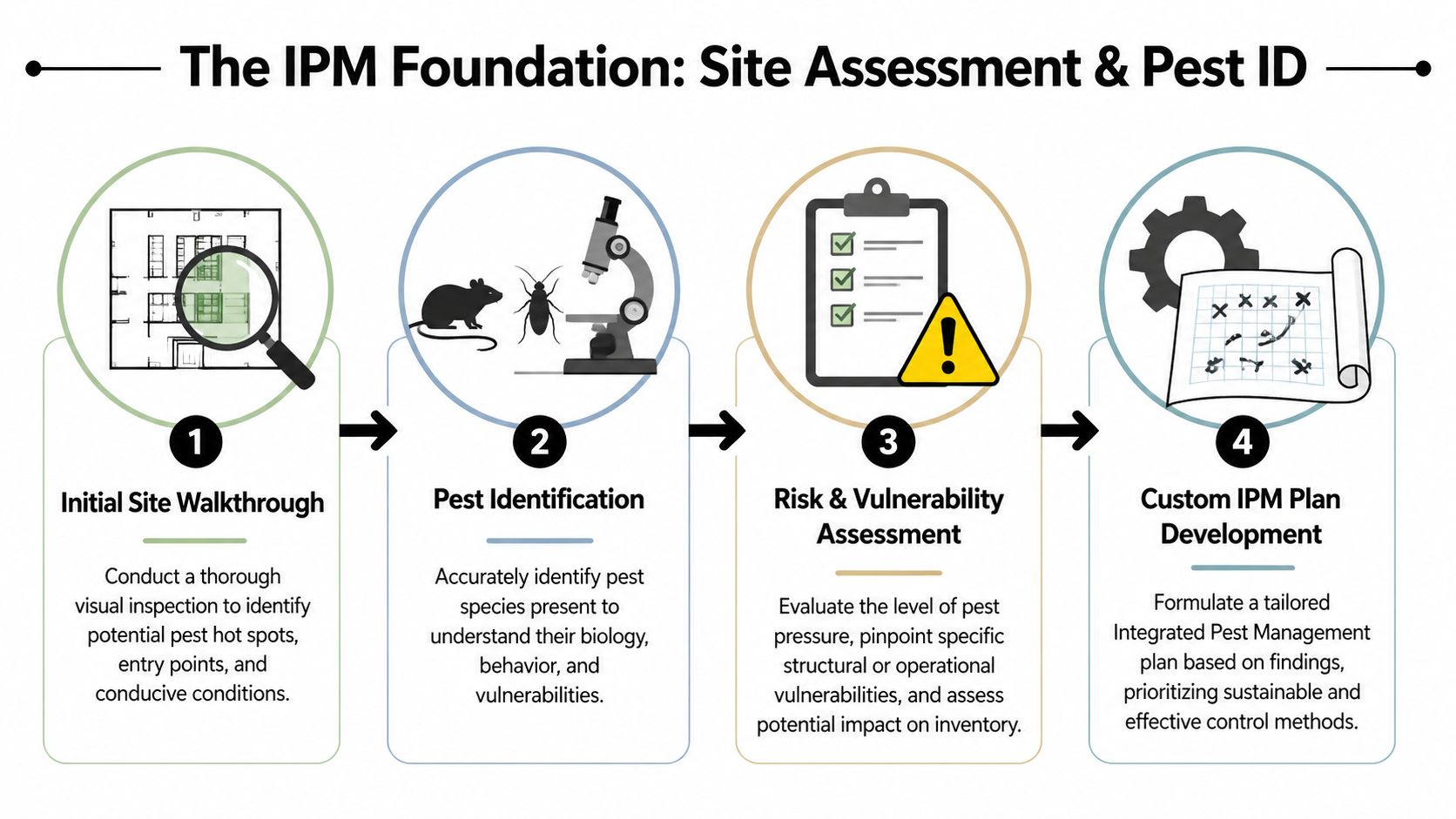
A proper site assessment answers four questions. Where are pests getting in. What are they finding once they're inside. Where are they hiding. What in your operation keeps rewarding them.
What a real warehouse assessment includes
The first pass should cover the entire property, not just the places where someone already saw activity. That means exterior walls, dock areas, employee entrances, dumpster pads, utility penetrations, rooflines where accessible, and drainage patterns around the building.
Inside, the inspection should move through the warehouse by function, not by convenience.
Receiving and shipping zones
These are the highest-risk areas for introductions. Freight arrives from multiple facilities with different sanitation standards. Pest evidence on pallets, in corrugated packaging, or in trailer corners matters.Storage racking and low-visibility voids
Rodents and insects both benefit from dead space. Look under bottom racks, behind seldom-moved inventory, near damaged insulation, and around electrical chases.Break rooms and janitorial closets
These don't hold sellable goods, but they often sustain pest activity. Food debris, standing moisture, mop heads, and trash liners can support cockroaches, flies, and ants.Mechanical and utility areas
Floor drains, condensate lines, warm motor spaces, and pipe penetrations create shelter. If sanitation is good and pests still persist, these zones often explain why.
For a broader facility perspective, this guide on warehouse pest control is useful because it reinforces how building conditions and operating habits work together. The same principle applies locally. You don't solve a warehouse pest issue by treating symptoms and ignoring structure.
Pest ID changes everything
Misidentification causes bad decisions. If you mistake stored product insects for occasional invaders, you'll miss the source. If you assume house mice but the evidence points to rats moving from exterior harborage, your exclusion plan will be wrong.
Common warehouse findings in Northwest Indiana can include:
- Rodents: Signs include droppings, rub marks, gnawing, nesting material, and movement along walls.
- Stored product pests: Moths and beetles often arrive with infested goods, residue, or compromised packaging.
- Cockroaches: Usually tied to moisture, sanitation failures, and hidden harborages in warm service areas.
- Flies: Frequently linked to drains, trash zones, standing organic residue, or door management issues.
The pest isn't the whole diagnosis. The species tells you where to look next, how far to inspect, and what control measures are likely to work.
Assessment has to account for your operation
A food-grade warehouse and a building storing paper goods don't carry the same pest profile. Facility age matters. So does traffic flow, staffing patterns, seasonality, and the way inventory turns. A warehouse with frequent returns, repacking, or damaged goods needs a different inspection rhythm than one moving sealed pallets with minimal handling.
That’s why the best plans aren't copied from another site. Each building needs its own working map, pressure points, and inspection priorities. A practical next step is to align your inspection and prevention process with an IPM framework designed for commercial settings, such as the guidance in The Green Advantage's integrated pest management benefits page.
Proactive Defense Sanitation Exclusion and Smart Storage
Most warehouse pest problems are won or lost before any trap is checked or treatment is applied. Prevention does the heavy lifting. If a facility keeps giving pests food, water, shelter, and access, control efforts turn into a loop of temporary fixes.
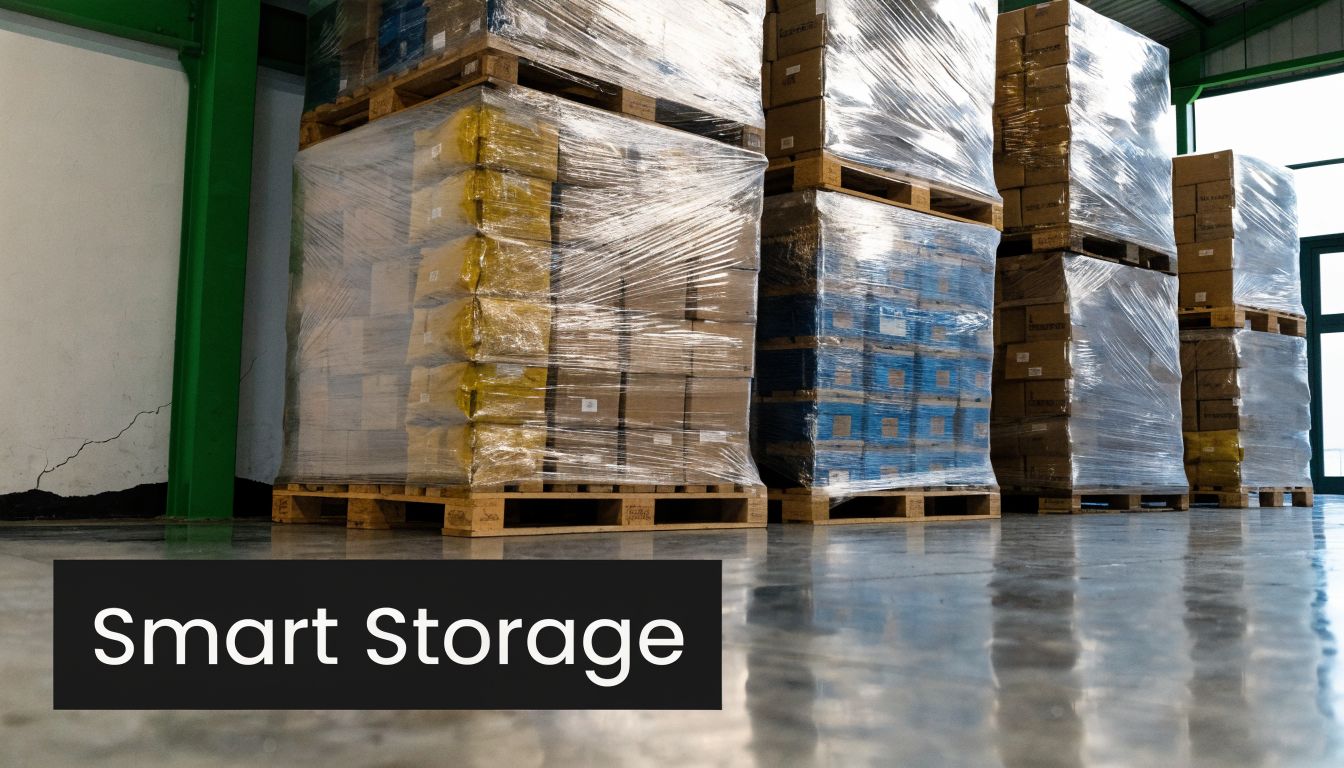
Warehouse managers sometimes assume sanitation matters only in food operations. That’s too narrow. Rodents will feed on surprisingly little. Insects thrive on residue, moisture, cardboard dust, and product fragments you may barely notice during a rushed shift. A clean warehouse isn't one that looks good from the aisle. It's one that denies pests a reward.
Sanitation that actually lowers pest pressure
Generic cleaning schedules don't solve warehouse pest pressure. Targeted sanitation does.
Focus first on the areas where residue accumulates faster than staff realizes:
- Under pallet racking: Shrink wrap scraps, broken product, and dust collect where brooms don't reach well.
- Dock edges and trailer interfaces: Spilled product and debris get trapped near plates, seals, and corners.
- Employee areas: Microwaves, lockers, vending areas, and under appliances often support recurring activity.
- Waste handling zones: Compactors, dumpsters, and recycling areas need cleaning, not just emptying.
The best sanitation programs are tied to responsibility, timing, and verification. "Clean as needed" almost always fails in a warehouse. Assign zones, set frequency, and document completion.
Exclusion is the cheapest long-term fix
If pests can enter every night, you'll keep paying to manage arrivals instead of solving the problem. Exclusion gives you the best return because it removes opportunity.
Common weak points include worn dock seals, missing door sweeps, gaps under man doors, unsealed conduit penetrations, damaged weather stripping, and cracks where wall panels meet slabs. Exterior lighting choices can also influence insect pressure around entry points.
What works:
- Tight door management: Doors should close fully and stay closed when not actively in use.
- Physical repairs: Seal gaps with durable materials matched to the opening and the pest risk.
- Dock upkeep: Replace torn seals and fix misaligned plates that leave daylight and voids.
- Perimeter housekeeping: Remove weeds, clutter, and stored debris that create rodent harborage outside.
What doesn't work is relying on interior treatment while leaving open access points untouched. That approach creates repeat service calls and false confidence.
A warehouse with poor exclusion can look under control for a week and still be losing the larger battle every night after shipping ends.
Storage practices that make pests easier to catch
Storage decisions affect visibility. Visibility affects control.
Pests love clutter, compressed spacing, and forgotten inventory. When staff can't inspect behind or beneath stored goods, early warning disappears. Good storage design supports both sanitation and monitoring. If you're reviewing layout options, it helps to browse industrial storage for inventory with pest visibility in mind, not just capacity.
A few practices make a big difference:
- Keep inspection lanes open: Staff and technicians need sight lines along walls and beneath lower storage levels.
- Rotate stock consistently: Older goods and damaged returns shouldn't sit untouched in side zones.
- Inspect inbound pallets: Look for droppings, webbing, frass, gnawing, or compromised packaging before items disappear into storage.
- Separate problem inventory: Suspect loads need a designated hold area, not casual placement near clean stock.
This short video is a useful reminder that prevention depends on habits, not just products.
Smart prevention beats reactive cleanup
Managers sometimes worry that stronger prevention means slower operations. In practice, the opposite is usually true. A building that's organized for inspection, cleaned with intent, and sealed at key entry points runs with fewer surprises.
For commercial properties in Crown Point and nearby Northwest Indiana communities, the same preventive principles apply across many facility types. This local guide to commercial pest prevention strategies lines up with what works in warehouses too. Tighten the building. Clean the right areas. Reduce hiding spots. Make every correction visible and repeatable.
Active Management Monitoring Protocols and Control Options
Prevention lowers pressure. Monitoring tells you whether pressure is building anyway. That distinction matters. A warehouse can look clean and still have early pest activity in exactly the places people rarely inspect.
An active management program uses devices, inspections, and response thresholds together. The goal isn't to scatter traps around the building and hope they tell a story. The goal is to place monitors where pest behavior makes them meaningful, review them consistently, and act before a minor issue becomes a site-wide event.
Monitoring has to be deliberate
Rodents, stored product pests, and crawling insects don't move randomly. Monitors should reflect that.
For rodents, placement usually follows wall lines, dock areas, utility penetrations, and sheltered interior transitions. For stored product pests, pheromone monitoring stations help detect the presence and movement of target insects in storage and repack zones. Glue boards may help track crawling insects in service areas, but they only matter if someone checks, records, and interprets them.
Useful monitoring questions include:
- Is activity isolated or spreading
- Is the same zone producing repeat captures
- Did a sanitation or exclusion change affect counts
- Are sightings tied to inbound product, weather shifts, or a specific process
Monitoring isn't valuable because a trap caught something. It's valuable because the pattern tells you where the problem is starting and what changed in the building.
Action thresholds keep teams from overreacting or waiting too long
One of the most practical parts of warehouse IPM is setting an internal threshold for response. That means deciding in advance what level of evidence triggers maintenance, sanitation, quality review, product inspection, or direct pest control action.
Without thresholds, facilities usually make one of two mistakes. They either ignore small but meaningful signs, or they overreact to isolated events without fixing the underlying condition.
A strong threshold system often includes:
- Sighting-based triggers: For example, a live rodent sighting in a sensitive area should not be treated the same as one insect at an open dock.
- Trend-based triggers: Repeat findings in the same area matter even when each finding seems minor.
- Product-based triggers: Evidence near vulnerable inventory requires a tighter response than evidence in a non-product utility area.
Choosing the right control option
Control methods should follow the diagnosis. Warehouses that rely on one method for every pest usually end up with gaps.
Modern IPM includes environmentally mindful tools alongside conventional measures. According to Advanced IPM's warehouse guidance, non-chemical technologies such as pheromone monitoring stations and mating disruptors, along with biopesticides derived from essential oils, are gaining traction and can reduce chemical use by 30 to 50% in facilities that need low-toxicity options.
That doesn't mean chemicals have no place. It means they should be targeted, justified, and used as part of a broader strategy.
A practical mix may include:
| Control approach | Best fit | Common mistake |
|---|---|---|
| Trapping and mechanical capture | Early rodent pressure, sensitive areas, confirmation of movement patterns | Using too few devices or placing them for convenience instead of behavior |
| Pheromone monitoring and mating disruption | Stored product pests in inventory environments | Deploying them without identifying the pest species first |
| Targeted crack-and-crevice treatments | Defined harborages where non-product contact can be controlled | Treating broad areas without correcting sanitation or exclusion |
| Essential-oil-based or other low-toxicity materials | Sites where odor, residue, or sensitivity concerns shape treatment choices | Expecting them to overcome severe structural and sanitation failures |
The best programs adjust
A warehouse pest plan shouldn't stay static. If trap data changes, freight patterns shift, or a facility expands storage into a previously quiet area, the program has to adjust with it. That's one reason local, hands-on oversight matters. Buildings evolve. Pest pressure follows those changes quickly.
Ensuring Compliance Recordkeeping and Audit Preparation
A warehouse can be doing many things right and still fail an audit if the records don't prove it. In regulated environments, undocumented pest control may as well not exist. Auditors want to see a system. They want to see trend awareness, corrective actions, service documentation, and proof that the facility responds consistently.
That standard matters in the Midwest. Regulatory compliance and third-party audits are a major concern, and up to 40% of warehouses in the US Midwest have faced audit failures due to pest-related issues, while data-driven monitoring systems and digital logs are emerging as tools that can help predict infestations in advance, according to Pest Authority's warehouse pest control compliance overview.
What belongs in your pest control file
A usable pest control logbook can be physical, digital, or both. What matters is that the information is current, accessible, and organized enough for a manager, auditor, or service technician to review quickly.
Here’s a practical checklist.
| Document Type | Purpose | Maintained By |
|---|---|---|
| Service reports | Show what was inspected, found, and corrected during each visit | Pest control provider and site contact |
| Application records | Document any materials used, where they were applied, and why | Pest control provider |
| Pest sighting log | Captures employee reports, timing, location, and follow-up actions | Site staff with management review |
| Trap and monitor map | Shows device placement and supports consistent inspection | Pest control provider with site approval |
| Corrective action log | Tracks repairs, sanitation fixes, and closure of identified issues | Maintenance, sanitation, or operations |
| Safety Data Sheets | Supports chemical transparency and safety compliance | Pest control provider and facility records |
| Trend review notes | Records recurring issues and program adjustments over time | Management and pest control provider |
Records should help you run the building
The best documentation isn't created just for an auditor. It helps management make decisions.
If a sighting log shows repeated activity at one dock door, that points to a door issue, freight source issue, or sanitation gap. If trap data keeps rising in an employee area, then break room practices or cleaning frequency probably need attention. The paperwork should show the chain from evidence to correction.
Audit readiness improves when your records answer three questions clearly. What was found. What was done. What changed afterward.
Build an emergency response protocol before you need it
Every warehouse should have a written response for significant pest findings. If a manager discovers extensive rodent evidence near inventory, there shouldn't be confusion about the next move.
A practical emergency response plan should identify:
- Who gets notified first: operations, quality, sanitation, maintenance, and pest control
- Which area gets isolated: define hold procedures for nearby product if needed
- What gets documented immediately: photos, lot locations, timing, witness reports, and sanitation conditions
- Who authorizes release: make clear who signs off after inspection and corrective action
- What follow-up is required: intensified monitoring, repairs, extra cleaning, and verification
Facilities that handle food-grade products or other sensitive goods benefit from treating pest documentation like any other quality system. If it isn't clear, current, and usable, it won't protect you when pressure hits.
Your Partner in Protection Working with The Green Advantage
Warehouse pest control works best when the service relationship feels like an extension of facility management. You need someone who can inspect carefully, communicate clearly, and understand the practical operation of Northwest Indiana warehouses. A generic national checklist often misses the local realities that matter, especially around seasonal pressure, mixed-use industrial corridors, and freight-driven introductions.
The biggest threats are well known. Rodents and insects account for over 70% of warehouse pest control revenue, and rodents alone represent 38% of service demand because they cause structural damage, contaminate products, and transmit over 60 diseases, according to Market Intelo's warehouse pest control solutions report. For a manager, that translates into a simple truth. The problem isn't only nuisance activity. It's operational risk.
What a strong service partnership looks like
A useful commercial pest partner doesn't just arrive, treat, and leave. They should help the site understand why activity is happening and what changes will matter most.
That usually means:
- A facility-specific assessment instead of a one-size-fits-all route
- Clear documentation that supports internal reviews and outside audits
- Coordination with maintenance and sanitation so recurring issues get fixed
- Recommendations that match your operation whether you run food-grade storage, packaging, general goods, or mixed inventory
Good partners also know what doesn't work. Overusing product in a warehouse with open structural gaps doesn't solve the root cause. Placing monitors without map discipline weakens trending. Giving staff no discreet way to report sightings guarantees that information gets lost.
Why local knowledge matters in Crown Point
Warehouse pest pressure in Crown Point isn't theoretical. Buildings in Northwest Indiana deal with changing weather, nearby agricultural influence, truck traffic, rail movement, and the everyday realities of loading bays that open and close constantly. A local provider sees patterns a remote call center or generic route model may miss.
That matters when the recommendation is practical, not abstract. If a provider understands how moisture collects near a particular type of dock setup, how field pressure shifts seasonally, or how a certain storage practice attracts stored product pests, you get a faster path to control.
Expect communication, not confusion
Managers don't need dramatic language. They need answers. What was found. Where. How serious it is. What needs to happen next. What can wait. What can't.
A reliable commercial program should make it easy to understand:
| What you should expect | Why it matters |
|---|---|
| Clear service notes | Helps managers assign follow-up tasks quickly |
| Consistent technician observations | Builds trend awareness over time |
| Practical correction steps | Turns findings into action for maintenance and sanitation |
| Respect for sensitive operations | Protects inventory, employees, and production schedules |
The most effective pest programs feel steady, not noisy. Problems get identified early, corrections happen fast, and managers always know where things stand.
Prevention protects more than product
A well-run pest management program protects stock, but it also protects workflow, employee confidence, customer trust, and the reputation your operation has built. In many facilities, the true cost of pests isn't the treatment. It's the disruption that follows poor control.
That’s why professional pest control for warehouses should be treated as part of business protection. In Crown Point, a strong local partner can help build a program that stands up to daily pressure and holds together when scrutiny increases.
If you're looking for practical, locally informed pest control in Crown Point, IN from The Green Advantage, the next step is simple. Schedule a warehouse assessment, request a quote, and get a program built around your building, your inventory, and your compliance needs in Northwest Indiana.