
Buying a home with a VA loan in Northwest Indiana should feel exciting, not confusing. Then the lender or agent mentions a pest inspection, and suddenly you're wondering whether this is one more delay standing between you and the keys.
For many first-time buyers in Crown Point and nearby Northwest Indiana communities, that's the moment the process gets murky. A standard home inspection already feels like a lot. A separate VA home loan pest inspection can sound redundant until you understand what the VA is trying to prevent: hidden wood-destroying insect damage that can turn a solid-looking house into an expensive problem.
That requirement isn't there to make your closing harder. It's there to keep you from buying a home with structural issues that should've been caught before the loan funds.
Securing Your Home with a VA Loan in Northwest Indiana
A lot of buyers hit the same sequence. You find a house that fits your budget, the offer gets accepted, and then someone in the transaction says you may need a wood-destroying insect report. At that point, most buyers ask three questions right away.
- Do I really need it in Indiana
- Who sets it up
- Will this slow down closing
Those are the right questions.
In Northwest Indiana, this issue matters because homes here deal with moisture, seasonal shifts, crawl spaces, basements, and plenty of conditions that can hide pest activity longer than most buyers expect. A house can look clean during a showing and still have signs of termites, carpenter ants, or old wood damage in areas not typically inspected closely.
Practical rule: Treat a VA pest inspection as early due diligence, not a last-minute nuisance.
If you're using your earned VA benefit, you should want clarity before closing. The wrong approach is waiting until the appraisal is nearly done and hoping no one asks for a report. The smart approach is understanding the requirement early, getting the right inspection from the right licensed professional, and dealing with any finding while there's still time to solve it cleanly.
That matters even more for first-time buyers who are also juggling insurance, underwriting, inspection responses, and moving dates. You don't need more noise. You need a simple path.
What Is a VA Pest Inspection and Why Is It Required
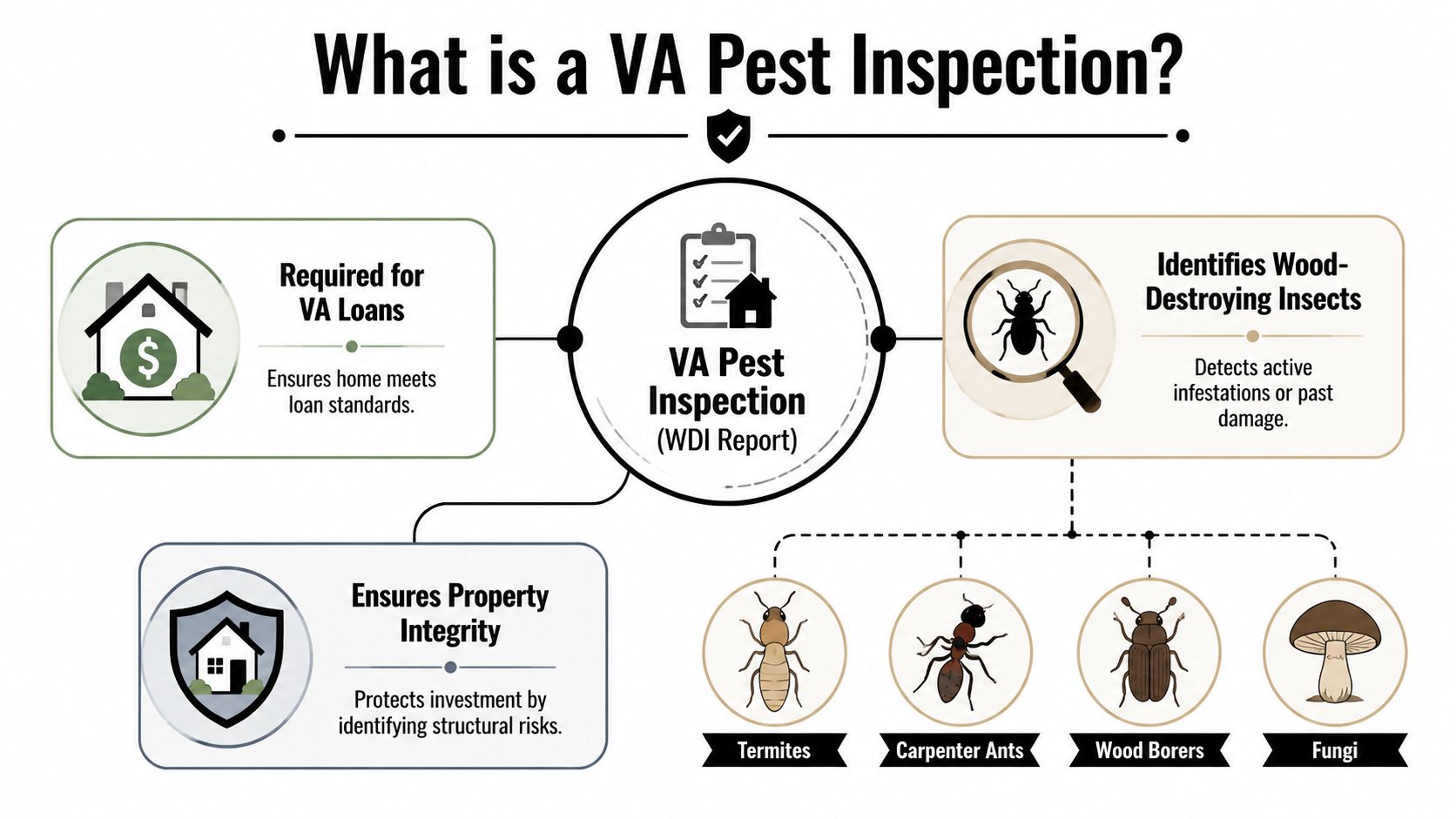
A VA pest inspection is a wood-destroying insect inspection, often called a WDI report. It isn't the same as a general home inspection. A home inspector looks broadly at the property. A VA-qualified WDI inspection focuses on pests and damage tied to wood-destroying organisms.
What the inspector is actually checking
The inspection is meant to identify whether the property has active infestation, visible evidence of prior activity, or damage that raises concern about structural soundness. The focus is on wood-destroying pests such as termites, carpenter ants, and powder-post beetles.
That's why this report carries weight with the VA and the lender. They're not checking for everyday nuisance bugs. They're checking for pests that can compromise the house itself.
Why the VA requires it
The VA uses a termite infestation probability map to decide where a WDI inspection is mandatory. According to AmeriSave's guide to pest inspection requirements for mortgages, the VA mandates a wood-destroying insect inspection for all VA home loan purchases in 35 states and U.S. territories classified as having "Moderate to Heavy" or "Very Heavy" termite infestation probability. That includes states such as Alabama, Arizona, Arkansas, California, Florida, Georgia, Texas, and Washington D.C. In those places, the inspection is non-discretionary, must be completed by a licensed pest control operator, and must be done within 90 days of closing. In lower-risk states such as Alaska, Idaho, and Maine, the inspection is required only if the VA appraiser notes evidence of damage during valuation.
That map-based system tells you something important. The VA isn't making this up on a file-by-file whim. It's using geography and risk to protect the borrower and the loan.
The best way to think about a VA WDI report is simple: if the house has hidden wood damage, you want to know before the mortgage closes, not after.
Why this matters for a first-time buyer
A conventional buyer might choose to skip extra inspections. A VA buyer shouldn't take that gamble. If a property has concealed termite activity or old untreated damage, you're the one who inherits the headache once the deed records.
That's why this requirement is smart. It protects the home, your budget, and your peace of mind.
VA Rules for Indiana Who Orders and Who Pays
Buyers often receive outdated information. Older articles still repeat the old rule that the seller has to pay and the buyer can't. That's outdated.
Who usually orders the inspection
In a typical transaction, the inspection gets arranged by the buyer, the agent, or sometimes the lender's side if they're coordinating required items tightly. In practice, you don't want to wait for everyone else to guess whose job it is. Ask early, confirm who's scheduling it, and make sure the inspector knows it must be a VA-compliant WDI inspection.
If you're buying in Crown Point or elsewhere in Northwest Indiana, that's the safest move. Waiting invites avoidable delays.
Who can pay now
According to VA Loan Network's explanation of VA termite and pest inspections, as of June 2022 the VA updated its policy to allow either the homebuyer or the seller to pay for the mandatory termite inspection. Before that, buyers were generally prohibited from covering that cost in most situations. The same source notes that the inspection typically costs $75 to $200 depending on property size and location, and the report must use the NPMA-33 form to be accepted by lenders.
That change matters. It gives buyers flexibility when negotiations get tight. If the seller won't cover it and you don't want the deal stalled over a modest line item, you can pay for it and keep moving.
The practical advice for Northwest Indiana buyers
Don't treat payment as the main issue. Treat speed and correctness as the main issue.
Use this approach:
- Confirm the requirement early with your lender or agent.
- Schedule the inspection fast once the contract is active.
- Verify the inspector uses NPMA-33 and understands VA requirements.
- Negotiate payment if you want to, but don't let a small cost create a big delay.
If a deal in Crown Point is otherwise solid, it rarely makes sense to drag out negotiations over an inspection that keeps the file moving.
A VA home loan pest inspection is one of those transaction details that feels small until it's mishandled. Then it becomes the reason closing gets pushed.
The WDI Inspection Process What to Expect
The inspection itself is straightforward when a licensed professional handles it correctly. Most buyer anxiety comes from not knowing what the inspector is doing or how formal the report needs to be.
What happens on inspection day
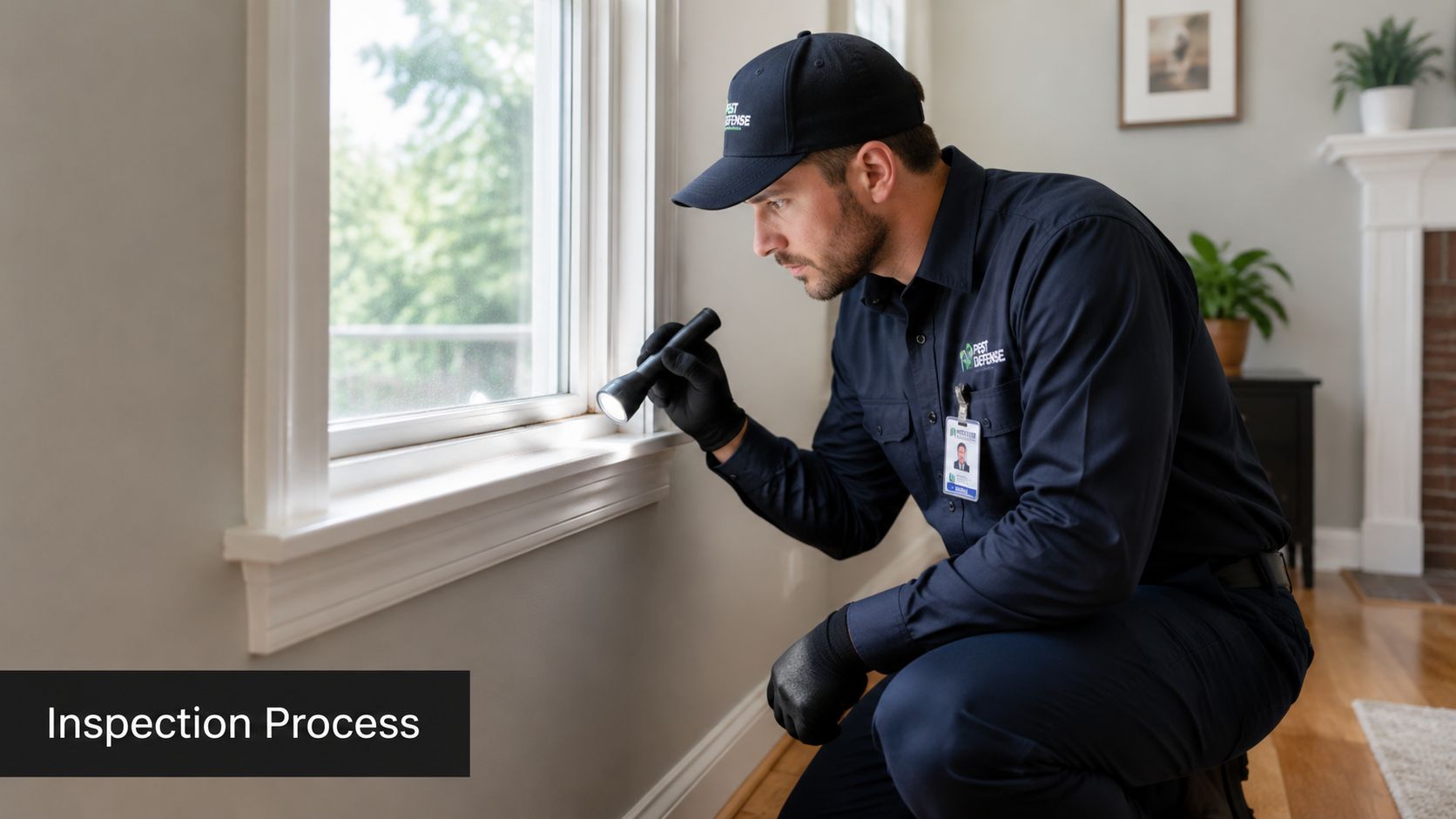
The inspector starts with a visual review of accessible areas inside and outside the home. That usually means checking the foundation line, basement, crawl space, attic access, garage edges, exposed framing, window areas, and other spots where wood-destroying insects leave evidence.
They're looking for specific signs, not guessing. Common clues include mud tubes, hollowed wood, frass, insect wings, damaged trim, and conditions that support infestation. A strong inspection isn't rushed. It follows a pattern and documents what matters.
If you want a broader sense of what trained professionals pay attention to around a structure, this pest control inspection checklist from The Green Advantage is a useful reference for understanding how a methodical inspection works.
Why a general inspection isn't enough
A lot of buyers assume any pest inspection will do. That's where files get kicked back.
According to HC Inspectors' overview of VA termite inspection requirements, the VA requires the NPMA-33 form, and only state-licensed professionals who meet the right criteria can submit the correct report. That same guidance makes clear the report must note findings for termites, carpenter ants, and powderpost beetles, not just general pest issues.
That's a critical distinction. Your lender isn't looking for a casual note saying the home "looks fine." They need the proper form completed by the proper professional.
Here's a quick visual overview of the kind of process buyers often want to see before the appointment.
What the report does for your loan
The WDI report becomes part of the transaction record. It tells the lender whether the property is clear, whether treatment is needed, or whether additional action is required before closing.
That means accuracy matters more than speed alone. Fast is good. Fast and accepted is what you need.
Common Findings and How to Address Them Professionally
When buyers hear that the inspector found something, they often assume the deal is collapsing. That's usually the wrong conclusion.
Most findings fall into a few predictable categories. The key isn't whether something turns up. The important point is whether the problem gets handled correctly and documented in a way the lender can accept.
What inspectors commonly see
The technical scope of a VA-required inspection includes accessible exterior and interior areas such as attics, crawl spaces, basements, and perimeter foundations. A qualified inspector looks for pests including termites, carpenter ants, powder-post beetles, and carpenter bees, along with evidence such as live insects, hollowed wood, mud tubes, frass, and visible timber damage. That set of requirements is described in the verified VA pest inspection guidance already noted earlier.
In practical terms, common findings often include:
- Active termite evidence such as mud tubes, fresh activity, or damaged wood that still suggests a current issue
- Old damage that may no longer be active but still needs evaluation
- Carpenter ant activity in damp or softened wood
- Moisture conditions that make future infestation more likely
- Wood-to-ground contact that creates an easy path for pests
A finding on the report isn't a verdict on the whole house. It's a call to fix a specific problem before it becomes your problem.
How to respond without derailing the sale
The right response depends on what was found. Active infestation typically needs professional treatment. Damaged material may also need repair if structural soundness is in question. Moisture and access conditions should be corrected so the issue doesn't come right back.
If flooring has been affected, buyers often need a better sense of how insect damage shows up in finished surfaces. This article on dealing with pest damage on floors gives helpful context for spotting and understanding wood-related damage in living spaces.
For buyers, agents, and sellers trying to move a deal forward, a dedicated real estate-focused inspection process matters. This termite inspection for real estate resource from The Green Advantage is useful if you're comparing what transaction-driven inspection support should include.
The smartest buyer mindset
Stay calm and stay procedural.
If the report shows activity, get treatment lined up. If repairs are needed, get them addressed. If conditions invite future issues, correct them while the property is still in transaction mode. That's how you protect both the closing and the house.
How Inspection Results Affect Your VA Loan Closing
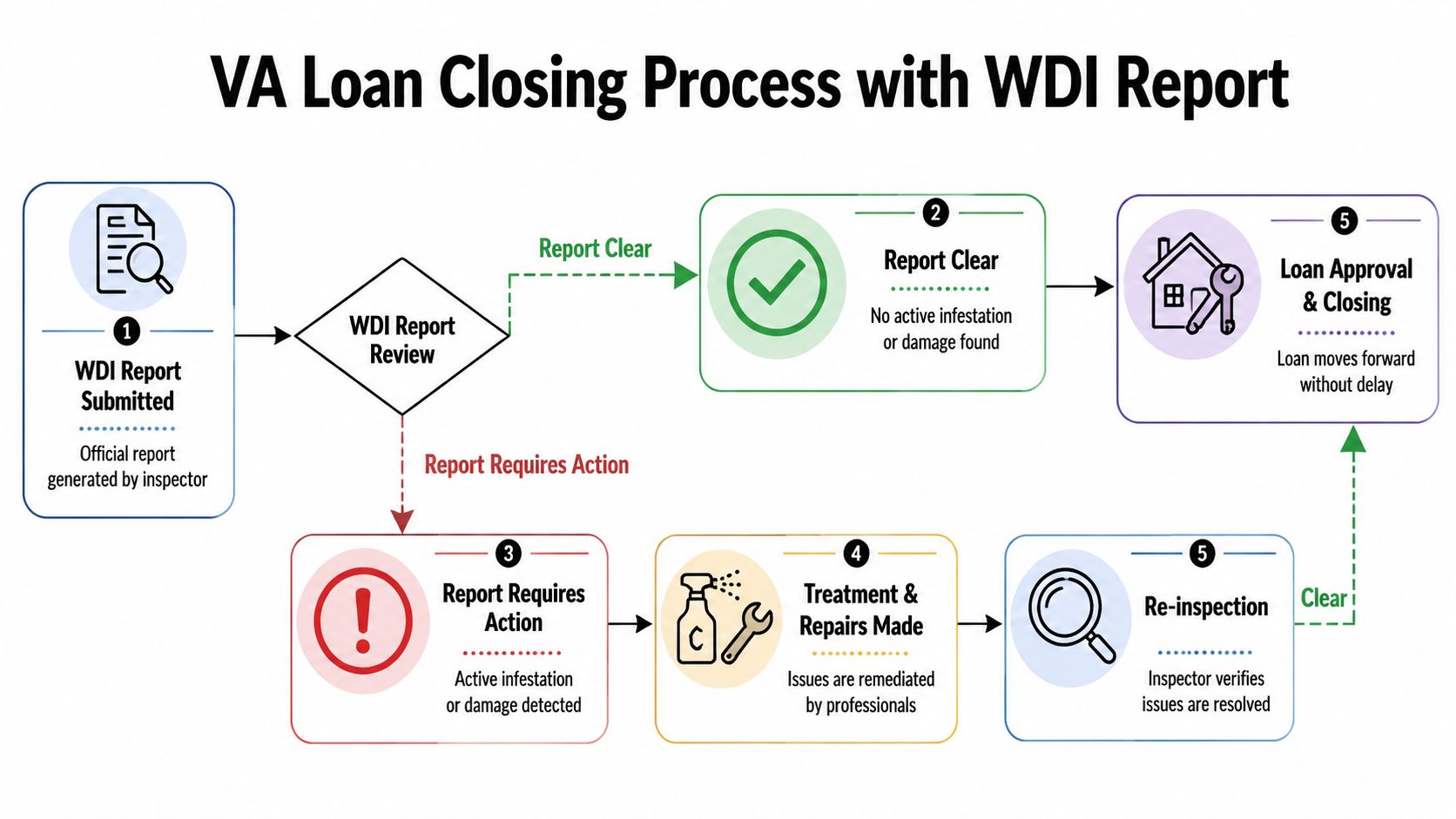
The WDI report directly affects whether your file can move to the closing table cleanly. Some reports clear quickly. Others trigger a required chain of follow-up steps.
If the report is clear
A clear report is the easy path. The lender gets the documentation it needs, and this item stops being a concern.
That's why getting the inspection done early is smart. A clean report removes uncertainty and keeps your timeline intact.
If the report requires action
Some properties need more than a single inspection. According to the verified VA guidance referenced earlier, VA home loans require pest inspections in 35 or more states and territories in higher-risk zones, while lower-risk states require them when the appraiser spots evidence. The same guidance also notes that approximately 15% to 20% of all VA loan properties require some level of pest inspection regardless of location because of findings in appraisal reports.
Once a report identifies active infestation or qualifying damage, the VA's process becomes very clear. The property must be treated, any required repairs must be made, and a re-inspection must confirm that the infestation has been eliminated before the loan can close. That's not red tape. That's protection.
What buyers should do when closing is on the line
Use a simple decision framework:
| Situation | What it means | Best next move |
|---|---|---|
| Clear report | No active issue documented | Send it to the lender immediately |
| Active infestation | Treatment is required before closing | Schedule licensed treatment without delay |
| Damage noted | Repairs may be needed | Get repair scope clarified fast |
| Re-inspection required | File can't close yet | Book clearance inspection as soon as work is complete |
Don't argue with the process when a WDI issue is documented. Solve the issue, document the solution, and keep the file moving.
Buyers often focus only on the pest report and forget the rest of the property condition still matters. If you're also evaluating the roof as part of a real estate transaction, Penn Ohio Roofing's inspection guide is a practical companion resource for understanding another major area that can affect negotiations and timing.
Why this process is worth it
No one enjoys an extra step before closing. But buying a house with active wood-destroying insect issues is worse. A forced repair-and-clearance sequence before funding is a far better outcome than discovering serious damage after move-in.
For VA buyers, the rule does exactly what it should do. It pushes the problem into the transaction, where it can still be fixed properly.
Your Trusted Partner in Crown Point The Green Advantage
Northwest Indiana buyers don't need a national article written for every market in America. They need local help from people who understand how real estate timelines work here, how pest activity shows up in area homes, and how to keep an inspection issue from turning into a closing disaster.
That matters in Crown Point. It matters in nearby Northwest Indiana communities. And it matters most when you're trying to buy your first home using a benefit you've earned.
Why local service makes the process easier
A VA home loan pest inspection needs to be done correctly, documented correctly, and communicated clearly. Buyers, agents, and sellers all need fast answers. A local company serving Crown Point and Northwest Indiana is in a better position to provide that than a generic call-center operation trying to route requests from somewhere else.
For homeowners and property managers searching for pest control near me, pest control in Crown Point, IN, exterminator near me, or exterminator in Crown Point, IN, that local advantage matters beyond the estate transaction too. The same local knowledge helps with residential pest control, commercial pest control, termite control, rodent control, spider control, wasp removal, mosquito control, and preventative treatments built around Northwest Indiana conditions.
The standard you should expect
You should expect:
- Clear scheduling and communication so the inspection doesn't become a mystery item on your contract checklist
- Licensed, professional service that matches lender and VA expectations
- Plain-English findings so you know whether the report is clean or what needs attention
- Practical solutions if treatment or follow-up is required
If you're buying in Crown Point, don't overcomplicate this. Get the right inspection. Get it done early. If the report finds an issue, address it quickly and professionally.
If you need a VA home loan pest inspection, termite treatment, or follow-up pest support in Crown Point or nearby Northwest Indiana, contact The Green Advantage. They provide licensed, homeowner-focused service with the responsiveness you need when a closing date is on the calendar.