
A professional mosquito misting system usually costs $2,000 to $5,000 to install. For many Crown Point homeowners, that means this is not an impulse buy. It's a real home improvement decision that deserves a clear look at both the upfront price and the long-term cost.
If you're reading this, you're probably tired of planning a cookout, opening the patio door, and then retreating inside because the mosquitoes won. That's common in Northwest Indiana. Warm evenings, damp spots, landscaping beds, shaded fence lines, and nearby standing water can turn a nice yard into a place nobody wants to use.
A lot of people start by searching for mosquito control, then end up comparing everything from candles and traps to full automatic systems. That's the right instinct. The sticker price only tells part of the story. A key question is whether a misting system is the right fit for your yard, your budget, and how much convenience you want.
If you've also been looking for pest control near me, exterminator near me, or pest control in Crown Point, IN, you're likely trying to solve a bigger outdoor comfort problem, not just kill a few mosquitoes. The best decision usually comes from understanding total ownership cost, not just the first invoice.
Reclaiming Your Yard from Mosquitoes in Northwest Indiana
A Crown Point family doesn't buy a mosquito misting system because it sounds fancy. They buy one because they're fed up. They want to sit outside after dinner, let the kids play in the yard, or host friends without everybody swatting their legs and rushing back indoors.
That frustration is what pushes many homeowners from DIY mosquito control to a more permanent setup. The appeal is simple. A misting system automates coverage around the parts of the yard you use. It's a premium option for people who want less hassle and more consistent protection.
What most homeowners should expect to spend
The national installed price for a professional system typically lands between $2,000 and $5,000, and that final number depends heavily on yard size, installation complexity, and system features, according to this mosquito misting system cost overview.
That range matters because it resets expectations. This isn't in the same category as buying a few bug zappers or a stack of citronella candles. It's closer to deciding whether to add a permanent outdoor upgrade that affects how you use your property.
A misting system makes the most sense when mosquitoes are stopping you from using your yard the way you want.
Why this hits differently in Crown Point
In Northwest Indiana, mosquito pressure can feel especially annoying because outdoor living is seasonal. You wait all winter for usable evenings, then lose them to biting insects. That changes the value equation. Homeowners here aren't just buying mosquito control. They're trying to get their patio, deck, pool area, and backyard routines back.
For some homes, a misting system is the right answer. For others, recurring professional mosquito treatments are the better value. If you're also comparing broader residential pest control, commercial pest control, or services like ant control, rodent control, spider control, wasp removal, or termite control, this decision fits into the same basic rule. Buy the level of protection that matches the problem.
Here's the straight opinion. If you want convenience and daily automation, a misting system can be worth it. If you want the lowest commitment, it probably won't be.
Deconstructing the Upfront Installation Cost
The initial price scares people because they don't know what's inside it. Fair enough. You're not just paying for a box on the side of the house. You're paying for a complete system that has to be designed around your property.
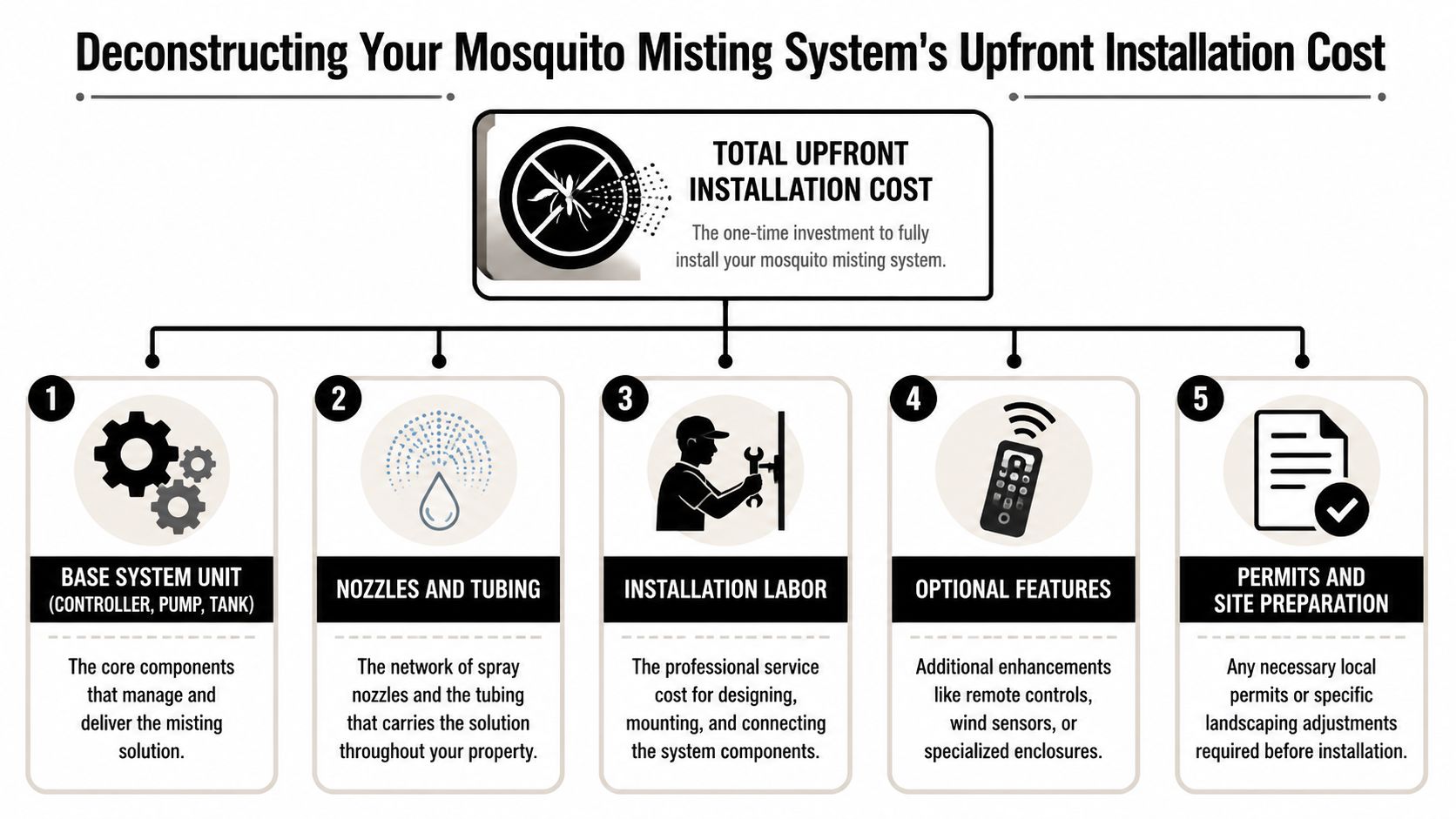
What the upfront price includes
For standard residential properties with up to 30 nozzles, professional installation fees typically range from $400 to $700, while the average total system cost is $2,747. Insecticide refills usually cost $0.50 to $1 per ounce, based on HomeAdvisor's outdoor misting system cost guide.
Those numbers make more sense when you break the system apart:
- Base unit: This is the controller, pump, and either a tank or tankless setup. It's the mechanical heart of the system.
- Tubing and nozzles: These run around the perimeter and target the areas where mosquitoes rest and move.
- Labor: Placement matters. A system only works well when the layout matches the yard.
- Optional upgrades: Remote controls and convenience features can raise the total.
- Site prep: Some homes need more planning because of landscaping, fences, patios, or access issues.
Why labor is not the place to cut corners
The labor line isn't filler. A poor layout creates weak coverage, overspray, maintenance headaches, and wasted refill costs. A good layout hides tubing cleanly, places nozzles where they'll perform best, and avoids obvious problem areas around outdoor living spaces.
Here's a practical approach:
| Cost element | What affects it most |
|---|---|
| Base system | Type of controller, pump, and reservoir setup |
| Nozzles and tubing | Perimeter length, spray zones, yard layout |
| Labor | Access, mounting points, complexity of installation |
| Features | Remote operation and add-on controls |
| Prep work | Obstacles, landscaping, and install conditions |
Practical rule: If a quote seems unusually cheap, ask what's being left out. Usually it's design quality, cleaner installation, or future service planning.
The real reason quotes vary so much
Two Crown Point homes can sit on the same street and still need very different systems. One might have a small open yard. The other might have heavy shrubs, a deck, a fence line, and multiple seating areas. That changes nozzle count, tubing runs, labor time, and how difficult the system is to install cleanly.
That's also why broad online averages only get you so far. They're useful for ballpark planning. They aren't enough to tell you what your house will cost.
Budgeting for Long Term Maintenance and Refills
Homeowners often get blindsided. A lot of articles talk about mosquito misting system cost like it ends after installation. It doesn't. The long-term expense is what decides whether you'll still feel good about the purchase a year or two from now.
The set it and forget it idea is wrong
Maintenance is not a flat fee. It's a property-specific expense that can exceed $1,500 annually for larger lots, and many homeowners underestimate it because costs rise with property size, according to this analysis of mosquito misting system maintenance.
That's the hidden burden. Small monthly numbers sound manageable until you realize they don't stay small on more demanding properties.
What you keep paying for
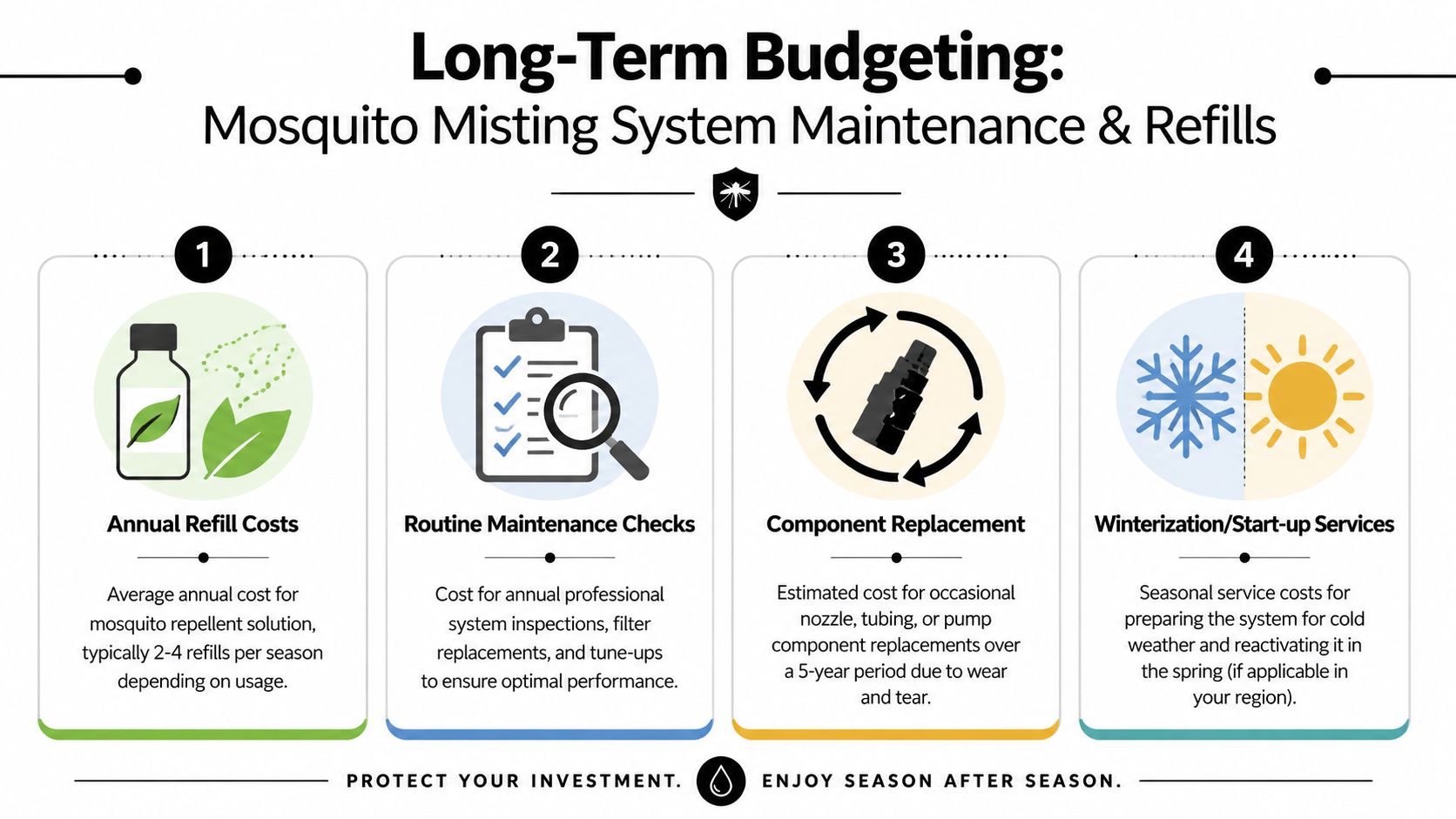
Long-term ownership usually includes a mix of routine and unpredictable costs:
- Refill solution: The more often the system runs, the more product you buy.
- Nozzle cleaning: Dirty or partially blocked nozzles hurt performance.
- Seasonal service: In Indiana, outdoor systems need attention when weather changes.
- Repairs: Wear shows up in tubing, pumps, and fittings over time.
Some owners budget well for the initial purchase and then get annoyed by the maintenance rhythm. That's avoidable if you go in with your eyes open.
Why the five-year view matters
One verified estimate puts the five-year investment above $5,000, combining initial installation of $2,000 to $4,500, annual chemical refills of $300 to $600, and possible repair costs tied to issues like clogged nozzles or pump failures, according to this breakdown of mosquito misting system pros and cons.
That same source points out why maintenance keeps showing up. These systems only kill mosquitoes present during a 30 to 45 second spray cycle, so new mosquitoes can return within hours. Wind also matters because coverage depends on proper conditions, and nozzle clogs can reduce effectiveness by 40 to 60 percent.
Maintenance isn't a side note. On a misting system, maintenance is part of the product.
If you hate recurring upkeep, skip the system and choose scheduled professional mosquito treatments instead. If you want automation and accept the ongoing service needs, a misting system can still be a smart fit.
Key Factors That Influence Your Final Price
No honest estimator should hand you one flat number without looking at the yard. Final pricing changes for reasons that are easy to understand once you know what drives the work.
Property layout matters more than most people think
The first variable is simple. Bigger perimeter usually means more tubing and more nozzles. But square footage alone doesn't tell the whole story. A straightforward yard is cheaper to design than one with tight corners, dense planting beds, separate structures, or multiple outdoor zones.
A few local examples that push cost upward:
- Dense landscaping: Shrubs, trees, and layered beds can require more careful nozzle placement.
- Outdoor living areas: Patios, pergolas, decks, and seating zones need coverage without obvious overspray.
- Access challenges: Fences, hardscapes, and elevation changes make installation slower.
Features and system style change the budget
Some homeowners want a basic automated setup. Others want a cleaner look, easier controls, or specific placement preferences. Those choices affect the final quote because the system has to match the way the property is used.
This is also where people underestimate the cost of doing it wrong. Poor design doesn't just reduce convenience. It can create safety problems.
Drift risk is a real cost issue
The EPA warns that pesticide drift from improperly installed or operated mosquito misting systems can harm neighbors, pets, and the local environment, creating a liability risk that can cost more than the initial system price, as explained in the EPA guidance on mosquito misting systems.
That matters in neighborhoods around Crown Point where homes sit close enough for drift concerns to become disputes. If nozzle placement is sloppy or the system is operated poorly, the problem is no longer just mosquito control. It becomes a neighbor issue, a pet safety issue, and potentially a legal issue.
Good installation protects more than your yard. It protects your budget from avoidable mistakes.
That's why the lowest quote isn't always the cheapest option. A system that's carefully designed around your property is often the safer purchase in the long run.
ROI and Alternatives Offered in Crown Point
A misting system isn't the only way to control mosquitoes. It's just one option, and it's usually the premium option. The right comparison is not “Does it work?” The better question is “What do I get for the money, effort, and upkeep?”
How a misting system compares
When properly installed, mosquito misting systems often achieve an 80% reduction in mosquito populations, and installation is often priced by nozzle at about $100 per nozzle, according to this discussion of misting system effectiveness and nozzle pricing.
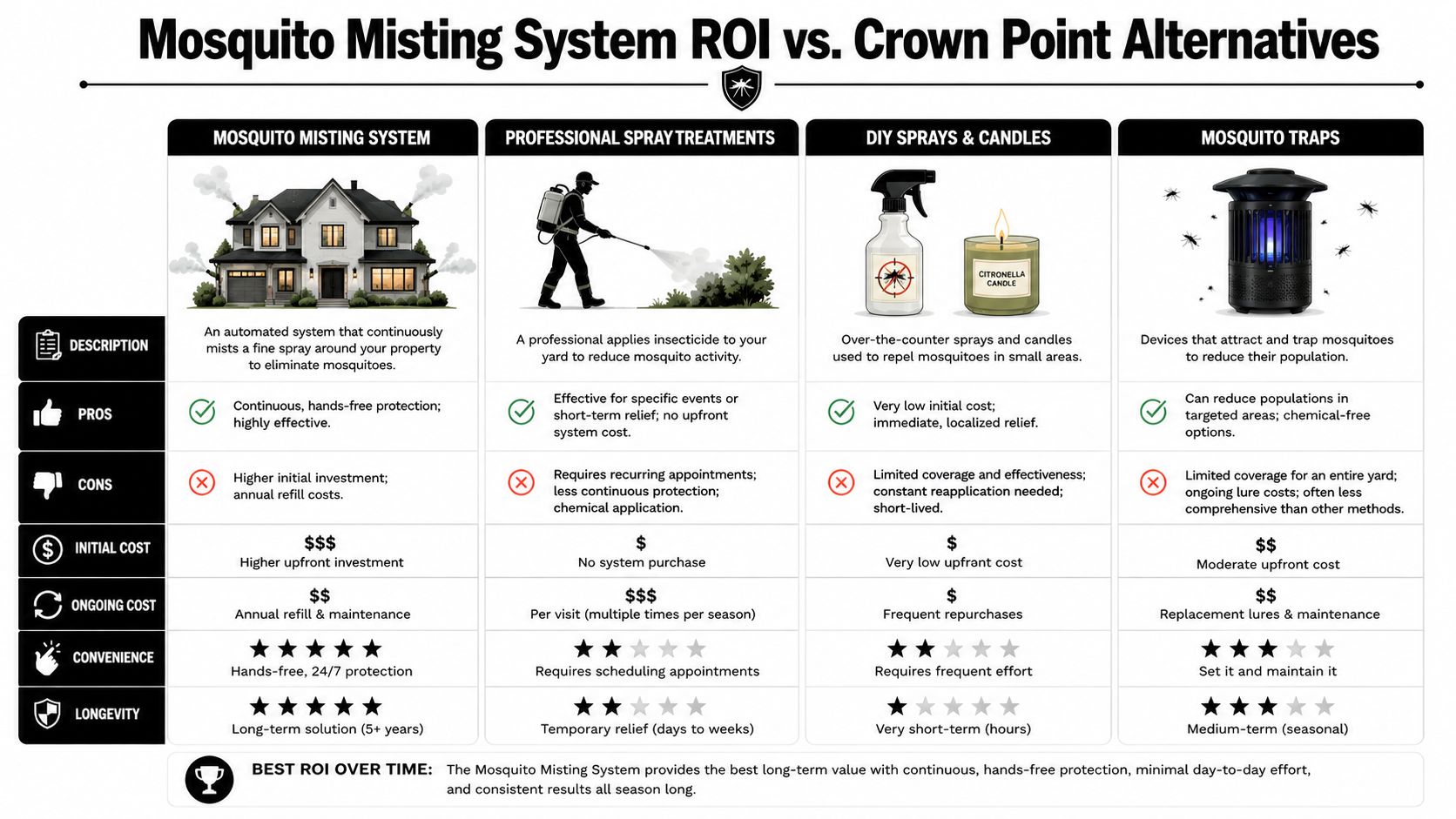
That's strong performance, but cost and effort still matter. Here's the practical comparison:
| Option | Upfront cost | Ongoing cost | Homeowner effort | Coverage style | Best fit |
|---|---|---|---|---|---|
| Mosquito misting system | Higher | Ongoing refills and maintenance | Low day to day | Automated, continuous | Homeowners who want convenience |
| Professional spray treatments | Lower upfront | Recurring service | Low | Scheduled protection | Homeowners who want results without owning equipment |
| DIY sprays and candles | Low | Repeated purchases | High | Short-term, limited | Occasional use |
| Mosquito traps | Moderate | Ongoing lure or service needs | Moderate | Targeted areas | Supplemental control |
My recommendation for most homeowners
If you host often, spend a lot of time outside, and want hands-free mosquito control, the misting system has a good case. If you just want dependable seasonal relief without owning and maintaining a system, recurring professional treatment is usually the better value.
For a broader breakdown of service pricing, this page on mosquito control service cost in Northwest Indiana is worth reviewing before you decide.
Homeowners upgrading their outdoor spaces should also think about the yard as a whole. If you're building a more usable patio or screened area, these Lucas Furniture & Mattress ideas can help you think through layout and enclosure options that work well alongside mosquito control planning.
Where DIY usually falls short
DIY has one advantage. It's cheap to start. The problem is consistency. Sprays wear off, candles only help in a narrow zone, and traps rarely solve an entire yard by themselves.
For Crown Point homeowners searching exterminator in Crown Point, IN, residential pest control, or eco-friendly pest control, the core choice usually comes down to this:
- Choose a misting system if convenience is your top priority.
- Choose recurring professional service if you want lower commitment and less ownership responsibility.
- Use DIY only if your expectations are modest.
That's the honest ranking.
The Green Advantage Mosquito Control Process
Big purchases feel easier when you know exactly what happens next. A mosquito project should feel organized, not confusing.
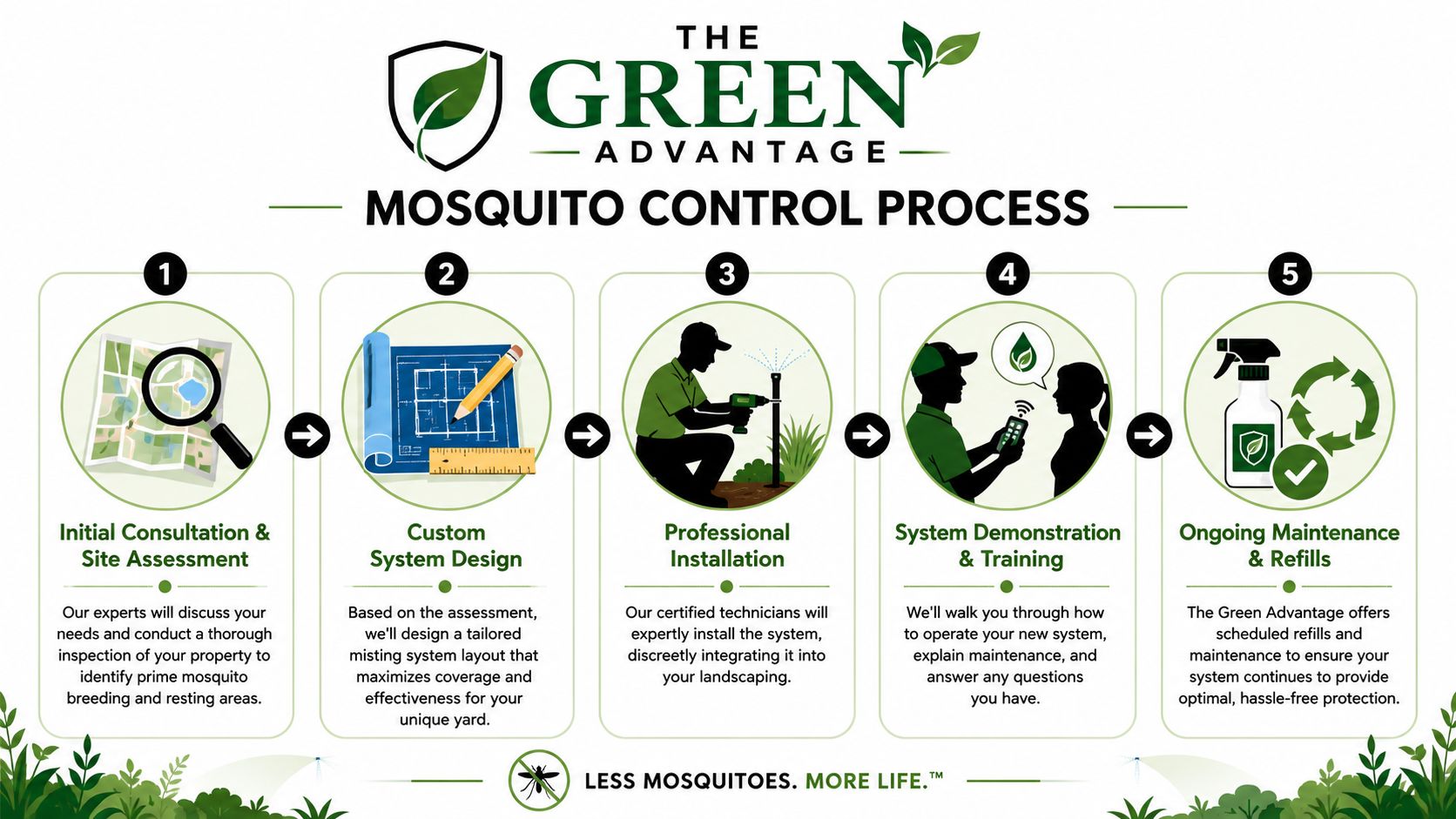
The process starts with a conversation about the property and how the yard is used. That matters because a family that wants quiet patio evenings has different priorities than a property manager trying to improve shared outdoor areas. Good planning begins with those details.
What the experience should look like
A professional mosquito control process should feel straightforward:
Consultation and site review
The yard gets evaluated for mosquito pressure, resting areas, and practical installation routes.Custom layout
The system is planned around the specific property instead of forcing a generic setup onto the home.Clean installation
Equipment, tubing, and nozzles should be installed with attention to appearance and performance.
A good provider also explains how the system runs, what maintenance looks like, and when service is likely to be needed.
Here's a quick visual overview of what that kind of process looks like in practice.
Why process matters in pest control
This isn't just about mosquitoes. It reflects how a company handles service overall. If you're also comparing commercial pest control, rodent control, spider control, termite control, or preventative pest treatments in Northwest Indiana, the same rule applies. The process should be clear, local, and responsive.
The best pest control experience is the one where you always know what's being done, why it's being done, and what it will cost.
That's what builds trust. Not flashy promises. Clear communication, careful work, and support after installation.
Is a Misting System Right for Your Indiana Home
A misting system is right for the homeowner who wants steady, automated mosquito control and is comfortable treating it like a real property system, not a one-time gadget purchase. If that sounds like you, it can be a strong investment.
If you're still unsure, that's normal. The best decision usually comes down to three things:
- How often you use the yard
- How much convenience matters to you
- How willing you are to pay ongoing ownership costs
For many homes in Crown Point and nearby Northwest Indiana communities, recurring mosquito treatments will be the simpler answer. For others, especially households that spend a lot of time outside, a misting system earns its keep by making the yard usable again with less day-to-day effort.
If you want to compare the ownership route against a dedicated service plan, this page on mosquito misting systems in Northwest Indiana is a helpful next step.
My advice is simple. Don't buy based on the lowest advertised number. Buy based on what you'll still feel good about after the install, after the refill bills, and after a full season of use.
If you want clear answers from a local team that understands mosquito pressure, seasonal pest issues, and outdoor living in Crown Point, IN, contact The Green Advantage. They can help you compare a misting system against other mosquito control options, explain the actual long-term costs, and provide a quote that fits your property without the guesswork.