
Homemade Mosquito Repellent Smoke a Guide for Crown Point

Summer evenings in Crown Point should end with kids in the yard, neighbors on the patio, and maybe dinner still on the table. Instead, a lot of homeowners end up doing the same thing. Swatting, scratching, and searching for a fast fix on their phone.
That's usually when homemade mosquito repellent smoke shows up in search results. Burn coffee grounds. Light herbs. Smolder leaves in a pot near the patio set. The appeal makes sense. It feels simple, natural, and cheap.
I get why people try it first. In Northwest Indiana, mosquito pressure can build fast around damp shade, clogged gutters, low spots in the yard, and standing water after rain. If your property tends to hold water, fixing drainage can also help reduce pest pressure over time. For yard grading and runoff issues, Task Masters Inc. drainage services are a useful local resource to review alongside mosquito prevention.
Reclaiming Your Crown Point Yard from Mosquitoes
A typical Crown Point backyard problem starts the same way. You clean the patio, fire up the grill, and expect a relaxed night outside. Then the mosquitoes find you before the food even hits the table.
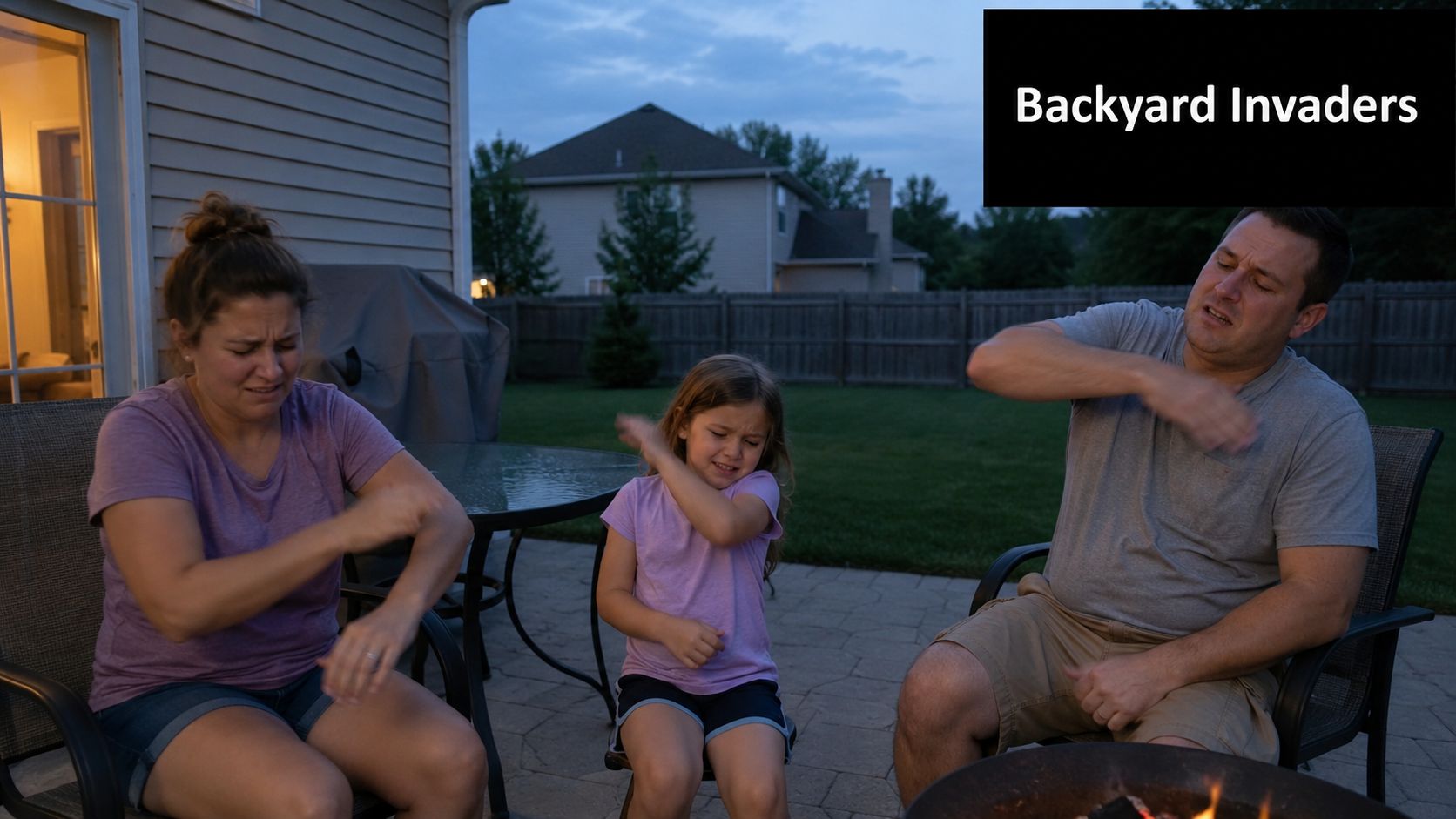
For many families, that turns into a search for pest control near me, exterminator near me, or a DIY idea they can try the same night. Smoke is often the first experiment because it feels old-school and practical. Set something smoldering near the deck and hope the bugs back off.
Why mosquitoes get so bad around Northwest Indiana homes
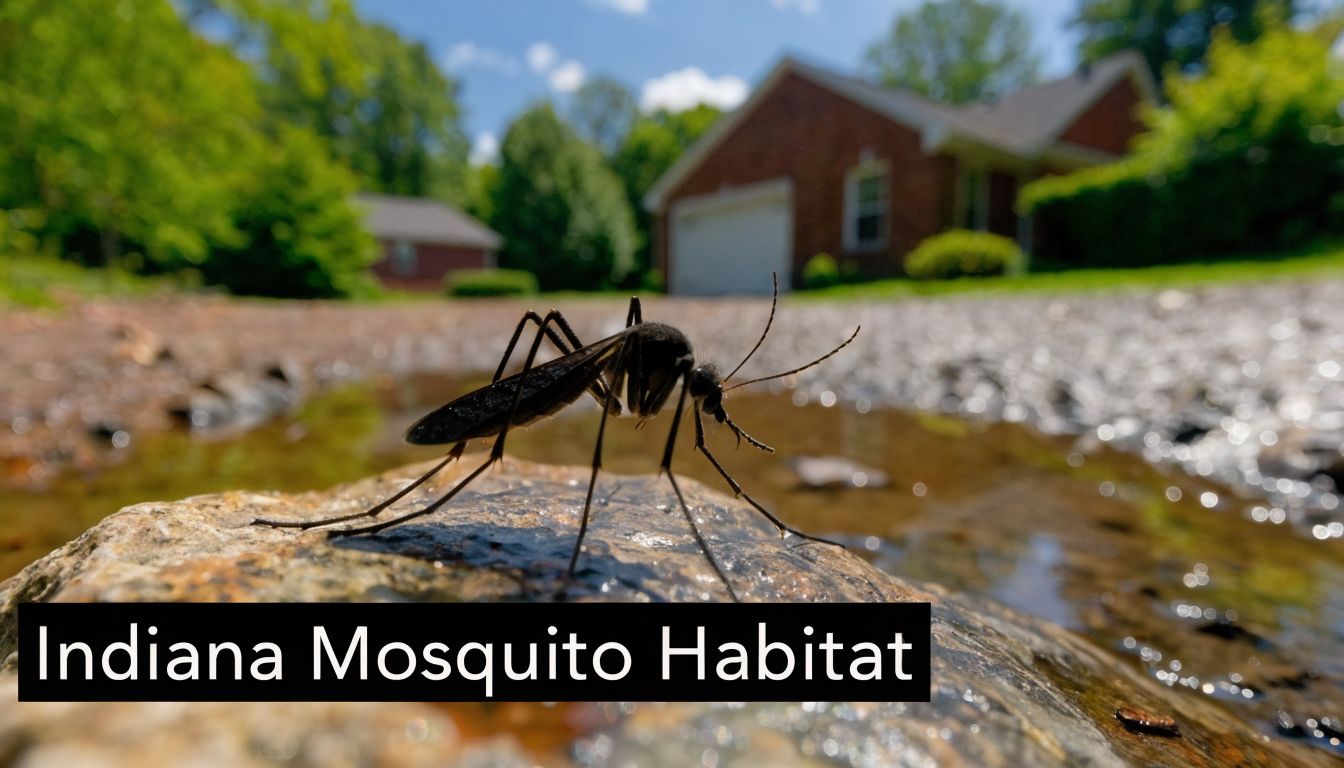
Mosquitoes don't need a swamp. They need moisture, shade, and places to rest during the day. In Crown Point and nearby Northwest Indiana neighborhoods, that often means:
- Low wet areas: Water collects after storms and stays put longer than people realize.
- Dense landscaping: Overgrown shrubs and shaded corners give mosquitoes cover.
- Everyday containers: Buckets, toys, planters, and clogged gutters can all help mosquito activity build.
- Busy family schedules: Small yard issues get ignored until biting becomes impossible to ignore.
Local rule: If you can't enjoy your yard at dusk, the problem is already bigger than a candle-and-smoke fix.
Homeowners looking for pest control in Crown Point, IN usually aren't looking for abstract advice. They want their patio back. They want their kids and guests outside without becoming a target.
That's why smoke deserves a straight answer. Some versions can repel mosquitoes under certain conditions. But that doesn't make homemade smoke a dependable mosquito-control plan for a real yard.
Popular DIY Mosquito Smoke Methods Homeowners Try
Most DIY smoke methods follow the same logic. Burn something strong-smelling, keep the smoke near the seating area, and hope mosquitoes stay away long enough to finish the evening.
What people usually burn
Homeowners commonly try a few versions:
- Smoldering coffee grounds in a heat-safe dish.
- Herb bundles or smudge sticks made from plants like sage, rosemary, or similar fragrant yard or kitchen herbs.
- Loose dried plant material such as cattails or leaves burned near a fire pit.
Some people also swap in store-bought options like fresh protection incense because it feels cleaner and easier than burning random yard debris. Others compare those options with guides on mosquito repellent incense sticks before deciding what to try outdoors.
The problem most DIY guides skip
Here's the issue. Most online advice tells you what to burn, but not how well it works in real life.
According to a roundup of DIY discussions and homeowner advice, most DIY smoke repellent content fails to quantify the effective range or duration of protection for mosquitoes, leaving people without data on how close the smoke must be or how long a session protects the space (discussion reference).
That's a major gap.
You can smell smoke and still get bitten. Those aren't the same thing.
A patio setup needs answers most DIY articles don't give. Does the smoke protect the whole seating area or only the chair next to it? Does protection drop when the breeze shifts? How long before you need to relight it? If you're hosting friends or trying to keep kids outside comfortably, guessing isn't good enough.
That's why homeowners searching residential pest control or mosquito control often move past DIY after one or two frustrating evenings. The method may feel active, but the results are hard to measure and even harder to repeat.
The Hidden Downsides of Homemade Mosquito Smoke
You light a homemade smoke pot before dinner on the patio. The yard smells like something is working. Then the wind shifts, the smoke drifts away from the chairs, and the bites start anyway.
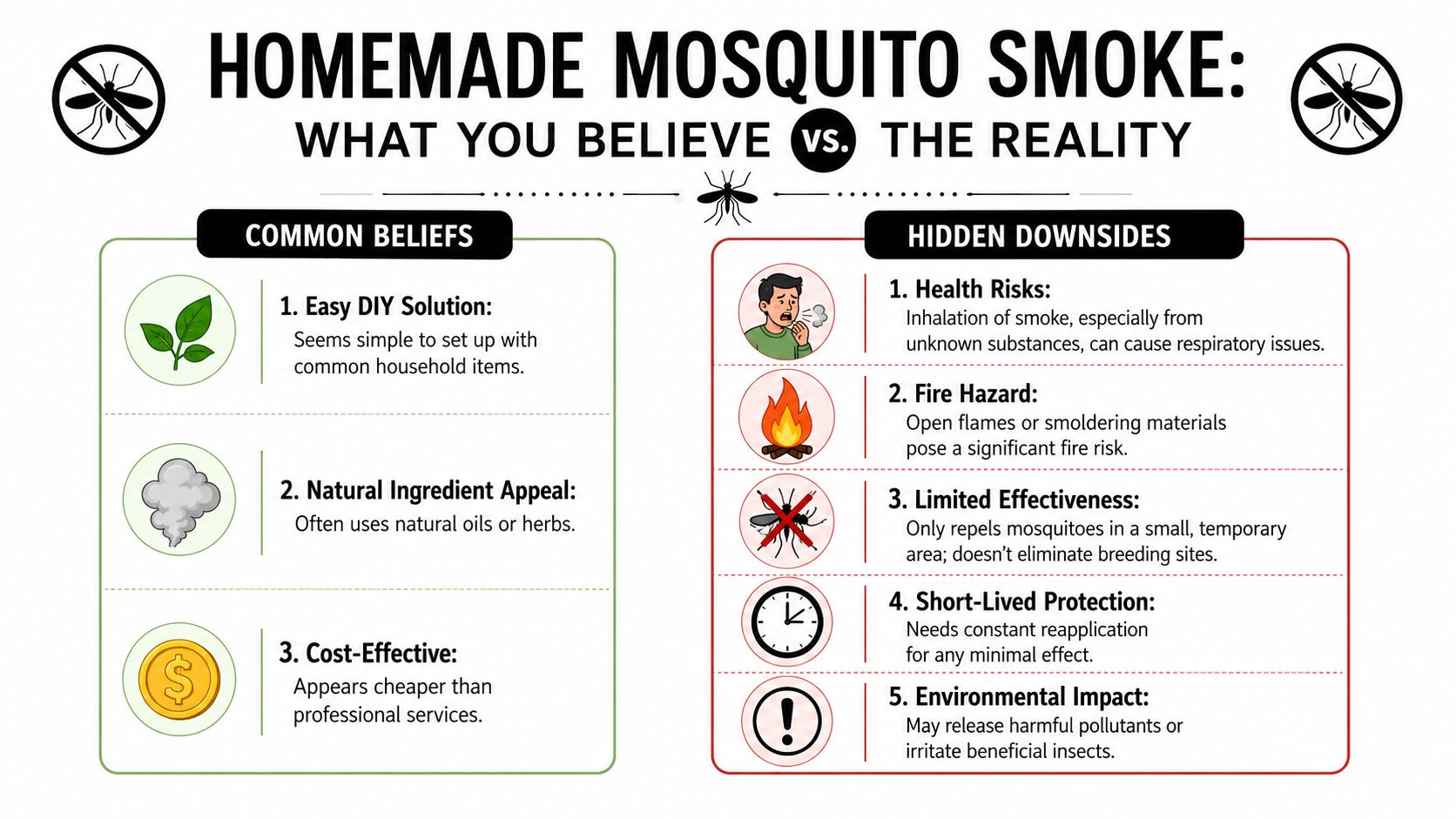
Some plant smoke can repel mosquitoes. Backyard smoke usually does not.
This is the part DIY articles blur together. Tested botanical smoke is not the same as tossing yard waste, coffee grounds, or random dried herbs into a fire pit.
In one field study, smoke from specific plant materials showed measurable repellency against certain mosquito species, while the same research summary noted a World Health Organization conclusion that smoke from common domestic biomass fuels such as firewood or charcoal does not have experimental support as an effective mosquito repellent (field research summary).
That matters in Crown Point because homeowners are rarely recreating controlled conditions. They are burning whatever is available, in open air, with changing wind, uneven smoke, and different mosquito pressure from one yard to the next. Results swing all over the place.
Smoke creates a false sense of control
Homemade mosquito smoke appeals to people because it feels active. You can see it. You can smell it. That does not make it dependable.
Short-term repellency from natural materials can fade fast, and smoke only affects the area it reaches. Once airflow changes, protection changes with it. That is a poor setup for backyards where kids are moving around, guests are spread out, and mosquitoes are resting in shrubs, mulch beds, and damp shade just a few feet away.
If you want practical prevention steps that go beyond burning something and hoping for the best, Natural mosquito control for yards is a useful place to start. If you want reliable relief across the property, a professional mosquito control service for your yard is the stronger choice.
Here's a closer look at the safety side before anyone treats smoke as harmless:
The health risk DIY guides gloss over
Smoke is still smoke. “Natural” does not change what it does to your breathing space.
Public health guidance from the U.S. Environmental Protection Agency explains that fine particle pollution, including PM2.5 from smoke, can irritate the lungs, worsen asthma, and increase risk for people with heart or lung disease (EPA guidance on particle pollution). That is the primary problem with homemade mosquito smoke. You are adding airborne irritation to the exact area where your family is supposed to relax.
Practical rule: If your mosquito fix makes the air harder to breathe, it is the wrong fix for a family patio.
I see this often around Northwest Indiana. A homeowner wants a simple DIY answer, tries smoke for a weekend or two, and ends up with inconsistent bite relief plus a yard full of irritation. The smarter move is to stop chasing temporary smoke clouds and use a treatment plan that targets mosquitoes where they hide and breed.
A Better Solution Professional Mosquito Control
You light a bowl, the smoke drifts sideways, and mosquitoes still find your ankles by dusk. I hear that story all the time in Crown Point. Homemade smoke appeals because it feels simple, cheap, and natural. It also leaves too much to chance.

Why targeted treatment beats backyard guesswork
Professional mosquito control works at the source. A trained technician checks the property for breeding pockets, damp shade, dense foliage, standing water, and the resting areas mosquitoes use between bites. Then the treatment plan is built around your yard, not around whatever happens to burn in a fire-safe dish.
That difference matters. Smoke only affects the air in one small area for a short period, and even that depends on wind, fuel, placement, and how long it stays lit. A service program is built to reduce mosquito pressure across the property, especially in the places homeowners rarely notice on their own.
If you're comparing options, guides on Natural mosquito control for yards can help you clean up habitat and reduce standing water. If you want consistent relief instead of repeated trial and error, a professional mosquito control service for your yard is the better call.
Side-by-side reality check
| Approach | What it does | Main limitation |
|---|---|---|
| Homemade smoke | Creates a temporary smoke barrier near seating areas | Coverage shifts with wind, results are inconsistent, and it does not address breeding sites |
| Store-bought smoke products | Uses more standardized materials than DIY burning | Relief stays localized and temporary |
| Professional mosquito treatment | Targets mosquito activity where it starts and where it spreads | Requires inspection and scheduled service |
A key advantage is consistency. You are not depending on the right leaves, the right container, the right weather, and a high tolerance for smoke. You are using a repeatable process designed to reduce mosquito activity where people live, play, and gather.
That is why homeowners searching for an exterminator in Crown Point, IN or pest control near me usually stop experimenting and book service. They want fewer bites. They want their yard back. They want an answer that works beyond one chair on one patio for one evening.
Professional mosquito control reduces mosquito pressure across the yard instead of trying to mask the problem with smoke in one corner.
For many Northwest Indiana homes, that same visit also helps identify related pest issues around the structure, including ants, spiders, wasps, and rodents.
Benefits for Your Northwest Indiana Home and Family
Homeowners don't buy mosquito control because they love pest management. They buy it because they want to use their property without planning the evening around insect bites.
What you actually gain
A proven treatment plan protects more than comfort.
- More usable outdoor time: You can sit on the patio, mow, garden, or let the kids play without every activity turning into a swatting contest.
- Less guesswork: No more relighting bowls, testing herbs, or wondering if tonight's breeze will ruin your setup.
- A cleaner routine: You avoid filling gathering spaces with smoke just to make the yard tolerable.
- Broader pest protection: Many homeowners who call about mosquitoes also need help with ant control, spider control, wasp removal, or rodent control.
Field trials using ethnomedicinal plant smoke powders showed that exposure to burning powder reduced An. arabiensis by 93.75% and Ae. aegypti by 92%, with overall plant mixtures offering greater than 90% protection against both species compared to untreated huts (field trials). Those results are impressive, but they also prove the bigger point. Effective mosquito reduction comes from specific, tested methods, not random backyard smoke experiments.
Why local homeowners move to service
In Crown Point and across Northwest Indiana, mosquito issues rarely stay isolated. Wet spots can support mosquito activity while overgrown edges invite other pests. That's why people searching pest control in Crown Point, IN often need a company that understands the whole property, not just the one insect biting them tonight.
A strong pest program protects your home, your routine, and your peace of mind. That matters whether you own a house, manage rentals, or run a local business that needs dependable commercial pest control.
Schedule Your Pest Control Service in Crown Point
If mosquitoes are dictating when your family can use the yard, it's time to stop experimenting and get a real plan in place. The process should be simple.
What the service experience should look like
A solid pest control company in Crown Point should make things easy from the first call.
- You reach out and explain the problem. Office staff should answer questions clearly and help you schedule fast.
- A technician inspects the property. That includes problem areas, likely breeding zones, and the outdoor spaces you want to use most.
- You get a clear quote. No vague promises. No confusing language.
- Treatment is performed with a purpose. The work should be based on the site conditions, not a one-size-fits-all spray.
- You know what comes next. Good service includes practical guidance and follow-up expectations.
When to stop trying smoke
Call for help if any of these sound familiar:
- You're getting bitten every evening even after trying candles, coils, incense, or homemade smoke.
- Your yard has standing water or drainage problems that keep coming back after storms.
- You're hosting outdoors less often because the space isn't comfortable.
- You also need help with other pests like wasps, ants, spiders, or rodents.
Homeowners searching exterminator near me or residential pest control usually wait too long because they hope one more DIY fix will finally work. Most of the time, it doesn't.
If you're in Crown Point or nearby Northwest Indiana communities, get the yard inspected and get a plan that matches the property.
If you want dependable mosquito control and straightforward help from a local team, contact The Green Advantage to schedule an inspection, request a quote, and get your outdoor space back.
Mosquito Control Service in Crown Point, IN

A lot of Crown Point evenings start the same way. Dinner is done, the sun is dropping, the kids want to be outside, and the patio finally feels comfortable after a warm Northwest Indiana day. Then the mosquitoes show up. First it's a few bites around the ankles. A few minutes later, everyone's swatting, moving, and heading back inside.
That's usually when people start searching for pest control near me, exterminator near me, or mosquito control service because the problem stops feeling minor. If you can't use your own yard, it's not just annoying. It changes how you live at home.
In Crown Point, IN, mosquito issues rarely come from one obvious source. They build around the edges of everyday life. Gutters that hold water after a storm, low spots near the fence line, damp shade near landscaping, retention ponds in the neighborhood, and wooded pockets that stay humid all season all play a role. That's why a professional answer has to be more complete than a quick spray.
Your Guide to Mosquito Control in Crown Point IN
A family in Crown Point might do everything right for a summer get-together. They mow the lawn, clean the patio furniture, and set out food for a quiet evening outside. Then dusk hits, and the backyard becomes unusable. Guests start waving mosquitoes away from their faces, kids come inside scratching, and the night shifts indoors.
That's the point where many homeowners realize store-bought sprays and candles aren't solving the actual problem. They may knock back activity for a short window, but they usually don't address where mosquitoes are developing around the property.
Why the problem feels worse in Northwest Indiana
Our part of Northwest Indiana gives mosquitoes what they want. We get heat, humidity, shaded landscaping, and plenty of places for water to collect after rain. In neighborhoods around Crown Point, homes near wooded edges, drainage areas, and ponds often deal with repeat mosquito pressure throughout the season.
That's why a good mosquito control service doesn't treat your yard like an isolated square of grass. It looks at the whole environment around the property and asks practical questions:
- Where does water collect after rain or irrigation?
- Which areas stay shaded and damp through the day?
- What foliage gives adults a place to rest between feeding times?
- Are there nearby features like retention ponds or drainage ditches increasing pressure?
Those details matter just as much as the product used.
Practical rule: If a treatment plan only talks about spraying adult mosquitoes, it's probably missing a big part of the job.
What homeowners usually need
Callers for residential pest control in Crown Point don't want a science lesson. They want to use their deck, let the dog outside, and stop getting bitten every evening. That's fair. But the most reliable results come from a process that combines inspection, habitat correction, larval control, and targeted adult treatment.
This local approach also fits broader pest concerns. Homeowners who look for pest control in Crown Point, IN often need help with more than one issue over the season. Mosquitoes may be the immediate problem, but the same property conditions can also support seasonal pest pressure that leads people to seek eco-friendly pest control, preventative pest treatments, or other services such as rodent control, spider control, wasp removal, ant control, or termite control.
A professional mosquito program should make your outdoor space easier to enjoy. Just as important, it should make the reason behind the service easy to understand.
Understanding Your Mosquito Problem in the Region
Mosquitoes don't need a swamp to become a backyard problem. In Crown Point and nearby Northwest Indiana communities, they often breed in ordinary spots homeowners overlook every week.
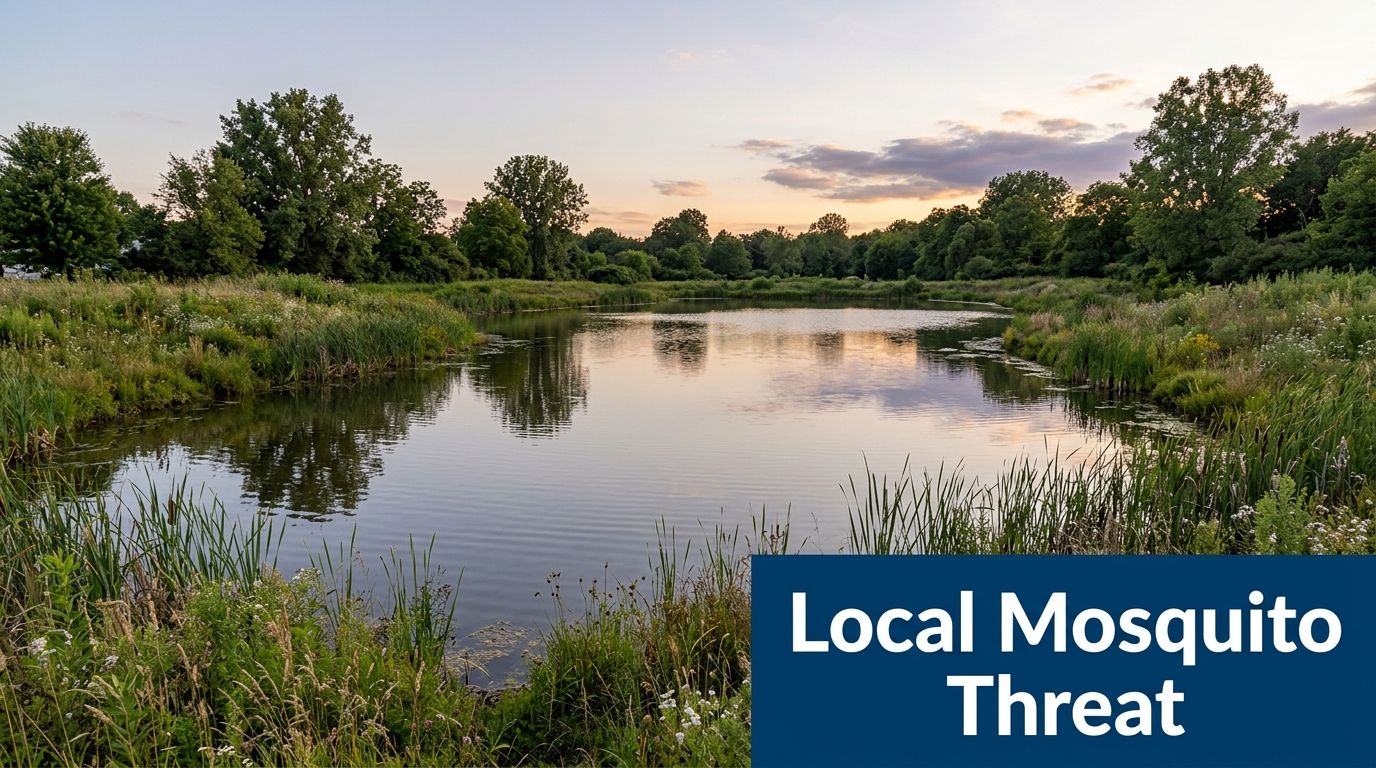
The landscape around your home matters
Properties near retention ponds, wooded areas, drainage ditches, and low-lying turf tend to hold moisture longer. Add summer humidity and thick ornamental landscaping, and you've got ideal mosquito harborage. Adults rest in cool, shaded foliage during the day, then move out when light levels drop.
That's why one house can feel much worse than the neighbor's, even on the same street. Small differences in drainage, shade, and clutter can change mosquito activity in a hurry.
The hidden breeding sites most people miss
The bigger issue is standing water. Mosquitoes can develop fast. The Indiana mosquito control guidance notes that mosquito populations can develop from stagnant water into thousands of biting adults within just three to seven days. That short window is exactly why waiting until you're getting bitten usually means you're already behind.
Common problem spots include:
- Clogged gutters that hold water after storms
- Birdbaths and plant trays that sit too long between cleanings
- Kids' toys and buckets left upside down in the yard
- Tarps and covers that sag and trap rainwater
- Old tires or decorative containers tucked beside a garage or shed
A trained technician looks for these because homeowners often focus on where they feel the bites, not where mosquitoes are starting.
The fastest way to lose control of a mosquito problem is to treat the air and ignore the water.
Why local source reduction comes first
In Northwest Indiana, source reduction isn't a side note. It's the foundation. If you remove breeding opportunities and treat the water that can't be eliminated, you cut off the cycle before it keeps replenishing itself.
For a closer look at local health concerns tied to biting mosquitoes, The Green Advantage also covers mosquito-borne risks and how mosquito control services mitigate them.
That's the difference between a yard that gets temporary relief and one that becomes consistently more usable through the season.
How Professional Mosquito Treatments Work
Professional mosquito work is built around Integrated Mosquito Management, not a single pass with a sprayer.
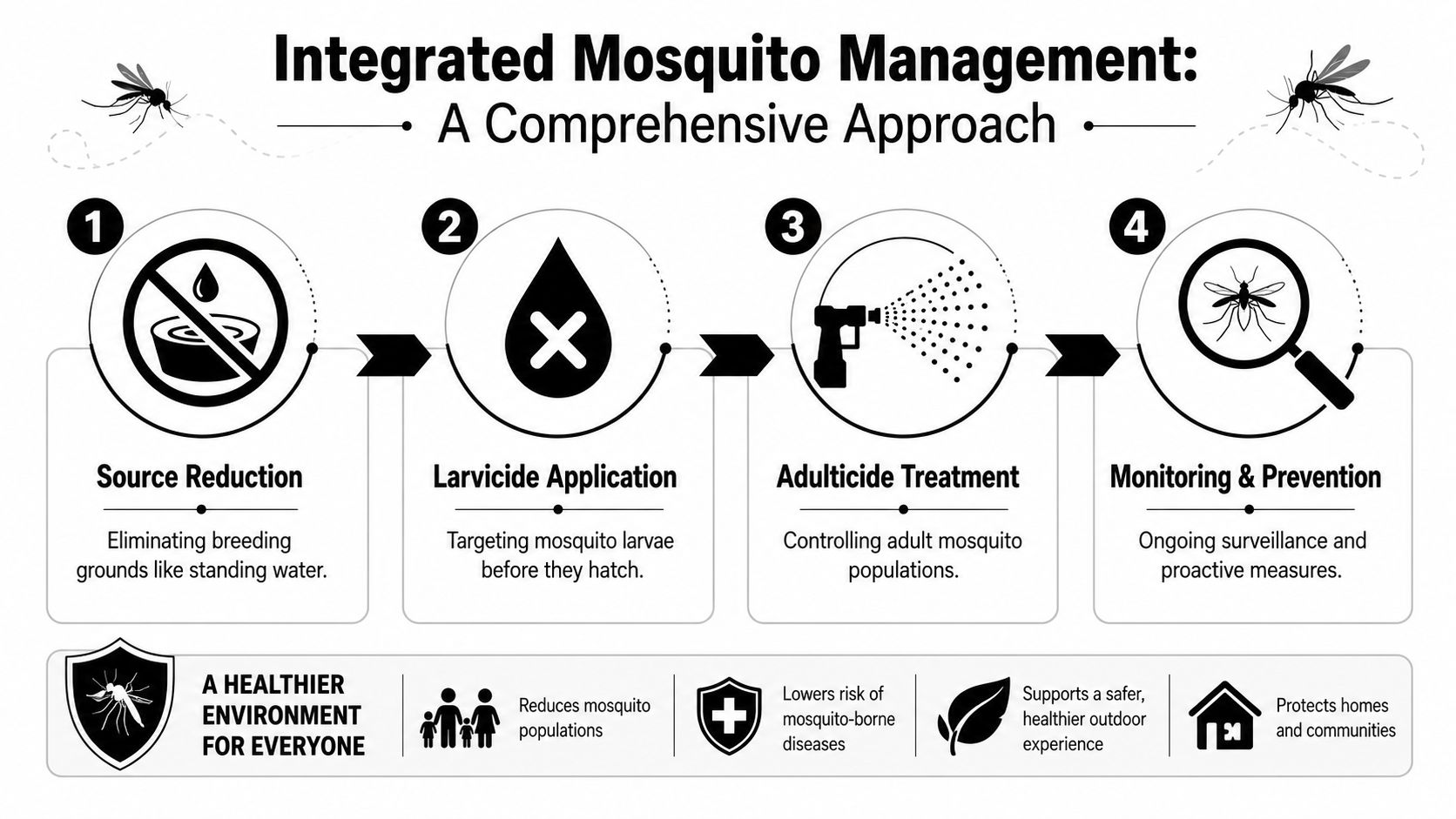
A practical program uses inspection, habitat correction, larval control, adult control, and follow-up. According to this overview of professional mosquito control services, professional mosquito control programs implement Integrated Mosquito Management centered on four critical tactics, with Bacillus thuringiensis israelensis (Bti) being the most widely used larvicide. The same source describes Bti as an EPA-classified low-toxicity bacterium that specifically targets mosquito larvae.
The four parts that actually matter
Homeowners usually notice the adult treatment first because that's the visible part. But that's only one part of the program.
| Treatment part | What it targets | Why it matters |
|---|---|---|
| Source reduction | Standing water and breeding spots | Cuts down future mosquito development |
| Larvicide application | Mosquito larvae in water | Stops mosquitoes before they become biting adults |
| Adulticide treatment | Resting and active adult mosquitoes | Reduces immediate biting pressure |
| Monitoring and prevention | Changing site conditions | Keeps the plan working over time |
What larviciding does
Larviciding is one of the most overlooked parts of mosquito control. When water can't be dumped, drained, or corrected right away, professionals may treat it so larvae don't mature into adults.
Bti is useful here because it's targeted. It's applied to mosquito breeding sites where larvae are active, which helps interrupt the cycle before you see the next wave around the patio or entry door.
A more complete provider, like The Green Advantage, stands apart by offering mosquito reduction programs that address both adult mosquitoes and larvae, which is the practical standard for homes dealing with repeat pressure in Crown Point and surrounding Northwest Indiana neighborhoods.
What adult mosquito treatments do
Adult mosquito treatments focus on the places mosquitoes rest and travel. That usually means shaded foliage, lower branches, dense shrubs, ivy, tall ornamental grasses, and damp edges near fences or tree lines.
Professionals often use ULV equipment or targeted application methods depending on the site and the treatment objective. The point isn't to fog every inch of the yard. The point is to apply product where adult mosquitoes are spending time.
Field insight: The best adult treatment in the world won't hold up well if the property keeps producing new mosquitoes every few days.
Why timing and inspection matter
A mosquito treatment should never be generic. Good service depends on what the technician sees that day. Recent rain, irrigation habits, leaf density, and standing water all affect the plan.
That's also why mosquito service ties into broader residential pest control and commercial pest control thinking. A warehouse lot, apartment grounds, daycare play area, or backyard patio all need different inspection priorities. The same integrated logic applies, even when the setting changes.
DIY Mosquito Traps vs Professional Service Benefits
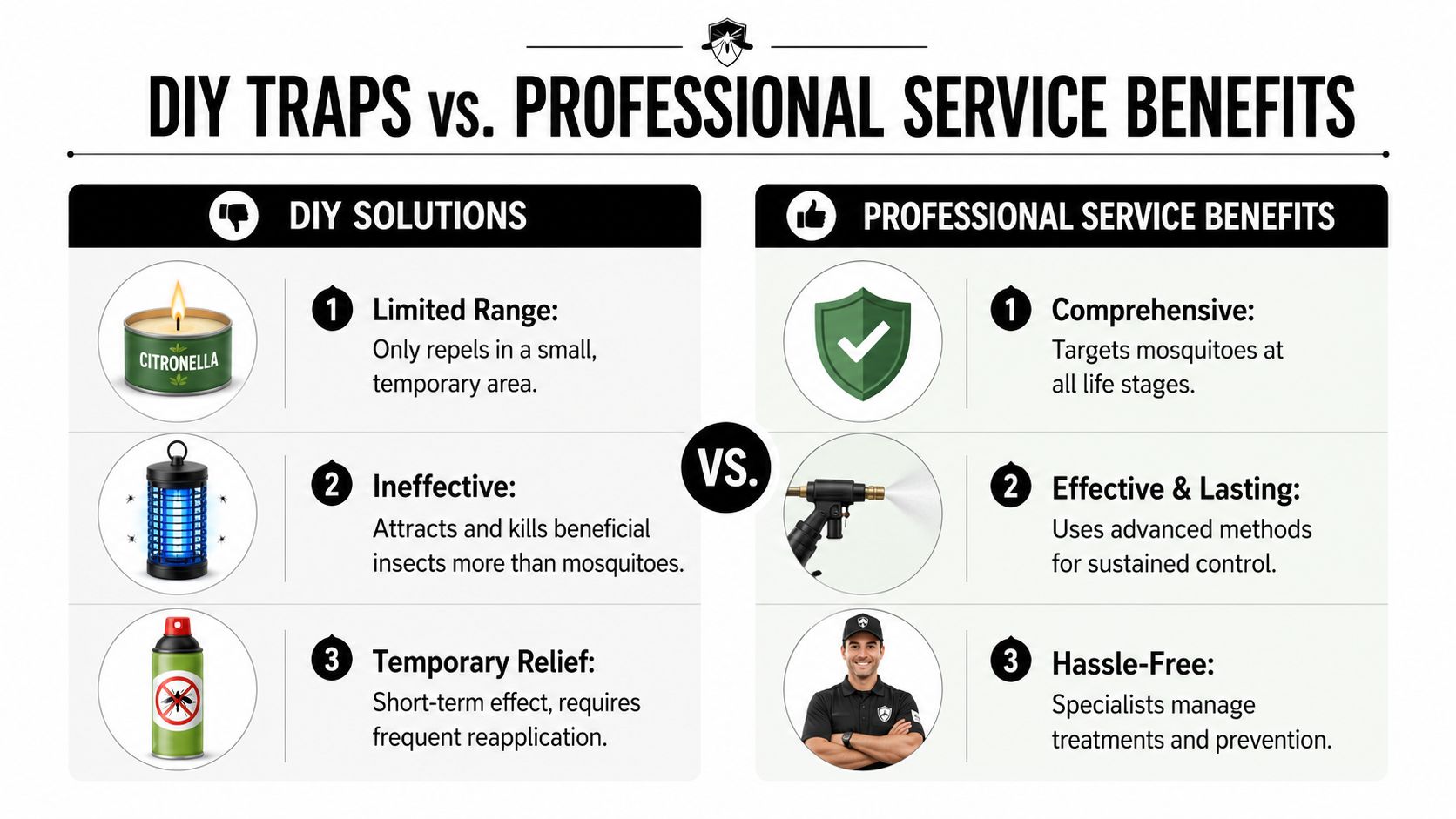
A lot of homeowners try DIY first. That makes sense. Citronella candles, bug zappers, yard foggers, and hardware-store sprays are easy to buy and easy to test. The problem is that most of them work around the edges of the issue, not at the source.
Where DIY methods fall short
DIY options usually struggle for one of three reasons. Their coverage is limited, their effect fades quickly, or they don't touch the breeding cycle.
A candle may help a small seating area when the air is calm. A bug zapper doesn't solve standing water. A spray can may knock down activity for a short time, but it won't give you a property-wide plan.
Here's a practical comparison:
| DIY approach | Common limitation | Professional difference |
|---|---|---|
| Citronella candles | Small temporary zone | Whole-property strategy |
| Bug zappers | Doesn't solve breeding sites | Focus on mosquito habitats and life stages |
| Store-bought sprays | Short-lived relief | Planned treatment intervals and inspection |
The bigger issue is strategy. The EPA's integrated mosquito control guidance states that a successful approach must include removing habitats, using structural barriers, controlling larvae, and controlling adults, and notes that up to 80% of mosquito reduction comes from eliminating breeding sites before adults emerge.
That's why “spray and hope” usually disappoints.
Why professional service holds up better
A professional service looks at the property as a system. It checks where mosquitoes breed, where they rest, how water behaves on the lot, and how the yard layout affects pressure through the season. That approach is more useful than rotating through DIY products and guessing what to try next.
If you've been comparing gadgets and attractants, this guide to the best outdoor mosquito traps is a good place to separate marketing from real-world limitations.
This short video also gives helpful context on why people often outgrow DIY methods once mosquito pressure gets consistent.
If you only attack the mosquitoes you can see, the ones you don't see are already replacing them.
For homeowners searching exterminator in Crown Point, IN or pest control near me, that's usually the turning point. They're not looking for one more gadget. They want the yard back.
What to Expect from Our Mosquito Service
Understanding what happens can improve one's comfort with a mosquito service. The process should be straightforward, not mysterious.
From the first call to the first visit
The first step is usually a conversation about what you're seeing. Some customers notice bites every evening around the deck. Others report activity near fence lines, playsets, dog runs, or landscaping beds. That early detail helps narrow down where pressure is building.
Once service is scheduled, the property gets evaluated for the conditions driving the issue. That includes resting areas for adults, likely breeding spots, drainage patterns, and features such as ornamental plantings, gutters, low spots, or nearby wooded edges. A good technician isn't just looking for mosquitoes. They're looking for the reasons mosquitoes keep coming back.
What treatment day usually looks like
For most homes, treatment focuses on targeted areas rather than blanket application across the entire yard. Shrubs, lower tree limbs, shaded foliage, damp corners, and other likely resting zones are the priority. If standing water can't be removed, that area may need a larval treatment as well.
Homeowners often ask whether they need to be home. In many cases, access to the yard and clear communication about gates, pets, and known problem areas matters more than being physically present the whole time. The key is making sure the property can be treated safely and completely.
A few things help treatment day go smoothly:
- Secure pets until the technician confirms the yard is ready
- Point out trouble spots like kiddie pools, drains, or wet corners
- Mention upcoming events if you're planning a party or family gathering
- Ask questions early if you have concerns about children, gardens, or outdoor seating areas
Safety and return-to-yard timing
Safety is one of the first concerns families bring up, and rightly so. Modern mosquito work should come with clear instructions, not vague reassurance. According to the Auburn mosquito spray FAQ citing CDC and EPA guidance, EPA-registered pesticides like modern ultra-low-volume adulticides are designed for quick environmental breakdown, often requiring no significant waiting period for outdoor safety.
That doesn't mean every product or every treatment type is identical. Residual applications and ULV applications can have different practical guidance, which is why homeowners should always follow the instructions given for their specific service.
Ask one simple question after treatment: “When can kids and pets go back out?” A professional should answer that clearly for the exact application used.
Communication matters as much as the product
A reliable provider should tell you what was treated, what was found, and what you can do between visits. That may include emptying containers, correcting drainage, or trimming dense foliage in areas where mosquitoes rest.
That kind of communication builds confidence. It's also what separates a real service relationship from a rushed one-time spray.
Seasonal Mosquito Plans for Northwest Indiana
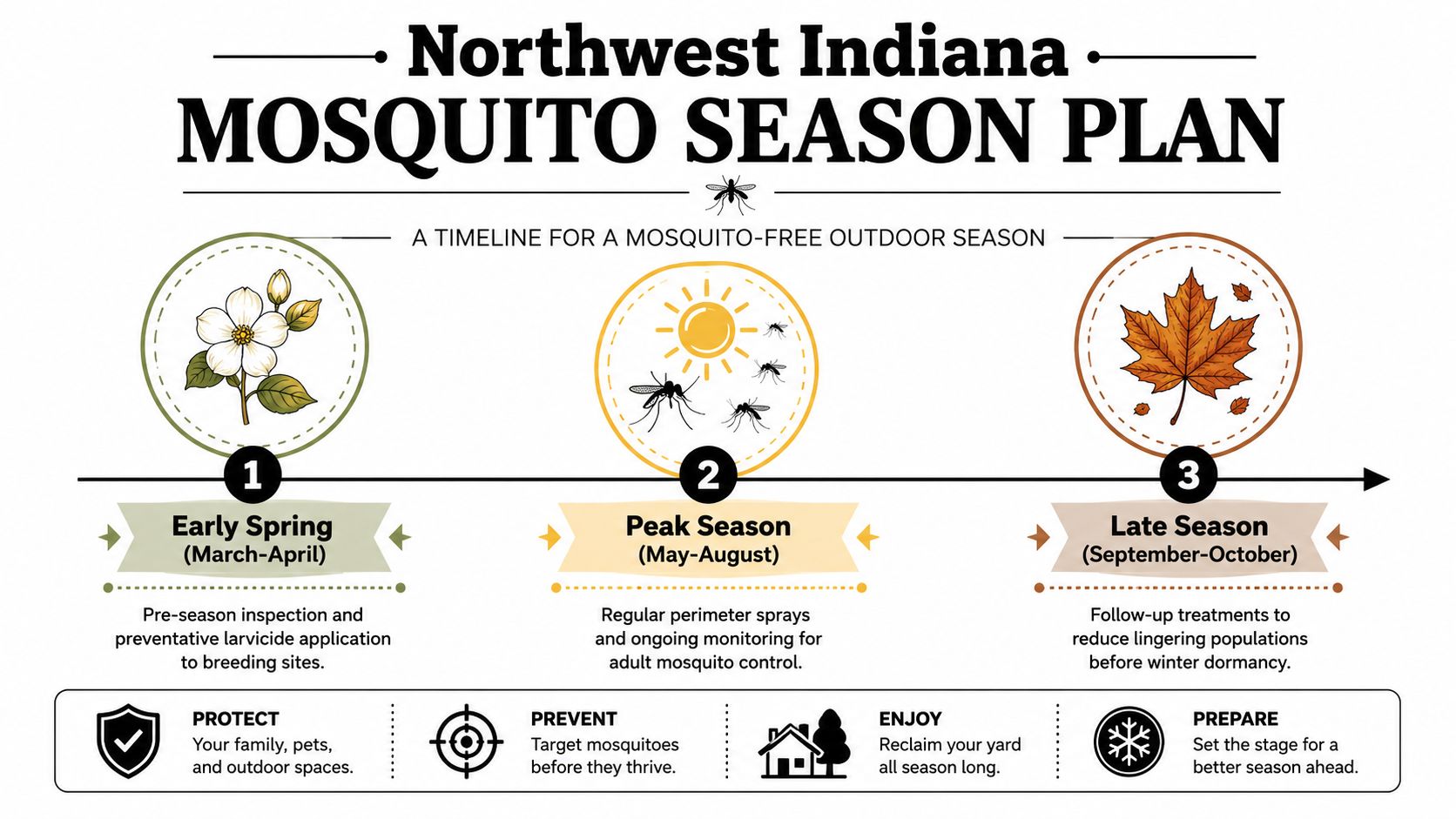
Mosquito control in this region works best when it's treated as a season-long plan, not a single event. Northwest Indiana weather doesn't stay consistent enough for a one-and-done approach.
The schedule that fits local conditions
For Indiana homes, recurring treatment is the normal pattern. Indiana mosquito service guidance says seasonal residential mosquito programs typically operate on recurring 3-week or 4-week treatment cycles from May through September, especially for properties near retention ponds, drainage ditches, or wooded areas.
That timing makes sense in Crown Point because mosquito pressure changes with rain, heat, and breeding conditions. A recurring schedule lets the technician adjust to what the property is doing instead of reacting after the yard becomes uncomfortable again.
How homeowners should think about planning
A sensible seasonal plan usually includes:
- Pre-season review of the property's likely breeding and resting areas
- Recurring service visits during the main mosquito months
- Mid-season adjustments if rainfall or standing water issues increase pressure
- Targeted support for events if you're hosting an outdoor party or gathering
Some homeowners only need ongoing seasonal protection. Others want a one-time treatment before a graduation party, cookout, or backyard event. The right plan depends on the property, the surroundings, and how you use the yard.
Pricing usually varies by factors such as lot size, layout, and how many treatment zones the property has. That's why an exact quote is more useful than a generic online price range. If you're also dealing with broader seasonal pest issues, this is often the time to ask about preventative pest treatments, spider control, wasp removal, or other outdoor-focused services.
Choosing The Right Mosquito Control in Crown Point
If you live in Crown Point, the right mosquito service should do more than make the yard smell treated for a day. It should address why mosquitoes are there, how they're reproducing, and what needs to change to keep pressure down over time.
That's the difference between a quick application and a dependable mosquito control service. Adult treatments help reduce immediate activity. Source reduction and larval control help keep the problem from rebuilding. In Northwest Indiana, you usually need all of that working together.
Homeowners searching for pest control in Crown Point, IN, exterminator near me, or residential pest control are usually looking for a company that communicates clearly, respects the property, and understands local conditions. Businesses and property managers looking for commercial pest control need the same thing. They need practical service, not guesswork.
The Green Advantage serves Crown Point and nearby Northwest Indiana communities with that local, integrated mindset. For mosquito work, that means evaluating the full property, focusing on safety, and building service around real site conditions instead of relying on a one-size-fits-all spray routine.
If your backyard has turned into a place you avoid, it's probably time for a more complete plan.
If you're ready to reclaim your yard, contact The Green Advantage to schedule a mosquito inspection or request a quote for your Crown Point home or property in Northwest Indiana. Clear answers, practical treatment, and a season-long plan can make outdoor time feel like yours again.
Where Do Mosquitoes Hide
A lot of Crown Point evenings go sideways the same way. The patio is set, the kids head out after dinner, and a few minutes later everyone is slapping at ankles by the deck steps and along the fence. On properties across Northwest Indiana, that usually means mosquitoes are already settled into the yard's hidden shelter zones.
A key question is where they spend the rest of the day.
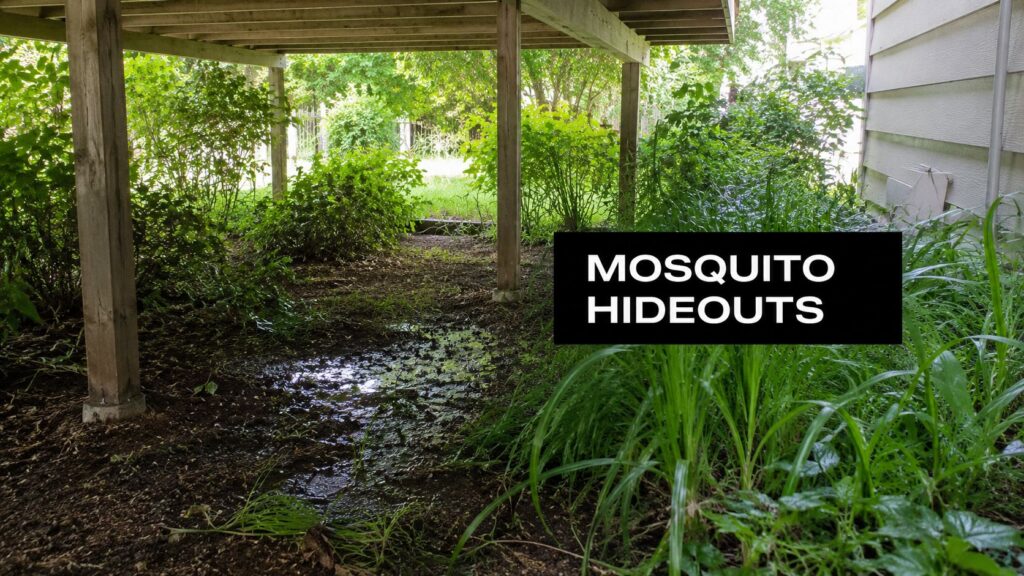
Around here, mosquitoes rarely hang out in the open lawn. They hold in the damp, protected pockets that many homeowners overlook, under decks where air stays still, inside clogged gutters after a summer storm, behind dense arborvitae, near low spots that stay wet, and around shaded foundations where moisture lingers. In Crown Point yards, those micro-habitats matter more than the obvious parts of the property.
That is why off-the-shelf sprays and backyard gadgets often disappoint. They may knock down a few active mosquitoes, but they usually miss the places where mosquitoes rest and where new activity starts. The Green Advantage approaches mosquito reduction by targeting those specific hiding and breeding areas common in Northwest Indiana, instead of relying on generic advice and hoping the problem fades.
Homeowners usually get better results with a local pest control partner who knows how our yards hold moisture, how our foliage creates resting cover, and how to treat the trouble spots without wasting product on areas that are not driving the problem. That same practical approach carries over to broader residential and commercial pest control work, whether the issue is mosquitoes, ants, spiders, rodents, termites, or wasps.
Reclaim Your Summer from Mosquitoes in Crown Point IN
A lot of Crown Point homeowners tell me the same thing. Dinner is almost ready, the kids want to stay outside, and then the mosquitoes start working the patio, deck steps, and side yard hard enough to end the evening early.
That usually points to a yard with several small hiding and breeding pockets, not one big obvious problem. In Northwest Indiana, I see the same trouble spots over and over: damp shade under decks, clogged gutters after a storm, thick arborvitae and shrubs that hold humidity, low areas along fence lines, and mulch beds near the foundation that stay moist longer than they look.
A clean yard can still support mosquito activity. Neat landscaping, patio furniture, stacked firewood, and decorative beds often create the kind of cover mosquitoes use through the day, then they drift out at dusk once the heat drops.
What homeowners usually notice first
Most calls start with a pattern, not a swarm. Bites happen near the grill, by the garage service door, around the dog run, or along the path to the trash cans. On commercial properties, complaints usually build around entrances, break areas, fence lines, and dumpster pads where shade and moisture hang around.
Here is the practical rule I use on inspections.
Practical rule: If mosquitoes are active at dusk, they already have daytime shelter on the property.
That is why mosquito reduction starts with a close inspection of the places people do not spend much time looking at. A technician checks where air stays still, where leaves and debris hold water, and where foliage creates a cool resting zone. Gutter buildup is a common factor, and routine upkeep like the steps outlined in this guide to Long Island home protection helps explain why.
Why local pest control matters
Crown Point yards are full of mosquito-friendly micro-habitats. The challenge is not just standing water in the obvious sense. It is the water trapped in a sagging gutter run, the damp soil under a shaded deck, the overgrown edge behind a shed, and the dense plantings that hold moisture after evening watering.
The Green Advantage treats those specific areas with a targeted approach instead of spraying the whole property and hoping for the best. That matters here, because the spots driving mosquito pressure in Northwest Indiana are usually tucked into the structure and landscaping of the yard itself.
Homeowners want to use their yard again. The way to get there is to identify the exact places mosquitoes are resting and reproducing, then treat those zones directly.
The Hidden World of Mosquito Hideouts in Your Yard
Mosquitoes hide because daytime conditions work against them. Heat dries them out, sun stresses them, and wind pushes them around. During daylight hours, they look for surfaces and spaces that stay darker, cooler, and more humid than the open lawn.
Where to look first in a Crown Point yard
Start with the spots commonly walked past every day.
- Under decks and porches. Mosquitoes use the underside of decks, porches, and fence lines because those areas stay cooler than the open yard and hold shade longer. Those structural edges can become reliable daytime resting zones, especially where vines or vegetation add humidity, as noted in this overview of unexpected mosquito hiding places.
- Dense shrubs and ornamental plantings. The outer edge may look harmless, but the interior often stays damp and sheltered.
- Tall grass near fences or sheds. If grass and weeds stay thick, mosquitoes can rest there through the hottest part of the day.
- Clogged gutters and plant saucers. These are two of the most common problem areas because they can support both resting adults and developing larvae.
- Low, shaded spots near the foundation. Moisture collects there, and mosquitoes follow that moisture.
The spots DIY treatments often miss
Mosquitoes don't just land on whatever's easy to spray from the sidewalk. They settle in protected pockets.
Adult mosquitoes predominantly hide on the undersides of large shrub leaves, especially where dense canopy cover reduces wind and holds humidity. They're weak fliers, so they favor sheltered zones over breezy open turf. In practical terms, that means the center of a shrub often matters more than the outer foliage.
A yard can look open from the patio and still hold mosquito harborage deep inside shrubs, behind furniture, and along shaded fence lines.
Inside the home, some species may also seek dark surfaces with low airflow. That's one reason a few mosquitoes can seem to appear indoors even when the main pressure is outside.
A better way to inspect your yard
Walk the property in late morning or early afternoon and look for these conditions instead of looking for swarms:
| Yard feature | Why mosquitoes like it |
|---|---|
| Deck undersides | Cool shade and protection from wind |
| Thick shrubs | Dark leaf cover and higher humidity |
| Fence lines with vines | Structure plus plant moisture |
| Gutters | Moist overhangs and trapped water |
| Plant saucers | Small water source close to shelter |
For homeowners who are already working on exterior maintenance, this guide to Long Island home protection is a useful reminder that gutter care affects more than drainage. In mosquito work, clogged gutters are one of those small property issues that can create a much bigger nuisance.
How a Teaspoon of Water Becomes a Mosquito Factory
In Crown Point, mosquito breeding usually starts in the places homeowners walk past every day. A saucer under a planter. A low spot in a tarp behind the shed. Water sitting in a clogged gutter over the back patio. It does not take much.
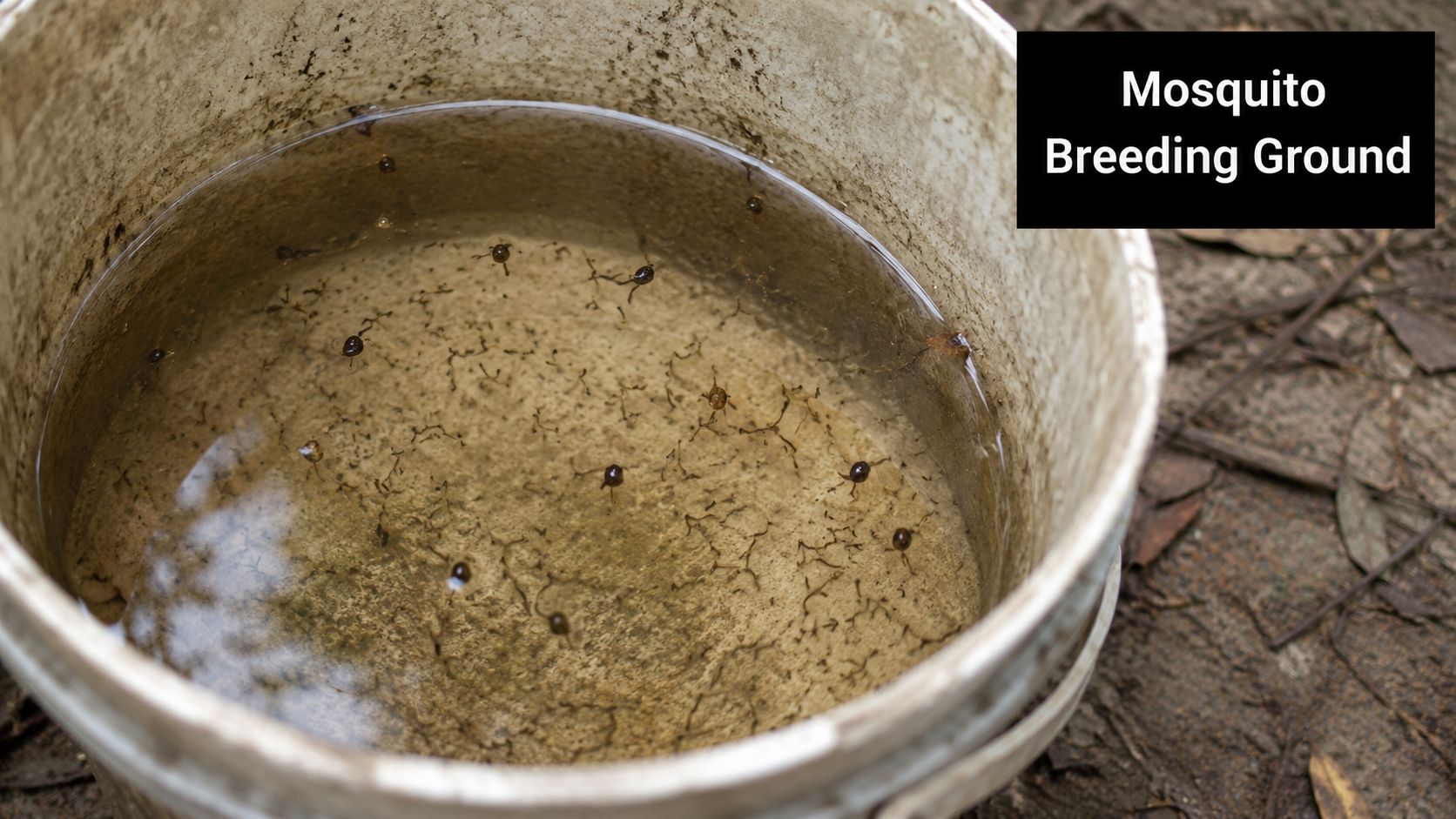
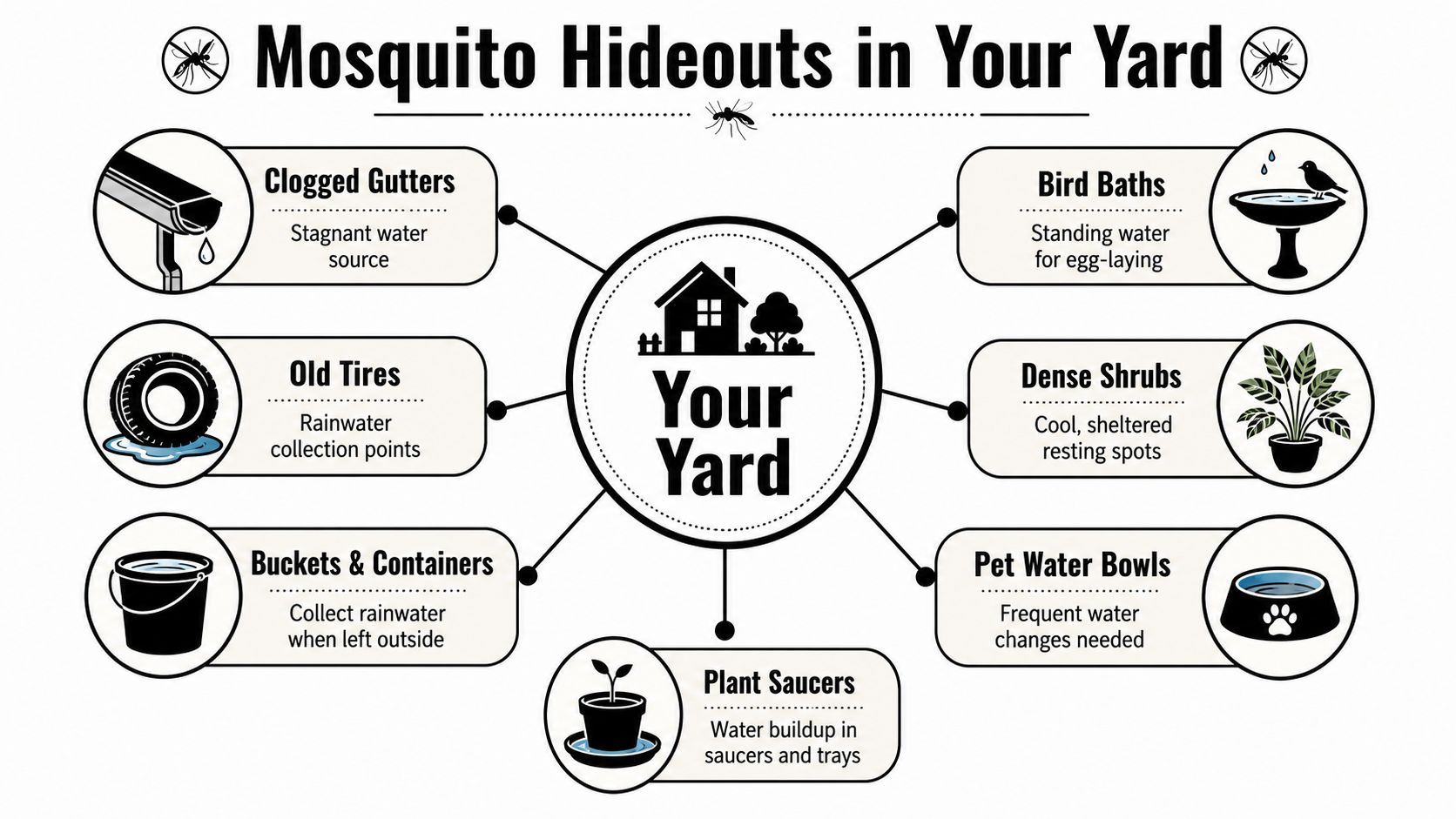
Mosquitoes can lay eggs in very small amounts of still water, which is why a yard can have steady mosquito pressure without any pond, ditch, or marsh in sight. In practice, the trouble spots around Northwest Indiana homes are usually close to the same sheltered areas where adults rest during the day. That tight setup lets the cycle keep repeating in a small space.
The small water sources that cause big problems
Around Crown Point homes, the water sources that produce mosquitoes are often hidden by the way the property is built or laid out:
- Plant saucers tucked under porch pots and hanging baskets
- Clogged gutters holding water above shaded foundation beds
- Tarp folds on firewood stacks, grills, and stored equipment
- Kids' toys, wheelbarrows, and buckets left along the fence line
- Bird baths and pet bowls sitting in shade and changed too rarely
- Tree holes and hollow stumps that keep water after a summer storm
- Low spots under decks or at downspout discharge points where water lingers longer than expected
I see this a lot in yards with dense shrubs, mature maples, and limited afternoon sun. The homeowner clears the obvious bucket, but the actual production site is a gutter run packed with debris or a sagging tarp behind the garage.
A recent example of that hidden-water problem appears in Lawn & Leaf Solutions' drainage guide, which is useful for homeowners trying to identify why damp trouble spots keep returning after rain. Good drainage work does not replace mosquito service, but it does cut down the wet pockets that help populations rebound.
Why one cleanup rarely solves it
Mosquito pressure drops fastest when breeding sources are found in clusters, not one at a time. Emptying one container helps. Missing three others near the deck, the side yard gate, and the gutter line keeps the cycle going.
That is why mosquito jobs in Northwest Indiana often come down to inspection detail. The question is not whether there is standing water somewhere on the property. The question is where small amounts of water keep collecting near shade, leaf cover, and low airflow.
For a closer look at how breeding sites and treatment planning fit together, The Green Advantage provides mosquito breeding and mosquito control information that helps homeowners connect what they're seeing outside with what a technician looks for during service.
A short visual can make that cycle easier to spot in real life:
What works and what usually falls short
Dumping visible water is a good start. Keeping gutters clear, correcting drainage near the foundation, and checking the underside of decks and stored items after rain usually makes a bigger difference than homeowners expect.
What falls short is treating mosquito prevention like a one-time cleanup. In Crown Point yards, the repeat offenders are usually the overlooked micro-habitats. Wet gutter debris, shaded containers, and protected pockets under structures. If those spots keep refilling, mosquitoes keep coming back.
The Green Advantage Solution for Mosquito Reduction
A lot of mosquito treatments fail because they focus on the air instead of the resting sites. Foggers may give a brief knockdown. Zappers may kill random flying insects. Neither approach fixes the core issue if mosquitoes are spending the day deep in leaf cover, under structures, and along sheltered edges.
Target the harborage, not just the symptom
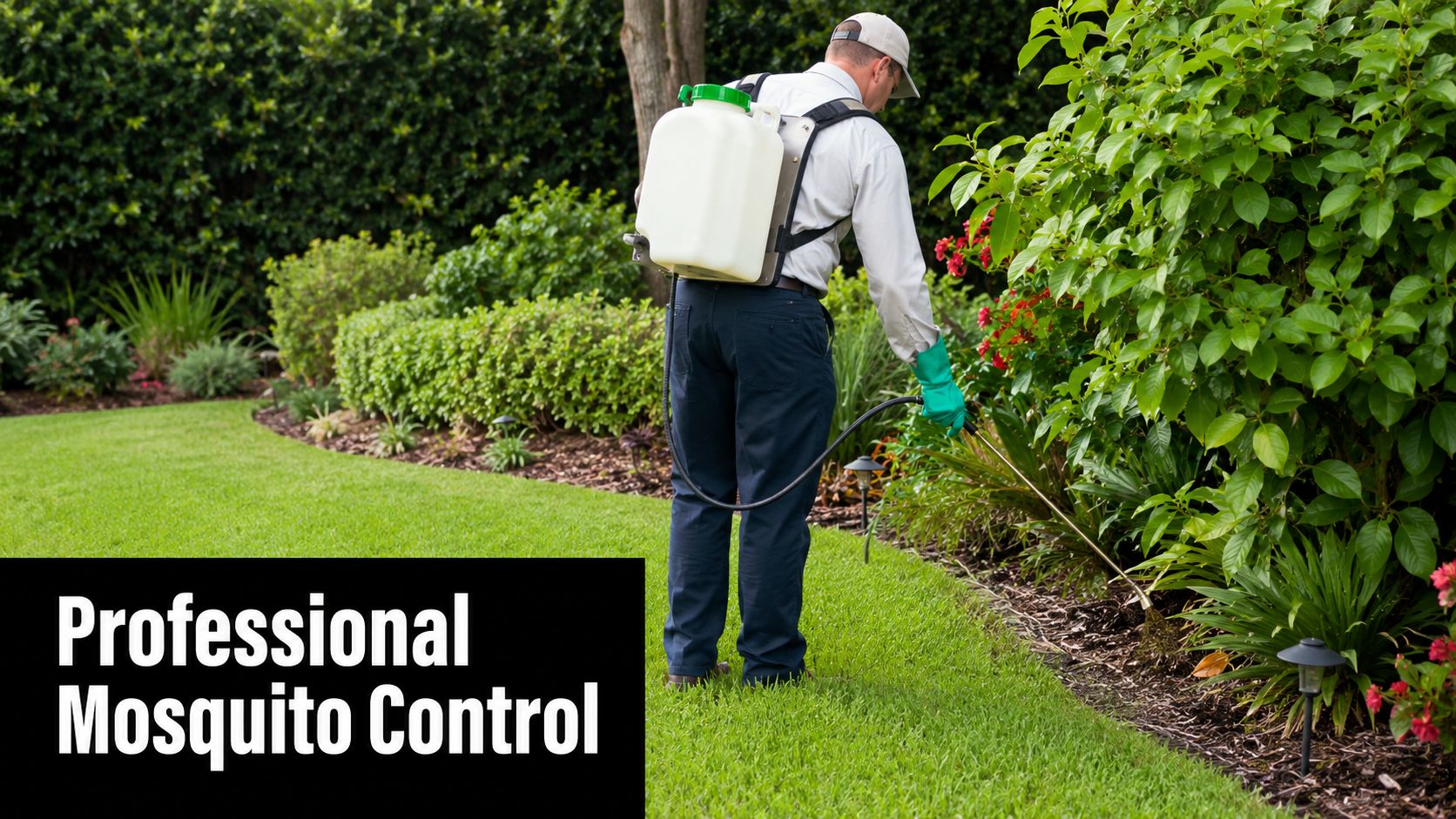
Adult mosquitoes predominantly hide on the undersides of large shrub leaves during daylight, and a single large shrub can harbor hundreds of resting mosquitoes, according to this technician-focused mosquito harborage breakdown. That matters because it changes how a treatment should be applied.
A technician looking for lasting mosquito reduction doesn't just treat the outside edge of vegetation. The effective target is deeper inside the plant, especially the interior branches and the undersides of leaves where mosquitoes rest.
Field insight: If a treatment only touches the outer shell of dense shrubs, it often misses the part of the plant mosquitoes are using most.
Why professional application outperforms random spraying
The difference is precision.
A professional mosquito program looks at how the yard functions as a system. The shaded side of the garage, the underside of the deck, the shrub line near the fence, and the damp pocket behind the shed all get evaluated differently. Treatment is directed to likely harborages instead of being spread evenly over every visible surface.
That's the practical value of a service such as professional mosquito pest control. It's built around locating active resting areas and applying targeted reduction methods where mosquitoes spend their time, not where homeowners notice them later.
What works better than DIY tools
Store-bought options often fall into three categories. Quick fogging, light-based traps, and broad lawn sprays. Each can seem appealing because it feels immediate.
In practice, homeowners usually get better results from a plan that combines:
- Harborage treatment aimed at dense vegetation, leaf undersides, and shaded structural areas
- Breeding site correction so fresh mosquitoes aren't constantly replacing the ones you reduce
- Yard-specific adjustments such as trimming heavy growth and improving sanitation around moisture-holding items
That same targeted mindset carries over into broader residential pest control and commercial pest control. Properties rarely have one isolated issue. The same inspection that identifies mosquito pressure often helps uncover conditions contributing to ants, spiders, wasps, or rodent activity as well.
Protecting Your Family and Property in Northwest Indiana
Mosquito control isn't only about comfort, though comfort matters. It's also about whether your family can use the yard without thinking twice about every bite, every cookout, or every evening spent outside.
In Northwest Indiana, homeowners often focus on patios, decks, and play areas first because those are the spaces that lose value when mosquito pressure gets high. A backyard can be clean, well-maintained, and attractive, yet still feel off-limits once biting starts.
The part many guides leave out
Most mosquito advice stays outdoors. That misses a real concern for some homes.
Most guides list generic spots but fail to address the indoor micro-habitat specificity of species like the Asian Tiger Mosquito, which may hide in dark corners behind furniture and on dark indoor surfaces, as discussed in this mosquito behavior thread summarizing biologist observations. For homeowners, that means “check the yard” isn't always enough when aggressive daytime biters are making their way inside through screens or vents.
If mosquitoes are showing up in bedrooms, behind curtains, or in darker corners, the solution may require both outdoor reduction and indoor exclusion steps.
Peace of mind has practical value
Professional mosquito reduction supports more than one goal at once:
- Family use of the yard for meals, play, and evenings outside
- Less indoor frustration when mosquitoes slip past weak screening or open doors
- Better overall property comfort for guests, tenants, and employees
- A more complete pest strategy that fits with ant control, spider control, termite control, wasp removal, and other seasonal pest issues
That's why many people who start by searching pest control near me are really looking for reliability. They want someone who understands how pests behave on a real property, not just a company that applies a generic treatment and moves on.
What to Expect with Your Crown Point Pest Control Partner
When homeowners contact a local exterminator in Crown Point, IN, they usually want a straightforward answer. What's attracting the mosquitoes, what can be corrected, and what should happen next?
A good service process should feel simple from the start.
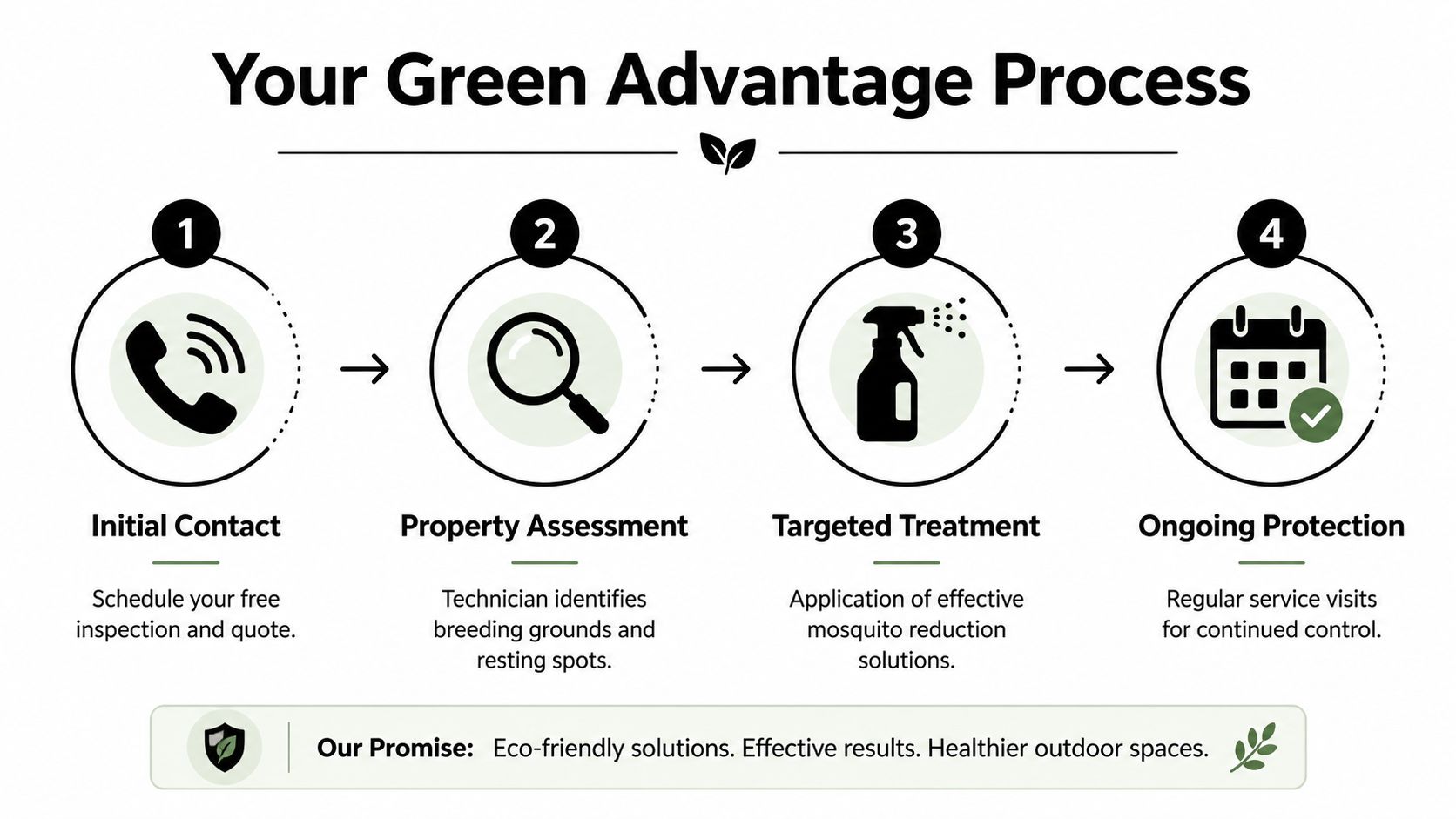
What the service process looks like
Initial contact
You call, describe what you're seeing, and get help scheduling service. Clear communication matters because timing, yard layout, and recent weather can all affect what the technician needs to inspect.Property assessment
The technician checks likely resting and breeding areas, not just the places where bites happen. That includes vegetation, structural shade, damp pockets, containers, and other mosquito-friendly zones.Clear treatment plan
You should know what's being targeted and why. The goal isn't to overwhelm you with jargon. It's to show you which parts of the property are contributing most to the problem.Follow-through and prevention advice
Homeowners also need practical upkeep steps. Experts recommend keeping grass under 2 inches and trimming overgrown shrubs and vegetation because these create the shaded daytime resting spots mosquitoes need, according to the Marin residents guide for mosquito harborage reduction.
What a useful consultation should include
A solid mosquito visit should leave you with actions you can take, such as:
- Trim dense growth around decks, fences, and sheds
- Watch hidden water in saucers, tarps, and containers after rainfall
- Improve yard airflow where plantings have become too thick
- Check screening and entry points if mosquitoes are making it indoors
That kind of guidance is part of working with a pest control partner instead of chasing one-off fixes. It's the same practical mindset that helps homeowners and businesses in Northwest Indiana with commercial pest control, rodent control, spider control, preventative pest treatments, and other recurring pest issues.
If mosquitoes are taking over your yard in Crown Point, IN, it's time to stop guessing and start with a property-specific plan. Contact The Green Advantage to schedule a pest inspection, request a quote, and get clear answers about the hidden mosquito resting and breeding spots around your home or business.
Best Mosquito Control Companies Near Me: Crown Point 2026

A July evening in Crown Point should end with dinner on the patio, kids in the yard, and maybe a fire pit after sunset. It should not end with everyone rushing indoors because the mosquitoes took over.
That problem usually does not go away with a single spray. Around here, mosquito pressure builds through the warm months, especially in yards with shade, standing water, heavy landscaping, or nearby drainage areas. The right company helps you take your yard back for the full season, not just knock pests down for a weekend.
This guide is built for homeowners who want to make a smart choice, fast. You are not just comparing names. You are comparing treatment plans, local experience, communication, and whether a company can handle the bigger pest picture if mosquitoes are only part of the problem.
I'd start with The Green Advantage. They are a family-owned Northwest Indiana company, and that local experience matters in Crown Point. If you want a clearer picture of the health concerns behind mosquito activity, their article on mosquito-borne risks and how mosquito control services mitigate them is worth reading before you choose a provider.
There are other solid options on this list too. My goal here is to help you compare them clearly, ask better questions, and pick the service that will make your yard usable again.
1. The Green Advantage

The Green Advantage is the company I'd call first in Crown Point. They're family-owned, based in Northwest Indiana, and they understand the yards here. That shows up in the details, from shaded fence lines and wet spots to the other pest issues that often make mosquito season worse.
Their value is simple. They do more than spray and leave. The team handles mosquito reduction, prevention plans, residential pest control, commercial pest control, and inspections, so you can solve the whole pest problem instead of treating one symptom at a time.
Why The Green Advantage Stands Out
What sets them apart is judgment. A good mosquito company should be able to explain where activity is coming from, what on your property is feeding it, and how they plan to keep pressure down through the season. That is the standard I'd use for any provider. If you want a smart framework for comparing treatment plans, their article on whether all mosquito control is the same is useful before you hire anyone.
I also like that they fit the way Crown Point homeowners shop for this service. Many people start with mosquitoes, then realize they also need help with ants, spiders, wasps, rodents, or a general pest issue around the house. The Green Advantage can handle that without sending you to a second company.
Best Fit for Crown Point Homeowners
Choose The Green Advantage if your goal is to make the yard usable again and keep it that way. They're a strong fit for families who want responsive service, clear communication, and a local company that knows Crown Point properties instead of treating every yard the same.
There are two practical tradeoffs. They focus on Crown Point and nearby Northwest Indiana communities, so they are not the right option outside that area. And if you want pricing or licensing details before booking, you'll need to request them directly.
2. Mosquito Authority of Northwest Indiana

You walk outside at dusk, the kids want to stay in the yard, and mosquitoes start circling before you can even sit down. That is the kind of problem Mosquito Authority of Northwest Indiana is built to address. They are a recognizable local option for homeowners who want a mosquito-focused service plan instead of a broader pest package.
Their model is simple. They cover Crown Point and nearby Northwest Indiana communities, and they lean on recurring seasonal treatments to keep pressure down during mosquito season. They also offer one-time sprays for parties and outdoor gatherings, which makes them a practical pick if your biggest concern is getting short-term relief before guests arrive.
What I like here is the clarity. You are not sorting through a long menu of unrelated services. If you want a company that centers its pitch on mosquito control, regular visits, and family-friendly treatment messaging, this is a reasonable option to compare.
Still, do not stop at the sales pitch. Before you hire any provider, read this breakdown of how mosquito control plans actually differ. It will help you ask better questions about treatment frequency, target areas, and what happens if mosquitoes come back between visits.
Where This Option Fits Best
Mosquito Authority makes the most sense for homeowners who want a dedicated mosquito brand and a predictable seasonal schedule.
A few things deserve a close look during your quote call:
- Treatment scope: Ask whether they treat only adult resting areas or also address breeding pressure around standing water.
- Retreatment policy: Get a direct answer on what happens if mosquito activity returns before the next scheduled visit.
- Event service timing: If you want a one-time spray before a party, confirm how far ahead they need to book it.
- Property fit: Tell them about heavy shade, drainage issues, or wooded edges. Those conditions usually decide how well a plan works.
The tradeoff is straightforward. A mosquito-only provider can be a good fit if that is your only problem. If mosquitoes are just one part of a bigger pest issue around the house, you may end up needing a second company. For Crown Point homeowners who want a narrow, easy-to-understand mosquito program, though, Mosquito Authority deserves a spot on the shortlist.
3. Mosquito Squad of Northwest Indiana

Mosquito Squad of Northwest Indiana is a good option for homeowners who want a choice between traditional barrier treatments and a botanically derived alternative. That flexibility is useful when a family wants control but also wants to ask detailed questions about treatment style, timing, and where products will be applied around the yard.
They also offer special-event sprays, which can be appealing if mosquitoes become most noticeable when you're hosting. If your backyard use revolves around graduation parties, cookouts, or evenings by the fire pit, that matters.
Where This Option Fits Best
Mosquito Squad is strongest for buyers who want mosquito service first and like having a menu of treatment approaches. Their recurring programs are built for seasonal management, and their satisfaction-focused model is reassuring for homeowners who don't want to feel stuck if results fall short.
A few things to verify during your quote call:
- Treatment type: Ask which option fits your yard conditions best.
- Residual expectations: Natural options may need closer attention to timing.
- Event timing: Confirm how far ahead to schedule before a party.
According to a This Old House review of mosquito control companies, season-long treatment plans timed to regional mosquito activity and applied consistently every 21 to 30 days can reduce mosquito populations by up to 90% over a full season. That's the standard you want in mind when comparing recurring programs in Crown Point.
Mosquito Squad won't be my first recommendation over a trusted family-owned local provider like The Green Advantage, but it's still a solid contender if you want recurring service and treatment-choice flexibility. You can explore their local program at Mosquito Squad of Northwest Indiana.
4. Monroe Pest Control
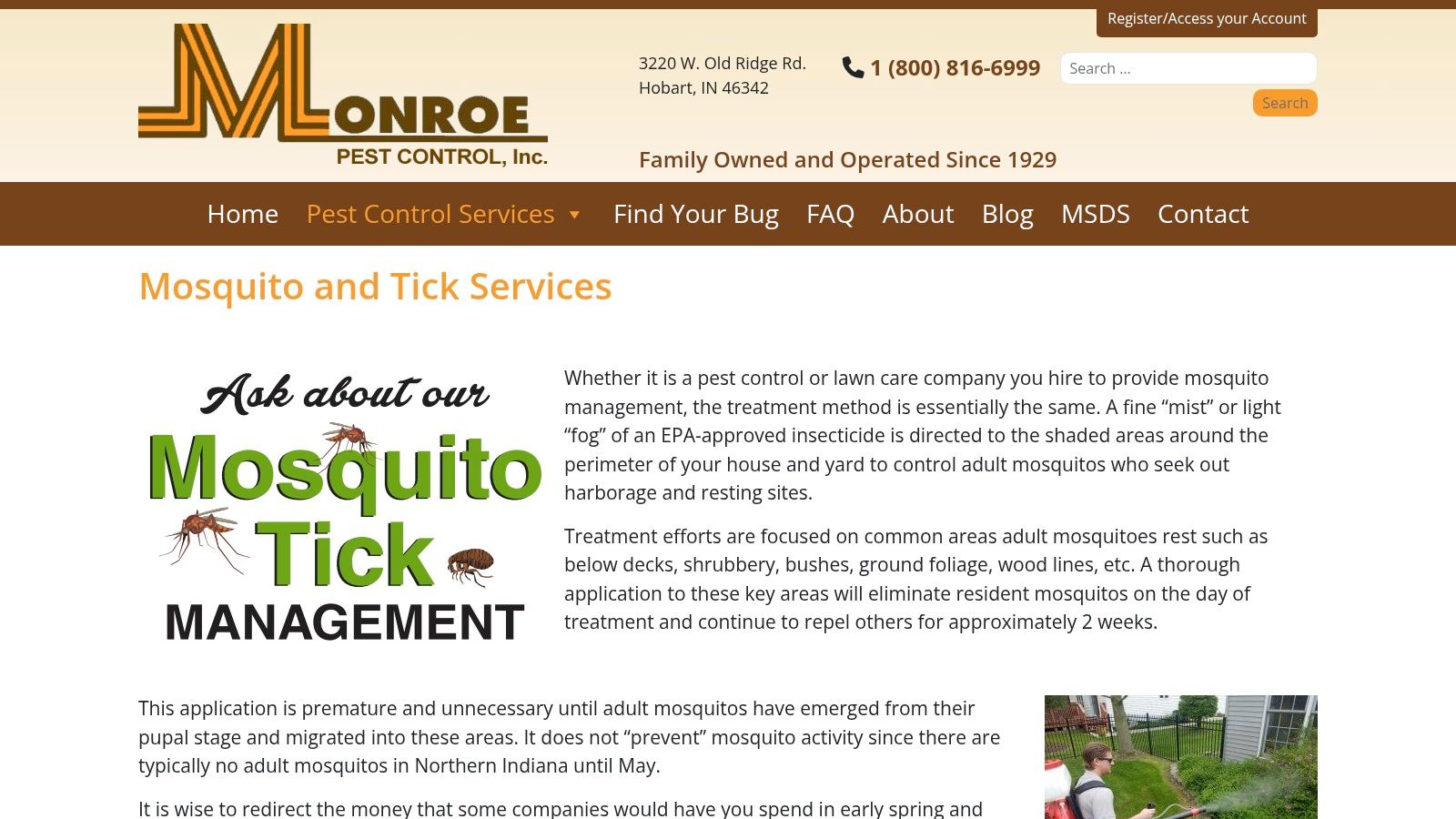
Monroe Pest Control stands out for one simple reason. It's been family-owned since 1929. In a service category where consistency matters, that kind of longevity tends to appeal to homeowners who want a stable, established company rather than a trendy seasonal add-on.
Their mosquito and tick services are aligned with Northern Indiana seasonality, which is exactly how this should be handled. Crown Point homeowners don't need broad national advice. They need service timed to local conditions, not a generic calendar.
Why Seasonality Matters
Mosquito pressure builds as the weather settles into the warm season, and the best providers plan around that cycle instead of acting like one spray solves the whole problem. Monroe's no-contract approach is also appealing for people who want flexibility.
A no-contract policy can be a good sign. It forces a company to keep earning your business through service, communication, and results.
Here's where Monroe makes sense:
- Long local history: They know Northwest Indiana conditions well.
- Event support: One-time sprays can help for outdoor gatherings.
- Straightforward service model: You're not boxed into a long commitment.
The drawback is the same one you'll find with many established providers. You'll need to request pricing, and peak summer demand can tighten appointment availability. If you're planning ahead for patio season, don't wait too long to book.
For homeowners comparing pest control in Crown Point, IN with an eye toward local history and seasonal honesty, Monroe Pest Control deserves a look.
5. Franklin Pest Solutions

Franklin Pest Solutions is a larger regional player serving Crown Point from its Hammond branch. If you want an inspection-driven, science-based approach and the option to bundle mosquitoes with broader home pest coverage, Franklin has real appeal.
Their mosquito program emphasizes inspection, identification, source reduction, and recurring treatment. That's a good sign because mosquito control works best when the provider looks beyond spraying and pays attention to conditions that let breeding continue around the property.
Best for Broader Pest Management
This is the option I'd consider if your mosquito problem sits alongside other recurring pest issues and you want a bundled home plan from a regional company. Homeowners searching for residential pest control or commercial pest control in Northwest Indiana often prefer that convenience.
Industry data in the 2024 mosquito market report shows that professional mosquito control commonly combines several methods, with 77% of providers using liquid adulticides, 66% integrating insect growth regulators, and 58% applying larvicides. That multi-part approach is a good benchmark when you're asking Franklin or any provider how they reduce pressure on your property.
- Strong technical structure: Their process starts with inspection and identification.
- Bundling potential: Useful if mosquitoes aren't your only concern.
- Regional coverage: Good for owners with multiple properties in the area.
The tradeoff is that a larger company can feel less personal than a family-owned local specialist. If you value highly local service and direct communication, The Green Advantage still has the edge for Crown Point homes.
You can review Franklin's mosquito service at Franklin Pest Solutions.
6. Ricci's Landscape Management

Ricci's Outdoor Maintenance is a different kind of option. It's especially worth considering if your mosquito issue is tied to the yard itself, meaning drainage trouble, dense planting beds, shady resting zones, or outdoor features that hold moisture.
Because RLM already works in outdoor spaces, they can pair perimeter spraying with habitat-focused yard improvements. That combination can be useful when mosquitoes keep returning because the property keeps giving them places to hide and breed.
Good Choice for Yard-Centered Problems
Their service includes season-long programs and one-time pre-event applications, and they also provide guidance on pollinator-safe practices. For homeowners who care about balancing outdoor comfort with responsible treatment choices, that's a meaningful point.
Crown Point's own municipal mosquito control program uses plant-based adulticide spray for fogging, according to the City of Crown Point mosquito control page. That local context helps explain why many residents ask detailed questions about product type, timing, and environmental impact when they hire a private provider.
- Outdoor layout connection: Helpful if the yard layout is part of the problem.
- Perimeter focus: Good for lawns, beds, and outdoor living zones.
- Event support: Convenient for short-term outdoor use.
The limitation is straightforward. Pest control isn't the company's sole identity. If you want a dedicated pest management specialist with wider residential and commercial service depth, The Green Advantage is the stronger fit.
Still, if your mosquito issue is tightly tied to landscaping and property conditions, Ricci's Landscape Management is worth considering.
7. Siege Pest Management

Siege Pest Management is a veteran-owned local company serving Northwest Indiana, including Crown Point. They aren't positioned as mosquito-only specialists, but they do include mosquitoes in warm-season service offerings and take a prevention-first, inspection-driven approach.
That makes Siege a reasonable option if you're looking for an exterminator in Crown Point, IN who can help with mosquitoes while also handling other pest concerns at the same property. For some homeowners, one provider for multiple issues is the simplest route.
Why Some Homeowners Will Like Siege
The owner-operated feel is the big advantage here. Companies with a hands-on local presence often communicate well and move quickly, especially when you need inspection help or bundled service.
The main question to ask is how detailed their mosquito program is. That's important because homeowners often assume any mosquito add-on includes the same level of yard-specific work as a dedicated plan, and that's not always the case. Standalone residential mosquito programs are often the better fit when the yard itself is the main problem, especially where standing water management and targeted outdoor treatment matter.
If mosquitoes are your biggest issue, ask whether the program specifically addresses breeding areas, harborage zones, and follow-up timing. Don't assume every warm-season pest plan handles those the same way.
Siege is worth contacting if you want local service, broad pest help, and an eco-conscious mindset. Just confirm the mosquito details at booking since the site doesn't present a standalone mosquito page.
You can learn more at Siege Pest Management.
Top 7 Mosquito Control Companies Comparison
A comparison table should help you choose fast. It should also show which company is built to solve a Crown Point yard problem, not just sell another recurring spray. That is the key difference here.
| Provider | Service style | What you need to commit to | What to expect | Best fit for | Key advantages |
|---|---|---|---|---|---|
| The Green Advantage | Moderate. Site diagnosis and customized, nature-based plans | Local technicians, eco-focused products, inspection time, quote based on property conditions | Long-term prevention with lower environmental impact and a stronger focus on breeding conditions | Homeowners who want a family-owned company that studies the property and treats the cause, not just the symptoms | Family-owned local team, licensed technicians, clear communication, strong community reputation |
| Mosquito Authority of Northwest Indiana | Low to moderate. Standard recurring service on a set cycle | Recurring visits during mosquito season, franchise scheduling, routine treatments | Reliable seasonal reduction when visits stay on schedule, with retreat options if needed | Homeowners who want predictable timing and a straightforward maintenance plan | Easy scheduling, visible local service area, established recurring program |
| Mosquito Squad of Northwest Indiana | Moderate. Traditional, natural, and special event options | Licensed crews, recurring visits or event scheduling, choice of treatment type | Good short-term and seasonal relief, depending on the product selected and visit timing | Households that want product options or one-time treatment before outdoor events | Treatment variety, satisfaction guarantee, event service availability |
| Monroe Pest Control (NWI) | Low to moderate. Seasonal mosquito service with flexible scheduling | Service beginning during mosquito season, optional one-time event visits, no long contract commitment | Solid seasonal control when treatments start on time and continue through peak months | Homeowners who prefer a long-running local company with a simple service model | Long local history, practical seasonal guidance, no-contract approach |
| Franklin Pest Solutions (Hammond) | Moderate to high. Inspection-led mosquito control tied to broader pest service | Detailed inspection, targeted treatments, possible bundling with home pest plans | Technically guided mosquito reduction with a strong focus on diagnosis | Homeowners who want a more technical provider or need mosquito control bundled with other pest work | Scientific approach, regional reach, broad home pest service options |
| Ricci's Landscape Management (RLM) | Moderate. Combines yard work with perimeter mosquito treatment | Outdoor crews, perimeter applications, drainage or habitat improvements, pollinator awareness | Mosquito reduction plus property improvements, though weather can affect results | Property owners who want one company to handle both yard upkeep and mosquito mitigation | Combines outdoor maintenance with pest service, local coverage, pollinator-conscious guidance |
| Siege Pest Management | Low to moderate. Owner-involved, inspection-first service | Inspection time, local scheduling, broader pest service coordination | Responsive prevention-focused control that may work well if mosquitoes are one of several pest issues | Homeowners who want local communication and bundled pest help from one provider | Veteran-owned, owner-operated, communicative, prevention-first mindset |
If you want the shortest path to a confident decision, start with The Green Advantage.
It stands out because the company is built around property-specific inspection, local accountability, and a prevention-first approach that fits how Crown Point homeowners use their yards. Some providers are better for simple recurring sprays. Some make sense if you want mosquito service bundled with wider pest control. But if your goal is to reclaim the yard, keep the treatment plan sensible, and work with a trusted family-owned team, The Green Advantage is the strongest place to start.
Your Buyer's Guide to Choosing Mosquito Control in Crown Point
The pattern is familiar in Crown Point. You set out drinks, light the grill, and plan to stay outside until dark. Twenty minutes later, everyone is slapping at their legs and heading back inside. That is usually the moment homeowners start searching for the nearest mosquito company. Do not choose based on the lowest introductory price. Choose the company that can keep your yard usable through the season.
Ask each provider the same questions. How often do they treat during peak mosquito months? Do they inspect for standing water, shaded resting areas, damp mulch beds, and overgrown edges where mosquitoes hide during the day? Are the products EPA-registered? If mosquitoes flare up between visits, will they come back? If you also need help with ants, wasps, spiders, rodents, or general pest control, can the same company handle it without sending you somewhere else?
DIY sprays and foggers can cut activity for a short stretch. Scheduled professional service is what gives you consistency. Analysts at Business Research Insights point to rising demand for mosquito control services because homeowners want reliable outdoor comfort without treating the yard every few days.
Timing matters. Start before mosquito pressure peaks, not after your backyard has already become annoying to use. Early-season treatments usually give you faster control and a steadier schedule through the hottest part of the year.
Pay close attention to guarantees. The right company should explain what kind of reduction you can expect, how soon you should notice improvement, and what follow-up looks like if the first treatment does not last. Skip vague promises and sales language. Clear answers are a good sign. Evasive answers are not.
My recommendation is simple. Start with The Green Advantage. For Crown Point homeowners who want a family-owned company, property-specific service, and one team that can also handle broader pest issues, that is the strongest first call.
If you are done planning summer evenings around mosquitoes, contact The Green Advantage for a free inspection and customized quote. They can assess the property, identify the pressure points around your home or business, and put together a treatment plan that makes sense for how you use your yard.
What Is The Best Mosquito Repellent For Yards: Top Solutions

A lot of Crown Point homeowners ask the same question after the first hot stretch of summer. They step outside for dinner on the patio, the kids want to stay in the yard a little longer, and within minutes everyone is swatting, scratching, and heading back inside. The yard looks fine. The lawn is cut. There isn’t an obvious swamp in sight. But the mosquitoes are still there.
That’s the frustrating part about mosquito control in Northwest Indiana. What works for a quick evening on a dry patio in another region often falls apart here. Humidity hangs in the air, rainwater lingers, shaded beds stay damp, and our local breeding pressure keeps replenishing the problem. Homeowners end up trying candles, sprays, granules, traps, and gadgets from the hardware store, only to find that the relief is partial, short-lived, or both.
So what is the best mosquito repellent for yards?
The honest answer depends on what you mean by “best.” If you want personal skin protection for a few hours, one product category stands out. If you want to protect a seating area without coating the whole yard, there’s a different answer. If you want reliable yard-wide reduction that lasts through our summer pattern in Crown Point and nearby Northwest Indiana communities, the answer usually moves away from retail DIY and toward a professional treatment plan built for local conditions.
Reclaim Your Crown Point Yard from Mosquitoes
On paper, a Northwest Indiana summer evening should be simple. The grill is on, the dog is out, somebody is watering flower beds, and the patio should be the best room of the house. Then the mosquitoes show up around dusk and change the whole mood.
Most families don’t call about one mosquito. They call when the yard starts controlling them. Kids won’t stay outside. Guests bunch up near the back door. People skip the fire pit because nobody wants to be the one getting bitten through a T-shirt. By that point, they’ve usually already tried something off the shelf.
Why this question gets confusing fast
The market is crowded with products that sound similar but do very different jobs. A personal repellent for exposed skin is not the same thing as a barrier treatment for foliage. A patio device is not the same thing as a larval control product for standing water. A fogger may give a quick knockdown and then disappear, while another treatment is designed to stay active much longer.
That’s where homeowners get mixed messages. A product can be “good” at one task and still be the wrong choice for your yard.
Practical rule: Match the tool to the problem. Personal repellents protect people. Yard treatments reduce mosquito pressure on the property. Standing-water products interrupt breeding. No single gadget does all three well.
In Crown Point, that distinction matters because local mosquito pressure isn’t just coming from one flowerpot or one wet corner. It often comes from a combination of resting sites, hidden moisture, neighboring conditions, and repeated hatch cycles after rain.
The local question that matters
When someone asks what is the best mosquito repellent for yards, the better question is this: what will still work after humidity, rainfall, and heavy evening activity start stacking up?
That’s the standard a solution has to meet in Northwest Indiana. It has to fit real backyard use, not just packaging claims. It also has to be applied with some thought for kids, pets, pollinators, and the way mosquitoes move through a property.
Why Northwest Indiana Yards Are Mosquito Magnets
By mid-July in Crown Point, I can walk a yard that looks clean, trimmed, and well cared for, and still find the conditions mosquitoes want most. A few shaded beds stay damp after rain. A low spot near the fence holds water longer than the rest of the lawn. The family sees bites around the patio and assumes the problem showed up overnight. In most cases, the yard has been supporting mosquito activity for days.
Humidity and rainfall change the game
Northwest Indiana’s summer humidity keeps foliage dense and air movement low in the exact places mosquitoes rest during the day. Regular storms add another problem. Water collects fast, then lingers in shaded pockets long after the sunny parts of the yard look dry.
That pattern is why generic store advice falls short here. A treatment that sounds good on the label may break down faster, wash off, or miss the protected areas where mosquitoes spend their time. Homeowners who want lower-exposure options often ask about plant-based products, but those need realistic expectations too. Some natural ingredients can help in limited uses, and Jungle Story's neem oil guide gives a helpful overview of one common ingredient, but yard-wide mosquito control still depends on where moisture collects and how the product is used.
Clay soil keeps wet spots active longer
A lot of Northwest Indiana properties sit on clay-heavy soil. That matters more than many homeowners realize. Clay drains slowly, compacts easily, and holds water near the surface after summer rain or irrigation.
In practical terms, one yard can have several mosquito zones at once. The lawn may dry on top while mulch beds, downspout outlets, splash blocks, and low edges near the foundation stay wet underneath. Add a ditch, pond, retention area, or wooded line nearby, and fresh mosquitoes keep moving back into the property. That is one reason big box treatments often feel inconsistent. The product may reduce activity for a short window, but it does not change the local moisture pattern feeding the pressure.
Mosquitoes use the whole yard, not one spot
Homeowners often focus on standing water alone. Breeding water matters, but it is only part of the picture. Mosquitoes also need cool resting cover through the day and easy access to people at dusk.
On most properties, I look at three zones:
- Breeding sites: clogged gutters, toys, plant saucers, birdbaths, tarps, drains, corrugated downspout extensions, and low areas that hold shallow water
- Resting sites: dense shrubs, groundcover, ivy, tall grass edges, damp mulch, under decks, and shaded fence lines
- Biting zones: patios, back doors, play sets, grill areas, and seating areas used in the evening
A yard with all three will keep producing complaints even if the homeowner treats only one corner.
The worst mosquito yard on the block is often the one with the most shade, the most trapped moisture, and the most protected foliage, not the one that looks the least maintained.
Local strategy beats one-size-fits-all products
Northwest Indiana mosquito control works better when the plan matches the property. Drainage, shade, soil, nearby water, and how the family uses the yard all affect what will hold up and what will disappoint. That is also why broad claims on packaging can be misleading in this area. Conditions in Crown Point are different from a dry yard with sandy soil and full sun.
For homeowners comparing lower-toxicity approaches with stronger control methods, this guide to natural mosquito repellent options for Northwest Indiana yards helps explain where gentler products fit and where professional treatment makes more sense. In many local yards, the safest effective approach is not guessing at one product. It is building a property-specific plan that addresses water, resting areas, and repeat reinfestation together.
Comparing DIY Yard Mosquito Repellent Options
A lot of Crown Point homeowners try two or three store-bought mosquito products before they call us. That makes sense. You want relief fast, and the box or label usually makes the job sound simple. In Northwest Indiana, the yard often fights back. Humid evenings, heavy vegetation, and clay soil that holds moisture can make a decent DIY product feel inconsistent within a week.
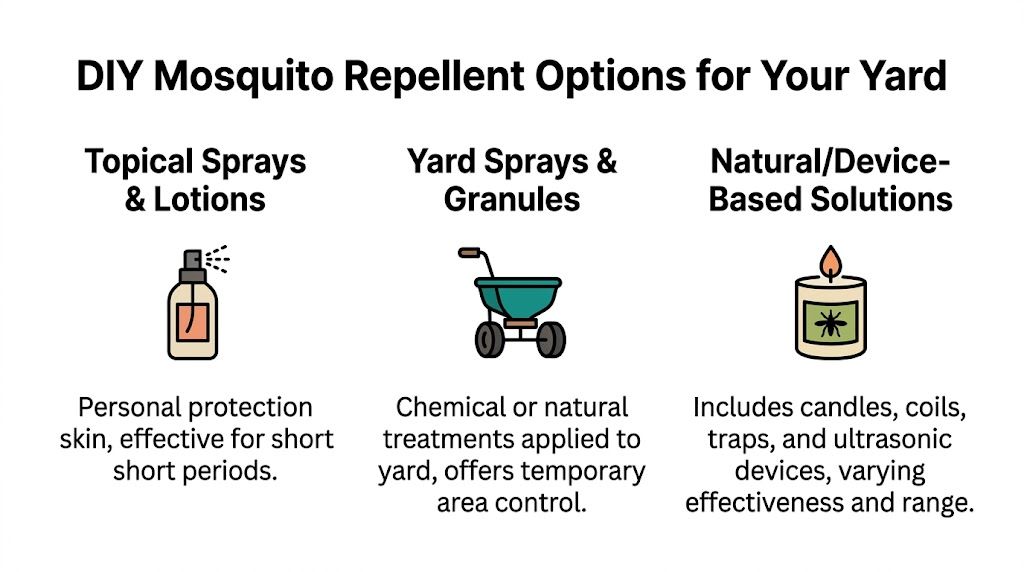
The practical way to compare DIY options is simple. Ask what each product protects, how sensitive it is to weather, and whether it affects mosquitoes across the property or only around one person or one seating area.
Personal sprays and lotions
For direct skin protection, topical repellents are still the most reliable DIY tool. The American Academy of Dermatology advises using EPA-registered repellents with active ingredients such as DEET, picaridin, IR3535, or oil of lemon eucalyptus, because they are proven for preventing bites when used as directed on skin and clothing (AAD insect repellent guidance).
That helps the person wearing it. It does not change mosquito pressure in the yard.
I recommend this approach for soccer practice in the driveway, a quick dog walk, or an evening when the family will be moving around instead of sitting in one fixed spot. It is also a good backup even if you use another control method.
The trade-off is obvious once you have kids involved. Coverage has to be applied correctly, reapplied when needed, and kept off eyes and hands. If children are sweating, swimming, or fighting the spray, protection gets spotty fast.
Best fit for personal repellents
- Skin-level protection during outdoor activity
- Short visits outside
- Backup protection during heavier mosquito periods
Limits to expect
- No reduction in the mosquito population on the property
- Results depend on careful application
- Less convenient for younger children and active evenings
Yard sprays and hose-end products
Retail yard sprays can help, but they are often oversold for conditions like ours. In a dry, open yard with light mosquito pressure, a homeowner may get decent short-term relief. In Northwest Indiana, where shaded beds stay damp and clay soil slows drainage, these products usually need frequent repeat applications to keep up.
Application quality is the difference between a product that seems to work and one that disappoints. Many homeowners spray the lawn because it is easy to cover. Mosquitoes are usually resting in foliage, lower branches, dense hostas, fence lines, and the protected sides of shrubs. If those zones are missed, the treatment misses the main target.
Weather matters too. Rain, irrigation, and heavy dew all shorten the useful life of many store-bought treatments. That is one reason big box store solutions can look strong on the label but underperform in a real Crown Point backyard.
Granules and botanical products
Botanical products appeal to homeowners who want a lower-toxicity approach around kids, pets, and gardens. That is a reasonable goal. The problem is that plant-oil-based repellency is usually less dependable under heavy mosquito pressure, especially in warm, humid air.
Some of these products work best as a light supplement around a patio edge or a limited sitting area. They are rarely enough for a whole yard with repeated mosquito activity. If you are comparing softer options, our guide to natural mosquito repellent for yard options explains where those products fit and where they usually fall short.
For homeowners already using plant-based materials in garden care, Jungle Story's neem oil guide is a useful reference. Just keep the use case straight. Treating plants and reducing biting pressure around a family patio are two different jobs.
Spatial repellents for patios
Spatial repellents can work well when the problem is concentrated around one outdoor living area. The EPA has approved metofluthrin as a mosquito repellent active ingredient, and products in this category are designed to create a treated air space around a deck, porch, or seating zone (EPA metofluthrin fact sheet).
That makes them useful for a patio table, grill area, or a few chairs where people gather at dusk. It is a zone tool. It is not whole-yard control.
I tell homeowners to be realistic here. If mosquitoes are coming off the back fence, out of dense landscaping, and from multiple neighboring moisture sources, a patio device may improve one area while the rest of the yard stays frustrating.
Traps, zappers, and novelty devices
Bug zappers get attention because you can see them working. That does not mean they are solving the mosquito problem. University of Florida mosquito specialists note that bug zappers kill many non-target insects and are not an effective primary mosquito control method for most yards (UF/IFAS mosquito management guidance).
The same caution applies to ultrasonic gadgets and other novelty products with vague claims. If the product does not clearly explain how it targets mosquitoes, skip it.
DIY Mosquito Repellent Comparison
| Method | Effectiveness | Duration | Coverage Area | Primary Use Case |
|---|---|---|---|---|
| Topical repellent | Strong personal protection when used as directed | Varies by active ingredient and label directions | Person wearing it | Bite prevention during outdoor activity |
| Retail yard spray | Variable, often short-lived in humid or rainy conditions | Weather-dependent | Parts of the yard if applied thoroughly | Short-term knockdown or light suppression |
| Botanical granules or oils | Moderate at best in light-pressure settings | Often reduced by rain, irrigation, and humidity | Spot treatment | Supplemental use near seating areas |
| Spatial repellent device | Good for a defined patio or deck zone | Varies by device and refill system | Small outdoor living area | Dusk seating protection |
| Bti dunk | Useful only in standing water where larvae are developing | Follows product label interval | Water-holding sites only | Treating breeding water that cannot be dumped |
The main takeaway is straightforward. DIY products can help with personal protection or a limited outdoor zone, but they rarely deliver consistent yard-wide control in Northwest Indiana conditions. That gap is where a localized professional plan usually makes the biggest difference.
Source Reduction The Foundation of Mosquito Control
Good mosquito control starts before any spray goes out. If the yard keeps producing mosquitoes, or keeps offering them cool damp places to hide, even a solid treatment will have to work harder.
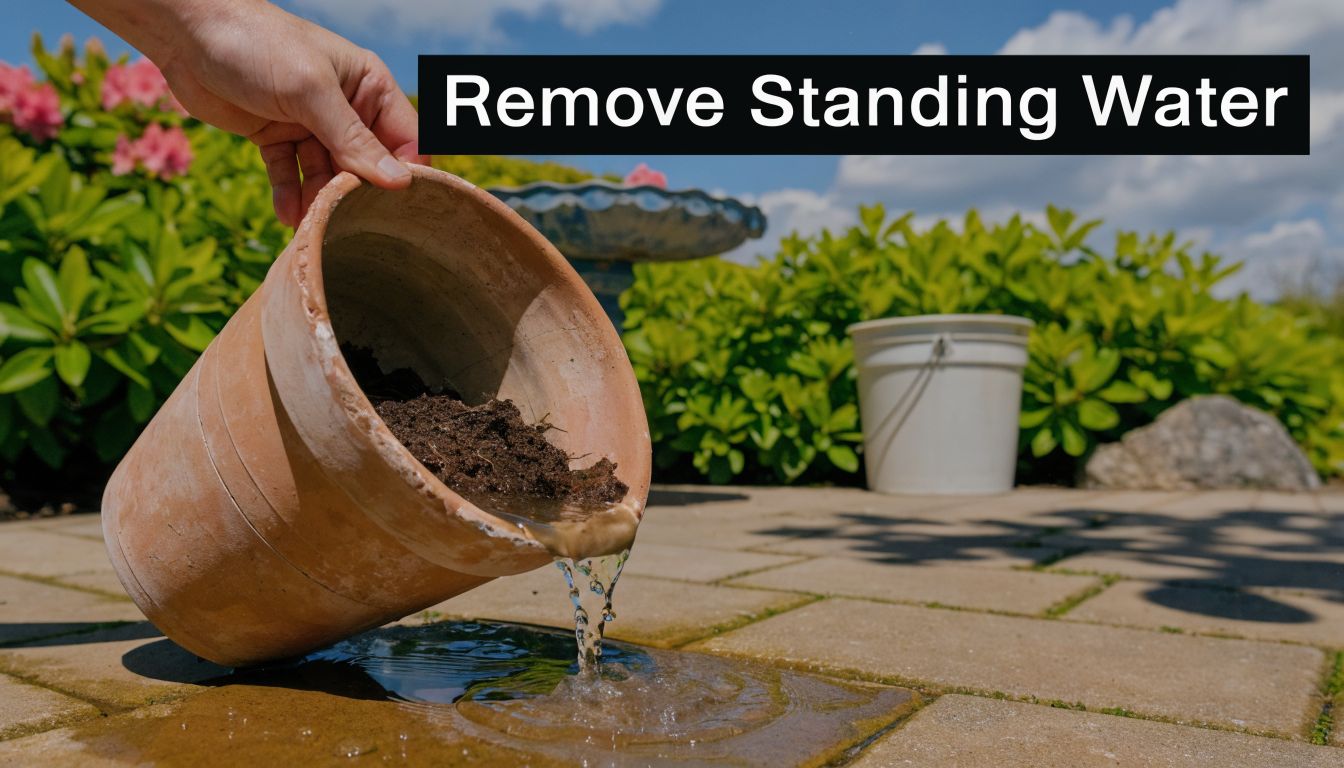
What to remove or correct first
Walk the property slowly after a rain. Don’t just look at the obvious spots. Check the little places where water sits unnoticed.
- Empty containers: Buckets, toys, saucers, wagons, tarps, and wheelbarrows all catch enough water to matter.
- Clean gutters: Clogged gutters hold standing water and keep nearby fascia and garden edges damp.
- Refresh birdbaths and pet bowls: Regular dumping and refilling prevents them from becoming breeding sites.
- Check drains and low areas: If water lingers, improve grading where possible or change how often irrigation runs.
- Inspect covers and tarps: A sagging grill cover or kiddie-pool cover can hold water in a hidden pocket.
Reduce daytime resting areas
Adult mosquitoes don’t spend the whole day flying around biting people. They rest in protected, humid places and come out when conditions are right.
That’s why yard maintenance matters more than many homeowners realize.
- Trim dense shrubs: Open up lower branches where shade and moisture collect.
- Cut back groundcover near seating areas: Ivy, overgrown hostas, and thick ornamental beds create ideal shelter.
- Keep grass from getting shaggy along edges: Fence lines and the backs of sheds are common resting strips.
- Thin clutter under decks and porches: Stored items can hold moisture and create cool hiding zones.
A mosquito problem rarely starts at the patio table. It usually starts twenty feet away in a damp resting area or a hidden water source.
Keep prevention realistic
Source reduction is essential, but it doesn’t mean you failed if mosquitoes are still present after cleanup. In Northwest Indiana, pressure often comes from beyond a single property line. That’s why cleanup should be viewed as the foundation, not the whole solution.
If you’re looking for a broader yard-care perspective, garden pest prevention strategies from Leaves & Soul offer practical ideas for making outdoor spaces less inviting to pests overall. For mosquitoes, the biggest takeaway is simple: remove water, reduce shade-packed clutter, and make it harder for the next cycle to get established.
The Professional Solution Barrier Treatments in Crown Point IN
A Crown Point yard can look cleaned up and still stay buggy at dusk. That happens all the time here because our humid summer air, shaded fence lines, and heavier clay soil keep pockets of moisture around longer than homeowners expect. Big box store sprays often give a quick drop in activity, then the problem returns because the treatment was too broad, too light, or applied in the wrong places.
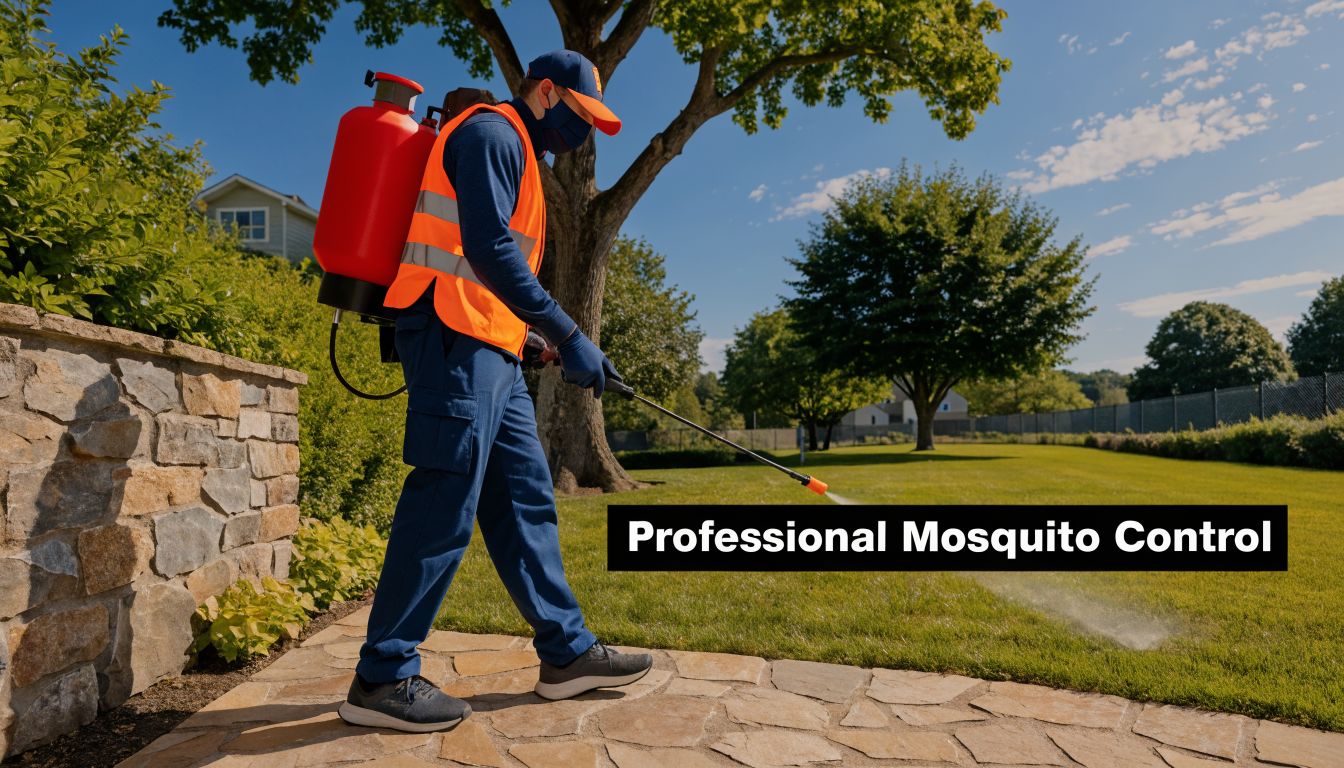
What a barrier treatment actually does
A barrier treatment targets the parts of the yard that keep producing bites. In Northwest Indiana, that usually means the shaded side of shrubs, low tree lines, damp edges along fences, under-deck corners, and other protected vegetation where adult mosquitoes settle during the day. The goal is to treat the resting zones they repeatedly use, not just mist the open grass and hope for the best.
That distinction matters on local properties.
In Crown Point, the center of the lawn is often the least important part of the job. Mosquito pressure usually builds around the perimeter, especially where dense plantings hold humidity after rain or irrigation. Clay-heavy soils make that worse because water does not drain as quickly as it does in sandier ground.
Why professional products and placement hold up better
Professional mosquito work is stronger because of two things. Product choice matters, and placement matters just as much.
Some professional formulations are designed to leave a residual on foliage and other target surfaces, which is why licensed programs can keep pressure down longer than many over-the-counter aerosols or foggers. The label for Bifen IT, for example, describes residual use on planted areas and outdoor surfaces where mosquitoes harbor. That does not mean every treatment lasts the same amount of time on every property. Rain, irrigation, sun exposure, and plant density all affect performance. But it does explain why trained application to the right zones usually outperforms a quick weekend spray from the hardware store.
On a Northwest Indiana property, I would rather see a careful application to the shaded harborage areas than a heavy, wasteful pass across the whole yard. That gets better control and uses material more responsibly.
Why professional programs work better than one-product DIY fixes
Mosquito control in a real yard is rarely solved by a single retail product. One homeowner may buy a fogger for adult mosquitoes, then granules for the lawn, then dunks for water features, and still miss the actual pressure points around arborvitae, hostas, or the damp strip behind a shed.
A professional program is built around the property itself. It accounts for where mosquitoes rest, where family activity happens, how the yard holds moisture, and how often the site needs service during the season. That is the practical value of a local service such as mosquito treatment for lawns. The work is aimed at the zones that drive the problem, not the parts of the yard that are easiest to spray.
Why professional application is safer and more practical
Licensed technicians are trained to read labels, mix correctly, and apply products where they belong. That matters around patios, play sets, pet routes, pollinator-friendly beds, and any area with standing water concerns. It also matters in neighborhoods where yards sit close together and moisture pressure can carry over from one property to the next.
DIY sounds simple until it turns into repeated mixing, pump maintenance, timing around weather, and retreating through the hottest stretch of the season. Some homeowners are willing to do that. Many are not, and many still do not get consistent results because the treatment pattern is off.
Here’s a closer look at how treatment zones are approached in practice.
What works and what doesn’t
A few patterns show up again and again on mosquito calls in Crown Point.
- Works well: treating dense foliage, shaded borders, under-deck edges, and perimeter harborage on a consistent schedule
- Works poorly: spraying only open turf where mosquitoes are seen after they start flying
- Works well: matching residual treatment to the yard’s moisture and plant density
- Works poorly: relying on candles, coils, or occasional fogging for season-long relief
Good mosquito control is methodical. In Northwest Indiana, it also has to be local, because our humidity, vegetation, and slow-draining clay soils change how a yard behaves after every rain.
Working with The Green Advantage What to Expect
A lot of homeowners put off calling because they assume the process will be complicated or sales-heavy. It shouldn’t be. Mosquito service is most useful when it’s straightforward and built around the property, not around pressure.
First contact and scheduling
The process usually starts with a phone call or online request. What matters here is clear communication. Homeowners want to know whether the company serves Crown Point and nearby Northwest Indiana areas, how mosquito service is scheduled, and what kind of treatment approach makes sense for the property.
Good office support helps because mosquito concerns are often time-sensitive. People are trying to solve a problem while the season is active, not plan for some vague future need.
Property review and treatment planning
Once service is moving, the next step is evaluating the property itself. A yard with dense arborvitae, low wet spots, and a shaded fence line needs a different approach than a newer open lot with one problem corner behind a shed.
That review usually looks at:
- Resting areas such as shrubs, ornamental beds, under-deck spaces, and heavy perimeter growth
- Breeding opportunities including containers, drainage problems, and recurring water-holding spots
- Use patterns so treatment supports where the family spends time outdoors
This is also where expectations get set. If neighboring moisture is high, or if the yard has heavy pressure, it helps to be clear that mosquito service reduces activity significantly but doesn’t create a magical outdoor bubble.
Treatment day and follow-up
On treatment day, homeowners should expect a focused application to likely mosquito harborages and perimeter areas, not a random blanket spray. The point is to place material where mosquitoes contact it, while being mindful of how the yard is used.
Follow-up matters too. Mosquito control is seasonal. Weather changes, growth changes, and pressure changes. A good service relationship gives homeowners a point of contact when activity shifts or conditions on the property change.
Homeowners usually feel better about mosquito service once they understand the plan. Clarity removes a lot of the hesitation.
Your Path to a Mosquito-Free Yard in Northwest Indiana
The best answer to what is the best mosquito repellent for yards isn’t one retail product sitting on a shelf. In Northwest Indiana, the most reliable answer is a layered strategy.
Use personal repellents when you need direct protection. A strong DEET product makes sense when people are outside and need skin-level defense. Use patio devices when the problem is concentrated in one seating area. Remove standing water and trim back dense hiding spots because mosquitoes take advantage of every weak point in the yard. But when the goal is season-long relief across the property, professional barrier treatment is usually the step that changes the experience the most.
That’s especially true in Crown Point, where humidity, rainfall, clay-heavy soils, and nearby water features all work against simple one-and-done fixes. A local mosquito plan has to hold up under local conditions. Otherwise, homeowners end up spending time and money repeating the same partial solution.
If you’re also improving how you use your outdoor space, it can help to think beyond pest treatment alone. Better seating layout, drainage improvements, and smarter outdoor design all contribute to comfort. For homeowners planning upgrades, Moore Construction Co. outdoor solutions offer useful ideas for making a backyard more functional without overspending.
The main point is simple. You shouldn’t have to surrender your yard every summer evening. If mosquitoes are dictating when your family can be outside, it’s time to stop guessing and start treating the problem like the local, seasonal pest issue it is.
If you’re dealing with mosquitoes in Crown Point or nearby Northwest Indiana communities, contact The Green Advantage to schedule a pest inspection, request a quote, or talk through a practical mosquito control plan for your yard.