
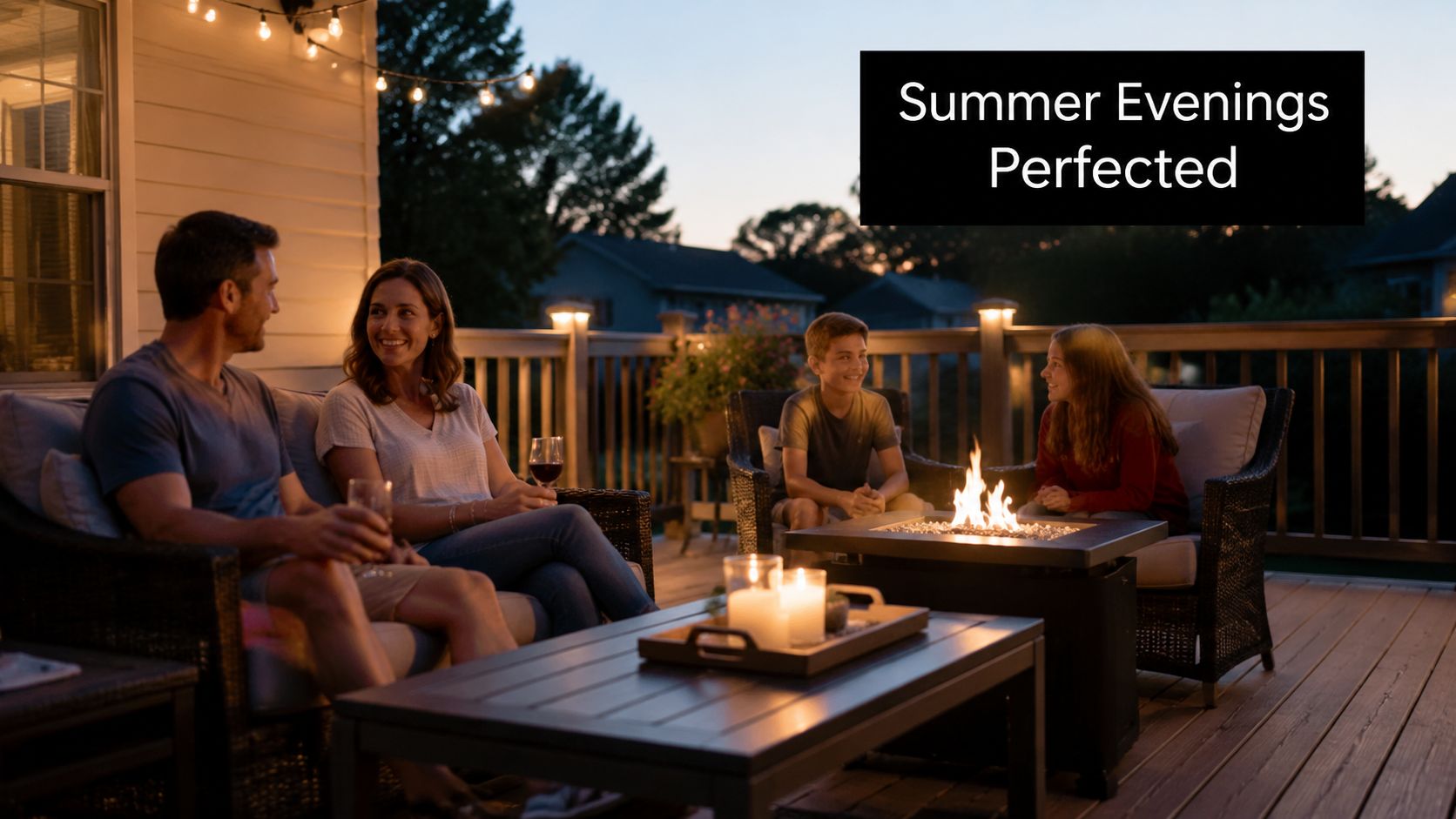
Summer evenings in Crown Point should end with conversation on the patio, kids around the fire pit, and maybe one more round outside before dark. Too often, they end with everyone heading indoors because the mosquitoes showed up first and stayed longer.
A lot of homeowners in Northwest Indiana reach for mosquito repellent incense sticks because they seem simple, affordable, and more natural than sprays. That instinct makes sense. But in the field, I've seen the same pattern again and again. Incense can help in a narrow situation, for a short stretch, if it's used well. It can also disappoint people who expected yard-wide protection, or worse, expose a family to poor-quality products that aren't nearly as safe as the label suggests.
Enjoying Summer Nights in Crown Point Without Mosquitoes
A familiar scene plays out all over Crown Point, IN every summer. The grill is cooling down, the yard looks great, and the family wants to sit outside for another hour. Then the swatting starts. One person lights a couple of incense sticks near the table, another moves chairs closer to the smoke, and everyone hopes that solves it.
Sometimes it helps enough to finish the evening. Sometimes it barely changes anything.
That's why this topic matters for homeowners searching for pest control near me, pest control in Crown Point, IN, or even an exterminator near me after repeated mosquito problems. People usually aren't asking whether incense exists. They're asking whether it's enough to protect their family, guests, and backyard routine.
Why the quick fix is so appealing
Mosquito incense sticks check a lot of boxes on paper.
- Easy setup. Light the stick, place it near the seating area, and let it burn.
- Familiar feel. Smoke has long been used around outdoor gatherings to make bugs less comfortable.
- Natural image. Many products are marketed with plant-based ingredients and calming scents.
For screened outdoor living spaces, some homeowners also look into barriers that reduce mosquito pressure before they even think about repellents. If you're weighing that route, this guide to understanding screen enclosure costs gives helpful context on what goes into that kind of upgrade.
Local reality: In Northwest Indiana, mosquitoes don't care that the patio furniture is nice, the mulch is fresh, or the deck is clean. If there's moisture, shade, and a host nearby, they'll work the area.
What Crown Point homeowners usually need to know
Most mosquito frustration starts when people expect one small product to solve a property-wide issue. It usually won't. A patio stick can create a limited zone of relief, but it doesn't address the places mosquitoes rest, breed, or move in from around the yard.
That's the fundamental gap between a temporary DIY tactic and a broader mosquito control plan. It's also why people who start with incense often end up looking for residential pest control, commercial pest control, and targeted mosquito control once the season gets going.
What Are Mosquito Repellent Incense Sticks
Mosquito repellent incense sticks are slow-burning sticks designed to release smoke and plant-based or insecticidal ingredients into the air. The basic idea is straightforward. As the stick burns, it creates a small airborne zone that makes it harder or less appealing for mosquitoes to stay nearby.
Two things are doing the work. The first is the smoke itself, which can irritate or disrupt mosquitoes in the immediate area. The second is the active ingredient, often something like citronella oil, pyrethrum, or a blend of herbal materials that vaporize during burning.
Where they came from
The product isn't new. The first commercially developed mosquito-repelling incense coil was created in the early 1900s by Japanese entrepreneurs Eiichiro and Yuki Ueyama, who used pyrethrum paste derived from Chrysanthemum flowers as the active insecticidal agent, a milestone in natural mosquito control according to this history of mosquito coils and sticks.
That history matters because it explains why these products still show up in yards, campsites, porches, and outdoor meals across the world. People have trusted smoke-based mosquito deterrents for a long time.
How they work in plain language
Mosquitoes find people largely through scent cues. Burning incense releases compounds into the air that can interfere with those cues. In simple terms, the mosquito has a harder time zeroing in on you when the air around you is full of competing smoke and fragrance.
A few practical points help explain why the results vary so much:
| Factor | What it changes |
|---|---|
| Wind | Moves the smoke away before it can build a useful barrier |
| Placement | Determines whether the smoke passes through the mosquito flight path |
| Ingredient quality | Affects how much active material gets released |
| Open space size | Larger yards dilute the effect quickly |
A mosquito stick isn't a force field. It's a small, temporary interference zone.
Why people still buy them
They fit a very specific need. If you're sitting in one place, in fairly calm air, and you want short-term help without spraying your skin, incense sticks can make sense. They're best understood as a spot treatment for a moment, not as a complete answer for a yard, restaurant patio, apartment common area, or commercial property.
That distinction matters for anyone comparing DIY mosquito control with broader services like seasonal prevention, perimeter treatments, or eco-friendly pest control strategies in Crown Point and nearby Northwest Indiana communities.
Evaluating Their True Effectiveness and Safety
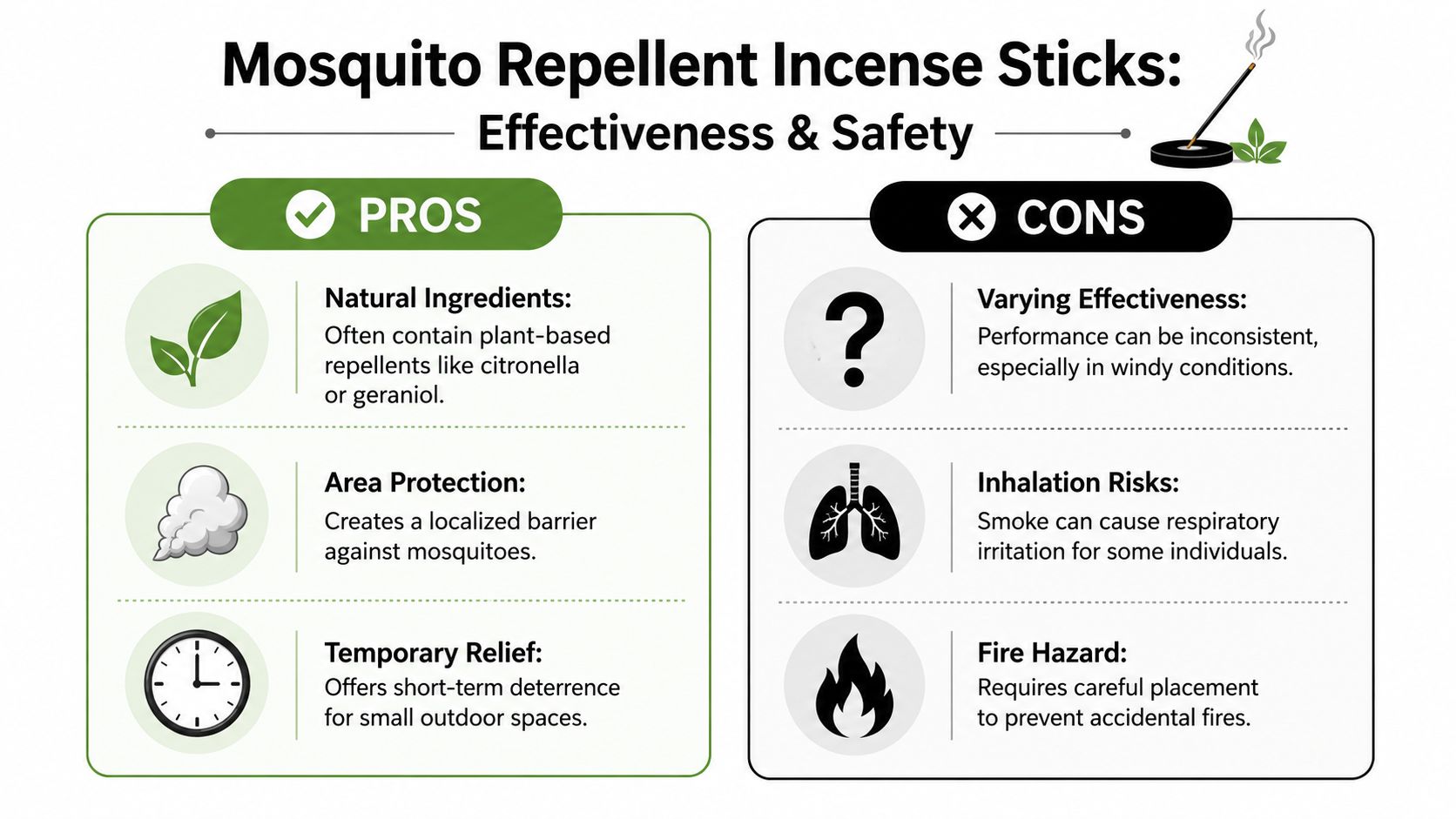
The biggest mistake I see is assuming that “natural” automatically means safe and reliable. It doesn't. With mosquito repellent incense sticks, effectiveness and safety both depend heavily on what you bought and how you use it.
Some products do provide short-lived relief. Some barely do more than create smoke. And some low-cost, poorly regulated sticks raise health concerns that most buyers never hear about.
What works and what doesn't
Here's the honest version. Incense sticks can help if you're protecting a small seating zone and the air is relatively still. They are much less dependable in breezy conditions, open lawns, or larger gathering areas where smoke disperses fast.
There's also a debate that homeowners should hear clearly. Commentary from consumer discussions points out that some of the benefit may come from smoke in general, not necessarily from premium branding or fancy “natural” positioning. That's one reason I tell people not to overestimate label claims.
The safety issue most people miss
The more serious concern is product quality. Many cheap, unbranded mosquito incense sticks contain unregulated toxic chemicals linked to respiratory damage, chronic coughs, and asthma, which makes “natural” labeling meaningless without oversight, as discussed in this report on unregulated mosquito incense risks.
That matters for families with children, older adults, or anyone sensitive to airborne irritants.
- Smoke is still smoke. Even a better-formulated stick creates combustion byproducts.
- Labels can mislead. “Herbal” and “natural” aren't the same as verified quality.
- Indoor use needs caution. Poor ventilation changes the risk profile fast.
- Cheap products deserve extra skepticism. If there's no clear regulatory trail, that's a warning sign.
For homeowners exploring plant-based options beyond burning products, this page on natural mosquito repellent essential oils is a more useful starting point than buying the first incense pack you see.
Practical judgment: If a product's main selling point is that it smells pleasant and costs almost nothing, don't assume it's the safest thing to burn around your family.
A balanced takeaway
I'm not against incense sticks. I'm against blind trust in them. Used selectively, a quality product may help take the edge off mosquito activity in a tight outdoor space. Used carelessly, or purchased from an unreliable source, it can create false confidence and unnecessary exposure.
That's an important distinction for homeowners searching for pest control in Crown Point, IN or exterminator in Crown Point, IN because a lot of mosquito frustration starts with a product that promised more than it could deliver.
Practical Tips for Using Incense Sticks Correctly
If you're going to use mosquito repellent incense sticks, use them like a targeted tool. Don't light one stick in the middle of the patio and expect the whole backyard to become comfortable.
Research on placement found that for outdoor use, sticks should be placed 10 to 12 feet apart and burned low to the ground, where the smoke can rise and form a protective barrier. That setup was reported to achieve a 60 to 80% success rate in reducing bites, with each stick lasting 1.5 to 2 hours in outdoor spaces according to this comparative study of herbal mosquito repellent incense sticks.
Set them up like a perimeter
Think in terms of edges, not center placement.
- Start low. Put the stick near ground level so the smoke rises through the area mosquitoes travel.
- Space them apart. A single point source leaves gaps. A loose perimeter works better than one stick by your chair.
- Protect the side mosquitoes approach from. If one side of the patio borders landscaping or shade, that edge deserves attention first.
Use them only where they fit
Incense sticks do best in controlled situations.
- Small patios and decks tend to be easier than open lawns.
- Still evenings are better than breezy nights.
- Stationary gatherings work better than spaces where people keep moving around.
If the smoke won't stay where you need it, the product won't either.
Don't ignore the obvious limits
A few mistakes show up repeatedly:
- Lighting them too close to people. That often creates more irritation than protection.
- Using them near heavy foot traffic. They get knocked over, moved, or forgotten.
- Relying on them around standing water. They don't solve breeding sites.
- Treating them like indoor air fresheners. Mosquito control and air quality aren't the same thing.
For short backyard use, a carefully placed stick can help. For recurring mosquito pressure around foundations, downspouts, thick plant beds, or damp corners of the yard, placement tricks stop being enough. That's where broader mosquito control, and sometimes related services like spider control, rodent control, or wasp removal, become part of a more complete exterior pest plan.
Incense Sticks vs Other Mosquito Control Methods
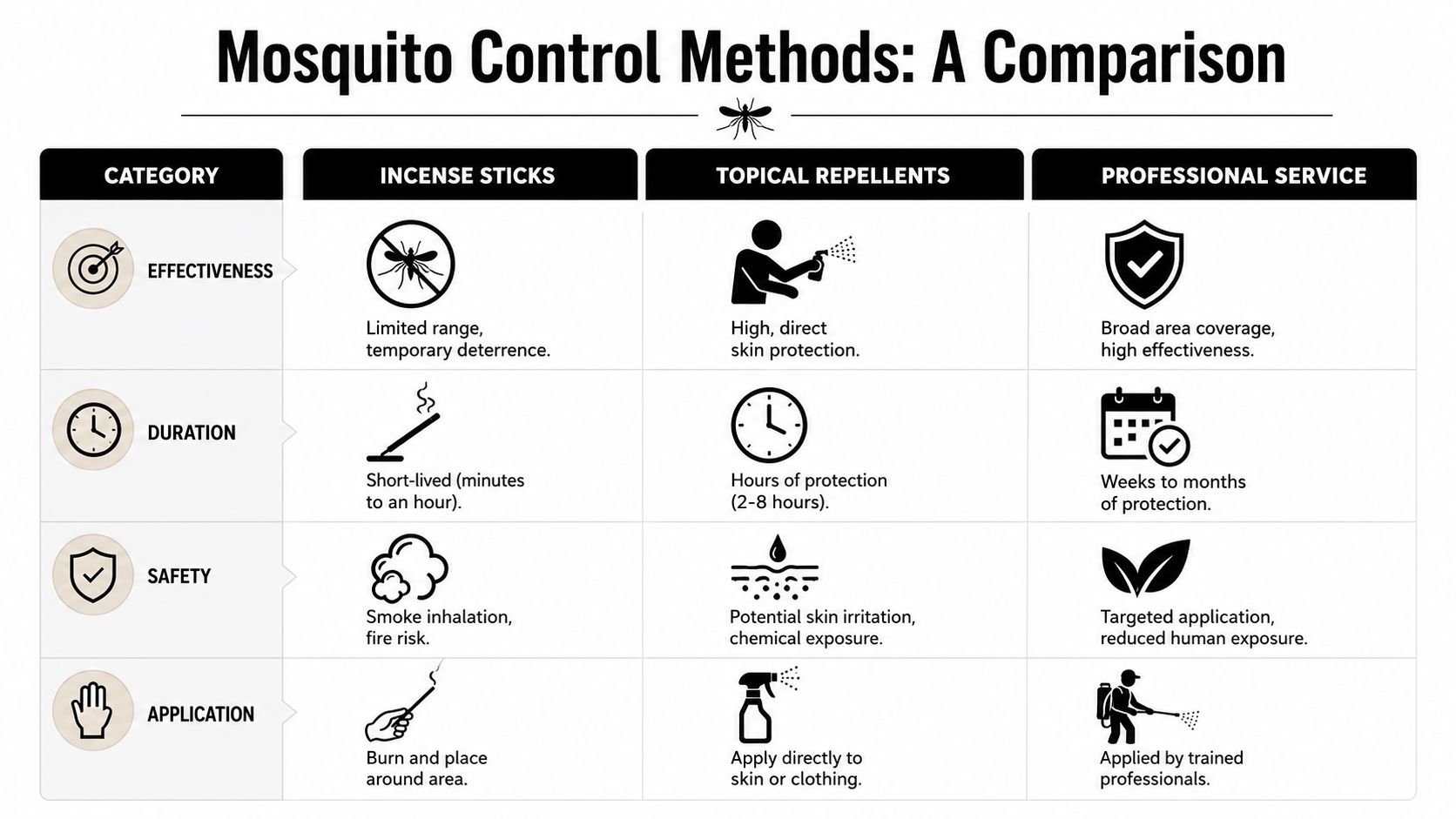
A lot of confusion clears up once you compare methods by job, not by marketing. Incense sticks, skin repellents, and professional mosquito treatments each have a place. They just don't do the same thing.
Where incense fits
Incense is best for short, outdoor sitting periods in a limited area. It's not ideal for active kids in the yard, larger gatherings, or property-wide control.
A study on citronella formulations found that citronella oil-based incense sticks reduced bites for up to 2.5 hours per stick in controlled outdoor settings by disrupting mosquito olfactory receptors, as described in this citronella incense efficacy study. That's useful information, but notice the setting. Controlled outdoor use isn't the same as every real backyard in Crown Point.
Side-by-side view
| Method | Best use | Main strength | Main drawback |
|---|---|---|---|
| Incense sticks | Small, seated outdoor areas | Hands-free local deterrence | Smoke, fire risk, limited coverage |
| Topical repellents | Personal protection | Direct protection on skin or clothing | Some people dislike applying products repeatedly |
| Professional mosquito service | Whole-property reduction | Targets where mosquitoes live and rest | Requires scheduled service |
For a broader consumer overview of layering options, this roundup of best fly and mosquito repellent solutions is useful because it treats mosquito control as a system, not a one-product fix.
Why professional treatment changes the equation
Here's the practical difference. Incense protects a moment. Professional mosquito service addresses the property.
That includes identifying likely breeding and resting zones, reducing mosquito pressure around the spaces people use, and building a treatment schedule around Northwest Indiana conditions. It's a different category of solution than something you light on the patio table.
Homeowners who want to compare lower-toxicity approaches with service-based control can look at natural mosquito control methods to understand how source reduction, habitat management, and targeted treatment work together.
The best mosquito plan usually isn't one product. It's the right tool for the right layer of the problem.
The short version
If you need to protect your own skin for a walk, a topical repellent makes sense. If you want a little relief at a bistro table, incense may help. If you're tired of planning every summer evening around mosquito activity, professional mosquito control is the method that scales to the property.
That's the same logic many people follow when they first search residential pest control for mosquitoes, then later ask about termite control, ant control, or seasonal pest issues around the rest of the home.
Your Best Mosquito Defense in Crown Point IN
The hardest truth about mosquito repellent incense sticks is also the most useful one. Even when they're well made, they're still a short-term tool.

A formulation study of herbal sticks containing neem, camphor, and lemongrass oil reported a 4 out of 5 satisfaction rating from 20 testers with zero reported allergic symptoms, but it also showed repellent activity over only a three-hour window, which highlights the short-term nature of DIY use compared with broader treatment approaches in this herbal mosquito repellent incense evaluation.
What a better defense looks like
For homeowners and property managers in Crown Point and nearby Northwest Indiana communities, the stronger approach is to stop thinking only about the patio table. Start with the whole property.
That means paying attention to:
- Breeding pressure around standing water, drainage trouble spots, and damp containers
- Resting sites in shrubs, dense landscaping, shaded fence lines, and overgrown edges
- Use patterns such as back decks, play areas, grill spaces, and commercial entry points
A targeted mosquito program tackles the places mosquitoes come from and the areas where people spend time. That's why it delivers more peace of mind than a temporary smoke barrier ever will.
What homeowners should expect from a serious mosquito plan
A smart service approach should feel practical, not mysterious. You should expect a clear inspection, direct communication, and a treatment plan built around your property's layout and mosquito pressure.
That same service mindset matters across the board in Northwest Indiana, whether someone needs eco-friendly pest control, preventative pest treatments, rodent control, or support with recurring seasonal pests around a home or business.
This short video gives a helpful look at the kind of professional perspective homeowners should look for when deciding their next step.
A family shouldn't have to choose between breathing smoke and getting bitten all evening.
For those seeking pest control near me, exterminator near me, or pest control in Crown Point, IN because mosquitoes are limiting how you use your yard, the ultimate goal isn't to find one more gadget. It's to reclaim the space and stop managing the problem night by night.
If mosquitoes are taking over your yard, patio, or outdoor business space, the next step is simple. Contact The Green Advantage to schedule a pest inspection, request a quote, and get a practical mosquito control plan built for Crown Point, IN and surrounding Northwest Indiana properties.