
Effective Tick Control Yard Solutions in Crown Point, IN

A lot of Crown Point homeowners reach the same point every summer. The grass looks good, the patio is ready, the dog is running the fence line, and the kids want to stay outside until dusk. But once you start finding ticks on pets, on pant legs, or near the wooded edge of the yard, relaxing gets harder.
That's especially true in Northwest Indiana, where humid weather, shaded lots, leaf litter, and tree lines give ticks exactly what they want. A generic once-over with a store-bought spray usually doesn't solve the full problem. Real tick control yard work takes a smarter plan, especially on properties near brush, drainage areas, fence rows, and woods.
For homeowners searching for pest control near me, exterminator near me, or pest control in Crown Point, IN, the goal usually isn't just to kill what's visible today. It's to make the yard feel usable again. That means lowering tick pressure, reducing hiding spots, and building a practical routine that fits how families in Crown Point use their property.
Protecting Your Family and Pets in Northwest Indiana
On a warm evening in Crown Point, the backyard should feel simple. Grill on. Kids outside. Dog circling the patio and cutting through the grass. Then somebody notices a tick crawling on a sock, or a pet comes in and needs a close check before anyone settles in for the night.
That worry is common here because many Northwest Indiana yards have the same setup. Lawn in the middle. Shrubs near the house. A fence line, wood line, or brushy border around the back. Add summer humidity and damp shade, and ticks don't have to travel far to move from edge habitat into spaces where families spend time.

Why local yards stay risky
Ticks don't need a neglected property to become a problem. A clean, well-kept yard can still have pressure if it backs up to woods, holds moisture, or gives rodents and deer easy travel routes. That's why broad online advice often falls short for homeowners in Crown Point and nearby Northwest Indiana communities.
A practical plan usually starts with the yard, but pets need attention too. If your dog is the first one bringing ticks inside, it also helps to review basics like choosing effective tick shampoo so your pet care routine matches what you're doing outdoors.
Ticks are a yard-edge problem first, but families feel the impact on patios, play areas, and pets.
What homeowners want from a real solution
Homeowners aren't looking for a complicated lecture. They want to know what works, what doesn't, and whether they can let their kids and pets use the yard without second-guessing every trip outside.
That's where local experience matters. In Crown Point, IN, a tick problem usually isn't just about one pest. The same moisture, brush, and rodent activity that support ticks can also overlap with broader residential pest control concerns like mosquito control, rodent control, spider activity, and seasonal pest issues that show up around garages, sheds, and foundations.
A good plan starts by treating the yard like a system. The wooded edge matters. Pet routes matter. Leaf litter matters. And in this area, the weather matters more than many homeowners realize.
First Steps to a Tick-Safer Yard
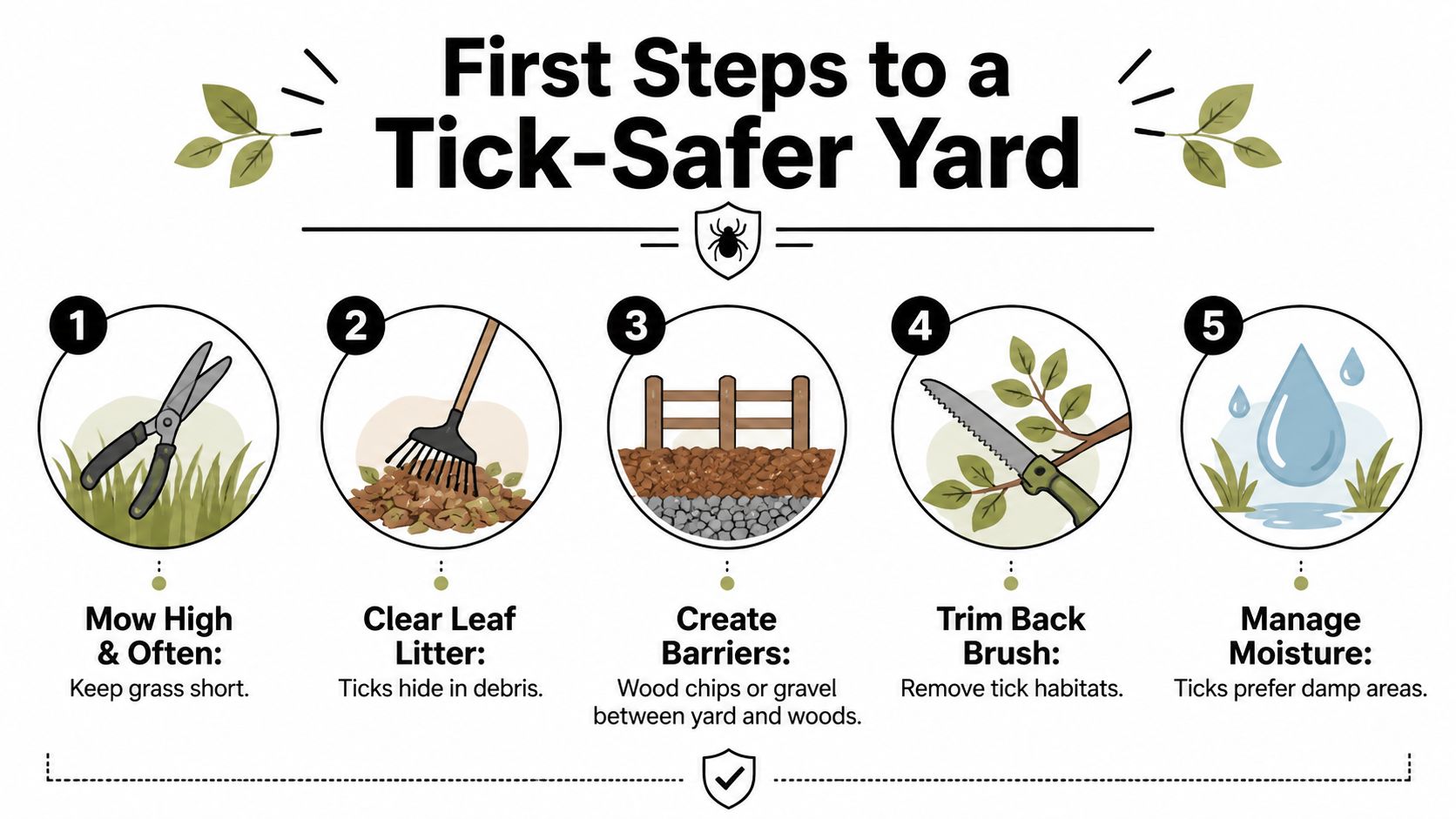
The fastest way to improve a tick control yard setup is to make the property less comfortable for ticks before you think about products. Habitat change doesn't replace treatment when tick pressure is already high, but it gives every other step a better chance to work.
Here's the yard checklist many homeowners in Crown Point can start over a weekend.
Start with mowing, borders, and cleanup
The clearest evidence-based yard method combines maintaining turf height at 2 to 2.5 inches, creating a continuous 3-foot-wide barrier of dry inorganic material between lawn and woods, and removing leaf litter and tall grasses in March to April before nymphs become active according to this yard management guidance.
That sounds straightforward, but the details matter.
- Keep turf in the right range: Grass that stays around 2 to 2.5 inches dries faster and holds less humidity at ground level. Ticks prefer the cooler, damp layer that builds up when turf gets shaggy.
- Build a real barrier: Use dry inorganic material such as crushed stone or decomposed granite. The target is a continuous 3-foot-wide barrier. Gaps defeat the point because ticks and host animals use those breaks as crossing points.
- Rake out leaf litter early: Leaf piles and matted debris hold moisture and give ticks cover. Clearing those zones before spring activity picks up helps reduce sheltered habitat.
What to avoid in the border zone
Many homeowners install a border and still wonder why activity continues. One common reason is using the wrong material.
Practical rule: Dry stone works better than moisture-holding landscape fill in tick transition zones.
Bark mulch, wood chips, and similar organic fills may look tidy, but they can hold moisture and fit right into the shaded edge habitat ticks prefer. If your yard backs to woods in Crown Point, the material choice around that line matters.
A simple maintenance routine helps keep those improvements from fading:
- Measure the edge barrier a few times through the season so it stays at least 36 inches wide and doesn't get overgrown.
- Check turf height weekly at several spots instead of just eyeballing it from the patio.
- Trim shrubs up from the soil so air and light can move underneath.
- Watch damp pockets near downspouts, play sets, fence corners, and wood storage.
Later in the season, many homeowners also look into natural tick repellent for yard options as part of a lower-impact prevention plan. Those products can play a role, but they work better when the habitat has already been corrected.
A short visual walkthrough can help you spot the weak points most yards miss.
Focus on the places people ignore
Most of the yard usually isn't the problem. The problem is the transition space.
Check these first:
- Fence lines: Tall grass and brush collect moisture and invite rodent traffic.
- Under shrubs: If you can't see bare air under the plant, it's probably holding too much shade and humidity.
- Behind sheds and wood piles: Low disturbance areas often become hiding zones.
- Pet shortcuts: Dogs create predictable routes, often straight through the coolest part of the yard.
This kind of cleanup also supports broader preventative pest treatments. A drier, more open yard is less attractive to mosquitoes, rodents, and some nuisance insects, which is why good outdoor pest management often overlaps from one service to another.
Understanding Your Treatment Options
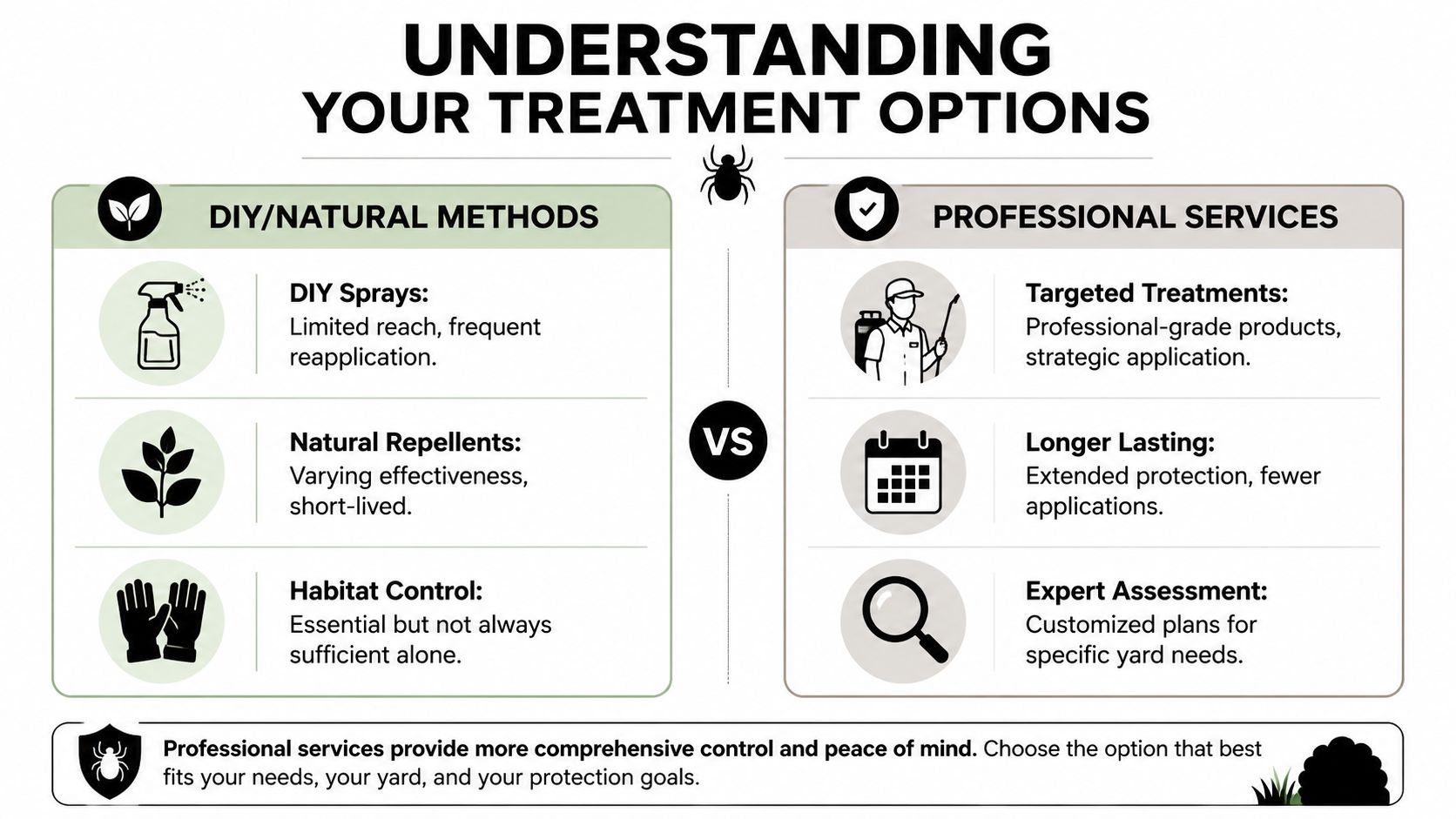
Once the yard is cleaned up, homeowners usually compare three paths. Do it all yourself, try natural products first, or bring in professional treatment. Each can help, but they don't perform the same way and they don't ask the same amount of time from you.
DIY and natural options
A lot of homeowners start with cedar-based sprays, botanical products, hose-end concentrates, or hand-pump applications around the perimeter. That's understandable. People want a lower-impact option, and they want to stay in control of what goes into the yard.
The trade-off is consistency. EPA-registered synthetic pesticide products labeled for ticks have consistently achieved greater than 80% suppression of blacklegged ticks in residential yards, while unregulated minimum risk 25(b) products often suppress ticks for only 1 to 3 weeks before reapplication is needed, based on this review of residential tick control studies.
That doesn't mean every natural approach is useless. It means homeowners should go in with realistic expectations. If you choose a minimum-risk product, you may need a much tighter reapplication schedule to hold the line during active periods.
Where professional service changes the outcome
Professional service isn't just “stronger spray.” A key difference is targeting. Ticks aren't spread evenly across the property, so treating the entire lawn the same way often wastes effort and misses the most important zones.
A thoughtful plan usually prioritizes:
| Area | Why it matters |
|---|---|
| Shaded bed edges | Moist ground and dense plant cover help ticks persist |
| Wooded transitions | Wildlife and rodents move ticks into the yard from here |
| Fence lines and brush | These corridors stay cooler and less disturbed |
| Pet routes and play-adjacent edges | Human and animal traffic turns tick presence into real exposure |
Some homeowners also ask about methods that reduce ticks without directly targeting the animal host. One option often discussed is the use of tick tubes with permethrin-treated cotton for mice. These are different from broad sprays and are meant to interrupt the mouse-tick cycle in a more targeted way.
For homeowners comparing local service paths, best flea and tick control for yard options can help frame the choices between one-time treatment, recurring service, and integrated plans.
The right treatment depends less on what sounds strongest and more on whether it matches the way ticks are entering and surviving on your property.
A balanced way to decide
Choose DIY-only if the yard has light pressure, limited wooded edge, and you're willing to keep up with repeated maintenance and reapplication.
Choose a professional plan when the property has recurring activity, a brushy perimeter, pet exposure, or a wooded lot line. That's often the case in Crown Point, where a clean lawn in the center can still sit next to a high-risk edge.
For many homes, habitat correction plus targeted treatment is the point where the yard starts feeling manageable again.
The Green Advantage ITM Approach for Crown Point
Generic perimeter spraying sounds convenient, but it often breaks down in Northwest Indiana. Crown Point yards deal with humid conditions, dense edge growth, and regular reinfestation pressure from nearby wooded areas. If the plan doesn't account for that, the yard may look treated on paper while ticks keep returning.
Why one-size-fits-all programs fall short here
Research highlighted in this Northwest Indiana tick yard guide notes that in humid, wooded-edge environments, tick re-infestation can occur within 4 to 6 weeks because of early summer nymph surges and heavy rain washout. That's the part many homeowners never hear when they're sold a simple “spray and forget” service.
A real integrated plan has to account for timing, weather, edge habitat, and how the property is used. A play area near a tree line needs different attention than an open front lawn. A dog run behind the garage needs different attention than ornamental beds by the porch.
What an integrated local program looks like
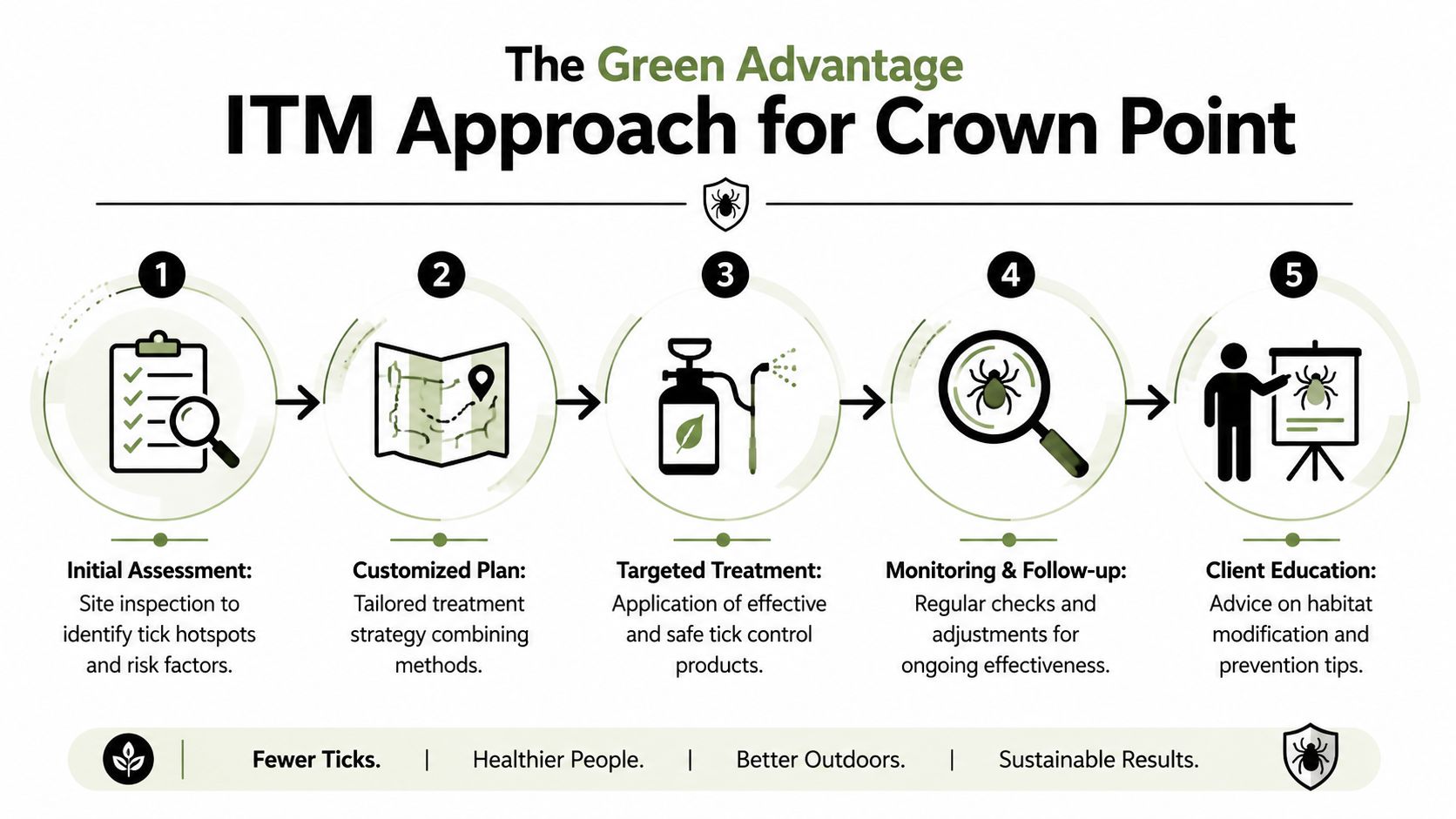
A strong ITM approach usually follows a sequence instead of relying on a single visit.
Property inspection
The first step is walking the whole site, especially the transition areas. Wood lines, leaf buildup, pet paths, low shrubs, damp corners, and rodent activity all affect where ticks hold.Habitat assessment
At this stage, the yard plan gets practical. The question isn't just where ticks are. It's why they're comfortable there.Targeted treatment
Product placement matters more than broad coverage for the sake of coverage. Shaded borders, perennial beds, and edge zones usually deserve the most attention.Follow-up and seasonal adjustment
In Crown Point, service timing has to match the season. Heavy summer rain, fresh growth, and wildlife movement can change pressure fast.Homeowner guidance
Mowing height, border upkeep, leaf cleanup, and pet traffic control all affect results between visits.
How this works on local properties
On many Northwest Indiana lots, the center lawn isn't the battlefield. The main pressure starts where the maintained yard touches brush, trees, or unmanaged neighboring ground. That's why a tick control yard program should behave more like ongoing management than a one-time application.
A season-long plan works better than a calendar reminder that says “spray once in spring.”
One local option homeowners use is The Green Advantage, which provides a thorough property inspection, identifies likely tick hotspots, and builds treatment around site conditions instead of treating every lawn the same way. That kind of approach also fits properties that may need broader commercial pest control or residential pest control support for mosquitoes, rodents, and other outdoor pest activity tied to moisture and site layout.
For Crown Point homeowners searching for an exterminator in Crown Point, IN, the key question isn't whether someone can apply a product. It's whether they can read the property and manage the problem through the season.
Comprehensive Pest Protection for Your Property
Ticks rarely show up alone as a property-management issue. The same conditions that support them often support other pests too. When a yard holds moisture, dense vegetation, debris, and rodent traffic, it becomes easier for multiple pest problems to develop at once.
Why yard conditions affect more than ticks
A shaded, overgrown perimeter can also support mosquito control needs, especially around damp ornamental beds and low-drainage areas. Rodent activity matters as well, because mice and similar animals move through the same edge habitat that supports ticks. If you're already seeing signs of gnawing, nesting, or movement around sheds and foundations, that's not a separate issue. It's part of the same outdoor pressure pattern.
A broader property plan may also include:
- Rodent control: Reducing harborage around wood piles, dense cover, and structures.
- Mosquito control: Targeting damp resting areas and breeding-prone parts of the yard.
- Spider control: Cutting back insect pressure around eaves, garages, and entry points.
- Wasp removal: Addressing nests around rooflines, play areas, and patios.
- Termite control: Protecting structures where moisture and wood contact create risk.
One property, connected pest problems
This is why many homeowners who start by searching for tick control yard services end up asking about full pest control in Crown Point, IN. They want the patio, lawn edge, garage, and foundation protected as one property, not handled as unrelated problems.
A well-managed yard does more than reduce ticks. It removes the conditions that let several pests settle in close to the home.
That's also useful for landlords, real estate professionals, and businesses that need dependable exterior conditions. Good outdoor management protects comfort, supports property value, and cuts down on the cycle of reacting to one pest at a time.
Partnering with The Green Advantage
Homeowners usually feel better once they know what the process looks like. Pest control shouldn't feel vague. You should know who's coming, what they're looking for, what they'll recommend, and what you can do between visits to keep pressure down.
What the experience looks like
The process usually starts with a phone call or quote request. That first conversation should be simple. You explain what you've seen, where you've seen it, whether pets use the yard, and whether the property backs up to trees, brush, or unmanaged ground.
From there, a technician visits the property and inspects the areas where tick pressure usually starts. That includes edges, beds, leaf litter zones, pet routes, shaded corners, and any spots where moisture lingers. If broader outdoor issues are present, this is also when related needs like rodent control, mosquito control, or other preventative pest treatments can be identified.
Why the strategy matters
This part matters because yard treatment alone has limits. A large-scale study found that springtime barrier acaricide applications reduced tick abundance on treated properties by 63%, yet did not produce a statistically significant difference in human-tick encounters or tick-borne disease incidence, according to the Journal of Infectious Diseases study. That's why a professional should treat spraying as one part of a larger plan, not the whole answer.
In practice, that means you should expect advice on yard conditions, not just product application. You should also expect clear communication about timing, follow-up, and what changes on the property may improve results.
What homeowners should expect after service
A reliable service relationship includes more than the visit itself.
- Clear findings: You should understand where the risk is highest on the property.
- Specific recommendations: Not generic cleanup advice, but practical steps tied to your layout.
- Seasonal follow-up: Tick pressure changes with weather and growth.
- Honest expectations: The goal is reduction and smarter management, not a false promise that one treatment solves every exposure risk.
For homeowners looking for pest control near me, exterminator near me, or residential pest control in Crown Point, peace of mind comes from that combination of field experience, transparency, and ongoing support.
If your yard backs up to woods, stays damp through summer, or keeps producing ticks even after DIY treatment, it may be time for a closer look. The Green Advantage works with homeowners and properties across Crown Point, IN and nearby Northwest Indiana communities to inspect risk areas, build practical treatment plans, and help families reclaim their outdoor space with more confidence.
Brown Dog Tick Disease in NWI: Prevention & Control 2026

You find a tick on your dog after a walk, remove it, and hope that's the end of it. Then a few days later you spot another one near the dog bed. After that, one shows up on the baseboard. That's the moment many homeowners in Crown Point realize they may not be dealing with a one-time outdoor pest.
Brown dog tick disease worries people for good reason. The health concern isn't just the bite itself. It's the possibility that a dog has been exposed to more than one pathogen, and that signs of illness may be vague or delayed. For Northwest Indiana families, the bigger problem is often practical. Vet advice helps protect the dog, but it doesn't solve a seeded infestation inside the home.
That's where a lot of frustration starts. Homeowners do the right things. They check their pets, wash bedding, vacuum, and use prevention products. Yet the problem keeps coming back because the brown dog tick behaves differently from the ticks commonly considered.
Your Trusted Exterminator for Tick Control in Crown Point IN
A Crown Point pet owner usually notices this issue in stages. First, a dog comes in scratching more than usual. Then someone finds a small brown tick attached near the ear or between the toes. By the weekend, the family is checking blankets, crate seams, and corners of the room, wondering if this is a yard problem or a house problem.
With brown dog ticks, that distinction matters.
Unlike the outdoor tick problems many Northwest Indiana homeowners expect in spring and summer, this one can turn into an indoor infestation tied closely to where dogs rest, sleep, and travel through the house. That changes the response completely. Treating only the yard or relying only on pet products often leaves part of the problem untouched.
Local reality: In homes with dogs, tick control isn't just about what's outside. It's often about what hitchhiked indoors and stayed there.
Homeowners searching for pest control near me, exterminator near me, or pest control in Crown Point, IN are usually looking for clear answers fast. They want to know whether the ticks they're seeing are dangerous, whether their dog could get sick, and whether the home itself now needs treatment.
In Crown Point and nearby Northwest Indiana communities, that concern is understandable. Families want a practical plan, not alarm. The right approach starts with identifying whether the pest is the brown dog tick, then deciding whether you're dealing with isolated exposure or a breeding population inside the structure.
That's the difference between casual advice and real pest control. For a live indoor tick issue, the goal isn't just to remove what you can see. The goal is to break the cycle where ticks keep reappearing in the same rooms, on the same pet, and around the same resting areas.
Identifying the Brown Dog Tick Problem in Your Home
The brown dog tick is easy to underestimate because it doesn't always arrive with the same outdoor warning signs homeowners associate with wooded lots or tall grass. In many cases, the first clue is repeated tick sightings on the dog or around indoor pet areas.
What makes this tick different
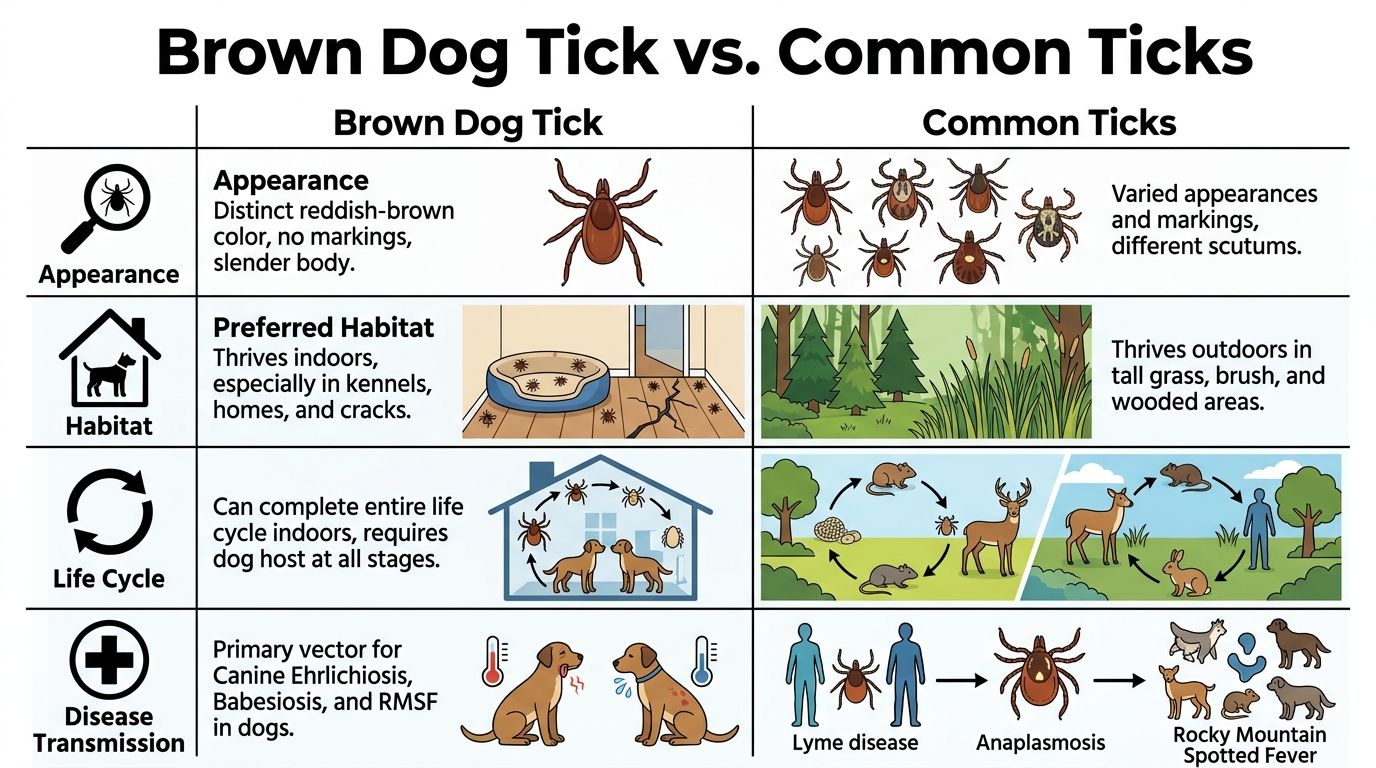
The most important thing to understand is that the brown dog tick is uniquely suited to indoor life. According to PetMD's overview of brown dog ticks, it is the only tick species that can become fully established indoors in homes and kennels, and a single engorged female can lay up to 3,000 eggs. That's why one overlooked tick can become a much bigger problem.
Most ticks depend more heavily on wildlife and outdoor habitat. Brown dog ticks are different. They stay close to dogs and exploit indoor hiding places such as:
- Cracks and crevices around baseboards, trim, and flooring
- Pet resting areas including beds, crates, blankets, and furniture
- Utility spaces like laundry rooms, garages, and kennel-style setups
- Travel paths where dogs repeatedly lie down or brush against walls
What homeowners usually notice first
You may not identify the species immediately, but the pattern often gives it away. Brown dog tick issues tend to show up where the dog spends time, not just where people enter from the yard.
A few signs stand out:
| Sign | Why it matters |
|---|---|
| Repeated ticks on the same dog | Suggests ongoing exposure rather than a one-off hitchhiker |
| Ticks near bedding or crates | Points toward indoor harborages |
| Sightings in cooler months | Indicates the problem may not be tied only to seasonal outdoor activity |
| Ticks on walls or baseboards | Often means the infestation has spread beyond the pet |
Brown dog ticks are generally brown to reddish-brown, without the more obvious patterned look some other tick species have. Homeowners often describe them as small, plain, and easy to miss until they move.
If you're removing ticks from your dog at home, use a proper method instead of twisting, crushing, or applying folk remedies. This guide on how to remove ticks safely from dogs gives a clear, simple overview.
What doesn't work well
Many homeowners try to solve this by deep cleaning alone. Cleaning helps, but it rarely finishes the job once ticks have dispersed into cracks, seams, and protected indoor areas. The same goes for treating only the pet. If the house is seeded, the dog can keep getting re-exposed.
That's why identification matters early. If you're seeing ticks indoors more than once, especially near dog areas, treat it as a structural pest issue and not just a grooming problem.
Brown Dog Tick Disease Risks to Your Pets and Family
When people say brown dog tick disease, they usually mean one of two things. Either they're asking whether this tick can make a dog sick, or they're referring to a vague set of symptoms after a tick bite. The problem is that this phrase sounds singular when the underlying problem often isn't.
It's not one disease
Research summarized in a peer-reviewed review of brown-dog-tick-associated pathogens makes the key point homeowners and even some pet owners miss. A dog may not have a single brown dog tick disease. The tick can carry multiple pathogens, and there is a high prevalence of coinfection. The same review notes that symptoms may be vague, subclinical, or delayed.
That matters because a dog with fever, low energy, anemia, appetite loss, or weight loss may not be dealing with one straightforward infection. Diagnosis can require testing rather than guesswork.
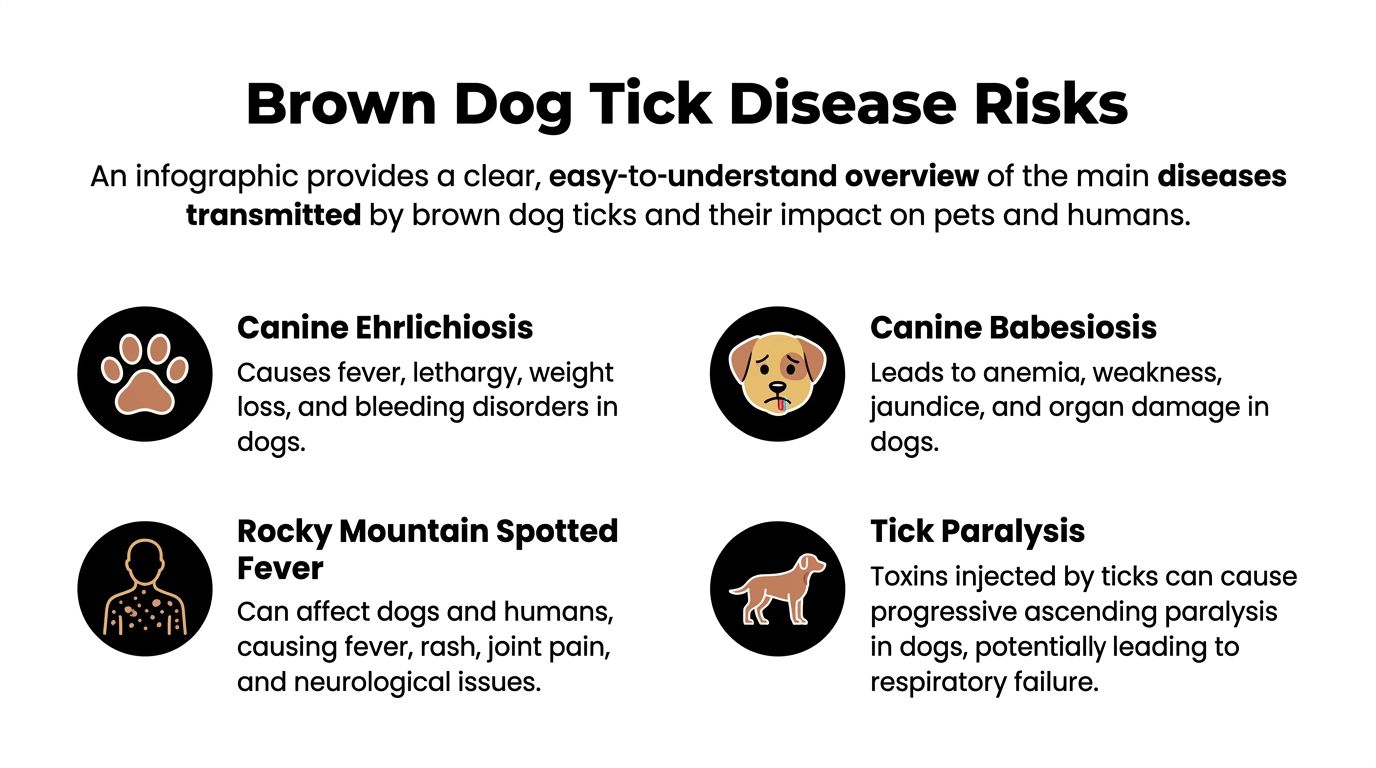
The main health concerns
Brown dog ticks are linked with several important diseases in dogs. The ones homeowners hear about most often include:
Canine ehrlichiosis
This can involve fever, lethargy, weight loss, and bleeding disorders.Canine babesiosis
This may lead to anemia, weakness, and other systemic illness.Rocky Mountain spotted fever
This matters because brown dog ticks have historically been recognized as an important vector of RMSF in certain parts of the United States.
Some of these illnesses can overlap in how they look at home. A tired dog that skips meals and seems “off” doesn't give you enough information to tell one infection from another. That's why veterinary testing matters so much after known exposure.
For a broader homeowner view of persistence and survival, it also helps to understand how long ticks can live. Longevity affects how long a hidden infestation can keep producing problems after the first sighting.
Why delayed symptoms make infestations harder
A frustrating part of brown dog tick disease is timing. Owners often expect a clear cause-and-effect pattern. Tick bite today, sick dog tomorrow. Real life isn't that neat.
The video below gives useful visual context on tick risks and what pet owners should watch for.
Symptoms can show up long after the tick was removed. That delay creates two separate risks:
- Medical delay because the household may not connect current illness with an earlier tick exposure
- Control delay because the infestation source inside the home may continue unchecked
A tick problem can outpace your diagnosis timeline. By the time a dog looks sick, the house may already have an established population.
What about people
Human risk needs a balanced explanation. Brown dog ticks are best known as a major veterinary pest, but they also matter from a public health standpoint. Homeowners don't need panic. They do need clarity.
If ticks are appearing indoors, especially in rooms where pets spend time, families should take the issue seriously. Daily checks, prompt removal, and veterinary evaluation for concerning symptoms are the practical first steps. For the home itself, repeated sightings mean the environmental source needs attention too.
A Homeowner's Guide to Tick Prevention
Homeowners in Crown Point usually start in the right place. They use vet-recommended preventives, inspect their dogs after time outside, wash pet bedding, and try to keep the yard less inviting. None of that is wasted effort. In fact, those habits are the foundation of good tick prevention.
What you should keep doing
If you want to lower exposure, these steps matter:
- Check your dog daily after walks, boarding, grooming visits, or time in the yard
- Use veterinary prevention consistently instead of waiting for warm weather
- Wash bedding and vacuum carefully around pet sleeping areas
- Keep outdoor areas maintained so dogs aren't brushing through overgrowth unnecessarily
Year-round prevention matters because modern guidance recognizes that seasonal treatment alone doesn't address a tick that can persist indoors. Ohio State notes this shift in its brown dog tick fact sheet, especially because the species can continue reproducing in protected environments.
Where DIY prevention falls short
The mistake isn't doing too little for the dog. It's assuming pet-only prevention solves a home infestation.
A dog can be protected and still carry in a live tick before that product does its work. Bedding can be washed while ticks remain in cracks, behind trim, or near crate hardware. The yard can be improved while the primary breeding pressure is inside.
That's why prevention and elimination are different jobs.
If your concern includes outdoor exposure around decks, fence lines, and dog run areas, this guide to the best flea and tick control for yard is a useful starting point. Just keep in mind that a brown dog tick issue may require more than a yard-focused plan.
Practical rule: If you've treated the dog, cleaned the house, and still keep seeing ticks indoors, stop thinking in terms of maintenance and start thinking in terms of infestation control.
The trade-off homeowners need to understand
Home prevention reduces odds. It doesn't always remove hidden life stages once the problem is established. That's the hard truth with brown dog ticks.
For a one-off outdoor hitchhiker, home care may be enough. For repeated indoor sightings, the trade-off changes. Waiting can save money today, but it often gives the infestation more time to spread through the exact areas that are hardest for homeowners to treat completely.
How Professional Pest Control Eliminates Brown Dog Ticks
Brown dog tick control works only when the treatment plan matches the way this tick lives. That means the solution can't focus on one zone alone. You have to account for the animal, the structure, and the outside areas that may support reintroduction.
Why the environment has to be treated
The canine health issue and the pest issue move on separate timelines. According to the AKC Canine Health Foundation's guidance on canine tick-borne disease, symptoms of diseases such as canine ehrlichiosis may not appear for months after transmission. That long latency matters because the infestation can continue spreading before illness is recognized.
That's why professional treatment targets the source. If ticks are living in the home, waiting for symptoms or relying only on what's visible won't stop the cycle.
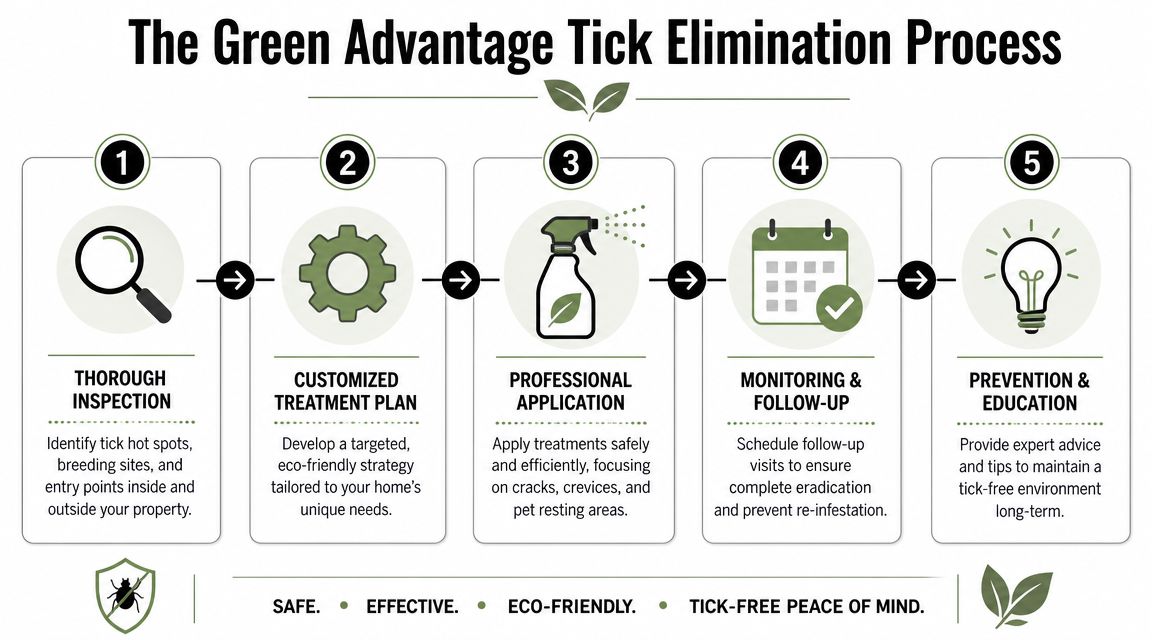
What an effective control program includes
A serious brown dog tick treatment plan usually has several parts working together:
Inspection of indoor hotspots
Technicians look closely at baseboards, pet bedding zones, crate areas, upholstered edges, utility rooms, and other protected harborage sites.Targeted interior treatment
The goal is to reach places homeowners commonly miss, especially tight cracks, seams, and resting areas associated with dogs.Exterior attention where needed
While brown dog ticks are known for indoor persistence, the outside still matters when pets move through kennels, patios, runs, or perimeter areas.Coordination with veterinary care
Pest control handles the environment. A veterinarian handles the dog's medical prevention, testing, and treatment decisions.Follow-up and monitoring
Tick control is rarely about one spray and done thinking. Rechecks help confirm the cycle has been broken.
What works and what usually disappoints
Homeowners often ask whether foggers, single over-the-counter sprays, or constant laundering can solve it. Those tools may reduce visible activity, but they often underperform when ticks are tucked into inaccessible spots.
Professional service is stronger because it's systematic. It treats where ticks hide, not just where people notice them.
A good program also respects the home as a lived-in space. Families want treatment that is effective, clearly explained, and mindful of pets and daily routines. That same whole-property thinking often helps with related residential pest control concerns in Northwest Indiana, including mosquitoes, ants, spiders, and rodent pressure around the exterior.
Why local pest control matters in Northwest Indiana
In Crown Point and surrounding communities, homes vary a lot. Some have finished basements, attached garages, mudrooms, or pet transition spaces that change how pests move indoors. A local exterminator in Crown Point, IN looks at those practical conditions instead of applying a generic script.
That matters because successful tick work depends on finding the actual pressure points in the home, then matching treatment and follow-up to those exact conditions.
Working With The Green Advantage in Crown Point
Hiring a pest control company shouldn't feel like handing over your home and hoping for the best. Homeowners want straight answers, a clear process, and people who understand how pest issues show up in Northwest Indiana properties.
What a good service experience looks like
When you work with a local provider for residential pest control or commercial pest control, the experience should be simple. You call. You describe what you're seeing. A knowledgeable team helps sort out whether the issue sounds urgent, structural, or pet-related, then schedules an inspection that fits the problem.
On site, a technician should do more than glance around and recommend a generic treatment. Tick issues require questions. Where does the dog sleep? Have ticks been found in one room or several? Have there been recent boarding visits, travel, grooming appointments, or sightings around the yard?

Why local matters
A Crown Point company serving Northwest Indiana brings practical familiarity with the kinds of homes, seasonal habits, and pet routines common in the area. That doesn't mean every tick problem is the same. It means the inspection starts with realistic assumptions and then gets specific.
Here's what homeowners usually value most:
- Clear communication so they know what was found and what happens next
- Customized treatment plans instead of one-size-fits-all packages
- Respect for family routines including pet safety, access needs, and follow-up timing
- Broader pest knowledge when tick issues overlap with mosquito control, wasp removal, spider activity, or rodent concerns around the property
The best pest service isn't the one with the longest script. It's the one that can look at your home, identify the real source, and explain the fix in plain language.
What builds trust
For most families, trust comes from consistency. The phone gets answered. Questions get addressed without jargon. The technician arrives prepared, inspects thoroughly, and explains what's realistic.
That matters for tick work because homeowners are often stressed before the appointment even starts. They're worried about their dog, their furniture, their kids, and whether they somehow caused the problem. A reliable local provider helps take that uncertainty down to size and turns it into a practical plan.
Schedule Your Tick Inspection and Protect Your Home Today
If you're finding ticks on your dog more than once, or seeing them around beds, baseboards, crates, or furniture, don't treat it like a minor nuisance. Brown dog tick problems can linger inside the home, and waiting usually gives them more time to spread.
The right next step is simple. Get the property inspected, identify where the ticks are hiding, and build a plan that addresses the house and the pet environment together. That protects your dog, reduces repeat exposure, and gives your family confidence that the problem is being handled completely.
For homeowners and property managers looking for pest control in Crown Point, IN, exterminator near me, or practical help with a stubborn indoor tick issue, local service makes the process easier. You need an inspection, honest guidance, and treatment that fits how the problem behaves in Northwest Indiana homes.
If you need help with brown dog ticks, The Green Advantage provides local pest control support for Crown Point and nearby Northwest Indiana communities. Reach out to schedule an inspection, request a quote, and get a clear plan to protect your home, your pets, and your peace of mind.
Pest Control Northwest Indiana: Expert Solutions

You hear scratching in the wall after the first cold night. Or you spot a small pile of sawdust on a windowsill and wonder if it’s just old wood, or something chewing behind it. Those moments are unsettling because most pest problems don’t announce themselves early. They start subtly, then get expensive, messy, or stressful if they sit too long.
That’s why pest control northwest indiana isn’t just about spraying when bugs show up. Around Crown Point and nearby communities, homes deal with shifting moisture, seasonal temperature swings, wooded edges, open lots, crawl spaces, attached garages, and all the little entry points pests need. Local conditions matter.
Homeowners and business owners are responding to that need. Indiana’s pest control industry is projected to reach a $417.1 million market size in 2026, with 597 businesses operating statewide, according to IBISWorld’s Indiana pest control industry report. That kind of growth reflects something simple. People want professional help because pest pressure is real, persistent, and local.
Protecting Your Home from Unwanted Guests in Northwest Indiana
A lot of pest calls start with uncertainty. A homeowner notices ants in the kitchen and assumes it’s a one-room issue. Then the trail keeps coming back. Someone hears movement above a bedroom ceiling and hopes it’s nothing, until the noise gets louder at night. A family finds a wasp nest under the deck right before guests come over for the weekend.
In Crown Point, that uncertainty usually comes from one basic problem. Pests don’t live by your schedule. They move when weather changes, when food is available, when water collects, or when a home gives them a quiet place to hide.
Why local conditions matter
Northwest Indiana has a mix of neighborhoods, tree cover, damp areas, lawns, ornamental beds, detached sheds, and homes with basements or crawl spaces. That combination creates different pest patterns than you’d see in a drier or more consistently warm area. A technician has to read the property, not just identify the bug.
What works in one yard may not work next door. A perimeter treatment can help with one type of activity, but it won’t solve a moisture problem under a deck. Exclusion can stop mice from re-entering, but it won’t fix the food source drawing them in. Good service starts with matching the method to the cause.
Practical rule: If the same pest keeps coming back, the issue usually isn’t just the pest. It’s the condition letting that pest stay.
Why homeowners call for professional help
Property owners rarely call because they noticed a single insect. They reach out because they want to avoid guessing incorrectly. They need to understand if they are facing a seasonal nuisance, a nesting issue, a structural threat, or a problem that could spread throughout the home.
That’s where a professional approach helps. Instead of treating every sighting like an emergency or dismissing everything as harmless, the job is to sort out what’s active, what’s attracting it, and what kind of correction makes sense for the property. That’s how you get control that lasts longer than a weekend.
Common Pests Threatening Crown Point Homes
Some pests in Northwest Indiana are mostly annoying. Others affect sanitation, comfort, or the structure of the home. The important part is knowing which signs deserve quick action and which conditions are making your property attractive in the first place.
Rodents in walls garages and attics
As temperatures drop, mice and rats start testing homes for weak spots. Nationally, rodents invade an estimated 21 million U.S. homes each winter, a figure noted in Monroe Pest Control’s discussion of termites and pest pressures in Northwest Indiana. In this area, that lines up with what homeowners experience when cold weather pushes rodents toward warmth, food, and shelter.
Typical signs include:
- Nighttime scratching: Often heard in wall voids, ceilings, or attic edges
- Droppings near food areas: Especially in pantries, utility rooms, and garage corners
- Gnaw marks: On cardboard, stored pet food containers, wiring areas, or trim
- Rub marks and greasy trails: Along baseboards or known travel routes
Rodent work isn’t just about setting bait. If entry points stay open, new mice keep replacing the old ones. If clutter or food sources remain easy to reach, pressure stays high.
Termites and other wood destroying pests
Termites are a serious concern in Northwest Indiana, and they don’t stop mattering just because winters are cold. In this region, routine WDI inspections are part of many real estate transactions because termite activity can affect property value and reveal hidden damage. That’s one reason lenders often want these inspections completed before a sale or refinance moves forward.
A few warning signs homeowners should take seriously:
| Sign | What it can mean |
|---|---|
| Mud tubes | Subterranean termite travel paths between soil and wood |
| Soft or hollow wood | Damage below the surface |
| Discarded wings | Swarm activity nearby |
| Bubbling or uneven paint | Moisture or hidden wood damage |
Termites aren’t the only wood-related issue. Carpenter ants can also show up around damp or softened wood, and homeowners sometimes confuse one pest for another. The treatment approach changes depending on the pest, so correct identification matters.
Ants spiders and occasional invaders
Not every call involves structural damage. Many involve pests that keep showing up around windows, kitchens, basements, bathrooms, or garage thresholds. Ants follow moisture and food. Spiders follow the insects they feed on. Beetles and other occasional invaders often come inside because weather patterns or lighting pull them toward the house.
These problems usually get worse when the outside perimeter is active. Cracks in the foundation, worn door sweeps, clutter near the exterior wall, and mulch pushed too tightly against siding all give pests a better path indoors.
If you’re seeing pests in multiple rooms, don’t assume there are multiple unrelated problems. One exterior access point can affect a lot of the house.
Wasps mosquitoes and outdoor pressure
Outdoor pests matter because they change how you use your property. Wasps build around rooflines, soffits, play sets, fence posts, and deck areas. Mosquitoes settle in yards with standing water, dense shade, and poor drainage.
Local ecosystem knowledge matters significantly here. A property near wetlands, wooded edges, drainage areas, or heavy landscaping can behave very differently from a more open lot. The same broad treatment on every yard misses those differences. Good control starts by identifying where pests are resting, breeding, or entering.
A Year of Pests A Seasonal Guide for Northwest Indiana
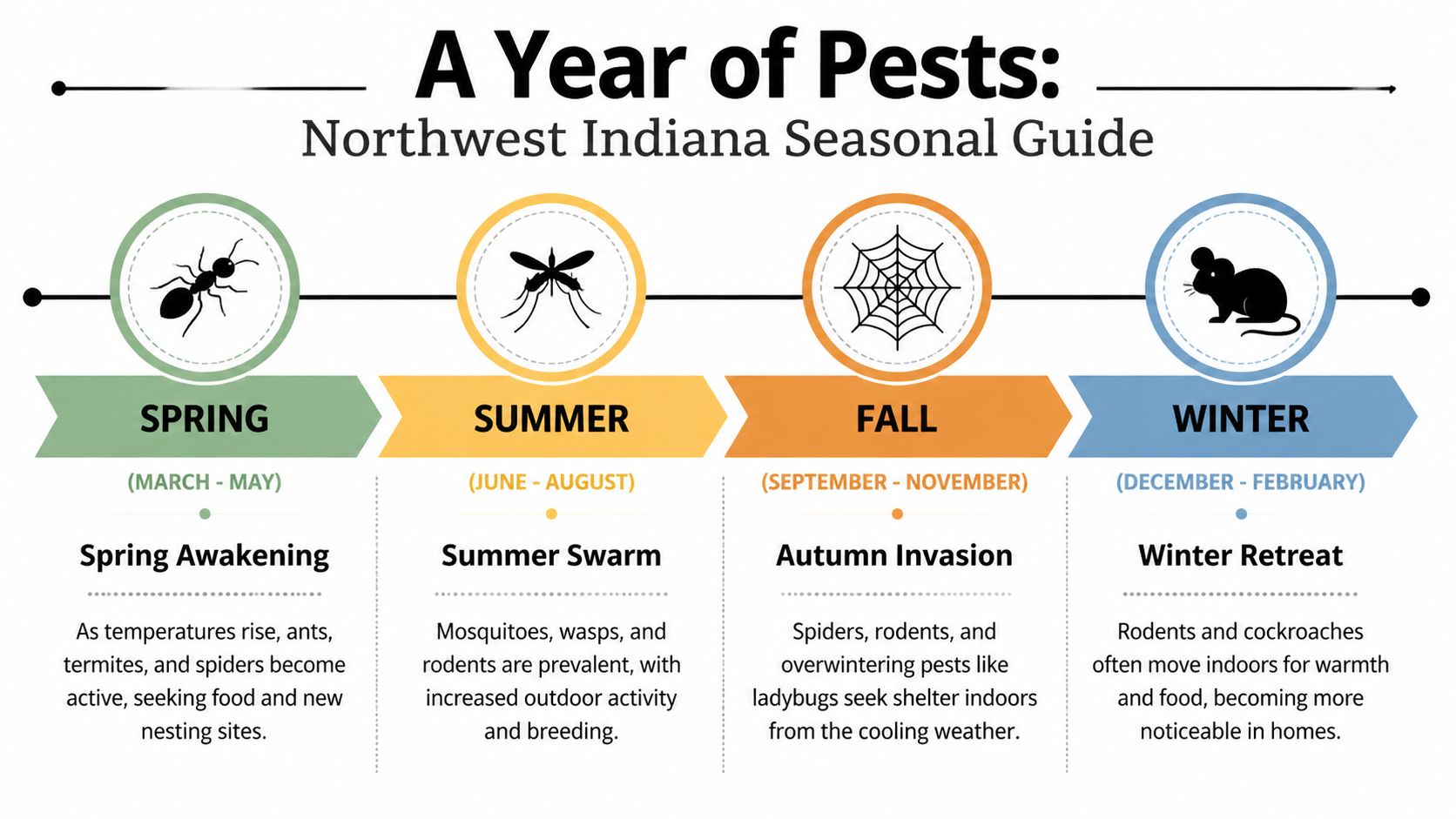
Pest activity shifts through the year in Northwest Indiana. Homeowners usually notice the visible part, but the more useful question is what conditions are changing underneath it. Temperature, moisture, food sources, and shelter needs all affect what starts moving.
Spring pressure starts outside and moves inward
When the ground warms and moisture rises, insect activity picks up fast. Ants start foraging. Spiders become more noticeable as prey insects increase. Wood destroying pests may show signs around vulnerable areas of the structure, especially where wood and moisture meet.
Spring is also when small exterior issues become bigger summer problems. A loose screen, wet mulch bed, leaking spigot, or untreated gap around a utility line can create a repeating entry pattern. Homeowners often notice pests inside first, but the source is commonly outside.
A useful spring checklist includes:
- Check trim and siding: Look for moisture-damaged wood or gaps
- Inspect around the foundation: Watch for cracks, settlement openings, or soil contact with wood
- Clear debris from edges of the home: Leaves and stacked materials hold moisture and harbor pests
- Watch window and door activity: Recurring sightings there usually point to entry conditions
Summer brings biting stinging and breeding pests
Summer changes the conversation from indoor nuisance to outdoor usability. Mosquitoes become a backyard problem when water collects in low spots, plant trays, toys, clogged gutters, or decorative containers. Wasps expand around roof peaks, decks, sheds, and traffic areas. Ant activity can continue, especially where food or moisture remains available.
This season also exposes the limits of quick DIY work. A store spray may knock down a visible wasp or two, but it won’t address a concealed nesting area. Fogging a yard without fixing water issues usually gives short-lived relief at best.
Summer pest control works better when the treatment matches where pests rest and reproduce, not just where people notice them.
Fall is entry season
As nights cool, many pests start looking for protected spaces. Rodents move aggressively toward homes through tiny gaps at the foundation, garage door edges, utility penetrations, and roof transitions. Spiders become more visible indoors because insect pressure shifts and sheltered spaces become more attractive.
Fall is the time when homeowners should think in terms of exclusion and sanitation, not just reaction. If seed, bird feed, pet food, cardboard storage, or clutter is easy to access, rodents have more reason to stay once they get in.
A simple comparison helps:
| Season | Main homeowner mistake | Better move |
|---|---|---|
| Spring | Waiting for activity to spread | Correct moisture and entry issues early |
| Summer | Treating only visible pests | Target breeding and resting zones |
| Fall | Ignoring small entry points | Seal gaps before cold drives pests in |
| Winter | Assuming reduced activity means no problem | Monitor hidden spaces and food areas |
Winter reveals hidden infestations
Winter doesn’t mean pest activity stops. It means activity becomes more concentrated indoors. Rodents become more audible and more dependent on interior shelter. Cockroaches and other indoor pests are easier to spot because heat, food, and water are concentrated in lived-in areas.
This is also when homeowners finally notice a problem that started earlier. A rodent issue that began in fall may not produce obvious signs until winter. The same goes for insects that have been nesting in wall voids, behind appliances, or in undisturbed storage spaces.
For many properties, a year-round plan makes sense because pest pressure changes shape instead of disappearing. One season is about breeding. Another is about entry. Another is about survival indoors. A one-time treatment often solves one part of that cycle, but not the whole pattern.
Our Solutions The Green Advantage Service Offerings

A service plan in Crown Point should match the way pests behave on your property. Homes near wooded edges, retention ponds, open farm ground, and newer subdivisions do not face the same pressure, even when the complaint sounds similar on the phone. Good pest control starts by sorting out the source, the pattern, and the conditions that keep the problem going.
Residential pest control built around pressure points
For many homes, the exterior is where the work starts. Ants trail in from mulch beds, spiders build up around soffits and foundations, and occasional invaders push through gaps around doors, utility lines, and lower siding. If that outside pressure is ignored, indoor treatments usually turn into repeat treatments.
The better approach is a multi-step plan. Treat the exterior where pests are active. Correct the spots that give them easy access. Address indoor conditions such as food residue, clutter, or moisture if they are helping the infestation continue.
Barrier treatments make sense for recurring ant, spider, and perimeter pest issues because they reduce activity where pests first travel and rest. For homeowners who want a lower-impact approach, green pest control near me explains how an eco-minded service can still be structured, targeted, and clear about what is being used and why.
Termite control and real estate inspections
Termite and wood-destroying insect inspections need plain language and careful documentation, especially during a sale. Pest Authority’s Northwest Indiana page points out that local properties often need inspection guidance tied to real estate transactions, and that lines up with what we see in the field. Buyers want to know whether they are looking at active infestation, old damage, or conditions that could lead to trouble later.
Those differences matter. Old tubes on a foundation wall do not mean a colony is actively feeding today. Wood rot near a sill plate is not termite evidence by itself, but it does create the kind of moisture conditions that deserve attention. A proper inspection should separate those findings clearly so owners, buyers, and agents know what needs treatment, repair, or monitoring.
Mosquito reduction based on how the yard actually works
Mosquito service should reflect the property, not a canned route stop. One Crown Point yard may hold water in low turf after every rain. Another may have dense arborvitae, shaded fence lines, and planters that stay damp through July. If you treat both the same way, results usually fall short.
Effective mosquito work focuses on the places adults rest and the places water collects. That may include targeted treatments to shaded foliage, advice on container management, and changes around downspouts, toys, tarps, or drains. An eco-minded program should protect the way a family uses the yard while still reducing mosquito pressure around patios, play areas, and entry points.
Commercial pest control for properties with constant activity
Commercial buildings need consistency more than flash. Offices, food-related businesses, apartment properties, and mixed-use facilities deal with traffic, deliveries, dumpsters, utility penetrations, and storage conditions that change week to week. Service has to fit those realities.
Strong commercial work usually includes:
- Site-specific inspection: Interior findings, exterior entry points, trash areas, and service corridors
- Monitoring and follow-up: A record of what was found, where activity changed, and what still needs attention
- Clear communication: Managers and staff should know the issue, the corrective steps, and any sanitation or maintenance concerns
- Prevention support: Exclusion, moisture correction, storage practices, and housekeeping all affect results
The best commercial program reduces the reasons pests stay on the property between visits.
Bed bug work needs a documented plan
Bed bug jobs are one of the fastest ways to see the difference between random treatment and professional process. Spray-only work often misses hidden harborages, eggs, and room-to-room spread. That is why the plan needs to be specific from the start.
Inspection comes first. Then treatment is matched to the infestation pattern, which may involve heat, targeted product use, detailed preparation, and scheduled follow-up. Homeowners need honest expectations here. Bed bug control is rarely about one quick visit. It is about careful inspection, clear prep instructions, and repeat verification so the problem is resolved instead of pushed into another room.
What to Expect The Green Advantage Process

You hear scratching over the garage on a cold Crown Point night, then notice a line of ants at the kitchen sink two weeks later. That is usually the moment homeowners call us. They want to know what happens next, how disruptive service will be, and whether the problem can be handled without turning the house upside down.
A clear process answers those concerns. You should know what we are checking, what we found, what we treated, and what still needs attention.
The first step is a focused intake
The first conversation should narrow the problem without pretending to solve it from the phone. We ask where the activity started, when you noticed it, whether it is indoors or outside, and what signs you have seen, such as droppings, staining, damage, nesting, bites, or swarmers.
That call also helps us sort urgency and seasonality in Northwest Indiana. Wasps near the front door in late summer, mice entering when temperatures drop, and moisture-driven insect activity after spring rain do not get handled the same way. If you want to see the kind of details that matter before a visit, our pest control inspection checklist gives a practical overview.
Inspection should explain why the problem is happening
A good inspection goes past identifying the pest. It should show why your property is supporting it. In this part of Indiana, that often means a mix of conditions. Wet mulch against the foundation, gaps at utility lines, a worn door sweep, insulation disturbed in the attic, or dense vegetation holding moisture near the siding.
That local piece matters. Homes in Crown Point deal with freeze-thaw gaps, humid summers, lake-effect moisture, and seasonal pest movement from fields, wooded edges, and neighboring structures. The inspection should connect those conditions to what is happening in your home, then separate cosmetic activity from the pressure points that need correction.
For harder jobs, the process needs documentation and more than one visit. Bed bug work is a good example. As noted earlier, simple spray work often falls short. Hidden harborages, eggs, and room-to-room spread usually call for a measured plan with preparation, targeted treatment, and scheduled rechecks.
A good inspection shows what is letting pests stay.
Here’s a short look at the kind of service mindset homeowners should expect:
The treatment plan should match the house
After the inspection, the next step is a written plan that fits the property and the pest pressure. Some homes need exterior treatment and exclusion work. Others need interior targeting, traps or monitors, sanitation changes, moisture correction, and follow-up visits. The right answer depends on what we found, not on a preset package.
At The Green Advantage, that plan should be easy to read and easy to question. Homeowners deserve to know what product or method is being used, where it is being applied, what results to expect, and what trade-offs come with the approach. Eco-minded service still requires honesty. Lower-impact methods can reduce exposure and work very well, but they also depend more heavily on access reduction, moisture control, and follow-through from both the technician and the homeowner.
A solid plan should explain:
- Which pest is being addressed
- Where the main activity and entry points are
- What control methods will be used and why
- What prep or cleanup the homeowner needs to handle
- When follow-up inspection or retreatment should happen
Small details make a difference here. For example, damaged window screens can turn a manageable exterior issue into an indoor one during warm months. If you are comparing different screen types for homes, stronger materials can support exclusion work and cut down on flying insect entry.
Follow-up is what keeps a pest job from stalling out. If activity drops, the plan can shift toward prevention. If it changes or spreads, we adjust the targeting, close more entry points, or add monitoring until the pressure is under control.
Actionable Prevention Tips for Your Home
You can lower pest pressure at home without turning your weekend into a full remodel. The goal is to make your house harder to enter and less rewarding once pests get close. In Northwest Indiana, that usually means controlling moisture, sealing access points, and cleaning up the quiet hiding places around the structure.
Exterior habits that make a difference
Start outside, because most pest problems begin there.
- Seal small gaps before fall: Check foundation cracks, utility penetrations, garage edges, and door sweeps. Rodents don’t need much space.
- Keep mulch and dense plants off the siding: Moisture and cover near the house give ants, spiders, and other pests a protected path.
- Store firewood away from the home: Stacked wood tight against the house invites wood-related pest activity and gives rodents shelter.
- Manage standing water: Empty containers, unclog gutters, and correct low spots where mosquito breeding can start.
If you’re checking windows and vents, screens matter more than many homeowners realize. If you want a practical breakdown of different screen types for homes, this guide from Sparkle Tech Window Washing can help you choose materials that hold up better and support pest prevention.
Indoor steps that support long term control
Inside the home, pest prevention is mostly about reducing easy access to food, water, and undisturbed hiding spaces.
A short indoor checklist helps:
| Area | What to do |
|---|---|
| Kitchen | Store dry goods in sealed containers and clean crumbs under appliances |
| Basement | Reduce cardboard clutter and watch for moisture or condensation |
| Garage | Keep pet food and seed sealed, and avoid loose storage piles |
| Laundry and utility areas | Monitor for leaks, dampness, and wall gaps around pipes |
One more helpful step is using a room-by-room inspection routine instead of waiting for obvious activity. This pest control inspection checklist gives homeowners a simple way to look for the kinds of conditions that often get missed.
Small prevention steps work best when they’re done before seasonal pressure builds. Once pests settle in, the work usually gets more involved.
Frequently Asked Questions About Pest Control in Crown Point
Are pest control treatments safe around kids and pets
That depends on the product, the application area, and whether the treatment plan matches the situation. The safest approach is a targeted one. Instead of overapplying material everywhere, a technician should focus on the pest, the entry route, and the conditions supporting the problem. Homeowners should always follow any preparation or reentry guidance they’re given.
How is pricing determined
Accurate pricing usually comes after inspection or at least after a detailed intake conversation. Pest problems vary by pest type, property size, severity, access, and whether the work is a one-time correction or an ongoing prevention plan. A flat price without context may sound convenient, but it can miss important parts of the job.
Is a one time treatment enough
Sometimes, yes. If the problem is isolated and the contributing condition is easy to correct, a single service may make sense. But many homes in Northwest Indiana deal with recurring seasonal pressure, especially from perimeter pests, mosquitoes, wasps, and rodents looking for shelter. In those cases, prevention is usually more dependable than waiting for each new wave of activity.
When should I schedule a pest inspection
Sooner is better when you’re seeing repeat activity, signs of wood damage, droppings, nesting, stinging insects near traffic areas, or unusual bites. It’s also smart to schedule an inspection during a home purchase or refinance if pest concerns could affect the property decision. Waiting rarely makes identification easier.
What if I tried DIY products already
That’s common. Some store products can reduce visible activity for a short time, especially with ants, wasps, or occasional invaders. The trade-off is that DIY treatment often addresses what you can see, not where the infestation is established or how pests are getting in. If the problem keeps returning, a site-specific inspection usually saves time and frustration.
If you’re dealing with pest activity in Crown Point or nearby Northwest Indiana communities, The Green Advantage can help you move from guesswork to a clear plan. Whether you need residential pest control, a real estate inspection, mosquito reduction, rodent control, or commercial service, the next step is simple. Request an inspection, ask for a quote, and get a practical recommendation based on your property and the pests affecting it.