
A lot of Crown Point homeowners are in the same spot right now. The kids want to be outside, the dog runs the fence line, and every walk back in from the yard comes with that uneasy thought: are ticks out there waiting in the grass or along the wood line?
That concern is justified, but it doesn't mean you have to give up your yard. A good natural tick repellent for yard strategy works best when you stop thinking about one spray or one plant doing all the work. The yards that stay more usable through tick season usually rely on layers: cleaner edges, drier borders, better sunlight, smart maintenance, and then targeted repellents where they work.
In Northwest Indiana, that practical approach matters. Our yards often mix lawn, mature trees, mulch beds, brushy edges, and damp shaded pockets. Those transitions are exactly where tick pressure tends to build. The safer answer isn't panic. It's a yard plan that makes ticks less comfortable and your outdoor space easier to manage.
Understanding Tick Risks in Your Crown Point Yard
A typical Crown Point yard can look tidy from the patio and still have a tick problem around the edges. That's what catches people off guard. The center lawn may be open and sunny, but the side fence, woodpile, brush behind the shed, or shady mulch bed near the tree line can create the kind of protected pocket ticks like.
Families usually notice the risk in small moments. A dog comes in with debris on its coat. Someone finds a tick after pulling weeds. Kids want to play near the back border where the grass meets the trees, and suddenly the whole yard feels less relaxing than it should. If you've been wondering how long ticks can stay active around a property, this guide on how long ticks can live gives helpful context.
Where concern turns into a yard problem
Ticks don't spread evenly across a property. They build pressure in the places homeowners often overlook:
- Wooded transitions where lawn meets brush or tree cover
- Moist shade under shrubs, around stacked materials, and beside fences
- Low-traffic zones behind sheds, along property lines, or near neglected beds
- Animal pathways where pets and wildlife move in and out of cover
That matters because a homeowner can mow regularly and still miss the spots that keep reintroducing ticks into the spaces people use.
Practical rule: Don't judge tick risk by the open lawn. Judge it by the edges, the shade, and the damp areas people rarely inspect.
A layered mindset works better than a quick fix
A common desire is for one natural product that solves the problem and lets one move on. In practice, yards don't work that way. Ticks respond to habitat first. If the environment stays cool, protected, and moist, any repellent you apply is doing uphill work.
That's also why tick concerns often overlap with broader outdoor pest concerns in Northwest Indiana. A yard with overgrowth, standing moisture, and thick cover can attract more than ticks. Mosquitoes, spiders, and rodents often benefit from the same neglected conditions.
The better mindset is simple. Reclaim the yard one layer at a time. Start with the places that make ticks comfortable. Then use plant-based repellents as support, not as the whole plan.
Redesigning Your Landscape to Discourage Ticks
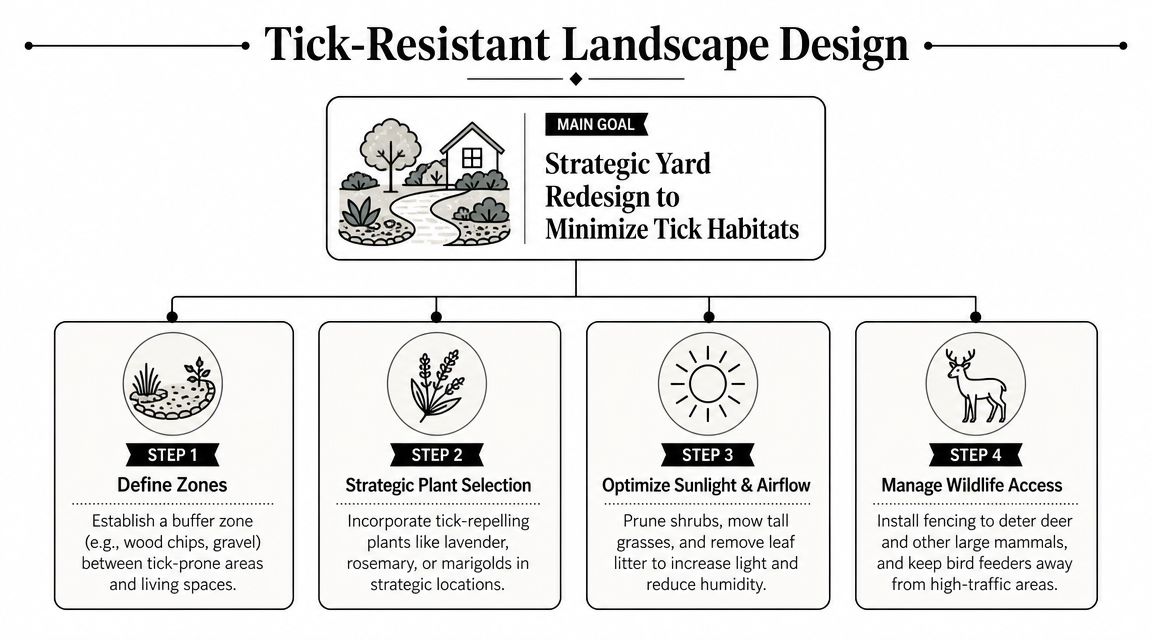
The strongest natural tick strategy usually starts with landscaping, not spraying. If your yard gives ticks moisture, shade, and easy travel from wooded edges into family areas, you're asking repellents to compensate for a layout problem.
Public health guidance puts a clear number on one of the most important fixes. The CDC guidance summarized by Harvard emphasizes a 3-foot-wide barrier of wood chips, gravel, or mulch between lawns and wooded areas, and Harvard also notes that a single application in May or early June is the most important spray window when tiny nymph ticks are active on Harvard's yard protection guidance.
Start with a tick audit
Walk your property like a pest professional would. Don't look for what's pretty. Look for what stays damp, shaded, and undisturbed.
Check these areas first:
The rear edge of the yard
If your lawn backs up to trees, brush, or a drainage area, that edge deserves the most attention.Beds with heavy ground cover
Dense plantings can trap humidity close to the soil.Storage spots
Firewood, stacked branches, unused pots, and tucked-away debris create cover.The fence line
Tall grass and weeds along fences often become a quiet movement corridor.
Build a dry border that actually works
The barrier only helps when it stays dry and open. Homeowners sometimes install decorative mulch and assume they've solved the issue, but the wrong material can work against them.
A good border should separate the lawn from wooded or brushy areas in a way that feels exposed rather than soft and damp. Think broad wood chips, gravel, or bark that doesn't hold moisture the way finely shredded material can. You're trying to interrupt movement into the spaces where kids play, people sit, and pets cut across the yard.
The barrier isn't for looks alone. It creates a less inviting crossing point between tick habitat and daily living space.
Let sunlight do part of the work
Ticks prefer moist, shady areas, which is why brightening key parts of the yard changes the equation. Thin lower branches, prune overgrown shrubs, and keep dense plantings from knitting together into one continuous cool pocket.
If you're planning bigger changes, a visual tool can help you think through traffic flow, patio placement, and buffer zones before you buy materials. A simple landscape ai design tool can be useful for testing a safer layout around wooded edges, play areas, and seating spaces.
Focus redesign on where people spend time
Not every inch of the property needs to be treated the same way. Prioritize the zones where exposure matters most.
| Yard area | Better choice |
|---|---|
| Play space | Move it toward sun and away from brushy edges |
| Patio border | Keep the perimeter clean, open, and dry |
| Pet route | Create a trimmed, predictable path instead of letting pets run through edge cover |
| Garden beds near lawn | Thin dense growth and keep edges defined |
A yard can still look natural and established without giving ticks a protected highway into the places your family uses every day.
Applying Natural Repellents and Plant-Based Barriers
Once the yard is working in your favor, plant-based repellents make more sense. Many homeowners often begin here, but it's more effective as the second layer, not the first.

A lot of products marketed as natural tick repellents rely on familiar botanical oils. The review in the verified data notes ingredients commonly found in minimum-risk products, including cedarwood, cinnamon, citronella, clove, peppermint, rosemary, sesame, spearmint, thyme, and white pepper in this peer-reviewed review of botanical tick products.
What natural products do well
Natural repellents are useful for temporary pressure reduction in defined spaces. They can help around:
- Patio edges before a gathering
- Dog run zones that need extra attention
- Garden borders near outdoor seating
- Entry paths where people brush against vegetation
The same review found that some minimum-risk botanical products produced only short-term suppression lasting 1 to 3 weeks, with 37% to 59% reduction in host-seeking nymphal blacklegged ticks. It also cited repellency results at 8 hours where 10% citronella oil reached 83%, clove oil reached 78%, and geraniol oil reached 67%. That's useful evidence that natural options can work, but they don't act like a season-long shield from one application.
Set up safe zones, not fantasy zones
A smart way to use a natural tick repellent for yard treatment is to concentrate on “safe zones” rather than trying to make the entire property tick-free with one spray pattern.
Safe zones usually include:
- the patio and nearby border
- a trimmed path from the back door to the play area
- the dog's main route
- a seating area with good sun and airflow
Tick zones are different. Those are the brushy back corners, fence lines with shade, unmanaged edges, and transitions into woods. Natural sprays can support those areas, but they won't replace the need to cut back habitat.
Field insight: If a homeowner has to keep re-spraying the same shady, overgrown edge, the yard is telling them the environment is still the main problem.
This short video gives a homeowner-friendly look at outdoor tick prevention practices:
Botanical plants can help, but they're support pieces
People often ask about adding plants that may discourage ticks. Herbs and strongly scented plantings can be useful around seating areas, walkways, and containers near patios because they fit naturally into a broader low-risk yard plan.
Consider using plantings such as:
- Rosemary near sunny seating spaces
- Lavender along path edges
- Mint in containers rather than loose beds
- Marigold accents near patios and garden entrances
These choices can complement a cleaner layout, but they shouldn't be treated as a standalone control program. If the wood line stays damp and leaf-filled, attractive plantings near the deck won't offset that pressure.
Smart Maintenance and Safety for Your Family
The homeowners who get the best results from natural methods are usually the ones who treat tick prevention like lawn care. It isn't one weekend project. It's a pattern.
A practical yard routine matters because even a well-designed space can drift back toward tick-friendly conditions once grass creeps up, shrubs fill in, and debris starts collecting. That's especially true in Northwest Indiana, where spring growth and summer moisture can change a yard quickly.
Keep the barrier dry and the lawn usable
A common mistake is choosing mulch that stays damp and compacted. Consumer Reports notes that using damp, shredded mulch instead of broad, dry chips or bark can recreate the moisture ticks prefer, which weakens the whole barrier idea. The same guidance also notes that the best tested insect repellents can provide more than 8 hours of tick protection, reinforcing the value of pairing yard work with personal protection on Consumer Reports guidance on tick-proofing your yard.

That's why maintenance needs to stay practical, not decorative. If a product looks nice but holds moisture, it may be the wrong choice for a tick-conscious border.
A simple routine that holds up
Use this checklist to keep your yard from sliding backward:
- Mow consistently so grass doesn't become a hiding and transfer zone.
- Rake leaf litter promptly instead of letting it mat along beds and edges.
- Trim shrubs upward and outward so light and airflow reach the ground.
- Watch pet paths because dogs often reveal the routes ticks are most likely to use.
- Keep seating and play areas separated from the outer edges of the yard.
Family habits matter too
Yard work lowers exposure, but personal habits still count. If kids have been playing near borders, or the dog has been running the perimeter, it's smart to check clothing, shoes, and fur after outdoor time.
Harvard's Lyme Wellness Initiative also highlights a household habit people often overlook: showering within 2 hours after coming indoors can reduce Lyme disease risk, as summarized in the earlier Harvard yard guidance. That's a reminder that outdoor safety works best as a combined routine.
The goal isn't to make the yard feel off-limits. It's to make outdoor time feel normal again because the high-risk areas are no longer being ignored.
Protecting Your Family When Natural Methods Fall Short
Some yards have heavier tick pressure than others. If your property backs up to dense woods, has persistent shade, or keeps producing ticks even after cleanup and repeat repellent use, natural methods may still help, but they may not be enough on their own.
That's not a failure. It's a clue about the site conditions.
Know when the yard is asking for more than DIY
A practical methodology for reducing yard risk is to combine habitat modification with a dry perimeter barrier. Guidance summarized in the verified data recommends keeping grass trimmed to about 3 inches, removing leaf litter, and installing a 3-foot-wide strip of gravel or wood chips between lawn and wooded edges because ticks concentrate in cool, moist edge habitat and the barrier makes movement into recreation areas harder, as described in this yard-focused tick prevention method.
If you've already done that work and the problem keeps returning, the issue may be beyond casual maintenance. Heavy edge pressure, wildlife movement, and larger untreated surrounding habitat can keep reintroducing ticks.
Signs your current approach isn't enough
Watch for these patterns:
- Ticks keep showing up in the same edge zones even after cleanup
- Pet exposure continues despite trimming and border work
- The property stays heavily shaded and doesn't dry out well
- You're relying on constant reapplication just to feel comfortable using the yard
At that point, a more targeted and environmentally mindful treatment plan usually becomes the safer choice. Professional help is especially valuable when a homeowner wants to protect children, pets, or guests without turning the entire property into a trial-and-error project.
A solid service visit should include a real inspection, attention to harborage zones, and a treatment plan specific to the property instead of a generic blanket approach. That's what separates useful intervention from just spraying and hoping.
Partnering with The Green Advantage for Lasting Peace of Mind
A safer yard in Crown Point usually comes from two things working together. The homeowner reduces habitat, and a trained local pest professional handles the pressure that maintenance alone can't fully control.
That balance matters because tick problems rarely stay isolated. The same properties that struggle with ticks may also deal with mosquitoes around shaded moisture, ants around garden beds, or rodent activity near storage areas and foundations. A broader pest management view helps protect the whole property, not just one symptom at a time.
What professional support should feel like
Homeowners shouldn't have to guess whether a treatment makes sense for their lot. A good experience starts with listening, not overselling.
Expect a local provider to:
- Inspect the actual risk areas instead of focusing only on the visible lawn
- Explain why ticks are favoring certain sections of the property
- Recommend practical corrections you can handle between visits
- Use targeted treatments thoughtfully with family and pet safety in mind
- Communicate clearly about what to expect next

Why local experience helps in Northwest Indiana
Crown Point properties vary a lot. Some are newer and more open. Others have mature trees, brushy back lines, drainage areas, and long edge habitats that need a more careful plan. Local experience helps because the treatment strategy should reflect your specific yard, not a generic checklist.
If you want help beyond DIY cleanup and plant-based deterrents, take a look at The Green Advantage tick control services. Their work is focused on practical, environmentally mindful pest management for homeowners in Crown Point and nearby Northwest Indiana communities.
A good tick plan doesn't just reduce bugs. It gives your family confidence to use the yard again without second-guessing every trip outside.
If you're dealing with tick activity around your home and want a safer, more dependable plan, The Green Advantage can help. Schedule an inspection, request a quote, and get clear guidance on the right mix of habitat changes, targeted treatment, and ongoing prevention for your Crown Point yard.