
Home Pest Control Do It Yourself: 2026 Guide
You wipe down the kitchen, turn off the lights, and come back an hour later to find ants crossing the counter again. Or you head into the basement in Crown Point and notice more spider activity than usual along the walls and joists. Most homeowners' first instinct is reasonable: grab a spray, set a few traps, and try to get ahead of it.
Sometimes that works. Sometimes it only pushes the problem around for a week.
That gap is what trips people up with home pest control do it yourself. The store shelf makes everything look simple, but real pest control depends on knowing what you're treating, where it's coming from, and whether the tool in your hand is built for that job. In Northwest Indiana, where seasonal shifts push pests indoors and moisture issues often feed repeat activity, guessing usually costs more time than it saves.
Homeowners in Crown Point don't need scare tactics. They need a practical way to decide what they can handle on their own and what deserves a professional inspection. A good starting point is a simple pest control inspection checklist for homeowners, especially before you spray anything or start moving furniture around.
A Homeowner's First Step in Pest Management
A common pattern looks like this. A homeowner sees a few ants near the sink, buys a fast-kill aerosol, and the visible trail disappears. Then the ants show up by the dishwasher. A few days later they're back near the pantry.
That doesn't mean the homeowner did something wrong. It usually means the treatment addressed the insects that were out in the open, but not the conditions supporting them.
Start with the problem you can see
Most indoor pest issues begin with one of a few triggers:
- Food access: Crumbs under appliances, pet food left out, grease buildup, or unsealed pantry goods.
- Water sources: Leaky supply lines, damp basements, condensation, or wet crawl spaces.
- Shelter and entry: Gaps at doors, utility penetrations, foundation cracks, attic openings, or worn weatherstripping.
Pests don't need much. If they can get in and find moisture, they'll keep testing the same areas.
Practical rule: If you haven't identified the attractant, you probably haven't fixed the infestation.
Think prevention before product
Professional pest control starts with prevention because that's what makes treatment last. In a house, that usually means cleaning up the attractant, drying out the area, and limiting access before you ever reach for a spray bottle.
In Crown Point and nearby Northwest Indiana communities, that often means paying close attention to sump areas, basement corners, garage thresholds, window frames, and exterior utility lines. Those are the places where low-level activity becomes a repeating problem.
A smart first step is simple. Confirm where the pests are active, look for what they're using, and avoid broad applications until you know what you're dealing with. That approach saves effort and reduces unnecessary exposure inside the home.
Identifying Common Pests in Your Northwest Indiana Home
Correct identification matters more than most DIY guides admit. Integrated pest management, or IPM, became the foundation for modern DIY home pest control because it starts with identifying the pest before treatment. The National Pesticide Information Center says DIY work is most effective when it is specific to the particular pest, and it recommends professional help when identification is difficult, special equipment is needed, or a restricted-use pesticide is involved. Only licensed applicators can buy or use those products, according to the National Pesticide Information Center's DIY pest control guidance.
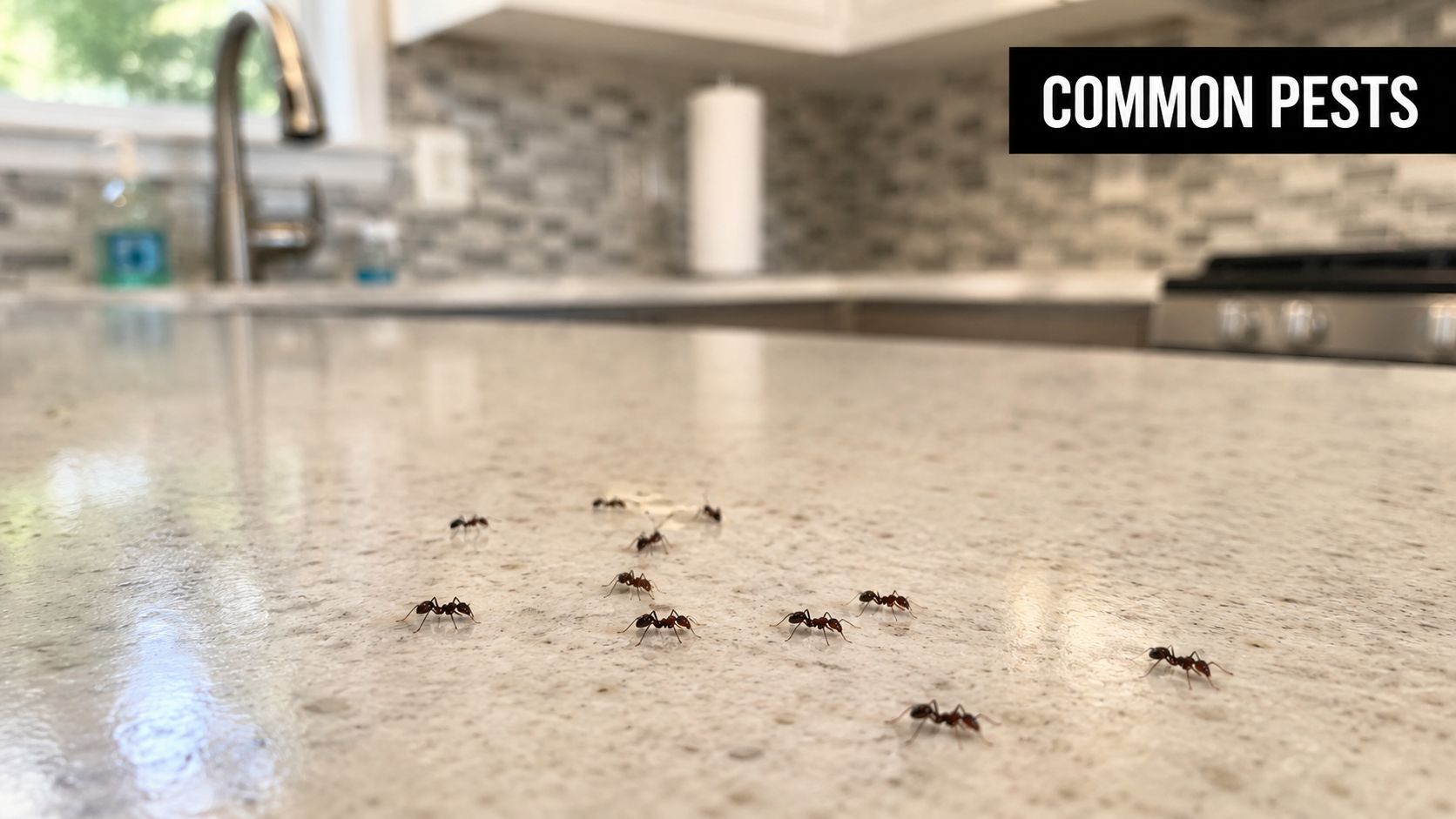
Ants, spiders, and wasps don't respond the same way
Homeowners often lump pests together. That's where treatment goes sideways.
Ants usually leave patterns you can follow. Kitchen trails often point to food or moisture. Pavement and outdoor ant activity may start along foundations, sidewalks, or expansion joints, then move indoors.
Spiders are different. A few spiders in a basement don't always mean an infestation centered on spiders. In many homes, they're there because other insects are there. If you only knock down webs without reducing prey and entry points, the activity tends to return.
Wasps create a separate risk because location matters as much as species. A small nest in an isolated area may be manageable at the right time and with the right safety steps. A nest near a doorway, play area, or roofline calls for more caution.
What to check before you treat
Use a short inspection routine before buying products:
- Look at where the pest is active. Countertop, sill plate, basement wall, eave, attic hatch, or bathroom vanity all suggest different causes.
- Check the time of day. Some pests appear mostly at night. Others become obvious during heat or rain changes.
- Notice the pattern. One isolated sighting isn't the same as repeat sightings in the same route or room.
- Inspect nearby conditions. Leaks, food debris, clutter, cardboard storage, and exterior cracks matter more than many homeowners expect.
If you can't confidently name the pest, don't move straight to treatment. Misidentification is one of the main reasons DIY work fails.
Local clues matter in Northwest Indiana
Homes in Crown Point and the surrounding area deal with changing moisture levels, seasonal transitions, and a mix of finished and unfinished spaces. Basements, garages, and exterior perimeters deserve extra attention because they're common staging points before pests spread deeper into the home.
Accurate ID doesn't need to be fancy. It just needs to be honest. If you know what it is, you can choose the right response. If you don't, a quick inspection beats repeated trial and error.
Evaluating DIY Treatments and Eco-Friendly Options
A homeowner in Crown Point might see a trail of ants in the kitchen, grab a spray from the garage, and get fast relief for a day or two. Then the ants show up again along the same edge. That is the part DIY work often misses. The visible insects are only part of the problem, and the right product still fails if it is used in the wrong place or for the wrong pest.
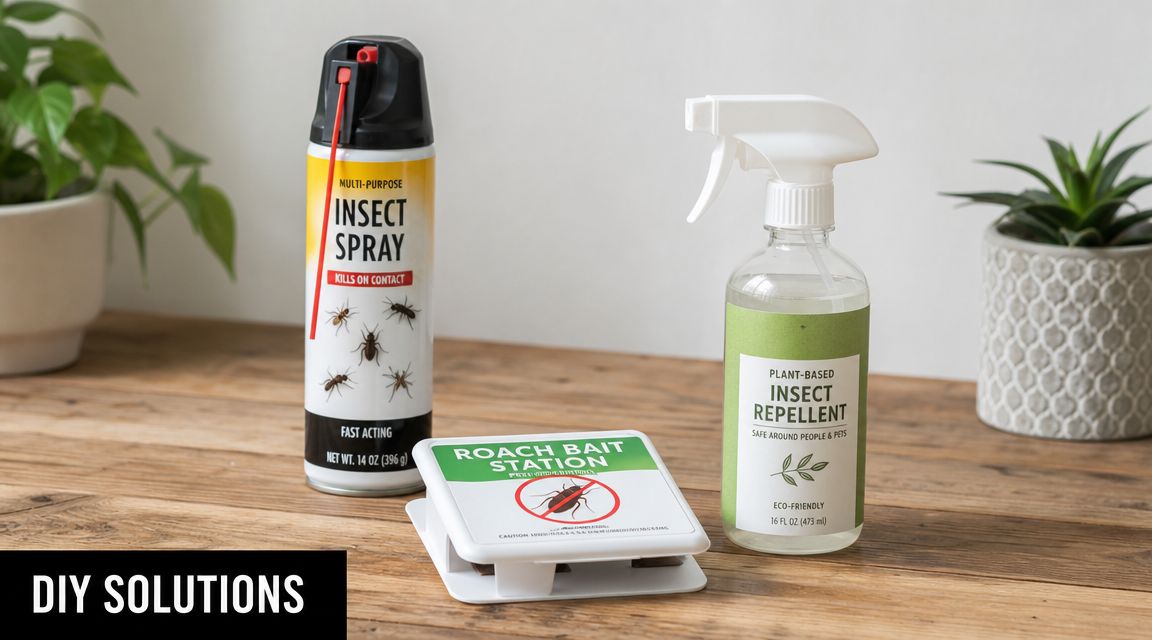
What common DIY products do well, and where they fall short
Aerosol sprays are for quick knockdown. They can help with the insects you can see on contact, but they usually do very little for pests tucked into wall voids, under insulation, behind cabinets, or down in a nesting site.
Baits are often a better choice for ants, some roaches, and other foraging pests. Placement matters. So does patience. If bait is set where pests are not feeding, or if a repellent spray is applied over the same area, the result is usually weaker control and a longer problem.
Glue boards and snap traps are useful diagnostic tools. I use them to confirm travel routes and pressure levels because they show whether activity is random or repeating. What they do not do is solve the reason pests are there in the first place.
Outdoor treatments can help reduce entry pressure around the foundation, doors, utility penetrations, and lower siding. They also break down faster outside than many homeowners expect because sun, rain, and irrigation wear residues down. That is one reason random spot treatment around the yard rarely gives steady results.
A visual example helps show how that perimeter mindset is supposed to work:
Natural repellents have a place, but the job has to fit the product
Lower-toxicity options make sense in many homes, especially with small children, pets, or sensitive treatment areas. The trade-off is usually shorter residual life and a narrower range of results.
The University of Florida explains that some essential oils may repel pests such as ants or spiders for a limited time, but they do not replace removal of food sources, moisture, or entry points. That is the practical limit many homeowners run into with natural pest repellents and their limits. Repellency is not the same thing as control.
That same approach applies outside the house. Reducing pest pressure often starts with cleaner edges, less cover, and fewer damp hiding spots. Yard maintenance choices matter, and eco-friendly weed control methods can support that goal without adding unnecessary chemical use around the property.
Safety has to come before convenience
Homeowners get into trouble when they treat too broadly, mix products, or apply more than the label allows. Food-contact areas, pet zones, and low baseboard lines need extra caution because that is where exposure happens.
A few rules hold up in almost every house:
- Treat only the areas listed on the label. Indoor crack-and-crevice treatment is different from broad surface spraying.
- Keep products away from dishes, prep areas, and pet items unless the label specifically allows that use.
- Do not combine products just to get faster results. More chemistry can create more risk without improving control.
- Reapply by label direction, not by frustration.
If you are weighing store products against a safer home plan, home pest control chemicals and safety basics lays out what usually belongs in a careful DIY approach and what should stay in professional hands.
When DIY Pest Control Is Not Enough
Some pest situations stop being a homeowner project the moment they appear. That's usually because the risk is higher, the source is hidden, or the treatment demands more precision than over-the-counter tools can deliver.
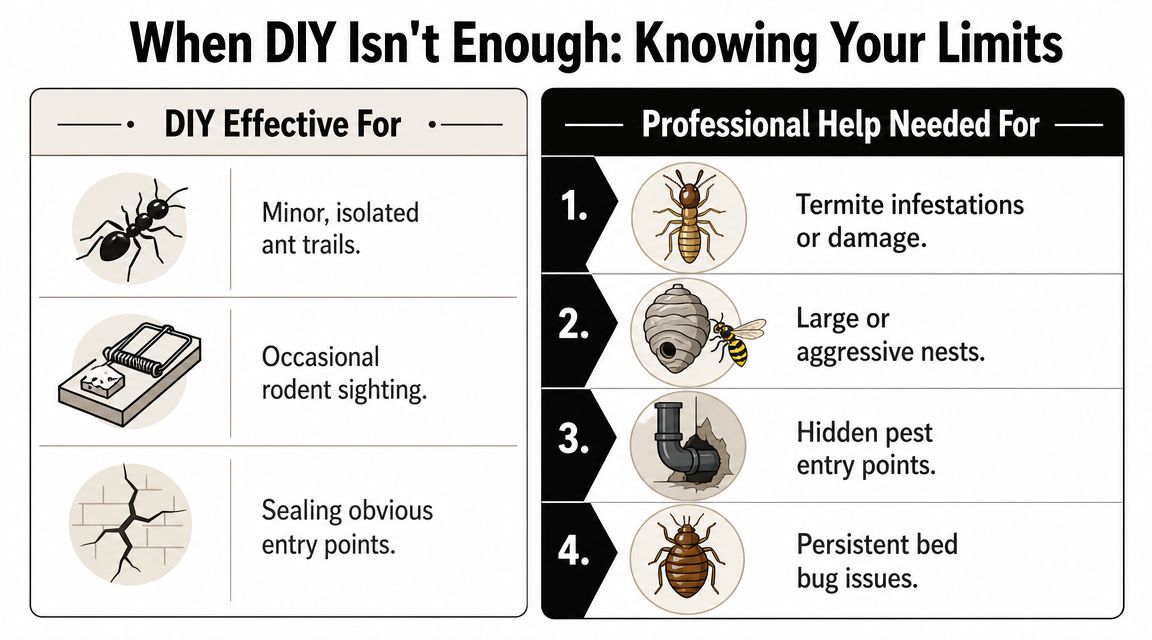
Red flags that should change your plan
A few examples come up all the time in Northwest Indiana homes.
Termite signs deserve immediate attention because the problem is often hidden inside wood or behind finished surfaces. By the time a homeowner sees evidence, the colony may be well established.
Large wasp nests near doors, decks, soffits, or play areas create a direct safety issue. DIY treatment becomes much riskier when nest size, height, or insect aggression increases.
Rodent activity in walls or attics usually means the visible problem is smaller than the actual one. If you hear movement, find droppings repeatedly, or keep catching one rodent at a time without the problem ending, exclusion and deeper inspection matter more than trap count.
Persistent bed bug activity is one of the clearest examples of DIY limits. The EPA's do-it-yourself process involves a six-step workflow: identify the problem, develop a plan, keep the infestation from expanding, prepare for treatment, kill the bed bugs, then evaluate and prevent re-infestation. Its interceptor setup uses two nested plastic containers with talcum powder, furniture moved a few inches from walls, and linens kept off the floor. The EPA also advises checking and cleaning interceptors every week and reapplying talcum powder. If bugs are still seen later, the EPA notes that eggs may have hatched or bugs were missed during the first pass, which is why bed bug control often exceeds what most homeowners can manage consistently through the EPA's DIY bed bug control process.
A problem becomes professional-grade when success depends on hidden access points, repeated follow-up, or treatment in places the homeowner can't safely or effectively reach.
DIY vs. Professional Pest Control for Common NWI Issues
| Pest Issue | DIY Approach & Typical Outcome | Professional Approach & Outcome |
|---|---|---|
| Minor ant trail in one area | Cleaning, bait placement, and monitoring may stop isolated activity if the attractant is removed | Inspection confirms source, species pattern, and whether exterior treatment or exclusion is needed |
| Recurring ants in multiple rooms | Surface sprays may kill visible ants but often don't resolve the route or nesting pressure | Targeted treatment and inspection focus on where ants are entering and why they keep returning |
| Large wasp nest near entry | High sting risk, difficult access, and incomplete knockdown are common problems | Safer removal strategy with proper equipment and site-specific treatment |
| Rodents in walls | Traps may catch individual rodents while entry points stay open | Exclusion, monitoring, and targeted removal address the route and the activity together |
| Suspected termites | Store products rarely match the scope of hidden structural infestations | Inspection determines evidence, extent, and the right corrective plan |
| Bed bugs | Detailed prep and follow-up are difficult to maintain, and missed eggs restart the cycle | Thorough inspection, structured treatment, and repeat evaluation improve control |
The decision line is simple
DIY makes sense when the problem is small, visible, and easy to monitor. It stops making sense when the pest can damage the structure, threaten safety, or hide in places that don't forgive mistakes.
That isn't a sales line. It's the practical line.
The Green Advantage Process for a Pest-Free Home
You treat the kitchen ants on Saturday, wipe everything down, and feel like you got ahead of it. By Tuesday, they're back at the sink and now showing up near the pantry too. That's usually the point where trial and error starts costing more time than the pest problem should.
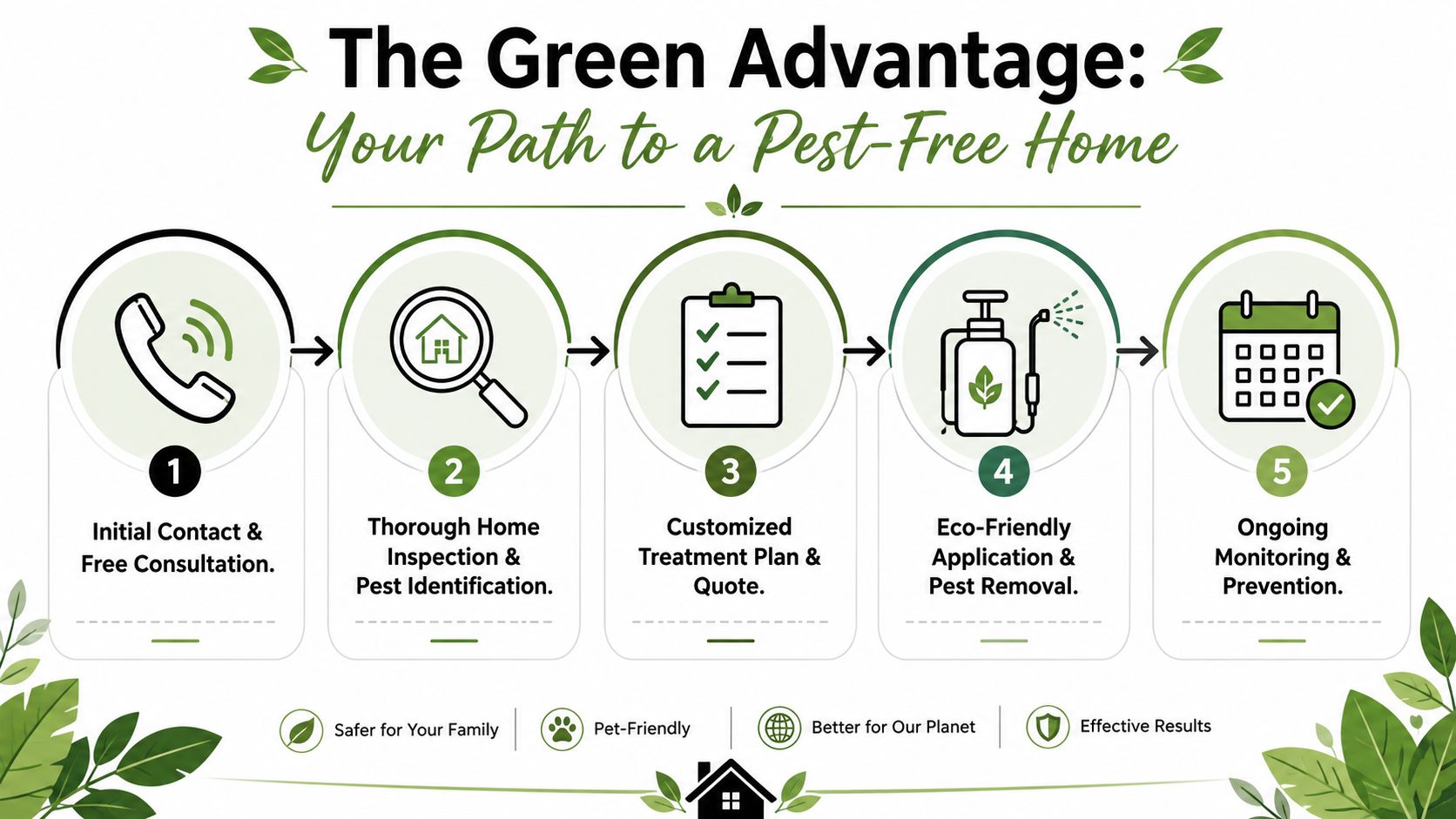
What the service path looks like
A good service process starts with pattern recognition. Where are the pests showing up, when did it start, and what changed around the home? In Crown Point, I look for the usual local triggers first. Mulch holding moisture near the foundation, gaps at garage doors, cluttered basement storage, pet food left accessible, and exterior lights that pull insects close to entry points.
Then comes the inspection. The point is to find the pressure behind the sightings, not just confirm that bugs exist. That means checking likely entry areas, conditions that support activity, and the outside edges of the property where many infestations begin.
Treatment only makes sense after that.
For one home, the right answer may be a light, targeted interior application with sanitation corrections. For another, it may be exterior treatment, sealing entry points, and a follow-up visit because the pest's life cycle or hiding behavior makes one visit unrealistic. Eco-conscious service fits into that same process. Use the least material needed, place it where it works, and avoid broad applications that add exposure without solving the cause.
Why routine service works better than reactive spraying
Reactive spraying usually follows a sighting. A maintenance program follows pest pressure.
That difference matters in real homes. Rain, sunlight, mowing, irrigation, and seasonal insect movement all affect how long a treatment holds up outside. A homeowner may apply a store product once, get a short drop in activity, and assume the issue is solved. Then the barrier breaks down, the entry point stays open, and the calls start over inside.
Routine service gives the property repeated attention. It catches changes in pressure, adjusts treatment to the season, and gives someone a chance to spot the conditions that keep feeding the problem. That's hard to duplicate with occasional DIY applications, especially if the pest activity shifts from one side of the house to another.
The strongest pest program reduces access, shelter, moisture, and food sources, then backs that up with targeted treatment.
One useful local option for identification and next steps
For homeowners who are still trying to decide whether the problem is manageable or headed in the wrong direction, The Green Advantage provides pest inspections and identification support in Crown Point and nearby Northwest Indiana communities. That kind of visit should answer a few practical questions clearly. What pest are you dealing with? How active is it? Can DIY still work here, or has the problem moved past that point?
A useful service call should leave you with a plan, not a guess.
Schedule Your Pest Inspection in Crown Point Today
Recurring pest problems often lead to searches for pest control near me, exterminator near me, or pest control in Crown Point, IN. At this point, homeowners typically understand that the full cost of DIY isn't just product. It's time, uncertainty, and the frustration of treating the same issue more than once.
Professional residential pest control protects more than comfort. It helps protect food storage areas, wall voids, insulation, trim, entry points, and the general condition of the home. For some properties, the need goes beyond insects and includes rodent control, wasp removal, mosquito control, or a broader preventative pest treatment plan.
For landlords, property managers, and business owners in Northwest Indiana, the same principle applies. Delayed action tends to make pest issues harder to contain, harder to explain to occupants, and harder to resolve cleanly.
If you're in Crown Point, IN or a nearby Northwest Indiana community and want a clear answer on what you're dealing with, schedule an inspection before spending more money on trial-and-error products. A focused inspection can tell you whether your issue is a manageable nuisance, a hidden access problem, or something that needs a more complete treatment plan.
The right next step is simple. Stop guessing. Get the pest identified, get the conditions assessed, and get a plan that fits your home.
If you're ready to move beyond repeated DIY attempts, contact The Green Advantage to schedule a pest inspection or request a quote for your Crown Point home or Northwest Indiana property.
Expert Pest Control in Crown Point, IN: Does Lavender Oil Repel Mosquitoes?

As a Crown Point homeowner, enjoying a summer evening outdoors can quickly turn into a battle against buzzing, biting mosquitoes. You might wonder, does a natural remedy like lavender oil actually repel these pests? The short answer is yes, it can provide some personal protection, but it's not a whole-yard solution. For lasting relief from mosquito infestations in Northwest Indiana, a professional pest control strategy is essential.
At The Green Advantage, we help families across Crown Point, IN, reclaim their backyards. While lavender oil has its place, understanding its limitations is key to keeping your property comfortable and safe all season long.
How Lavender Oil Works as a Mosquito Repellent
Many homeowners in Crown Point prefer natural pest solutions, and lavender oil is a popular choice. Its repellent power comes from a compound called linalool, which confuses a mosquito's senses, making it harder for them to find you. Essentially, it masks the carbon dioxide you exhale, which is what mosquitoes use to track their targets.
However, its effectiveness varies dramatically depending on where you use it. For those humid Northwest Indiana evenings, the difference between indoor and outdoor use is significant.
This infographic breaks down the scientific findings.
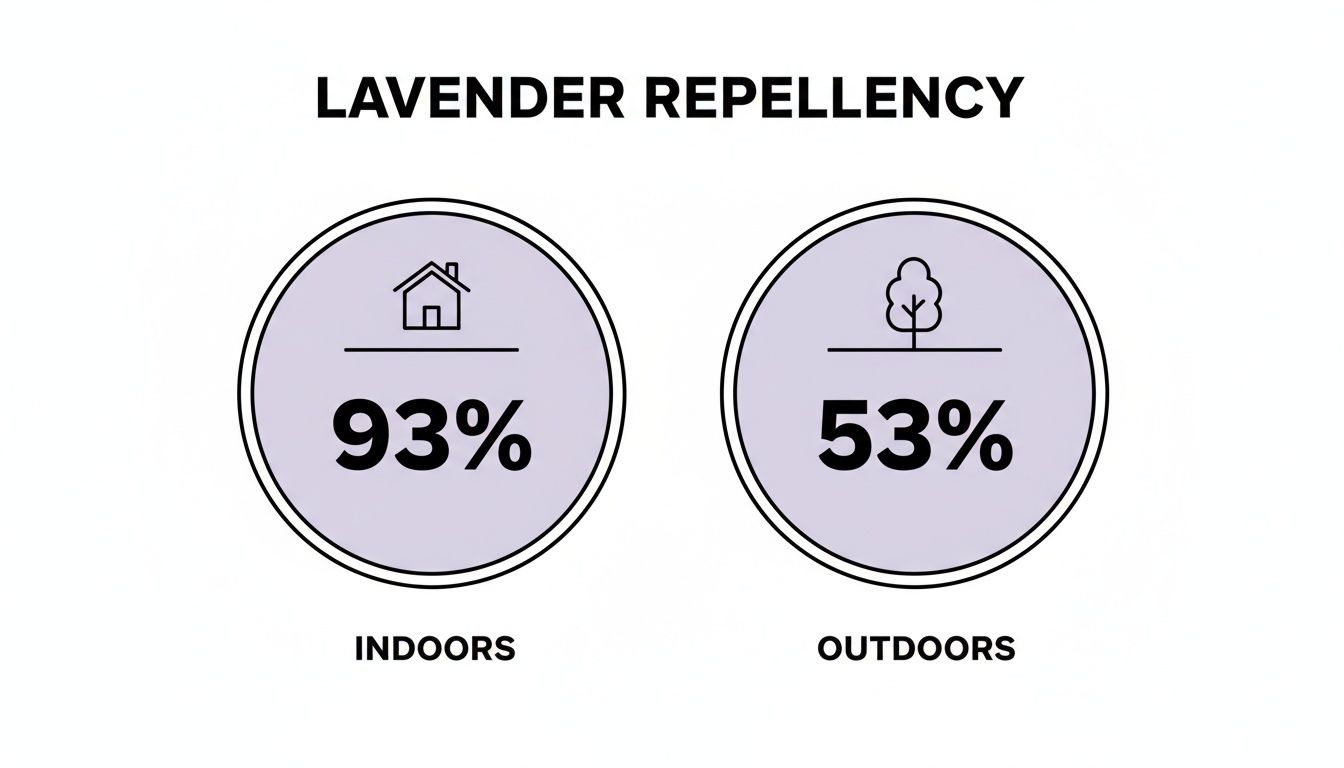
As you can see, lavender oil is highly effective indoors but loses nearly half its potency outdoors where elements like wind and humidity interfere.
The Science Behind the Scent
How does a pleasant floral scent deter pests? Lavender oil works by creating a "scent smokescreen" that makes you effectively invisible to mosquitoes.
When a mosquito is hunting for a meal, it’s following the trail of carbon dioxide you exhale. The powerful aroma of linalool in lavender creates a kind of "scent smokescreen," making it nearly impossible for the mosquito to zero in on its target. It's like you've suddenly become invisible to them.
Lab studies confirm this. Indoors, lavender oil showed an impressive 93% repellency rate. However, when tested outdoors, its effectiveness dropped to 53%. For a Crown Point homeowner, this means wind and open air can quickly dilute the scent, reducing its protective power. You can read more about the research behind lavender oil's effectiveness and its implications for outdoor use.
To see what you can expect, here is a simple breakdown of the research.
Lavender Oil Mosquito Repellency at a Glance
| Setting | Reported Repellency Rate | Effective Duration | Best Use Case |
|---|---|---|---|
| Indoors | Up to 93% | Several hours | Diffusing in a room or applying to skin before bed. |
| Outdoors | Around 53% | Short-term (reapply often) | Personal protection on a calm evening with little wind. |
This table shows that while lavender is a useful tool for personal protection, it's just one part of a comprehensive pest control strategy.
For homeowners interested in other natural deterrents, our guide on what scents repel mosquitoes offers more options. However, for complete backyard protection against mosquito swarms, a professional service from a trusted exterminator in Crown Point, IN, like The Green Advantage, is the most effective solution.
How Lavender Overwhelms a Mosquito's Senses

To understand why lavender oil is a useful tool for homeowners in Crown Point, it helps to know how mosquitoes find us. These pests are sophisticated hunters that use carbon dioxide, body heat, and skin chemicals to locate their next meal.
The secret to lavender oil's power is its primary compound, linalool. This natural alcohol, abundant in lavender, produces a strong scent that is overwhelming and confusing for mosquitoes. It's like trying to hear a whisper at a rock concert—the powerful aroma of linalool jams their delicate scent receptors, making it almost impossible for them to find you.
Creating a Protective Scent Barrier
At its core, lavender oil works by masking the very smells that attract mosquitoes. When you apply diluted lavender oil to your skin or use a diffuser, you create a personal bubble of fragrance that mosquitoes find disorienting. Instead of targeting you, the confused mosquito will typically move on to find an easier meal. This is what makes lavender oil a true repellent—it doesn't kill them, it simply encourages them to stay away by creating a scent barrier.
The Science Backing It Up
This isn't just folklore; research has demonstrated lavender's ability to fend off mosquitoes in controlled settings. One key study highlighted how different concentrations of lavender oil affected mosquito behavior.
In the lab, researchers counted 43 mosquito landings on the untreated surfaces in just ten minutes. But on the surfaces treated with lavender oil—even at 25%, 50%, and 100% concentrations—there were zero landings. That’s a perfect 100% repellency rate, which speaks volumes about the oil's deterrent effect.
This powerful result shows how effectively lavender's scent can stop a mosquito. You can explore the full study and its findings on lavender's repellency for a closer look. It’s this effectiveness that leads many Crown Point families to use natural options for personal protection.
Key Compounds That Drive Mosquitoes Away
While linalool is the star player, lavender oil contains other compounds that contribute to its repellent properties.
- Linalyl Acetate: Adds to the sweet, floral scent and enhances the repellent profile.
- Camphor: Known for its strong odor, camphor adds another layer to the protective barrier.
- Eucalyptol: This compound has well-documented insect-repelling properties that boost lavender's overall effectiveness.
For us here in Northwest Indiana, this science explains why lavender can be a good first line of defense. However, its reliance on aroma means it can easily dissipate in the wind, making it more of a temporary fix than a whole-yard solution for persistent pest problems.
Putting Lavender Oil to Work in Your Home
If you're a Crown Point homeowner who prefers a natural approach, lavender oil can be a fragrant addition to your mosquito-fighting toolkit. The key is proper application. For the oil to be effective, its aromatic compounds must be present in the air or on your skin. Below are three practical methods for using lavender oil.
Create a Gentle Skin-Safe Repellent
Applying a repellent directly to your skin is one of the best ways to create a personal shield against bites. The most important rule is to never apply pure essential oils directly to your skin, as their high concentration can cause irritation. Always dilute them first.
Blending lavender oil with a carrier oil creates a formula that is both gentle and effective, perfect for an evening on the deck.
Simple Lavender Repellent Recipe:
- Choose a Carrier Oil: Start with about 2 tablespoons of a skin-friendly oil like coconut, jojoba, or sweet almond oil.
- Add Lavender Oil: Mix in 10-12 drops of high-quality lavender essential oil.
- Combine Thoroughly: Stir until the lavender oil is completely blended.
- Apply to Skin: Rub a small amount onto exposed skin. For best results, reapply every hour or so.
Craft a Patio and Furniture Spray
You can also create a broader zone of protection for your outdoor living areas. A simple spray works well on patio furniture and cushions to make the area less inviting for mosquitoes. This is a great option when entertaining, but remember that a Northwest Indiana breeze can carry the scent away, requiring reapplication.
DIY Patio Spray Recipe:
- In a spray bottle, combine 1 cup of distilled water and 1 tablespoon of witch hazel.
- Add 15-20 drops of lavender essential oil.
- Shake well before each use and lightly mist outdoor furniture and the air around your seating area.
Use an Indoor Diffuser for Living Spaces
As studies show, lavender oil excels in enclosed spaces. An essential oil diffuser is perfect for creating a mosquito-repelling scent barrier throughout a room, making it ideal for protecting bedrooms or living rooms.
An indoor diffuser continuously releases a fine, lavender-infused mist into the air. This maintains a consistent level of the repellent compounds that mosquitoes hate, giving you passive, long-lasting protection without putting any chemicals on your skin.
To use a diffuser, fill it with water and add 5-7 drops of lavender oil for an average-sized room. It not only helps keep mosquitoes away but also fills your home with a calming fragrance.
When DIY Mosquito Solutions Fall Short in Crown Point
While DIY lavender oil repellents are a great natural step, homeowners in Crown Point need to recognize their limitations. Think of lavender oil as a personal shield—effective in a light drizzle but insufficient in a downpour. When you're facing a serious mosquito problem, a broader, professional strategy is necessary.
The Problem of Staying Power
A major drawback of essential oil repellents is their short lifespan. The aromatic compounds in lavender oil evaporate quickly, meaning you must reapply it constantly—often every 30 to 40 minutes—to maintain a protective barrier. This becomes impractical for a family cookout or a long summer evening.
Fighting the Northwest Indiana Elements
Here in Crown Point, our local weather can render a scent-based repellent ineffective. A pleasant summer breeze can whisk away the protective scent, while humidity and rain can wash the oil right off your skin. This leaves you vulnerable to bites when you most want to enjoy your yard.
The core issue with any topical repellent, natural or synthetic, is that it only hides you from the existing mosquito population. It does absolutely nothing to reduce the number of mosquitoes breeding and swarming in your yard.
You're Not Getting to the Root of the Problem
This is the most critical limitation: repellents treat a symptom, not the source. A large mosquito population is a clear sign of standing water where they breed. Mosquitoes can lay hundreds of eggs in a puddle the size of a bottle cap. Your lavender spray can't eliminate larvae from clogged gutters, neglected birdbaths, or low spots in your yard. While lavender is a nice touch for a Deck And Patio Backyard Retreat, it can't solve the underlying problem.
Effective mosquito control requires breaking their lifecycle. That's where professional pest control services make a significant difference. If you're weighing your options, our guide on deciding between DIY pest control or hiring a professional can help. To truly reclaim your yard, you need a solution that actively reduces the mosquito population on your property.
Our Comprehensive Mosquito Control for Crown Point, IN
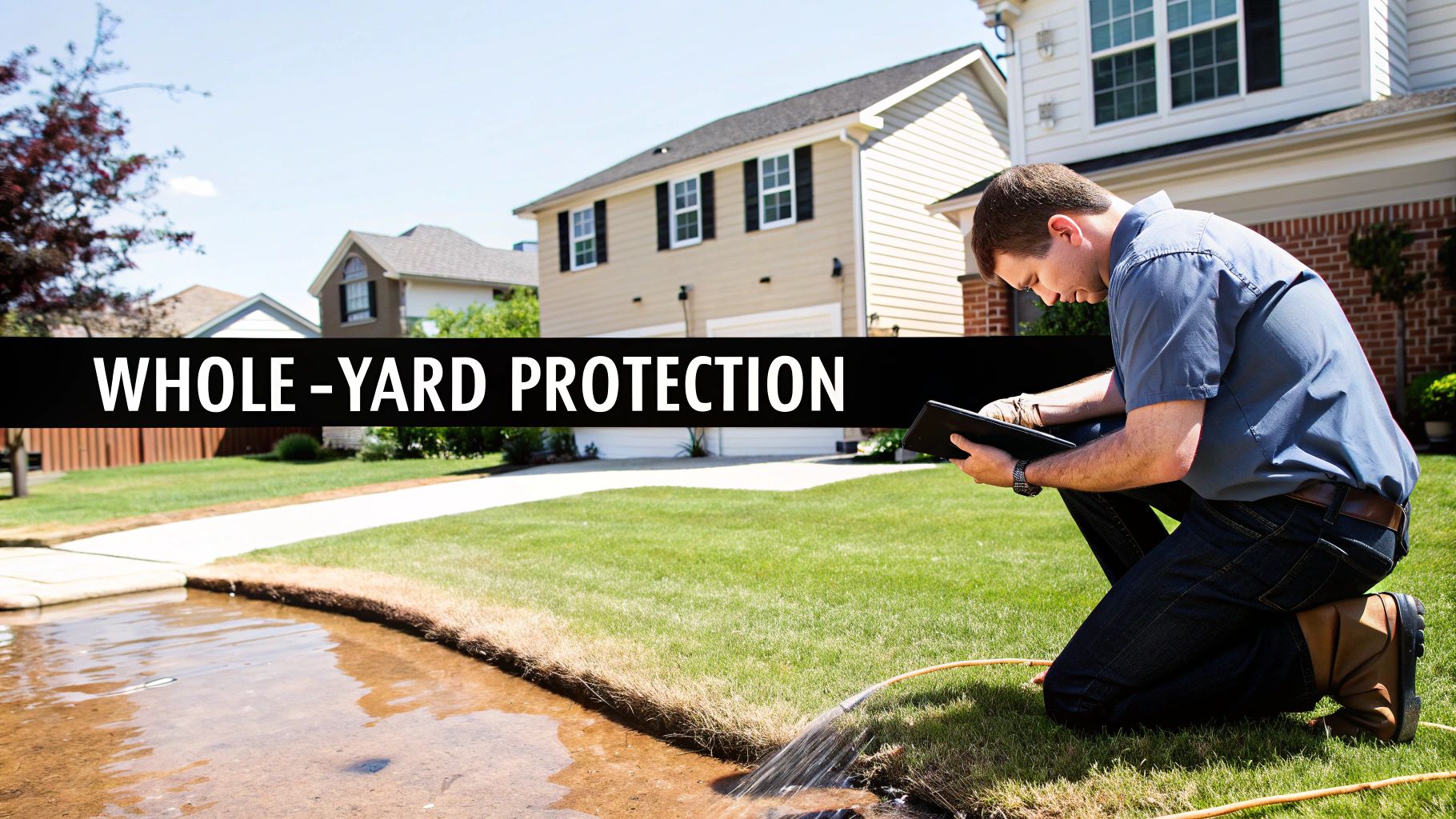
When DIY methods like lavender oil aren't enough, it's time for a professional solution. For homeowners in Crown Point, IN, tired of the constant battle with mosquitoes, The Green Advantage offers a comprehensive service that disrupts the entire pest lifecycle for lasting relief.
We use an Integrated Pest Management (IPM) approach, a smart, targeted strategy that tackles mosquitoes at every stage—from egg to adult. This allows your family to enjoy the outdoors without the constant annoyance of bites.
The Green Advantage Process: A Step-by-Step Look
Our professional mosquito control is a systematic process designed to eliminate the problem at its source. Here's what you can expect when our team provides residential pest control in Crown Point.
First, our experienced technicians perform a thorough inspection of your property to identify mosquito hotspots that homeowners often miss. This allows us to create a custom treatment plan for your yard's specific challenges.
During the inspection, we look for:
- Standing Water Sources: We pinpoint and help you eliminate breeding grounds like clogged gutters, forgotten toys, and areas with poor drainage.
- Vegetation and Shady Areas: We identify shrubs and dense plants where adult mosquitoes rest during the day.
- Property-Specific Risks: We assess any unique factors on your Northwest Indiana property contributing to your mosquito problem, such as proximity to wooded areas or ponds.
Our primary goal is source reduction. By eliminating or treating their breeding grounds, we stop the next generation of mosquitoes before they can hatch. This proactive step is key to long-term control.
Targeted Barrier Treatments for Lasting Protection
After identifying problem areas, we apply a specialized barrier treatment. This eco-friendly product is applied to foliage and other resting spots, creating an invisible shield that eliminates adult mosquitoes on contact. The treatment adheres to leaves and vegetation, providing continuous protection for weeks and turning your landscaping into a line of defense. This professional service is far more effective than a personal repellent. While lavender oil offers a small, temporary shield, our barrier treatments provide whole-yard protection by actively reducing the mosquito population on your property.
Why Choose Professional Mosquito Control?
For Crown Point families, choosing a professional exterminator is about achieving real results and peace of mind. The Green Advantage uses professional-grade, eco-friendly products applied safely by certified technicians. We schedule follow-up treatments throughout the peak mosquito season in Northwest Indiana to ensure the protective barrier remains strong, allowing you to enjoy your backyard from spring through fall.
If you're looking for an exterminator near me, it's time to bring in the experts for reliable pest control in Crown Point, IN.
A Few Common Questions We Hear About Lavender Oil
As a Northwest Indiana resident, you've likely heard about using natural remedies for pest control. At The Green Advantage, we provide clear, honest answers to help you make the best decision for your family. Here are some common questions about using lavender oil for mosquitoes.
Is Lavender Oil Safe for My Kids and Pets?
When properly diluted with a carrier oil, lavender oil is generally considered a safer topical option for short-term use on people compared to chemicals like DEET. However, never apply undiluted essential oils directly to the skin, as they can cause irritation.
For pets, the situation is different. Essential oils, including lavender, can be toxic to dogs and cats if ingested. Always consult your veterinarian before using essential oil products around your animals. For worry-free protection, our professional mosquito control treatments are a reliable alternative. Our technicians apply products that are safe for your family and pets once fully dried.
How Does Lavender Oil Stack Up Against Repellents with DEET?
Lavender oil and DEET are tools for different situations. Lavender oil is a natural choice for low-pressure environments, like a calm evening on your porch. It works by masking your scent. DEET is a powerful, long-lasting synthetic compound ideal for high-risk areas where mosquito-borne diseases are a concern.
The real difference comes down to staying power. Lavender oil is effective, but it's also volatile, meaning it evaporates fast. You'll likely need to reapply it every hour, maybe even more frequently. DEET can give you solid protection for several hours. For consistent, property-wide defense here in Northwest Indiana, neither one is a substitute for a professional program that actually knocks down the local mosquito population.
Will Planting Lavender Bushes Keep Mosquitoes Away From My Yard?
Planting lavender adds beauty and fragrance to your garden, and the plants have a very mild repellent effect on pests in their immediate vicinity. However, a few lavender bushes will not create a mosquito-free zone around your entire yard. The repellent properties come from the highly concentrated essential oil, and the scent from a few plants isn't strong enough to provide significant protection.
A better strategy is to enjoy lavender for its beauty while relying on a robust solution like our mosquito control service for true protection.
Why Isn’t My Homemade Lavender Spray Working Very Well?
If your DIY lavender spray isn't effective against our local mosquito population, several factors could be at play:
- Weak Concentration: The ratio of lavender oil to water may be too low to be effective.
- The Weather Factor: Northwest Indiana's wind can disperse the scent quickly, while humidity can affect how long it lasts.
- An Overwhelming Population: This is the most critical point. If your yard has active breeding sites, a repellent only hides you; it does nothing to reduce the number of mosquitoes hatching on your property.
When your yard is a breeding ground, no amount of spray will be enough. This is a clear sign that you need an expert to identify the source and treat the problem effectively.
For a mosquito control solution that addresses the root of the problem, trust the experts at The Green Advantage. We offer comprehensive mosquito reduction programs for homeowners throughout Crown Point and Northwest Indiana, helping you take back your yard for good.
Mosquito Control in Crown Point, IN: A Homeowner’s Guide

The most powerful step in reducing mosquitoes in your yard is eliminating their ability to breed, and that means getting rid of standing water. By making a weekly habit of dumping water from items like buckets, toys, clogged gutters, and birdbaths, you interrupt their life cycle at the source. For homeowners in Crown Point, IN, this single action provides the biggest impact.
Reclaim Your Crown Point Yard from Mosquitoes
That familiar, high-pitched buzz is more than an annoyance—it’s a clear sign that mosquitoes have settled in. For homeowners here in Crown Point, a simple backyard barbecue or watching the kids play can quickly turn into a swat-fest. Our humid Northwest Indiana summers create the perfect breeding ground for these pests, transforming a peaceful family space into a frustrating, itchy ordeal.
This guide moves past temporary fixes like citronella candles that just don't cut it. Instead, we'll walk through a real, lasting strategy to take back your yard. By focusing on proven pest management, you’ll learn how to turn your property from a mosquito haven into a comfortable retreat. We'll cover simple habitat changes you can make this weekend, explain what makes professional treatments so effective, and show how The Green Advantage partners with homeowners in Crown Point, IN, to bring peace and quiet back to their yards.
A Three-Step Approach to Mosquito Reduction
An effective mosquito control plan isn't a one-and-done deal. It’s a continuous cycle of eliminating breeding sites, treating water you can't get rid of, and maintaining a protective barrier. This process is the foundation of a mosquito-free yard and the core of our professional pest control services.
The key is that you get the best results by combining proactive prevention with targeted professional action. It’s an ongoing effort, not a single event.
To see a noticeable difference, you can start with a few simple but powerful habits. For homeowners in Northwest Indiana, this table breaks down the most effective DIY strategies you can put into action this week.
Your Immediate Action Plan for Mosquito Reduction
| Action Step | Frequency | Why It Works |
|---|---|---|
| Empty Standing Water | Weekly (or after rain) | Stops mosquito larvae from becoming biting adults. It only takes a bottle cap of water to breed hundreds. |
| Clean Gutters | Twice a Year | Eliminates hidden, stagnant water—a favorite and often overlooked mosquito nursery in Crown Point homes. |
| Mow and Trim Regularly | Weekly | Gets rid of the cool, shady spots where adult mosquitoes rest during the day. |
| Refresh Bird Baths | Every 2-3 Days | Disrupts the 7-10 day mosquito life cycle, ensuring larvae don't have enough time to mature. |
By making these actions part of your routine, you begin breaking the breeding cycle. This lays the critical groundwork for any larger control strategy and makes your yard less inviting to new mosquitoes.
Of course, sometimes even the most diligent efforts aren't enough to handle a serious infestation. When that happens, it’s time to call in the experts. A trusted local exterminator like The Green Advantage provides professional mosquito control in Crown Point, IN that takes your efforts to the next level.
Find and Eliminate Mosquito Breeding Grounds
The single most effective thing you can do to get rid of mosquitoes is to eliminate the places they lay their eggs. That means getting rid of standing water. For a pest that can breed in a space as small as a bottle cap, that's easier said than done. Mosquitoes are resourceful, and their favorite nurseries are often in places homeowners in Crown Point walk past every single day.
To make a real impact, you need to see your property through a mosquito's eyes. Forget just the obvious spots like birdbaths. We're going on a "yard audit" to find all the hidden water sources fueling the infestation. This is the foundation of any good pest management plan and exactly how we at The Green Advantage approach the problem to get results that last.
Conducting a Thorough Yard Audit
Take a walk around your property to find anything that can hold water for more than a couple of days. The Aedes aegypti mosquito, one of our common pests, only needs about a week to go from egg to biting adult.
Here are some of the most common places we find mosquitoes thriving in Northwest Indiana yards:
- Corrugated Drain Pipes: The accordion-like ridges in downspout extenders are notorious for trapping small pools of water that never fully dry out.
- Wrinkled Tarps and Covers: A tarp over a woodpile or a grill cover with sags will collect rainwater, creating perfect mini-ponds.
- Children's Toys: A forgotten dump truck or plastic playhouse is prime real estate for mosquito larvae. Turn them over after it rains.
- Plant Saucers and Trays: Trays under potted plants can hold water for weeks, creating an undisturbed breeding site on your deck or patio.
Just by consistently emptying these sources, you break the mosquito life cycle. This one habit is more powerful than any temporary spray you can buy.
Expert Insight: It’s a misconception that mosquitoes need a big pond to breed. A female mosquito only needs about an inch of stagnant water. That's why a single clogged gutter or an old tire can produce thousands of mosquitoes over a summer in Crown Point.
Managing Intentional Water Features
Not all water in your yard is there by accident. When considering decorative elements, special attention must be paid to managing small backyard ponds or fountains, as they can quickly become active mosquito breeding sites if not maintained. The key is to keep the water from becoming stagnant.
For features you want to keep, like birdbaths, you have a few solid options:
- Introduce Movement: A small pump or a "water wiggler" will keep the surface moving. Mosquitoes can't lay eggs on disturbed water.
- Change Water Frequently: For birdbaths and outdoor pet bowls, dump the old water and refill with fresh at least twice a week.
- Use Larvicides: For water you can't easily dump, like a rain barrel, use a product with Bti (Bacillus thuringiensis israelensis). This naturally occurring bacterium only kills mosquito larvae and is harmless to pets, birds, and fish.
For more details on their lifecycle, check out our guide on https://thegreenadvantage.biz/mosquito-breeding-and-mosquito-control/. This knowledge helps you understand the "why" behind these essential tasks.
Landscaping and Yard Maintenance for Mosquito Prevention
Beyond standing water, how you maintain your lawn plays a huge role. Adult mosquitoes hate direct sunlight, so they spend their days resting in cool, shady, and humid spots. An overgrown yard is a five-star hotel for them.
- Trim Dense Vegetation: Prune back thick bushes and shrubs, especially in damp, shady corners, to increase airflow and sunlight.
- Mow Regularly: Keep your lawn mowed. Tall, thick grass traps moisture and gives pests excellent cover.
- Manage Leaf Litter: Don't let fallen leaves pile up. These damp piles are another favorite hiding spot for adult mosquitoes.
By combining the war on standing water with smart landscaping, you create a property that is fundamentally less attractive to mosquitoes. This proactive strategy is the backbone of a successful, long-term mosquito reduction plan for your Crown Point home and complements our professional services, including ant control and spider control.
How Professional Mosquito Treatments Create a Barrier
You’ve done everything right—dumped standing water, cleaned the gutters—and still, the moment you step outside, you're on the menu. This is a common story, and it's where professional mosquito control shifts the battle in your favor. It’s not just spraying; it's a strategic, science-backed approach that creates an invisible shield around your property.
For homeowners here in Crown Point, IN, knowing how these treatments work makes all the difference. At The Green Advantage, our technicians use a precise method to break the mosquito life cycle, and the result is lasting relief that protects your home and family.
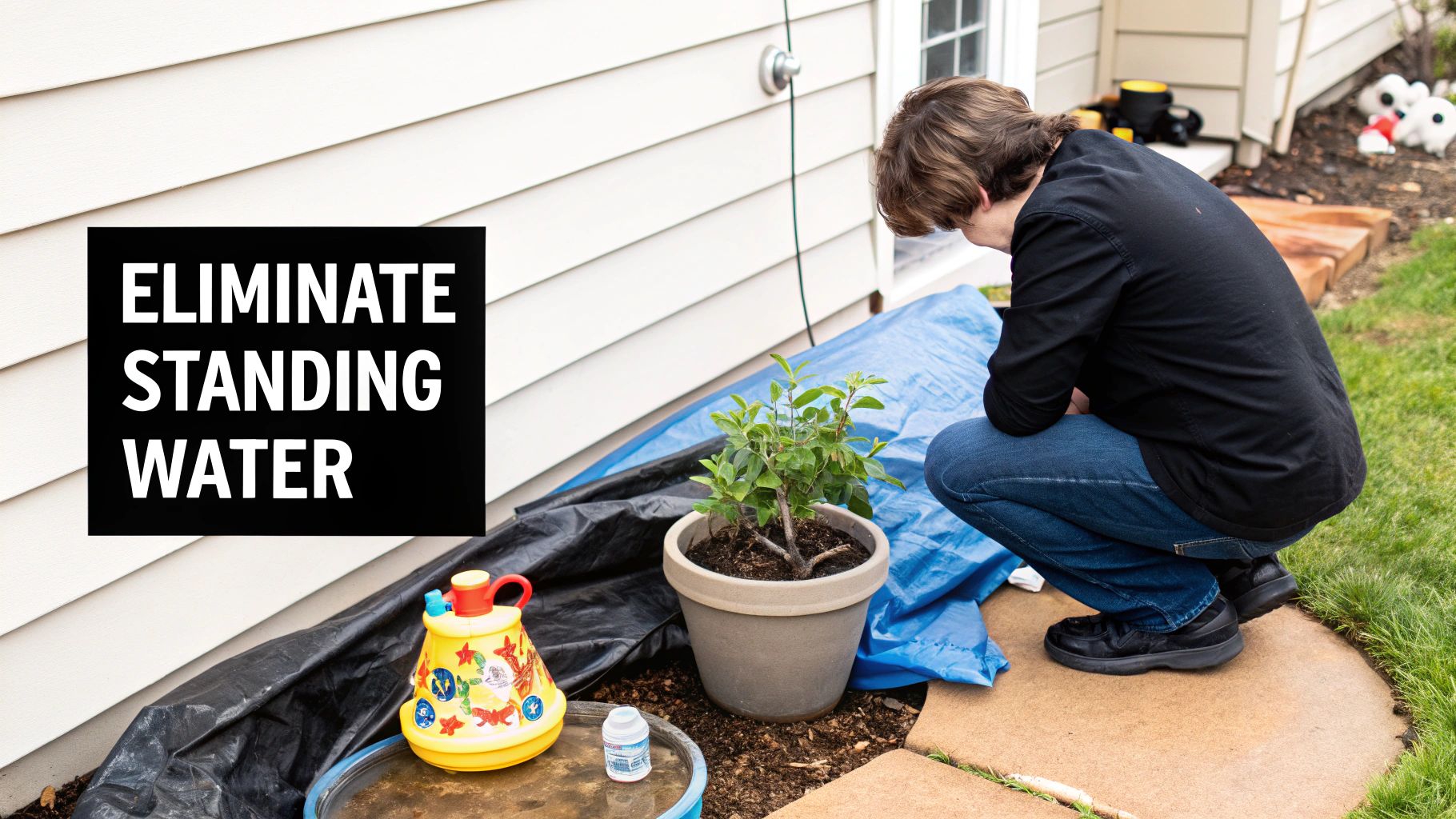
Targeting Mosquitoes Where They Live
The secret to real mosquito reduction isn't chasing the ones buzzing around. The real work happens by treating the specific places they hide during the day. Adult mosquitoes can't stand the hot sun, so they look for cool, damp, shady spots to rest.
This is where our trained technicians focus their efforts. Using specialized misters, we apply a fine, targeted treatment to the underside of leaves on trees, shrubs, and bushes. When mosquitoes land on these treated surfaces to rest, they pick up a micro-dose of the product.
This technique is what we call a barrier spray. It creates a protective zone that drastically cuts down on the number of mosquitoes that can live in or enter your yard. This is a core component of our residential pest control plans.
Interrupting the Life Cycle at the Source
While the barrier spray takes care of the adult population, a complete plan must stop the next generation. Some water sources, like birdbaths or low-lying drainage areas, are either intentional or impossible to eliminate completely.
For these spots, we use larvicides. These highly targeted products kill mosquito larvae before they can hatch. We use products containing Bacillus thuringiensis israelensis (Bti), a naturally occurring soil bacterium that is lethal to mosquito larvae but harmless to birds, fish, and pets.
This two-pronged attack is what makes professional service so effective:
- Adulticiding: The barrier spray eliminates adult mosquitoes currently in your yard.
- Larviciding: Targeted water treatments prevent larvae from growing up to bite you.
By hitting them from both ends of their life cycle, we can achieve a dramatic reduction in your yard's mosquito problem—often by as much as 85-95%.
This isn't just a local strategy; creating protective barriers is proven on a massive scale. A landmark 2025 study showed how treating homes with long-lasting insecticides created mosquito-free zones that cut the local Aedes aegypti population by 60% for six months. We apply the same principle here in Northwest Indiana—diagnose and treat perimeter hotspots to keep pests out. You can read more about the research behind strategic mosquito control.
The Lasting Power of Residual Treatments
One of the biggest advantages of a professional treatment is how long it lasts. The products used by The Green Advantage have a residual effect, meaning they keep working for weeks.
The product sticks to leaf surfaces, staying effective for about 21-30 days. That long-lasting protection is key to keeping your yard comfortable all season long here in Northwest Indiana.
A DIY fogger might give you a few hours of relief, but a professional service gives you sustained peace of mind. Our seasonal programs are built around this 3-4 week cycle. By scheduling regular treatments, we ensure that protective barrier never fails, giving your family reliable protection all summer long.
Beyond Sprays: Advanced Mosquito Reduction Technology
Barrier sprays are fantastic for immediate relief, but for a truly comprehensive, long-term solution, we can look beyond just spraying. The world of pest control has evolved, and today we have smart, science-driven technologies that work 24/7 to dismantle the mosquito population in your yard. For homeowners in Crown Point who want the best defense, understanding these tools is key.
At The Green Advantage, we’re committed to using every effective tool to protect your family. We integrate these newer technologies to provide a constant defense that perfectly complements our targeted treatments, keeping your yard comfortable all season long.
How Modern Mosquito Traps Work
When we say "traps," we don’t mean bug zappers, which are mostly useless against mosquitoes. The real breakthroughs are specialized traps, like the BG-Sentinel, engineered based on scientific research into what makes mosquitoes tick.
These devices mimic a person. They release a precise, odorless plume of attractants—carbon dioxide, heat, and a special synthetic scent lure—that replicates the signals your body gives off. Breeding female mosquitoes, responsible for every bite, are drawn to this "decoy." Once they get close, a quiet fan sucks them into a catch bag where they die.
The genius here is that this technology specifically targets and removes egg-laying females from the local population. By doing this day in and day out, it shatters the breeding cycle, leading to a massive, sustained drop in the number of mosquitoes in your yard.
Mass-Trapping: The Proof is in the Numbers
This isn't just a theory; the impact is well-documented. One of the most effective ways to slash mosquito numbers is by trapping breeding females.
A major study showed that deploying BG-Sentinel traps led to a 91% reduction in female Aedes aegypti mosquitoes. This was directly linked to a 91% decrease in Chikungunya virus infections in the human population. Later efforts achieved a 90% reduction in captured females and a dramatic drop in mosquito-borne virus detection. You can dig into the findings on mosquito trapping effectiveness for yourself.
Key Takeaway: Advanced traps aren't zapping random bugs. They are methodically removing the most critical part of the mosquito population—the breeding females. When used consistently, this causes the local mosquito presence to collapse.
Putting It All Together: A Complete Plan
As powerful as they are, these traps work best as part of a complete mosquito management plan. They provide incredible ongoing pressure on the population but need to work in concert with other essential strategies.
For a homeowner in Crown Point, a truly successful plan looks like this:
- The Foundation: Start by diligently removing all sources of standing water.
- The Knockdown: Use professional barrier spray treatments to get immediate control and create a protected zone.
- The Squeeze: Add advanced trapping technology to continuously intercept and capture new breeding females.
This layered approach is the core philosophy behind our mosquito control services at The Green Advantage. We combine homeowner education with professional-grade treatments and the best technology available. It’s how we proactively manage your property to prevent a pest problem from ever taking hold.
When to Call a Professional Exterminator Near Me
Sometimes, despite your best efforts, the mosquitoes just keep coming back. If you've tried everything—dumping standing water, trimming foliage, using traps—and you're still getting eaten alive, it's time to call for backup.
Choosing to hire a professional is a big decision, but here at The Green Advantage, we see it as partnering with our neighbors in Crown Point. Our job is to help you get back to enjoying your yard without worrying about constant buzzing and biting.
Why a Local Touch Matters for Pest Control
When you work with a local exterminator, you're not just a number. We live here, too. We know firsthand how bad the mosquitoes get during a humid Northwest Indiana summer, and we’ve built our entire approach around solving the specific challenges our region faces, from wasp removal to rodent control. It all comes down to trust, clear communication, and getting results.
What to Expect From The Green Advantage in Crown Point, IN
We believe in being upfront and transparent from the moment you call. No surprises, no confusing jargon—just a clear plan to solve your mosquito problem.
Here’s our process:
- The First Conversation: It all begins with a simple phone call. You’ll talk to one of our team members who will listen to what you're dealing with. We'll ask about your property, where the worst spots are, and what you hope to achieve.
- A Professional Property Inspection: A certified technician will come to your Crown Point home for a thorough walk-through. We'll hunt for active breeding sites, identify where adult mosquitoes are resting, and find problem areas you might have overlooked.
- Your Custom Treatment Plan: We'll map out a strategy designed for your yard. This isn't a generic spray-and-pray service. It’s a targeted plan that often combines barrier treatments, larvicides, and practical advice for keeping pests from coming back.
This initial process ensures we’re hitting the problem where it starts.
Our Commitment to Your Home and Family
Providing residential pest control is about more than just spraying for bugs; it's about protecting the places where our community lives and plays. Our reputation in Northwest Indiana is built on the trust we’ve earned from families just like yours.
The real goal here is peace of mind. You should be able to relax and let your kids and pets play in the yard without a second thought. That's what professional protection provides.
We bring decades of experience to every job and are committed to using effective, eco-friendly pest control solutions. Our technicians are trained problem-solvers who care about safeguarding your property and your family's health.
We’re With You All Season Long
Getting rid of mosquitoes isn't a one-time event; it's an ongoing effort. After our first visit, we establish a follow-up schedule to refresh the protective barrier around your property, keeping it strong from spring through fall.
Plus, we back our work with a satisfaction guarantee. If mosquitoes show up between our scheduled visits, just give us a call. We'll be right back out to make it right. At The Green Advantage, we're dedicated to helping you solve your mosquito problem for good. Contact us today to schedule your pest inspection in Crown Point, IN.
Common Questions About Mosquito Control
Deciding to hire a professional to handle your mosquito problem usually brings up a few questions. As a company that’s been serving the Crown Point area for years, we believe in giving you clear, honest answers so you can feel confident you’re making the right call for your home.
Here are some of the most common things homeowners in Northwest Indiana ask us.
Are Your Mosquito Treatments Safe for My Children and Pets?
Absolutely. This is our top priority. We only use EPA-registered products, chosen for their proven effectiveness and low impact on the environment.
Our certified technicians are trained to apply these treatments with precision. We target the undersides of leaves where mosquitoes hide, not the open grassy areas where your kids and pets play.
All we ask is that you keep everyone out of the treated zones until the application has fully dried, which usually takes about 30 to 60 minutes. After that, you can get back to enjoying your yard, worry-free.
How Long Does a Mosquito Treatment Last?
Our professional barrier sprays are designed to keep working long after we leave. A single treatment typically lasts for about 21-30 days. Heavy, frequent rain can sometimes shorten that window a bit.
This is why our seasonal program is so effective. We schedule return visits every three to four weeks, ensuring that the protective barrier around your property stays strong all summer. It's a proactive approach that stops new mosquito populations from taking hold.
Will Your Service Harm My Garden Pond or Pollinators?
This is a fantastic and important question. We're committed to responsible pest control. Our technicians are trained to never spray directly into or over ponds, bird baths, or other water features.
We also make a point to steer clear of flowering plants, vegetable gardens, and any other areas where you see beneficial pollinators like bees and butterflies. Our strategy is to hit mosquitoes where they rest, which isn't where pollinators tend to hang out. For a deeper dive, you can learn more about mosquito-borne risks and how our services mitigate them.
Can I Get Rid of All Mosquitoes Permanently?
It would be wonderful if we could promise a yard that's 100% mosquito-free forever, but that's not realistic. Mosquitoes are mobile and can fly in from a neighbor's untreated yard.
However, what our service does accomplish is a massive, noticeable drop in the mosquito population on your property.
Our goal is to reduce the mosquito population in treated areas by 85-95%. This knocks their numbers down so dramatically that they're no longer a nuisance, letting you reclaim your outdoor space.
The key to keeping it that way is consistent, season-long service. By working with The Green Advantage, you can transform your yard from a no-go zone into a peaceful retreat. That's how you win the long-term battle against mosquitoes in Crown Point.
Ant Prevention for Crown Point Homeowners: A Practical Guide

When you're trying to prevent ants from entering your house, the most effective strategy is also the most direct: seal every possible entry point. No matter how tiny a crack might seem, it’s a wide-open door for an ant. A thorough inspection of your Crown Point, IN, property and a tube of quality silicone caulk are your best tools for creating a physical barrier that stops them in their tracks. For homeowners dealing with persistent pests, this is the first step toward lasting peace of mind.
Fortifying Your Home Against Ant Invasions
Your home's most powerful defense against ants is a solid, unbroken exterior. To an ant, a hairline crack in the foundation or a small gap in a window seal isn't a flaw—it's an invitation. It's a superhighway leading them straight to the food, water, and shelter inside your Crown Point home.
A thorough inspection involves methodically checking your home inside and out to find those hidden entry points that pests love. By sealing your home, you're not just treating a symptom; you're solving the problem at its source, making your property a much harder target for would-be invaders. This is a core principle of professional residential pest control.
Pinpointing Common Ant Entry Points
To stop ants effectively, you have to know their favorite ways in. We advise homeowners in the Crown Point, IN, area to start outside and work their way around the perimeter before heading indoors. Pay extra attention wherever different building materials meet.
Here are the usual suspects:
- Foundation Gaps: Scan your foundation for any cracks in the concrete. The spots where utility pipes, wires, or cables enter the house are notorious weak points.
- Window and Door Frames: Caulk gets old. It shrinks, cracks, and pulls away from the frame over time, leaving perfect little gaps for ants to squeeze through.
- Siding and Weep Holes: Look for gaps between siding panels. Also, check your weep holes—those small gaps at the bottom of brick siding are meant for moisture drainage, but they need screens to keep pests out.
- Roofline and Vents: Don't forget to look up! Tree branches touching your roof are a bridge for ants. They can get in through attic vents, gaps around chimneys, or even damaged shingles.
This simple diagram illustrates the core process for securing your home's perimeter.
Think of it as a three-step mission: find the weak spots, choose your weapon, and seal the breach. It’s the foundation of any good pest prevention plan.
The Right Tools for a Permanent Seal
Once you've mapped out the entry points, using the right sealant is key to a long-term fix. For most jobs, a high-quality, weather-resistant silicone caulk is your best bet. It stays flexible and waterproof, which is crucial for handling Northwest Indiana's temperature swings without cracking.
For bigger gaps, expanding foam sealant can work well to fill the space, but here's a pro tip from your local exterminator: always cover it with something more durable afterward. Ants can and will chew right through that foam over time.
Professional pest control isn't just about spraying. Real prevention starts with a thorough inspection and sealing of your home's exterior. It’s truly the single most important investment you can make in long-term, eco-friendly pest management.
Believe it or not, 73% of pest professionals say sealing cracks is their top recommendation for preventing ants. With ants infesting a staggering 80% of single-family homes, a proactive approach is just common sense. Here in Indiana’s humid climate, where odorous house ants and carpenter ants are a constant issue, sealing entry points can cut invasions by up to 70-80%.
Managing Moisture and Your Home's Exterior
Moisture is a huge welcome mat for pests, especially for wood-destroying carpenter ants. A damp exterior not only attracts them but also causes wood to rot, creating even more ways for them to get inside.
Keeping your gutters clean is non-negotiable. When they're clogged, water spills over and soaks the fascia and soffit boards. This creates the perfect damp, soft wood that carpenter ants love to nest in.
It's also worth knowing a bit about how your roof and gutter system is designed to protect your home. For example, understanding what a gutter apron is and ensuring yours is working correctly can make a huge difference in preventing the kind of water damage that attracts pests. When you manage water flow and keep your home dry, you make it a much less attractive place for ants to call home. For any homeowner in Crown Point, this is a vital part of a successful ant control plan.
Removing the Welcome Mat for Ants
Sealing cracks on the outside of your home is a great first step, but the war against ants is often won or lost inside your kitchen. Ants are single-minded creatures, constantly on the hunt for food, water, and shelter for their colony. If your Crown Point home doesn't offer what they're looking for, they have no reason to stick around.
Think of it as rolling up the welcome mat. By cutting off their access to resources, you disrupt their invasion plan and make your home a much less attractive target. This goes beyond a quick wipe-down; it's about fundamentally changing how you manage the everyday things that draw them in.

Starve Them Out with Smart Sanitation
You'd be surprised what an ant scout considers a feast. A tiny drip of jam on a jar, a few crumbs under the toaster, or a greasy film on the stovetop is a five-star buffet for a colony. To prevent ants from getting inside, you have to be relentless with your cleaning routine.
This means wiping down your countertops and tables right after every meal. Get in the habit of sweeping or vacuuming the kitchen floor daily to get rid of stray crumbs and pet food. Don't let trash linger, and always rinse food containers before recycling. That sugary residue at the bottom of a soda can is a powerful magnet for ants.
Pest control professionals see this every day. A major industry survey revealed that 81% of pest pros see a direct link between persistent ant problems and poor sanitation. Keeping your home clean is one of the most effective ways to erase the scent trails ants follow, essentially making your kitchen invisible to them. You can read the full research on ant behavior and attractants to see just how powerful cleanliness can be.
Make Your Pantry an Impenetrable Fortress
Your pantry is either an all-you-can-eat smorgasbord for pests or a sealed-tight fortress—the choice is yours. Cardboard boxes and thin plastic bags from the grocery store offer zero defense. Ants will chew right through them to get to sugars, grains, and other goods.
Transferring pantry items into airtight containers is a game-changer.
- Dry Goods: Move flour, sugar, cereal, and pasta into glass or sturdy plastic containers with locking lids.
- Sticky Items: Always wipe down jars of honey, molasses, or syrup after using them. A small sticky residue is all it takes to attract a scout.
- Pet Food: Never store pet food in its original paper bag. Dump it into a large, sealed container instead.
This simple habit not only denies ants a food source but also keeps your food fresher. It's a small investment of time that pays off big in preventing an infestation. For a deeper dive, check out our guide on the top 5 ways to keep ants out of your kitchen.
Eliminate Hidden Water Sources
Food is a huge draw, but water is just as critical for an ant colony's survival. Your home is full of hidden oases they can exploit. A slow drip from a pipe under the sink, condensation on a water line, or even a damp sponge can provide all the moisture a colony needs.
Regularly check under sinks in your kitchen, bathrooms, and laundry room for any signs of leaks. Fix dripping faucets as soon as you notice them and ensure the sealant around your tub and shower is intact. By removing these easy water sources, you take away another key reason for ants to move in.
By making your home an unreliable source for food and water, you force ant colonies to look elsewhere. Consistent sanitation and proper food storage are the most powerful, eco-friendly ant control tools a homeowner has.
To help you get started, here's a quick look at the most common household items that attract ants and how to deal with them.
Common Ant Attractants and Simple Solutions
| Attractant Source | High-Risk Area | Prevention Strategy |
|---|---|---|
| Crumbs & Spills | Kitchen floors, countertops, under appliances | Wipe down surfaces after every meal; sweep/vacuum daily. |
| Unsealed Pantry Goods | Pantry shelves, cabinets | Store flour, sugar, and cereals in airtight containers. |
| Sticky Jars & Bottles | Pantry, refrigerator door | Wipe down honey, jam, and syrup containers after each use. |
| Pet Food Bowls | Kitchen or utility room floor | Clean bowls daily; store unused food in a sealed container. |
| Full Trash Cans | Under the sink, garage | Use a can with a tight lid; take trash out frequently. |
| Leaky Pipes/Faucets | Under sinks, bathrooms, laundry room | Inspect for drips regularly and repair leaks immediately. |
| Sugary Drink Residue | Recycling bins | Rinse out soda cans and juice bottles before recycling. |
Keeping these common trouble spots in mind will make your ant prevention efforts much more effective.
Turn Your Yard into an Ant-Free Zone
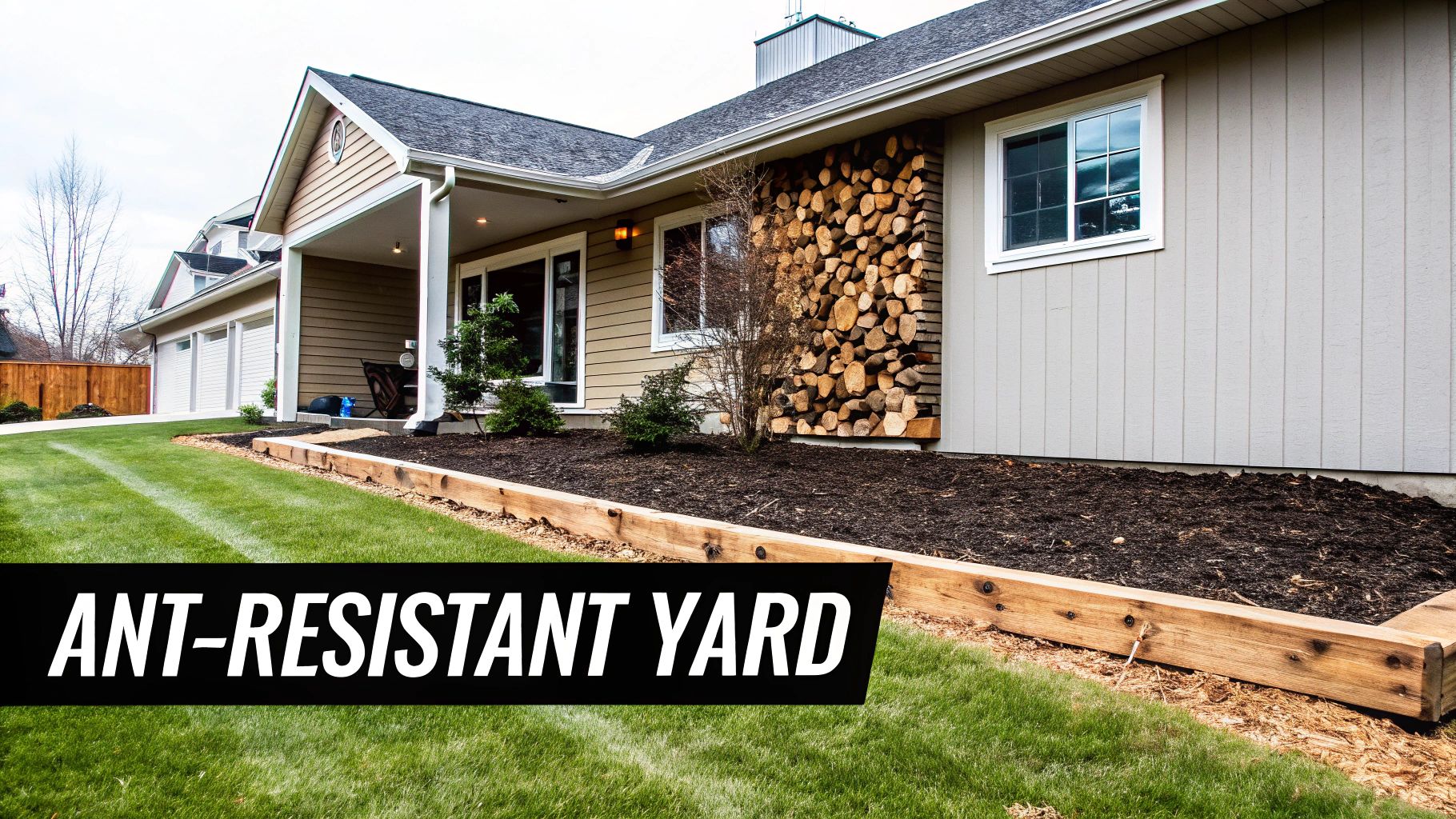
Thinking about how to prevent ants from entering house means looking beyond your front door. Your yard is the first line of defense, and your landscaping choices can either create a protective buffer or roll out the welcome mat for an ant invasion. For homeowners here in Crown Point, IN, a little strategic yard work goes a long way.
An overgrown or cluttered yard is a five-star resort for ant colonies, giving them countless places to set up shop right next to your house. A few proactive tweaks to your outdoor space can significantly lower pest pressure and make it harder for ants to find their way inside.
Create a No-Go Zone Around Your Foundation
The area right up against your foundation is the most important real estate in the fight against ants. This strip of land needs to be clear, dry, and uninviting.
One of the biggest mistakes we see is mulch piled high against the siding. Mulch is fantastic for retaining moisture in garden beds, but that same quality makes it the perfect sheltered, damp environment for an ant colony to build a nest.
- Build a Barrier: Keep a mulch-free zone of at least 12-18 inches between your foundation and your flower beds. You can fill this gap with gravel or decorative rock, which won't hold moisture and is far less attractive to pests.
- Watch the Water: Make sure your gutters and downspouts are channeling water far away from the foundation. Any standing water or constantly damp soil is a huge draw for ants and other pests like mosquitoes.
This simple buffer zone removes a major nesting hot spot and cuts off a common, hidden route ants use to get inside. It's a foundational part of any good residential pest control plan in Crown Point.
Trim Back the Ant Superhighways
Ants are natural climbers. They’ll use any overhanging tree branch or overgrown shrub as a personal bridge to get right onto your roof, siding, and windows.
Get into the habit of trimming back any vegetation that touches your house. Keep tree limbs pruned at least three to five feet away from your roofline. This small task doesn't just deter ants; it also helps prevent storm damage and keeps other critters like spiders and rodents from getting too close for comfort.
By simply managing your landscaping, you're taking away the very pathways and nesting sites that pests need to thrive. It’s a proactive approach that forms the core of effective, eco-friendly pest control in Northwest Indiana.
Tidy Up Common Ant Hideouts
Your yard has more than just mulch and branches that can become prime real estate for ants. A little awareness of these trouble spots is key to keeping your property clear.
Firewood should always be stacked on a rack, off the ground, and as far from your house as you can manage. Piling it directly on the ground creates the perfect sheltered hideout. The same goes for piles of leaves, grass clippings, and other yard debris—clean them up quickly.
Rotting wood is another major attractant. For instance, figuring out how to remove tree stumps gets rid of a favorite nesting spot for destructive carpenter ants.
When you put these yard maintenance strategies into practice, you make your property a much less appealing place for pests. Combine this with a sealed home and clean kitchen, and you've built a powerful defense. If you've done all this and still see ants marching in, it might be time to call us at The Green Advantage for expert ant control here in Crown Point, IN.
When to Call for Professional Ant Control in Crown Point, IN
Taking preventative steps is essential for keeping pests out of your Crown Point home. Sealing cracks, staying on top of cleaning, and managing your landscaping are non-negotiable. But sometimes, a few stray ants signal a full-blown infestation that has moved far beyond the reach of home remedies.
Knowing when you've hit that tipping point will save you time, money, and frustration. It’s the moment you stop fighting a losing battle and call in a professional exterminator in Crown Point, IN, like The Green Advantage, for a swift and effective solution.
Recognizing the Signs of a Major Infestation
Seeing a single ant on the counter is one thing. But a persistent, organized line of them marching to and from your pantry? That's a clear signal of a much bigger problem brewing out of sight. Established ant colonies are complex systems, often hidden deep within your home's structure. They aren't going to be defeated by a spray bottle or a handful of store-bought traps.
It's time to call a pro when you notice these signs:
- Persistent Ant Trails: You clean up a trail, only to see it reappear in the exact same spot a few hours later. This means a large, active colony is nearby, constantly sending out foragers to follow the established scent path.
- Ants in Multiple Rooms: Finding ants in the kitchen is common. But when they start appearing in bathrooms, bedrooms, or the living room, it suggests the colony is massive and has established multiple supply lines throughout your home.
- Winged "Swarmers" Indoors: Seeing ants with wings inside is a major red flag. These are reproductive ants, or "swarmers," sent from a mature colony to establish new ones. Their presence inside is a sure sign you have a well-established nest within your walls, floors, or foundation.
The Carpenter Ant Problem
One specific pest requires immediate professional attention: the carpenter ant. Unlike other common ants that are just a nuisance, these pests cause direct, physical damage to your home by tunneling through wood to build their nests.
Keep a sharp eye out for these telltale signs:
- Frass: This is a fine, sawdust-like material that carpenter ants push out of their nests as they excavate wood. You might find small, unexplained piles of it near baseboards, in crawl spaces, or along window sills.
- Faint Rustling Sounds: In a quiet house, you may hear a faint crinkling or rustling sound coming from inside your walls or wooden beams. This is the unsettling sound of an active colony at work.
If you even suspect you have carpenter ants, do not wait. The damage they cause can become incredibly expensive to repair. A professional inspection from a trusted Crown Point exterminator is the only way to confirm the issue and eliminate the nest before it compromises your home's structural integrity.
Why Over-the-Counter Sprays Often Fail
When you see an ant trail, the first instinct is to grab a can of insecticide. It feels satisfying to spray them, but this is often one of the worst things you can do for a serious infestation.
Most repellent sprays only kill the foraging ants you can see. The problem? Those workers often make up less than 10% of the total colony. The queen and thousands of others are safely hidden away, ready to send out more.
Even worse, spraying can trigger a defense mechanism called "budding." The stress causes the colony to fracture, and the queen may scatter with workers to create multiple smaller nests throughout your home, turning one problem into several. This is an especially common issue with odorous house ants, which are prevalent here in Northwest Indiana.
A professional exterminator uses non-repellent, slow-acting baits and treatments. Foraging ants pick these up and, not sensing any danger, carry them back to the colony. This is the key—it eliminates the queen and the entire nest right at its source. If you want to dive deeper, you can learn how our residential ants control service solves ant problems in your home.
Your Partner in Pest Prevention in Crown Point
Choosing a local pest control company is about more than just spraying for bugs. It’s about finding a partner you can trust—someone who understands the specific pest challenges we face in Northwest Indiana and is committed to protecting your home and family. At The Green Advantage, we're your neighbors. We live and work in the Crown Point community, and we’re dedicated to providing pest control solutions that deliver long-term protection.
A generic, one-size-fits-all approach just doesn't cut it. It might knock ants back for a day, but they always return because the root of the problem was never addressed. Our process always starts with a thorough inspection of your property.
A Deeper Look at Your Ant Problem
Before any treatment, our licensed technicians take the time to figure out exactly what's going on. This first step is critical for effective ant control.
- Identifying the Ant Species: Are those little black ants in your kitchen just annoying odorous house ants, or are they destructive carpenter ants? Knowing the species is everything, because the strategy to eliminate them is completely different.
- Locating Nests and Trails: We don't just look where you've seen them. We're trained to trace pheromone trails back to the source, pinpointing nests hidden deep inside a wall void, under a concrete slab, or out in the yard.
- Pinpointing Entry Points: We meticulously check your home's exterior for the smallest cracks, gaps around pipes, or unsealed vents they're using as a personal doorway.
- Identifying Attractants: We also look for conditions that welcome pests, from a slow-leaking spigot creating a moisture problem to a woodpile stacked against your foundation.
This deep dive gives us the intelligence to build a targeted, effective plan tailored specifically for your home.
Our Integrated Pest Management Philosophy
Here at The Green Advantage, we practice Integrated Pest Management (IPM). It’s a common-sense, environmentally responsible approach to pest control that prioritizes long-term prevention over reacting with chemicals. Instead of just spraying, IPM is about understanding how pests live and changing the environment to make it less welcoming for them.
Our goal isn't just to get rid of the ants you see today. It's to put smart, sustainable measures in place that prevent them from coming back tomorrow. This approach protects your property while minimizing the impact on your family, pets, and our local ecosystem.
For a home in Crown Point, our IPM strategy might involve sealing a tiny gap near a utility line, suggesting you switch from wood mulch to rock near the foundation, and then applying a low-impact, targeted bait that the ants carry back to wipe out the entire colony at its source. It's a smarter way to get lasting results.
What to Expect When You Work with The Green Advantage
We believe clear communication and professional, friendly service are the foundation of a great partnership. As a local exterminator near Crown Point, IN, our reputation is built on providing a positive experience from the first phone call to the final follow-up.
When you choose The Green Advantage, here’s what you can expect:
- A Real Conversation: We’ll listen to your concerns and then walk you through our findings and proposed plan in plain English, with no confusing jargon.
- Licensed and Experienced Techs: Our team is highly trained and knows the specific pests that thrive in Northwest Indiana, from ants and termites to rodents and wasps.
- A Custom Prevention Plan: We give you practical, actionable advice on sanitation, home maintenance, and landscaping to help you keep your home pest-free between our visits.
- Reliable and Respectful Service: We treat your home like it's our own. We show up on time, work efficiently, and ensure you're completely satisfied.
Our years of experience in this region mean we've seen it all. From stubborn ant infestations to complex rodent issues and seasonal mosquito problems, we have the local know-how to deliver solutions that work. Let us be your trusted partner in protecting what matters most.
Your Top Ant Prevention Questions Answered
Even with a solid plan, questions are bound to pop up. When it comes to figuring out how to keep ants out of your house for good, homeowners here in Crown Point tend to run into the same frustrations. Here are the answers to the questions we get asked most often at The Green Advantage.
Why Did So Many Ants Suddenly Show Up in My House?
A sudden explosion of ants almost always points to one of two things: a big weather shift or a newly discovered jackpot of food or water. Here in Northwest Indiana, a heavy downpour can completely flood an outdoor nest, sending the entire colony scrambling for the first dry spot they can find—which is often your home.
On the flip side, a long dry spell can do the same thing. When their water sources dry up outside, ants will march right inside looking for moisture. Once a scout ant finds a reliable source—say, a bit of spilled juice in the pantry—it lays down a chemical trail. Just like that, you’ve got an invisible ant highway leading straight to your kitchen.
Are These Little Black Ants in My Kitchen Dangerous?
Those tiny, dark ants on your kitchen counters are most likely odorous house ants. You’ll know for sure if you crush one—they give off a weird smell, kind of like rotten coconuts.
While they aren’t "dangerous" like a carpenter ant that destroys wood, they are a major nuisance you shouldn't ignore.
- They can easily contaminate your food just by crawling over it.
- Their colonies can swell to include thousands of workers surprisingly fast.
- Most importantly, their presence is a flashing neon sign that your home has weak spots—gaps, cracks, and food sources—that other, more damaging pests like termites and rodents can also exploit.
It’s always best to get a handle on an odorous house ant problem right away before it spirals out of control.
How Often Should I Get Professional Ant Prevention?
For reliable, year-round protection from ants and other common pests in our area, a quarterly service plan is the gold standard. This schedule ensures a licensed technician can maintain a consistent protective barrier around your home, as even the best products naturally break down over time.
A proactive, preventative plan is always more effective and less expensive than scrambling to deal with a full-blown infestation that has already moved in.
This regular timing also allows our technicians to adapt the treatment to the season. Ant activity spikes in spring and summer, which requires a different approach than in the fall, when pests are trying to find a warm place to spend the winter. Regular service simply stops these problems before they begin.
Is It Possible to Get Rid of Ants Permanently on My Own?
Honestly, achieving permanent ant removal with DIY methods alone is a tough, often impossible, battle. Sealing cracks and keeping a clean kitchen are incredibly important for prevention, but they usually aren't enough to wipe out a colony that's already established.
The problem with store-bought baits and sprays is that they’re designed to kill the worker ants you see. That’s just a tiny fraction of the total colony. Meanwhile, the queen and thousands of her workers are safely tucked away in a nest. To truly solve an ant problem, you have to eliminate the entire colony, queen and all.
Professional-grade baits and non-repellent treatments are different. Foraging ants don't die on contact; they carry the material back to the nest, sharing it with the rest of the colony and, crucially, the queen. This is the only way to get to the source of the problem and achieve results that actually last.
If you're tired of fighting a losing battle against ants, the team at The Green Advantage is here to help. As the trusted exterminator for Crown Point, IN, and the surrounding Northwest Indiana region, we provide professional, eco-friendly ant control services to protect your home and family. Contact us today to schedule your pest inspection and request a free quote.
Learn more about The Green Advantage.