
You notice your dog scratching more than usual, then find tiny jumping insects near the pet bed. Soon, itchy bites appear around your family's ankles, and dark specks show up in the carpet. In Crown Point, Indiana, a flea problem can move from one pet-resting area into the wider home before most homeowners realize the insects aren't limited to the animal.
Effective pest control for fleas has to address pets, indoor surfaces, and outdoor harborage areas together. The Green Advantage provides licensed pest management for residential and commercial properties in Crown Point and surrounding Northwest Indiana communities, using inspection-based, environmentally mindful methods rather than relying on one quick spray.
Introduction to Flea Control for Homeowners
Fleas disrupt more than a pet's comfort. Their bites can leave people and animals irritated, while constant scratching can damage skin and make sleep difficult. The practical mistake homeowners make most often is treating only the visible adult fleas on a dog or cat. Flea eggs, larvae, and pupae can remain in carpets, bedding, furniture, and sheltered outdoor areas.
A professional inspection starts by identifying where pets rest, where people are being bitten, and whether activity is present along baseboards, under furniture, around pet bedding, or near shaded portions of the yard. Technicians also look for flea dirt, which resembles small dark grains and may become reddish when moistened. Live adults on a pet are another clear sign, but their absence doesn't rule out an infestation because immature stages remain hidden.
Practical rule: Treat the animal, the home, and the areas around the home as one connected flea-control problem.
The Green Advantage approaches flea service in Crown Point with that connection in mind. A technician can assess the property, discuss pet-treatment coordination, identify areas that need cleaning or targeted application, and explain what residents should do before and after service. Product labels, pet safety, ventilation, and reentry instructions matter, especially in homes with children, cats, older adults, or animals with health conditions.
People searching for pest control near me, an exterminator near me, or residential pest control in Crown Point often want immediate relief. Relief begins with an accurate assessment, but lasting control comes from interrupting the flea life cycle and following through after the initial treatment.
Understanding Flea Biology and Detection Signs
Fleas have four life stages, egg, larva, pupa, and adult. Each stage behaves differently, so a product that knocks down moving adults may leave the next wave developing in the environment.
The CDC's flea life-cycle guidance explains that eggs can hatch in 1 to 10 days, depending on temperature and humidity. Larvae feed for 5 to 20 days before spinning cocoons, while pupae can remain protected for days or weeks until movement, body heat, or another host cue triggers emergence. Adult fleas often begin feeding within a few hours after emerging.
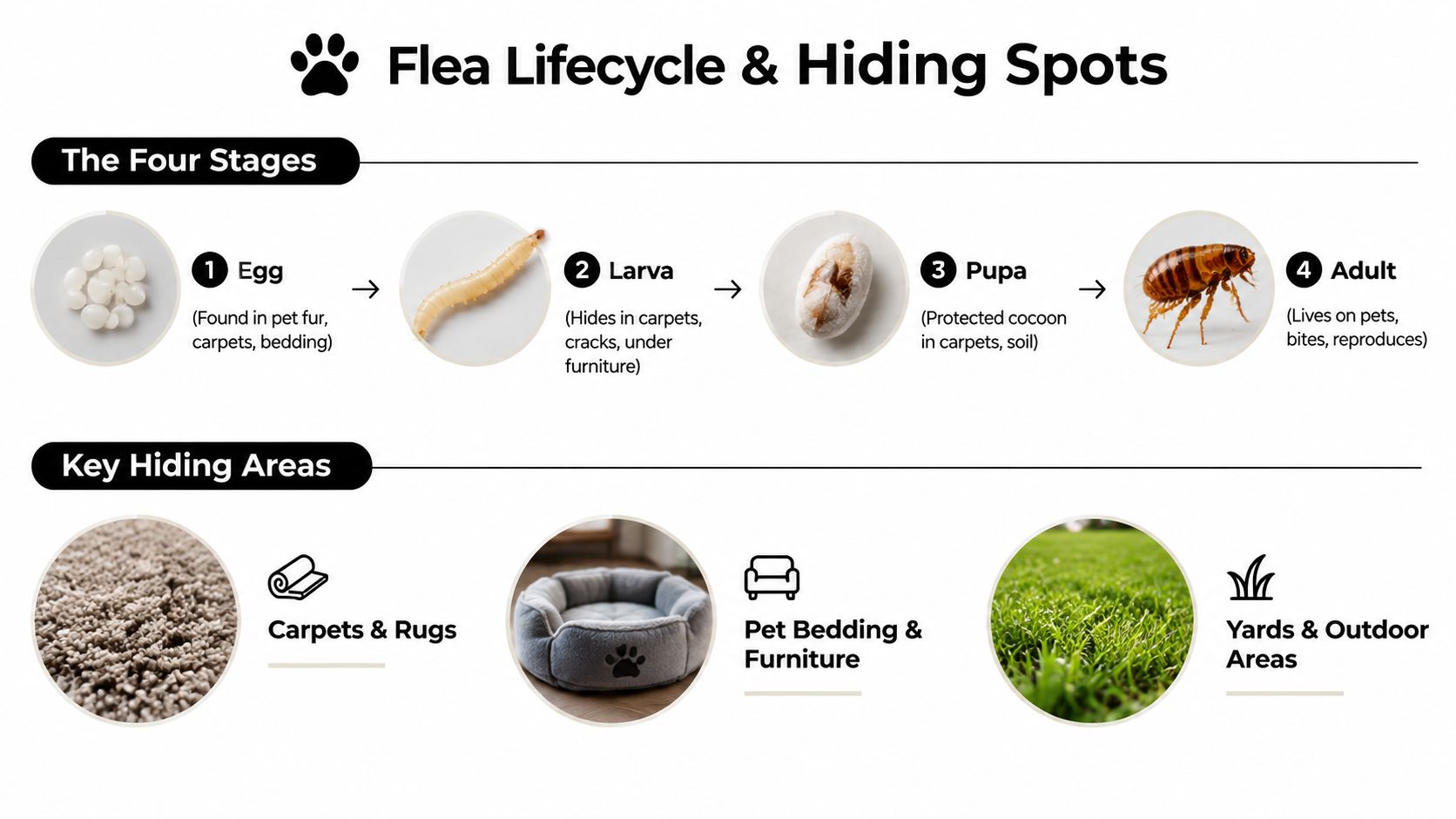
Where each stage hides
- Eggs: Adults shed eggs into carpets, pet bedding, upholstery, and other places where pets spend time. The eggs are easy to miss because they're small and don't stay attached to the animal.
- Larvae: These immature fleas avoid light and develop deep in carpet fibers, cracks, under furniture, and protected bedding areas. They're rarely obvious during a casual inspection.
- Pupae: Cocoons protect developing fleas in carpets, soil, and shaded areas. This stage helps explain why a home can appear improved and then show new adults after activity resumes.
- Adults: Adults live on pets or emerge from hidden areas to find a warm-blooded host. They bite, feed, and reproduce, restarting the cycle.
The CDC also describes eggs being shed into the environment and hatching into larvae in about 3 to 4 days, with the larval and pupal stages together taking about 3 to 4 weeks before adults emerge and seek a host. Those timelines can vary with conditions, but they show why one application rarely ends an established infestation immediately.
Look for scratching, live insects on the pet, pepper-like debris in bedding, and bites around ankles or lower legs. Check shaded yard areas beneath decks, shrubs, or outdoor furniture as well. A small number of visible fleas can represent a much larger hidden population.
Treating Pets Safely
Your dog or cat is often the first place you notice flea activity, but pet treatment should be coordinated with environmental control. Female fleas can begin producing eggs as early as 2 days after feeding and may reach up to 27 eggs per day after about 9 days, according to North Carolina State University Extension's flea biology guidance. That reproductive speed makes delays costly in terms of effort, even when the infestation first looks minor.
Start with a veterinarian-approved product selected for the animal's species, age, weight, health history, and lifestyle. Read the label every time. Never apply a dog product to a cat unless the label specifically permits it, and don't combine topical, oral, collar, or shampoo products without veterinary guidance.
A practical pet-treatment comparison
| Treatment | Pros | Cons |
|---|---|---|
| Topical products | Convenient application and useful for routine prevention when correctly matched to the pet | Incorrect dosing, licking, or product combinations can create safety concerns |
| Oral medications | Can act quickly and avoid residue on the coat | May not suit every animal, and veterinary advice may be needed for pets with health conditions |
| Flea collars | Simple, long-duration option for some pets when properly fitted and labeled | Performance varies by product, fit, exposure, and infestation pressure |
| Flea shampoos and combing | Useful for immediate removal and inspection | Often provide limited ongoing protection by themselves |
| Natural products | May support cleaning and habitat reduction when used carefully | “Natural” doesn't automatically mean safe, effective, or appropriate for cats and dogs |
For additional context on what owners should evaluate before choosing a collar, review this real-world pet collar effectiveness data. The useful question isn't whether a product sounds convenient. It's whether the labeled treatment fits your pet and forms part of a complete plan.
Diatomaceous earth and essential-oil sprays deserve caution. Dust can irritate the respiratory system, and some essential oils can be harmful to cats or dogs if applied incorrectly or ingested. Keep pets away from treated areas exactly as directed, and ask your veterinarian before using a home remedy.
The Green Advantage's safe pest control guidance for pets can help homeowners prepare questions, but a veterinarian should guide medical treatment. Seek veterinary advice before treating puppies or kittens under eight weeks old, pregnant or nursing animals, pets taking other medications, or animals with chronic illness. If a pet develops unusual skin irritation, weakness, vomiting, tremors, or other concerning symptoms after treatment, contact a veterinarian promptly.
Managing Indoor Environments
Treating the pet without cleaning the home leaves the life cycle intact. Begin with the rooms where pets sleep, groom, or spend time, then work outward through carpets, rugs, upholstery seams, cracks, and areas beneath furniture.
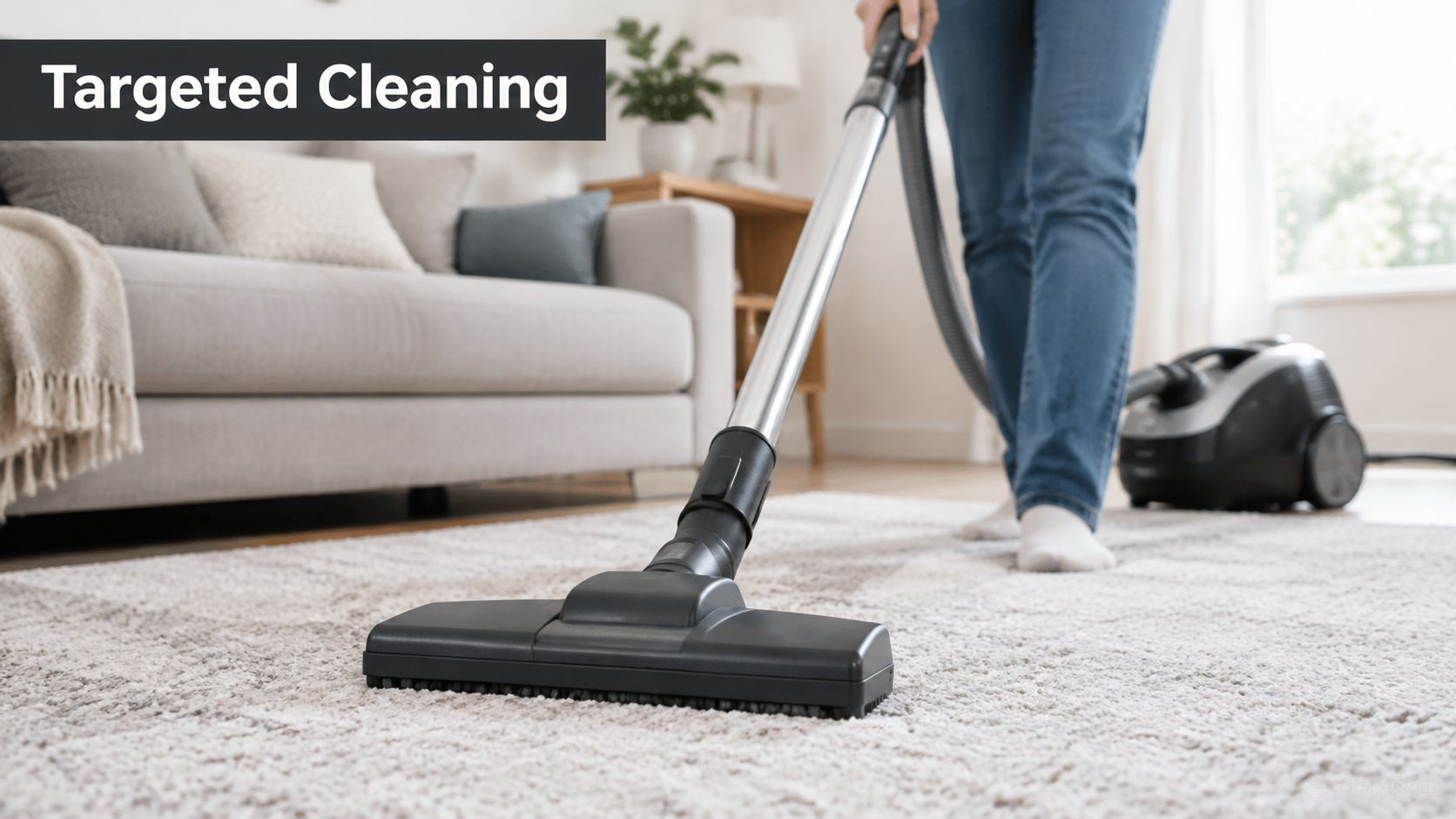
Cleaning targets that matter
The EPA recommends vacuuming every day during an initial flea infestation because vacuuming removes eggs, larvae, and adults. The U.S. EPA's flea-control guidance also recommends washing pet bedding and family bedding that pets lie on in hot, soapy water every two to three weeks.
Move slowly over carpet edges and transitions. Use crevice attachments along baseboards and under cushions. Empty a bagless vacuum outdoors into a sealed container, or dispose of a vacuum bag promptly so captured fleas don't escape inside the home.
Steam cleaning can kill fleas in all life stages, but it needs to reach affected surfaces properly. Avoid soaking materials that can't dry quickly, because damp conditions can create a separate indoor problem. Wash removable pet bedding, throws, and washable covers according to their care instructions.
After mechanical cleaning, a licensed technician may recommend a targeted adulticide and an insect growth regulator, or IGR. The IGR addresses development, while the adulticide targets active fleas. Product choice and placement matter. Don't fog rooms casually or spray mattresses, pet food areas, children's toys, or upholstery unless the label specifically allows that use.
A clean room isn't automatically a flea-free room. Vacuuming reduces the population, but pupae protected in cocoons can still emerge later.
Seal accessible cracks and reduce clutter beneath beds and sofas. If a property needs extensive preparation before a tenant change or move, guidance on stress-free apartment turnover cleaning can help organize the cleaning portion of the process. Cleaning supports pest control, but it doesn't replace an inspection when flea activity continues.
Professional service may require residents and pets to leave the home for four to six hours, depending on the treatment plan and product label. The Green Advantage should provide the applicable preparation and reentry instructions before service.
Use the following video as a visual reminder that thorough vacuuming means reaching edges, seams, and overlooked floor areas:
Treating Outdoor Yard Areas
A flea problem can continue when pets repeatedly visit shaded, protected parts of the yard. Focus first on places that stay cool and damp, such as beneath decks, around dense shrubs, beside outdoor furniture, and near crawl-space entrances. Flea larvae are more likely to persist where organic debris and pet activity create shelter.
Start with habitat reduction rather than blanket treatment. Remove leaf litter and debris, trim dense vegetation, improve drainage where possible, and keep pet pathways from repeatedly crossing the most sheltered zones. Clean outdoor pet bedding and inspect kennels, porches, and shaded resting areas.
Choosing an outdoor approach
A perimeter treatment may be appropriate around foundation lines and entry points, while a targeted granular or liquid application may suit a high-traffic pet zone. The correct product, dose, weather conditions, and reentry interval must come from the label and the technician applying it.
Residual performance isn't uniform. Research on carpet bioassays found that only some insecticides exceeded 80% adult cat flea mortality on day 1, while others fell below that threshold quickly, as described in this residual flea-treatment benchmark. That finding reinforces a basic field lesson: a strong first knockdown doesn't necessarily provide durable suppression.
Natural options also require realistic expectations. Beneficial nematodes may be considered for suitable soil conditions, while diatomaceous earth can lose usefulness when wet and can create inhalation concerns during application. Neither option should be scattered around pets without checking safety requirements.
Don't treat the whole yard by habit. Treat the places where pets rest, wildlife passes, and moisture or shade protects flea development.
For homeowners evaluating changes to outdoor surfaces, understanding antimicrobial turf technology may provide useful outdoor context, although turf choices alone aren't a substitute for flea inspection or treatment.
A focused plan for Crown Point properties should account for pets, yard layout, weather, and nearby wildlife or animal traffic. The Green Advantage's flea and tick control for yards can be coordinated with indoor service when outdoor exposure is contributing to reinfestation.
Creating a Prevention Plan and Retreatment Timeline
Flea control works better as a calendar than as a single event. The flea life cycle includes stages that develop at different speeds, and protected pupae may emerge after the first treatment. Consistent follow-up gives you repeated opportunities to remove developing stages, intercept adults, and identify a continuing source.
A practical six-month framework can include monthly pet prevention when that schedule matches the veterinarian's product directions, indoor vacuuming at a frequency appropriate to the property, and quarterly yard review or maintenance. The exact schedule should follow product labels, veterinary instructions, household conditions, and the technician's recommendations.
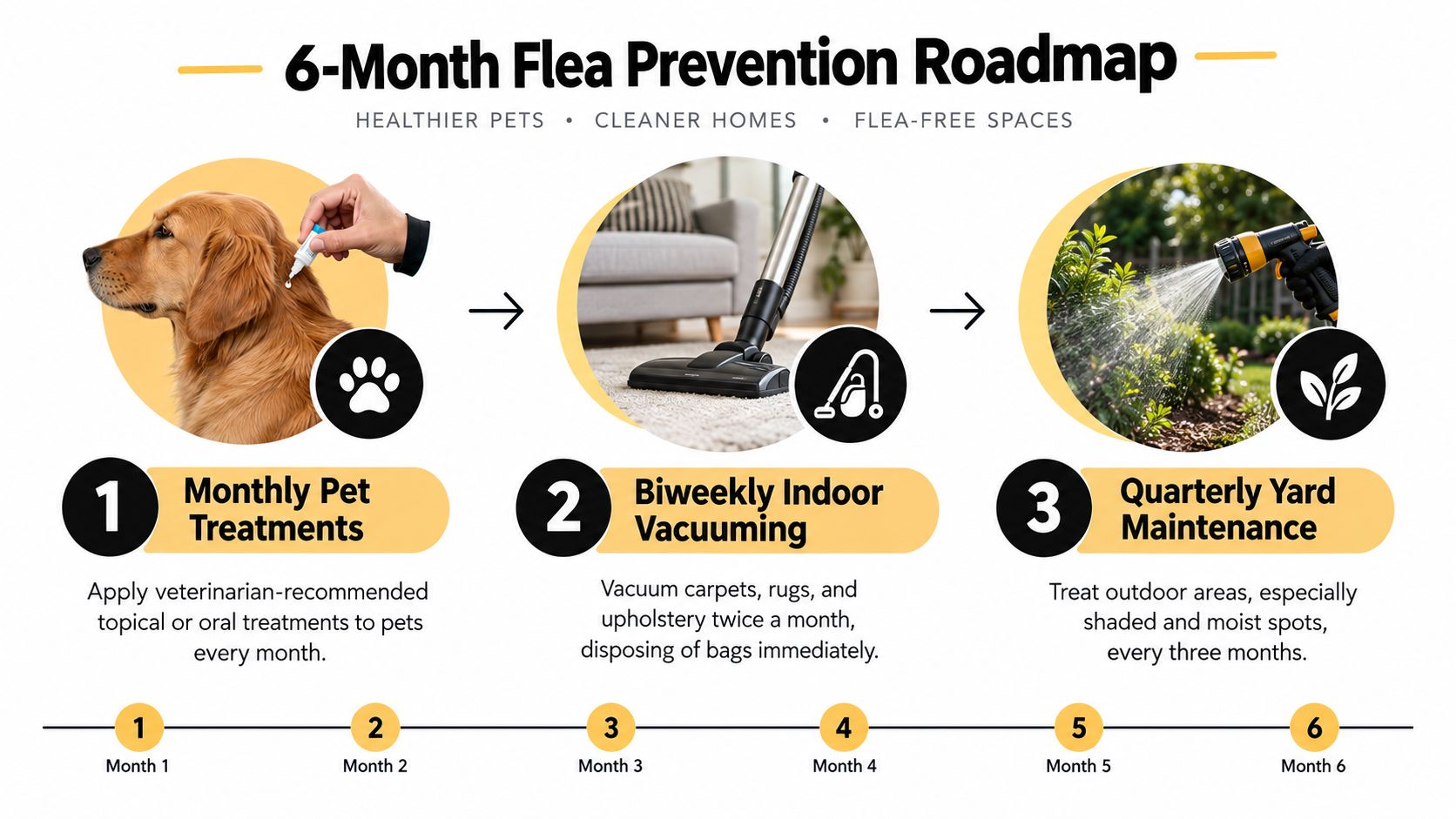
A workable household calendar
- Pet care: Record each veterinarian-recommended dose and check every pet, not just the one showing symptoms.
- Indoor cleaning: Vacuum carpets, rugs, upholstery, and pet areas regularly during active control, then maintain a lower routine after activity has stopped.
- Bedding: Wash pet bedding and household bedding used by pets in hot, soapy water according to the EPA schedule.
- Yard checks: Reinspect shaded, moist, debris-filled areas during seasonal flea pressure and after pets spend more time outdoors.
- Follow-up: Report new bites, flea dirt, or live adults instead of adding random products.
An evidence-based model supports combining an IGR with an adulticide and vacuuming. Research on integrated flea control found that insecticide alone didn't reliably reduce the population, while adding an IGR accelerated environmental decontamination. Vacuuming helps, but it works best as one part of the program rather than the entire program.
The schedule may need adjustment for multi-pet homes, rental properties, shared hallways, wildlife exposure, or recurring yard activity. Prevention also means checking pets after visits to other homes, boarding, grooming, or outdoor areas where fleas may be present.
DIY Versus Professional Services and Hiring The Green Advantage
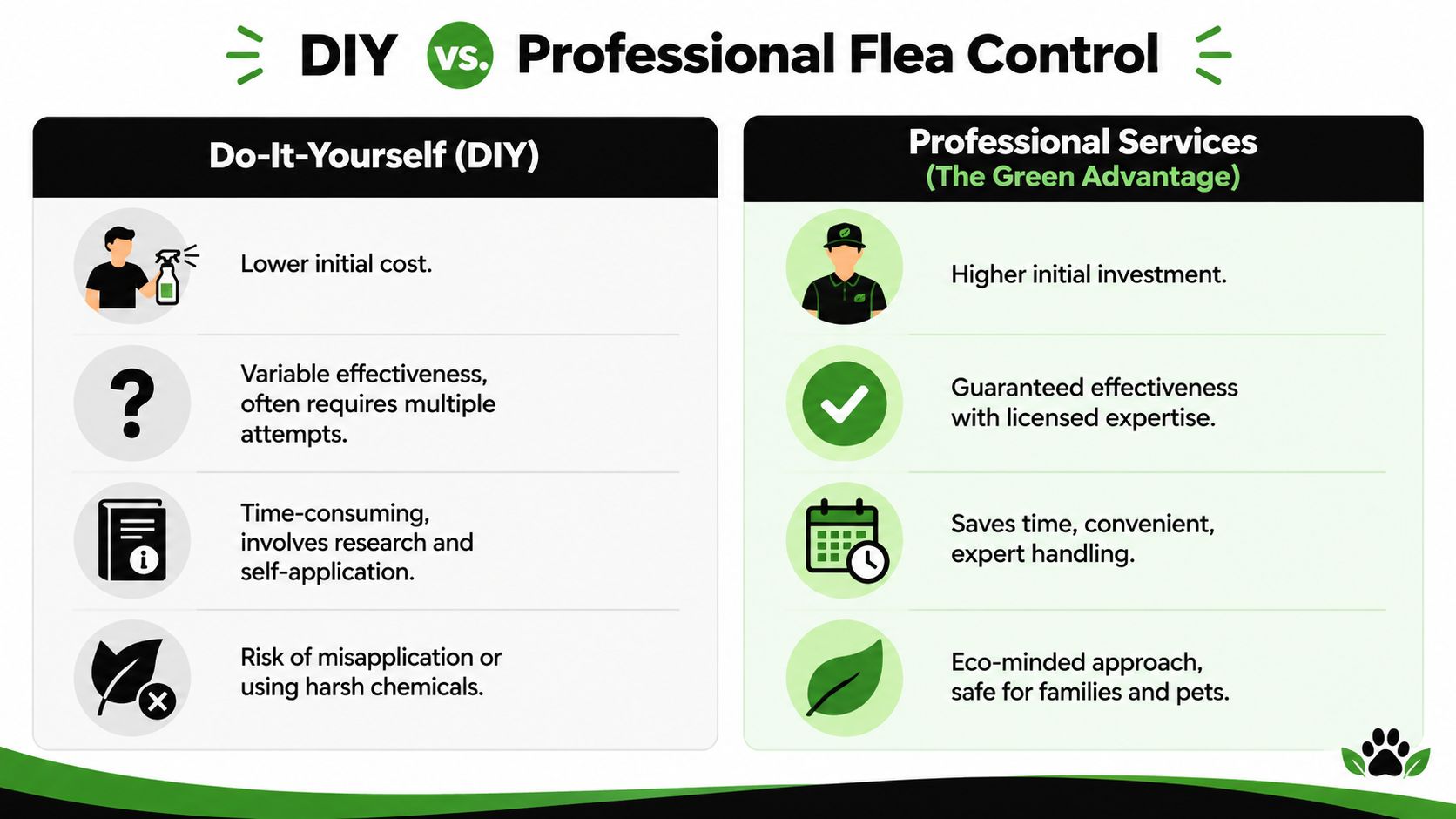
DIY flea control can make sense when activity is limited, the household can follow a careful cleaning routine, and every pet receives appropriate veterinary prevention. It becomes less practical when residents keep finding live adults, bites continue after cleaning, multiple rooms are involved, or pets move between indoor and outdoor areas.
Comparing the two paths
| DIY control | Professional service |
|---|---|
| Gives homeowners direct control over vacuuming, laundering, and preparation | Adds inspection, treatment planning, and trained application |
| May involve lower initial spending | Requires an upfront service investment |
| Depends heavily on correct product selection and follow-through | Coordinates environmental treatment with household preparation |
| Can become time-consuming when activity persists | Provides a structured follow-up process and documented instructions |
| Carries misapplication risks when labels aren't followed | Uses licensed expertise and site-specific treatment decisions |
The main trade-off involves more than price. DIY requires time, product research, careful pet coordination, and persistence through later emergence. Professional pest management reduces the guesswork, but homeowners still need to vacuum, launder bedding, follow reentry instructions, and maintain pet prevention.
The Green Advantage serves Crown Point, IN and nearby Northwest Indiana areas with residential pest control, commercial pest control, inspections, mosquito reduction, rodent exclusion, ant control, termite control, spider control, and wasp removal. For flea service, the visit should begin with diagnosis, include a discussion of pets and affected rooms, and end with clear preparation, treatment, and follow-up guidance.
A property manager may need documentation and coordinated scheduling. A homeowner may need help locating hidden activity. A business may need a plan that protects employees and customers while minimizing disruption. The same flea biology applies, but the service plan should fit the building, occupants, pets, and operating needs.
If flea activity is continuing despite pet treatment and cleaning, schedule an inspection rather than layering on more products. Visit The Green Advantage to request flea control, residential or commercial pest service, and a practical inspection plan for your Crown Point property. Contact the team to discuss what you're seeing, prepare your home safely, and take the next step toward lasting relief.