
You wake up with fresh bites, strip the bed, and start checking seams with your phone light. By bedtime, you're online searching for bed bug treatment near me, hoping this is a small problem and not the start of a drawn-out infestation. That reaction is normal. Bed bugs unsettle people fast because they invade the one place that should feel safe.
In Crown Point, IN, speed matters. Bed bugs hide well, spread through furniture and personal items, and they don't go away because you sprayed one corner of the room. Homeowners in Northwest Indiana also deal with busy households, shared walls in some properties, travel, and secondhand furniture moving in and out of homes, all of which can complicate the timeline.
If you're comparing pest control near me, exterminator near me, or pest control in Crown Point, IN, you need clear answers on signs, prep, treatment options, and what the process costs. Generic guides usually skip the two parts homeowners care about most. How long this takes, and what works without turning your house upside down.
What to Know About Bed Bug Treatment Near Me
Individuals often begin with the same question. Can one quick treatment fix this?
Usually, that's the wrong expectation. Bed bugs are hard to eliminate because they hide in seams, cracks, furniture joints, and nearby clutter. A surface-level spray doesn't reach enough of the infestation, and panic-buying retail products often burns time while the problem grows.
Why homeowners get stuck
Bed bugs don't act like ants or occasional spiders. You can kill the ones you see and still leave eggs or hidden bugs behind. That creates the false impression that the problem is gone for a few days, then it starts again.
For Crown Point homeowners, the practical issue is timing. If you catch the infestation early, you have more options and less disruption. If you wait, the inspection gets broader, prep gets heavier, and treatment usually becomes more involved.
Practical rule: If you've seen bites, spotting, shed skins, or a live bug, stop guessing and start confirming.
What a local search should really lead to
When someone is looking for an exterminator in Crown Point, IN or residential pest control, they aren't looking for theory. They want a company that can inspect the home, explain the method, set realistic follow-ups, and handle the issue without confusing instructions.
That same local mindset matters for landlords, real estate professionals, and commercial clients too. Bed bugs can affect tenant satisfaction, move-in schedules, and reputation. If you're already comparing providers for commercial pest control, termite control, rodent control, or mosquito control in Northwest Indiana, bed bug service should be evaluated with the same standard. Clear process. Clear preparation. Clear follow-through.
Understanding Bed Bug Signs and Inspection
Bed bugs leave clues before most homeowners ever see a live one. The problem is that people often dismiss those clues as dry skin, random bites, or old stains. A basic inspection helps you stop guessing.
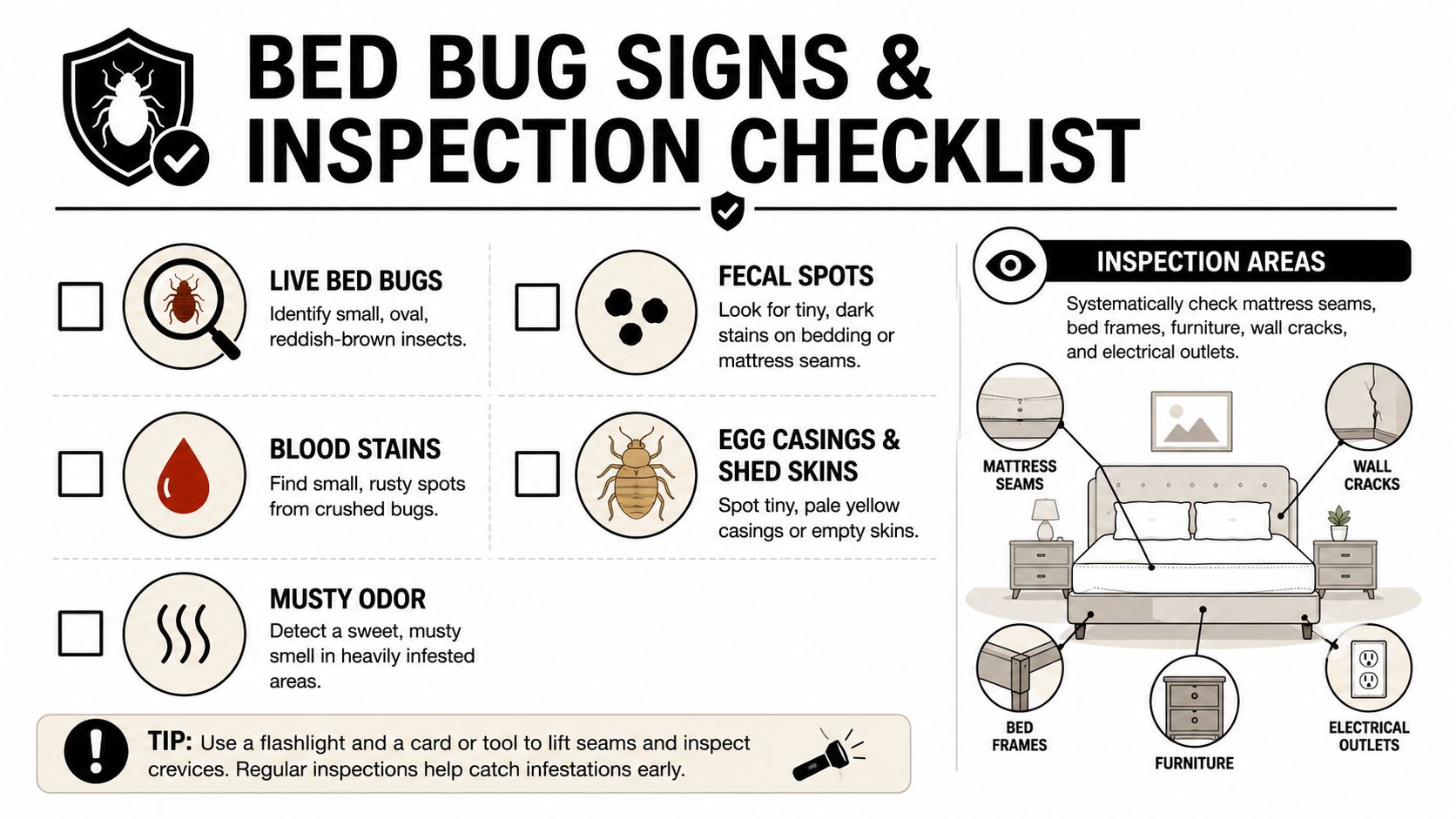
Start with the bed, then expand outward. Use a flashlight and a thin card or old gift card to check mattress seams, piping, bed frame joints, headboards, nearby furniture, baseboards, and cracks close to where people sleep. If you have a magnifying glass, use it. Small signs are easy to miss.
What to look for
- Live bed bugs that are small, oval, and reddish-brown
- Dark fecal spots on mattress seams, bedding, or furniture
- Rust-colored blood stains on sheets or pillowcases
- Egg casings and shed skins tucked into seams and crevices
- A musty odor in heavier infestations
Don't rely on bites alone. Skin reactions vary too much from person to person.
One reason early inspection matters is that bed bugs have become much harder to knock down with simple pesticide use. Bed bug populations have developed genetic resistance to common pesticides, and they can survive months without feeding and lay over 500 eggs, which is why quick detection matters so much, as noted in the BBC's reporting on why bed bugs are difficult to deal with.
Useful tools for a home check
Interceptor traps are worth using under bed and furniture legs because they help confirm movement around sleeping areas. They won't solve the infestation, but they do help you monitor it.
If you're trying to sort out whether your sleep setup itself is part of the problem, this guide on how to choose a new mattress can help you separate mattress wear issues from actual pest evidence. For a more focused walkthrough on signs inside your home, review this local resource on how to tell if you have bed bugs.
A short visual can help if you're still unsure what you're seeing.
If you find signs in one bedroom, inspect adjacent furniture and nearby sleeping areas the same day. Bed bugs rarely stay confined to the most obvious spot.
Preparing Your Home for Treatment
Prep work isn't busywork. It directly affects how well treatment reaches bed bug hiding spots.
A strong prep plan reduces hiding places, exposes travel routes, and helps the technician spend more time treating and less time moving household items. If you skip prep, you lower the odds of a clean result.
The prep checklist that matters
Integrated Pest Management protocols recommend laundering fabrics at 120°F for 30 minutes and using interceptors under furniture legs to break the infestation cycle without over-relying on chemicals, according to Rutgers NJAES bed bug guidance.
Use that guidance in a practical way:
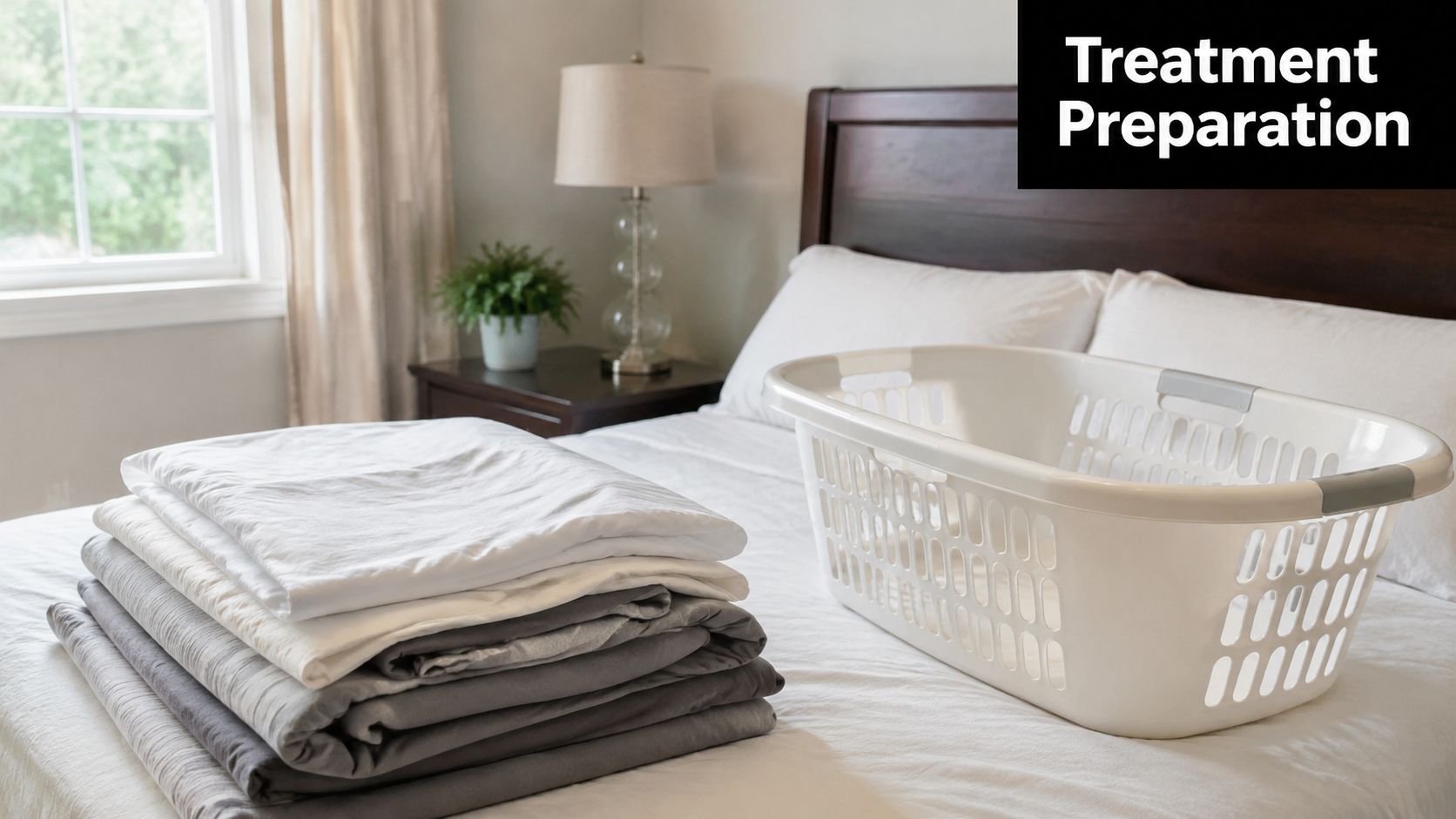
- Launder bedding and clothing that may be affected, then bag clean items until treatment is complete.
- Reduce clutter around beds, upholstered furniture, closets, and baseboards.
- Vacuum seams and crevices carefully, then dispose of vacuum contents promptly.
- Pull furniture slightly from walls so treatment can reach behind headboards and baseboards.
- Keep floors clear of toys, shoes, loose linens, and storage piles.
A few prep mistakes to avoid
Don't move infested items into another bedroom. That spreads the problem.
Don't throw away beds or furniture until a professional tells you it's necessary. Many items can be treated, isolated, or encased. If you're looking at sleep-surface protection after treatment, this roundup of best mattress protectors is useful for comparing options. Before your appointment, it's smart to review a local checklist on how to prepare for pest control.
Treatment Methods Explained
Not every bed bug method deserves your money. Some are proven. Some are half-measures. Some are a complete waste of time.
The biggest mistake homeowners make is treating bed bugs like a general pest issue. Bed bugs require precision, reach, and follow-up. That's why residential pest control for bed bugs is a different conversation than routine ant control, spider control, or wasp removal.
Comparison of Bed Bug Treatment Methods
| Method | Effectiveness | Visits Required | Cost Range | Considerations |
|---|---|---|---|---|
| Professional heat treatment | 95% success rate when performed by trained professionals | Often paired with inspection and follow-up | $300 to $5,000 | Strong single-session performance, but requires specialized equipment and professional execution |
| DIY methods | 10% of infestations eliminated | Often repeated unsuccessfully | Varies | Cheap upfront, poor results, easy to misuse |
| Targeted spray programs | Qualitatively useful in some plans | Multiple visits are commonly needed | Varies | Resistance is a major issue, and eggs complicate full elimination |
| Steam treatment | Effective for direct treatment and crack penetration | Usually part of a broader plan | Varies | Works well in seams and crevices, but coverage has to be thorough |
| Foggers | Completely ineffective against bed bugs | Not recommended | Varies | Waste of time and can push bugs deeper into hiding |
The strongest hard numbers here favor heat. Professional bed bug heat treatments achieve a 95% success rate when performed by trained professionals, compared with 10% for DIY methods, and they typically cost $300 to $5,000 depending on infestation severity, according to this compiled bed bug treatment data.
What each method really means
Heat treatment is the closest thing to a reset button when done correctly. It attacks bed bugs at all life stages at once, which is why many homeowners ask about it first when searching for bed bug treatment near me.
Spray-only treatment can play a role, but I wouldn't recommend relying on it alone. Bed bugs hide too well, and resistance has changed the game. Retail sprays especially give homeowners false confidence.
Steam is a practical tool for seams, edges, and cracks where bugs hide close to the surface. It can be a smart part of an eco-friendly integrated plan.
Desiccant dusts also matter in serious programs. They work physically rather than asking the bug to be chemically susceptible, which makes them useful in wall voids, void edges, and protected harborages when applied correctly.
The right plan isn't the cheapest line item. It's the one that reaches hidden bugs, fits the layout of the home, and includes follow-up.
One option available locally is The Green Advantage, which provides bed bug removal as part of its Crown Point pest control service lineup.
My recommendation for Crown Point homes
If the infestation is established, lean toward a professional integrated plan that uses heat, steam, desiccants, monitoring, and follow-up as needed. If the issue appears small, don't confuse "small" with "easy." Early-stage infestations still fail when homeowners under-treat furniture, miss adjacent rooms, or stop after the first improvement.
For people also comparing eco-friendly pest control or preventative pest treatments, bed bug service should still be judged by one standard. Can the provider explain where the bugs are hiding, what method will reach them, and what follow-up is required? If they can't answer that clearly, keep looking.
Timeline and Cost Expectations
Homeowners usually ask two questions first. How long will this take, and what will it cost in Crown Point?
The honest answer is that bed bug work isn't a one-visit mindset. Eggs and hidden bugs make follow-up part of the job, not an optional add-on.
The timeline most homeowners should expect
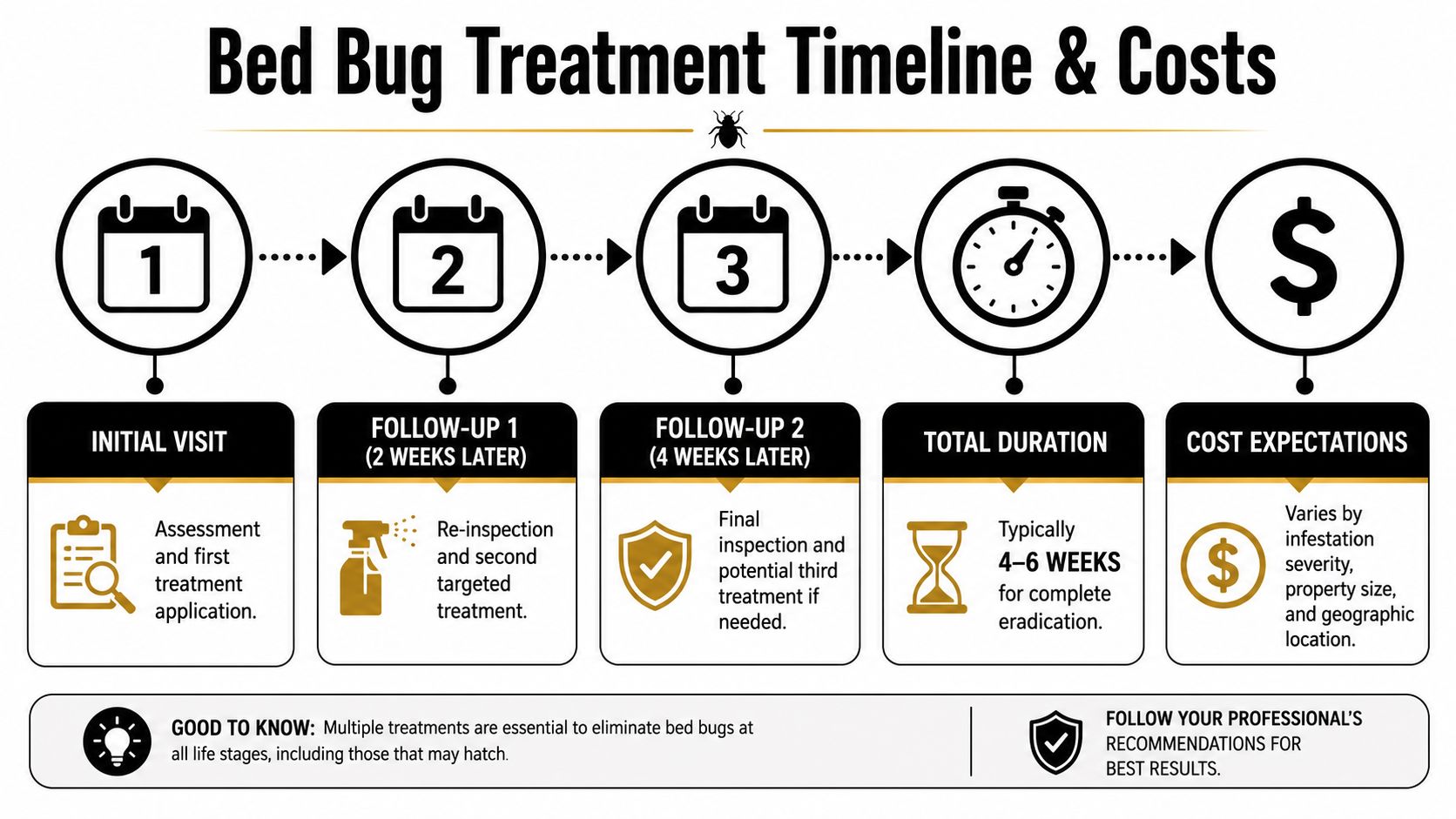
EPA guidance and recent IPM reviews confirm that skipping the two essential follow-up treatments, recommended at two-week intervals, accounts for 80–90% of repeat bed bug complaints, as explained in the EPA's do-it-yourself bed bug control guidance.
That means a realistic schedule looks like this:
- Initial visit for inspection and first treatment.
- First follow-up about two weeks later.
- Second follow-up about two weeks after that.
For many households, that creates a treatment window that stretches across several weeks. That's normal. It isn't a sign the plan failed. It's what responsible bed bug control looks like.
What the local cost picture looks like
In Crown Point, Angi lists the average cost of pest control for a homeowner at $175, with a typical range from $100 to $500 or more, depending on infestation size, number of visits, and the pest involved, according to local Crown Point pest control pricing information. Bed bugs often land toward the more involved end because they usually require more time, more prep, and more than one visit.
If you're budgeting for whole-home recovery, don't forget surrounding soft surfaces and floor care. For example, homeowners comparing post-treatment cleaning expenses sometimes look at Rubber Ducky's rug cleaning rates to get a general sense of how specialty cleaning services can add to the overall project.
Budget for the full process, not just the first appointment. Bed bugs punish shortcuts.
Safety and Environmental Considerations
If you're worried about kids, pets, and chemical exposure, that's the right concern. Bed bug treatment should solve the infestation without creating a second problem inside the home.
Where lower-residue methods make sense
Steam is one of the most practical tools in an eco-conscious plan because it reaches cracks and seams without leaving chemical residue behind. Steam treatments can reach temperatures above 120°F to penetrate cracks and crevices where sprays fail, killing all life stages faster while avoiding pesticide residues that bed bugs increasingly resist, according to research published in the Journal of Economic Entomology.
Heat-based methods follow the same basic advantage. They target the pest with temperature rather than relying only on residual chemistry. That matters in bedrooms, around upholstered furniture, and in homes where residents want lower-toxicity options.
Where caution still matters
Even lower-impact methods require discipline. Homeowners should follow re-entry instructions, avoid moving untreated items through the house, and ask what can stay in place during treatment.
For integrated plans, desiccant materials and selective product use often make more sense than broad, repeated chemical spraying. That's especially true when the goal is eco-friendly pest control that still gets results. The same commonsense approach applies to related services like rodent control and seasonal pest issues in Northwest Indiana. Use the least disruptive method that still reaches the actual problem.
Disposal decisions should also be deliberate. Throwing furniture out too early can spread bugs through hallways, garages, or shared pickup areas.
Working With The Green Advantage
If you're booking pest control in Crown Point, IN for bed bugs, expect the process to start with questions about where you've seen signs, how long it's been happening, and which rooms are affected. That's not small talk. It helps shape inspection and treatment.
A good service visit should feel straightforward. The technician inspects likely harborages, explains the treatment approach in plain language, gives you prep and post-treatment instructions, and sets expectations for follow-up. Homeowners shouldn't have to drag basic answers out of the company they're hiring.
For Crown Point homes, condos, rentals, and nearby Northwest Indiana properties, clarity is key. You want a provider that can address bed bugs while also understanding broader property needs like commercial pest control, termite concerns, mosquito reduction, or ongoing preventative service. The process should be organized, not improvised.
If you're still searching exterminator near me or residential pest control and trying to compare options, keep it simple. Ask how they inspect. Ask how they treat. Ask what follow-up is included. Ask what you need to do before and after service. If those answers are vague, move on.
If bed bugs are disrupting sleep in your Crown Point home, don't wait for the problem to spread. Contact The Green Advantage to schedule an inspection, request a quote, and get a clear treatment plan built around your home, your timeline, and the practical realities of bed bug control in Northwest Indiana.