The choice is yours.
 Let it be known, I'm an avid do it yourselfer. I choose this route for other reasons than most, for example: quality, knowledge, and the satisfaction I get from completing a task. Most are attracted to this course to "save a buck"!!! And, who could blame them, with rising costs of everything around us we could all use an extra dime from time to time! I have learned the hard way though, that some things are not worth the headache or the time, many cost me more to complete as I have to make my own mistakes along the way, and some projects don't turn out with the planned result.
First, lets examine each of these elements: Quality, knowledge, satisfaction, and cost.
Quality - How often have we heard the old adage, "They don't build 'em how they used to". This message has been around for decades, and I believe even centuries. I even have a book from my grandfather's library titled, "Build It Better Yourself". No one cares about the quality of a project or task more than the one who will enjoy it in the end. Most of us have all noticed an apparent lack of integrity in our world today, and many providing services simply don't seem to care like they should. So there is a good argument for this point, but there is also a downside. Quality often depends on knowledge and experience, and those traits can only come by performing a task multiple times. I recall a time several years ago, I had a truck and I wanted it painted correctly, so I started my research. I got the primer the paint and the equipment I needed and started prepping the truck. I did exactly how it was directed and was excited for the outcome. I was so proud when it was finished and couldn't wait to show off what I've accomplished. Then I pulled the truck out of the garage and into the sunlight. The paint was crinkled, some spots showed sagging, other areas were already chipping where I removed the tape. In the end I was not proud of the quality I produced and wound up bringing the vehicle to someone who had the experience I lacked. I have found in some of my DIY projects that, although quality was my goal, things just didn't turn out as I planned. I have learned (after many results not turning out right), that I had to be vigilant on choosing what projects were for me and what tasks were best left to the professionals.
Knowledge - I LOVE learning, everyone that knows me knows that there is nothing I enjoy more than research, reading, and bringing an idea to life. This is my biggest reason for choosing to do a lot of projects on my own. I have said it over and over that, "knowledge is something no one can take away from you", and that you can apply it over and over again, so it's value is ongoing. Knowing how to do something is excellent, but what about the tasks that I have no chance of having to repeat? Are they worth the time, effort, added cost, and chance of a lower quality. I already mentioned that I am an avid DIY'er, and when I say avid I mean it; so when our house needed a new roof, I was already making plans. I enjoyed researching roofing, checking out the types of shingles, making the measurements, and discovering the aspects of a good roof. BUT, then it dawned on me, a roof lasts 20 to 30 years!! All this knowledge and effort, is it really worth sacrificing the time and money to have the knowledge to do this. By the time it needs to be done again, I will probably not be able or willing to do it. So, is the knowledge I would gain worth it, I decided not and hired a contractor.
Satisfaction - This is something that for me links quality and knowledge. Nothing beats that feeling I get when I've completed a job, I look at it, and take pride in what I've accomplished. I've built things that I rarely use, just for this feeling, and nothing keeps me motivated more than this aspect. The downside is when I delve into a project, and the quality is not to my expectation, and those projects where the knowledge I've gained is simply: never to try that again. I've also noticed that even when I hire someone else to complete a task, I do get a sense of satisfaction that the job is complete and I don't have to put the time or effort into it.
Cost - This is the determining factor for most individuals and the reason many take on projects on their own. I can tell you from experience, it has often cost me more to complete tasks on my own than I would had I hired someone. Not always, but far more times than I can count. One example is the time our house needed carpet. As with the roof, I was excited as all get! I couldn't wait to obtain and use the tools, pick out the carpet, and get this job rolling! This project I did complete on my own, but after buying the tools, miscalculating my cuts, and the cost of extra supplies (because I had to learn how to use them); I found I hadn't saved a nickel. If fact, it cost me over 50% more than it would had I hired the professional and I wasted several days of my time that could have been spent doing things more productive. The knowledge I gained from this experience was groundbreaking for me. Now when I look at a project I calculate the cost and include the learning curve, then decide whether it is something worth taking on.
I have learned through my time as a DIY'er that it is important for me to look at all of these aspects and evaluate whether a task is best for me or someone else to take on. Some projects I take on even though they cost more for me to do, because of the fact as I stated earlier, that I value quality, knowledge, and satisfaction, more than anything. Others are simply not worth the time or effort because I can't produce the quality that would give me the satisfaction that I long for. I have found that the knowledge I would gain from some projects is simply not worth the cost.
The answer to the question of whether a job is worth it for the DIYer is this, what will bring you the most value: Quality, Knowledge, Satisfaction, or Cost. Every task will have its own answer, and the answer may vary from chore to chore. It is very rare to get all of these qualities out of a job, usually 3 of the 4 is the best score that can be achieved.
Now a pest control perspective (as this is a pest control blog!!). The market is full of DIY products and the internet is always there to send us information (good and bad), so why not do it myself?
Pest control has gone through many advances through the years and is far different than it was even a decade ago. New methods, procedures, and products are available now that weren't just a few years ago. Knowledge of pests is a key element to connecting these methods, procedures, and products, which has been found to be the greatest breakthrough in the pest control industry. Safety is stressed more than ever before and training to use chemicals is an ongoing task. Keeping up in licensing, state and federal regulations, continues everyday through classes and exams. The quality of a job is dependant upon this knowledge in order to give the satisfaction of the job done correctly. Lastly, the cost of gaining this knowledge usually is far more than a professional can offer.
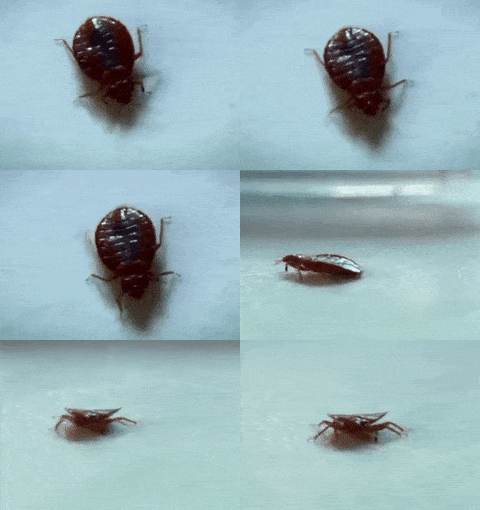
Bed bugs - A brief history
 Cimex lectularius, AKA: the bed bug, has plagued humanity since time immemorial. Evidence of bed bugs have been found in ancient Egypt and in settlements like Jamestown. Throughout time every civilization has had to deal with these dreaded bloodsuckers.
Sufferers of bed bugs went to great lengths to rid themselves of their torment. Some going to the extent of soaking their linens in gasoline. Alcohol spray was used as a home remedy, as well as fumigating using sulfur gas was not uncommon. In the 1800's and early 1900's formulations of arsenic and/or mercury were used to control infestations. Cyanide gas was another method used for bed bug eradication. The safest formulations were powders of pyrethrum, made from crushed chrysanthemum flowers. There was a problem with these solutions, most have no lasting effects, so reintroduction was always a concern. The use of pyrethrum risked spreading the problem to other areas of the structure, as it is a repellent. Then a breakthrough occurred, in 1939 the insecticidal properties of DDT were discovered. Finally, a solution with residual effects that was easy to apply and lasted for years! The result were decades in which the United States was nearly bed bug free.
There was a problem though, bed bugs go resistant to formulations fairly quickly. Even with the use of DDT a resurgence was imminent. Before we experienced the effects of the resistance, DDT was banned and synthetic pyrethrum (pyrethroids) became the chosen form of control. By this time, occurrences were few and far between, as the results from widespread use of DDT were still in effect.
In the early 2000's something was happening once again, bed bugs were making a comeback. The use of pyrethroids as the main control was resulting in resistance. Most products available to consumers today are still depending on the effectiveness of pyrethroids even with this resistance well known. Due to the resistance issue, lack of other options due to regulatory restrictions, and absence of residual pesticides choices; the bed bug resurgence started. No longer is this an uncommon occurrence, 1 out of 5 people in the United States has had or knows someone who has had bed bug issues.
Fortunately, there are solutions. Knowledge and technology on bed bug control has advanced beyond the "soak your linens in gasoline" days, and even past "spray the room down" . The frequency of bed bug infestations has caused a boost in research on the insect, resulting in the development of systematic procedures to eliminate them. Integrated pest management breakthroughs have resulted in less dependence on pesticides and far more responsible use of them. Included in this responsible use, is resistance management procedures that can help us avoid the problems that are caused by the bed bugs properties of swift resistance. Recently, the release of bio-insecticides targeting bed bugs have given even more and safer options both for people and the environment.
With the availability of some pesticides to consumers, there have been many attempting to control the situation on their own. Most going back to the "spray it down" and the "mix it stronger" tactics of the past, and some using "natural" methods they've conjured up on their own or from an online search. The truth is there is no magic solution, and control is dependant on a systematic approach using knowledge that only experience can provide. It should be remembered that as with many things in life, amateur efforts usually produce amateur results.
Even with all the changes in control that have occurred through the years, there is one recommendation that has stood the test of time: Be vigilant and proactive.

Pest control with a methodical approach.
 Pest control with a scientific method. The days of simply spraying the bugs away have come and gone. Pest control has changed for the better, this method has developed both for safety reasons and effectiveness. Let's explore this method one step at a time.
The first step in any process, which is not indicated on the graphic, is to identify the problem. Mistakes are easily made when this step is overlooked. I have experienced situations where chemical applications were made, only to find the pests that were being targeted were nowhere to be found. Another common problem, especially with ants, that the wrong products are used, causing a problem to intensify. Knowing and identifying the problem is the only way to proceed on the path to eliminating it.
The next step in control is to find cultural means of controlling a pest. Cultural means of control are correcting sanitation and habitat change. For example, if you find sow bugs, silverfish, or centipedes, there is often a moisture problem. Eliminating this moisture problem can often eliminate the pest. First look for the reason for the moisture problem, often the culprit is drainage that isn't directed away from the house (gutter downspouts) or leaking plumbing. The next option would be to install a dehumidifier, eliminating the moisture from the air. Many ant and cockroach problems start with identifying food sources and cleaning the infested area.
Physical or Mechanical, is fairly simple. When you use a flyswatter to kill the fly, or a vacuum to suck up a spider; you have used mechanical control. Pulling weeds is a mechanical means of control. Mouse traps are another example of mechanical pest control.
Biological control is a little more difficult. Asian lady beetles, the orange with black dotted beetles similar to ladybugs, were an attempt at biological control for aphids in farming. Unfortunately, the repercussions of introducing an invasive pest were highly underrated and the solution turned into a problem of its own. A better example that has not caused that kind of problem is a fungi used to control bed bugs. The spores are in a liquid formula and applied to areas where the bugs will contact it. The fungal spores are easily transferred to other bed bugs and control is the result. Getting a cat as a solution to a mouse problem, is a fine example of biological control.
The last step is chemical control. With the target identified, and the other steps taken; it would be time to select the correct product for the situation. Resistance management is highly important in this step, as it not only improves effectiveness but is the responsible manner of using the chemical approach. There are a multitude of products, designed for many purposes. Selecting the correct products comes with experience and knowledge of the target. Some products work as repellents, others attract pest, and some are non-repellant so the pests don't suspect anything. Most products available to consumers are repellants, which can cause issues with certain pests, namely ants and bed bugs. Using the wrong product in the wrong situation can cause the scene to get worse, often spreading the infestation. Other products target specific periods of growth in a target. Insect Growth Regulators are a great example. They often target the molting process insects go through, not allowing them to grow from one stage to the next. Using the chemical step is no longer a spray and go option, as knowledge and experience play a large role in knowing what to use and when to use it.

It's time to take a step back and know what is going on.
 CHEMICALS!!! A word that has come to draw fear in nearly everyone. We hear about diseases, cancers, and ailments too nasty to describe. Pesticides is another word that society has come to demonize. When we dig a little deeper the truth is not as gruesome.
Technology has come so far, and our awareness of the dangers of misuse have made our world such a safer place. Chemicals surround us, all the time. Not a day goes by that you ingest, absorb, and breathe some type of chemical. We need chemicals to survive. Oxygen and carbon are the basis of life. Without these two chemicals life would not exist. These are naturally occurring chemicals, so we have come to believe that they are safe. When we hear the names of some of the ingredients in regular products, many people squirm. Isopropanol, sounds horrible, but when we call it rubbing alcohol, it seems nearly harmless. So what is it that has caused this fear to dwell in the majority of people?
We constantly hear about the negative things that chemicals have brought about, but we never talk about the fantastic things that these products have brought about. The countless lives that have been saved due to the advances in chemistry. Instead we are blasted with authors like Rachel Carson, whose unbased claims cost the lives of millions of people.
So what about these synthetic, man-made chemicals? Most pesticides are derived from naturally occurring compounds. The Chinese were the first to discover the effects of pyrethrum, the chemical in mums which not only repels insects, but kills them as well. About 3 thousand years ago, they would crush the plants and make an insecticidal powder. Today, we are able to make this compound and it is as safe as the naturally occurring form, and in many cases safer. When we hear natural, we think safe. The truth is anything is poisonous at some level, even drinking too much water will kill you. Nicotine is another naturally occurring pesticide. Nicotine based insecticides have very beneficial qualities; like they do not repel insects, they aid in resistant management, and they can be translocated in plants.
Dichlorodiphenyltrichloroethane or DDT, had been demonized until recently. The majority of the population haven't even heard that the World Health Organization (WHO) deemed DDT safe even for indoor use in 2006. When used properly, the WHO has found that it poses no risk. The amount of lives that will be saved due to this scientifically based finding will be astronomical. Every one of Rachel Carson's claims in Silent Spring, have been proven to be nonexistent. Although her name is not as commonly known as it was in the past, it was this book that led to the bans on DDT. It is being implemented in many areas around the world today, due to its residual effects and success especially in malaria stricken regions for mosquito control.
Resistance to pesticides is a common problem. Each class of pesticide effects pests in a different manner, we call this a "mode of action". Resistance management is something that we should all take very seriously. One of the best resistance management techniques is to change the mode of action, or combine 2 modes of action to an application. Once a population goes resistant to a specific mode of action, that entire class of pesticides will be rendered useless and an option to control the pests will no longer be available. An example of this is bed bugs. Many of the pesticides available are in a class called pyrethroids. Pyrethroids are synthetic pyrethrum, the chemical in mums that has insecticidal properties. These products are readily available, and since the bans on more residual pesticides, they have become the most commonly used especially when it comes to the general public. Eventually, bed bugs had become resistant to these products and have rendered most of these products useless in control.
This is where technology and chemistry have come to our rescue. Science has taught us that the best way to control pests is using a systematic approach called Integrated Pest Management. Instead of depending solely on chemicals, the approach involves first looking at cultural solutions, then mechanical, followed by biological means, and lastly the chemical approach. Chemistry has given us several options when it comes to modes of action. Furthermore, science has taught us how to use these products safely, both for our health and the health of the environment.
So the next time you get squirrely when you hear the term chemical, sit back take a nice sip of H20 (water), take a deep breath of 02 (oxygen), and relax in your clothes made of C6H10O5 (cotton). Everything in the universe is made of chemicals. The truth is, we need to mitigate the risks of overexposure, follow precautions that keep us safe, and realize that chemicals are a tool, but not the only tool. Safety comes from proper use and knowledge of what is being utilized.
This debate has gone on for years, now we put an end to it!!!
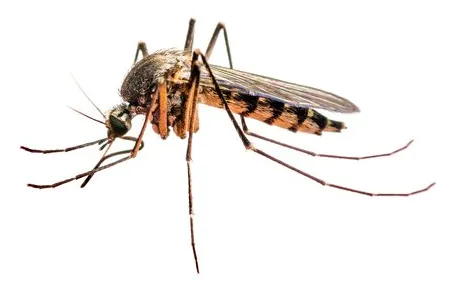
 This is a question that, although not very important, has come up time and again. I personally prefer the spelling mosquitos, while others (including my spell check) like the spelling mosquitoes.
Mosquitos were not always referred to by that name. Native Hispanic Americans called them zancudos, which means "long legged". The English preferred the term gnats, while the French called the either Les cousins or Les moucherons. The Germans, like the french had 2 terms commonly used, stechmucken or schnacke. To Scandinavians myg and myyga referenced the pest. Going back further, the Greeks referred to mosquitos as konopus, while Aristotle, the Greek philosopher, used the term empis, in his recorded studies of animals.
To answer this question correctly, I believe we need to go back to the origin of the name we give this bloodsucker, mosquito. The mosquito gets it's name from the spanish phrase meaning "little fly". "Mosca" meaning fly, and "ito" which means little or small. The name solidified in the late 1500's, and became the common name for the group of insects in the Culicidae family.
The final determination is that both spellings, mosquitos and mosquitoes, are correct!! In spanish the spelling would be mosquitos. If someone decides to add an "es" to the end, as many words in english do, it would also prove correct. The simple answer would be that you're right!!!!

Insights from the professionals
At one point these pests where on the decline to the point they were rarely an issue. Due to several factors, they are back, and show no signs of slowing down their terror. Unlike some other pests they don't have much to do with cleanliness, although clutter can make more places for them to hide. Bed bugs are expert hitchhikers that's how they get from here to there. Often transported in furniture, luggage, and clothing. Unlike other bloodsuckers, we are a bed bugs primary target, instead of a target of opportunity. For this reason these pests are highly adapted for their life's purpose: find us, eat, and multiply.
The main questions we are asked is what to look for and what to do if they are found. Inspecting bedding is the best way to protect yourself. Bed Bugs are attracted to hosts that are immobilized and prefer the dark. The main thing to look for is fecal staining and casings (shed exoskeletons). Fecal stains appear as dark spots often found in creases in sheets or corners of frames. It appears as though someone made a bunch of spots with a ballpoint pen. Often they are first noticed on the headboard side of the bed, as bed bugs primarily target uncovered skin. This side of the bed offers quick harborage after feeding. In larger infestations, they can be found anywhere they can hide, including in floorboards, in electrical outlets, behind pictures on the walls, and nearly any other place you can think of. The shed exoskeletons or casings appear tan to light brown, and retain the shape of the bed bugs. Bed bugs go through 5 stages in their lives, shedding their skin after each stage. These casings are usually found in and around their harborages and accompany the fecal staining.
If bed bugs are found, the first thing to do is remain calm. Fortunately, bed bugs do not transmit diseases, so they do not cause any imminent danger. The first thing we recommend is vacuum up any visible insects. We recommend that untrained individuals refrain from using chemical treatments. When chemical treatments are not performed correctly they can make problems worse. The products available at the store to consumers oversimplify treatment and will often cause the insects to spread to other areas. Most over-the-counter treatments are a class of chemicals called pyrethroids. They target adult bed bugs on contact, but bed bugs have been showing resistance to these products. Bed bugs that are not contacted directly are often unaffected, and being that they hide the majority of they time, this means most are left unharmed. In addition, these products don't target eggs (even though many claim they do), and they don't provide much residual control (another claim some products make), so any effects they may have are short lived. An understanding of products, their active ingredients, and how they affect the target insects is key to successful treatment. Certain products work well in certain circumstances and areas and are virtually ineffective elsewhere. We have also noticed overtime that products that were very effective in the past no longer provide the results they once did. Fortunately, the technology in pest control is always advancing, new and safer products are available today that were not just a few years ago.
Heat is another method of abating for bed bugs. We have witnessed people attempt to alleviate their situation by turning up their thermostat. Unfortunately, this has only been proven to increase your utility bill, as the temperatures necessary to kill bed bugs will never be reached using a furnace. Other methods of heating are simply not practical due to safety reasons and fire hazards. Professional heat treatment utilizes equipment specified for this purpose by individuals trained to perform this type of abatement. In order to be effective, the correct temperature must be reached for a certain amount of time. Even when a heat treatment is performed, we still recommend the proper chemical application for residual control.
We are here if you need us!!

Who would have thought something so small would have such an impact!
 When we think of deadly, people usually think alligators, rhinoceros, or sharks!! The truth is much, much smaller though. Throughout history a pest that still plagues us today has been responsible for far more deaths than any other. This little bloodsucker has humbled humanity throughout history. It is responsible for altering DNA (sickle cell), changing the course of human events (Roman Empire, Mongolian Empire), and never ceases to expand on fear and dread even to this day (Eastern Equine Virus, West Nile Virus, Zika, and many more!). What we are discussing is the, more than pesky, mosquito.
Did you know that the mosquito is responsible for killing more than half of all humans that ever existed? That's right HALF!!! Even today mosquitos kill twice as many people as people do! Which is mind boggling considering people are often credited as the biggest destroyer of their own species. Mosquitos are responsible for about 1 million deaths a year, mostly attributed to malaria. Here in the United States malaria has been, for the most part, eliminated with less than 2,000 cases a year diagnosed, mainly from international travellers. This eradication in the United States occurred during the mid 20th century, with the development of newer more effective insecticides. Even with this success in the battle, not a summer goes by that we don't hear about the risks of other diseases mosquitos spread, like West Nile Virus, Eastern Equine Virus, Western Equine Virus, St. Louis Encephalitis, LaCrosse Encephalitis, and Zika Virus.
Humans have adapted due to the epidemics spread by mosquitos. One of the most well known is Sickle cell, as it also has brought it's own list of problems to the table. Sickle cell is believed to have evolved and spread due to the fact that it causes an immunity to some mosquito borne diseases. Many of these diseases would cause death by the age of 5. Sickle cell would often result in death by the early 20's, but allowed for propagation and resulted in the spread of Sickle cell through populations. Several other mutations also find their roots in the mosquito some have yet to be discovered, but the altering of DNA may soon be the mosquito's demise. Scientist have been experimenting with genetically modified mosquitos which spread deformities to other mosquitos. These deformities inhibit them from spreading diseases and do not allow them to reproduce. There is a large controversy over the ethicacy of this control method and what long term effects it may have.
Through history mosquitos have made their impact. The death of Alexander the Great is attributed to malaria. The mighty Genghis Khan succumbed to typhoid fever. Even royalty like King Tutankhamun couldn't escape the mosquitos wrath! From ancient Sumeria to the Roman Era, through the Middle ages and the Crusades, to the World Wars, and all the way to the present day, the mosquito has impacted our civilization more than we could ever know.
These are not harmless insects without victims. Protect yourself, but also keep in mind the next time you are being "eaten alive", that you are not the only one. All humans in all of history have experienced the same! We are fortunate enough to live in a time where we have technology and knowledge to mitigate the risks more than ever before. If you have questions be sure to contact us for more information.

Flies can be troublesome pests, but there are solutions!
Whether inside or outside, flies are pesky, disease spreading insects that threaten our health and quality of life. They invade our yards and our homes, at times in outstanding numbers.
For most people a fly is a fly, and they want it gone. No one can argue with that, but from a entomological standpoint the differences are important. The scientific name for flies is Diptera, which means two-wings, because they do possess 1 pair of wings. We often wonder what such an annoying pest could actually benefit, but they do serve a purpose. Two of the most important services flies provide is that they break down organic material and they're family is the second most important pollinators, following their cousins in the Hymenoptera family, which include bees, wasps, and many others.
Flies invade for multiple reasons, knowing why is key to eliminating the pest. There are many species of flies, each having their own characteristics and behaviour patterns that aid in control. Blow flies (AKA, bottle flies) distinguished by their blue or green metallic sheen, are common around highly organic material such as dead animals or animal fecal matter. Where fruit flies, are attracted to the outer portion of exposed fruit, where they lay their eggs. Another common pest is the drain fly, whose larvae feed off organic material in our plumbing. Identifying the type of fly is the first step in control. Attic or cluster flies are known to show up in large numbers, in a short amount of time, looking for sites to overwinter. Regardless of what type of fly proper identification is pertinent to control.
The best and fastest control for flies is to locate the source and eliminate the conductive environment. Often this can be a daunting task, if not nearly impossible as the source may be outside anyone's control. There are still solutions, which can mediate the issue, if not eliminate the problem. Technology today provides us with automated mechanical control (fly lights and traps), baits, in addition to chemical control. When utilized properly, and often in combination, prove highly effective.
Regardless of what type of pest, you have an ally in the invasion. When things get too much to endure, we are here to help.
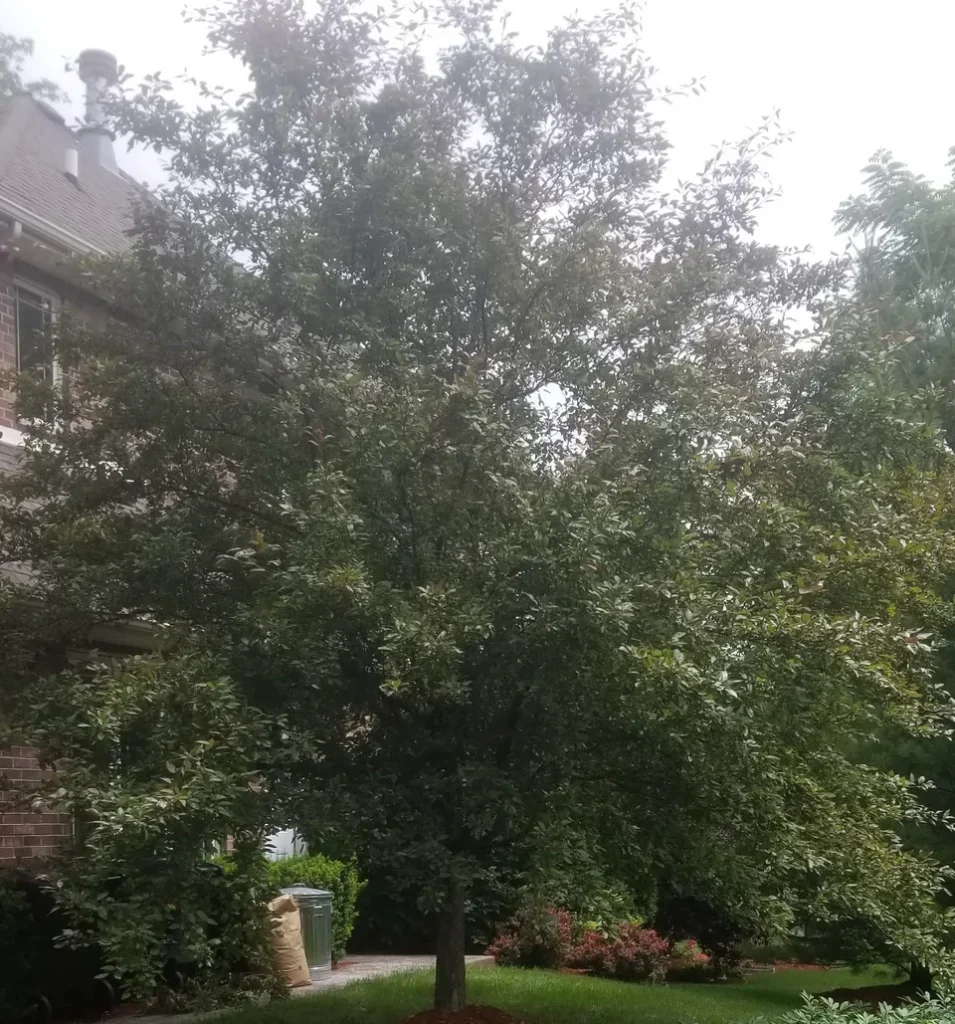
Blights, Spots, and Fungal Disease

Blights, Scabs, and Spots are all types of fungal diseases that attack plants. When the conditions are right, fungi can bloom causing a stressful condition for vegetation. All types of plants are susceptible to fungal disease, including: evergreens, broadleafs, and grasses. Advances have been made in resistant cultivars of many species, resulting in a reduction of occurrences, but threats keep coming as different strains of fungi are introduced.
Apple Scab
Notice the leaves of your ornamental crab apple or fruit trees falling off in early summer? A common cause is a fungal disease commonly known as Apple Scab. Spots on the leaves and fruit are a good sign that there is a problem, usually insects or fungal disease, which would need to be identified. Apple scab not only makes a tree unsightly, it also stresses the tree, reduces tree vigor, and growth. Although Apple Scab itself does not kill a tree, a severe infection over several years can lead to decline and eventual death due to defoliation. Infected trees look thinned out, undefined, and often littered from the leaf drops.
Often solutions are available, especially for ornamental trees. The development of systemic fungicides has allowed a technique that requires fewer applications and does not require spraying a tree multiple times a season. Systemic fungicides move through the tree, using the trees vascular system. They are injected at the base of the tree. Once the disease is under control, treatment can be re-examined, and often retreatments are not required annually to maintain, but every 2 to 3 years to maintain control. This makes for a very economical solution to a common problem.
Fruit bearing trees require treatments that will not contaminate the fruit, so systemic fungicides are often out of the question. There are topical treatments that can be done to fruit bearing trees that will allow fruit to be harvested. These usually require multiple applications in a season, but if timed correctly can be successful.
Evergreens
Evergreens, namely Spruces and pines are extremely susceptible to fungal disease. Needlecast is common to spruces. While Pine Needle Tip Blight commonly effects Pine trees. Both are treatable but require different application methods and correct diagnosis.
Spruces take on the appearance of dying from the bottom up when infected with Needlecast. When observed closer many older needles will appear a dark shade of purplish black. Newly infected trees appear as if the tree is thinning out and losing its needles, while trees with ongoing infections will experience a dieback on the bottom branches due to defoliation. Another observation would be the large amount of needles around the base of the tree that have fallen.
Pine Needle Tip Blight is very common, and is usually first noticed as a thinning out of the tree. Upon closer inspection the actual blight can be seen on the needles, which appears as a die back on the tip of the needles with very small black spots. The best treatments are preventative, but this is a curable disease.
Another evergreen that has recently been under attack are boxwoods. Currently there is no curative treatment, but it is being researched. Preventative action can help limit the spread of this disease but is quite costly at this time. We are experimenting with some systemic fungicides attempting control of this fatal infection. Stressed and newly planted boxwoods are extremely susceptible, and the disease is often misdiagnosed as “winter damage”. There are several strains of boxwood that are resistant to this disease and it is recommended to choose one of these varieties.
Larger trees
Most have noticed black spots on Maple trees, this is called tar-spot. It is a fungal disease that is very common, and often treatment is unnecessary, as it typically does not pose a major threat to the tree. There are occasions when treatment is desired, for example: extreme defoliation, stress on tree, or the disease causing an unsightly condition. Systemic fungicides have had a great record on controlling this disease.
Oaks have also been under attack by a fungal infection called Oak Wilt. This is a very serious disease, which will lead to the death of the tree. Prevention is key, once an infected tree shows signs of decline it is often too late. Not all Oaks are as susceptible to Oak Wilt, so identification of the species of tree is necessary to determine a treatment plan.
Grasses
Turf is home to a multitude of fungi. Often the growth of grass keeps up with any damage that can be encountered. There are times that favor development of these diseases and result in blooms which can be noticeable. A common fungal disease in turf is called Rust, due to the rusty color residue left by it. It is sometimes noticeable in the grass, but is more often seen as stains on shoes after cutting a lawn and on turf care equipment.
Another common fungi in nearly every lawn is Powdery Mildew. This nearly never causes a reason for concern, but is often noted when the disease is transferred to garden and ornamental plants. It appears as a white powder on leaves of plants, but nearly always goes unnoticed in a lawn.
There are several others, these are just some examples to give an idea of what else is going on in the lawn.
Summary
All diseases require 4 things to become an issue. 1. Pathogen, 2. Susceptible host, 3. The correct environment, and 4. Time. Control can be done in several ways using integrated pest management techniques, and eliminating one or more of these items. When this is not an option fungicide control is usually a viable option. If you need help diagnosing, treating, or just concerns about the health of your plants; contact us and we can see if treatment is an option.

Invasion of the Halyomorpha Halys!!!!!
It’s a dark and stormy night. You are creeping along your house’s never ending hallway towards the kitchen for a refreshing glass of water. Cautiously, you tiptoe into the kitchen, grab a glass, and reach for the faucet when you suddenly see it! A strange, brown looking, thing on the shiny chrome. You look up and see more of them along window sill above the sink and in the cabinets below your sink when you realize to your horror that they appear to be EVERYWHERE!!
What are they? What are they doing in your house? You sure don’t remember seeing them growing up and now they seem to be everywhere inside and outside! You can’t seem to escape them! As these questions flit through your terror addled mind, you barely notice the thunder and lightning booming outside! (Sorry, but this is the Halloween edition and we had to create atmosphere!). So, what insect are we talking about? Halyomorpha Halys, or, more commonly known as The Stink Bug. If there was to be a Halloween contest for the worst costume, the stink bug would win. Like so many who have approached us, we will try to answer your questions as thoroughly as possible!
Where Did They Come From?
The brown marmorated stink bug is native to China, Japan, the Korean peninsula, and Taiwan. It was accidently introduced to the United
States in 1998. So, no, you don’t remember growing up with these little bugs as they didn’t invade until the late 1990s. Similar to a horror movie, the stink bug has now established itself in most of North America and is recently been seen invading Europe and South America.
What’s in a Name?
The name, the brown marmorated stink bug comes from the term marmorated, which means, “marbled” due to their marbled appearance. The main characteristic of the stink bug is their signature shield on their backs. Their legs are typically brown and have white banding on them. The stink glands are located on the underside of the thorax. However, it should be noted that there are also green stink bugs that are all green in color.
Behaviors
Do not fear, stink bugs are not seeking blood to drink (please see our mosquito blog on that!), but rather, choose to feed on fruits
and vegetation, but mostly fruits. It should also be noted that stink bugs cannot, that’s right, cannot sting and very rarely bite humans. Their
reproducing cycle typically lasts from spring to late fall. In the winter, stink bugs will creep into any and all cracks and crevices in your home usually in walls, attics, and/or crawl spaces. Depending on their habitat, stink bugs can mate and create up to 3 generations per year with females typically laying 20-30 eggs from May to August. They typically get into homes during the fall by entering under siding, into soffits, around windows and door frames, chimneys, or any space or openings large enough for them to fit into. Do not fear, they are a nuisance but do not cause structural damage nor do they spread disease!
Once They Have Invaded Your Home!
What to do when they have invaded your house? Try to patch or calk any holes or cracks or crevices that stink bugs can get into. Try to keep lights off or low as they are attracted to the light. If they are in your home, you can vacuum them, but make sure to remove and throw the bag away outside immediately as the bag will begin to smell. However, if you have an infestation in your home, the best and most effective option would be to call the professions. We can come in, inspect, and provide with the best options and plans to eradicate the invading horde of stink bugs. Another idea would be to PREVENT the stink bugs from ever coming into your home by calling a pest management profession in August to spray as a prevention and skip the infestation all together.
Works Referenced:
“Stink Bug Control
Info: How to Get Rid of Stink Bugs.” Pest
Word.org, National Pest Management Association, https://www.pestworld.org/pest-guide/occasional-invaders/stink-bugs/.
Skvarla, Michael, J.
“Brown Marmorated Stink Bug”. PennState
Extension, The Pennsylvania State University, 2 March 2017, https://extension.psu.edu/brown-marmorated-stink-bug.
