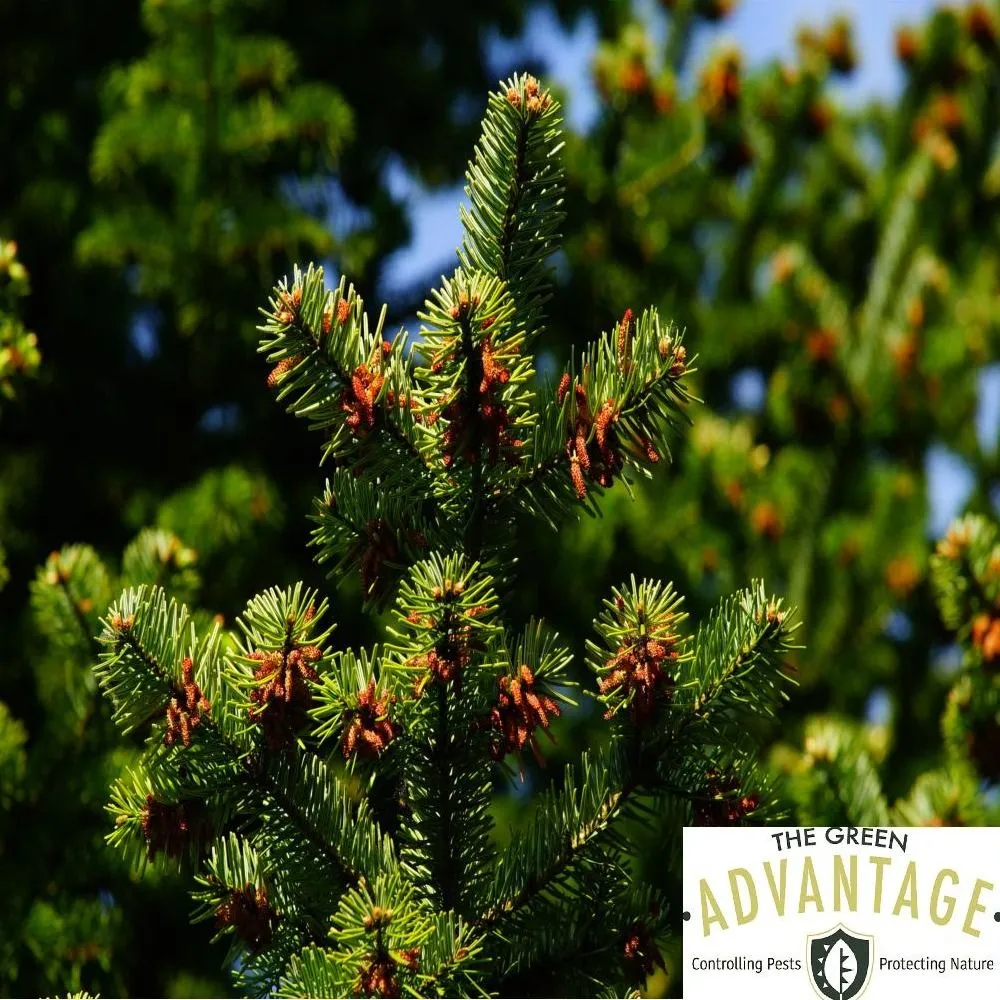
The demise of your cherished tree.

Needle Cast is a fungal disease effecting conifer trees in Midwest. The specific fungus that causes Needlecast is Rhizosphaera kalkhoffii. All spruces are susceptible, although some are more resistant than others. Blue spruces are extremely vulnerable, while white spruces and Norway spruces are often advertised as resistant. This claim can be deceiving as all spruces are at high risk of this disease, they are just more resistant than blue spruces.
The main symptoms of Needlecast is when last year’s needles turn a purplish-brown and drop. Many diseases can cause needles to fall off, including: mites, over/under watering, stress, overspray of weed control chemicals, root damage and others.. Needlecast severely stresses out spruce trees and is easily transferred from one tree to another.
In order for disease to develop 4 items need to happen:
- Pathogen must be present.
- Susceptible host.
- Favorable environment.
- Time.
The spores of Needlecast fungi are the pathogen. They are abundant and travel easily, transported by wind and animals. The spores are easily spread through trees and neighboring trees by water.
All spruce trees are susceptible hosts. Some have varying degrees of resistance, but if the conditions are right all are at risk.
Lack of air flow and excessive moisture are the 2 most common triggers for a bloom. Blooms occur when the conditions are optimum for a period of time. Warm (75 to 80 degrees F) and wet conditions for Needlecast. Lack of air movement keeps the moisture level high. Often, we see the west side of trees in open areas effected first. The reason for this is the dew in the morning and lack of sunlight until later in the day, creates the perfect environment. If there are other trees or structures blocking the sun and wind; we see the same environment and disease development.
Lastly, time. The pathogen, the susceptible, and the favorable environment must all be present for a period of time. Not enough time and disease will not develop.
Needlecast treatment consists of 2 foliar applications in the spring (Mid-march until May), of a specific fungicide (many fungicides have proven ineffective for multiple reasons, mainly they aren’t persistent enough). These applications must be done at a specific time once temperatures have reached a particular point. The timeliness of these treatments is the primary reason most are not successful treating for Needlecast, and very few professionals attempt to treat.
At Green Advantage, we focus our attention to prevention on susceptible spruce trees. We have done our research and experimentation. We know what products to apply, and when. We can explain what to expect from the treatments and address your concerns as they come up. The Green Advantage has gained a successful track record and unparalleled results in treating Needlecast.
The knowledgeable professionals at The Green Advantage can do what is necessary to address the issues with your beloved trees!! We are NWI’s most qualified pest control professionals. We are local, we support our community, and we are here for YOU!!!!

Critters wreaking havoc over your property, lets evict them!!
 Moles are quite destructive pests of lawns and turf areas. The evidence of their presence is tunneling underneath the grass roots. These shallow tunnels are exploratory and the moles use them to find food, typically earthworms and to find areas suitable to dig deep burrows. The location of the deep burrows is apparent due to the mounds that are created as the mole excavates into the ground. Moles do not hibernate, but do spend the majority of colder weather in the deep burrows, making their way to the shallow tunnels when temperatures are milder and the ground is not frozen. We have seen many methods of getting rid of moles from traps and vibration deterrents, to the quite laughable bubble gum and jalapeño pepper solution. You are welcome to attempt any way you prefer, but when you are at wits end we are hear for you. We have tried and true methods that have remained successful and stood the test of time.
Voles, more commonly known as field mice, are common pests of landscape plants. They do invade houses, but typically come for easy food and don’t mind the colder areas of homes like garages, basements, and crawlspaces. Outdoors, their presence can be noted by the trails they leave on the surface of turf and landscape bedding. These trails lead to nesting sites, under bushes and shrubs. They feed off the roots of plants, bulbs, and seeds. It is not uncommon for them to feed on the roots of landscape plants to the extent they kill the plants in the process. Even when it does not lead to a plants demise, the health of landscaping plant material is always compromised. They reproduce at extremely high levels, often making it appear as if they appeared out of thin air in areas where there has not been problems previously. We have the solutions for these pests as well. Don’t let your cherished landscape take a toll by the vole.
The Green Advantage is NWI’s most qualified pest control professionals. We are local, we support our community, and we are here for you!!!

Why do we aerate?

Turf
Compaction
Aeration is the best cultural practice for all plants. We will start with turf. The main reasons for aerating turf is to decompact soil, maintain a thatch layer, and incorporate organics creating topsoil. Soil gets compacted for many reasons including seasonal (snow), equipment (lawn mowers), and traffic (any areas walked on, where children play, or where you enjoy the beautiful lawn you deserve).
Compaction of soil is detrimental to plant growth. It inhibits root growth, does not allow water penetration to root zone, and does not allow for oxygen transfer by the roots (yes, roots need to breathe!!).
Thatch
It is best to understand the reason for thatch, why and how turf grasses produce it, and how to maintain it properly.
Thatch is a part of the grass plant that is often mistaken for grass clippings that haven’t degraded. Different types of grass produce thatch at different rates and thatch production can be triggered by environmental factors, but more often by nutrients available to the plant. One of the most common types of grass, Kentucky Bluegrass, is prone to rapid thatch production when there is an abundance of available nitrogen (one of the main ingredients in plant food and fertilizers).
An overabundance of the thatch layer is often the cause of disease. Retaining too much moisture creates an environment that fungi thrive in. The roots of grasses can migrate into the thatch layer causing stress on the plant as temperature varies drastically (as much as 20 degrees F in a 24 hour period, where topsoil varies by about 2 degrees F). Insects also thrive in this environment, which can cause blooms, where the environment is conductive to the pests for enough time, without any mitigating conditions, such as predators, to keep the population at bay. These situations often require additional costs to intervene, which proper maintenance and knowledge could have avoided or reduced.
A popular belief is that thatch is a bad thing and simply needs to be completely removed on a regular basis. This simply isn’t true and it does serve a purpose. It moderates soil temperature and retains moisture in the root zone of grasses. Instead, the thatch layer should be maintained regularly, and if excessive thatch cannot be maintained through the aeration process, a closer look may be necessary. More frequent aeration or amending the fertilizer program may be the best solutions. Dethatching is a process of removing nearly all of the thatch layer, and is used to get the layer to a point where it can be maintained through aeration. The stress dethatching can put on turf, especially if done incorrectly can be detrimental.
Integration of organics
Where do leaves and grass clippings go when they are spread over our lawns with the mowers? The answer is they typically don’t compost like we would like to believe. In fact, it often causes an acidic condition, where grasses prefer alkaline soils. Proper composting requires mechanical intervention. This is most evident in large piles of organic material, like leaves. Years after the piles were created, most of the material is still leaves that have only minimal effects of composting. Turning over the pile and incorporating inorganic material expedites the composting process. The same goes for lawns, and regular aeration is how this is accomplished. The composition of top soil is not widely known, but it is basically clay or sand and organic material. Is your soil mostly clay or sand? If so there are options, you can add topsoil (the composition of which was just mentioned), or you can incorporate organics to the clay and sand. Leaving this material on the surface does not achieve this, it needs to be incorporated into the soil.
Plants, shrubs, and trees
These are often overlooked when the topic of aeration comes about. The truth is it is just as important for them as it is for turf.
When installing plants, soil is often tilled or amended to create the optimum growing medium. After being planted, not much attention is given to these plants, besides the aesthetics, like pruning. Aeration benefits these plants as well by breaking up the soil and allowing for oxygen transfer in the roots. This decompaction reduces the chances of binding roots and girdling (a condition in which the plant chokes itself, so to speak). There are several ways of accomplishing aeration to landscape plants, but care must be taken to avoid root damage. The preferred way that I am a proponent of, is by using water under pressure injected using a probe. Water is pumped in breaking up soil and displacing it, a proportion of this space ends up being replaced with air. Our services, add the amendments (such as fertilizers, pH correctors, and others) to the water. These bind to the soil and offer the optimum growing conditions.
The majority of feeding roots on trees are not as deep as what most would think. The image of a tree with a large taproot, reaching down to water far below the surface, is often what comes to mind. The truth is the majority of feeding roots in trees are near the surface (6 to 12 inches deep) and due to alteration of the soil environment, many suburban and urban trees lack deep taproots entirely. Evidence of this is noticed when compaction, often resulting from equipment traffic in the rooted area, causes dieback and not uncommonly complete demise of trees. Trees are extremely dependent on oxygen transfer via the roots. Decline and death of trees when areas get swampy or flooded are often a result of the lack of oxygen transfer. Aeration and root zone fertilization are the best maintenance practices to keep trees healthy.
As you can see, aeration is important but often neglected maintenance. Much attention gets pushed towards fertilizer, supplements, and watering, all of which are important, but will lack results if the growing medium and root areas are neglected. If you have questions or concerns, please contact us. We are your local solution.

Additional services we will be providing this season
 With deep consideration and concern we have decided to reintroduce several services we provided in the past. We are constantly researching and attempting to provide as much as possible for people we care about so deeply, our customers. In order to better serve our commitment to Integrated Pest Management, it deemed necessary that these services are provided. As a matter of convenience and the dedication we have to you, we have decided to provide these services as opposed to outsource them. The bond we have with our customers is a relationship built on trust and the quality of services we provide. These services are not new to us, but for several reasons we were not providing them last season. It has come to our attention that the need is here for us to reinstitute these services as we do not feel the demands of our clients were being met. That said, we are excited that we will be able to fulfill these necessities. If you have any questions or suggestions please let us know!!
-Aeration for turf, landscape, and trees
-Overseed for turf
-Weed control for turf
-Disease control for landscaping and turf
-Slow release turf fertilizer (single application, full year feeding)
-Mole services
In addition, we will be offering our arborist and horticultural services on a more widespread basis. As you can see a page has been added to the website detailing some of these services. Including, tree treatments, growth regulators for turf, ornamentals, and trees, and our unparalleled micro/macro nutrient supplements. Give us a call to learn more!!
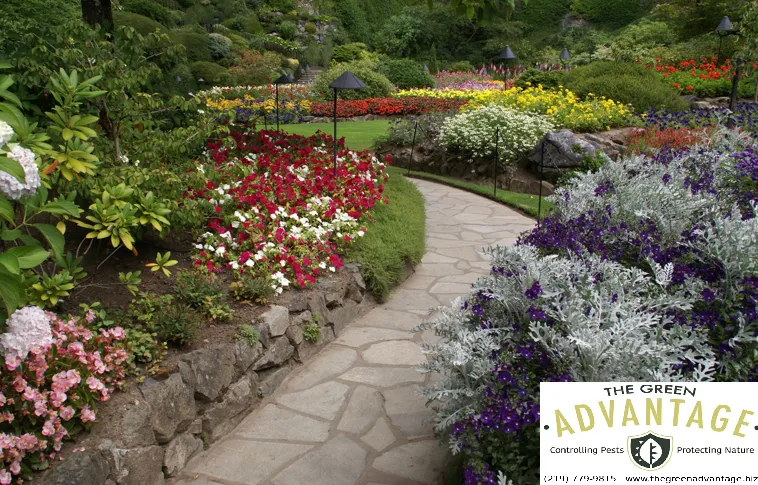
An overview of tree and plant disease.
Nutritional, fungal, insect, and stress diseases are very common, while bacterial and viral are less common but worth noting. All disease has the potential to be of serious concern, but a combination of these can easily lead to a detrimental situation.
Nutritional
When spring comes most attention goes to the lawn. Fertilizer for turf grass is the first thing that comes to most people’s minds when temperatures rise, winter fades, and spring is making a comeback. Landscape plants and trees are time and time again, neglected. Nutrients are just as important for all trees and plants as they are for grass. Absence of certain nutrients can severely affect the aesthetics of plants, others cause growth problems like insufficient root growth. There are 2 divisions of nutrients for plants, macro-nutrients and micronutrients. Macro-nutrients are the elements plants need on a large level, micro-nutrients are necessary on a smaller scale. Nitrogen, Phosphorus, and Potassium are macronutrients and are indicated by the 3 numbers on fertilizers (such as 18-24-12 or 21-7-14; in which the first number is Nitrogen, the second is Phosphorus, and the third is Potassium. Iron, Copper, Manganese, and Zinc are all micro-nutrients. A major factor in the availability of the micro-nutrients’ availability to the plants is pH (acidity/alkalinity). Different trees and plants favor particular pH levels, and often cannot utilize these elements unless the acidity/alkalinity is within a range.
Fungal
Most easily notice a dead spot in the lawn, or that something is eating the roses, fungal disease can be more difficult to identify, and easily go unnoticed. Symptoms get regarded to as “normal”. Fungal diseases are lesser known by the general public, so it is often stated that these trees or plants are simply dying. Rhizosphera needlecast (spruces), Diplodia tip blight (pines), Scab (edible and ornamental fruit trees), and cedar/apple rust are quite common fungal diseases. Fungal disease is not always “curable”, but suppression can have positive results.
Insects
Common insect pests include, the borers (including the notorious Emerald Ash Borer, Bronze Birch Borer, and others), beetles (such as May/June beetles and Japanese beetles), aphids, ants, mites, and others. A bug or two on a plant or tree is not always a call for concern. Nature is full of many legged creatures that don’t cause harm and many are beneficial to the environment including the health of plants. On the other hand, in high numbers destruction can be sudden and severe. High numbers of certain insects are the major cause of the issue. Invasive insects typically lack natural predators, devastating populations periodically result. The emerald ash borer and more recently the spotted lanternfly are examples of these.
Stress
Stress is a leading cause of disease in all plants. The most desirable of plants and trees are exotic, rather than native. Native trees and plants are frequently considered as weeds. These exotic plants and trees may be in the correct climate zone, but are certainly not in their natural environment. Amount of sunlight/shade, volume and frequency of precipitation, humidity, soil type, and pH (acidity/alkalinity) are a few of the variables that can put trees and plants under stress. Most of the variables can be adjusted or corrected to ease the stress, which makes for more resilience and ability to ward off other disease.
Your Solution
Fungi, insects, bacteria and virus’ require 4 specifics in order to become disease: A pathogen, a susceptible host, the correct environment, and time. A major part in eradicating these diseases is to remove one or more of these specifics. Nutritional disease can be eliminated by supplementing the correct nutrients at the correct time and often correcting the pH (acidity/alkalinity) of the soil. Stress disease is solved by identifying the stress factor and, when achievable, adjusting to make the environment favorable to the tree or plant.
The Green Advantage technicians are highly trained, experienced, and licensed in how to treat Tree and Plant disease. We utilize state of the art methods with the most advanced technology in the industry. We have the knowledge to identify disease. We have the proficiency, equipment, and products to treat disease in trees, plants, and gardens. Our highly ethical staff will be honest with our approach, if results are not likely we will be upfront with you, avoiding unnecessary expenses.

Certain marketing tools simply don't make sense in a quality service industry.
Discounts are a marketing tool that we at The Green Advantage find very interesting. Basically telling a customer that a company could sell a product of service at a lower cost, but they choose not to, except when they are compelled to lure you in. Here at The Green Advantage, we calculate cost the costs of our services and price them accordingly. We respect your hard earned dollar and don't play games.
Quality is a factor, and quality adds expense. Many providers attempt to pull customers in using low cost or discounts, but they fail to calculate how this will affect their ability to provide what they promise. I see it quite often where a provider promises the world at a price that can't be beat....and then fails to provide because the costs outweigh the promises.
The fact is it is more important to weigh your goals on a service. The old adage that you get what you pay for is certainly true. It is tricky in our day and age where there are so many providers available, with a wide variety of price ranges. In addition, a high price does not always mean a high quality.
It is far more important to find a service provider that is trustworthy and respects you and your hard earned dollar. This is what we at The Green Advantage strive to be. We price out what the service costs at our quality level, and price accordingly. In doing so our prices are as low as possible, leaving no room for discounts, coupons, or other marketing tricks.
I do hope you find this helpful, and hope that you put your trust in the best. We are NWI's most qualified pest control professionals; We are local, we support our community, and we are here for you!!!
Tried and true, performed by NWI's most qualified pest control professionals
 The Green Advantage is your source for quality and responsible pest control. Before mosquito services became mainstream; we researched, experimented, tested, and experienced options before we came up with our unique treatment program. We discovered the correct methods to treat for mosquitos, fleas, and ticks that deliver results.
Utilizing the safest and highest quality pest control products, applying them correctly, and understanding nature and pests; has allowed us to excel where others have failed. Many are attempting to replicate our services, they even attempt to represent themselves using our legally registered service name "Mosquito Control". Fortunately for us, our knowledge, experience, passion, and most importantly RESULTS are impossible to replicate.
What sets us apart:
- We do full barrier treatments in addition to areas where mosquitos hide. This protects you and your family from fleas and ticks.
- We practice integrated pest management, which means chemicals are not the only solution.
- We inspect every visit and let you know if there are conditions that are promoting pest problems.
- We are the most qualified pest management professionals, so when we visit we are not only taking care of the problem at hand, but we are looking out for both potential issues and concerns that may have been unknown or unnoticed. Our experience is your asset.
- When we use products, they are top of the line, that have been proven effective and safe.
- We apply products at the correct rates. A major problem with most who attempt outdoor pest control, is they fail on this specific item. The amount of product applied changes with what type of equipment is being used. Nearly all products are concentrates mixed with oil or water when applied, the equipment must be calibrated and metered to apply the correct amount. Using too much is not responsible, using too little is ineffective.
- We understand the products we apply. Knowledge of how products work allows us to utilize them in the best way possible. Our experience allows us to calculate what to use and when.
- We practice resistance management. We feel that using products responsibly is the only way to use them. This is important not only for the environment, but insures we can all live pest free for years to come.
- We have extensive knowledge of the equipment we use. Our technicians are constantly monitoring this equipment to provide accurate applications.
- We are at the cutting edge of technology. This industry is constantly changing, with new studies, research and development. Equipment and products have given opportunities never available before, allowing for more effective and safer applications both for your family and the environment.
- We have an unmatched passion for the industry. This gives us enthusiasm for ongoing training. Our excitement for continuing education and our desire for knowledge is unparalleled.
The Green Advantage gives you the advantage, assuring that you and your family are safe. In addition, you have the peace of mind that applications are made with the safety of the environment as a top priority. All this without compromising results.
Not something to be proud of, so who is number 1???
 It would certainly be better to be known for having the tallest building, the biggest airport, even the most traffic!!! Being rated for the worst of things goes along with being rated for the best. Orkin has done us all the favor of ranking cities and has compiled a list of the top 25.
25. Greensboro, NC
24. Buffalo, NY
23. Knoxville, TN
22. Greenville, SC
21. Richmond, VA
20. Charlotte, NC
19. Pittsburgh, PA
18. Grand Rapids, MI
17. Dallas, TX
16. Champaign, IL
15. Norfolk, VA
14. Raleigh, NC
13. San Francisco, CA
12. Philadelphia, PA
11. Cleveland, OH
10. Atlanta, GA
9. Indianapolis, IN
8. Cincinnati, OH
7. Detroit, MI
6. New York, NY
5. Columbus, OH
4. Los Angeles, CA
3. Chicago, IL
2. Baltimore, MD
1. Washington, DC
Since we are just outside of Chicago, NorthWest Indiana poses a high risk for these bloodsuckers. Fortunately, we also have the best advocate on our side. The Green Advantage are NWI's most qualified pest control professionals. We are local, we support OUR community, and we are here for you.

Aren't fleas my pets problem?
 Oh the fleas. The dread of every pet owner. You see your beloved dog or cat scratching all the time, and you just wish you could ease their pain. You have the pet treated, but in the house, the fleas are jumping on your furniture, on your legs, and they seem to be everywhere! At times their even biting you! So, what about your pain and frustration?
Although fleas often start with an animal bringing them into your abode, they often make it their own residence. The most common flea is Ctenocephalides felis, the notorious cat flea. Although Ctenocephalides canis, commonly known as the dog flea, is also found; the cat flea is more common. The reason for this is the cat fleas ability to feed and live off a variety of hosts. So, just because that flea was on your dog, doesn't mean it's a dog flea. Fortunately, the identification of exact type of flea is not very important, as treatment is the same for both. To put it simply if the pet has fleas, they have fleas. It is just as important to remember, if the pet has fleas, your house has fleas!
The life cycle of fleas is what often makes them difficult to control. Most sufferers concentrate on the pet and on the adult fleas. What most don't realize is that for every 1 adult flea that is found, there are roughly 19 in a different stage of development nearby. Since the majority of the flea population are not adult fleas, something has to be done to control all life stages.
Once a flea is on it's host, it begins feeding off their blood. Almost immediately mating and egg production begin. Often within 24 hours, eggs are being produced at a rate of about 2 an hour. The eggs fall off, ending up on the ground. After less than a week of development, sometimes as short as 24 hours, the eggs hatch and become larvae. The larvae feed off undigested blood excreted by the feeding adults. The larvae are subject to certain environmental conditions, like temperature and humidity and seek out harborage that meet them (deep in carpets and pet bedding are ideal). After just over a week, the larvae spin a cocoon and pupate. This is where things get dicey, as they can remain in this state for long periods of time, even several months!! When they sense heat, carbon dioxide, and vibration from movement, they will emerge and look for a host. When they find one the cycle continues.
So as we can see control is not based on killing adults, but on addressing the entire population. To do this, a combination of formulations are required. Something to target adults and something to target the other stages of development. Using integrated pest management, it is always smart to start from the source. The pet needs to be treated. A veterinarian should be consulted on what products to use and how. Next, Vacuum, then vacuum again, when that's done vacuum again. I can't stress enough the importance of vacuuming. The eggs do not adhere to material, so vacuuming is the best way to remove them. This also helps remove the excretions from the adults that the larvae feed on. Then a product containing both an active ingredient targeting the adults and a growth regulator which targets the other stages. These can be applied in many different ways depending on the product and the applicator's discretion. Dusts are also excellent as they often work as desiccants, which the larvae are extremely susceptible to. When all this is completed, it's time to vacuum again, then again, then again.... At least 2 weeks of vacuuming one to two times a day is what we recommend.
Although fleas can seem like an impossible situation, there are solutions. If you need us, we are here for you.

How did I get beg bugs?

Through years of adaptation and evolution bed bugs have become excellent at finding their hosts (us humans!!). Bed bugs are expert hitchhikers, finding their way in our clothing, purses, electronics, furniture, and just about anything else you can think of. Something as simple as setting your coat down at a relatives house, or spending the night at a hotel, or visiting a friend gives them the opportunity to climb on board and make the travel to your next destination. A co-worker giving you a book to read, may be giving you much more. That deal you got on the end table at the thrift store, may come with more than you bargained for!
The possibilities are endless, and they will take advantage of any ride they can. Finding a new home, a new host, and starting a family of their own, in your box spring!
It can be months before you realize there is a new tenant. Some who don't get reactions from bites, can go years before noticing they have a roommate. As well as being experts at travel these insects are accomplished at averting exposure. They are able to fit into the tiniest of places. In bed frames, box springs, mattresses, headboards, floor trim, edges of carpet, in furniture, nearly anywhere they can fit.
Unlike other pests, bed bugs are not picky, they like clean homes as much as cluttered or messy houses. We are their food, so cleanliness doesn't play a factor. Many victims try to find reasons for the infestation, and blame themselves or others for their situation. It is important to remember that this is nature and is not anyone's fault. If disgust must be conveyed, it should be directed at the bed bug itself and none other. These occurrences are on the rise, and bed bugs have been reclaiming their place as one of our dreaded nightmares. 1 in 5 people have experienced or know someone who has had bed bug troubles, and that number is increasing each and every year.
Please remember there is nothing you have done to bring this upon yourself. More people than you know have experienced, are experiencing, and will experience the same situation.
If you need help we are here for you!!!
