
Prevention and Abatement

An ounce of prevention is most definitely worth a pound of cure!

Prevention and abatement are two separate procedures in pest control. Prevention is proactive, while abatement is reactive.
Prevention reduces the risk and mitigates the severity of an infestation.
Abatement takes care of a problem after it has already occurred. The sooner abatement takes place the lesser the severity of the infestation. Often, abatement is followed up by prevention.
Advancements, paired with the push for integrated pest management, have opened up many options in regards to prevention. In the past, the major emphasis was on chemical control. As the concerns over chemical applications have risen, the need for other solutions became evident. Although chemicals are still a great tool they are no longer the only option. Safer more effective innovations have changed the industry, with new methods of treatment and products being developed at a rapid pace. Take a look at how technology has changed in recent times, pest control is no different and is not absent of these advancements. Research has shown us that cultural control, physical/mechanical control, biological control, and chemical control can be used in combination to provide better and safer options. No longer is reaching for that can of raid the best way, in fact it can often cause difficulty in obtaining satisfactory results. With the progression of non-toxic products and a better knowledge of what causes the risks of pest problems, we have options that have not been available in the past. Prevention for termites, bed bugs, rodents, wildlife, as well as more common pests like ants, spiders, and roaches are now available, not to mention preventatives for the trees in your yard and the plants in your garden.
Most wait until an issue arises before they choose to take action. Once abatement is necessary, the options become more and more limited. Often, harsher chemicals, repairing damage that has occurred, and intrusive procedures which can disrupt our lives are necessary to regain control. Although we are experts in abatement, we are proponents of prevention. Why not be proactive from the start? Doesn’t the old adage: “an ounce of prevention, is worth a pound of cure” apply here as it does to nearly every other area of life. Do we wait for a problem to become so unbearable before calling an expert, or get their advice before an issue comes about?
Is prevention an option for you? The simple answer is yes. Enough is known about the pests that are prevalent in our area that preventative measures are highly effective. In addition, an ongoing prevention program allows for preemptive action against invasive pest infestations and the ever changing pressure of specific pests. Prevention is the best way to mitigate the high costs of abatement, it also gives you the advantage of staying on top of issues that may be making you vulnerable.
With a passion for pest control, The Green Advantage stays on top of the latest issues. We are constantly researching, innovating, and inventing. Whether it be abatement, prevention, or a combination of the two we are here for you. With unsurpassed knowledge in this field and a quality you’ve come to know and trust, it’s no wonder why we are NWI’s most experienced and qualified pest professionals.
To Contract or Not to Contract?

Contracts and Service Agreements are often portrayed in a negative light, what is the truth.
Similar to Hamlet’s struggle with his mortality, most people and companies alike, struggle with the thought of either writing or becoming entangled in a contract. Is it good to have a contract or to ask a company if they have contracts? Often times, people are scared away by the term contract. It has somehow garnered a negative connotation to us, either because of the fine print or due to stories that we have heard of people “getting the bad end of a contract”. We here at The Green Advantage find ourselves opposed to the word contract, both as the service provider and as being customers as well (we all have cell phones, right?!). Most of us typically have strong intuitions that when the word contract comes into the conversation, someone is trying to “sneak something past us”, but we never know because the Terms and Conditions are in microscopic print that almost no one can read.
Let’s start with providing the definition to the word contract. The word contract means, “a written or spoken agreement, especially one concerning employment, sales, or tenancy, that is intended to be enforceable by law.” In short, a contract is a written or verbal agreement. As both service providers as well as customers ourselves, we at The Green Advantage have learned that when the law is involved over contract disputes, most of the time, “the spoken agreement” is not admissible. The “written word”, however, is not only admissible, but followed and upheld. Who can disagree with what is written down clearly in black and white? The contract has protected not only the company, but more importantly, the customer as the contract states exactly what was promised to them on the day the customer signed up.
In today’s modern society of constant sales pitches and promises, it is hard to keep up with, let alone, remember what everyone has promised us. We all try to take notes, but then in the shuffle of life and kids and significant others we lose, and sometimes throw away, our notes (at least that happens to us)! With contracts, both the customer and the service provider have identical documents that clearly outlines the agreement between the customer and the service provider. In short, we as the service provider, are telling you that as our customer, we are going to take the time and effort to make sure that what we said, we will honor. As part of that promise, we will provide you documentation of our promise to you in the form of the contract or agreement.
All an agreement does is specify the responsibilities of anyone involved. That simple. It puts the service provider’s promises and agreement on paper so neither side can twist what the other has said. Quite often the negative experiences people have with agreements is that they don’t understand the responsibilities outlined and that they agreed to. A good example is when we click the ‘I agree to the terms and conditions’ button online; we don’t even think about it, not even realizing we are entering an agreement with someone else (someone we don’t know, or have never even met, we may add). Another good example is buying or renting a house, how many of us just initial and sign wherever the representative points; never reading or questioning what we are agreeing to. A study done a few years ago, added a clause to a contract that the signer agrees to “give up their first born, and if they don’t have a child, they have until 2050 to do so”. The study found that 98% of people signed without hesitation.
It has come to our attention by other service providers in our industry as well as concerned customs, that there are those companies that claim that they do not use contracts and portray contracts in a negative light. Apparently, they are claiming that contracts are simply a document meant to tie the customers in an unbreakable vow with the company for the rest of their lives! This couldn’t be farther from the truth for most in the pest control industry! The truth is an honest agreement benefits everyone involved. A few of the benefits formed through contracts include:
- They allow a service provider the peace of mind that they will be compensated for the work they do. This allows for the commitment from them, quality material, quality equipment, knowledge, and experience are all investments that go into a well done job. This is very important for an ongoing work or recurring services. In order to give the best service, a service provider needs to continually invest; a commitment much easier to follow through with when there is an assurance that the consumer will utilize their investment.
- They allow the consumer the ability to verify warranties. If anyone offers a service with a warranty/guarantee to you without an agreement, just remember that the warranty/guarantee isn’t worth the paper it’s written on as there is no way to verify what was said and agreed to.
- They specify when payments are to be made; have you ever received a late charge or interest charge and didn’t even know a bill was due??
- They describe what services are to be performed and at what cost. Limiting the service provider from adding and charging for services without the customer’s approval. But also, limits the customer from adding services that aren’t being compensated for. Again, the contract has written down the obligations made to the customer from the service provider, and the promises made by the customer to the service provider.
- They allow for both the consumer and the service provider to reference back to the agreement, and have a solid reference to what was originally agreed to. Over time expectations may change, rather than resenting the current agreement, they can easily be amended to add services or remove services that are no longer necessary.
Imagine the situation we hear about time and again: An individual seeks out services only to find the problem not solved. They have made multiple attempts to contact the provider but the providers were no longer answering the phone calls from the customer. The first question that needs to be asked is whether these individuals have a service agreement. This is done to verify what service was done, what guarantees were made, and what repercussions would take place if service was inadequate or unsuccessful. When an agreement doesn't exist, there isn't much that can be done; not only from a professional standpoint but from a legal one as well. Don't be the individual who obtains service from a company who claims an agreement isn't necessary, this is the first sign that something is not right.
Getting lured away from a service because of an agreement/contract is the best way to avoid the knowledge and expertise that is required for successful services. These agreements aren’t there simply to protect the company doing the program, but, more importantly, they are there to protect the customer and insure the company and technicians provide the service they are required to do. We at The Green Advantage, highly recommend steering clear of service providers that are unwilling to commit to you, and unwilling to put that commitment on paper. If someone offers you a guarantee, ask them to back that guarantee with a written contract. Contracts are good and are there to protect everyone involved!
Mosquito Breeding and Mosquito Control

Learn how to maintain control against Mosquito with The Green Advantage!
Mosquito season officially begins when temperatures rise about 50F. Spring has just sprung here in Northwest Indiana and hopefully we will begin seeing warmer temperatures soon.
There are over 175 known mosquito species, of which 53 are known to be found in the Midwest. Breeding can depend on the species. Speaking in general terms, most mosquitoes in the Midwest breed using standing water. Usually shallow water is used for the breeding of mosquitoes, as little as 1/8 of an inch of water is sufficient. Think of items that are around your yard that may have standing water collecting in them or objects that will collect water. Dirty gutters are a perfect breeding place for certain species which prefer stagnant water containing organic material. Several others prefer the clean water that is provided when rain water settles in items such as tires, wheel barrows, and drip containers of planting pots.
The more time mosquitos have to breed the more difficult it is to keep them from invading your yard. Like other seasonal pests, the population of mosquitos compounds when conditions and environment are suitable for them. One mosquito will lay hundreds of eggs many which develop into adults, which breed again. This cycle can occur several times in a single season, which is why it seems to get worse until we see the temperatures drop again. As the old saying goes "an ounce of prevention, is worth a pound of cure". It is always more difficult to get a situation under control than it is to keep it in control.
The best start to controlling mosquito population is to eliminate breeding areas. A popular, but incorrect claim is that 'mosquitos can only be controlled at the adult stage'. We always suggest starting a mosquito treatment program early in the season before the swarming starts. We have the knowledge to find these breeding areas that would normally go unnoticed. In addition, we utilize larvaecides and insect growth regulators, which stop the development into adult mosquitos, and can lessen the dependency on chemical applications later on.
When the weather begins to warm up is the perfect time to give us a call and begin with our package that will keep your yard free of these pests, and your family safe from mosquitoes all season long. We at The Green Advantage are Northwest Indiana’s Most Qualified Pest Control Specialists. Let us help you keep your yard and family from the pesky mosquitos!
Oak Wilt
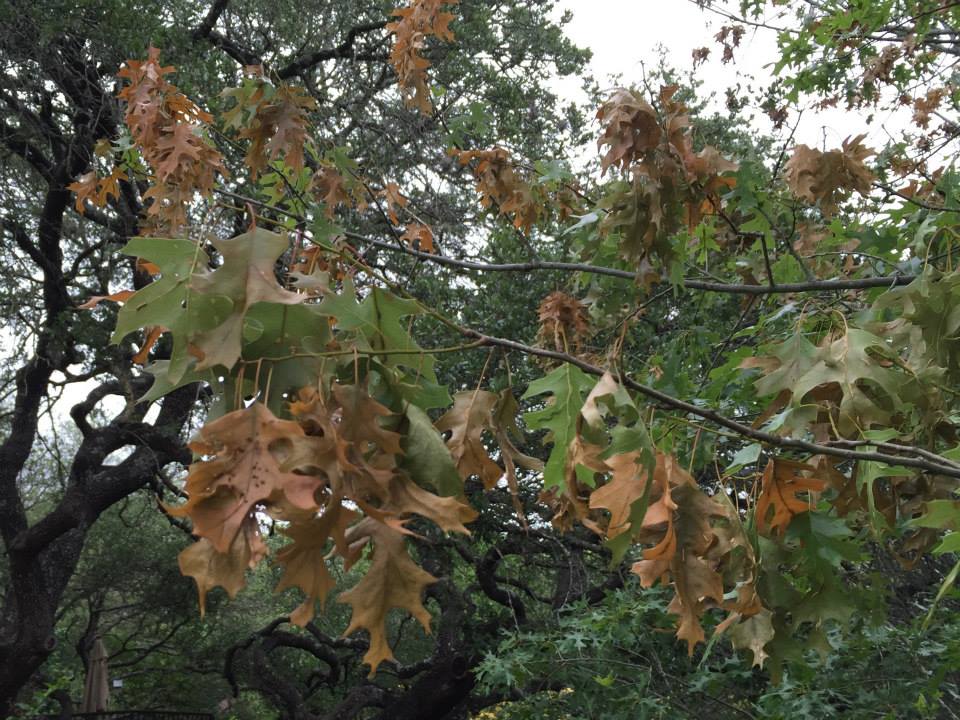
This is a discussion on Oak Wilt and the treatment The Green Advantage can assist you with!
The Professionals at The Green Advantage want to be sure that you know the basic information about Oak Wilt and how to protect your Oak Trees from Oak Wilt. One of our services is the use of anti-fungal injections to help keep Oak Trees healthy from developing Oak Wilt. Oak Trees in Indiana and other Midwest states are being affected by a fungal infection known as oak wilt that can cause them to die. Oak wilt affects all oak species, although red oaks will experience a faster decline than white oaks, which can sustain the fungus for several years. Initial symptoms of oak wilt will appear at the top portions of trees, beginning in June. The symptoms seen on leaves is a bronze or tan coloring beginning at the tip and moving to the leaf base. If you removed the bark on wilting branching will show dark brown streaks.
Infected trees can be bare of leaves by late summer due to defoliating. Pressure from the fungal mat can split the bark vertically the following spring. Oak wilt is caused by Ceratocystis fagacearum which causes damage to the trees vascular system and disrupts the flow of both water and nutrients. Oak wilt can be spread due to two factors sap-feeding beetles move the fungus from a diseased tree to a healthy one, and root graphs. Root graphs occur when trees within fifty feet and the roots unite.
Prevention of this infection is the only option for long-term tree health. The Green Advantage offers preventative treatment for Oak Wilt which includes applying a preventative fungicides. Other tips for keeping Oak trees healthy include, pruning during the low risk time frame from December 1st to March 1st. Sanitary pruning may save trees in the white and bur oak group at first indication of oak wilt the branch can be removed in an effort to save the tree. The disruption of root graphs of oak trees within fifty feet of each other is recommended this can be completed with equipment or with chemicals. Once a red oak tree is infected it should be removed and grind out the stumps. Removal is suggested to be performed during winter for low risk spread of oak wilt.
https://www.extension.purdue.edu/extmedia/BP/BP-28-w.pdf This link will bring you to the Purdue extension pamphlet on oak wilt in Indiana.

Services and Locations Provided by The Green Advantage
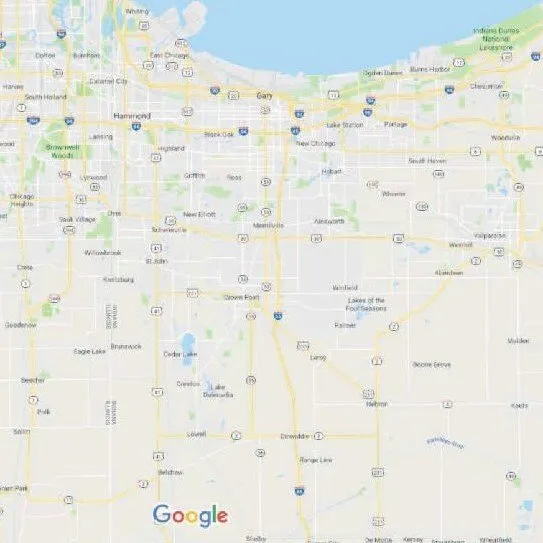
This in an overview of the locations that we currently service in Northwest Indiana and the Services we offer
At The Green Advantage we pride ourselves on being Northwest Indiana’s most qualified pest control specialists. We have the knowledge and professionalism to handle all your pest issues.
The Green Advantage Pest Control Services:
- Rodent control, including mice and rats
- Mosquito control
- General pest control which keeps ants, flies, spiders, boxelder bugs, stink bugs out of your home.
- Bedbug treatment
- Bedbug prevention using non-toxic products
- Bee and Wasp removal
- Termite Control
- Termite Inspections
- Vertebrate Wildlife Control and Exclusion
We are company owned and operated out of Crown Point, Indiana. We are active members in the Crossroads Chamber. We service the following local areas:
- Beverly Shores
- Boone Grove
- Burnes Harbor
- Cedar Lake
- Chesterton
- Crown Point
- Dune Acres
- Dyer
- Gary
- Hammond
- Hebron
- Highland
- Highland
- Hobart
- Kouts
- Lake Dalecarlia
- Lake Station
- Lowell
- Merrillville
- Munster
- New Chicago
- Ogden Dunes
- Portage
- Porter
- Schererville
- Shelby
- South Haven
- St. John
- Town of Pines
- Valparaiso
- Wheeler
- Whiting
- Winfield
Is all mosquito control the same?

What's the difference? Is there a difference?

This question comes up quite frequently, especially with the flood of contractors that have recently started services targeting mosquitos, fleas, and ticks. I've even heard contractors stating that there isn't a difference, which I've found to be an interesting statement to make. As one of the innovators and leaders in this field, I can say with absolute certainty there is without a doubt a difference. Why else do some services work, while others do not? If asked, some service providers can find solutions and explain what is going on, while others cannot.
So why do people make the assumption that all these services are the same? The answer is fairly simple, they think that the services are all the same because they have not been taught any different. An applicator goes to a property, sprays something, and leaves...right? The truth is there is a little more than that going on.
First of all, at The Green Advantage we are constantly monitoring the types of mosquitos that are causing trouble in our area. There are over 53 different types of mosquitos found in our area. Although some cause more distress to humans than others, it is still important to know and understand that there are differences between the species. Where they breed, when they breed, when they bite, where they live, and what diseases they carry; are all areas of knowledge that help in why and how to control them. Knowing the differences explains why some years are "bad mosquito years" and others aren't so bad. It also explains why some yards are worse than others, and why some bites are worse than others. This knowledge helps in knowing when and where to treat. It also gives the information as to what can be done to prevent the pests and what products to use to prevent them.
The second major difference is equipment. By now most of us have seen the guy blowing the mist around a yard, it has become almost as common as the guy spreading fertilizer. There are other types of application methods that are used, depending on different situations or products, but the mist blowers have become the common method for mosquito control. Knowledge of the equipment and the products is pertinent. This is where we see most applications fail, whether it be fertilizer, weed control, or insecticide. These tools need to be constantly monitored and adjusted to perform properly. More importantly, the operator needs to have a working knowledge to make corrections, adjust, and diagnose issues with equipment or at the least an application will be compromised, and could possibly cause a hazardous condition. A perfect example we have heard time and again is when people see a professional applying fertilizer. It is often stated how they appear to be speeding through the application going faster than what people think they should; rushing the job. The truth is that the equipment they are using is designed to apply the product at a rate determined by the speed. Adjusting the speed will misapply the product and can negatively impact the amount of coverage; which risks causing adverse effects. The Green Advantage prides itself of not only knowledge of the equipment, but innovating equipment and how they are used.
Products are the next major difference. There are a multitude of different products on the market. Products vary on how they can be applied, what is being targeted, what stage of development they effect, and how they affect insects. As with anything, there are varying degrees of quality when it comes to products. We have done and continue to do extensive research on the products The Green Advantage uses. Some products work well in some instances, while not so well in others. There is also a constant battle with resistance, something we are trained to be on guard for and take precautions against. Knowledge of the products and how to use them is the most important part of any application, both for effectiveness and safety. Under application causes resistance problems, while over applying causes safety issues. Lack of knowledge of products and equipment are the two most common mistakes in this industry. The Green Advantage uses the highest of quality products, with extensive training and in house testing.
There is a reason so many have trusted The Green Advantage, we are NWI’s most qualified pest control professionals. We make a complicated task look simple and easy, it’s why so many of the competition found the services we provide attractive. They find this as quick, easy money, without the knowledge that makes us excel. For this reason we continue to innovate and lead, while others try to replicate and follow. Put your trust in the best, and give yourself the advantage – The Green Advantage.
What is The Green Advantage?


Before we can answer that loaded, yet important, question, please allow us to first talk about the pest control industry. Pest control has been around since humans and insects have been interacting with one another. However, the use of chemical agents began with the advent of agriculture and the need to protect our crops from insect devastation. Agents such as lemon oil and arsenic to DDT and herbicides emerged, developed, and changed along with our knowledge of different chemical compounds and how they affect an insect’s nervous system. To this day, we are still learning and trying to come up with better and safer ways to implement pest control services. For years, there have been a couple of huge nationwide pest control companies, but no one local and easily found by their communities.
We at The Green Advantage saw this as a problem and felt that dependable and safe pest control services should be available to our community! Therefore, in 1994, The Green Advantage was founded with the idea of bringing safe pest control solutions to our community and the surrounding communities. We are a family run business that dedicate ourselves to best serving our customers and staying abreast on the requirements for safe and dependable pest control.
Since opening our doors in 1994, The Green Advantage prides itself as being innovators in pest control by providing services and products ahead of our competition. In an ever changing field, it is pertinent to keep up with the most up to date procedures and products. This requires a passion, and WE ARE PASSIONATE ABOUT PEST CONTROL!!! New products, techniques, and equipment are constantly emerging, with even more on the horizon. Research and testing are key in this ever changing environment, and is being carried out constantly, right here! We use top of the line products and techniques, resulting in superior results and safety. Utilizing integrated pest management practices insures the most practical and environmentally sound solutions. How? One might ask. This is a good question. We at The Green Advantage make sure to:
· Become certified Pest Control Experts through the State of Indiana Chemist, Illinois Department of Agriculture, and the Illinois Department of Health
· We continually take new and continuing education courses offered byIndiana State Chemist, Illinois Department of Agriculture, Purdue University, and the University of Illinois
- In order to be able to buy and use certain products, we are required to take the manufactures’’ classes and tests. Not all companies have this certification and can therefore, cannot use these top quality products
- We are active members of the National Pest Management Association, the Indiana Pest Management Association which gives us access to new and upcoming trends and products for our industry
- We have been and continue to be innovators in the industry, bringing new ideas in application methods, products, and equipment
- We are dedicated to constant research and in sharing that research with you, our customers, through our website, blogs, and social media
With vast knowledge and experience of the pest control industry, we welcome questions; from the raccoon in the attic, to the bugs in the kitchen, and even the weeds in the lawn, we are your go to experts.
Because our passion and dedication through constant research in order to better ourselves, we have even accepted inquiries from many of the big name companies in the area, many you have heard of, but we will not name. If the professionals come to us for answers, advice, and solutions; why shouldn’t you?
The Curiosity of Ants: An Article on Five of the Peskiest Ants
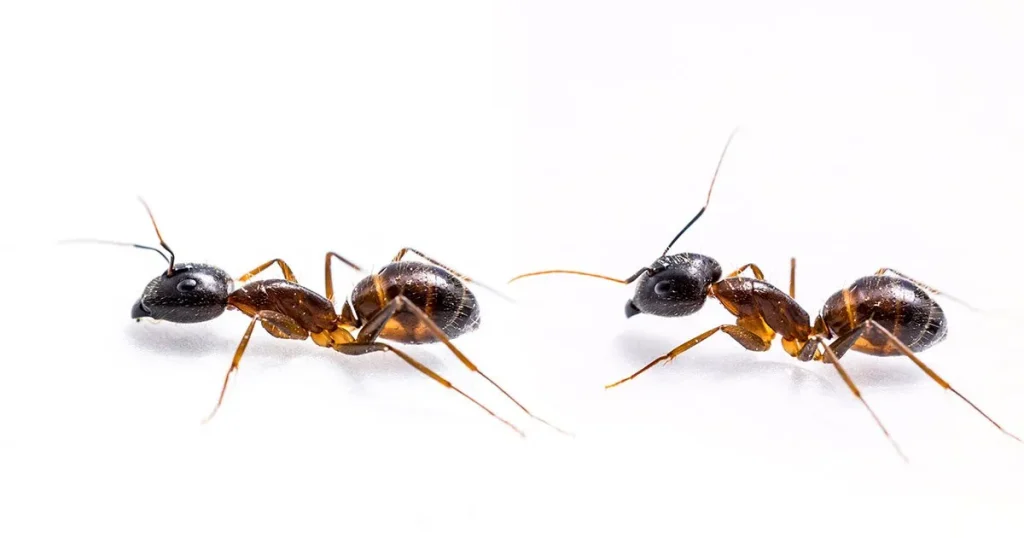 While walking down a sidewalk or along a path in the woods, a person is almost sure to encounter an ant or two. Ants have colonized on almost every landmass on Earth (with the exception of Antarctica and a few inhospitable islands), therefore, it is not shocking that most people know what an ant is and what they look like. However, many people may ask an extermination specialist, “Which ones do you get the most calls on?”, or, “which are the peskiest? When surveyed, extermination specialists in the United States of America, stated that there are five ants which they are most commonly called out to exterminate: odorous house ant, Argentine ant, carpenter ant, pavement ants, and fire ants. Now, let’s take a closer look at each of the five peskiest ants.
The Odorous House Ant

The Argentine Ant
 The Argentine ant is commonly located in the southeastern United States where they prefer to build their nests in wet environments. Internationally, the Argentine ant is found in 15 countries on six continents as well as many oceanic islands. They will typically build their nests under boards, stones, plant life or alongside sidewalks. Research performed and published in 2009 indicated that the argentine ant is the most pervasive creature on the planet, which only parallels humans. This is due to their genetic make-up which allows them to cross into neighboring ant colonies without being attacked or killed; allowing them to form what are called super colonies. It should be noted that unlike other ants, the Argentine ant can have multiple queens per colony and are considered to be one of the top 100 worst animal invaders. The Argentine ant is most active in between the months of March to October. Fun Fact: One super colony is known to stretch from San Diego to San Francisco and beyond.
The Carpenter Ant
 Found throughout the United States, carpenter ants are typically seen around dead or damp wood. It should be noted that carpenter ants do not consume the wood (like termites) but rather, their food supply consists of other dead insects and the “honeydew” created by aphids. The carpenter ants will chew what are called, “galleries” throughout the wood in order to establish tunnels between their nest and food supply. In homes, look around and under windows, roof eaves, decks and porches as these areas are more prone to moisture. If you hear an extermination specialist referring to “Frass”, this is the sawdust-like material left behind in the creation of their “galleries”. Fun Fact: Carpenter ants do not sting, however, they do bite and can spray formic acid into the wound, which can irritate it.
The Pavement Ant
 While walking on a sidewalk, more than likely you have seen little piles of sand and debris along its edges. These are the work of the pavement ant. Originally native to Europe, the pavement ant has happily made North America its home from the east coast to the mid-west, in the south, and can also be found in parts of California and Washington State. As indicated by their name, they predominately build their nests under pavement and sidewalks, but can also be found under rocks and typically enter a building through cracks in the foundation or interior walls. Pavement ants have been recorded to be the busiest and most abundant during the spring and summer months. They eat a variety of food sources such as sweet and greasy items as well as dead insects. Fun Fact: Pavement ants are very aggressive and in the spring and summer will attack neighboring ant colonies, causing thousands of ants to perish in their onslaught.
The Fire Ant
 Most Northerners are introduced to the infamous fire ant while on summer vacation in the southern states. Too engrossed in the sights and sounds of the ocean and beaches, an unsuspecting tourist will step on a nest, releasing a torrent of unrelenting and biting ants up and down their legs (please note that some people are severely allergic to the bite of a fire ant and may need medical assistance). Typically resulting in the tourist to scream out while running around in an attempt to get rid of them. It should be noted that the name “fire ant” is a common name for several species of ants who are all under the same genus. However, there are over 200 species in this genus worldwide and are considered to be under the umbrella of “stinging ants”. Names from other parts of the world include tropical fire ants and ginger ants. In the United States, fire ants are typically found in the Southern states, however, have been seen moving their way North. They are considered aggressive and invasive who will attack and decimate other ant colonies as well as other native insects (such as bees). They are found to nest in wet areas around lakes, rivers, areas in yards that do not drain collected rain water, etc. Normally, their nests are not visible because they build under objects such as rocks and logs. If they build their nest in an open field, they will build a dome, which can be as tall as 16 inches. Fire ants typical food source includes seeds and plant life. Fun Fact: Fire ants can survive flooding by creating “rafts” out of their bodies by holding on to one another in a large circular ant disk that is able to float safely on the water.
Who Lives In Indiana with US?
Out of the five ants outlined in this Blog, three are commonly found in the Crown Point and Cedar Lake areas (the Region, if you will): The Odorous House Ant, The Carpenter Ant, and The Pavement Ant. The Green Advantage is not only able to treat these ants, but the other varieties of ants (and other insects) found in this area as well. If you can, before calling, look around your house to spot the areas you think the ants are coming in from and where they are congregating. Tell your technician this information as well as how long the ants have become a nuisance to give them a better idea of what treatment plan will work best for you! Together we can manage and exterminate the “peskiest ants of all” from your home!Mosquito Species
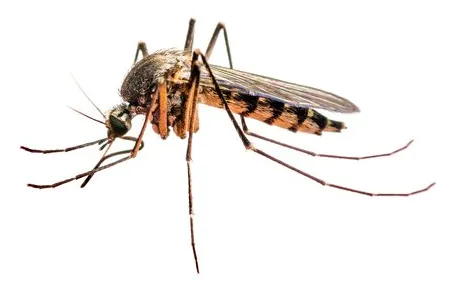 According to the American Mosquito Control Association, there are over 3,000 species of mosquitoes in the world, and at least 176 of them can be found in the United States. The most common, and most dangerous, are the various species in the Culex, Anopheles, and Aedes genera.
Culex mosquitoes
These mosquitoes tend to hibernate over the winter and breed during the warmer months, laying rafts of eggs at night on the surface of standing water anywhere it can be found. Over a period of about two weeks, the eggs hatch, larvae emerge, develop into pupae, and then into adult mosquitoes. They normally don’t travel more than a few hundred yards from where they hatched. Adults feed primarily from dusk until a few hours after dark and are considered aggressive and persistent biters, although they prefer birds to people. Females need the protein in blood to develop eggs, which they lay about every third night. They can live up to a month. The most prevalent is the Culex pipiens, known as the northern house mosquito. It is the main carrier of West Nile virus.
Anopheles mosquitoes
Mosquito species in this group also breed during the warmer months. Females also deposit their eggs on the surface of water in groups of 50 to 200. The eggs hatch and go through the same developmental process as Culex mosquitoes. However, unlike other mosquito larvae, Anopheles larvae do not have breathing tubes, so they must lie parallel to the surface and breath through holes in their sides called spiracles. While Culex mosquitoes can breed and thrive in stagnant or polluted water, the Anopheles mosquitoes prefer clean water habitats in marshes, swamps, and rice fields, among others. The adult females usually live about two weeks and feed at dusk and dawn. They tend to feed on people and cattle, rather than other warm-blooded creatures. Anopheles mosquitoes are the carriers of the parasite that causes malaria and transmit the bugs through their saliva when they bite. More than one million deaths each year are attributed to malaria passed on by Anopheles mosquitoes.
Aedes mosquitoes
The mosquitoes in this genera are floodwater mosquitoes, meaning they lay their eggs on moist soil or in containers that periodically catch rainfall. They prefer to breed in treeholes, overflow ditches, and old tires. The eggs can survive drying and hatch once flooded by water. They develop in a four-stage process like other mosquitoes. As a predominantly tropical and subtropical group, Aedes mosquitoes tend to breed in warm weather, although some species can survive in colder environments. The adults feed day and night, and several of the species are considered particularly troublesome. Aedes vexans, the inland floodwater mosquito, is known as a fierce and painful biter. Two Aedes mosquitoes are also carriers of dangerous disease. Aedes albopictus, the Asian tiger mosquito, transmits dengue fever and eastern equine encephalitis, while Aedes aegypti, the yellow fever mosquito, transmits dengue and yellow fever.
According to the American Mosquito Control Association, there are over 3,000 species of mosquitoes in the world, and at least 176 of them can be found in the United States. The most common, and most dangerous, are the various species in the Culex, Anopheles, and Aedes genera.
Culex mosquitoes
These mosquitoes tend to hibernate over the winter and breed during the warmer months, laying rafts of eggs at night on the surface of standing water anywhere it can be found. Over a period of about two weeks, the eggs hatch, larvae emerge, develop into pupae, and then into adult mosquitoes. They normally don’t travel more than a few hundred yards from where they hatched. Adults feed primarily from dusk until a few hours after dark and are considered aggressive and persistent biters, although they prefer birds to people. Females need the protein in blood to develop eggs, which they lay about every third night. They can live up to a month. The most prevalent is the Culex pipiens, known as the northern house mosquito. It is the main carrier of West Nile virus.
Anopheles mosquitoes
Mosquito species in this group also breed during the warmer months. Females also deposit their eggs on the surface of water in groups of 50 to 200. The eggs hatch and go through the same developmental process as Culex mosquitoes. However, unlike other mosquito larvae, Anopheles larvae do not have breathing tubes, so they must lie parallel to the surface and breath through holes in their sides called spiracles. While Culex mosquitoes can breed and thrive in stagnant or polluted water, the Anopheles mosquitoes prefer clean water habitats in marshes, swamps, and rice fields, among others. The adult females usually live about two weeks and feed at dusk and dawn. They tend to feed on people and cattle, rather than other warm-blooded creatures. Anopheles mosquitoes are the carriers of the parasite that causes malaria and transmit the bugs through their saliva when they bite. More than one million deaths each year are attributed to malaria passed on by Anopheles mosquitoes.
Aedes mosquitoes
The mosquitoes in this genera are floodwater mosquitoes, meaning they lay their eggs on moist soil or in containers that periodically catch rainfall. They prefer to breed in treeholes, overflow ditches, and old tires. The eggs can survive drying and hatch once flooded by water. They develop in a four-stage process like other mosquitoes. As a predominantly tropical and subtropical group, Aedes mosquitoes tend to breed in warm weather, although some species can survive in colder environments. The adults feed day and night, and several of the species are considered particularly troublesome. Aedes vexans, the inland floodwater mosquito, is known as a fierce and painful biter. Two Aedes mosquitoes are also carriers of dangerous disease. Aedes albopictus, the Asian tiger mosquito, transmits dengue fever and eastern equine encephalitis, while Aedes aegypti, the yellow fever mosquito, transmits dengue and yellow fever. Why Should You Choose The Green Advantage for your Pest Control Needs?
Locally Owned
We’re a locally grown and owned business. Consider us your friendly neighbors who shop and live in the same area you do! We’re loyal to Northwest Indiana and proud to be part of the local economy. Because we live here we are extremely knowledgeable about the critters that live in this area.
Experience
Not only are we the most qualified pest control company in Northwest Indiana, we are also on the cutting edge of technology. We’re always learning new techniques and processes to make our service the best in the area.
Tips & Tricks
We’re also a pest control company that educates. We communicate the best solution to our customer’s situation, but it doesn’t stop there. We do our best to keep our customers informed on the best prevention tips and current information on the area’s pest control issues.
We Care
We’re the company that has grown up with each neighborhood we’ve served. We’re a company that cares about quality, integrity, and in building good customer relations. We’ve built and staked our reputation in offering exceptional pest control service, and we welcome customers new and old to come do business with us.