
Yes, lone star ticks are dangerous, but the danger isn't one single illness. They can lead to several distinct problems, from bacterial infections to a delayed red-meat allergy, and some reactions can become serious.
If you're a homeowner in Crown Point, IN, that matters on a very practical level. A child, a dog, or even an adult doing yardwork can bring one in from the edge of a lawn, and the question becomes what kind of risk that bite carries, not just whether there was a tick at all.
Why Homeowners in Northwest Indiana Should Pay Attention
A Crown Point parent finds a tiny tick behind a child's knee after an afternoon in the backyard. The immediate response is practical: find tweezers, check the skin, and work out what the bite could mean. That concern is reasonable when a lawn borders tall grass, woods, or a fence line used by deer.
Lone star ticks deserve attention in Northwest Indiana because their range now extends beyond their former southern stronghold. The species has been present in the eastern United States since at least the 1750s, according to this historical review of lone star ticks. Wooded edges, overgrown areas, and wildlife movement can bring tick habitat close to family spaces.
Tick survival depends on yard conditions, so it also helps to understand how long ticks can live after they arrive. A shaded border with leaf litter offers a different level of concern than a short, open lawn. That difference helps homeowners decide where routine inspection, trimming, and targeted treatment deserve attention.
The risk is layered, not simple
A lone star tick bite can lead to different health concerns. The species is associated with ehrlichiosis, tularemia, and STARI, and it is the primary U.S. vector linked to alpha-gal syndrome, a delayed allergy involving certain mammal products, according to the CDC alpha-gal overview and CDC ehrlichiosis overview. Symptoms may include fever or a rash, while an allergic reaction can appear hours after eating.
Practical rule: A tick bite in a yard used by children, pets, or adults deserves attention as a possible exposure, not dismissal as a minor nuisance.
For Crown Point homeowners, prevention means reducing contact with tick habitat and knowing what symptoms require medical advice. For most families, tick control fits into a broader residential pest control plan that may also address mosquitoes and other pests along shared yard edges.
What Lone Star Ticks Are and How They Behave
A tick can cross a Crown Point yard without announcing itself. Knowing its appearance and movement helps homeowners judge where exposure is more likely and where routine checks matter.
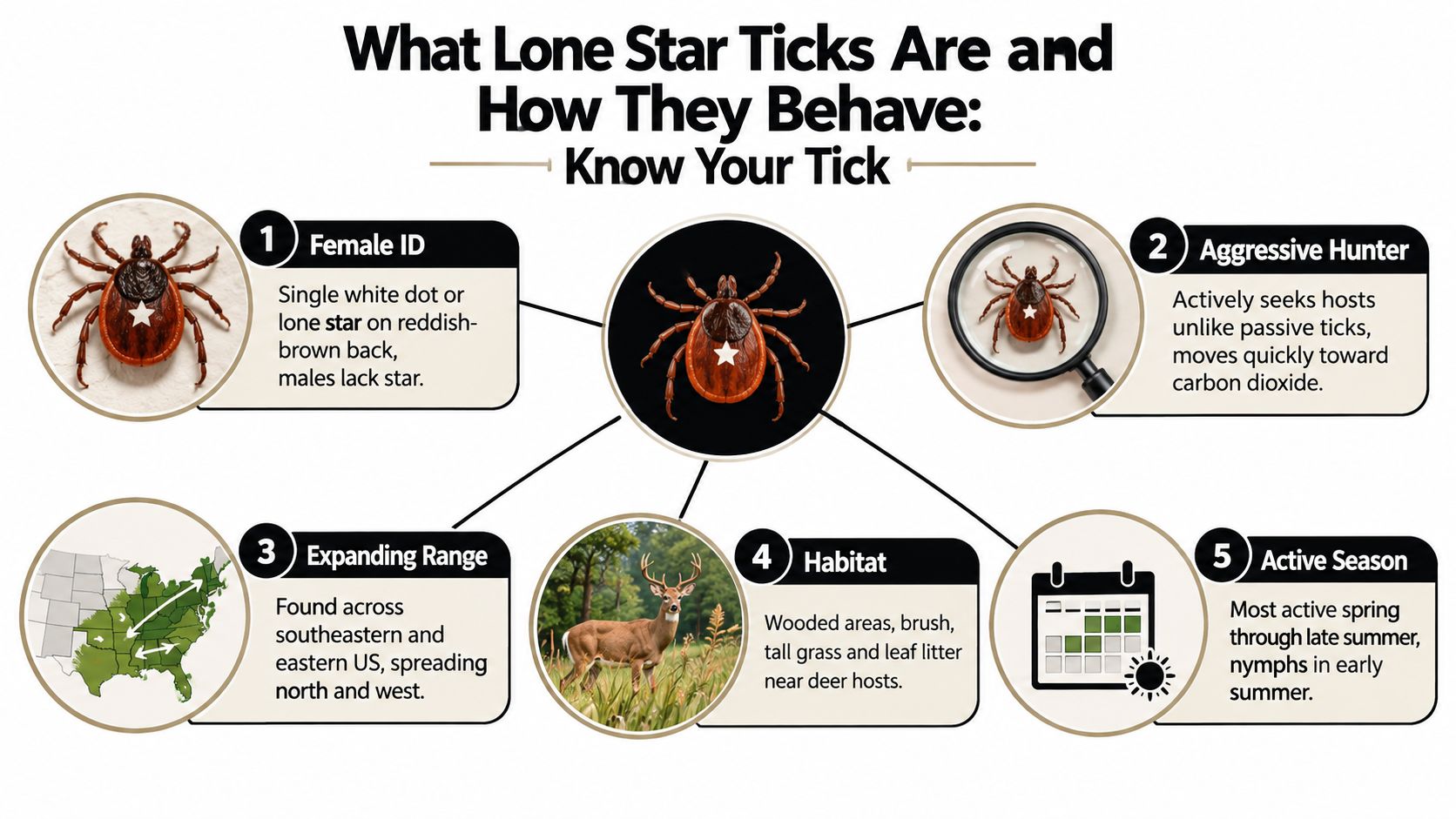
Adult female lone star ticks have a reddish-brown body and one white spot on the back, the “lone star” marking. Males are generally reddish-brown without that single spot. Nymphs are far smaller, often close to pinhead size, so a bite may happen before anyone notices the tick.
Why they're harder to catch early
Lone star ticks actively move toward people and animals rather than relying only on contact with passing hosts. They are the main human-biting tick in the southeastern and south-central United States, responsible for most reported tick bites in the South. People, dogs, and deer can carry them from brush or wooded edges into areas near a home.
Their three-host life cycle lasts roughly two years, and each life stage can bite people. A small nymph may be the concern during one season, while a larger adult appears later. That makes size an unreliable way to judge whether a tick deserves attention.
Where they fit in a Northwest Indiana yard
In Crown Point, risk rises where short lawn meets brush, leaf litter, or shaded edge habitat. Oak-hickory woodlots, neglected fence rows, and grassy field margins provide places for ticks to wait for hosts. Late spring through mid-summer is generally the busiest period, with another rise in fall.
A deep forest is not required. A narrow strip of unmanaged growth along a yard can provide enough cover for ticks to move between wildlife, pets, and people.
For a Midwest homeowner, the practical question is location. Focus inspections and yard maintenance on the borders where vegetation, wildlife travel, and family activity overlap. Those conditions help explain why a lone star tick can become a household concern even when the main lawn looks open and well maintained.
The Diseases Lone Star Ticks Can Transmit
A Crown Point family may notice a fever days after working near a brushy property edge, without realizing a tick bite came first. Lone star ticks can be linked with several illnesses, but they do not all carry the same likelihood or level of danger. Separating them helps homeowners respond to symptoms without assuming every bite means Lyme disease.
The main illnesses to know
Ehrlichiosis is the infectious concern that deserves the closest attention where lone star ticks are established. Lone star ticks can carry Ehrlichia chaffeensis and E. ewingii, and the illness may become severe without prompt treatment CDC ehrlichiosis overview. Fever, headache, chills, and muscle aches can resemble the flu. After a bite or outdoor exposure, that combination should prompt a call to a healthcare professional.
Tularemia is less common, but it can be serious. Possible signs include fever, an ulcer near the bite, and swollen lymph nodes CDC tularemia information. The ulcer and fever pattern gives a clinician useful information, especially if the person has recently spent time around brush, wildlife, or tall grass.
STARI, or Southern Tick-Associated Rash Illness, can look like Lyme disease because it may cause an expanding rash and fatigue. Lone star ticks do not transmit Lyme disease, so a rash cannot by itself confirm Lyme infection PMC historical review. The practical takeaway is simple: a Lyme-like rash after a lone star tick bite still deserves medical review.
| Disease | Typical Symptoms | Onset Window | Severity | Midwest Relevance |
|---|---|---|---|---|
| Ehrlichiosis | Fever, headache, chills, muscle aches | Often within 1 to 2 weeks after a bite | Can become severe | Higher where lone star ticks are established |
| Tularemia | Fever, ulcer at bite site, swollen lymph nodes | After exposure, timing varies | Serious, needs prompt care | Present in the region |
| STARI | Expanding rash, fatigue, headache | After a tick bite, timing varies | Usually less clearly defined | Important because it can mimic Lyme |
| Heartland virus | Fever, fatigue, nausea, body aches | After a bite, timing varies | Rare but potentially serious | Uncommon, but relevant where lone star ticks occur |
| Bourbon virus | Fever, fatigue, rash, body aches | After a bite, timing varies | Rare but potentially serious | Uncommon, but relevant where lone star ticks occur |
The rarer viral concerns
Heartland virus and Bourbon virus are rare, yet they remain associated with lone star ticks. Early symptoms can overlap with other tick-borne illnesses, including fever, fatigue, nausea, rash, and body aches. A clinician may ask about recent outdoor exposure and whether the tick was saved for identification.
For a Midwest homeowner, the useful response is straightforward: do not try to identify the illness from symptoms alone. Record when the bite or exposure may have occurred, watch for changes in health, and seek medical advice promptly if fever, rash, or significant body aches develop. Yard conditions still matter because reducing brush and leaf-litter habitat lowers the chance of another household exposure.
Alpha-Gal Syndrome as a Separate Category of Risk
A Crown Point family can eat dinner without noticing anything unusual, then develop symptoms later that evening after a tick bite weeks earlier. That delayed pattern points to alpha-gal syndrome, an allergy rather than an infection. Alpha-gal is a sugar found in mammalian meat and products such as beef, pork, lamb, dairy, and gelatin CDC alpha-gal overview.
Why this allergy confuses families
The reaction may begin 2 to 10 hours after exposure, with hives, itching, swelling, nausea, diarrhea, abdominal pain, vomiting, indigestion, or anaphylaxis. These symptoms and their timing are described in the CDC MMWR on AGS symptoms. Because the delay can separate a meal from the reaction, families may not connect the two events.
A person can also eat the same foods repeatedly before developing a problem. Lone star ticks are the primary vector associated with alpha-gal syndrome in the United States, and cases are most prevalent in the South, Midwest, and mid-Atlantic. That makes the condition relevant to Northwest Indiana without making every lone star tick bite a sign of allergy.
Testing requires medical guidance. If symptoms repeatedly follow a tick bite and exposure to red meat or other mammalian foods, a clinician or allergist may order alpha-gal testing. People researching what that testing may involve can browse meat allergy test information from Sunridge Medical.
Why yard control matters medically
Reducing ticks around a home lowers the chance of another bite, which is a practical health measure for a Crown Point household. CDC estimates suggest about 450,000 people in the United States may have been affected by alpha-gal syndrome between 2010 and 2022, according to the NPR summary.
The property steps are familiar: limit brush and leaf litter, keep lawn edges maintained, and reduce places where ticks and their hosts can shelter. Yard work cannot diagnose or treat alpha-gal syndrome, but it can reduce the household's exposure to the tick that may trigger it.
What to Do After a Suspected Lone Star Tick Bite
Fast, calm removal is the right first move. Use fine-tipped tweezers, grip the tick as close to the skin as possible, and pull upward with steady pressure. Don't twist, crush, or burn it.
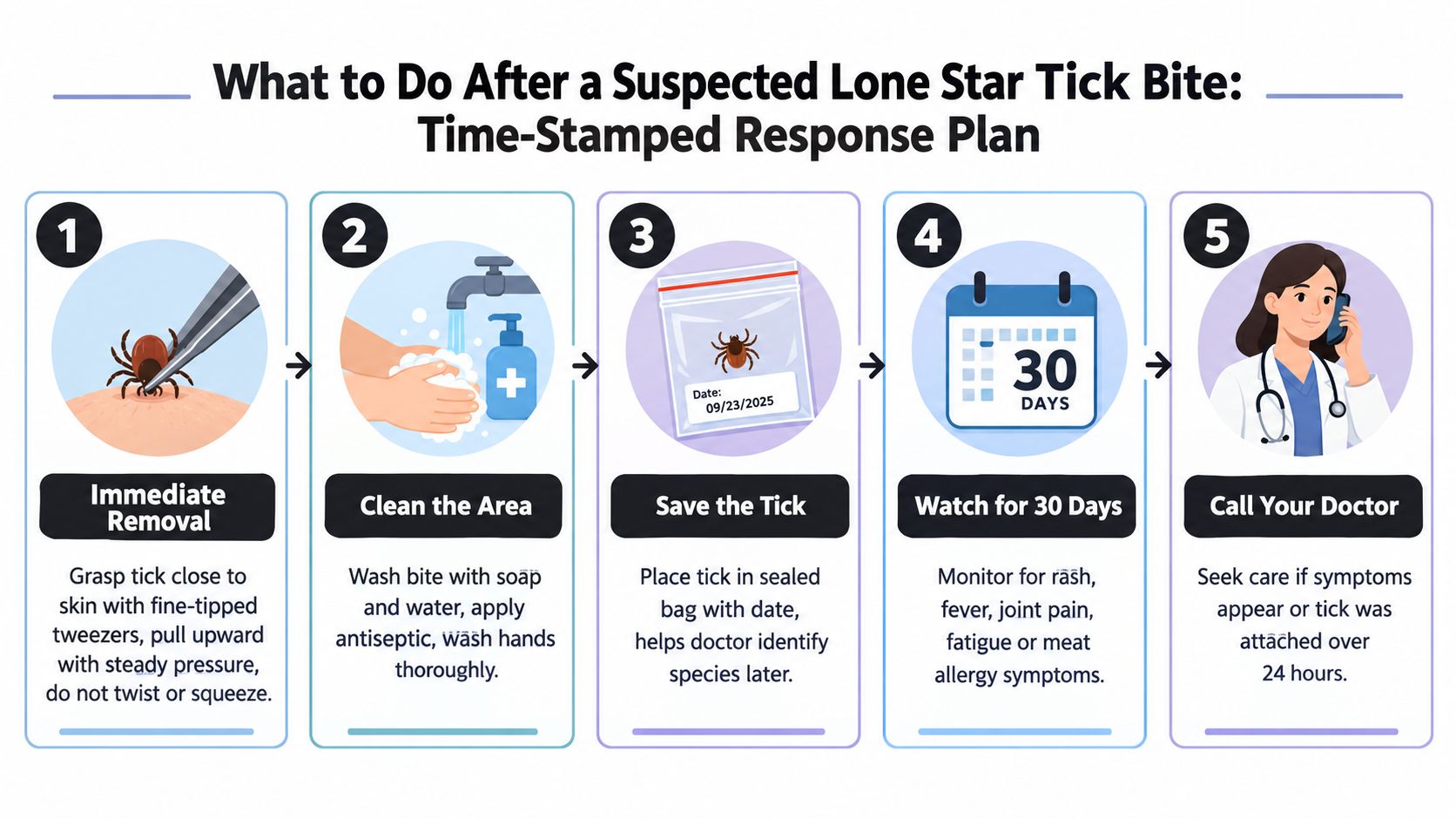
After removal, wash the bite area and your hands with soap and water or rubbing alcohol. Then place the tick in a sealed bag or jar with a damp cotton ball so a doctor or extension office can identify it later. That can be useful if symptoms develop and the question becomes what species caused the bite.
What to watch for over the next month
For the next 30 days, keep an eye on the bite site and the person who was bitten. Watch for an expanding rash, a bull's-eye pattern, fever, headache, muscle aches, or unusual fatigue. Also watch for alpha-gal clues, especially hives or stomach upset that show up hours after eating meat.
If fever or rash appears within two weeks of a bite, a clinician visit isn't optional.
Avoid folklore fixes like petroleum jelly or heat. Those methods don't remove the tick safely and can make the skin more irritated. If the bite was attached, or if the tick may have been on the skin for a long time, it's even more important to monitor closely and contact a medical professional.
A simple home response checklist
- Remove it correctly. Steady tweezers pressure is safer than squeezing the body.
- Save the tick. Identification helps narrow the risk.
- Track symptoms. Write down the bite date and any new rash, fever, or digestive issues.
- Get medical advice early. A rash or fever after a bite should be taken seriously.
A clear response keeps a bad afternoon from turning into a bigger problem. It also helps homeowners separate a minor bite from a medical issue that needs prompt attention.
Yard and Personal Prevention That Actually Works
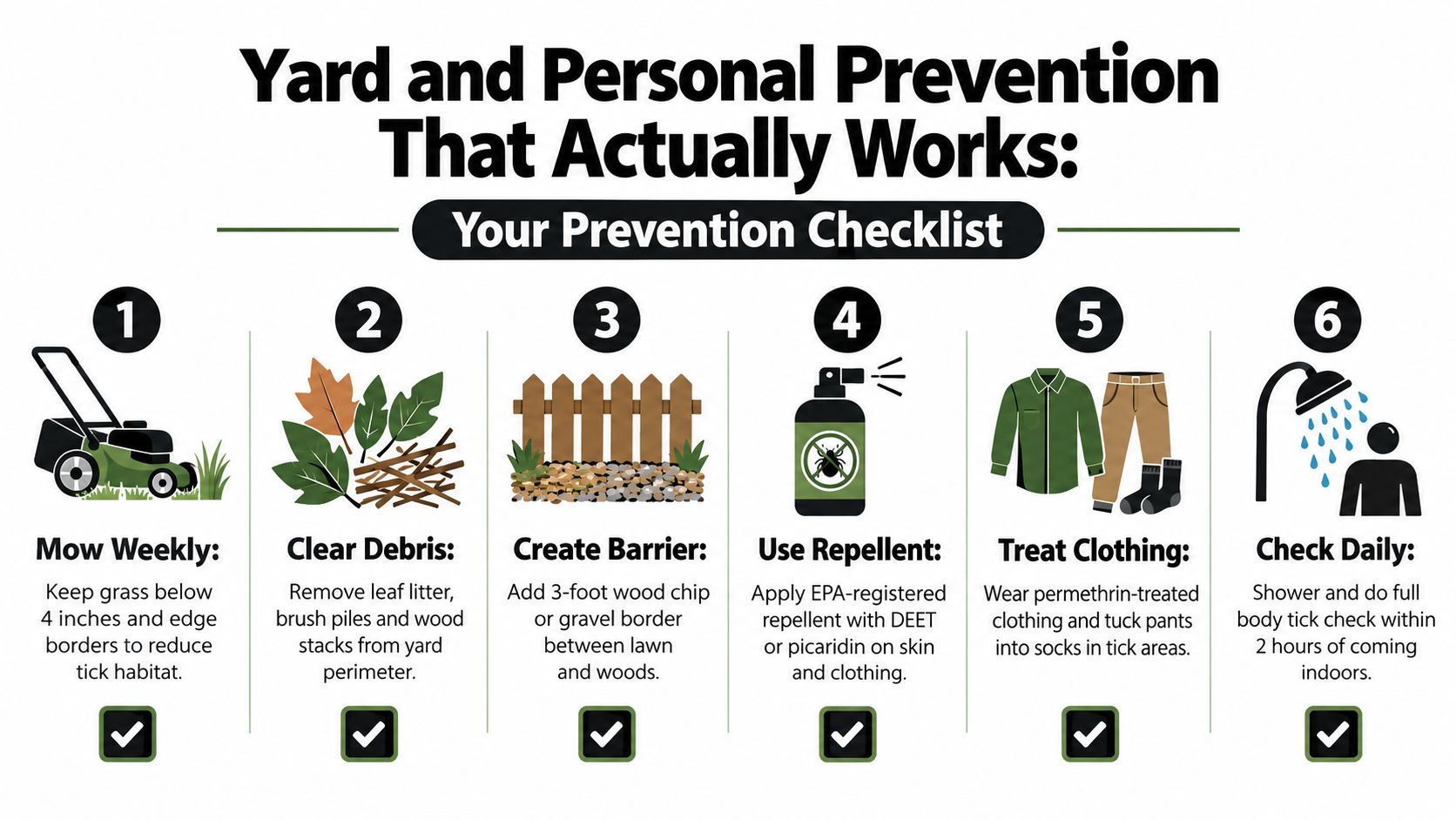
The best tick control starts at the property edge. Mow and trim regularly so grass doesn't stay high, clear leaf litter and brush piles, and create a buffer of gravel or wood chips between the lawn and wooded areas. Those steps don't make a yard sterile, but they do make it less inviting.
What helps most around the yard
Deer are a major part of the lone star tick cycle, so reducing deer access around the yard can help lower pressure near the house. Focused tick treatments also matter more than broad, one-size-fits-all spraying. In practice, that means treating the edges, resting zones, and shaded transition areas where ticks are most likely to wait for a host.
For homeowners who want a deeper yard strategy, the FullScope Pest Control tick strategy is a helpful example of how professionals think about habitat rather than just spraying randomly. In Crown Point, that same logic fits yards with tree lines, pet runs, and heavy wildlife traffic. A related local resource is what kills ticks in the yard, which connects yard conditions to treatment choices.
Personal habits that reduce bites
- Use the right repellent. EPA-registered products with DEET or picaridin are standard choices for skin and clothing.
- Treat clothing. Permethrin-treated clothes and shoes add another layer when you're working outside.
- Check within two hours. A full-body tick check after coming indoors can catch a tick before it attaches longer.
- Dry clothing on high heat. A hot dryer cycle for ten minutes can help kill ticks on clothes.
Best habit: The sooner you check after yard work, the less time a tick has to stay hidden.
For families in Crown Point, these steps often work better together than any one product alone. That's why preventative pest treatments are more effective when they line up with how the yard is used, not just with a generic calendar.
When Professional Pest Control Makes the Difference
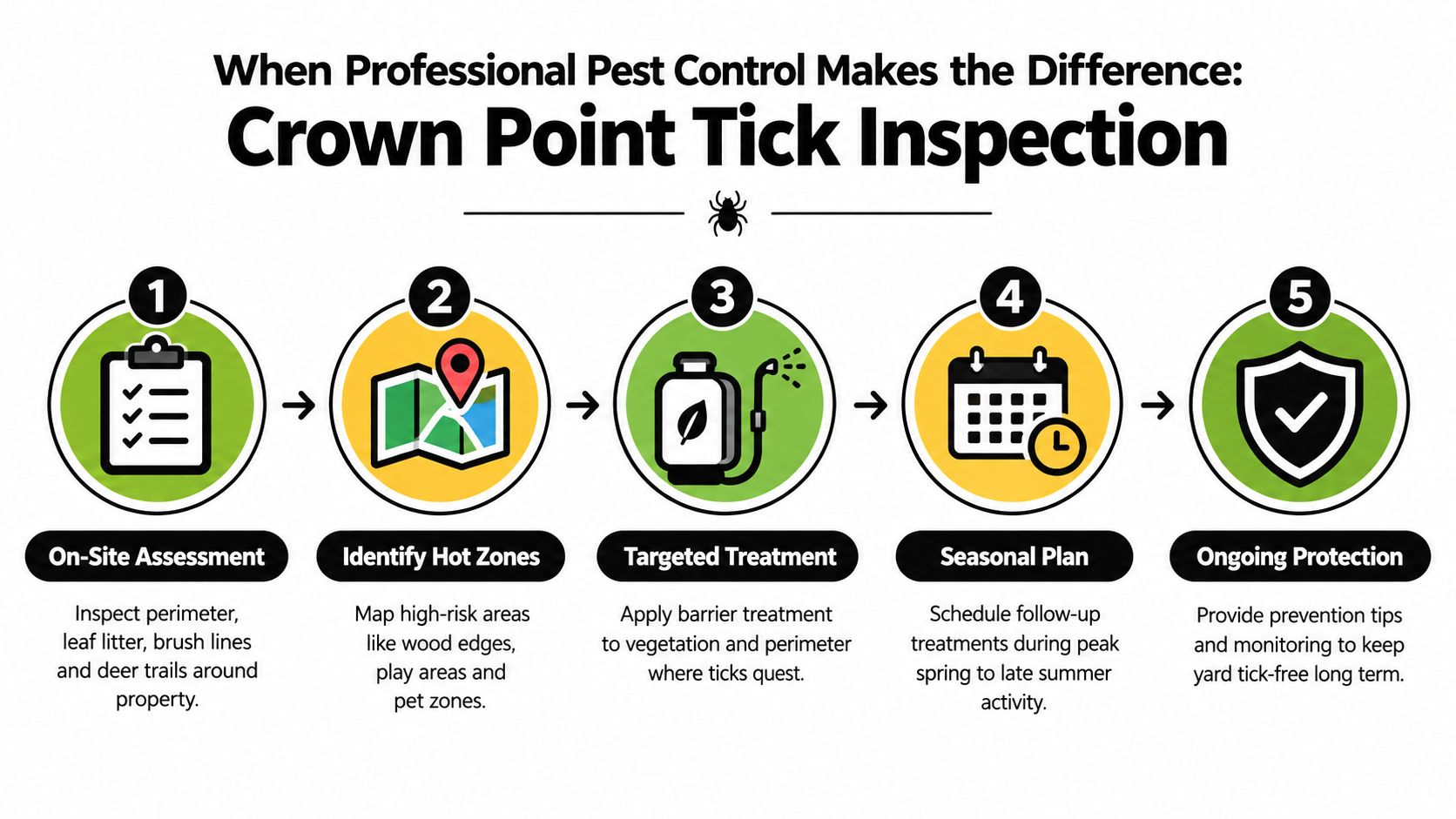
DIY prevention can lower risk, but it usually hits a limit once the property itself keeps reintroducing ticks. A proper inspection looks at the perimeter, leaf litter, brush lines, shaded play areas, and signs of deer or small mammals moving through the yard. That tells a technician where the pressure is coming from, not just where a tick happened to be found.
What a pro looks for
A good tick inspection usually maps out the most active zones first. That includes wood edges, pet paths, fence lines, and any area where the lawn meets thicker vegetation. From there, the plan can target the places where ticks move instead of covering broad areas that don't need the same attention.
That's where professional exterminator near me searches in Crown Point, IN start to make sense for tick problems. The Green Advantage can inspect the property, identify tick hotspots, and build a customized treatment plan for the yard conditions. That matters for commercial pest control properties too, especially where employees, customers, or outdoor storage areas sit near brush and tree cover.
Why timing matters
Tick control works best when treatments line up with seasonal pressure. Late spring and again in early fall are useful windows because they match the periods when homeowners are most likely to encounter active ticks. Families with pets, hunters, or kids who spend a lot of time outdoors benefit most from a plan that keeps working after the first application.
Professional service also gives you a clearer follow-up plan. Instead of guessing whether a product worked, you get ongoing monitoring, prevention tips, and a yard-specific approach that fits the property. For many homeowners, that's the difference between hoping for less tick activity and managing the problem with purpose.
If you're dealing with tick concerns in Crown Point, IN, The Green Advantage can inspect your yard, identify the areas that are driving the risk, and recommend a treatment plan that fits your property. Visit The Green Advantage to schedule a pest inspection or request a quote for tick control and other residential pest control services.