
You move a storage bin in your Crown Point garage and find what looks like a mouse dropping. There's no obvious damage, but now you're wondering whether something has moved into the walls. Proactive safety measures turn that uncertainty into a practical routine: check the evidence, remove what attracts pests, and know when professional help is warranted.
For homeowners searching for pest control in Crown Point, IN, The Green Advantage provides a local starting point. We help Northwest Indiana homeowners and businesses understand pest problems without treating every sighting as an emergency or dismissing evidence that deserves attention.
Your Year-Round Pest Safety Routine in Crown Point
Say you find a suspected mouse dropping in the garage in March. Don't assume it proves an infestation, but don't sweep it away and forget it. Photograph the location, check nearby storage and door seals, and keep children and pets away from the evidence until you can address it safely.
A useful routine combines regular checks with extra attention after weather changes. The schedule below is a practical homeowner baseline, not a replacement for product-label directions or a technician's instructions. Active traps and treatment stations may need more frequent checks.
Proactive Pest Safety Routine by Task and Frequency
| Routine | How often | Where to focus | Why it matters |
|---|---|---|---|
| Water-container sweep | Weekly in mosquito season | Tires, buckets, planters, birdbaths, gutters | Removes mosquito breeding sites |
| Entry-point walk | Monthly and after storms | Door seals, screens, gaps around pipes and vents | Blocks mice and insects before they get inside |
| Food and waste check | Weekly | Pantry, pet food, trash lids, compost | Removes what draws rodents and roaches |
| Monitoring check | Monthly | Traps, bait stations, droppings, gnaw marks | Shows whether prevention is working |
| Professional inspection | Once a year and after major pest activity | Full interior and exterior | Helps identify concealed activity and vulnerable conditions |
During rainy Northwest Indiana springs, check places where runoff collects rather than relying on a reminder alone. If summer warmth continues, don't stop checking outdoor pest habitat just because the calendar suggests the season should be ending.
The CDC's guidance on climate and disease vectors explains that warmer conditions and altered precipitation influence mosquito and tick survival, while longer, warmer summers and shorter, milder winters can lengthen their seasons. Your property's condition should help determine when you reassess.
Practical rule: Keep the calendar, but let fresh evidence move a check forward.
Set weekly and monthly reminders, print the table, and keep your notes together. Repeated sightings, droppings in food areas, and pests that return after cleaning justify contacting a professional rather than continuing the same household fixes.
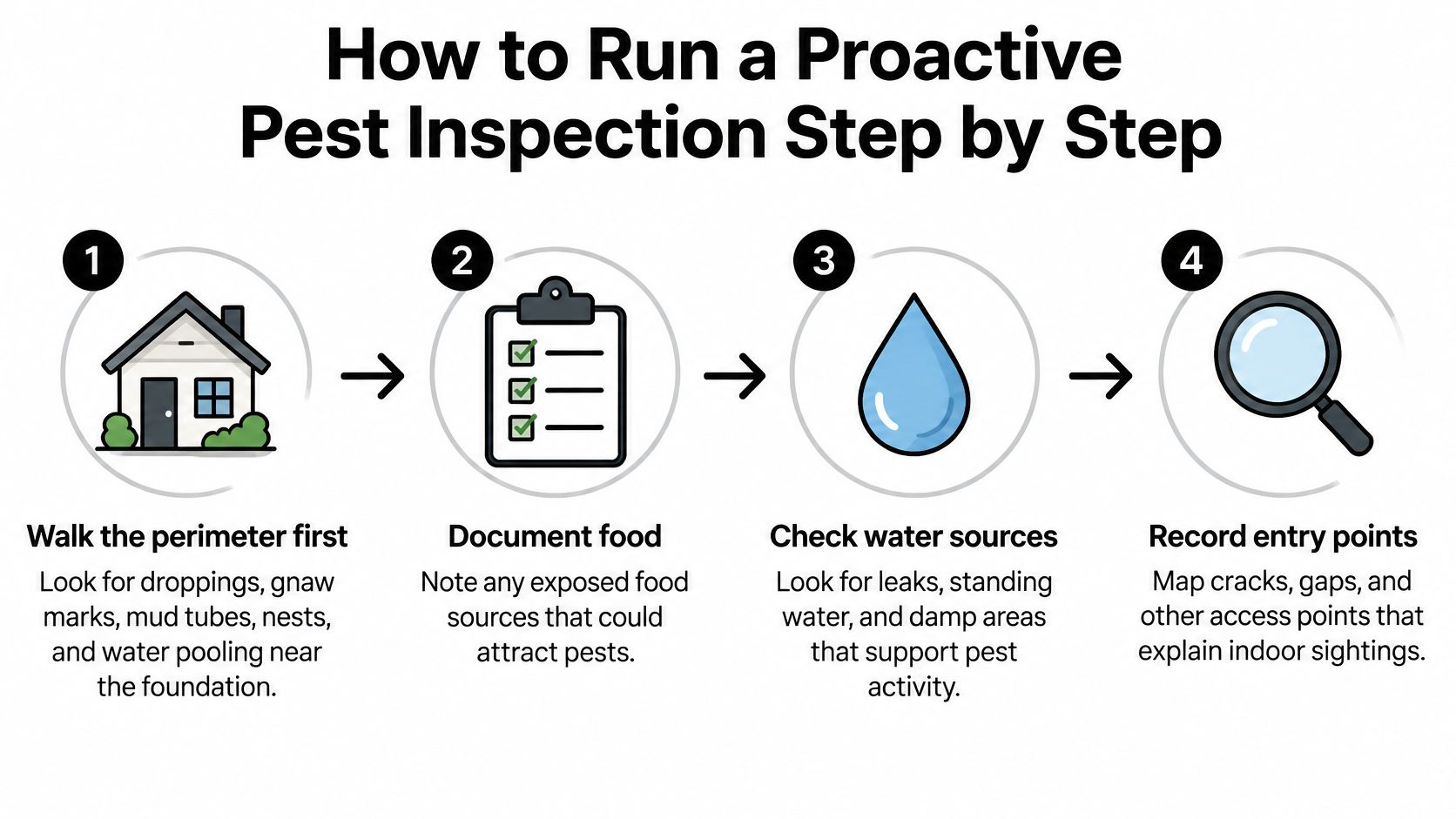
How to Run a Proactive Pest Inspection Step by Step
A flashlight, phone camera, disposable gloves, and a simple property sketch are enough to begin. Stay on accessible surfaces, and leave enclosed crawl spaces, unstable attic areas, and active stinging-insect nests to a professional.
The EPA's Integrated Pest Management principles support a repeating process of identification, monitoring, prevention, proportionate control, and evaluation. Integrated Pest Management, or IPM, means choosing a response based on the pest and the conditions, not automatically reaching for spray.
Inspect, Identify, and Record
Walk the perimeter first. Look for droppings, gnaw marks, mud tubes, nests, and pooling water near the foundation. Exterior conditions often explain indoor activity, so don't begin and end with the room where you noticed a pest.
Check the kitchen, pantry, garage, basement, and accessible attic areas for food, water, shelter, and entry points. Record a leaking pipe or torn food package alongside pest evidence, because removing the animal without correcting its resources leaves the underlying problem.
Identify before treating. Photograph the insect or evidence clearly, including its location, and keep a specimen only if you can collect it safely in a sealed container. Suspected termites, ants, and cockroaches require different responses.
Place suitable monitoring devices along likely travel routes, away from children and pets, and label their locations and installation dates. Don't improvise pesticide bait placements or move professionally installed stations without guidance.
Use this visual as a reminder of what to document during the initial walk.
Decide When Evidence Requires Help
- Set an action threshold. That's the point where evidence or exposure makes professional intervention appropriate. The following guide prioritizes household follow-up, although a suspected wood-destroying pest or dangerous stinging insect can require attention even after an isolated sighting.
| Evidence found | Risk level | Action |
|---|---|---|
| One sighting of a pest | Low | Monitor, seal gaps, and remove attractants |
| Repeated captures in monitors | Moderate | Repeat prevention and consider a professional inspection |
| Droppings or gnaw marks in food areas | High | Clean with wet methods and call a professional |
| Activity in a child's room or sleeping area | High | Call a professional promptly |
| Pests return after cleaning and sealing | High | Schedule a professional inspection |
Correct accessible problems before adding treatment: clear clutter, protect food, address leaks, and close suitable entry gaps. Avoid spraying around monitors, since that can interfere with your ability to understand activity.
Record the date, exact location, findings, corrective action, responsible person, and follow-up deadline. Recheck on the schedule your findings require, and shorten that interval if evidence increases.
Don't treat every insect as a target pest or judge success by how much product was applied. Our technicians note customer prevention steps on the inspection report, giving you a written checklist. Our explanation of how advanced equipment improves pest inspection accuracy in Crown Point also describes the role of closer investigation when visible evidence doesn't explain the problem.
Sealing Entry Points and Removing Rodent Habitat
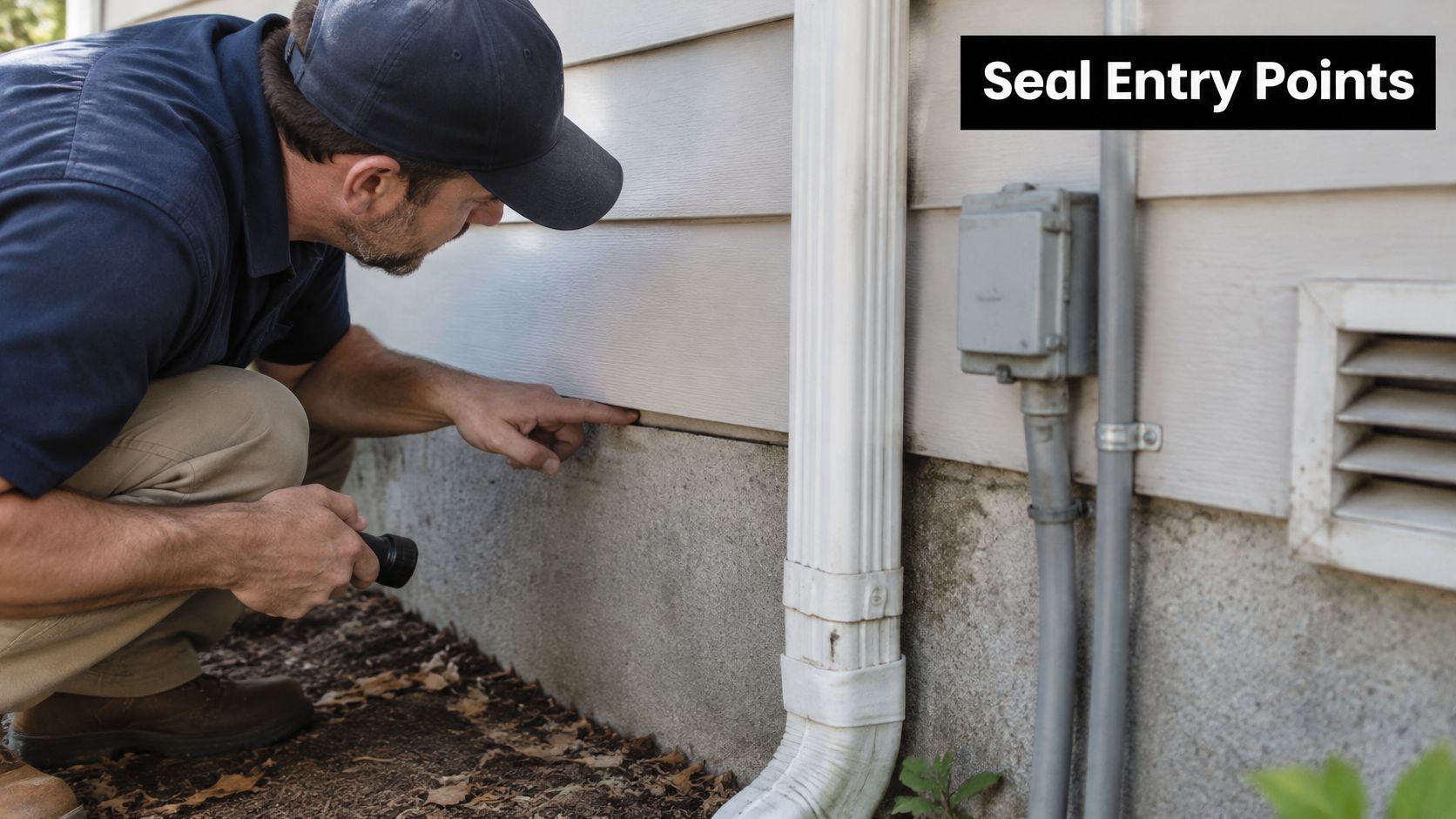
A small structural gap deserves attention even when it looks insignificant. Check the building as a connected system: a garage opening can provide access to storage, while a pipe penetration can lead farther into the structure.
The foundation and utility connections are useful places to begin an exterior inspection.
Indoors, Match the Repair to the Opening
Inspect around pipes, vents, utility lines, garage-door seals, and exterior-door thresholds. Look from different angles with a flashlight, especially behind stored items.
The EPA's rodent-prevention guidance recommends sealing interior and exterior holes, using steel wool for small openings or appropriate wall patches, and removing food, water, and nesting opportunities. For larger or weather-exposed defects, use a durable repair suited to the building material rather than relying on a loose plug.
Don't block intentional ventilation or drainage openings. If you suspect animals are inside a wall or roof space, have the access route assessed before closing it.
Outdoors, Remove Shelter and Easy Meals
Clear leaf piles and deep mulch against the building, and reorganize stored materials so you can inspect behind them. Secure garbage lids, clean spilled pet food, and cover newly added compost scraps.
During active rodent control, stop outdoor bird feeding or use huskless feed that leaves less residue. A repaired opening won't solve much if food remains scattered beside another accessible gap.
This video provides an additional visual reference for rodent prevention.
Contamination changes the priority. The EPA's information about rats and mice explains that rodent-borne disease can reach people through contaminated food or water and through dust contaminated with rodent waste.
Don't dry-sweep or vacuum suspected rodent waste. Keep others away, wear gloves, and use wet cleanup methods with an appropriate disinfectant, following its directions; extensive contamination calls for professional guidance.
For a manageable weekend checklist, focus on accessible gap repairs, foundation cleanup, and secure waste lids. Before we begin cockroach or rodent work, a trained technician explains the entire process and the precautions you need to follow.
Mosquito and Tick Prevention That Follows the Weather
Mosquito prevention is a recurring source-removal job, not a yard application. The CDC's home mosquito-control guidance recommends emptying and scrubbing, turning over, covering, or discarding water-holding items weekly.
After rain, walk beyond the visible lawn. Inspect tires, buckets, planters, toys, birdbaths, pool covers, gutters, drains, and trash containers. Turn movable items over and inspect their bottoms, where small recesses can retain water.
Remove the Source, Not Just the Water
Scrub suitable containers when emptying them to help remove eggs. Secure covers tightly, and discard items you no longer need rather than repeatedly draining them.
Persistent puddles deserve a different response. Adjust irrigation, clear accessible drainage obstructions, and arrange repairs where runoff repeatedly collects. Don't climb onto a roof to inspect gutters if you can't do so safely.
Keep a short record of recurring water locations. For a rental property or business, assign someone responsibility for each area, including shared trash enclosures and outdoor storage.
Fewer mosquitoes around the patio and lower exposure to bites are related goals, but they aren't the same measurement.
Reduce Exposure Around Tick Habitat
For ticks, concentrate on tall grass, brush, leaf litter, and wooded yard edges. Keep play and seating areas away from dense vegetation where practical, and use appropriate personal protection when working along those borders.
Our guide to tick-control methods explains how habitat assessment and targeted control fit together. A property inspection should distinguish frequently used spaces from areas where people rarely spend time.
The common mosquito-control mistake is treating flying adults while leaving water-holding containers untouched. Loose covers, overlooked gutter debris, and neglected pool-cover folds can undermine the work.
Reassess after heavy rain or unusual warmth rather than waiting for the next calendar milestone. Removing breeding habitat, repairing screens, managing vegetation, and using suitable bite protection address different parts of the problem. No single yard treatment replaces all of them, and fewer visible pests shouldn't be treated as proof that disease risk has disappeared.
Why Professional Pest Control Protects Your Property and Family
A pest sighting is a starting point, not a diagnosis. The next step is to identify what is sustaining the activity, whether that is a building condition, stored food, nearby habitat, or a combination of factors. That distinction helps determine whether the response should focus on treatment, repairs, or both.
The Green Advantage offers residential pest control, commercial pest control, mosquito control, and pest inspections in Crown Point and nearby Northwest Indiana communities. A response should match the inspection findings, with no unnecessary treatments.
Practical Benefits Beyond Removing Pests
- Property protection: Signs of gnawing or suspected termite activity can point to damage that needs attention. Moisture-related vulnerabilities may also need repair before cosmetic work.
- Health protection: Reducing pest access to food and occupied spaces limits opportunities for contact with contaminated materials.
- Clear decisions: Inspection findings help separate work that needs prompt attention from maintenance that can be planned.
- Business continuity: Commercial pest elimination programs let customers target problem areas and avoid charges for unnecessary treatments.
A thorough inspection takes time and may uncover repairs beyond pest treatment. Spraying alone can seem simpler, but it will not fix a failing door seal or leaking pipe. Addressing those conditions helps reduce the chance that the same pest problem persists.
When comparing an exterminator in Crown Point, IN, look for a clear diagnosis, a response suited to the findings, and a way to check whether activity improves. A plan can restore confidence without promising that pests will never return.
Keeping Family and Pets Safe During and After Treatment
Product-specific instructions control re-entry. Know the product name, the treated locations, and the return conditions before application begins.
The EPA's guidance on restrictions after pesticide applications defines a restricted-entry interval for covered agricultural uses, but household and commercial applications can follow different label requirements. Don't borrow an agricultural interval or a neighbor's waiting time for your home.
Prepare for the Visit
- Confirm the instructions. Our technicians notify you in advance of special treatment precautions.
- Write down when treated spaces can be used again, and set a reminder if a waiting period applies.
- Relocate pets and infants before treatment begins so they can't enter restricted areas accidentally.
- Protect food, toys, bowls, and food-contact items as directed. Clean surfaces afterward only as the treatment instructions specify.
- Ventilate when instructed, and keep employees or other household members informed.
For liquid treatments, pets and infants should stay out of treated areas until the liquid has fully dried. Drying doesn't override any longer product-label restriction.
Account for Special Circumstances
For flea control, all pets and residents must leave the home for four to six hours so products can settle safely. Customers on oxygen are recommended to leave long enough for dust to settle after a visit before reentering; tell our office about oxygen use when scheduling.
Before treatment: Make sure everyone responsible for children, pets, or employee access understands the same return instructions.
Commercial sites should coordinate food-area access and staff schedules before work begins. Nobody should have to guess whether a room is ready for use.
Book Your Proactive Pest Inspection in Crown Point
Contact The Green Advantage's office to schedule an inspection or request a quote, and have your observations ready. Note when you first noticed activity, which rooms or exterior areas are involved, and what you've already changed.
Photos of insects, damage, and evidence can help explain the concern. Don't disturb an active wasp nest or dismantle building materials to obtain a better picture.
What to Have Ready
- Evidence locations: Identify the cupboard, wall, doorway, or outdoor feature involved rather than saying pests are everywhere.
- Previous actions: List cleaning, sealing, traps, or products already used.
- Access needs: Mention locked spaces, tenants, business hours, and areas that aren't safely accessible.
- Household precautions: Tell the office about infants, pets, oxygen use, or other circumstances that affect preparation.
Every customer who signs up communicates directly with our office staff for scheduling and pest-problem information, allowing licensed technicians to focus on solving the issue. All our technicians are licensed for structural pest control by the Department of Public Health.
A Proposal Based on the Property
Commercial accounts may require an on-site visit before we can give an accurate proposal. A licensed technician assesses the facility and provides a verbal or written proposal; request the written version when you need to coordinate approval or building maintenance.
If you're searching for pest control near me or exterminator near me, focus on whether the next step matches your evidence. A recurring pantry problem needs a different investigation from mosquito activity around an outdoor seating area.
You don't need to identify the pest perfectly before contacting us. Bring the observations you have, explain your concerns, and let the inspection establish what requires action.
The Green Advantage offers pest inspections and residential and commercial pest control for Crown Point and surrounding Northwest Indiana communities. Visit The Green Advantage to request a quote or schedule an inspection, and turn your household checks into a prevention plan based on your property's actual conditions.