
A pest inspection is a structured visual examination of a property's accessible areas that documents evidence of pests, damage, and conditions that attract infestation. It's a diagnostic assessment, not a treatment visit.
You may notice carpenter ants near your back door, droppings in the basement, or scratching above the ceiling and wonder whether the problem is small enough to handle yourself. In Crown Point, IN, that uncertainty matters. Northwest Indiana homes face changing seasonal pest pressure, moisture problems, aging wood, and entry points that can turn a few signs into a larger property issue.
The Green Advantage serves Crown Point and nearby Northwest Indiana communities with pest inspections for homeowners, buyers, landlords, and businesses. A proper inspection helps you understand what's happening, what the inspector could access, what remains outside the inspection's scope, and which follow-up action makes sense.
What a Pest Inspection Actually Covers
A Crown Point homeowner who spots carpenter ants near the back door may assume the insects are limited to that entry point. They might be, but the ants could also indicate damp framing, a roof or plumbing leak, soft window trim, or an accessible route into the structure. A professional pest inspection looks for the larger pattern instead of focusing only on the insects you happened to see.
Maryland's inspection standard describes a pest inspection as a careful visual observation and thorough examination of readily accessible areas, with special attention to places where target pests are likely to occur. The findings must be reported in writing, and the inspector's role is to identify pests or pest damage, not spray or place bait during the visit. You can review that scope in the Maryland pest inspection standard.
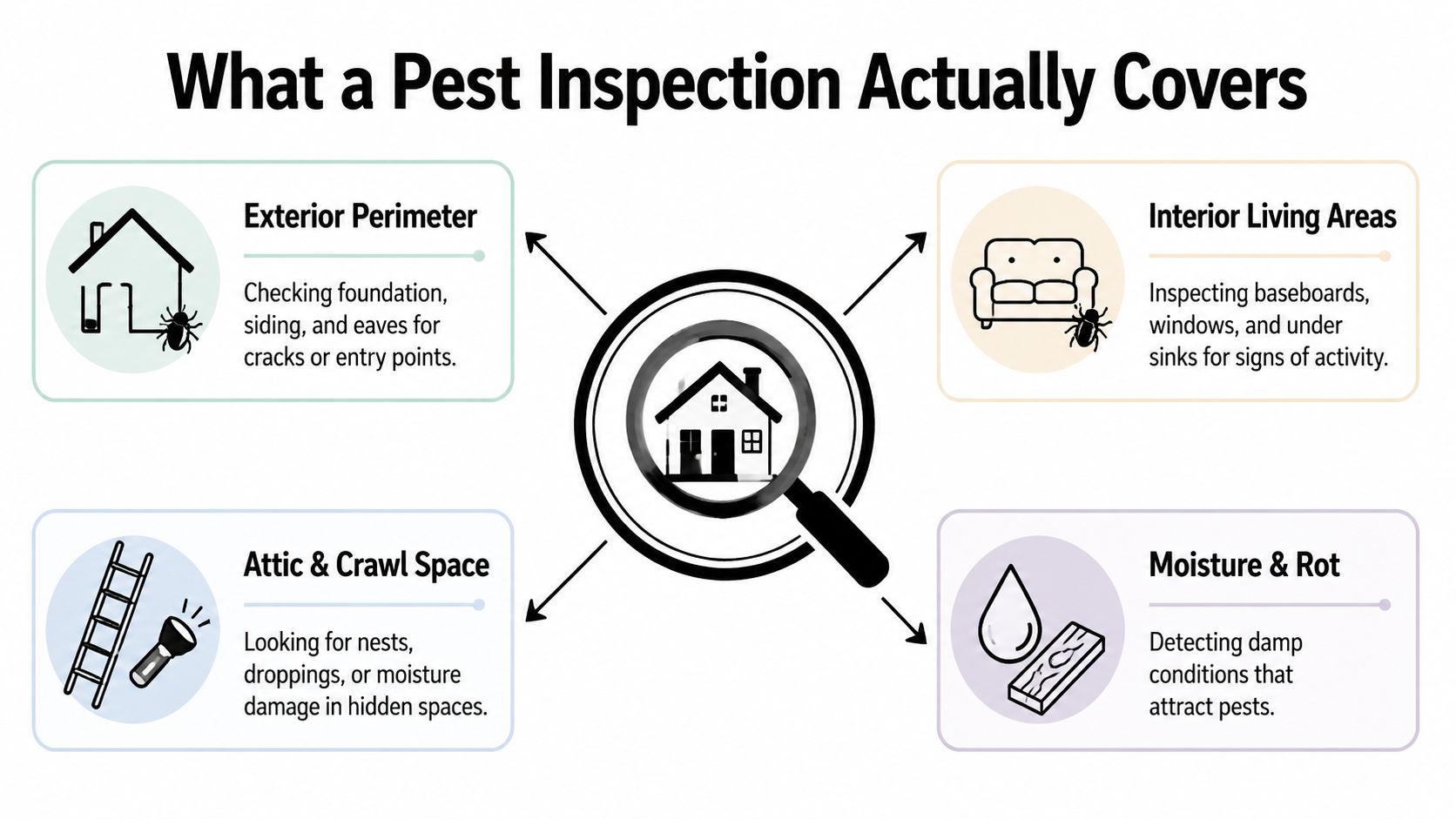
Areas an inspector examines
A typical inspection may include:
- Interior living areas: Kitchens, bathrooms, baseboards, window sills, door frames, utility penetrations, and areas beneath sinks.
- Lower-level spaces: Basements and crawl spaces, especially where moisture, wood-to-soil contact, or limited ventilation may support pest activity.
- Upper-level spaces: Attics, rafters, insulation, roofline transitions, and accessible areas where rodents or wasps may leave evidence.
- Exterior perimeter: Foundation walls, siding, eaves, grading, drainage, vegetation, cracks, gaps, and possible entry points.
- Accessible structural members: Wood framing and other exposed or reachable members may be sounded or probed when the inspection standard requires it.
Inspectors may document live insects, frass, mud tubes, exit holes, droppings, moisture damage, soft wood, and conducive conditions. Washington guidance describes examining readily accessible areas, sounding or probing accessible structural members in termite-prone locations, and documenting evidence in writing, sometimes with diagrams marking damage locations. That detail appears in the Washington structural pest inspection rule.
What the inspection doesn't cover
A pest inspection isn't destructive testing. It generally doesn't include opening finished walls, removing flooring, dismantling cabinets, or examining sealed voids. Hidden wall interiors, inaccessible crawl spaces, packed storage areas, and covered structural components can remain outside the inspection's scope.
It also isn't a general home inspection. Mold, radon, electrical faults, plumbing defects, and other non-pest concerns require the appropriate specialist. Before buying, pair the pest inspection with practical new home inspection guidance so you understand how pest findings fit into broader property due diligence.
This boundary is important in real estate. HUD's Wood Destroying Insect Inspection Report notice states that the report isn't a guarantee against hidden or future infestation or damage, and the report can become invalid for a mortgage or property-transfer settlement if it isn't used correctly. Buyers and sellers should treat it as a documented risk assessment, not a promise that pests can never appear.
Inside the Inspection Process From Start to Finish
A well-run inspection starts before the technician arrives. When you schedule service, provide the property address, the reason for the inspection, known pest history, and any areas that concern you. Mention locked gates, pets, crawl space access, vacant rooms, or recent renovations so the technician can plan for a complete visit.
At arrival, the inspector reviews the property layout and asks what you've noticed. A homeowner might report a recurring ant trail in the pantry, scratching in an attic, or a damp crawl space. Those details help the technician prioritize likely routes and compare your observations with evidence found throughout the structure.
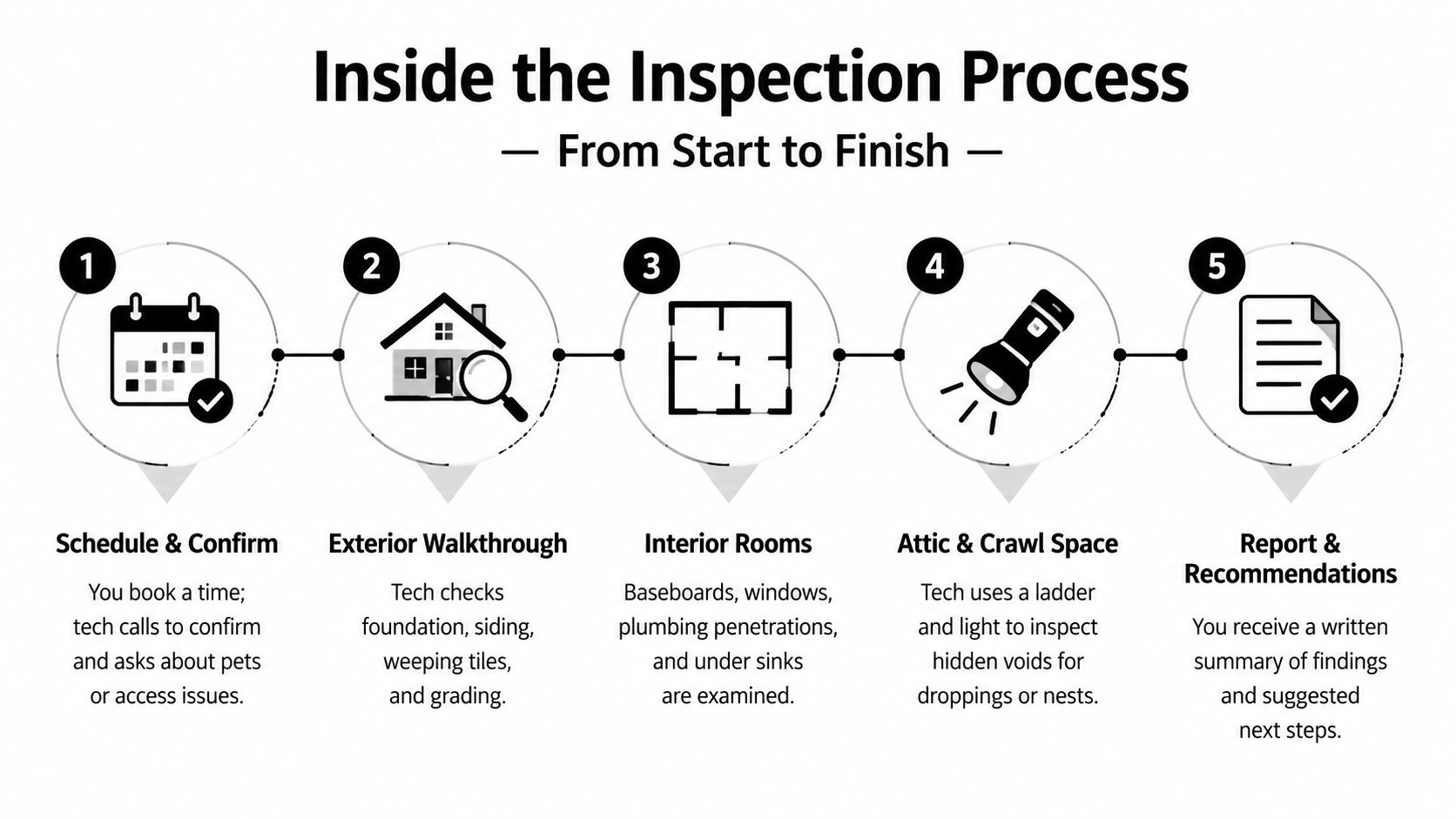
The exterior walkthrough
The technician begins outside, following the foundation and looking for cracks, gaps, mud tubes, damaged siding, and conditions that let pests reach the structure. Grading and drainage matter because water that collects near the foundation can support moisture-loving pests and weaken wood or other building materials.
The inspection may continue up to soffits, fascia, eaves, window trim, and roofline transitions. The technician looks for openings, nests, droppings, damaged wood, and signs that insects or rodents are using the exterior as a route indoors.
The interior examination
Inside, the inspector works through accessible rooms and high-risk areas. Basements and crawl spaces receive attention for moisture, wood-to-soil contact, and evidence along foundation walls. Attics may reveal rodent droppings, nesting material, or wasp activity around rafters and roof penetrations.
Kitchens and bathrooms deserve close attention because plumbing leaks and gaps around pipes can create pest-friendly conditions. Window and door frames may be gently probed where permitted to identify soft or damaged wood. The purpose isn't to tear into the house. It's to document visible evidence and accessible conditions that warrant action.
The written report
The final deliverable should be a written report that identifies findings, access limitations, photographs or diagrams when appropriate, conducive conditions, and recommended next steps. For wood-destroying organisms, North Carolina guidance calls for reporting visible evidence and conditions conducive to subterranean termites, including findings from accessible areas and sounding of accessible structural members.
The inspection visit typically takes 45 to 90 minutes, depending on property size and accessibility. That range is practical rather than universal. A cluttered basement, locked outbuilding, or inaccessible crawl space can limit the inspection and should be recorded in the report.
Practical rule: A report is only as useful as its access notes. If an area couldn't be inspected, treat that limitation as part of the decision, not as proof that the area is pest-free.
Common Findings in Northwest Indiana Homes
Crown Point properties don't all face the same pest problem. A newer home with dry drainage and sealed utility penetrations presents a different risk profile from an older property with damp framing, dense landscaping, and an exposed crawl space. Seasonal weather also changes what inspectors are most likely to find.
| Finding | Peak Season | Risk Level | Typical Location |
|---|---|---|---|
| Subterranean termite evidence | Spring and summer | High when active or associated with damage | Foundation walls, crawl spaces, slab edges |
| Carpenter ant evidence | Warmer, wetter periods | Moderate to high when wood is damp or damaged | Window frames, roof leaks, wall-adjacent wood |
| Rodent activity | Fall and winter | Moderate to high because of contamination and damage | Attics, basements, behind appliances |
| Moisture and conducive conditions | After wet weather and during damp seasons | Moderate, but can increase future pest risk | Crawl spaces, foundation perimeter, plumbing areas |
| Occasional invaders | Seasonal transitions | Usually low, but activity can be disruptive | Exterior cracks, wall voids, window areas |
Wood-destroying organisms
Subterranean termite evidence may appear as mud tubes along foundation walls or in crawl spaces. The presence of a tube or damaged wood doesn't tell you the complete extent of the problem, which is why the inspector documents location, accessibility, visible evidence, and conditions that could support continued activity.
The scale of termite risk explains why buyers and property managers use inspections as preventive risk management. Industry materials cited in the verified background estimate that roughly 600,000 U.S. homes suffer termite damage each year. That figure is available through the United Kingdom government pest control resource, which also provides general background on pest control.
Carpenter ants often point inspectors toward moisture-damaged wood rather than dry, isolated surfaces. Window frames, roof leaks, plumbing areas, and softened exterior trim deserve attention because correcting the moisture source is part of controlling the risk.
Rodents and seasonal invaders
As temperatures fall, mice and rats seek shelter, food, and protected nesting areas. Droppings in an attic, basement, cabinet void, or behind an appliance can show where activity is occurring, while gnaw marks and nesting material may identify entry routes.
Boxelder bugs and stink bugs commonly use exterior cracks and gaps during seasonal transitions. They may not present the same structural risk as wood-destroying organisms, but a recurring indoor presence still signals that sealing and exterior maintenance deserve attention.
The right response depends on the finding. Active evidence calls for prompt professional evaluation. A moisture problem or entry gap calls for correction before it supports a larger infestation.
Who Needs a Pest Inspection and When
The right inspection timing depends on who controls the property and what decision is approaching. A buyer is checking risk before closing. A landlord is protecting units between occupants. A business owner is keeping pests out of customer and work areas. A current homeowner needs answers when conditions change.
| Owner Type | Primary Motivation | Recommended Frequency | Key Stakes |
|---|---|---|---|
| Homebuyer | Identify pest evidence before purchase or closing | One-time inspection tied to the transaction | Financing, negotiation, repairs, and risk acceptance |
| Landlord or property manager | Protect units and identify problems between occupants | Recurring inspections based on property risk | Tenant comfort, maintenance planning, and property condition |
| Business owner | Reduce pest risk in customer and work areas | Ongoing schedule suited to the facility | Sanitation, operations, reputation, and compliance needs |
| Current homeowner | Investigate signs or changing conditions | When signs or risk conditions appear | Property damage, household comfort, and timely treatment |
Homebuyers need clarity before closing
Schedule an inspection early enough to review the report before deadlines for contingencies, repairs, or closing. A lender, purchase agreement, or local transaction practice may require a Wood Destroying Insect report. Buyers should read the stated scope, identify inaccessible areas, and confirm who will handle follow-up work.
As noted in the coverage scope section, the Wood Destroying Insect report documents risk rather than guaranteeing freedom from pests. Treat findings as information for a property-specific decision, not as permission to ignore moisture, entry points, or previous treatment history.
A property with a termite history may sell for 10% to 20% less than a comparable property without that history, according to the verified industry material summarized above. The figure does not replace an evaluation of the home, but it shows why documented pest history can affect negotiations, financing discussions, and buyer confidence.
For transaction-focused guidance, review this pest inspection for a home purchase before scheduling an inspection with The Green Advantage.
Landlords and businesses need repeatable oversight
Landlords should arrange inspections during turnover and after reports of scratching, droppings, ants, or other activity. Accessible areas can be checked, conditions documented, and leaks or entry points corrected before the next occupant moves in. In Northwest Indiana, seasonal temperature changes can push rodents and overwintering insects toward protected indoor spaces, so timing inspections around recurring pressure helps.
Commercial facilities need a plan suited to their use. Restaurants, healthcare settings, retail spaces, warehouses, and offices have different access points and operating concerns. An inspection should identify where pests could enter, feed, nest, or move between areas while keeping disruption to the business low.
Current homeowners should call after repeated activity, movement in walls or ceilings, moisture damage, or droppings. Do not wait for a visible swarm or extensive damage. Give The Green Advantage the specific location, timing, and changes you have noticed so the technician can determine whether the next step is monitoring, repairs, or treatment.
How to Prepare Your Property for an Inspection
Preparation helps the technician see more and helps your report say more. The goal isn't to make the home look perfect. It's to remove avoidable access barriers and point out the evidence that a quick visit might otherwise miss.
Use this preparation checklist
- Clear attic and crawl space entrances: Move boxes, stored items, and furniture away from hatches and access doors.
- Open the basement perimeter: Pull boxes and shelving away from foundation walls so the technician can look for tubes, droppings, moisture, and entry points.
- Make sinks and cabinets accessible: Remove cleaning supplies and stored items from beneath kitchen and bathroom sinks.
- Trim exterior vegetation: Cut back shrubs, vines, and dense growth touching the foundation or siding.
- Ensure exterior areas are accessible: Provide access to gates, garages, sheds, and backyard sections included in the inspection.
- Secure pets: Keep dogs, cats, and other pets in a safe room or away from the work area.
- Gather records: Have prior pest reports, treatment records, warranties, and seller disclosures available.
- Mark known concerns: Show the inspector the pantry trail, damp crawl space, attic noise, or other recurring sign.
Pet food, bird feeders, standing water, clogged gutters, and leaking plumbing can all help explain why pests are present. Don't hide those conditions. Tell the technician what changed, when you noticed it, and whether anyone has already applied a product.
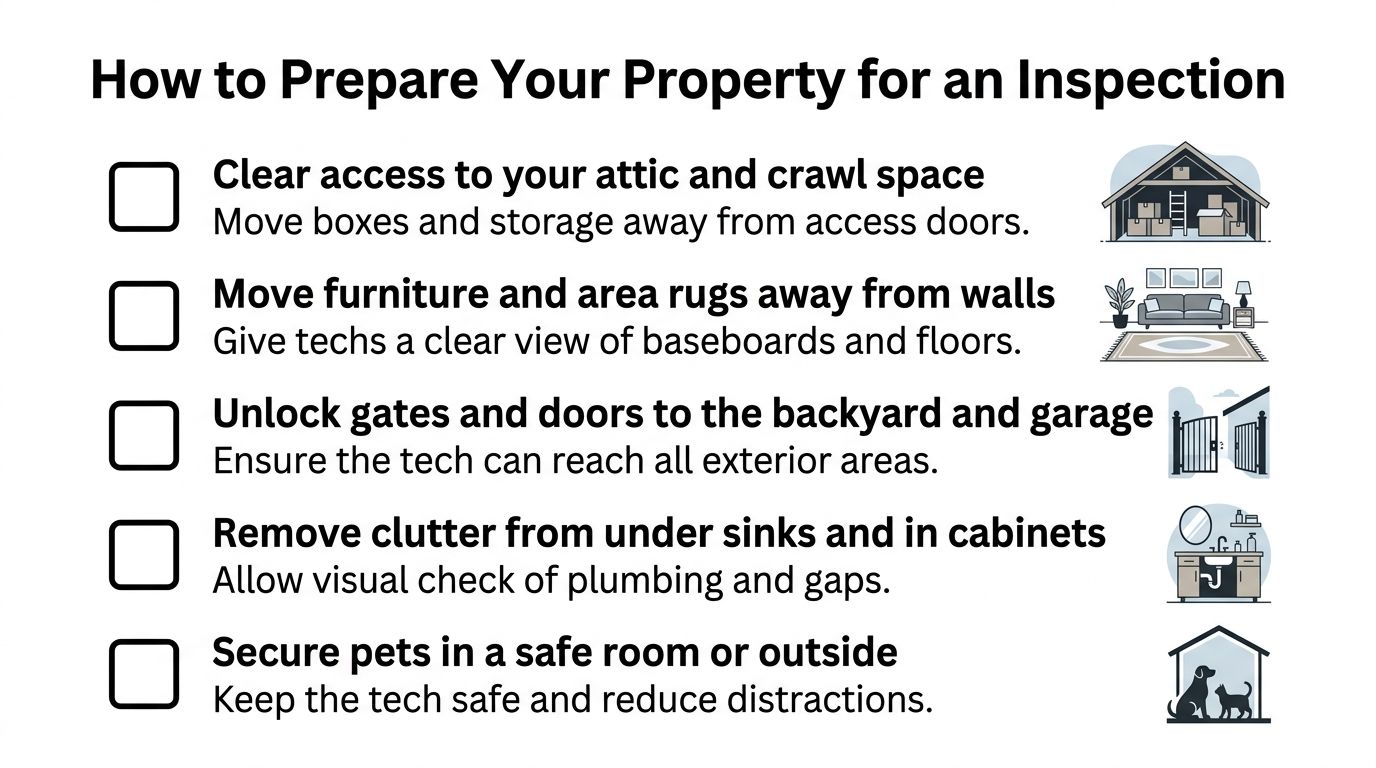
For a printable preparation reference, use this pest control inspection checklist before your appointment.
The short video below also shows the kind of access and observation that can make a property inspection more productive.
Next Steps After Your Inspection Report
A report becomes useful when you turn each finding into a decision. Sort the results into active evidence, older or historical damage, and conditions that invite future activity. This distinction matters because each category calls for a different response.
Confirmed termites, rodents, or other live pest activity should be addressed promptly. Older damage may require monitoring, repairs, or another evaluation to determine whether the pest remains active. Conditions such as poor drainage, wood-to-soil contact, plumbing leaks, or unsealed entry points need correction even if no live pests were found.
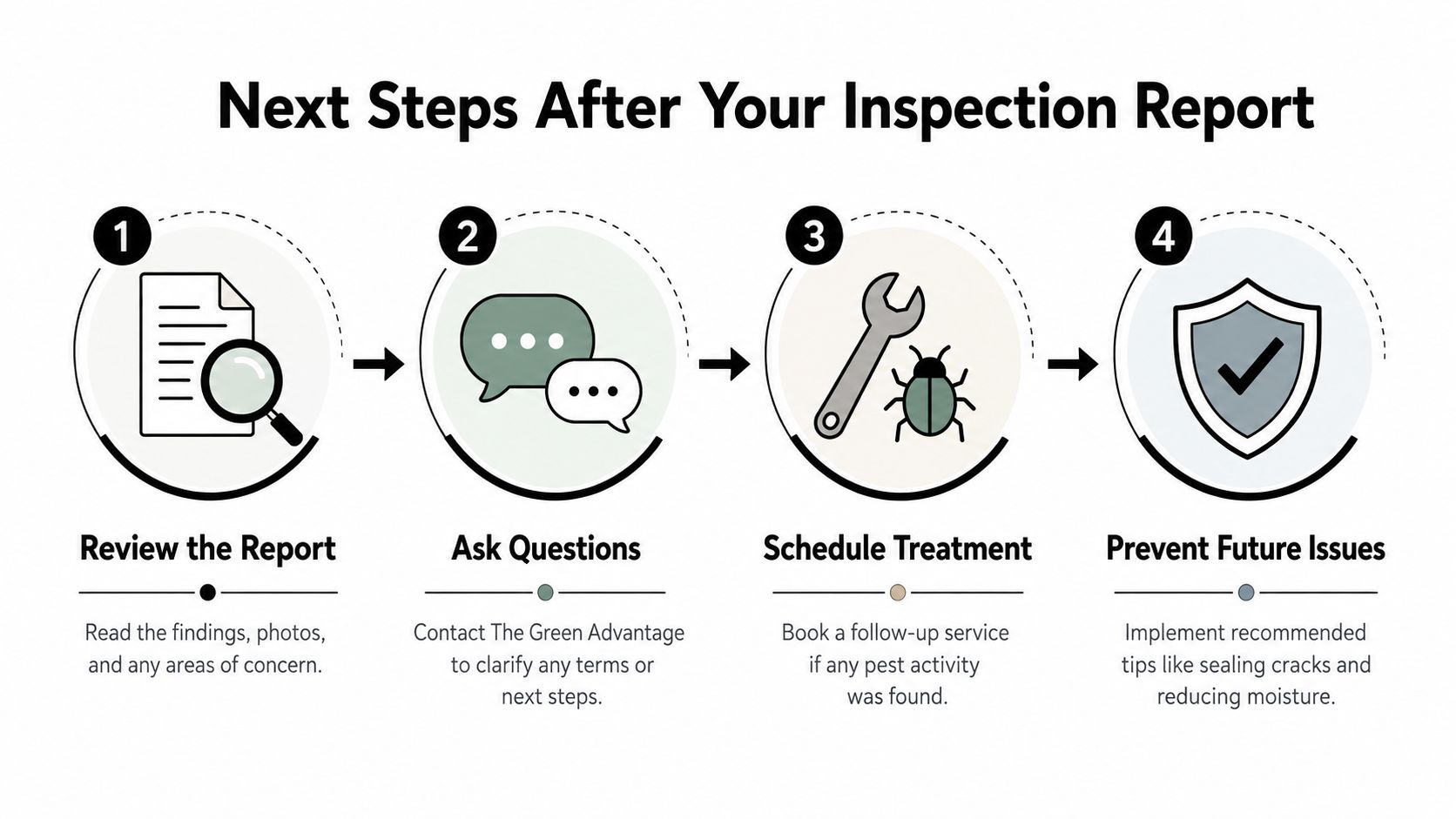
Use the report to make a decision
If you are buying a home, send the report to your real estate professional and lender when required. Ask which findings could affect closing, which repairs to request, and whether treatment or a seller credit fits the documented conditions. Base negotiations on locations, visible evidence, access limitations, and professional recommendations, not a general fear of pests.
Homeowners and landlords should assign a clear action to every recommendation:
- Treat active pests: Schedule termite control, ant control, rodent control, wasp removal, or another service suited to the identified pest.
- Correct moisture sources: Repair leaks, improve drainage, clear gutters, and address damp crawl space conditions.
- Close entry points: Seal cracks, gaps around pipes, damaged screens, and openings near doors or roofline transitions.
- Monitor unresolved areas: Recheck locations with limited access or older damage that requires observation.
- Choose prevention when appropriate: Use seasonal preventative treatments when recurring pest pressure or property conditions support ongoing service.
The Green Advantage can review the findings and provide eco-friendly treatment options, prevention plans designed for Crown Point properties, and follow-up support for homes and businesses. Services include residential and commercial pest control, termite control, mosquito control, rodent exclusion, spider control, and seasonal pest treatments. Recommendations should match the property conditions and evidence documented in the report.
Use the report promptly: treat active pests, correct the condition supporting them, and schedule follow-up when risk remains.
Visit The Green Advantage to schedule an inspection or request a quote for professional pest control near you.