
You let the dog out, the kids run through the grass, and later that evening someone finds a tick crawling on a sock or attached near a pet's ear. That's usually the moment flea and tick control stops feeling like a minor nuisance and starts feeling personal.
In Crown Point and across Northwest Indiana, that reaction is completely reasonable. Fleas and ticks aren't just annoying. They create stress inside the home, put pets at risk, and turn your yard into a place you stop trusting. What makes these problems harder is that they rarely stay in one place. A pet brings something in from the yard. Eggs end up in carpet and furniture. Wildlife activity along fence lines keeps pressure on the property.
The good news is that this problem is manageable when you treat it as a system instead of a single product purchase. That means looking at the pet, the home, and the yard together. It also means knowing when a do-it-yourself plan is enough and when it's time to bring in professional help.
Flea and tick prevention has also become a major part of routine pet care, not an occasional add-on. The flea and tick control medication market is estimated at USD 7.7 billion in 2025 and projected to reach USD 15.3 billion by 2035, with 7.1% CAGR over that period, while chewable products account for 38.0% of the 2025 segment and over-the-counter products are projected to hold 61.0% of revenue in 2025, according to Future Market Insights flea and tick market projections. That scale reflects how many households now treat prevention as part of normal care.
Your Guide to Flea and Tick Control in Northwest Indiana
A lot of homeowners start in the same place. The pet scratches more than usual. You notice small black specks on bedding. Or you find a tick after a walk around the yard and suddenly every room in the house feels suspect.
That concern makes sense in Northwest Indiana because our mix of lawns, tree lines, shaded beds, pet traffic, and changing weather creates steady opportunities for fleas and ticks to move between outdoor and indoor spaces. In Crown Point, the issue often builds gradually. Pets rest in the same sunny patch near the patio. Rabbits or other wildlife pass through the edges of the yard. Then the problem shows up all at once inside the home.
What local homeowners usually miss
The issue isn't ignored, but efforts often tackle the wrong part first. This means buying a treatment for the dog, spraying a room, or mowing the grass lower. Each step can help, but none of them solves the whole problem by itself.
Practical rule: If you only treat the pet, the house and yard can keep feeding the infestation. If you only treat the house, the pet can bring it right back in.
For dog owners who want a grooming-focused perspective on early warning signs and basic prevention habits, this roundup of expert dog parasite control advice is a useful companion to the property side of the problem.
What a calm response looks like
Start by assuming there are three possible zones of activity:
- On the pet where fleas feed and ticks attach
- Inside the home where eggs, larvae, and hiding adults can persist
- Outside in the yard especially in shaded, protected areas
That framework keeps you from wasting time on one-off fixes. It also makes your next steps clearer. First, confirm what you're seeing. Then choose a treatment plan that matches the actual scale of the problem. If the activity is light and recent, some homeowners can get ahead of it. If it's established, recurring, or spread across multiple rooms and animals, the smart move is often faster professional intervention.
How to Identify a Flea or Tick Problem
The fastest way to lose time is guessing. Flea and tick control works better when you confirm what pest you're dealing with, where it's active, and whether it's limited to one animal or already established in the home.
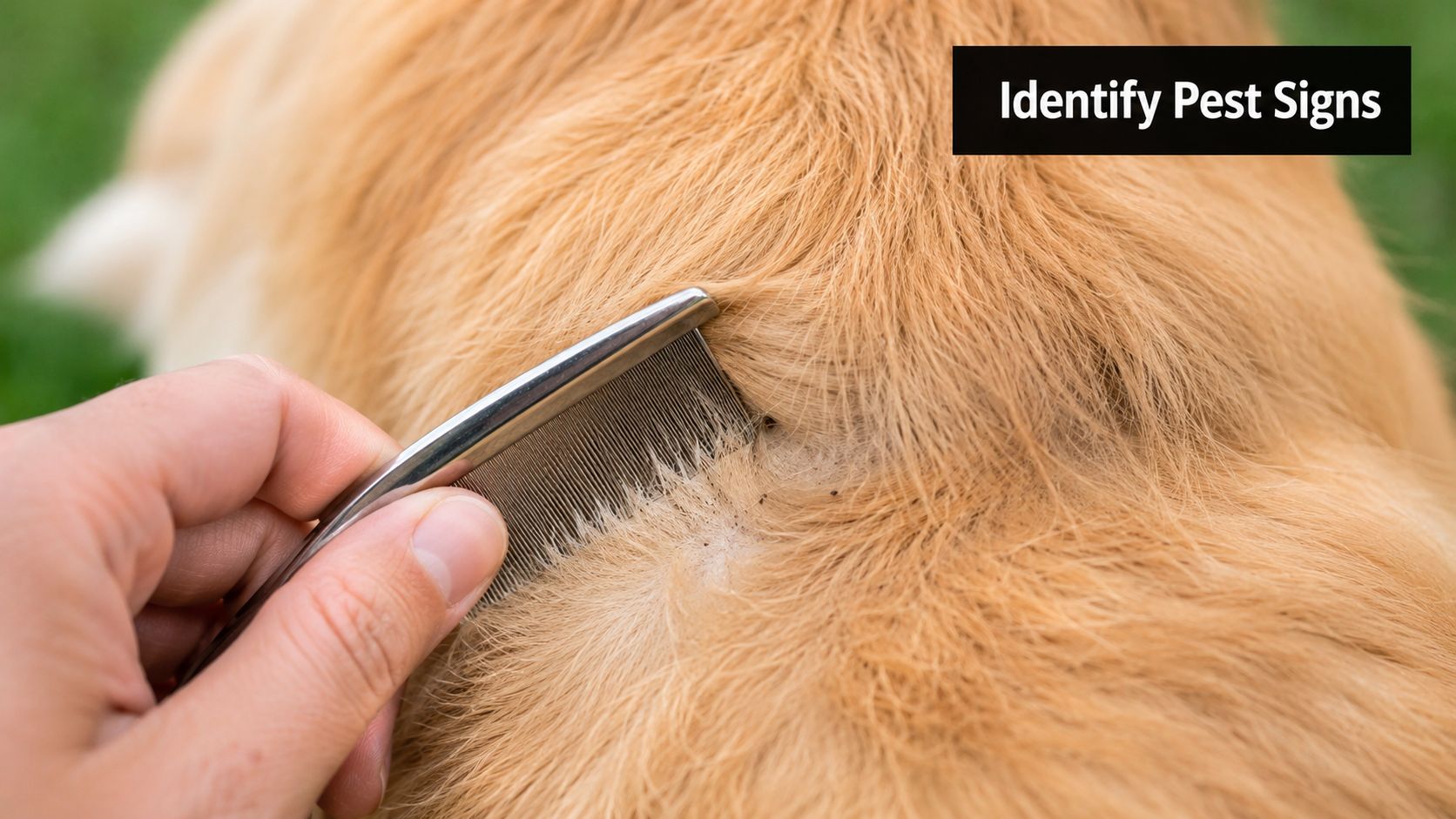
How to check for fleas
Fleas are small, fast, and easy to miss when you're only doing a quick visual scan. A fine-toothed flea comb is more reliable than your eyes alone. Comb slowly around the base of the tail, lower back, belly, and neck. After each pass, tap the comb onto a damp white paper towel or tissue.
If you see pepper-like black specks that smear reddish-brown when wet, that's often flea dirt. Check pet bedding too. Flea dirt on bedding, along with scratching and restlessness, is a strong sign that fleas are active somewhere in the home environment.
A simple home check can also help. Put on white socks and walk slowly through carpeted rooms and areas where pets spend time. Then inspect the socks closely. Fleas are easier to spot against a light background.
For a deeper look at why a few visible fleas can turn into a much larger indoor issue, review the flea reproduction cycle. Understanding that life cycle helps explain why surface-level treatment often disappoints.
How to check for ticks
Ticks create a different kind of problem. They may be crawling on a pet or person, or they may already be attached. On pets, check behind the ears, around the collar line, under the front legs, between the toes, around the eyelids, and near the groin and tail base. On people, pay attention to warm, hidden areas such as the scalp, armpits, waistband, and behind the knees.
An attached tick usually feels like a small bump fixed in place. A crawling tick moves across the coat or skin and hasn't embedded yet. Both matter, because if you find one tick, there may be more in the yard or along the route the pet uses most often.
Signs the problem is larger than it first appears
A mild problem often stays close to pet resting spots. A larger one starts showing up in multiple places.
Look for patterns like these:
- Repeated scratching after a recent walk or yard time
- Specks on bedding that return soon after washing
- Ticks in more than one area of the yard or on more than one family member
- Activity in rooms without carpet which can signal a broader indoor spread
This short visual can help homeowners understand where fleas hide and how pet checks should be done:
If you're seeing activity on pets and in the house at the same time, don't treat those as separate problems. They're connected.
A Coordinated Plan for Your Pets Home and Yard
Flea and tick control breaks down when homeowners treat one area and ignore the others. Veterinary and EPA guidance emphasizes that fleas and ticks can be controlled with a mix of oral, topical, and collar products on pets, while home control may also require vacuuming and laundering bedding, as described by VCA's flea and tick prevention guidance. The key is coordination.
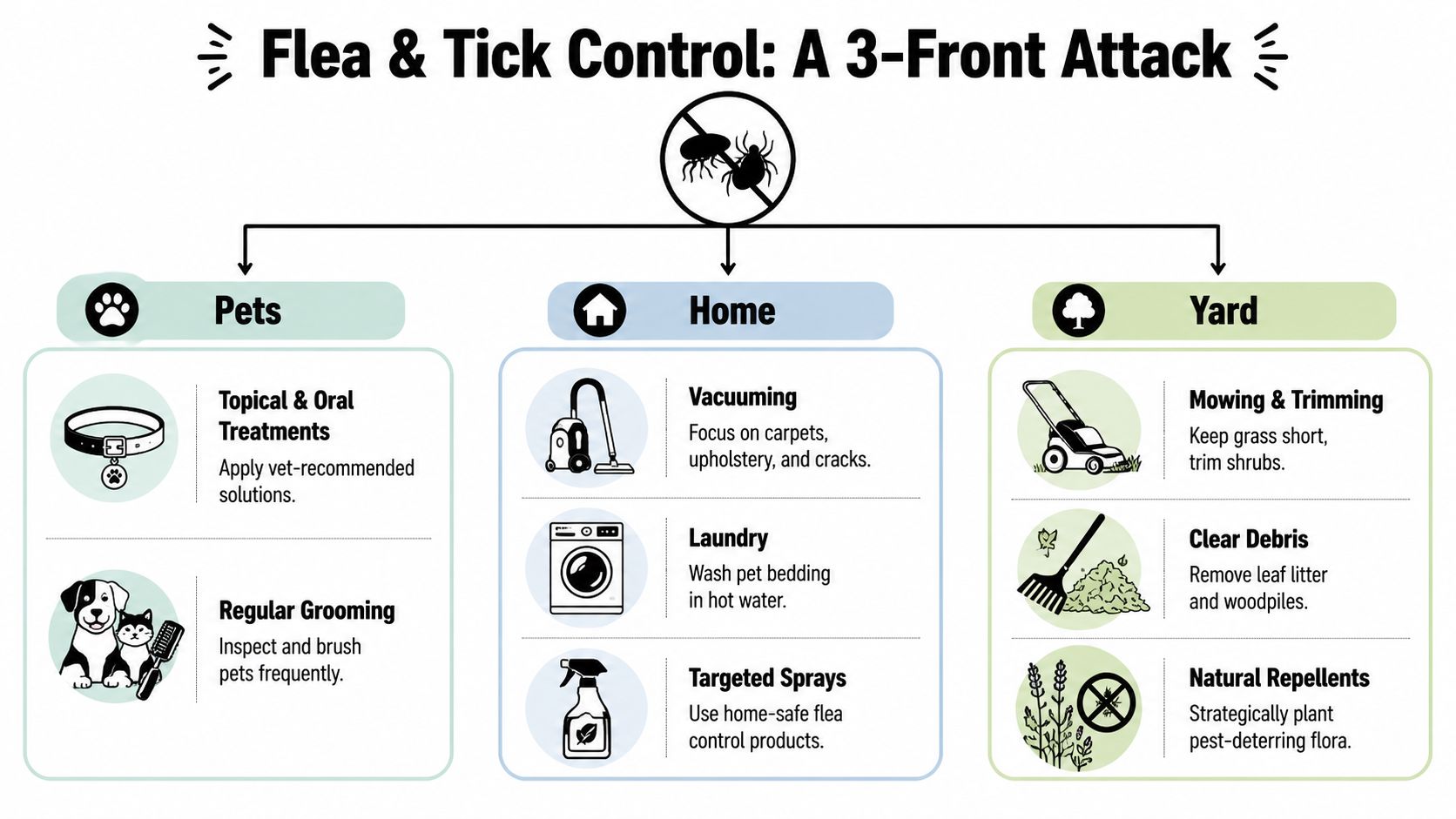
Start with the pets
If even one pet remains untreated, the rest of your work can unravel quickly. Every dog and cat in the home needs to be part of the plan, even if only one seems affected.
Product type matters. Some households do well with topicals. Others prefer collars or chewables because they're easier to keep consistent. The right choice depends on the pet's age, size, health history, and habits. Cornell notes that pet owners should follow species and weight labels carefully, avoid using dog products on cats, and pay attention to special situations such as seizure-prone dogs, puppies, kittens, and pregnant or nursing pets in its flea and tick prevention guidance from Cornell.
Safety matters as much as effectiveness. A product that works well for one pet may be the wrong choice for another.
If your dog swims often, gets frequent baths, or spends long periods outdoors, that should shape the product decision too. Convenience affects follow-through, and follow-through is a large part of success.
Clean the home like you mean it
For indoor flea work, half-measures usually just stir things up. You need repeated, thorough cleaning targeted to the places where pets rest and where vibrations trigger flea activity.
Focus on:
- Vacuuming floors and edges especially along baseboards, under furniture, and where carpet meets wall
- Washing pet bedding and washable fabrics including throw blankets and removable covers
- Checking upholstered furniture where pets nap or climb
- Reducing clutter in rooms where pests have more places to hide
Homeowners often ask whether one deep cleaning is enough. It usually isn't. Vacuuming and laundering need to continue alongside pet treatment, not as a one-day project.
Make the yard less inviting
Outside, fleas and ticks prefer protection. They build up in shade, under shrubs, along fence lines, around wood piles, and in pet resting zones where moisture and host activity overlap.
A practical yard checklist looks like this:
| Area | What to do | Why it helps |
|---|---|---|
| Shaded lawn edges | Mow and trim regularly | Reduces cover and humidity |
| Landscape beds | Remove leaf litter and debris | Limits protected harborage |
| Pet hangout areas | Keep surfaces cleaner and drier | Lowers repeated exposure |
| Fence lines and brushy spots | Open them up where possible | Makes the area less tick-friendly |
If you're evaluating outdoor surfaces and pet-use zones, even design choices can support long-term management. Homeowners comparing low-maintenance options sometimes look at Modern Yard Landscapes' Austin turf solutions for ideas on creating cleaner pet areas that are easier to inspect and maintain.
For a property-focused look at outdoor treatment options, review this guide to yard flea and tick control.
Timing is what ties it together
Treating pets on Saturday, vacuuming once on Wednesday, and thinking about the yard next weekend is how infestations linger. The pet, home, and yard have to be addressed as one coordinated effort. That's the missing piece in most DIY attempts.
One practical option for homeowners in Crown Point, IN who need property-level help is The Green Advantage, which provides pest inspection and treatment support for residential and commercial sites in Northwest Indiana.
Proactive Prevention for Year-Round Peace of Mind
Reactive flea and tick control feels expensive because it always starts when you're already behind. Prevention is different. It turns the property into a less friendly place for pests and reduces the odds that one hitchhiking flea or one tick from the yard becomes a household problem.
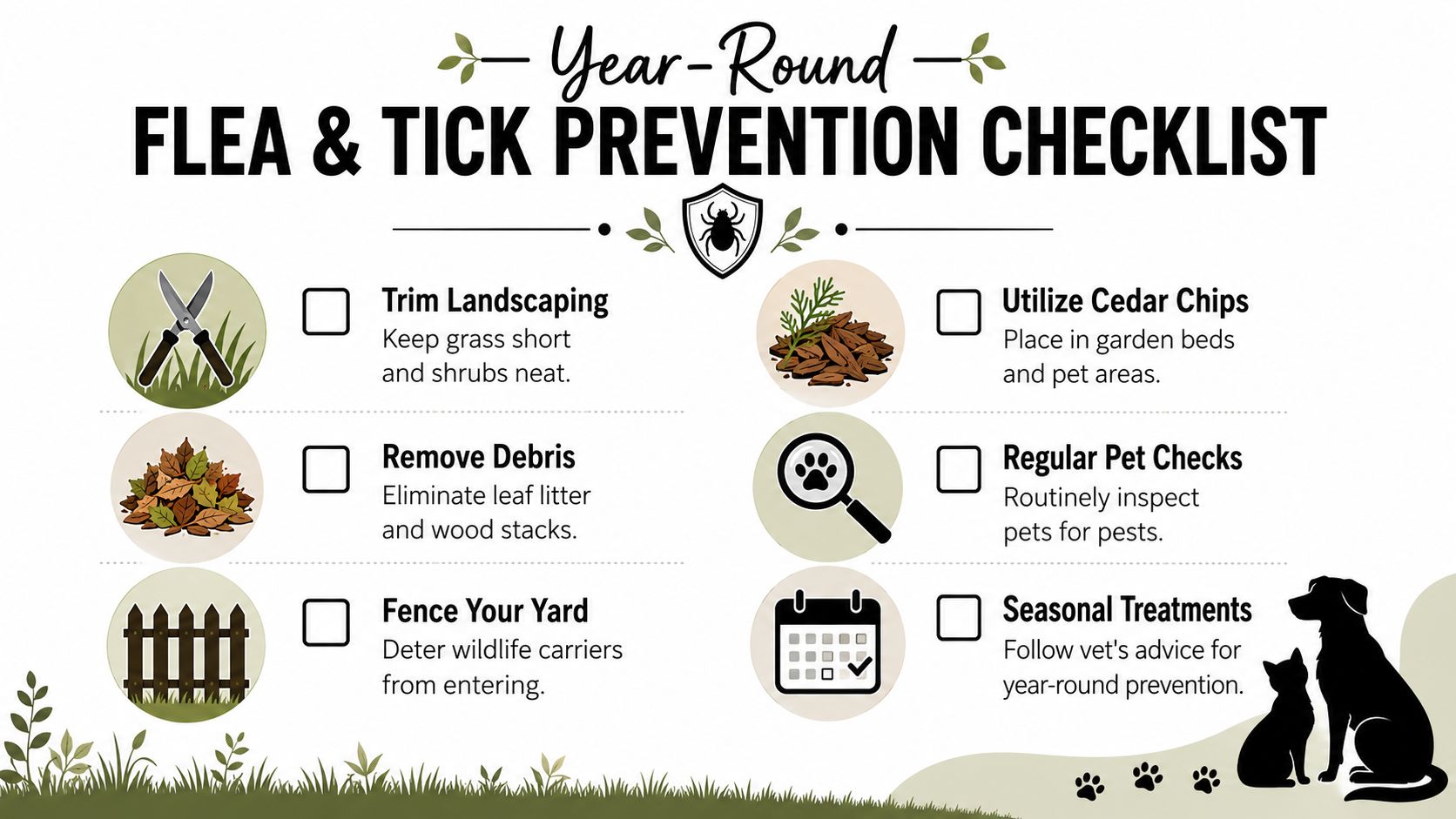
Why consistency beats catch-up treatment
A major reason prevention works better is simple. People are more consistent with protection that's easier to maintain. In a study of over 30,000 dogs, those prescribed 12-week fluralaner were more likely to achieve 7 to 12 months of protection, with 15.7% reaching that range compared with shorter-acting monthly products, according to this real-world adherence study on canine flea and tick protection.
That doesn't mean every pet needs the same format. It means regimen design matters. If a product schedule is hard for the household to maintain, gaps happen. Gaps are where reinfestation starts.
CAPC also notes in the same source that residual insecticides such as selamectin, fipronil, and imidacloprid can kill many newly acquired fleas within 24 hours, but that short window still matters because fleas may feed and transmit pathogens before they die. That's one more reason year-round coverage makes more sense than sporadic treatment.
Property habits that lower pressure
You can't seal your yard off from every pest, but you can make it less comfortable for them.
Use habits like these:
- Trim grass and shrubs so shaded, damp hiding areas don't build up near walking paths
- Remove leaf litter and stacked debris especially where pets cut through the yard
- Discourage wildlife traffic by reducing sheltered edge zones and food attractants
- Check pets after outdoor time with extra attention to ears, paws, legs, and collar line
- Keep screens and entry points in good repair so hitchhiking pests are easier to catch before they spread indoors
The households that struggle most are usually not the ones who missed one step. They're the ones who stop prevention as soon as the immediate problem seems gone.
For cat owners sorting through prevention options, this overview of effective cat flea products is a helpful supplement to your veterinarian's guidance, especially when product form and tolerance are part of the decision.
Think of prevention as home maintenance
In Northwest Indiana, homeowners already plan for weeds, mosquitoes, rodents, and seasonal ants. Fleas and ticks belong in that same category. Not because every property has a major issue, but because waiting until you see activity usually means the pests have had time to settle in.
A good prevention mindset also pairs well with other services homeowners often need, including mosquito control, rodent control, and general residential pest control. The common thread is reducing conditions that let pests stay established around the home.
Why DIY Flea Control Fails and When to Call an Exterminator
DIY flea and tick control often fails for a frustrating reason. The product may do something, but the homeowner expects it to do everything.
The timeline is longer than most people expect
The CDC lays out a four-step IPM sequence for flea control: sanitize by washing bedding and vacuuming floors, walls, and carpet edges; treat every pet in the home; start home treatment at the same time as pet treatment with outdoor applications focused on shaded and pet-resting areas; and schedule two or more follow-up treatments within 5 to 10 days because some flea life stages are insecticide-resistant. The CDC also states that moderate to severe infestations can take months to control, as explained in the agency's guidance for getting rid of fleas.
That's the point many people miss. They treat once, see fewer bites, and assume they're done. Then hidden life stages keep developing, and the home gets repopulated.
Common DIY failure points
The pattern is usually one of these:
- Pet-only treatment while carpets, bedding, and furniture still support the life cycle
- Indoor-only treatment while pets continue picking up pests outside
- One-time application with no follow-up on the interval the infestation requires
- Inconsistent dosing because the household forgets, delays, or changes products midstream
- Unsafe product use such as applying the wrong species-specific product to the wrong animal
Professional help isn't about giving up. It's about recognizing when biology and logistics are working against the do-it-yourself plan.
When it's time to bring in a professional
Some trigger points are clear. Call for help when:
| Situation | Why it matters |
|---|---|
| You still see fleas or ticks after repeated treatment attempts | The problem may be larger or more widespread than expected |
| Multiple pets or multiple rooms are involved | Control becomes harder to coordinate without a full plan |
| The infestation keeps returning | There may be an untreated outdoor or structural source |
| You have high-risk pets or young children in the home | Product selection and application need tighter safety control |
| You're preparing a rental, sale, or turnover | Fast, property-wide resolution matters more than trial and error |
In Crown Point, IN, this is especially relevant for busy families, landlords, and homeowners dealing with repeat yard pressure. Professional pest control near me searches usually happen after people have already spent time and money on partial fixes. In many cases, an earlier inspection would have shortened the whole process.
The Green Advantage Solution in Crown Point
When homeowners call for flea and tick control in Crown Point, they usually want three things. They want the problem identified correctly, they want a treatment plan that makes sense for their property, and they want to know the process will be handled safely.
That professional process should feel straightforward. It starts with an inspection that looks at where the activity is happening. On the pet side, that often means confirming whether the issue appears limited to hitchhiking exposure or whether there are signs of active indoor establishment. On the property side, it means checking shaded yard zones, pet paths, bedding areas, floor transitions, and furniture where fleas tend to build up.
What homeowners should expect from service
A useful service visit should give you clear answers, not vague reassurance.
You should expect:
- A property-specific assessment based on indoor and outdoor conditions
- A treatment recommendation that matches the scale of the issue
- Straightforward safety instructions for people and pets
- A follow-up plan when the infestation level calls for one
- Clear communication about what you should do between visits
That matters because flea and tick problems aren't solved by product alone. They're solved by matching the right treatment to the right places on the right schedule.
Why local experience matters in Northwest Indiana
Homes in Crown Point and nearby Northwest Indiana communities don't all face the same pest pressure. Some properties back up to wooded edges. Some have heavy pet traffic and shaded landscaping. Some are dealing with recurring issues after trying to manage it alone.
A local exterminator in Crown Point, IN should understand those patterns and be able to tell the difference between a light, recent issue and a more established infestation that needs broader action. That same practical approach usually helps with related concerns too, whether a homeowner is also dealing with mosquitoes in the yard, rodents around the structure, or general residential pest control needs.
If you're tired of second-guessing what's crawling in the house or what's hiding in the yard, it's time to get a real plan in place.
If you need flea and tick control, residential pest control, or an experienced exterminator in Crown Point, IN, contact The Green Advantage to schedule an inspection or request a quote. They'll help you sort out whether the issue is on the pet, in the home, in the yard, or all three, so you can get back to feeling comfortable in your home again.