
You spot one flea on the dog bed, then another near the baseboard, and your mind goes straight to the same question most Crown Point homeowners ask. Is this a small issue, or is the house already infested?
That concern is justified. Fleas rarely stay confined to the pet. Once they get indoors, the core of the problem often moves into carpet, upholstery, cracks along flooring, and the places your pet rests every day. By the time you notice a bite or see an adult flea jump, the flea reproduction cycle may already be active in the home.
For homeowners searching for pest control in Crown Point, IN, this is one of the most misunderstood infestations we deal with. People treat the dog or cat, expect the issue to end, and then feel blindsided when fleas keep showing up. The reason is simple. The pet is only part of the story. The environment is where the cycle keeps going.
Your Local Guide to Pest Control in Crown Point IN
You find a few bites around your ankles, wash the dog bed, treat the pet, and expect the problem to settle down. Then fleas show up again near the couch, along the baseboard, or in the room where your pet naps most often. In Crown Point homes, that pattern usually points to a house infestation that has already moved beyond the animal.
Many of our flea calls start there. Homeowners have already done the sensible first steps, and the issue keeps coming back because the pet was only one part of the cycle.

In Northwest Indiana, fleas behave like other pests in one important way. They settle where conditions help them survive. Ants key in on food and moisture. Mosquitoes build around standing water. Fleas arrive on a pet, then spread into carpet, upholstery, floor gaps, pet bedding, and shaded resting areas where eggs and young fleas are protected from normal cleaning.
Why homeowners underestimate fleas
The biggest mistake is judging the infestation by what is visible on the pet. Adult fleas are the part you notice first, but the home environment is what keeps the problem active. Eggs do not stay put on the animal, and the next stages develop in the places your family uses every day.
That is why pet-only treatment so often disappoints. I see it all the time in flea jobs around Crown Point. The dog may be treated correctly, but untreated carpet edges, furniture seams, and sleeping areas keep feeding the cycle back into the home.
For a clearer homeowner overview of how fleas spread through indoor spaces, see this guide on understanding fleas in the home environment.
Most flea problems in homes are environmental problems with a pet component.
That is why homeowners in Crown Point often need a wider answer than a pet shampoo, collar, or store spray. Effective flea control has to cover the places fleas hide, develop, and reappear. The practical goal is simple. Protect the pet, treat the house, and break the cycle where it is living.
Understanding the Four Stages of the Flea Life Cycle
A common Crown Point call goes like this. The dog was treated, the bites seemed to slow down for a few days, then fleas showed up again in the living room. That happens because the flea reproduction cycle is mostly an environmental problem inside the home, not just a problem on the pet.
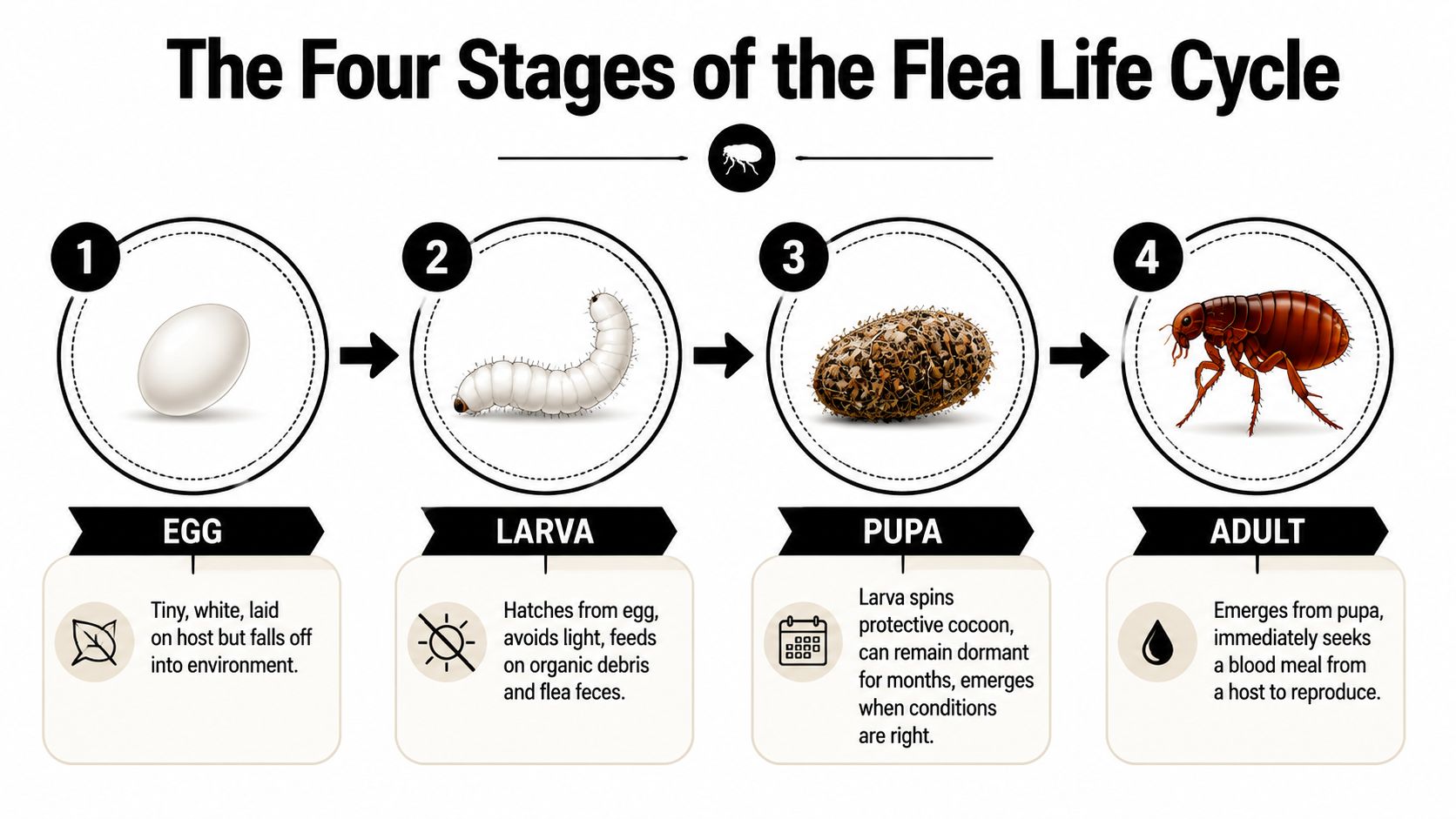
The cycle has four stages. Egg, larva, pupa, and adult. Each stage behaves differently, and each one can settle into areas that regular cleaning misses.
Egg
Adult fleas feed on the pet, but the eggs do not stay there. They fall off into carpet, upholstery, pet bedding, floor gaps, and along baseboards. Homeowners usually expect the pet bed to be the main trouble spot. In real infestations, I often find the wider spread matters more because eggs drop anywhere the pet rests, scratches, or passes through.
Larva
After hatching, larvae move down into protected areas and avoid light. They do well in the kind of quiet debris that collects under furniture, along room edges, and deep in carpet fibers. A house can look clean and still support flea development if those sheltered areas are left alone.
If you want a clearer picture of how those hidden areas support an infestation, this guide on understanding fleas in the home is a useful companion.
A short video can also make the cycle easier to picture in real terms.
Pupa
The pupal stage is where many flea jobs drag out. The developing flea is enclosed in a cocoon, which helps it resist normal household disruption and makes quick fixes unreliable. Homeowners often assume the treatment failed when new fleas appear later. In many cases, immature fleas were already protected in the environment and emerged after the first round of activity dropped.
Adult
Adults are the stage people notice because they bite and move. They are also the stage that causes many homeowners to underestimate the size of the problem. By the time adults are easy to spot, younger stages are usually already spread through the house.
That is why pet-only products so often disappoint, even good ones. Pet treatment still matters, and homeowners comparing 2026 top-rated flea products should absolutely protect the animal, but that step alone does not clear eggs, larvae, and pupae from the rooms where the cycle is continuing.
Why timing matters in Indiana homes
Indoor conditions keep this cycle active longer than many families expect. Eggs may hatch in as little as 1 to 10 days, according to CDC information on flea life cycles. Under favorable conditions, the full cycle can move fast enough that a small problem turns into a house-wide infestation before the source is obvious.
The practical lesson is simple. If treatment only targets the fleas you can see, the next wave is already developing in carpet, fabrics, cracks, and low-traffic edges. Professional flea control works better because it addresses the pet and the indoor environment at the same time.
How to Spot Fleas Beyond the Bite
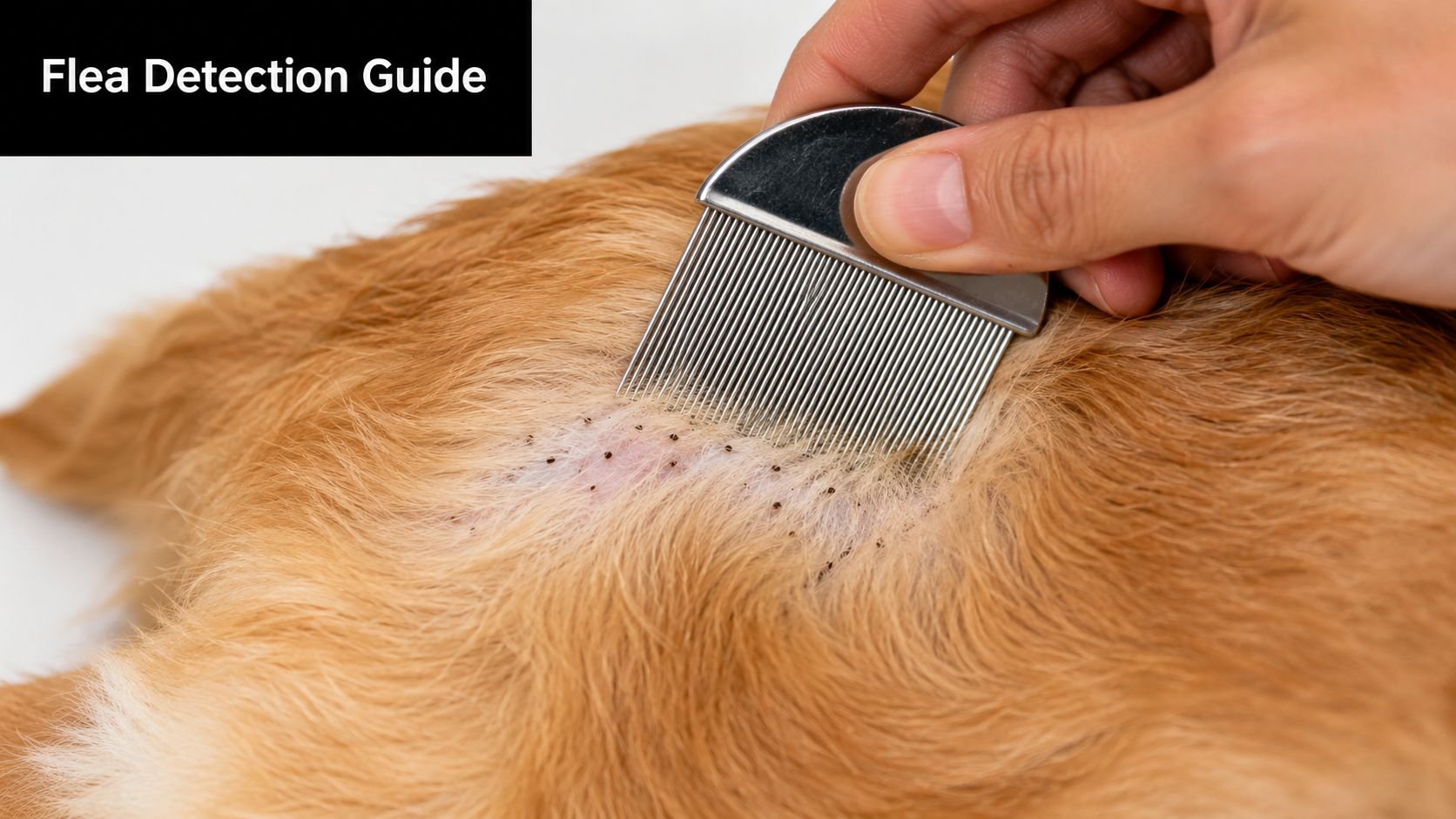
A flea problem usually shows up before you ever catch a perfect view of an adult flea. Homeowners often notice restless pets, ankle bites, or small dark specks on bedding first. The best inspections start low to the ground and close to where the pet spends time.
What to check in the home
Use a bright flashlight and slow down. Fleas hide better than people expect.
- Pet resting areas look for dark specks, loose debris, and activity around the edges of bedding.
- Carpet transitions check where carpet meets baseboards, under furniture, and around room corners.
- Furniture and soft surfaces inspect cushions, chair seams, throw blankets, and the spots your pet visits daily.
- Floor cracks and low-traffic edges eggs and young stages often settle where movement is lower and cleaning is inconsistent.
What to check on the pet
A metal flea comb is one of the simplest tools you can use. Comb around the neck, lower back, and base of the tail. Those areas often reveal activity first.
Female fleas begin laying eggs within 24 to 48 hours of their first blood meal, and because the eggs are not adhesive, they fall from the host into bedding, carpets, and floor cracks, seeding an environmental infestation, as described in this veterinary explainer on the flea life cycle.
That one detail changes how you look at the house. If the eggs don't stick, they don't stay on the pet. They spread wherever the pet lives.
Helpful support for pet owners
If you're sorting through treatment options on the animal side, this roundup of 2026 top-rated flea products can help you compare common approaches and talk through choices with your veterinarian.
If you keep finding signs in the same few rooms, those rooms usually aren't random. They're where the flea reproduction cycle is being fed.
The Limits of DIY Flea Control
Most do-it-yourself flea efforts fail for one reason. They only attack what the homeowner can see.
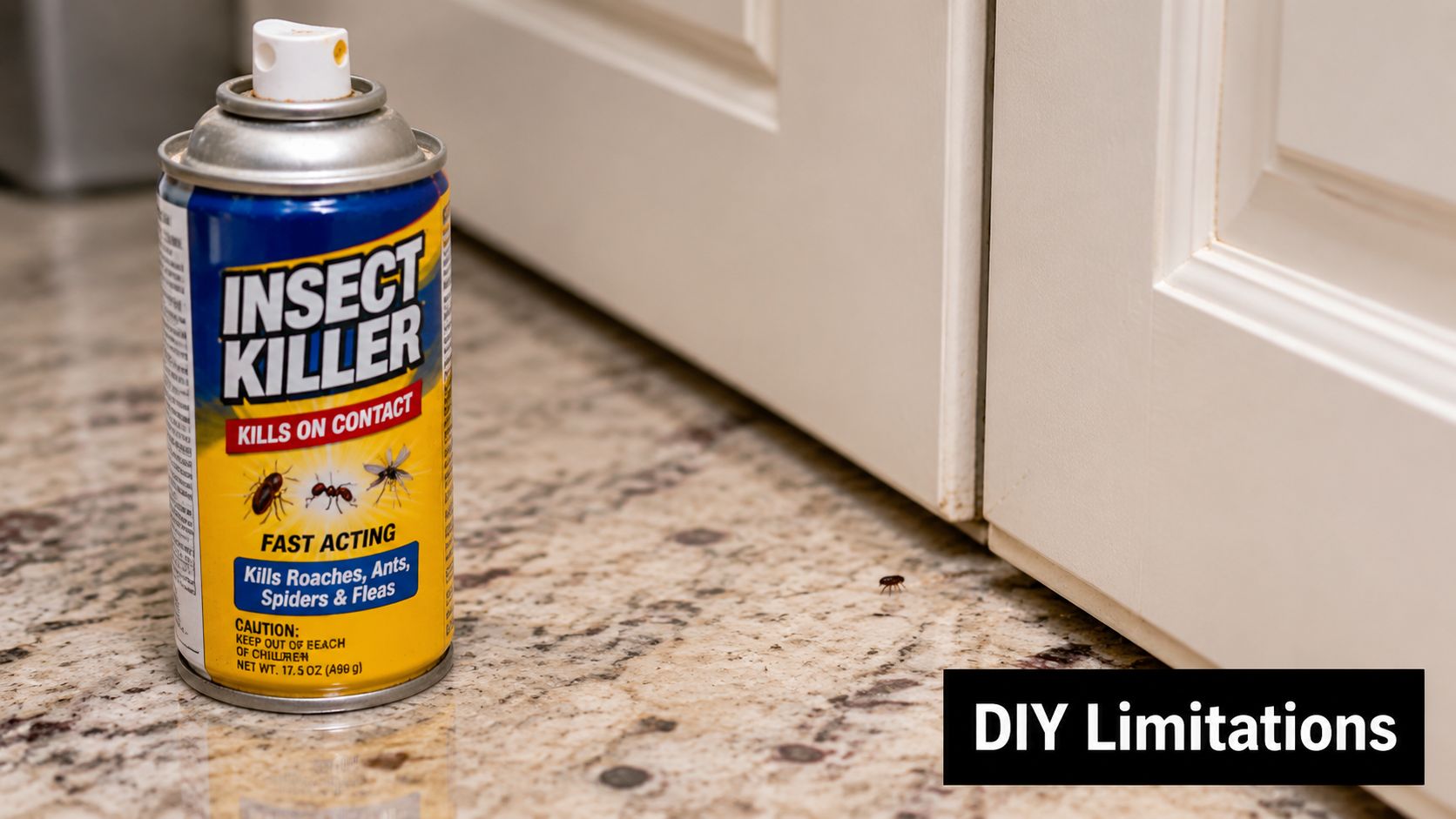
A shampoo may help on the pet. A store spray may knock down exposed adults. A fogger may make the house smell treated. None of that guarantees you've broken the infestation. Fleas don't need to stay out in the open to keep the problem alive.
What homeowners usually try first
The pattern is familiar in Crown Point homes.
- Pet-only products These can reduce fleas on the animal but leave the house untouched.
- Shelf sprays These often reach exposed surfaces better than deep carpet backing, cracks, or upholstered hiding areas.
- Foggers and bombs These can miss protected zones where developing fleas remain sheltered.
- One-time cleanup Vacuuming once and washing one round of bedding usually isn't enough if stages remain elsewhere.
Why the infestation keeps coming back
Flea infestations can persist in carpets, furniture, and yards even after pets are treated. The pupal stage is particularly resilient and can survive household sprays, often waiting for vibrations from a host to trigger emergence, which is why integrated household and on-animal treatment is critical, according to North Carolina State Extension guidance on flea biology and control.
That's the part many over-the-counter plans don't solve. Homeowners think the product failed, but often the product did not reach the core pressure points of the infestation.
A strong vacuum is still part of smart cleanup, especially on carpet and along pet routes. If you're comparing machines for heavy fur and debris pickup, this piece with expert advice on dog hair carpet vacuums is a useful place to start.
What DIY gets right and what it misses
DIY work isn't useless. Washing linens, vacuuming regularly, and treating pets through a veterinarian all matter. The problem is that flea control isn't a one-surface, one-product job.
Household flea problems usually persist because the treatment plan is incomplete, not because the homeowner failed to try.
If the environment isn't addressed thoroughly, the flea reproduction cycle keeps resetting. That's why homeowners who search pest control near me or exterminator near me after weeks of frustration often aren't overreacting. They're realizing the infestation has moved past a simple home remedy stage.
Our Integrated Approach to Flea Extermination
Professional flea control works best when it treats the home like a system, not a single hotspot. The pet matters. The flooring matters. The upholstered furniture matters. The yard and entry points can matter too. When you connect those pieces, you stop chasing fleas and start breaking the cycle.
What an integrated treatment targets
A complete plan aims at every stage of activity, including the stages you won't easily spot during a casual cleanup. That means combining on-animal treatment guidance from the pet side with indoor treatment of resting areas, carpeted spaces, cracks, and furniture zones that support development.
It also means paying attention to outdoor pressure when relevant. If fleas are building near shaded pet areas, kennels, or heavily used yard spaces, the outside can keep contributing to the inside problem. Homeowners dealing with that crossover often benefit from reviewing yard-focused flea and tick control options.
The Four Stages of the Flea Life Cycle at a Glance
| Stage | Typical Timeline | Where to Find It | Key Characteristic |
|---|---|---|---|
| Egg | 1 to 10 days to hatch under typical favorable conditions cited by CDC | Pet bedding, carpets, floor cracks, upholstery | Falls off the host into the environment |
| Larva | Can develop toward cocoon stage in 5 to 20 days under favorable conditions cited by CDC | Dark, protected areas with debris | Avoids light and stays hidden |
| Pupa | Variable, can persist and wait for the right trigger | Carpets, furniture, cracks, protected sites | Protected by a resilient cocoon |
| Adult | Begins feeding and mating soon after emerging | On pets, sometimes noticed on floors or ankles | Visible stage, but only a small share of the total infestation |
Why professional treatment is different
The biggest difference is coordination. Good flea work isn't just chemical application. It's inspection, placement, timing, follow-up, and realistic prep by the homeowner. Professionals also use tools and treatment strategies designed for hidden harborage areas and the broader environmental problem.
In practice, that often includes insect growth regulators, which are used to interfere with development so immature fleas don't continue maturing through the home. Homeowners rarely build a full plan around that concept on their own, yet it's a major reason some treatments last and others don't.
Soft surfaces matter more than many people think. If your pet's bedding is worn out or hard to clean thoroughly, replacing it can support control efforts. For homeowners comparing cleaner, easier-care sleep surfaces, this ultimate guide to dog beds is a practical reference.
Where results come from
The best outcomes usually come from consistent work across several fronts:
- Inspection and mapping Identify where the pet spends time and where activity is most likely concentrated.
- Targeted interior treatment Focus on carpets, furniture edges, pet zones, and hidden cracks instead of treating rooms as if all surfaces matter equally.
- Pet coordination Align the home plan with veterinarian guidance so the animal isn't left as an untreated bridge.
- Follow-up habits Continue vacuuming, laundering, and monitoring rather than assuming one visit or one product solves everything overnight.
That integrated approach protects comfort, reduces repeat frustration, and gives families a clearer path back to normal life. It's the same mindset that makes commercial pest control and residential pest control effective across other infestations too. Solve the conditions that allow pests to keep cycling.
What to Expect from Your Crown Point Pest Control Partner
When homeowners in Northwest Indiana call for flea help, they shouldn't have to guess what happens next. A good service process is clear from the start. You explain what you're seeing, the office helps with scheduling and next steps, and the technician arrives focused on inspection before treatment.
That inspection matters. Fleas aren't managed well with a generic, one-size-fits-all spray. The technician needs to understand where pets rest, which rooms show the most activity, what flooring types are involved, and whether the problem appears limited indoors or is being supported by the yard or another environmental source.
What a professional visit should feel like
You should expect straightforward answers, honest expectations, and practical preparation guidance.
- Clear communication No vague promises. You should know what is being treated and why.
- Site-specific recommendations A home with pets, carpet, and upholstered furniture needs a different approach than a mostly hard-surface property.
- Useful follow-up instructions Vacuuming, laundry, pet coordination, and monitoring all support the treatment plan.
- Broader prevention awareness Many homeowners who solve one pest issue also want help with spider control, rodent control, wasp removal, mosquito control, or general preventative pest treatments.
For people searching pest control in Crown Point, IN, trust comes from reliability more than hype. You want a local partner who understands Northwest Indiana homes, shows up prepared, and treats flea control like a real environmental problem instead of a quick surface fix.
If fleas are showing up in your home, the smartest next step is a professional inspection that looks beyond the pet and addresses the full environment. The Green Advantage helps homeowners in Crown Point and nearby Northwest Indiana communities identify the source, build a practical treatment plan, and restore comfort with clear communication from first call to follow-up. If you need a quote or want to schedule service, reach out and get the problem moving in the right direction.