
For homeowners in Crown Point, IN, and across Northwest Indiana, discovering pests can be a significant source of stress. The thought of rodents scurrying through walls, damaging property, and posing health risks is unsettling. You work hard to maintain a safe and comfortable home for your family, and a potential infestation threatens that peace of mind.
Many homeowners first notice small, seemingly minor issues but are unsure if they indicate a larger problem. Is that scratching sound just the house settling? Are those droppings from something else? This guide is designed to provide clear, reassuring information to help you identify the definitive signs of a rodent infestation. By understanding what to look for, you can take prompt action to protect your property and health.
The Green Advantage, your local pest control partner in Crown Point, is here to help you understand these warning signs. We provide reliable, eco-friendly solutions to protect your home. We understand the unique pest pressures in our community and are committed to restoring your home's safety and your peace of mind with professional, effective pest control services. In this article, you will learn to spot the key indicators of rodent activity, from physical evidence like droppings and gnaw marks to more subtle clues such as strange odors and noises, empowering you to make informed decisions for your home.
1. Rodent Droppings (Feces)
Finding rodent droppings is often the first and most certain sign of an infestation in your Crown Point home. Because mice and rats are nocturnal and reclusive, you are far more likely to see the evidence they leave behind than the pests themselves. These droppings are a direct confirmation that rodents are actively moving through your space, feeding, and establishing territory. Their presence is one of the most reliable signs of a rodent infestation.

The appearance of droppings can tell you a lot. Fresh feces are dark and moist, while older droppings are dry, gray, and will crumble when touched. Their size and shape can also help identify the pest. Mouse droppings are small (3-6mm) with pointed ends, resembling dark grains of rice. Rat droppings are larger (12-18mm) and often have blunter, spindle-like ends. Finding a high concentration of droppings indicates a heavily trafficked area or nesting site.
Health Risks and DIY Checks
Rodent droppings are not just unsightly; they pose significant health risks. They can carry and spread dangerous pathogens and viruses, including Hantavirus, which can become airborne when droppings are disturbed.
Safety First: Never sweep or vacuum rodent droppings. This action can aerosolize virus particles, making them easy to inhale. Always use proper protective gear and wet-cleaning methods for safe removal.
Immediate DIY Inspection Tips:
- Safety Gear: Before inspecting, put on disposable gloves and an N95-rated mask.
- Safe Cleanup: Gently spray the droppings and surrounding area with a disinfectant or a 1:10 bleach-water solution. Let it sit for five minutes before wiping with a paper towel. Place the contaminated materials in a sealed plastic bag for disposal.
- Document and Map: Take photos of the droppings and note their locations. This information is invaluable for a professional pest control technician from The Green Advantage.
- Check Hotspots: Use a flashlight to inspect common rodent hiding places: under sinks, behind appliances, in the back of cabinets and pantries, and along the walls in your attic and basement.
The presence and quantity of droppings provide a critical baseline for assessing the infestation's scale. If you find droppings in your Northwest Indiana property, it’s a clear signal that you need a professional exterminator. Contact The Green Advantage for a professional inspection to confirm the species, locate entry points, and develop a safe and effective treatment plan.
2. Gnaw Marks, Rub Marks and Damaged Materials
Beyond what they leave behind, rodents cause direct physical damage that serves as another definitive sign of an infestation in your Crown Point home. Rodents have teeth that grow continuously, forcing them to gnaw on various materials to keep them filed down. At the same time, the oils and dirt from their fur leave dark, greasy smudges, known as rub marks, along the paths they travel repeatedly. These gnaw and rub marks are clear evidence of active rodent pathways and potential nesting areas.
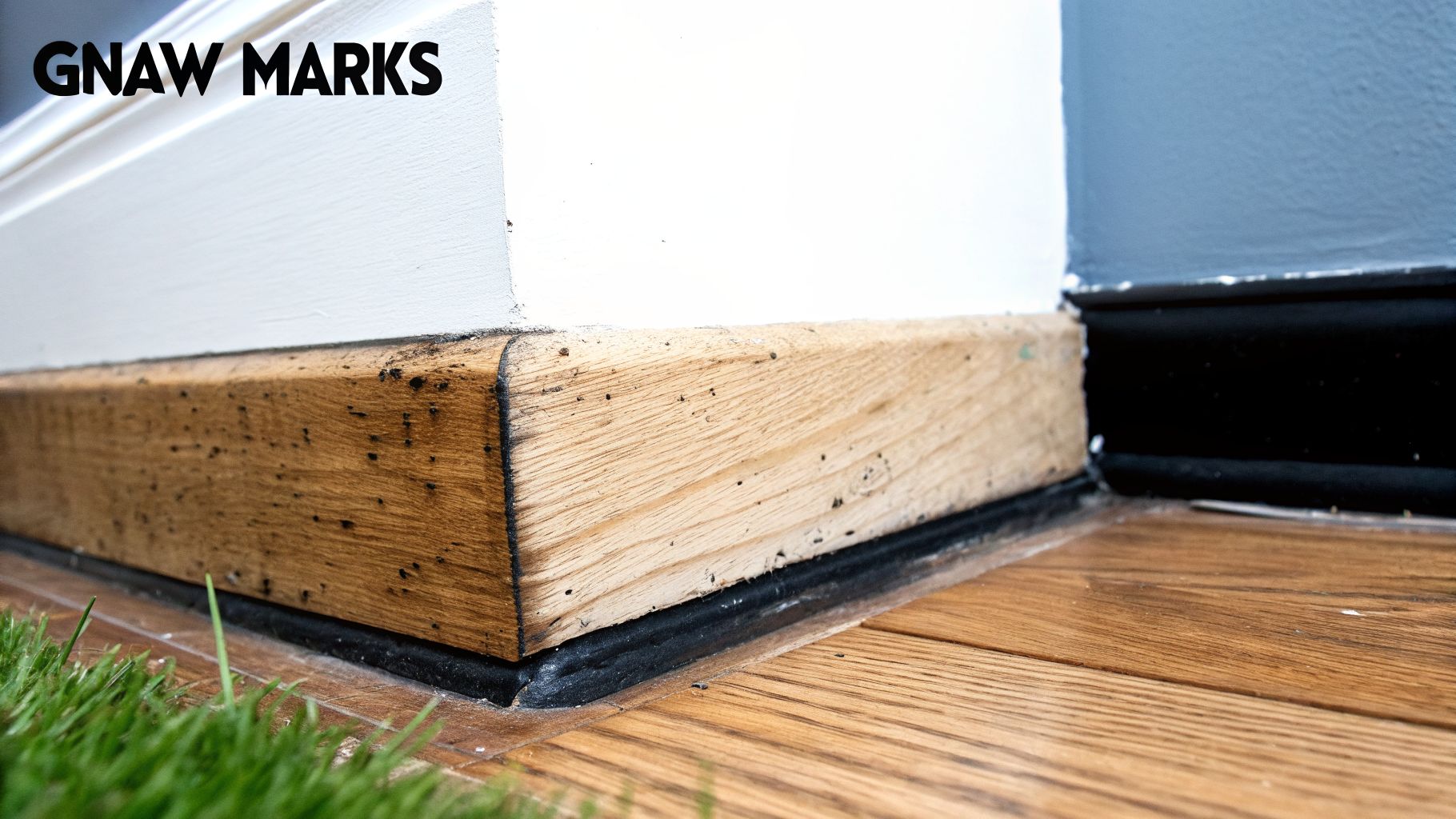
The type and location of the damage can reveal a great deal. Small, scratch-like gnaw marks on food packaging or drywall often point to mice. Larger, more significant gouges in wood, plastic, or even soft metals are characteristic of rats. Rub marks typically appear along baseboards, wall corners, and beams in attics or crawl spaces. Noticing these trails can help trace rodent movement from entry points to their food and water sources, guiding our residential pest control efforts.
Property Damage and Fire Hazards
This physical damage is more than just a cosmetic issue; it can lead to serious structural and safety problems. Gnawed electrical wiring is a major fire hazard, while damage to wooden joists, studs, and pipes can compromise your home’s integrity and lead to costly repairs.
Crucial Insight: The patterns of gnaw and rub marks act like a roadmap. They reveal the "rodent highways" inside your walls, attic, and behind appliances, providing essential clues for effective trap placement and exclusion efforts.
Immediate DIY Inspection Tips:
- Safety First: When inspecting areas with potential electrical damage, like attics or behind walls, turn off the circuit breaker for that area to prevent accidental shock.
- Trace the Trails: Use a bright flashlight held at a low angle against walls and baseboards. This technique makes faint rub marks and small scratches much easier to spot.
- Check Structural Elements: Carefully inspect wooden beams in the attic and basement, door frames, and the corners of walls for signs of gnawing. Pay special attention to the garage perimeter, a common entry area.
- Document Your Findings: Photograph any damage you find. Noting the location, date, and extent of the damage provides critical information for a pest control professional.
Finding gnaw marks or rub stains on your Northwest Indiana property is a strong indicator that rodents are not just passing through—they are making themselves at home. This is a clear sign that you need an expert exterminator in Crown Point, IN. Contact The Green Advantage for a thorough inspection to assess the damage, identify the rodent species, and create a targeted plan to eliminate the threat and prevent future entry.
3. Musky Odor and Urine Stains
Beyond visual cues, your sense of smell can be a powerful tool for detecting a hidden rodent issue in your Crown Point property. A persistent, musty odor similar to ammonia is a strong indicator of an active infestation. This distinct smell is caused by the accumulation of rodent urine and becomes more concentrated in enclosed, poorly ventilated spaces like attics, basements, wall voids, and behind large appliances. This foul odor is one of the more unpleasant signs of a rodent infestation.
The intensity of the odor often correlates with the size and duration of the infestation. A faint smell might point to a recent arrival, while a strong, overpowering scent suggests a large, established population. You may also see visible urine stains or pillars—mounds of grease, dirt, and urine that build up over time. To confirm the presence of these unsanitary clues, you might consider using a black light to reveal hidden urine stains, which fluoresce under UV light and can indicate active rodent pathways.
Health Risks and DIY Checks
Like feces, rodent urine can transmit diseases and contaminate surfaces. The ammonia smell itself can irritate the respiratory system, especially for individuals with asthma or allergies. Porous materials like insulation, drywall, and wood can become saturated, making odor removal difficult without professional intervention.
Trust Your Nose: A persistent, unexplained musky odor is not normal. It warrants immediate investigation to identify the source and prevent further contamination and health risks.
Immediate DIY Inspection Tips:
- Pinpoint the Source: Try to determine where the odor is strongest. Is it constant or does it come and go with your HVAC system? This helps narrow down the search area.
- Use UV Light: If you have a black light, perform a check in dark areas where you suspect activity. Focus on corners, along baseboards, and in pantries or closets.
- Check Enclosed Spaces: Carefully inspect your attic, basement, and crawl spaces. Look for stained insulation or wood and note any areas where the smell is particularly potent.
- Document Your Findings: Note the location and intensity of odors and any visible stains. This information is critical for guiding a professional technician to the heart of the problem.
If you detect a suspicious odor in your Northwest Indiana home, don’t ignore it. This sign indicates a potentially serious infestation that requires professional attention. Contact The Green Advantage to schedule an inspection. Our experts can use tools like UV lights to map contamination and develop a targeted plan to eliminate the pests and the odors they leave behind.
4. Nesting Materials and Debris
Discovering a rodent nest is a definitive sign of an active and established infestation in your Crown Point property. Rodents are resourceful builders, constructing nests in warm, secluded, and undisturbed areas close to food and water sources. Finding these nests confirms that rodents are not just passing through; they are breeding and creating a permanent home base, making it a critical sign of a rodent infestation that requires prompt attention.
Rodents will use any soft, shreddable material they can find. Common components include shredded paper, cardboard, fabric, cotton, and pieces of insulation. They often build their nests in hidden locations like wall voids, attics, basements, crawl spaces, and even inside stored boxes or unused furniture. The presence of multiple nests or a particularly large, well-established one often points to a significant, multi-generational population.
Property Risks and DIY Checks
Beyond being a clear indicator of pests, rodent nests present direct property risks. Rodents frequently shred building insulation to line their nests, which compromises your home's energy efficiency. Their habit of chewing on materials also extends to electrical wiring, creating a serious fire hazard.
Important Note: Never disturb a suspected nest with your bare hands. Nests are often contaminated with urine, feces, and parasites like fleas and mites, which can transmit diseases. An agitated rodent may also become aggressive to defend its young.
Immediate DIY Inspection Tips:
- Protective Gear: Always wear disposable gloves and an N95-rated mask before inspecting areas where nests are likely to be found.
- Locate Nests: Use a bright flashlight to carefully examine quiet, cluttered areas. Check behind appliances, inside cabinets, within attic insulation, and in storage boxes in your garage or basement.
- Photograph Evidence: Before attempting any cleanup, take clear pictures of the nest and its location. This documentation helps a professional pest technician understand the extent of the problem.
- Safe Removal (if necessary): For safe disposal, lightly spray the nest with a disinfectant. After letting it sit, carefully place the entire nest and surrounding debris into a sealable plastic bag. Dispose of it in a secure outdoor trash bin.
- Eliminate Materials: Reduce potential nesting supplies by storing fabrics, paper goods, and other soft materials in sealed, rodent-proof plastic containers rather than cardboard boxes.
Finding a nest means the infestation is progressing. If you discover rodent nesting materials on your Northwest Indiana property, it’s a clear sign you need professional help. Contact The Green Advantage for a thorough inspection to locate all nesting sites, assess the population size, and implement a targeted treatment plan to protect your home.
5. Scurrying Sounds and Nocturnal Activity
Because rodents are nocturnal, you are far more likely to hear them than see them, especially during the quiet hours of the night. Unexplained sounds like scratching, scurrying, squeaking, or gnawing coming from within your walls, attic, or ceiling are strong signs of rodent infestation. These noises indicate that rodents are actively moving through hidden voids in your home, building nests, or searching for food. For many Crown Point homeowners, these unsettling sounds are the first alert that a pest problem has developed.
The type of sound can offer clues about the activity. Light, quick scurrying might suggest mice are running along established pathways, while more pronounced scratching or gnawing could indicate a rat is trying to enlarge an opening or access a food source. Hearing these sounds consistently at night confirms the presence of these nocturnal pests. This is a clear indicator that it’s time to look for residential or commercial pest control services near you.
Property Damage Risks and DIY Checks
These noises are not just a nuisance; they often signal ongoing damage to your home’s structure. Rodents gnaw on wood, drywall, and insulation to create pathways and nests. More alarmingly, they are known to chew on electrical wiring, which creates a serious fire hazard.
Key Insight: Don't dismiss persistent nighttime noises as your house "settling." Consistent scratching or scurrying is a classic sign of a rodent infestation that requires immediate attention before significant damage occurs.
Immediate DIY Inspection Tips:
- Listen and Document: When you hear noises, carefully note the time, location (e.g., attic, specific wall, under the floor), and type of sound (scratching, squeaking, gnawing). This log is extremely useful for a pest control professional.
- Track Frequency: Is the sound a one-time occurrence or a nightly event? Regular activity almost certainly points to an active infestation.
- Focus Inspection: Use the location of the sounds to guide a visual inspection. If you hear noises in the kitchen, use a flashlight to check behind the stove and refrigerator and inside lower cabinets.
- Do Not Disturb: Avoid banging on walls to scare the rodents. This will only cause them to scatter temporarily and will not solve the underlying problem.
If you hear persistent sounds, it's a clear signal to act, even without other visible evidence. A professional can use these auditory clues to pinpoint activity and find entry points. To better understand how to handle these pests, you can learn more about getting rid of mice in your house. For a definitive assessment in your Northwest Indiana property, contact The Green Advantage. Our experts will conduct a thorough inspection to identify the source of the noise and create a targeted plan for removal.
6. Entry Points and Structural Gaps
A rodent infestation doesn't begin inside your home; it starts with a security breach from the outside. Rodents are opportunistic intruders, and even the smallest crack or opening can serve as a welcome mat. Identifying these entry points is not only a key sign of a potential infestation but is also the most critical step in long-term prevention. Sealing these gaps is the only way to stop the cycle of rodents getting into your Crown Point property.
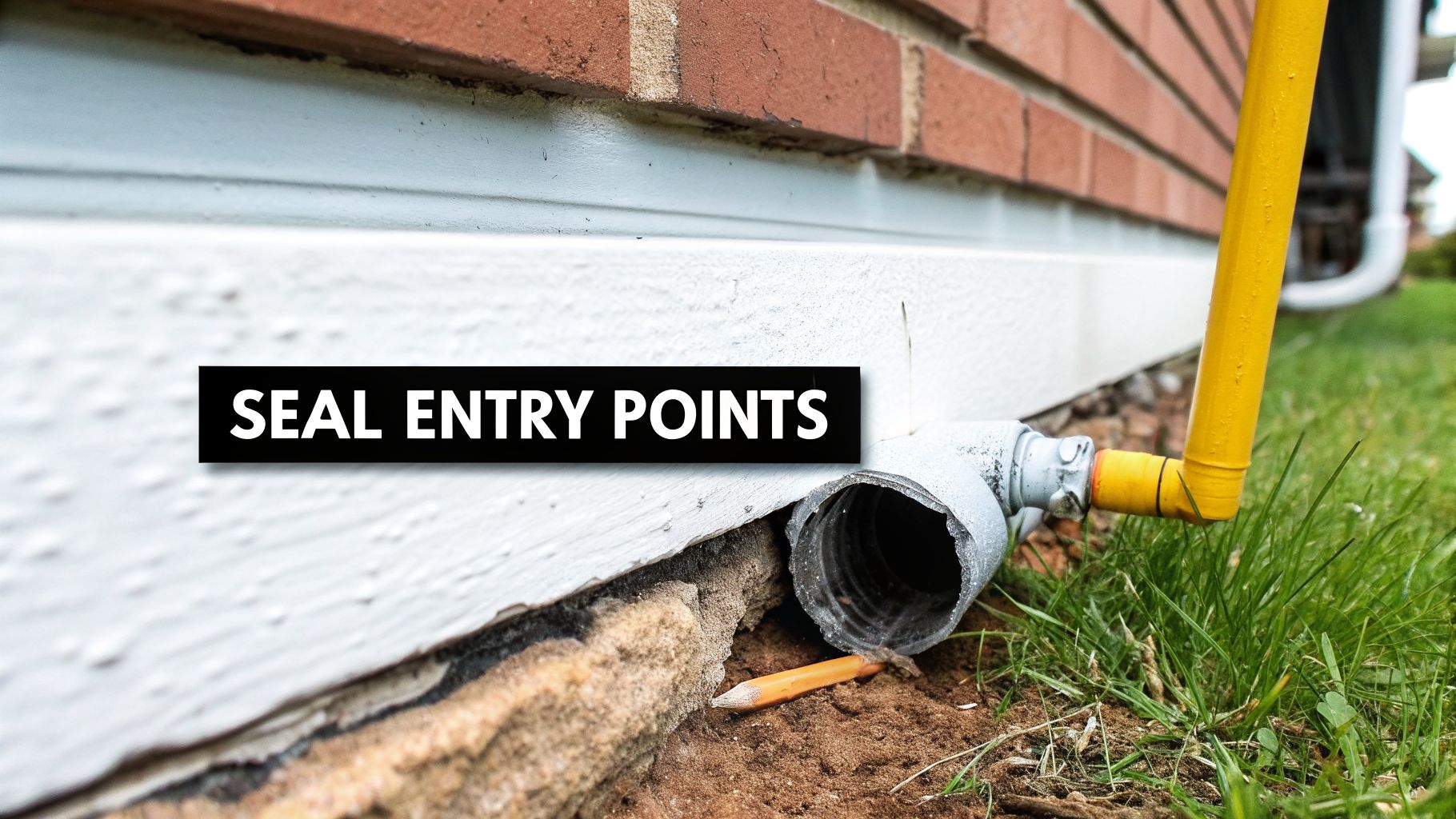
Mice can squeeze through openings as small as a dime (1/4 inch), while rats need only a gap the size of a quarter. Common weak points include gaps around utility pipes, cracks in the foundation, damaged seals on basement windows, and unscreened vents or chimneys. Finding these structural gaps, especially with other signs of rodent infestation present, strongly indicates how pests are getting in and out.
Property Risks and DIY Checks
Unsealed entry points create a constant vulnerability for your property. They don't just let rodents in; they can also lead to moisture problems, energy loss, and entryways for other pests like spiders and ants. Sealing these openings is a fundamental part of home maintenance and preventative pest treatments.
Proactive Sealing is Key: Simply removing the current rodents is a temporary fix. Without sealing entry points, new rodents will eventually find the same pathways into your home, leading to a recurring infestation.
Immediate DIY Inspection Tips:
- Conduct an Exterior Audit: Walk the perimeter of your home, paying close attention to the foundation. Look for cracks, gaps around plumbing and electrical lines, and spaces under siding.
- Check the Roofline: Inspect attic vents, chimney flashing, and the points where different roof sections meet. Ensure all vents are properly screened with hardware cloth.
- Measure Suspicious Gaps: Use a pencil as a guide. If it can fit into a crack or hole, a mouse can get through.
- Small Gap Sealing: Use steel wool packed tightly into small holes (rodents won't chew through it) and seal it with caulk. Expanding foam can be used but may be chewed through if not paired with a resistant material.
- Large Opening Solutions: For larger gaps or damaged vents, use hardware cloth or metal sheeting securely fastened over the opening.
Identifying and sealing entry points is a crucial component of any effective rodent control strategy. If you discover multiple potential entryways on your Northwest Indiana property, it’s a clear signal to seek professional help. Contact The Green Advantage for a thorough inspection to identify all vulnerabilities and implement a professional exclusion plan that keeps rodents out for good.
7. Food Contamination and Damaged Pantry Items
Discovering damaged food packaging and contaminated pantry items is a distressing yet definitive sign of rodent infestation. Rodents are driven by a constant need to eat, and your pantry offers a perfect, easily accessible food source. Finding torn-open cereal boxes, gnawed flour bags, or spilled dry goods on your shelves is clear evidence that mice or rats are actively feeding in your Crown Point home, making this one of the most urgent signs of a rodent infestation.
Rodent damage is usually easy to spot. They use their sharp incisors to chew through cardboard, paper, and thin plastic packaging to access the food inside. Besides the visible holes, you may also find their droppings, urine stains, or shed hairs directly on or around the food items. This contamination is not just limited to pantries; it can affect pet food bags in garages, stored birdseed in sheds, and ingredients in commercial kitchens across Northwest Indiana, indicating established feeding patterns.
Health Risks and DIY Checks
Food contaminated by rodents is a serious health hazard and must be discarded immediately. Rodents spread diseases like Salmonella and Leptospirosis through their feces, urine, and saliva. Consuming food that has come into contact with these pathogens can lead to severe illness.
Zero Tolerance for Contamination: If you suspect any food item has been touched by rodents, do not risk it. Even if the damage seems minor, the food inside is compromised. "When in doubt, throw it out."
Immediate DIY Inspection Tips:
- Pantry Audit: Put on gloves and carefully inspect all food items in your pantry, cupboards, and any other food storage areas. Look for small holes, chew marks, tears, or greasy rub marks on packaging.
- Safe Disposal: Place any compromised food items directly into a heavy-duty trash bag. Seal the bag tightly and dispose of it in an outdoor trash receptacle to prevent rodents from accessing it again.
- Thorough Cleaning: After removing contaminated items, empty the shelves completely. Use a disinfectant or a 1:10 bleach-water solution to thoroughly wipe down all surfaces, paying close attention to corners and crevices.
- Invest in Better Storage: Transfer remaining and new dry goods like grains, pasta, and cereals into sealed, rodent-proof containers made of thick plastic, glass, or metal.
Finding contaminated food is a clear signal that an infestation has breached your living space. This problem requires a swift response to protect your family's health. Contact The Green Advantage for professional pest control in Crown Point, IN to identify how rodents are getting in and implement a strategy to stop them for good.
8. Pest Control Inspection Findings and Professional Assessment
While DIY checks can reveal initial signs of a rodent infestation, a professional pest control inspection provides the definitive assessment needed to address the problem effectively. For homeowners in Crown Point, IN, a licensed technician's report is the most reliable way to confirm the scope and severity of an infestation. Professionals use systematic methods to document every piece of evidence, from droppings and gnaw marks to hidden entry points and nesting sites.
A formal inspection serves as a complete blueprint of the rodent activity in your home. This professional assessment is crucial not only for effective treatment but also for real estate transactions or landlord-tenant documentation. It replaces guesswork with a clear, evidence-based plan of action, showing you why professional rodent control is the best solution.
The Value of a Professional Report
A professional pest inspection is more than just a quick look around. It's a methodical investigation that yields critical information for eliminating rodents and preventing their return. Technicians are trained to spot subtle signs that are easily missed.
Expert Insight: An inspector can differentiate between evidence of an active infestation versus a historical one. This distinction is vital, preventing unnecessary treatments while ensuring current threats are properly addressed.
What a Professional Inspection Uncovers:
- Species Identification: The technician will identify whether you are dealing with mice, Norway rats, or roof rats based on evidence like droppings, gnaw marks, and nest locations.
- Severity Rating: The report will provide a severity rating (e.g., light, moderate, heavy) based on the volume and distribution of droppings, number of nests, and extent of damage.
- Entry Point Mapping: An inspector will identify all potential entry points, from cracks in the foundation to gaps around utility lines, which is essential for long-term exclusion.
- Photographic Documentation: You will receive detailed photos of all findings, providing indisputable proof of the infestation for your records.
- Treatment Recommendations: The report concludes with specific, actionable recommendations for treatment, sanitation, and structural repairs (exclusion) to solve the problem for good.
If you suspect you have a rodent problem, or need official documentation for a property, understanding when to call pest control is the first step. Contact The Green Advantage to schedule a professional inspection. Our detailed reports give you the clarity and confidence needed to protect your Northwest Indiana property.
8-Point Comparison of Rodent Infestation Signs
| Indicator | Implementation complexity | Resource requirements | Expected outcomes | Ideal use cases | Key advantages |
|---|---|---|---|---|---|
| Rodent Droppings (Feces) | Low — visual observation | Minimal: gloves, mask, camera | Confirms presence; helps identify species and activity areas | Initial inspections, kitchen/pantry checks, monitoring | Easy to spot; indicates recent/past activity; guides targeted treatment |
| Gnaw Marks, Rub Marks and Damaged Materials | Medium — requires close inspection | Flashlight, camera, measuring tools; possible pro assessment | Reveals entry points, travel routes, and active chewing damage | Locating access points, assessing structural/electrical risk | Indicates active pathways; maps movement; prioritizes trap placement |
| Musky Odor and Urine Stains | Medium — sensory plus diagnostic tools | UV/blacklight, ventilation, professional evaluation | Early detection of hidden contamination; estimates infestation age | Enclosed spaces (attics, wall voids, basements) and persistent odors | Early warning sign; UV locates hidden contamination for targeted cleanup |
| Nesting Materials and Debris | Low–Medium — visual search in protected areas | PPE, camera; professional removal for active nests | Indicates breeding sites and infestation severity | Attics, wall cavities, storage boxes — assessing reproduction | Direct indicator of reproduction; identifies safe-harbor areas for removal |
| Scurrying Sounds and Nocturnal Activity | Low — occupant observation/monitoring | Listening, recording devices or professional inspection | Confirms active movement; helps approximate location and timing | Nighttime monitoring, early detection before visual evidence | Often first noticed by occupants; signals active, ongoing infestation |
| Entry Points and Structural Gaps | High — thorough exterior and interior inspection | Skilled labor, sealing materials (caulk, mesh), possible contractors | Permanent exclusion when sealed; prevents reinfestation | Prevention, post-treatment exclusion, older or damaged properties | Addresses root cause; durable prevention across pest species |
| Food Contamination and Damaged Pantry Items | Low — routine pantry inspection | Inspection, disposal supplies, sealed containers, cleaning supplies | Confirms feeding behavior; requires disposal and targeted treatment | Kitchens, pantries, food service, warehouses | Clear proof of active feeding; documents health risk and liability |
| Pest Control Inspection Findings and Professional Assessment | High — formal, systematic evaluation | Licensed technicians, specialized tools (UV, endoscope), report costs | Comprehensive diagnosis, species ID, severity rating, treatment plan | Pre-purchase inspections, severe infestations, insurance/real estate needs | Expert identification and documentation; tailored treatment and follow-up |
Take the Next Step: Your Trusted Pest Control Partner in Crown Point, IN
Recognizing the subtle and often-hidden signs of rodent infestation is the crucial first step in defending your home or business. From discovering droppings in a dark corner to hearing scratching sounds in the walls at night, each sign you’ve learned to identify in this guide is a piece of a larger puzzle. These clues—gnaw marks, musky odors, and shredded nesting materials—are not just minor annoyances; they are direct warnings of a potential threat to your property’s structural integrity and your family's health. Ignoring them allows a small issue to grow into a significant, costly, and stressful problem.
Understanding these indicators empowers you as a property owner. You are now equipped to perform initial checks, connect the dots between a damaged pantry box and a potential entry point, and appreciate the urgency required. The real value, however, lies in using this knowledge to take prompt, effective action. Proactive identification is your first line of defense, but professional pest control is the only way to guarantee a complete and lasting solution. Simply setting a few traps often fails to address the full scope of an infestation, leaving hidden nests and undiscovered entry points that allow the cycle to continue.
From Detection to Resolution: A Clear Path Forward
The transition from identifying a problem to resolving it should be seamless and reassuring. This is where a trusted local partner like The Green Advantage becomes essential. For homeowners and business managers in Crown Point, IN, and the surrounding Northwest Indiana communities, a professional assessment is the fastest path to clarity and peace of mind. Attempting to manage a rodent problem on your own can lead to weeks of frustration, continued property damage, and ongoing health risks.
An expert exterminator doesn't just treat the symptoms you can see. They investigate the root cause, determining how rodents are getting in, where they are nesting, and the full extent of their activity. This expert diagnosis is fundamental to creating an effective, long-term extermination and exclusion strategy.
Why Choose Professional Pest Control in Crown Point, IN
Mastering the ability to spot the early signs of rodent infestation is an invaluable skill, but it's only half the battle. The other half is knowing when to call an exterminator near me for expert help. A professional from The Green Advantage brings years of field experience and specialized tools to your doorstep. We see what the untrained eye misses.
Our process is built on trust and transparency:
- Comprehensive Property Assessment: Our licensed technicians will conduct a thorough inspection of your home or commercial facility, from the attic to the crawlspace, identifying all active and potential problem areas.
- Clear, Honest Communication: We explain our findings in straightforward terms, showing you the evidence and detailing the specific risks to your property. We believe an informed customer is our best partner.
- Targeted Treatment Plan: Based on the inspection, we develop a specific plan for your property. This includes not only rodent control but also implementing exclusion work to seal entry points and prevent future invasions.
- Integrated Pest Management: We look at the bigger picture. If we notice conditions that could lead to other issues, such as ant control or termite control needs, we'll advise you on preventative measures and can integrate solutions like our mosquito control services for complete property protection.
Don't let the discovery of a rodent problem cause you distress. Instead, view it as an opportunity to secure your property with the help of a dedicated local expert. By partnering with The Green Advantage, you are choosing a solution that protects your investment, your family’s health, and restores your sense of security.
Ready to take control and ensure your property is rodent-free? Contact The Green Advantage today for a comprehensive inspection and a free quote. Our local Crown Point, IN team is ready to provide the expert solutions you need to solve your pest problems for good. Visit The Green Advantage to schedule your service.