
Yellow Jacket Control Methods: NWI Home Protection
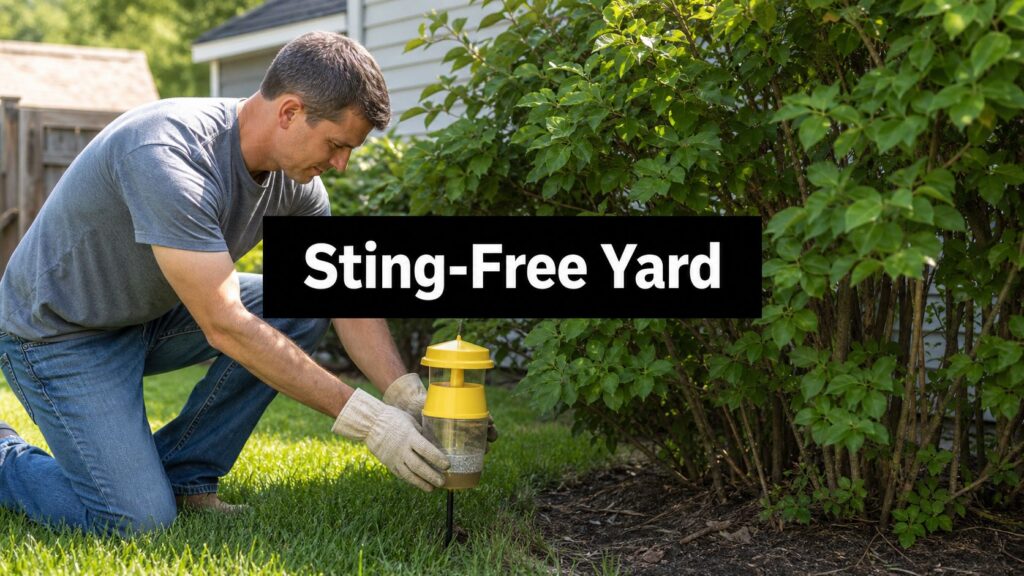
A warm summer afternoon in your Northwest Indiana backyard can change fast when yellow jackets start circling the patio, the grill, or the kids' play area. In Crown Point and the surrounding area, homeowners deal with these pests at exactly the wrong time, usually when outdoor meals, yard work, or weekend gatherings are already underway. The good news is that yellow jacket control methods are straightforward when you know what works, what doesn't, and when to stop and call a professional. At The Green Advantage, we help local families protect their homes with calm, practical pest control in Crown Point, IN, plus the kind of focused service that keeps small problems from becoming dangerous ones.
1. Wasp Traps and Baited Lures
DIY traps are a useful first step when you're trying to reduce yellow jacket pressure around patios, gardens, and outdoor dining spaces. University extension guidance describes a simple homemade water-trap setup using a 5-gallon bucket, soapy water, and a protein bait such as turkey, ham, fish, or liver suspended 1 to 2 inches above the water. The bait draws workers in, and the detergent breaks the surface tension so they drown, which makes this a suppression tool, not a nest cure. See a standard extension-style setup in this yellowjacket trap guide from UC IPM.

The trap placement matters as much as the trap itself. Put it 15 to 20 feet away from seating and food so you're pulling yellow jackets away from people, not luring them onto the table. In spring and early summer, protein baits make more sense because the colony needs protein. Later in the season, sweeter bait tends to be more attractive. Hang traps early, ideally in April or May, before the population builds.
Practical rule: If you see steady traffic into one hole in the ground or one gap in the structure, a trap won't solve the root problem. It can help with foragers, but it won't remove an established nest.
This is the kind of DIY method that can help a homeowner in Crown Point, Merrillville, or St. John keep a yard more comfortable while deciding whether professional wasp removal is needed. Empty the trap every few days, refresh the bait regularly, and treat it as monitoring plus light reduction. If the activity stays high, or if yellow jackets are already nesting near the house, traps are only buying time.
2. Nest Removal and Destruction
Once yellow jackets have built a nest, removal has to be handled carefully and at the source. That is why professional pest control often makes the most sense in homes with attic voids, soffits, wall gaps, decks, or underground nests near a driveway or play area. For local homeowners searching for exterminator near me or pest control near me, the benefit of professional service is direct, the colony is treated where it lives instead of being stirred up around the property.
Nest treatment is usually safest at night, when most yellow jackets are inside and less active. Oregon State University advises locating the nest during the day but not spraying then, and Pest Control Technology notes that treatments work best on a cool night, with a couple of days before reoccupying a building to make sure no live yellow jackets remain inside. That timing matters in Northwest Indiana, where summer heat can make daytime encounters more active and more dangerous. Read the guidance from Oregon State University's yellowjacket control resource.
A trained technician can also choose the right access method. For enclosed nests, drilling into the nest and injecting insecticide is often more effective than surface spraying, and that targeted approach helps avoid the problems that broad outdoor spraying can create. If you are not sure whether the insects under your eave are yellow jackets, check The Green Advantage's stinging insect identification page before any treatment starts.
What homeowners usually notice first: a steady flight line into one opening, more activity near dusk, or wasps appearing inside a wall, attic, or ceiling space.
Professional nest removal makes the most sense when the colony is active, the entry point is hard to reach, or the nest sits close to where people walk every day. For Crown Point, IN properties, that can mean the difference between a safe yard and a preventable sting incident during the next cookout.
3. Protective Clothing and Manual Nest Destruction
Some homeowners try to handle a small nest themselves with heavy clothing, gloves, and a spray can from the store. That approach can work only in the narrowest situations, and even then it carries real risk. If a nest is larger than a golf ball, tucked inside a wall, or active near a doorway, DIY destruction is a poor gamble for most homes in Northwest Indiana.
Manual treatment starts with the idea that the person doing the work can outsmart the colony. Yellow jackets usually prove otherwise. If the spray misses, or if the nest is deeper than expected, the insects can scatter, rebuild, or push farther into the structure. I've seen homeowners in the Crown Point area make the situation worse by spraying a nest in an eave, then finding the same activity back a few days later in the wall cavity.
Use this method only with extreme caution and only when the nest is very small and fully exposed. Even then, the basics matter:
- Wear multiple layers: Heavy, light-colored clothing can reduce sting risk better than thin fabric.
- Plan an exit path first: If the colony reacts, you need a clear route away from the area.
- Treat at the coolest part of the day: Cooler conditions usually mean less activity, but timing still doesn't make DIY safe.
- Use EPA-approved products only: Follow the label directions exactly, because improvised mixes are a bad idea.
- Skip DIY entirely if allergies are a concern: Anyone with known wasp allergies should not attempt this.
The bottom line is plain. Manual nest destruction is cheap upfront, but it's often the most expensive option once you factor in stings, retreatment, and damage to siding or wall material. For residential pest control, professional help is usually the safer long-term move.
4. Insecticide Dust and Powder Application
Hidden yellow jacket nests are a different problem from the ones you can see on a tree branch or under a deck rail. When the colony is inside a wall void, attic cavity, or underground chamber, dust and powder treatments can reach places liquid spray can't. Beyond Pesticides describes a technical vacuum-based approach for concealed nests, using a lightweight, powerful vacuum held about 3 to 4 inches from the nest entrance, followed by two tablespoons of cornstarch to incapacitate captured wasps. That same class of treatment is built around precision and containment, not brute force. See the field guidance in this wasp control fact sheet from Beyond Pesticides.
For homeowners, the main value of dusting is reach. Dust settles through the nest structure and continues working after application, which is why licensed technicians often choose it for concealed activity in attics, walls, soffits, or buried cavities. It's also one of the more specialized yellow jacket control methods, because it requires accurate identification and the right application point before treatment starts.
H3 How this fits real homes
A Crown Point homeowner might hear buzzing in a wall near a second-story bedroom. A landlord in Schererville could see yellow jackets coming and going from a vent line near a common entry. A commercial property manager in Munster might notice low ground traffic near a retaining wall. In each case, the nest isn't just “outside.” It's tucked where a quick spray won't reach, and the technician has to treat the cavity itself.
The most important part of concealed-nest work is not the product alone, it's confirming where the colony is before anything is applied.
Ask for a clear explanation of where the dust was placed, what product was used, and how the area should be ventilated afterward. That kind of documentation helps homeowners feel confident, and it gives them a better basis for follow-up if activity returns.
5. Liquid Spray Treatment and Foam Application
Liquid spray still has a place in yellow jacket control, especially when the nest entrance is visible and the colony is active near an exterior structure. In professional hands, EPA-approved liquid insecticides and expanding foams can knock down yellow jackets quickly and help seal entry points after treatment. Foam is especially useful around crevices under decks, behind trim, or along exterior gaps where a nest entrance is partly hidden.

These treatments work best when the technician can approach the nest at the right time, usually early morning or after dusk, and keep the area clear while the product does its job. For the homeowner, that means keeping family members and pets inside during treatment and for at least a short window afterward, and closing windows and doors near the work area so spray doesn't drift into living spaces. It's also smart to ask what products are being used around gardens, patios, and pet areas, because the safest solution is the one that fits your property layout.
A spray and foam approach is often practical for new homeowners who discover a nest during move-in, or for business owners who need outdoor seating ready before an event or busy weekend. It also works well when the structure itself is part of the problem, such as a gap near an eave, utility line, or under-deck opening. For commercial pest control, speed and containment matter, and this method can deliver both when used correctly.
The trade-off is that liquid treatment is only as good as the access point. If the colony is deeper in the wall or spread into multiple voids, a technician may combine spray, foam, and dust for a fuller result. That's where professional inspection makes a real difference, because the right application depends on what's hidden behind the siding.
6. Nest Exclusion and Prevention Measures
A yellow jacket problem is easier to keep under control once the nest is removed, but the primary payoff comes from making the property less appealing in the first place. Texas A&M's IPM guidance treats habitat modification and physical exclusion as two of the most productive ways to reduce pressure without adding unnecessary pesticide use, and that matches what we see across Crown Point, Winfield, Cedar Lake, and nearby Northwest Indiana neighborhoods. Sealing exterior gaps, cleaning food spills right away, storing outdoor food in sealed containers, and emptying outdoor trash and recycling bins often all make a property a poor target. Texas A&M also recommends doing bin cleanup in the early afternoon and again at dusk, which helps limit food odors when yellow jackets are most active. See the guidance in Texas A&M's yellowjacket IPM action plan.
A home or business that has already been treated still needs follow-through. If the opening that drew the colony stays open, another one can move in later. That is why seasonal pest work, routine inspections, and a few simple exclusion habits matter for homeowners who want fewer surprises next summer.
What prevention looks like after service
A practical exclusion plan starts with the places yellow jackets use first.
- Seal soffits and entry gaps: Even a small opening can become a nesting site.
- Trim vegetation near the house: Branches and thick growth give wasps more cover.
- Cover pet food and compost: Easy food sources keep them coming back.
- Reduce standing water and clutter: Harborage matters just as much as food.
- Inspect vents and roofline openings: Those are common problem areas on older Northwest Indiana homes.
For spring prevention, extension guidance also supports hanging traps early to catch overwintering females before colonies expand later in the season. That does not replace exclusion, but it can lower pressure around the property. For porches, decks, and outdoor seating that keep drawing wasps, our how to keep wasps away from porch guide gives homeowners a useful next step after the nest is gone.
The goal is simple. Make the property harder to use, harder to hide in, and less rewarding to return to.
Yellow Jacket Control: 6-Method Comparison
| Method | Implementation complexity | Resource requirements | Expected outcomes | Ideal use cases | Key advantages |
|---|---|---|---|---|---|
| Wasp Traps and Baited Lures (DIY) | Low, simple setup, no training | Low, traps, bait/pheromones; $5–$20/trap; regular monitoring | Moderate population reduction and monitoring in open areas; not nest elimination | Small yards, outdoor dining areas, early-season monitoring | Low cost, chemical-free, safe when sited away from activity |
| Nest Removal and Destruction (Professional) | High, licensed technicians required | High, professional-grade insecticides, PPE, equipment; $300–$1,500 | Colony elimination at source; immediate relief and reduced sting risk | Active nests in attics, eaves, underground, large infestations, allergy risk | Complete removal, safety protocols, residual protection |
| Protective Clothing & Manual Nest Destruction (DIY, high risk) | Moderate–High, requires skill and careful planning; risky | Medium, bee suit/gloves/tools, OTC sprays; low if using existing gear | Possible removal for very small nests; high chance of incomplete control and stings | Very small, easily accessible nests only (generally discouraged) | Immediate action and low material cost if gear available (but high safety risk) |
| Insecticide Dust and Powder Application (Professional) | High, specialized delivery and containment required | High, EPA-approved dusts, applicators, professional assessment; $400–$1,500 | Highly effective for concealed nests with long residual control | Concealed nests in wall voids, attics, underground burrows | Deep penetration, long-lasting residual action where liquids can't reach |
| Liquid Spray Treatment & Foam Application (Professional) | Moderate–High, trained applicators and access needed | Medium–High, professional liquids/foam, sprayers; $300–$800 | Rapid knockdown of exposed nests; short-to-medium residual protection | Exposed or accessible nests (soffits, decks), event preparation | Fast visible results, foam can seal entry points, generally cost-effective |
| Nest Exclusion & Prevention Measures (Professional) | Moderate, inspection plus targeted repairs/landscape work | Medium, sealants, vegetation trimming, barriers; $200–$1,000+ | Reduced re-infestation risk and long-term cost savings | Post-removal follow-up, properties seeking long-term prevention | Addresses root causes, improves property resilience and reduces seasonal treatments |
Secure Your Peace of Mind with Professional Pest Control
When yellow jackets get aggressive, your first concern is safety, not experimentation. DIY traps can help with monitoring and light pressure around the yard, but they don't give you the same confidence as a professional inspection, a proper nest location, and a treatment plan matched to the structure. In Crown Point, IN, that matters because yellow jackets often build where homeowners can't easily see them, under eaves, inside walls, along decks, or in the ground near places families use every day.
The Green Advantage is built for that kind of situation. As a local provider serving Crown Point and surrounding Northwest Indiana communities, we handle residential pest control and commercial pest control with a focus on practical, environmentally mindful solutions that fit the site, not just the season. Whether you're dealing with yellow jackets, ant control, termite control, mosquito control, rodent control, or spider control, a good inspection tells you what's happening and what needs to be done next. If the issue is stinging insects, our team can help you identify the nest, explain your options, and recommend the safest path forward for your property.
For homeowners, that means less guesswork and less risk. For property managers and local businesses, it means better control over outdoor spaces, entrances, and seasonal disruptions that can affect tenants, customers, and staff. The benefit is peace of mind, because you know someone local has looked at the problem carefully and acted with the right tools.
If yellow jackets are buzzing around your home, don't wait for a sting or a larger nest to force the issue. Contact The Green Advantage for a pest inspection, ask for a quote, and get a clear plan that protects your home, your yard, and the people who use them.
If you're dealing with yellow jackets in Crown Point or anywhere in Northwest Indiana, The Green Advantage can help you sort out the problem quickly and safely. Visit The Green Advantage to schedule an inspection and get professional pest control that's built for your home, your family, and your peace of mind.
Expert Pest Control for Flying Insects in Crown Point

A calm evening in Crown Point can turn annoying fast. You set out food on the patio, open the back door a few times, and before long you're swatting at flies, watching mosquitoes hover near the kids, or hearing that sharp buzz that makes everyone look up for a wasp nest.
That frustration is common across Northwest Indiana because our pest pressure shifts with the seasons. Wet stretches create mosquito breeding pockets. Warm afternoons push fly activity around trash areas, pet waste, and garage entries. Late summer often brings wasps closer to decks, soffits, and outdoor gathering spots. What feels like a random nuisance usually has a clear cause.
Homeowners searching for pest control near me, exterminator near me, or pest control in Crown Point, IN usually want the same thing. A straightforward answer, a practical plan, and a home that feels comfortable again. That applies to families, landlords, and commercial property managers alike.
Your Guide to Flying Insect Control in Crown Point IN
If you're dealing with flying pests around your home, the first step is to stop guessing. Mosquitoes, flies, gnats, moths, and wasps don't all respond to the same treatment. What works for one problem can do almost nothing for another, especially during a Northwest Indiana season when moisture, heat, and yard conditions keep changing.
Most flying insect issues start in one of three places. Breeding sites, food sources, or easy entry points. A low spot in the yard that holds water, a torn screen, a trash can lid that doesn't seal, or a gap around a side door can keep the problem going even after you've sprayed.
What local homeowners need most
Residents in Crown Point usually aren't looking for a lecture on insect biology. They want to know why pests showed up, whether the problem will get worse, and what fixes it.
That means looking at:
- Where insects are coming from, not just where you notice them
- What attracts them, including moisture, food waste, lights, and harborage
- When activity spikes, because Northwest Indiana weather changes treatment timing
- Which control method fits the pest, instead of using a generic spray for everything
Practical rule: Good pest control for flying insects starts with exclusion and source reduction. Treatment matters, but removing the reason insects are there matters more.
For local service businesses, that same principle applies online too. The companies that clearly explain real problems and real solutions tend to turn anonymous visitors into pest control leads because worried homeowners respond to useful, specific guidance.
Why local experience matters in Crown Point
A Crown Point property doesn't behave like a property in a drier or warmer region. Here, spring moisture, summer humidity, shaded yards, wooded edges, and nearby water features all change flying insect pressure. Residential pest control has to account for that. Commercial pest control does too, especially around loading areas, dumpsters, service doors, kitchens, and warehouse entries.
If you've been searching for an exterminator in Crown Point, IN, value isn't just someone showing up with a sprayer. It's having someone diagnose the pattern, reduce the pressure, and help keep the issue from returning.
Identifying Common Flying Pests in Northwest Indiana
Not every buzzing insect around your home needs the same response. In Crown Point, the most common calls involve mosquitoes, house flies, wasps, gnats, and fabric moths. Some are mostly outdoor pests that drift inside. Others start indoors and stay there until someone finds the source.
A quick identification check saves time and avoids the usual mistake of treating symptoms instead of causes. If the issue is wasps under the eaves, that's different from fungus gnats around overwatered houseplants or house flies tied to sanitation and entry points.
Northwest Indiana Flying Insect Identification Guide
| Insect | Key Identifiers | Primary Risk | Peak Season (NWI) |
|---|---|---|---|
| Mosquitoes | Thin body, long legs, high-pitched buzz, active around dusk and shaded areas | Bites and outdoor discomfort | Warm season, especially after rainy periods |
| House flies | Gray body, quick erratic flight, often found near kitchens, trash, or pet areas | Food contamination | Warm months, often persistent around entry doors |
| Wasps | Slender body, narrow waist, visible nest activity around soffits, decks, and overhangs | Stings and nest aggression | Late spring through summer into early fall |
| Gnats | Very small flying insects, often hovering in clusters near drains, plants, or damp areas | Indoor nuisance and recurring annoyance | Any time conditions stay damp |
| Fabric moths | Small pale or buff moths, weak fliers, often noticed near closets or stored textiles | Damage to natural fiber items | Often noticed indoors year-round |
What each pest is telling you
Mosquitoes usually mean there's standing water somewhere nearby or dense vegetation holding moisture and shade. That doesn't always mean a big pond. It can be a clogged gutter, a forgotten container, or a low spot in the yard.
House flies are often a sanitation and exclusion problem at the same time. If they keep showing up around windows or kitchen lights, check waste handling, food residue, pet waste, and door gaps.
Wasps don't need much space to get started. A small protected void under a rail, soffit, light fixture, or porch ceiling can become a regular traffic route.
When identification changes the treatment plan
A frequent pitfall for many DIY attempts arises. Homeowners see "flying bugs" and buy a general aerosol. But if the underlying issue is a nest, a breeding site, or repeated entry through damaged screens, the spray becomes a short-term interruption, not a solution.
If you need help telling one stinging insect from another, this local stinging insect identification guide is a useful reference, especially when you're trying to decide whether that insect near the roofline is likely to sting or hover.
Small differences matter. A wasp treatment focuses on nest location and safe removal. A fly treatment focuses on sanitation, exclusion, and where adults are resting or entering.
Common local patterns around homes and businesses
In residential pest control, mosquito calls often rise after rain followed by heat. Fly issues increase around patios, garages, and trash storage. In commercial pest control, doors that stay open, food handling areas, and dumpster proximity all raise the stakes.
The main point is simple. Accurate identification drives better results. That applies whether you're dealing with a porch problem at home or searching for pest control in Crown Point, IN for a storefront, warehouse, or rental property.
The Real Risks of an Uncontrolled Flying Insect Problem
An uncontrolled flying insect problem does more than annoy you. In Crown Point, I see this shift happen fast in late spring and summer. A backyard that felt fine in May can become a place the family avoids by July after standing water, humidity, and longer evenings start driving mosquito and fly activity.

Health and household concerns
Mosquitoes usually create the first complaint because bites change behavior right away. People stop using the patio, kids come back inside covered in welts, and evening yard time gets cut short. In Northwest Indiana, that pressure often spikes after periods of rain followed by heat, which is why breeding-site control matters as much as adult knockdown. Homeowners dealing with recurring mosquito activity should understand how breeding sites drive mosquito pressure around the home.
Wasps and hornets bring a different risk. One nest under an eave or near a front entry can turn a normal trip to the mailbox into a safety concern, especially for anyone with a sting sensitivity.
House flies raise another issue altogether. When they move from trash, drains, or animal waste to kitchen counters, fruit bowls, and food prep areas, the problem becomes sanitation, not simple nuisance.
Property use and daily disruption
Some flying insects affect the way a home functions even when they are not biting. Gnats around sinks or houseplants make kitchens and living areas feel damp and hard to keep under control. Fabric moths can damage stored clothing, rugs, and other natural-fiber items before the problem is noticed.
The quality-of-life piece is what many homeowners underestimate.
You start changing routines. Doors stay closed. Guests spend less time outside. Trash gets taken out early because flies build up by afternoon. For Crown Point properties near ponds, drainage areas, open fields, or wooded edges, those pressures can last through the warm season if nothing interrupts the cycle. That is one reason property owners benefit from understanding preventive maintenance, especially when recurring pest pressure is tied to moisture, entry points, and seasonal upkeep. See understanding preventive maintenance.
For business owners, the tolerance is even lower. Repeated fly activity near doors, dining areas, stock rooms, or workstations affects customer confidence and day-to-day operations fast.
Why targeted action matters
Treatment works better when it follows the insect's life cycle and the conditions on the property. According to the Minnesota Pollution Control Agency, effective Integrated Pest Management calls for identifying the pest, checking whether larval and adult activity has reached action thresholds, and treating breeding sites as well as active adults when needed. Their guidance on Integrated Pest Management thresholds for mosquito control explains why repeated spraying of visible adults alone often wastes time and money.
That trade-off shows up on real properties all over Crown Point. If mosquitoes are hatching in clogged gutters, yard items holding water, or low spots that stay wet after storms, adult sprays may reduce activity for a short window but will not stop the next wave. If flies are tied to garbage storage, drains, or animal areas, the same pattern applies.
Homeowners usually call for help when they realize the issue has become routine instead of occasional. At that point, the job is not to chase every insect you can see. The job is to find what is feeding the problem and shut that down.
Essential Prevention and Habitat Reduction Strategies
Prevention does more work than commonly believed. If you make your property harder for flying insects to enter, feed, and breed, you reduce pressure before treatment even starts. In Crown Point, that matters because spring moisture and summer humidity can keep reinfestation going unless the environment changes too.
Protect your home against flying insects with these practical steps:
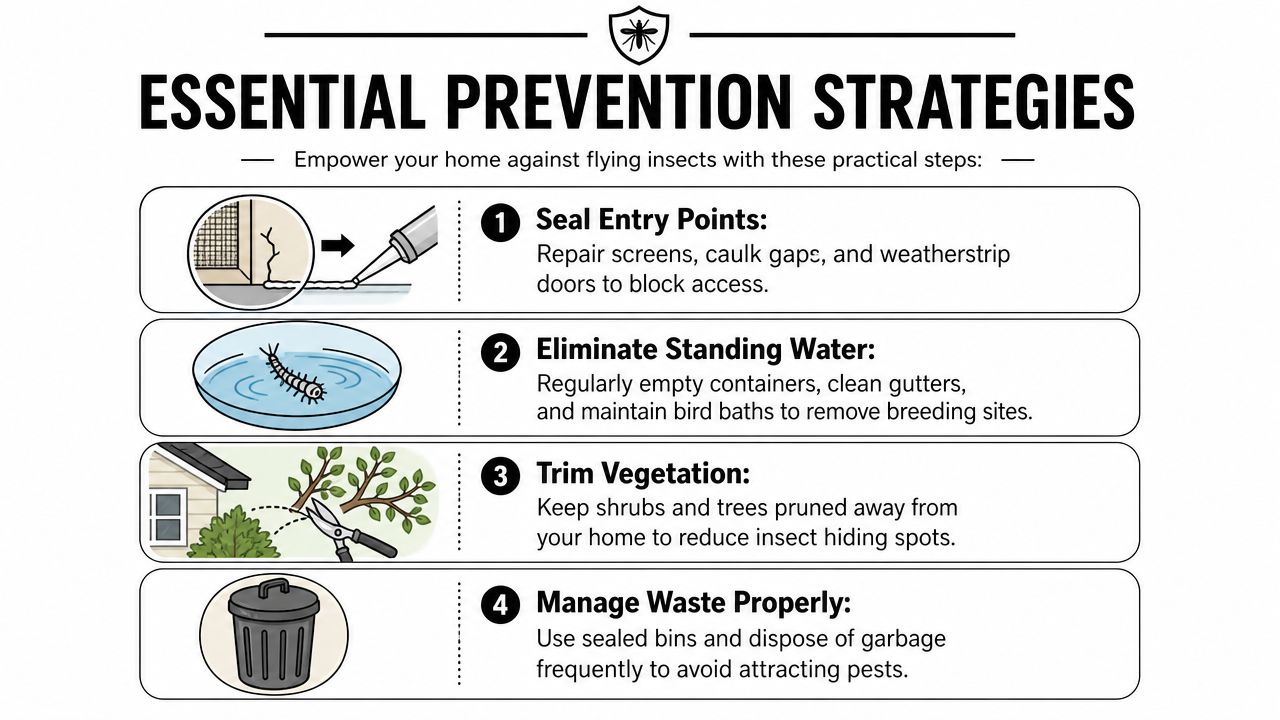
Seal up the structure
Physical exclusion is one of the most dependable parts of pest control for flying insects. The Indiana Department of Environmental Management recommends sealing openings with 16-gauge mesh as a specific physical barrier threshold to block entry points for mosquitoes and other flying pests (Indiana guidance referenced here).
That standard is worth paying attention to around:
- Window screens: Repair tears and loose corners before insect pressure peaks
- Door sweeps: Close the gap at garage and side doors where flies often enter
- Vent openings: Screen them properly instead of assuming the cap is enough
- Soffit and utility penetrations: Small openings can support repeated entry
Remove water and damp harborage
Mosquitoes don't need much water to keep a breeding cycle going. Crown Point yards with clogged gutters, decorative containers, uneven drainage, or neglected bird baths can stay productive for mosquitoes longer than homeowners expect.
A practical local checklist looks like this:
- Clean gutters: Spring and fall debris holds water longer than it should
- Empty containers: Buckets, toys, planters, and covers collect enough water to matter
- Manage bird baths: Refresh and maintain them instead of letting water sit
- Correct drainage issues: Low pockets near patios and foundations hold moisture
If mosquito activity is building around your yard, this page on mosquito breeding and mosquito control gives a clear look at what to check first around the property.
Treat prevention like routine maintenance
A lot of homeowners only react once insects are everywhere. That's understandable, but it usually means the property has been inviting pests for a while. Thinking in terms of understanding preventive maintenance helps because the same logic applies here. Small recurring checks prevent larger recurring problems.
Local reminder: In Northwest Indiana, gutters, screens, and standing water need seasonal attention. Waiting until the insects are active is later than ideal.
This short video gives a useful visual overview of prevention habits around the home.
Cut down food and shelter
Flies and gnats follow food, residue, and moisture. Wasps favor protected building features and nearby foraging areas. A cleaner exterior and tighter routine around waste handling can reduce activity noticeably.
Focus on these habits:
- Use sealed trash containers: Lids should close fully, especially in warm weather
- Pick up pet waste: Leaving it out gives flies a steady attraction point
- Trim vegetation: Branches touching siding and dense shrubs create sheltered zones
- Clean outdoor eating areas: Grease, drink spills, and food scraps keep drawing insects back
These steps matter for homes, restaurants, offices, and multi-unit properties. They also support other services people often ask about, including mosquito control, wasp removal, rodent control, and seasonal preventative pest treatments. Prevention won't always solve an established infestation by itself, but it makes every professional treatment work better.
Why DIY Flying Insect Control Often Fails
Most DIY products promise fast relief, and sometimes they do give it. The problem is that relief isn't the same thing as control. Homeowners often knock down a few visible insects, then watch the same problem return because the nest, breeding source, or entry route is still active.
Understand why store-bought solutions often miss the mark:
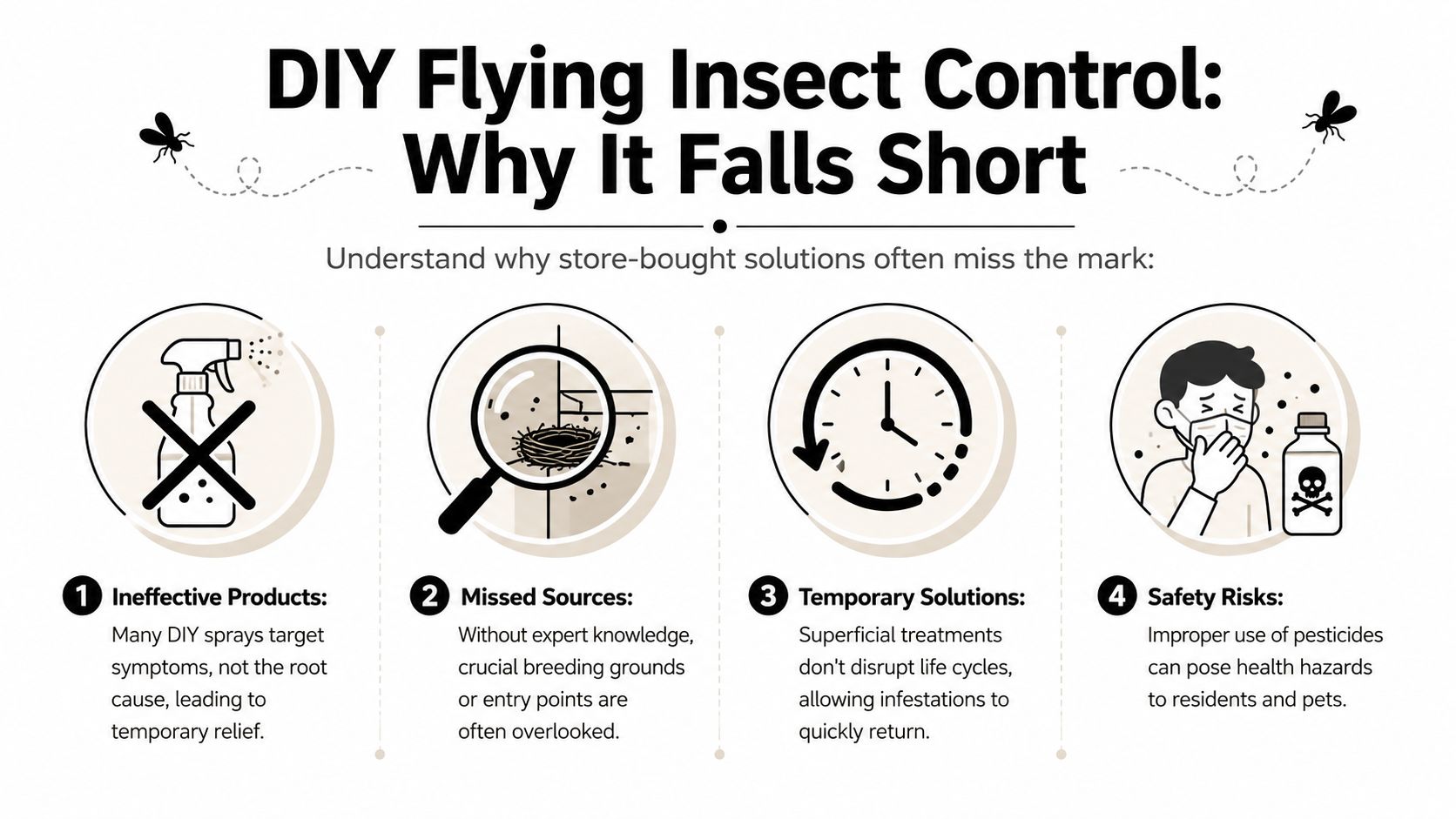
Traps and zappers get misused
One of the most common mistakes is trap placement. Industry guidelines explicitly state insect light traps should be positioned 20 feet away from outdoor living spaces. Placing traps visible from the exterior draws additional insects into the facility, whereas internal placement close to entry points intercepts them after entry (industry guidance discussed here).
That runs against the usual homeowner instinct to hang a light trap near the back door or patio. In practice, that can pull more insects toward the very space you're trying to protect.
Sprays have real limits
Many people assume a fogger or aerosol works the same in any weather. It doesn't. Area spray insecticides for flying insects are only effective within a 65°F to 90°F thermal window, and even then their contact kill duration is only 1 to 2 hours (Iowa State fly control guidance). Below that range, the chemical doesn't disperse adequately. Above it, evaporation and degradation work against you.
That matters in Northwest Indiana because evenings can cool off quickly in spring and heat can build hard in summer. A homeowner can apply a product exactly as planned and still get weak results because the conditions weren't right.
DIY usually targets the wrong stage
Adult insects get attention because they're visible. Larvae, nests, and breeding pockets don't. That's why so many treatments feel expensive without feeling effective.
A few examples:
- Mosquitoes: Spraying adults around the deck won't fix standing water nearby
- House flies: Killing visible flies won't address sanitation or resting surfaces
- Gnats: Aerosols won't solve damp drains or overwatered plant soil
- Wasps: Surface spraying random traffic routes won't remove the nest
Store-bought products often attack what you can see. Persistent infestations come from what you can't see yet.
Safety and overapplication are real concerns
Homeowners also tend to overuse products when results disappoint them. More spray, more often, in more places. That raises exposure concerns without solving the root cause.
This is why people searching for exterminator in Crown Point, IN or pest control near me often call after trying several rounds of DIY first. The issue isn't effort. It's that flying insect problems require correct identification, timing, placement, and source control. Without those, the cycle keeps resetting.
The Green Advantage Professional Treatment Process
You notice the problem at the same time many Crown Point homeowners do. A warm evening opens up after a wet stretch, the patio is finally usable, and then the flies, mosquitoes, or wasps start pushing you back inside. In Northwest Indiana, timing matters. Spring moisture, summer heat, nearby retention ponds, shaded yards, and older door and window seals all change how flying insect pressure builds from one block to the next.
Inspection comes first
A treatment plan starts with a real inspection. For homes in Crown Point, that means checking where insects are getting in, where they are resting, and what on the property is helping them stay active. The Green Advantage follows the same integrated pest management principles used in commercial work, where Green Advantage pest control articles for Crown Point and Northwest Indiana emphasize inspection, identification, and correction of the conditions behind the activity.
A good inspection checks more than the obvious hot spots. It usually includes:
- Entry routes around doors, windows, utility penetrations, soffits, garage edges, and vents
- Moisture and breeding sources such as clogged gutters, bird baths, low yard areas, drains, damp mulch, and trash zones
- Resting and nesting areas in shrubs, eaves, attic edges, storage areas, and fence lines
- Pressure patterns so service matches where insects gather at dusk, collect near lights, or build around traffic areas
In this part of Indiana, I pay close attention to season and recent weather. A property that is quiet in April can change fast after a few humid weeks in June. A yard near drainage, woods, or standing water often needs a different approach than a newer subdivision lot with mostly sun and wind exposure.
Treatment should match the pest and the structure
Good service is specific. Mosquito work around a backyard has different goals than cluster fly activity near a garage door, and neither should be handled like a yellowjacket nest in a soffit void.
The Green Advantage provides a licensed, site-specific process for homeowners and businesses in Crown Point and nearby Northwest Indiana. That process can include inspection findings, habitat correction guidance, exclusion recommendations, and targeted treatment based on the insect and the property layout.
Application details matter indoors and in enclosed areas. The EPA pesticide label for CB-80 aerosol explains that space treatments depend on correct dilution, accurate cubic footage, and keeping the area closed for the required period before ventilation. That is one reason professional handling matters. The product choice, placement, and method all have to fit the site.
What gets addressed beyond the spray
A useful service plan usually includes several parts working together:
- Exclusion recommendations: door sweeps, screen repair, vent screening, gap sealing
- Source reduction: water management, sanitation fixes, vegetation trimming, waste control
- Targeted treatments: placed where insects rest, enter, feed, or nest
- Follow-up review: checking what improved, what pressure remains, and what correction still needs to happen
That follow-up piece matters more than people think. If flies dropped inside the house but keep collecting around one exterior door, the next step may be light management, exclusion, or sanitation near that entry, not just another broad application.
Residential and commercial work have different pressure points
Residential service usually centers on family comfort, protecting kids and pets, reducing bites and stings, and making the yard usable again. Commercial properties have another layer of concern. Entry doors, trash areas, loading zones, customer visibility, and day-to-day operations all affect the plan.
Some businesses also care about how quickly missed calls and service requests are captured after closing hours. Tools like automatic lead capture after hours solve that communication problem. Pest control still comes down to inspection, response time, and correcting the conditions on site.
Long-term control comes from matching timing to local pressure
The best results usually come from a mix of methods, applied at the right time for Crown Point conditions. Early-season mosquito work has a different purpose than mid-summer fly control around waste areas or late-season wasp treatment around eaves and play spaces. The schedule matters because Northwest Indiana pest pressure shifts with rainfall, humidity, crop activity, and temperature swings.
Lasting control comes from choosing the right method for the insect, the season, and the structure, then adjusting as conditions change.
Schedule Your Crown Point Pest Inspection Today
It is late July in Crown Point. You step onto the patio to enjoy the evening, and within minutes you are swatting mosquitoes near the grass line while flies keep collecting by the back door every time it opens. That is usually the point where a quick spray from the hardware store stops helping. The problem has a source, and the source needs to be found.
In Northwest Indiana, timing matters. Wet spring conditions can set up mosquito pressure early. Mid-summer heat pushes fly activity around trash, pet waste, and damp organic buildup. Late summer and early fall often bring wasp complaints around soffits, playsets, and deck frames. If you wait too long, you usually end up treating a larger population and a wider part of the property than you would have a few weeks earlier.
Homeowners want straight answers. What insect is active. Why here. What needs to change first. A proper inspection should give you those answers without turning a simple service call into a guessing game.
What a good inspection should cover
A useful visit is practical, not complicated.
- Initial contact: explain what you are seeing, where activity is strongest, and when it ramps up
- On-site inspection: identify the insect, check entry points, look for breeding moisture, and inspect the areas that keep drawing them back
- Property-specific plan: match the solution to the structure, yard layout, current season, and pressure level
- Follow-through: treat the active issue and correct the conditions that are helping it continue
For business owners, speed matters for a different reason. Missed calls after hours can delay service while flies, gnats, or wasps keep disrupting staff and customers. Some companies use tools like automatic lead capture after hours to keep requests from slipping through while the office is closed.
Why now is the right time to call
The best time to inspect a flying insect problem is while activity is still clear and the pressure points are easy to trace. That is especially true in Crown Point neighborhoods with standing water after rain, wooded edges, retention ponds, or heavy backyard use during summer.
Good control often includes more than product application. On one property, the answer may be trimming harborage and reducing moisture near the foundation. On another, it may be sealing a gap at an entry door, adjusting exterior lighting, or changing how trash is stored between pickups. Commercial sites sometimes need exclusion measures at doors and service areas, as noted earlier in the article. The right fix depends on the insect and the conditions keeping it active.
If you have been searching for pest control in Crown Point, IN, residential pest control, commercial pest control, or an exterminator in Crown Point, IN, the next step is simple. Get the property inspected, identify the insect correctly, and use a treatment plan that fits your home, your business, and the part of the season we are in.
If you're ready for a clearer answer and a practical plan, contact The Green Advantage to schedule a pest inspection or request a quote for your Crown Point property.