
You step outside to pull weeds, roll the trash cart back in, or let the dog out, and then you notice it. A few striped insects are flying low near the mulch bed. Maybe there's a papery cluster tucked under the deck rail. Maybe something keeps slipping into a gap near the siding. At that point, most homeowners in Crown Point don't need a biology lesson. They need to know one thing fast. Is this dangerous, and what should I do next?
That concern is justified. In the United States, approximately 25,000 severe injuries result annually from insect stings, and the general public often struggles to identify what they're seeing. In controlled identification tests, non-specialists averaged 5.4 correct responses out of 10, which is why guessing from a quick glance often leads people in the wrong direction according to the University of Florida guidance on stinging insect injuries and identification.
For homeowners looking for pest control near me, pest control in Crown Point, IN, or a local exterminator near me, value isn't memorizing every insect. It's learning the clues that matter most from a safe distance. In practice, behavior and nest location usually tell you more than color alone.
A Homeowners Guide to Stinging Insects in Crown Point
A lot of stinging insect calls start the same way in Northwest Indiana. Someone notices activity around the eaves, near a fence post, by the shed, or in a patch of ground the kids usually run across. They don't know if it's bees, wasps, yellowjackets, or hornets. They just know the movement has picked up, and nobody wants a bad surprise.
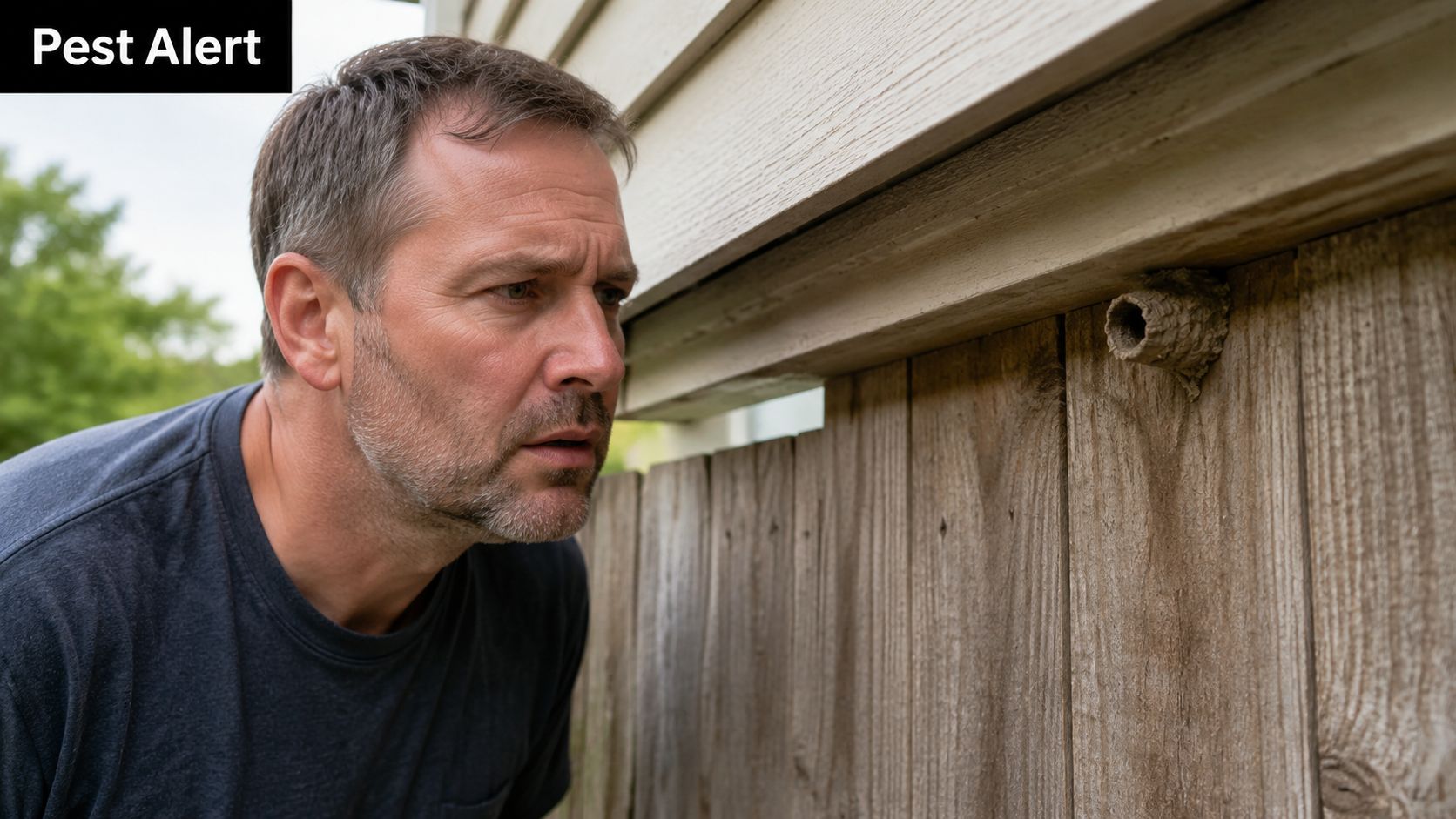
That uncertainty is where people get into trouble. Many homeowners move too close trying to take a photo, spray the wrong area, or knock down a visible nest without realizing the main colony is somewhere else. Others assume that if the insect doesn't look exactly like a honeybee, it must be a wasp and needs immediate DIY treatment.
Practical rule: If you can identify the flight path and the nest location without getting close, you're already making a safer decision than most homeowners do at first.
Around Crown Point, the safest approach is simple. Watch from a distance. Notice where the insects are entering and leaving. Pay attention to whether they're hovering around food, flying in and out of a wall void, or working one fixed route under an overhang. Those patterns often matter more than trying to judge body markings from ten feet away.
Stinging insect identification becomes practical instead of academic. A fuzzy insect in a flower bed means one thing. A sleek insect with quick, direct traffic into the ground near a walkway means something else. A paper nest under a porch ceiling tells a different story from a hidden nest in a wall.
For homeowners and property managers searching for residential pest control, commercial pest control, or an exterminator in Crown Point, IN, the goal is safety first, then correct treatment. The Green Advantage helps local customers sort out what they're dealing with before a small problem turns into an emergency around the home, office entry, patio, or play area.
Identifying Common Stinging Pests in Northwest Indiana
Most homeowners don't need a microscope. They need a few reliable field marks they can remember under stress. The first split is usually bee versus wasp. According to North Carolina State identification guidance for common home and garden pests, wasps lack the branched body hair seen in bees and have a very narrow waist, called a petiole. Bees are typically fuzzier because their hairs help collect pollen.
That narrow waist is one of the best visual cues you can use from a safe distance.
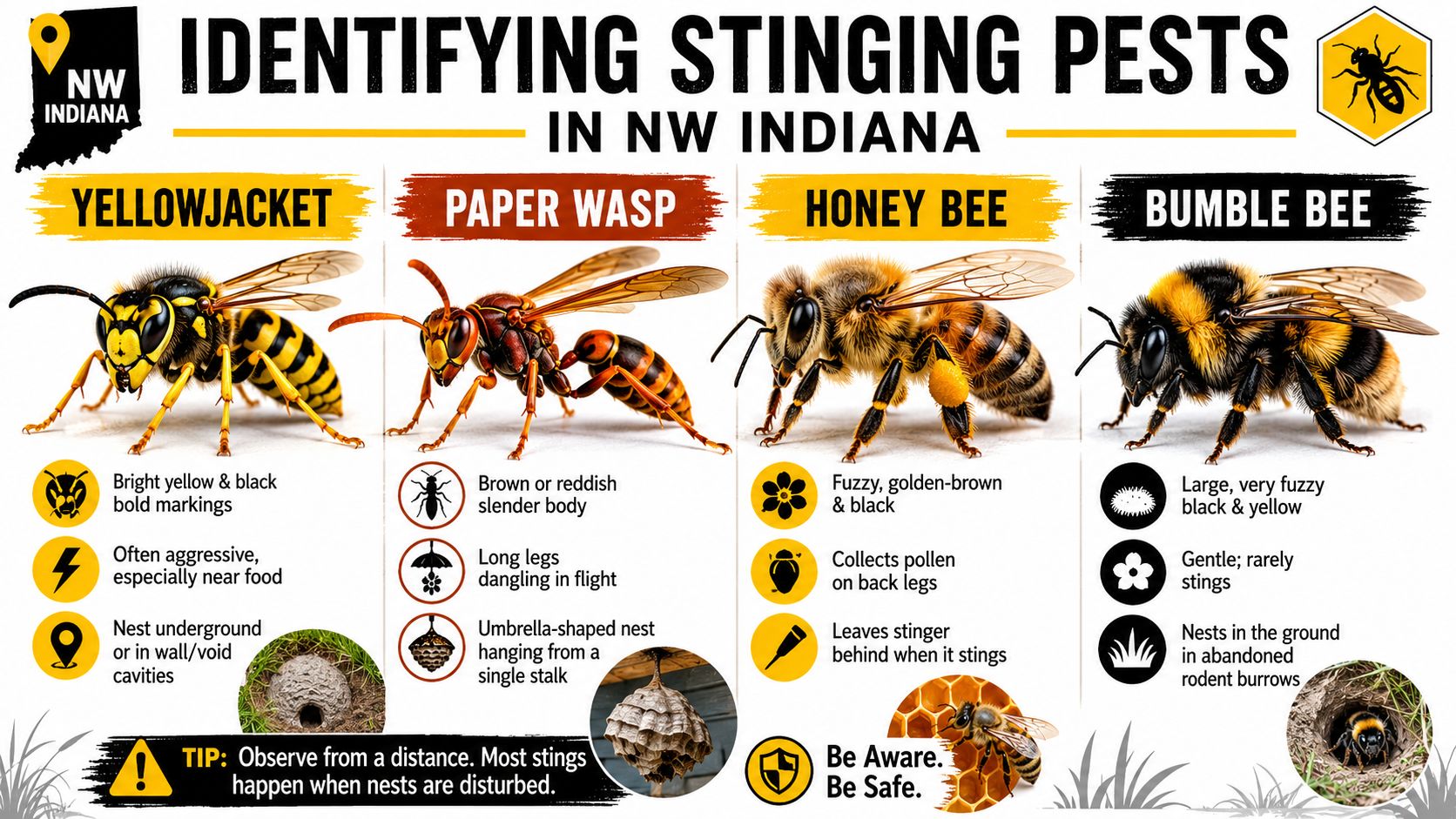
Quick visual breakdown
| Insect | What it usually looks like | What homeowners often notice first | Typical concern |
|---|---|---|---|
| Yellowjacket | Smooth body, bright yellow and black, slim shape | Fast movement around trash, drinks, or ground entry points | High sting risk near hidden nests |
| Paper wasp | Longer body, dangling legs in flight, narrower shape | Open paper nest under eaves or porch areas | Defensive if nest is approached |
| Honey bee | Fuzzier body, more compact shape | Activity around flowers or gaps leading to a cavity | Important to identify correctly before treatment |
| Bumble bee | Large, very fuzzy, black and yellow | Slow, heavy-looking flight near flowers or ground-level activity | Lower concern unless nest is disturbed |
Homeowners often rely too much on color. That's where mistakes happen. Plenty of insects share yellow-and-black markings, and lighting changes everything. Body texture, shape, and where the insect is active are usually more dependable.
What works better than color charts
If you're standing in a backyard in Crown Point trying to make a quick call, use this order:
Watch the body shape
A thick, fuzzy body leans bee. A sleek body with a pinched waist leans wasp.Look at the legs in flight
Paper wasps often appear to fly with their legs hanging down. That gives them a looser, more dangling look in the air.Note where the insect keeps returning
The return point matters. Ground, wall void, eave, shrub, and fence line all suggest different possibilities.Notice the activity pattern
Is it visiting flowers, scavenging near food, or making repeated trips into one opening?
A closer look can help, but only if you can do it safely. For more help with insect identification from a local pest control perspective, it helps to compare what you see with where the insects are living and how they're behaving on your property.
Here's a simple visual refresher before you make that judgment call.
Common mix-ups homeowners make
A lot of people call every striped insect a bee. Others call every nest a hornet nest. Neither assumption is safe.
If the insect looks smooth instead of fuzzy and the body has a tight, pinched middle, you're usually not dealing with a bee.
Another frequent mistake is focusing on a single insect instead of the group. One insect near a flower doesn't tell you much. Repeated traffic under siding, under stairs, or into the ground tells you a lot. That kind of pattern is what matters when you're deciding whether you need wasp removal, broader residential pest control, or a full exterior inspection that also checks for related issues like ant control, spider control, or seasonal pest activity around the structure.
Where They Live Nests and Nesting Behavior
For most homeowners, the nest is the clearest clue. You can often identify the type of stinging insect more safely by studying the structure and location of the nest than by trying to inspect the insect itself up close.
According to PestWorld's stinging insect nest identification guide, paper wasps build open, umbrella-shaped nests, bald-faced hornets build enclosed grey aerial nests, and yellowjackets create paper carton nests above ground or below ground with small, hard-to-see entrances.
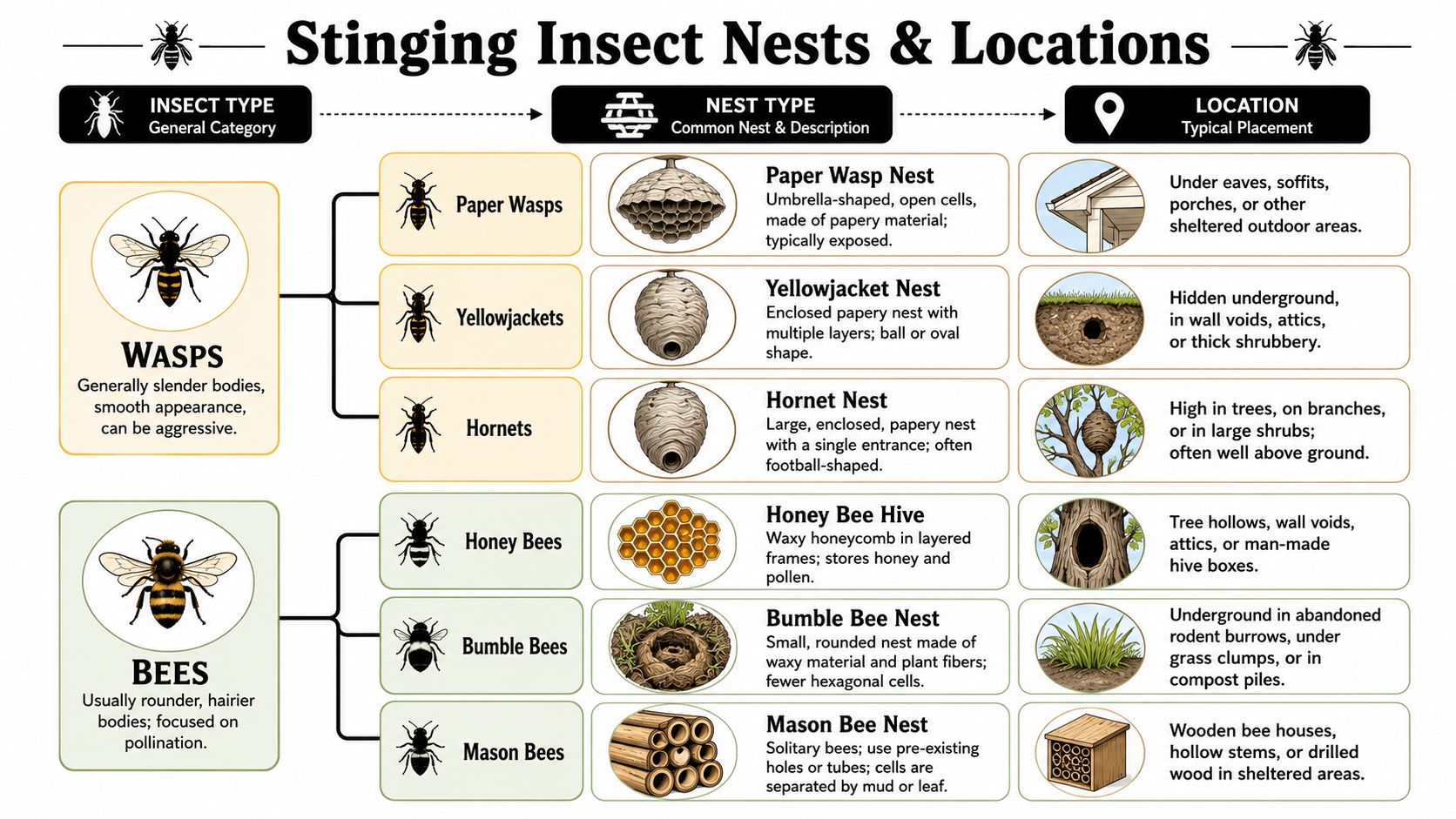
What the nest shape tells you
An open paper nest with visible cells usually points to paper wasps. These are often attached under porch ceilings, deck joists, railings, and overhangs. Homeowners spot them early because the nest hangs in plain sight.
A large enclosed grey nest hanging in a tree or on a structure suggests bald-faced hornets. Those nests are easier to see than yellowjacket nests, but that doesn't make them safe to approach. A visible nest can still be a high-risk situation if it's near a door, sidewalk, or play area.
Yellowjackets are different. Their nests are often hidden. You may only notice a small entrance point in the ground, activity near a wall void, or insects slipping into an opening under siding or near the roofline.
Common nest locations around Crown Point homes
A practical inspection around Northwest Indiana properties usually includes these spots:
- Under eaves and overhangs for paper wasp nests
- Attics and wall voids for concealed yellowjacket activity
- Shrubs and tree branches for aerial nests
- Ground openings near patios, sidewalks, or garden beds for hidden nest entrances
- Garages, sheds, and sheltered corners for mud structures and low-visibility nesting sites
Nest location often matters more than insect color. A hidden ground entrance and steady in-and-out traffic call for a much different response than a single insect passing through the yard.
One reason homeowners miss these nests is that the opening may look insignificant. A small gap in trim, a utility opening, or a ground hole can support a much bigger problem than you'd assume from the outside. That's also why stinging insect identification isn't just about naming the insect. It's about understanding where the colony is established, how accessible it is, and whether treatment can be done without driving insects deeper into the structure.
If you're also dealing with other recurring exterior issues such as mosquito control, rodent control, or preventative pest treatments, nest site conditions often overlap with the same moisture, shelter, and entry problems that support broader seasonal pest issues.
Understanding Insect Behavior and Sting Risk
If you want to stay safe, pay attention to behavior first. A calm insect passing through the yard is one thing. Repeated, agitated, defensive flight near one fixed area is something else entirely.
In Northwest Indiana, yellowjackets are the species that raise the most concern around homes and businesses. According to regional stinging insect guidance focused on Northwest Indiana, yellowjackets pose the highest human threat because they can sting repeatedly and aggressively defend concealed nests, especially when the nest is perceived as threatened.
High-risk behavior to take seriously
Yellowjackets don't need a lot of warning to switch from routine activity to defense. A mower passing over a ground nest, a child stepping near an entrance hole, or someone reaching into shrubs near a hidden colony can trigger a fast response. That's why so many bad sting incidents start with accidental contact rather than direct provocation.
Paper wasps are different. They're often less chaotic in open air, but they become defensive when people get too close to the nest. Homeowners get stung leaning on railings, cleaning soffits, or moving outdoor furniture under an active nest.
Lower-risk doesn't mean no-risk
Some stinging insects create more nuisance than danger in day-to-day life. A bee visiting flowers isn't usually looking for conflict. Carpenter bee activity can be more about drilling into wood than chasing people across the yard. Even then, homeowners shouldn't treat low aggression as permission to handle the problem casually.
The safest question isn't "What is it?" It's "What is it doing, and where is the nest?"
That mindset helps with real-world decisions. If the insects are foraging away from the home, the risk is lower. If they're defending a nest beside a front walk, under stairs, or near outdoor seating, the risk changes immediately. In such situations, a professional inspection makes practical sense, especially for homes, rental properties, and commercial spaces where regular foot traffic increases the chance of accidental contact.
For people searching for pest control in Crown Point, IN or exterminator near me, behavior is often the difference between a watch-and-monitor situation and one that needs prompt service.
First Aid and DIY Prevention Tips for Your Home
If someone gets stung, focus on calm, basic first aid first. Most mild stings improve with simple care, but severe reactions need immediate medical attention.
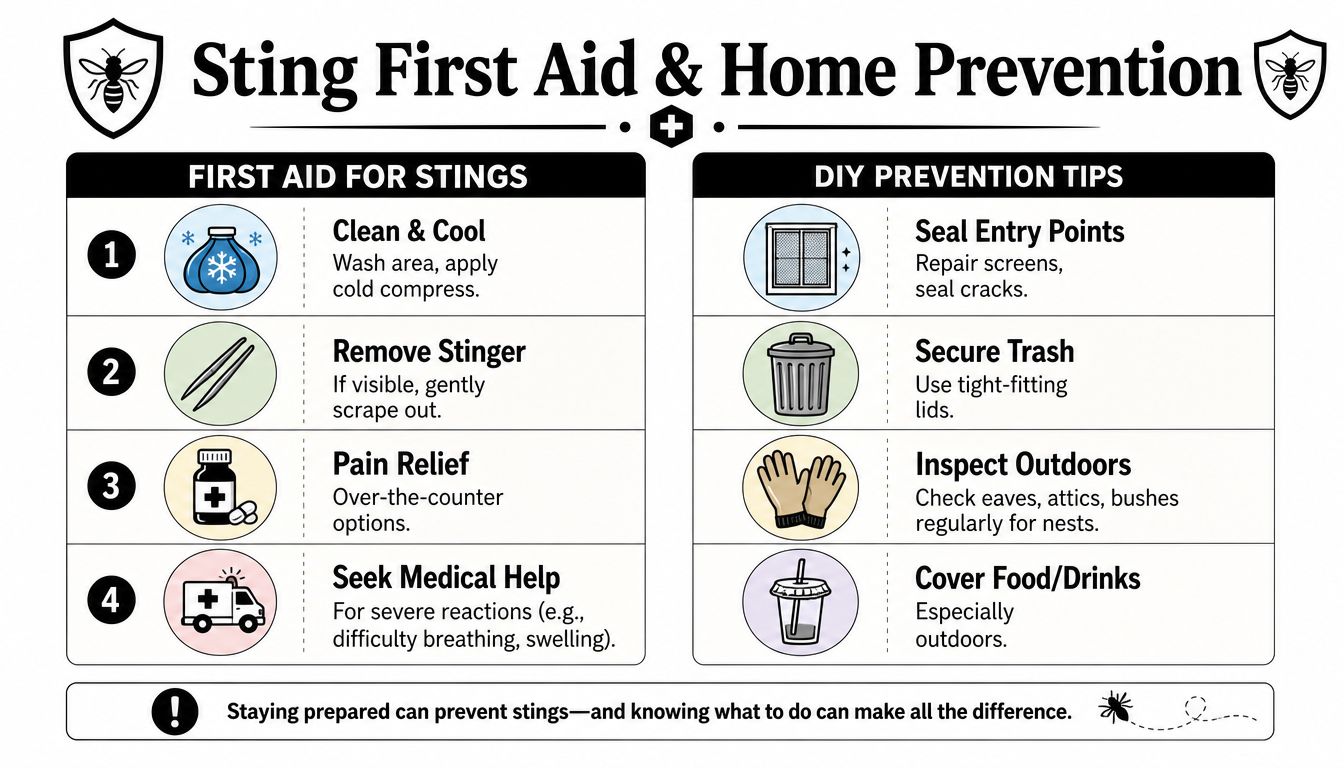
First aid steps after a sting
- Clean the area: Wash the sting site gently with soap and water.
- Cool it down: Use a cold compress or wrapped ice pack to help with pain and swelling.
- Check for a stinger: If one is visible, remove it carefully without squeezing more irritation into the skin.
- Monitor symptoms: Trouble breathing, swelling of the face or throat, dizziness, or widespread hives call for urgent medical help.
For localized discomfort afterward, some homeowners also look for effective lidocaine cream as one option for temporary skin pain relief after the immediate first-aid steps are handled.
DIY prevention that actually helps
You can't make a yard insect-free, but you can make your property less inviting.
- Seal entry points: Repair torn screens, close gaps around vents, and seal cracks around siding, trim, and utility lines.
- Control food attractants: Keep trash lids tight, clean outdoor eating areas, and don't leave sweet drinks uncovered on patios.
- Inspect the exterior regularly: Check eaves, fence lines, sheds, deck framing, and shrubs for early nest development.
- Watch ground activity: If insects keep using the same patch of soil, don't test it with your foot or lawn tools.
What doesn't work well
A lot of DIY failures come from treating symptoms instead of the nest. Killing a few visible insects at the picnic table doesn't solve the colony. Spraying a random wall gap without confirming the nest location can make the problem harder to manage.
Another common mistake is taking down an empty-looking paper nest and assuming the issue is gone. If insects are still returning to the same area, the active nesting site may be hidden nearby. That's one reason preventative pest treatments and routine inspections can be useful, especially when stinging insect activity shows up alongside ant control, spider control, or other seasonal exterior pest concerns.
Why Professional Pest Control Is the Safest Solution
DIY stinging insect removal sounds simple until the nest is hidden, overhead, or attached to the structure. Then the risks stack up fast. Homeowners can trigger defensive swarming, miss the actual colony, or put themselves in danger on ladders, roofs, and uneven ground.
There is also a medical reason not to rely too heavily on your own identification. According to research indexed through PubMed on stinging insect identification and venom evaluation, even trained physicians correctly identify stinging insects only 61% of the time, and allergy guidance recommends evaluation for all flying Hymenoptera because venom reactions can cross-react between species.
Why that matters in the real world
If a homeowner says, "I know exactly what stung me," that may still not be enough to make a safe treatment decision. The visible insect might not match the nest. The insect that caused the sting may not be the one now nesting near the home. And from a health standpoint, the bigger issue may be exposure to the broader stinging insect group rather than a single named species.
That changes the goal of service. Good pest control isn't just about removing a nest. It's about reducing the chance of another sting event while correctly identifying where the risk is coming from.
What professionals do differently
Professionals approach stinging insect problems with inspection, protective equipment, and application methods designed for the nest location. That may involve working around soffits, wall voids, ground nests, rooflines, or detached structures without forcing the colony into a more difficult spot.
Homeowners who want a better sense of the process can review how wasp nest removal is typically handled. The Green Advantage also provides insect identification support and site-specific pest treatment planning for residential and commercial properties in Northwest Indiana using that same inspection-first approach.
For anyone comparing residential pest control, commercial pest control, or an exterminator in Crown Point, IN, the safest option is the one that starts with correct identification, realistic risk assessment, and treatment that matches the nest site.
Your Trusted Exterminator in Crown Point IN
When you call for help with stinging insects, you shouldn't have to sort out the danger on your own. You want a clear answer, a straightforward plan, and someone local who understands the seasonal pest patterns around Crown Point and nearby Northwest Indiana communities.
That process should feel simple. You call and explain what you're seeing. A knowledgeable office staff member helps move things along, answers immediate questions, and schedules an inspection. From there, the technician focuses on the property itself. Where the insects are active, where they're nesting, how close they are to people, pets, walkways, and entry points, and what treatment makes sense for that specific site.
A good service visit doesn't start with spraying. It starts with identifying the problem correctly.
That matters whether you're dealing with a wasp issue over the back patio, yellowjacket activity near the foundation, or broader exterior pest pressure that also points to mosquito control, rodent control, or preventative pest treatments. Homeowners, landlords, and commercial property managers all benefit from the same thing. Calm answers and practical follow-through.
If you've been searching for pest control near me, pest control in Crown Point, IN, or a dependable exterminator near me, local experience matters. So does clear communication. The right help should leave you with fewer surprises, lower risk around the property, and a plan you can understand.
If stinging insect activity is making you uneasy around your home or business, contact The Green Advantage to schedule a pest inspection or request a quote. You'll get practical guidance, a site-specific treatment plan, and help protecting your property, your family, and your peace of mind in Crown Point and surrounding Northwest Indiana service areas.