Pest Control Orlando: Your Local Exterminator Experts

A quiet house in Crown Point can change fast. One night it is scratching in the wall. The next morning it is ants crossing the kitchen counter, wasps starting a nest under the eaves, or mosquitoes pushing everyone off the patio before sunset.

In Northwest Indiana, those problems usually start for a reason. Rain drives pests toward dry shelter. Temperature swings push insects and rodents indoors. Damp crawlspaces, mulch beds, clogged gutters, and small gaps around siding or utility lines give them exactly what they need to settle in and keep coming back.

That is why recurring pest issues here rarely improve with a one-time treatment alone. A spray may knock activity down for now, but the lasting solution is finding what is attracting pests, where they are getting in, and how seasonal conditions around the property keep the cycle going.

Homeowners in Crown Point usually want clear answers, steady protection, and fewer surprises. A locally tuned pest control plan does more than respond to an active problem. It helps prevent the next one, which is often the difference between another service call in a few weeks and real peace of mind. For homeowners comparing outside advice, even topics like spotting rodent problems in Miami can show how early warning signs develop before an infestation becomes obvious.

Your Trusted Local Exterminator in Crown Point IN

A Crown Point homeowner usually doesn't call at the first single ant or one spider in the basement; they call when the pattern changes. The ants keep returning after store-bought bait. The garage starts smelling musty and something is moving near the insulation. The patio that should be relaxing turns into a mosquito zone by evening.

That stress is real because pests don't just feel unpleasant. They change how you use your home. People start avoiding parts of the house, worrying about damage, or wondering whether the problem is bigger than what they can see.

In Northwest Indiana, the hardest part for homeowners is that recurring pest problems often look small at first. A few clues can hide a larger issue behind walls, under concrete, around a crawlspace, or along the roofline. That's why a calm, methodical approach matters more than panic buying another can from the hardware store.

What local homeowners usually need most

Most calls come down to a few practical concerns:

  • Clear identification: You need to know whether you're dealing with ants, rodents, wasps, spiders, or a wood-damaging pest before any treatment makes sense.
  • A reason pests are returning: Good service should explain the cause, not just apply product and leave.
  • A plan that fits the property: Families with pets, older homes, detached garages, and wooded lots all create different pest pressures.
  • Straight communication: Homeowners want to know what was found, what was treated, and what needs to happen next.

The most effective exterminator in Crown Point, IN isn't the one who sprays the fastest. It's the one who finds where the pressure is starting.

That's the local difference. In a place like Crown Point, homes deal with spring moisture, summer insect activity, fall rodent movement, and winter sheltering behavior. The right service approach protects the house as a system, not just the one room where the pest happened to show up.

Identifying Common Pests in Northwest Indiana by Season

Seasonality matters because pests don't behave the same way in April that they do in October. If you know what tends to show up and why, you can catch activity earlier and make better decisions about residential pest control.

A seasonal pest guide for Orlando homes, outlining active insects and rodents for each of the four seasons.

Spring and early summer activity

As temperatures rise, insects become more active. Ants start foraging more aggressively, especially around kitchens, bathrooms, and foundation lines where moisture and food are easy to find. You may also see increased wasp activity around soffits, porch roofs, sheds, and fence lines as nesting begins.

Spiders often become more visible too, but usually that's a sign of another issue. Where spiders are building webs successfully, they're finding insect prey. If webs keep appearing around window frames, basements, garages, or exterior lights, there's usually an underlying insect population feeding that activity.

Termite concerns also enter the conversation in warmer conditions. One of the biggest mistakes homeowners make is waiting until they see obvious wood damage. In practice, signs like mud tubes, soft wood, or unusual swarm activity deserve a closer look before damage spreads.

High summer pressure around the yard and exterior

Summer tends to push mosquito complaints to the top of the list. Standing water, shaded landscaping, clogged gutters, and dense vegetation all help mosquitoes stay active around the property. This is also when one-off treatments often disappoint homeowners, because reducing adult mosquitoes without addressing resting and breeding areas rarely brings lasting relief.

Wasps become more noticeable in summer because nests are larger and easier to spot. Homeowners often try to handle nests themselves, especially around entry doors or roof edges, but that can go wrong quickly if the nest is active and the access point is awkward.

Practical rule: If you're seeing pests outdoors in the same places over and over, the condition attracting them is usually still in place.

Fall and winter indoor movement

When outdoor conditions get cooler, rodents start looking for shelter, warmth, and dependable food sources. In Crown Point, that often means garages, crawlspaces, attics, utility penetrations, and lower-level storage areas. Homeowners usually notice droppings, gnawing, scratching sounds, or disturbed insulation before they ever see the animal itself.

If you want a simple reference on early warning signs, this guide on spotting rodent problems in Miami is useful because the signs themselves are universal even though the climate is different. The lesson is the same. Rodent problems are usually discovered through evidence, not direct sightings.

Cockroaches and occasional invaders can also remain active indoors when a structure offers warmth, moisture, and hiding areas. Spiders continue to show up through fall because they follow prey, and many homeowners mistake winter sightings as a sudden infestation when the house has really been supporting pest activity for months.

Seasonal patterns at a glance

Season Common pressure What homeowners often notice
Spring Ants, termites, wasps Trails, swarms, early nest building
Summer Mosquitoes, wasps, spiders Bites, nest growth, more webbing
Fall Rodents, spiders Scratching, droppings, indoor sightings
Winter Rodents, roaches, ants indoors Activity near warmth, kitchens, storage

Residential and Commercial Pest Control Solutions

A family home and a local business can both have pest problems, but they don't need the same service plan. The goal is the same. Stop the pest activity and keep it from returning. The method has to fit how the property is used.

What homes need from residential pest control

In a residence, the focus is personal. Parents want to protect children, pets, food storage areas, and the rooms people use every day. Homeowners also want service that respects how they live. That means paying attention to where pests are active, where they're entering, and how to reduce pressure without treating the whole property the same way.

For homes in Crown Point, good residential pest control usually includes a mix of inspection, targeted application, exclusion recommendations, and follow-up based on the pest involved. Ant control, rodent control, wasp removal, spider reduction, and seasonal perimeter treatments all work better when the technician understands which part of the structure is allowing the problem to continue.

What businesses need from commercial pest control

Commercial properties have a different kind of risk. A pest issue can affect inventory, employee comfort, customer trust, and sanitation expectations. A restaurant, office, warehouse, retail storefront, and multi-unit property all have different pressure points, traffic patterns, and reporting needs.

That's where documentation and routine monitoring become more important. Business owners usually need consistent service windows, clear findings, and preventive work around doors, delivery areas, break rooms, drains, dumpsters, and storage zones. For businesses comparing service options, commercial pest control services should be built around the property's actual use, not a one-size-fits-all spray schedule.

Why IPM works better than routine blanket spraying

The strongest professional approach for both homes and businesses is Integrated Pest Management, often called IPM. That means the technician doesn't just ask, “What can I spray?” They ask, “What's allowing this pest to survive here?”

An IPM approach typically looks at:

  • Entry points: Gaps under doors, pipe penetrations, damaged screens, and foundation cracks
  • Food sources: Pantry spills, grease residue, trash handling, pet food, and storage habits
  • Moisture: Leaks, condensation, poor drainage, damp crawlspaces, and clogged gutters
  • Harborage: Cardboard, clutter, mulch buildup, dense shrubs, and undisturbed voids

A useful pest-control principle comes from commercial guidance on entry points. Common pest access areas include windows and doors, roofs, floor drains, ventilation intakes, and incoming shipments, and the bigger lesson is that exclusion plus sanitation often works better than treatment alone in preventing reinfestation in active structures (Orkin commercial guidance on pest entry points).

Good pest control solves the reason the pest can stay, not just the reason it showed up.

That difference is what separates a temporary response from lasting control.

Protect Your Property with Termite and Mosquito Programs

You walk out to the patio on a July evening in Crown Point and the mosquitoes find you before you can sit down. A few months later, you notice soft trim near the garage or a mud tube along the foundation. Different pests, same lesson. Waiting until the problem is obvious usually costs more money, more time, and more frustration.

A professional pest control technician spraying chemical treatment along the exterior concrete foundation of a house.

Why termite protection can't wait for visible damage

In Northwest Indiana, termite issues usually build subtly. Subterranean termites stay connected to the soil, which means homes with wood contact near grade, moisture around the foundation, or older construction details face more risk than owners realize. By the time damage is visible, the colony has often been active for a while.

The National Pest Management Association notes that termites cause billions in property damage across the U.S. each year, and insurance policies typically do not cover that damage (NPMA termite information). That is the real trade-off for homeowners. Pay for monitoring and protection on purpose, or pay later for repairs after hidden feeding has spread.

I tell Crown Point homeowners the same thing. Termite work is not about fear. It is about catching conditions early, before a structural issue turns into a carpentry bill.

Why mosquito reduction works better as a program

Mosquito pressure in our area follows weather patterns. Warm weeks, summer rain, shaded yards, clogged gutters, low spots that hold water, and thick landscaping all give mosquitoes a place to breed and rest. A one-time spray can knock numbers down for a short period, but it does not change the pattern that keeps bringing them back.

That is why seasonal mosquito control usually makes more sense than calling only when the backyard becomes unusable. Properties near ponds, drainage areas, tree lines, or dense shrub beds often need repeated service during active months because new mosquito activity keeps developing after rain and heat cycles.

Here's a quick visual on why preventive treatments matter over time.

Reactive calls versus preventive programs

Emergency service still has a place. If you have guests coming this weekend and mosquitoes are out of control, or you found suspicious termite evidence and need an inspection fast, a targeted visit is appropriate. But for pests tied to soil, moisture, and seasonal breeding, prevention usually gives the better result.

  • Reactive service: Useful for a sudden flare-up or a specific concern that needs quick attention
  • Preventive program: Better for termites and mosquitoes because pressure returns with weather, moisture, and property conditions
  • Property protection focus: Helps protect outdoor living time, reduces surprise costs, and lowers the odds of a bigger problem developing out of sight

The goal is not endless treatment. The goal is fewer surprises. Homeowners appreciate that same kind of consistency in service businesses generally, which is part of why this practical playbook for local businesses lines up with what works in pest control too. Clear communication, predictable follow-through, and solving the root problem are what give people peace of mind.

What to Expect During Your Service with The Green Advantage

You spot ants along the kitchen counter before work, then notice them again the next morning in the same place. A few days later, you find more activity near the garage door. That pattern matters. In Crown Point, recurring pest problems usually come from conditions around the home, not just the insects you happen to see that day.

A five-step infographic showing the professional pest control service process from initial contact to follow-up.

Step one starts with the problem you noticed

The first call usually starts with symptoms, not a firm ID. You may have seen ants in the kitchen every morning, heard scratching near the attic, or noticed mosquitoes building up near the back fence. That is enough to get the process started.

Details help us narrow things down faster. When did it start? Is the activity indoors, outdoors, or both? Does it get worse after rain, at night, or around pet food and trash areas? Good intake questions save time on site and help the technician know where to begin looking.

Inspection comes before treatment

A solid pest service starts with inspection. Spraying first and asking questions later usually misses the reason the problem keeps returning.

The Green Advantage follows the same basic approach experienced pest professionals use everywhere. First confirm what pest is active. Then look for the source, access points, moisture issues, nesting areas, and other conditions that support it. Once those pieces are clear, treatment can be focused where it will do the most good.

That matters in Northwest Indiana because our weather keeps changing the pressure on a property. Rain pushes some pests inward. Dry spells send them looking for water. Warm stretches can speed activity up, then colder snaps change where they hide. If a technician finds gaps at door sweeps, damp mulch against the foundation, droppings in a utility area, or frass near damaged wood, the plan becomes more accurate and usually more effective than a generic spray around the house.

What happens on site

Once the inspection is done, service should follow a clear sequence:

  1. Confirm the active pest
    The technician identifies what is present and explains the evidence behind that call.

  2. Show the contributing conditions
    You should hear why the pests are there, where they are getting in, and what is helping them stay.

  3. Treat the right areas
    Product is applied to the problem zones and likely travel paths, based on the inspection findings.

  4. Recommend practical corrections
    That may include sealing gaps, reducing standing water, trimming vegetation, adjusting storage, or fixing moisture issues.

  5. Set realistic follow-up expectations
    Some problems improve quickly. Others need monitoring, a second visit, or seasonal service because the conditions that drive them do not disappear overnight.

Ask what the technician found and why the treatment was chosen. Clear answers are a good sign you are getting real pest management, not guesswork.

Safety and communication matter

You should know what was applied, where it was applied, and whether any reentry or prep instructions matter for children and pets. Good service is clear, specific, and easy to follow.

The Green Advantage provides pest inspections and customized residential and commercial service. That means the visit should leave you with more than a treatment receipt. You should come away understanding what caused the issue, what was done to address it, and what steps will help keep it from returning.

A Homeowner's Checklist for Choosing a Pest Control Provider

Choosing a pest company gets easier when you stop looking for slogans and start looking for signals of competence. The right provider should help you feel informed, not pressured.

A checklist for homeowners detailing five essential steps to follow when choosing a pest control company.

Start with the basics that protect you

A reliable company should be properly licensed and insured for the work it performs in Indiana. That isn't just paperwork. It tells you the company is operating as a legitimate service provider and can stand behind its work professionally.

You should also look for local experience. A company that understands Crown Point and nearby Northwest Indiana communities will usually diagnose seasonal patterns, construction styles, and property-specific risks more accurately than a generic call-center operation.

Use this checklist before you book

  • Licensing and insurance: Ask directly whether the company is licensed for pest-control work in Indiana and carries appropriate insurance.
  • Inspection quality: Find out whether they inspect before recommending treatment, or if they jump straight to a generic program.
  • Communication style: Notice whether they explain findings in plain language or hide behind vague promises.
  • Service scope: Ask what is included, what is excluded, and what follow-up looks like if the first visit doesn't fully resolve the issue.
  • Local reputation: Read reviews with attention to detail. Look for comments about responsiveness, professionalism, and whether the explanation made sense.
  • Environmental fit: If you want eco-friendly pest control or lower-impact options, ask how they balance targeted treatment with exclusion, habitat reduction, and prevention.

What separates a useful estimate from a weak one

A weak estimate sounds simple but tells you very little. It might promise general spraying without discussing the pest, the source, the access points, or the conditions that are supporting activity.

A strong estimate usually includes:

What to look for Why it matters
Specific pest findings Treatment only works well when the pest is correctly identified
Notes about entry points or conditions Prevention depends on fixing what allowed the problem
Clear follow-up expectations Some infestations need monitoring, not just one visit
Straight answers on pricing Ambiguity often leads to frustration later

The best question a homeowner can ask is, "Why is this happening on my property?" The answer tells you whether the company is thinking like an exterminator or just a salesperson.

If you manage a business property, customer experience and communication standards matter there too. This practical playbook for local businesses is useful because it reinforces a broader truth that applies to pest service as well. Clear communication, responsiveness, and consistent follow-through shape trust before and after the work is done.

Your Questions Answered About Pest Control in Crown Point

How much does pest control in Crown Point, IN usually cost

Pricing depends on the pest involved, the size and condition of the property, how severe the activity is, and whether you need one-time service or an ongoing preventive plan. A wasp nest removal, a recurring ant issue, and a rodent exclusion problem won't be priced the same because they don't require the same labor, materials, or follow-up.

For homeowners searching exterminator near me or pest control near me, the better question is often what the service includes. Inspection quality, targeted treatment, and follow-up support matter more than getting the lowest number first.

How often should a home get pest control service

That depends on the pest pressure around the property and your goals. Some homes only need treatment when a specific issue appears. Others benefit from preventive service because the lot, moisture conditions, nearby woods, detached structures, or past history make recurring problems more likely.

If pests keep returning season after season, routine prevention usually makes more sense than repeated emergency calls.

Are eco-friendly pest control options available

Yes, but it's important to understand what that usually means in practice. Responsible pest control often combines lower-impact treatment choices with non-chemical methods such as exclusion, sanitation improvement, habitat reduction, and moisture control. That approach tends to be more effective than relying on product alone.

If eco-friendly service matters to you, ask how the company decides where to treat, what alternatives they use, and what changes you can make around the property to support long-term control.

What should I do before the technician arrives

Start by writing down what you've seen and where. Note whether activity happens at certain times of day, after rain, near food, or in a particular room. Clear access to sinks, baseboards, utility areas, attic hatches, garage corners, and crawlspace entries if possible.

You don't need to know exactly what pest you have before calling. You just need to describe the signs clearly so the inspection starts in the right place.


If you're dealing with recurring pest activity in Crown Point or nearby Northwest Indiana communities, The Green Advantage can help you move from guesswork to a practical plan. Whether you need an inspection, a quote, or ongoing protection for your home or business, the next step is simple. Reach out, describe what you're seeing, and get clear guidance on what's causing the problem and how to address it.

Termite Inspection Cost in Crown Point, IN: A Homeowner’s Guide
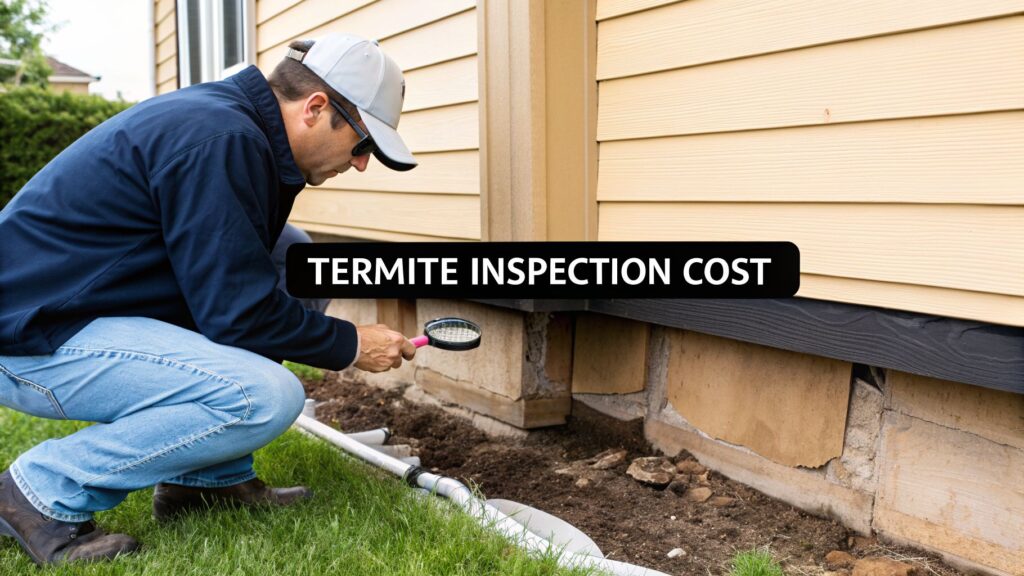
Whether you're selling your home, buying a new one, or simply concerned about protecting your property, the cost of a termite inspection is a common question. For homeowners in Crown Point, Indiana, the answer is often a pleasant surprise. A professional inspection is a small, smart investment to protect your family's home from the threat of pests.

As a trusted, local pest control company serving Crown Point and the surrounding Northwest Indiana communities, The Green Advantage is here to provide the clear answers and reliable service you need. We understand that a potential pest infestation can be stressful, and our goal is to offer reassuring expertise and effective, family-safe solutions.

The Real Cost of a Termite Inspection in Crown Point

Let's get straight to it: protecting your home from the hidden damage termites can cause is more affordable than you might think. For homeowners in Crown Point and across Northwest Indiana, the cost for a professional termite inspection from a local exterminator is often much lower than what people face in other parts of the country. This makes proactive prevention a smart and accessible choice.

While you might hear of inspection prices creeping into the hundreds or even thousands of dollars in other states, that's not the reality here. As a local pest control provider, The Green Advantage operates efficiently, passing those savings directly on to our neighbors.

Comparing Local and National Costs

Here in Northwest Indiana, a typical inspection from a trusted local expert like The Green Advantage will usually fall somewhere between $81 and $277.

That range is a bargain when you compare it to high-risk termite areas. For instance, according to national data from HomeLight, inspections in California can run from $785–$1,777, and in Florida, they can be anywhere from $423–$1,066.

To put this into perspective, here is a breakdown of termite inspection and potential repair costs, comparing the national average to what we typically see right here in Crown Point.

Termite Inspection Costs at a Glance: National vs. Crown Point, IN

Region Average Inspection Cost Range Average Repair Cost for Untreated Damage
National Average $200 - $650+ $3,000 - $8,000+
Crown Point, IN $81 - $277 $3,000 - $8,000+

As you can see, while the potential cost of repairs from an untreated infestation is devastatingly high no matter where you live, the upfront cost to catch the problem early is significantly lower for homeowners in our local community.

This chart drives the point home, visually comparing the value we get in our area.
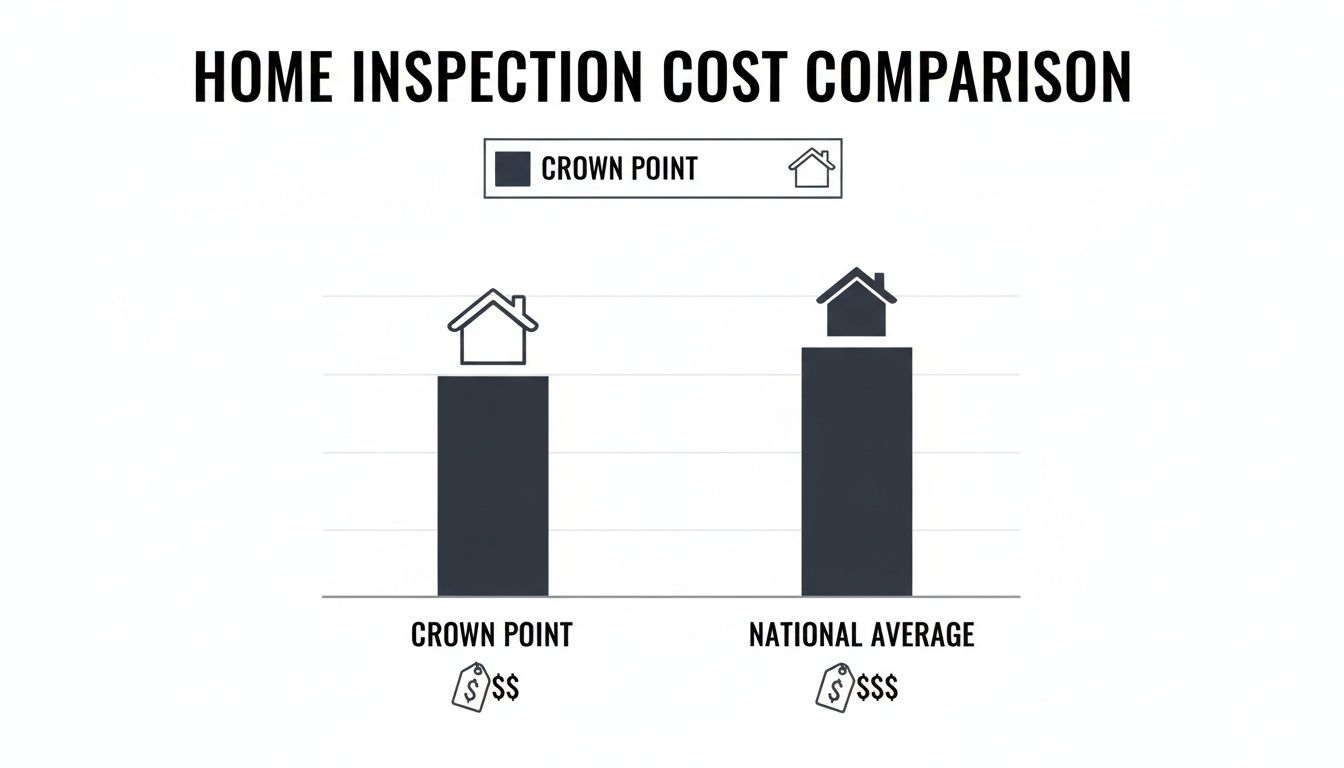
Bar chart comparing home inspection costs for Crown Point and the national average.

It’s clear that getting peace of mind in our community is far more wallet-friendly than in many other places.

Think of a termite inspection less as an expense and more as a small insurance premium. It’s a modest fee that provides a powerful defense against the staggering repair bills that an unchecked infestation can leave behind.

As your local exterminator in Crown Point, IN, our goal isn't just to find termites; it's to make this essential service accessible to everyone. A small, upfront investment is the single most effective way to prevent the thousands of dollars in structural damage that pests like termites, ants, and rodents can quietly cause.

What Happens During a Professional Termite Inspection
An inspector talks with a homeowner about inspection costs at a house entrance.

So, what really goes on when we show up for a termite inspection? It's much more than a quick walkthrough. Think of it as a comprehensive check-up for your house, where a trained specialist knows exactly what symptoms to look for. Our mission is to hunt down any evidence of wood-destroying insects and spot potential problems before they escalate.

For us at The Green Advantage, the work starts before we even ring your doorbell. A home’s exterior is the frontline defense against termites and other pests, so that’s where we begin our search at your Crown Point property.

The Exterior Examination

A professional inspection always starts on the outside, methodically working around your home's entire foundation. We're looking for tiny clues that an untrained eye would almost certainly miss.

Here’s a glimpse of what we're scanning for:

  • Mud Tubes: Subterranean termites build these pencil-thin tunnels to travel safely from their colony in the soil to the wood in your home. They’re a dead giveaway.
  • Damaged Wood: We physically probe and tap wood structures near the ground—siding, porch supports, deck posts—listening for the hollow sound that signals internal damage.
  • Cracks and Gaps: Termites only need a sliver of an opening. We pinpoint every crack in the foundation or gap around utility pipes that could serve as a secret entrance for pests.

The Interior Deep Dive

Once we've cleared the exterior, we move inside to the places termites and other pests love most. This is where experience really pays off, because we know their favorite hiding spots.

Our interior check focuses on these high-risk zones:

  • Basements and Crawl Spaces: These dark, often damp areas are a five-star resort for termites and other pests. We get into every corner, inspecting support posts, sill plates, and floor joists for any trace of activity.
  • Attics: We’re not just looking for evidence of drywood termites up here; we’re also checking for roof leaks or moisture issues that can attract all kinds of pests, from spiders to rodents.
  • Garages and Utility Areas: The wood framing in a garage is often in direct contact with the concrete slab foundation, creating a perfect bridge for termites to enter undetected.

A professional inspection isn't just about finding an active infestation. It's about identifying conducive conditions—things like standing water, woodpiles against the house, or poor ventilation—that essentially roll out the welcome mat for future termite, ant, or rodent problems.

After our assessment is complete, we'll walk you through everything we found, right there on the spot. If there are signs of termites, we’ll show you the proof, explain the situation clearly, and lay out a straightforward, no-pressure plan to handle it. For real estate transactions, the process and paperwork have specific requirements. You can discover more about this in our detailed guide on the termite inspection for real estate. We want every homeowner in Crown Point, IN, to have the knowledge they need to protect their investment.

What Factors Influence Your Final Inspection Price?
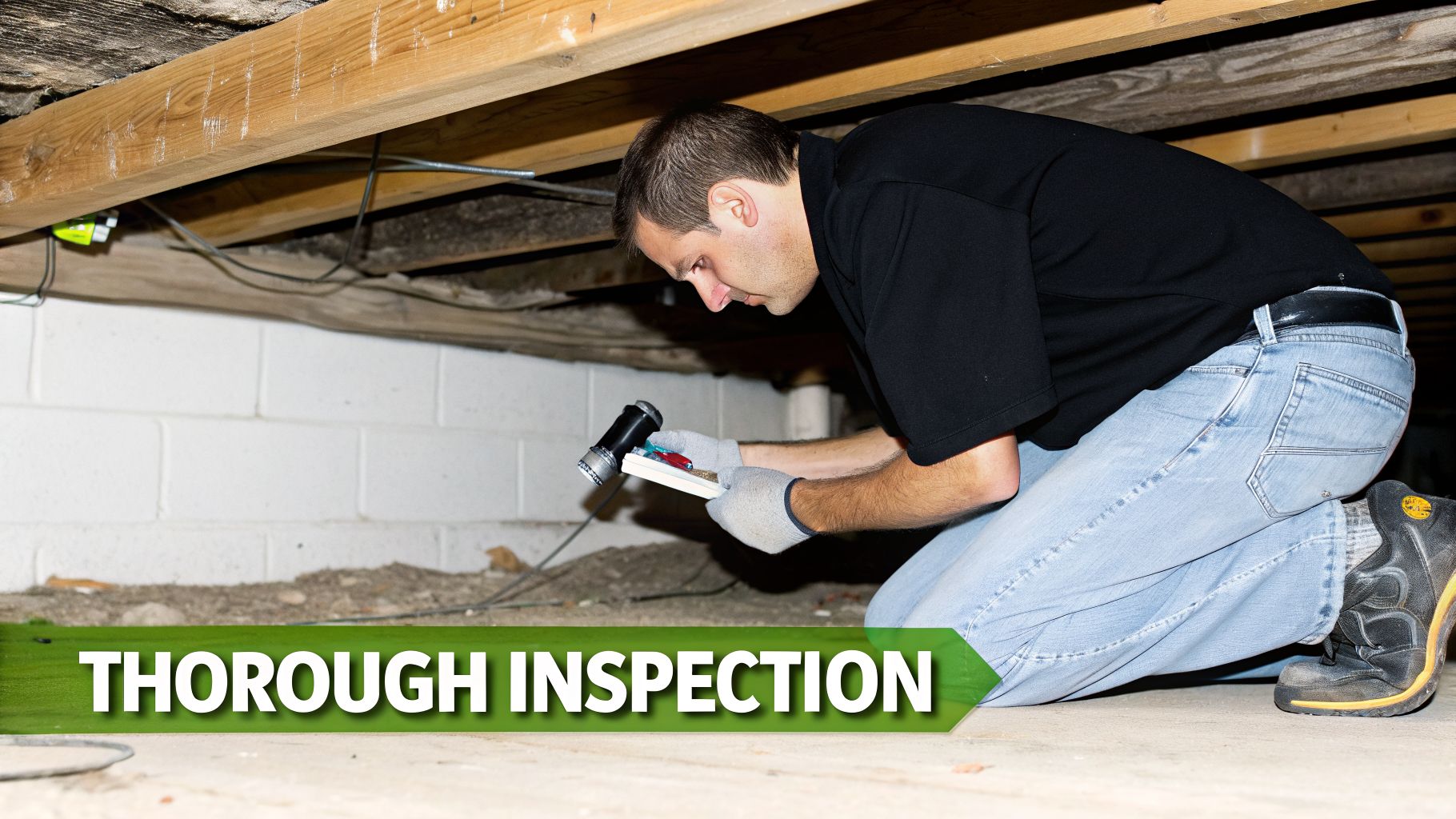
A man on his knees with a flashlight thoroughly inspects a dark crawl space.

While the average termite inspection cost around Crown Point is very reasonable, the final number on your estimate isn't pulled out of a hat. No two homes are exactly alike, so no two inspections are, either. The price really comes down to the time and effort a certified technician needs to invest to give your property a truly thorough look.

We provide a custom quote that reflects the unique details of your home, ensuring you’re only paying for the work that’s actually required. Let’s break down the main things that can move the needle on your final cost.

Property Size and Layout

This one is pretty straightforward. A sprawling, multi-story home with a detached garage and a shed is going to take more time to inspect than a compact, single-story ranch. More square footage simply means more ground to cover.

But it’s not just about size; the layout matters, too. A home with a complex floor plan—lots of little rooms, nooks, and crannies—requires a much more meticulous search than a place with a wide-open concept. Our job is to hunt down every potential weak spot, and a complicated layout just gives pests like termites more places to hide.

Foundation Type and Accessibility

Your home's foundation is a huge factor in the inspection process. Homes with a clean, open basement or a simple slab foundation are usually the easiest to inspect. The real wild card? Crawl spaces.

  • Slab Foundations: These are typically the quickest. The inspection mainly focuses on the outside perimeter and any points where plumbing or utilities enter the slab.
  • Basements: Most basements give us good access, allowing for a clear look at the sill plates, headers, and joists where termites love to show up first.
  • Crawl Spaces: This is where things can get tricky. A tight, damp, or cluttered crawl space can dramatically increase the time and effort involved. Getting into these spaces safely and effectively often requires special gear and a lot more patience.

In short, the harder it is for an inspector to get a good look at the structural "bones" of your home, the more time and labor it takes. That difference will naturally be reflected in the final termite inspection cost.

Type of Inspection Report

Finally, why you're getting the inspection can also affect the price. A standard check-up for a long-time homeowner just wanting peace of mind is different from the official report needed for a real estate sale.

When a property is being sold in Indiana, lenders and buyers often require a formal Wood-Destroying Organism (WDO) report. This isn't just a simple checklist; it's a legal document that follows a much stricter protocol and involves more detailed paperwork. Because this report carries more weight and liability, it can add a bit to the overall cost. A company's internal efficiency, sometimes streamlined by tools like pest control business management software, can also play a role in how they price these more intensive services.

The True Financial Risk of Skipping an Inspection

Let's be honest—when you're juggling all the expenses of homeownership, it’s easy to think about skipping a pest inspection to save a little cash. After all, if you don't see any bugs, there's no problem, right? Unfortunately, that's one of the riskiest assumptions you can make.

Pests like termites earned their nickname as "silent destroyers" for a reason. They work out of sight, deep within your walls, floors, and crawl spaces, methodically eating away at your home's structure. By the time you spot the first sign of trouble, they've likely been there for years. Think of a small inspection fee as an inexpensive insurance policy on your most valuable asset. It's the one thing that stands between your peace of mind and a potential financial nightmare.

The Staggering Cost of Termite Damage

Here in Northwest Indiana, our warm, humid summers create the perfect environment for subterranean termites to flourish. These conditions allow colonies to grow and spread aggressively, putting virtually every home in Crown Point and the surrounding region at risk. Ignoring that threat can have some truly staggering financial consequences.

The numbers are pretty shocking on a national scale. According to industry leader Orkin, termites infest roughly 600,000 homes in the U.S. every single year. The average repair bill for homeowners who discover an infestation is a painful $3,000. And that's just the average—in high-risk areas like ours, the costs can spiral much, much higher.

A single termite colony isn't just chewing on a 2x4. It’s a relentless, 24/7 demolition crew of hundreds of thousands of insects systematically compromising the very bones of your house.

From Small Pests to Massive Repair Bills

The damage these pests leave behind isn't just cosmetic; it's structural. An unchecked termite colony can weaken the most critical parts of your home, leading to repair bills that can easily soar into the five-figure range.

Depending on how long the termites have been active, you could be facing repairs like:

  • Structural Beams: Replacing or shoring up load-bearing beams can run from $2,000 to $10,000.
  • Flooring: Repairing damaged subfloors and floor joists is an extensive job, often costing between $1,500 and $7,000.
  • Foundations: In the worst-case scenarios, where termites compromise foundation supports, repairs can climb as high as $25,000.

When you stack those numbers up against the modest price of a professional inspection, the choice is obvious. An experienced exterminator in Crown Point, IN, can catch the earliest signs of an issue, giving you the chance to solve the problem before it becomes a catastrophe. To get a better handle on what comes next, you can explore our guide on the cost of residential termite control in Crown Point.

Why Crown Point Homeowners Trust The Green Advantage
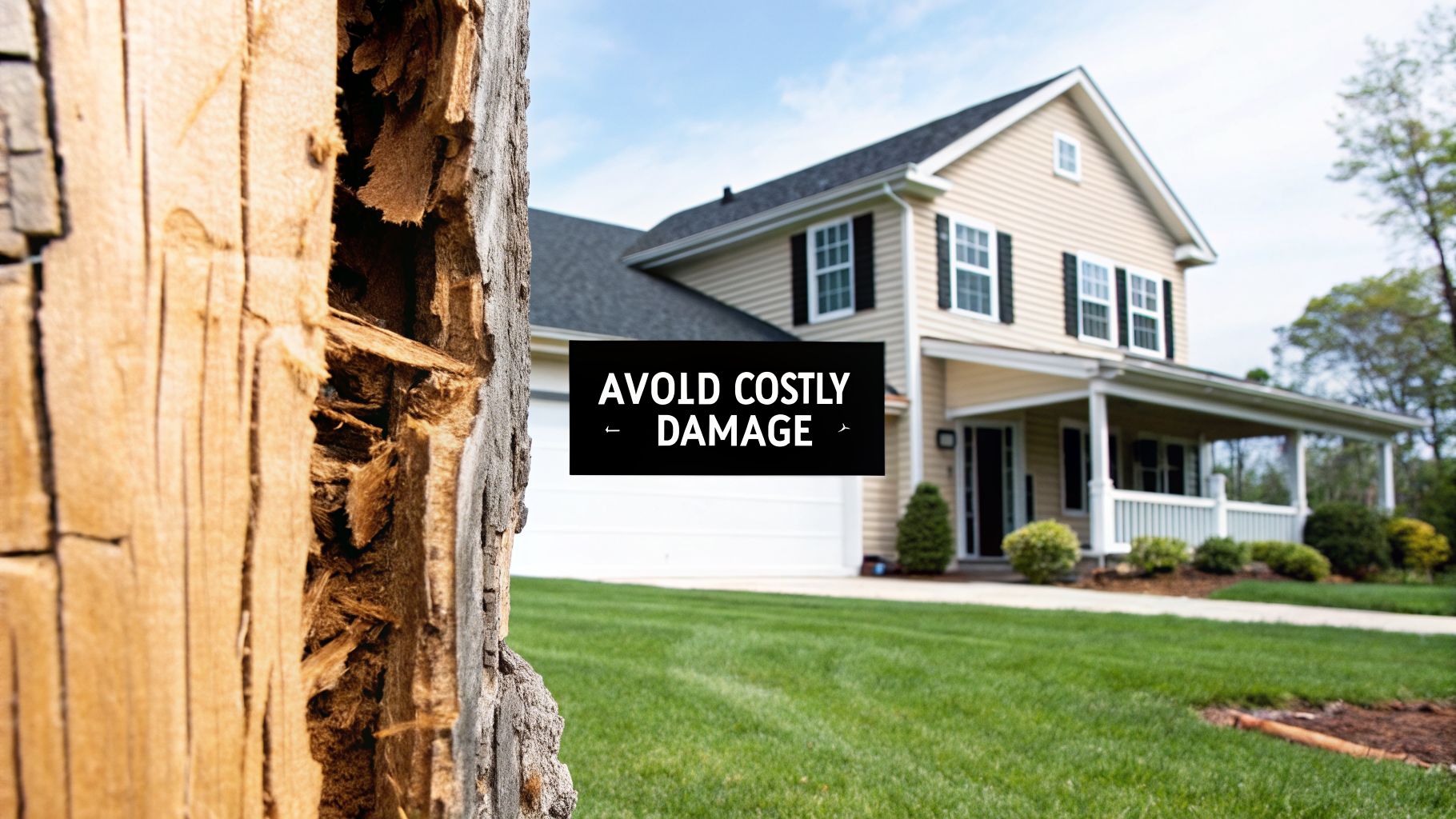
A large suburban house with a green lawn, partially obscured by a severely damaged tree trunk.

When you're looking for someone to protect your home, you're looking for more than a service—you're looking for peace of mind. For families all across Crown Point and Northwest Indiana, The Green Advantage has become that trusted partner. We're not some faceless national chain; we're a local, family-owned business with deep roots right here in the community.

That local connection makes all the difference. Our decades of experience aren't just in general pest control, but in solving the specific pest problems our neighbors face season after season—from ant control and wasp removal to rodent control and mosquito treatments. When you call us, you're talking to someone who gets it.

Our Commitment to You and Our Community

At The Green Advantage, our entire way of doing business is built on a few straightforward promises. We aim to be your dedicated partner in keeping your home safe, sound, and pest-free.

Here’s why choosing a professional pest control company like ours protects your property, health, and peace of mind:

  • Deep Local Expertise: We know exactly what to expect from Northwest Indiana's climate, from the spiders that show up in the fall to the termites that get active in the spring. This lets us stay a step ahead of pests, not just react to them.
  • Eco-Friendly Solutions: Your family’s well-being always comes first. We use effective, eco-friendly pest control treatments that are tough on pests but gentle on your home, your yard, and the people and pets you love.
  • Clear Communication: No one likes confusing technical jargon. Our licensed technicians take the time to walk you through what they’ve found, explain what it means for your home, and lay out your options in plain English.

We believe an informed homeowner is an empowered one. Our job is to give you the clarity and confidence to make the best decision for protecting your home and family, without pressure or confusion.

What to Expect When Working With The Green Advantage in Crown Point, IN

When you choose The Green Advantage, you are choosing a community-focused expert dedicated to solving your pest problems for good. Whether you need residential pest control for your home or commercial pest control for your business, we create a specific plan to solve it right. Our highly trained technicians are problem-solvers, not just applicators. Whether they’re tracing a hidden ant trail to its source, spotting conditions that invite termites, or setting up a preventative mosquito control plan for your yard, our team is focused on delivering results that last.

When you search for "pest control near me," you’re hoping to find someone who will treat your home with the same care they’d treat their own. That’s the promise we make—and keep—for every customer in Crown Point, IN.

Ready to Schedule Your Crown Point Termite Inspection?

Now that you know what’s at stake, the next move is simple. A professional termite inspection is, hands down, the most affordable and effective way to protect your biggest investment from these silent destroyers. The peace of mind that comes from knowing your home is on solid ground is truly invaluable.

At The Green Advantage, we live and work right here in Northwest Indiana. We’ve made the process of protecting your Crown Point home as straightforward and stress-free as possible. We’re your local experts, here to give you clear answers and service you can trust.

Getting Started Is Easy

We designed our scheduling process to be quick and transparent. Whether you're ready to book an inspection or just have a few questions, our team is here to help.

  1. Give Us a Call or a Click: Reach out by phone or fill out our online form. You’ll connect directly with a knowledgeable member of our local team—not a call center—who understands the unique pest pressures we face right here in NWI.
  2. Tell Us What’s Going On: We’ll take the time to listen to your concerns. Have you spotted something worrying? Or are you just looking for a routine check-up? Based on our conversation, we can give you a clear, honest quote for your termite inspection right over the phone.
  3. Book Your Appointment: We'll work with you to find a time that fits your busy schedule. Our certified technicians will show up on time, in uniform, and ready to perform a thorough, professional inspection of your property.

Don’t wait until you see sagging floors or crumbling wood. Proactive protection is always the smartest and most cost-effective strategy for any homeowner.

Take that next step today. Contact The Green Advantage to request your free quote and schedule the termite inspection that will secure your home and your peace of mind. Our Crown Point team is ready to help.

Common Questions About Termite Inspections

Even with all the details, you probably still have a few questions floating around. That’s completely normal. We’ve put together answers to the questions we hear most often from homeowners right here in the Crown Point area, so you can feel confident you’re making the right call.

How Often Should I Get a Termite Inspection?

For anyone living in Northwest Indiana, we always recommend getting a professional termite inspection every one to two years. An annual check-up is the gold standard for preventative pest treatments.

Our local climate gives termites a long season to stay active and cause trouble. Consistent, regular monitoring is genuinely the best defense you have to catch an infestation before it turns into a serious, expensive structural problem.

What Happens If You Find Termites?

Finding out you have termites is a stressful moment, but our job is to bring clarity, not chaos. If our technicians discover signs of termite activity, we don't just hand you a confusing report and walk away. We show you exactly what's going on.

First, we’ll point out the physical evidence so you can see it for yourself. Then, we’ll explain the extent of the problem in plain English and give you a detailed, no-obligation proposal for a treatment plan. The goal is to give you a clear, effective path to getting rid of the colony and protecting your home for good.

When we find termites, our immediate goal is to replace your uncertainty with a straightforward, effective action plan. We explain the problem and present the solution, putting you back in control.

Is a Termite Inspection the Same as a Treatment?

That’s a common point of confusion, but no—they are two separate services that serve very different purposes.

  • Think of an inspection as a diagnostic check-up. Its only purpose is to find out if termites are present and identify any conditions around your property that could attract them in the future.
  • A treatment is the active remedy. This is the process of eliminating an existing colony and applying a protective barrier to prevent them from coming back.

An inspection is always the critical first step. You can't solve a problem until you know exactly what you're dealing with. The inspection gives us the crucial information to know if treatment is even needed and, if so, what approach will be the most effective for your home.

Are Your Methods Safe for My Family and Pets?

Absolutely. The safety of your family, pets, and property is our top priority at The Green Advantage, and it’s something we take very seriously.

We focus on using eco-friendly, low-impact products that are tough on pests but gentle on the environment inside and around your home. Before we ever begin a treatment, we’ll walk you through our entire process, explain the specific products we’ll be using, and answer every single question you have. Your peace of mind comes first.


Ready to protect your Crown Point home? Contact The Green Advantage today to schedule your termite inspection or get a free, no-obligation quote from our local experts. Visit us at https://thegreenadvantage.biz to get started.

Termite Control Near Me

Termite Control Near Me: Protect Your Home Before It’s Too Late

Owning a home is your biggest investment, but a silent threat could be lurking within its walls. Termites, known as "silent destroyers," cause an estimated $5 billion in property damage annually in the U.S. alone—damage that standard homeowners insurance rarely covers. When searching for "termite control near me," you're seeking a reliable partner to protect your home. The Green Advantage offers eco-friendly solutions that safeguard your investment without compromising your family's safety or the environment. This guide will walk you through the warning signs of a termite infestation, explain the benefits of professional eco-friendly treatment, and provide actionable steps to fortify your home against these destructive pests.

Identifying Termite Infestations

Termites are cryptic creatures. They do not come out into the open often, preferring dark, humid environments protected from the drying effects of the air. This makes them incredibly difficult for the untrained eye to spot until a colony has reached a mature size. However, if you know what to look for, you can catch them early.

Signs of Termites

There are several red flags that indicate you might have unwanted guests. If you spot any of these, it is time to call a professional immediately.

Mud Tubes Subterranean termites, the most destructive species in the U.S., require moisture to survive. They build pencil-sized tunnels made of mud, saliva, and feces to travel between their underground colony and their food source (your house). You will often see these tubes running up your foundation, along exterior walls, or even inside your basement or crawlspace. Breaking a tube open can reveal worker termites, but even an empty tube suggests past or current activity.

Discarded Wings Termite colonies produce "swarmers" (winged reproductives) during specific times of the year, usually in the spring. These swarmers fly out to start new colonies. Once they land and find a mate, they twist their wings off. Finding piles of discarded wings on windowsills, near doors, or in spider webs is a surefire sign that a mature colony is nearby.

Hollow-Sounding Wood Termites prefer to eat wood from the inside out, leaving a thin veneer of timber or paint on the surface. If you tap on a wooden beam, baseboard, or window frame and it sounds hollow or papery, it may be infested. In severe cases, you might even be able to push a screwdriver gently into the wood with little resistance.

Frass (Termite Droppings) Drywood termites, unlike their subterranean cousins, do not need soil contact. They live directly inside the wood. As they eat, they push their fecal pellets out of small "kick-out" holes. These droppings, known as frass, look like small piles of salt and pepper or sawdust. You might find these mounds on the floor underneath the infested wood.

Common Entry Points

Your home is a fortress, but it likely has weaknesses. Termites are relentless foragers and will utilize any crack or crevice to gain access.
  • Foundation Cracks: Even a gap as small as 1/32 of an inch—the thickness of a business card—is large enough for a termite to squeeze through. As concrete settles, hairline cracks form, offering a direct highway into your home.
  • Wood-to-Ground Contact: This is the number one cause of infestations. Trellises, siding, door frames, or porch steps that touch the soil provide termites with direct access to food and shelter without the need to build mud tubes.
  • Utility Pipes: Pipes entering through the foundation or walls can offer a gap for pests. If the seal around the pipe has degraded, it becomes an easy entry point.

The Green Advantage Approach to Termite Control

For decades, the standard approach to pest control involved trenching around a home and pumping hundreds of gallons of toxic liquid termiticides into the soil. While this method can be effective, it often raises concerns about environmental impact, water table contamination, and the safety of children and pets playing in the yard. At The Green Advantage, we take a different path. We understand that modern homeowners want effective results without compromising their health or the local ecosystem.

Our Unique Methods

We utilize Integrated Pest Management (IPM) principles. This means we don't just treat the symptom; we address the root cause. Our process begins with a comprehensive inspection. We identify not just where the termites are, but why they are there. Is there a moisture leak? Is there rotting wood in the crawlspace? By altering the conditions that attract termites, we make the treatment significantly more effective. We tailor our strategy to the construction of your home. A home on a slab foundation requires a different protocol than a home with a basement or a pier-and-beam structure. We do not believe in "one-size-fits-all" solutions because every infestation is unique.

Eco-Friendly Solutions

The "Green" in our name isn't just a marketing buzzword; it’s our philosophy. We prioritize the use of baiting systems and low-toxicity treatments over traditional chemical barriers. Termite Baiting Systems Bait stations are one of the most effective and environmentally responsible ways to eliminate a colony. We strategically place stations around the perimeter of your home. These stations contain a cellulose material that termites find more attractive than wood. When the worker termites find the bait, they carry it back to the colony and feed it to the queen and other caste members. The active ingredient in the bait prevents the termites from molting (shedding their skin), which is necessary for their survival. Eventually, the population collapses, and the colony is eliminated. This method uses a fraction of the active ingredient compared to liquid treatments and keeps the chemical contained within the station, preventing leaching into your garden or soil. Borate Wood Treatments For new construction or accessible raw wood, we often use borate-based solutions. Borates are naturally occurring mineral salts that are highly toxic to termites but relatively distinctively low in toxicity to mammals. When applied to wood, it creates a barrier that termites cannot eat.

Why DIY Solutions Often Fail

When homeowners spot termites, the initial reaction is often panic, followed by a trip to the local hardware store. While DIY spirit is admirable, termite control is one area where it rarely pays off. Store-bought sprays and "termite killer" aerosols are generally contact kills. They might kill the few dozen termites you see on your wall, but they do nothing to address the hundreds of thousands of termites back in the colony. In fact, spraying foraging termites can sometimes cause the colony to fragment, leading them to create a secondary colony in a different part of your house. Furthermore, identifying the exact species of termite is crucial for treatment. Subterranean termites require soil treatment or baiting, while Drywood termites might require spot treatment or whole-structure fumigation. A professional from The Green Advantage has the training to identify the species and prescribe the correct cure.

Preventative Measures

The best way to deal with termites is to never let them get comfortable in the first place. While professional help is necessary for an active infestation, there are several steps homeowners can take to make their property less attractive to these pests.

Tips to Prevent Termites

Eliminate Moisture Issues Moisture is a termite’s best friend. Leaky faucets, AC drain lines dripping near the foundation, and clogged gutters can all create the damp soil conditions that subterranean termites love. Ensure your downspouts divert water at least three feet away from the foundation. Fix any internal plumbing leaks immediately. Remove Food Sources Don't feed the enemy. If you have firewood, store it off the ground on a metal rack and keep it at least 20 feet away from the house. Remove old tree stumps and rotting roots from your yard, as these are prime nesting sites. If you use mulch in your garden, consider using rubber mulch or crushed rock near the foundation, or ensure wood mulch is kept at least 15 inches from the siding. Seal Entry Points Inspect the exterior of your home. Use caulk or foam sealant to close gaps around water and gas lines where they enter the house. If you have vents leading to a crawlspace, ensure they are covered with a fine metal mesh to prevent swarmers from flying in. Maintain a Gap Ensure there is a visible gap between the soil and the wood portions of your home. For siding, there should be at least six inches of clearance above the ground. This forces termites to build visible mud tubes if they want to enter, making early detection much easier.

Regular Inspections by The Green Advantage

Even with the best preventative measures, termites are persistent. The most effective prevention tool is a professional inspection. The Green Advantage recommends an annual inspection for most homes. Our technicians are trained to spot subtle signs of activity that you might miss. We check the difficult-to-reach areas, such as crawlspaces and attics, using specialized equipment. An annual inspection acts as an insurance policy for your home’s structure. Catching an infestation in its first few months can save you thousands of dollars in repairs compared to catching it after several years.

Protect Your Investment Today

Don't gamble with your home's safety by ignoring the threat of termites. These pests work around the clock, causing damage that can compromise your home's structure and drain your finances. You don't have to face this challenge alone or rely on harsh chemicals. At The Green Advantage, we use cutting-edge, environmentally responsible technology to provide the most comprehensive termite control in your area. We're dedicated to protecting your home, family, and peace of mind. Be proactive—don't wait for visible signs like swarms or mud tubes. If you suspect termite activity or haven't had an inspection in over a year, contact The Green Advantage today. Let us help you safeguard your home before it's too late. The Green Advantage https://maps.app.goo.gl/wzz1BewPEdKx96pQ6 14451 Reeder Rd, Crown Point, IN 46307, United States (219) 779-9815 https://thegreenadvantage.biz/