
Mosquitoes Natural Enemies: Control Mosquitoes: 8 Natural

A Crown Point summer evening can turn fast. Dinner is on the patio, the kids are in the yard, and within a few minutes everyone is swatting at ankles and arms instead of relaxing. That pattern tells you something important. Mosquitoes already have breeding spots and resting cover somewhere on the property.
Natural enemies can help lower pressure, but they do not finish the job by themselves. Homeowners get the best results when they treat predators, beneficial microbes, and habitat changes as support tools, then pair them with a professional program that targets the areas where mosquitoes hatch, hide, and rebound after rain.
That is the practical value of learning which mosquito enemies matter in Northwest Indiana. Some are useful only in specific settings, like a pond or water garden. Others work well on larvae but do nothing for the adult mosquitoes biting people near decks, fences, shrubs, and shaded mulch beds.
At The Green Advantage, we build mosquito control in layers. We look for standing water, heavy shade, dense vegetation, and recurring hot spots, then match the treatment plan to the property. Natural methods still have a place in that process. If you have a pond, for example, targeted mosquito control options for backyard ponds can support what nature is already doing without asking one tactic to carry the whole load.
The sections below focus on eight natural mosquito enemies and where each one fits for Crown Point homeowners. Some are worth encouraging. Some are limited. All of them make more sense when they are part of a layered defense instead of a stand-alone fix.
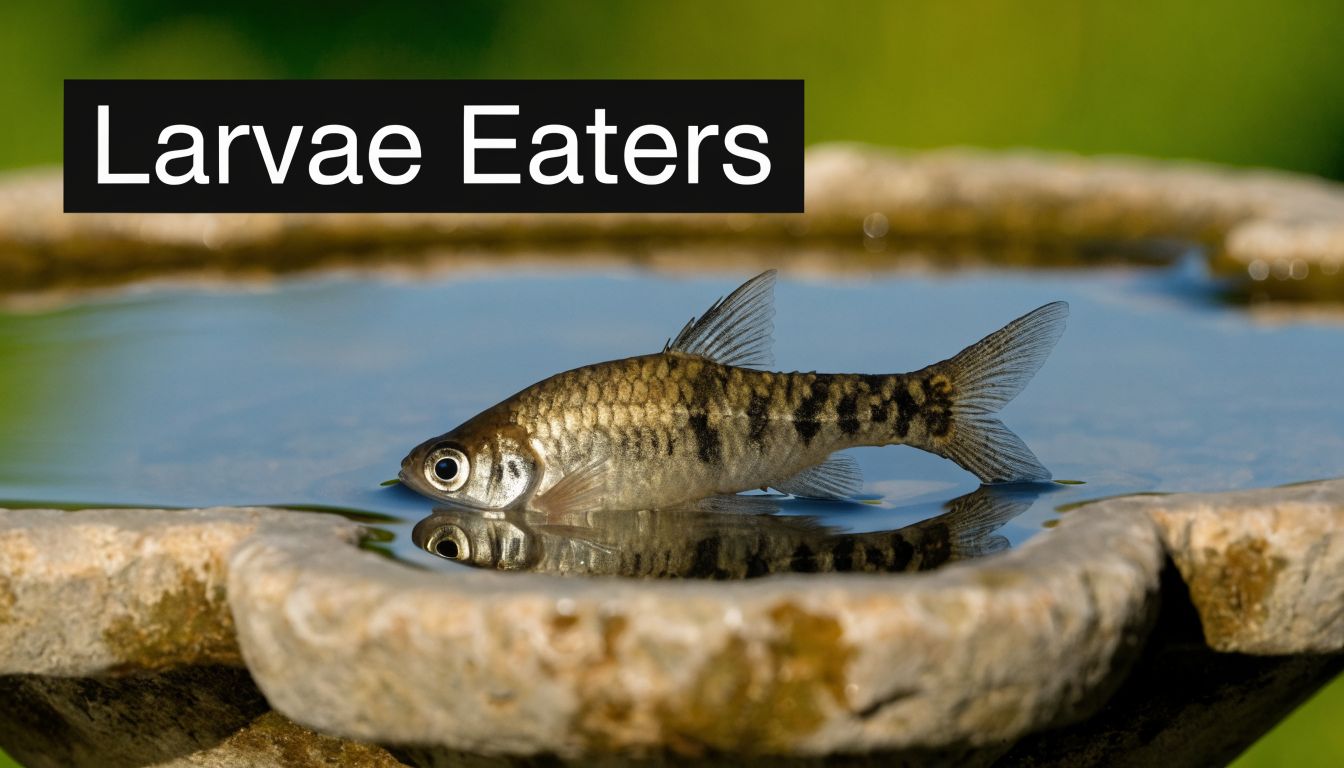
1. Mosquitofish (Gambusia affinis)
Mosquitofish get mentioned in almost every conversation about natural mosquito control, and for good reason. In the right water feature, they can help keep larvae from maturing into biting adults. If you have a decorative pond, a larger water garden, or a contained feature that holds water consistently, fish can become part of the solution.
Where homeowners get misled is assuming fish belong in every wet area. They don't. A birdbath that gets dumped and refilled often, a temporary puddle near the downspout, or a clogged gutter won't support fish. Mosquitoes love those spots anyway, which is why fish are useful only in select parts of the property.
Where mosquitofish actually help
The best fit is a stable backyard pond or similar feature where larvae have time to develop. In those settings, fish patrol the surface zone where mosquito larvae tend to hang. That makes them more practical than trying to rely on random wildlife visits.
For Crown Point homeowners, fish make more sense on properties with:
- Permanent water features: Decorative ponds and lined garden ponds can support fish more reliably than temporary standing water.
- Minimal chemical exposure: Chlorinated or pesticide-treated water works against the whole point of biological control.
- Enough depth for stability: Shallow, overheated water creates stress and makes fish less dependable.
If your property includes a pond, our guide to controlling mosquitoes in ponds is the better next step than dropping fish into every water source you see.
Practical rule: Fish help where water stays put. They don't solve the containers, gutters, toys, tarps, wheelbarrows, and drainage pockets that produce a lot of backyard mosquitoes.
The trade-offs homeowners should know
Mosquitofish are not a whole-yard mosquito program. They're a targeted larval tool for a specific environment. That's the distinction that matters in real service work.
I also tell homeowners to think about maintenance before adding any aquatic control. If the pond is full of algae, if runoff regularly changes water quality, or if the feature gets neglected for stretches of the summer, fish won't perform the way people expect. They still need a livable habitat.
Used correctly, fish can reduce production in one hotspot. Used carelessly, they become one more backyard idea that sounds good and changes very little.
2. Dragonflies and Damselflies (Odonata order)
A Crown Point homeowner sees dragonflies working a pond edge at dusk and assumes the mosquito problem is finally handling itself. I understand why. Dragonflies and damselflies do hunt mosquitoes in both life stages. The young develop in water and feed on other aquatic organisms. The adults patrol the yard and grab flying insects on the wing.
They help. On properties with stable water, good plant cover, and limited chemical disruption, they can take some pressure off a yard. They also tell you something useful about the site. If dragonflies are active around a pond or drainage area, that habitat is supporting predator life instead of functioning as dead water.
The trade-off is simple. Dragonflies do not hunt mosquitoes exclusively, and most residential lots do not support enough of them to bring biting activity down to an acceptable level on their own. That gap matters in real service work, especially after rain cycles create fresh breeding pockets in gutters, toys, tarps, corrugated drain lines, and shaded containers. Those small sources often produce the mosquitoes homeowners feel first, even when natural predators are present nearby.
Where dragonflies actually fit in a yard plan
Dragonflies and damselflies are strongest around permanent or semi-permanent water features. A pond edge, detention area, marshy border, or vegetated drainage swale gives them a place to develop and hunt. If your property has that kind of environment, keep it healthy. It can support beneficial insect activity through the season.
Many Crown Point yards do not. A tidy suburban lot with short turf, scattered ornamentals, and a few rain-catching containers may still have mosquito pressure without having the habitat needed to hold a meaningful dragonfly population. That is why we treat dragonflies as a helpful layer, not the main control strategy.
To see what healthy dragonfly behavior looks like around water, this short video is useful.
How to encourage them without creating more mosquito habitat
The goal is to support predators while denying mosquitoes easy breeding sites.
- Use native aquatic and marginal plants: Emergent vegetation gives immature dragonflies cover and gives adults places to perch and hunt.
- Keep water moving or biologically balanced: A neglected feature can still produce mosquitoes if nothing is interrupting larval development.
- Avoid broad-spectrum insecticide use near ponds: Spraying beneficial habitat carelessly can reduce the predators you want to keep.
- Remove small standing-water sources elsewhere in the yard: Even a healthy pond ecosystem will not offset buckets, toys, clogged gutters, or low spots holding water after storms.
At The Green Advantage, this is how we approach natural enemies in practice. We want dragonflies present where the property can support them, and we also address the hidden breeding sites and resting areas that natural predation does not reliably cover. That combination gives homeowners a layered defense instead of a backyard ecology project that looks promising but leaves people swatting mosquitoes every evening.
3. Bacillus thuringiensis israelensis (Bti)
A Crown Point yard can look tidy and still produce mosquitoes. The usual culprit is water that stays put just long enough in a rain barrel, planter, drain extension, or low spot after a storm. Bti helps at that stage, before those larvae turn into the adults that drive people indoors at dusk.
Bti is a naturally occurring soil bacterium used in products like Mosquito Dunks and other larval treatments. For homeowners who want a practical, eco-aware step, it is one of the most useful tools on this list because it targets developing mosquitoes in standing water without depending on fish, insects, or other wildlife to do the work.
Best places to use Bti
Use Bti where water cannot be dumped every day or two. Around Crown Point homes, that often means rain barrels, neglected planters, ornamental containers, sump discharge areas that stay soggy, and equipment around garages or sheds that catches rain.
The value of Bti is straightforward. Many backyard mosquito issues start in small, overlooked water sources, not just ponds or wetland edges. If those sites stay wet for several days, they can keep producing new adults.
Bti does have limits. Rain can dilute treatments, overflowing containers can reduce effectiveness, and fresh standing water after a storm may need attention again. Good results come from inspection and timing, not from a single application and wishful thinking.
Where homeowners go wrong with Bti
The biggest mistake is treating only the obvious water and missing the small breeding sites around the rest of the property. Another common problem is using Bti in places that should be emptied, cleaned, or corrected so they stop holding water in the first place.
A better routine looks like this:
- Treat water that stays put: Rain barrels, decorative containers, and other standing water sources that cannot be dumped regularly are strong candidates.
- Inspect after storms: New puddling and refilled containers can restart mosquito production quickly.
- Dump what you can: Plant saucers, buckets, toys, wheelbarrows, and similar items are better emptied than treated over and over.
- Watch for hidden problem spots: Clogged gutters, corrugated drain pipes, and tarps with low pockets often get missed.
At The Green Advantage, we use Bti as one layer in a broader mosquito reduction program. Some breeding sites are good DIY targets. Others point to drainage issues, dense harborage, or recurring pressure from neighboring conditions that need a more complete service plan. That is the trade-off homeowners should understand. Bti is excellent for larval control in the right places, but it works best alongside property inspection, habitat correction, and professional treatment that reduces the adult mosquitoes natural controls do not catch reliably.
4. Copepods (Mesocyclops and Macrocyclops species)
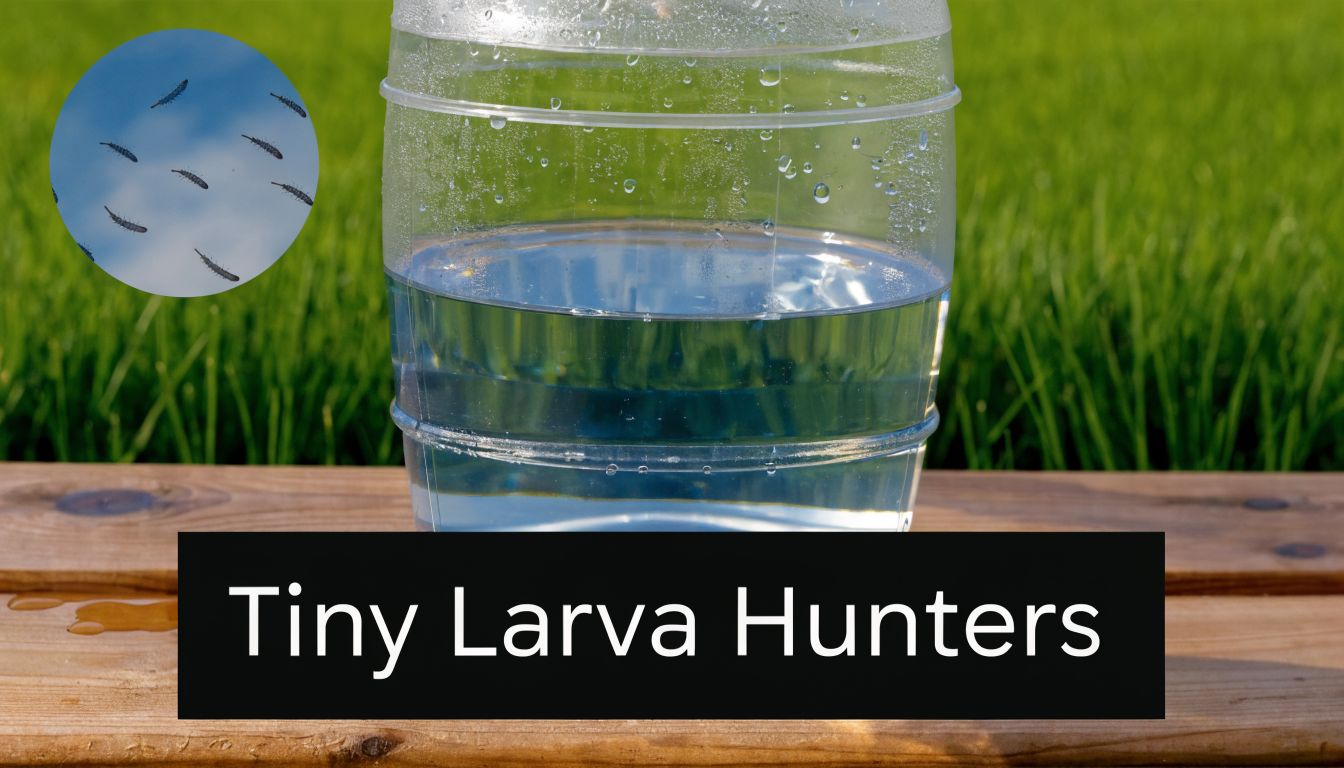
Copepods don't get much attention from homeowners because you can't see them working the way you can see fish or dragonflies. They're tiny aquatic crustaceans, and in the right container they can prey on mosquito larvae before those larvae ever turn into biters.
Many mosquito problems in residential neighborhoods don't start in large ponds; they start in containers. Rain barrels, decorative containers, neglected plant vessels, and water-holding odds and ends around the yard are classic trouble spots. That's where copepods can make sense.
Why container habitats matter so much
A lot of backyard mosquitoes don't need a pond. They need a small protected pocket of water that sits undisturbed long enough for larvae to develop. That's why container-focused controls deserve more attention than they usually get in generic articles.
Copepods are a niche tool, but they fit that niche well. They can be introduced into some water storage setups where fish aren't practical. If you're trying to reduce mosquito production without adding vertebrates or relying only on repeated chemical inputs, they're worth knowing about.
Their limits in a Crown Point yard
The problem is consistency. Copepods need the water source to remain suitable. If you dump the container, scrub it out, chlorinate it, or let it dry repeatedly, you've wiped out the control agent too. That's not a failure of the organism. It's just a mismatch between the tool and the site.
They're also not the easiest solution for a homeowner who wants fast visible results. If the yard already has active biting pressure, copepods may support prevention in select containers, but they won't give the immediate relief people usually want before a cookout or family gathering.
A predator that works inside a barrel or container is useful. It just doesn't protect the whole property unless the rest of the yard is managed too.
For local homeowners, a professional inspection adds value. We can tell whether a property's mosquito issue is mostly container-driven, vegetation-driven, drainage-driven, or a mix. That saves you from overinvesting in a niche tactic that only addresses one corner of the problem.
5. Entomopathogenic Fungi (Isaria and Metarhizium species)
You walk into the backyard at dusk, the grass looks fine, there is no obvious standing water, and you're still getting tagged by mosquitoes near the shrubs and the shaded side of the house. That kind of activity points to a part of mosquito control many homeowners miss. Adult resting harborage matters, not just breeding water.
Entomopathogenic fungi such as Isaria and Metarhizium are part of that conversation. These naturally occurring fungi infect certain insects, including mosquitoes, and they tend to perform best where shade, moisture, and protected foliage give them a fair shot. In practical terms, that means they fit specific microclimates on a property, not the whole yard.
That distinction matters in Crown Point.
A fungal tool can support mosquito reduction in dense plantings, low branches, damp fence lines, and other protected zones where adults hold during the day. Those are also the places our technicians pay close attention to during service visits. If a yard has heavy vegetation and lingering humidity, biological controls may have a role. If the site is open, sunny, and dry, results are less reliable.
Homeowners should treat fungi as a targeted option, not a do-everything fix. They are slower and more condition-dependent than the average DIY product people reach for before guests arrive. If the goal is fast relief across an active yard, you still need the rest of the program to do the heavy lifting.
On a well-managed property, fungi make the most sense alongside other steps:
- Resting zones are mapped first. Mosquitoes do not use every part of the yard equally, so shaded harborage gets priority.
- Moisture issues are corrected where possible. Overwatering, clogged drainage, and overgrown plantings can keep adult shelter too favorable.
- Larval sources are handled separately. Container water, low spots, and hidden breeding pockets still need direct control.
- Professional treatments cover the broader pressure. Natural tools can support suppression, but they rarely give whole-property protection by themselves.
Experience proves vital. A homeowner can read about fungal biocontrol and assume it belongs in every natural mosquito plan. In the field, the trade-off is straightforward. It can be useful in the right pocket of the yard, but it does not replace inspection, source reduction, or targeted mosquito service.
At The Green Advantage, we look at these natural enemies as supporting players in a layered defense. They help explain how mosquito pressure can be reduced with fewer broad disruptions to the yard's ecology. For consistent bite relief in Crown Point, though, they work best as part of a broader program that matches the property, the season, and the actual mosquito pressure.
6. Parasitic Flies (Piscicola and Culex species parasitoids)
You can have a yard with healthy plantings, decent drainage, and fewer broad insecticide disruptions, and still never notice the small parasitoids working in the background. That is the reality with parasitic flies tied to mosquito systems. They are part of local insect pressure, but they are not a homeowner tool in the way Bti or source reduction is.
For Crown Point properties, their value is indirect. A yard that supports more beneficial insect activity usually has better ecological balance overall, and that matters because mosquito pressure builds fastest where water, shelter, and low predator pressure all line up. Parasitic flies fit into that bigger picture. They help suppress insects in natural settings, but they do not give predictable, property-wide relief before a weekend cookout or during a heavy hatch.
That trade-off matters.
Homeowners sometimes read about biological control and assume every natural enemy belongs in the same category of usefulness. It does not. Some options can be purchased, placed, or applied with decent consistency. Wild parasitoids cannot. You cannot introduce them on schedule, count their coverage, or rely on them to clean up active resting areas around dense shrubs, fence lines, or damp corners of the yard.
That is also why the broader biological control field keeps growing. Analysts at Roots Analysis project that the global agri natural enemy pest control market will reach USD 40.16 billion by 2035 from USD 18.5 billion in 2024. The practical takeaway for mosquito work is simpler than the headline. Natural enemies matter, but each one has limits, and some are far more usable than others on residential properties.
For homeowners who want to protect beneficial insects without giving mosquitoes free rein, the goal is controlled pressure, not blanket disruption.
- Keep planting diversity in the yard: Mixed plant structure and native flowering plants support a wider range of beneficial insects.
- Avoid broad, indiscriminate applications: Random spraying can reduce helpful insect activity without solving the breeding source.
- Pair natural support with targeted mosquito service: Professional treatments should focus on harborage, activity zones, and breeding pressure instead of covering the whole property without a plan.
- Use habitat changes that reduce mosquito advantage: Correct standing water, trim overgrown shelter, and manage irrigation so the yard does not stay favorable to mosquitoes.
At The Green Advantage, we treat parasitoids as part of the background ecology, not as the centerpiece of mosquito control. They are one more reason to avoid careless treatment practices. They are also one more reminder that natural methods work best when they are paired with a planned service program that reduces larvae, targets adult pressure, and leaves room for beneficial species to keep doing their part. If you are also considering wildlife-based support, our guide to bat houses for mosquito control covers where that fits and where it falls short.
7. Native Bats (Myotis and Lasionycterus species)
You sit outside on a warm Crown Point evening, the sun drops, bats start cutting across the yard, and it feels like the mosquito problem should ease up. Homeowners notice that activity and understandably hope bats will carry more of the load than they do.
Bats do help. Native species such as Myotis and Lasionycterus feed at the same time mosquitoes are active, so they add real nighttime predation that daytime insect-eaters do not. That makes them a useful part of a healthier yard ecology, especially near woods, ponds, drainage areas, or neighborhoods with established tree cover.
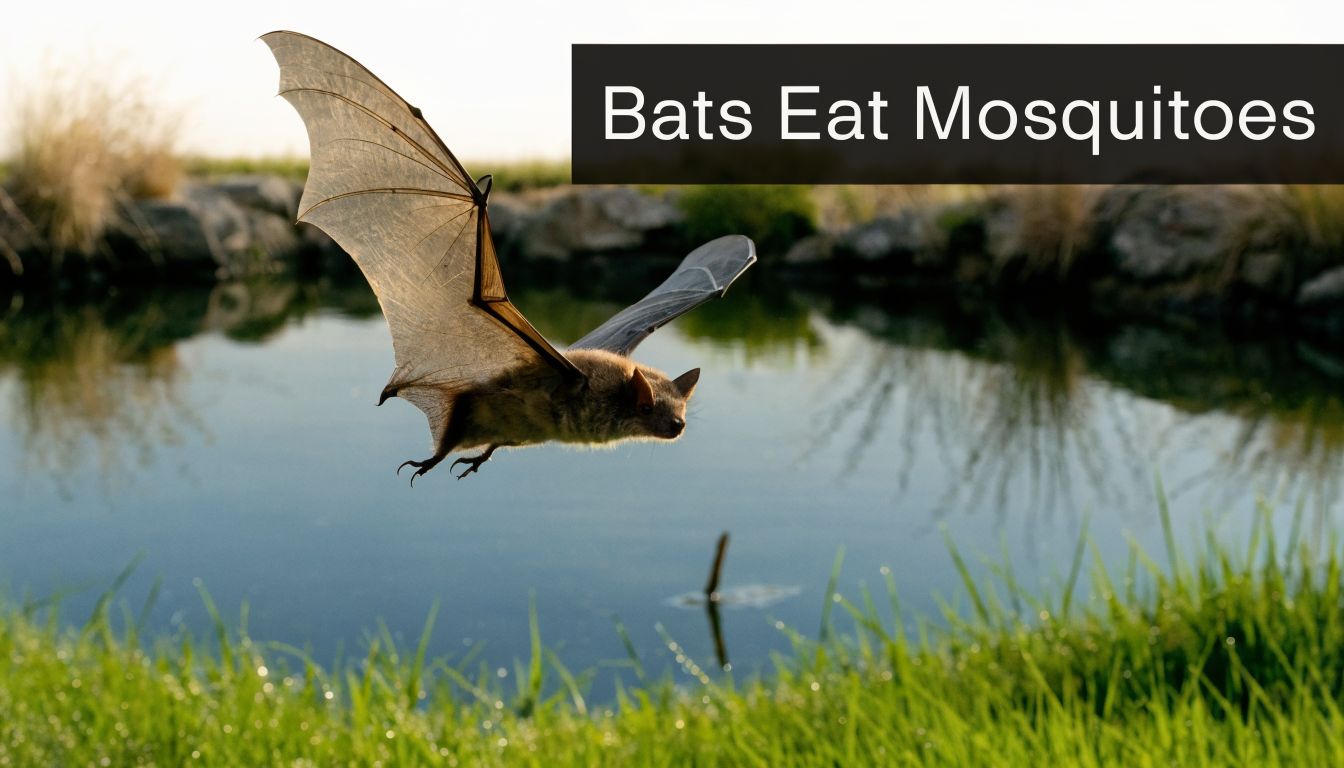
What matters for homeowners is the trade-off. Bats are habitat-dependent, slow to establish, and inconsistent from one property to the next. Even where they are present, they are feeding across a broad area, not working your patio, playset, or back door with the kind of focused pressure needed to make outdoor living comfortable during peak mosquito season.
That is why we treat bats as a supporting layer, not the main control plan. If you want to encourage them, our guide on where bat houses fit into mosquito control covers placement, expectations, and the limits homeowners need to understand before investing time in that approach.
Another practical point gets missed in online advice. Birds are often brought up in the same conversation, but common claims about purple martins solving mosquito problems do not hold up well in real residential settings. A regional overview from West Baton Rouge Parish explains why purple martins are not considered a dependable mosquito control strategy, largely because their feeding habits do not line up with mosquito pressure the way homeowners assume, as outlined in this natural mosquito predators overview from West Baton Rouge Parish.
At The Green Advantage, we like bat-friendly habitat where it fits the property. We just do not ask wildlife to do a service job. The better approach is layered control. Reduce breeding sites, support the predators already present, and use professional mosquito treatments to bring down adult activity in the places your family uses. That combination gives Crown Point homeowners a more reliable result than waiting on bats to solve a heavy mosquito season by themselves.
8. Entomopathogenic Nematodes (Steinernema and Heterorhabditis species)
After a wet week in Crown Point, the yards that stay soggy tell a different mosquito story than the ones that dry out fast. Water may not be sitting in plain view, but shaded soil, mulch beds, and low areas can stay damp long enough to support pest pressure around the edges of a property. That is where entomopathogenic nematodes sometimes enter the conversation.
These microscopic roundworms have a real place in biological pest management. For mosquitoes, though, their role is narrow. They are a site-specific support tool for moisture-heavy conditions, not a primary residential mosquito solution.
That distinction matters.
In our area, nematodes may be worth considering around chronically wet ground near water features, drainage swales, or shaded spots that never seem to dry properly. Even then, they work best as one layer in a broader mosquito reduction plan. If the underlying problem is clogged gutters, neglected containers, or adult mosquitoes resting in dense shrubs, nematodes will not solve the main source.
For homeowners, the practical question is not whether nematodes are natural. It is whether they match the site. On some properties, they can complement other biological controls. On many others, the better return comes from correcting drainage, treating actual breeding water, and reducing adult mosquito pressure where people spend time outdoors.
A workable plan usually looks like this:
- Fix chronic wet spots: Regrading, drainage correction, or better water flow addresses the condition that keeps pests active.
- Target true breeding sites: Standing water in containers, basins, and hidden catch points responds better to direct larval control.
- Reduce adult resting areas: Dense vegetation and shaded perimeter zones often need treatment if biting pressure is already established.
- Use nematodes selectively: Apply them where persistent moisture supports their survival and where they fit a larger property plan.
That last point is where professional service matters. Natural controls are useful, but they are uneven from yard to yard. At The Green Advantage, we look at where mosquitoes are breeding, where they are harboring, and which natural controls fit the property instead of forcing a one-size-fits-all answer. Nematodes can support that effort in the right conditions, but they do not replace a professional mosquito reduction program that covers larval sources, adult activity, and the areas your family uses most.
One related finding is worth keeping in view. A 2024 study identified Nepidae as the most effective predator against key mosquito vectors in natural habitats, with backswimmers and other aquatic insect groups also contributing. For Crown Point homeowners with ornamental ponds or rain-holding features, that supports a habitat-based approach that works alongside professional mosquito service instead of relying on any single predator to carry the load.
Comparison of 8 Mosquito Natural Enemies
| Item | Implementation complexity | Resource requirements | Expected outcomes | Ideal use cases | Key advantages |
|---|---|---|---|---|---|
| Mosquitofish (Gambusia affinis) | Low–Medium: stock fish, prepare habitat, seasonal monitoring | Shallow-to-deep standing water, initial stock, occasional water quality checks | Continuous larval predation in suitable waters; high daily consumption per fish; seasonal limits in cold climates | Ponds, retention basins, birdbaths, decorative water features | Chemical-free, self-replicating, cost-effective long-term control |
| Dragonflies & Damselflies (Odonata) | Low: habitat creation and protection; not easily introduced | Shallow water, native aquatic plants, pesticide-free areas | Dual-stage control (nymphs eat larvae, adults eat adults); variable seasonal populations | Natural ponds, gardens, wetlands, ecosystem-focused sites | Dual-action lifecycle control; no inputs required; indicator of healthy habitat |
| Bacillus thuringiensis israelensis (Bti) | Low: simple homeowner or technician application | Commercial dunks/granules/sprays; reapplication every 7–10 days | Rapid larval mortality (24–48 hrs); highly specific but short aquatic persistence | Rain barrels, birdbaths, gutters, retention ponds, multiple small water sources | EPA-approved, safe for non-targets, targeted and user-friendly |
| Copepods (Mesocyclops/Macrocyclops) | Medium: sourcing, acclimation, and initial establishment | Purchased cultures, careful shipping/acclimation, stable small water containers | Continuous larval predation in small volumes; establishment takes 1–2 weeks | Containers, planters, rain barrels, small cisterns | Effective in tiny water volumes; safe and low-maintenance once established |
| Entomopathogenic Fungi (Isaria, Metarhizium) | Medium–High: timely applications and humidity management | Commercial formulations, repeat treatments, high-humidity environments | Adult (and some larval) mortality over 5–14 days; variable by humidity and weather | Shaded vegetation, porches, humid microclimates, integrated programs | Targets adult mosquitoes; non-toxic to humans; complements larval methods |
| Parasitic Flies (tachinids, phorids) | Low: habitat encouragement; not commercially introduced easily | Native vegetation, diverse habitat, avoidance of broad-spectrum insecticides | Gradual adult suppression over weeks; seasonally fluctuating populations | Native landscaping, diverse gardens, conservation-focused properties | Self-sustaining natural control that targets adults; no chemical inputs |
| Native Bats (Myotis, Eptesicus) | Medium: habitat installation and public outreach; multi-season establishment | Bat houses/roosts, nearby water and insect prey, community education | Nighttime reduction of flying adults; effects vary with season and weather | Properties with water features, large yards, twilight mosquito activity | Very high nightly insect consumption; once established, no recurring cost |
| Entomopathogenic Nematodes (Steinernema, Heterorhabditis) | Medium: correct application and moisture management required | Commercial nematode products, moist soil/wet habitats, timely application | Larval infection and death in 24–48 hrs; can persist in moist soil for weeks | Moist soil breeding sites, low-lying yards, greenhouse margins | Safe for non-targets; complements water-surface larvicides; useful in soil/moist habitats |
Your Complete Mosquito Defense Plan with The Green Advantage
You step outside on a July evening in Crown Point, the grill is hot, the kids are in the yard, and within ten minutes everyone is swatting. In that moment, a bat house, a few dragonflies over the pond, or a packet of Bti dunks may help at the margins, but they rarely solve the whole problem on their own.
That is the practical reality with mosquito natural enemies. They do real work, but each one works in a narrow lane. Mosquitofish need the right water feature. Copepods and Bti only help where larvae are developing. Dragonflies and bats reduce pressure, yet they do not clear adult mosquitoes out of dense shrubs by the patio after a wet week. Homeowners who want usable outdoor space need a layered plan that matches how mosquitoes live on the property.
At The Green Advantage, we start by reading the yard the way a technician should. We look for where mosquitoes breed, where adults hide during the day, and what keeps the problem going after rain or irrigation. In Crown Point, that often means more than one source. A clogged gutter extension, a low spot near the fence, wet leaf litter behind ornamental grasses, and containers near the back door can all contribute at the same time.
Natural controls still have an important place in that plan. We encourage the ones that fit the site and skip the ones that sound good but are unlikely to change your bite pressure. If you want a broader look at what insects eat mosquitoes, that background is useful. The key is knowing where those predators help and where professional reduction work needs to take over.
A strong mosquito program usually includes four parts:
- Source reduction: Emptying containers, correcting drainage problems, cleaning gutters, and removing small water-holding spots that keep producing larvae.
- Biological support: Using Bti where it fits, preserving beneficial habitat, and supporting natural predators when the property can realistically sustain them.
- Targeted treatment: Applying professional mosquito control to shaded foliage, fence lines, groundcover, and other adult resting sites that DIY efforts often miss.
- Follow-up: Rechecking after storms, irrigation changes, and midsummer plant growth, because mosquito pressure shifts fast in Northwest Indiana.
The goal is not to throw every tool at the yard. The goal is to match the tool to the problem.
That matters in Crown Point because our summer pattern changes quickly. A property can be quiet early in the week and active by the weekend after rain, humidity, and a few days of thick vegetation growth. Homeowners usually catch the obvious standing water. What gets missed are the hidden larval sites and the cool, shaded harborage areas where adults wait until evening.
That is where local field experience helps. We tell clients when a natural method is worth supporting and when it is mostly cosmetic. A pond may be a good fit for biological control. A heavily shaded backyard with persistent adult activity near seating areas usually needs direct treatment as part of the plan. Both can be true at once.
Many mosquito customers also ask us about wasps, spiders, rodents, and general perimeter pest issues. That overlap is normal. The same conditions that make a yard comfortable for mosquitoes often support other pest activity around the home, so it makes sense to address the property as a whole instead of treating one symptom at a time.
If mosquitoes are keeping your family indoors, The Green Advantage can help you take your yard back with a practical, locally informed mosquito reduction plan. We inspect the property, identify breeding and resting zones, explain which natural allies make sense for your site, and build a layered program that gives Crown Point homeowners real relief.
How To Get Rid Of Bed Bugs For Good

You notice the bite first. Then a tiny dark spot on the sheet. Then you start pulling apart the bed, checking the mattress seam with your phone flashlight, and that’s when the stress kicks in. Most homeowners in Crown Point don’t call about bed bugs because they’re calm. They call because they’re exhausted, embarrassed, and worried they’re about to carry the problem into every room of the house.
That reaction is normal.
Bed bugs get under your skin long before they’re confirmed. People lose sleep, throw away furniture they didn’t need to throw away, wash the same bedding over and over, and spend money on sprays that never touch where they hide. The problem isn’t just the bugs. It’s the feeling that your bedroom suddenly isn’t safe or restful anymore.
If you’re searching for how to get rid of bed bugs, you need two things right away. You need a clear way to confirm what you’re seeing, and you need an honest explanation of what works. In Crown Point, IN, and nearby Northwest Indiana communities, that usually means moving quickly, containing the problem, and avoiding the DIY mistakes that turn one room into several.
This guide is written the way I’d explain it to a homeowner standing in a hallway with a trash bag in one hand and a can of spray in the other. Stay calm. Move carefully. And if the evidence points to bed bugs, treat the job like a full inspection and control problem, not a quick cleaning project.
That Sinking Feeling Discovering Pests in Your Crown Point Home
The first sign is rarely dramatic. It’s often a small clue that doesn’t make sense on its own. A bite line on your arm. Specks on the fitted sheet. A bug casing in the corner of the box spring. By the time residents in Crown Point start searching for pest control in Crown Point, IN or exterminator near me, they’ve already spent a few days hoping it’s anything else.
That delay is understandable, but bed bugs reward hesitation.
What makes them so upsetting is how personal they feel. Ants in a kitchen are frustrating. Wasps near a porch are alarming. Bed bugs are different because they affect sleep, routines, laundry, guests, and how comfortable you feel in your own bedroom. Homeowners often start isolating themselves socially before they’ve even confirmed the problem. Renters worry about neighbors. Parents worry about children carrying bugs in backpacks or on clothing.
Why panic leads to bad decisions
The worst moves usually happen in the first day. People drag a mattress into the garage, carry blankets through the house uncovered, or soak surfaces with products that were never going to solve the infestation. Those actions can make the job harder because bed bugs don’t stay politely on the mattress. They hide in seams, joints, cracks, furniture, and nearby clutter.
Practical rule: Don’t treat bed bugs like a visible surface pest. Treat them like a hidden-void pest that happens to feed at night.
A lot of homeowners also assume bed bugs mean the home is dirty. That isn’t true. Bed bugs are hitchhikers. They move in on luggage, used furniture, shared walls, guests, deliveries, and everyday travel. Clean homes get them. Busy homes get them. Careful people get them.
What you need right now
Start with a simple goal. Confirm whether you’re dealing with bed bugs or something that only looks like bed bugs.
If the signs are real, residential pest control is usually the fastest route back to normal sleep. If you manage rentals or commercial property in Crown Point, the stakes are even higher because one delayed response can create a building-wide issue. That same mindset applies across other infestations too, whether you’re dealing with rodent control, termite control, mosquito control, or wasp removal. Early, accurate identification always beats guessing.
For bed bugs, the path forward starts with inspection. Not panic. Not internet remedies. Inspection.
Confirming Your Suspicions A Homeowner's Guide to Bed Bug Detection
Before you buy anything, inspect. Bites alone aren’t enough. Skin reactions vary, and plenty of pests leave marks that homeowners mistake for bed bugs. Good detection starts with visible evidence.
What to look for first
Focus on four types of evidence:
- Live bugs that are hiding in seams, folds, joints, or cracks near where people sleep or rest.
- Dark fecal spots on sheets, mattress seams, box springs, bed frames, or nearby furniture.
- Shed skins or casings left behind as immature bugs grow.
- Tiny white eggs tucked into protected areas.
Don’t start by searching the whole house. Start where people sleep, then expand outward.
Where bed bugs hide most often
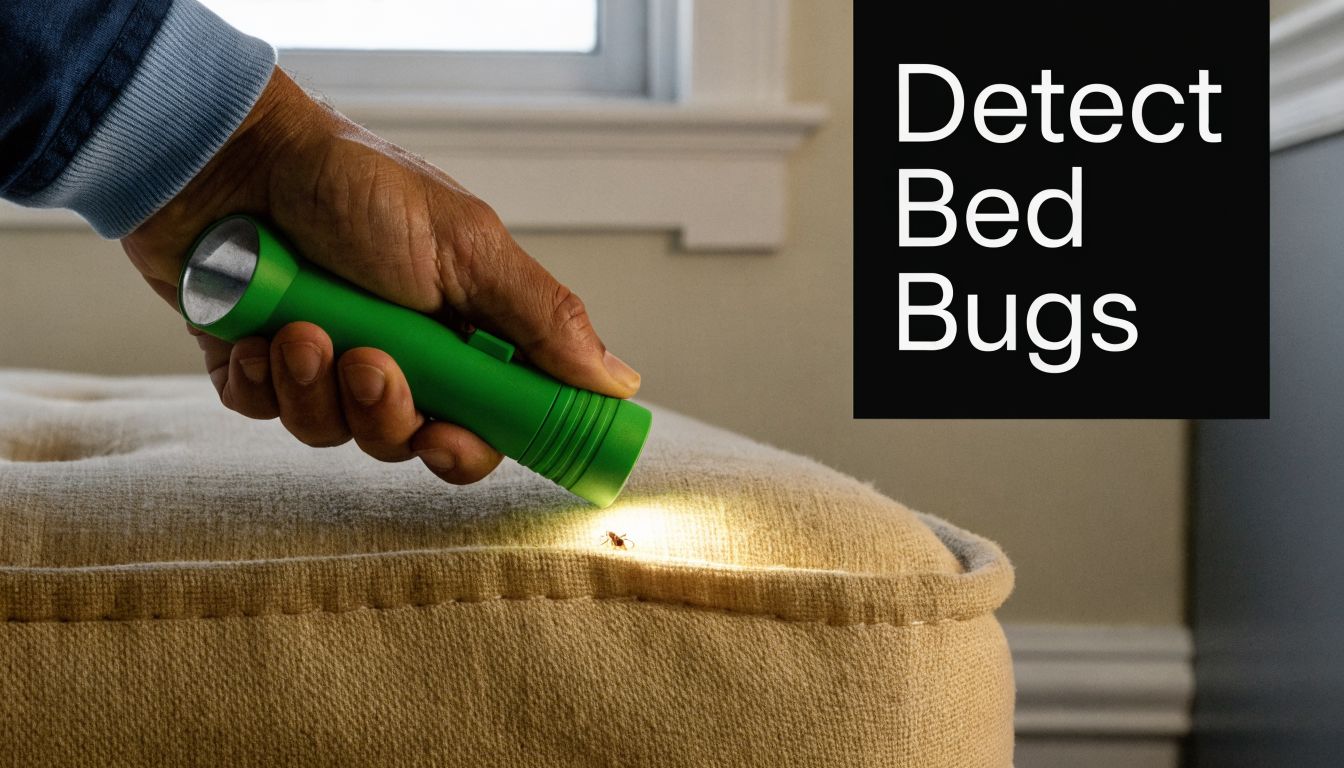
Begin with the bed itself. Use a flashlight and something thin like an old gift card to check tight seams and creases.
Mattress seams and piping
Check along stitched edges, labels, tufts, and corner guards.Box spring fabric and frame
Look underneath, especially around staples, wood joints, and the dust cover.Bed frame and headboard
Inspect screw holes, slats, brackets, and the back side of the headboard.Nearby furniture
Nightstands, upholstered chairs, couches, and drawer joints can all harbor bed bugs.Room edges and wall voids
Check baseboards, picture frames, curtain folds, carpet edges, and around outlet covers.
A proper inspection is slow because bed bugs fit into extremely narrow spaces. That’s why homeowners often miss them even when they’re actively looking.
How to tell bed bugs from other pests
Homeowners commonly confuse bed bugs with carpet beetles, fleas, or random small insects found near a bed.
A few practical distinctions help:
- Carpet beetles leave shed skins too, but they’re usually connected to natural fibers, stored fabrics, or pet hair, not blood spots and bed-frame harborages.
- Fleas are more likely to be found around pets, pet bedding, and floor-level areas. They jump. Bed bugs don’t.
- Spiders and mosquitoes can cause bites, but they don’t leave fecal spotting on mattress seams or eggs hidden in bed hardware.
If you find signs but aren’t fully sure, save a sample in a sealed container or clear tape and get a professional identification. That’s far better than treating the wrong pest.
For a more detailed visual walkthrough, this guide on how to tell if you have bed bugs can help you compare what you’re seeing in your own room.
Why early detection matters more in apartments
Renters and landlords in Crown Point have an extra challenge. Bed bugs don’t respect unit lines.
For multi-unit housing, Rutgers notes that 68% of U.S. infestations occur in apartments, and uncoordinated neighbor treatments fail in 75% of cases. That matters because bugs can move through shared walls and adjoining spaces. A tenant who treats only one bedroom while the next unit does nothing may feel temporary relief, but the infestation often comes back.
In apartments, a bed bug problem is rarely just a single-room problem for long.
That’s one reason professional inspections matter so much in rental properties, condos, and attached housing.
Here’s a helpful visual if you want to see common signs and likely hiding zones before you keep inspecting:
A quick way to organize your inspection
Use this short checklist as you go room by room:
| Area | What to check | What matters |
|---|---|---|
| Bed | Seams, tufts, labels, frame joints | Live bugs, spots, eggs, shed skins |
| Furniture | Upholstery seams, drawer joints, undersides | Nearby harborages beyond the bed |
| Wall areas | Baseboards, frames, outlet edges | Hidden spread around sleeping areas |
| Linens | Sheets, pillowcases, blankets | Spotting and cast skins |
| Adjacent rooms | Sofas, recliners, guest beds | Whether the issue has spread |
If you find confirmed signs, move from inspection to containment. Don’t jump straight to sprays.
Immediate Containment and The Limits of DIY Solutions
The first 24 hours matter. A rushed response can turn one infested room into a problem that follows laundry baskets, backpacks, and overnight guests through the rest of the house.
In Crown Point, I often see the same pattern. A homeowner finds signs, starts washing everything, sprays a few products, then begins sleeping in another room to get some rest. A week later, the bugs have a second harboring area, everyone is exhausted, and the cleanup has doubled. Containment is about slowing that chain reaction while you get a treatment plan in place.
What to do right away
Start with actions that reduce spread without scattering bugs into new areas.
- Bag suspect fabrics before moving them. Use sealed plastic bags for bedding, clothing, stuffed items, and anything stored near the bed.
- Use high heat on dryable items. Put clothing, bedding, and similar fabrics in the dryer first. Washing helps with cleaning, but heat is what kills bed bugs on those items.
- Vacuum methodically. Focus on mattress seams, box spring edges, bed frame joints, baseboards, recliners, and nearby furniture. Empty the vacuum contents into a sealed bag and take it out promptly.
- Contain clutter before you relocate it. Loose piles give bed bugs more places to hide and more chances to hitchhike to another room.
- Keep sleeping arrangements stable unless a professional tells you otherwise. Moving to the couch or guest room often spreads activity instead of stopping it.
These steps help reduce the chance of bed bugs traveling deeper into the home. They do not remove hidden populations in cracks, furniture joints, wall gaps, or neighboring rooms.
What usually makes the problem worse
Bed bugs punish half-measures. A tactic can feel productive and still leave the infestation largely intact.
Avoid these common mistakes:
Bug bombs and foggers
They do not reach the tight harborages where bed bugs spend most of their time.Rubbing alcohol sprays
They create a fire hazard and only affect direct contact in the moment.Dragging furniture through the home uncovered
That can drop bugs and eggs along the route.Throwing out beds too early
Many homeowners spend money replacing furniture before the infestation is controlled, then the new items get exposed too.Assuming one weekend of cleaning solves it
Bed bugs can survive in protected spots that routine cleaning never touches.
If you only kill the bugs out in the open, the infestation keeps going in the places you cannot see.
Why store-bought and DIY treatments so often stall out
The hard part is not killing a bed bug. The hard part is killing all of them, including eggs and hidden groups, in every place they settled.
That is where DIY efforts usually break down. A spray may knock down visible activity along a baseboard. A steamer may help on certain seams if used correctly. Mattress encasements can remove one hiding area. Those are support tools, not a full solution. They do not address wall voids, bed frame interiors, upholstered furniture, luggage, nightstands, or spread into adjacent rooms.
Heat creates the same false confidence. A room can feel hot and still have cool pockets inside a box spring, behind trim, under clutter, or deep in furniture where bed bugs survive. Professional heat work depends on measured temperatures, equipment placement, air movement, and follow-up inspection. Space heaters and improvised setups rarely produce even lethal temperatures throughout the room.
I have walked into homes where people worked for weeks, spent hundreds on sprays and covers, and still had live activity because one recliner, one bed frame joint, or one overlooked room kept the infestation going.
The hidden cost of repeated DIY attempts
The stress builds fast.
Laundry piles up in bags. Kids stop having friends over. People lose sleep and start checking every speck on the sheet. In apartments, condos, and duplexes, delays also raise the chance of bugs spreading through shared walls or being carried into common areas, vehicles, and workplaces. What started as a bedroom problem becomes a household routine problem, then a building problem.
That is why I do not frame professional service as a convenience item. It is the most reliable way to stop the cycle, protect neighboring units, and give your home a clear path back to normal.
What DIY can help with, and where it stops
| Task | DIY can help with | DIY usually cannot do |
|---|---|---|
| Laundry and drying | Kill bed bugs on dryable fabrics | Clear hidden harborages throughout the room |
| Vacuuming | Remove some live bugs, shed skins, and debris | Reach protected eggs and deep cracks |
| Decluttering | Reduce hiding spots and improve access for treatment | Eliminate the infestation on its own |
| Mattress encasements | Limit hiding on the mattress and box spring exterior | Control bugs in frames, furniture, walls, and nearby rooms |
| Store-bought products | Kill some exposed bed bugs when used correctly | Deliver consistent room-by-room eradication |
Use DIY for containment and preparation. Do not mistake it for closure.
If you have already cleaned, bagged, sprayed, washed, and dried items and you are still finding activity, that usually means the infestation is established beyond the spots you can treat on your own.
The Green Advantage Solution Professional Bed Bug Treatment in Northwest Indiana
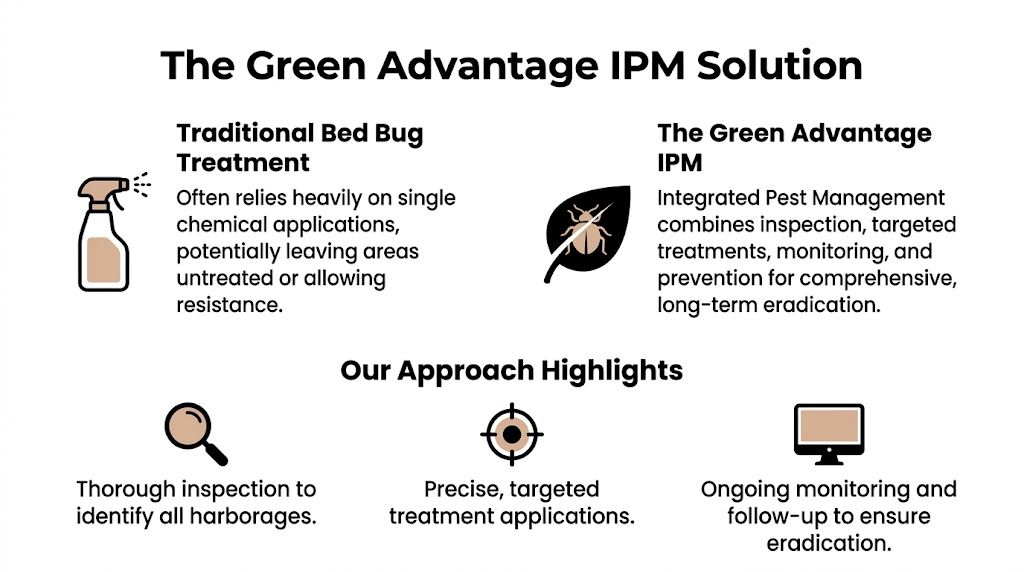
Professional bed bug control works when it treats the infestation as a system. Inspection, heat, targeted applications when needed, follow-up, and monitoring all have to work together. That’s the principle behind Integrated Pest Management, or IPM.
For bed bugs, IPM consistently outperforms spray-only programs. In the Journal of Integrated Pest Management, IPM programs achieved up to 96.8% reduction in bed bug populations, compared with 85% for insecticide-only approaches. That gap matters because a partial reduction can still leave enough hidden activity to restart the infestation.
What professional IPM looks like in practice
An effective plan usually includes:
- Thorough inspection to identify primary and secondary hiding areas.
- Heat treatment for broad, non-chemical kill across life stages.
- Targeted measures for difficult voids, furnishings, or structural details.
- Monitoring tools to confirm whether activity remains.
- Follow-up guidance so the home doesn’t slide back into risk conditions.
A local provider matters in Crown Point and nearby Northwest Indiana communities, where homes vary widely in layout, furniture density, attached garages, basements, and multi-unit configurations. A treatment plan has to fit the site, not just the pest.
Why heat is so valuable
When technicians use whole-room heat correctly, it reaches where surface sprays often don’t. It can penetrate mattresses, furniture, cracks, and tucked-away harborages without leaving chemical residue behind. That matters for homeowners who want a more environmentally mindful option and for families who don’t want to rely on repeated broad pesticide use around sleeping areas.
The process is technical. Equipment placement, airflow, temperature mapping, and sensor checks all matter. Professionals don’t just warm up a room and hope for the best. They build conditions that bed bugs can’t survive.
Heat works because it targets the bug’s biology, not because the room feels hot.
The Green Advantage uses an IPM approach for bed bug work as one local option among professional services in Crown Point. That same inspection-first mindset also carries over into other local needs like ant control, spider control, rodent control, mosquito reduction, and termite control, where a one-size-fits-all spray rarely solves the underlying issue.
DIY vs Professional Bed Bug Treatment
| Factor | DIY Methods | The Green Advantage (Professional IPM) |
|---|---|---|
| Inspection | Usually limited to visible areas | Structured inspection of primary and secondary harborages |
| Heat delivery | Inconsistent room temperature | Controlled heat strategy with verified treatment conditions |
| Egg control | Often incomplete | Designed to address all life stages |
| Spread risk | Higher when items are moved incorrectly | Lower with a coordinated plan and prep guidance |
| Follow-up | Homeowner guesses whether it worked | Monitoring and post-treatment direction built into the process |
| Long-term control | Often piecemeal | Multi-tactic approach focused on lasting reduction |
What this means for homeowners and property managers
For a single-family home, professional treatment is about restoring comfort and stopping the cycle of failed attempts. For a landlord or property manager, it’s also about coordination. Bed bugs in one unit can become complaints in several. Fast identification, clear prep instructions, and whole-building awareness matter.
For commercial clients, especially lodging-related settings, offices, or facilities with upholstered furniture, the same principle applies. Delayed action can turn a manageable issue into an operational headache.
Bed bug work also highlights a broader truth about commercial pest control and residential pest control in Crown Point. The right service isn’t the one that applies the most product. It’s the one that correctly identifies the pest, matches the treatment to the site, and verifies results afterward.
How to Prepare Your Home for a Bed Bug Treatment
Preparation decides whether treatment reaches every hiding place or leaves cool, protected pockets behind. Homeowners are often surprised by how important their role is before a heat job begins.
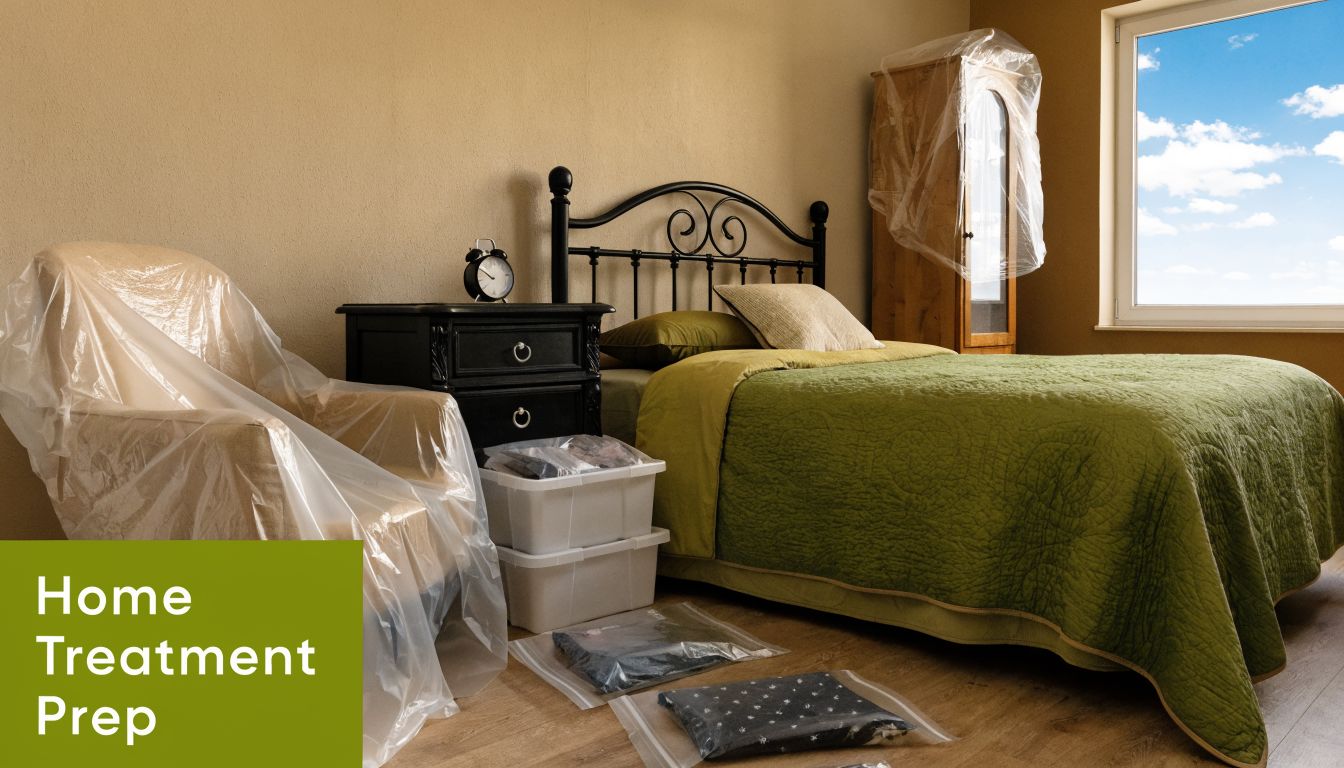
A professional treatment team can bring the equipment and the process, but the home still needs to be set up correctly. The treatment guidance referenced here notes that professionals must sustain core temperatures of 135-145°F, and that failure to declutter or dismantle bed frames can reduce efficacy by up to 30% because those conditions create cool spots where bugs survive.
The preparation checklist that matters most
Use your technician’s specific instructions first, but these are the common priorities.
Declutter floors and room edges
Piles of clothes, storage bins, loose papers, and packed closets block airflow and create protected hiding zones.Launder linens and clothing as directed
Bag items before moving them. Dry eligible items on high heat, then keep cleaned items sealed until the home is ready.Empty or simplify nightstands and dresser tops
Fewer loose contents means fewer hidden harborage points and better treatment access.Pull furniture away from walls when instructed
This improves access to bed frames, baseboards, and rear surfaces.Disassemble bed components if requested
Bed bugs love joints, brackets, screw holes, and slat connections. If the frame stays fully assembled, those areas can remain protected.Vacuum visible debris and seams
This doesn’t replace treatment, but it removes some bugs and debris that can interfere with inspection.
Items that usually need special attention
Not everything should stay in place, and not everything should be bagged the same way.
| Item type | Typical concern | Why it matters |
|---|---|---|
| Clothing and bedding | Spread during transport | Must be contained before moving |
| Electronics | Heat sensitivity and hidden voids | Need technician guidance |
| Houseplants | Heat intolerance | Usually need removal from treatment areas |
| Candles, aerosols, sensitive products | Temperature risk | Must be removed for safety |
| Under-bed storage | Prime hiding zone | Needs to be emptied or managed correctly |
Don’t improvise your own prep plan
One of the biggest mistakes homeowners make is over-preparing in the wrong direction. They move too many items into hallways, garages, or other rooms. That can spread bed bugs into spaces that weren’t originally active.
A better approach is controlled preparation. Bag. Label. Contain. Follow the room-by-room instructions you’re given.
Your job is to make the infestation easier to treat, not to relocate it.
If you’re already doing a full reset of a rental unit or preparing a room after tenant turnover, a structured cleaning list can help you avoid missing soft goods and hidden storage zones. This ultimate cleaning checklist is useful for organizing that process alongside pest prep.
For homeowners who want a broader walkthrough of what technicians usually ask for before a service visit, this guide on how to prepare for pest control helps explain the logic behind access, sanitation, and item handling.
What to ask before treatment day
If you’re unsure, ask direct questions:
- Which rooms are being treated?
- What needs to be bagged, dried, removed, or left in place?
- Should bed frames be dismantled ahead of arrival?
- What should I do with medications, plants, electronics, and pets?
- When can cleaned items come back into normal use?
Good prep removes guesswork. It also lowers stress because you know exactly what’s expected. When the house is prepared correctly, treatment has a much better chance of reaching the spaces where bed bugs survive.
After the Treatment Staying Vigilant and Preventing Future Infestations
The hardest part for many homeowners comes after the service truck leaves. The bugs may be dying off, but the stress often lingers. People keep waking up at night, checking sheets, and wondering if every itch means the problem is back. That reaction is normal, especially after a long DIY battle that cost time, sleep, and money.
What helps now is a clear follow-up plan.

What to expect after treatment
Your technician may place interceptor monitors, schedule a reinspection, or have you watch for specific signs in the treated rooms. Bites alone are not a reliable way to judge success. Bed bugs hide well, and post-treatment decisions should be based on evidence you can see, not anxiety during the night.
Keep the treated areas orderly for a while. Avoid piling clothes on the floor, stuffing items back under the bed, or bringing in extra furniture too soon. An open, easy-to-inspect room gives you and your technician a much better chance of spotting any lingering activity early.
In multi-unit housing, vigilance matters even more. Bed bugs do not respect unit lines, and delayed follow-up in one apartment can turn into a building-wide problem.
Habits that lower the chance of another infestation
A few steady habits make a real difference:
- Inspect second-hand furniture before it comes indoors, especially beds, couches, upholstered chairs, and nightstands.
- Handle travel items carefully. Unpack away from sleeping areas, dry clothing on high heat when appropriate, and do not store luggage next to the bed.
- Use extra caution in shared laundry spaces if you live in an apartment, condo, or other multi-unit property.
- Keep beds and nearby floors clear so fresh signs are easier to spot.
- Use mattress and box spring encasements when your technician recommends them to reduce hiding spots and simplify inspections.
Routine linen care also helps you notice changes sooner. If you want a practical household reference, this guide on how often to wash bedding is a useful baseline.
Why follow-up matters so much
I have seen plenty of cases in Crown Point where the physical infestation was under control before the homeowner felt at ease. That is one reason follow-up matters. The goal is not only to eliminate bed bugs. It is to restore normal life in the room, help you trust your home again, and reduce the chance of bugs spreading to relatives, neighbors, tenants, or adjoining units.
Check the monitors. Follow the instructions for washed and bagged items. Reintroduce belongings in the order your technician gave you, not all at once. Small decisions after treatment can either protect the work that was done or create new hiding opportunities.
That same prevention mindset protects the rest of your property too, and it protects your peace of mind the longest. If you are in Crown Point or nearby Northwest Indiana and you are tired of second-guessing every bite, stain, or late-night inspection, The Green Advantage can help you move from suspicion to a clear treatment plan, with inspection, treatment, and follow-up that are built to hold up in real homes.
Find Your Alternative Mosquito Repellent in Crown Point

A calm summer evening in Crown Point should end with dessert on the patio, not a rush back indoors swatting at ankles and elbows. Yet that’s how mosquito problems usually show up around Northwest Indiana homes. The grill is still warm, the kids are still outside, and within minutes everyone is reaching for a candle, a spray, or whatever “alternative mosquito repellent” happened to be in the garage.
That search makes sense. Many homeowners want something that feels safer, less harsh, and easier to live with than old-school bug spray. The trouble is that most advice online treats every yard the same. Crown Point isn’t every yard. Our standing water, humid stretches, shaded landscaping, drainage areas, and nearby wetlands create very specific mosquito pressure, and what helps a little on a travel blog often falls short in a Northwest Indiana backyard.
Good mosquito control starts with honest trade-offs. Some alternatives work well for personal protection. Some help around a patio table. Some barely move the needle. If you want your yard back, it helps to know which is which.
Your Guide to Mosquito Control in Crown Point IN
One of the most common scenes around Crown Point goes like this. Dinner gets moved outside because the weather is finally nice. Someone lights a candle. Someone else sprays their legs. Ten minutes later, the conversation turns into swatting, scratching, and asking who left water in the flowerpots.

That pattern isn’t random. Northwest Indiana gives mosquitoes what they want. Rain collects in low spots. Gutters hold debris. Kids’ toys, plant saucers, tarps, and wheelbarrows trap water. Dense shrubs hold moisture and shade through the day, then release hungry mosquitoes at dusk.
Why Crown Point yards stay active
Mosquitoes don’t need a pond to become a problem. Small, overlooked water sources are often enough to support breeding. Add summer humidity and thick landscaping, and your yard becomes a resting area plus a launch point.
A few of the local pressure points include:
- Low-lying lawn areas: Water sits longer after rain, especially where grading isn’t ideal.
- Decorative features: Birdbaths, rain barrels, and planters collect water faster than most homeowners realize.
- Dense plant cover: Mosquitoes hide in cool, shaded leaves during the heat of the day.
- Wetland influence: Properties near natural water or drainage corridors often see heavier mosquito activity.
The local species matter too. Local mosquito species resistance patterns in Northwest Indiana are a growing concern. While some oils like clove show temporary repellency, they’re often ineffective against species like Aedes vexans and Aedes triseriatus prevalent in Indiana wetlands, which is why generic advice often misses the mark in this region, as noted by GoodRx’s overview of natural mosquito repellents.
Why one-size-fits-all advice falls short
A lot of “natural mosquito repellent” advice assumes a mosquito is a mosquito. In practice, behavior changes by species, weather, and habitat. A product that seems acceptable for a short evening walk might disappoint fast in a yard with standing water nearby and heavy dusk activity.
Local reality: The same repellent can feel effective on a breezy driveway and almost useless beside dense shrubs and damp mulch.
That’s why homeowners often feel like they’re doing everything right and still getting bitten. They may be using a product that works only on skin, only at close range, or only for a short window. Meanwhile, mosquitoes are still breeding on the property.
What’s happening before you notice bites
By the time adults are buzzing around your patio, the problem started earlier. Mosquitoes lay eggs where water remains long enough for development. After that, adult mosquitoes rest in protected areas until it’s time to feed.
That’s why the problem keeps coming back when people rely only on repellents. Personal repellents can help reduce bites. They do not remove breeding sites. They do not reduce resting populations in shrubs. They do not solve the part of the problem you can’t see.
A smarter approach for Crown Point homes starts with two questions:
- What protects people right now?
- What reduces mosquito pressure across the property?
Those are related, but they aren’t the same thing. That distinction is where many homeowners finally stop wasting money on products that only help a little.
Evaluating Natural and DIY Mosquito Repellents
Homeowners usually start with plant-based products first, and that’s understandable. They’re easy to buy, easy to apply, and they fit the goal of reducing reliance on harsher-feeling ingredients. Some are worth keeping around. Some are best treated as backup tools.
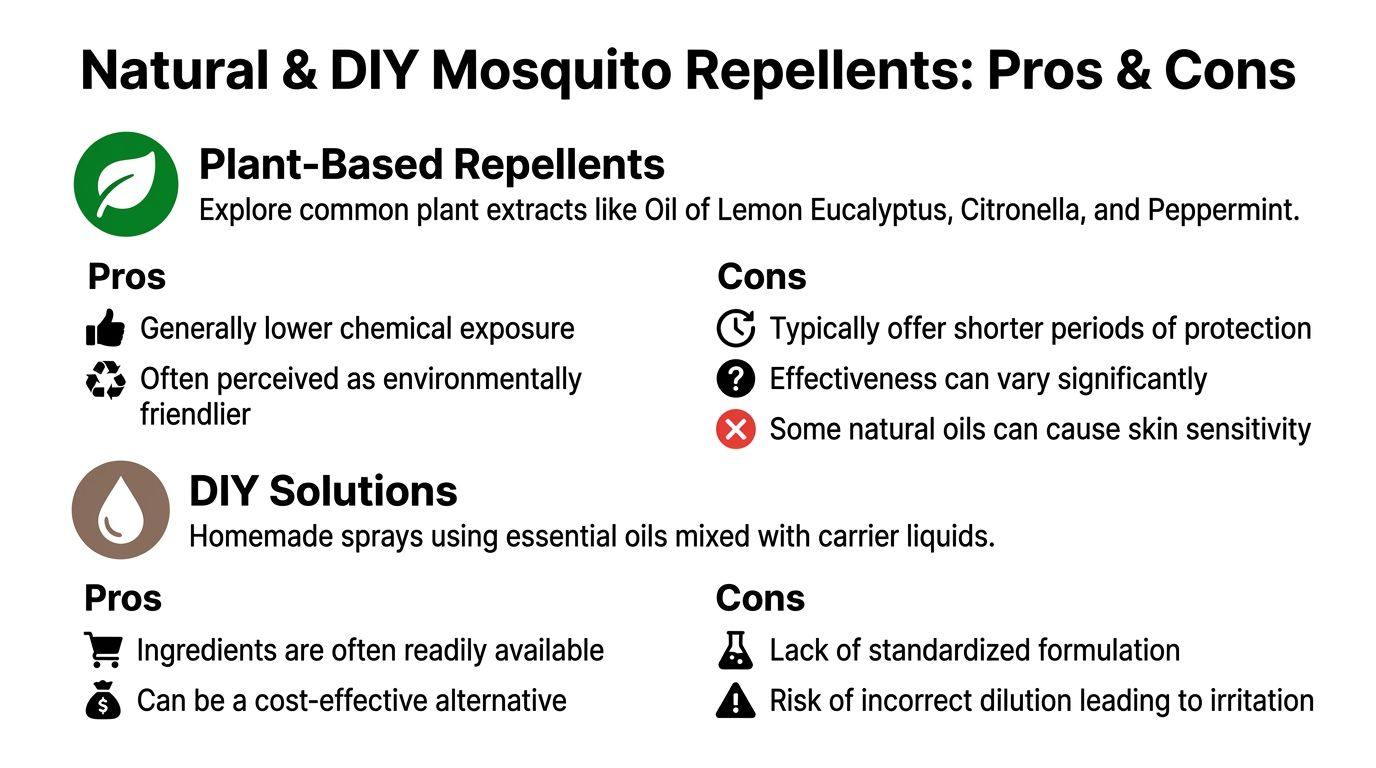
What performs best among plant-based options
If you want the strongest natural-leaning option for personal use, Oil of Lemon Eucalyptus (OLE) is the standout. Scientific comparisons show that 30% OLE can provide 96.88% protection for up to 4 hours, while a 5% citronella solution may only last about 10 to 15 minutes, which is why many natural repellents need frequent reapplication, according to Consumer Reports on natural insect repellent effectiveness.
That gap matters in real life. Four hours can cover a soccer game, an evening on the deck, or mowing the lawn. Ten to fifteen minutes is closer to “better than nothing” than dependable protection.
Here’s a practical side-by-side look:
| Option | Best use | Main strength | Main limitation |
|---|---|---|---|
| OLE products | Personal outdoor use | Strongest plant-based performance in common retail options | Doesn’t protect the whole yard |
| Citronella | Very short stationary use | Familiar, easy to find | Short-lived |
| Lavender or peppermint blends | Light personal use | Pleasant scent for some users | Results vary |
| Neem-based products | Occasional personal use | Appeals to natural-minded buyers | Can be inconsistent and may have a strong odor |
| DIY essential oil sprays | Casual, short exposure | Flexible and inexpensive to mix | No standardized strength or staying power |
Citronella, candles, and the comfort factor
Citronella is probably the most recognized alternative mosquito repellent. It has a place, but that place is narrow. It works best as a comfort-layer product for a short, calm, stationary setting.
Candles and torches can help create a more pleasant patio environment. They should not be mistaken for full protection. In field use, citronella-based options reduce nuisance more than they eliminate it.
A citronella candle can make a patio feel more comfortable. It usually won’t make a mosquito-heavy yard feel solved.
That’s the difference many families notice after buying several candles and still ending the night with bites.
DIY sprays and lotions
DIY recipes are popular because they feel simple and customizable. A typical homemade spray uses essential oils in a carrier like witch hazel, alcohol, or another skin-safe base. The biggest drawback is consistency. You don’t know if the final concentration is effective, mild, or irritating.
Common DIY issues include:
- Weak dilution: The scent is noticeable, but the repellency is poor.
- Short residual life: Essential oils evaporate fast outdoors.
- Skin sensitivity: “Natural” doesn’t automatically mean gentle on all skin types.
- Patchy application: Homemade formulas often don’t spread or hold evenly.
If you want ideas focused specifically on plant-based options, this guide to natural mosquito repellent essential oils is a useful starting point. The key is to treat DIY blends as limited personal protection, not yard control.
When natural options make sense
Natural repellents fit best when the goal is temporary personal protection, not property-wide relief. They’re reasonable for:
- Short patio sits: A little help during a quiet evening.
- Gardening or light yard work: Especially when reapplication is easy.
- Parents looking for options: Many families want to compare lower-odor alternatives first.
- Layered protection: Used alongside screens, fans, and habitat reduction.
Where they disappoint most often
The usual frustration points are predictable. People expect a spray or candle to do the job of a control program. It won’t.
Natural products struggle most when:
- mosquito pressure is already heavy,
- the yard has multiple breeding sources,
- people are active and sweating,
- there’s even mild breeze,
- coverage needs to extend beyond one person.
That doesn’t make them useless. It just means expectations need to match the tool. A well-chosen OLE product can be a smart item in the cabinet. A random homemade spray with citronella and lavender might smell nice and still leave you swatting before the burgers are off the grill.
Mosquito Repellent Devices and Physical Barriers
When homeowners get tired of spraying skin, they usually start looking at devices. That’s often a good move, especially for patios, decks, and other spots where people stay put.

Spatial repellents like clip-ons and diffusers can be more practical than topicals when the goal is protecting a table, a seating area, or a grill station. For static activities, they can outperform many topical repellents, with products like the OFF! Clip-On doing well in limited-movement situations, according to Lab Muffin’s review of natural mosquito repellents and spatial devices.
Where devices help most
These tools work best when people aren’t moving around much. A patio dinner, a card game on the deck, or sitting around a fire pit are the ideal situations.
Good uses include:
- Patio tables
- Small deck seating areas
- Porch corners with light air movement
- Outdoor events where guests stay in one zone
They’re less dependable when kids are running across the yard, people are doing lawn work, or wind keeps pushing the protective zone around.
Fans and airflow matter more than people think
A simple oscillating fan is one of the most underrated mosquito deterrents for a porch or patio. Mosquitoes are weak fliers, and moving air makes it harder for them to land and track people by scent.
That’s especially helpful in sticky Northwest Indiana evenings, where still air lets mosquitoes settle in. A fan won’t solve the whole property, but near a table or seating area, it often improves comfort fast.
Practical rule: If your goal is to protect one dinner table, think in terms of a protected pocket, not the whole yard.
That same rule applies to diffusers and clip-on devices. The smaller and more defined the activity zone, the better they tend to perform.
Screens, clothing, and physical exclusion
Not every alternative mosquito repellent comes in a bottle or a gadget. Physical barriers are often the most dependable low-maintenance upgrade because they don’t evaporate, wash off, or rely on scent.
For homeowners trying to tighten up porches, screen rooms, and openings where tiny biting insects slip through, upgraded no see um screen mesh can be a valuable resource. Standard screens may be enough for larger insects but still allow very small pests through.
Other strong barrier options include:
- Repairing torn window and door screens
- Using long sleeves and long pants for yard work
- Choosing treated clothing for hiking or brush-heavy tasks
- Closing gaps around screen doors and porch enclosures
A lot of frustration comes from overlooking these simple barriers while chasing one more spray.
Traps and device expectations
Homeowners also ask about traps. Some can play a useful support role, especially when they’re placed correctly and paired with source reduction. They tend to work better as part of a wider strategy than as a standalone answer. If you’re comparing setups, this overview of the best outdoor mosquito traps can help sort through what belongs near a patio versus what belongs farther out in the yard.
For a quick visual on device use and setup, this short video is helpful:
The bottom line is simple. Devices and barriers can improve a specific area. They rarely provide dependable, round-the-clock relief across an entire Crown Point property.
DIY Mosquito Control Limitations
Most DIY mosquito plans fail for the same reason. They stack several partial solutions and hope the combination adds up to full control.
A candle on the table. A natural spray by the back door. A diffuser near the chairs. Maybe a homemade essential oil mix for the kids before they head outside. Each item may help a little. The yard still feels mosquito-heavy because the underlying population is untouched.
The weak spots in patchwork control
Homeowners usually run into four practical limits.
First, many alternative products don’t last long enough outdoors. Wind, sweat, humidity, and movement all work against them.
Second, coverage is too small. A product can protect skin, or maybe a table, but not the lawn, landscaping, and shady resting sites around the property.
Third, results are inconsistent. Conditions change from one evening to the next. What felt acceptable on a calm night can feel useless after rain or during a humid dusk.
Fourth, DIY methods don’t stop breeding. That’s the biggest gap of all.
The problem is especially clear with top botanical choices. The CDC-endorsed Oil of Lemon Eucalyptus is one of the better alternatives, but its effectiveness decays over time, with a half-life of about 2 hours in a light breeze, and its performance can drop by 40% after exposure to water or sweat, as described by the San Gabriel Valley Mosquito and Vector Control District’s repellent guide.
Why the yard still feels “full of mosquitoes”
People often assume the repellent failed because they picked the wrong brand. Sometimes that’s true. More often, the product was being asked to do a job it was never meant to do.
A repellent’s job is to discourage bites. A control program’s job is to reduce mosquito pressure on the property.
Those are different jobs.
If mosquitoes are breeding around the home, personal repellents become maintenance tools, not solutions.
That’s why families in Crown Point often say they’ve “tried everything” when what they’ve really tried is a series of bite-reduction products. The source population is still developing in water-holding areas and resting in shaded cover.
What reliable control requires
A dependable mosquito strategy needs to do more than create a temporary bubble around people. It has to account for:
- Breeding water
- Dense foliage and damp shade
- Changing weather
- Repeated reinfestation from nearby areas
- The need for ongoing monitoring
DIY methods still have a place. They’re useful as personal layers. They just shouldn’t carry the whole burden. Once a property has active mosquito pressure, piecemeal control usually turns into repeated spending, repeated bites, and repeated disappointment.
The Green Advantage Solution Professional Mosquito Control
Homeowners looking for a safer-feeling alternative usually aren’t asking for less effective service. They’re asking for something more thoughtful. That shift is one reason the natural insect repellent market is projected to reach $4.37 billion by 2030, driven by demand for safer options, according to Grand View Research’s natural insect repellent market report.
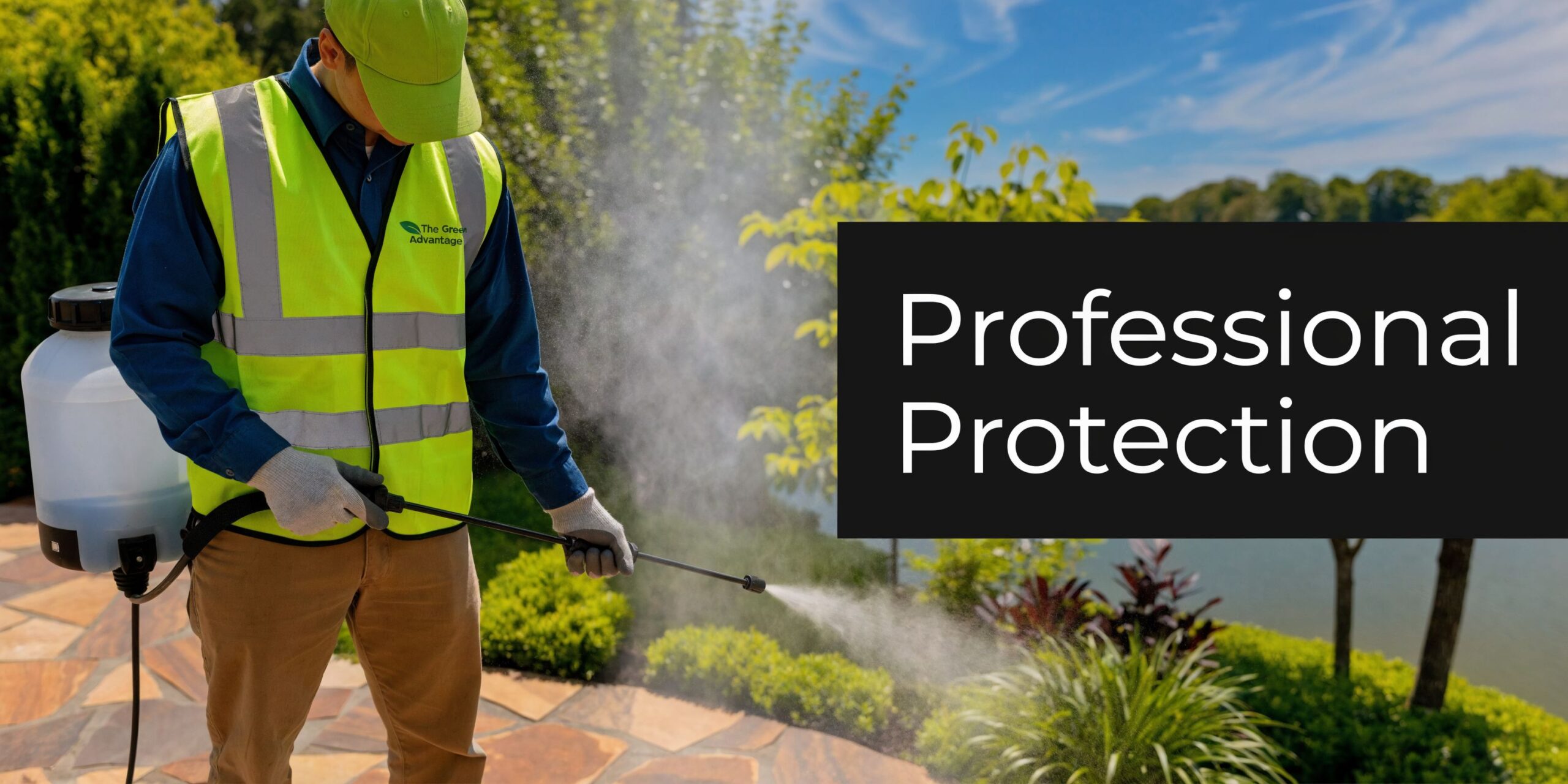
That demand makes sense in Crown Point. Families want relief, but they also want treatments that are practical for homes with kids, pets, outdoor living spaces, and pollinator concerns. Professional mosquito control works best when it combines effectiveness with a careful site-specific plan instead of a one-size-fits-all spray routine.
What a professional mosquito program should include
A program starts with inspection, not guessing. Every property has its own pressure points. One yard may struggle because of clogged gutters and dense arborvitae. Another may have standing water under a deck, poor drainage along the fence, or heavy activity near a shaded play area.
A strong service approach includes:
- Property inspection: Identifying likely breeding zones, resting sites, and activity pockets.
- Source reduction guidance: Calling out containers, drainage issues, and yard habits that contribute to recurring pressure.
- Targeted treatment: Focusing where mosquitoes rest and develop.
- Ongoing visits: Because mosquito pressure changes through the season.
- Clear communication: Homeowners should know what was found, what was treated, and what to watch next.
Why inspection changes everything
Inspection is where professional service separates itself from retail products. A technician can spot patterns homeowners miss because mosquito issues are often hidden in ordinary objects and overlooked corners.
Common trouble spots include:
| Area | Why it matters |
|---|---|
| Gutters and downspouts | Debris holds water and supports breeding |
| Plant saucers and containers | Small water volumes are enough |
| Dense shrubs | Adult mosquitoes rest in cool, shaded foliage |
| Tarps and stored items | Water collects in folds and low points |
| Drainage edges | Moist areas keep activity going after rain |
That kind of property reading matters more than any single alternative mosquito repellent product. You can buy a better spray. You can’t buy a trained inspection with a shelf item.
Treatment that works with the property, not against it
Good mosquito service isn’t about blanketing everything. It’s about targeting the places mosquitoes use. That usually means treating resting zones in vegetation, addressing water-holding areas where appropriate, and reducing adult activity around the spaces people use.
For homeowners who prefer environmentally mindful service, the best programs are transparent about where treatments go and why. The goal is to reduce mosquito pressure while staying thoughtful about families, pets, and beneficial activity around the yard.
The most effective mosquito treatment is the one matched to the property’s layout, moisture patterns, and use of outdoor space.
That’s especially important in Crown Point neighborhoods where one block may have open sun and another has dense tree cover, drainage swales, and far heavier dusk activity.
What homeowners can expect from professional support
The right provider should make the process feel straightforward, not mysterious. You should expect clear scheduling, practical recommendations, and honest answers about what a service can and can’t do.
A well-run program usually means:
- A technician evaluates the yard and identifies mosquito-friendly conditions.
- The treatment plan is adapted to those conditions.
- You get guidance on what to empty, trim, repair, or monitor between visits.
- Service continues through the season so the population doesn’t rebound unchecked.
Professional mosquito control doesn’t replace homeowner effort. It makes that effort far more effective. Instead of throwing candles, sprays, and gadgets at a yard-wide problem, you get a plan that targets mosquitoes where they live, rest, and reproduce.
Your Local Partner for Pest Control in Crown Point
When homeowners search for pest control near me, exterminator near me, or pest control in Crown Point, IN, they’re usually looking for one thing. Confidence that someone local can solve the problem without making the process harder than it needs to be.
That’s where local experience matters. Mosquitoes in Northwest Indiana don’t show up in isolation. The same property conditions that support mosquitoes often overlap with other pest issues, from ants around foundations to spiders in shaded corners and wasps around eaves and outdoor living spaces.
Why local service beats generic advice
A national article can tell you what citronella is. It can’t tell you why your specific side yard stays active after every rain or why the back fence line turns into a mosquito resting zone by dusk.
Local pest control means someone understands the patterns common to Crown Point and nearby service areas, including:
- Residential mosquito pressure near drainage and wooded edges
- Commercial pest control needs for outdoor seating and entry areas
- Seasonal ant and spider activity around landscaping and foundations
- Wasp removal concerns near rooflines, play areas, and patios
- Broader residential pest control needs that call for prevention, not just reaction
That broader view matters because homeowners rarely want five separate service companies. They want one trusted team that can help protect the property as a whole.
What the right experience should feel like
Good pest control should feel organized and personal. You shouldn’t have to chase answers, guess what the technician is doing, or wonder whether anyone noticed the standing water behind the shed.
A dependable provider should offer:
- Friendly scheduling support: Help when you call with questions.
- Clear explanations: Plain-language answers instead of vague promises.
- Specific recommendations: Advice based on your yard, not a script.
- Reliable follow-through: Service that matches what was discussed.
Peace of mind comes from knowing the problem is being managed by someone who understands the property and the local pest pressure around it.
That standard matters whether you need mosquito control, ant control, rodent control, spider control, or help protecting a commercial property from recurring pest issues.
Benefit of Professional Pest Control
The best outcome isn’t just fewer bites or fewer sightings. It’s using your home normally again. Kids play outside longer. You stop dreading dusk on the patio. Guests don’t leave scratching. You spend less time experimenting and more time enjoying the yard.
For Crown Point homeowners and businesses, that’s what professional service is supposed to deliver. Not gimmicks. Not guesswork. Reliable protection that fits the property and the season.
Frequently Asked Questions About Mosquitoes
Do bug zappers work against mosquitoes
Usually not in the way homeowners hope. Bug zappers kill some flying insects, but they’re not a dependable answer for mosquito-heavy yards. They don’t address breeding sites, and they don’t create reliable relief where people sit and gather.
Are ultrasonic mosquito repellents worth buying
In most cases, no. They’re a common example of a product that sounds convenient but doesn’t solve the problem outdoors. Homeowners generally get better results from proven physical barriers, effective personal repellents, and targeted mosquito reduction service.
What can I do in my yard today to reduce mosquitoes
Start with the basics and be thorough:
- Dump standing water: Check pots, toys, buckets, tarps, and plant saucers.
- Clean gutters: Debris and trapped water are common mosquito sources.
- Trim dense vegetation: Open up shaded, damp areas where adults rest.
These steps won’t eliminate mosquitoes on their own, but they cut down the conditions mosquitoes rely on.
What’s the best alternative mosquito repellent for personal use
For many homeowners, a properly formulated Oil of Lemon Eucalyptus product is the strongest plant-based option for personal protection. It’s a better choice for skin-level protection than relying on candles alone. It still won’t replace yard-wide control when mosquito pressure is heavy.
Are patio diffusers and clip-on repellents useful
Yes, when people stay in a defined area. They tend to work best for dinner tables, porches, and small seating zones. They’re far less effective when people are moving all over the yard or when wind disrupts the protective area.
Why do mosquitoes keep coming back after I spray myself
Because spraying yourself only protects you for a while. It doesn’t remove breeding water, reduce resting adults in landscaping, or lower the property-wide population. If the yard keeps producing or harboring mosquitoes, bites return as soon as the personal barrier weakens.
When should I call for professional help
Call when the problem keeps interrupting normal use of the yard, when DIY efforts haven’t held up, or when you want a plan that addresses the source of the issue instead of one more temporary fix. That’s especially true for homes with recurring dusk activity, standing water challenges, or outdoor spaces your family uses often.
If you're tired of testing one temporary fix after another, contact The Green Advantage for mosquito control and full-service pest control in Crown Point, IN and nearby Northwest Indiana communities. Whether you need help with a backyard mosquito problem, residential pest control, or commercial pest control, their team can inspect the property, explain your options clearly, and build a treatment plan that helps you enjoy your space again.
Termite and Pest Control

Termite and Pest Control: How to Stop Silent Damage Before It Starts
In the world of home ownership, few phrases strike fear quite like "termite damage." Often referred to as "silent destroyers," termites and similar pests have earned this nickname for a terrifying reason: they work quietly, invisibly, and relentlessly. Unlike a burst pipe or a broken window, a pest infestation rarely announces itself with a loud bang. Instead, colonies expand in the dark, chewing through structural support beams, flooring, and wall studs while life continues as normal above ground. The damage caused by these pests is not just a structural issue; it is a financial one. Billions of dollars are spent annually in the United States on termite and pest control and repair costs, much of which is not covered by standard homeowner insurance policies. The insidious nature of these infestations means that a home can look perfectly healthy on the outside while being hollowed out from the inside. Fortunately, these silent threats do not have to result in catastrophic loss. The key lies in understanding how these pests operate, recognizing the subtle warning signs they leave behind, and implementing a robust prevention strategy. Pest control termite control is not just about reacting to bugs when they appear; it is about creating an environment where they cannot thrive.Unmasking the Enemy: Understanding Termite Behavior
Subterranean vs. Drywood Termites
Understanding the enemy is the first step in effective defense, and in the world of termite and pest control, knowing the difference between Subterranean and Drywood termites is crucial. Subterranean termites require contact with the soil to survive and typically build mud tubes to travel from the ground into a structure, attacking from the bottom up. In contrast, Drywood termites do not need soil contact or as much moisture; they can fly directly into attics or second-story eaves to infest furniture and framing.The "Silent" Signal: How Colonies Grow
A termite colony’s growth is a slow, methodical process that can easily go undetected by an untrained eye. A queen can lay thousands of eggs a day, yet the colony remains hidden deep underground or within the wood itself, avoiding light and open air. This allows the population to swell to hundreds of thousands of members over several years without triggering typical alarms like noise or visible bugs in the living areas.The Role of Moisture in Infestations
Moisture is practically a beacon for termites, drawing them toward a home’s foundation with the promise of survival. These pests are constantly seeking water to prevent their bodies from drying out, which is why leaky faucets, clogged gutters, or condensation around air conditioning units can be so dangerous. Even high humidity levels in a crawlspace can create the perfect microclimate for an infestation to take hold. [caption id="attachment_184" align="aligncenter" width="400"] Pest & Termite Control[/caption]
Early Warning Signs You Can’t Afford to Ignore
Deciphering Mud Tubes
One of the most definitive signs of a Subterranean termite invasion is the presence of mud tubes, which act as a protected superhighway for the insects. These pencil-sized tunnels are constructed from soil and wood particles, often appearing as vein-like structures running up concrete foundations or exterior walls. They protect the termites from predators and dehydration as they travel between their nest in the ground and their food source in the house.The Difference Between Flying Ants and Termite Swarmers
Springtime often brings swarms of flying insects, causing panic among homeowners who struggle to differentiate between harmless ants and destructive termites. A clear checklist can help distinguish the two: termites have straight antennae and a thick, uniform waist, whereas ants have elbowed antennae and a pinched, narrow waist. Additionally, termite wings are all equal in length, while flying ants have front wings that are longer than their back wings.Structural Clues: Bubbling Paint and Hollow Wood
Sometimes, pest control termite control issues disguise themselves as water damage, misleading homeowners into thinking they have a plumbing leak rather than an infestation. Uneven or bubbling paint can occur when termites eat the drywall paper or wood directly behind the painted surface, leaving only a thin layer of paint intact. Similarly, wood that sounds hollow when tapped or crumbles easily upon contact suggests that the interior has been consumed.The Green Advantage Inspection Process
Going Where You Can't
Licensed technicians at The Green Advantage pride themselves on conducting thorough inspections that go far beyond a superficial glance at the property. The inspection process involves crawling into tight, uncomfortable crawlspaces, navigating dusty attics, and meticulously checking the foundation perimeter to uncover threats hidden from the untrained eye.Utilizing Advanced Detection Methods
Decades of field experience are combined with modern tools to ensure a comprehensive assessment of a property's health. While visual inspections are critical, advanced detection methods allow technicians to identify moisture variances and activity occurring behind walls where the human eye cannot see. This technology helps pinpoint areas of concern without the need for invasive measures like tearing down drywall initially.Honest, Transparent Reporting
After an inspection is complete, findings are presented in plain, easy-to-understand language rather than technical jargon. The Green Advantage believes in educating customers, not confusing them, ensuring that every homeowner understands the severity of the situation and the available solutions. Whether the news is good or bad, the reporting is always honest and transparent, allowing families to make the best decision for their household needs.Beyond Termites: Other Silent Wood Destroyers
Carpenter Ants: The Excavators
While termites eat wood, carpenter ants damage homes by excavating it to build their nests, which can be just as structurally compromising. These large ants prefer moist or decaying wood but will readily move into sound wood as their colony expands. The tell-tale sign of their presence is often small piles of "frass," which looks like fine sawdust, located beneath the areas where they are digging.Powderpost Beetles and Old Houses
Powderpost beetles are smaller culprits that can turn solid beams into powder over time, posing a significant threat to hardwood floors and antique furniture. They are often found in older homes or in untreated hardwoods, where their larvae bore through the wood, reducing it to a flour-like dust.Carpenter Bees and Eave Damage
Carpenter bees might resemble fuzzy, harmless bumblebees, but their nesting habits can cause significant damage to eaves, decks, and siding. Unlike termites, they drill nearly perfect, round holes into wood to lay their eggs, creating tunnels that weaken the structure over time. While a single bee might not cause structural collapse, repeated drilling by multiple generations can lead to extensive water damage and rot in the affected areas.Practical Prevention Strategies for Homeowners
Managing Moisture Around the Foundation
One of the most effective ways to prevent pest issues is by making the perimeter of a home less hospitable through proper moisture management. Actionable steps include extending downspouts away from the foundation and ensuring that the ground slopes away from the house to prevent water accumulation. Repairing leaky outdoor faucets and checking irrigation systems for overspray can also keep the soil near the foundation dry.Eliminating Wood-to-Ground Contact
A common entry point for termites is where wooden structures come into direct contact with the soil, creating a bridge for pests to cross effortlessly. Creating a buffer zone is essential; wood siding should be at least six inches above the ground, and mulch should be pulled back from the foundation. Trellises, planter boxes, and fence posts should not touch the exterior walls or the earth directly near the home.Ventilation is Key
Improving airflow in crawlspaces and attics is a vital strategy for reducing the humidity levels that wood-destroying organisms need to survive and thrive. Proper ventilation prevents moisture buildup that can lead to wood rot and fungus, both of which serve as a dinner bell for termites and beetles. Installing active vents or vapor barriers in crawlspaces can drastically change the environment beneath a home, making it dry and unappealing to pests. [caption id="attachment_192" align="aligncenter" width="400"] Pest & Termite Control Service[/caption]
Smart, Eco-Conscious Treatment Options
Liquid Barriers vs. Baiting Systems
When it comes to treatment, homeowners often choose between creating a chemical liquid barrier around the home or using bait stations. A liquid barrier acts as a continuous shield in the soil, killing termites that attempt to pass through it to reach the structure. Alternatively, baiting systems use a slow-acting toxicant that foraging termites carry back to the colony, effectively eliminating the population at its source.The Green Advantage Safety Protocols
A passion for working with nature means selecting treatments that are tough on termites but safe for children, pets, and the local ecosystem. The Green Advantage prioritizes safety protocols that minimize environmental impact while maximizing efficacy against pests. By using targeted applications and low-toxicity products where possible, the goal is to solve the pest problem without introducing unnecessary risks to the household.Long-Term Monitoring and Maintenance
Effective termite control is never a one-time event; it requires ongoing vigilance to ensure the protective measures remain intact. Annual inspections allow professionals to check for any breaches in the barrier or new signs of activity that may have arisen due to landscaping changes or weather events. Monitoring stations placed around the property serve as an early warning system, alerting technicians to pest pressure before it reaches the structure.The Real Cost of Ignoring Pest Control
Prevention vs. Restoration Costs
The financial reality of termite and pest control is stark: investing in preventative measures is a fraction of the cost compared to the massive expense of restoration. Repairing structural beams, replacing hardwood flooring, and rebuilding compromised wall studs can run into thousands, if not tens of thousands, of dollars. Preventative treatments and inspections are a small, predictable expense that acts as insurance against these overwhelming repair bills.Why Homeowners Insurance Often Denies Claims
Many homeowners are shocked to discover that their insurance policies typically classify termite damage as "preventable," meaning claims for repairs are often denied. Insurers view infestations as a maintenance issue that the homeowner should have addressed, leaving the property owner solely responsible for the costs.Protecting Your Property Value
Whether a homeowner plans to sell in the near future or stay in the home forever, a history of termite damage can significantly lower the property's market value. During the sales process, a wood-destroying insect inspection is standard, and evidence of past or present infestation can derail a sale or force a drastic reduction in the asking price.Why Choosing a Local Expert Matters
Knowledge of Local Pest Trends
Every region has specific soil types, weather patterns, and insect behaviors that influence how infestations occur. The Green Advantage leverages deep knowledge of these local trends to predict and prevent infestations specific to the community's environment. Understanding whether the neighborhood is prone to particular termite species or if local soil conditions degrade treatments faster allows for more accurate planning.A Relationship Built on Trust
When calling The Green Advantage, a customer isn't routed to a distant call center but speaks with helpful staff who live in the community and care about solving unique problems. This direct line of communication builds a relationship based on trust and accountability.Customized Solutions for Local Homes
Cookie-cutter solutions simply do not work for every house, as construction styles and neighborhood-specific environmental factors vary widely. The approach is always tailored to the specific needs of the property, whether it is a historic home with a stone foundation or a new build on a slab. By customizing the pest & termite control strategy, technicians ensure that the treatment addresses the specific vulnerabilities of the structure. [caption id="attachment_698" align="aligncenter" width="400"] Pest & Termite Control Specialist[/caption]
Conclusion
The threat of termites and other wood-destroying pests is a silent but serious reality for homeowners. While they may be invisible to the naked eye for long periods, their impact on a home's structure and value is very real. Early detection and consistent prevention are the most effective tools for avoiding the financial burden and emotional stress of an infestation. Waiting until damage is visible often means waiting too long, turning a manageable maintenance issue into a major renovation project. Ready to protect your home? Contact the knowledgeable team at The Green Advantage today. Let licensed professionals provide a thorough inspection and a plan that fits the household's needs perfectly. The Green Advantage https://maps.app.goo.gl/wzz1BewPEdKx96pQ6 14451 Reeder Rd, Crown Point, IN 46307, United States (219) 779-9815 https://thegreenadvantage.biz/Uncover What Attracts Mice to Your Home

You hear a faint scratching in the wall after dark. The dog stares at the pantry. In the morning, there are a few tiny droppings under the sink, and suddenly your home does not feel quite as settled as it did the day before.
That worry is common in Crown Point and across Northwest Indiana. Mice do not need much to move in, and once they find what they want, they tend to stay close.
The good news is that mouse problems are usually very understandable when you know what to look for. If you know what attracts mice to your home, where they slip inside, and how local weather changes their behavior, the problem stops feeling mysterious. It becomes something you can act on with confidence.
Your Trusted Partner for Pest Control in Crown Point IN
When homeowners search for pest control in Crown Point, IN, they are usually not looking for theory. They want answers. They want to know why mice picked their house, whether the problem is getting worse, and what solution will work.
That is a fair concern. Mice are not drawn to dirty homes only. They are drawn to opportunity. A neat house with one plumbing gap, a little pet food, and a damp crawlspace can be just as appealing as a cluttered one.
Why mouse problems feel so sudden
Most infestations seem to appear out of nowhere because mice stay hidden well. They move through wall voids, behind appliances, inside garage corners, and above ceilings. By the time a homeowner sees one in the open, mice have often already found food, shelter, or moisture.
In Crown Point, that pattern gets worse because our seasons push pressure onto homes for much of the year. Cold snaps send mice toward warmth. Humid stretches create damp conditions around basements, garages, crawlspaces, and AC areas that many homeowners do not think of as rodent attractants.
Key takeaway: Mouse activity usually starts with a simple combination of access plus resources. If a home offers both, traps alone rarely solve the full problem.
What local homeowners need from an exterminator near me
A homeowner looking for an exterminator near me is usually balancing several priorities at once:
- Fast clarity: They want to know if the noises and droppings really point to mice.
- A complete fix: They do not want to catch one mouse only to find more a week later.
- Safe treatment: They want rodent control handled responsibly around children, pets, and daily life.
- Prevention: They want to stop the next entry, not just remove the current intruder.
That is why understanding attractants matters so much. Rodent control works best when it addresses the reason mice stayed in the first place. In practical terms, that means looking at food sources, water sources, shelter conditions, and the structural weak points that let mice move indoors.
Homeowners in Northwest Indiana often assume a mouse problem starts in winter. Sometimes it does. But local conditions make the pressure more year-round than many people realize. That local reality changes what effective prevention looks like.
The Top 3 Things That Attract Mice to Your Home
You hear a scratch in the wall on a cold Crown Point night, set a couple of traps in the kitchen, and hope that handles it. Sometimes it catches one. The activity comes back because the house is still giving mice what they came for in the first place.
Mice stay where they can reliably find food, water, and shelter. In Northwest Indiana, that combination shows up in every season. Winter pushes mice toward heated interiors. Summer humidity keeps crawlspaces, basements, garages, and utility areas more mouse-friendly than many homeowners realize.
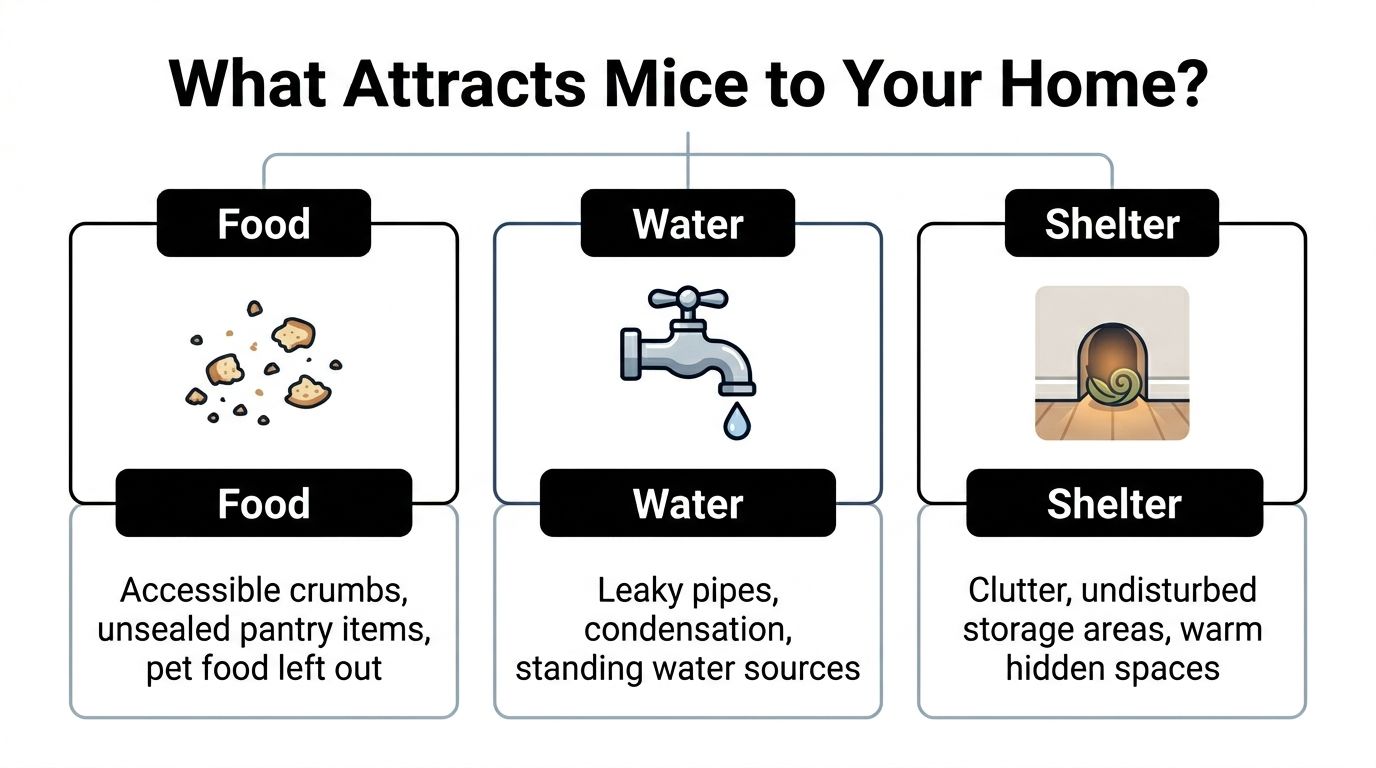
1. Food sources they can count on
A mouse does not need a major mess. It needs repeat access.
In real homes, I see the same patterns over and over. Crumbs under the stove, snack pieces under living room furniture, grease buildup beside a range, bird seed in the garage, and dry pet food left out overnight all give mice a reason to keep returning. Boxed goods and thin plastic packaging are not much protection either. If food odor gets out, mice will work at the package until they get in.
The trade-off is simple. Convenience for the household often creates consistency for mice. A bag of seed stored in the garage is easy for you to reach. It is also easy for mice to find. Pet food left out helps a busy evening routine. It also gives nighttime feeders a dependable meal.
2. Moisture that helps them stay
Food gets attention first. Water and damp conditions often explain why mice settle in instead of just passing through.
That matters in Crown Point because our climate creates moisture trouble in places homeowners often overlook. Condensation around HVAC lines, damp basement corners, crawlspace humidity, utility room drips, and moisture near sump areas all help support rodent activity. Harris Pest Control's overview of what attracts mice notes that even a small, steady water source such as a dripping faucet can support multiple mice.
Watch these areas closely:
- Under sinks: slow leaks hidden behind stored supplies
- Basements: damp walls, condensation, and musty corners
- Laundry rooms: appliance hoses, floor drains, and utility hookups
- Garages: humidity, minor leaks, and poor airflow
- Near HVAC equipment: condensation lines and pooled moisture
A house can look clean and still feel comfortable to mice if moisture is left in place.
3. Shelter that stays quiet and undisturbed
Once mice find food and moisture, they look for protected nesting spots. Most homes offer more of them than homeowners expect.
Cardboard boxes in the garage, holiday bins packed with fabric, paper storage in the basement, attic insulation, cluttered utility shelves, and dense shrubs near the foundation all give mice cover. They use soft materials for nesting and prefer areas that stay dark, warm, and undisturbed for long stretches.
Outdoor cover matters too. In Northwest Indiana, summer growth around the home can hide low entry areas and give mice safer movement along the foundation. Then fall and winter weather push that pressure closer to the house.
If you are already noticing scratching sounds, droppings, or gnaw marks, our guide to the common signs of rodent infestation can help you confirm whether mice are active.
Why these attractants matter together
One crumb usually is not the whole problem. One leak usually is not either.
What keeps an infestation going is the combination. Food gives mice a reason to return. Moisture helps them remain active inside. Shelter gives them a place to nest where they are hard to notice and harder to remove.
That is why quick trap-only fixes often fall short. Lasting rodent control means cutting off the resources that made the home worth using in the first place. At The Green Advantage, that is the part we pay close attention to because it is what turns a short-term catch into a long-term fix.
Unseen Entry Points and Telltale Signs of Mice
A Crown Point homeowner can keep a tidy house and still end up with mice in the walls by the first hard cold snap. In this area, the problem often starts outside long before anyone sees a droppings trail in the pantry.

Mice get in through openings homeowners pass every day without noticing. Small gaps around a pipe, a worn garage door corner, or a foundation crack can be enough. In Northwest Indiana, freeze-thaw movement, wet springs, and humid summers slowly open those weak spots, then fall and winter weather push mice to use them.
Where mice usually get in
A proper inspection is less about finding one big hole and more about spotting several small failures around the exterior shell.
Common trouble spots include:
- Foundation cracks: Especially where mortar has separated or settling has opened a seam.
- Utility penetrations: Gaps around water lines, gas lines, AC lines, and cable entry points.
- Door sweep failures: Side doors, service doors, and garage doors often leave just enough clearance at the bottom corners.
- Roof and vent gaps: Loose vent screens, soffit gaps, and openings near rooflines can give mice access to attics and wall voids.
- Garage corners: Garages collect clutter, stay quieter than main living areas, and often have more construction gaps than homeowners expect.
One reliable route is all it takes.
Why homeowners miss the first signs
Mice do most of their movement at night and usually travel along edges, not across open floors. That is why the first evidence often shows up in tucked-away spots instead of the middle of a room.
Watch for these signs early:
| Sign | What it often means |
|---|---|
| Small droppings | Regular travel routes near food storage, cabinets, or hidden nesting areas |
| Gnaw marks | Active feeding or attempts to widen access around wood, packaging, or drywall edges |
| Shredded material | Nest building with paper, insulation, fabric, or cardboard |
| Scratching sounds | Movement inside walls, above ceilings, or behind cabinets |
| Musty odor | Repeated activity in a concealed space, often with nesting nearby |
If you want to compare what you are seeing with common household warning signs, our page on common signs of rodent infestation gives a clear homeowner reference.
What a quick inspection should include
Start outside. Check the foundation line, door bottoms, garage perimeter, hose bibs, AC line entries, and any place one material meets another. Brick to siding transitions and pipe-to-wall gaps are frequent problem areas in homes around Crown Point.
Then move inside and inspect the places mice use first because they offer cover and steady access:
- Under sinks
- Behind the stove and refrigerator
- Inside pantry corners
- Basement rim areas
- Garage shelving edges
- Attic access points
This video gives a useful visual sense of the kinds of areas that deserve attention.
When signs point to a bigger issue
A single mouse caught in a trap does not rule out more activity elsewhere in the home. If droppings show up in multiple rooms, scratching continues after a catch, or fresh signs return after cleanup, there is usually an active entry route and a hidden nesting area that still need attention.
Homeowners often lose time focusing on the mouse they can see instead of the gap it used and the space where it settled. That trade-off matters. Catching one or two mice may bring short-term relief, but it rarely solves a Northwest Indiana mouse problem if seasonal pressure around the house is still in place.
Identifying entry points and hidden signs early makes it much easier to stop a mouse issue before it spreads.
Why Mouse Behavior Changes with Northwest Indiana Seasons
A lot of Crown Point homeowners call after the first hard cold snap. They hear scratching in a wall or find droppings that were not there a week earlier and assume the problem started overnight.
Usually, it started earlier.
Northwest Indiana gives mice two different kinds of opportunity through the year. Winter pushes them toward indoor warmth. Our humid summers and wet stretches help maintain the damp, protected conditions mice can use around basements, crawlspaces, garages, and utility areas. Generic national advice often focuses on cold weather alone. Around here, that misses half the pattern.
Fall and winter change how mice use a home
Once temperatures drop, homes in Crown Point become steady shelter. Attics stay warmer than the outdoors. Wall voids block wind. Utility areas hold residual heat. Mice respond fast to that shift, especially when fields are harvested and outdoor cover changes.
That is why activity often seems to surge in late fall. The route may have been there for weeks, but the weather finally gave mice a reason to use it heavily.
Summer brings pressure too, for different reasons
Summer mouse pressure looks different. It is quieter, and homeowners often misread it.
In Northwest Indiana, long humid stretches can keep certain parts of a property damp even without a plumbing leak. Basements can feel heavy. Crawlspaces can stay moist. Condensation around HVAC components and AC lines can keep small areas usable for longer than people expect. Purdue Extension's rodent control guidance emphasizes that mice need food, water, and shelter, and those conditions do not disappear just because it is warm outside. See Purdue Extension's house mouse management guidance.
Around Crown Point, I see the same summer conditions over and over:
- garages that stay damp after storms
- muggy basement corners with little airflow
- crawlspaces with persistent humidity
- utility and HVAC areas where condensation forms
- quiet storage areas that stay undisturbed for weeks
Those spaces may not draw attention the way a winter pantry issue does, but they still support mouse activity.
Why generic advice misses the Northwest Indiana pattern
A national article can tell you to seal gaps before winter, and that is good advice. It is incomplete for this area.
Our seasonal pressure is layered. Winter increases indoor movement toward heat and cover. Spring and fall often bring exploration and route-setting. Summer can support nesting and survival in damp, protected areas that stay stable during humid weather. The trade-off for homeowners is simple. If prevention starts only when frost shows up, mice may already be established in lower-traffic parts of the home.
That is one reason a local plan usually performs better than a one-size-fits-all checklist. A Crown Point home has to be evaluated for cold-weather entry pressure and warm-weather moisture pressure.
A seasonal plan works better than a one-season fix
The practical response changes with the calendar:
- In fall and winter, focus on heat-seeking activity and protected indoor nesting areas.
- In spring, watch for renewed movement as mice test routes and expand travel paths.
- In summer, correct humidity, condensation, and damp storage conditions.
- Year-round, keep the exterior less inviting so mice stay farther from the structure.
Homeowners who want to weigh short-term trap-and-seal work against a more durable treatment plan can compare both approaches in this guide on DIY mouse control vs hiring a professional.
Mouse behavior changes here because Northwest Indiana weather changes hard and often. The best results come from handling the problem the same way. Season by season, with a plan that fits Crown Point homes.
Your Rodent Control Options DIY Fixes vs Professional Treatment
A lot of Crown Point homeowners start the same way. They hear scratching at night, spot droppings near the pantry or garage wall, and pick up a few traps on the way home.
That first step can help. It just has limits, especially in Northwest Indiana, where mice keep shifting with the weather. In cold months, they push hard toward indoor warmth. In humid stretches, they often stay active around damp basements, crawl spaces, garages, and cluttered storage. A trap can remove a mouse. It does not tell you why the house keeps drawing them back.

What DIY does well
DIY control has a place.
If activity started recently, is limited to one area, and you can clearly identify where mice are getting in, traps and basic exclusion may be enough to get ahead of it. Good cleanup helps too, especially in kitchens, pet food areas, and storage spaces where crumbs or nesting material have built up.
DIY usually makes sense when:
- activity appears light and recent
- signs are limited to one room or one side of the home
- the gap or hole is easy to reach and seal correctly
- there is no strong odor, repeated droppings, or evidence of nesting
That is the honest trade-off. DIY can be a reasonable first response for a small, early problem.
Where DIY usually misses the core problem
The trouble starts when homeowners treat sightings instead of pressure points.
Mice rarely use just one opening. In Crown Point homes, I often find multiple access spots around utility lines, garage door corners, siding gaps, foundation joints, attic edges, and areas where cold-weather settling has opened small seams. Outside conditions matter too. Dense vegetation, stacked firewood, and stored items against the house give mice cover close to the structure. Once that pattern is established, catching one or two mice indoors does not break it.
Here is a practical comparison:
| DIY approach | What it can do | What it often misses |
|---|---|---|
| Traps | Reduce visible activity | Hidden travel routes, nests, and secondary entry points |
| Store-bought bait | Knock down some pressure | Safe placement, monitoring, and full-property strategy |
| Sealing one obvious hole | Blocks one access point | Small gaps in other parts of the structure |
| Extra cleaning | Lowers food availability | Shelter, moisture, and exterior harborage |
One of the most common mistakes is sealing only the spot where a mouse was seen. Another is putting traps indoors while ignoring the outside conditions that keep feeding the problem.
What professional treatment changes
Professional rodent control works best as a process, not a product.
A solid service starts with inspection. The goal is to find how mice are entering, where they are traveling, what conditions are supporting them, and whether the issue is isolated or established. From there, treatment is built around the house itself, not a generic setup.
A professional plan usually includes:
- Detailed inspection: interior signs, exterior gaps, nesting areas, and pressure zones
- Targeted trapping or control: placed where mice are moving
- Exclusion recommendations or repairs: to shut down repeat access
- Exterior evaluation: cover, moisture, storage habits, and structural conditions near the home
- Follow-up: to confirm activity has dropped and the plan worked
That matters here because our local weather creates repeat pressure. A home can seem quiet for a while, then mouse activity picks up again with the next hard temperature swing or damp spell. Lasting control usually comes from handling the whole pattern, not just the mouse you saw this week.
If you are comparing short-term fixes with a longer-lasting plan, this guide on DIY mouse control versus hiring a professional lays out the decision clearly.
What usually gives longer control: inspection, exclusion, and targeted treatment used together
What often falls short: traps alone, without fixing access and shelter conditions
Safety matters
Homeowners are right to ask about kids, pets, and treatment safety.
A good rodent service should explain what is being used, where it is being placed, and why that approach fits the home. It should also account for how the family uses the space. That includes kitchens, mudrooms, attached garages, basements, and utility areas where mouse activity often overlaps with daily routines.
Professional help offers clarity. You get a defined plan, you know what is being corrected, and you are not left guessing whether the scratching will start up again next week.
The Green Advantage Promise for Crown Point Homeowners
When mice get inside, the problem affects more than one corner of the house. It affects how comfortable people feel in their own kitchen, basement, garage, and bedrooms. That is why homeowners usually want more than a quick removal. They want confidence that the issue is being handled correctly.
For Crown Point homeowners, that means choosing a pest control company that understands both the pest and the local conditions that support it.
What professional rodent control protects
A proper mouse control plan helps protect several things at once:
- Your property: Mice chew, shred, and contaminate stored materials.
- Your living spaces: Kitchens, pantries, utility rooms, and attics are hard to enjoy when signs of rodents keep returning.
- Your routines: Ongoing trap checks and repeated cleanups wear people down quickly.
- Your peace of mind: The biggest relief often comes from knowing someone has found the root of the problem.
Professional service is especially valuable when mouse activity overlaps with other seasonal pest issues in Northwest Indiana. Homes dealing with rodents may also need broader support with preventative pest treatments, spider control, ant control, wasp removal, termite concerns, or mosquito control around the yard. A company that sees the full property picture can help homeowners protect the home more completely.
What homeowners should expect from a good service experience
A strong pest control experience should feel straightforward, not confusing.
It should usually include:
A clear first conversation
You should be able to describe what you are hearing or seeing and get practical guidance on next steps.An on-site inspection
The technician should inspect likely entry points, activity zones, and conditions that support mice.A site-specific plan
The home should be treated based on its layout, pressure points, and risk areas.Plain communication
You should know what was found, what was done, and what changes at home will help.Follow-through
Lasting control depends on confirming results, not just performing one visit and disappearing.
Why local experience matters in Crown Point IN
A company serving Crown Point, IN, and nearby Northwest Indiana communities should understand how local weather, construction styles, yard layouts, garages, crawlspaces, and seasonal moisture patterns shape pest activity. That local familiarity leads to better inspections and more practical recommendations.
Homeowner reassurance: The best pest control is not just about removing mice. It is about restoring normal life in the house without confusion, pressure, or guesswork.
If you are comparing providers after searching for exterminator in Crown Point, IN or pest control near me, look for direct communication, licensed and certified service, realistic prevention advice, and a process that addresses entry points as seriously as sightings.
Your Simple Home Maintenance Checklist for Mouse Prevention
Preventing mice is easier when small tasks become routine. The checklist below focuses on the parts of the home where mouse pressure builds fastest.
Kitchen and pantry
- Store dry goods securely: Move cereals, grains, snacks, and pet food into durable sealed containers.
- Clean low and hidden areas: Sweep under appliances and wipe crumbs from cabinet corners, not just countertops.
- Manage trash tightly: Keep garbage closed and avoid letting food waste sit overnight.
- Pick up pet bowls: Do not leave food and water out longer than necessary.
Basement attic and storage spaces
- Reduce soft nesting material: Limit loose paper, fabric, cardboard, and clutter in quiet areas.
- Use plastic totes: Long-term storage holds up better in lidded bins than in boxes.
- Watch for dampness: Check utility areas, under-sink zones, and corners that feel humid or musty.
- Inspect insulation and hidden edges: Look for shredding, droppings, or disturbed materials.
Home exterior and yard
- Trim back vegetation: Keep shrubs and growth from pressing against siding or foundation lines.
- Maintain perimeter clearance: Adequate clearance around the house helps reduce cover and climbing access, as noted earlier.
- Move wood and debris away from the house: Keep outdoor shelter spots from building pressure near the structure.
- Check doors and gaps: Pay attention to garage edges, side doors, vents, and utility penetrations.
A checklist like this does not replace treatment when mice are already active. It does make the property much less inviting.
Frequently Asked Questions About Mouse Control
Are mouse treatments safe for children and pets
They should be handled with safety in mind from the start. A responsible pest control company explains where products are placed, why they are used, and what precautions matter for your household. If you have children, pets, or specific concerns, ask for that conversation up front.
Can a clean home still get mice
Yes. Clean homes can still get mice if the structure has accessible gaps, moisture issues, or quiet nesting areas. Cleanliness helps, but it does not replace exclusion and inspection.
How long does it take to get rid of mice completely
That depends on how established the activity is, how many access points exist, and whether nesting areas are present. Some problems are resolved quickly. Others take a more involved plan with follow-up to make sure activity has fully stopped.
Do new homes in Crown Point get mice too
Yes. Newer homes can still have gaps around utility lines, garage doors, foundation transitions, roof vents, or landscaping that creates cover near the structure. Age alone does not prevent mouse pressure.
Should I call if I have only seen one mouse
If you have seen one mouse indoors, heard scratching, or found fresh droppings, it is worth taking seriously. Mice stay hidden well. One visible sign can mean there is already a route or nesting area somewhere out of sight.
If you are dealing with scratching in the walls, droppings in the pantry, or repeat mouse activity around your Crown Point home, The Green Advantage can help you get clear answers and a lasting solution. Our local team serves Crown Point and nearby Northwest Indiana communities with thoughtful, environmentally mindful pest control for homes and businesses. Reach out today to schedule an inspection, request a quote, and take the next step toward a home that feels settled again.
Professional Mosquito Control in Crown Point, IN for 2026

Nothing ruins a beautiful Northwest Indiana evening faster than the persistent buzz and bite of mosquitoes. For homeowners in Crown Point, IN, finding effective solutions that are safe for families, pets, and the environment is a top priority. When you're searching for "pest control near me," you need a solution that works. While DIY methods offer some relief, a professional approach is the only way to guarantee a significant reduction in mosquito populations and reclaim your outdoor living spaces.
At The Green Advantage, we understand the specific challenges homeowners and businesses face with pests in Crown Point and the surrounding NWI communities. Mosquitoes aren't just an annoyance; they can carry diseases and make it impossible to enjoy your property. This guide will explain why mosquitoes are a problem in our area and how our professional pest control services provide the most reliable solution.
For severe or persistent mosquito infestations that require a robust strategy, the expertise of a local professional is invaluable. The Green Advantage is your trusted local exterminator in Crown Point, IN, specializing in integrated mosquito reduction programs. We combine our deep knowledge of local pest pressures with proven, family-safe techniques to create a comfortable environment for your home or business. If you're looking for an "exterminator near me" that delivers real results, you've come to the right place.
Understanding the Mosquito Problem in Northwest Indiana
Mosquitoes thrive in the exact conditions our warm, humid summers provide. All they need is a small amount of standing water to lay their eggs, and a single female can produce hundreds of offspring in a short time. Common breeding grounds around your Crown Point home include:
- Clogged gutters
- Birdbaths and pet water bowls
- Flowerpot saucers
- Children's toys and yard equipment
- Low spots in the lawn that collect rainwater
These pests don't just cause itchy bites; they can also transmit diseases like West Nile Virus. Protecting your family and property requires a proactive approach that targets mosquitoes where they live and breed. While some DIY methods can help, they often fail to address the root of the problem, leading to recurring infestations year after year.
How Professional Mosquito Control Solves the Problem
The Green Advantage offers comprehensive mosquito control services designed to reclaim your yard and protect your family. Our approach goes beyond simple sprays; we use an Integrated Pest Management (IPM) strategy that provides effective, long-lasting relief.
1. Thorough Property Inspection: Our service begins with a detailed inspection of your property. A licensed technician from The Green Advantage will identify all active mosquito breeding sites and resting areas. We know exactly where to look for the hidden water sources that DIY efforts often miss, ensuring we address the problem at its source. This is a critical step that sets professional pest control apart.
2. Targeted Larvicide Treatments: The most effective way to control mosquitoes is to stop them before they can fly. We apply eco-friendly, biological larvicides to any standing water that cannot be removed. These treatments specifically target mosquito larvae and are completely safe for people, pets, and other wildlife. This is a key part of our preventative pest treatments.
3. Barrier Spray Application: To control adult mosquitoes, we apply a professional-grade barrier spray to the foliage, shrubs, and other shaded areas where mosquitoes rest during the day. This creates a protective zone around your property that eliminates existing mosquitoes and prevents new ones from moving in. Our team is trained to apply these treatments precisely and safely.
4. Ongoing Protection: Mosquito control is not a one-time event. We offer seasonal mosquito control plans that provide continuous protection from spring through fall. Regular visits from our technicians ensure that your property remains comfortable and enjoyable all season long, addressing any new issues that arise. This service is essential for managing seasonal pest issues in Northwest Indiana.
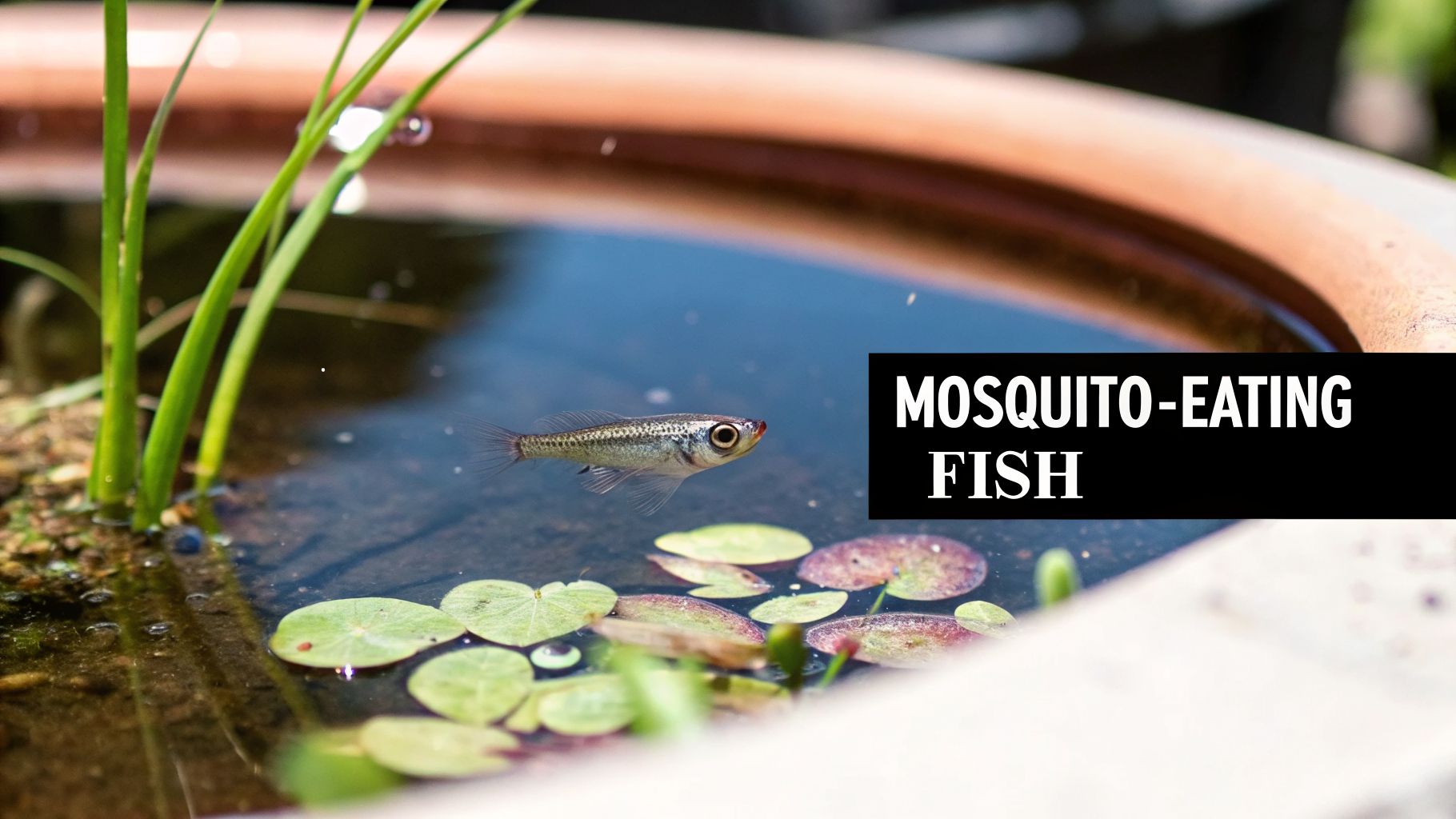
Actionable Tips for Using Mosquito-Eating Fish
To successfully implement this natural way to remove mosquitoes, consider these key steps:
- Timing is Key: Introduce the fish in early spring as water temperatures rise. This allows their population to establish before mosquito season peaks in Crown Point and surrounding areas.
- Water Depth Matters: Ensure your pond or water feature has areas at least 18-24 inches deep. This depth provides a crucial refuge for the fish to survive colder winter temperatures.
- Stocking Density: A good starting point is 100-200 fish per 100 square feet of water surface. For smaller features, even a handful of fish can make a significant difference. When considering specific types, the Blue Delta Guppy Male is one variety that can help control mosquito populations by feeding on their larvae.
- Professional Guidance: For larger or more complex water systems, partnering with a local expert like The Green Advantage can ensure proper species selection and stocking rates for optimal results.
Pro Tip: When first introducing fish, avoid adding features that attract predatory birds, like herons. Give the fish population time to grow and establish itself as the primary defense against mosquito larvae in your pond.
While fish handle the aquatic stages, a complete strategy also addresses adult mosquitoes. Pairing this method with other natural controls, like adding a bat house, can further protect your property. For more information, explore our guide on using bat houses for mosquito reduction.
Actionable Tips for Using Bti
To effectively use this biological control agent as a natural way to remove mosquitoes, follow these guidelines:
- Target the Source: Apply Bti products, available as dunks, pellets, or granules, directly to any standing water on your property. Common breeding grounds include bird baths, rain barrels, clogged gutters, flowerpot saucers, and ornamental ponds.
- Start Early and Be Consistent: Begin treatments in early spring as soon as standing water appears. Reapply every 7 to 30 days, depending on the product formulation, throughout the mosquito season in Crown Point to maintain control.
- Reapply After Rain: Heavy rainfall can dilute the Bti concentration or wash it away. Always check treated areas after a significant downpour and reapply if necessary to ensure continuous protection.
- Proper Storage: Keep Bti products in a cool, dry place away from direct sunlight. This preserves the viability of the bacteria and ensures the product remains effective when you need it.
Pro Tip: While Bti is extremely safe, always read the product label for specific application rates. A single Bti dunk can often treat up to 100 square feet of water surface, making it a cost-effective solution for larger water features.
Using Bti is a powerful step in controlling mosquito populations at their source. To create a more complete defense for your property, consider combining it with other natural methods. For more insights on building a multi-layered approach, see our advice on creating a mosquito-free yard.
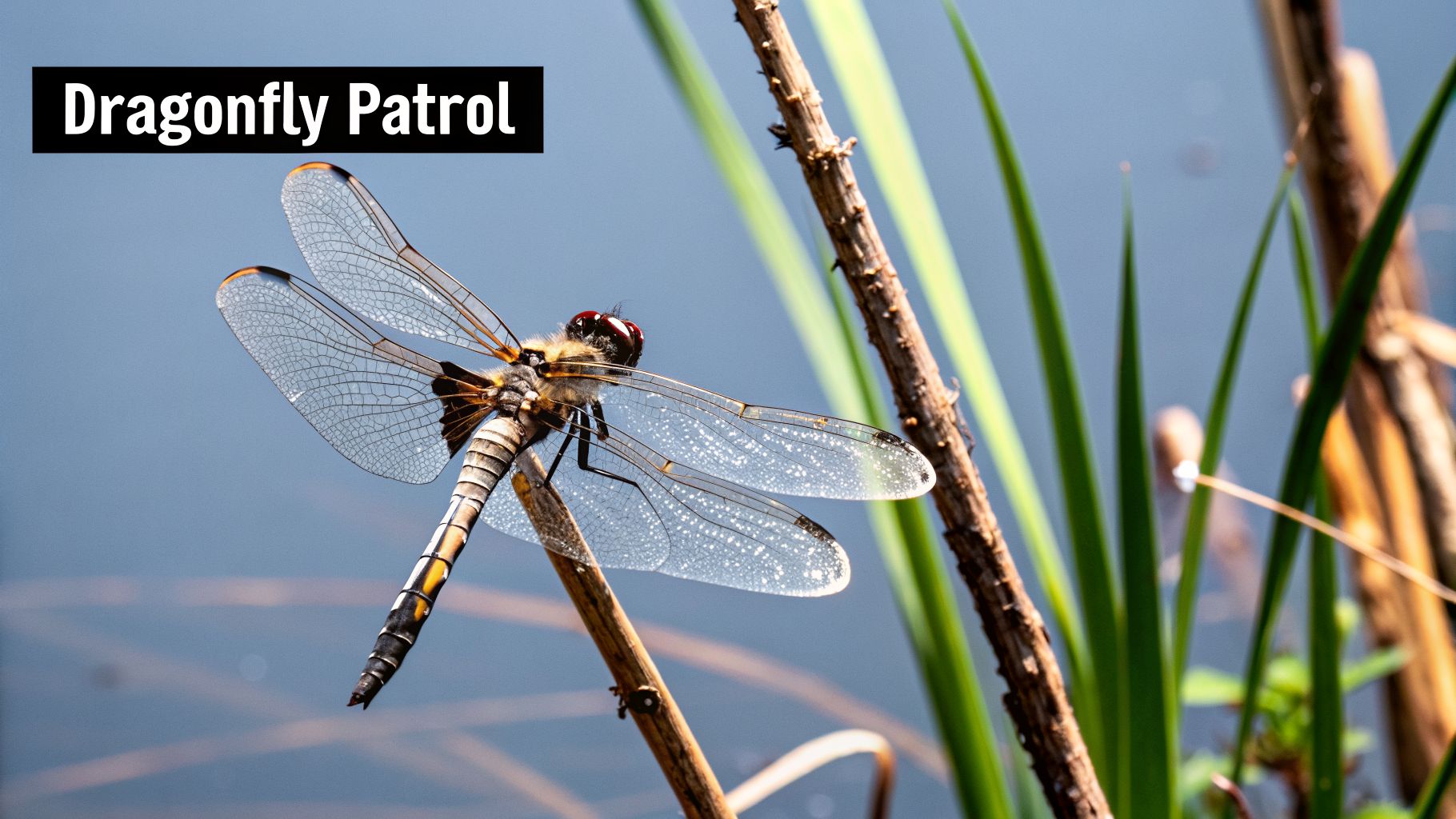
Actionable Tips for Attracting Dragonflies
To successfully implement this natural mosquito control method at your home or business in the Crown Point area, focus on creating an ideal environment:
- Create a Water Source: Install a shallow pond or water feature, ideally 6 to 24 inches deep. Unlike with fish, a shallow design is perfect for dragonfly nymphs.
- Add Native Aquatic Plants: Incorporate native species like cattails, rushes, and water lilies. These plants provide oxygen to the water and give nymphs places to hide and hunt for mosquito larvae. They also offer adults a place to land and lay eggs.
- Provide Perches: Place flat rocks or sticks around the edge of your water feature. Adult dragonflies use these spots for basking in the sun, resting, and hunting for flying pests.
- Avoid Fish: While fish can also control larvae, many species will eat dragonfly nymphs. If your primary goal is attracting dragonflies, it is best to have a fish-free water source.
- Eliminate Pesticides: Refrain from using chemical pesticides in your yard. These products are indiscriminate and will harm or kill beneficial insects like dragonflies, undermining your natural control efforts.
Pro Tip: Plant a variety of native flowering plants around your pond. This attracts other insects, providing an additional food source for dragonflies and creating a more robust and balanced backyard ecosystem.
By building a habitat that supports dragonflies, you are not only reducing mosquitoes but also enhancing the local biodiversity. This method pairs perfectly with other natural solutions, creating multiple layers of defense for a more enjoyable outdoor space.
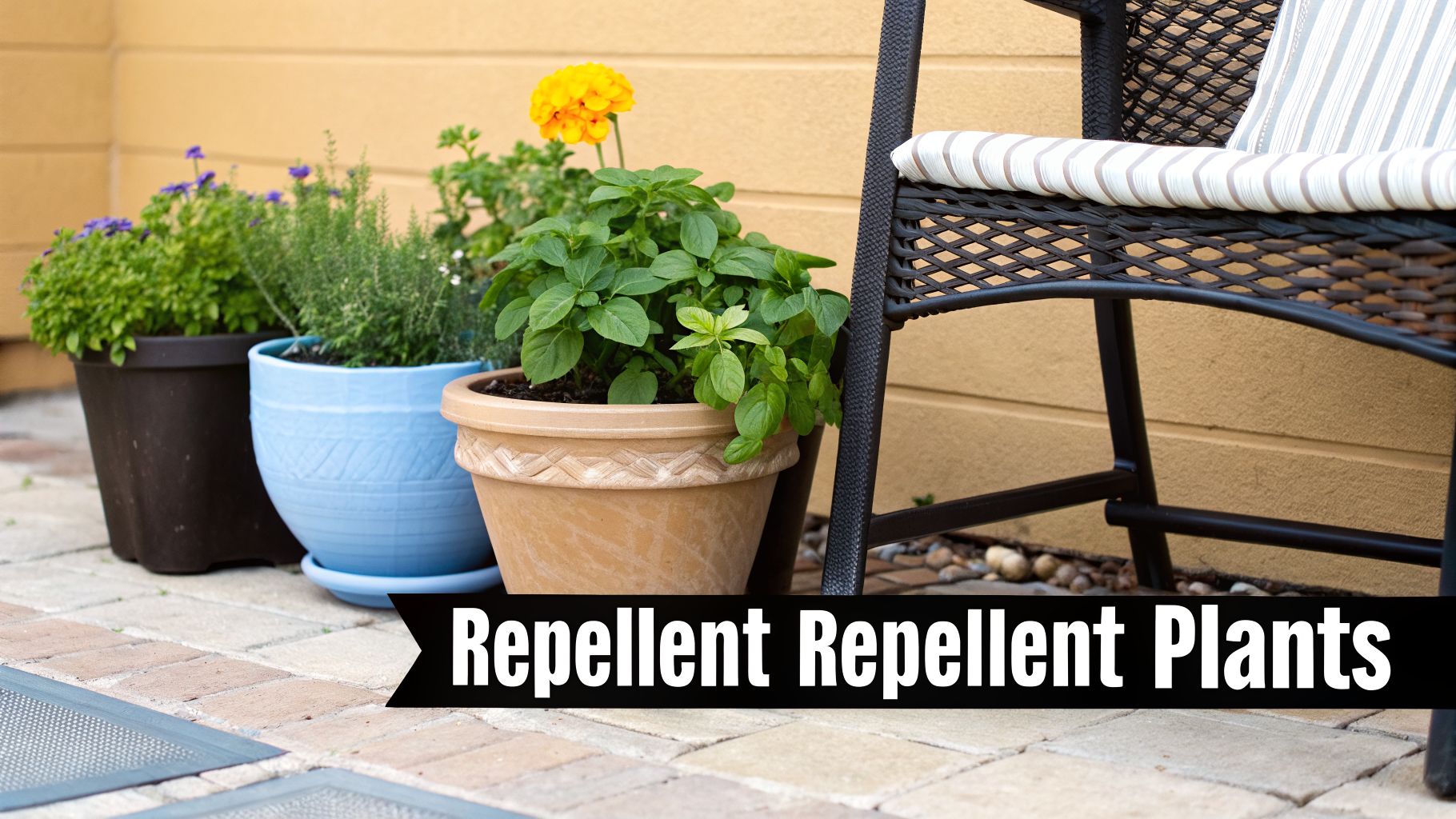
Actionable Tips for Using Mosquito-Repellent Plants
To effectively integrate this natural way to remove mosquitoes into your yard, follow these practical steps:
- Location is Everything: Plant your repellent species in containers and place them near seating areas, doorways, and windows. Grouping several plants together can amplify their repellent effect.
- Release the Scent: Gently crush the leaves of plants like basil, lavender, or mint when you are nearby. This action releases their essential oils into the air, temporarily boosting their mosquito-deterring power.
- Sunlight is Essential: Most of these repellent plants, including marigolds and lavender, thrive in full sun. Ensure they receive at least 6 hours of direct sunlight daily for optimal growth and oil production.
- Consistent Care: Deadhead flowers like marigolds regularly to encourage continuous blooming throughout the mosquito season. A healthy, thriving plant produces more of the compounds that mosquitoes dislike.
Pro Tip: Create a layered defense by planting taller repellent plants like rosemary behind smaller ones like basil or marigolds in your garden beds. This not only creates visual interest but also helps disperse the repellent scents at different heights.
While repellent plants are a great addition, they are most effective as part of a larger plan. For persistent mosquito issues that overwhelm these natural methods, a professional approach may be necessary. For a thorough evaluation and targeted solutions in the Crown Point area, connect with the experts at The Green Advantage.
Benefits of Professional Pest Control in Crown Point
Choosing professional services from The Green Advantage provides benefits that DIY methods simply can't match:
- Protect Your Family's Health: By effectively reducing mosquito populations, you lower the risk of mosquito-borne illnesses for your family and pets.
- Reclaim Your Property: Enjoy your deck, patio, and yard without being driven indoors by biting pests. Our services help you make the most of your outdoor living spaces.
- Protect Your Investment: A pest-free home is a more valuable and enjoyable home. Our residential pest control services, including mosquito control and termite control, protect your property's value.
- Gain Peace of Mind: Let our experts handle the problem. With our professional treatments, you can relax knowing your home is protected by licensed, experienced technicians who serve the Crown Point, IN community.
Pro Tip: Don't forget to check children's toys, tire swings, and uncovered boats left in the yard. These common items can collect rainwater and become significant mosquito nurseries in just a few days.
A property free of breeding sites is the first line of defense. By combining professional source reduction with other methods like mosquito-repelling plants, you create a powerful, multi-layered strategy for a more enjoyable, mosquito-free outdoor space.
Actionable Tips for Using Mosquito Netting
To successfully implement this natural way to remove mosquitoes, consider these key steps:
- Choose the Right Mesh: Select high-quality, fine-mesh netting with at least 18 holes per inch. This density is small enough to block most mosquito species found in the region while still allowing for airflow and visibility.
- Measure with Precision: Before purchasing screens or netting, carefully measure the area you intend to enclose. Accurate measurements are critical for a snug fit that leaves no gaps for mosquitoes to enter.
- Seal All Gaps: Ensure the netting or screen is tightly sealed around all edges, including door and window frames. Use an overlap technique for curtains or closures to prevent insects from finding their way in.
- Regular Inspections and Maintenance: Periodically check your screens and netting for any tears, holes, or damage. Repair any openings promptly to maintain the integrity of your barrier. Regular cleaning also helps maintain good visibility and airflow.
Pro Tip: For patios and decks, consider installing retractable screens. This gives you the flexibility to have an open-air space on cooler, less buggy days and a fully protected enclosure when mosquitoes are active in the evening.
While physical barriers are excellent for defined areas, a complete mosquito control plan addresses the entire property. Combining netting with other strategies, like eliminating standing water and introducing natural predators, will provide more thorough protection. For a professional assessment of your property’s needs, contact The Green Advantage for expert guidance on integrated pest management.
Actionable Tips for Using Beneficial Organisms
To successfully apply these microscopic allies, a targeted and informed approach is necessary:
- Professional Suitability Assessment: This method is more complex than others. Consulting with a pest management professional like The Green Advantage is crucial to determine if your property's specific environment in the Crown Point area can support nematodes or wasps.
- Maintain Proper Conditions: Beneficial nematodes require specific soil moisture and temperature ranges to be effective. Applying them to overly dry or hot soil will render them useless. They are best applied to moist ground in the evening to avoid UV exposure.
- Strategic Application: Apply nematodes directly to known mosquito breeding grounds, such as low-lying damp areas of your lawn, the edges of ponds, or marshy spots that hold water after rain.
- Combine with Other Methods: Due to their specialized nature, nematodes and wasps are most effective as part of a larger, integrated pest management strategy. Use them to supplement other efforts, like eliminating standing water and encouraging predators.
Pro Tip: When purchasing beneficial nematodes, ensure they are fresh and have been stored correctly. These are living organisms with a limited shelf life. Always follow the supplier’s instructions for mixing and application to ensure the highest chance of success.
While these biocontrol agents target the larval and pupal stages, a complete mosquito control plan must also address adult mosquitoes. Combining this method with other natural solutions can create a more resilient defense for your property.
What to Expect When You Work With The Green Advantage in Crown Point, IN
We are proud to be a local pest control company serving our neighbors in Crown Point and throughout Northwest Indiana. We believe in building trust through transparent communication and effective service. When you choose The Green Advantage, you can expect:
- A Professional & Courteous Team: Our licensed technicians will treat your home and property with respect.
- A Detailed Pest Inspection: We start by understanding the unique challenges of your property before recommending a solution.
- A Customized Treatment Plan: We don't believe in one-size-fits-all solutions. We'll create a plan that targets your specific pest issues, whether it's mosquito control, ant control, or rodent control.
- Clear Communication: We will explain our findings, our recommended treatment, and what you can expect from our service.
- Guaranteed Satisfaction: We stand by our work and are committed to solving your pest problem.
Whether you own a home or a business, our residential and commercial pest control services are designed to provide lasting protection.
Take Back Your Yard: Contact The Best Exterminator in Crown Point Today
When DIY efforts aren't enough, comprehensive professional programs offer the most effective and sustainable mosquito control. These programs use an Integrated Pest Management (IPM) approach, which combines habitat elimination, biological controls, and targeted low-toxicity treatments tailored to your property. This is the most reliable way to handle a mosquito problem.
A licensed pest management professional from The Green Advantage will assess your property, identify breeding sources that may go unnoticed, and implement a multi-faceted plan. This may involve treating standing water with biological larvicides, applying barrier sprays to foliage where adult mosquitoes rest, and providing ongoing monitoring throughout the season to ensure long-term relief for your home in Crown Point or Northwest Indiana.
Don't let mosquitoes keep you from enjoying your property. If you're tired of searching for "exterminator near me" and want a reliable, local solution for pest control in Crown Point, IN, it's time to call the experts. The Green Advantage offers professional mosquito control services that deliver real results.
Take the first step toward a comfortable, mosquito-free yard in Crown Point. Contact The Green Advantage for a comprehensive property inspection and a free quote on a customized mosquito reduction program that prioritizes safety and effectiveness. Visit us at The Green Advantage to reclaim your outdoor space today.
Pest Control in Crown Point, IN: A Guide to Mosquito Reduction

That familiar, high-pitched buzz is the unofficial soundtrack of summer evenings in Crown Point, and it's enough to send anyone running indoors. Mosquitoes can completely ruin a backyard barbecue or a quiet night on the patio. While many homeowners look for natural mosquito repellents for home, a truly effective solution often requires more than just citronella candles. For lasting relief from these pests in Northwest Indiana, a professional pest control strategy from a trusted local provider like The Green Advantage is your best defense.
Facing Mosquito Problems in Crown Point, IN?
Here in Crown Point and across Northwest Indiana, we all want to enjoy our beautiful summers without constantly swatting at mosquitoes. These pests aren't just annoying; they can also carry diseases like West Nile virus, posing a health risk to your family. It's tempting to try DIY solutions, but when you're facing a serious infestation, you need a reliable exterminator. The Green Advantage provides expert residential pest control services tailored to the unique challenges of our local environment.
Why Do I Have So Many Mosquitoes?
At The Green Advantage, we've learned from years of providing pest control in Crown Point, IN, that mosquito problems are almost always linked to one thing: standing water. Mosquitoes absolutely need stagnant water to lay their eggs, and they can breed in an amount as small as a bottlecap.
Common breeding grounds on your property include:
- Clogged Gutters: Debris traps water, creating a hidden mosquito nursery.
- Yard Items: Children's toys, wheelbarrows, and even flowerpot saucers collect rainwater.
- Poor Drainage: Low spots in your lawn can hold water long enough for larvae to hatch.
While eliminating these sources is a crucial first step, mosquitoes can also travel from nearby ponds, marshes, or neighbors' yards, making it impossible to solve the problem on your own.
The best pest management always starts with prevention. If you can disrupt the mosquito life cycle and make your yard a place they want to avoid, you've already won half the battle. However, for complete protection, you need a professional exterminator.
As your local Crown Point pest control experts, we understand the specific mosquito pressures in our area. We combine our local knowledge with proven treatment methods to make your backyard a comfortable haven for your family and a no-go zone for mosquitoes.
How Professional Pest Control Solves Your Mosquito Problem
What if you could enjoy your yard without worrying about mosquito bites? That's the goal of our professional mosquito control services. While DIY methods like repellent plants and sprays offer temporary relief, The Green Advantage provides a comprehensive solution that targets mosquitoes at every stage of their life cycle, delivering lasting results for your Crown Point home.
For homeowners here in Northwest Indiana, a professional treatment is the most effective way to reclaim your outdoor living space. Our approach goes beyond what store-bought products can achieve.
Our Proven Mosquito Reduction Process
Simply spraying for adult mosquitoes isn't enough. Our licensed technicians follow a strategic process to create a protective barrier around your property, making your yard far less inviting to pests.
- Detailed Property Inspection: We start by identifying all potential breeding grounds on your property, including the hidden spots you might miss. We also locate the shady areas where adult mosquitoes rest during the day.
- Targeted Larvicide Application: We treat or eliminate sources of standing water to stop mosquito larvae from developing into biting adults. This is a critical step in breaking the life cycle.
- Professional Barrier Treatment: We apply a professional-grade, eco-friendly product to the foliage around your property—bushes, shrubs, and under trees. This treatment eliminates adult mosquitoes on contact and continues to work for weeks, drastically reducing the population.
This multi-faceted approach is a core part of our residential and commercial pest control services, which also include ant control, spider control, and wasp removal.
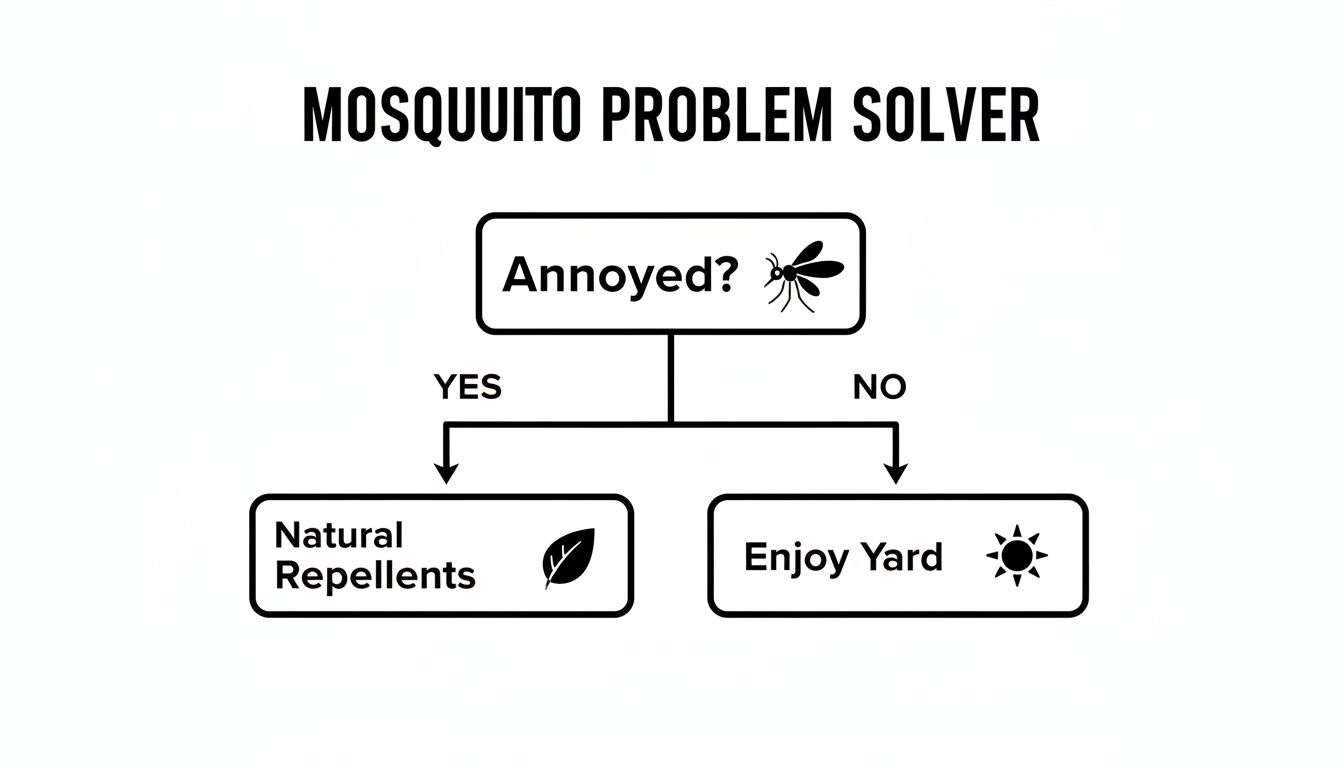
While natural repellents are a good first step, when the annoyance becomes a real problem, it's time to call a professional exterminator in Crown Point.
Benefits of Professional Mosquito Control
Investing in a professional service from The Green Advantage protects your property, your family's health, and your peace of mind.
| Benefit | How It Protects You |
|---|---|
| Health & Safety | Reduces the risk of mosquito-borne illnesses like West Nile virus. |
| Lasting Effectiveness | Our treatments last for weeks, not hours like DIY sprays. |
| Reclaim Your Yard | Enjoy your deck, patio, and yard without the constant annoyance of biting pests. |
| Expert Knowledge | Our technicians are trained to find and eliminate the root cause of your infestation. |
| Peace of Mind | Know that your home is protected by a trusted, local pest control company. |
These benefits are why so many homeowners are turning to professional solutions. While DIY options have a place, the global repellent market is projected to reach USD 10.11 billion by 2035, with a significant portion dedicated to professional services that offer greater efficacy. If you are also dealing with other pests, it's worth learning about services like neem oil for natural pest control as part of an integrated plan.
For more information on other natural methods, you can check out our guide on mosquito-repelling plants for Northwest Indiana.
What to Expect From Your Crown Point Pest Control Service
If you're looking for an exterminator near you, choosing a local company that understands your concerns is key. At The Green Advantage, we pride ourselves on providing a professional, reassuring, and homeowner-focused experience from the very first call. We are dedicated to protecting homes and businesses in Crown Point and throughout Northwest Indiana.
When you partner with us for mosquito control, you can expect a seamless and effective service.
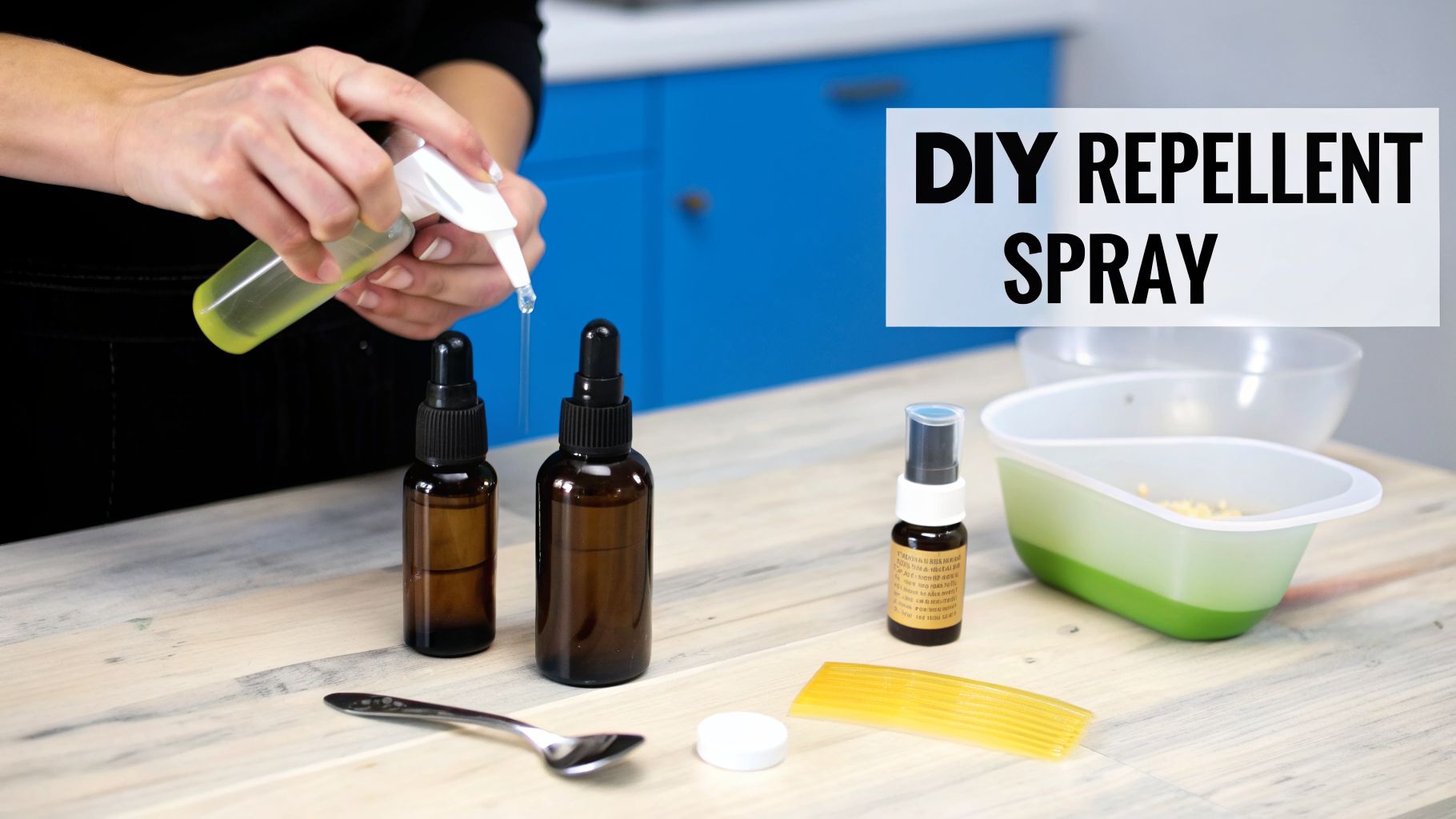
While DIY sprays are a popular topic—making up over 40% of repellent sales—our professional applications provide a level of protection they can't match.
Your Trusted Local Exterminator
We believe in clear communication and transparent service. Here’s what working with The Green Advantage looks like:
- Initial Consultation: When you contact us, we'll listen to your concerns, ask about the specific pest issues you're facing, and schedule a convenient time for an inspection.
- Thorough On-Site Inspection: Our licensed technician will visit your Crown Point property to conduct a detailed assessment, identifying pest pressures, breeding sites, and entry points.
- Customized Treatment Plan: Based on our findings, we will explain our recommended course of action, whether it's for mosquito reduction, termite control, or rodent control. We'll provide you with a clear, upfront quote.
- Expert Treatment: Our team will carry out the treatment using professional-grade, family-friendly products and proven techniques to ensure the best possible results.
- Follow-Up and Prevention: We provide you with a detailed report and offer advice on preventative measures—like eliminating standing water—to help keep pests away.
Our goal is not just to solve your current pest problem, but to build a long-term partnership to keep your home protected. We are your neighbors, and we are committed to providing the best pest control in Crown Point, IN.
The Dangers of Untreated Pest Infestations
Ignoring a pest problem can lead to bigger issues down the road. Mosquitoes are more than a nuisance; they are vectors for disease.

Regularly removing standing water is a key preventative pest treatment. However, when an infestation takes hold, professional intervention is necessary to protect your family's health and comfort. Letting a mosquito problem go unchecked means another summer spent indoors.
For a deeper dive into which natural methods can supplement professional services, you can explore our detailed guide on natural mosquito repellent essential oils or look into pet-safe essential oil blends using ingredients like lemongrass and castor oil.
When to Call for Professional Mosquito Control
Let’s be honest—DIY natural repellents have their limits. They're fantastic for some immediate relief, but when the mosquito pressure in Northwest Indiana is high, they often fall short.
If you've eliminated standing water, planted repellent herbs, and are still getting eaten alive, it's not you. It's a sign the problem has grown beyond what DIY solutions can handle. That’s the exact moment when calling a professional exterminator in Crown Point, IN becomes necessary to take back your yard.
When Your Best Efforts Aren't Enough
Many homeowners put in the work, but the results just aren't there. It's crucial to know why professional service is the next logical step.
DIY is a Temporary Fix: Essential oil sprays are effective, but they evaporate quickly and require constant reapplication. They aren't a practical solution for all-day enjoyment of your yard.
DIY Has a Small Footprint: A citronella plant creates a small "bubble" of protection. It can't protect your entire yard from the constant stream of mosquitoes flying in from surrounding areas.
DIY Doesn't Stop the Source: You can control your own yard, but you can't do anything about the woods, retention pond, or neighbor’s property that are producing thousands of new mosquitoes every day.
When your efforts feel like a losing battle, it means the breeding sites are too widespread to manage on your own.
I often tell homeowners in the Crown Point area: think of professional mosquito control as creating a protective shield around your entire property. Our job is to build that shield, drastically reducing the number of pests that ever make it to your patio.
The Green Advantage Professional Mosquito Reduction Program
This is where our professional mosquito service truly changes the game. We use a methodical, integrated pest management approach designed to break the mosquito life cycle and give your family lasting relief.
Our licensed technicians are trained to spot the sneaky breeding sites that homeowners almost always miss. We then apply a professional-grade, eco-friendly barrier treatment to the foliage where mosquitoes rest, knocking down the existing adult population and preventing new ones from taking up residence. This comprehensive approach of targeting both adults and larvae delivers long-term results that DIY methods simply can't match.
If you're tired of the constant buzzing and biting, it's time to let a professional exterminator in Crown Point, IN take over. Let The Green Advantage give you the powerful, lasting solution you need to finally enjoy your summer outdoors. Our residential pest control services are designed to give you back your yard and your peace of mind.
Schedule Your Pest Inspection in Crown Point, IN Today
When it comes to mosquitoes in Crown Point, every homeowner wants the same thing: a solution that actually works without putting their family or pets at risk. While natural methods can help, a professional pest control service is the most reliable way to protect your home and reclaim your yard.
Let's walk through some of the questions we hear most often from your neighbors.
Are Professional Mosquito Treatments Safe for My Kids and Pets?
This is the biggest question we get. "Natural" doesn't automatically mean "safe," and some DIY ingredients like certain essential oils can be harmful to children or pets.
At The Green Advantage, we put safety first. We use professional-grade, eco-friendly treatments with an excellent family-safety profile. Our technicians will always give you clear, simple instructions, like keeping pets and children out of the treated area for a short time after an application, to ensure total peace of mind.
How Long Do Professional Mosquito Treatments Last?
The biggest drawback of DIY repellents is how quickly they wear off. A homemade spray may only last for an hour or two. Our professional barrier treatment is designed to adhere to foliage and provide protection that lasts for weeks, not hours, giving you continuous relief.
Will Professional Treatments Work for My Northwest Indiana Yard?
If your yard backs up to a pond, woods, or marshy area, you’re facing a much tougher battle. In these high-pressure situations, professional service is essential. We specialize in treating these challenging properties by establishing a protective barrier along woodlines and other hot spots, drastically cutting down the overall mosquito population so you can finally relax in your own backyard.
What Makes The Green Advantage's Mosquito Program Different?
The real difference is that we focus on the entire mosquito lifecycle. A store-bought fogger only kills the adults buzzing around right now. Our program, designed specifically for the conditions here in Crown Point, is much smarter. We eliminate breeding grounds and apply targeted products that control both adult mosquitoes and their larvae. This approach attacks the problem at its source for results that are far more effective and last much longer.
Ready to stop swatting and start enjoying your summer? For a comprehensive mosquito control solution that delivers lasting peace of mind, trust the local experts. Contact The Green Advantage to request a quote or schedule your professional pest inspection in Crown Point, IN.
Your Expert Guide to Pest Control in Crown Point, IN

When you see a line of ants marching across your kitchen counter or spot a mouse dashing along the wall, your first instinct is to get it gone—fast. But a quick chemical spray is often just a temporary fix. For homeowners in Crown Point, IN, the most significant integrated pest management benefits come from a much smarter, more proactive approach that gives you long-term prevention and real peace of mind.
This complete strategy keeps your home and family safe from common Northwest Indiana pests. It’s a more reliable and cost-effective solution than calling an exterminator for the same recurring problems again and again. At The Green Advantage, we're here to provide a permanent solution.
Your Local Guide to Pest Control in Crown Point IN
Finding a great exterminator in Crown Point, IN, isn't just about getting someone to show up. It’s about finding a local partner who truly understands the pest pressures we face here in Northwest Indiana. We all know the routine: the ants that invade kitchens every spring, the wasps that build nests under our eaves in summer, and the mice looking for a warm place to hide when the fall chill sets in.
That’s where local knowledge really counts. At The Green Advantage, we’re a family-owned company born and raised in this community. Protecting our neighbors' homes and businesses in Crown Point isn't just our job—it's personal.
We don't just spray and leave. Our entire approach is grounded in a forward-thinking method called Integrated Pest Management, or IPM. Don't let the name fool you; it's a common-sense wellness plan for your property. It’s a modern strategy that focuses on figuring out why pests are there in the first place, then using that knowledge to build a defense that lasts.
A Smarter Approach to Pest Prevention
Instead of immediately reaching for the sprayer, our IPM process follows a cycle of thorough inspection, practical prevention, and—only when necessary—targeted control. This allows us to deliver effective residential and commercial pest control that’s much safer for your family and our local environment.
For homeowners here in Crown Point, that means you get significant advantages:
- Less Reliance on Chemicals: Our first move is always to use non-chemical solutions, like sealing tiny cracks where pests get in or removing food and water sources they’re drawn to. This dramatically reduces your family's and pets' exposure to pesticides.
- Long-Term Solutions: By getting to the root of the problem, we help stop pests like spiders, wasps, and rodents from coming back. It’s the difference between patching a leaky pipe and replacing it altogether.
- Protection for Your Property: An ounce of prevention is worth a pound of cure, especially with destructive pests like termites. Our termite control stops them before they can cause thousands of dollars in structural damage to your biggest investment.
At The Green Advantage, we believe effective pest control can and should be safe for your family and sustainable for our Northwest Indiana environment. Our IPM services solve your immediate pest headaches while creating a protective shield that offers true, lasting security.
In the end, our mission is to give you a pest-free home without putting your health, or our community's, at risk. This intelligent, responsible approach is how we tackle everything from seasonal mosquito control to stubborn ant infestations, ensuring your property stays safe and comfortable all year round. If you’re searching for "pest control near me" that cares as much about your family’s well-being as they do about results, you’ve found us.
What Is Integrated Pest Management Really?
Ever see a single ant and reach for a can of bug spray, only to feel like you’ve gone overboard? That’s the old way of thinking about pest control—a reactive, one-size-fits-all approach that often feels like using a sledgehammer to crack a nut. It doesn't get to the heart of the problem.
Integrated Pest Management, or IPM, flips that script entirely. Think of it less like a blind attack and more like a detective investigation for your Crown Point home. It’s a smarter, proactive strategy that focuses on one simple but powerful question: Why are the pests here in the first place?
Instead of defaulting to chemical treatments, IPM is a collaborative process between you and your technician at The Green Advantage. We work together to build a strong, lasting defense for your property. This partnership allows us to deliver far more effective and sustainable results than just spraying on a schedule, all while protecting your family, your home, and our local Northwest Indiana environment.
The Green Advantage IPM Process
At The Green Advantage, we’ve honed our IPM strategy into a clear, common-sense cycle. We don't just chase pests out; we build a fortress to keep them from coming back. Our process always prioritizes non-chemical solutions first, reserving targeted treatments only for when and where they are absolutely necessary.
Our IPM framework is a continuous loop built on four key pillars:
- Thorough Inspection & Monitoring: It all starts with a complete picture. Our certified technicians perform a detailed inspection of your property to identify pests, find where they're nesting, and pinpoint how they're getting in—from tiny cracks in the foundation to gaps around utility lines.
- Strategic Prevention: Once we know their entry points, we focus on sealing them off. This could mean closing gaps, offering advice on landscaping to remove pest-friendly habitats, or improving sanitation to cut off food and water. Prevention is the bedrock of effective, long-term residential pest control.
- Targeted Controls: If a pest problem already exists, we start with the most precise and least disruptive methods available. For problems like ant control or spider control, we might use carefully placed baits, traps, or pinpoint treatments applied directly where pests hide, instead of broad spraying. This maximizes results while minimizing your family's exposure.
- Ongoing Evaluation: Pest activity in Northwest Indiana changes with the seasons, so our job is never a one-and-done deal. We constantly monitor the situation and review our plan's success, making smart adjustments to ensure your home stays protected year-round.
This simple flowchart shows how we approach pest management in a smart, cyclical way.

As you can see, figuring out the "why" and preventing entry are the foundational steps that make any control measures more successful and sustainable.
Think of IPM as a complete wellness plan for your home. By focusing on observation and prevention, we make your property naturally unwelcoming to pests. The result is lasting peace of mind.
This intelligent system ensures we aren't just putting a temporary band-aid on a pest problem. We're creating an environment where they are far less likely to show up again. It’s the very core of how we provide superior pest control in Crown Point, IN—a solution that is both responsible and incredibly effective.
The Long-Term Financial Benefits of an IPM Strategy
When you discover a pest problem, your first thought is probably about the cost of getting rid of it right now. But one of the most powerful, and often overlooked, benefits of Integrated Pest Management is how much money it saves you over the long run. A smart IPM strategy isn't a one-time fix; it’s a long-term investment in your property's health and your financial well-being.
For homeowners here in Crown Point, IN, this means moving away from the cycle of panic and reaction—calling an exterminator near me for an emergency service after an infestation has already taken hold. Instead, you adopt a preventative approach that keeps your home protected and your budget intact, year after year.
Think of it like this: you can keep patching the same leaky spot in your roof every time it rains, or you can invest in a solid, new roof that prevents the leaks from ever happening. IPM is the new roof.
Preventing Costly Damage Before It Starts
The most obvious way IPM saves you money is by stopping pests before they have a chance to do serious, expensive harm. Pests like termites, carpenter ants, and rodents are infamous for causing structural damage that can run into thousands of dollars in repairs.
- Termite Damage: A single termite colony can chew through the wooden framework of your house undetected, leading to massive repair bills that your homeowner’s insurance likely won’t cover. Our termite control services are designed to prevent this.
- Rodent Destruction: Mice and rats are not just a nuisance; they gnaw through drywall, shred insulation, and can even chew on electrical wiring, creating a genuine fire hazard. Our rodent control focuses on exclusion to keep them out for good.
- Carpenter Ant Excavation: These ants don't eat wood, but they hollow it out to create their nests. Over time, they can weaken critical support beams, door frames, and flooring.
Our IPM approach focuses on cutting these problems off at the source. By sealing up entry points, managing moisture, and making your property less inviting to pests, we build a defensive barrier that prevents these costly emergencies from ever occurring.
Reducing Unnecessary Treatment Costs
Traditional pest control services often fall back on a "spray and pray" method, applying broad chemical treatments on a fixed schedule, regardless of whether they’re truly needed. IPM is different. Every action we take is deliberate and based on real-time monitoring.
We only apply treatments when and where they are absolutely necessary. This targeted approach means you stop paying for chemicals and services you simply don’t need.
The financial logic behind IPM is straightforward: It is always cheaper to prevent a problem than it is to fix one. By investing in practical, long-term solutions, you avoid the high price of emergency calls and the wasted money on ineffective, repetitive sprays.
This isn't just a theory; it's a principle proven to work on a massive scale. In agriculture, where a single pest outbreak can ruin an entire crop, IPM strategies have produced incredible financial results. For example, the adoption of specific IPM practices in U.S. corn farming generated an estimated $6.8 billion in economic benefits over 14 years by moving away from blanket pesticide use. You can read more about these impressive results in this in-depth assessment of IPM strategies.
At The Green Advantage, we bring that same smart, cost-effective thinking to homes across Northwest Indiana, cutting down on unnecessary treatments and saving families money.
To give you a clearer picture, here’s how the costs can stack up over time for a typical homeowner in Crown Point.
IPM vs. Traditional Pest Control Cost Comparison Over 3 Years
This table illustrates the potential long-term financial savings for a Crown Point homeowner by comparing the typical costs associated with a proactive IPM plan versus a reactive, traditional treatment approach.
| Expense Category | Traditional Reactive Plan | The Green Advantage IPM Plan |
|---|---|---|
| Initial Inspection & Setup | $0 - $150 (often "free") | $200 - $350 (comprehensive) |
| Quarterly Prevention | $120/quarter ($1,440 total) | $150/quarter ($1,800 total) |
| Reactive "Emergency" Calls | 2-3 calls @ $250 avg. ($750 total) | $0 (included in plan) |
| Specialized Treatments (Ants, Wasps) | 1-2 treatments @ $300 avg. ($600 total) | $0 (covered under IPM) |
| Potential Damage Repair (e.g., Rodents) | $500 - $2,000+ | $0 (prevented) |
| 3-Year Total Estimated Cost | $3,290 - $4,790+ | $2,000 - $2,150 |
As you can see, the initial cost of a thorough IPM plan is quickly offset by eliminating the need for expensive, one-off emergency treatments and preventing the kind of damage that leads to major repair bills.
Ultimately, choosing a professional IPM plan from The Green Advantage isn’t just another household expense. It's a strategic investment that protects your property value, cuts down your long-term costs, and delivers lasting peace of mind—and that's a return every homeowner in Crown Point, IN can appreciate.
The Health and Safety of Your Family Comes First

When it comes down to it, nothing matters more than the well-being of your family and pets. For decades, the standard approach to pest control involved blanketing homes with chemicals, leaving many Crown Point families feeling uneasy about what was being sprayed in their living spaces. This is where the single most important of all integrated pest management benefits comes into play: it's a smarter, safer approach built from the ground up with your family’s health in mind.
At The Green Advantage, we’ve completely moved on from the old "spray and pray" mentality. Our modern IPM strategy puts your family's safety at the very center by drastically reducing our reliance on pesticides, especially inside your home. We're firm believers that a pest-free home can—and should—be a healthy one.
Designing a Healthier Home Environment
The entire point of IPM is to solve pest problems while taking on the absolute minimum risk to people and the environment. So, instead of reaching for a chemical sprayer right away, our certified technicians start with non-chemical solutions. Our first job is always prevention.
We act like detectives, finding and sealing the tiny entry points pests use to sneak inside. We'll show you how to clear away outdoor attractants and eliminate the indoor food and water sources they depend on. This proactive work is the bedrock of effective residential pest control and, quite often, it's enough to solve the problem without any chemicals at all.
Think of it like this: Traditional pest control treats the symptoms of an infestation over and over. An IPM plan from The Green Advantage diagnoses the root cause to create a long-term cure, resulting in a healthier home for everyone in Crown Point.
Of course, sometimes a treatment is needed to knock out a stubborn ant colony or a wasp nest. Even then, our approach is precise and targeted. For pests like spiders and ants, we apply products exactly where they are living and breeding—deep inside wall voids or along hidden travel paths—never in your open living areas. This surgical precision wipes out pests while keeping your loved ones out of harm's way.
Less Exposure to Unnecessary Chemicals
The old way of doing things often meant routine, calendar-based spraying, whether it was needed or not. This outdated method can expose children and pets to chemicals unnecessarily. An IPM plan, by contrast, achieves superior pest control while using far fewer pesticides overall. It’s a smarter strategy that even helps preserve the beneficial insects in your yard that naturally prey on pests, creating a more balanced ecosystem in your own Crown Point neighborhood.
This health-first mindset is especially critical for services like our mosquito control programs. Rather than fogging your entire yard on a set schedule, we disrupt the mosquito life cycle right where it starts. This targeted method dramatically cuts down their population without drenching your outdoor space in chemicals.
The Peace of Mind You Deserve
Ultimately, our goal with IPM is to give you total confidence in the safety of your home. You should never be forced to choose between getting rid of pests and protecting your family’s health. With The Green Advantage, you won’t have to.
Our commitment to a health-conscious pest management plan means you can expect:
- Fewer Chemicals Inside: We lean heavily on baits, traps, and targeted applications tucked away in places like wall voids and crevices, far from where your family lives and breathes.
- A Safer Yard for Play: Our eco-friendly pest control methods mean your kids and pets can enjoy the lawn without you worrying about unnecessary chemical exposure.
- Total Transparency: We always take the time to explain what we’re doing and why. You’ll feel informed and confident in every step of your pest control plan.
When you choose our expert IPM services, you aren't just hiring an exterminator in Crown Point, IN; you're partnering with a team that puts your family’s health and safety above all else.
Preserving Our Northwest Indiana Environment
Making the switch to Integrated Pest Management (IPM) is more than just a smart move for your home or business—it’s a commitment to the health of our shared Northwest Indiana community. We’ve all seen the old-school approach: broad, indiscriminate chemical spraying. That method often does more harm than good, wiping out beneficial insects, impacting local wildlife, and risking contamination of our soil and water. With our deep roots in the region, we've seen firsthand just how delicate our local ecosystem is.
At The Green Advantage, we consider ourselves stewards of the environment. Our entire philosophy is built on working with nature, not waging war against it. This is what puts the "Green" in our name and anchors our promise to keep Crown Point beautiful and healthy for generations.
Working With Nature, Not Against It
Think about it—blanketing an area with pesticides is a blunt instrument. It can easily harm the bees and butterflies our gardens rely on for pollination, and it disrupts the natural food chain for birds and other animals. That's why our approach to sustainable pest management protects your family and our local ecosystem, much like how quality landscaper services contribute to a healthier environment.
Instead of reaching for the harshest chemicals first, we look for smarter, more sustainable solutions.
- Habitat Modification: Pests are there for a reason—usually food, water, or shelter. We’ll show you how to eliminate a pest’s welcome mat by addressing things like excess moisture, overgrown vegetation, or entry points around your home.
- Targeted Applications: When a treatment for spiders, ants, or other pests is necessary, we apply it with surgical precision. This ensures we’re only targeting the problem, leaving the surrounding environment and non-target species untouched.
- Protecting Beneficial Insects: Not all bugs are bad! Many insects, like ladybugs and lacewings, are your allies, preying on common pests. Our methods are designed to leave these helpful critters to do their job.
Our goal has always been to solve your pest problem while leaving the smallest possible footprint on the Crown Point environment. It's a core part of the promise we make to our community.
This is the kind of thoughtful, responsible approach that defines the best eco-friendly pest control services.
A Sustainable Model for a Thriving Community
On a global scale, the stakes are high. Pests are responsible for destroying up to 40% of food crops annually, and the typical chemical response can leave behind a trail of damage to soil, water, and wildlife. IPM offers a powerful, common-sense alternative by putting prevention first and using biological agents and minimal, targeted pesticides only when absolutely needed.
Here in Northwest Indiana, we apply these principles directly. Our background gives us an intimate understanding of the local ecosystem, allowing us to integrate nature-based practices like habitat manipulation to solve tough infestations others can't. The result is greater biodiversity and a more stable, resilient local environment.
It’s sustainability that actually works, leading to less chemical use and a healthier community for all of us in the Crown Point area. This is the foundation of modern, effective pest control.
Finally, A Real Solution for Long-Term Pest Prevention

Does it ever feel like you're fighting the same pest problem over and over again? You spray, they disappear for a bit, and then they're back. It's a frustrating cycle for many of us here in Crown Point, and there's a real biological reason for it: pest resistance. When pests like ants or spiders are repeatedly exposed to the same chemicals, the strongest ones survive and pass that resilience on, making future treatments less effective.
Integrated Pest Management completely sidesteps this problem. Instead of relying on a single chemical hammer, IPM uses a whole toolbox of smart, common-sense control methods. By mixing things up, we create a sustainable defense that pests can't adapt to. For homeowners, this is one of the biggest integrated pest management benefits—it delivers true, lasting prevention, not just a temporary break.
Defending Your Home from Costly Damage
The best way to appreciate long-term prevention is to think about what happens without it. Pests are more than just a nuisance; they can cause real, expensive structural damage to your property. A smart IPM strategy from The Green Advantage is your best line of defense, safeguarding the value of your biggest investment.
- Termite and Carpenter Ant Damage: These wood-destroying insects are notorious for working behind the scenes. They can eat away at your home's framework, causing thousands in repairs that home insurance almost never covers. Our termite control is vital for preventing this.
- Rodent Destruction: Mice and rats will shred insulation for their nests, chew through drywall, and even gnaw on electrical wiring—a serious fire hazard. The key is to seal up their entry points so they can't get in to begin with. Our rodent control services are designed to do just that.
Here at The Green Advantage, our residential pest control in Crown Point, IN isn't about quick fixes. We focus on making your home an unwelcome place for these destructive pests to settle down.
IPM isn’t just about getting pests out; it’s about building a fortress so they can’t get back in. This proactive mindset is the key to protecting your home’s value and your family’s peace of mind.
A Strategy That Adapts With the Seasons
Pest activity in Northwest Indiana isn't the same all year long—it changes right along with the weather. We see more spiders in the fall as they look for warmth, while wasps and mosquitoes become a major headache in the summer. A truly effective IPM plan has to be flexible enough to keep up.
This is where monitoring and adaptation come in. Our guide on how often pest control should be done explains how a professional plan stays ahead of these seasonal shifts.
Rather than just repeating the same treatment every visit, our certified technicians keep an eye on your property and adjust the strategy based on what's happening right now. This ensures you’re always protected against the most likely threat, whether that's an ant invasion in the spring, a need for wasp removal in summer, or rodents trying to move in for the winter.
This constant vigilance is what separates a genuine pest management plan from a simple spray-and-go service. It’s our commitment to delivering durable, reliable results that keep your Crown Point home protected, season after season. By stopping problems before they get out of hand, we provide the lasting security you deserve.
What to Expect from Our IPM Service in Crown Point
We know that dealing with pests can be stressful, and the last thing you need is a confusing or complicated service experience. At The Green Advantage, we’ve built our entire process around clear communication, so you know exactly what’s happening every step of the way. From the moment you pick up the phone, you’re in the driver’s seat.
When you call The Green Advantage, you won't get a random call center. You’ll talk to one of our friendly team members right here in Northwest Indiana who will actually listen to your concerns. We’ll get the details, answer your questions, and work with your schedule to book a comprehensive on-site inspection for your home or business.
Your Comprehensive On-Site Inspection
This is where the real work begins. One of our licensed and certified technicians will visit your Crown Point property to perform a thorough evaluation. Think of it less as a quick glance and more like a full diagnostic—we’re pest detectives trying to solve a mystery.
During this inspection, your technician will:
- Properly Identify the Pest: We’ll figure out precisely what you're up against, whether it’s a common ant issue, spiders, mice, or something more unusual.
- Trace Their Entry Points: Pests are experts at finding a way in. We meticulously search for those tiny cracks, gaps around pipes, or other vulnerabilities they’re exploiting.
- Find What’s Attracting Them: We’ll uncover the root causes that are inviting pests in, like hidden moisture problems, unintended food sources, or ideal nesting spots.
The goal of our inspection is to understand the why behind your pest problem. This detective work allows us to create a solution that provides lasting results, not just a temporary fix.
Creating Your Custom IPM Plan
After the inspection, your technician will sit down with you to talk through our findings—no jargon, just a straightforward explanation. We will then present a proposed IPM plan tailored specifically to your property and the pest issue at hand.
This plan will map out a clear strategy, always starting with non-chemical solutions like sealing entry points (exclusion) and making the area less attractive to pests (habitat modification). If a product application is needed, we’ll tell you exactly what we recommend, where it will be applied, and why it’s the most effective and responsible choice for your situation. We want you to feel completely confident in the plan before we move forward.
Common Questions About Integrated Pest Management
As the go-to pest control experts in Crown Point, IN, we get a lot of great questions from homeowners trying to understand Integrated Pest Management. It’s a different way of thinking about pest control, so it’s natural to be curious. Here are some straightforward answers to the questions we hear most often.
Is IPM Really As Effective As Traditional Spraying?
It is, and in the long run, it's actually more effective. Think of it this way: repeatedly spraying for pests is like bailing water out of a leaky boat. You get rid of the water for a little while, but you haven't fixed the leak, so it always comes back.
IPM focuses on finding and patching the leak. We identify and seal up the entry points pests are using and remove the food or water sources that attracted them in the first place. This approach provides lasting protection by stopping infestations before they even start.
Is It Safe For My Kids and Pets?
Absolutely. Safety is the heart of the IPM philosophy. A huge benefit is that we dramatically reduce the amount of chemicals used in and around your home because our first step is always to look for a non-chemical solution.
When a product is needed for a stubborn problem like an ant invasion or a spider issue, we use very targeted, low-impact applications. We place them in areas your family and pets can't reach, like deep inside wall voids or hidden cracks, keeping everyone safe while still getting the job done right.
IPM isn’t just about eliminating pests—it’s about creating a healthier home for your family. You should never have to compromise on your family’s well-being to live pest-free.
Does IPM Cost More Than Regular Pest Control?
While the initial setup for a full IPM plan can sometimes be a bit more than a one-time spray, it is significantly more cost-effective over the long haul.
By preventing expensive structural damage from termites or avoiding repeat emergency calls for a mouse problem, you end up saving hundreds, if not thousands, of dollars. It’s a smart investment in protecting your property and your peace of mind.
Ready to see how a smarter, safer approach to pest control can benefit your home? Contact The Green Advantage today to schedule your comprehensive pest inspection in Crown Point, IN. Visit us online at https://thegreenadvantage.biz to request a quote and protect your home for good.
Effective Mosquito Control for Your Crown Point, IN Backyard

When it comes to the best mosquito control for your backyard in Crown Point, IN, there’s no single silver bullet. The real solution is a one-two punch: eliminating standing water where larvae hatch and calling in The Green Advantage for professional barrier treatments to knock down the adult mosquitoes where they hide.
For homeowners in Crown Point and surrounding Northwest Indiana communities, this combined strategy is what delivers serious, lasting relief. It’s how you transform a yard swarming with pests back into a comfortable outdoor living space for your family. If you're tired of battling mosquitoes and looking for a local exterminator you can trust, we have the solution.
Winning Back Your Crown Point Backyard From Mosquitoes
If you live in Crown Point or anywhere in Northwest Indiana, you know the routine. Summer arrives, and so do the mosquitoes, turning a perfect evening on the patio or a backyard barbecue into a swatting contest. This isn't just an annoyance; it's a constant battle that can push your family and guests back inside.
It's more than just a nuisance; it’s a constant battle that pushes your family back inside. Our humid Midwest climate is a paradise for them, creating perfect breeding grounds that can turn even the most well-kept yards into off-limits territory. This is a common pest concern that drives homeowners to search for "pest control near me."
This isn't just in your head. A multi-year study confirmed that mosquitoes kept nearly 60% of residents from fully enjoying simple things like gardening, playing outside, or just relaxing on the porch. The research showed that a dedicated pest management plan could make a huge difference, giving families their yards back. You can learn more about the study's findings on pest management and see the data for yourself.
The goal isn't just getting rid of pests. It’s about reclaiming the peace, comfort, and memories your backyard is supposed to provide. As your local Crown Point pest control experts, The Green Advantage provides effective mosquito control so you have the freedom to enjoy your own space, on your own terms.
This guide will walk you through practical, proven strategies for residential pest control. We’ll cover simple changes you can make today and explain when it’s time to call in our local experts for guaranteed results. At the end of the day, every effort to control mosquitoes is about helping you enhance your outdoor comfort.
We’re going to focus on a few key areas to build an effective defense:
- Spotting and Draining Breeding Grounds: First, we'll pinpoint those hidden water sources where mosquito problems start.
- Stopping Larvae in Their Tracks: Then, we’ll look at eco-friendly ways to stop mosquitoes before they can even fly.
- Using Professional Barrier Treatments: Finally, we’ll explain how targeted applications from a trusted exterminator in Crown Point, IN create a protective shield around your property.
By putting these tactics together, you can build a comprehensive plan that actually works.
Your First Line of Defense: Shutting Down Mosquito Breeding Grounds
The single most effective thing you can do for mosquito control starts with a simple walk around your property. You don't need any special gear, just a sharp eye for standing water—the one thing mosquitoes absolutely must have to lay their eggs. This preventative pest treatment is your first step to a more enjoyable yard.
It's amazing how little water they need. A single female can lay up to 100 eggs at a time in a space as small as a bottle cap. In our warm, humid Northwest Indiana summers, those eggs can become biting adults in as little as a week. This is why getting ahead of the problem is so important.
The process of taking back your yard is straightforward: find the source of the problem, implement a solution, and get back to enjoying your outdoor space.
It all starts with that first step—identifying the problem spots on your own property.
Where Mosquitoes Are Hiding in Your Yard
Here in the Region, summer rain and humidity create a perfect storm for mosquito breeding. Let’s skip the generic advice and talk about the real-world places we see mosquitoes thriving in yards from Crown Point to Valparaiso when performing pest inspections.
Use this quick-reference guide to find and fix common sources of standing water where mosquitoes are likely laying their eggs.
Common Backyard Mosquito Breeding Hotspots
| Hotspot Location | What to Look For | Action to Take |
|---|---|---|
| Gutters & Downspouts | Clogged with leaves, creating hidden pools of water. | Clean them out, especially in spring and fall. Ensure downspouts drain properly. |
| Kids' Toys & Play Sets | Overturned trucks, plastic slides with dips, sandboxes. | Tip them over after use. Drill drainage holes in items that collect water. |
| Tarps & Covers | Sagging plastic covers on grills, pools, firewood, or boats. | Pull tarps taut to allow water to run off completely. |
| Planters & Saucers | Water pooling in the saucers beneath potted plants. | Dump the saucers at least twice a week or fill them with sand. |
| Birdbaths & Pet Bowls | Stagnant water sitting for more than a couple of days. | Dump, scrub, and refill with fresh water every 2-3 days. |
| Yard Debris & Clutter | Old tires, buckets, unused gardening pots, wheelbarrows. | Store these items upside down, indoors, or dispose of them properly. |
Remember, any container that can hold even a tiny amount of water for a few days is a potential mosquito nursery.
Think of it this way: every time you dump out standing water, you're shutting down a mosquito factory before it can even start production. This simple act drastically cuts down on the number of new mosquitoes you'll have to deal with.
Your Weekly Mosquito Prevention Walk
Turning this knowledge into a routine is easy. Just take a 10-minute walk around your yard once a week—especially after a good rain—to hunt for standing water.
Here’s what to look for on your patrol:
- Tip and Drain: Turn over anything that can hold water. Buckets, wheelbarrows, toys, and planters are the usual suspects.
- Scrub and Refill: For things like birdbaths or pet dishes, just dumping the water isn't quite enough. A quick scrub of the sides will dislodge any sticky mosquito eggs. Then you can refill with fresh water.
- Clear and Check: Give your gutters a quick check for blockages. Make sure your downspouts are directing water away from the house and not creating new puddles in the lawn.
- Cover and Secure: Make sure tarps are pulled tight so water can't pool in the sags. If you use a rain barrel, check that the screen is secure and free of holes.
Consistently eliminating these breeding sites disrupts the mosquito life cycle right where it starts. It’s the foundation of any good mosquito control plan. To get a deeper understanding of why this is so critical, see our guide on how mosquito breeding impacts control efforts.
Targeting Mosquitoes Before They Can Fly
So, you’ve done a great job tipping, draining, and clearing out all the obvious spots where water collects in your backyard. But what about the water you want to keep? I'm talking about things like decorative ponds, that birdbath you love watching, or the rain barrel that keeps your garden happy.
You can't just dump those out, and that's okay. There’s a fantastic, eco-friendly pest control method for handling these permanent water features by stopping mosquitoes at the source. This is where we get to them before they grow wings and start ruining your evenings.

This whole approach is about breaking the mosquito life cycle when it’s most vulnerable. It's a smart, powerful strategy that avoids broad chemical sprays and protects your family and the local environment.
The Power of Bti Dunks and Granules
The best tool for this job is a naturally occurring soil bacterium called Bacillus thuringiensis israelensis, or Bti for short. It sounds complicated, but the way it works is beautifully simple: Bti produces a protein that is only toxic to mosquito larvae.
What really makes Bti a game-changer is what it doesn't harm. It’s completely safe for people, pets, birds, fish, and all the good bugs like honeybees and butterflies. You can treat a water feature without a second thought about the surrounding ecosystem.
Using Bti is like sending in a special-ops team that only targets one specific enemy—the mosquito larvae. It's precise, effective, and leaves everything else untouched, aligning perfectly with our commitment at The Green Advantage to responsible pest control solutions for Crown Point homeowners.
Putting Bti to Work in Your Yard
You can easily find Bti at most garden centers, usually sold as "dunks" (which look like little donuts) or in granular form. Using them is straightforward.
- For Birdbaths and Small Ponds: Just break off a small piece of a Bti dunk. A single dunk can treat a birdbath for up to 30 days as it slowly dissolves, continuously knocking out any new larvae.
- For Rain Barrels and Sump Pump Pits: Drop a whole dunk right into the water. It’ll sink and go to work without impacting the water quality for your plants at all.
- For Low-Lying Wet Areas: Got a spot in your yard that turns into a mini-swamp after a good NWI downpour? Bti granules are perfect here. Simply sprinkle them over the damp ground to hit larvae in places you can't drain.
This biological control is no joke. Extensive field tests have shown Bti granules can achieve control rates between 78% and 94%. That’s a massive reduction in the number of adult mosquitoes you’ll have to swat at later. If you're curious about the science, you can read more about the field tests and their results and see just how effective this strategy is.
When DIY Isn't Enough: Professional Pest Control in Crown Point, IN
You've done everything right. You’ve hunted down every puddle, religiously tipped over the kids' toys after every rain, and even tossed Bti dunks into your rain barrel. But somehow, the mosquitoes are still crashing your backyard parties. This is when searching for an "exterminator near me" becomes a priority.
This is a really common frustration for homeowners in Crown Point. You can have a perfectly maintained yard, but you can't control the woods behind your house, your neighbor’s neglected birdbath, or that marshy area down the street. When your best efforts aren't cutting it, it's time to create a shield around your property that transient mosquitoes can't cross.

This is exactly where a professional-grade barrier treatment from The Green Advantage makes a world of difference. It's a strategic strike that targets adult mosquitoes where they spend most of their day, giving you weeks of reliable relief and protecting your property and family's health. Our commercial pest control services offer the same level of protection for local businesses.
Creating a Mosquito-Free Zone Around Your Home
Forget those citronella candles that only protect a tiny circle of air. A professional barrier treatment is designed to establish a broad, invisible shield around your entire outdoor living space. The approach is targeted and methodical, focusing on the specific places adult mosquitoes hang out.
When a certified technician from The Green Advantage shows up at your Crown Point home, they aren't just spraying aimlessly. They use specialized equipment to apply a fine mist of an EPA-approved product to the foliage of trees, shrubs, and underneath decks—all those cool, shady spots where mosquitoes hide from the hot afternoon sun.
The product adheres to these surfaces, creating a protective layer. When a mosquito lands on a treated leaf or surface to rest, it’s eliminated. This systematically knocks down the population of biting adults in your yard for weeks at a time.
A professional barrier spray isn't just a repellent. It actively reduces the mosquito population on your property. It’s the difference between waving smoke at them and putting up a security fence they simply can't get past. This service protects your property, health, and peace of mind.
The Science Behind Weeks of Relief
This isn't just wishful thinking; the effectiveness of these treatments is proven. In one detailed research update, scientists saw dramatic results when they tested professional-grade products on residential yards. Human landing rates—a scientific term for how often people get bitten—dropped by an incredible 84 percent after just one week.
Even better, the effect lasted. They still saw an 80 percent reduction after four weeks and a 71 percent reduction six weeks later. You can read the full research on backyard mosquito sprays and see the data for yourself.
This is the kind of powerful, long-lasting control that no DIY product from the hardware store can deliver. It's what lets you finally fire up the grill, let the kids play in the grass, and just relax on your patio without getting eaten alive. Our comprehensive mosquito treatment for lawns is designed to give you exactly that kind of freedom and peace of mind. We also offer solutions for other common pests, including ant control, rodent control, and wasp removal.
What to Expect From Our Mosquito Control Service in Crown Point
Taking the step to hire a professional for mosquito control is a big decision, and you deserve to know exactly what you’re paying for. Here at The Green Advantage, we’ve built our entire process around being straightforward and effective for homeowners right here in Crown Point and across Northwest Indiana. We want to take the guesswork out of it so you can get back to enjoying your yard.
When you call us, you aren't getting a generic, one-size-fits-all spray. You're getting a local expert who lives and works in the same Midwest climate you do. We know firsthand where mosquitoes hide out in our neighborhoods, from the bushes along the side of your house to that shady spot under the deck.
The First Step: A Thorough On-Site Pest Inspection
It all kicks off with a simple conversation. When you reach out to our Crown Point office, you'll talk to one of our team members who can actually answer your questions—not some random call center. We'll listen to what you've been dealing with, ask about the parts of your yard that are the worst, and find a time to come out for a full property inspection.
Our certified technicians do way more than just glance around for standing water. They're trained to analyze your entire property like a detective, looking for the specific things that make your yard a mosquito magnet.
- Pinpointing Breeding Grounds: We’ll hunt down every potential water source, from the obvious spots like birdbaths to hidden culprits like clogged gutters or even a forgotten tarp.
- Finding Their Hiding Spots: We’ll map out all the cool, damp, shady places where adult mosquitoes hang out during the heat of the day. Think dense shrubs, the underside of your deck, and the tree line at the edge of your property.
- Checking the Surroundings: We’ll also take a look at neighboring factors, like a nearby pond or a marshy, wooded area, that might be contributing to the problem.
This detailed walk-through is crucial because it gives us the blueprint for a mosquito control plan that’s actually built for your yard’s unique layout and challenges.
Your Custom Mosquito Treatment Plan
Armed with the info from our inspection, we get to work. We develop a strategy designed to hit mosquitoes where it hurts—at every single stage of their life cycle. This isn't just about spraying; it's an integrated approach that gives you real, lasting relief.
We start at the source. Any standing water we find that you can't just dump out gets treated with a targeted larvicide. This stops the next generation of mosquitoes dead in their tracks before they can even hatch.
Next comes the barrier spray. We use a professional-grade product and a specialized mister to apply a fine, invisible shield to the leaves of your shrubs, trees, and other mosquito resting spots we found earlier. This barrier knocks down the adult mosquitoes on contact and keeps working for weeks.
Our process is about more than just spraying. It's a calculated one-two punch: we tackle the larvae to stop future mosquitoes and create a barrier to eliminate the ones you have now. That's how we achieve maximum effectiveness.
And through it all, the safety of your family and pets is our top priority. We're always clear about the products we use and will give you simple, easy-to-follow instructions for after we've finished. With The Green Advantage, you can finally start planning for a summer in your Crown Point yard without a can of bug spray in your hand.
Answering Your Backyard Mosquito Control Questions
When you're looking to reclaim your backyard from mosquitoes, you're bound to have a few questions. That's a good thing. At The Green Advantage, we've talked with hundreds of homeowners across Crown Point and Northwest Indiana, and we believe in giving you straight, honest answers. Here are some of the most common things people ask us.
Is the Mosquito Treatment Safe for My Kids and Pets?
This is, without a doubt, the number one question we get—and it should be. The safety of your family is our top priority. The short answer is yes, our treatments are safe.
Here’s how it works: after we apply our professional-grade barrier spray, all we ask is that you keep kids and pets off the treated areas for about 30-60 minutes. That’s all it takes for the product to dry completely and bond to the leaves and foliage. Once it's dry, everyone can head back outside and enjoy the yard. We're always upfront about the products we use and will give you simple, clear instructions so you can have total peace of mind.
How Long Does a Professional Mosquito Treatment Last?
One of the best parts of a professional service is that you get lasting relief, not just a quick fix. A single barrier spray treatment from The Green Advantage keeps working for about 21 days. The product sticks to the surfaces where mosquitoes land, providing continuous protection for weeks.
To keep your yard protected all season long here in NWI, we set up a series of treatments roughly three weeks apart, typically from late spring into early fall. This schedule ensures that the protective barrier never lapses, which stops mosquito populations from making a comeback.
A single treatment is perfect for a big event like a graduation party or a Fourth of July barbecue. A seasonal plan is what gives you that everyday freedom to just walk outside and relax without getting swarmed all summer.
What If My Neighbor's Yard Has a Mosquito Problem?
This is a real-world problem, especially in Crown Point neighborhoods where houses are close. You can be doing everything right, but if the yard next door is a mosquito haven, it feels like a losing battle.
While we can't legally treat a property without the owner's permission, our service is designed for this exact scenario. The barrier spray creates a protective zone around your property. It eliminates any mosquitoes that fly into your yard and try to rest on your bushes, trees, or under the deck—no matter where they came from. It effectively neutralizes the threat on your turf, giving you significant relief even if the source is just over the fence.
Will the Treatment Harm Butterflies and Bees?
We absolutely share this concern. Pollinators are vital to our local environment, and protecting them is a core part of our process. That’s why our applications are incredibly targeted.
Our state-certified technicians are trained to identify and treat only the specific places where mosquitoes hide during the day. Think the underside of leaves on non-flowering plants, shady and damp areas under decks, and dense foliage. We are very deliberate about avoiding blooming flowers, vegetable gardens, and other plants that bees and butterflies depend on. This targeted method lets us knock down the mosquito population without harming the beneficial insects that make our gardens thrive.
Ready to finally enjoy your Crown Point backyard without constantly swatting at mosquitoes? The team at The Green Advantage is the trusted local pest control company ready to help with a professional, family-safe mosquito reduction program. Schedule your free inspection and get a quote today!
Green Pest Control in Crown Point, IN: A Safer Solution For Your Home

Searching for "green pest control near me" means you're looking for more than just an exterminator. You're looking for a partner you can trust to protect your Crown Point home both safely and effectively. At The Green Advantage, we understand the concerns of local homeowners. We provide modern, eco-friendly pest control services that give you lasting peace of mind without putting your family, pets, or property at risk.
Your Trusted Local Pest Control in Crown Point
Discovering ants in your kitchen or hearing strange noises from rodents in the walls is a genuinely unsettling experience. Your first instinct is to get them gone—fast. But then comes the second thought: what about the harsh chemicals often used by traditional exterminators? The idea of spraying those around the same floors where your kids and pets play is a major concern for most Crown Point homeowners.
This is exactly where our modern, responsible approach to pest management shines. Instead of blanketing your home with powerful chemicals, The Green Advantage acts like a pest detective. We first figure out why pests are drawn to your property and then build a smart, targeted strategy to get them out and keep them out for good.
As a family-owned company right here in Northwest Indiana, we know the specific pest challenges homeowners in Crown Point, IN face through every season, from termite swarms to mosquito invasions. That local knowledge lets us tackle the root cause of an infestation, not just the visible symptoms. That’s the real secret to effective, long-term residential and commercial pest control.
A Smarter, Safer Approach for Your Home
Our entire philosophy is built around Integrated Pest Management (IPM). Think of it as a holistic, common-sense approach that focuses on long-term prevention and uses targeted treatments as a precise tool, not a first response. We start by making your home less inviting to pests in the first place.
Here’s what that looks like in practice:
- Detailed Inspections: We don't just look for pests. We hunt for the how and the why—the tiny entry points, moisture issues, and hidden attractants that give pests a way into your Crown Point home.
- Exclusion Techniques: It’s amazing what a little sealant can do. A key part of our service is creating a physical barrier by sealing up the cracks in your foundation, gaps around pipes, and other sneaky access points that ants, rodents, and spiders love to use.
- Targeted, Low-Impact Treatments: When treatment is needed, we use eco-friendly and nature-based products applied with surgical precision. This means we target pests exactly where they live and breed, delivering maximum impact on them with minimal impact on your home's environment.
This smarter method provides powerful, lasting results without the heavy-handed approach of old-school exterminators. By considering the entire pest lifecycle and your home's unique ecosystem, we offer a solution that truly protects your property and your family’s health.
You can explore the full range of our services and locations provided by The Green Advantage to see how our pest control services are helping homeowners all across our community.
Understanding The 'Green' Approach To Pest Management
So, what does “green pest control” really mean for your home in Crown Point? It’s less about brute force and more about smart strategy. Instead of just grabbing the harshest chemical off the shelf, we dig deep to figure out why pests are showing up in the first place. This is a more sustainable way to get them out and keep them out for good.
Our entire philosophy is built around a strategy called Integrated Pest Management (IPM). Think of it as a holistic approach focused on long-term prevention. It’s all about making your property an unwelcome place for pests. We start with a thorough inspection to find the root causes—hidden food sources, moisture problems, and tiny cracks or gaps you’d never think a pest could squeeze through.
How Professional Pest Control Solves The Problem
A one-size-fits-all spray just doesn't cut it. Our process is strategic and customized. Once we understand the "why" behind your pest problem, we put a targeted plan into action. This might mean sealing a few cracks in the foundation, recommending simple landscaping tweaks to remove a pest hideout like a wasp nest, or fixing a minor drainage issue that's attracting mosquitoes. We look at the whole picture.
Only after we've tackled these prevention steps do we even consider applying a treatment. When we do, we opt for nature-based products and apply them with pinpoint accuracy, only where they’re truly needed. This low-impact method is not only safer for your family and pets but is also far more effective than just blanketing an area with chemicals.
This partnership is how we solve problems together. We work with you to identify the issue, collaborate on the right solution, and ultimately restore peace to your home.

Why Green Methods Are The Future of Pest Control
This shift toward safer, more intelligent solutions isn't just a local trend—it’s where the entire pest control industry is heading. Homeowners everywhere are demanding better options. The market for insect pest control is expected to jump from $12.77 billion to over $20.1 billion by 2034, with nature-based biological controls leading that growth because they're so much safer for the environment.
These aren't just new-age ideas; they are proven methods that work without putting people, pets, or our local ecosystem at risk. Our goal is to show you that a strategic, low-impact plan delivers better, longer-lasting results than the old-school, heavy-handed chemical approach ever could.
Want to get into the nitty-gritty? You can learn more about environmentally friendly pest control methods in our article to see exactly what we use and why it works.
The Benefits of Professional Pest Control
When you choose a green pest control service, you’re getting more than just an environmentally conscious solution. You're making a smart investment in the health of your family, the long-term integrity of your home, and your own peace of mind. When you're searching for an “exterminator near me” in Crown Point, what you really want is a solution you can trust without a second thought.
That’s exactly what our eco-friendly approach provides. We focus on low-toxicity, nature-based products that are tough on pests but gentle on your living space. This means no more worrying about what your kids or pets are exposed to after we leave.
Protecting Your Family, Property, and Peace of Mind
The most immediate and important benefit is the safety of your loved ones. Traditional pest control methods often blanket an area with broad-spectrum chemicals, which can leave behind harsh residues and create potential risks. Our targeted, thoughtful methods sidestep that problem entirely, giving you a solution that works without compromising your family's well-being.
But the benefits don't stop at health. Our green approach is also about smart, effective property protection.
- Preventing Long-Term Damage: We put a heavy emphasis on rodent and termite exclusion—finding and sealing up the cracks, gaps, and entry points pests use to get inside. This creates a permanent barrier against destructive intruders, stopping infestations before they can cause thousands in structural damage.
- Preserving Your Home's Value: It's simple: a pest-free home is a valuable home. Our proactive strategies help maintain your property’s condition and prevent the kind of deep-seated damage that can seriously hurt its worth down the line.
- Protecting the Local Ecosystem: Our methods are designed for precision. We take care to avoid harming beneficial insects like bees and ladybugs, which are absolutely vital to the health of our local Crown Point environment.
A Clear Comparison
Seeing the differences laid out side-by-side really clarifies why so many Crown Point homeowners are making the switch from older, conventional methods to modern green pest control.
| Feature | Green Pest Control (The Green Advantage) | Conventional Pest Control |
|---|---|---|
| Primary Goal | Long-term prevention and exclusion. | Immediate elimination, often with chemicals. |
| Treatment | Targeted, nature-based products applied precisely. | Broad application of synthetic pesticides. |
| Safety | Prioritizes safety for children, pets, and local wildlife. | May leave behind chemical residues of concern. |
| Effectiveness | Addresses the root cause for lasting results. | Often provides only a temporary fix for symptoms. |
Ultimately, the biggest takeaway is this: you no longer have to choose between a solution that works and one that's safe. Our modern, intelligent approach delivers both. It gives you the confidence that your pest problem is being solved the right way—for good—while creating a healthier, more secure home for you and your family here in Northwest Indiana.
How We Handle Common Pests In Northwest Indiana

Here in Crown Point, IN, the changing seasons bring a predictable parade of pests. We know them well because we live here too. From the ants that suddenly appear in your kitchen in spring to the mosquitoes that crash every summer barbecue, we have a targeted, eco-friendly solution for whatever is bugging you.
This isn't just about spraying and hoping for the best. It's about using our in-depth knowledge of local pest behavior to build a smarter defense for your home. We've learned that a generic approach just doesn't cut it in Northwest Indiana, where every season rolls out a different welcome mat for pests.
Targeted Solutions For Seasonal Pests
Our strategy isn't static; it shifts with the seasons to stay one step ahead of the pests. Whether you're dealing with ants, mosquitoes, or rodents, our residential pest control services are designed to have a big impact on pests and a minimal one on your family and pets.
Spring Ant Control: Once the ground thaws, ants start foraging, and your kitchen is often their first stop. Instead of just spraying the ones you see, we find their trail and use targeted baits. The workers carry it back to the colony, knocking out the problem at its source without spraying harsh chemicals near your food.
Summer Mosquito Control: A peaceful evening on the patio is a summer staple. Our mosquito control service starts by finding and treating breeding spots, like standing water. We then apply nature-based products to shrubs and shady areas—a treatment that's tough on mosquitoes but safe for pollinators like bees.
We're not the only ones seeing the value in this approach. The global market for organic pesticides is expected to grow by USD 5.01 billion by 2029, showing just how many homeowners are looking for safer, more sustainable options. People want solutions that are both eco-friendly and effective, which is exactly what we deliver. You can discover more about the growth of organic pest solutions and see why this is the future of pest control.
Year-Round Prevention And Exclusion
The best way to handle pests is to stop them before they ever get inside. When summer ends and the cool weather sets in, a new wave of pests starts looking for a warm place to spend the winter. Our team has been trained to think like a pest, spotting all the little vulnerabilities around your home that you might miss.
For autumn spiders and winter rodents, our go-to strategy is rodent control and exclusion. This is a hands-on process where we carefully inspect your home’s exterior, sealing up the tiny cracks and gaps pests use as a secret entrance.
By focusing on sealing entry points, we create a permanent, physical barrier. This is a far more effective long-term solution than relying on temporary traps or chemical barriers that need constant reapplication.
This preventative work is key to keeping your home pest-free all year. From dealing with wasp removal in late summer to making sure mice can't get into your attic when the snow flies, we provide complete protection. When you search for "pest control near me," you deserve a company that understands keeping pests out is just as important as getting them out. The Green Advantage offers that total peace of mind.
What To Expect When Working With The Green Advantage in Crown Point, IN
Choosing a pest control company means letting someone into your home, and we don't take that trust lightly. Here at The Green Advantage, we see it as a partnership. That means you’ll know exactly what’s happening and why, every step of the way. We’ve designed our process to be thorough and respectful of your home, your family, and your time.

From the moment you first call us to our final follow-up, our goal is to make the whole experience simple and stress-free. We know your time is valuable, which is why we run a tight ship with our scheduling to reduce no-show appointments and make sure we're there when we say we will be.
Our Proven Three-Step Service Process
We’ve built our service around a proven, three-step method that gets to the root of the problem. This isn't a "spray and pray" service. Think of it as a customized care plan developed just for your Crown Point property.
Thorough Inspection and Diagnosis: It all starts with a deep dive into your home and property. One of our certified technicians becomes a pest detective, looking for more than just the pests you see. We're hunting for hidden entry points, moisture problems, and other environmental conditions that are rolling out the welcome mat for them. Getting this diagnosis right is the foundation of an effective plan.
Customized Green Treatment Plan: With the inspection complete, we put together a specific plan for your home. We use a precise combination of green products and practical, preventative strategies—things like sealing up a crack in the foundation or advising on how to remove a food source. We'll walk you through every step, so you understand what we're doing and why it's the safest and most effective option for your family and pets.
Ongoing Monitoring and Support: Our job isn't done after the first treatment. We provide ongoing monitoring and support to make sure the pests are gone and stay gone. This follow-up is what separates a temporary fix from a true, long-term solution. It’s what gives you real peace of mind.
We don’t just treat the symptoms; we solve the underlying problem. Our goal is to create a pest-free environment that lasts, so you can stop worrying about unwanted intruders and get back to enjoying your home.
This straightforward, professional process is what sets us apart when you’re looking for effective pest control in Crown Point, IN. We're all about delivering real results that protect what matters most.
Get Your Free Pest Inspection in Crown Point Today
Making the switch to eco-friendly pest control for your Crown Point home is more than just getting rid of bugs; it’s a smart investment in your family’s health and the long-term safety of your property.
When you're searching online for an "exterminator in Crown Point, IN," you’re not just looking for a quick fix. You're looking for a lasting solution that actually works—one that aligns with your values. As a family-owned exterminator right here in Northwest Indiana, The Green Advantage is committed to being that permanent solution for you.
Take The First Step Toward A Pest-Free Home
It's not just us—homeowners everywhere are catching on. The global demand for safer, nature-based treatments is growing fast, with the biopesticide market projected to hit an incredible USD 36.43 billion by 2035.
This shift isn't just a trend; it's a movement toward the exact kind of sustainable, effective methods we've built our business on. You can read more about the rise of biopesticides to see how the entire industry is evolving away from harsh, old-school chemicals.
Don’t let pests rob you of your peace of mind. Our mission is to provide a service that's not only effective but also completely transparent and safe for what matters most to you.
Let our local team of experts put your mind at ease. We've spent years figuring out the specific pests that bother our neighbors here in the Crown Point community. It’s time to stop worrying and start living pest-free.
Contact The Green Advantage today to schedule your free, no-obligation pest inspection. Let us show you the difference our green approach can make for your home and family.
Still Have Questions? We've Got Answers.
Choosing a new approach to pest control is a big step, and it's smart to have questions. Transparency is a huge part of what we do, so here are some honest answers to the things we're asked most often by homeowners right here in Crown Point, IN.
Is Green Pest Control As Effective As Traditional Chemicals?
Yes, absolutely. In our experience, it's actually more effective for long-term relief. Think of it this way: traditional methods are often like putting a bandage on the problem by spraying the pests you happen to see that day. It’s a temporary fix that doesn't solve the underlying issue.
Our green approach is different. We focus on getting to the root cause of why pests are there in the first place. By sealing up the tiny cracks they use to get inside and fixing the conditions that make your home so inviting to them, we build a lasting defense. It’s a solution that doesn’t require endless rounds of chemical sprays.
Are Your Products Safe For My Kids And Pets?
This is our number one priority, without exception. The products we rely on are derived from nature and have very low toxicity. But more importantly, it's how we use them.
We apply these treatments with surgical precision, targeting the hidden cracks, crevices, and wall voids where pests live and travel. We keep our applications far away from the areas where your children and pets play. This strategy allows us to be tough on pests while having a minimal footprint in your actual living space, giving you total peace of mind.
Our philosophy is simple: a solution isn’t a solution if it introduces new risks to your family. We are committed to methods that are safe for your loved ones and tough on pests.
How Quickly Will I See Results?
The timeline depends on the specific pest we're dealing with and how established the infestation is. For common invaders like ants or spiders, you will see a dramatic drop in activity very quickly, often within 24-48 hours after our first visit.
For more stubborn problems or as part of a long-term prevention plan, the full effect builds over time. Our goal isn't just a quick kill; it's about disrupting the entire pest life cycle to create a protective shield around your home. We'll make sure you know what to expect every step of the way.
When you're looking for an "exterminator near me," you need a local partner who delivers real results without compromising on safety. That’s exactly what we're here to do for homeowners in Crown Point and throughout Northwest Indiana.
Ready to protect your Crown Point home the smart, safe, and effective way? The team at The Green Advantage is here to provide a permanent solution to your pest concerns. Schedule your free, no-obligation inspection today to discover the difference.