
You notice the bite first. Then a tiny dark spot on the sheet. Then you start pulling apart the bed, checking the mattress seam with your phone flashlight, and that’s when the stress kicks in. Most homeowners in Crown Point don’t call about bed bugs because they’re calm. They call because they’re exhausted, embarrassed, and worried they’re about to carry the problem into every room of the house.
That reaction is normal.
Bed bugs get under your skin long before they’re confirmed. People lose sleep, throw away furniture they didn’t need to throw away, wash the same bedding over and over, and spend money on sprays that never touch where they hide. The problem isn’t just the bugs. It’s the feeling that your bedroom suddenly isn’t safe or restful anymore.
If you’re searching for how to get rid of bed bugs, you need two things right away. You need a clear way to confirm what you’re seeing, and you need an honest explanation of what works. In Crown Point, IN, and nearby Northwest Indiana communities, that usually means moving quickly, containing the problem, and avoiding the DIY mistakes that turn one room into several.
This guide is written the way I’d explain it to a homeowner standing in a hallway with a trash bag in one hand and a can of spray in the other. Stay calm. Move carefully. And if the evidence points to bed bugs, treat the job like a full inspection and control problem, not a quick cleaning project.
That Sinking Feeling Discovering Pests in Your Crown Point Home
The first sign is rarely dramatic. It’s often a small clue that doesn’t make sense on its own. A bite line on your arm. Specks on the fitted sheet. A bug casing in the corner of the box spring. By the time residents in Crown Point start searching for pest control in Crown Point, IN or exterminator near me, they’ve already spent a few days hoping it’s anything else.
That delay is understandable, but bed bugs reward hesitation.
What makes them so upsetting is how personal they feel. Ants in a kitchen are frustrating. Wasps near a porch are alarming. Bed bugs are different because they affect sleep, routines, laundry, guests, and how comfortable you feel in your own bedroom. Homeowners often start isolating themselves socially before they’ve even confirmed the problem. Renters worry about neighbors. Parents worry about children carrying bugs in backpacks or on clothing.
Why panic leads to bad decisions
The worst moves usually happen in the first day. People drag a mattress into the garage, carry blankets through the house uncovered, or soak surfaces with products that were never going to solve the infestation. Those actions can make the job harder because bed bugs don’t stay politely on the mattress. They hide in seams, joints, cracks, furniture, and nearby clutter.
Practical rule: Don’t treat bed bugs like a visible surface pest. Treat them like a hidden-void pest that happens to feed at night.
A lot of homeowners also assume bed bugs mean the home is dirty. That isn’t true. Bed bugs are hitchhikers. They move in on luggage, used furniture, shared walls, guests, deliveries, and everyday travel. Clean homes get them. Busy homes get them. Careful people get them.
What you need right now
Start with a simple goal. Confirm whether you’re dealing with bed bugs or something that only looks like bed bugs.
If the signs are real, residential pest control is usually the fastest route back to normal sleep. If you manage rentals or commercial property in Crown Point, the stakes are even higher because one delayed response can create a building-wide issue. That same mindset applies across other infestations too, whether you’re dealing with rodent control, termite control, mosquito control, or wasp removal. Early, accurate identification always beats guessing.
For bed bugs, the path forward starts with inspection. Not panic. Not internet remedies. Inspection.
Confirming Your Suspicions A Homeowner's Guide to Bed Bug Detection
Before you buy anything, inspect. Bites alone aren’t enough. Skin reactions vary, and plenty of pests leave marks that homeowners mistake for bed bugs. Good detection starts with visible evidence.
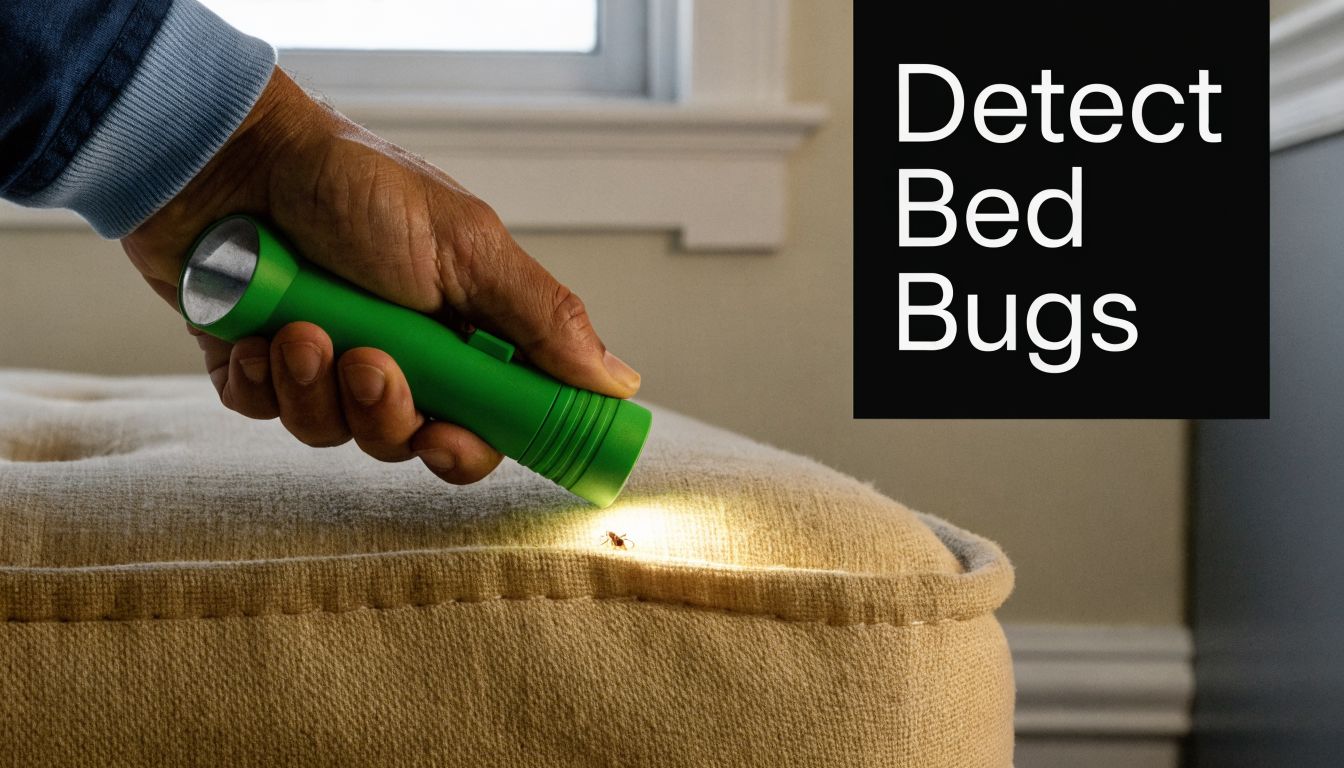
What to look for first
Focus on four types of evidence:
- Live bugs that are hiding in seams, folds, joints, or cracks near where people sleep or rest.
- Dark fecal spots on sheets, mattress seams, box springs, bed frames, or nearby furniture.
- Shed skins or casings left behind as immature bugs grow.
- Tiny white eggs tucked into protected areas.
Don’t start by searching the whole house. Start where people sleep, then expand outward.
Where bed bugs hide most often
Begin with the bed itself. Use a flashlight and something thin like an old gift card to check tight seams and creases.
Mattress seams and piping
Check along stitched edges, labels, tufts, and corner guards.Box spring fabric and frame
Look underneath, especially around staples, wood joints, and the dust cover.Bed frame and headboard
Inspect screw holes, slats, brackets, and the back side of the headboard.Nearby furniture
Nightstands, upholstered chairs, couches, and drawer joints can all harbor bed bugs.Room edges and wall voids
Check baseboards, picture frames, curtain folds, carpet edges, and around outlet covers.
A proper inspection is slow because bed bugs fit into extremely narrow spaces. That’s why homeowners often miss them even when they’re actively looking.
How to tell bed bugs from other pests
Homeowners commonly confuse bed bugs with carpet beetles, fleas, or random small insects found near a bed.
A few practical distinctions help:
- Carpet beetles leave shed skins too, but they’re usually connected to natural fibers, stored fabrics, or pet hair, not blood spots and bed-frame harborages.
- Fleas are more likely to be found around pets, pet bedding, and floor-level areas. They jump. Bed bugs don’t.
- Spiders and mosquitoes can cause bites, but they don’t leave fecal spotting on mattress seams or eggs hidden in bed hardware.
If you find signs but aren’t fully sure, save a sample in a sealed container or clear tape and get a professional identification. That’s far better than treating the wrong pest.
For a more detailed visual walkthrough, this guide on how to tell if you have bed bugs can help you compare what you’re seeing in your own room.
Why early detection matters more in apartments
Renters and landlords in Crown Point have an extra challenge. Bed bugs don’t respect unit lines.
For multi-unit housing, Rutgers notes that 68% of U.S. infestations occur in apartments, and uncoordinated neighbor treatments fail in 75% of cases. That matters because bugs can move through shared walls and adjoining spaces. A tenant who treats only one bedroom while the next unit does nothing may feel temporary relief, but the infestation often comes back.
In apartments, a bed bug problem is rarely just a single-room problem for long.
That’s one reason professional inspections matter so much in rental properties, condos, and attached housing.
Here’s a helpful visual if you want to see common signs and likely hiding zones before you keep inspecting:
A quick way to organize your inspection
Use this short checklist as you go room by room:
| Area | What to check | What matters |
|---|---|---|
| Bed | Seams, tufts, labels, frame joints | Live bugs, spots, eggs, shed skins |
| Furniture | Upholstery seams, drawer joints, undersides | Nearby harborages beyond the bed |
| Wall areas | Baseboards, frames, outlet edges | Hidden spread around sleeping areas |
| Linens | Sheets, pillowcases, blankets | Spotting and cast skins |
| Adjacent rooms | Sofas, recliners, guest beds | Whether the issue has spread |
If you find confirmed signs, move from inspection to containment. Don’t jump straight to sprays.
Immediate Containment and The Limits of DIY Solutions
The first 24 hours matter. A rushed response can turn one infested room into a problem that follows laundry baskets, backpacks, and overnight guests through the rest of the house.
In Crown Point, I often see the same pattern. A homeowner finds signs, starts washing everything, sprays a few products, then begins sleeping in another room to get some rest. A week later, the bugs have a second harboring area, everyone is exhausted, and the cleanup has doubled. Containment is about slowing that chain reaction while you get a treatment plan in place.
What to do right away
Start with actions that reduce spread without scattering bugs into new areas.
- Bag suspect fabrics before moving them. Use sealed plastic bags for bedding, clothing, stuffed items, and anything stored near the bed.
- Use high heat on dryable items. Put clothing, bedding, and similar fabrics in the dryer first. Washing helps with cleaning, but heat is what kills bed bugs on those items.
- Vacuum methodically. Focus on mattress seams, box spring edges, bed frame joints, baseboards, recliners, and nearby furniture. Empty the vacuum contents into a sealed bag and take it out promptly.
- Contain clutter before you relocate it. Loose piles give bed bugs more places to hide and more chances to hitchhike to another room.
- Keep sleeping arrangements stable unless a professional tells you otherwise. Moving to the couch or guest room often spreads activity instead of stopping it.
These steps help reduce the chance of bed bugs traveling deeper into the home. They do not remove hidden populations in cracks, furniture joints, wall gaps, or neighboring rooms.
What usually makes the problem worse
Bed bugs punish half-measures. A tactic can feel productive and still leave the infestation largely intact.
Avoid these common mistakes:
Bug bombs and foggers
They do not reach the tight harborages where bed bugs spend most of their time.Rubbing alcohol sprays
They create a fire hazard and only affect direct contact in the moment.Dragging furniture through the home uncovered
That can drop bugs and eggs along the route.Throwing out beds too early
Many homeowners spend money replacing furniture before the infestation is controlled, then the new items get exposed too.Assuming one weekend of cleaning solves it
Bed bugs can survive in protected spots that routine cleaning never touches.
If you only kill the bugs out in the open, the infestation keeps going in the places you cannot see.
Why store-bought and DIY treatments so often stall out
The hard part is not killing a bed bug. The hard part is killing all of them, including eggs and hidden groups, in every place they settled.
That is where DIY efforts usually break down. A spray may knock down visible activity along a baseboard. A steamer may help on certain seams if used correctly. Mattress encasements can remove one hiding area. Those are support tools, not a full solution. They do not address wall voids, bed frame interiors, upholstered furniture, luggage, nightstands, or spread into adjacent rooms.
Heat creates the same false confidence. A room can feel hot and still have cool pockets inside a box spring, behind trim, under clutter, or deep in furniture where bed bugs survive. Professional heat work depends on measured temperatures, equipment placement, air movement, and follow-up inspection. Space heaters and improvised setups rarely produce even lethal temperatures throughout the room.
I have walked into homes where people worked for weeks, spent hundreds on sprays and covers, and still had live activity because one recliner, one bed frame joint, or one overlooked room kept the infestation going.
The hidden cost of repeated DIY attempts
The stress builds fast.
Laundry piles up in bags. Kids stop having friends over. People lose sleep and start checking every speck on the sheet. In apartments, condos, and duplexes, delays also raise the chance of bugs spreading through shared walls or being carried into common areas, vehicles, and workplaces. What started as a bedroom problem becomes a household routine problem, then a building problem.
That is why I do not frame professional service as a convenience item. It is the most reliable way to stop the cycle, protect neighboring units, and give your home a clear path back to normal.
What DIY can help with, and where it stops
| Task | DIY can help with | DIY usually cannot do |
|---|---|---|
| Laundry and drying | Kill bed bugs on dryable fabrics | Clear hidden harborages throughout the room |
| Vacuuming | Remove some live bugs, shed skins, and debris | Reach protected eggs and deep cracks |
| Decluttering | Reduce hiding spots and improve access for treatment | Eliminate the infestation on its own |
| Mattress encasements | Limit hiding on the mattress and box spring exterior | Control bugs in frames, furniture, walls, and nearby rooms |
| Store-bought products | Kill some exposed bed bugs when used correctly | Deliver consistent room-by-room eradication |
Use DIY for containment and preparation. Do not mistake it for closure.
If you have already cleaned, bagged, sprayed, washed, and dried items and you are still finding activity, that usually means the infestation is established beyond the spots you can treat on your own.
The Green Advantage Solution Professional Bed Bug Treatment in Northwest Indiana
Professional bed bug control works when it treats the infestation as a system. Inspection, heat, targeted applications when needed, follow-up, and monitoring all have to work together. That’s the principle behind Integrated Pest Management, or IPM.
For bed bugs, IPM consistently outperforms spray-only programs. In the Journal of Integrated Pest Management, IPM programs achieved up to 96.8% reduction in bed bug populations, compared with 85% for insecticide-only approaches. That gap matters because a partial reduction can still leave enough hidden activity to restart the infestation.
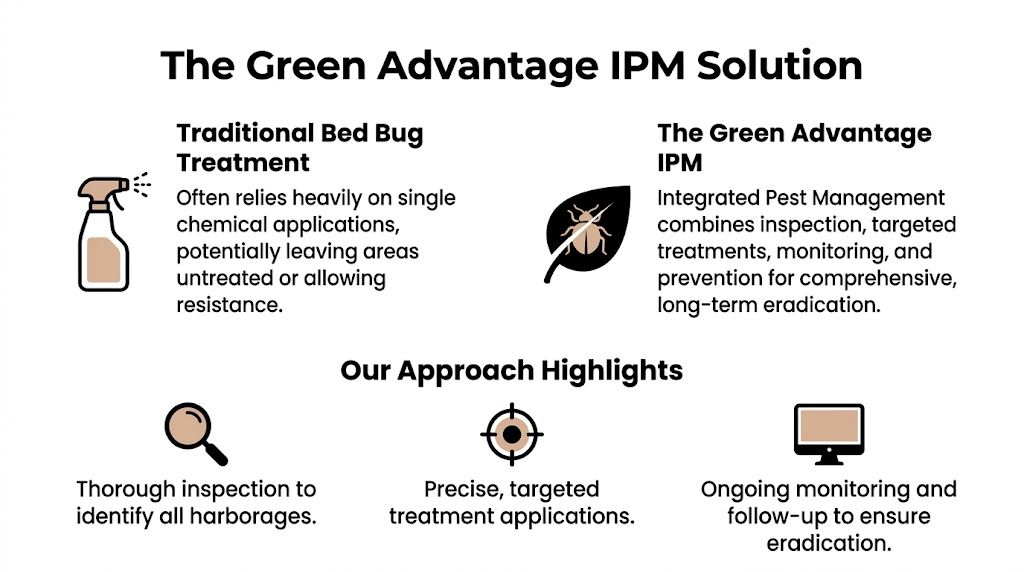
What professional IPM looks like in practice
An effective plan usually includes:
- Thorough inspection to identify primary and secondary hiding areas.
- Heat treatment for broad, non-chemical kill across life stages.
- Targeted measures for difficult voids, furnishings, or structural details.
- Monitoring tools to confirm whether activity remains.
- Follow-up guidance so the home doesn’t slide back into risk conditions.
A local provider matters in Crown Point and nearby Northwest Indiana communities, where homes vary widely in layout, furniture density, attached garages, basements, and multi-unit configurations. A treatment plan has to fit the site, not just the pest.
Why heat is so valuable
When technicians use whole-room heat correctly, it reaches where surface sprays often don’t. It can penetrate mattresses, furniture, cracks, and tucked-away harborages without leaving chemical residue behind. That matters for homeowners who want a more environmentally mindful option and for families who don’t want to rely on repeated broad pesticide use around sleeping areas.
The process is technical. Equipment placement, airflow, temperature mapping, and sensor checks all matter. Professionals don’t just warm up a room and hope for the best. They build conditions that bed bugs can’t survive.
Heat works because it targets the bug’s biology, not because the room feels hot.
The Green Advantage uses an IPM approach for bed bug work as one local option among professional services in Crown Point. That same inspection-first mindset also carries over into other local needs like ant control, spider control, rodent control, mosquito reduction, and termite control, where a one-size-fits-all spray rarely solves the underlying issue.
DIY vs Professional Bed Bug Treatment
| Factor | DIY Methods | The Green Advantage (Professional IPM) |
|---|---|---|
| Inspection | Usually limited to visible areas | Structured inspection of primary and secondary harborages |
| Heat delivery | Inconsistent room temperature | Controlled heat strategy with verified treatment conditions |
| Egg control | Often incomplete | Designed to address all life stages |
| Spread risk | Higher when items are moved incorrectly | Lower with a coordinated plan and prep guidance |
| Follow-up | Homeowner guesses whether it worked | Monitoring and post-treatment direction built into the process |
| Long-term control | Often piecemeal | Multi-tactic approach focused on lasting reduction |
What this means for homeowners and property managers
For a single-family home, professional treatment is about restoring comfort and stopping the cycle of failed attempts. For a landlord or property manager, it’s also about coordination. Bed bugs in one unit can become complaints in several. Fast identification, clear prep instructions, and whole-building awareness matter.
For commercial clients, especially lodging-related settings, offices, or facilities with upholstered furniture, the same principle applies. Delayed action can turn a manageable issue into an operational headache.
Bed bug work also highlights a broader truth about commercial pest control and residential pest control in Crown Point. The right service isn’t the one that applies the most product. It’s the one that correctly identifies the pest, matches the treatment to the site, and verifies results afterward.
How to Prepare Your Home for a Bed Bug Treatment
Preparation decides whether treatment reaches every hiding place or leaves cool, protected pockets behind. Homeowners are often surprised by how important their role is before a heat job begins.
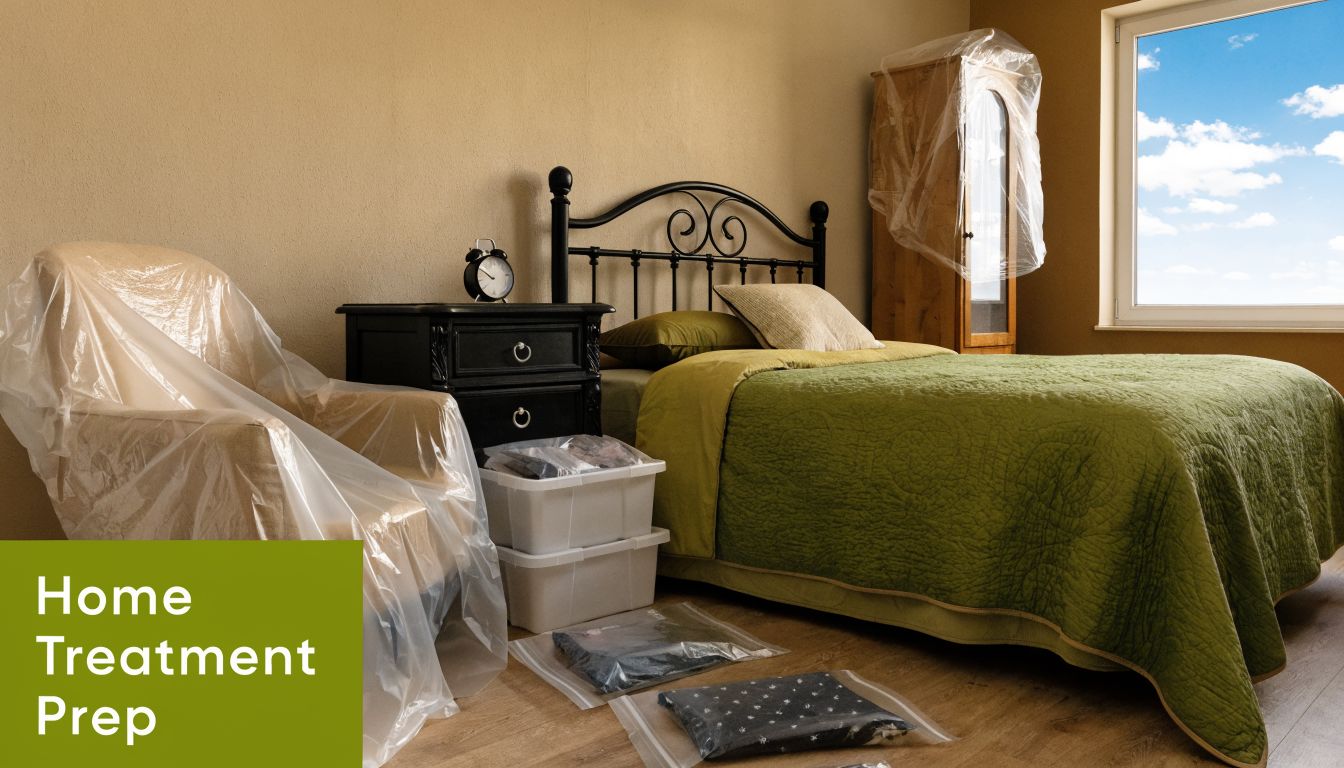
A professional treatment team can bring the equipment and the process, but the home still needs to be set up correctly. The treatment guidance referenced here notes that professionals must sustain core temperatures of 135-145°F, and that failure to declutter or dismantle bed frames can reduce efficacy by up to 30% because those conditions create cool spots where bugs survive.
The preparation checklist that matters most
Use your technician’s specific instructions first, but these are the common priorities.
Declutter floors and room edges
Piles of clothes, storage bins, loose papers, and packed closets block airflow and create protected hiding zones.Launder linens and clothing as directed
Bag items before moving them. Dry eligible items on high heat, then keep cleaned items sealed until the home is ready.Empty or simplify nightstands and dresser tops
Fewer loose contents means fewer hidden harborage points and better treatment access.Pull furniture away from walls when instructed
This improves access to bed frames, baseboards, and rear surfaces.Disassemble bed components if requested
Bed bugs love joints, brackets, screw holes, and slat connections. If the frame stays fully assembled, those areas can remain protected.Vacuum visible debris and seams
This doesn’t replace treatment, but it removes some bugs and debris that can interfere with inspection.
Items that usually need special attention
Not everything should stay in place, and not everything should be bagged the same way.
| Item type | Typical concern | Why it matters |
|---|---|---|
| Clothing and bedding | Spread during transport | Must be contained before moving |
| Electronics | Heat sensitivity and hidden voids | Need technician guidance |
| Houseplants | Heat intolerance | Usually need removal from treatment areas |
| Candles, aerosols, sensitive products | Temperature risk | Must be removed for safety |
| Under-bed storage | Prime hiding zone | Needs to be emptied or managed correctly |
Don’t improvise your own prep plan
One of the biggest mistakes homeowners make is over-preparing in the wrong direction. They move too many items into hallways, garages, or other rooms. That can spread bed bugs into spaces that weren’t originally active.
A better approach is controlled preparation. Bag. Label. Contain. Follow the room-by-room instructions you’re given.
Your job is to make the infestation easier to treat, not to relocate it.
If you’re already doing a full reset of a rental unit or preparing a room after tenant turnover, a structured cleaning list can help you avoid missing soft goods and hidden storage zones. This ultimate cleaning checklist is useful for organizing that process alongside pest prep.
For homeowners who want a broader walkthrough of what technicians usually ask for before a service visit, this guide on how to prepare for pest control helps explain the logic behind access, sanitation, and item handling.
What to ask before treatment day
If you’re unsure, ask direct questions:
- Which rooms are being treated?
- What needs to be bagged, dried, removed, or left in place?
- Should bed frames be dismantled ahead of arrival?
- What should I do with medications, plants, electronics, and pets?
- When can cleaned items come back into normal use?
Good prep removes guesswork. It also lowers stress because you know exactly what’s expected. When the house is prepared correctly, treatment has a much better chance of reaching the spaces where bed bugs survive.
After the Treatment Staying Vigilant and Preventing Future Infestations
The hardest part for many homeowners comes after the service truck leaves. The bugs may be dying off, but the stress often lingers. People keep waking up at night, checking sheets, and wondering if every itch means the problem is back. That reaction is normal, especially after a long DIY battle that cost time, sleep, and money.
What helps now is a clear follow-up plan.

What to expect after treatment
Your technician may place interceptor monitors, schedule a reinspection, or have you watch for specific signs in the treated rooms. Bites alone are not a reliable way to judge success. Bed bugs hide well, and post-treatment decisions should be based on evidence you can see, not anxiety during the night.
Keep the treated areas orderly for a while. Avoid piling clothes on the floor, stuffing items back under the bed, or bringing in extra furniture too soon. An open, easy-to-inspect room gives you and your technician a much better chance of spotting any lingering activity early.
In multi-unit housing, vigilance matters even more. Bed bugs do not respect unit lines, and delayed follow-up in one apartment can turn into a building-wide problem.
Habits that lower the chance of another infestation
A few steady habits make a real difference:
- Inspect second-hand furniture before it comes indoors, especially beds, couches, upholstered chairs, and nightstands.
- Handle travel items carefully. Unpack away from sleeping areas, dry clothing on high heat when appropriate, and do not store luggage next to the bed.
- Use extra caution in shared laundry spaces if you live in an apartment, condo, or other multi-unit property.
- Keep beds and nearby floors clear so fresh signs are easier to spot.
- Use mattress and box spring encasements when your technician recommends them to reduce hiding spots and simplify inspections.
Routine linen care also helps you notice changes sooner. If you want a practical household reference, this guide on how often to wash bedding is a useful baseline.
Why follow-up matters so much
I have seen plenty of cases in Crown Point where the physical infestation was under control before the homeowner felt at ease. That is one reason follow-up matters. The goal is not only to eliminate bed bugs. It is to restore normal life in the room, help you trust your home again, and reduce the chance of bugs spreading to relatives, neighbors, tenants, or adjoining units.
Check the monitors. Follow the instructions for washed and bagged items. Reintroduce belongings in the order your technician gave you, not all at once. Small decisions after treatment can either protect the work that was done or create new hiding opportunities.
That same prevention mindset protects the rest of your property too, and it protects your peace of mind the longest. If you are in Crown Point or nearby Northwest Indiana and you are tired of second-guessing every bite, stain, or late-night inspection, The Green Advantage can help you move from suspicion to a clear treatment plan, with inspection, treatment, and follow-up that are built to hold up in real homes.