
Brown Dog Tick Disease in NWI: Prevention & Control 2026

You find a tick on your dog after a walk, remove it, and hope that's the end of it. Then a few days later you spot another one near the dog bed. After that, one shows up on the baseboard. That's the moment many homeowners in Crown Point realize they may not be dealing with a one-time outdoor pest.
Brown dog tick disease worries people for good reason. The health concern isn't just the bite itself. It's the possibility that a dog has been exposed to more than one pathogen, and that signs of illness may be vague or delayed. For Northwest Indiana families, the bigger problem is often practical. Vet advice helps protect the dog, but it doesn't solve a seeded infestation inside the home.
That's where a lot of frustration starts. Homeowners do the right things. They check their pets, wash bedding, vacuum, and use prevention products. Yet the problem keeps coming back because the brown dog tick behaves differently from the ticks commonly considered.
Your Trusted Exterminator for Tick Control in Crown Point IN
A Crown Point pet owner usually notices this issue in stages. First, a dog comes in scratching more than usual. Then someone finds a small brown tick attached near the ear or between the toes. By the weekend, the family is checking blankets, crate seams, and corners of the room, wondering if this is a yard problem or a house problem.
With brown dog ticks, that distinction matters.
Unlike the outdoor tick problems many Northwest Indiana homeowners expect in spring and summer, this one can turn into an indoor infestation tied closely to where dogs rest, sleep, and travel through the house. That changes the response completely. Treating only the yard or relying only on pet products often leaves part of the problem untouched.
Local reality: In homes with dogs, tick control isn't just about what's outside. It's often about what hitchhiked indoors and stayed there.
Homeowners searching for pest control near me, exterminator near me, or pest control in Crown Point, IN are usually looking for clear answers fast. They want to know whether the ticks they're seeing are dangerous, whether their dog could get sick, and whether the home itself now needs treatment.
In Crown Point and nearby Northwest Indiana communities, that concern is understandable. Families want a practical plan, not alarm. The right approach starts with identifying whether the pest is the brown dog tick, then deciding whether you're dealing with isolated exposure or a breeding population inside the structure.
That's the difference between casual advice and real pest control. For a live indoor tick issue, the goal isn't just to remove what you can see. The goal is to break the cycle where ticks keep reappearing in the same rooms, on the same pet, and around the same resting areas.
Identifying the Brown Dog Tick Problem in Your Home
The brown dog tick is easy to underestimate because it doesn't always arrive with the same outdoor warning signs homeowners associate with wooded lots or tall grass. In many cases, the first clue is repeated tick sightings on the dog or around indoor pet areas.
What makes this tick different
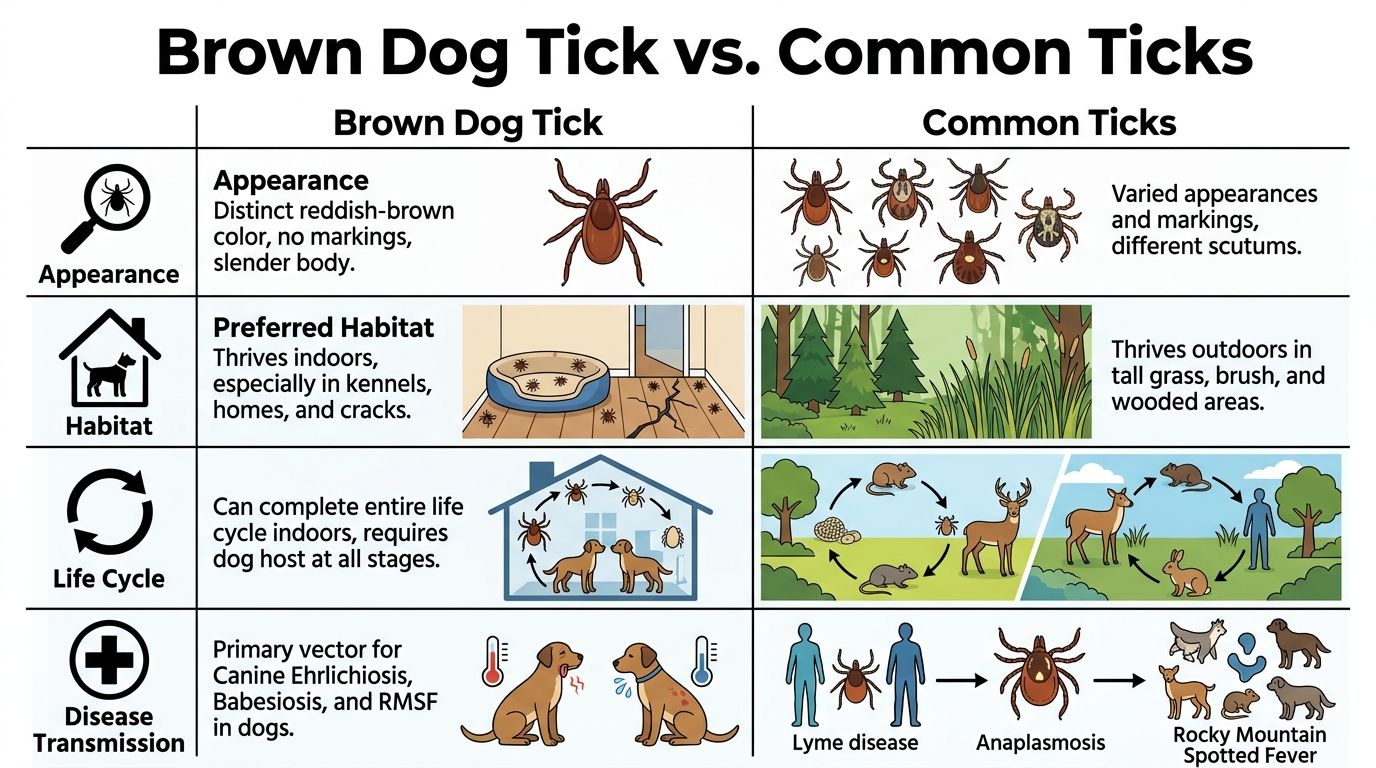
The most important thing to understand is that the brown dog tick is uniquely suited to indoor life. According to PetMD's overview of brown dog ticks, it is the only tick species that can become fully established indoors in homes and kennels, and a single engorged female can lay up to 3,000 eggs. That's why one overlooked tick can become a much bigger problem.
Most ticks depend more heavily on wildlife and outdoor habitat. Brown dog ticks are different. They stay close to dogs and exploit indoor hiding places such as:
- Cracks and crevices around baseboards, trim, and flooring
- Pet resting areas including beds, crates, blankets, and furniture
- Utility spaces like laundry rooms, garages, and kennel-style setups
- Travel paths where dogs repeatedly lie down or brush against walls
What homeowners usually notice first
You may not identify the species immediately, but the pattern often gives it away. Brown dog tick issues tend to show up where the dog spends time, not just where people enter from the yard.
A few signs stand out:
| Sign | Why it matters |
|---|---|
| Repeated ticks on the same dog | Suggests ongoing exposure rather than a one-off hitchhiker |
| Ticks near bedding or crates | Points toward indoor harborages |
| Sightings in cooler months | Indicates the problem may not be tied only to seasonal outdoor activity |
| Ticks on walls or baseboards | Often means the infestation has spread beyond the pet |
Brown dog ticks are generally brown to reddish-brown, without the more obvious patterned look some other tick species have. Homeowners often describe them as small, plain, and easy to miss until they move.
If you're removing ticks from your dog at home, use a proper method instead of twisting, crushing, or applying folk remedies. This guide on how to remove ticks safely from dogs gives a clear, simple overview.
What doesn't work well
Many homeowners try to solve this by deep cleaning alone. Cleaning helps, but it rarely finishes the job once ticks have dispersed into cracks, seams, and protected indoor areas. The same goes for treating only the pet. If the house is seeded, the dog can keep getting re-exposed.
That's why identification matters early. If you're seeing ticks indoors more than once, especially near dog areas, treat it as a structural pest issue and not just a grooming problem.
Brown Dog Tick Disease Risks to Your Pets and Family
When people say brown dog tick disease, they usually mean one of two things. Either they're asking whether this tick can make a dog sick, or they're referring to a vague set of symptoms after a tick bite. The problem is that this phrase sounds singular when the underlying problem often isn't.
It's not one disease
Research summarized in a peer-reviewed review of brown-dog-tick-associated pathogens makes the key point homeowners and even some pet owners miss. A dog may not have a single brown dog tick disease. The tick can carry multiple pathogens, and there is a high prevalence of coinfection. The same review notes that symptoms may be vague, subclinical, or delayed.
That matters because a dog with fever, low energy, anemia, appetite loss, or weight loss may not be dealing with one straightforward infection. Diagnosis can require testing rather than guesswork.
The main health concerns
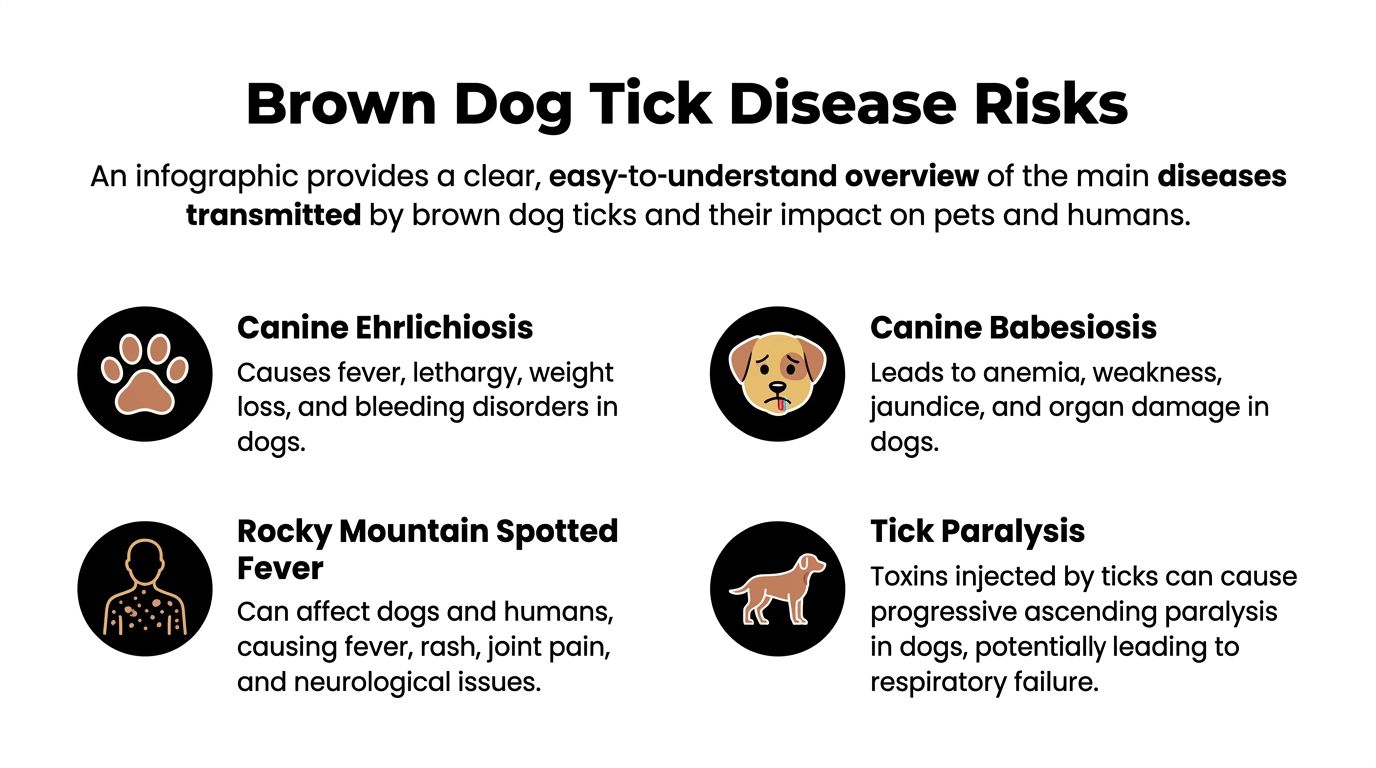
Brown dog ticks are linked with several important diseases in dogs. The ones homeowners hear about most often include:
Canine ehrlichiosis
This can involve fever, lethargy, weight loss, and bleeding disorders.Canine babesiosis
This may lead to anemia, weakness, and other systemic illness.Rocky Mountain spotted fever
This matters because brown dog ticks have historically been recognized as an important vector of RMSF in certain parts of the United States.
Some of these illnesses can overlap in how they look at home. A tired dog that skips meals and seems “off” doesn't give you enough information to tell one infection from another. That's why veterinary testing matters so much after known exposure.
For a broader homeowner view of persistence and survival, it also helps to understand how long ticks can live. Longevity affects how long a hidden infestation can keep producing problems after the first sighting.
Why delayed symptoms make infestations harder
A frustrating part of brown dog tick disease is timing. Owners often expect a clear cause-and-effect pattern. Tick bite today, sick dog tomorrow. Real life isn't that neat.
The video below gives useful visual context on tick risks and what pet owners should watch for.
Symptoms can show up long after the tick was removed. That delay creates two separate risks:
- Medical delay because the household may not connect current illness with an earlier tick exposure
- Control delay because the infestation source inside the home may continue unchecked
A tick problem can outpace your diagnosis timeline. By the time a dog looks sick, the house may already have an established population.
What about people
Human risk needs a balanced explanation. Brown dog ticks are best known as a major veterinary pest, but they also matter from a public health standpoint. Homeowners don't need panic. They do need clarity.
If ticks are appearing indoors, especially in rooms where pets spend time, families should take the issue seriously. Daily checks, prompt removal, and veterinary evaluation for concerning symptoms are the practical first steps. For the home itself, repeated sightings mean the environmental source needs attention too.
A Homeowner's Guide to Tick Prevention
Homeowners in Crown Point usually start in the right place. They use vet-recommended preventives, inspect their dogs after time outside, wash pet bedding, and try to keep the yard less inviting. None of that is wasted effort. In fact, those habits are the foundation of good tick prevention.
What you should keep doing
If you want to lower exposure, these steps matter:
- Check your dog daily after walks, boarding, grooming visits, or time in the yard
- Use veterinary prevention consistently instead of waiting for warm weather
- Wash bedding and vacuum carefully around pet sleeping areas
- Keep outdoor areas maintained so dogs aren't brushing through overgrowth unnecessarily
Year-round prevention matters because modern guidance recognizes that seasonal treatment alone doesn't address a tick that can persist indoors. Ohio State notes this shift in its brown dog tick fact sheet, especially because the species can continue reproducing in protected environments.
Where DIY prevention falls short
The mistake isn't doing too little for the dog. It's assuming pet-only prevention solves a home infestation.
A dog can be protected and still carry in a live tick before that product does its work. Bedding can be washed while ticks remain in cracks, behind trim, or near crate hardware. The yard can be improved while the primary breeding pressure is inside.
That's why prevention and elimination are different jobs.
If your concern includes outdoor exposure around decks, fence lines, and dog run areas, this guide to the best flea and tick control for yard is a useful starting point. Just keep in mind that a brown dog tick issue may require more than a yard-focused plan.
Practical rule: If you've treated the dog, cleaned the house, and still keep seeing ticks indoors, stop thinking in terms of maintenance and start thinking in terms of infestation control.
The trade-off homeowners need to understand
Home prevention reduces odds. It doesn't always remove hidden life stages once the problem is established. That's the hard truth with brown dog ticks.
For a one-off outdoor hitchhiker, home care may be enough. For repeated indoor sightings, the trade-off changes. Waiting can save money today, but it often gives the infestation more time to spread through the exact areas that are hardest for homeowners to treat completely.
How Professional Pest Control Eliminates Brown Dog Ticks
Brown dog tick control works only when the treatment plan matches the way this tick lives. That means the solution can't focus on one zone alone. You have to account for the animal, the structure, and the outside areas that may support reintroduction.
Why the environment has to be treated
The canine health issue and the pest issue move on separate timelines. According to the AKC Canine Health Foundation's guidance on canine tick-borne disease, symptoms of diseases such as canine ehrlichiosis may not appear for months after transmission. That long latency matters because the infestation can continue spreading before illness is recognized.
That's why professional treatment targets the source. If ticks are living in the home, waiting for symptoms or relying only on what's visible won't stop the cycle.
What an effective control program includes
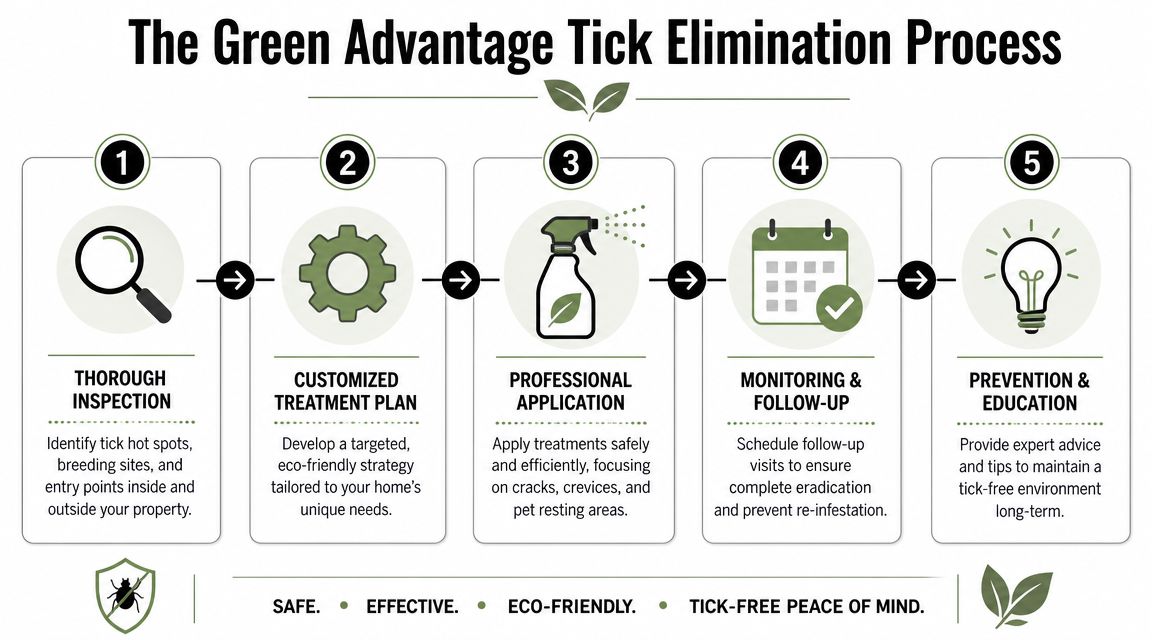
A serious brown dog tick treatment plan usually has several parts working together:
Inspection of indoor hotspots
Technicians look closely at baseboards, pet bedding zones, crate areas, upholstered edges, utility rooms, and other protected harborage sites.Targeted interior treatment
The goal is to reach places homeowners commonly miss, especially tight cracks, seams, and resting areas associated with dogs.Exterior attention where needed
While brown dog ticks are known for indoor persistence, the outside still matters when pets move through kennels, patios, runs, or perimeter areas.Coordination with veterinary care
Pest control handles the environment. A veterinarian handles the dog's medical prevention, testing, and treatment decisions.Follow-up and monitoring
Tick control is rarely about one spray and done thinking. Rechecks help confirm the cycle has been broken.
What works and what usually disappoints
Homeowners often ask whether foggers, single over-the-counter sprays, or constant laundering can solve it. Those tools may reduce visible activity, but they often underperform when ticks are tucked into inaccessible spots.
Professional service is stronger because it's systematic. It treats where ticks hide, not just where people notice them.
A good program also respects the home as a lived-in space. Families want treatment that is effective, clearly explained, and mindful of pets and daily routines. That same whole-property thinking often helps with related residential pest control concerns in Northwest Indiana, including mosquitoes, ants, spiders, and rodent pressure around the exterior.
Why local pest control matters in Northwest Indiana
In Crown Point and surrounding communities, homes vary a lot. Some have finished basements, attached garages, mudrooms, or pet transition spaces that change how pests move indoors. A local exterminator in Crown Point, IN looks at those practical conditions instead of applying a generic script.
That matters because successful tick work depends on finding the actual pressure points in the home, then matching treatment and follow-up to those exact conditions.
Working With The Green Advantage in Crown Point
Hiring a pest control company shouldn't feel like handing over your home and hoping for the best. Homeowners want straight answers, a clear process, and people who understand how pest issues show up in Northwest Indiana properties.
What a good service experience looks like
When you work with a local provider for residential pest control or commercial pest control, the experience should be simple. You call. You describe what you're seeing. A knowledgeable team helps sort out whether the issue sounds urgent, structural, or pet-related, then schedules an inspection that fits the problem.
On site, a technician should do more than glance around and recommend a generic treatment. Tick issues require questions. Where does the dog sleep? Have ticks been found in one room or several? Have there been recent boarding visits, travel, grooming appointments, or sightings around the yard?

Why local matters
A Crown Point company serving Northwest Indiana brings practical familiarity with the kinds of homes, seasonal habits, and pet routines common in the area. That doesn't mean every tick problem is the same. It means the inspection starts with realistic assumptions and then gets specific.
Here's what homeowners usually value most:
- Clear communication so they know what was found and what happens next
- Customized treatment plans instead of one-size-fits-all packages
- Respect for family routines including pet safety, access needs, and follow-up timing
- Broader pest knowledge when tick issues overlap with mosquito control, wasp removal, spider activity, or rodent concerns around the property
The best pest service isn't the one with the longest script. It's the one that can look at your home, identify the real source, and explain the fix in plain language.
What builds trust
For most families, trust comes from consistency. The phone gets answered. Questions get addressed without jargon. The technician arrives prepared, inspects thoroughly, and explains what's realistic.
That matters for tick work because homeowners are often stressed before the appointment even starts. They're worried about their dog, their furniture, their kids, and whether they somehow caused the problem. A reliable local provider helps take that uncertainty down to size and turns it into a practical plan.
Schedule Your Tick Inspection and Protect Your Home Today
If you're finding ticks on your dog more than once, or seeing them around beds, baseboards, crates, or furniture, don't treat it like a minor nuisance. Brown dog tick problems can linger inside the home, and waiting usually gives them more time to spread.
The right next step is simple. Get the property inspected, identify where the ticks are hiding, and build a plan that addresses the house and the pet environment together. That protects your dog, reduces repeat exposure, and gives your family confidence that the problem is being handled completely.
For homeowners and property managers looking for pest control in Crown Point, IN, exterminator near me, or practical help with a stubborn indoor tick issue, local service makes the process easier. You need an inspection, honest guidance, and treatment that fits how the problem behaves in Northwest Indiana homes.
If you need help with brown dog ticks, The Green Advantage provides local pest control support for Crown Point and nearby Northwest Indiana communities. Reach out to schedule an inspection, request a quote, and get a clear plan to protect your home, your pets, and your peace of mind.